Errant Thoughts
About Andrew Cusack
 Writer, web designer, etc.; born in New York; educated in Argentina, Scotland, and South Africa; now based in London.
 read more
News
Blogs
Reviews & Periodicals
Arts & Design
World
France
Mitteleuropa
Knickerbockers
Argentina
The Levant
Africa
Cape of Good Hope
Netherlands
Scandinavia
Québec
India
Muscovy
Germany
Academica
The Legacy of von Hildebrand
Over at InsideCatholic, John Burger talks to John Henry Crosby, the founder of the Dietrich von Hildebrand Legacy Project. Readers will recall we attended a “festive evening” organised by the Legacy Project in 2008.
Prof. von Hildebrand was also involved in founding the Roman Forum, and places are still available for the Forum’s 2010 Summer Symposium in Gardone, Italy — about which everyone whose ever been raves unceasingly. The lectures and discussions on quite an array of subjects are listed in the daily program.
Socialism is Failing our Native Americans
John Stossel reports on the disastrous effect of government dependency on America’s native tribes, only the latest chapter in this country’s lamentable treatment of its first inhabitants.
Some Stocks Fall, Others Rise
In the first quarter of 2010, CNN’s flagship news anchors ratings dropped by fifty percent — half their entire viewership! The New York Times continues to slide towards bankruptcy and irrelevance (who wants to pay two dollars a day to be lied to?). Exhibiting a tremendous amount of cheek, the Times Company (which owns both the Times and the Boston Globe) threatened to shut the Boston Globe unless the staff agreed to $20 million in cuts. This year, the $20 million made by salary and benefits cuts across the board at the Globe were awarded in compensation to just two Times Company employees, Chairman Arthur Sulzberger and Chief Executive Janet L. Robinson. Meanwhile, the Company’s profits are collapsing along with its circulation and ad revenue, while its debt increases.
Not everyone’s stock is going down, however. Anna Arco reports a greater-than-usual surge in Mass attendance during Holy Week at the Stefansdom in Vienna, as well as at Westminster Cathedral and the Brompton Oratory in London.
The only advice one could dispense to CNN, the Times, et al. is the aphorism that he who marries the spirit of the age is soon widowed.
Post Renovation
Every now and then I go back and renovate an old post. When this site started, posts had a maximum width of 440 pixels, which is why images tend to be narrower in older posts (such as this). Then, in December 2007, we broadened our horizon to 530 pixels wide, taking into account a move towards more horizontal aspect ratios on most computers. And so, from time to time, I go back to an old post and retro-fit it for 530px-wide from its former width.
The most recent post to undergo such a transformation is the one on the Felix Meritis in Amsterdam. Another is my bit on the Dahlgren townhouse on Ninety-sixth Street. Other than that, there have been only very minor renovations to posts, perhaps one or two images broadened.
Victory on the Fields of Coetzenburg
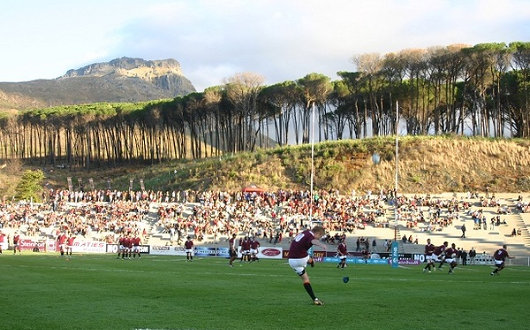
In anticipation of the annual commemoration of my birth, the University of Stellenbosch Rugby Football Club yesterday sailed to yet another victory in the FNB-sponsored Varsity Cup. Of course, a Maties victory is not exactly news — Stellenbosch is accustomed to victory, especially on the home turf at Coetzenburg (seen above). Indeed, Stellenbosch have won every Varsity Cup since the competition’s incarnation, which seems much less impressive when one points out this is only the third year of its existence. Nonetheless, to defeat the traditional rivals of the University of Cape Town — Maties and Ikeys are like Hatfields & McCoys — particularly warms the cockles of the heart. 17-14, not a bad score — the Ikey Tigers put in a good effort, but I am told UCT hasn’t beaten Stellenbosch in rugby for nearly 20 years. Impressive, considering that — despite being Ikeys — UCT manages to put up a good quad and make it to the final. (more…)
‘Love over Parliament House’
Persuant to our discussion regarding Scotland’s three parliament buildings, Scots Law News reports that the Caledonian scribe Alexander McCall Smith has been called to the Scots bar.
Alexander McCall Smith & the Sisters of Jaipur
The Scottish writer Alexander McCall Smith — noted for the fact that his books are actually a pleasure to read — pens a letter to readers every few months. In the latest letter, he mentions that he recently attended the Jaipur Literary Festival in Rajasthan’s famous “Pink City”:
But the visit to Jaipur was not all literary festival. My wife and I paid a visit to the Mother Theresa Home in the city, which was, as you can imagine, a very moving experience. Over two hundred residents, most of them with nowhere else to go, no possessions, and no money, are looked after by some seven sisters. These sisters are tireless – completely tireless – and give their lives over to the living care of these abandoned people.
At a time when the Catholic Church is coming under severe criticism for its failures (which have been, understandably, very much in the news), we should perhaps remember the extraordinary work of people such as the nuns of this community, who have done so much to bring love into the lives of those who have nothing and who would otherwise die alone and uncared for. I cannot tell you how moved I was by what I saw and by my conversation with the nuns.
An apposite reminder.
If you haven’t yet read Prof. McCall Smith’s 44 Scotland Street series, I suggest you float down to your nearest bookseller and purchase the first installation (handily titled 44 Scotland Street) today. They are a procession of delightful stories surrounding a number of fictional characters in an Edinburgh townhouse, and if you’re familiar with the capital city, you might just come a cross the occasional non-fictional friend interspersed amongst the creations of McCall Smith’s mind.
Rumblings in Beckistan
First, I noticed that Herr Beck labelled your humble & obedient scribe as “my impossibly bizarre former colleague” and a “living anachronism”. The context was largely complementary, as Beck expressed his certainty that I could enlighten him further upon the subject of Ember days (which of course I can, but won’t). But then I noticed a more subtle — and yet simultaneously all-too-blatant — anti-Cusackian dig in his piece on Ted Gioia’s The Birth (and Death) of the Cool in B&N Review:
Cool is all about authenticity. Authentic is whatever most people aren’t, since most people are shaped and controlled by peer pressure and marketing. Thus, the quickest and surest route to authenticity is contrarianism, preferably by way of blasé eccentricity. You know the type: “Yeah, I’ve pretty much always been into skiffle / Symbolist poetry / Dario Argento / raw foodism / ceremonial maces / taxidermy / bisexuality — haven’t you?”
Ceremonial maces?!? While six of those seven terms are undoubtedly aimed at other individuals, there is no way that this mention of one of my particular areas of expertise can be construed as anything other than a mischievous and deliberate anti-Cusackian provocation by the forces of Beck. I questioned the son of Granby seeking the meaning behind such an act, but in his inimitably mysterious fashion he emitted a soft, false laugh and faded back into the folds of the evening mist.
The real reason for Beck’s act of aggression is simple: he’s envious of my having been published in the Quarterly Journal of the Guild of Mace-bearers of England & Wales. He’s likely further miffed that I attended the university with the finest collection of medieval maces in the world, while he was stuck sacrificing holly-crowned virgins to Wotan in the wilds of New Hampshire. There you have it: mace-envy, the latest vice of today’s jaded youth.
Those of you unfamiliar with Stefan Beck’s work are all the poorer for it. Just the other day I was speaking with the ever-delightful Allison Burbage, who was searching for unfamiliar books to read. I directed her to Stefan Beck’s demi-annual Fiction Chronicle in the pages of The New Criterion to steer her in the right direction. In the future Mr. Beck best watch his back — we members of what I like to call the ceremonial mace enthusiast community are skilled in the sophisticated art of retaliation.
BA: “an old-fashioned European city”
“Argentina has to be one of the most underrated travel destinations,” Michael Buerk writes in his salute to Argentina in today’s Daily Telegraph. An excerpt:
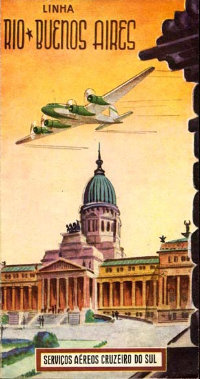 AT THE HEART OF IT ALL IS Buenos Aires, one of the world’s most exciting cities. I was there for months during the Falklands War, reporting for the BBC. They were praying for me in our local church. If only they had known how close I had come to eating myself to death – those steaks are huge – they would have prayed even harder.
It is an intensely Anglophile country, and was even then. The upper crust didn’t want to argue about the sovereignty of the Falklands (any more than they would want to argue now about oil drilling); they wanted to know where in Jermyn Street to order their cavalry twills. The hundreds of thousands of descamisados (literally, “shirtless ones”) who packed the Plaza de Mayo screaming for Mrs Thatcher’s blood would break off when they saw the BBC logo on the camera to make sure they had got the lyrics to “Hard Day’s Night” exactly right. The city’s biggest department store was called Harrods, the poshest club was (and is) the Hurlingham and the most popular film during the war was “Chariots of Fire”.
The veterans of the Malvinas, portly and grey-haired now, camp out in the Plaza de Mayo, still begging for better pensions. Porteños (the locals’ name for themselves) call them “the whiners”. The memorial to the 700 or so Argentine dead is prominent enough, but it is just a list of names and the eternal flame has long since gone out. It faces the great clock, built by the British a century ago (with a movement copied from Big Ben). The locals still call it the English Tower, even though it was officially renamed after the conflict. The cause still rankles, but the war is an embarrassment.
There’s poverty in the suburbs but, at its heart, Buenos Aires is a grand city, laid out in the days when its wealth and its future seemed unlimited. The world’s widest avenues, finest opera house, most opulent fin de siècle town houses, and – my idea of heaven – Italian restaurants cooking the world’s most wonderful meat. (Try La Brigada, where they cut the tenderloin with spoons. And don’t order “Baby Beef” looking for a light meal; it weighs in at just short of a kilo.)
It’s an old-fashioned European city, with a café society oddly short of dark faces. The original natives, and the African slaves, were wiped out or pushed out. The most prominent of the country’s remaining blacks (70 or so, it is said) was arrested at the airport recently because officials thought her Argentine passport must be a forgery.
The city is full of grand monuments, mostly to the chancers who snatched independence when Spain had its back turned, bowing the knee to Napoleon. They are as extravagantly memorialised in death as they were spurned in life; nearly all of them died in exile.
Argentina’s real heroes can be seen, stuffed, in the colourful old dock area, La Boca. Life-size models stare at you from the shops and down from the balconies. There are just three of them, and a tawdry trio they are. Eva Duarte Peron, of course, the actress who slept her way to the bottom of the movie business and into the life of a crypto-fascist colonel on the make; a long-dead tango warbler called Carlos Gardel; and Maradona, the squat footballer with the hand of God and the soul corroded by cocaine. Two of them died young; the third is still trying.
Death is a big thing in Argentina. La Recoleta cemetery is worth the trip in itself. It’s an entire suburb of gloriously overblown mausolea; a gentleman’s club for the dead, even harder to get into than the Garrick. Evita is there, in the Duarte family tomb. Her father’s relatives famously said they wouldn’t be seen dead with her; now she’s banged up with them for all eternity. There’s a new museum to Evita that’s worth seeing, with a pinch of salt.
I would dispute Bs.As. being “an old-fashioned European city”. It is instead a rather vigorous American city that retains many of the best attributes of an old-fashioned European city.
Mimi Coertse: “Der Hölle Rache” van Die Zauberflöte
Van al die operahuise in Afrika, die helfte is in Suid-Afrika — dink jy, daar is net vier operahuise in die vasteland. Nietemin, opera het ’n ryk en vrugbaar tradisie in die land, en die koningin van Suid-Afrikaanse opera-sangers is die sopraan Mimi Coertse. Sy was in Durban gebore in 1932 en het haar stem-opleiding in Suid-Afrika voltooi. In 1953, Coertse het die uitsaaier en komponis Dawid Engela getroud. (Engela het sy “Huwelikskantate” vir hul troue saamgestel). In Januarie 1955, Coertse het haar opera debuut gemaak in ’n kleine rol in Parsifal by die Teatro San Carlo in Napels.
Dit was 17de Maart 1956 — St. Patrick’s Day — toe Coertse die rol van die Koningin van die nag gesing in “Die Zauberflöte” met die Weense Staatsopera in Oostenryk. Sy het met die Weense Staatsopera vir meer as twintig jare gebly. Gravin Christl Schönfeld onthou:
In sy lang voortgang, Mimi Coertse het baie eerbewyse opgestapel. In 1961, die Medalje van Eer van Die Suid-Afrikaanse Akademie vir Wetenskap en Kuns; in 1966, die prestige titel van “Kammersängerin” vanaf die regering van Oostenryk; in 1985, die Suid-Afrikaanse Dekorasie vir Voortreflike Diens; en in 1996, die “Oesterreichische Ehrenkreuz für Wissenschaft und Kunst” (Oostenrykse Erekruis vir Wetenskap en Kuns) — die hoogste kunsdekorasie van Oostenryk.
Waar is sy nou? Sedert 1998, Mimi Coertse bestuur die “Black Tie Ensemble” — ’n projek om die verandering tussen opleiding en professionele uitvoering te versag. ’n Halfeeu van diens in die kunste voortsit!
Blogging now and then
I’ve only just discovered the blog of The New York Review of Books and found this entry on blogging in eighteenth-century France (if you will) interesting.
A friend accuses me of being able to connect everything back to either Scotland or South Africa, depending on my whim, and this blog post provides a handy example. It’s author is Robert Darnton, a Harvard cultural historian and expert on eighteenth-century France. Professor Darnton is the son of the much-respected war correspondent Byron Darnton, who was killed during the war while reporting in New Guinea. (Gen. MacArthur, a difficult man to impress, held Darnton père in such regard that he informed Darnton’s widow and his newspaper, The New York Times, personally).
In 1943, a year after his death, a Liberty ship was christened the U.S.S. Byron Darnton. After the war, the Byron Darnton was beached off the isle of Sanda in Scotland. The pub on Sanda — one of the most isolated pubs in the country — is now named The Byron Darnton after the ship that was named after the father of Prof. Robert Darnton.
So there, from eighteenth-century French blogging to twenty-first-century Scottish pubs.
A Seraphic Book Launch in Toronto
Torontonians or those in the general vicinity of that metropolis might be interested in attending the upcoming launch of Seraphic‘s new book, Seraphic Singles: How I Learned to Stop Worrying and Love the Single Life. Of course, Dorothy is no longer single but instead happily married to a Scottish friend of mine, and you can see her gleefully prancing about the grounds of the Historical House the happy couple now call their home in this 4m29s video clip.
But when & where’s the book launch you say? It’s Thursday, March 25, from 7:00–10:00pm at the Duke of York Pub, 39 Prince Arthur Avenue, Toronto, Ontario, in God’s Own Dominion of Canada. The book is printed by the Canadian publisher Novalis, and is already obtainable from Amazon.com. Copies of the book will also be available for purchase at the book launch.
Seraphic Singles:
How I Learned to Stop Worrying and Love the Single Life
by
DOROTHY CUMMINGS
25 March 2010 (Thursday)
7:00pm–10:00pm
The Duke of York Pub
39 Prince Arthur Avenue
Toronto, Ont.
Hollandic Heraldry

The Eden Spiekermann group, who were responsible for the redesign of The Economist in 2001, recently developed this logotype for the Dutch province of North Holland. The conjoined legs of the ‘N’ and ‘H’ integrate the province’s coat of arms.
The Abolition of Humour
Police Inspector Blog, by “Inspector Gadget”, is a pseudonymous blog written by a police officer that documents the absolute ridiculousness of modern British policing. The inspector has also published a book documenting how “you can be arrested for pinching a few crisps from a schoolfriend, throwing cream cakes or denying the existence of Santa Claus – while burglars, muggers and drug dealers go about their business unmolested by the forces of law and order”. I’ve been reading the blog for years now and it definitely lives up to its tag phrase of “You couldn’t make it up!”
Gadget’s latest post shows how humour has been systematically abolished in the modern police services:
Humour is almost exclusively at someone else’s expense, and in todays modern police service, we cannot mock anything or anyone, even if they can’t hear us, without being labelled as an “ist” of some kind. The public can ridicule the police as much as they like of course.
So, eight beautiful girls on a hen night, two men with funny hats, a uni-cyclist(???) and three lads dressed as penguins all walk past without even a comment or a snigger from the F Division Public Order team.
One night, an absolutely stunning woman approached the van and pulled aside her blouse to show us her naked chest. This happens a lot in Ruraltown, and in every big town. Hen night ladies are notorious for it. Imagine her shame when we simply stared at her, unmoved and silent.
“What the hell is wrong with you lads? You havent seen better than this have you?”
What was I supposed to say?
“I’m sorry madam but your outdated and sexist humour is not appreciated here; we are modern policemen you know, now move on and show your flesh no more.”
Shamelessly using the anonymity of this Blog, I feel that I can finally answer the lady in question. And my answer is this, No, we have not seen better than that. I thank you.
Via Hilary.
Song & Merriment on Lake Garda’s Shores
The Roman Forum has released the daily program of this year’s Summer Symposium taking place at Gardone on Lake Garda in Italy. What a host of subjects covered! Lammenais, Americanism, St. Pius X, the economic order, legal positivism, G. K. Chesterton, Blessed Emperor Charles, Personalism, the Catholic media, Dean Swift, not to mention cocktail parties, song, and general merriment.
If one has the means but not the time, why not consider making a donation towards a full or partial scholarship? I’m told the list of applicants for scholarships is long, and these are often the most keen participants in such intellectual and social endeavours. More infomation on the Symposium can be found here.
Brothers Aboard the Ship of State
The Viscount Philippe de Villiers is an MEP, sometime French presidential candidate, and head of the Mouvement pour la France but his brother, General Pierre de Villiers, has just been named personal Chief of Staff to the President of the Republic (whose name we refrain from mentioning, lest we feel compelled to boo and hiss). Given this recent appointment, we reckon that General de Villiers outranks his brother in the grand apparatus of state; Chef d’etat-major particulier beats President of the General Council of the Vendée.
There is, however, at least one regard in which the civilian has his military brother beat: Pierre only has six children, Philippe has seven.
A little lack of logic on Pope Benedict from the Guardian’s John Hooper
Over at the Guardian (Britain’s best daily, whether you like it or not!), Rome correspondent John Hooper writes an informative article about the upcoming beatification of Spanish journalist Manuel Lozano Garrido (1920-1971). I’d never heard of “Lolo”, as the saintly journo was known both during his life and afterwards, and was happy to be introduced to yet another shining star of Spain’s happy glut of twentieth-century saints & blesseds.
Lozano Garrido, Mr. Hooper informs us, “wrote his first article for — and went on to edit — a magazine called Cruzada (Crusade). That was a pretty loaded title for a publication of the time because, in the language of the dictatorship, ‘cruzada’ referred to the campaign Franco pursued with ruthless and bloody determination against any Spaniard who dared to hold opinions much to the left of fascism.”
Up to a point Lord Copper! For a Christian periodical — written by Christian journalists, read by Christian people, in a Christian country — to have the name “Crusade” hardly seem loaded at all, despite the Spanish state’s contemporaneous use of the word cruzada. But this is incidental and entirely beside the point.
Mr. Hooper wonders where Lozano Garrido fits in to the bigger picture of Spanish journalism at the time because, Hooper claims, “by approving his beatification, Pope Benedict is sending a message to the world about the sort of journalism that he regards as worthwhile”.
Well, in a word: no. As Hooper admits, “Lolo” isn’t being beatified because of his journalism but because of his heroic virtues exhibited in the face of suffering. In a sense, his journalism has nothing to do with it. If he had been a baker of rye bread instead of a journalist, would we extrapolate that Benedict XVI is sending a message to the world about the sort of bread he regards as worthwhile? Of course not. It simply does not follow.
The new look of the place
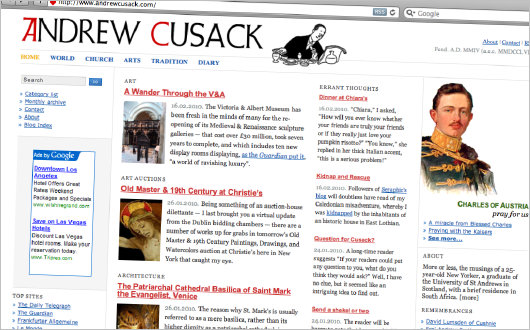
I know, it’s disgraceful. Wasn’t this place just redesigned in November? That was practically yesterday! Still, one is sometimes bitten by a bug and must simply get it out of one’s system without complaining. I hope readers will forgive this recent set of changes; I’m sure you are all as opposed to change as I am.
This is perhaps the most radical redesign of our little corner of the web ever. The front page at andrewcusack.com now features little snippets and extracts from the latest posts, but blog posts can still be viewed in the previous, chronological fashion by clicking ‘Blog Index’ in the left-hand column.
The Google ads have returned, and I hope our readers will be vigilant in rooting out any nefarious or inappropriate ads that the lords of misrule place mischievously in our midst. The way to point out an inappropriate ad is to note the web address (www.whatever-it-is.com, for example) and to e-mail me so that I can add that address to the banned list.
Dinner at Chiara’s
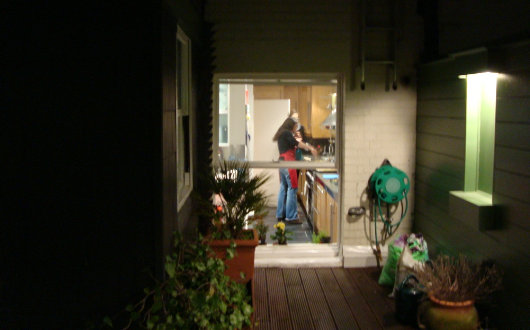
“Chiara,” I asked, “How will you ever know whether your friends are truly your friends or if they really just love your pumpkin risotto?” “You know,” she replied in her thick Italian accent, “this is a serious problem!” The possibility of never cooking pumpkin risotto again was mooted, but wholeheartedly condemned by all in attendance. The very thought was an affront to our salivating taste buds. (more…)
Kidnap and Rescue
Followers of Seraphic’s blog will doubtless have read of my Caledonian misadventure, whereby I was kidnapped by the inhabitants of an historic house in East Lothian. This update was followed by the Sexagesima Social Report, detailing our Sunday Mass, followed by the Cup of Tea of Peace, followed by the Gin & Tonic of Fortitude. Pleasant as my enforced captivity was, various duties in London obliged me to cooperate with the successful rescue effort made, curiously, by Royal Dutch Commandos.
Further ruminations on my Britannic sojourn are forthcoming.
Search
Instagram: @andcusack
Click here for my Instagram photos.Most Recent Posts
- West Point July 30, 2026
- Brunel’s Unbuilt Capitol February 3, 2026
- Cricket at Fordham January 27, 2026
- Palacio Barolo Revisted January 14, 2026
- Learning to Love Liguria January 14, 2026
Most Recent Comments
Book Wishlist
Monthly Archives
Categories