Monarchy
About Andrew Cusack
 Writer, web designer, etc.; born in New York; educated in Argentina, Scotland, and South Africa; now based in London.
 read more
News
Blogs
Reviews & Periodicals
Arts & Design
World
France
Mitteleuropa
Knickerbockers
Argentina
The Levant
Africa
Cape of Good Hope
Netherlands
Scandinavia
Québec
India
Muscovy
Germany
Academica
Equality
I find that they’re not true without looking further than myself. I don’t deserve a share in governing a hen-roost, much less a nation. Nor do most people — all the people who believe advertisements, and think in catchwords, and spread rumours. The real reason for democracy is just the reverse. Mankind is so fallen that no man can be trusted with unchecked power over his fellows. Aristotle said that some people were only fit to be slaves. I do not contradict him. But I reject slavery because I see no men fit to be masters.
This introduces a view of equality rather different from that in which we have been trained. I do not think that equality is one of those things (like wisdom or happiness) which are good simply in themselves and for their own sakes. I think it is in the same class as medicine, which is good because we are ill, or clothes which are good because we are no longer innocent. I don’t think the old authority in kings, priests, husbands, or fathers, and the old obedience in subjects, laymen, wives, and sons, was in itself a degrading or evil thing at all. I think it was intrinsically as good and beautiful as the nakedness of Adam and Eve. It was rightly taken away because men became bad and abused it. To attempt to restore it now would be the same error as that of the Nudists. Legal and economic equality are absolutely necessary remedies for the Fall, and protection against cruelty.
But medicine is not good. There is no spiritual sustenance in flat equality. It is a dim recognition of this fact which makes much of our political propaganda sound so thin. We are trying to be enraptured by something which is merely the negative condition of the good life. And that is why the imagination of people is so easily captured by appeals to the craving for inequality, whether in a romantic form of films about loyal courtiers or in the brutal form of Nazi ideology. The tempter always works on some real weakness in our own system of values: offers food to some need which we have starved.
When equality is treated not as a medicine or a safety-gadget but as an ideal we begin to breed that stunted and envious sort of mind which hates all superiority. That mind is the special disease of democracy, as cruelty and servility are the special diseases of privileged societies. It will kill us all if it grows unchecked. The man who cannot conceive a joyful and loyal obedience on the one hand, nor an unembarrassed and noble acceptance of that obedience on the other, the man who has never even wanted to kneel or to bow, is a prosaic barbarian. But it would be wicked folly to restore these old inequalities on the legal or external plane. Their proper place is elsewhere.
We must wear clothes since the Fall. Yes, but inside, under what Milton called “these troublesome disguises,” we want the naked body, that is, the real body, to be alive. We want it, on proper occasions, to appear: in the marriage-chamber, in the public privacy of a men’s bathing-place, and (of course) when any medical or other emergency demands. In the same way, under the necessary outer covering of legal equality, the whole hierarchical dance and harmony of our deep and joyously accepted spiritual inequalities should be alive. It is there, of course, in our life as Christians: there, as laymen, we can obey — all the more because the priest has no authority over us on the political level. It is there in our relation to parents and teachers — all the more because it is now a willed and wholly spiritual reverence. It should be there also in marriage.
This last point needs a little plain speaking. Men have so horribly abused their power over women in the past that to wives, of all people, equality is in danger of appearing as an ideal. But Mrs. Naomi Mitchison has laid her finger on the real point. Have as much equality as’ you please — the more the better — in our marriage laws: but at some level consent to inequality, nay, delight in inequality, is an erotic necessity. Mrs. Mitchison speaks of women so fostered on a defiant idea of equality that the mere sensation of the male embrace rouses an undercurrent of resentment. Marriages are thus shipwrecked. This is the tragi-comedy of the modern woman; taught by Freud to consider the act of love the most important thing in life, and then inhibited by feminism from that internal surrender which alone can make it a complete emotional success. Merely for the sake of her own erotic pleasure, to go no further, some degree of obedience and humility seems to be (normally) necessary on the woman’s part.
The error here has been to assimilate all forms of affection to that special form we call friendship. It indeed does imply equality. But it is quite different from the various loves within the same household. Friends are not primarily absorbed in each other. It is when we are doing things together that friendship springs up— painting, sailing ships, praying, philosophising, fighting shoulder to shoulder. Friends work in the same direction. Lovers look at each other: that is, in opposite directions. To transfer bodily all that belongs to one relationship into the other is blundering.
We Britons should rejoice that we have contrived to reach much legal democracy (we still need more of the economic) without losing our ceremonial Monarchy. For there, right in the midst of our lives, is that which satisfies the craving for inequality, and acts as a permanent reminder that medicine is not food. Hence a man’s reaction to Monarchy is a kind of test. Monarchy can easily be “debunked”; but watch the faces, mark well the accents, of the debunkers. These are the men whose tap-root in Eden has been cut: whom no rumour of the polyphony, the dance, can reach — men to whom pebbles laid in a row are more beautiful than an arch. Yet even if they desire mere equality they cannot reach it. Where men are forbidden to honour a king they honour millionaires, athletes, or film-stars instead: even famous prostitutes or gangsters. For spiritual nature, like bodily nature, will be served; deny it food and it will gobble poison.
And that is why this whole question is of practical importance. Every intrusion of the spirit that says “I’m as good as you” into our personal and spiritual life is to be resisted just as jealously as every intrusion of bureaucracy or privilege into our politics. Hierarchy within can alone preserve egalitarianism without. Romantic attacks on democracy will come again. We shall never be safe unless we already understand in our hearts all that the anti-democrats can say, and have provided for it better than they. Human nature will not permanently endure flat equality if it is extended from its proper political field into the more real, more concrete fields within. Let us wear equality; but let us undress every night.
A Realm That Never Was
The United Kingdom of the Rio de la Plata, Chile, and Peru
If we give in to temptation and attempt to see things without the benefit of hindsight, Brazil’s path to independence as a monarchy is less surprising than the fact that Argentina didn’t pursue a similar trajectory. After all: Argentina’s ‘Liberator’, José de San Martín, was himself a monarchist, as was Manuel Belgrano.
Belgrano’s project was to unite the Provinces of the River Plate with Chile and the old viceroyalty of Peru in one united kingdom under a Borbón king. This was to be the Infante Don Francisco de Paula, the youngest son of Charles IV of Spain, but the Spanish king ardently refused to yield his throne’s sovereignty over the new world, nor to allow any of his offspring to take part in the various projects for local monarchies.
When that failed, Belgrano proposed to the Congress of Tucumán that they crown an Incan as king. San Martín, Güemes, and others supported this, but Buenos Aires resisted the plan. They proposed instead to crown Don Sebastián, a Spanish prince living in Rio de Janeiro with his maternal grandfather, King João VI of Portugal.
João thought the scheme would end up injurious to Portugal’s interests and so put the kibosh on it.
And don’t get us started on Carlotism, which was a whole ’nother pile of tricks.
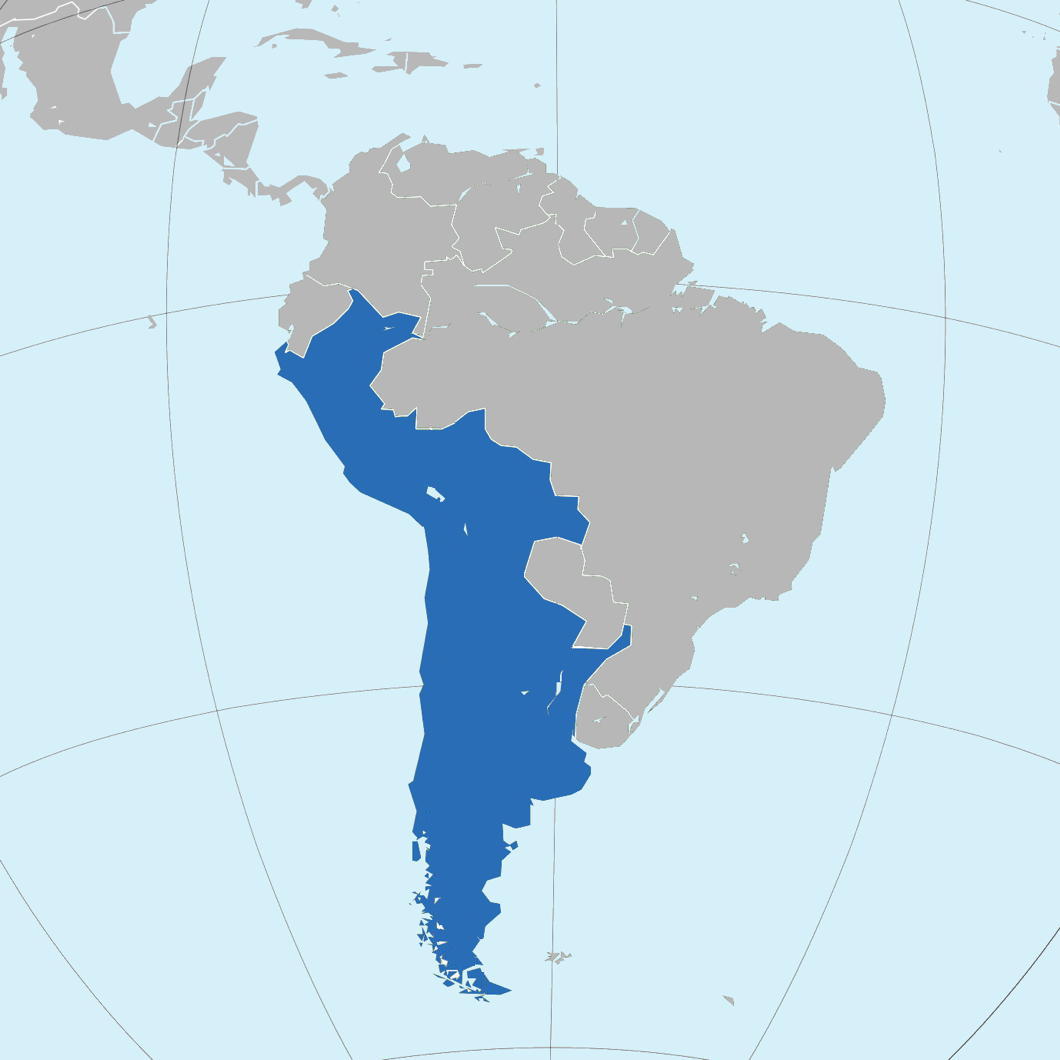
Belgrano’s monarchic project in its 1815 iteration was to unite the provinces of the River Plate with Chile and the old viceroyalty of Peru to create a single realm out of these Spanish-speaking territories.
He even drafted a constitution for the United Kingdom of the Rio de la Plata, Chile, and Peru, which is rudimentarily translated into English below. This even went so far as to specify the coat of arms and flag of the kingdom.
The best history covering these unconsummated plans remains Bernado Lozier Almazán’s 2011 book Proyectos monárquicos en el Río de la Plata 1808-1825: Los reyes que no fueron which sadly has not yet been translated into English.
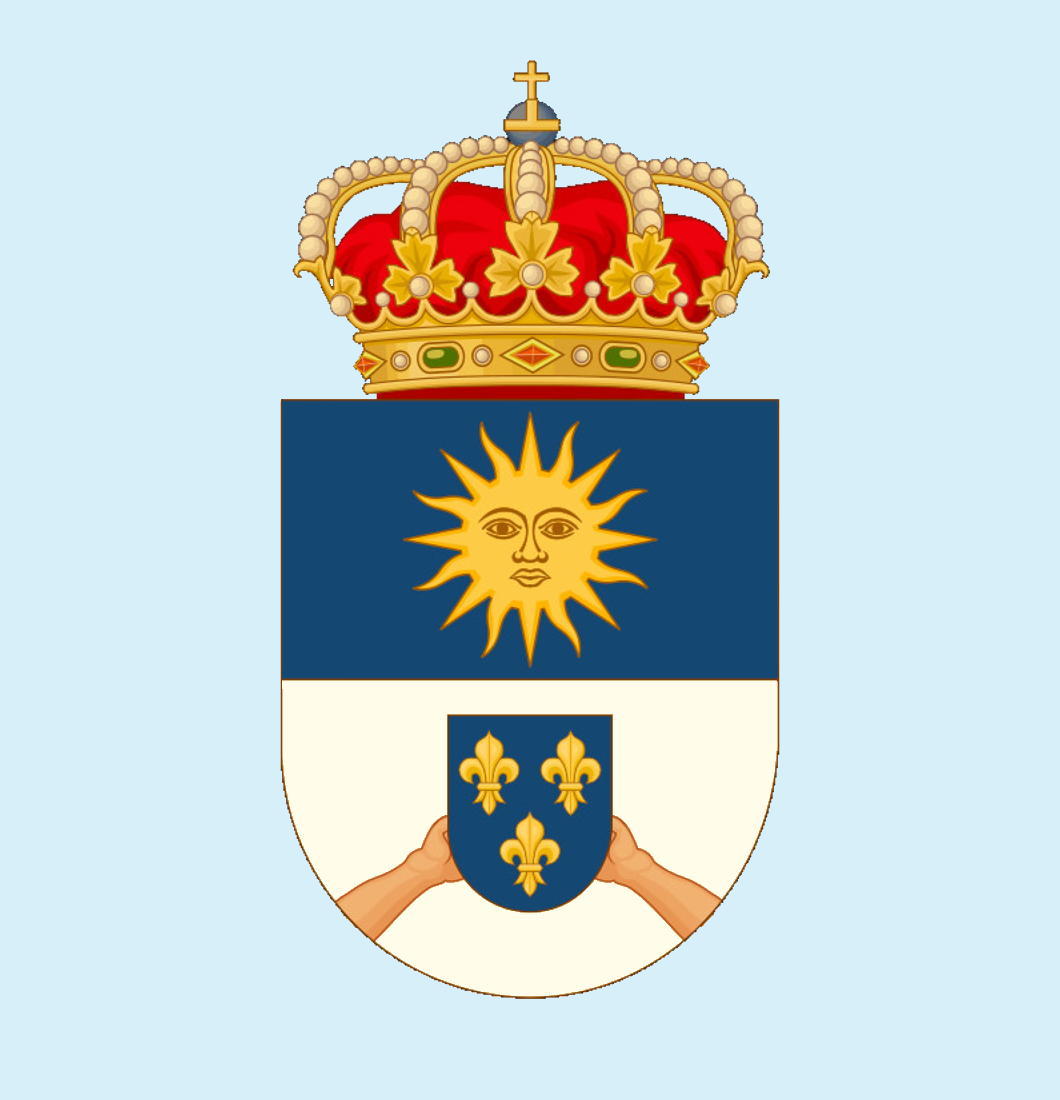
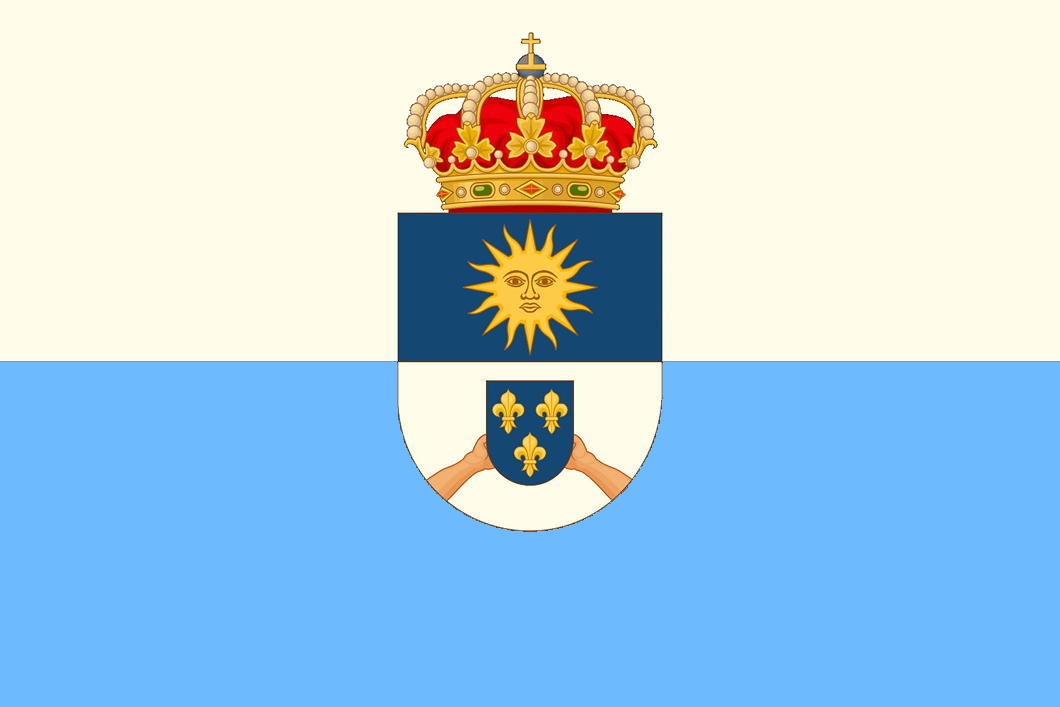
Article 1 — The new Monarchy of South America will have the name of the United Kingdom of the Río de la Plata, Peru, and Chile; its coat of arms will be a shield that will be divided into blue and silver fields; In the blue that will occupy the upper part, the image of the Sun will be placed, and in Silver two arms with their hands that will hold the three flowers of the emblems of My Royal Family; surmounted by the Royal Crown, and will have as supporters a tiger and a llama. Its flag will be white and light blue.
Article 2 — The Crown will be hereditary in order of proximity in the lines of agnation and cognation.
Article 3 — If, God forbid, the current King dies without succession, his rights will revert to me so that with the agreement and consent of the Legislative Body I choose another Sovereign from my Royal Family; but, if I no longer exist, said Chambers will have the power to elect one of the princes of my Blood Royal as their King.
Article 4 — The person of the King is inviolable and sacred. The Ministers are responsible to him. The King will command the forces of sea and land; he will declare war, he will make peace; he will make treaties of alliance and trade; he will distribute all the offices, he will be in charge of the public administration, the execution of the laws, and the security of the State to whose objects he will give the necessary orders and regulations.
Article 5 — The King will name all the nobility; he will grant all the dignities, he will be able to vary them and grant them for life, or make them hereditary. The King may forgive offences, commute sentences, or dispense them in the cases that the law grants him.
Article 6 — The nobility will be hereditary in the same terms as the Crown; it will be distinguished precisely in three grades, and cannot be extended to more: the first grade will be that of Duke, the second of Count and the third of Marquis; the nobles will be judged by only those of their class, they will have part in the formation of the laws, they will be able to be Deputies of the Towns and they will enjoy the honours and privileges that the law or the King grants them; but they may not be exempted from the charges and services of the State. Any individual of the State of any class and condition may opt for the nobility for their services, for their talents, or for their virtues. The first number of the nobility will be agreed by the King and Representative and at any other time by the Legislative Body.
The Legislative Body
Article 7 — The Legislative Body will be composed of the King, the Nobility, and Representation of the Commons.
The Upper Chamber will be formed: the first part by all the Dukes, whose right is declared inseparable from their dignity; the third part of the Counts, by election among themselves, presided over by a King’s Commissioner; the fourth part of the Marquises, elected on their own terms; and the fifth part of the Bishops of the Kingdom, elected the first time by the King, being in charge of it and the other Chamber, to establish the bases for the election of this body for the future.
Article 8 — The Second Chamber will be made up of the Deputies of the Peoples, who will be elected for the first time in the customary terms that allow less play to the parties, and will consult the greatest opinion, it being an essential charge to the Legislative Body to establish for the latter the most adequate and precise laws.
Article 9 — The power to propose the law will be common to the King and both Chambers; the order of the proposition will be from the King to the First Chamber, and from this to the King, and from the Second to the First, in the event that a proposal is not admitted by its immediate chamber, it cannot go to the third, nor be repeated until another session. Every law will be the result of the plurality of both Chambers, and secondly of the King; the sanction and promulgation of the law will be exclusively his.
The chambers may not join or dissolve without the express order of the King. He will be able to extend them for as long as he deems it necessary, and dissolve that of the Deputies when he deems it appropriate.
Article 10 — The designation of the King’s income, his Royal House and Family, the expenses of his Minister and Cabinet, the civil list, the military, and extraordinary expenses will be exclusively agreed by both Chambers, to which in the same way belongs to the arrangement and imposition of rights and contributions.
The Ministry
Article 11 — No order of the King without the authorisation of his corresponding Minister will be fulfilled; the Ministers will have the power to propose to both Chambers what they deem appropriate, and enter any of them to report what they deem appropriate; the Ministers will indispensably be Members of the High Court, and only by it may they be judged. The Ministers may not be accused except for treason or extortion, the accusation will not be admissible unless it is made by the plurality of one or another Chamber; the Minister of Finance will present to both Chambers for their knowledge and approval the accounts of the previous year.
The Judiciary
Article 12 — The judges will be appointed by the King; they will be perpetual and independent in their administration, only in the case of notorious injustice or ruling can they be accused before the Upper Chamber who will judge them independently of the King, who will protect and execute their decisions in this part; The judges of the fact will be established, called the jury in the most adaptable way to the situation of the Towns.
The Commonalty of the Nation
Article 13 — In addition to the proportionate and uniform distribution of all charges and services of the State, the option to nobility, jobs and dignities, and the common competition and subjection to the law; The Nation will enjoy, with the inalienable right to property, freedom of worship and conscience, freedom of the press, the inviolability of property, and individual security in the terms clearly and precisely agreed upon by the Legislative Power.
Those elected by the nobility, clergy, and commonalty will last six years, starting to renew the first elected by half every three years: The Common Deputies may not be executed, persecuted, or tried during their commission, except in cases that the law designated and by the Chamber itself to which they belong.
The death of The Monarch
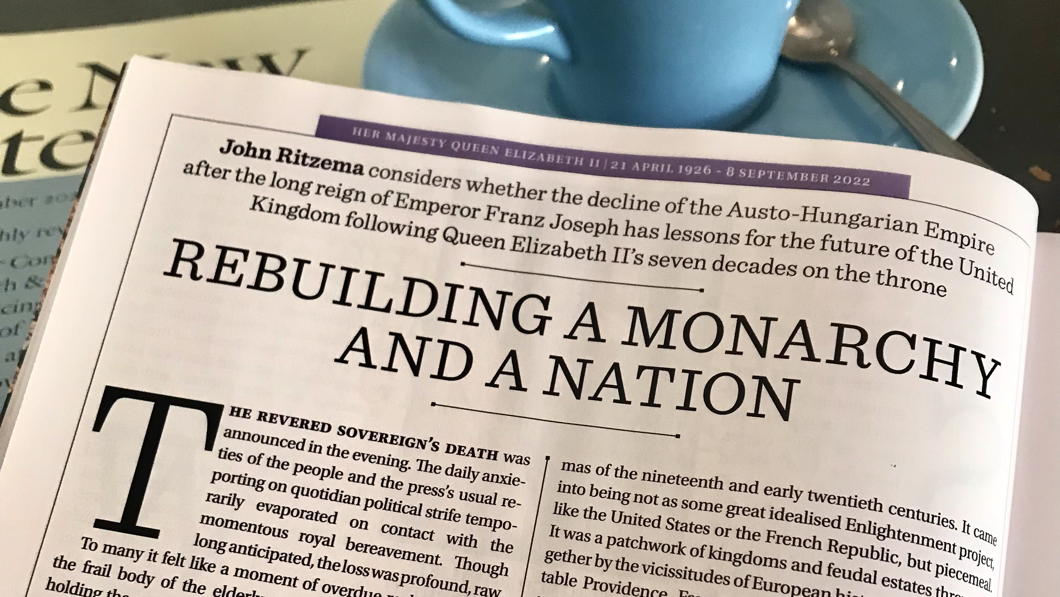
The revered Sovereign’s death was announced in the evening. The daily anxieties of the people and the press’s usual reporting on quotidian political strife temporarily evaporated on contact with the momentous royal bereavement. Though long anticipated, the loss was profound, raw.
To many it felt like a moment of overdue reckoning. As if the frail body of the elderly monarch had somehow been holding the great, ancient, long-weakening and precariously multinational state together. The world of the previous century had finally, almost imperceptibly, slipped away. Franz Joseph was dead. …
In the October 2022 number of The Critic, Dr John Ritzema explores the parallels between the recent demise of our late sovereign with the death of the Emperor Franz Joseph over a hundred years earlier — and wonders whether there are any lessons for the reign of King Charles III: Rebuilding a Monarchy and a Nation.
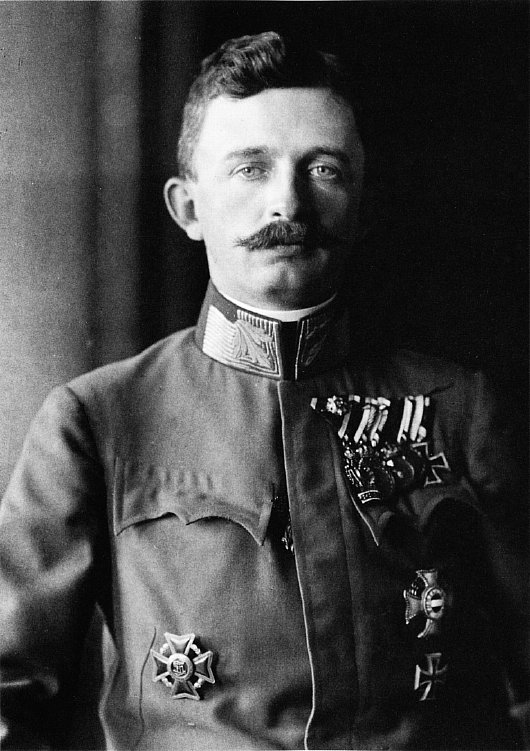
One of those minor curiosities that both Franz Joseph and Elizabeth II were succeeded by Charleses — the latter by her son, and the former by his grand-nephew Blessed Charles of Austria.
Cypher Shift
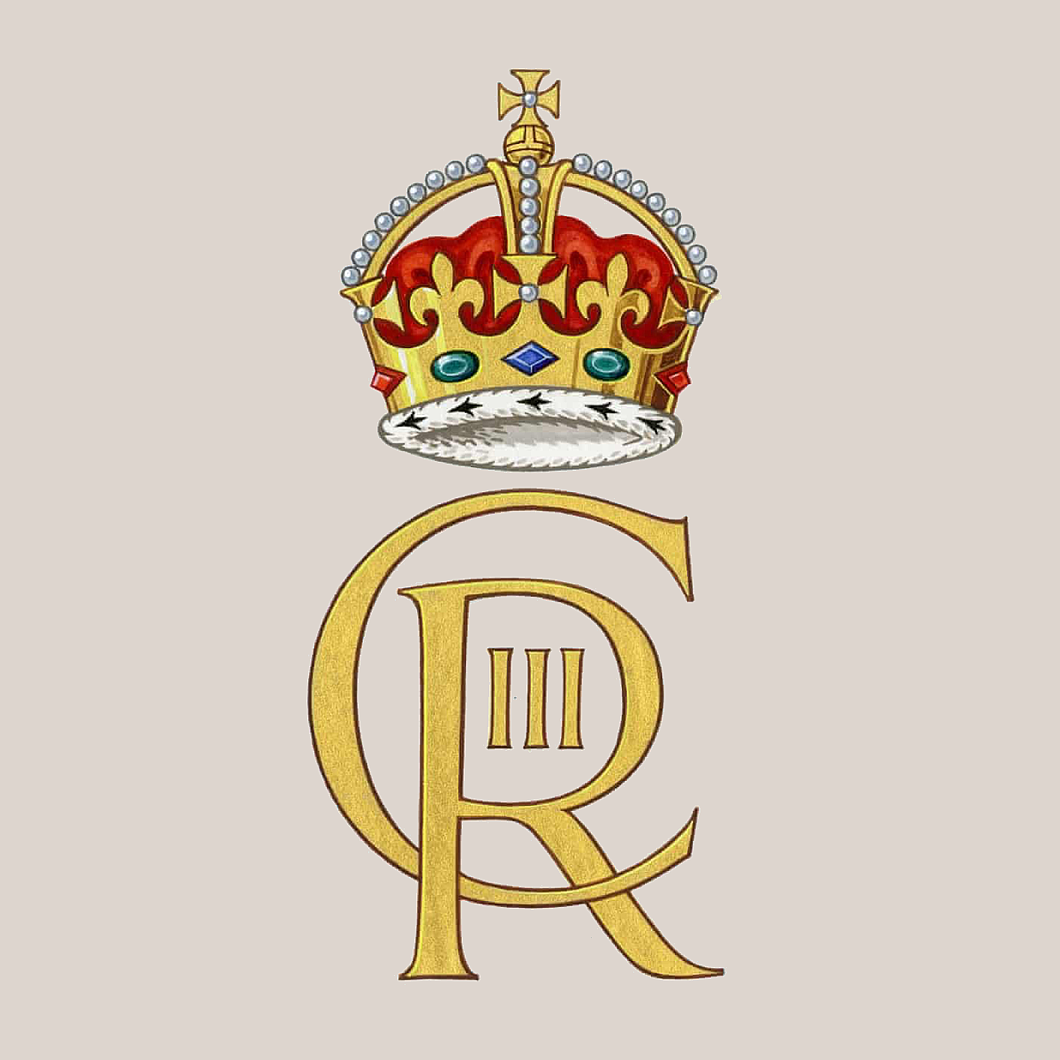
Out with the old, in with the new: the King has released his new royal cypher, with a stylised CR III replacing the familiar EIIR. As with so many things, I am sure we will get used to it with time.
Given the longevity of the late Queen’s reign it will be some time before we see it appearing on pillarboxes, but it will enter our lives more quickly via postal franking, stamps, currency, and uniforms.
Many are trying to come up with complex, almost mystical, explanations for why St Edward’s Crown has been replaced with the Tudor crown atop the cypher. More likely, I suspect, is that it is a useful means of giving the new reign a respectful visual differentiation from its preceding one.
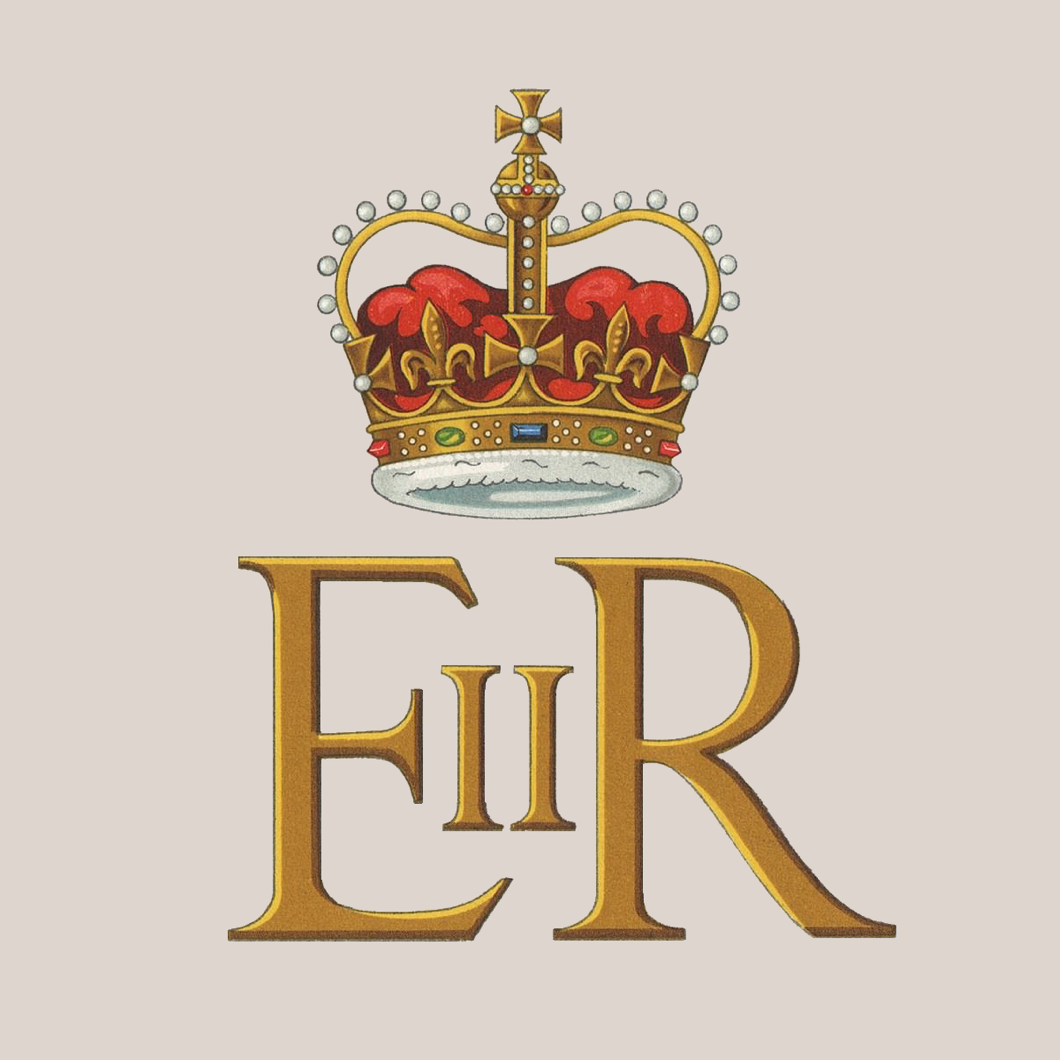
I’ve always been rather fond of the Tudor crown, and the Caledonian version of the new cypher rightly includes the Crown of Scotland — the oldest amidst the Crown Jewels of this realm as (unlike England) Scotland was spared the iconoclastic destruction of Cromwell’s republic.
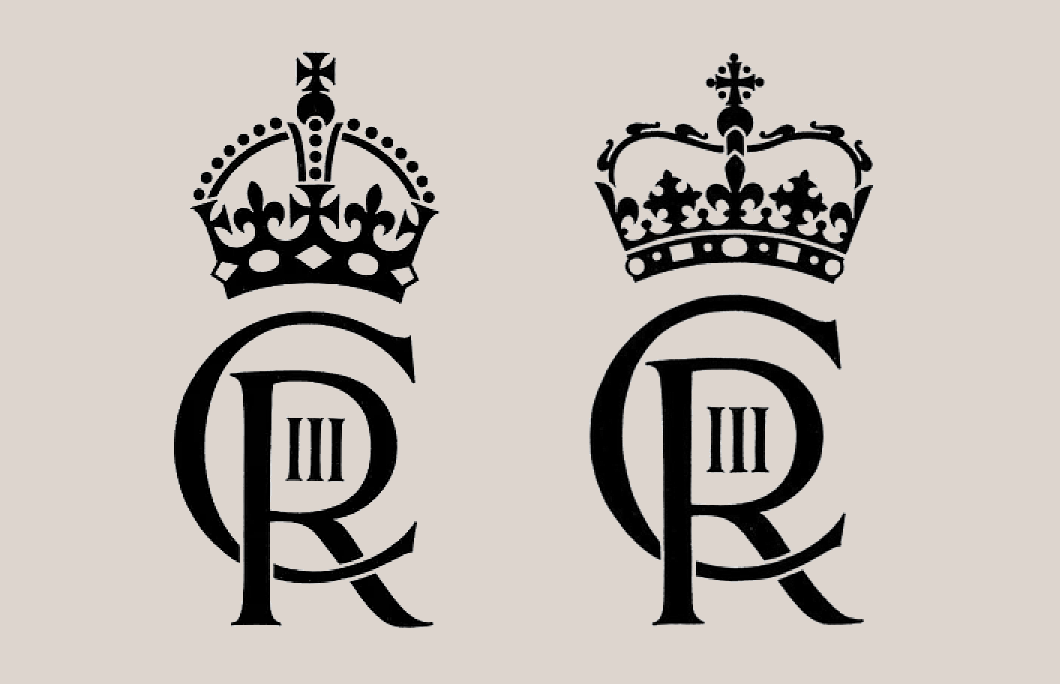
The new royal cypher, left, and its Scottish variant, right.
Elizabeth II
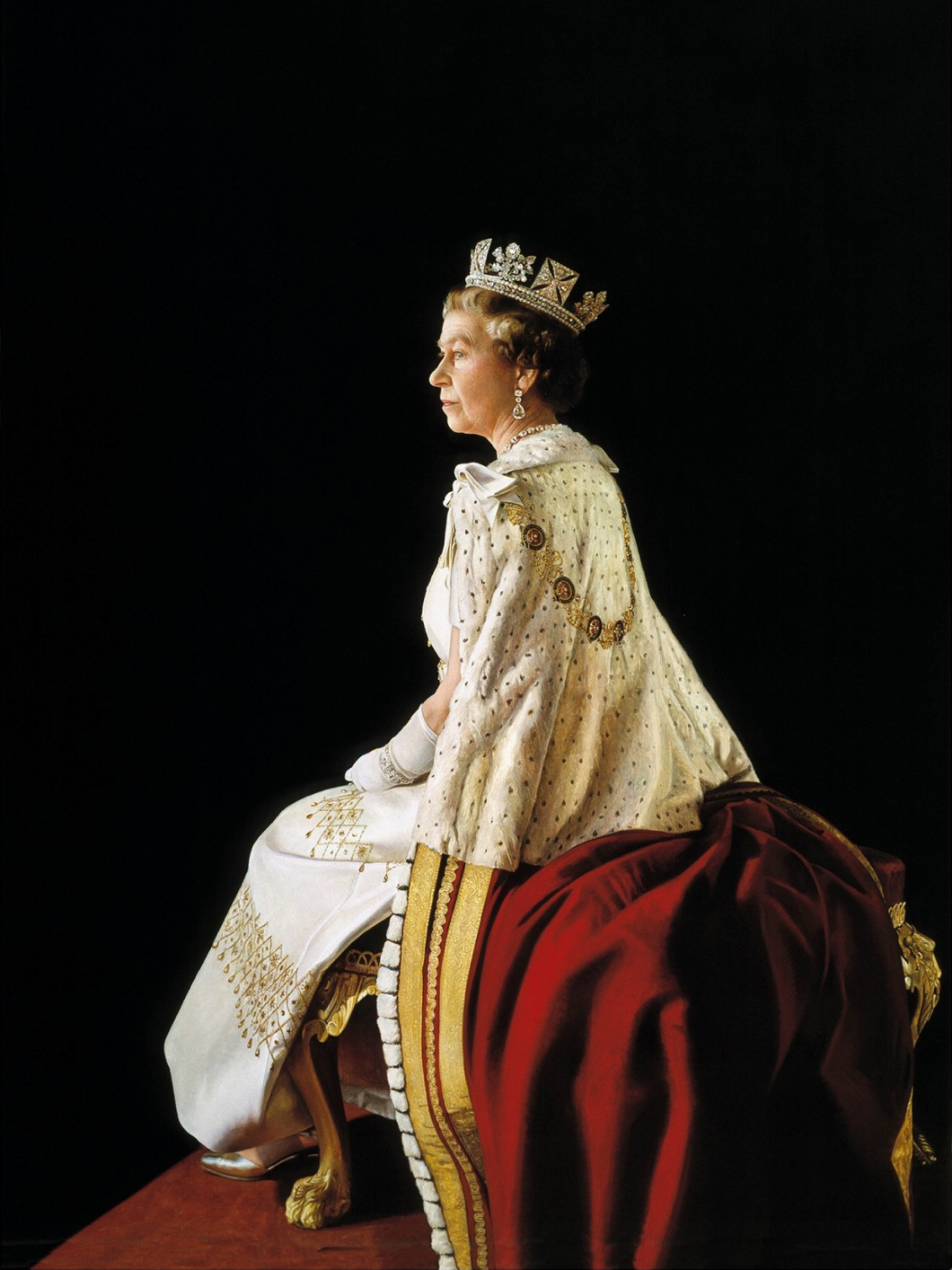
ELIZABETH II
the United Kingdom
of Great Britain & Northern Ireland
Canada
Australia
New Zealand
Jamaica
the Bahamas
Grenada
Papua New Guinea
the Solomon Islands
Tuvalu
Saint Lucia
Saint Vincent & the Grenadines
Antigua & Barbuda
Belize
and Saint Kitts & Nevis
quondam Queen of South Africa, Pakistan, Ceylon, Ghana, Nigeria, Sierra Leone, Tanganyika, Trinidad & Tobago, Uganda, Kenya, Malawi, Malta, the Gambia, Guyana, Barbados, Mauritius, and Fiji
Head of the Commonwealth
Defender of the Faith
Duke of Normandy
Duke of Lancaster
Lord of Mann
Head of the House of Windsor
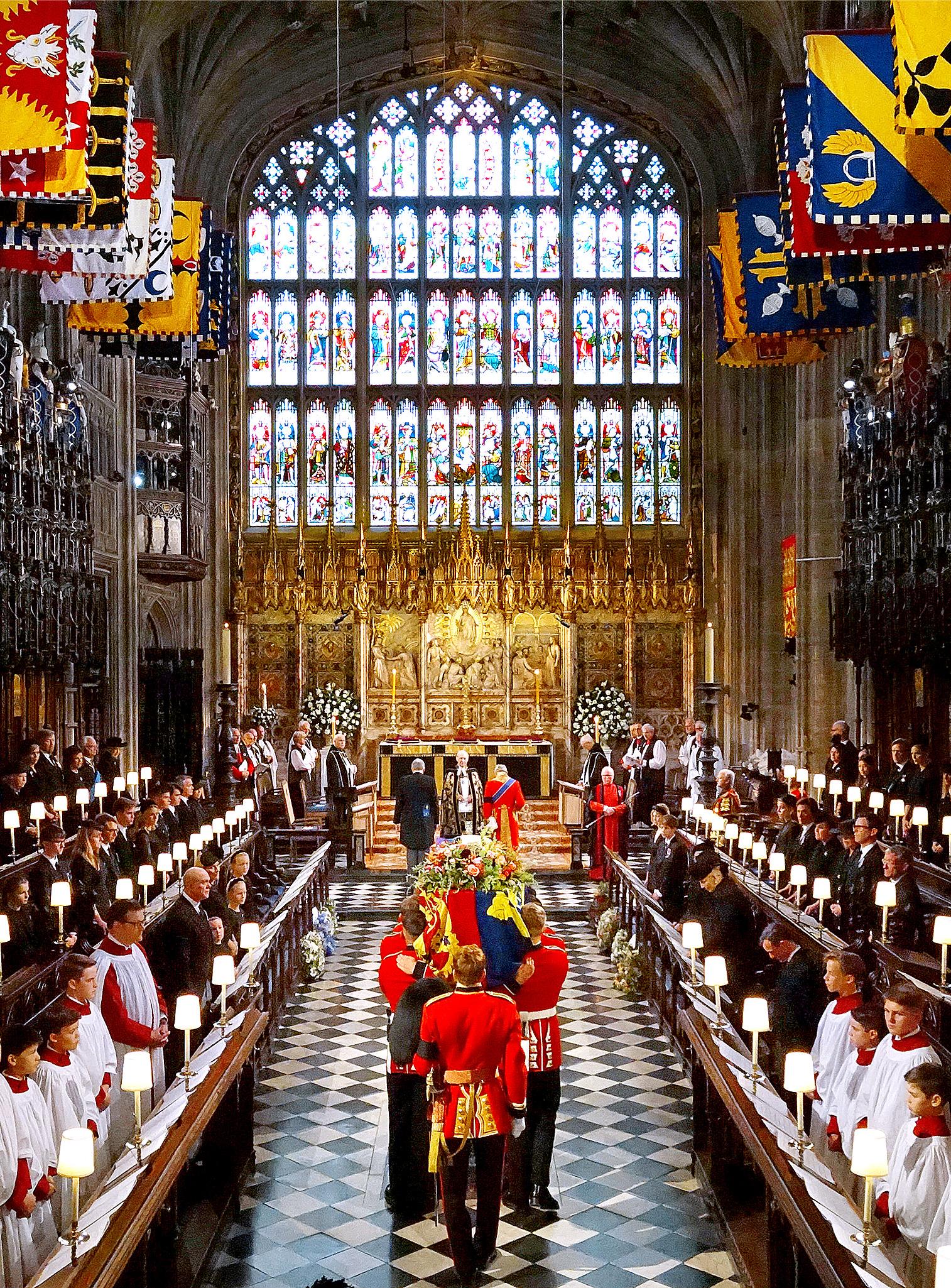
The Accident of Birth
A king is a king, not because he is rich and powerful, not because he is a successful politician, not because he belongs to a particular creed or to a national group. He is king because he is born.
And in choosing to leave the selection of their head of state to this most common denominator in the world — the accident of birth — Canadians implicitly proclaim their faith in human equality, their hope for the triumph of nature over political manoeuvre, over social and financial interest; for the victory of the human person.
— Fr Jacques Monet SJ FRSC
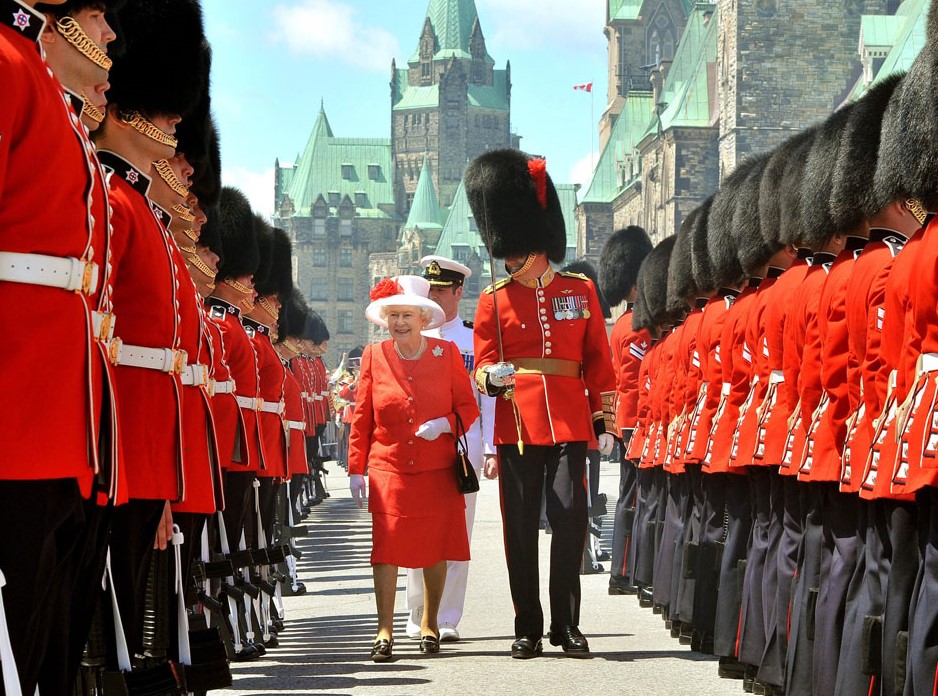
The Saints are Glad
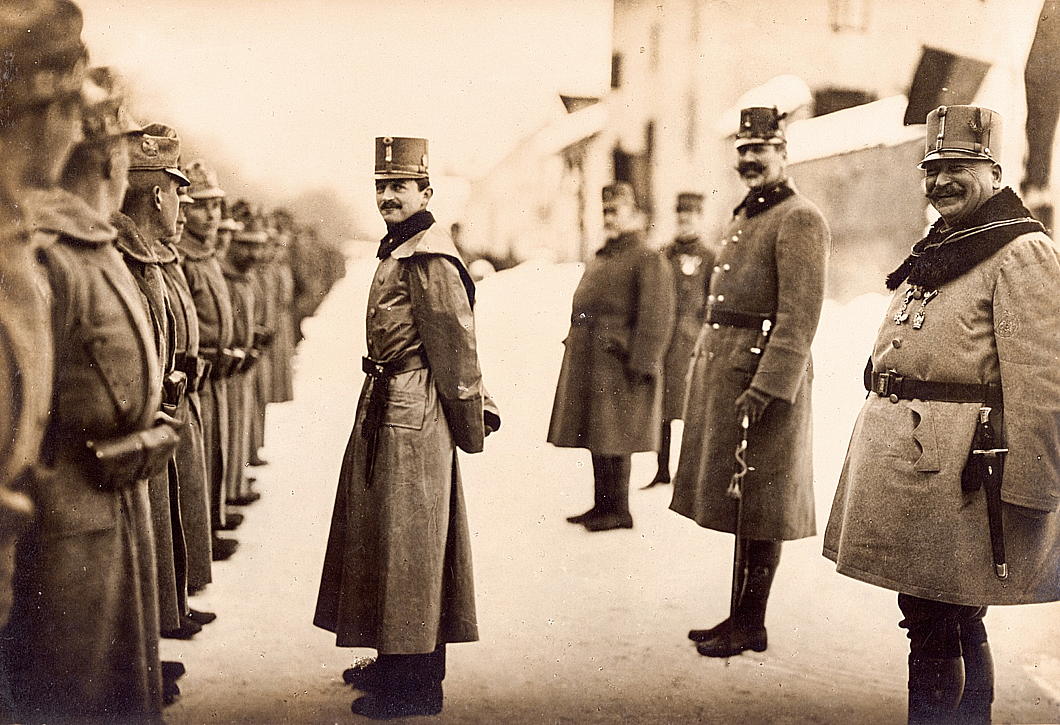
I love this photo of Blessed Charles — here still the heir to the throne — inspecting Austro-Hungarian troops in the Südtirol in 1916.
On the far right of the photograph, Gen. Franz (Ferenc) Rohr von Denta, commander of the Royal Hungarian Army, beams with a massive grin. He looks like a bit of a character.
Next to him is Archduke Eugen, the last Hapsburg to serve as Hoch- und Deutschmeister of the Teutonic Order, which in 1929 was transformed into a priestly religious order.
Franz Joseph would die just months after this photograph was taken.
His grand-nephew and successor Charles would be the last Emperor of Austria, Apostolic King of Hungary, and King of Bohemia — amongst the myriad other titles — to reign (so far).
Fête du Dominion
à tous nos amis canadiens!
Happy Dominion Day
to all our Canadian friends!
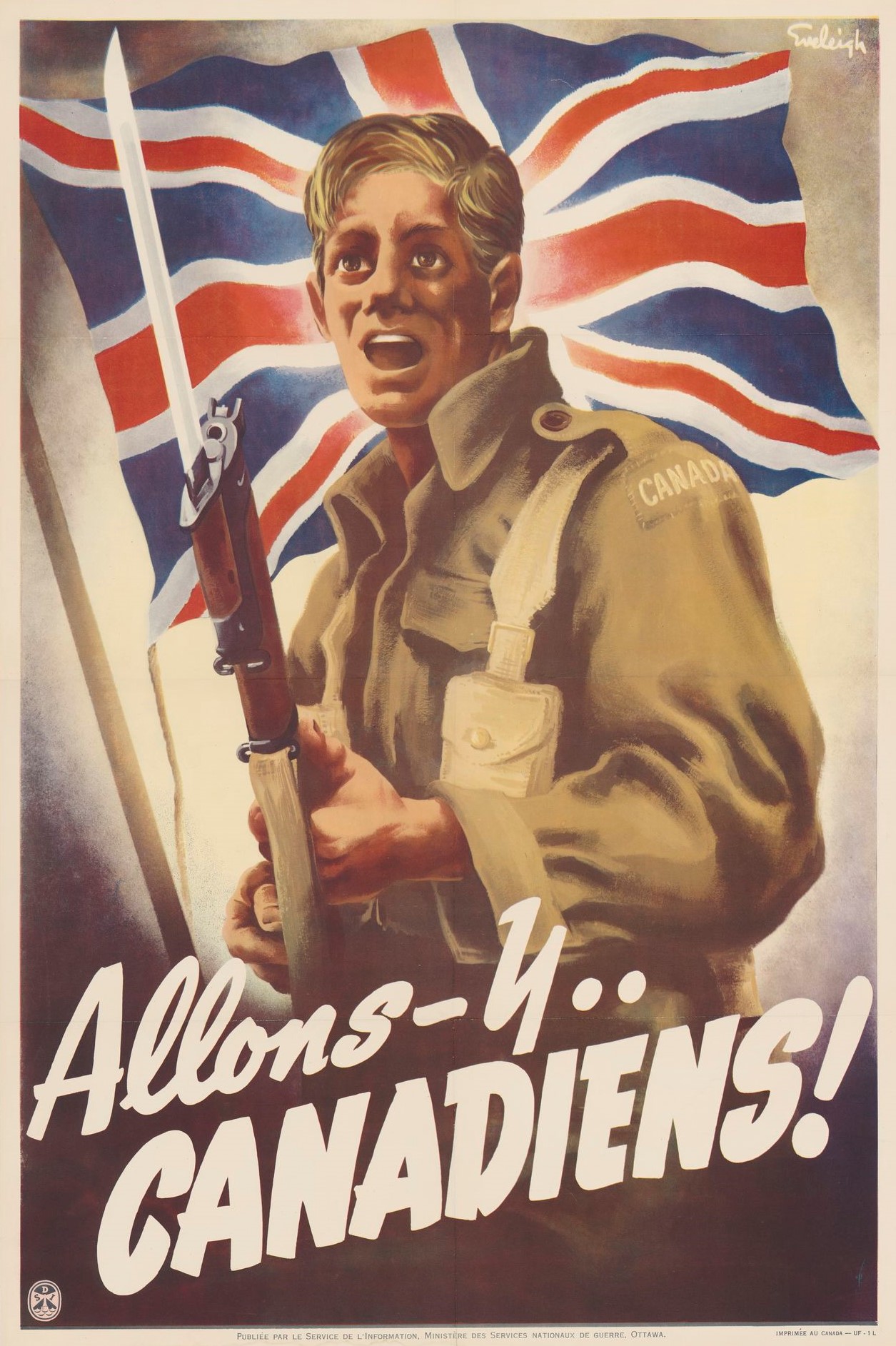
Canada is one of the most fascinating and interesting realms on the face of the earth, though the Canadians are a curiously humble people despite their immense achievements.
I’ve written some odd bits and bobs of Canadiana over the years, and thought a small selection of which might prove a suitable way of celebrating the great dominion’s national day.
Buchan in Quebec
While the Salon bleu in Quebec’s parliament used to be green, the Salon rouge has kept its lordly colour. Conservative Quebec was the last of the Canadian provinces to abolish its unelected upper house which faced the chop in 1968, that year so beloved of duty-shirkers and ne’er-do-wells.
Thirty-three years earlier, the Salon rouge was the scene of a more regal ceremony: the official installation of the Scots writer and statesman John Buchan as Governor General of Canada. Being a Presbyterian with an in-built (but in his case only occasional) tendency to dourness, Buchan wanted to go as an ordinary commoner but the King of Canada insisted on a peerage for his viceregal representative in the dominion.
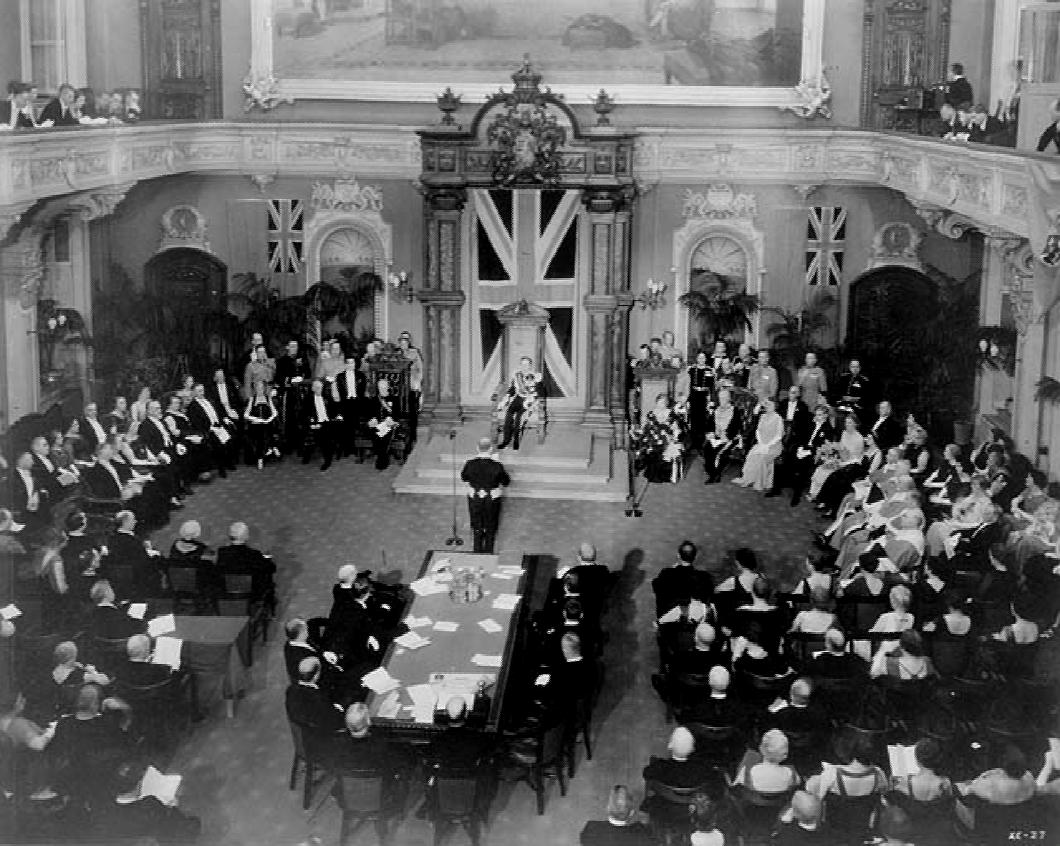
Thus it was Lord Tweedsmuir who arrived in Quebec in 1935 and was installed as Governor General in the Salon rouge on All Souls’ Day of that year. Above, the Prime Minister William Lyon Mackenzie King gives an address after the swearing-in.
Buchan proved an influential Governor General and helped set the tone of Canada’s monarchy in the aftermath of the 1931 Statue of Westminster that recognised the distinct nature of the Commonwealth realms. He also orchestrated the King’s successful 1939 trip across Canada — which also featured the King and Queen holding court in the Salon rouge of Quebec’s Parliament.
By the time of his death in post in 1940, John Buchan had become His Excellency The Right Honourable The Lord Tweedsmuir GCMG GCVO CH PC. Not a bad end to a good innings.
Earls, Shires, Hides, and Hundreds
What the Practice of ‘Pricking the Lites’ Tells Us About Territorial Division in Anglo-Saxon England
As cheekily noted by Ned Donovan on his Twitter feed, HM the Q has recently engaged in the old practice of ‘pricking the lites’ to appoint High Sheriffs for the three ceremonial counties of Lancashire, Greater Manchester, and Merseyside. But in order to know what ‘pricking the lites’ is it’s worth looking at the territorial division of Anglo-Saxon England and the old offices that emerged therefrom.
In those days, the land was divided into hides, a hide being the amount of land on which a family lived and supported itself. Ten hides together were known as a tithing, and ten tithings were collectively a hundred.
As hundreds go, the best-known today are the Chiltern Hundreds because of the parliamentary role they play. Members of Parliament are not allowed to resign, but nor are they allowed to hold an office of profit under the Crown.
So whenever an MP wants to resign, he or she is appointed Crown Steward and Bailiff of the three Chiltern Hundreds of Stoke, Desborough, and Burnham and, having accepted such office, is deemed to have disqualified themselves from continuing to sit in the House of Commons. (The Manor of Northstead is also used alternately with the Chiltern Hundreds.)
Anyhow, each hundred was supervised by a constable, and groups of hundreds were collected into shires. Each shire was overseen by an earl, of whom the French equivalent is a count, so after the Normans turned up shires became more often known as counties. These now divvy up territory across the English-speaking world, from Kenya to California.
Each level of these Anglo-Saxon divisions had a relevant court for decision-making, and the officer who administered or enforced these decisions was known as the reeve. Amongst these titles – town-reeve and reeve of the manor, etc. – there was the shire-reeve, or sheriff as it was contracted.
In the 1970s, for reasons unknown to me, all the sheriffs in England & Wales were elevated to high shrievalties.
Every February or March, a parchment is prepared for the Queen in her capacity as Duke of Lancaster with three names of candidates for high sheriff in the three current ceremonial counties covered by the old duchy. This parchment is known as the lites (a cognate of ‘list’, I believe).
At a meeting of the Privy Council, the Queen takes a silver bodkin and pricks the parchment next to the name of the candidate she chooses to be high sheriff. In practice, this is always the first name on the list, and customarily the following names move up a notch and serve in later years.
A similar process takes place for the Duke of Cornwall to appoint their high sherriff but without the aid of the Privy Council.
From Realm to Republic
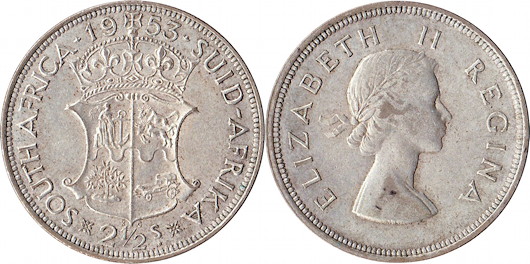
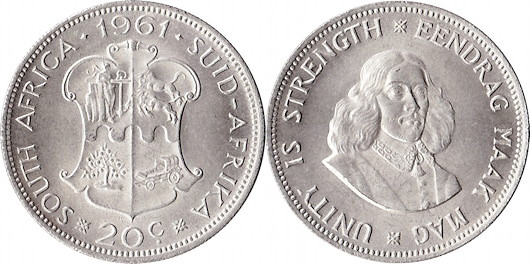
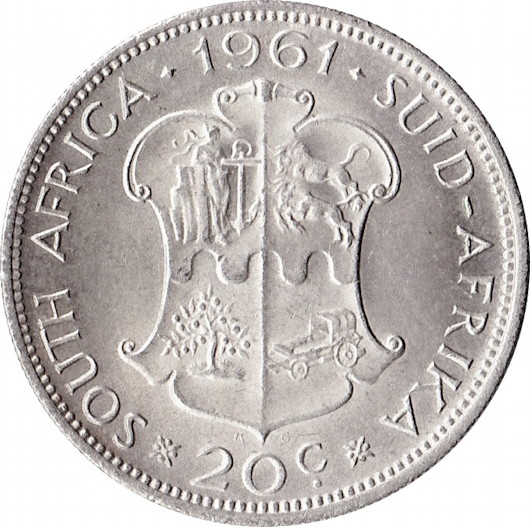
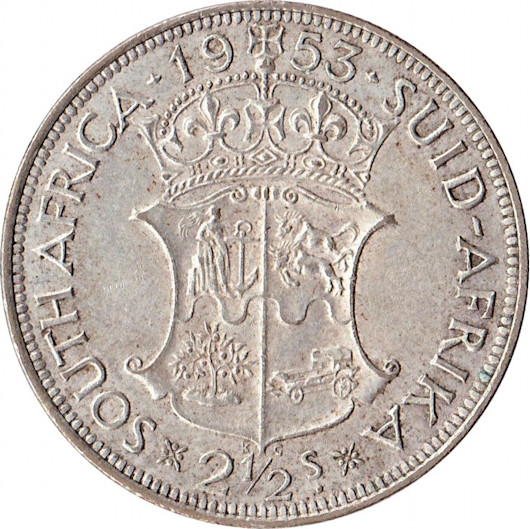
South Africa’s transition from a monarchy to a republic coincided with a change of currency. Out went the old South African pound (with its shillings and pence) and in came the decimilised rand.
Luckily the republican government had the good taste to commission George Kruger Gray, responsible for the country’s most beautiful coinage, to design the new coins. HM the Queen was replaced by old Jan van Riebeeck, and the country’s arms were deprived of their crown.
The Queen
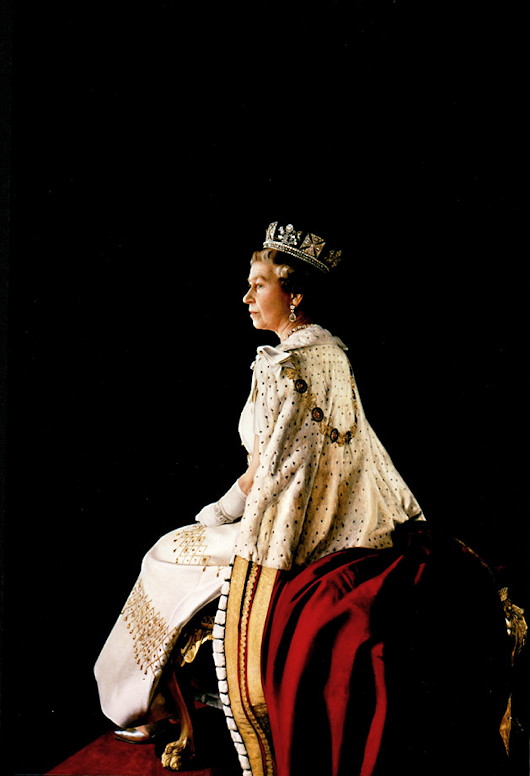
1992; Oil on canvas, 96 in. x 60 in.
Stockholm in the Swinging 60s
The Solemn Opening of the Riksdag was the state opening of Sweden’s parliament, seen here in a recording from 1960 during the reign of Gustaf Adolf. Years ago I wrote about Oskar II’s opening of parliament.
Alas, all this was done away with as part of the constitutional innovations of 1974, and the Swedish legislature is now opened with a much simpler ceremony.
via Karl-Gustel
Botswana and Hereditary Power
To any observer it must be obvious that hereditary power of some kind is natural and most of the time inescapable. It’s not that you need to be born into power to wield it, but experience shows it doesn’t hurt. Since I was born, there has been just one American presidential election (2012) in which a member of either the Bush or Clinton families was not either the official candidate of their respective party or a significant contender for that role.
In Canada, the current prime minister has sailed into office solely on a combination of good looks and being the son of a previous prime minister. In Ireland there are no fewer than forty-one families who have had three or more members elected to the Oireachtas (or to the Commons before it). The relatives and descendants of Timothy Sullivan managed to elect thirteen members between 1874 and 2016 as MPs, TDs, senators, or MEPs. Sullivan’s son and great-grandson both served as Chief Justice of Ireland to boot.
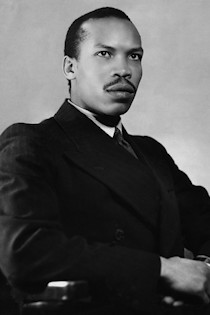
Sir Seretse Khama
Botswana — the most succesful state in Africa by many gauges — today celebrates the fiftieth anniversary of its assuming the mantle of sovereignty after eighty-one years as a British protectorate. Given that the United States, Canada, and Ireland are generally viewed as succesful countries, the hereditary aspect of power might help explain the comparitive success of Botswana, a multiparty state with free and fair elections, relative to its neighbours. The fourth and current president is Ian Khama, formerly a lieutenant general in the Botswana Defence Force. President Khama is the son of Sir Seretse Khama, the Balliol man who led his country and its people to independence fifty years ago and served as Botswana’s first president. Sir Seretse in turn is the grandson of King Khama III, last kgosi of Bechuanaland before the protectorate and leader of the Bamangwato tribe.
When Sir Seretse Khama became leader of Botswana it was the third poorest country in Africa — now it is the sixth richest on the continent in terms of GDP per capita. In a continent not known for good government Botswana, though not without its problems, is an oasis of stability and order.
At today’s celebrations for the fiftieth year of independence, President Khama wasn’t taking any credit for his country’s success: “Where we may have failed we take the blame. Where we succeeded we thank God.”
Oliver VII
by Antal Szerb, trans. by Len Rix
Pushkin Press (2013), £12, 208 pages
Hungarian by nationality, Catholic by faith, Jewish by blood — Antal Szerb was capable of touching the boundaries of intense seriousness bordering on the mystical (as in Journey by Moonlight) or magical (The Pendragon Legend) even though he is probably better known as paragon and only member of the interwar neo-frivolist school of literature.
Here he is at his frivolous best with a novel about the monarch of a Ruritanian kingdom in crisis who abdicates and escapes to Venice incognito, where he falls in with a crowd of confidence tricksters who ultimately, unaware of the ex-king’s true identity, force him to impersonate himself.
In Oliver VII, romance, intrigue, and the perpetual allure of the genteel portion of the criminal class all combine in an enjoyable farce.
Protestant King in His Catholic Realm
George VI in Quebec
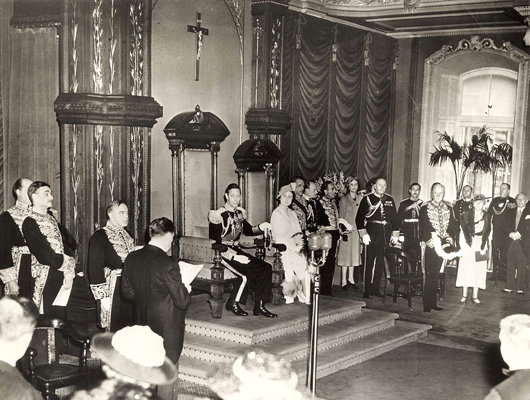
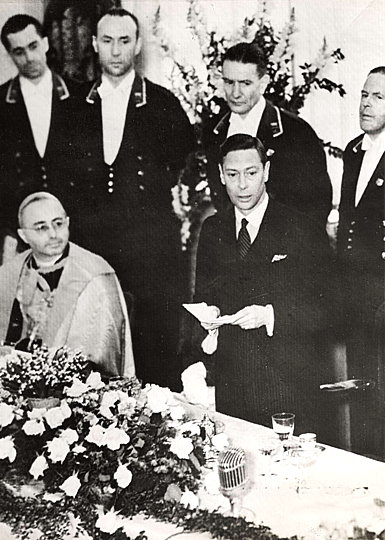
In the midst of some unrelated research the other day, I came across these photos of George VI on his first visit to Quebec as King in 1939. I think the Parlement du Québec is probably the only Commonwealth legislature to have a crucifix in its plenary chamber (c.f. ‘Christ at the heart of Quebec’, 25 May 2008). No, no, of course the Maltese do as well, in their surprisingly ugly parliament chamber. But Malta is now an island republic, while Quebec retains its monarchy.
In the above picture, the King and Queen of Canada hear a loyal address in the Salle du Conseil législatif of the Hôtel du Parlement in the city of Quebec. Below, the King speaks at a state dinner in the Chateau Frontenac. Seated is Cardinal Villeneuve, the Primat du Canada and Archbishop of Quebec.
George Tupou V, RIP
I note with great regret the early death of George Tupou V, the King of Tonga. Readers will remember the King from our 2008 report, Monocled Monarch is the King of Fashion. The blog post was forwarded to the King a year later by one of his honorary consuls, and it’s rather nice to think that a reigning sovereign has visited our little corner of the web.
Requiem aeternam dona ei, Domine: et lux perpetua luceat ei.
Requiescat in pace. Amen.
Ireland’s Viceregal Throne Replaced
This sort of thing is devised simply to raise Cusackian hackles: having been used in every presidential inauguration in the history of the State until now, Ireland’s viceregal throne (above, left) is being replaced as the presidential chair. Supposedly it had become “a bit natty”, and no-one in the Office of Public Works knew so much as a single decent furniture restorer to get it back into condition. Scandalous! Its successor (above, right) was commissioned from furniture designer John Lee, and is rather new rite, as they say in London Catholic circles. (more…)
A Rioplatense Kingdom?
New book explores the monarchic projects of the River Plate, 1808–1825
A book recently published in Buenos Aires sheds new light on the difficult transition period between the Spanish Empire on the River Plate and the foundation of the Argentine Republic. The launch party for Bernado Lozier Almazán’s Proyectos monárquicos en el Río de la Plata 1808-1825. Los reyes que no fueron (“Monarchic projects in the River Plate 1808–1825: The kings who weren’t”) was held recently in the Quinta ‘Los Ombúes’, home of the municipal library, museum, and archives of San Isidro, the city in the Provincia de Buenos Aires known as Argentina’s ‘Rugby Capital’.
Proyectos monárquicos highlights the forgotten truth that most of the Argentine ‘patriots’ — San Martín, Belgrano, and Alvear among them — were monarchist, not republican. Proposals involving the courts of Spain, Portugal, France, and even England were proffered, and there was even an interesting proposal to marry a European prince to an Incan princess and offer him the throne of the Río de la Plata. (more…)
Canada’s Royal Standards
In anticipation of the recent visit of the Duke and Duchess of Cambridge to Canada, the government of that dominion unveiled new Canadian personal flags for the Prince of Wales and the Duke of Cambridge. The British Empire started out as a group of states and colonies united in the British crown, but as the Empire evolved into the Commonwealth, dominions were gradually recognised as sovereign entities of their own. Thus when, for example, Elizabeth II visits, say, Vancouver, it is not the ‘Queen of England’ who is visiting but the Queen of Canada exercising her functions in her own country. (This is a point frequently lost upon ideological republicans). Even when Elizabeth remains in London she puts on different ‘hats’ for different occasions. The only time I ever saw the Queen was at a Service for Australia at Westminster Abbey, thus it was the Queen’s Personal Flag for Australia which flew from the tower of the Abbey, not the British Royal Standard.
The Queen’s Personal Flag for Canada (above, top), often informally known as the Canadian Royal Standard, was devised in 1962 (the same year similar banners were created for Australia and New Zealand). Until 2011, the Queen was the only member of the Canadian Royal Family to have a personal flag for Canada, but now she is joined by her son and grandson, the Prince of Wales and the Duke of Cambridge respectively.

Search
Instagram: @andcusack
Click here for my Instagram photos.Most Recent Posts
- West Point July 30, 2026
- Brunel’s Unbuilt Capitol February 3, 2026
- Cricket at Fordham January 27, 2026
- Palacio Barolo Revisted January 14, 2026
- Learning to Love Liguria January 14, 2026
Most Recent Comments
Book Wishlist
Monthly Archives
Categories