Great Britain
About Andrew Cusack
 Writer, web designer, etc.; born in New York; educated in Argentina, Scotland, and South Africa; now based in London.
 read more
News
Blogs
Reviews & Periodicals
Arts & Design
World
France
Mitteleuropa
Knickerbockers
Argentina
The Levant
Africa
Cape of Good Hope
Netherlands
Scandinavia
Québec
India
Muscovy
Germany
Academica
Norn Iron Unites

What issue could be so important that it unites Northern Ireland’s four main political parties? The leaders of the Democratic Unionist Party, Sinn Féin, the Social Democratic & Labour Party, and the Ulster Unionist Party (to name the parties, from largest to smallest in number of votes) have written to Westminster MPs urging them to oppose the extension of the 1967 Abortion Act to Northern Ireland. Northern Ireland was exempt from the Act legalizing abortion in Great Britain because at the time it had its own parliament handling regional issues. The six Irish counties that have remained in the Union are the most strongly anti-abortion part of the United Kingdom.
“Brideshead” Regurgitated

Well, the trailer for the film adaptation of Evelyn Waugh’s classic novel “Brideshead Revisited” is out, and the film is slated for a summer release here in the States. (Trailer | Official Site). Waugh fans can but lament that, whereas Waugh said the book was essentially about “the operation of divine grace”, the screenwriter of this adaptation openly admitted that the script “turns God into a villain”.
Rather than being bold and creating a genuine work of cinematic art to match the novel, they’ve decided to take the easy and conformist route and do a God-hating rompy flick. (Because we can’t have too many of those!). A shame, of course, but entirely predictable. Shall we at least have a look at the cast?
New Yorker Elected Mayor of London

Congratulations to that most-honoured son of the Empire State, Mr. Alexander Boris de Pfeffel Johnson MP, more commonly known as Boris, on his election to the mayoralty of Greater London. Mr. Johnson was born on these sacred shores some forty-four years ago on a pleasant June day. Boris has politics in the blood as his father Stanley is a former Conservative MEP, but let us hope he does not take after his great-grandfather, Ali Kemal Bey, who made enough unfortunate decisions during his brief tenure as interior minister of the Ottoman Empire that he was knicked from the barber shop of the rather-smart Tokatlian Hotel in Constantinople and lynched shortly thereafter.
Strangely enough, this is not exactly the closest connection New York and London have ever had. Sir Gilbert Heathcote, 1st Baronet was Lord Mayor of London in 1710 while his brother Caleb Heathcote was Mayor of the City of New York, exhibiting how interconnected our transatlantic British world was in those days. Caleb Heathcote was also Lord of the Manor of Scarsdale, which is just five minutes north of here on the train. Created in 1703, Scarsdale was the last manor granted in the entire British Empire. There were about a dozen manorial lordships here in New York, bringing the proud heritage of feudalism to the New World. The Manor of Gardiner’s Island survives to this day as the only manor in America in which the land is still entirely owned by the descendants.
The bulk of manorial privileges (incorporating the pre-existing patroonships from the olden Dutch days) were, alas, abolished in the 1840s, with the final holdouts taken care of in some legislation of 1911, but the Lord of the Manor of Pelham was presented with a fatted calf each St. John’s Day from the City Council of New Rochelle (honoring the Huguenots’ agreement purchasing the land from the Pells) well into the twentieth century.
The Heathcote name survives, in Derbyshire I believe, but not in America. Caleb Heathcote married the daughter of Col. William Smith, Chief Justice of the Province of New York, but had only daughters.
Cry God for Britain, Harry, and St. Aidan?
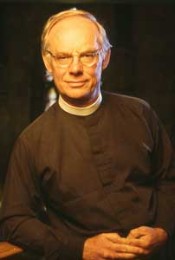
“St Aidan unites three of the countries by having lived there,” Dr. Bradley says, “and is, I believe, a better symbol for Britishness” [than the George, Andrew, and Patrick, the patrons of England, Scotland, and Ireland respectively].
“It’s like Billy Bragg says in his song ‘Take Down the Union Jack’ about Britain; ‘It’s not a proper country, it doesn’t have a patron saint’. Aidan was the sort of hybrid Briton that sums up the overlapping spiritual identities of Britain.
“He also makes a good patron saint of Britain because of his character. He was particularly humble and believed in talking directly to people. When he was given a horse by King Oswald of Northumbria, he immediately gave it away because he was worried that he would not be able to communicate properly.
“He was also not shy of reprimanding the mighty and powerful about their failings. He saw it as part of his job to remind secular rulers not to get above themselves. At a time when we are thinking about what makes Britishness, he had a sense of openness and diversity for his time that I think makes him a good candidate as the patron saint of Britain.”
Find out more in this article:
“Home-grown holy man” (The Independent, 23 April 2008)
On a somewhat similar note, here’s Aelianus (one of our favourite bloggers) writing on British Identity last September.
Will ye no’ come back again
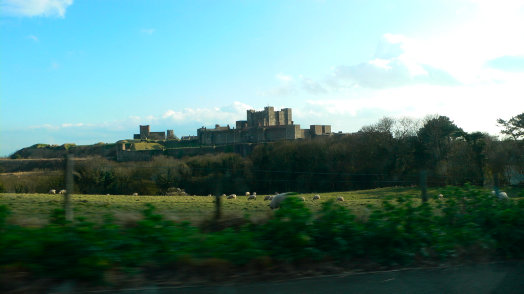
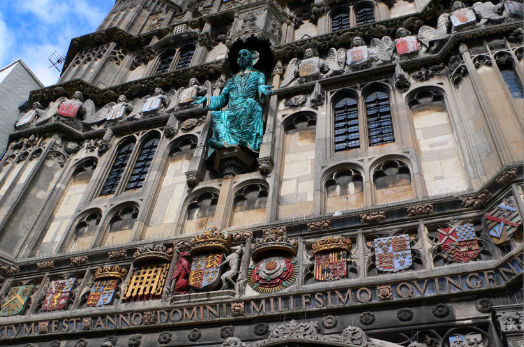
I am back already, which seems far too soon, and yet I had an immensely splendid time. It felt like more than just a week and I am sure that is due to the extraordinary generosity of my numerous hosts and friends in Scotland and England. I present to you two photographs I took during my recent trip: alas they are both in England, and indeed both in Kent, which is not terribly representative as I covered territory as far up as the choppy white waves of the North Sea and as far down as the White Cliffs of Dover. Above is an action shot of Dover Castle taken from the car, and below is the gatehouse to the cathedral close in Canterbury.
Why no Caledonian pix, you ask? I was simply too busy enjoying the place. Besides, it is a not-widely-known fact that photography does not actually function north of the Tweed. In a mandatory practice originating in a nineteenth-century labour dispute, all photographs smuggled out of Scotland are actually clever reproductions created by a secret guild of gremlins. This ensures both full employment amongst the gremlin population, and their complete separation from the ordinary human world (though a quick glance at the Scottish Labour party might cause one to doubt this is still enforced).
Fra’ Matthew Festing
Northumbrian, Art Expert, Veteran of the Grenadier Guards is Seventy-Ninth Prince & Grand Master of the Order of Malta
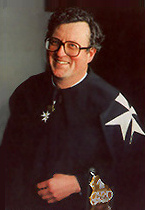 FRA’ MATTHEW FESTING, the Grand Prior of England, was today elected Prince and Grand Master of the Order of Malta. The new grand master was chosen in a secret ballot by the Complete Council of State. After receiving the approval of the Pope, His Most Eminent Highness swore the Oath before the council and the Cardinal Patronus of the Order, Cardinal Pio Laghi. Fifty-eight years old, Fra’ Matthew was, up to this point, an art expert for the auction house Sotheby’s. The Prince is the son of Field Marshal Sir Francis Festing who, as Chief of the Imperial General Staff, was the effective head of the British Army. Sir Francis converted to Catholicism and married a member of the Riddells of Swinburne Castle, a prominent recusant family. Through his mother, Fra’ Matthew is descended from the Blessed Sir Adrian Fortescue, an English Knight of Malta who was martyred for the Faith in 1539. The grand master’s brother Andrew Festing, RP is a noted portraitist.
As a child, Fra’ Matthew lived in Egypt and Singapore where his father held army postings, and was educated at Ampleforth Abbey in Yorkshire and St. John’s College, Cambridge. Passing out from Sandhurst, he was commissioned an officer in the Grenadier Guards, Britain’s most senior infantry regiment. (The Coldstream Guards are actually older, but their seniority was reduced for backing Cromwell in the Civil War). Currently holding the rank of Colonel in the Territorial Army, Fra’ Matthew served the Queen as Deputy Lieutenant for Northumberland for many years, and was appointed OBE.
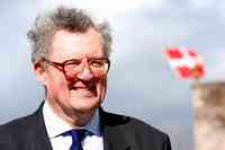 “The new Grand Master affirms his resolve to continue the great work carried out by his predecessor,” an official statement from the Order of Malta said, noting Fra’ Matthew’s “wide range of experience in Order affairs”. Having joined the Order of Malta in 1977, Fra’ Matthew took solemn vows in 1991 and was appointed Grand Prior of England in 1993, when the Grand Priory was resurrected after 450 years in abeyance. In that post he led humanitarian missions to Kosovo, central Serbia, and Croatia, and has attended the annual British pilgrimage to Lourdes with the handicapped and the disabled. “As well as his passion for the decorative arts,” the official announcement continued, “and for history, for which his encyclopaedic knowledge of the history of the Order is legendary, as is his very British sense of humour, Fra’ Matthew spends any free time possible in his beloved Northumberland countryside.”
This election is a most welcome one, and I would go so far as to say the councillors have chosen very wisely. It is an immense honour for we English-speaking Catholics that yet another Grand Master has been chosen from our ranks. But of course Fra’ Matthew was not chosen for being an Anglophone but rather for being Matthew Festing. Like Pope Benedict, he is a friend of the old rite of the Mass, and he was among the many prominent British Catholics (whose number included James MacMillan, Michael Ancram, Damian Thompson, Jamie Bogle, and others) who signed the ‘Appeal from the British Isles’ to Pope Benedict imploring a liberalization of the restrictions on the Tridentine rite (duly granted by the Holy Father in his motu proprio Summorum Pontificum of July 2007).
While certainly an ardent respecter of tradition, Fra’ Matthew is by no means a stuffy man but rather, as the Order’s official statement noted, is known for his sense of humour. On the only occasion on which I met Fra’ Matthew, I introduced him to Mrs. Burke (then Fraulein Hesser). Upon discovering that Abby hailed from the great state of California, Fra’ Matthew regaled us with his memories of driving from Denver all the way to the Pacific coast of California. Upon reaching the great ocean (the Grand Prior very enthusiastically informed us), he took off his shoes, rolled up his trousers and went straight in!
The Order of Malta has been remarkable in that it has had no qualms about modernization while at the same time unabashedly keeping to its ancient traditions. In this, it is a shining beacon in a world which too often and too easily disregards the time-tested ways of our ancestors. The very prompt election of Fra’ Matthew shows that the Order is of a firm mind and on a sound footing. We have no doubt that Fra’ Matthew will continue the great centuries-long tradition of the Order of Malta: to defend the Faith, to serve the Poor.
to
FRATER
Matthew Festing
Prince and Grand Master
of the Sovereign Military and Hospitaller Order of St. John
of Jerusalem of Rhodes and of Malta
Most Humble Guardian of the Poor of Jesus Christ
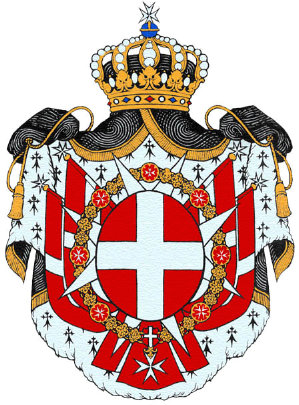
Category: Order of Malta
The Queen’s Christmas Message 2007
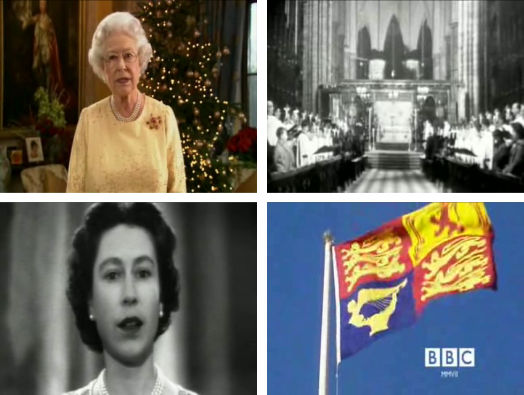
Available here at YouTube.
Britain: a ‘Catholic country’
The Original Church of England Overtakes the New One?
Catholics have overtaken Anglicans as the country’s dominant religious group, according to the Sunday Telegraph, as more people attend Mass every Sunday than worship with the (Anglican) Church of England. “This means that the established Church has lost its place as the nation’s most popular Christian denomination,” Jonathan Wynne-Jones reports, “after more than four centuries of unrivalled influence following the Reformation”. Sunday attendance at Anglican services has dropped a whopping 20% since the year 2000. Catholic Mass attendance in the past six years, however, has also dropped a dramatic 13%, a decline assuaged by the arrival of thousands of Polish immigrants since Poland joined the European Union.
Obaysch the Hippo
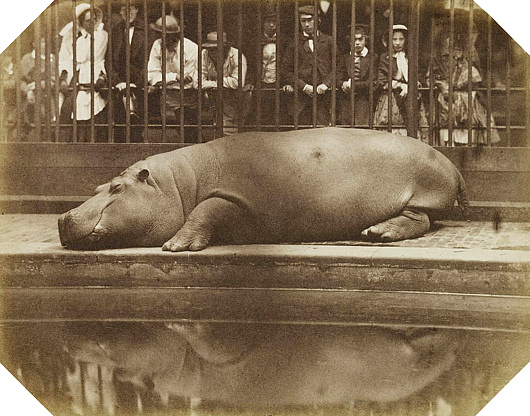
Obaysch was the first hippopotamus in Britain since prehistoric times. The Ottoman Viceroy of Egypt agreed with the British Consul General to exchange Obaysch for some greyhounds and deerhounds, and the hippo arrived at London Zoo in May of 1850.
The above photograph was taken in 1852 by Juan, Count of Montizón, later the Legitimist Bourbon claimant to the thrones of France and Spain.
St Andrews in London
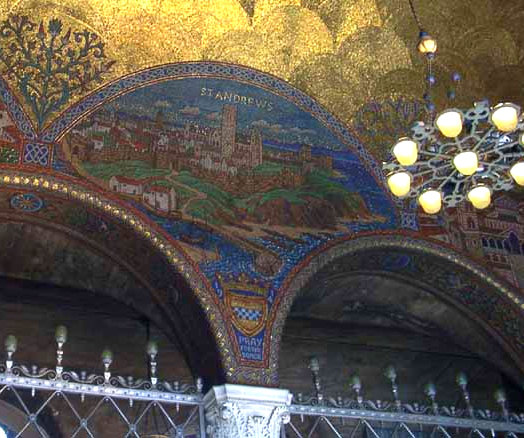
A LITTLE SOMETHING for our good friends from university who’ve just moved to London from the countryside. I hope that when they are in the Cathedral they will pop into our patron’s chapel, glance at the mosaic of our dear old Royal Burgh of St Andrews, remember good times, and say a prayer for us all.
Graduation in Pictures
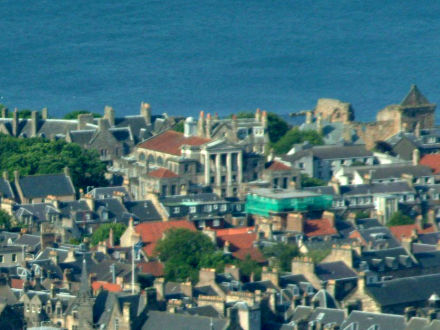
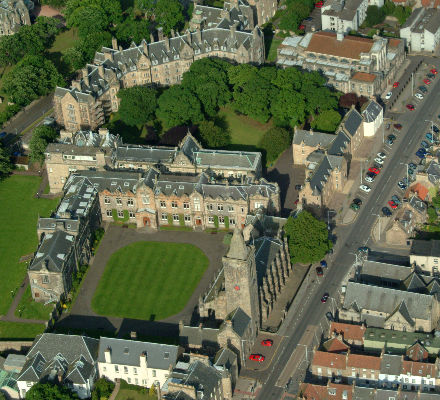
I HAD HOPED to provide you with photos of my graduation shortly after it occurred, but that was over a year ago and I am only now getting to it. My write-up about the proceedings can be found here, so these photos are essentially an accompaniment to that previous post.
The graduation ceremony took place in the Younger Hall, the red-tiled classical building in the photos above and below. Also below, the University Chapel, with St. Salvator’s Quad adjacent to it. The curved building in the upper left is St. Salvator’s Hall, my home during my final year. In between the Chapel and the Younger Hall is College Gate, which houses the main administrative offices of the University.
Antipapal Antiquities
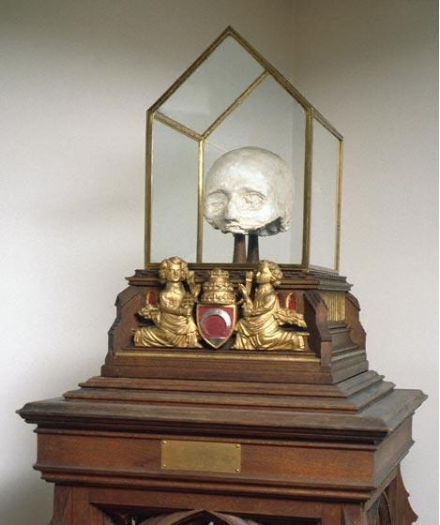
AMONG THE CURIOSITIES held in the St Andrews University Museum is the death mask of Pedro de Luna (1328-1423), one of the Avignon antipopes, who styled himself Benedict XIII. De Luna issued bulls granting university status to the group of scholars at St Andrews, and thus the Universitas Doctorum Magistrorum et Scholarum Sancti Andreae apud Scotos was born. The bulls were later confirmed by Pope Martin V, whose election ended the Great Western Schism. De Luna’s name lives on at St Andrews in the University’s coat of arms: the chief of the shield features a crescent, punning on the Antipope’s last name, which of course is Spanish for ‘moon’.
Republicanism is a traitor’s game
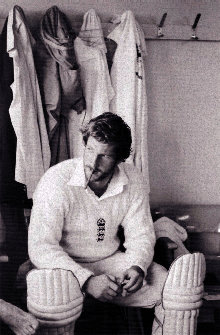
I listen to all these republicans…
If it was down to me I’d hang ’em! I honestly would. It’s a traitor’s game for me.”
SO SPEAKETH Sir Ian Botham, on this occasion to the Guardian, the newspaper of the British ruling class. It’s always reassuring when a public figure speaks out in support of the few remnants of tradition the metropolitan elites allow us to retain, so Sir Ian deserves a firm handshake, a pat on the back, and a pint on the house. Still, there are others (poor souls!) who disagree with the goodly knight. Herein the British Republican movement lists its supporters. They are mostly relative unknowns, except for the former Viscount Stansgate and the rather vulgar Peter Tatchell.
Leanne Wood, a member of the Welsh Assembly, states “I am a republican because I am opposed to the hereditary system”. Opposed to the hereditary system? We presume, therefore, that when she reaches the evening of her years (after a long life sucking off the taxpayer teat) she will not leave her comfortable residence and all her earthly possessions to her offspring, but instead donate them to the Fabian Society. Pity her poor children!
“I believe,” Ms. Wood continues, “in equality not patronage”. To my mind, party politics is more often a source of patronage than the limited constitutional monarchy. As for equality, doesn’t being a member of the Welsh Assembly give her more power and influence than others? Not very egalitarian, but then there are no true egalitarians. Only some who, rather than appreciating the heights of Western civilization, prefer to topple it to the ground in order to establish greater “equality”.
The former Viscount Stansgate, who currently styles himself “Tony” Benn, proclaims that “In a democracy people must be able to elect their own head of state”. The demos beg to differ. The Crown has consulted the people in forty-four different general elections since the enactment of the Reform Act of 1832, and yet the voters have curiously neglected to ever vote a republican party into government.
Mr. Tatchell, meanwhile — whom the Republican movement identifies as a “gay rights and human rights campaigner” (I am glad they concede the dissimilarity in the two concepts) — tells us that “Britain remains a partial, incomplete democracy, steeped in aristocratic privilege.” Hear! Hear! “Why can’t we have a complete, mature democracy,” Mr. Tatchell asks, “where the people elect our Head of State?” Perhaps because democracies which elect their head of state are rarely mature. It seems entirely more mature to keep those institutions which have stood the test of time rather than to arbitrarily destroy them based on what amounts to little more than modish management concepts.
Curiously, at least three people on the Republican movement’s list of supporters are Queen’s Counsel (QCs, or “silks”). They are not so opposed to the monarchy as to refuse the fruits of its munificence, and for that we should praise their pragmatism. Even more curiously, however, nineteen on the list are Members of Parliament. Surely MPs are required to take an Oath of Loyalty to the Crown in order to take their seats? But then perhaps these nineteen are abstentionists along the lines of the Sinn Féiners. While one hesitates to presume to advise the Crown, it might be useful every so often to inquire among the members of Parliament as to which would lend their votes to the abolition of the monarchy, and then deal with them in the manner Sir Ian Botham profers.
“If it was down to me I’d hang ’em!”
Category: Monarchy | Hat tip: The Monarchist.
Bring Back the Broadsheet!
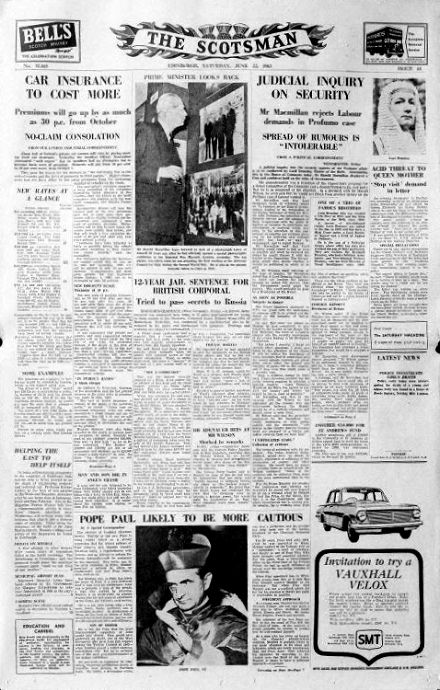
THE DECLINE OF Scotland’s nation newspaper is marked and lamentable. Once exhibiting a certain grace and dignity, the Scotsman was the most respected of Caledonian dailies. It was the only to have bureaus overseas, and it presided as king of the newspaper realm from stately offices on the heights of North Bridge. All of that, of course, is all gone. It’s all about cost-cutting and driving up circulation instead of maintaining the role as Scotland’s newspaper of record. (more…)
Imperial Airways
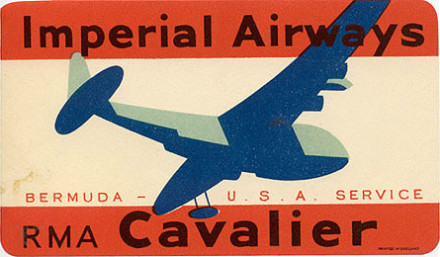
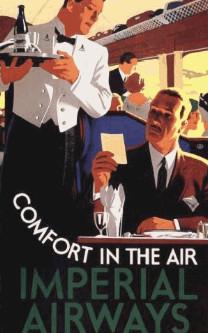
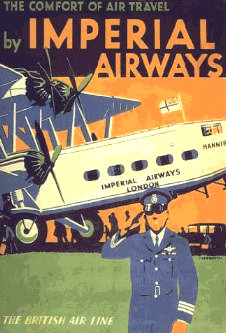
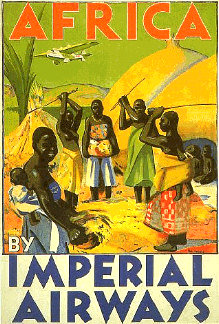
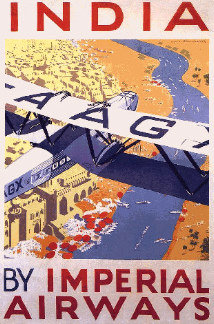
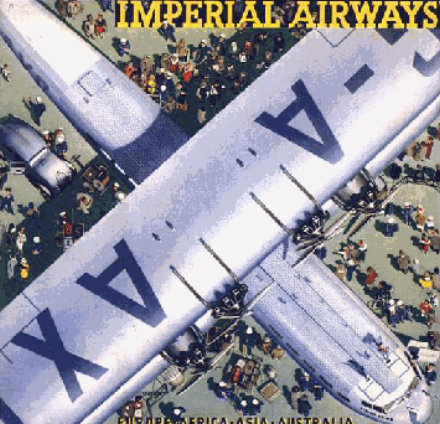
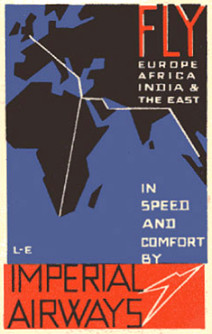
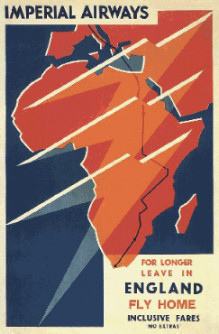
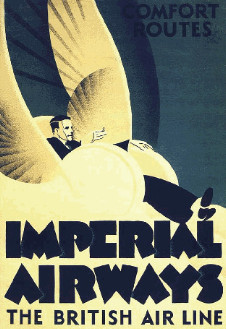
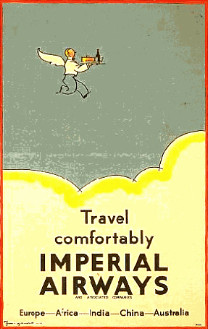
Previously: Bayerische Volkspartei | Lwow (Lvov/Lviv) | Empire State | Municipal Airports | Crêpes à Dentelles
The Red Mass
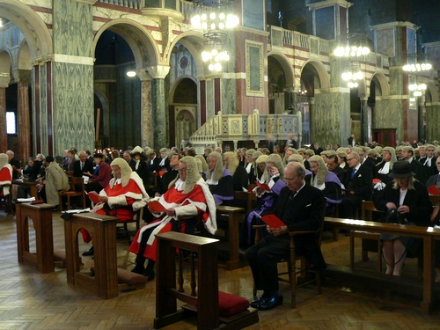
THE RED MASS is an ancient tradition which marks the beginning of the legal session every year. It takes its name from the red vestments used for a Mass of the Holy Ghost, invoking God’s protection over the judges, lawyers, and officials as they duly practice the law. Msgr. Langham, the Administrator of Westminster Cathedral, was kind enough to post a few pictures of the Red Mass offered at the Mother Church of Catholic England on the splendid cathedral weblog. A similar service is held at Westminster Abbey for the Protestant officials of the law.
A Mews in London
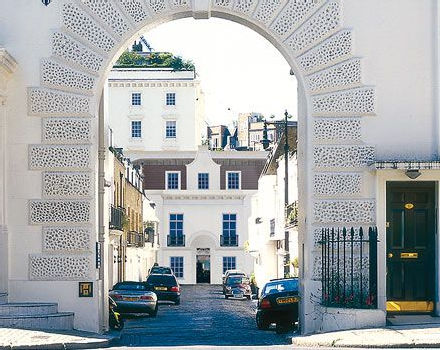
Typical London, and yet the gable on Lion Lodge (the building which terminates the view), together with the general white-wash of the façades, gives it a hint of Cape Town. Lion Lodge is a recent structure by Liam O’Connor Architects and Planning Consultants.
‘First of Britain’s Sons To Die’
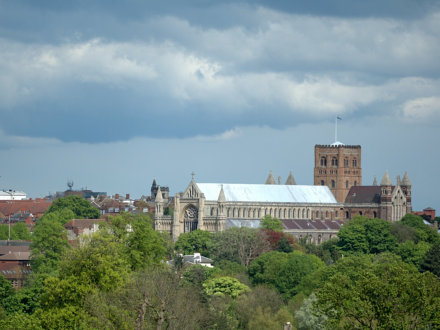
Saint Alban, June 22
Sing triumphant o’er the foe;
Tell of him, a Martyr glorious,
For the changeless truth laid low;
Faithful servant, bright example,
Whom all lands and ages know.
Valiant soldier, noble Martyr,
First of Britain’s sons to die,
Pagan ire and cries withstanding,
By the grace of God Most High,
By the strength of Him, Protector
Who, in strength and power, was nigh.
Laud and honour to the Father,
Equal honour to the Son,
Adoration to the Spirit,
Ever Three and ever One,
Consubstantial, Co-eternal,
While unending ages run.
These were the words to the school hymn at St. Alban’s College down in Argentina, which I briefly had the privilege of attending and which is currently celebrating its centenary year (more on that in another post). It was down beneath the Southern Cross that I first became more closely acquainted with good Saint Alban, who was the first Christian martyr of Britain.
‘We’ve Lost More Than We’ll Ever Know’
In Three Corners of the Commonwealth, Popular Musicians Demonstrate Rejection of Modernity
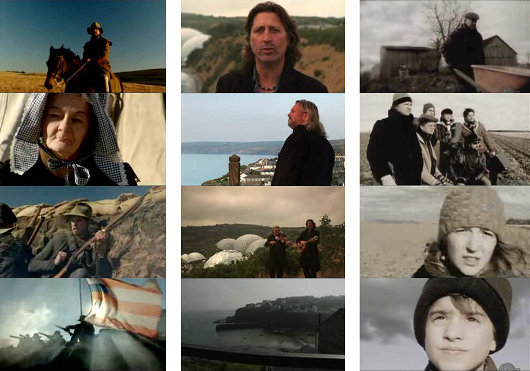
In South Africa, England, and Quebec, popular musicians have expressed regret over the rejection of their traditional cultures by the destructive onward march of modernity. The hugely popular song ‘De La Rey’, sung in Afrikaans by Bok van Blerk I have already explored in greater depth in an article for Norumbega, but ‘Roots’ by England’s Show of Hands and ‘Dégénération’ by Québécois group Mes Aïeux are worthy of notice.
‘Roots’, as one would expect from the title, decries the severing of the English people from their lyrical musical tradition and lifestyle, being replaced by “Indian, Asian, Afro-Celt”, while the song’s refrain evokes images of a people adrift: “Haul away boys let them go/ Out in the wind and the rain and snow/ We’ve lost more than we’ll ever know/ On the rocky shores of England”. In one verse, the song taps into a particular pet peeve of mine, the complete invasion of pubs by the dreaded television screen:
Is three folk singers in a pub near Wells
Well I’ve got a vision of urban sprawl
Pubs where no one ever sings at all
And everyone is staring at a TV screen
Overpaid soccer stars, prancing teens
Australian soap, American rap
Estuary English, Baseball cap
There is no greater killer of good conversation than the massive influx of television screens into the pubs. Just the other evening I was down in our regular in Bronxville and from my vantage point alone I could see three television screens. The bright technicolor projection of baseball, soccer, football, and rugby into an otherwise dark space is too great a distraction for the eye. Bad enough sitting in a booth, it is even worse having dinner at the bar when you do not at least have the advantage of sitting opposite your drinking companion. How much more of a good time it would be without those dazzling displays, and without the obnoxiously loud music, either piped in from the jukebox or else some third-rate band singing third-rate cover songs of third-rate rock groups. Bleccch! It is those moments when one yearns to be ensconced by the fire in the Russell on the Scores in St Andrews, either accompanied solely by a book and a solid pint, or engaged in the usual joviality with the after-Rosary crowd.
The Québécois song, meanwhile, laments the decline of the family from large in size and from tied to the earth to solitary and confined in the city. The name of the band — Mes Aïeux — means “My Ancestors” and ‘Dégénération’ is a play on words, meaning ‘degeneration’ but also soundling like ‘des generations’ — ‘of the generations’. The song opens:
Ton arrière-grand-père, il a labouré la terre
Et pi ton grand-père a rentabilisé la terre
pis ton père, il l’a vendu pour devenir fonctionnaire
Et pi toé mon p’tit gars, tu sais pu c’que tu vas faire
Dans ton p’tit trois et d’mi ben trop cher, frète en hiver
Il te vient des envies de dev’nir propriétaire
Et tu rêves la nuit d’avoir ton petit lopin d’terre
Your great-great grandfather cleared the earth
Your great-grandfather laboured on the earth
Your grandfather turned a profit from the earth
Then your father sold the earth to become a bureaucrat
Now you, my little man, you don’t know what to do
In your little 3 room apartment – too expensive and cold in the winter
You want something to call your own
And you dream at night of having your own little piece of earth.
The next verse goes on about the maternal line of the family: the great-great grandmother “had fourteen kids”, the next generation “had about as many”, the next “had three, that was enough for her” but “Your mom didn’t want any, you were an accident”.
Quand tu fais des conn’ries, tu t’en sauves en avortant
Mais y’a des matins, tu te réveilles en pleurant
Quand tu rêves la nuit d’une grande table entourées d’enfants
Now you, my little lady, change partners all the time
When you make a mistake you escape by aborting
But there are mornings you awake crying
When you dream in the night of a large table surrounded by little ones.
The song is one of the most popular downloads on iTunes Canada, and the band’s most recent album has gone double-platinum.
Music videos of ‘De La Rey’, ‘Roots’, and ‘Dégénération’ after the jump.
Sources Fides et Ardor: Sign of Hope – Mes Aïeux | Fides et Ardor: The People Speak (or sing…)
Previously: Breaking the Mold in Quebec | The Men Who Saved Quebec | Hitchcock in Quebec
The BBC: Can’t they get anything right?
His Imperial Majesty, Haile Selassie I was the Emperor of Ethiopia up to his death at the hands of Communist revolutionaries, so it seems a bit silly to call him the “former Ethiopian Emperor”. More importantly, however, is that he was a devout Christian and was so opposed to Rastafarianism, which considered Haile Selassie to be the Messiah, that he sent Orthodox missionaries to Jamaica in order to convert Rastafarians to Christianity.
Search
Instagram: @andcusack
Click here for my Instagram photos.Most Recent Posts
- Brunel’s Unbuilt Capitol February 3, 2026
- Cricket at Fordham January 27, 2026
- Palacio Barolo Revisted January 14, 2026
- Learning to Love Liguria January 14, 2026
- Crux Alba No. 2 January 13, 2026
Most Recent Comments
Book Wishlist
Monthly Archives
Categories