South Africa
About Andrew Cusack
 Writer, web designer, etc.; born in New York; educated in Argentina, Scotland, and South Africa; now based in London.
 read more
News
Blogs
Reviews & Periodicals
Arts & Design
World
France
Mitteleuropa
Knickerbockers
Argentina
The Levant
Africa
Cape of Good Hope
Netherlands
Scandinavia
Québec
India
Muscovy
Germany
Academica
Waarburg
Hawksmoor House, Matjieskuil Farm, Wes-Kaap
Sometimes the perfect house meets the perfect owner: if so, then Hawksmoor House and its current owners, Mark Borrie and Simon Olding, have been an ideal match. The old manor house of Waarburg probably dates from the mid-eighteenth century and, after falling victim to neglect and unsympathetic updates, has been meticulously restored in the twenty-first century.
The history of this property, with its various names and numerous owners, now spans three centuries. In 1701, the Dutch governor of the Cape, Willem Adriaan van der Stel, granted sixty morgen of land at Joostenburg in the district of Stellenbosch to the dominee Hercules van Loon.
He was the predikant of the Reformed congregation in the “City of Oaks”, where he lived in a house on Dorpstraat just a few doors down from my former abode.
Occupied in town, van Loon also purchased farmland in the surrounding district, naming one Hercules Pilaar and another Waarburg, after the German castle of Lutheran lore.
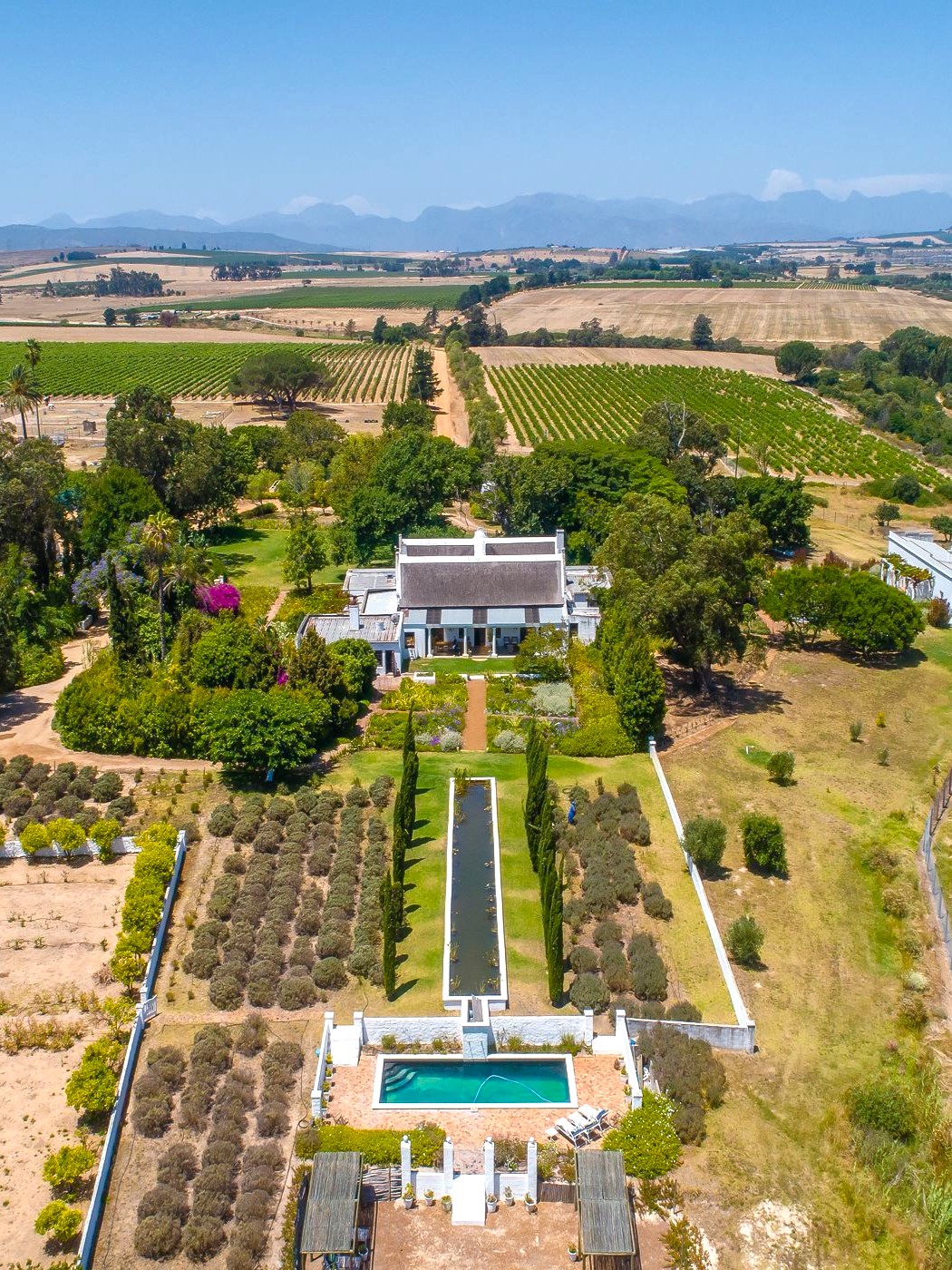
The earliest surviving map of the property shows that there was a house here by 1704, but it is believed it was rarely used by the preacher who was occupied with his duties in town.
One day in that same year, Ds. van Loon rode from Hercules Pilaar towards Stellenbosch and, in a field outside the town, cut his own throat with a penknife. His flock were astonished and recorded that no-one knew why the preacher had killed himself.
Matilda Burden has argued that the existing house was built between 1758 and 1765 by the then-owner Jacobus Christiaan Faure. By 1826, Waarburg became known as Matjeskuil or Matjieskuil which it retained for most of its existence.

Kaapstad in kleur
Die moederstad in oude dae
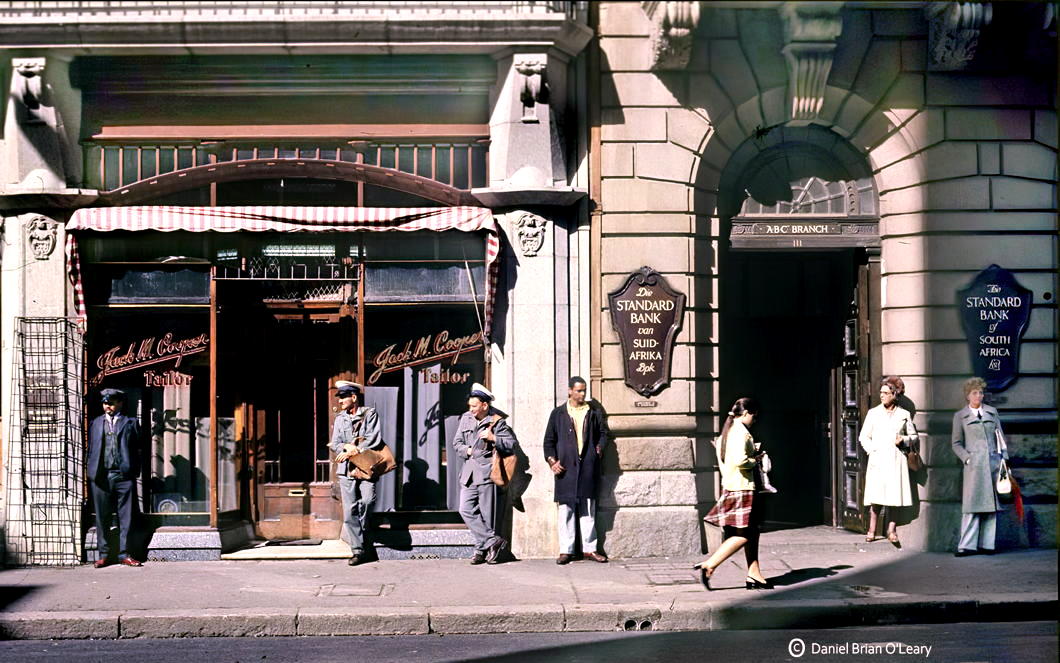
Wag vir die bus — St George’s-straat, 1974 [link]
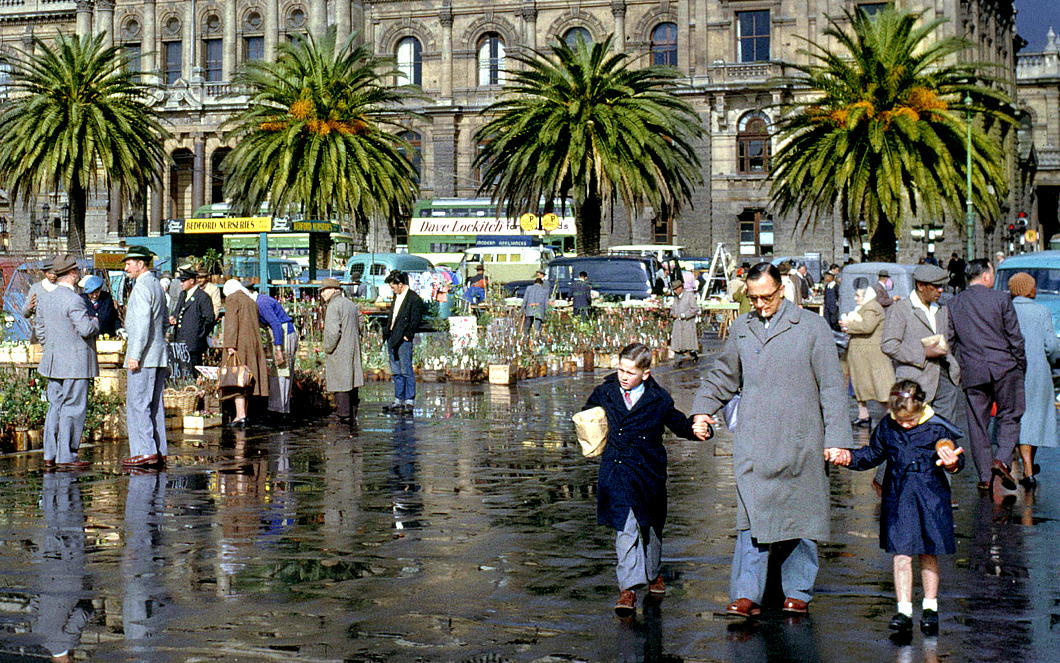
Inkopies saam met Pa, Die Parade (Grand Parade), 1960 [link]
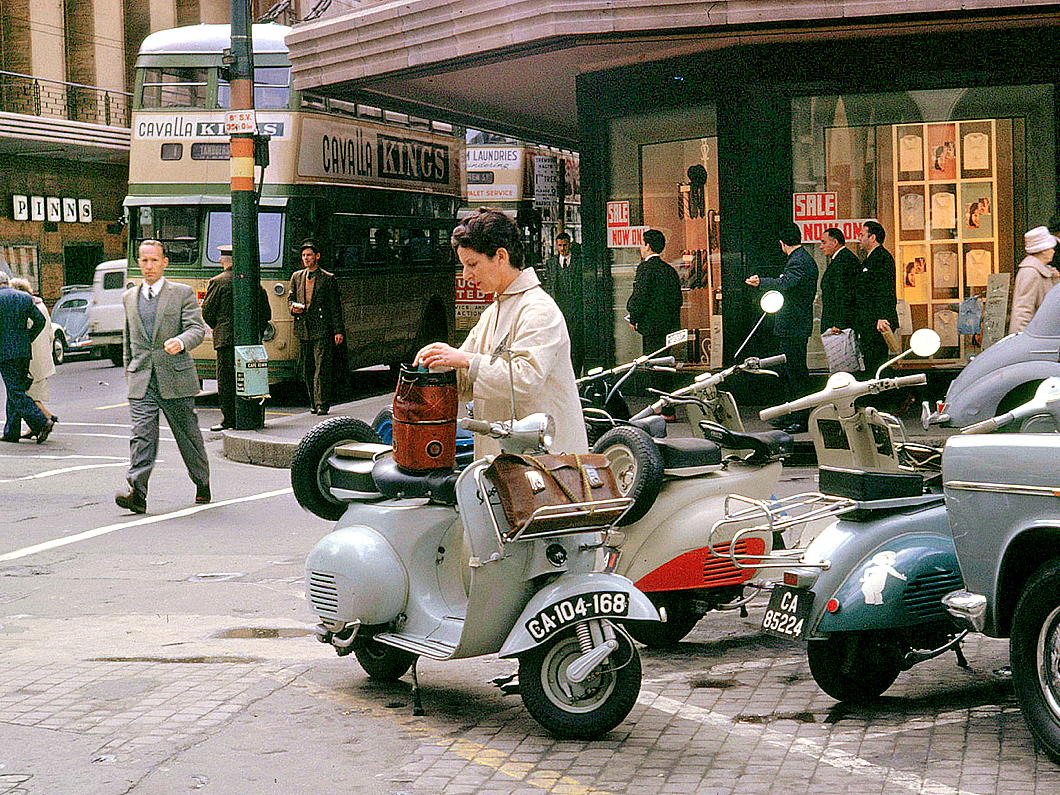
Dame met Vespa, hoek van St George’s- en Waterkantstraat, 1960 [link]
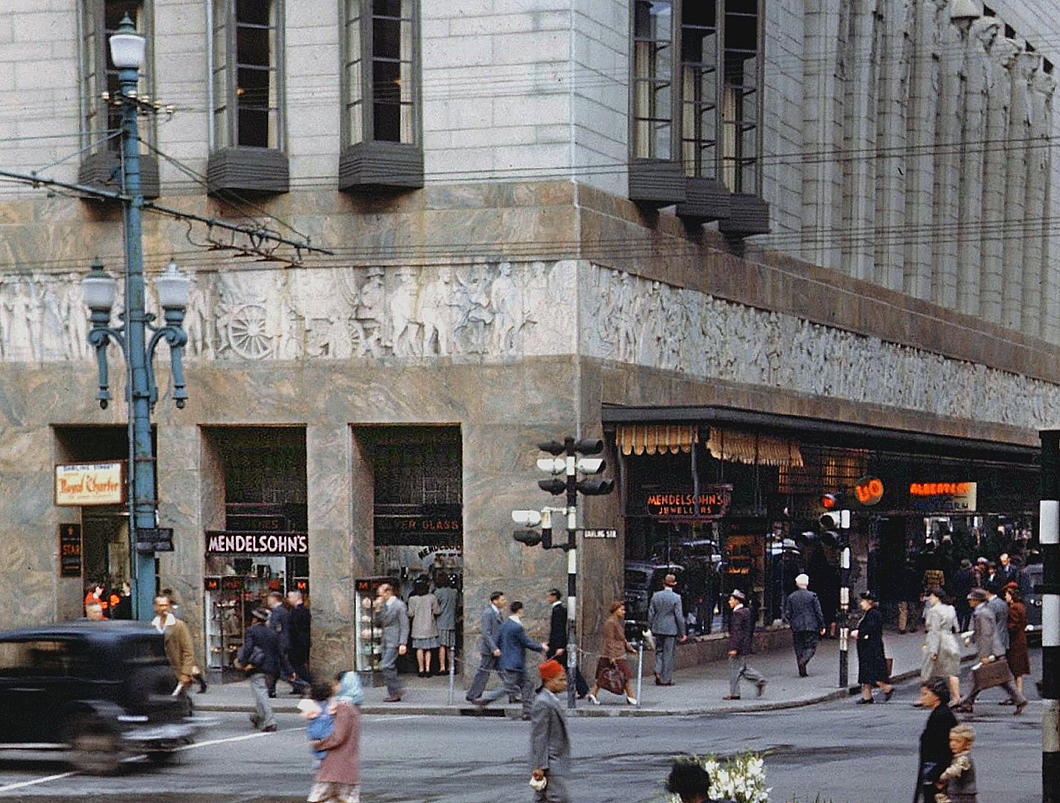
Hoek van Darling- en Parlement-straat, 1946 [link]
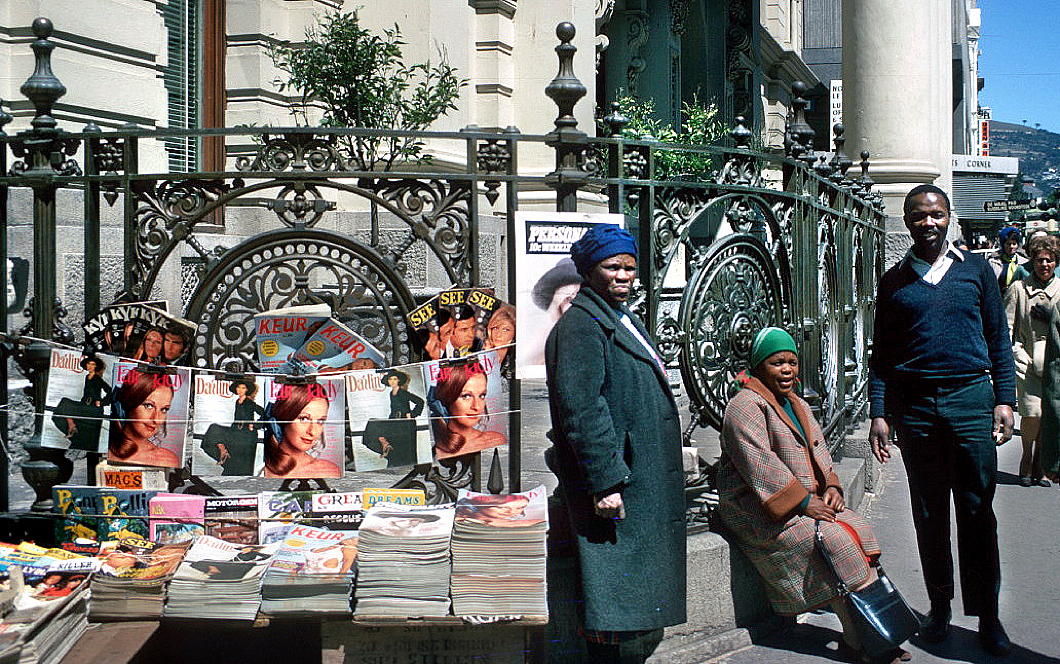
Tydsrik verkoper, 1970 [link]
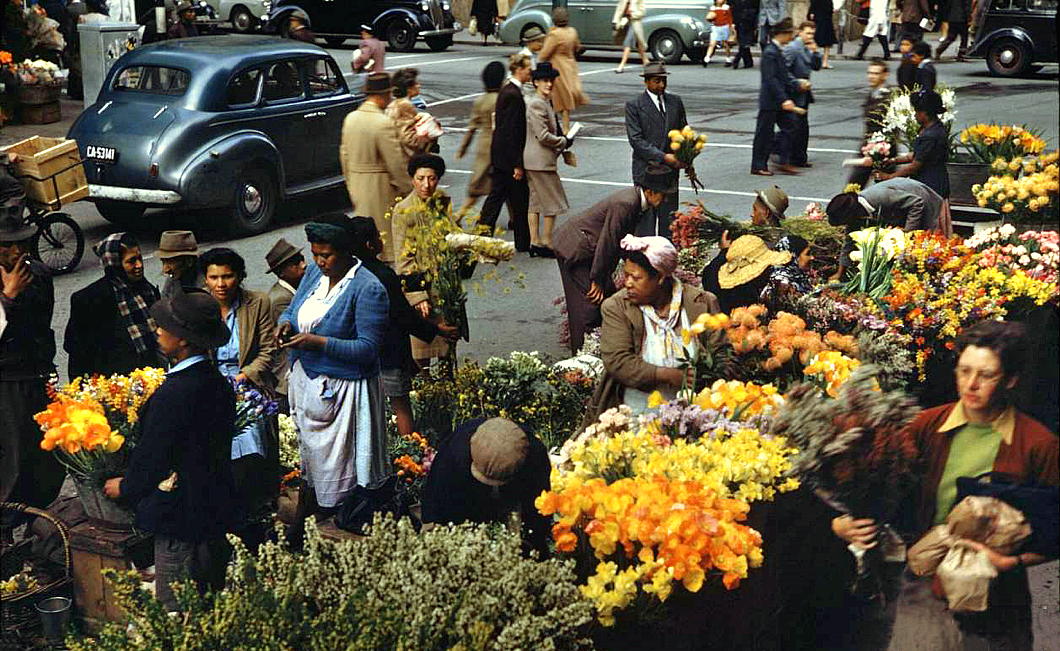
Die blommedames, 1946 [link]
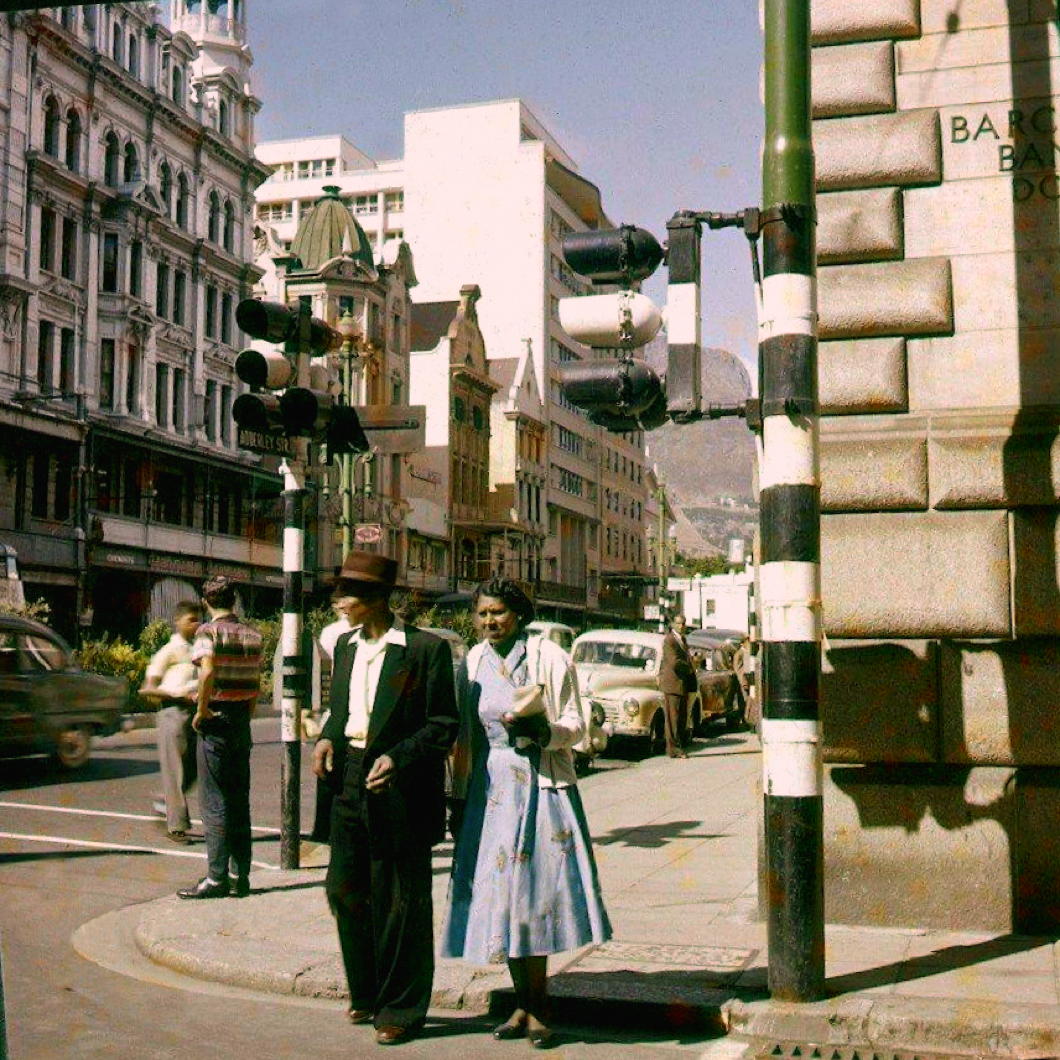
Kortmarkstraat, 1960 [link]
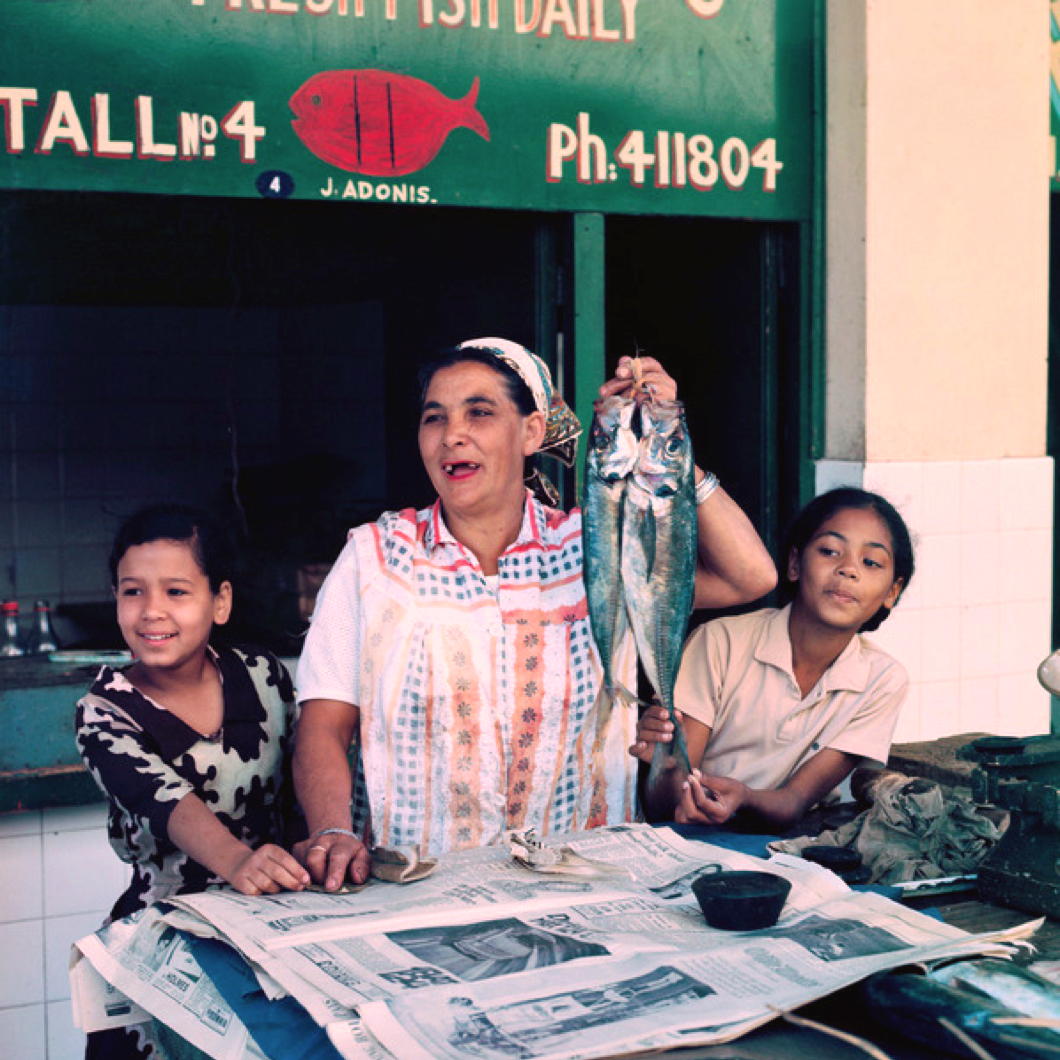
“Tweee virrie prys van een!” J. Adonis vishandelaar, Distrikt Ses, 1968 [link]
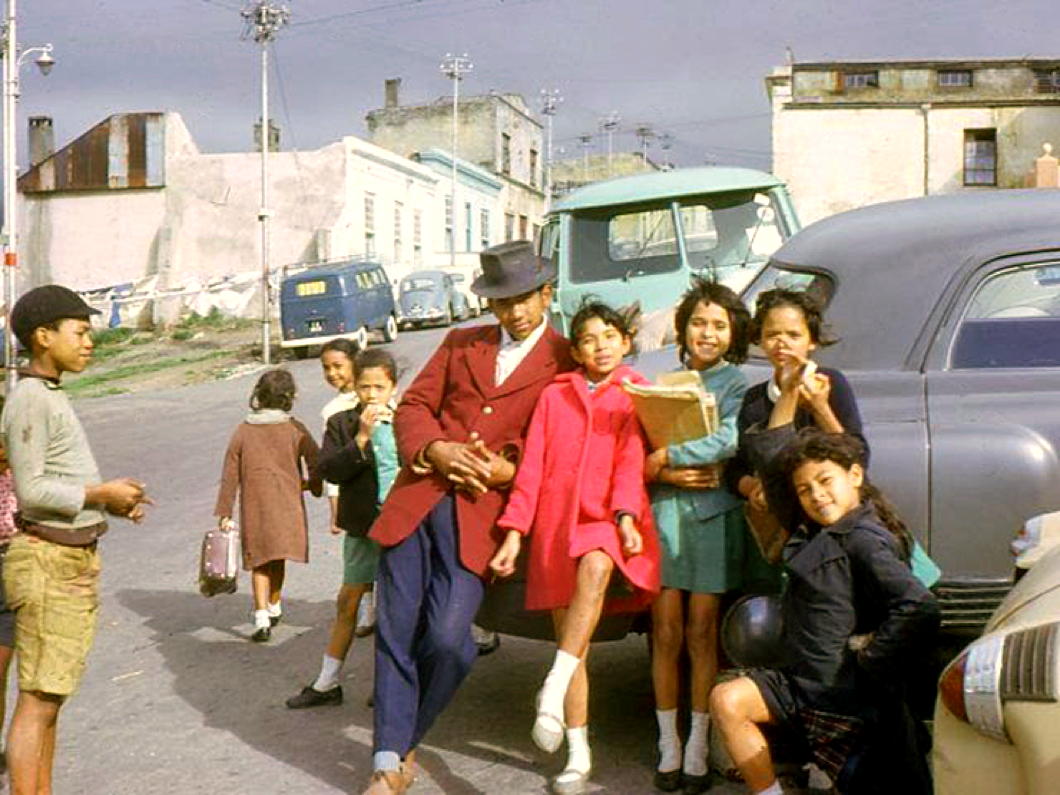
Poseer vir die kamera, Bo-Kaap, 1962 [link]
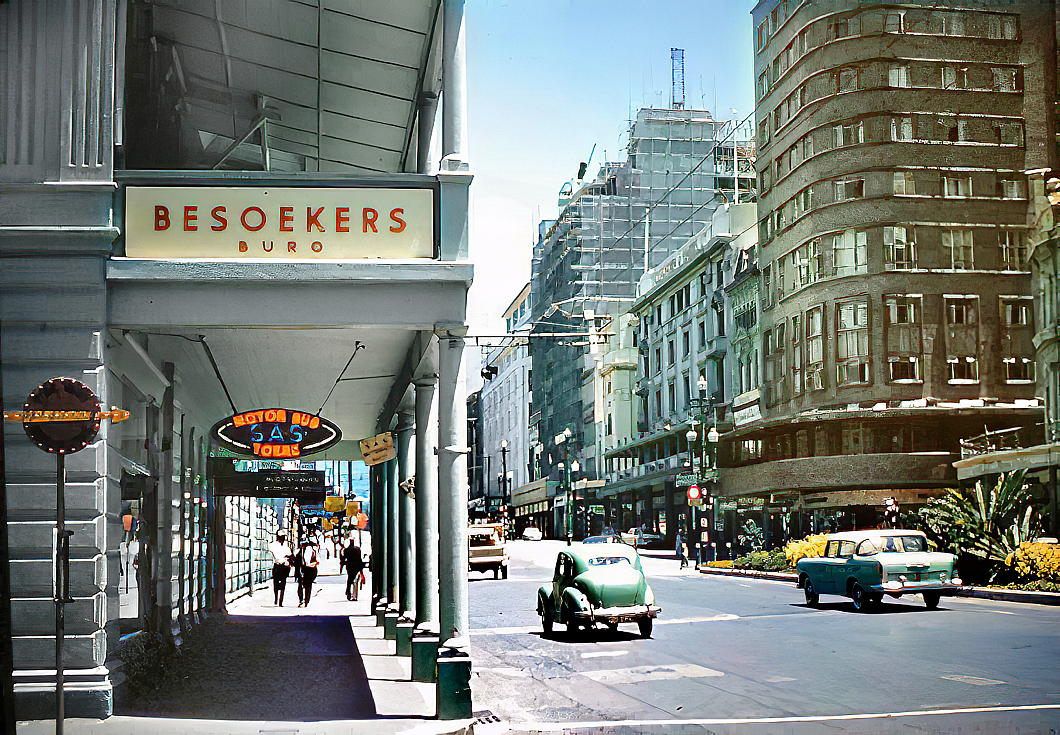
Besoekers-buro, Adderleystraat, 1950s [link]
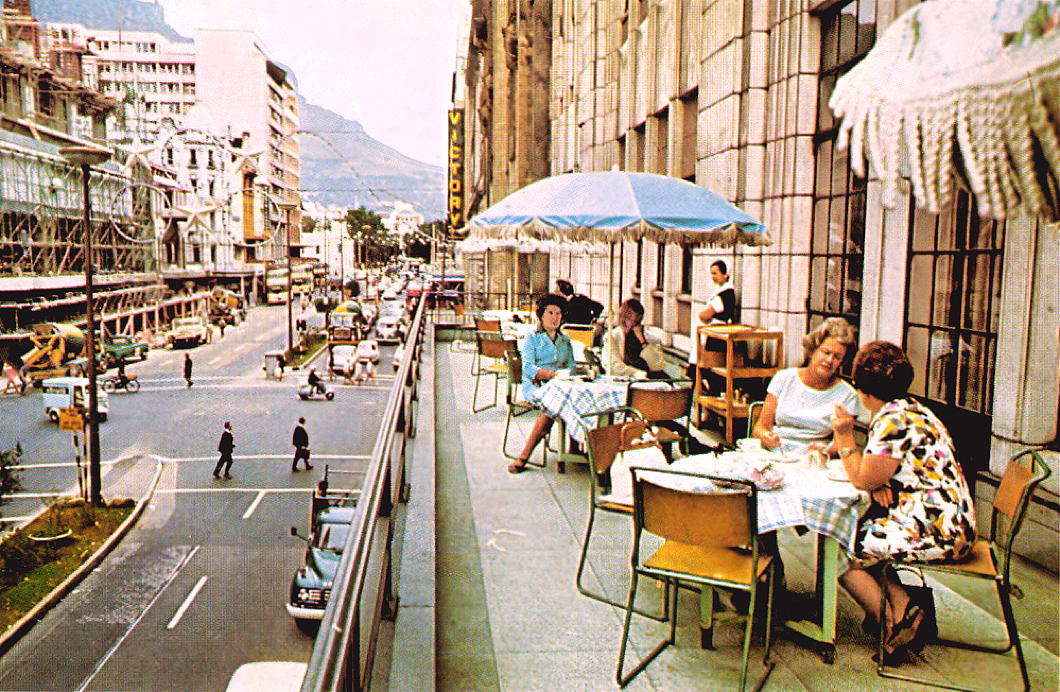
Die balkon by Stuttaford’s afdelingswinkel, 1968 [link]
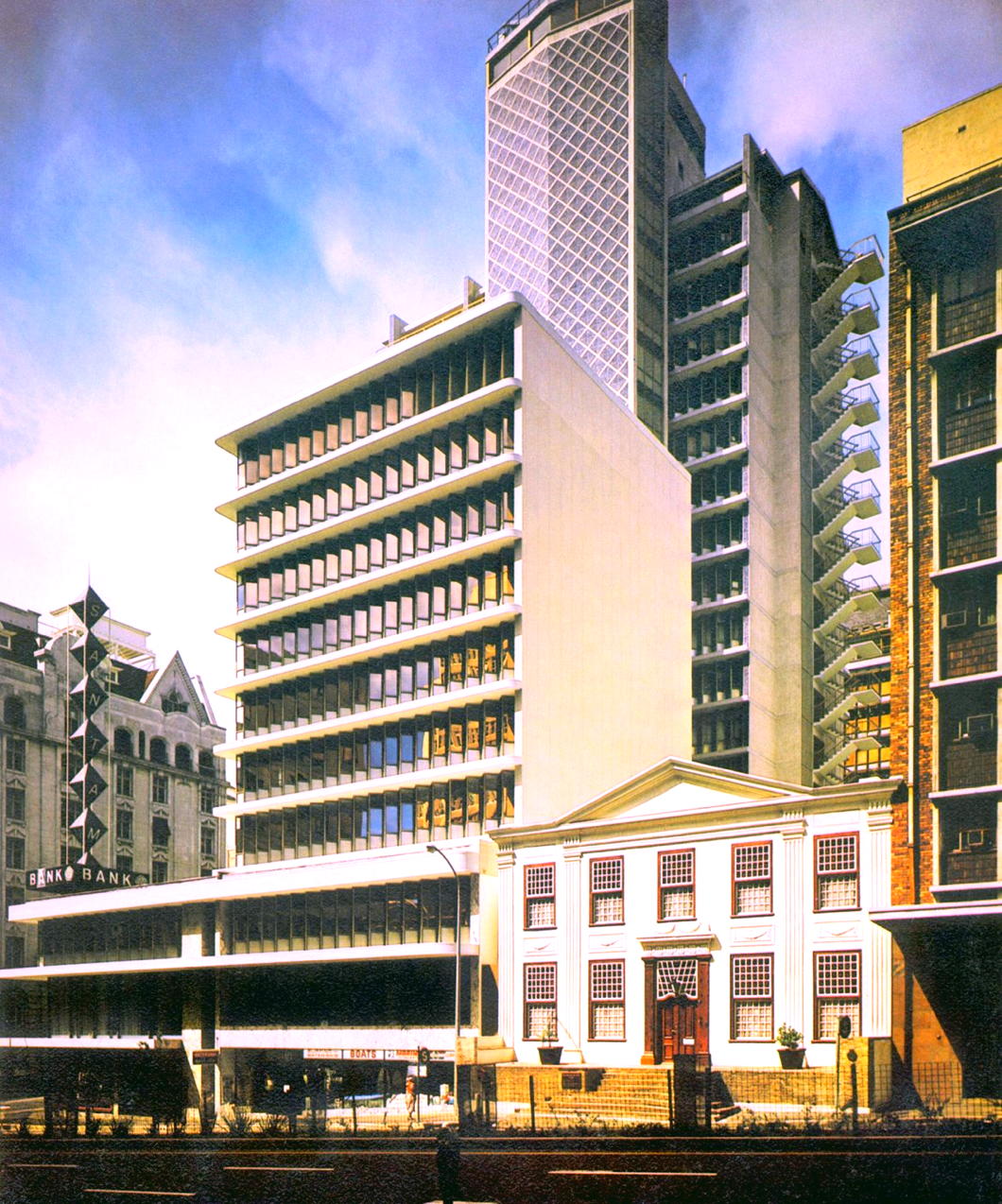
Oud en nuut: die Koopmans-de Wet Huis, Strandstraat, 1981 [link]
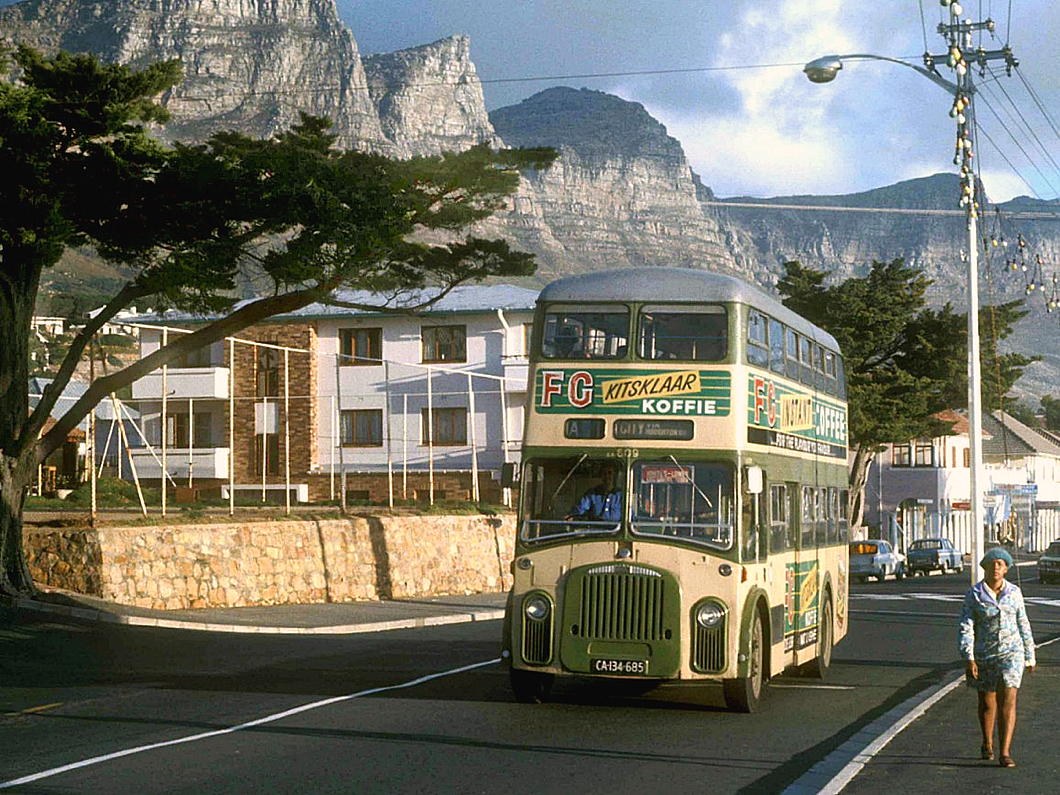
Kampsbaai, 1974 [link]
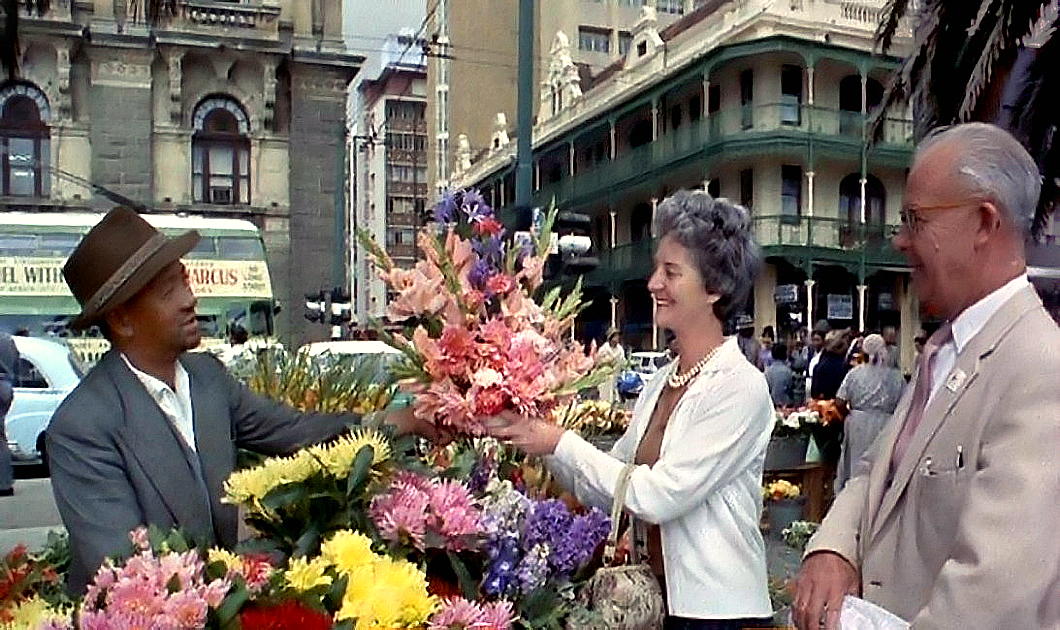
Die Parade, 1962 [link]
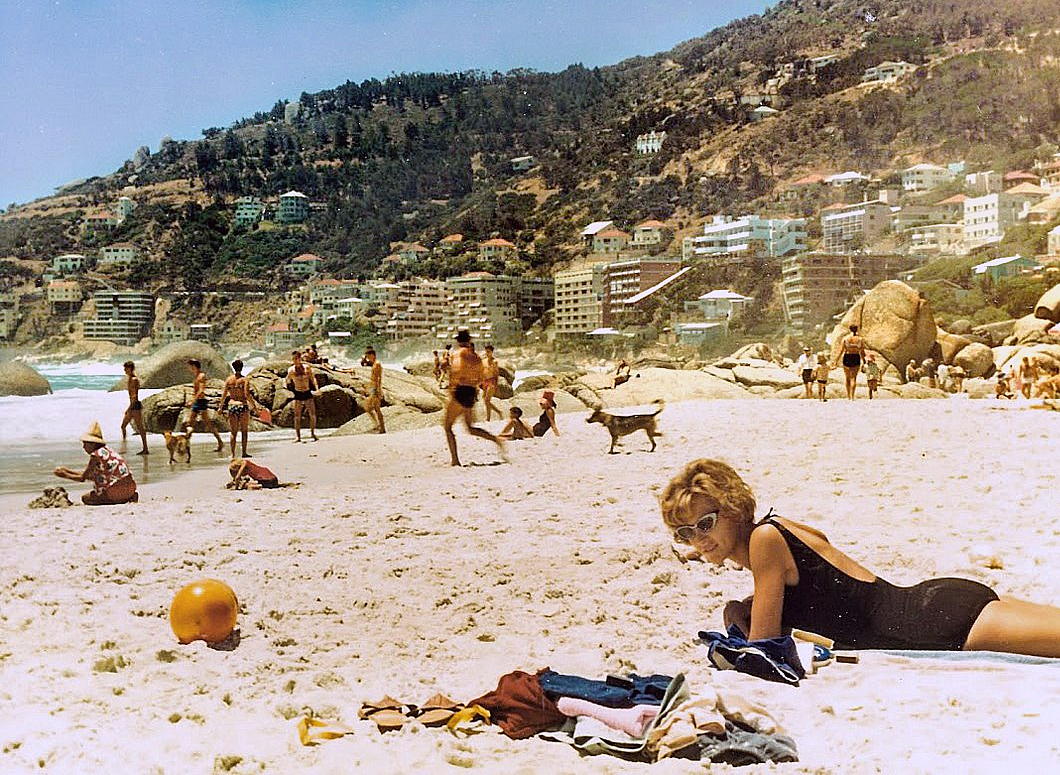
Vierde Strand, Clifton, 1960s [link]
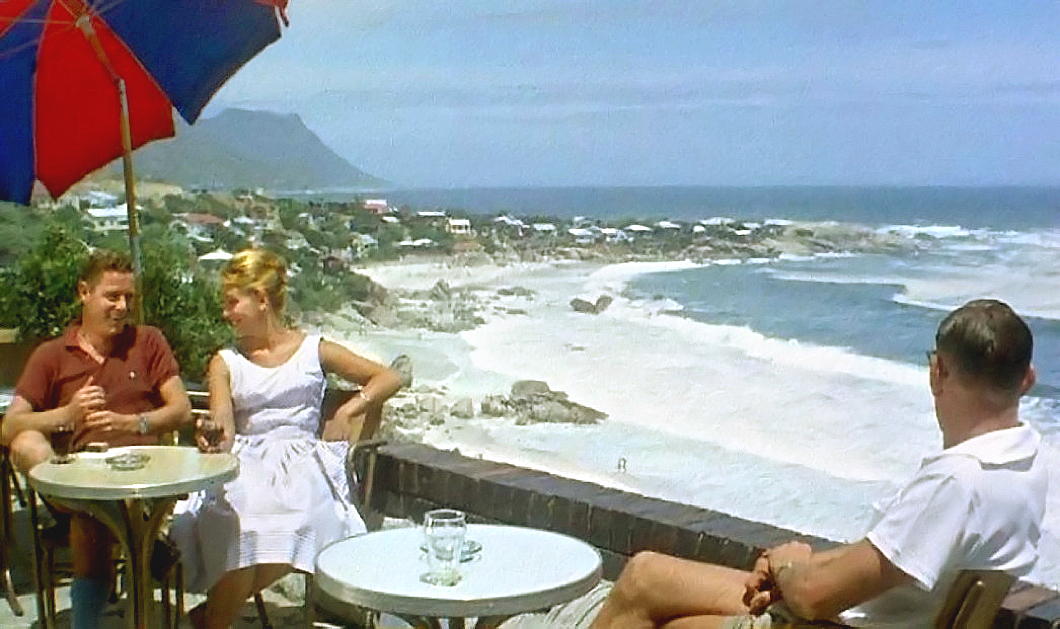
Clifton Hotel, 1961 [link]
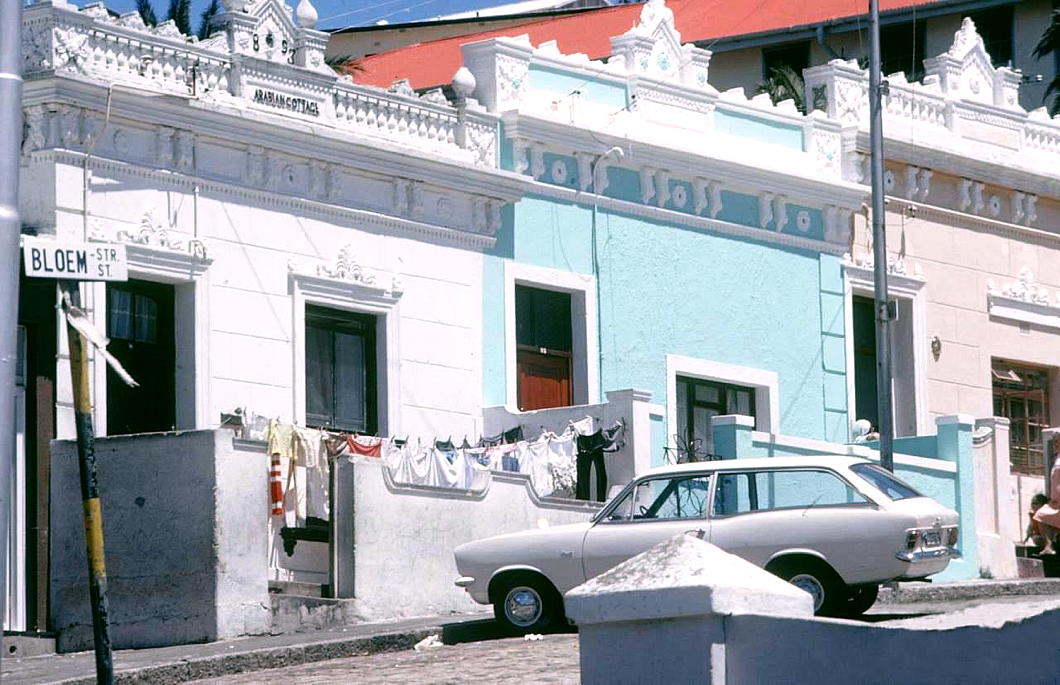
Bloemstraat, Bo-Kaap, 1974 [link]
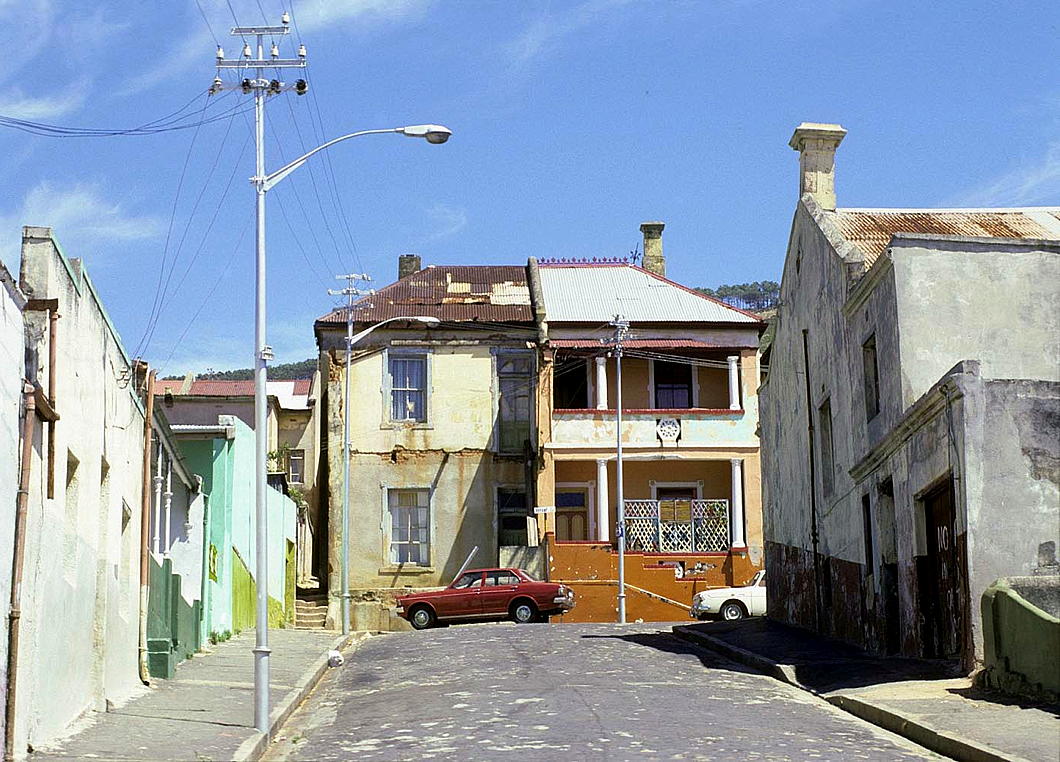
Bryantstraat, Bo-Kaap, 1978 [link]
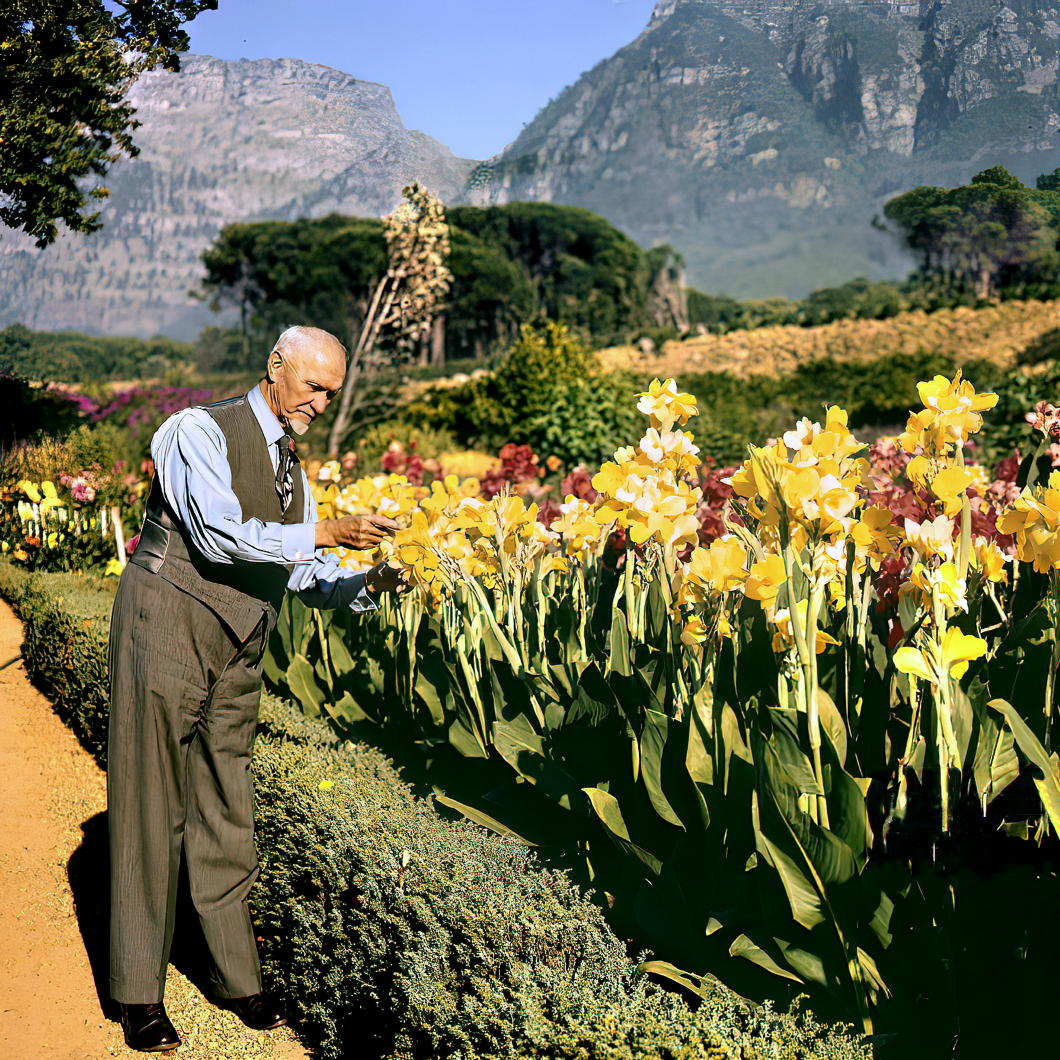
Die Eerste-Minister sorg vir sy blomme, Groote Schuur, 1946 [link]
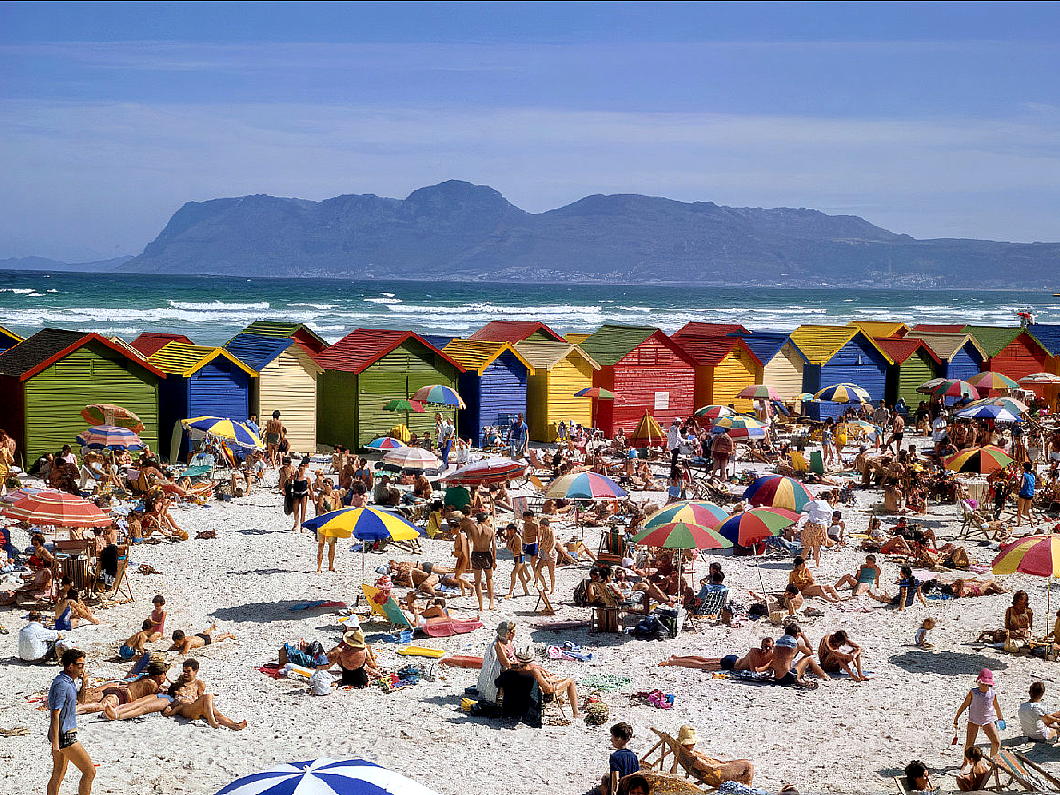
Muizenberg strand, 1965 [link]
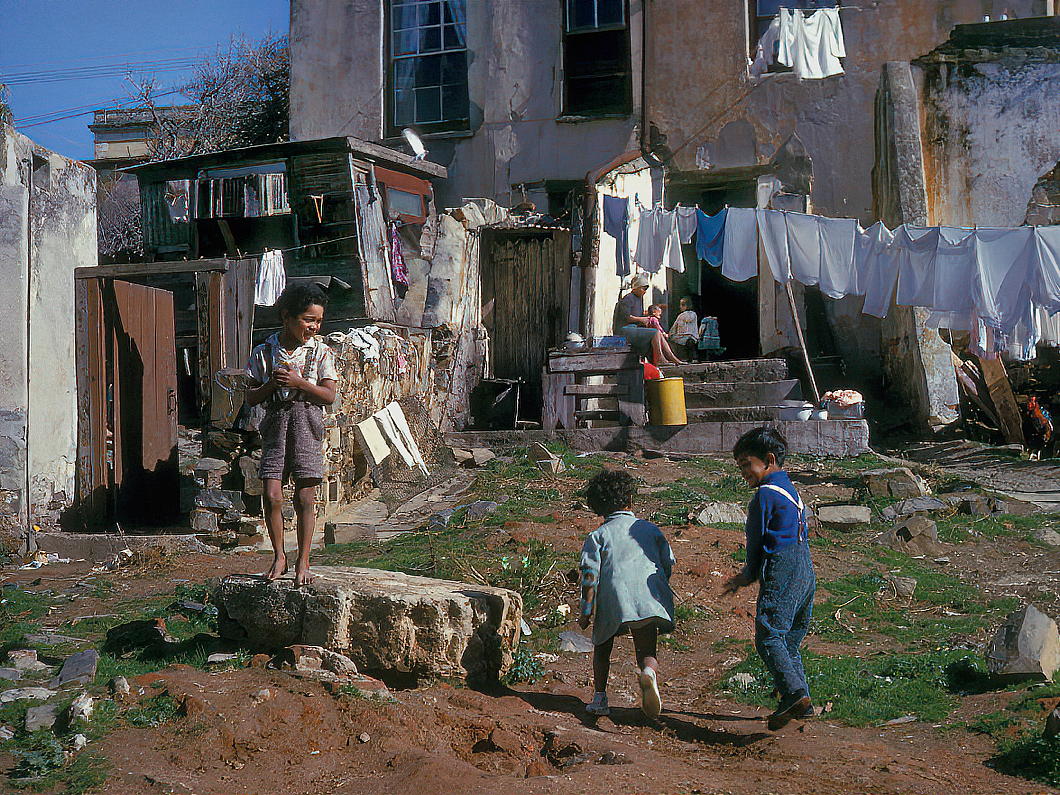
Was dag, Bo-Kaap, 1961 [link]
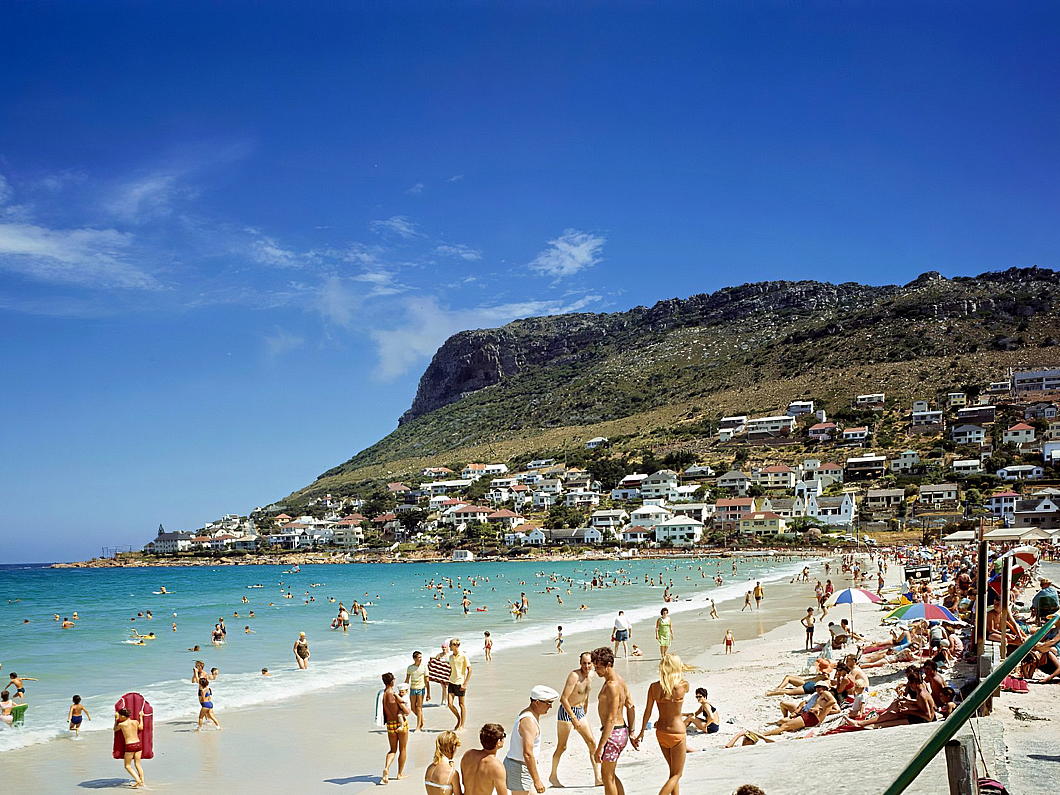
Vishoekstrand, 1970 [link]
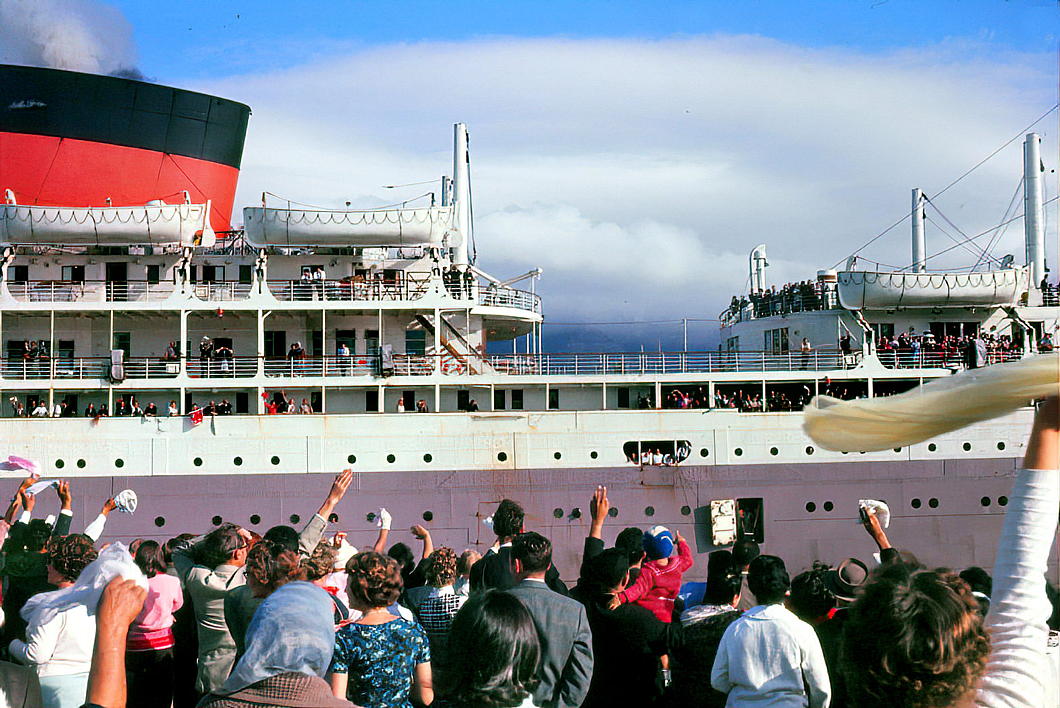
Stirling Castle vertrek vir Southampton, 1966 [link]
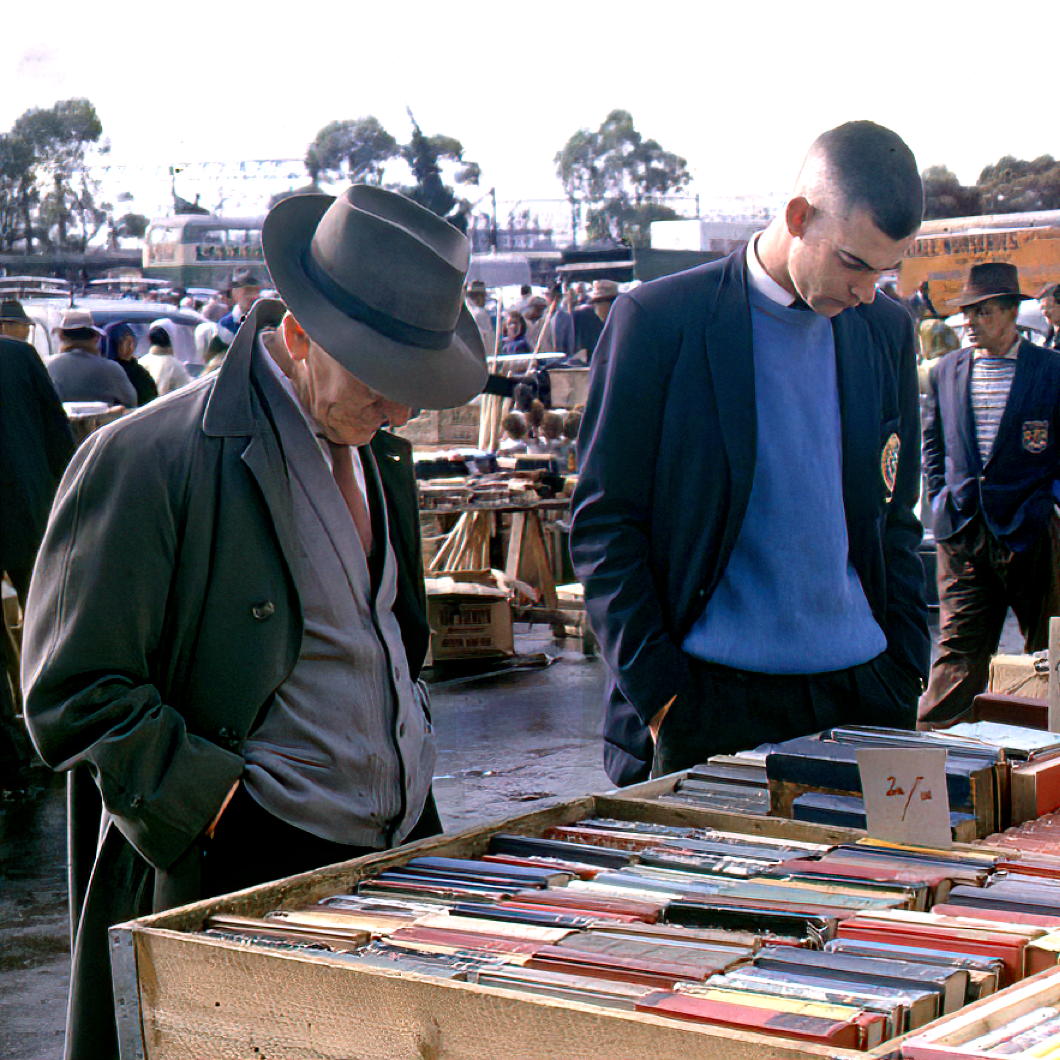
Boekkopers op die Parade, 1960 [link]
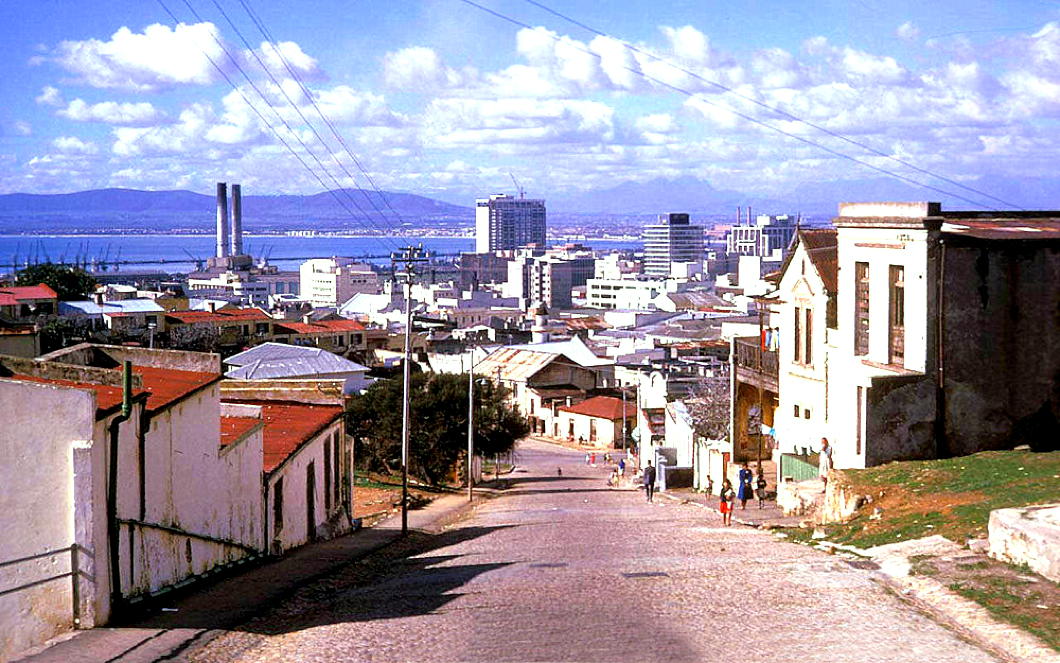
Pentzstraat, Schotschekloof, 1961 [link]
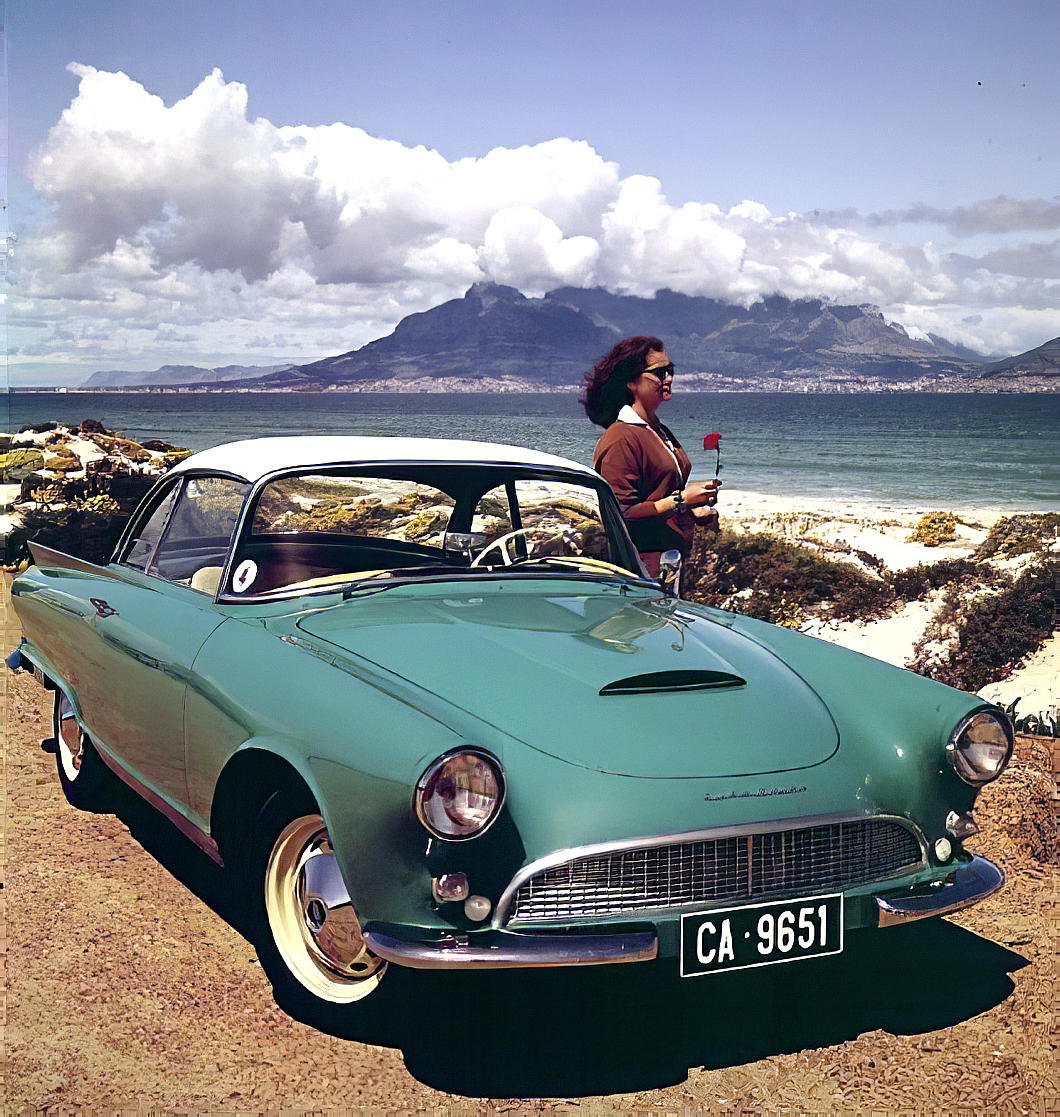
Nuwe kar, Blouberg, 1965 [link]
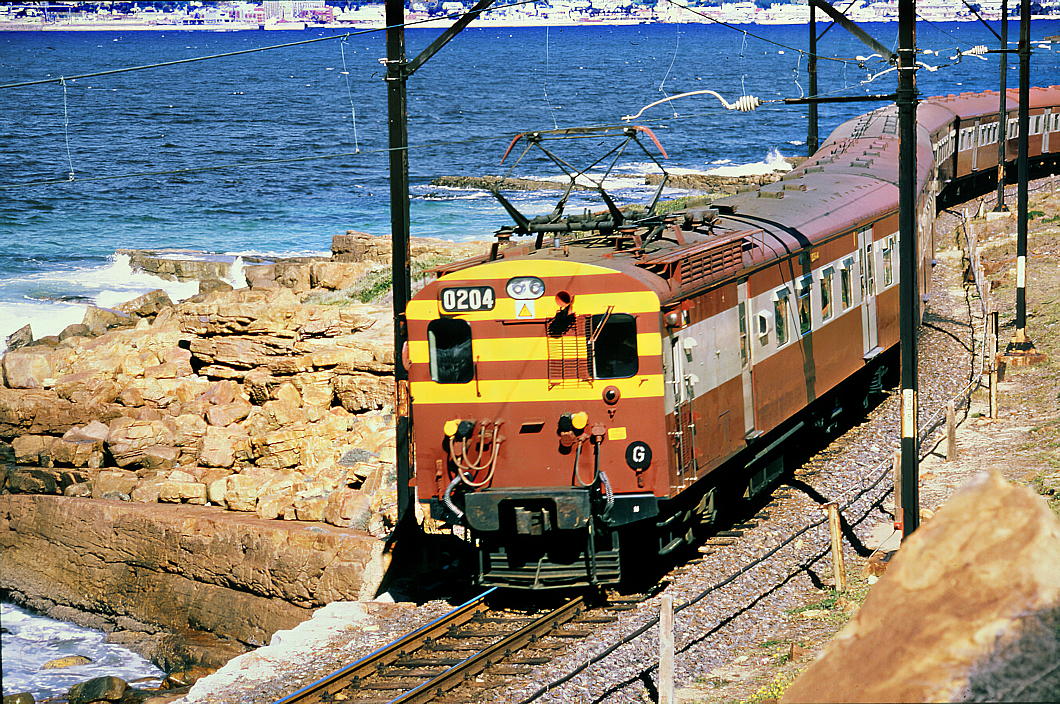
Simonstad spoorlyn, tussen Glencairn en Sandy Cove, 1989 [link]
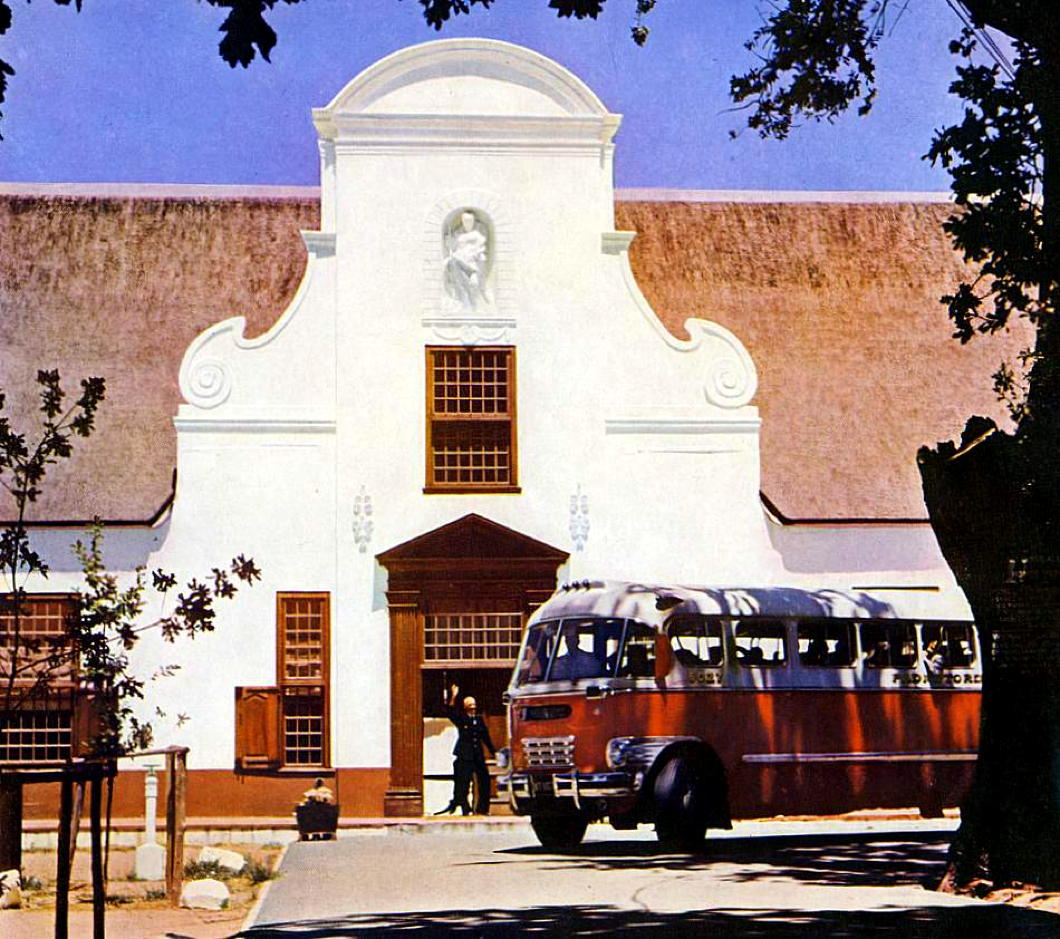
’n SAS&H toeriste-bus, Groot Constantia, 1951 [link]
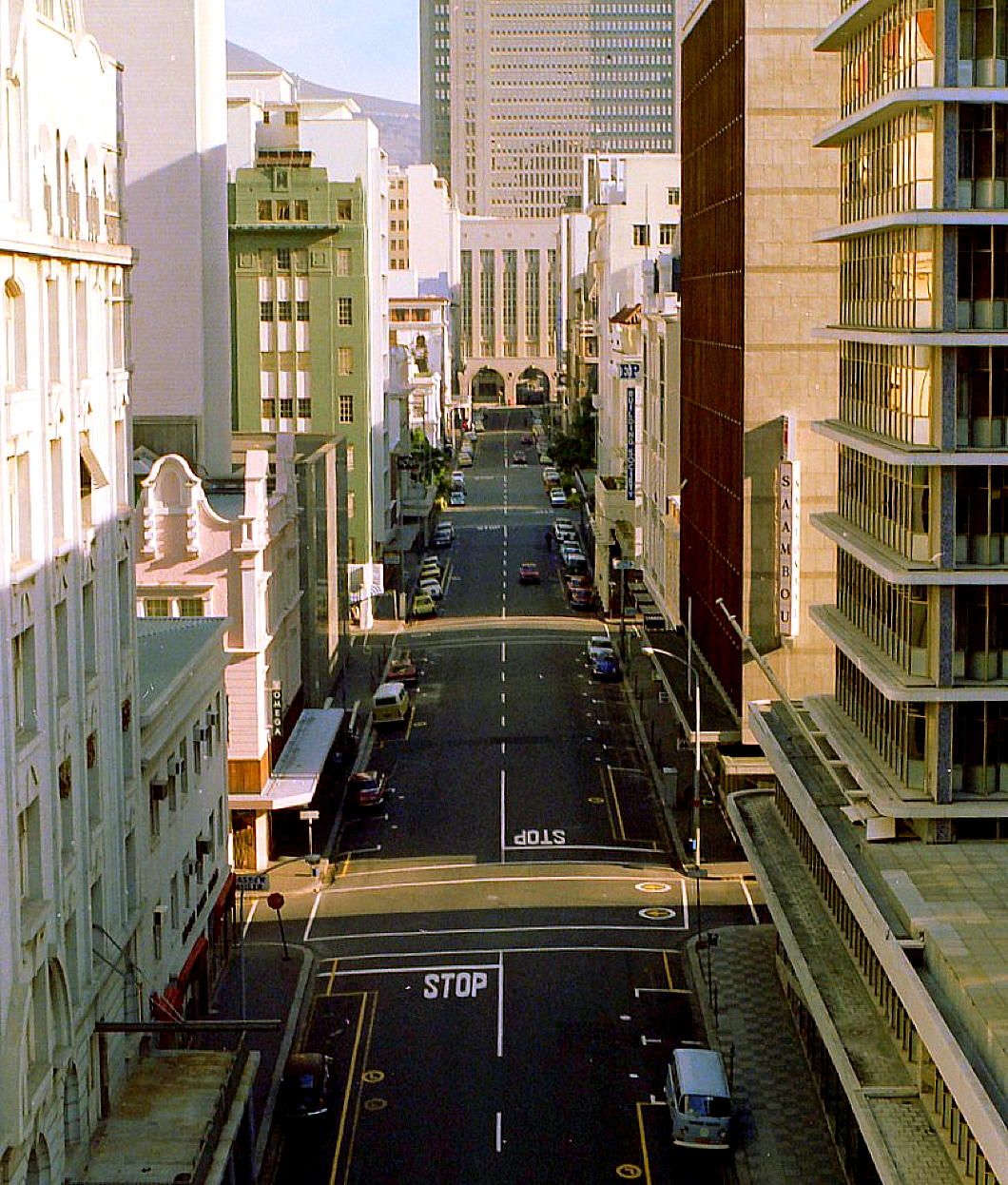
Saterdag-middag, Burgstraat, 1979 [link]
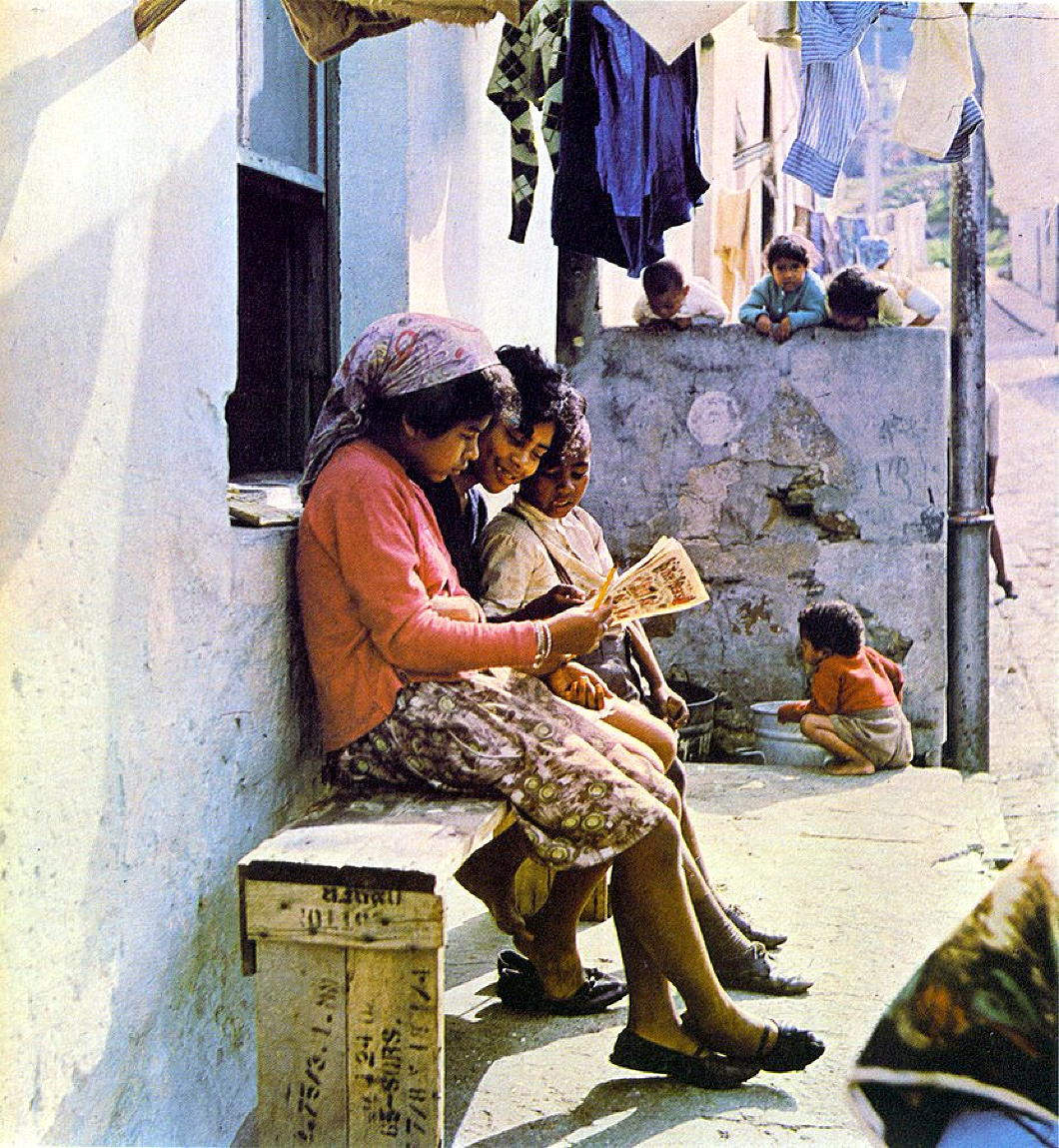
Wasdag is verby, Bo-Kaap, 1965 [link]
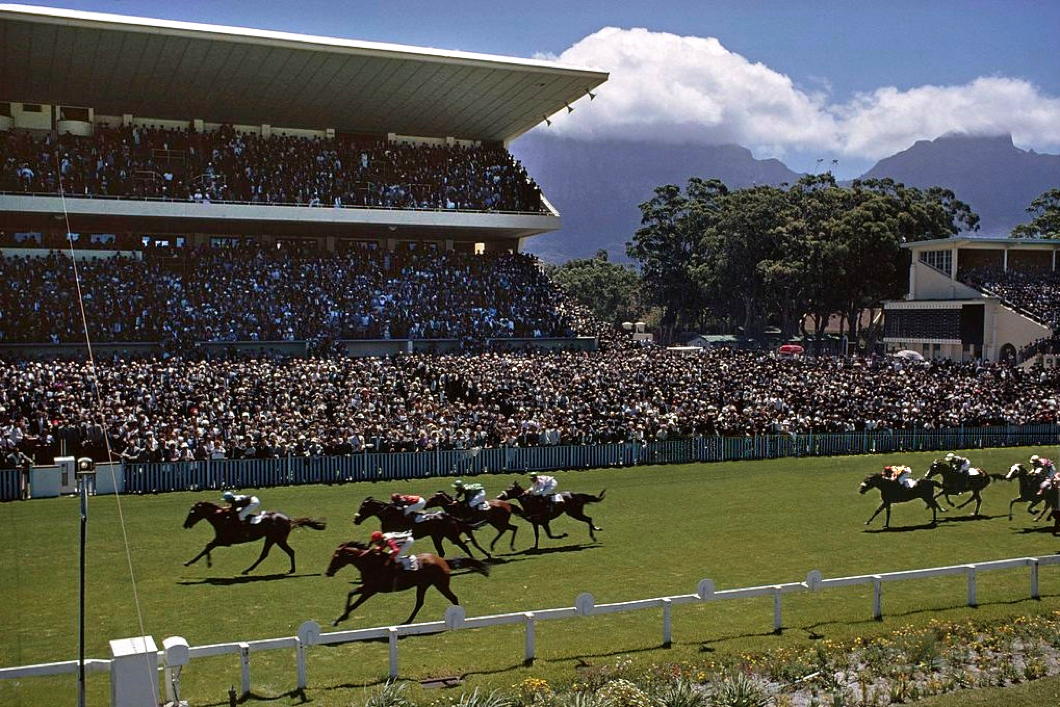
Kenilworth renbaan, die Metropolitan Handicap, 1962 [link]
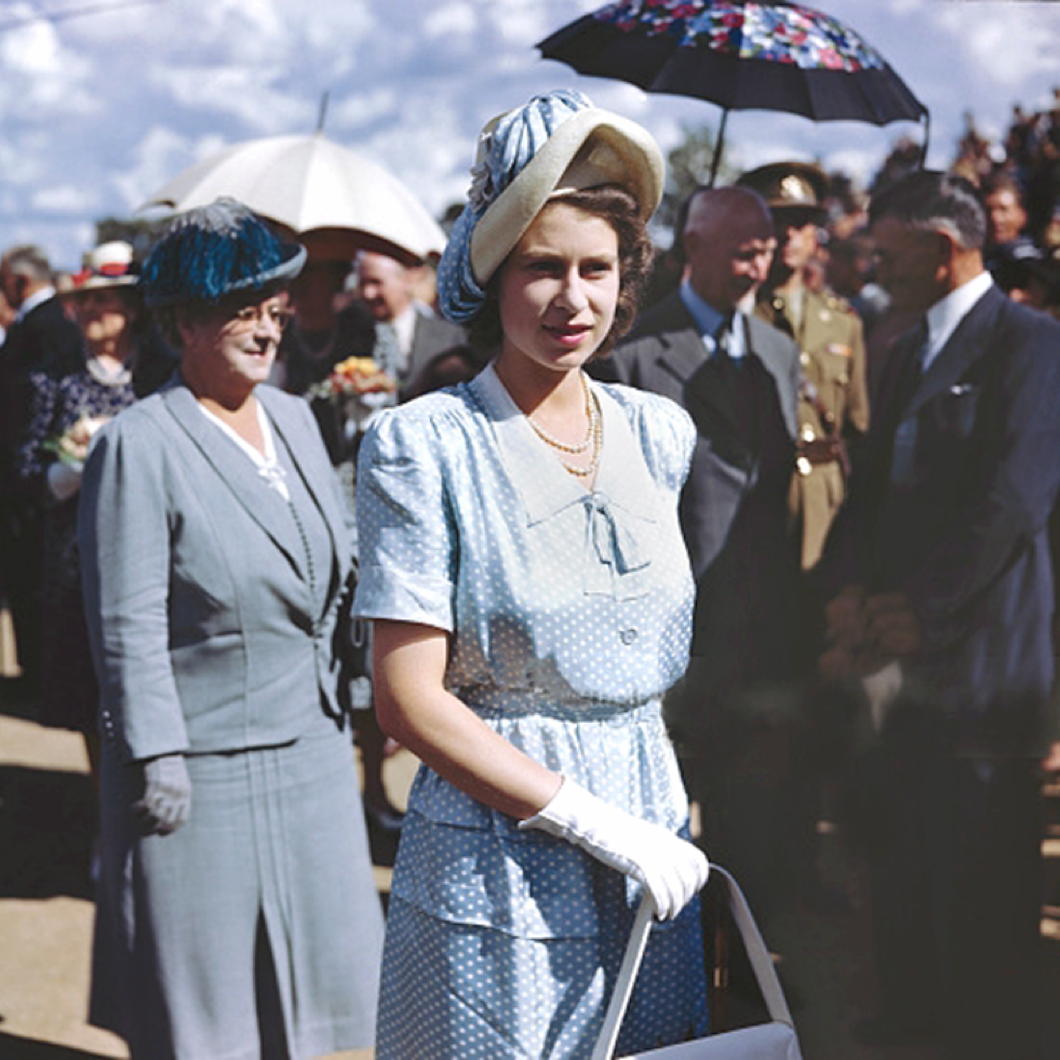
Die prinses Elizabeth (later Elizabeth II, Koningin van Suid-Afrika), verwelkomingsparty by Tuynhuis, 1947 [link]
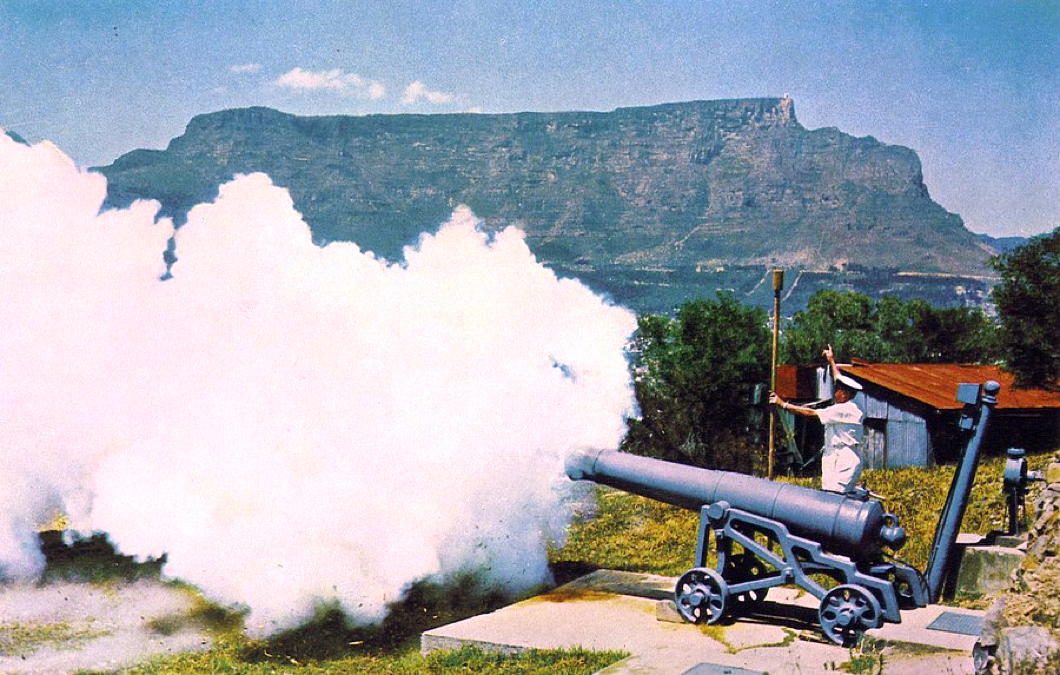
Die Noon Gun, Leeukop, 1967 [link]
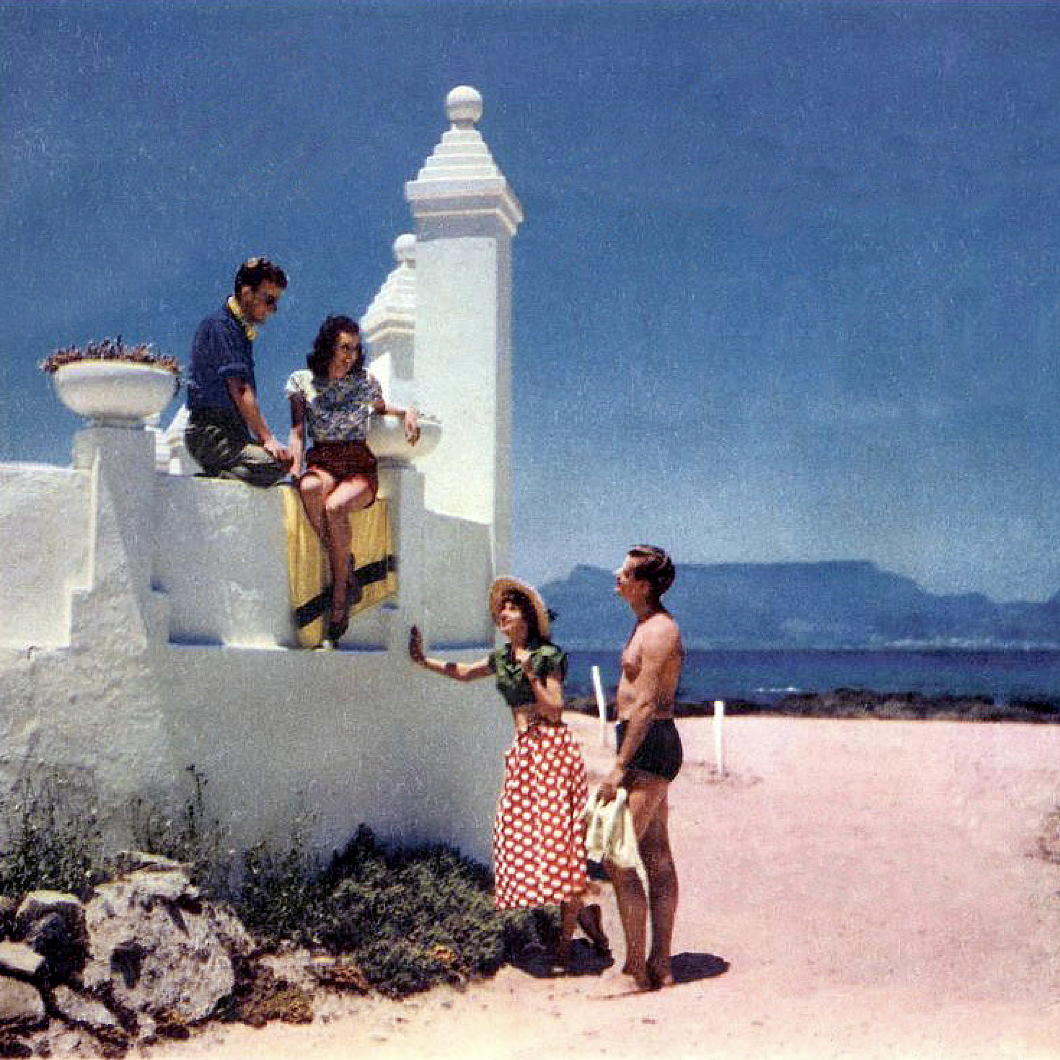
Bloubergstrand, 1950s [link]
Die kleine dorpie Betlehem
JA JA JA, ons onthou: die Amerikaanse Episcopaalse biskop Phillips Brooks was nie ’n bolwerk van ortodoksie nie. Hy het die ryk van gevoel bo die waarheid verhef, maar nie noodwendig teen die waarheid nie — hulle het in die negentiende eeu nog ’n bietjie politesse gehad.
Soos R.R. Reno geskryf het: Brooks “het geen moeilike teologiese kwessies gedink of enige nuwe intellektuele grond gebreek nie.” In Nieu-Engeland was hy “heeltemal afgeleide en uiters invloedryk”.
Reg genoeg… en vandag leef ons in Brooks se nawêreld. Maar hy het ’n klein geskenk aan die wêreld gegee, en sy klein geskenkie was ’n lofsang — ’n Kersfees liedtjie.
Die wysie wat in Amerika gebruik word, is sakkarien. Maar die Britse een — “Forest Green” — is melodieus en goed. (’n Video hieronder, en Engels, gesing deur die koor van St George’s in Windsor-kasteel.)
lê rustig daardie nag,
terwyl dié wonderwerk gebeur
waarvoor die wêreld wag.
verskyn ’n nuwe dag
vir almal wat in nood verkeer
en op sy redding wag.
Toe God se Seun gebore is,
was daar geen plek vir Hom;
so word ’n donker dierestal
’n helder heiligdom.
verskyn ’n Koningster,
wat ewig lig en vrede straal
na mense wyd en ver.
O Koningskind daar in die krip,
U kom hier by ons woon.
Net U versoen ons sondeskuld
en maak ons lewe skoon.
want U kom ons herstel.
O Vredekoning, God met ons,
U is Immanuel.
A Cape Dutch Garden at Chelsea
Jonathan Snow at the 2018 Flower Show
I’m ashamed to say I’ve never been to the Chelsea Flower Show, the most florid event on London’s social calendar. It is a delight flâneur-ing around the neighbourhood the week of the Show as many of the pubs, restaurants, and businesses in the vicinity pull out the stops in terms of their own floral displays.
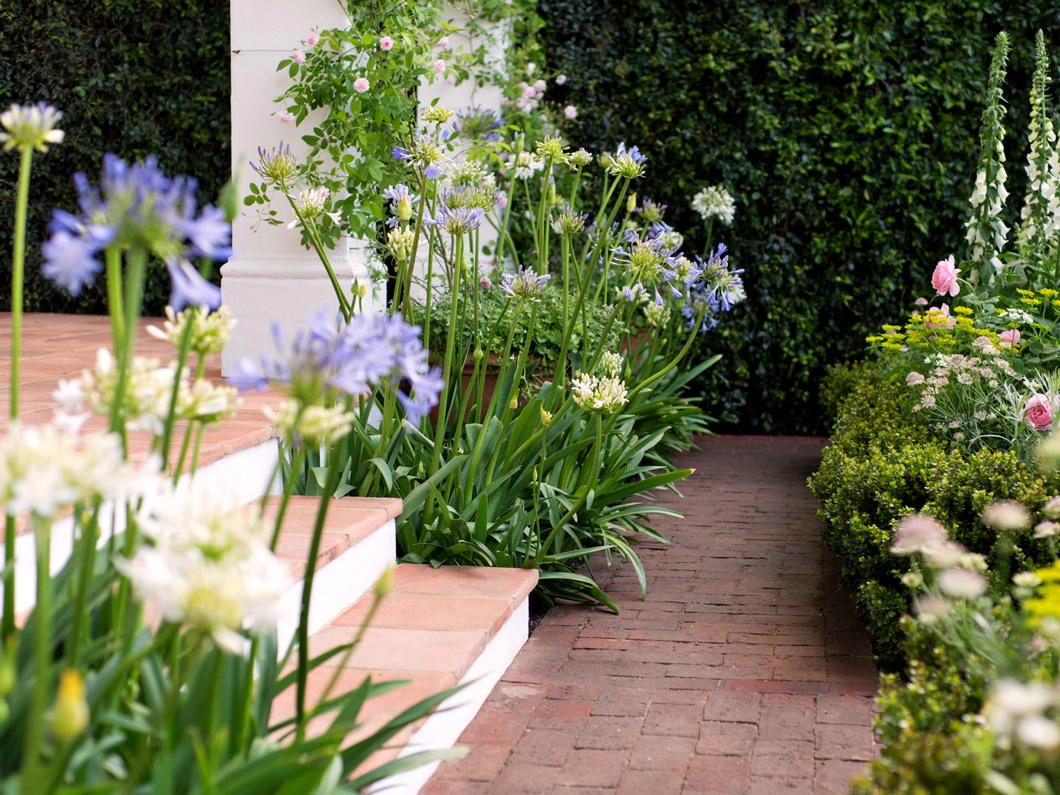
I used to live in Chelsea but escaped to Southwark and there are some delightful gardens in our vicinity. But I’ve never regretted avoiding the Chelsea Flower Show more than when I discovered Jonathan Snow’s delightful entry of a Cape Dutch garden in the 2018 exhibition.
Snow and his wife had been on holiday in the Cape a few years before and the beautiful fynbos captured the designer’s imagination. The architecture must have too, for Snow topped his garden off with a pocket Cape Dutch house that ties it all together.
I can well imagine taking a morning koppie koffie on that stoep — and perhaps either a stiff gin-and-tonic or some ice-cold vin de constance as the sun goes down.
An excellent effort that makes me pine for the Cape.
Old Church, Paarl
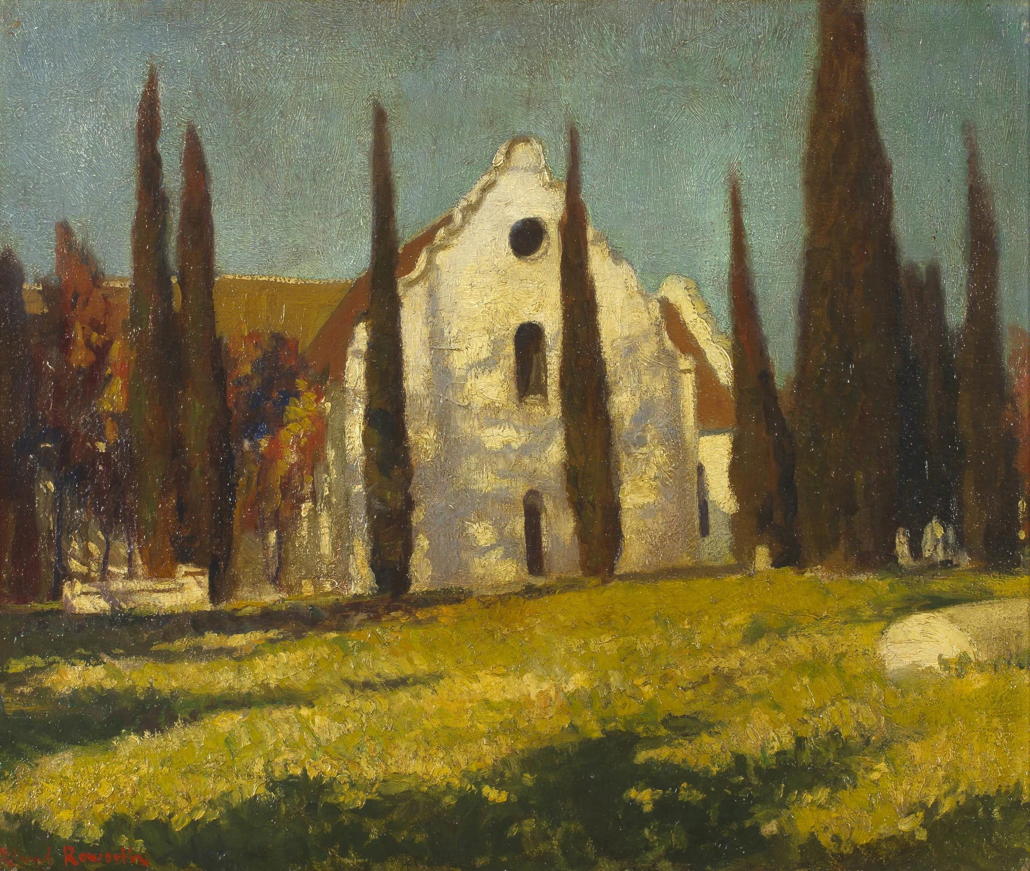
The church in die Paarl is the third-oldest NGK congregation in South Africa, after the Groote Kerk in Cape Town and the Moederkerk in Stellenbosch. It is often known as the Strooidakkerk (straw-roof church) for obvious reasons.
This part of the Drakenstein was first settled by Huguenots, where the dominee Pierre Simond preached in French from the foundation of the church in 1691 until he returned to Europe in 1702.
The old Dutch houses of the Cape
From Here There and Everywhere (1921) by Lord Frederic Hamilton:
THESE OLD DUTCH HOUSES are a constant puzzle to me. In most new countries the original white settlers content themselves with the most primitive kind of dwelling, for where there is so much work to be done the ornamental yields place to the necessary; but here, at the very extremity of the African continent, the Dutch pioneers created for themselves elaborate houses with admirable architectural details, houses recalling in some ways the chateaux of the Low Countries.
Where did they get the architects to design these buildings? Where did they find the trained craftsmen to execute the architects’ designs? Why did the settlers, struggling with the difficulties of an untamed wilderness, require such large and ornate dwellings? I have never heard any satisfactory answers to these questions.
Groot Constantia, originally the home of Simon Van der Stel, now the government wine-farm, and Morgenster, the home of Mrs. Van der Byl, would be beautiful buildings anywhere, but considering that they were both erected in the seventeenth century, in a land just emerging from barbarism seven thousand miles away from Europe, a land, too, where trained workmen must have been impossible to find, the very fact of their ever having come into existence at all leaves me in bewilderment.
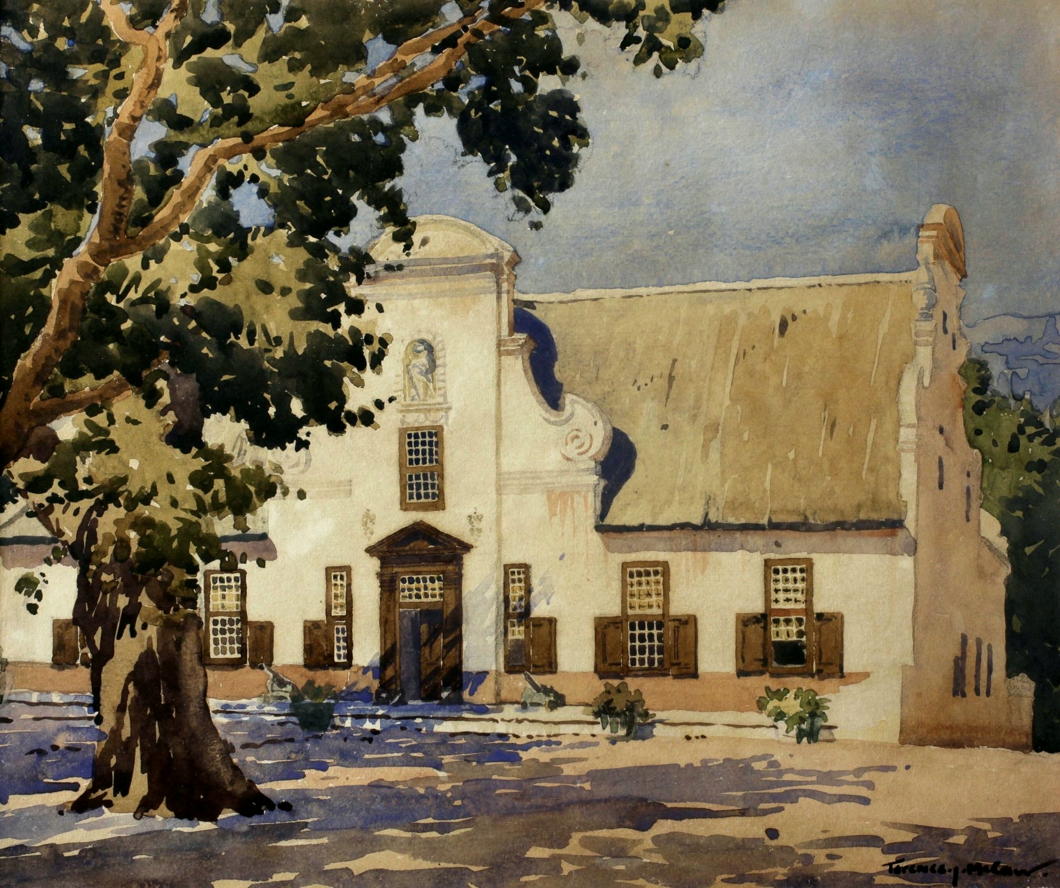
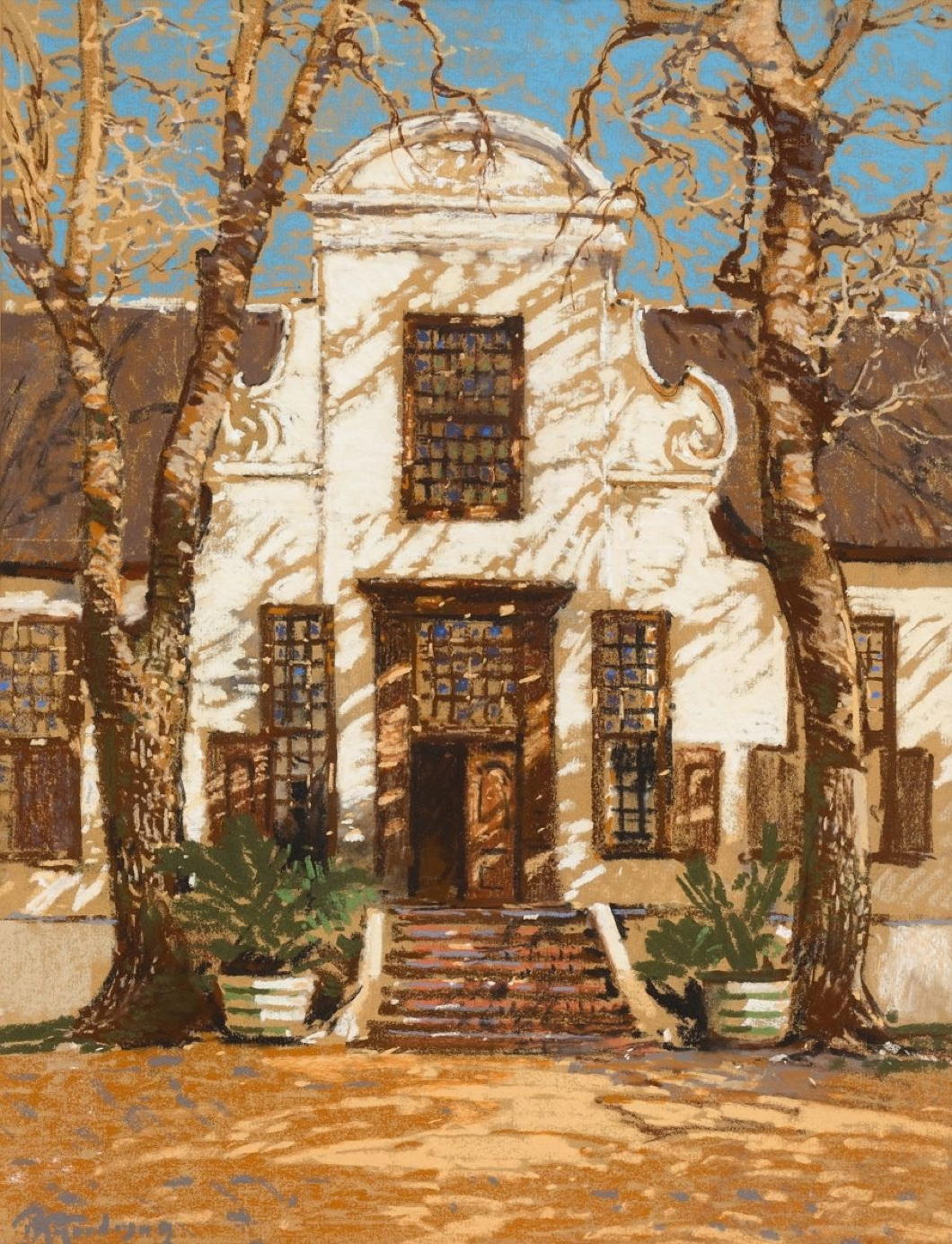
These Colonial houses, most admirably adapted to a warm climate, correspond to nothing in Holland, or even in Java. They are nearly all built in the shape of an H, either standing upright or lying on its side, the connecting bar of the H being occupied by the dining-room. They all stand on stoeps or raised terraces; they are always one-storied and thatched, and owe much of their effect to their gables, their many-paned, teak-framed windows, and their solid teak outside shutters. Their white-washed, gabled fronts are ornamented with pilasters and decorative plaster-work, and these dignified, perfectly proportioned buildings seem in absolute harmony with their surroundings.
Still I cannot understand how they got erected, or why the original Dutch pioneers chose to house themselves in such lordly fashion. At Groot Constantia, which still retains its original furniture, the rooms are paved with black and white marble, and contain a wealth of great cabinets of the familiar Dutch type, of ebony mounted with silver, of stinkwood and brass, of oak and steel; one might be gazing at a Dutch interior by Jan Van de Meer, or by Peter de Hoogh, instead of at a room looking on to the Indian Ocean, and only eight miles distant from the Cape of Good Hope.
How did these elaborate works of art come there? The local legend is that they were copied by slave labour from imported Dutch models, but I cannot believe that untrained Hottentots can ever have developed the craftsmanship and skill necessary to produce these fine pieces of furniture.
I think it far more likely to be due to the influx of French Huguenot refugees in 1689, the Edict of Nantes having been revoked in 1685, the same year in which Simon Van der Stel began to build Groot Constantia. Wherever these French Huguenots settled they brought civilisation in their train, and proved a blessing to the country of their adoption. […]
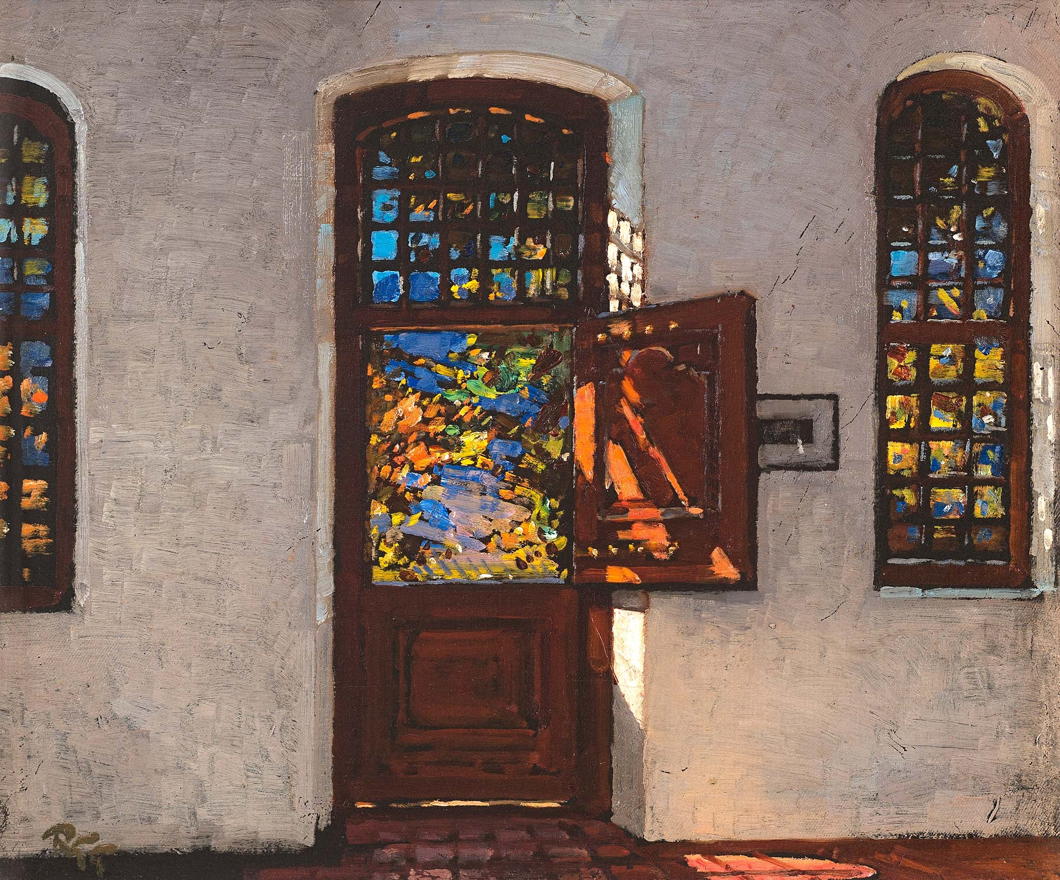
Here, at the far-off Cape, the Huguenots settled in the valleys of the Drakenstein, of the Hottentot’s Holland, and at French Hoek; and they made the wilderness blossom, and transformed its barren spaces into smiling wheatfields and oak-shaded vineyards. They incidentally introduced the dialect of Dutch known as “The Taal,” for when the speaking of Dutch was made compulsory for them, they evolved a simplified form of the language more adapted to their French tongues.
I suspect, too, that the artistic impulse which produced the dignified Colonial houses, and built so beautiful a town as Stellenbosch (a name with most painful associations for many military officers whose memories go back twenty years ) must have come from the French.
Stellenbosch, with its two-hundred-year-old houses, their fronts rich with elaborate plaster scroll-work, all its streets shaded with avenues of giant oaks and watered by two clear streams, is such an inexplicable town to find in a new country, for it might have hundreds of years of tradition behind it!
Wherever they may have got it from, the artistic instinct of the old Cape Dutch is undeniable, for a hundred years after Van der Stel’s time they imported the French architect Thibault and the Dutch sculptor Anton Anreith. To Anreith is due the splendid sculptured pediment over the Constantia wine-house illustrating the stoiy of Ganymede, and all Thibault’s buildings have great distinction.
But still, being where they are, they are a perpetual surprise, for in a new country one does not expect such a high level of artistic achievement.
An African View of the Heavens
Catholic Clerical Skygazers at the Cape of Good Hope
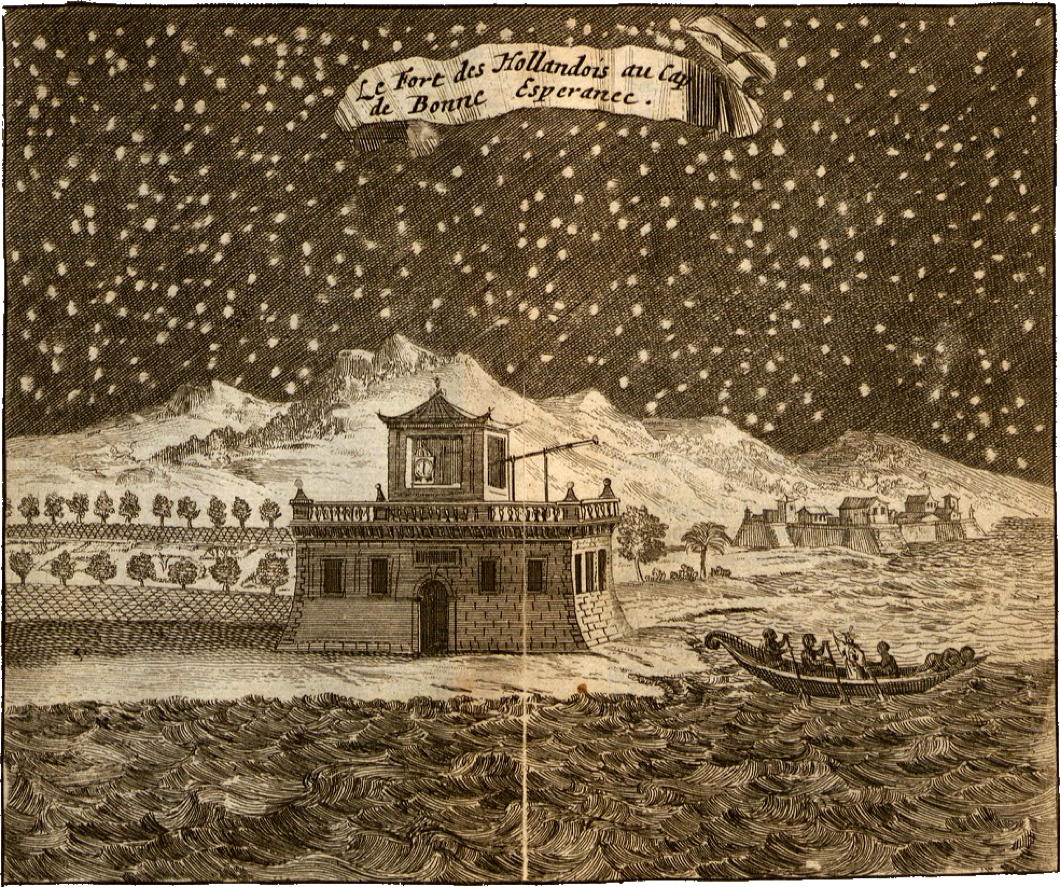
In 1685, the Jesuit mathematician, astronomer, and not-quite-secret-agent Fr Guy Tachard stopped off at the Cape of Good Hope en route to Siam as an emissary of the Sun King, Louis XIV.
Given Dutch hostility both to the French and to Catholicism, Père Tachard was surprised by the generous welcome provided by the governor, Simon van der Stel. Tachard was allowed to set up an astronomical observatory in the Company’s Gardens (today Cape Town’s equivalent of Central Park). No sooner had this happened than the clandestine Catholics of the colony searched the priests out.
“Those who could not express themselves otherwise knelt and kissed our hands,” one of the expedition’s priests wrote. “In the mornings and evenings they came privately to us. There were some of all countries and of all conditions: free, slaves, French, Germans, Portuguese, Spaniards, Flemings, and Indians.”
Those who spoke French, Latin, Spanish, or Portuguese were lucky enough to have their confessions heard but one thing was absolutely forbidden: the Mass. The Dutch authorities would not permit Mass to be offered on land, and local inhabitants were forbidden from visiting the French ships.
Once, while the priests took ashore a microscope covered in beautiful Spanish gilt leather, locals suspected them of trafficking in the Blessed Sacrament such that the clerics were forced to demonstrate the use of the microscope to prove they were heeding the Governor’s instructions.
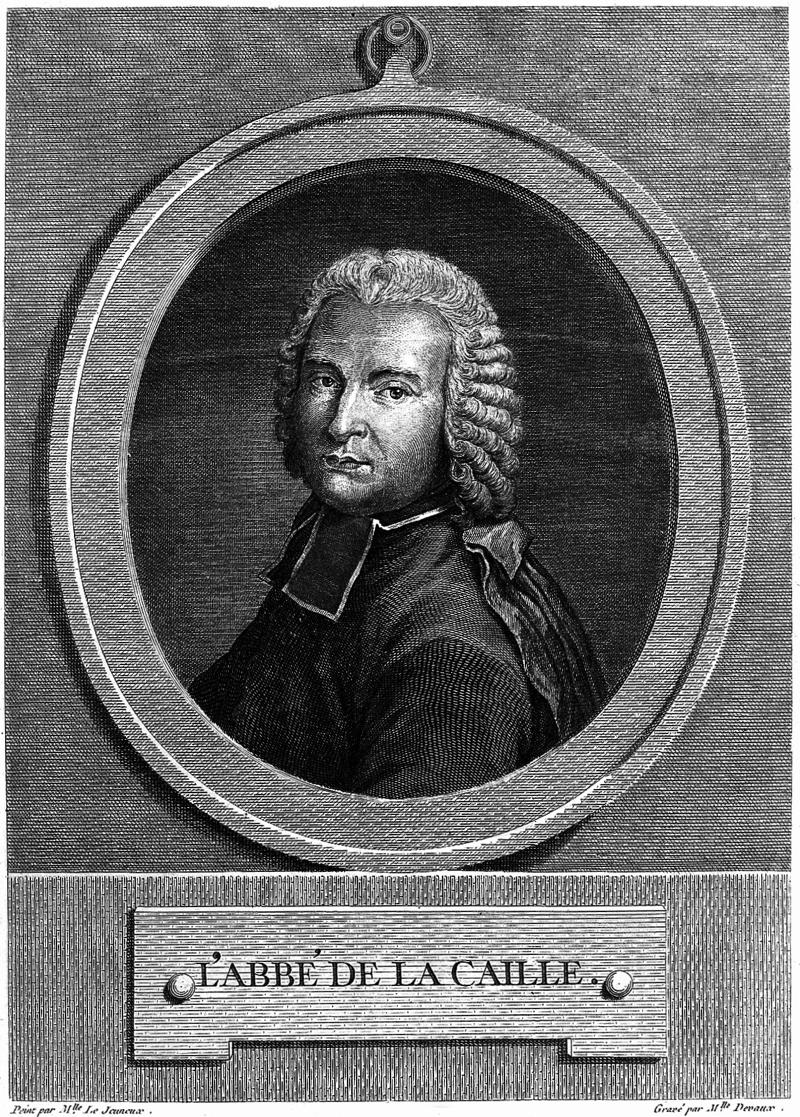 A century later another French cleric-astronomer, the Abbé Nicolas-Louis de Lacaille, made his way to the Cape during Ryk Tulbagh’s time as Governor of the Dutch colony.
As a mere deacon Lacaille could not offer the Mass and we know little of his relations with any remaining Catholics at the Cape.
There’s no doubt, however, that his contribution to astronomy while in South Africa was significant: Lacaille’s two years of astronomical observation there were prolific in their results. Of the 88 constellations currently recognised by the International Astronomical Union, fourteen were named by Lacaille — including the constellation Mensa (“table”) which took its name from the Latin for Cape Town’s Table Mountain.
Mensa remains the only constellation named after a feature on Earth, so there is a little bit of South Africa that is visible in the night sky anywhere south of the fifth parallel of the northern hemisphere.
The Perfect Home Garage
The Coach-House at Saasveld, Cape Town
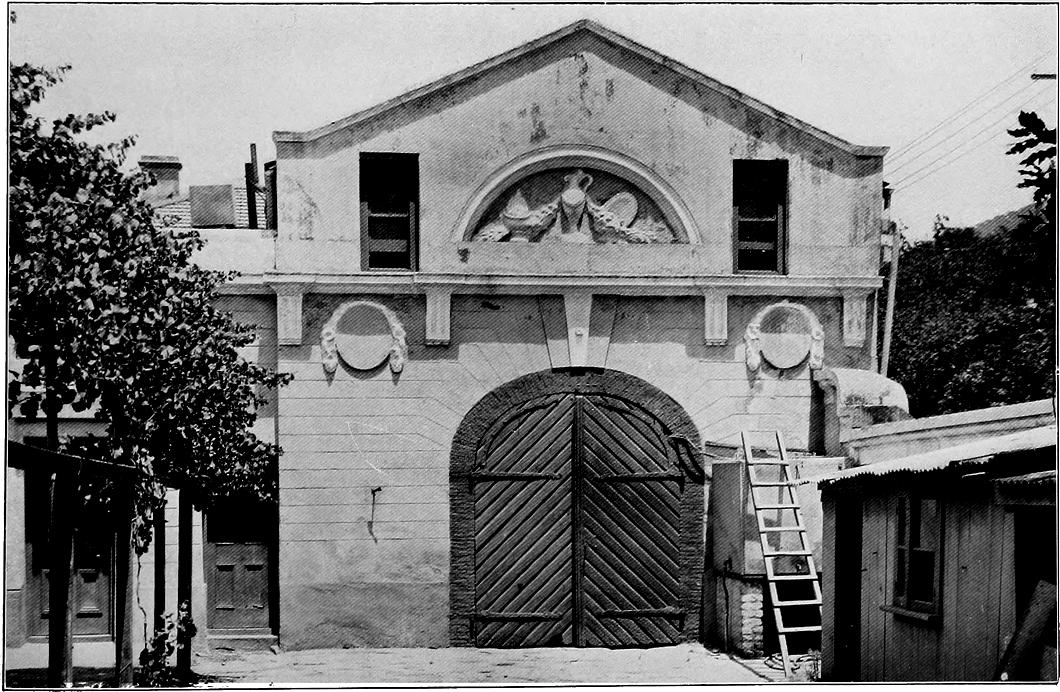
With all of Suburbia working from impromptu home offices set up in their garages during Covidtide — presumably clinging to their space heaters at this time of year — the subject of the residential garage came up in conversation.
America, being a land of plenty, has the very worst and the very best of home garages. The best are, if a separate structure, often in an arts-and-crafts style and ideally with a floor above perfect for extra storage, conversion to a rental unit, or space for disgruntled teenagers. If attached to the house itself, it is to the side, and only one storey, so as not to distract attention.
The worst, however, are double wide and take up most of the facade, as well documented by McMansion Hell.
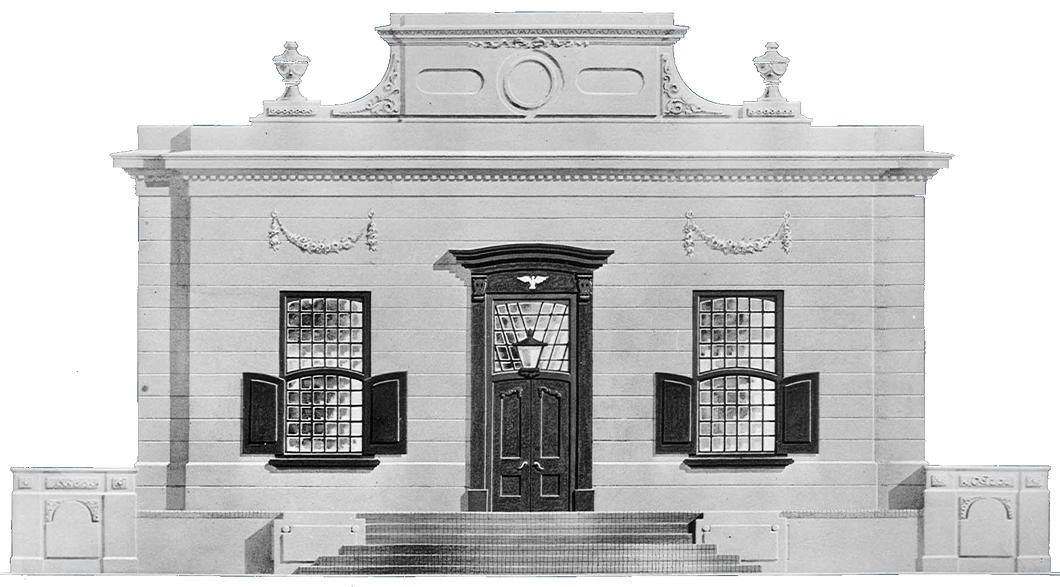
My perfect residential garage, however, is not in the States but from the Western Cape. Saasveld was the home of Baron William Ferdinand van Reede van Oudtshoorn, also 8th Baron Hunsdon in the Peerage of England.
In the 1790s, the Baron built the house on his Cape Town estate — between today’s Mount Nelson Hotel and the Laerskool Jan van Riebeeck. The elegant house and outbuildings were almost certainly the work of Louis Michel Thibault, the greatest architect of the Cape Classical style.
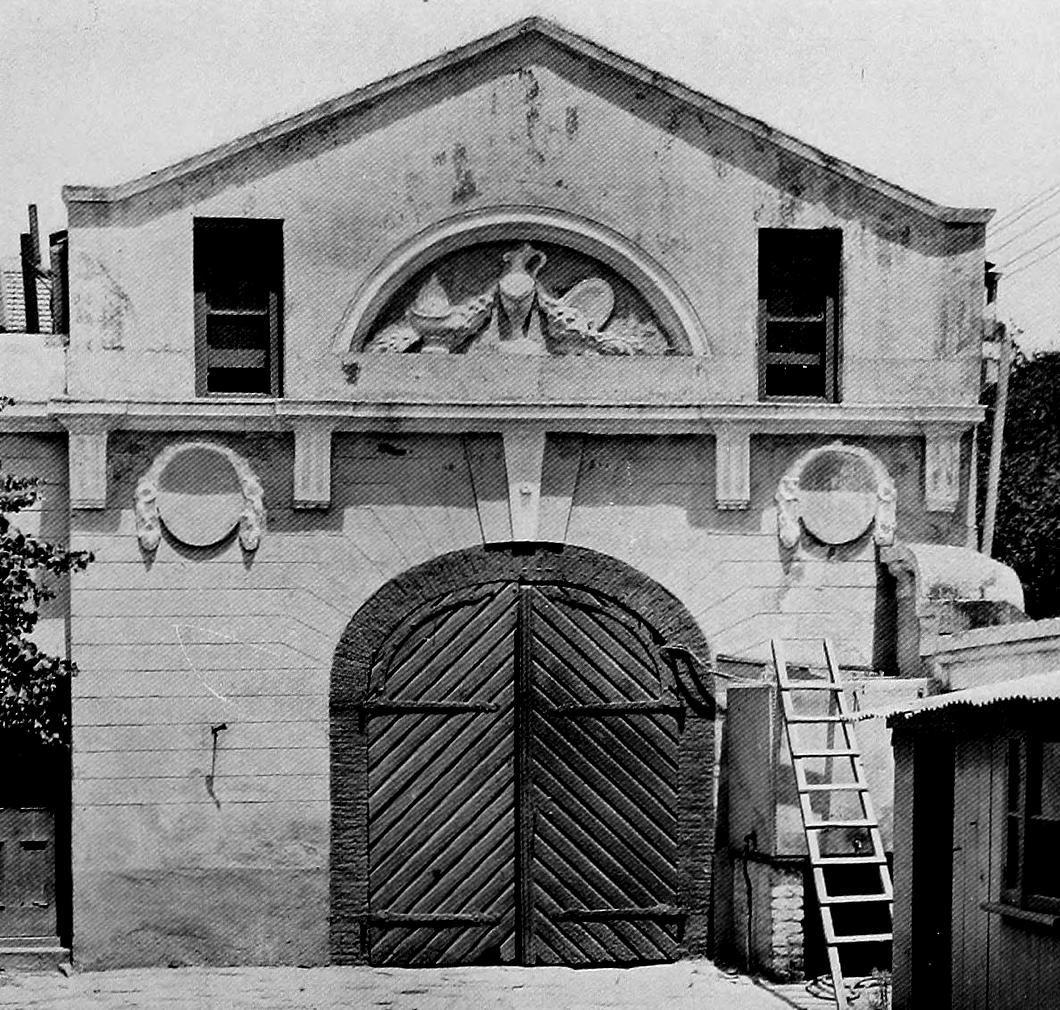
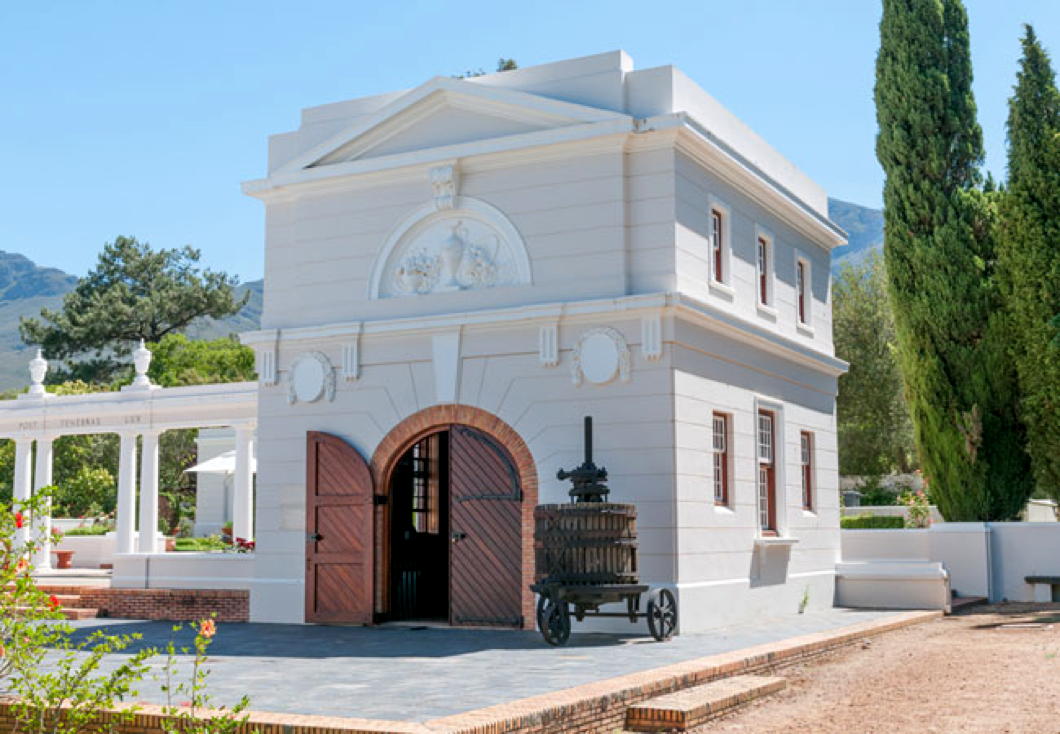
Behind the house were two flanking wine cellars linked by a colonnade, at least one of which (above) was eventually put to use as a coach house or garage and photographed by Arthur Elliott.
Unfortunately the house and its grounds fell into ruin and the Dutch Reformed Church bought the site for development and decided to demolish Saasveld. Architectural elements from the house were preserved and eventually re-assembled at Franschhoek where a reconstructed Saasveld serves as the Huguenot Memorial Museum today.
As Mijnheer van der Galiën reports, however, the tomb of William Ferdinand is still at the original site.
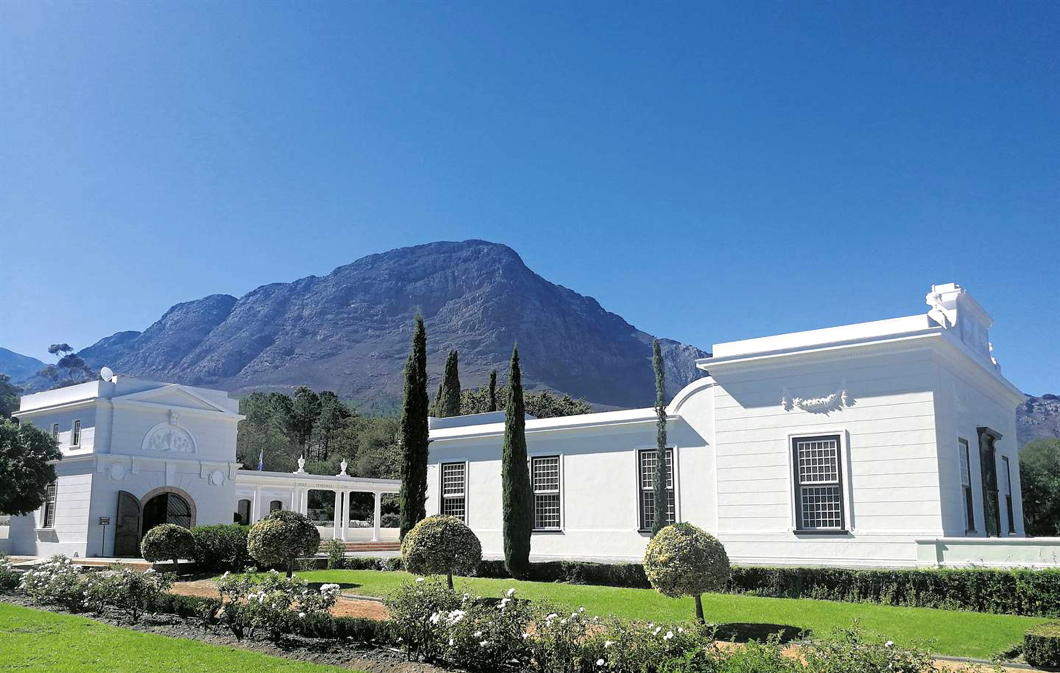
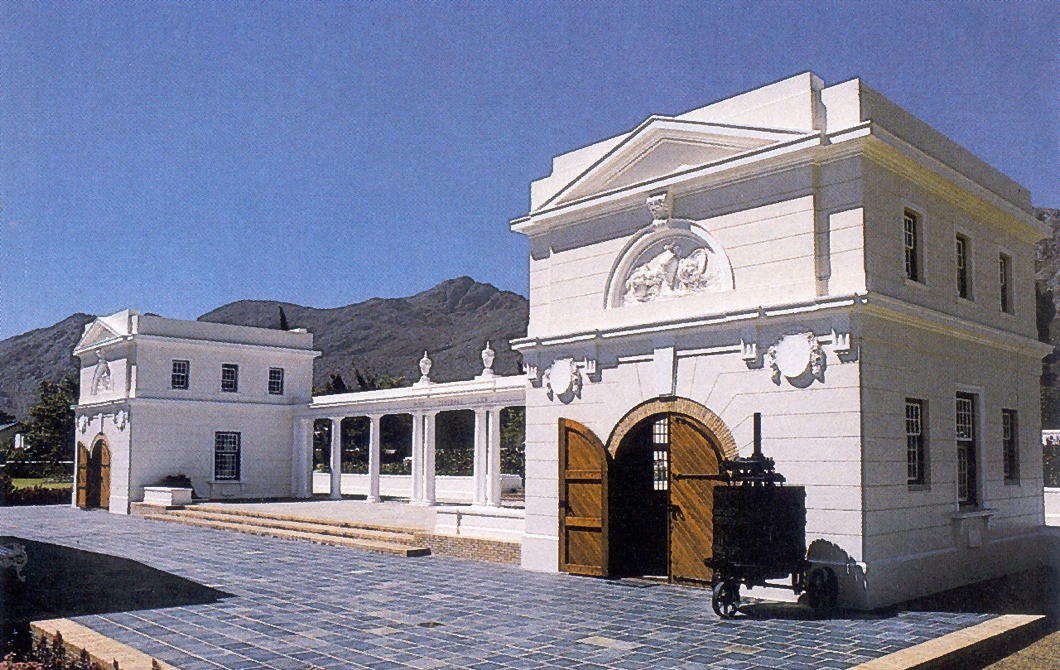
Here in Franschhoek the matching wine-cellars-turned-coach-houses are reproduced with their linking colonnade. And I still can’t help but think that — so long as you could fit a Land Rover through the doors — they would make the perfect home garage.
Klein Gidding
Bekend nie, want nie gesoek nie
Maar gehoor, half gehoor, in die stilte
tussen twee golwe van die see.
Vinnig, nou, hier, nou, altyd –
’n Voorwaarde van volledige eenvoud
(Koste nie minder nie as alles)
En alles sal wel wees
Allerhande dinge sal wel wees
As die tonge van vlam inmekaar gevou is
In die gekroonde knoop van vuur
En die vuur en die roos is een.
‘Disgraceful Scenes at Stellenbosch’
The 1957 Intervarsity Match
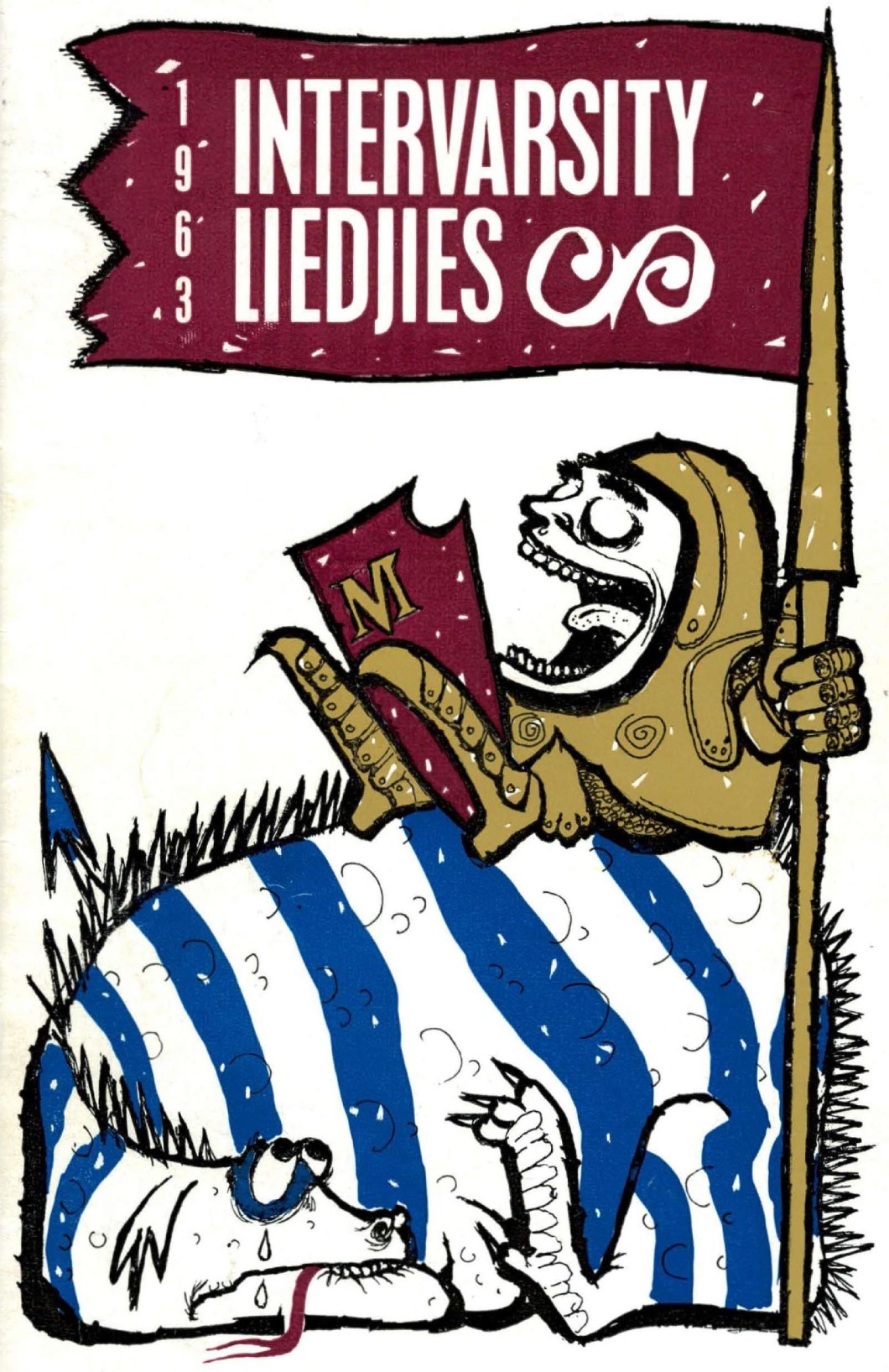
Flicking through the argiewe the other day I stumbled upon this little report from Johannesburg’s Sunday Express of 26 May 1957 describing the displays of disrepute at the annual Intervarsity match, when the University of Cape Town takes on Stellenbosch.
AT STELLENBOSCH
annual rugger booze up
At Stellenbosch many students made the intervarsity match the occasion for a grand drinking spree. A number of them became drunk and disorderly; and here are some of the results of their liquor intake:
- A Cape Town student was hit on the head with a bottle, and was taken to hospital to have a gaping wound stitched.
- Another student was escorted from the pavilion by the police.
- A constable was hit by a bottle, thrown by a student.
- Flying bottles narrowly missed a number of other policemen.
- Although no damage was done, cardboard darts were thrown in the direction of the Prime Minister, to the accompaniment of insulting jeers.
- The pennant on a Cabinet Minister’s car was stolen.
- The chauffeur of the Governor-General’s car hid his pennant (which cost £7.10.0) in case it too disappeared.
- One Cape Town student was found lying drunk among the coloured spectators.
According to a police official, many drunk students armed with bottles of liquor, turned up for the match. So bad was it that he eventually told the gate keepers not to allow them in. A policeman was obliged to stand guard over Ministerial cars.
I’m pleased to say the Sunday Express revealed that “the worst offenders were the Cape Town students”, not the Maties. “Bottles of whisky, vodka, wine and champagne were much in evidence on [the UCT] stands.”
depicting die ridder van Matieland having easily defeated the Ikey dragon.
The Feast of St Valentine in the Cape
Die fees van Sint Valentyn in die Kaap
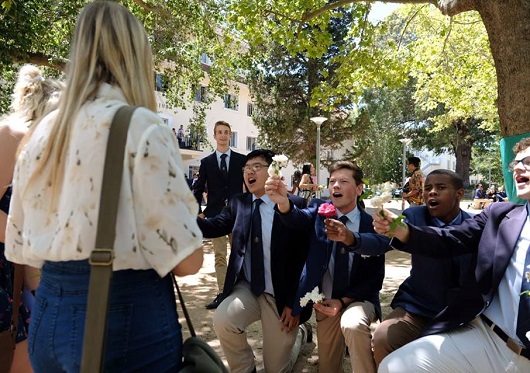
A nice tradition!
’n Lekker tradisie!
Dolosse

dolos, pl. dolosse
Visitors to the seaside and frequenters of port cities will be familiar with those oddly shaped concrete forms which are dropped together to form breakwaters and prevent erosion.
It turns out that they have a name of Afrikaans origin: dolos (plural dolosse).
‘Dolos’ is believed to be a contraction of ‘dollen os’, the name for the children’s toy of knucklebones or jacks. This particular shape was invented by Aubrey Kruger and Eric Mowbray Merrifield to rebuild the revetments of East London’s artificial harbours following the great storm of 1963.
Kruger fashioned a smaller version of the shape to show his idea to Merrifield, and legend has it that Kruger’s father visited them on the quayside and asked Wat speel julle met die dolos? (‘What are you playing at with the jack?’) The name stuck.
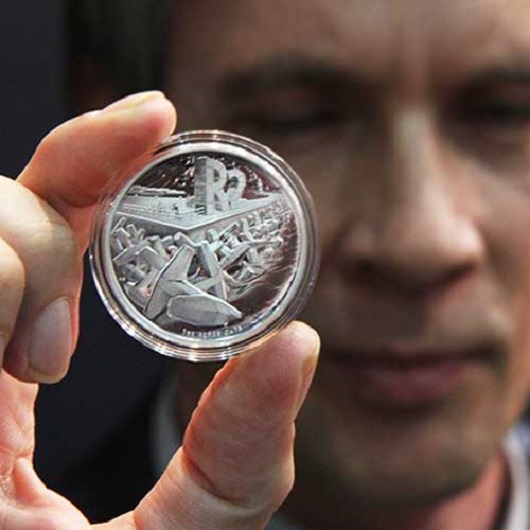
In 2016 the South African Mint released a two-rand ‘crown’ coin depicting the dolos as a tribute to this example of South African ingenuity.
Stellenbosch
would be as beautiful as Oxford or Cambridge
until I saw it.”
— AIDAN HARTLEY
Sunday in Stellenbosch
In recent rambles I came upon an old article from the Spectator in which the late and much-praised Richard West reported from Stellenbosch — “this old and incomparably beautiful town in a valley of vineyards” — on the Sunday after the Dutch Reformed Church renounced apartheid in 1986.
“The students here seem to be confident, cheerful, enthusiastic and full of fun,” West wrote. “Half of them seem to be in love, holding hands and gazing adoringly into each other’s eyes.”
As I walked over the university lawn, I turned at the hoot of a horn, and saw that it came from a motor-bike cop, who wanted to get the attention of and wave to a friend. Small children were paddling in the brook that runs by an avenue of old oaks. Bigger children, spotlessly dressed, went smiling off to their Sunday school, while their elders went to the mother church, where there has been a congregation since 1684. The present building, begun in 1715 and renovated during the 19th century, now has a peculiar boomerang shape so that if you are sitting near one of the ends, you cannot see or hear what is going on at the other side. The church cannot compete in appearance with some of the houses of Stellenbosch, which justify Ruskin’s remark that ‘the only contribution to domestic architecture for centuries was made by the Dutch at the Cape’.
The congregation who filled the church was impeccably dressed, the men all wearing coats and ties, though most women were hatless with summer dresses of normal length at the arms and legs, instead of the 17th-century garb one tends to associate with Calvinism. The congregation has little to do except sing the metrical psalms. The prayers are said by the minister, who devotes much if not most of the hour-long service to giving his sermon. …
Stellenbosch University, which was where apartheid began, is now working to dismantle the system. Whereas the English universities are stuck in the stale polemics of 20 years ago, the Afrikaners are bubbling with radical new ideas. Whereas foreigners once read Afrikaans papers ‘to learn what they were thinking’, it is now essential to read them to find any thinking at all. The two best English newspapers are edited by Afrikaners. The Afrikaners still believe in the future. …
Mr West died in 2015 but it would be fascinating to see what he would make of the Eikestad these days.
Pretoria Philadelphia
Andries Pretorius grew up on his father’s farm near Graaf-Reinet in the Cape of Good Hope, but the Great Trek took him (and many other Boers) into the South African interior. Pretorius’s victory, against all odds, over Dingane’s Zulu forces at Blood River in 1838 was to be commemorated from that day forevermore by Afrikaner piety as Geloftedag — the Day of the Vow. When the South African Republic (ZAR) was established in 1852 the capital was Potchefstroom, but Andries’s son Marthinus founded the city of Pretoria Philadelphia in 1855 to be the new capital of the Transvaal.
The four colonies at the end of the continent were conjoined in 1910 as the Union of South Africa, with Pretoria (as it was soon shortened to) named the seat of the executive and thus the nation’s capital. The parliament met in Cape Town and the highest courts in Bloemfontein so that, in some sense, the new nation had three capitals — administrative, legislative, and judicial. As the seat of the visible sovereignty of the realm, the Governor-General, as well as the Prime Minister’s administration and cabinet, however, it was Pretoria that held precedence.
We’ve already examined Kerkplein — Church Square — at the heart of the city, but the rest of the capital is worth exploring further. (more…)
Lionel Smit
Suid-Afrikaanse portretskilder
Een van die mees geskoolde portretskilders vandag is die Pretoriaanse kunstenaar Lionel Smit (geb. 1982).
’n Skilder en beeldhouer, Mnr Smit woon en werk in Kaapstad en is die wenner van ’n ministeriële toekenning vir bydrae tot visuele kuns van die Wes-Kaapse regering. Sy werk is reeds ingesluit in die visuele kunste eksamen vir die Nasionale Senior Sertifikaat. Nie sleg vir ’n kêrel in sy dertigerjare!
Smit se skilderye herriner my aan die werk van die Engelse skilder Catherine Goodman. Hier is net sommige van sy portrette.
F.C. Kolbe and the Tulbagh Drostdy
the Tulbagh Drostdy
Poet, Polemicist, Polymath, and Priest
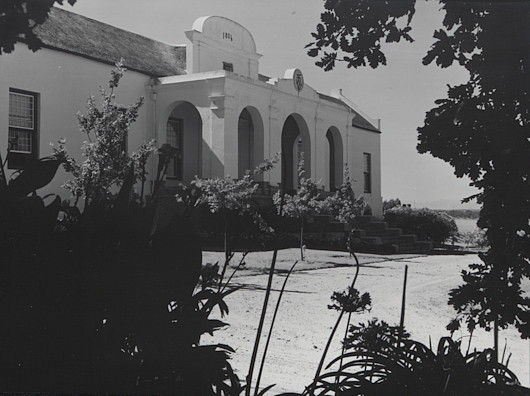
Relic and emblem of a storied past.
Thrice happy they whose lines in thee are cast
Thy records summon all in thy embrace
To emulate the virtues of the race.
Thy stately halls of courtly manners tell,
Where only Ladies Bountiful should dwell.
Thy solid frame is pledge of future glory,
And links our doings with our country’s story.
Work on the Drostdy (magistrate’s house) at Tulbagh in the Western Cape began late in 1804 but progressed rather slowly and expensively. This is probably because — after construction commenced — the plans by Bletterman, the landdrost at Stellenbosch, were torn up by the architect Louis Michel Thibault and replaced by his own design.
This meant part of the work already completed had to be demolished and re-done, which Bletterman only went along with assuming Thibault’s plan had the approval of the Batavian Republic’s governor of the Cape, Jan Willem Janssens. As it happens, they did not, and when Bletterman found out he was none too pleased.
Francis Masey, a partner at Herbert Baker’s firm, noted that “[w]hilst it proved to be the last building begun upon Dutch soil in South Africa, it was destined to be the first completed upon the passing of the Cape into the hands of the British.”
This 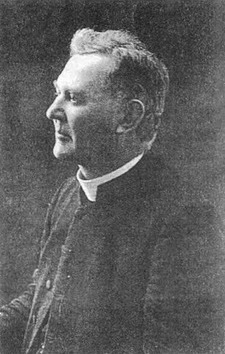 brief ode was written by Frederick Charles Kolbe (right) in 1909. The great-great-grandson of the magistrate (or landdrost) at Stellenbosch, F.C. Kolbe was the son of a Congregational missionary in Paarl who studied law at the Inner Temple in London. There, in 1876, he was received into the Catholic Church and continued on to study in Rome where he was ordained a priest in 1882.
While his poetry was tended towards the middling, Kolbe was a distinctive polymath. In addition to catechetical writings, he published a number of works on Shakespeare, and lectured on Socrates not long after his 1882 return to the Cape. Eventually he was appointed Reader in Aesthetics at the University of Cape Town.
Kolbe also wrote a Catholic criticism of the 1926 book Holism and Evolution by the statesman General Smuts. (Not many people realise that the word ‘holistic’ was donated to the English language by a son of Stellenbosch.) The general and the priest had corresponded as early as 1915 when Smuts was Minister for Defence, and Smuts was so taken with Kolbe’s critique that he wrote a foreword to a later edition of it.
In a 1935 letter to “Dr. Kolbe”, the General wrote:
Although I am not acquainted with the Catholic prayers, I am deeply versed in the Psalms of the Old Testament, which seem to me the greatest and noblest outpourings of the human spirit ever put into language. The inexpressible finds expression there. Emotions almost too deep for utterance somehow find an outlet there. …
I also agree with you as to the nobility of the language which Catholic Christianity has evolved. What could match the beauty of De Imitatione Christi? Somehow it breathes a spirit which is beyond all language. It is curious how in such a case the human soul sets on fire its own earthly vesture, and language becomes a blaze of glory…
From Smuts’ letters to others we know that he actually read more works by Kolbe, in particular his Up the slopes of Mount Sion: or, A progress from Puritanism to Catholicism.
Disputation and discussion were also among Kolbe’s talents. He used the pages of South Africa’s Catholic Magazine to counter the accusations of what he called a “narrow clique” of anti-Romish ministers of the Dutch Reformed Church.
One of Kolbe’s most lasting legacies was the effect of his writing on the young Afrikaner philosopher Marthinus Versfeld (1909–1995) who converted to Catholicism under the late Monsignor’s influence. (Kolbe had died in 1936.) Versfeld’s familiarity with Augustine and Aquinas helped him launch intellectual attacks against the so-called “Christian-national” thinking behind apartheid, particularly in his first book Oor gode en afgode (“Of Gods and Idols”, 1948 & republished 2010).
Kolbe, according to Versfeld, “lived out a certain apprehension of the presence of the universal in the particular, just as Newman lived out his vision of the Catholic Church in the material of English circumstances.”
An Afrikaner Newman, perhaps? Worth reading more about.
Hougaard Malan
South African Landscape Photographer
When I lived in South Africa I began to understand the deficiencies of photography. The scenery in which one we had the privilege of acting out “the foolish deeds of the theatre of our day” (as Mr Mbeki put it in one of his better speeches) was stunning, but on the few occasions I bothered to put my Leica to good use the results were disappointing. You’d look at a photograph that was admittedly beautiful but still think to yourself “But in real life it was a thousand times more beautiful than that!” Needless to say, my own lack of skill as a photographer is the most obvious cause.
Hougaard Malan, meanwhile, is one of the few photographers who manages to almost, nearly capture the beauty of the South African landscape. In each and every shot — and some of these places are well known to me — the scale and drama of the location shines forth.
“Growing up, my grandmother always gave me illustrated encyclopedias and books about earth’s natural history that were filled with fantastic landscape images,” Mnr Malan says. “I spent many afternoons paging through these books and marvelling at nature’s beauty. Few things in life made me feel more alive than a landscape that engaged all my senses – seeing the rhythmic rolling of waves in a bay, smelling the coastal flora, hearing and feeling the ocean crash against the cliffs and then tasting the salt in the air.”
Mnr Malan’s website can be found here but here is just a small sampling of the photographs of southern Africa and well beyond which this talented man has taken.
V for Victory (en Vryheid)
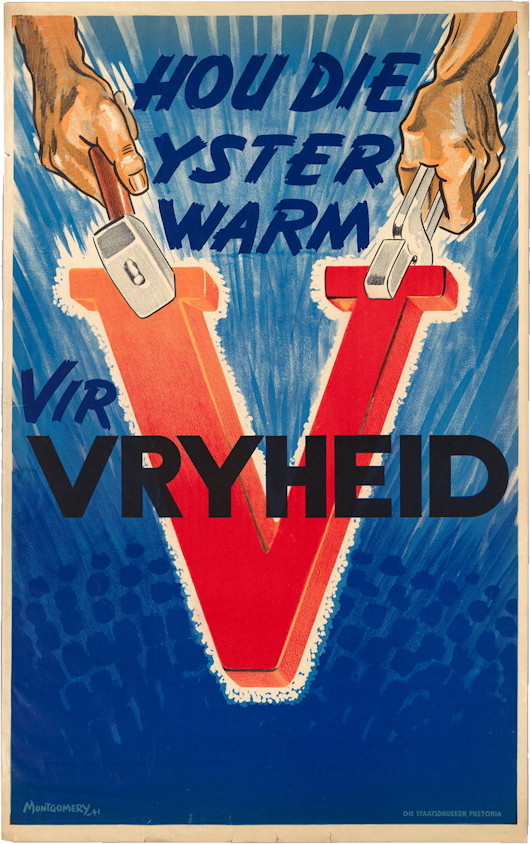
The twenty-second letter of the alphabet became a powerful symbol during the Second World War — ‘V’ for Victory, and all that. Even the Morse code for the letter — dot-dot-dot-dash — became useful, echoing as it did the famous four-note motif from Beethoven’s fifth symphony.
In South Africa, however, the two main languages were English and Afrikaans, and the Afrikaans word for victory, oorwinning, does not start with a ‘V’. Instead the letter was used to stand for vryheid, or freedom, just as in Belgium it stood for both victoire for the Walloons and vrijheid for the Flemings.
When the Second World War started Prime Minister Hertzog announced a policy of neutrality, only to be toppled as premier by his deputy and ally Smuts who brought South Africa into the war a few days later than Canada, Australia, and New Zealand.
This wartime propaganda poster, produced by the Staatsdrukker in Pretoria, urges South Africans to ‘keep the iron hot for freedom’. The country’s industrial production made a valuable contribution to the war effort in addition to the volunteer manpower of the Union Defence Force and, perhaps most importantly, the gold that came from the Witwatersrand mines.
From Realm to Republic
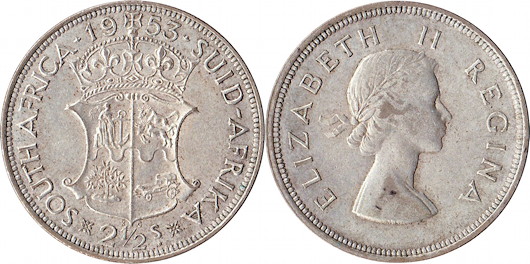
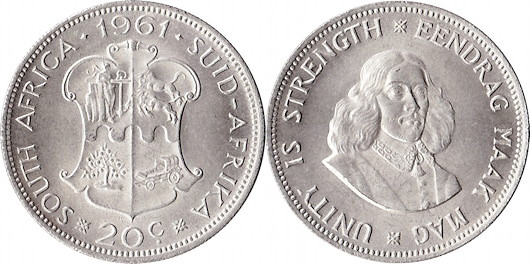
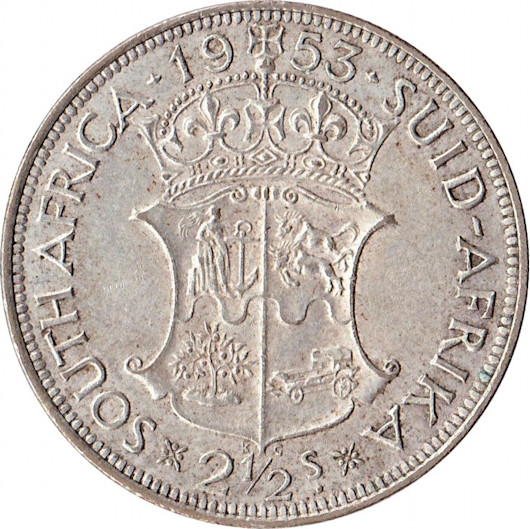
South Africa’s transition from a monarchy to a republic coincided with a change of currency. Out went the old South African pound (with its shillings and pence) and in came the decimilised rand.
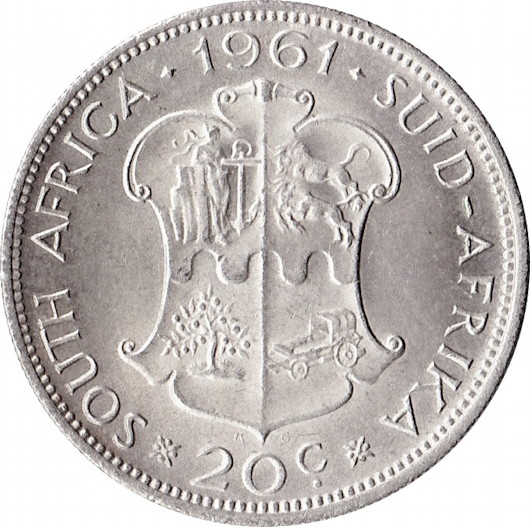
Luckily the republican government had the good taste to commission George Kruger Gray, responsible for the country’s most beautiful coinage, to design the new coins. HM the Queen was replaced by old Jan van Riebeeck, and the country’s arms were deprived of their crown.
Search
Instagram: @andcusack
Click here for my Instagram photos.Most Recent Posts
- West Point July 30, 2026
- Brunel’s Unbuilt Capitol February 3, 2026
- Cricket at Fordham January 27, 2026
- Palacio Barolo Revisted January 14, 2026
- Learning to Love Liguria January 14, 2026
Most Recent Comments
Book Wishlist
Monthly Archives
Categories