Errant Thoughts
About Andrew Cusack
 Writer, web designer, etc.; born in New York; educated in Argentina, Scotland, and South Africa; now based in London.
 read more
News
Blogs
Reviews & Periodicals
Arts & Design
World
France
Mitteleuropa
Knickerbockers
Argentina
The Levant
Africa
Cape of Good Hope
Netherlands
Scandinavia
Québec
India
Muscovy
Germany
Academica
A Little More Graaff-Reinet
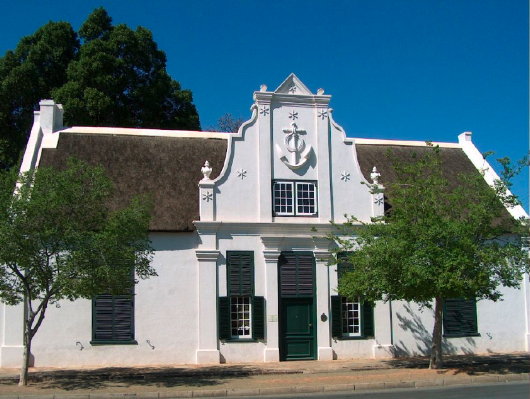
Here’s just a handful more photos of Graaff-Reinet from the blog of Angelika Wohlrab, a South African tour guide, author, and photographer. Above is another Cape Dutch gem, the Urquhart House with its splendid plasterwork design in the gable. (more…)
Market Musings
If forced to describe him, I would say my friend Philip O’Sullivan is the canny man at the back of the smoking section, cigar in hand, a wry, knowing smile on his face, and a slight glint of gold in his eye.
Philip has condescended to share a thought or two on matters financial at his new blog, Market Musings. Think of it as our own private Lex Column (only, er, not private).
I’ve already ventured a comment on Philip’s mention of George Osborne’s most unwelcome petroleum industry tax hike. George Kerevan (Vote George for Edinburgh East!) offers his own thoughts on this and other aspects of the recent UK budget in his Scotsman column.
The Namibian Way of Reconciliation
Accepting differences, not erasing them, is the path to civic harmony
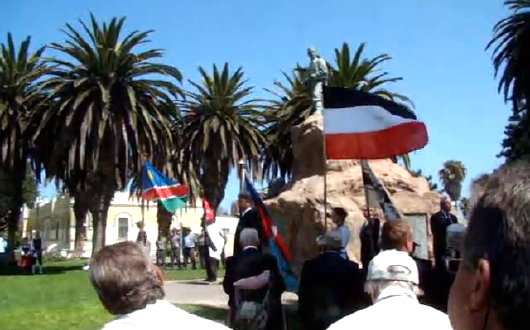
DISCORDIA GERANT ALII, tu felix Namibia reconciliant! Peace and reconciliation are amongst the noblest of earthly aims, but the deluded establishment that rules most of what used to be called the Western world often seem convinced that peace among peoples can only be achieved by erasing the differences between them. Yet it is precisely those differences — the unique characteristics of tribe, clan, and platoon that separate us from some and unite us with others — that make us who we are: human beings, created by God in time and place and circumstance. Without them, we are rootless citizens of nowhere, easily abused and manipulated by the powerful. (How flimsy is even the thickest oak when its roots have been severed). It is the acknowledgement of differences, rather than the erasing of them, that leads to true respect and understanding between and among peoples. While the racial grievance industry thrives in America and Europe, an entirely different attitude exists in happy Namibia. (more…)
Moedertaalsprekers in Suid-Afrika
Vanuit die blog van die “vryskut visuelejoernalis” Charles Apple, ons kry hierdie grafiek van sprekers van die twaalf offisiele tale van Suid-Afrika. Dit is die werk van die grafiese kunstenaar Rudi Louw van Naspers. Dié grafiek het in Die Burger verskyn. (O, Die Burger! Ek mis jou!). Afrikaans is nie eerste in nommers nie — Zoeloe is bo-op, Xhosa is volgende — maar die taal is eerste in ons harte. (Awww…) (more…)
Interview with the Last July 20 Plotter
Der Speigel speaks with 88-year-old Ewald von Kleist
Ewald von Kleist is the last surviving member of the circle of Wehrmacht officers who participated in the July 20, 1944 plot to kill Hitler and overthrow the Nazi state. Der Spiegel has translated its interview with him into English, and all four pages feature interesting insights from this brave old man.
And if you read German (I don’t), you might be interested in this article on China & Carl Schmitt.
Canada’s Temporary Commons
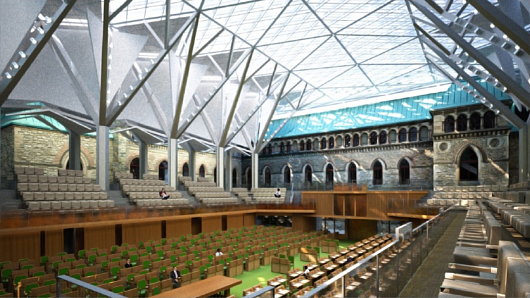
Canada boasts one of the most imposing parliamentary complexes in the world, presiding from a lordly bluff in the federal capital of Ottawa. While I think the city could do with an overall Hausmannisation, the government of the Confederation is undertaking significant efforts to renovate the buildings on Parliament Hill.
While the House of Commons chamber is renovated, the dominion’s lower house will meet in a new temporary chamber (above) constructed in the inner court of the West Block, one of a pair of high Victorian Gothic structures that flank the main parliament building. The restoration will take five to seven years, after which the temporary chamber will be converted into parliamentary committee rooms.
John Rao on PBS
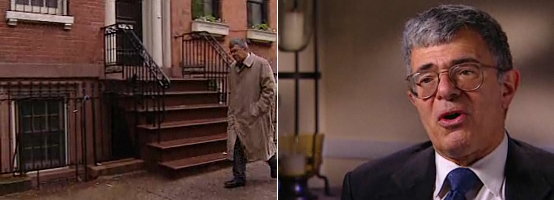
The other day I stumbled upon this blog post from the Chairman of the LMS which included a segment from Religion & Ethics Newsweekly, the hebdomodal programme shown on PBS in the States. The R&E spoke with Dr. John Rao, associate professor of history at St. John’s University in New York and director of the Roman Forum, about the annual Paris-Chartres pilgrimage which unites tradition-minded Catholics from across the globe every Pentecost. You can watch the segment or read the transcript here on the PBS website. It’s also available on gloria.tv here.
I’ve already commended any New York readers of andrewcusack.com to attend the series of historical lectures in Greenwich Village organised by the Roman Forum. It’s time already to consider the annual summer symposium in Gardone on Lake Garda in Italy. This isn’t a boring academic conference where stuffy professors will present papers, this is a symposium in the truest sense. The root of the Greek word means literally “to drink together”, and that more closely reflects the Gardone spirit: a jovial meeting of minds where matters high and low can be discussed in a convivial attitude surrounded by the beauty of the Italian lakes.
Everyone I know who’s attended the Gardone symposium has come back with rave reviews, and many add it to their annual calendar. I’m really, really hoping to make it there this year for the first time, and I hope others will give it a go as well. From June 30th through July 11th, 2011. Click here for more info.
A Pell Sighting
…and sundry other occurences
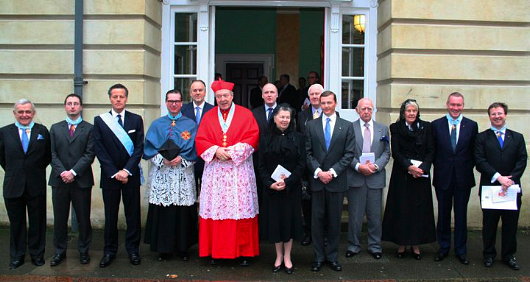
Outside of Rome, you don’t run into cardinals all that often, but last Saturday I caught sight of one of the most popular clerics in the Catholic Church: Australia’s Cardinal Pell. The occasion was the Cardinal’s reception into the Sacred Military Constantinian Order of St George, which took place in the Little Oratory. His Royal Highness the Duke of Noto presided over the investiture, and if you squint your eyes enough you can make out a profile shot of Young Cusack in the background of the photo of the Duke (below). In addition to the Cardinal Archbishop of Sydney’s being made a Bailiff Grand Cross of Justice, six others were invested as members of the Constantinian Order, including His Excellency Don Antonio da Silva Coelho, the Ambassador of the Order of Malta to the Republic of Peru. For more info, see the Order’s notice on the event. (more…)
The Khan Market
“One of the happier moments in what has begun to feel like a long life (for I have now lived through three dekaenneateric cycles), was in the Khan Market at New Delhi,” writes the columnist David Warren.
This was some time ago. There was a bookstore in that market (perhaps there still?) and I am happy as a simile in a bookstore. It was before the Indian economy had turned, in merry cartwheels of Vedic Thatcherism — before the Khan Market had become one of the world’s most expensive retail locations. In those days it was merely well-appointed, and (for India) almost provocatively clean.
It was something about the condition of the light, and the cool air (a late winter afternoon); the understated display of all goods; the polite modesty of both salesmen and customers; the gorgeousness of Delhi ladies in their saris. I felt for a moment that I was in Utopia, and that this was its corner market.
Health Nut vs. Hearty Eating
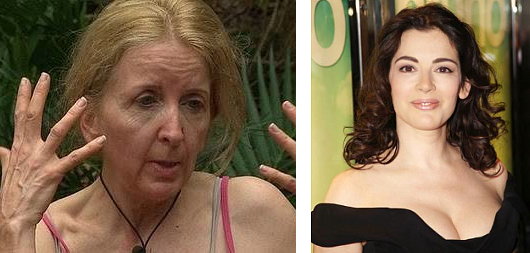
Via Mulier Fortis, this comparison reaches us. The woman on the left, 51 years old, is a television “health guru” who advocates a holistic approach to nutrition and diet, a pescetarian diet high in organic fruits and vegetables, detox diets, colonic irrigation, and supplements, and other things too frightening to mention. The woman on the right, 50 years old, is a television cook who’s a strong advocate for meat, butter, and desserts.
You do the math!
Afrikaans Rachmaninoff Vespers a Surprise Hit
In an attempt to make great music more accessible to South African audiences, Rachmaninoff’s Vespers have been translated into Afrikaans and have proved a surprise hit. The translation of texts from the Russian Orthodox all-night vigil service was commissioned by the Vriende van Afrikaans society at the suggestion of Leon Starker, director of the Pro Cantu Youth Choir and the Cape Chamber Choir, and the translation was done by the Durbanville musicologist and polyglot Hélène Dippenaar.
The work, composed in 1915, was performed across the country during the past year, including at the Voortrekkermonument in Pretoria. A final concert at St. George’s Cathedral in Cape Town was added in response to the high demand from the music-loving public.
A compact disc of the Rachmaninoff Vespers in Afrikaans has also been released by Pro Cantu, which rehearses at Hoërskool D.F. Malan in Bellville and draws its members from across the Cape Peninsula.
The Most British Place in the World?
The Islands of the Anglo-Caribbean: Where Old Britain Lives
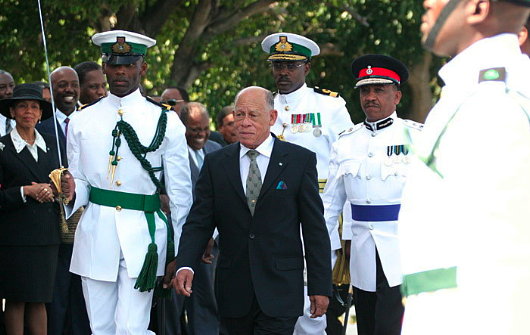
Spoke to a friend recently, who just had a friend of her’s report back after a six-month stint in the Bahamas. “This is the Britain my grandparents always told me about. It must be the most British place on earth. Men in ties and blazers and women in lovely hats. Just the right mixture of formal and laid-back.” (more…)
Another Prayer Request
Please pray for a little eight-year-old who was medivaced to New York from St. Louis yesterday. The doctors at Roosevelt Hospital were operating on her today for her very rare and life-threatening condition, AVM.
‘Don’t expect the busy Big Apple…’
Cape Town Tourism organised the My Cape Town Video Competition “inviting aspirant moviemakers to get out and about as tourists in their own city and capture their experience in video format”. The winning entry from Cat Pritchard and Charlton Cleophas — “Ode to Cape Town” — is less than 45 seconds long. My favourite line, which perfectly expresses why I prefer Cape Town to New York: “Now don’t expect the busy Big Apple — we prefer the slow, cultured grape.”
A Tale of Two Piazzas
My good friend Ian Corbin offers what he described to me as “a mere diversion” contrasting the brutality of Boston’s ‘Government Center’ with the beauty of Rome’s Piazza San Pietro.
A Pro-Life Politico in Argentina
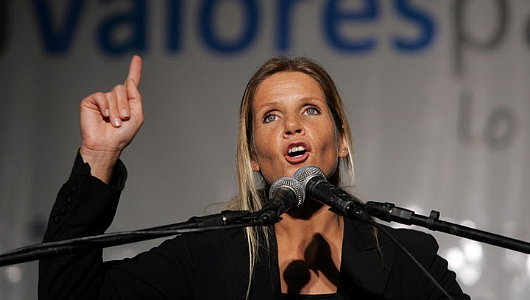
In the Sunday after-church tea-drinking circles of Manhattan, much thought and disputation was provoked by Damian Thompson’s recent revelation that the senator-elect from Florida, Mr. Marco Rubio, is in fact an evangelical Protestant despite his office claiming he is a Catholic. Word comes from Argentina about a member of parliament named Cynthia Hotton, a brazen defender of the right to life and solidarity with the unborn. (more…)
The Festival of Remembrance
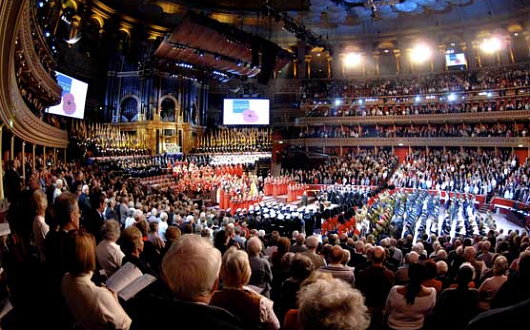
The Royal British Legion, the organisation which supports Britain’s veterans, organises the annual Festival of Remembrance at the Royal Albert Hall in London. The first half of the event is part military tattoo, part popular concert, but the second half is a Christian service of remembrance for the dead of all wars. The Festival takes place the Saturday before Remembrance Sunday: a 2:00pm matinee for the general public, and a 7:00pm one for veterans, servicemen, and their families in the presence of the Royal Family. The 7:00pm festival is broadcast on BBC1 every year, but sadly is not yet simulcast via internet for those abroad. Here are a few YouTube clips from different parts of the service in the past two years. (more…)
French Flag-Fiddling
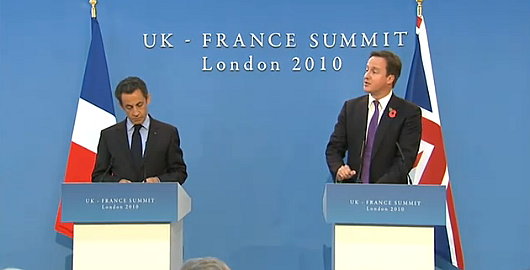
As if you needed more reasons to despise Nicolas Sarkozy! Well, this one we can’t even blame on him. Shall I explain? The national flag of France is a tricolour of three equal vertical stripes of blue, white, and red. Excepting the heady days of the Bourbon restoration, this has consistently been the French flag for the past two centuries now. A little while into the Sarkozy presidency, however, I began noticing a change only in the French flag as displayed whenever the President gave a press conference. The white stripe was reduced in width by half and the space on either side given to the neighbouring colours. The obvious deduction made was that the President wanted all three colours of the national flag shown whenever there were close-up press photographs of himself, and research confirms that this is the case. This shows an awareness for visual representation, but is nonetheless a highly unusual assault on the official flag of a nation. (more…)
Antipopes We Have Known
The University of St Andrews is commencing the celebrations of its 600th anniversary, as the institution was founded in stages between 1410, when teaching started, and 1413, when a bull was issued recognising it as a university by Pedro de Luna, an antipope who styled himself Benedict XIII. Yesterday I attended a fascinating lecture by Dr. John Rao — From the Triple Papacy to the Council of Constance — as part of the 2010–2011 lecture series organised by the Roman Forum.
Boy was Benedict a baddie! Even the council he called passed resolutions condemning him and the cardinals he appointed turned against him. He ended his days maintaining his schismatic claim, holed in island fortress of Peñiscola. The day before he died, he appointed four cardinals, who elected de Luna’s friend Gil Sanchez Muñoz y Carbón as Clement VIII. Or rather, three of the cardinals did while the fourth — Jean Carrier, the archdeacon of Rodez — wasn’t present, so he went and single-handedly elected his sacristan Bernard Garnier as pope, who took the name Benedict XIV.
Garnier was permanently in hiding, and his location was only ever known to Carrier. B-14 did manage to choose four cardinals of his own, and on the antipope’s death they elected Carrier pope, who was inconveniently captured and imprisoned by his rival antipope, Clement VIII. Oddly, having just succeeded the supposed Benedict XIV, Carrier chose to use the name and style Benedict XIV also. A novel by Jean Raspail (L’Anneau du pêcheur) depicts a line of anti-papal successors to the two Benedict XIVs.
As a lecturer, Dr. Rao is both informative and entertaining, and I’d encourage anyone interested to attend the remaining lectures in this year’s series. There’s always wine on offers and little things to nibble on, with a box for generous donations to be made towards the cost of the program. The next lecture is Martin V and the Troubled Return to Rome — this week is the 593rd anniversary of that pope’s election, as it happens.
Also, Dr. David Allen White, retired Professor of World Literature at the United States Naval Academy, returns to New York in December for the Syllabus of Errors Weekend, on the subject of Charles Dickens and the Evils of Modernity. I went to last year’s Syllabus of Errors weekend, and Professor White is entrancingly engaging, a veritable font of knowledge.
An Aldermanian Skyscraper

Good news from the Middle West: the Catholic chaplaincy at the University of Wisconsin at Madison announced plans for multi-use, high-rise structure in the city built in a traditional style. Matthew Alderman Studios served as the principal designer for the elevations of the St. Paul University Catholic Center, a 14-storey, $45-million structure in a Romanesque-Deco style that will include a chapel, meeting rooms, and student housing.
“Catholic life in Madison has undergone a remarkable renaissance under Bishop Morlino,” Matt Alderman says, “and St. Paul’s is one of the foundations of this resurgence. I can assert from personal experience that it is really heartening what is going on over there. St. Paul’s is molding a new generation of faithful, responsible, and joyfully serious young Catholics.”
Matt noted that the concept for the St. Paul Center is reminiscent of the skyscraper-church designs mooted during the first half of the twentieth century. In most of those proposals, however, the skyscraper factor tended to overwhelm the ecclesiastical visuality of the overall design. Matt has deftly avoided this in the St. Paul plans: from the perspective of the man on the street, the most prominent part of the façade is obviously ecclesiastical, and the many storeys above flow naturally, but unobtrusively, therefrom.
“It was important to impart an ecclesiastical character to the principal facade while at the same time asserting the building’s mixed-use status. In my own sketches, I drew on the work of Ralph Adams Cram at Christ Church Methodist in New York, a rugged urban ecclesiastical plant with a great deal of dignity and personality, and Bertram Goodhue’s slightly earlier St. Bartholomew’s, just down the street on Park Avenue.”
RDG Design and Planning of Omaha acted as principal architects of record. Matt Alderman is not yet an architect officially — the certification process in America is wisely prolonged — but as a design consultant he’s already serving up enough to whet our appetite. Diocesan chancelleries, parish boards, heck, anyone who wants to build anything: keep this guy in mind!
Search
Instagram: @andcusack
Click here for my Instagram photos.Most Recent Posts
- West Point July 30, 2026
- Brunel’s Unbuilt Capitol February 3, 2026
- Cricket at Fordham January 27, 2026
- Palacio Barolo Revisted January 14, 2026
- Learning to Love Liguria January 14, 2026
Most Recent Comments
Book Wishlist
Monthly Archives
Categories