About Andrew Cusack
 Writer, web designer, etc.; born in New York; educated in Argentina, Scotland, and South Africa; now based in London.
 read more
News
Blogs
Reviews & Periodicals
Arts & Design
World
France
Mitteleuropa
Knickerbockers
Argentina
The Levant
Africa
Cape of Good Hope
Netherlands
Scandinavia
Québec
India
Muscovy
Germany
Academica
A Visit to London Town
Part the First: In Which Cusack Takes to the Rails
The great St Andrean, Russell Kirk, despised the automobile, calling it ‘the mechanical Jacobin’. I am not altogether inclined to agree but the late Dr. Kirk and I are in accordance with one another over the pleasures of travelling by rail. It is seven hours direct from Leuchars Junction to London King’s Cross, but a pleasant journey nonetheless.
We departed Leuchars on time at 9:30am and stopped at Edinburgh Waverley at 10:32. From the north, the train crawls into the city beside the massive dark crag of Edinburgh Castle, after which the spires of the Mound come into view. By 11:30 we were in England, passing by Berwick-upon-Tweed, the municipality which has the strange situation of being a Scottish town but on the English side of the border. Just two minutes before midday, 300 miles north of London near a town called Acklington I discovered, upon looking outwards from my seat, that the horses of this region have taken to wearing cloaks. Remarkable.
From the route of the railway, the passenger has the advantage of being able to see both Durham Cathedral and York Minster (in southerly succession) and then finally Peterborough Cathedral, which I’ve always thought looks rather awkward. We finally trawled into King’s Cross a few minutes after 4:00pm, and I was slightly cross to see the London Underground ticket machines do not accept Scottish bank notes, forcing me to wait in line and deal with a real, live, terse, and unappreciative human.
Part the Second: In Which Cusack Visits the Travellers Club
Having settled in where I was staying, I scurried off to the Travellers Club on Pall Mall (stopping along the way only to get a prayer in at the Oratory) for the little affair which, in fact, was the reason for my journey down to London. It’s a beautiful club of a not-overwhelming size with a beautiful staircase, the kind of which one feels ought to be ascended slowly and with dignity. (The Drones it is not). The party was held to proclaim the U.K. launch of the New Criterion in the hopes of furthering the renown and appreciation of the greatest cultural review in the English-speaking world in the land which brought forth the very language. We had, I believe, nearly two hundred people in the library of the Travellers Club during the course of the evening, some familiar faces but more often very familiar names to which I can now assign faces. One of the first folks I met was the doctor and writer Anthony Daniels (also known as Theodore Dalrymple) who has just left England to live in France (in the Ardeche, was it?). There were also, among others, the Obituaries editor of the Daily Telegraph (who won’t smoke filtered cigarettes), the Rev. Peter Mullen, social commentator and Chaplain to the Stock Exchange, and the rather charming Paul Dean, Head of English at the Dragon School in Oxford, with whom I enjoyed conversing. Fellow St Andrean Merrie Cave of the Salisbury Review and I discussed how smoking has replaced sex as the ultimate taboo in the eyes of universities today. Roger Scruton couldn’t come, because he’s just moved to Virginia hunt country, of course.
Afterwards, James Panero having highed off to the Athenaeum, Dawn Steeves coralled a number of us into cabs destined for the Windsor Castle pub in Notting Hill where we continued to debate, agree, disagree, digress and whatnot on into the night. Eventually I decided I had consumed enough red wine and dark ale and called it a night myself.
Part the Third: In Which Cusack Enjoys the Company of Old Friends
On the morning of the next day I met Chris C. (St Andrews ’05) for coffee on High Street Kensington. C. and I disserted all the latest news, and I enjoyed hearing about his latest (mis?)adventure before we headed to Nilene Hennessy’s flat to enjoy a pork roast with potatoes. Nilene was out, but after our luncheon we met her and her younger sister Donalyn for more coffee. Donalyn is currently studying veterinary pharmacology.
AC: “So are there any major differences between veterinary pharmacology and human pharmacology?”
DH: “Well, it’s for animals.”
We all tarried a while, but eventually I headed towards my next appointment, amply relayed to yourself in…
Part the Fourth: In Which Cusack Goes A-Churching
A little after 4 o’clock, I met up with Ed Henley, another fairly recent St Andrews graduate, in the narthex of Westminster Cathedral, where he currently lives and works. Shamefully, I had never before visited the Mother Church of Catholic Britain in all its glory. After taking tea in a sort of lounge within the Cathedral complex, he took me on a grand tour of the place. Around the nave, the side chapels, down into the crypt, and even up into the rafters. Interestingly, Ed tells me that there was originally supposed to be a Benedictine congregation at the Cathedral, and strangely enough the monks’ cells were built atop and overlooking the nave. You can see little balconies for each cell hanging off the sides of the nave. Of course, it was a terribly impractical idea, owing to the many, many circular stairs the inhabitant would need to climb to reach his cell, and at any rate such a foundation was never actually started.
The sacristy is massive, and Ed was eager to show off Westminster’s cappe magne. “Even got the winter one,” quoth Ed, “with all the fluff.” Nice dalmatics as well.
The mosaics, at least those which have been completed, are amazing. The Chapel of St Andrew even has a mosaic depiction of the town of St Andrews above the arms of the Marquess of Bute. (A poor view of it can be found here). The majority of the mosaic work is unfinished, and would presumably take years and years, not to mention millions and millions of pounds to complete, however some plans are being drawn up and considered. “We’re rather hoping the Americans will pay for it,” Ed explained. “There’s a tendency for Americans to just sort of pop in one day, fall in love with the place, and donate a few million.” (The American Friends of Westminster Cathedral is a nonprofit 501(c)(3) organization, and thus contributions are tax-deductible for those interested. See here).

I attended the choral vespers in the beautiful Lady Chapel, and stayed for the following Mass in the main sanctuary, which was offered in a resplendently reverent and sacred manner. Westminster Cathedral is a beautiful place, physically ablaze with Christianity, and, like the Church, as yet unfinished. I rather fell for the place and feel obliged to visit it again.
Part the Fifth: In Which the Churching Continues
My last event in London was meeting up with Tori Truett (yes, another St Andrean, but one of the most delightful) that evening for the inaugural meeting of the Brompton Oratory’s youth group (ages 18-35, I think). Frs. Rupert, Julian, and Michael gave brief chats about their hopes for the group and the general shape of future events and then food and drink were enjoyed by all. Met some interesting folks including an Oxford friend of John Lamont, a Canadian from Vancouver, and a chap named Vandenberg (can’t recall his first name) who’s sister just graduated from St Andrews and has ten siblings! Now that’s what I call the Catholic response to the Culture of Death! Someone’s got to outbreed the heathen.
Finale
Back up to Scotland today, though I met with no cloaked members of the equine species on the return journey. A giant rainbow, however, arched across the sky just a bit past Ladybank a few minutes before reaching Leuchars and taking a cab back to St Andrews. A very pleasant journey, and hopefully one that can be made again soon.
Somewhere in the Royal Borough
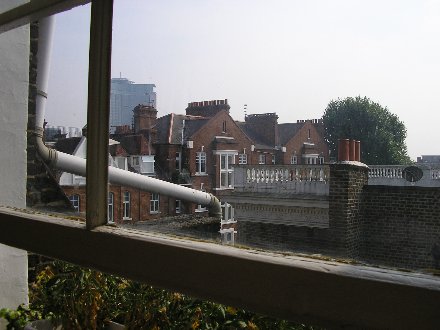
The view from Nilene’s kitchen.
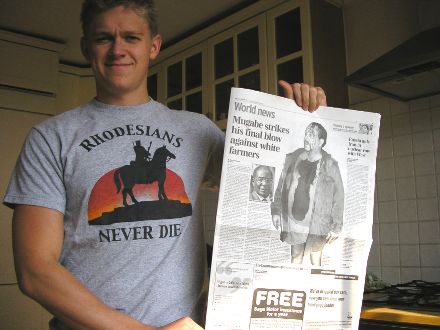
C. (seen with Telegraph report on latest Zimbabwe tyranny) got the shirt in Alabama. Folks in the States keep asking him if he’s from Rhode Island.
Unfortunately these are basically the only photos I managed to take whilst I was in London.
Scottish Weather
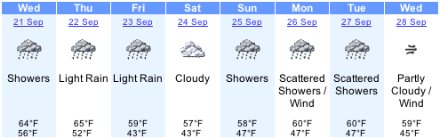
The forecast for St Andrews. Gloom and dreariness with a 90% chance of gray.
Back in the Swing of Things
Tonight at dinner we frightened the bejants and bejantines (first years) with our knowledge of random facts and history and the Ik tribe of Africa and even managed to engage one of the more comely new maidens in a plot to kidnap the Principal in order to reverse the creation of the new ‘Film Studies’ department and to get a smoking room for Sallies (St. Salvator’s, our hall). After dinner wound to a close we exited our splendid stained-glass-laden wood-panelled dining hall and headed to Jason Dunn’s room for some sherry. He has a very nice decanter and set he picked up dirt cheap from a charity shop. I’ll have to give them a browse sometime soon.
I also got a chance to catch up with Nicholas Vincent at his new abode on Greyfriars Gardens. It’s a beautiful and spacious place, “Victorian design but Georgian proportions” as Nicholas said, and I’ve actually been there before. Under the previous residents it twice acted as a sort of final locus for continued drinking after all the pubs and such had closed. I remember one night I ended up there with a small crowd including one of the wardens here at Sallies who I told I would buy two pints if he got me a place in hall (it worked), while Yaa’ra Barnoon was strumming a tune on the guitar, that most inferior of instruments, the exact opposite of the organ.
Tonight, after catching up via telephone with Rob who’s now teaching at Downside, the indomitable George Irwin, the most endearingly unpleasant person in all of St Andrews, had a little drinks party at which there were a number of usual faces; Phil Evans, Tom Kerr (PMC of the OTC), and Manuel Garces (Greco-Spaniard president of the Boxing Club), now shorn of his iconic sable locks, who spent his long vac cruising the Greek isles and lounging about (not bad). George begrudgingly allowed us access to a desirable bottle of whiskey which was left over from his sister’s recent wedding. (Apparently they were left with over 400 containers of orange juice, for the bucks fizz, and about 100 extra bottles of champagne, amongst other extras). I got a call from Jon Burke inquiring as to whether I was up for more fun and games, but alas the train for London tommorrow morning has encouraged me to call it an early night. Hoping to see a few old faces while I’m down in London, so it should be fun.
Room with a View
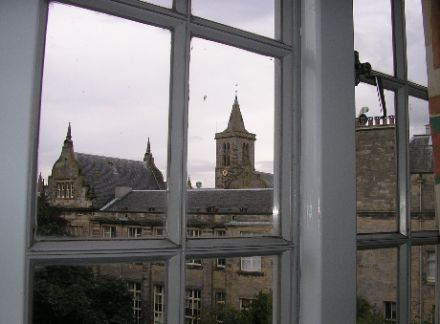
My room faces the Garden Quad (there’s a fine for walking on the Principal’s Lawn), and there is a good view of the college tower from the window.
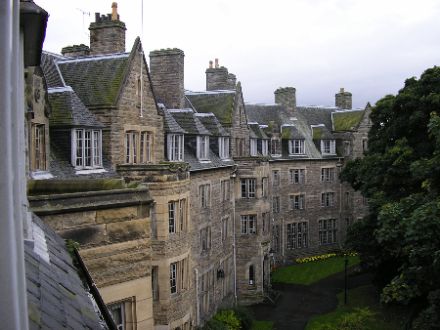
The view out the window towards the rest of the Hall. More later on, now I must rest!
Last Night in the Metropolis
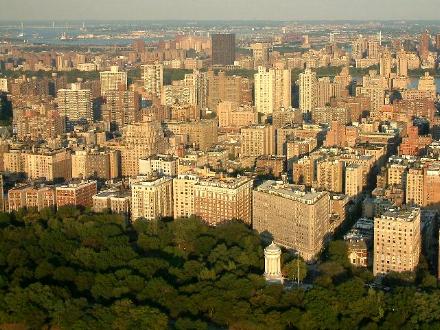
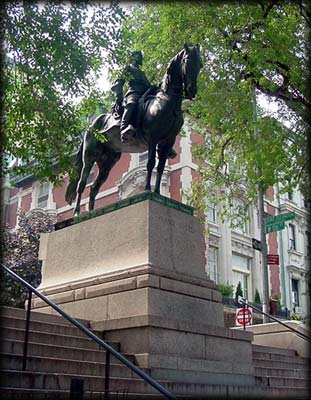
Last night I stumbled down into the city for the last time before I fly back to Britain tomorrow evening. I had the immense pleasure of taking a coffee with Adam Brenner and Dr. Nathaniel Kernell at Edgar’s Café on West 84th Street. Dr. Kernell, known varyingly as “the Good Doctor”, “Newbury”, “Mistah Lassitah”, and “the Genius of the Carpathians”, is the inimitable man who, in schooldays since past, had the task of teaching me Latin. (Our man Brenner is not a Thorntonian, but rather a Riverdale grad who had Dr. Kernell as a Greek and Latin tutor). His knowledge of subjects as varying as etymology, architecture, crime, and Jai alai is both profound and illuminating. Furthermore, he is gifted with a manner that is warm and inviting, if perhaps tempered by a tendency to ramble. The wandering tangents of Dr. Kernell, however, are not ad infinitum irritations but rather intriguing paths along which one picks up much more information, learning, and amusement than one would ever imagine. School would not have been the same without him, nor the quotations he bestowed upon our ears like priceless pearls. I foolishly only recorded a few in a little notebook I can’t find, but I believe Clara de Soto preserved more for posterity. I will have to get her to send me a few of the jewels.
Nonetheless dear readers, I’m back off to Caledonia tommorrow evening and thus of course it may be a few days before I settle in and get things organised enough to post again. I am, to boot, heading down to London pretty soon for the U.K. launch of the New Criterion as well. Fun shall be had by all!
Cassock Pursuivant
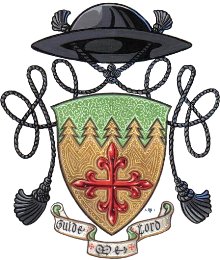 Last night the G&B played host to a lecture by one Fr. Guy Selvester, America’s ecclesiastical heraldist extraordinaire (arms at right). The good Reverend clearly has an unadulterated and unaffected love for heraldry, which, as he was very keen to point out, is unquestionably both an art and a science. He also has flaming red sideburns which give one the vague impression that he was a Civil War chaplain in a past life. After a brief introduction from a member of the G&B’s heraldry committee, the cassocked Father Guy gave a very clear and well-delivered talk, amply displaying his broad and deep knowledge of the subject, especially when responding to off-the-cuff inquiries from the audience.
Of course no talk on ecclesiastical heraldry would be complete without mentioning the late Bruno Heim, the expert on church heraldry as well as Grand Prior of the Constantinian Order and the first full papal nuncio to the Court of St. James since the Reformation. Heim’s book Heraldry in the Catholic Church (available in the St Andrews University Library) is the essential work on the subject. Fr. Selvester interestingly pointed out that Blessed Pope John XXIII intended to found a heraldic authority for the Church. He was dissuaded from this task by none other than Archbishop Heim, who believed the Church covered too far broad a swathe to effectively and appropriately constitute its own heraldic authority mindful of the vernacular traditions. (more…)
Super-Regiment My Foot!
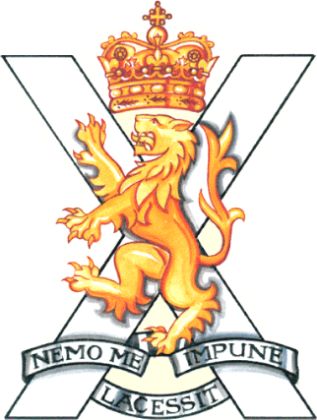
As the reader may well be aware, the last remaining six of Scotland’s historic Army regiments, one of which is so old that it is knicknamed ‘Pontius Pilate’s Bodyguard’, are to be merged into a new ‘super-regiment’ of six battallions, to be called the Royal Regiment of Scotland. Furthermore, the Royals Scots and the Kings Own Scottish Borderers are to be merged into a single battallion. In attempt to calm the fury which this announcement unleashed, government ministers promised that the six regiments would retain their historic identities and legacies as they transform into battallions of the new super-regiment by retaining their cap badges.
However, government ministers lie. A few weeks ago the new cap badge of the Royal Regiment of Scotland was unveiled, and all batallions will be required to wear it. It is simple and aesthetically pleasing, but none of these qualities really matter. It will be remembered not for its beauty but for the outrageous betrayal of tradition and common sense which will, I dare say, tar the Royal Regiment of Scotland for a very long time. There are, of course, last ditch efforts by politicians of all stripes and sizes to save the regiments, an important part of both Scotland’s history and present, but there is not much hope. What Downing Street says goes, irrespective of centuries of tradition, common sense, a public outcry, and the will of the people. Strange as it may seem, after these changes Canada will have more Scottish regiments than Scotland.
Meanwhile, Ian Hamilton ruefully mourns the lack of pomp at the recent opening of the Scottish parliament in the Sunday Times.
Remembering Gemayel

September 14 is the twenty-third anniversary of the assasination of the Catholic general and politician Bachir Gemayel by Syrian agents, only nine days before he was to be inaugurated as President of Lebanon. Gemayel was the son of Pierre Gemayel, the founder of the Lebanese Kataeb (Phalange) which Bachir eventually led himself, and was also instrumental in unifying the Christian militias of the country into the Lebanese Forces, which joined with the conventional Lebanese Armed Forces in their 100-day attempt to expel the Syrians from Lebanon in 1978.
A massive bomb exploded in the Kataeb headquarters on September 14, 1982, killing the President-elect and twenty-four other souls. The assasination only further escalated the violence of the Civil War, a conflict which was taken to regretable extremes by all the parties invovled. (more…)
Grande Journalerie
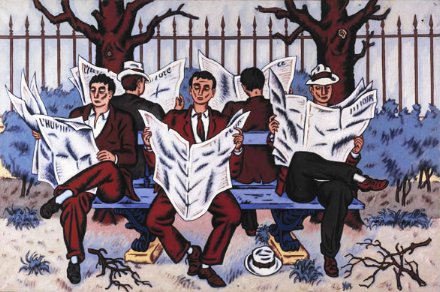
Jean Hélion, Grande Journalerie
Oil on canvas, 51″ x 76″
Robert Miller Gallery, New York
A Bit of Sun
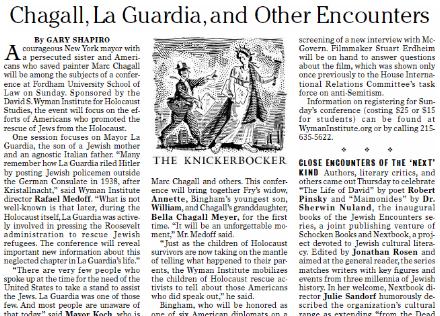
My ownly major aesthetic gripe against the Sun is the layout of the front page of their Friday second section, currently titled ‘Arts+’. (The ‘plus’ presumably refers to the inclusion of the Sports pages towards the end). Below at left is Section II as it appeared in the September 2-4 edition. The sans-serif font is just a tad too Gannett for a publication as esteemed as the Sun. To the right and below it I have placed two proposals for a reform of the Section II front page, both of which, I believe, are much more in keeping with the general aesthetic and demeanor of the rest of the New York Sun.
What To Do When You Find a Hohenzollern in Your Study

The man of letters, of course, needs a place in which to withdraw from his various dalliances in the social realm and to concentrate on the dominion of learning; a private place in which to enjoy a book, broadsheet or other periodical, or perhaps to brood in a comfortable chair with a dram of scotch and some sound music. The ladyfolk, needless to say, have no place in such a bailiwick, not even to clean, for the wise gentleman knows that a study which accumulates in dust likewise accumulates in a certain intangible value. After all, what man of letters does not relish in removing his 1928 Burns and Oates edition of Martyrs of the Upper Volta from the shelves, blowing the dust from the cover, and charging inwards to read of some blessed soul who met his end in a steamy cauldron?
What then could throw arcadian bliss into disarray quite as much as the sudden appearance of Kaiser Wilhelm? A Hapsburg? You may as well have invited! A Bourbon? Well, fair enough, they have been known to lose their heads. But a Hohenzollern? You’ve got your work cut out for you.
Once considered the seminal work on dealing with Spontaneous Hohenzollern Appearances (or ‘SHA’), Dr. Leo von Fulbreck’s Treatise on the Treatment of Hohenzollernitosicity (to use the old, politically-incorrect term for SHA), has since been discredited, perhaps unjustly due to the Sparticist leanings of the Thuringian professor. The 1919 U.S. War Department guide War Department Field Guide 24-R: Recommended Courses of Action in Event of Hohenzollern Situation (and its appendix 24-R(II) dealing with the Hohenzollern-Sigmaringen branch) perpetuated the essence of von Fulbreck’s theories shorn of their ideological slant. The Second-World-War-era Your Enemy: the Sudden Hun-henzollern released by the British Department of Information, however, is generally considered unreliable. Combing through all this mess, I have endeavoured to deliver as part of my contribution to learning the most well-researched, as well as concise, recommended course of action regarding the spontaneous appearence of Hohenzollerns in one’s study:
1. Give the man a stern, intense, but unprovocative stare (as exemplified in above illustration) and he will eventually be moved to tears, mourning the loss of Tanganyika.
2. Simultaneously ring the bell (or, if one’s home is electrically-equipped, press the buzzer) and ask one of your staff to contact the Doorn Home for the Dethroned and Bewildered to inform them that one of their patients is on the loose.
3. Offer a stiff drink and wait for the men from the Doorn Home to arrive.
With any luck that should suffice, and unfortunate mishaps will hopefully be avoided.
University of St Andrews: Tartan It Up
Meanwhile:
Alas.
Natural Elites
An interesting essay entitled ‘Natural Elites, Intellectuals, and the State‘ written by one Hans-Hermann Hoppe of the classical liberal Ludwig von Mises Institute.
Cappa Magna Sighting
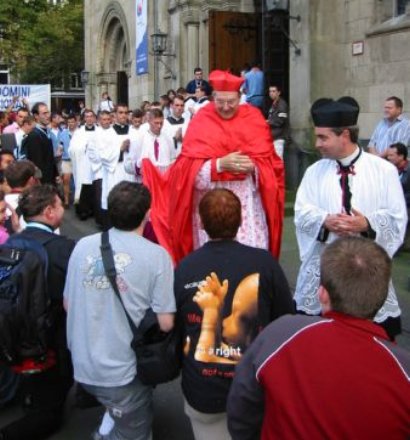
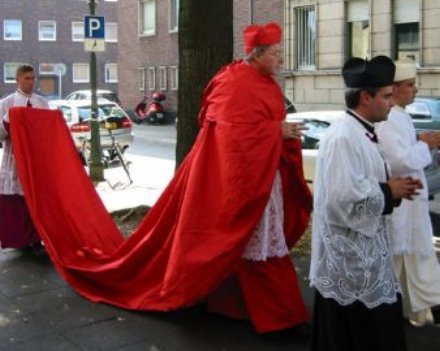
His Eminence George Cardinal Pell, the Archbishop of Sydney, happily donned the traditional (and these days rarely seen) cappa magna during his presence amongst the Juventutem pilgrims at the recent World Youth Day in Germany. His Eminence, known for his Australian candor, is seen above blessing young folks outside the Düsseldorf church designated for the use of the Juventutem traditional Catholic youth.
The Catholic Encyclopedia informs us that the “great cope” is not a liturgical vestment per se but rather a glorified version of the cappa choralis (choir cope), and is reserved for cardinals, bishops, and certain privileged prelates.
Photos from the FSSP.
The Owl Shop, New Haven
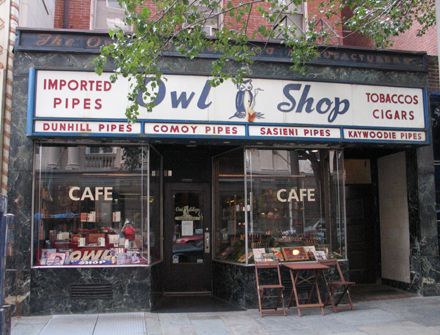
MAKING ONE OF my occasional forays into the neighboring state of Connecticut yesterday afternoon I was introduced to a little corner of paradise. A friend and I were going to partake in an evening with a club at Yale of which he was formerly president. As a mark of his completed tenure in the office he desired to purchase a pipe to donate to said organization, which brought us to an institution with which I was previously unacquainted. (more…)
Lord Dacre
The Daily Telegraph‘s recent remembrance of Maurice Cowling relays the following tale:
Invitations to the club carried a seal reading: “I’d stake my reputation on it.” Dacre was said to have retaliated by comparing Cowling’s circle to “a band of social outcasts living in a mountain cave under the command of a one-eyed Cyclops”.
There’s nothing so spiteful as an academic rivalry! I remember meeting the late Lord Dacre in Oxford about two years before his death. He was by then an ancient man, and the organiser of the assembly tried to make us feel impressed and privileged that we were able to meet such a man. I’m afraid, however, we took advantage of the Baron’s poor hearing and kept on whispering to eachother “Don’t mention the Hitler diaries!” (in the manner of Basil Fawlty’s “Don’t mention the War!” on Fawlty Towers). What can I say, we were young. At any rate, I hope the Authenticators still exist.
The Story of Notre Dame de Bon Secours
The background story to Nôtre Dame de Bons Secours, from the Catholic Community Forum:
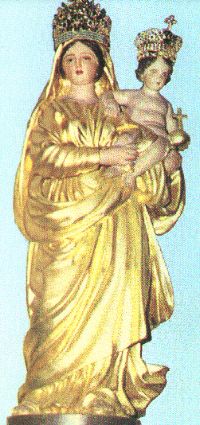 In 1727, French Ursuline nuns founded a monastery in New Orleans, Louisiana, and organized their area schools from it. In 1763 Louisiana became a Spanish possession, and Spanish sisters came to assist. In 1800 the territory reverted back to France, and the Spanish sisters fled in the face of France anti-Catholicsm. In 1803, short on teachers, Mother Saint Andre Madier requested reinforcements in the form of more sisters from France. The relative to whom she wrote, Mother Saint Michel, was running a Catholic boarding school for girls. Bishop Fournier, short-handed due to the repressions of the French Revolution, declined to send any sisters. Mother Saint Michel was given permission to appeal to the pope. The pope was a prisoner of Napoleon, and it seemed unlikely he would even receive her letter of petition. Mother Saint Michel prayed,
O most Holy Virgin Mary, if you obtain for me a prompt and favorable answer to this letter, I promise to have you honored at New Orleans under the title of Our Lady of Prompt Succor.
and sent her letter on 19 March 1809. Against all odds, she received a response on 29 April 1809. The pope granted her request, and Mother Saint Michel, commissioned a statue of Our Lady of Prompt Succor holding the Infant Jesus. Bishop Fournier blessed the statue and Mother’s work.
Mother Saint Michel and several postulants came to New Orleans on 31 December 1810. They brought the statue with them, and placed it in the monastery chapel. Since then, Our Lady of Prompt Succor has interceded for those who have sought her help.
A great fire threatened the Ursuline monastery in 1812. A lay sister brought the statue to the window and Mother Saint Michel prayed
Our Lady of Prompt Succor, we are lost if you do not come to our aid.
The wind changed direction, turned the fire away, and saved the monastery.
Our Lady interceded again at the Battle of New Orleans in 1815. Many faithful, including wives and daughters of American soldiers, gathered in the Ursuline chapel before the statue of Our Lady of Prompt Succor, and spent the night before the battle in prayer. They asked Our Lady for the victory of the American forces over the British, which would save the city from being sacked. General Andrew Jackson and two hundred men from around the South won a remarkable victory over a superior British force in a battle that lasted twenty-five minutes, and saw few American casualties.
It is still customary for the devout of New Orleans to pray before the statue of Our Lady of Prompt Succor whenever a hurricane threatens New Orleans.
Hat tip: Irish Elk. The image used below is of the National Shrine of Our Lady of Prompt Succor in New Orleans.
Notre Dame de Bon Secours, Pray for New Orleans!

Intercede for us with Jesus that we may always accept God’s graces and be found faithful to Him in our particular states of life. As you once saved our beloved City of New Orleans from ravaging flames, and our Country from an invading army, have pity on us and obtain for us protection from Hurricane Katrina and all other disasters.
Assist us in the many trials which beset our path through life. Watch over the Church and the Pope as they uphold with total fidelity the purity of faith and morals against unremitting opposition. Be to us truly Our Lady of Prompt Succor now and especially at the hour of our death, that we may gain everlasting life through the merits of Jesus Christ Who lives and reigns with the Father and the Holy Spirit, one God world without end.
Amen.
Rye Gothic
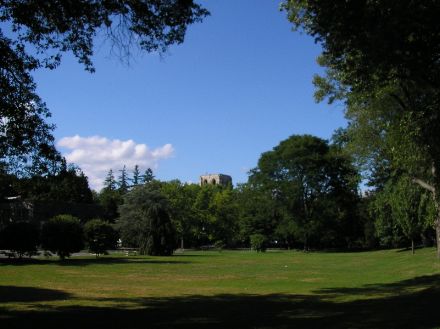
There’s a little portion of Rye on the Boston Post Road here in Westchester which is a veritable Gothic wonderland. From the south it begins on Rye High School’s beautiful campus with the track and playing field across a brook from the neo-Gothic middle and high school buildings, with sympathic additions covered in the same stone. Immediately to the north is the Victorian Gothic Rye Presbyterian Church, built in 1870 by architect Richard Upjohn, whose son and grandson designed two later additions, respectively. Just north of Rye Presbyterian is the Church of the Resurrection, and a little further north of that is Christ’s Church Rye, both of which are in the Gothic style.
The photo above shows the top of the crossing tower of the Church of the Resurrection, a 1930 structure built for Rye’s Catholic parish, viewed from Milton Road. I popped round to the area today and took a few photos, though I did not go inside Resurrection, as there was a wedding taking place. (more…)
Search
Instagram: @andcusack
Click here for my Instagram photos.Most Recent Posts
- West Point July 30, 2026
- Brunel’s Unbuilt Capitol February 3, 2026
- Cricket at Fordham January 27, 2026
- Palacio Barolo Revisted January 14, 2026
- Learning to Love Liguria January 14, 2026
Most Recent Comments
Book Wishlist
Monthly Archives
Categories