About Andrew Cusack
 Writer, web designer, etc.; born in New York; educated in Argentina, Scotland, and South Africa; now based in London.
 read more
News
Blogs
Reviews & Periodicals
Arts & Design
World
France
Mitteleuropa
Knickerbockers
Argentina
The Levant
Africa
Cape of Good Hope
Netherlands
Scandinavia
Québec
India
Muscovy
Germany
Academica
St Andrews in London
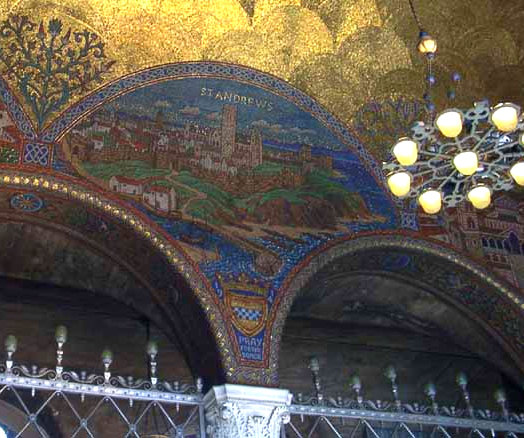
A LITTLE SOMETHING for our good friends from university who’ve just moved to London from the countryside. I hope that when they are in the Cathedral they will pop into our patron’s chapel, glance at the mosaic of our dear old Royal Burgh of St Andrews, remember good times, and say a prayer for us all.
Hipódromo Argentino de Palermo
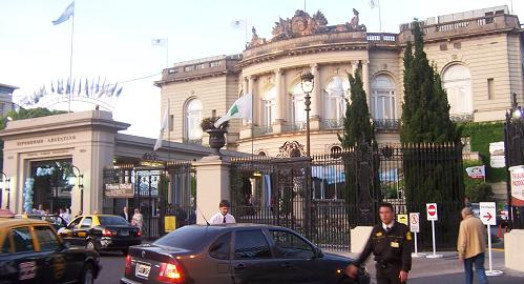
THE PALERMO RACETRACK is the main center for equestrian events in Buenos Aires. It was first built in 1876. In 1908 the current main stand was built to the beaux-arts design of a French architect, Louis Faure Dujarric. The Argentine Grand National, a race of 2,500 meters, has been run here annually since 1885. (more…)
Amen!
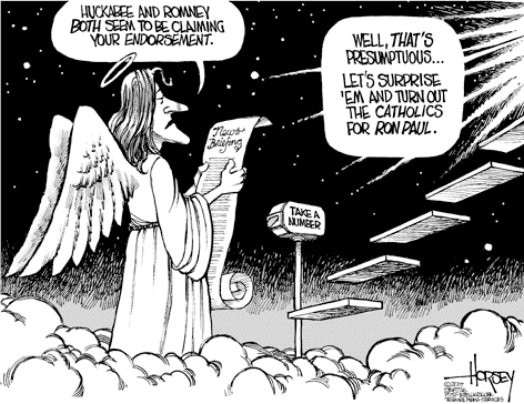
Link: Catholics for Ron Paul
Columbus Circle: A Wider View
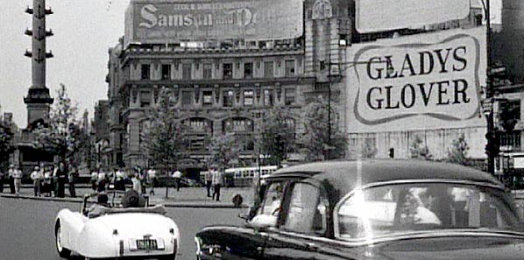
I THOUGHT THAT since we widened our window of opportunity, I ought to give you a wider view of this capture from the 1954 film ‘It Should Happen to You!’, previously displayed in our exposition on Columbus Circle and the Human Scale. The more recent rehabilitation of this grand public place was discussed in one of my diary entries. (more…)
Christopher Street, Greenwich Village
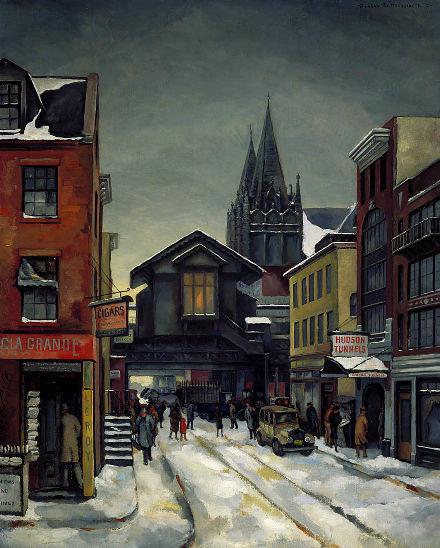
Beulah R. Bettersworth, Christopher Street, Greenwich Village
Oil on canvas, 30 1/8″ x 24 ¼”
1934, Smithsonian American Art Museum
The Old State House
Hartford, Connecticut
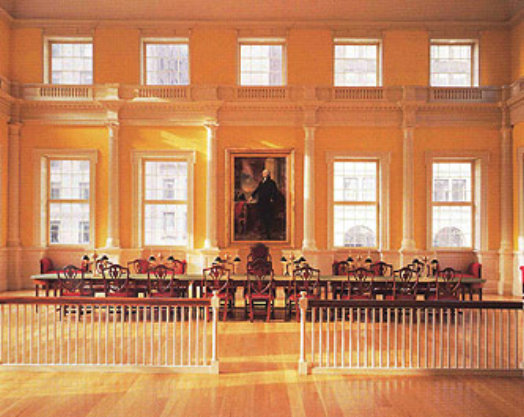
THE GREAT Russell Kirk once called the main chambers of the Old Connecticut State House “perhaps the most finely-proportioned rooms in all America”. The Senate of Connecticut met in the stately Senate Chamber (above) around a long table, as was the general fashion of the legislative councils which formed the upper house of most colonial legislatures. It was in the House of Representatives Chamber (below) that the famed Hartford Convention of December 1814 and January 1815 met and discussed New England’s possible secession from the Union. The State House was built in 1796 to the designs of Charles Bulfinch, on land which had been granted to Connecticut by King Charles II in 1662. (more…)
Grand Central Station at Night
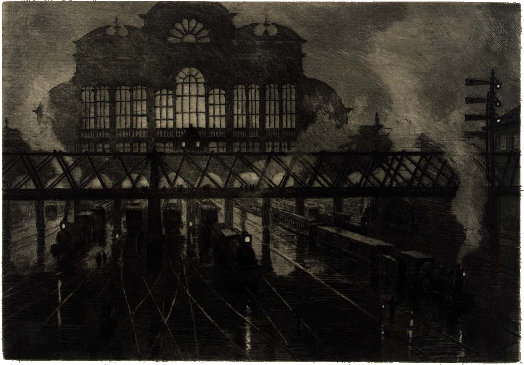
Charles Frederick William Mielatz, Grand Central Station at Night
Etching on paper, 7″ x 10″
1890, Smithsonian American Art Museum
This, of course, is not the Grand Central we know today, but its immediate predecessor.
While there’s life, there’s hope

IT WAS TERENCE who wrote Modo liceat vivere, est spes, meaning “While there’s life, there’s hope”. This coming Wednesday is the Feast of Our Lady of Guadalupe, and it would be particularly appropriate to remember in our prayers to the Virgin the President of Cuba, Fidel Castro. Castro’s health has been deteriorating greatly of late, so we must earnestly pray to Our Lady that the Cuban president will accept the gracious mercy of Our Lord as he nears the end of his earthly life. (The recent and shocking defeat of the referendum to enshrine socialism in Venezuela has been attributed to the intervention of the Virgin of Coromoto, but rest assured that Our Lady is never too busy to hear our prayers). It would be very foolish and neglectful to think that Mr. Castro, who has been baptized after all, is somehow beyond the grace of God, so please remember him in your prayers: these Brigittine nuns certainly are!

Theodore Dalrymple on Rhodesia

The young black doctors who earned the same salary as we whites could not achieve the same standard of living for a very simple reason: they had an immense number of social obligations to fulfill. They were expected to provide for an ever expanding circle of family members (some of whom may have invested in their education) and people from their village, tribe and province. An income that allowed a white to live like a lord because of a lack of such obligations scarcely raised a black above the level of his family. […]
It is easy to see why a civil service, controlled and manned in its upper reaches by whites could remain efficient and uncorrupt but could not long do so when manned by Africans who were suppose to follow the same rules and procedures. The same is true, of course, of every other administrative activity, public or private. The thick network of social obligations explains why, while it would have been out of the question to bribe most Rhodesian bureaucrats, yet in only a few years it would have been out of the question not to try to bribe most Zimbabwean ones, whose relatives would have condemned them for failing to obtain on their behalf all the advantages their official opportunities might provide. Thus do they very same tasks in the very same offices carried out by people of different cultural and social backgrounds result in very different outcomes.
Viewed in this light, African nationalism was a struggle for power and privilege as it was for freedom, though it co-opted the language of freedom for obvious political advantage.
The Mandarins and the Masses

New & Improved
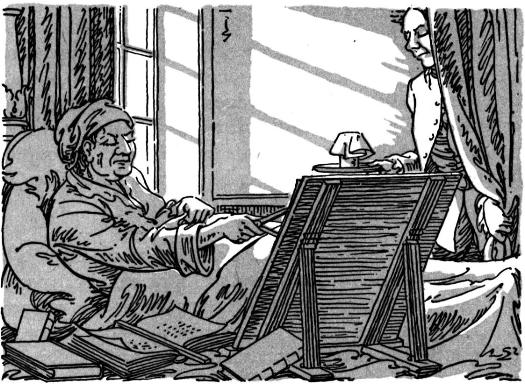
NO DOUBT YOU have been wondering what we have been up to. In truth, I had been beset with a grievous illness of the gravest nature. Bedridden, I scratched and scrawled and made calculations for the expansion of this little corner of the web, which I then had Hogarth (seen above, bringing me some hot toddy in my poor condition) send on to the architect. I have now recovered and my scratchings and calculations have born fruit.
The result, you see before you: a new, improved, rather wider andrewcusack.com. Many elements have been made a bit cleaner than previously, while one or two things here and there became a bit clumsier in the construction process. I am sure you will pardon the niggling infelicitous remnants when you chance upon them. At any rate, the general result is an expanded central column, in which we can exhibit to you even broader and bigger images to enlighten you, brighten your day, or raise your ire, whichever the case may be.
Sinterklaasfeest
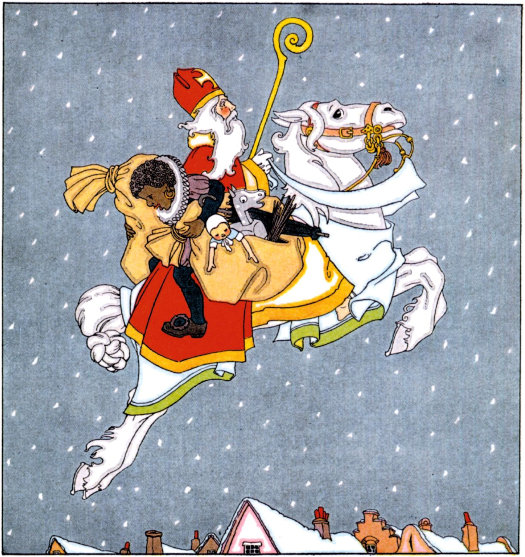
Wishing you all a very blessed Saint Nicholas day!
Mussolini (in his own words)
A Selection of Quotations from Il Duce
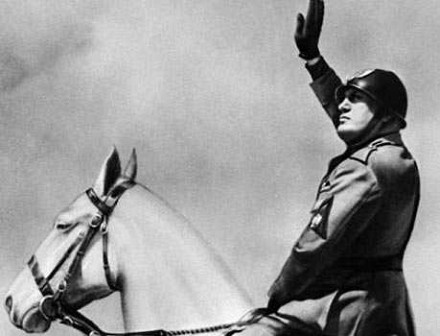
“The Socialists ask us for our program?
Our program is to smash the heads of the Socialists.”
Mussolini himself had been a very prominent Socialist, working for leftist newspapers and was even once deported from Italy when his anti-Catholicism and anti-royalism became too much for the authorities to handle. (more…)
Graduation in Pictures
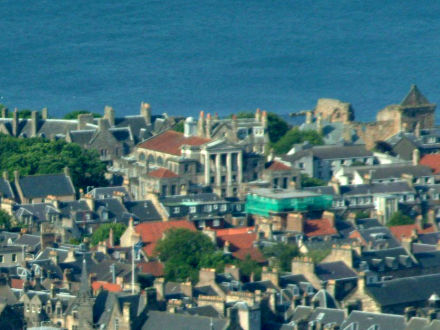
I HAD HOPED to provide you with photos of my graduation shortly after it occurred, but that was over a year ago and I am only now getting to it. My write-up about the proceedings can be found here, so these photos are essentially an accompaniment to that previous post.
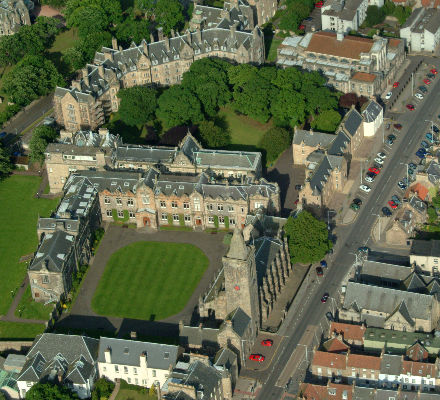
The graduation ceremony took place in the Younger Hall, the red-tiled classical building in the photos above and below. Also below, the University Chapel, with St. Salvator’s Quad adjacent to it. The curved building in the upper left is St. Salvator’s Hall, my home during my final year. In between the Chapel and the Younger Hall is College Gate, which houses the main administrative offices of the University.
Antipapal Antiquities
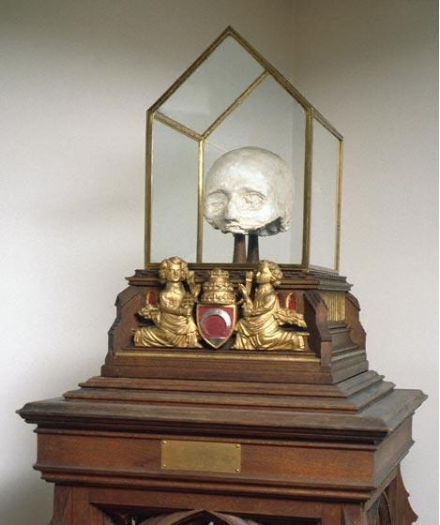
AMONG THE CURIOSITIES held in the St Andrews University Museum is the death mask of Pedro de Luna (1328-1423), one of the Avignon antipopes, who styled himself Benedict XIII. De Luna issued bulls granting university status to the group of scholars at St Andrews, and thus the Universitas Doctorum Magistrorum et Scholarum Sancti Andreae apud Scotos was born. The bulls were later confirmed by Pope Martin V, whose election ended the Great Western Schism. De Luna’s name lives on at St Andrews in the University’s coat of arms: the chief of the shield features a crescent, punning on the Antipope’s last name, which of course is Spanish for ‘moon’.
James II, By the Grace of God
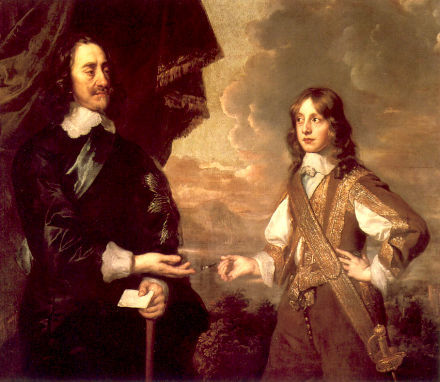
EVERY NOW AND THEN, there is a minor hubbub; perhaps not even enough to be called a hubbub, but call it a hubbub we shall. The hubbub in question is on the subject of James II (seen above, with his father Charles I), our last Catholic king, and the man who (as Duke of York) gave his name to the great city and land of New York. We have previously expounded upon King James on this little corner of the web, but fresh notice was brought by Fr. Nicholas Schofield on his Roman Miscellany blog. In the blog post A Royal Penitent, Fr. Nicholas writes: (more…)
The Montreal Hunt Club
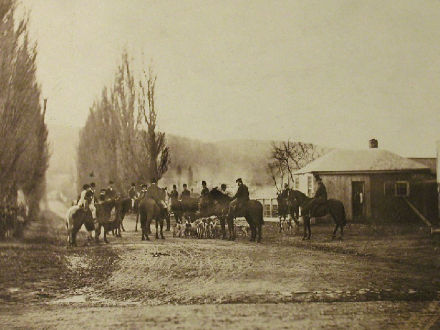
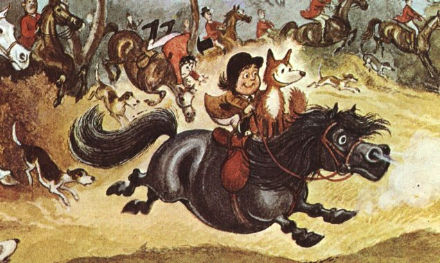
AROUND THIS TIME of year we like to remind our dear readers that out there in the countryside the fox-hunting season has commenced. Charles Moore reports in the Spectator that “there have now been several convictions under the Hunting Act,” the Quantock Staghounds being the most recent victims. “This week, the wretched Ann Widdecombe held a meeting in the House of Commons in which she showed police officers and others a film about how the ban is, in her view, being flouted. Politics has only to change a bit,” Moore continues, “for the police to turn nasty. If politics changes the other way, and there is a Conservative government (no Widdecombe, thank God: she is retiring), the promise of repeal must be cashed in straightaway.” Don’t hold your breath, Mr. Moore!
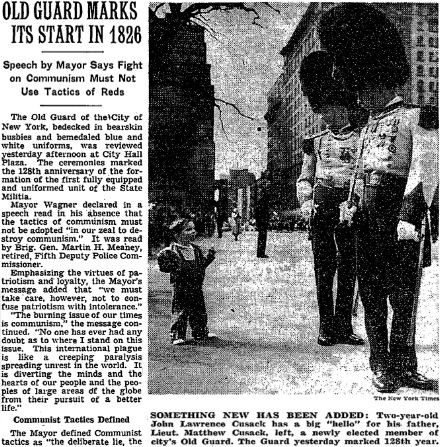
Of course, the season has begun in earnest not only in Great Britain & Ireland but also here in the New World. The Montreal Hunt Club is the oldest hunt in existence on these shores, having been founded back in 1826. (The same year as the Old Guard of the City of New York). For many years, the club lead a triple life as a social organization, a hunt, and even as a military unit, the Royal Montreal Cavalry. The guidon of the Royal Montreal Calvary was presented by the Earl of Dalhousie in 1828 and is the oldest in Canada. (It is currently housed in the armory of the Royal Canadian Hussars, the successor unit to the Royal Montreal Cavalry).
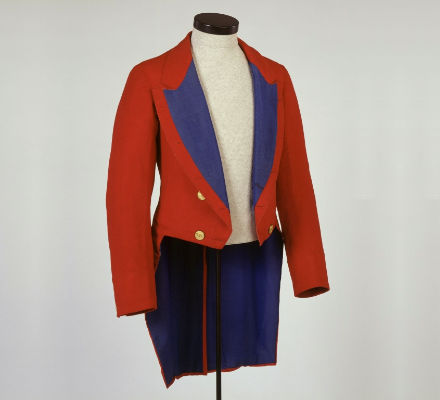
Whilst perambulating the internet the other day I stumbled upon this 1880s evening coat of the Montreal Hunt Club, amongst the collection of the McCord Museum. The accompanying notes, of course, get quite anthropological:
Uniforms and ceremonial dress like this Montreal Hunt Club evening dress coat played a dual role. They not only reinforced hierarchy and group membership, they also provided élite men with opportunities for overt displays of fashion.
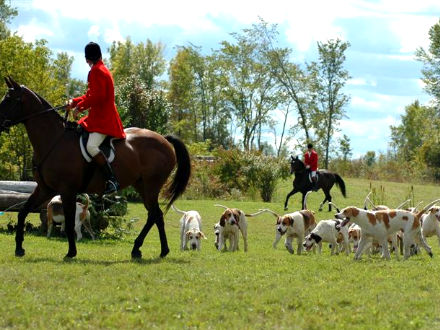
In The British Empire in the Nineteenth Century: Its Progress and Expansion at Home and Abroad, Comprising a Description and History of the British Colonies and Dendencies (1898), Edgar Sanderson writes in his entry on Quebec that “the Montreal Hunt Club affords the best sport of its kind in America.” Happily, the Montreal Hunt Club carries on its activities to this very day. While it originally drew its members from the Anglophone portion of the city’s elite, French speakers began to dominate the club from the post-war period onwards. (Accordingly, its official legal names is “Le Club de Chasse à Courre de Montréal”). We hope and pray that as the Montreal Hunt has carried on from centuries past, it will continue to carry on into the future.
Sloppy Journalism at the National Catholic Register
Not long ago I signed up for a trial subscription to the National Catholic Register, and while it certainly exceeds the other national Catholic newspapers on presentation, it lacks the weight of the Wanderer. A quick glance in the October 28, 2007 edition makes this clear. I speak, namely, of the article “Knights Templar: More Than the Stuff of Fiction”. The article points out that the Order of the Knights Templar was “founded in Jerusalem in 1118 to protect Christian pilgrims and defend the Christian presence in the Holy Land. … It was suppressed by Pope Clement V in 1312, following accusation of heresy against its members, and subsequently became the focus of legends and mysteries, most recently the outrageously inaccurate Da Vinci Code by Dan Brown.” The article then mentioned the recent rediscovery in the Vatican Archives of a document relating to the Knights Templar. All fair enough, up to now.
The Register‘s correspondent “spoke last month in Rome with Patrick Rae, a former brigadier general in the U.S. Army Reserve who serves as Grand Commander of the Knights Templar.” Huh? What? Was it not just stated that the Knights Templar were suppressed by Pope Clement V in 1312? The Register offers no help in explaining this discrepancy to us. General Rae, however, later informs us that the Knights Templar “reconstituted as a French order under Napoleon and from that day until today it has existed, an unbroken string”. This is rather mixing fact and fiction.
1) The Knights Templar no longer exist. They were suppressed by the Pope in the fourteenth century and not revived.
2) The group of which Patrick Rae is Grand Commander is an organization called the “Ordo Supremus Militaris Templi Hierosolymitani” (OSMTH) also known by its English name of the “Sovereign Military Order of the Temple of Jerusalem” (SMOTJ). It is neither sovereign, nor is it an order, but is instead a Christian ecumenical aid organization which styles itself an order.
3) There are dozens, if not hundreds, of groups going around calling themselves the Order of Knights Templar. In actual fact, they are not orders (they are merely ordinary associations, like a chess club or your friendly local circle of stamp-collectors) and they are not Templar (since the Templars no longer exist).
It is beyond me why the Register‘s correspondent chose to speak with the head of this particular Templar-style group out of the hundreds of Templar-style groups. Perhaps the correspondent was impressed by the UN’s recognition of the OSMTH with special consultative status. This status has also been granted to many other groups, such as the Rotary Club of Kathmandu, the Tunisian Mothers Association, and the Boy Scouts of America. But the reporter makes no real attempt to point out that the Knights Templar in question are not, in fact, the Knights Templar (which, again, no longer exist). Whether he is disingenuous or merely ignorant is up to question (in a spirit of Christian charity, let us assume the latter). However there can be no question that this is simply sloppy journalism.
And for the man with $3,500 to spare…

Scoop, by Evelyn Waugh
Chapman & Hall, London, 1938
First edition, hardcover, very good condition.
Small octavo, 308 pages, dust jacket.
Republicanism is a traitor’s game
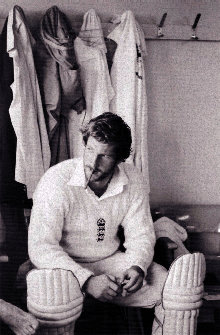
I listen to all these republicans…
If it was down to me I’d hang ’em! I honestly would. It’s a traitor’s game for me.”
SO SPEAKETH Sir Ian Botham, on this occasion to the Guardian, the newspaper of the British ruling class. It’s always reassuring when a public figure speaks out in support of the few remnants of tradition the metropolitan elites allow us to retain, so Sir Ian deserves a firm handshake, a pat on the back, and a pint on the house. Still, there are others (poor souls!) who disagree with the goodly knight. Herein the British Republican movement lists its supporters. They are mostly relative unknowns, except for the former Viscount Stansgate and the rather vulgar Peter Tatchell.
Leanne Wood, a member of the Welsh Assembly, states “I am a republican because I am opposed to the hereditary system”. Opposed to the hereditary system? We presume, therefore, that when she reaches the evening of her years (after a long life sucking off the taxpayer teat) she will not leave her comfortable residence and all her earthly possessions to her offspring, but instead donate them to the Fabian Society. Pity her poor children!
“I believe,” Ms. Wood continues, “in equality not patronage”. To my mind, party politics is more often a source of patronage than the limited constitutional monarchy. As for equality, doesn’t being a member of the Welsh Assembly give her more power and influence than others? Not very egalitarian, but then there are no true egalitarians. Only some who, rather than appreciating the heights of Western civilization, prefer to topple it to the ground in order to establish greater “equality”.
The former Viscount Stansgate, who currently styles himself “Tony” Benn, proclaims that “In a democracy people must be able to elect their own head of state”. The demos beg to differ. The Crown has consulted the people in forty-four different general elections since the enactment of the Reform Act of 1832, and yet the voters have curiously neglected to ever vote a republican party into government.
Mr. Tatchell, meanwhile — whom the Republican movement identifies as a “gay rights and human rights campaigner” (I am glad they concede the dissimilarity in the two concepts) — tells us that “Britain remains a partial, incomplete democracy, steeped in aristocratic privilege.” Hear! Hear! “Why can’t we have a complete, mature democracy,” Mr. Tatchell asks, “where the people elect our Head of State?” Perhaps because democracies which elect their head of state are rarely mature. It seems entirely more mature to keep those institutions which have stood the test of time rather than to arbitrarily destroy them based on what amounts to little more than modish management concepts.
Curiously, at least three people on the Republican movement’s list of supporters are Queen’s Counsel (QCs, or “silks”). They are not so opposed to the monarchy as to refuse the fruits of its munificence, and for that we should praise their pragmatism. Even more curiously, however, nineteen on the list are Members of Parliament. Surely MPs are required to take an Oath of Loyalty to the Crown in order to take their seats? But then perhaps these nineteen are abstentionists along the lines of the Sinn Féiners. While one hesitates to presume to advise the Crown, it might be useful every so often to inquire among the members of Parliament as to which would lend their votes to the abolition of the monarchy, and then deal with them in the manner Sir Ian Botham profers.
“If it was down to me I’d hang ’em!”
Category: Monarchy | Hat tip: The Monarchist.
Search
Instagram: @andcusack
Click here for my Instagram photos.Most Recent Posts
- West Point July 30, 2026
- Brunel’s Unbuilt Capitol February 3, 2026
- Cricket at Fordham January 27, 2026
- Palacio Barolo Revisted January 14, 2026
- Learning to Love Liguria January 14, 2026
Most Recent Comments
Book Wishlist
Monthly Archives
Categories