About Andrew Cusack
 Writer, web designer, etc.; born in New York; educated in Argentina, Scotland, and South Africa; now based in London.
 read more
News
Blogs
Reviews & Periodicals
Arts & Design
World
France
Mitteleuropa
Knickerbockers
Argentina
The Levant
Africa
Cape of Good Hope
Netherlands
Scandinavia
Québec
India
Muscovy
Germany
Academica
On the Death of Prince Pedro Luiz
A STATEMENT FROM D. LUIZ DE ORLEANS E BRAGAÇA
 PIERCED WITH SORROW, I fulfill my duty as Head of the Imperial House of Brazil to communicate the disappearance of my beloved nephew and much-regretted D. Pedro Luiz de Orleans e Bragança, in the fateful May 31 ocean crash of the Air France Rio-Paris flight.
Given the harrowing pain of his parents, D. Antonio and D. Christine, his brothers, D. Amélia, D. Rafael and D. Maria Gabriela, and my dear Mother, D. Maria, I turn to them with special solicitude and affection. And with the whole Imperial Family, I turn with the same solicitude and affection to all those who have lost their loved ones in the crash. To all these families – so very special to Brazil – the Imperial Family extends its feelings and asks God for the eternal repose of each and every victim.
Over the last few days, D. Pedro Luiz’s parents and I have received so many manifestations of genuine mourning for the tragic event that I can only see these events as a living and authentic expression of the sense of family and ties of affection that unites the Imperial Family and all Brazilians, whether monarchist or not.
D. Pedro Luiz – the fourth in the line of dynastic succession – was a young Prince who rose in his generation as a promise, having attracted the interest and attention of many for his pleasant ways, undeniable qualities and for the traditions he represented.
As a result of his excellent upbringing and fine sense of duty, instilled by his parents, after having graduated in Business Administration at IBMEC in Rio de Janeiro, and his post-graduation at FGV, he took the initial steps of a promising career at BNP Paribas in Luxembourg, and showed great concern and commitment to show foreigners the great potential of our country.
But his presence was especially dear among those who believe the monarchy is the solution for today’s Brazil.
D. Pedro Luiz was honorary president of Monarchist Youth and participated in noteworthy activities and events to the benefit of the monarchic ideal, often in the company of his parents. He represented the Imperial House on occasion, and I am especially pleased to recall his presence in Portugal for the celebration of the 500th anniversary of the discovery of Brazil.
While this is a moment of apprehension and sadness, it can not be devoid of hope. Our hopes turn particularly to D. Pedro Luiz’s brother, D. Rafael – to whom I wish courage and determination in the face of misfortune, and whom I urge to be a true example of a Prince to his generation, turned to the good of Brazil and to setting an example of Christian virtues.
To close this painful communiqué, I turn my eyes to Our Lady Aparecida, Queen and Patroness of Brazil, Whom we beseech with confidence to receive D. Pedro Luiz in eternity. And I ask for special prayers for him, as well as for his parents, brothers and my dear mother, from all those who, in a spirit of faith, have supported the Imperial Family at this time of mourning.
São Paulo , June 5, 2009
Dom Luiz de Orleans e Bragança
Head of the Imperial House of Brazil

Universitas Catholica Ucrainorum, Leopolis
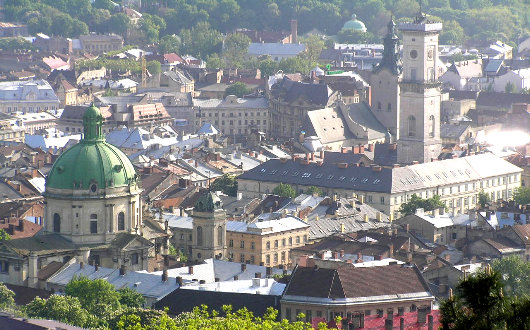
Lviv — sometimes called Lemberg, Lwów, or Leopolis — sits in one of those corners of Europe that has born tremendous witness to the unfolding of history over the centuries. It was founded in the fourth century, built by the Poles, besieged by the Turks, ceded to the Austrians, regained by the Poles, captured by the Nazis, subjugated by the Soviets, and finally freed under an independent Ukraine. Lviv is the capital of Carpathia… and Galicia… not to mention Ruthenia, and nobody can quite define the difference between those three places, while some even argue that one or another (or all) don’t actually exist. For now, we can say with authority that Lviv is the most prominent city in the western Ukraine, and has for centuries been an important place of Catholic culture.
As Damian Thompson points out, Lviv is now home to the Ukrainian Catholic University (Український Католицький Університет). “You must look into this place,” Edward Lucas of the Economist told Damian Thompson: “It’s quite amazing.” (more…)
Cropsey in the City
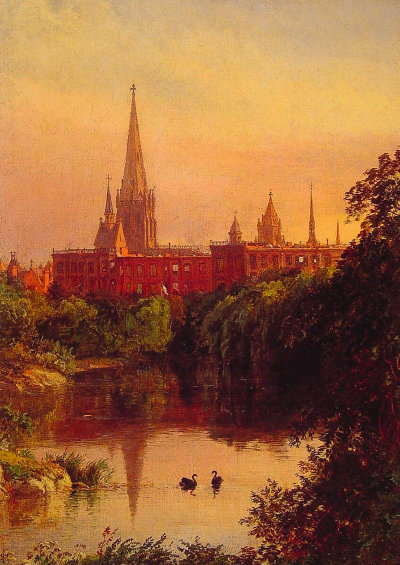
Jasper Francis Cropsey, A View in Central Park — The Spire of Dr. Hall’s Church in the Distance
Oil on canvas, 17⅛ in. x 12⅛ in.
1880, Private collection
THE HUDSON RIVER SCHOOL artist Jasper Francis Cropsey has obtained of late an almost cult-like following, the kool-aid being distributed from the well-oiled machinery of the Newington-Cropsey Foundation in Hastings-on-Hudson, New York. Whether the object of worship is worthy of the faithful’s adulation is a matter of some speculation, but it’s admittedly refreshing to see a fan base surrounding a painter of the old school rather than one of the numerous gimmicky hacks floating around the New York art scene these days. Cropsey (like most Hudson River painters) is known for his luscious landscapes, so I thought it markedly unusual when I stumbled upon this painting, a cityscape. The artist’s vantage point is from The Pond in Central Park, looking over Fifty-ninth Street (Central Park South) towards where the old Plaza Hotel now stands. (more…)

JUST A BRIEF note to say that we’ve slightly redesigned our category & tag archives. They now have a different header than on the home page or individual post pages, which looks a bit snappier. Readers can use our category and tag archives to browse andrewcusack.com by subject, rather than chronologically through the archives page. The tags tend to date only from April 2008 onwards, when this site changed its “content management system”, as it’s called in computerese. (more…)
Engineering Democracy in Poland
This is the text of a talk given by Professor Jerzy Przystawa of the University of Wrocław in Poland. Prof. Przystawa is a physicist who specialises in quantum theory, and has been an active civic intellectual as well. He has also participated in the TriaLogos Festival run by the Foundation Hereditas in Tallinn, Estonia.
by JERZY PRZYSTAWA — 22 JULY 2000
“Sensible” democracy and “sensible” sovereignty
By the end of 1918, after generations of fighting and struggling for a free and independent Poland, the Polish people had created their first truly free and independent state for 123 years. However, the independent Polish State merely survived two decades. 71 years later, the first non-communist Prime Minister in the so-called Eastern Europe, Tadeusz Mazowiecki, proclaimed, in the famous shipyards of Gdańsk, that “Poland lives! Free and Independent!”. The majority of the Polish people readily welcomed the newly acquired freedom.
Since that time many factors began to cloud this rosy picture and many people in Poland now have doubts if the contemporary world is indeed interested in a “free and independent Poland” and that the powers of the West, who are somehow considered to be the godfathers of this new Polish State, indeed intend to create something like a sovereign, self-governing Poland. About a month ago, an important American politician, former security adviser and Secretary of State in the Carter administration, Professor Zbigniew Brzeziński, was receiving his honorary doctorate at the prestigious Jagiellonian University in Krakow. In his solemn address to the learned audience, when he proclaimed “the best decade in the entire Polish history”, he did not dwell upon the question of sovereignty and independence. He rather reappealed to the Poles, a number of times, for “wisdom” and “sensible” or “reasonable democracy”. He did not state exactly what “sensible democracy” he had in mind. But from the general context of his speech there can be little doubt that the “sensible Polish state” should be a state with “limited freedom”, “limited independence”, and “limited sovereignity”. It is then also clear that this “sensible democracy” must also be a “limited democracy”.
How to “engineer” democracy?
There are many ways in which to limit the sovereignty and democracy of the states that emerged after the collapse of the Soviet Union. Perhaps the most important is the exploitation of the enormous economical superiority of the West over the impoverished Eastern societies and the ideas of the so called “free” and “open” international markets. However, it is not my intention to discuss how these countries, unable, under the circumstances, to efficiently compete with the West, are becoming, by economical measures, subordinated and subjugated to foreign rule. I shall also not speak about the rules imposed on our countries by the demands of the European Union. It is the liberty of a free country to make treaties and impose any limitations on its functioning to which free people may consent. My talk will be devoted to the political mechanism that may prevent free people from expressing their will in a democratic way and to have their interests properly represented and protected. A major instrument to achieve such a goal are the electoral rules that have been imposed on Poland, and, as a matter of fact, on other post-communist countries as well. This is the so-called Proportional Representation (PR).
Naturally, there are many people, who will maintain that there are various electoral systems in use all over the world and that it is, to a large extent, a matter of taste, which system is chosen for a given country, since none of them is perfect. But let us have a look at what happened after the World War II, when the victorious allies started to engineer democracy in the defeated countries. (more…)
S.R.E. & S.R.I.
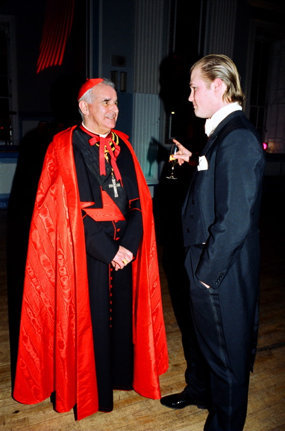
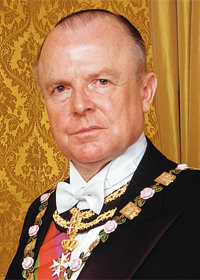
Left, a prince of the Holy Roman Church and right, a prince of the Holy Roman Empire.
Credit: I think this is one of Zygmunt’s photos.
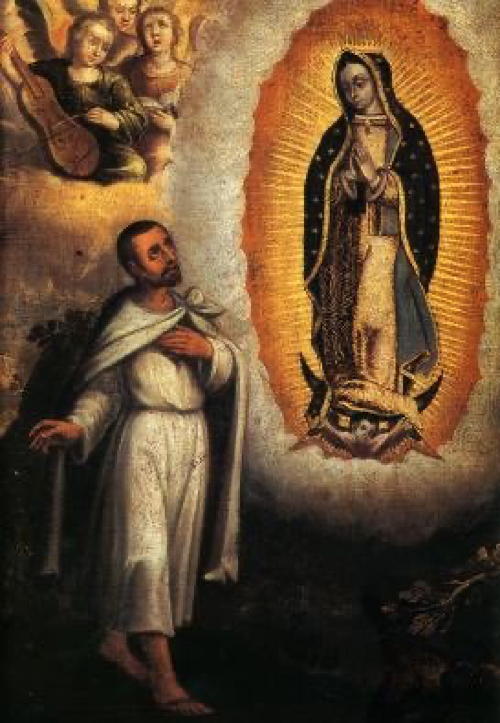
St. Juan Macias, ora pro nobis
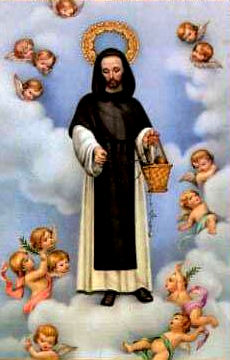
I would ask that all readers of this blog pray for a good friend of mine in Scotland who is now very, very ill.
RIP: Dom Pedro Luís of Brazil

Dom PEDRO LUÍS MARIA JOSÉ MIGUEL
RAFAEL GABRIEL GONZAGA
de
ORLÉANS-BRAGANÇA
e
LIGNE
Prince of the Imperial House of Brazil
Son of H.I.H. Prince Antônio of Orléans-Braganza
&
H.H. Princess Christine of Ligne
Born 12 January 1983 in Rio de Janeiro.
Died 1 June 2009, on Air France Flight 447.
Until his early death, heir-presumptive to the Imperial throne of Brazil.
Requiem aeternam dona ei, Domine:
et lux perpetua luceat ei.
Requiescat in pace.
Amen.
A Classical Summer in New York
ICA&CA 2009 Fellows’ Summer Lecture Series
 One of our greatest institutions here in New York is the Institute of Classical Architecture & Classical America which does such splendid work in propagating knowledge about and training in classical architecture and its allied arts. Every summer the ICA&CA presents a series of summer lectures, the first of which takes place next Wednesday. This year the series will be held in the library of the General Society (f. 1785), New York’s last remaining guild, whose 44th Street headquarters house the Institute’s offices.
In celebration of the quadricentennial of Captain Henry Hudson’s
sailing expedition on the river that now bears his name.
The Sanctified Landscape: Memory, Place, and the Mid-Hudson Valley in the Nineteenth Century
by Dr. David Schuyler, Professor of American Studies, Franklin & Marshall College. Sponsored by Hammersmith Studios.
17 June 2009
A Geography of the Ideal: The Hudson River and the Hudson River School
by Linda Ferber PhD, Executive Vice President & Museum Director of the New-York Historical Society. Sponsored by P.E. Guerin, Inc.
24 June 2009
Historic Hudson River Houses 1663-1915
by Gregory Long, President and CEO of The New York Botanical Garden. Sponsored by Peter Cosola, Inc.
8 July 2009
Edgewater: Building Classical Architecture along the Hudson River
by Michael Middleton Dwyer, architect and editor (Great Houses of the Hudson River, Bullfinch Press, 2001). Sponsored by Andrew V. Giambertone and Associates, Architects, PC.
General Society Library
No. 20, West 44th Street
Receptions at 6:30 pm
Lectures to follow at 7:00 pm
The ICA&CA Summer Lecture Series is free to ICA&CA Members and employees of Professional Member Firms, as well as all students with current identification. General Admission is $20 per lecture; $65 for the full series. Click here to become a member.
This program is supported, in part, by public funds from the New York Council for the Humanities and the New York City Department of Cultural Affairs. Special thanks to Balmer Architectural Mouldings.
Enda & Declan

“Now you wouldn’t go scuppering this Lisbon deal we’ve got now wouldja, Mr. Ganley?” Mr. Enda Kenny of Fine Gael (left) meets Mr. Declan Ganley of Libertas (right).
While I am accused of being Fine Gael by tribe & temperament, there’s no doubting that party’s been heading in the wrong direction for several decades now. Once moderate in the face of supposed republican extremism, it is now a banal shell of its former self. (Who would Gen. Mulcahy vote for today, one wonders). Those who have the opportunity of voting in the current European elections will doubtless consider voting for Mr. Ganley’s Libertas party, which is running candidates in quite a number of EU member states, including the United Kingdom.
St. Stephen and the Virgin & Child
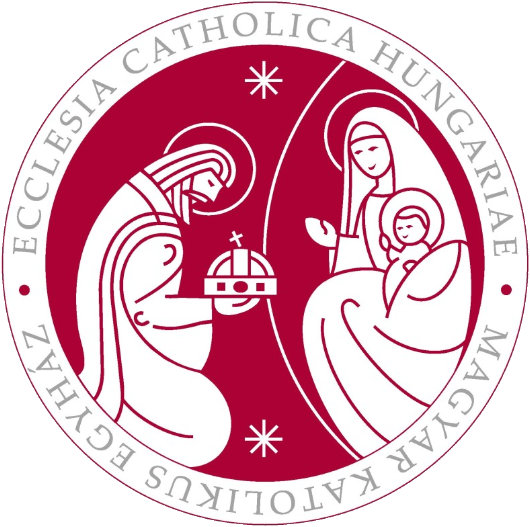
The Hungarian Bishops’ Conference has a surprisingly handsome logo (above) depicting their patronal saint, King Stephen I, bestowing his crown to the Blessed Virgin and Our Saviour. Some might think the depiction of the Madonna & Child a touch too cartoonish, but I enjoy it.
From my inbox
For the record, given that white males launched Roe & have sustained it ever since, the above is a hope all serious Catholics cannot but share.
Pax tibi – [Redacted]
The Tappan Zee in the Age of Rig & Sail
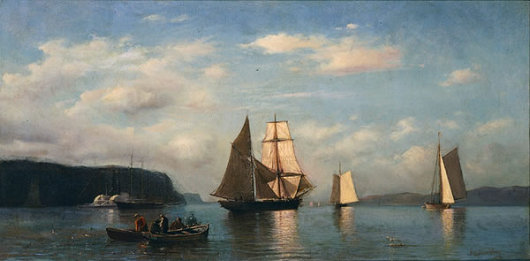
Julian Oliver Davidson, The Hudson River from the Tappan Zee
Oil on canvas, (size not on record)
1871, Private collection
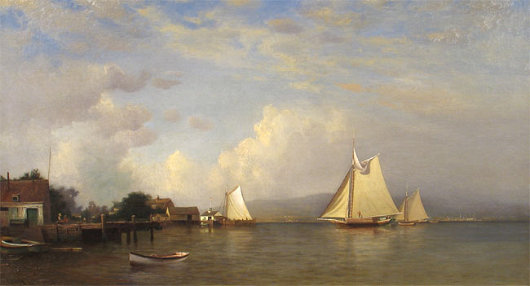
Francis Augustus Silva, On the Hudson near Tappan Zee
Oil on canvas, 20 in. x 36 in.
1880, Private collection
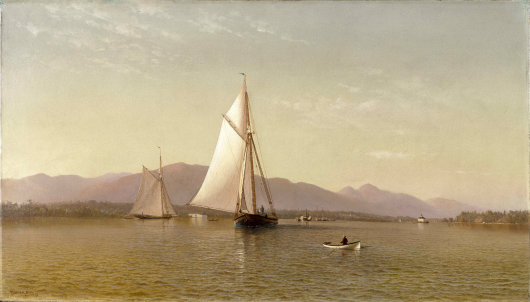
Francis Augustus Silva, The Hudson at the Tappan Zee
Oil on canvas, 24 in. x 42 3/16 in.
1876, Brooklyn Museum
A Dutch Organ in a Chelsea Church
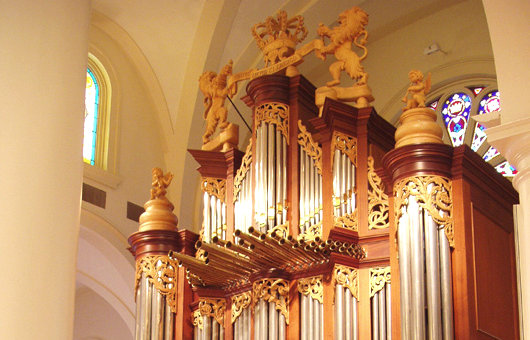
THE ORGAN AT the Church of the Holy Apostles on Ninth Avenue in Chelsea has a brief history that spans three lands: the Netherlands, Texas, and New York. Mr. Joseph Mooibroek of Fairview, Texas was born in the Netherlands but emigrated to the United States in his youth and found his fortune there. Mr. Mooibroek (whose surname is Dutch for “beautiful trousers”) and his wife wanted an organ for the great hall of the castle they built in Texas, and appropriately he chose the Dutch firm of Van den Heuvel to construct the organ in 1994. Among Van den Heuvel’s other works are the organ at Saint-Eustache in Paris (1989, the largest organ in France), and that in the Duke’s Hall of the Royal Academy of Music in London (1993).
Books Cusack Currently Lacks
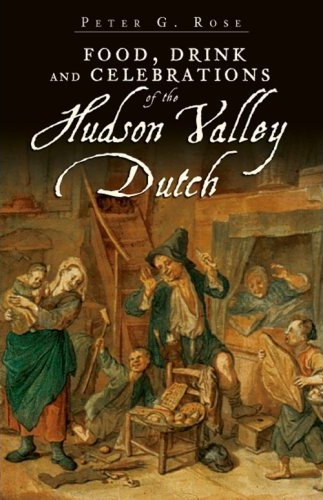
Food is one of those perpetual worries to those poor souls such as myself for whom the arts of the kitchen are simply incomprehensible. One of the reasons I miss St Andrews was the ready availability of a well-balanced meal at three regular times of the day, even if it was hall food. I sometimes wonder if some earnest benefactor concerned for the well-being of young men recently graduated from old universities might establish a hall-away-from-hall in the major metropolises, in which batchelors can live with decent meals composed of plenty of vegetables and sausages and other such necessities until the uxorial hour strikes.
Anyhow, I stumbled across the existence of the above book, Food, Drink and Celebrations of the Hudson Valley Dutch and am always stumbling across various books of interest, but always either forgetting to purchase them or else pleading poverty (to the ire of the assiduous caretakers of the Cusack library). Amazon, however, allows the user to create a “wish list” of items detailing items one desires which others may purchase and have sent to them; a fine idea. I have assembled a list (currently numbering fifty-two books over three pages) and warmly invite those so inclined to advance the cause of Western Civilization by augmenting the hallowed stacks of my library.
You can view the list by priority, by price low-to-high (irritatingly putting the books available through third parties first), or, for the particularly generous, by price high-to-low.
Some of these (like Paddy Leigh Fermor) are books I have already read but don’t own any copies of, but most of the titles are books I’ve either read reviews of, have flipped through the pages of in bookshops, or which have been recommended by friends. (Some, like Wilhelm Röpke: Swiss Localist, Global Economist, are even by friends). There are also a few advantageously-priced editions from New York Review Books. Have a look, and send along recommendations!
The Tele-tab
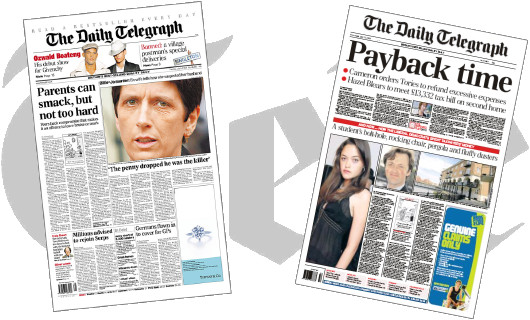
The Daily Telegraph prides itself on being Britain’s top-selling quality daily newspaper, but the dear old Telly has being playing tabloid of late. Compare this 2004 front page (left) to one of just a few days ago (right).
The point of a headline in a quality newspaper should be to inform the reader of what the article is about, as well as to impart information quickly to those who are scanning the page. “Payback time” the Telegraph boldy asserts, but what on earth does that tell us? Nothing; we have to go to the subheadline to find out “Cameron orders Tories to refund excessive expenses; Hazel Blears to meet £13,332 tax bill on second home”.
There is an art in creating a headline that is both punchy and informative without being vulgar, but the Telegraph seems to have abandoned this art — for now, at least.
Le Pape à Paris
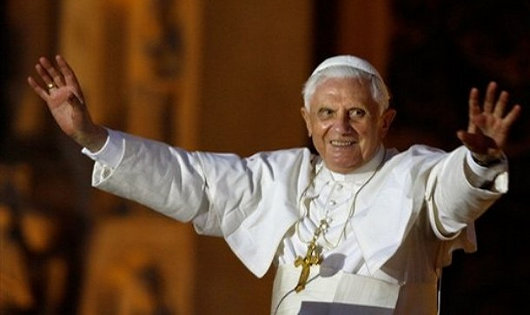
While Benedict XVI is currently in the headlines for his visit to the Holy Land, here is a translation into French by Béatrice Bohly of my piece on Benedict’s visit to Paris last year.
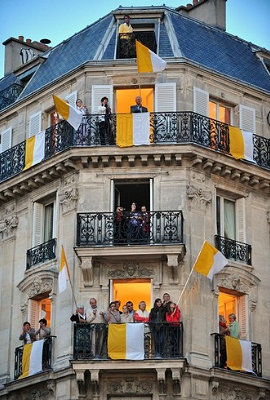 La devise de la ville de Paris, Fluctuat nec mergitur est parfaitement appropriée: « Battue par les flots, elle ne sombre pas ». Difficile de trouver des mots plus aptes à décrire la barque de Pierre, dont le Saint-Père, le pape, a passé ces deux jours dans la capitale française. Depuis des temps immémoriaux, la France a été considérée comme « la fille aînée de l’Eglise », son siège de primauté de Lyon ayant été établi au cours du deuxième siècle et Clovis, son premier roi chrétien, ayant reçu le baptême en 498. Mais à côté de 1.500 ans de christianisme, au cours des deux derniers siècles, la France, a également servi de fonds baptismaux à la révolution et à la rupture – dans l’esprit-même de ce premier “non serviam” (phrase attribuée à Lucifer, refusant de servir Dieu, ndt) .
Ce fut le penseur français Charles Maurras – lui-même non-catholique jusqu’à la fin de sa vie – qui a conçu de la notion que (depuis la révolution) il n’y avait pas une France mais deux : le pays réel et le le pays légal. La vraie France, catholique et droite, contre la France officielle, irreligieuse et artificielle. Tout comme Maurras différenciait les deux visions de la France, nous, dans le monde d’expression anglaise, savons que l’Angleterre est vraiment un pays catholique qui souffre d’un interregnum de quatre-siècle (de même que l’Ecosse, et l’Irlande, et l’Amérique, et le Canada, et l’Australie…). Nous aimons nos patries mais nous savons qu’elles ne sont pas vraiment elles-mêmes – elles ne reflètent pas vraiment cette idée de leur essence – jusqu’à ce qu’elles jouissent de la plénitude de la communion chrétienne.
A new look for The Walrus
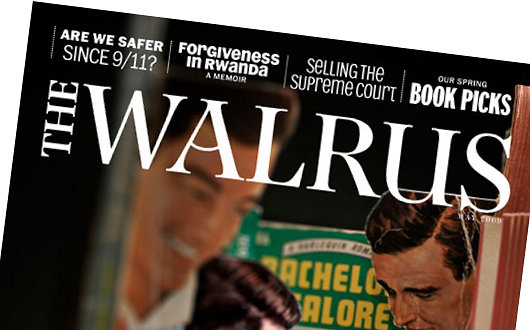
The Walrus is Canada’s general-interest magazine, a sort of New Yorker for the Great White North. Founded just a few years back in 2003, it has taken many of its visual cues from The New Yorker and the result has been a very handsome monthly and a surprisingly interesting one. That’s not to say that it’s a very interesting magazine (like The Spectator), but one which surprises with the occasional article of note. Canada’s intelligentsia is notoriously boring and liberal; they tend to sneer at the neighbouring United States while simultaneously attacking long-held Canadian traditions. For some reason, Canadian intellectuals have yet to comprehend that making Canada less British doesn’t make it more Canadian but instead more American because it is precisely Canada’s Britishness that distinguishes the Great Dominion from the republic to the south.
Allies Day, May 1917
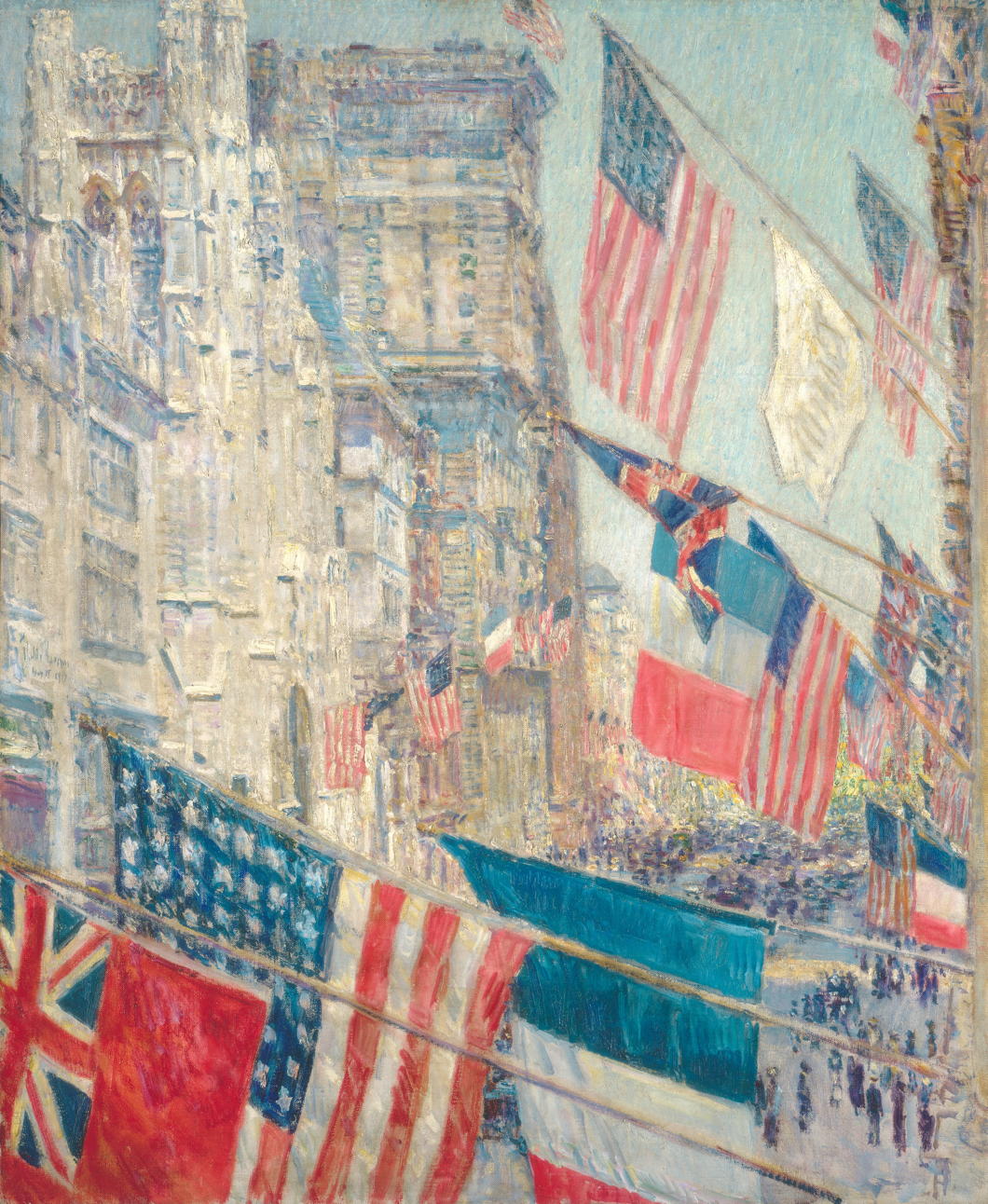
Childe Hassam, Allies Day, May 1917
Oil on canvas, 36½ in. x 30¼ in.
1917, National Gallery of Art (U.S.)
This has long been one of my favourite paintings, ever since I first saw it one day when I was very young while it was on loan to the Metropolitan. On a May day in 1917, Fifth Avenue was temporarily proclaimed “the Avenue of the Allies” and the British and French commissioners paraded down the boulevard with great ceremony. Childe Hassam set his easel on a balcony on the corner of Fifth Avenue and 52nd Street and took in the splendid scene towards the Church of St. Thomas and the University Club. Patriotic displays were much more lively then, involving bursts of flags and banners, than the rather dull and monotonous display of the single Stars-and-Stripes that became widespread after the World Trade Center attacks.
Interestingly, “Avenue of the Allies” aside, the United States was not actually allied to France and Great Britain during the First World War. President Wilson thought the United States was not so lowly as to merely intervene in a biased manner on the side of those it had lent money, but rather for the high-minded goal of establishing justice (or, as we might honestly call it, the destruction of Catholic Europe). The U.S., then, was merely a “co-belligerent” rather than an “ally”, though obviously this high-minded euphemism was lost on most people. During the Second World War, Finland found itself invaded by the Soviet Union and abandoned by the West, so — having no taste for Hitler and his Nazi charades — they became “co-belligerents” with Germany, rather than concluding a more distasteful alliance.
Hassam, who died in 1935, had little time for the avant-garde schools of art that came after the Impressionism he practised, and described modernist painters, critics, and art dealers as a cabal of “art boobys”. He was almost forgotten in the decades after his death, but the rising tide of interest in Impressionism from the 1970s onwards lifted even the boats of American Impressionists, and his Flags series of paintings are widely-known and much-loved today.
Search
Instagram: @andcusack
Click here for my Instagram photos.Most Recent Posts
- Brunel’s Unbuilt Capitol February 3, 2026
- Cricket at Fordham January 27, 2026
- Palacio Barolo Revisted January 14, 2026
- Learning to Love Liguria January 14, 2026
- Crux Alba No. 2 January 13, 2026
Most Recent Comments
Book Wishlist
Monthly Archives
Categories