New York
About Andrew Cusack
 Writer, web designer, etc.; born in New York; educated in Argentina, Scotland, and South Africa; now based in London.
 read more
News
Blogs
Reviews & Periodicals
Arts & Design
World
France
Mitteleuropa
Knickerbockers
Argentina
The Levant
Africa
Cape of Good Hope
Netherlands
Scandinavia
Québec
India
Muscovy
Germany
Academica
Carbuncle Alert in Queens

Our carbuncle alarm, which went haywire over the Brooklyn Museum’s offensive new entrance, has alerted us to a new monstrosity nearing completion in the adjacent borough. (more…)
The Old New York Observer Building
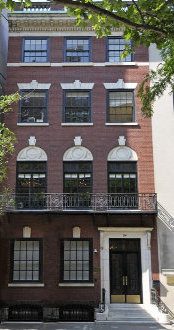
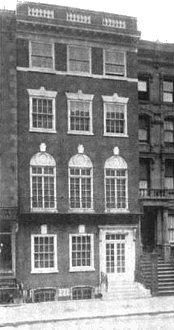
No. 54, East Sixty-fourth Street
“FOR 17 YEARS,” writes Peter W. Kaplan, “since The New York Observer entered city life in 1987, it has existed within a red brick and white-marble-stepped townhouse on East 64th Street.” Designed by Ernest Flagg and Walter B. Chambers during their brief partnership, No. 54 East Sixty-fourth Street (between Park & Madison) was built in 1907 as a private residence for Robert I. Jenks. The AIA guide accurately describes it as “four stories of delicate but unconvincing neo-Federal detail… a minor Flagg.” In 1947, the townhouse was converted into offices for the Near East Foundation, which was founded in 1915 to provide relief for Armenian refugees from the Ottoman Empire and later took on greater responsibilities in North Africa and the Levant. It was then bought by Arthur L. Carter, the founder and publisher of the New York Observer for use as the salmon-tinted newspaper’s headquarters.
In 2004, the Observer moved down to Broadway, two blocks south of the Flatiron Building (and just a few blocks up from The New Criterion whose founder, Hilton Kramer, was for nearly two decades the art critic for the Observer). The townhouse was sold by Carter to the Russian-born Janna Bullock, real estate developer & sometime Guggenheim foundation board member for $9.5 million in the year the newspaper moved out. In 2005, Bullock renovated the building and had it used at the Kips Bay Decorator Show House for the year before selling it on to the Irish investor Derek Quinlan for $18.74 million. Quinlan put it on the market for $36 million but last year the asking price was chopped to $27 million.
Twenty-five feet wide, five stories, and with over 10,000 square feet, No. 54 was probably the only newspaper headquarters to feature nine working fireplaces, rosewood panelling, and oak wainscoting. But the best feature, by a mile, is the splendid iron-railed staircase, which looks like it was lifted straight from Paris. Elegant and graceful, a rare century-old survival in Manhattan. (more…)
A Collector’s Apartment
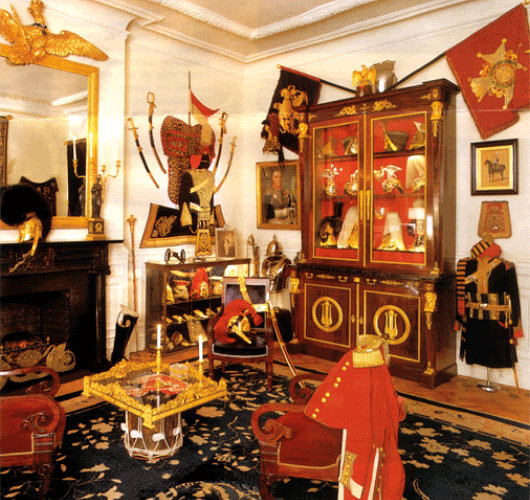
These photos come from an issue of Architectural Digest from the 1980s that some chap scanned and put online. The article that these pictures accompanied was about the New York apartment of a collector specialising in military items, but unfortunately the scanner did not post any further information. (more…)
120 East End Avenue
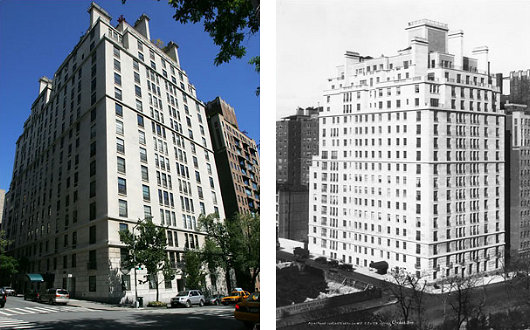
BACK IN MY school days, there was a girl in this building who threw rather good parties. Even at a decent event, however, one or two are bound to show up that really ought not to have done so, and at one of these parties at 120 East End Avenue just such a person got wildly drunk, seized a half-full bottle of vodka (Smirnoff, I believe) and launched it out the window. As luck would have it, gravity deposited the vessel many floors below, landing right on top of windshield of the doorman who happened to be serving that night.
Now, doorman relations are important in Manhattan (as apartment building owners are quite aware). When Mr. & Mrs. Smith jaunt off to Paris, leaving Jenny at home, and some twenty-odd young lads & lasses show up requesting admittance to the Smiths’ place — the doorman knows all and sees all, and one must ensure that, upon Mom & Pop’s return, he doesn’t tell all. (more…)
The Institute for the Study of the Ancient World
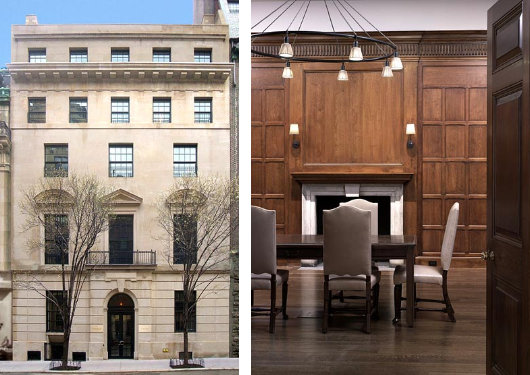
The Institute for the Study of the Ancient World commissioned Selldorf Architects, previously responsible for the renovation of the Neue Galerie on Fifth Avenue, to restore and upgrade the townhouse at 15 East 85th Street purchased to house the Institute. The house was built in 1899 but altered beyond recognition in 1928 after its purchase by Ogden Mills Reid, editor-in-chief of the New York Herald-Tribune. After the editor’s death, Mrs. Reid sold it to the American Jewish Committee, who used it as their headquarters until its sale to the Leon Levy Foundation, which endowed the creation of the Institute for the Study of the Ancient World at New York University in 2006. (more…)
La mort de la Librairie Française
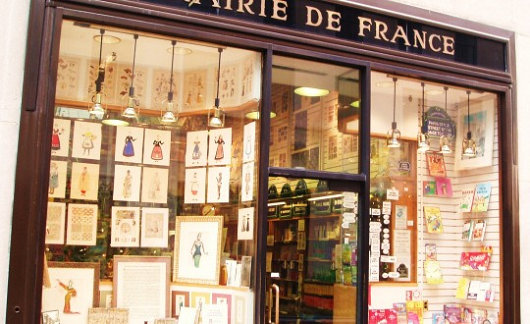
Among the unfortunate recent victims of Manhattan’s extortionately exorbitant rents is the Librairie Française. Last year the venerable New York institution had its rent raised from $360,000 to $1 million per year. The shop was founded in 1928 by Isaac Molho a Sephardic Jew from Salonika, who was invited by David Rockefeller himself to rent a space on the Promenade in Rockefeller Center in 1935. The Maison Française, in which the Librairie was located, flanked the south side of the Promenade, with the British Empire Building flanking the north — the bit of greenery in-between is called ‘Channel Gardens’ accordingly. The sign on the façade said ‘Librairie de France’ but in conversation I have never heard it referred to as anything other than the Librairie Française.
During the Second World War, the shop also operated a publishing house called La Maison Française that printed Gaullist propaganda as well as titles by French writers like Jacques Maritain, André Maurois, Jules Romains, and Antoine de Saint-Exupéry. It was the post-war period, however, in which the Librairie Française flourished. (more…)
A little dilapidation goes a long way
Chelsea, Muttontown, L.I.
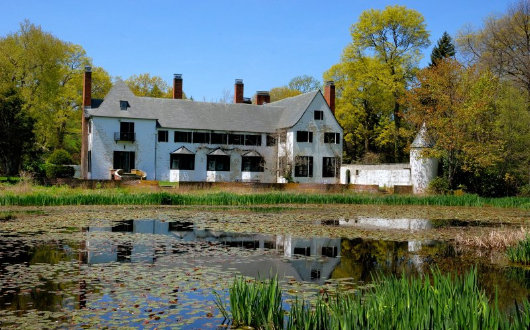
I have commented before about the perils of over-restoration, in which a building’s owner becomes a little too enthusiastic about its preservation and ends up with a building that, except in style, looks almost new. Chelsea sits on a 500-acre preserve in Muttontown, L.I. which has come into the hands of the government of Nassau (the county on Long Island in-between Queens County and Suffolk). The county has managed to maintain the house and its grounds at exactly the appropriate level: not plastering over every crack to make it ‘good-as-new’, nor neglecting it so it becomes structurally unsound, but rather allowing it to develop and age naturally. These photographs from the ever-capable James Robertson admirably display the house and its grounds, including its shallow canal-moat. (more…)
Early Morning, Madison Square
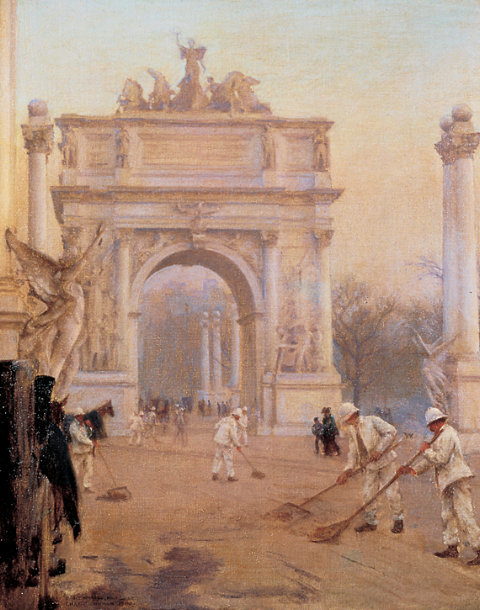
Charles Courtney Curran, Early Morning, Madison Square
Oil on canvas, 22 in. x 18 in.
1900, National Arts Club, New York
Joyce Linton: The Lady with the Voice

Yesterday, in a beautiful sung requiem at St. Agnes, we paid our final respects to our friend Joyce Linton. I had known Joyce for quite some time before I ever actually met her because we tended to sit in the same neighborhood of pews (in the back of the church towards the left) at the 11 o’clock Mass at St Agnes every Sunday. While a schoolteacher by profession, she was also a trained vocal musician, and her voice carried as the congregation belted out our Credos and Glorias. She became known to me as “the Lady with the Voice”, and every so often I would see her making her way towards the church just before 11:00 and, without knowing her name, I would say to myself “That’s the Lady with the Voice”.
Eventually, I got to know Joyce well, and joined the regular tea-drinking crowd of which she was a devoted and prominent member. Vim. Moxie. Determination. Those are the words that come to mind when I think about Joyce, a spirited lady if ever there was one. But she was, also, a woman with a certain style. Think of 1950s New York, swanky, bright, and modern, but still traditional, and never out of date. That was Joyce.
Now, if there was one thing that undoubtedly went along with Joyce’s vim, moxie, and determination, it was that she had an opinion. She enjoyed a vibrant discussion and the interaction of ideas, but she made certain that even if you didn’t happen to share her opinion, you would at least be familiar with it. As it happens, Joyce and I were lucky enough to agree with one another on many things, but by no means all things. More than once did I attempt to refute her position on this, that, or another thing. After the back-and-forth had exhausted itself, she would say, “Well, I don’t think it’s quite as simple as that”, I would shrug my shoulders and say “Perhaps”, and we would sip our tea and rejoin the larger conversation.
She was a woman who was grateful for the graces in her life. She was grateful for the blessings of her family, though it was not without hardships. She was grateful for the magnificent inheritance of centuries of art and culture she was born on the receiving end of. She was a patriot if ever there was one — a proud American, but one with a devoted filial love of Europe, and especially of Italy.
I think the first time Joyce visited Italy was when she did her voice studies in Florence in the 1970s, and she never stopped going back. She had a devotion to Padre Pio and paid her respects to the great saint by pilgrimming to San Giovanni Rotondo. Towards the later years of her life she had a special love and appreciation for summer days spent at Gardone on the shores of Lake Garda, enjoying the intellectual stimulation of the annual summer symposium organized by the Roman Forum. The Italian airs invigorated her Celtic blood and she would return to New York in late summer rejuvenated and refreshed.
She always knew lots of things about New York. You can get great freshly baked bread here. They do a good brunch there. If you really want to do X, then you’ve got to Y at Z on Nth Street. I remember one drizzly November Sunday afternoon Joyce showed me “the best way to cut through Saks” as she and I made our way to the annual Choral Evensong & Flag Service for the Patriotic, Historical, and Hereditary Societies at the Church of St. Thomas, Fifth Avenue.
Joyce loved her job as a high school teacher at Manhattan Center on the Harlem River, just a few doors away from Our Lady of Mount Carmel on 115th Street. Any and all bureaucratic encroachments upon the teaching profession were vociferously opposed by her, and she had an enormous pride when her students did well (especially her girls). Latin was another excuse to spend time in Italy, where she studied the language under the famous Fr. Reggie Foster in Rome. She taught English as well, and was adamant that her students learn important lessons from writers like Orwell and Wilde, rather than a rote set of facts or ideas or quotes. She was always on the lookout for a new way of explaining the old truths to the students in her charge. She loved them, but she also loved her colleagues, and more than once had us praying for this one or that one.
When she was first diagnosed with cancer, many of us prepared ourselves mentally for The End. I think Joyce said to herself “Well I’m not having any of that.” She beat it the first time round (remember what I said about vim, moxie, determination?) to the surprise of many, probably her devoted doctor most of all. She went back to work, and her own hair grew back, allowing her to dispense with the peppy wig she had specially styled. Life, it seemed, returned to normal, for one last Halcyon day before the Hour approached. When the time did appear on the horizon, her descent was rapid. I’m glad I had a chance to see her one last time, surrounded as she was by friends in Lenox Hill Hospital.
Joyce would have loved her requiem, the priest in mournful black trimmed by resplendent gold, acolytes and torch-bearers aiding in the sanctuary, the Dies Irae rising from the choir loft, and those who knew and loved her pleading God’s mercy and quick remission of her earthly transgressions. It was beautiful — as the most beautiful things are — because it pointed towards that Heavenly place from whence our only glories come, where we pray “the Lady with the Voice” will enjoy perpetual light and rest eternal.
Requiescat in pace.
Amen.
Baron Bossom’s Bridge
The Unbuilt ‘Victory Bridge’ Crossing the Hudson River at Manhattan
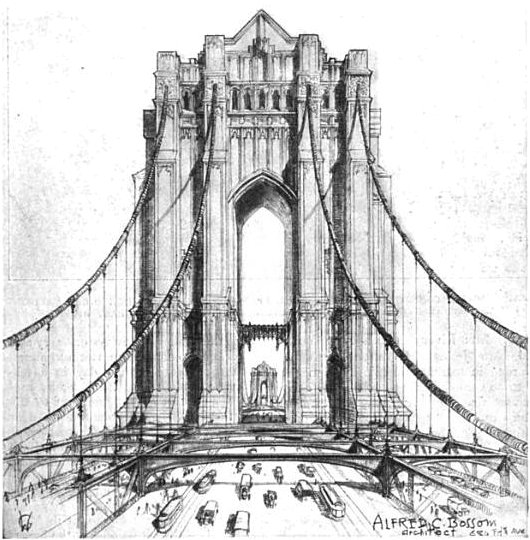
After the victory of America and her “co-belligerents” in the First World War, a temporary victory arch was erected out of wood and plaster to welcome the troops home from Europe. After the arch was dismantled, however, discussions soon arose on how to permanently commemorate the war dead of New York, with a surprising variety of suggestions made. A beautiful water gate for Battery Park was suggested, with a classical arch flanked by Bernini-like curved colonnades, so that a suitable place existed to welcome important dignitaries and visitors to New York. (Little did they know how soon the airlines would replace the ocean lines). Another proposal was for a giant memorial hall located at the site of a shuttered hotel across from Grand Central Terminal, while others suggested a bell tower.
An entirely different proposal, however, was made by the New York architect Alfred C. Bossom (later ennobled as Baron Bossom of Maidstone). Bossom, an Old Carthusian, was an Englishman by birth and eventually returned to his native land, where (in 1953) he gave away the future prime minister Margaret Roberts at her marriage to Denis Thatcher. He himself served in parliament from 1931 until 1959, excepting his wartime Home Guard service. Jokes were often made about his surname resembling both “bottom” and “bosom”. Upon being introduced to Bossom, Churchill jested “Who is this man whose name means neither one thing nor the other?” (more…)
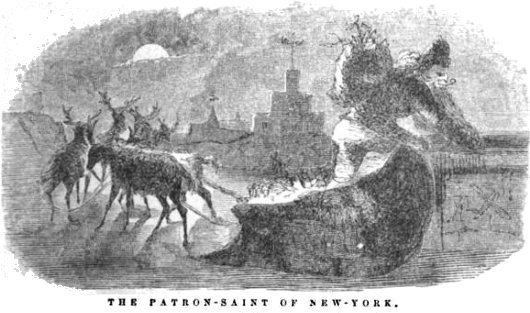
Patron of the Knickerbockers, pray for us
Gorham’s Pond Bridge
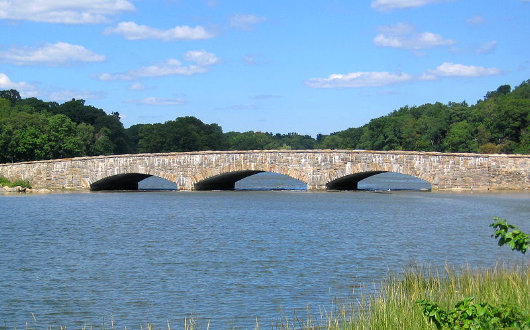
Gorham’s Pond Bridge spans the Goodwives River in Connecticut. Captain George Gorham was born in January 1696 (O.S.) at Barnstable in the Province of Massachusetts Bay. The Captain married Hannah Banks, a Greenwich girl, in 1726 and bought the grist mill in 1740. While most of this neck of the woods leaned towards the Rebels during the Revolution, Robert Gorham was a staunch Tory. From time to time, fellow Tories would land at Gorham’s Mill to raid local Rebel strongholds. After disturbing a meeting at the Congregational Meeting House — a local den of rebellion — the Rebels hid behind a stone wall waiting to ambush the Tories at an expected raid. The Tories, however, got wind of the plotted ambush, and snuck up behind the Rebels, launched a surprise attack, and duly won the skirmish.
Unusually, the revolutionary authorities allowed the Gorhams to remain in Connecticut, and their property was not confiscated. The family owned the Mill until it was destroyed by fire in the first half of the twentieth century. Gorham’s Landing is now within the town of Darien, and nearby is the Convent of St. Birgitta at Vikingsborg.
How “New Yorker” is the Staats-Zeitung?
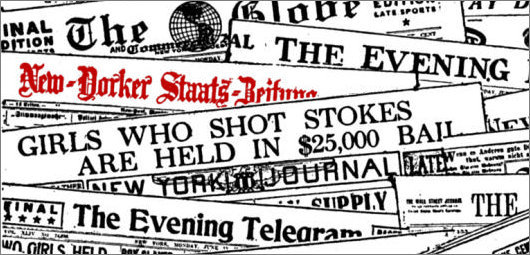
When I was a youngin’, one of the joys of Sundays was the trip to the bakery and the newsagent after church. A vast array of newspapers was on hand for perusal while Pop nipped into Topps Bakery next door. We usually only bought The European, but I browsed everything on hand. One of the available titles was the New-Yorker Staats-Zeitung, founded in 1834, and the oldest German newspaper in the New World. The “Staats” was daily from 1854 until 1953, when it went weekly. In the late 1930s, the circulation was about 80,000, falling to 25,000 in the late 1990s, and stands around 10,000 today. It seems a pity that this “New York” newspaper is now edited from Sarasota, Florida instead of from Manhattan, but at least the Staats-Zeitung survives.
A Message from the Minister of Culture
I’ve sometimes thought that the Director of the Metropolitan Museum is New York’s unofficial Minister of Culture. Concerned New Yorkers were at the edge of their seats with anticipation to discover who would be chosen to direct this great museum once it was announced that the legendary Philippe de Montebello was relinquishing the throne. As The New Criterion put it “Few events have been awaited with more trepidation in the world of culture — we were going to say ‘the art world,’ but it embraces much more than that — than the appointment of the next director of the Metropolitan Museum of Art.”
The massive sigh of relief when Thomas Campbell was announced as the successor could probably be heard as far as the Louvre (or even the Hermitage), even though Campbell’s name was on none of the supposed shortlists for the job. Judging by his past as curator of tapestries, Campbell is widely believed to be utterly reliable at continuing the high standard maintained during de Montebello’s reign. May God guide him well in his task! (more…)
Parking
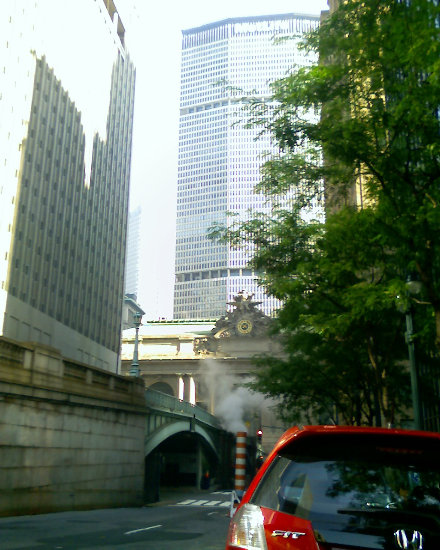
I’ve long suspected that most cars permanently inhabit the best parking spaces in Manhattan — their owners wary to leave them for fear of giving up that spot. But every now and then you get that spot. In my case, it’s through the intercession of St. Martin de Porres, who likes to make sure this altar-server makes it to St. Agnes next to Grand Central every Sunday with time to spare.
Oranje in New York
The Prince & Princess of Orange Celebrate 400 Years of the Hudson
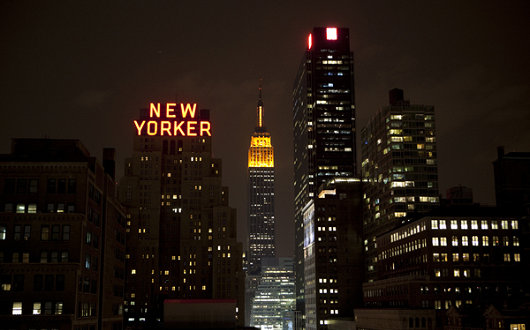
THE CONNECTIONS BETWEEN New York and the Netherlands go back far; back to the very beginning indeed, to 1609 when Henry Hudson, in the service of the Dutch, first set eyes on the greatest harbour of the Atlantic seaboard. The four-hundredth anniversary of that event brought the Prince and Princess of Orange, the heirs to the Dutch throne over to old New Amsterdam for the culmination of the year’s quadricentenary celebrations.
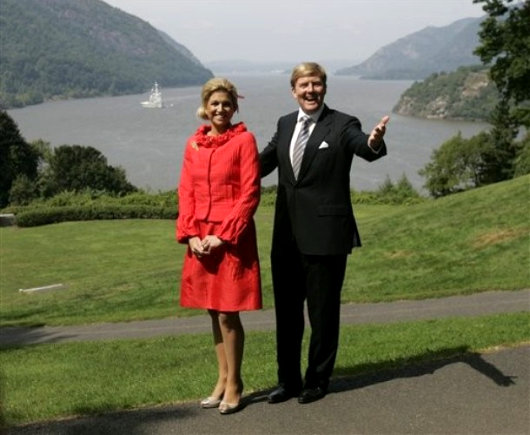
After their arrival in the Empire State, Prince Willem-Alexander and Princess Maxima sped straight up the Hudson Valley to West Point, the pearl of the river. The Kingdom of the Netherlands and the United States are official military allies, with at least 1,770 Dutch soldiers serving in Afghanistan, plus an undisclosed number of special forces from the Korps Commandotroepen. (more…)

Crosses Return to Columbia Crown
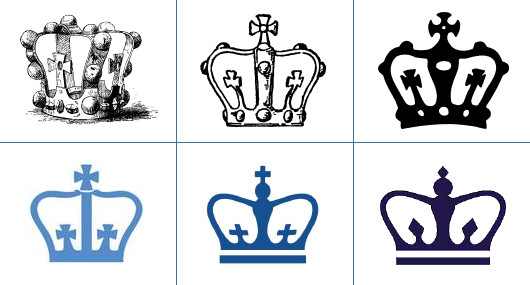
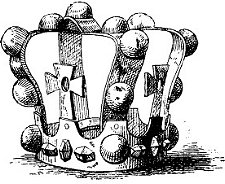 AFTER AN ABSENCE of some years, Columbia University has returned the crosses to its official crown emblem. The crosses had been missing since March 2004, when they were replaced with trapezoidal lozenges, but the more historic cross design has quietly returned to favour as the Ivy League institution’s official symbol. Columbia was founded in 1784, but claims the earlier heritage of King’s College, founded in 1754 but exiled to Nova Scotia, where it now has university status, after the tumult of the American Revolution. A copper crown (right) was originally attached to the cupola of College Hall, King’s College’s home in the colonial city of New York. When Columbia was founded in 1784, a year after New York’s independence was recognized, the state legislature gave the property and endowment of King’s College to the new Columbia College, which was organized by the remaining non-Loyalist members of King’s College. (more…)
Holland on the Hudson

The Kingdom of the Netherlands has very kindly set up a website devoted to the four-hundredth anniversary of Hudson’s discovery of what is now New York. Hudson, though English, was in the service of the Dutch and it was the Netherlandic people who eventually got the place settled. Because of his Hollandic overseers, Henry Hudson’s Christian name is often romantically Dutched up to Hendrick — hence one of the local high schools in Westchester is called “Hendrick Hudson High School”.
The Queen at the Armory
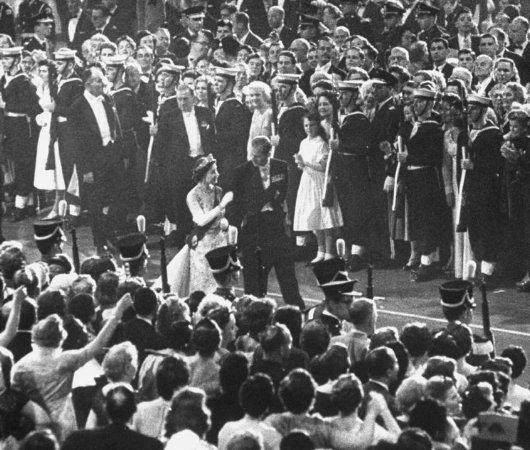
Queen Elizabeth II & the Duke of Edinburgh attend a ball in their honour at the Seventh Regiment Armory in New York; October, 1957.
Search
Instagram: @andcusack
Click here for my Instagram photos.Most Recent Posts
- Brunel’s Unbuilt Capitol February 3, 2026
- Cricket at Fordham January 27, 2026
- Palacio Barolo Revisted January 14, 2026
- Learning to Love Liguria January 14, 2026
- Crux Alba No. 2 January 13, 2026
Most Recent Comments
Book Wishlist
Monthly Archives
Categories