Arts & Culture
About Andrew Cusack
 Writer, web designer, etc.; born in New York; educated in Argentina, Scotland, and South Africa; now based in London.
 read more
News
Blogs
Reviews & Periodicals
Arts & Design
World
France
Mitteleuropa
Knickerbockers
Argentina
The Levant
Africa
Cape of Good Hope
Netherlands
Scandinavia
Québec
India
Muscovy
Germany
Academica
A Gothic Library for Christchurch
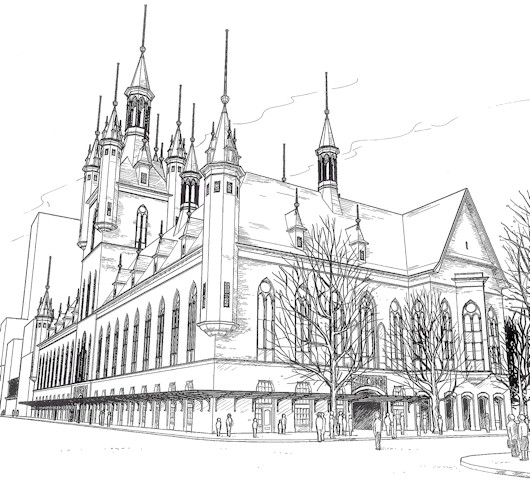
Christchurch, the oldest city in New Zealand, was known for its gothic cathedral before the February 2011 earthquake destroyed its spire. Modern architects, as voracious a species as ever existed, descended upon the city like a plague, declaring that everything traditional must be demolished and hideous glass hulks raised instead. They succeeded in convincing the city’s Anglican authorities to deconsecrate the cathedral (despite remaining mostly intact) and plans for its future remain vague.
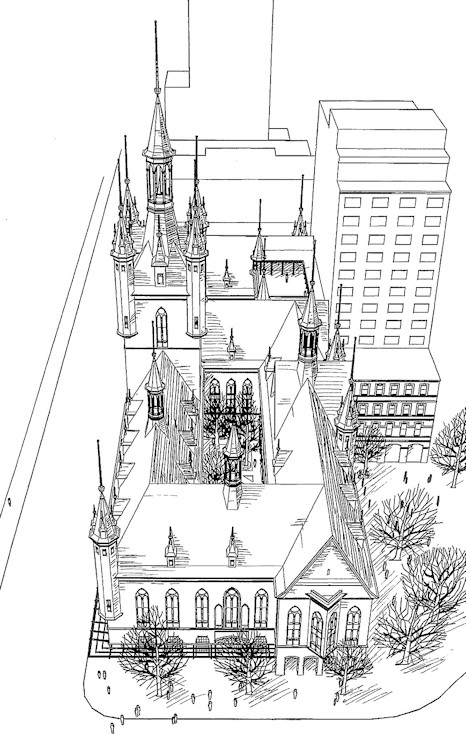
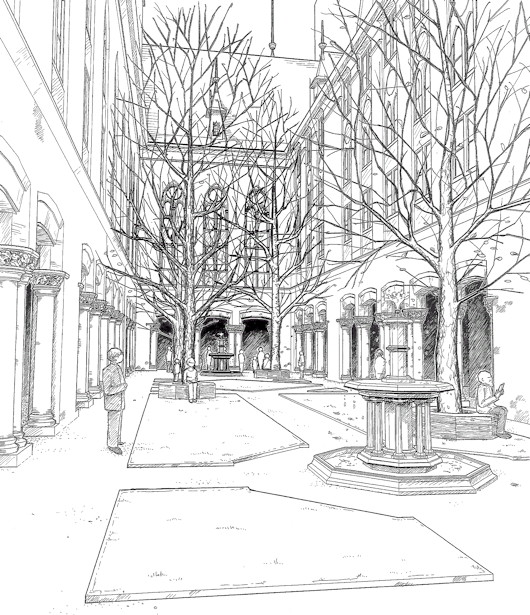
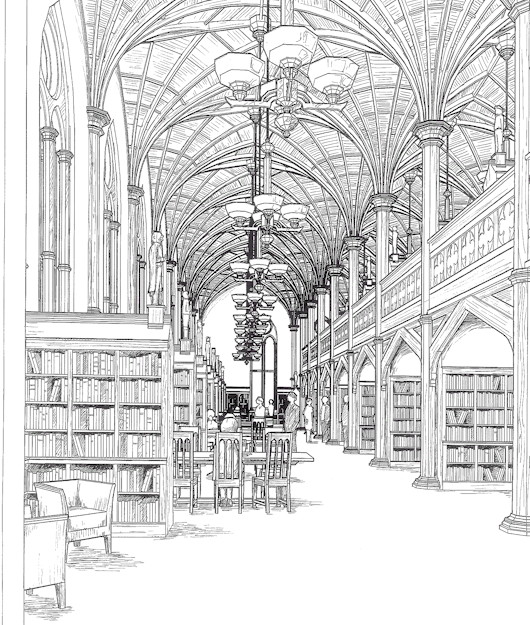
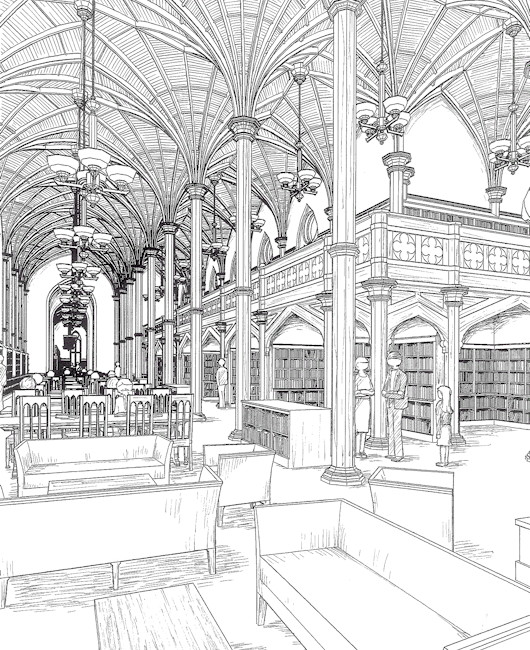
Local architectural designer & engineer James Carr has come up with a proposal to build a central library for Christchurch on Cathedral Square. The design complements the gothic cathedral (or whats left of it) and would be a handsome addition to the city.
More whimsical perhaps is Mr Carr’s idea to build a gothic rugby stadium in Christchurch.
Germania
I’ve been reading Golo Mann’s History of Germany Since 1789 — cracking stuff.
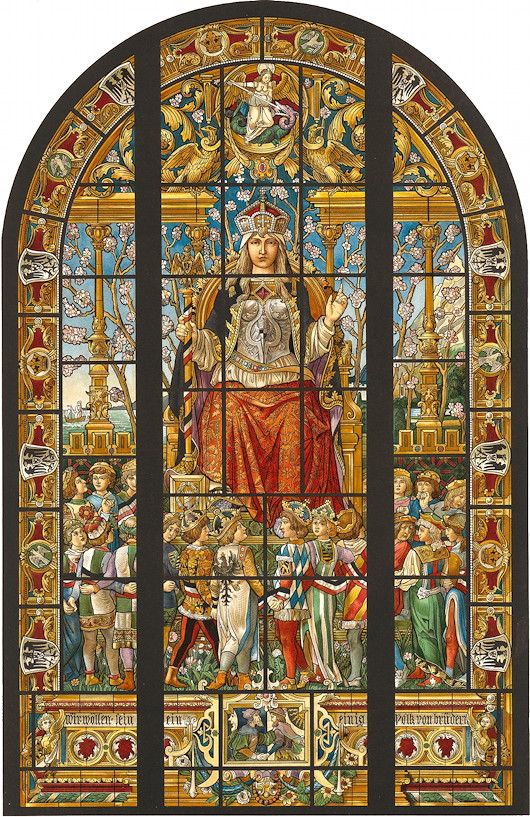
This depiction of Germania, the personification of the German nation, was for a stained-glass window in the Reichstag building, built between 1884 and 1894 in Berlin and since 1999 home once again to the German parliament.
St Mary Redcliffe
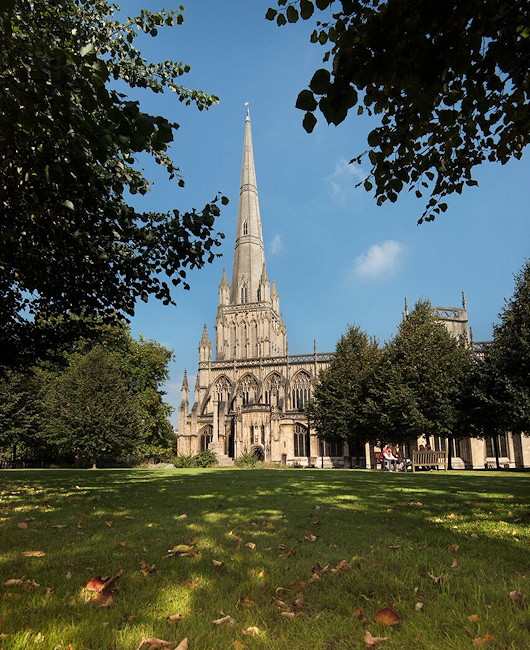
The Church of St Mary Redcliffe in Bristol was famously described by Elizabeth Tudor as ‘the fairest, goodliest, and most famous parish church in England’.
A thoughtful leader
As newspapers go, the Feudal Times and Reactionary Herald is devilishly difficult to obtain. Its coverage of internal squabbles within the Marxist-Lefebvrist faction of the Communist Party of Great Britain makes for compelling reading and it is likewise to be thanked for its sensitive reporting on the goings-on of various disenfranchised Indian princely families. Alas, I have never discovered whether it is possible to subscribe to this illustrious periodical, and a visit to the City of London address printed on its editorial page revealed only that the building had been bombed out during the Blitz and more recently redeveloped into a giant postmodern office block housing ‘management consultants’.
As is often the case in times of difficulty, it is not in the metropole but in the periphery one finds comfort. I am currently enjoying a few days in Wexford town (or Veisafjǫrðr as the Feudal Times & Reactionary Herald would doubtless call this old Viking settlement in Ireland). This very day I was enjoying a delicious pub lunch — stuffed chicken wrapped in bacon with peas and mash all united by a gravy of optimal viscosity accompanied by a locally brewed Schwarzbier — when I was delighted to discover next to me a copy of the illustrious title left by a previous punter. A few weeks old and already well-thumbed, it nonetheless included this thoughtful editorial regarding the recent Rhodes controversy in Oxford which our readers might, despite its pretentious prose, find interesting:
Ex Africa semper aliquid novii a Roman of old once noted. We have recently and from many quarters heard much criticism of Mr Ntokozo Qwabe — a Rhodes scholar from the late lamented Union of South Africa — concerning his call for the removal of the statue of Mr Cecil Rhodes (quondam Prime Minister of the Cape of Good Hope) from the High Street frontage of Oriel College, an institution much beloved by many of the readers of this newspaper.
As Mr Qwabe is one of those currently enjoying the fruits of Mr Rhodes’s rather typical largesse, he has doubtless left himself open to accusations of hypocrisy and ingratitude. Nonetheless, we believe a certain lassitude and forgiveness is called for in this case as recent utterances pouring forth from his loquacious tongue have proved more amenable hearing to ear-trumpets both feudal and reactionary. For we are informed the young scholar has a new target in his sights: the tricolour flag of the dreaded French Republic. Mr Qwabe has called for it to be banished from the streets and quadrangles of both town and university, deriding this “violent symbol” of a republican regime that has “terrorised innocent lives”. Such a forceful allusion to the regicides of 1793 is to be welcomed firmly.
True to their typical form, the tweeded, begowned, and enscarfed undergraduates of Oxford’s colleges have taken up Mr Qwabe’s plea. Already the blue-white-and-red flag which until recently hung from the Pierre Victoire restaurant in Little Clarendon St has been replaced by a lily banner. It is regrettable, though, that a screening of ‘Le roi danse’ at the School of Modern Languages resulted in intermittent street violence between roving bands of rival Legitimiste and Orleaniste students, egged on by Bonapartist townsfolk from working-class enclaves in Jericho and Cowley. (The biretta of an innocent Oratorian is believed to have been knocked off in the ensuing melee.)
Mr Qwabe may have arrived on these shores with plans for revolt and ‘transformation’ but it is clear that Oxford is having its usual desired effect on this bright young man. Tumult is giving way to torpor, and doubtless this Rhodes scholar will return to the happy land of the assegai and the rondavel a good deal more broad-minded and reactionary. We wish him well.
Frankfurter Hefte
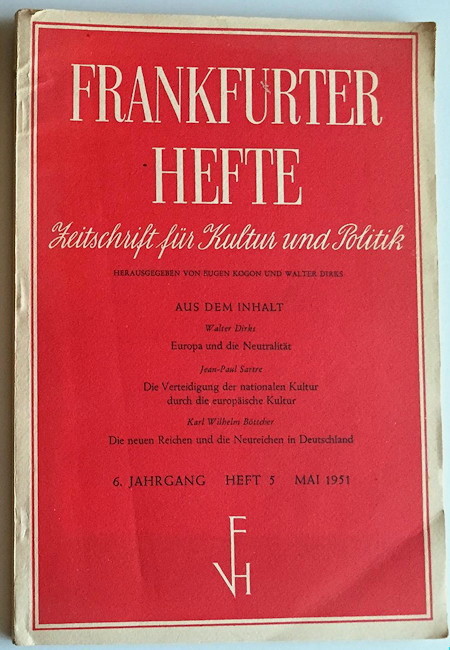
German typography and print design in the 1950s combined elegance and simplicity, as shown here in the front cover of Frankfurter Hefte, the political monthly founded by Eugen Kogon and others in 1946. (more…)
Haus Altmark

While the remarkable rebuilding and rehabilitation of Dresden is of a much more recent vintage, the historicist design of Haus Altmark (Herbert Schneider, 1953-1956) in that city is another good example of the Socialist Classicism of the DDR.
(c.f. Leipzig Opera House)
‘Five Finger Exercise’
The Print Room, Notting Hill (until 13 Feb 2016)
I remember as a child being confused when some people said they hated the holidays because it was awful having all the family together. The gatherings of our extended family were always occasions of mirth and merriment and not a few jibes — not to mention a long-term dispute over the precise location of Watertown, New York. The theatre of disfunctional families never hugely appealed to me, then, but over a few bottles of Erdinger in Kennington t’other night a friend dropped word of ‘Five Finger Exercise’ at the Print Room in Notting Hill (the old Coronet) and I thought I’d give it a go.
Peter Shaffer’s (‘Amadeus, ‘Equus’, etc.) play was first put on in 1958 under the direction of John Gielgud. The harmony of the Harrington family is not particularly upset by the arrival of a young German tutor Walter at the outset. Father Stanley — self-made man and head of a successful furniture company — is unbothered by his arrival at the instigation of the upwardly mobile mother Louise — imagine Mrs Bucket from ‘Keeping Up Appearances’ but half-French and with a cut-glass 1950s voice — who thinks it quite the done thing to have a live-in tutor teaching French to her daughter Pamela. The son Clive is just off to Cambridge so he’s all done and dusted and nothing to worry about. But then…
The remarkable thing about ‘Five Finger Exercise’ which makes it particularly close to life is how every character is effectively innocent and yet each character is to blame. Stanley has pursued work and the golf club while abdicating the rearing of children to his overbearing and pretentious wife, who is fixated into making sure they are just so. Clive has all the weaknesses of the typical self-obsessed teenager, but genuinely wants to love the father he feels only questions him. And Walter, so fixated with the mere fact of being in England and away from Germany and the past (and family) that he cannot see how his presence has upset a delicate balance. Little Pamela is mostly blameless, though.
Lucy Cohu as mother Louise is superb in voice, deportment, tone — everything. At first Jason Merrels (Stanley) fools the audience into thinking he is a settled old uncaring simpleton. But when push comes to shove Merrels displays the real emotion of the father who just doesn’t understand but wishes he could. Terenia Edwards is simply a delight — charming, sweet, and innocent, and perfectly conveying the hint that she may be on the cusp of something else. And I am surprised that the actor playing Walter (Lorne MacFadyen) is not German. (But then he was acting, I suppose.) Tom Morley, however, carried the weight of the play as Clive, taking a difficult role and giving us a convincing and credible performance. A brilliant actor.
The Director Jamie Glover deserves accolades for crafting a production that is fun, true to life, and, in the end, haunting.
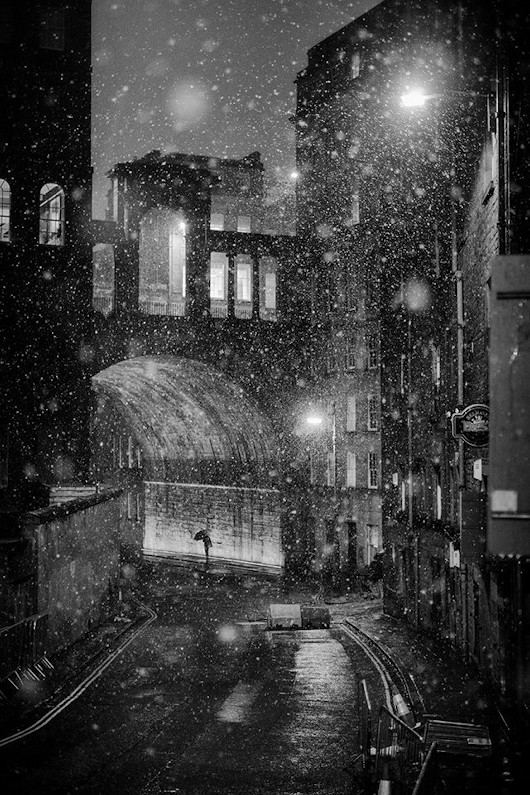
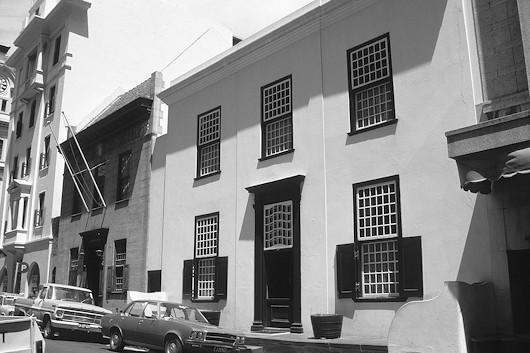
Keeromstraat 14
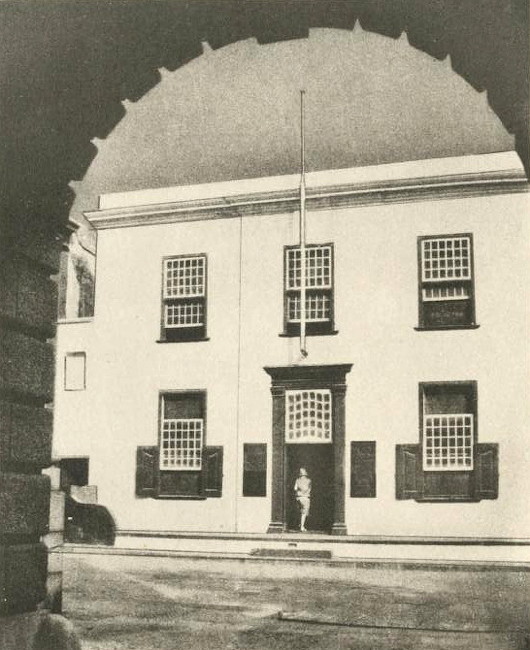
Keeromstraat 14, Kaapstad
This Cape Town house was built in 1751 for Hermanus Smuts who sold it on to Johan Jacobus Graaff, the woodworker who collaborated with South Africa’s greatest architectural duo, the sculptor Anton Anreith and the architect Louis Michel Thibault.
Thibault is believed to be responsible for the addition of the upper story and the current façade, seen above through an archway of the High Court.
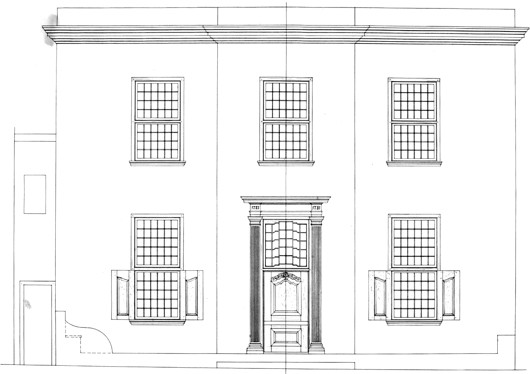
The building next door was designed by the pioneering Afrikaner architect Wynand Hendrik Louw (1883-1967) for De Nederlandsche Club te Kaapstad, the city’s club for Dutch businessmen and expatriates. Louw was also the architect of the Dutch Reformed Church at Napier in the beautiful Overberg.
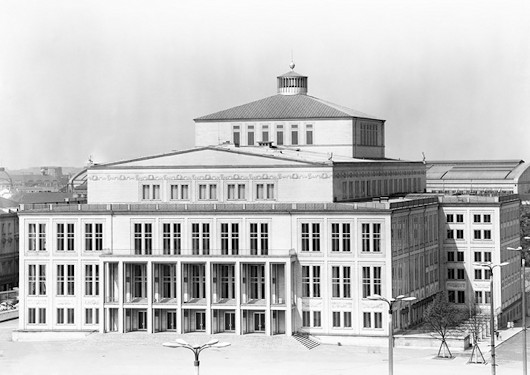
Leipzig Opera House
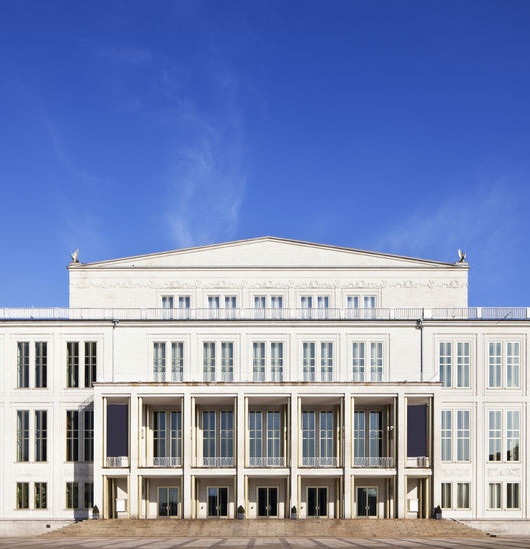
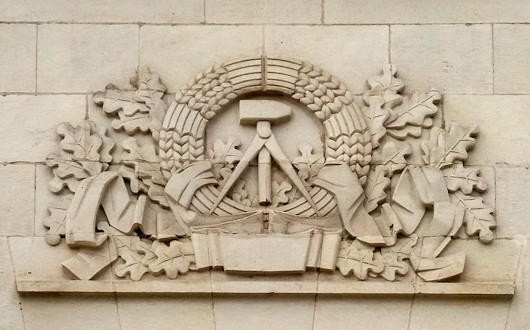
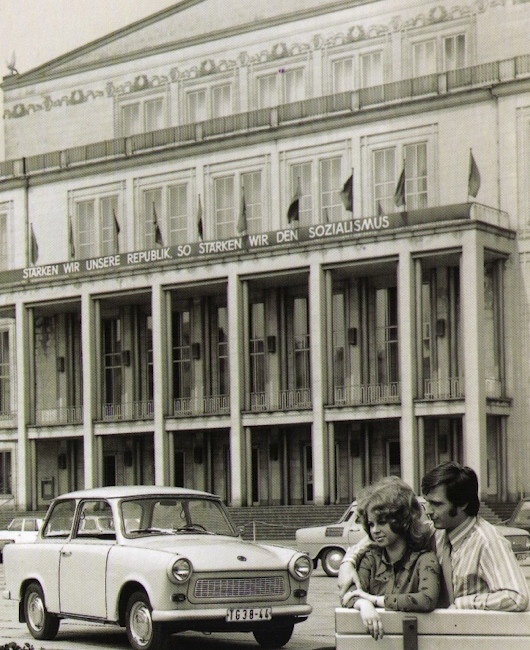
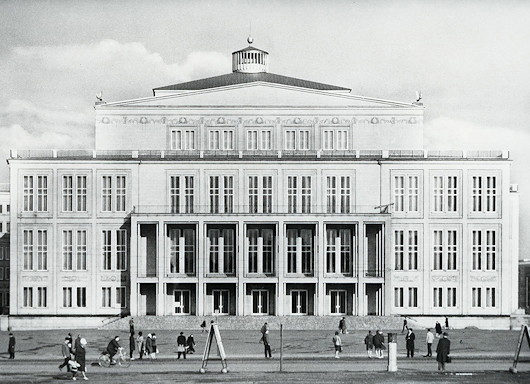
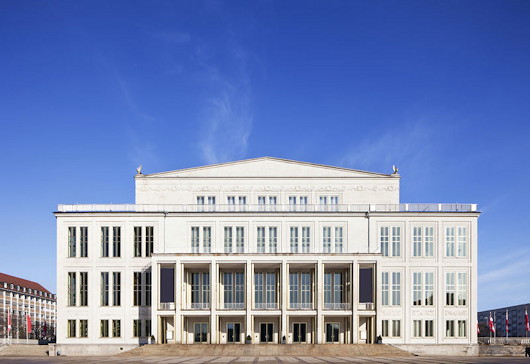
The Leipzig Opera House is the swansong of Socialist Classicism as an architectural style. The 1954 plans of the architect Kunz Nierade had to be toned down mid-construction, with some of the sculptural adornment simplified, as the official aesthetics of the German Democratic Republic shifted towards a more aggressive modernism.
While the Soviet Union provided the more well-known examples of Socialist Classicism, the Germans rather typically (but sparsely) excelled their Russian overlords. Admittedly, the quality was inconsistent: the Karl-Marx-Allee has some fine details but the overall plan leaves me cold, though postmodernists Philip Johnson and Aldo Rossi have praised it.
I enjoy the restrained classicism of this building, though the flatness of the façade leans a little towards the dull, with only the projecting portico providing a bit of comforting depth. Critics have pointed out the lack of light-and-shadow contrast during the daytime, and have tended to prefer the building’s nighttime appearance. It’s worth mentioning that the snowflake-like hanging lamps in the building’s foyer have a significant place in the design history of East German lighting fixtures (a subject about which I know now more than I ever expected).
The finality of Socialist Classicism’s end cannot more clearly be emphasised when comparing the Leipzig Opera House with the assaulting brutality of the Neues Gewandhaus concert hall (1977) across the Augustusplatz in a style we associate more closely with the DDR period. That the similarly styled Palast der Republik in Berlin — possibly the building most readily associated with East Germany’s socialist regime — has been completely demolished to be replaced by a reconstruction of the old city palace is a reminder of the hopeful possibilities we have at hand.

.jpg?uselang=de)
Sieg für die Schönheit
Sieg für die Schönheit
Alles Sal Reg Kom
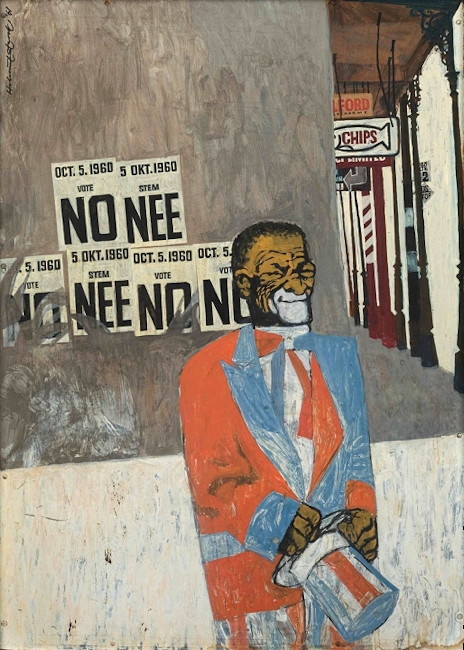
1961; Acrylic on board, 34.8 in. x 24.8 in.
A man festively attired in a Tweede Nuwejaar outfit in patriotic colours (orange, white, and blue) stands in front of a side wall in Cape Town bearing monarchist posters urging voters to vote ‘No’ in the 1960 republic referendum.
The painting’s title – Alles Sal Reg Kom – means “everything will be alright”.
Darkness
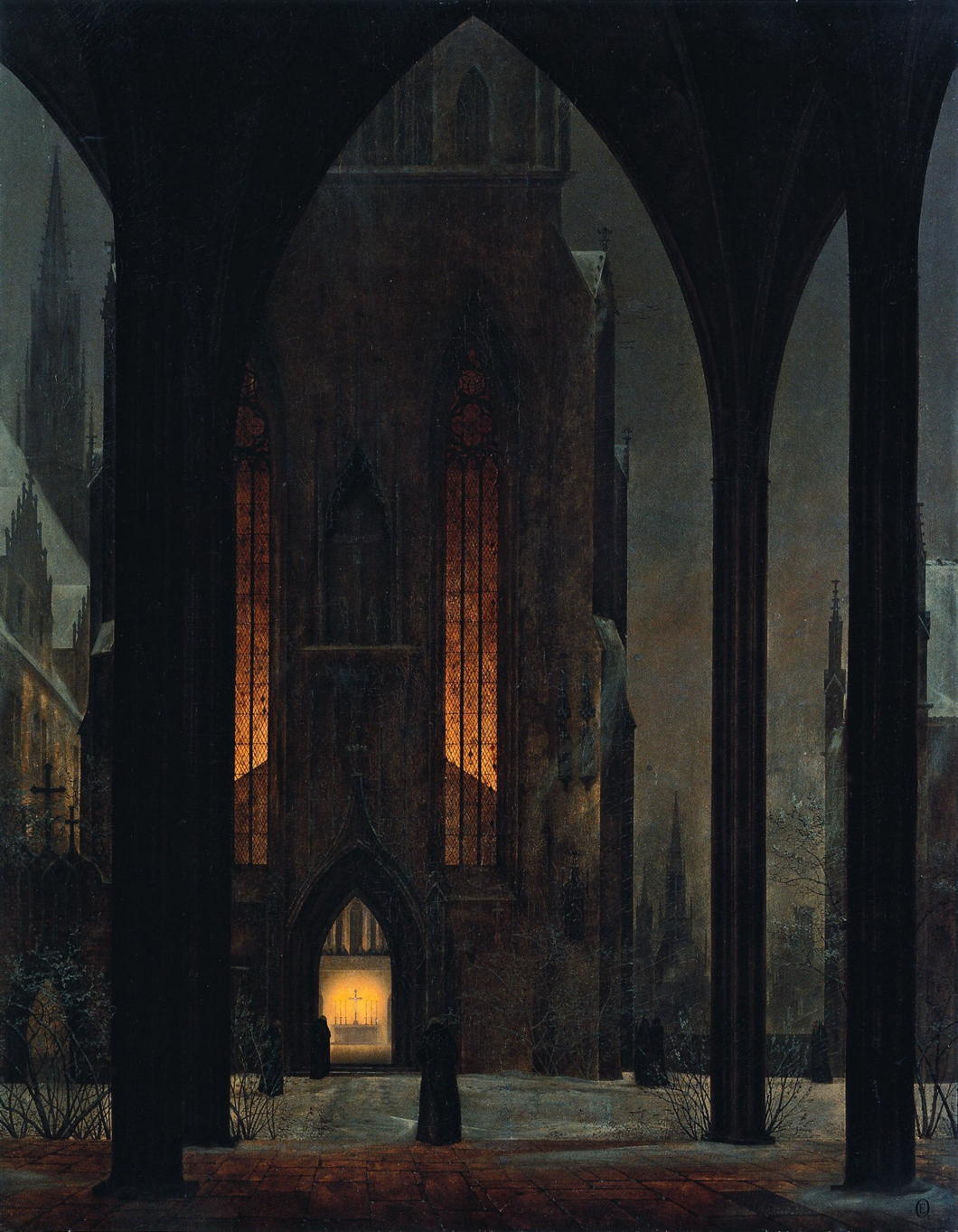
I had a dream, which was not all a dream.
The bright sun was extinguish’d, and the stars
Did wander darkling in the eternal space,
Rayless, and pathless, and the icy earth
Swung blind and blackening in the moonless air;
Morn came and went—and came, and brought no day,
And men forgot their passions in the dread
Of this their desolation; and all hearts
Were chill’d into a selfish prayer for light:
And they did live by watchfires—and the thrones,
The palaces of crowned kings—the huts,
The habitations of all things which dwell,
Were burnt for beacons; cities were consum’d,
And men were gather’d round their blazing homes
To look once more into each other’s face;
Happy were those who dwelt within the eye
Of the volcanos, and their mountain-torch:
A fearful hope was all the world contain’d;
Forests were set on fire—but hour by hour
They fell and faded—and the crackling trunks
Extinguish’d with a crash—and all was black.
The brows of men by the despairing light
Wore an unearthly aspect, as by fits
The flashes fell upon them; some lay down
And hid their eyes and wept; and some did rest
Their chins upon their clenched hands, and smil’d;
And others hurried to and fro, and fed
Their funeral piles with fuel, and look’d up
With mad disquietude on the dull sky,
The pall of a past world; and then again
With curses cast them down upon the dust,
And gnash’d their teeth and howl’d: the wild birds shriek’d
And, terrified, did flutter on the ground,
And flap their useless wings; the wildest brutes
Came tame and tremulous; and vipers crawl’d
And twin’d themselves among the multitude,
Hissing, but stingless—they were slain for food.
And War, which for a moment was no more,
Did glut himself again: a meal was bought
With blood, and each sate sullenly apart
Gorging himself in gloom: no love was left;
All earth was but one thought—and that was death
Immediate and inglorious; and the pang
Of famine fed upon all entrails—men
Died, and their bones were tombless as their flesh;
The meagre by the meagre were devour’d,
Even dogs assail’d their masters, all save one,
And he was faithful to a corse, and kept
The birds and beasts and famish’d men at bay,
Till hunger clung them, or the dropping dead
Lur’d their lank jaws; himself sought out no food,
But with a piteous and perpetual moan,
And a quick desolate cry, licking the hand
Which answer’d not with a caress—he died.
The crowd was famish’d by degrees; but two
Of an enormous city did survive,
And they were enemies: they met beside
The dying embers of an altar-place
Where had been heap’d a mass of holy things
For an unholy usage; they rak’d up,
And shivering scrap’d with their cold skeleton hands
The feeble ashes, and their feeble breath
Blew for a little life, and made a flame
Which was a mockery; then they lifted up
Their eyes as it grew lighter, and beheld
Each other’s aspects—saw, and shriek’d, and died—
Even of their mutual hideousness they died,
Unknowing who he was upon whose brow
Famine had written Fiend. The world was void,
The populous and the powerful was a lump,
Seasonless, herbless, treeless, manless, lifeless—
A lump of death—a chaos of hard clay.
The rivers, lakes and ocean all stood still,
And nothing stirr’d within their silent depths;
Ships sailorless lay rotting on the sea,
And their masts fell down piecemeal: as they dropp’d
They slept on the abyss without a surge—
The waves were dead; the tides were in their grave,
The moon, their mistress, had expir’d before;
The winds were wither’d in the stagnant air,
And the clouds perish’d; Darkness had no need
Of aid from them—She was the Universe.
This year — 2016 — will be the two-hundredth anniversary of the Year without a Summer, caused by the eruption of Mount Tambora in the Dutch East Indies the year before.
The extremely high levels of volanic material in the atmosphere led to darker skies which meant colder temperatures and failed harvests. Brown snow was reported in Hungary and red snow in Italy.
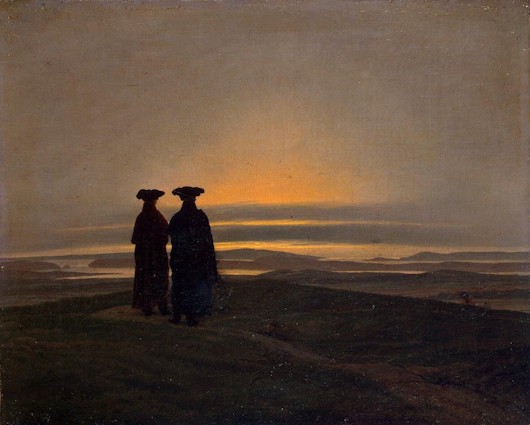
But the abnormalities in the sky were also responsible for the spectacular sunsets that inspired artists like Caspar David Friedrich and J M W Turner and the unceasing rain that provoked Mary Shelley to write Frankenstein and Lord Byron to write ‘Darkness’.
It’s no coincidence that, soon after this year of darkness, John Polidori published his book The Vampyre and the modern concept of this undead creature began to haunt the gothic imagination.
A memorial to Conscience
Sharon Jennings’s new play on Franz Jägerstätter
It is often said that one man’s terrorist is another man’s freedom fighter — but what inspires the man who refuses to fight? Is he a coward? A man of conscience? Or a mere contrarian who goes too far? Sharon Jennings’s new play, ‘Memorial’, explores the surprisingly not yet well-known story of Blessed Franz Jägerstätter, an Austrian executed during the Second World War for his conscientious objection to military service under Hitler.
This clever telling frames the martyr’s life mostly in retrospect, as the Mayor (played by the very capable Joe Cushley) assembles the leading villagers of St Radegund (actors Richard Evans, Carianne Dunford, Richard Ward, and Meg Depla-Lake) to compile the list of names to be etched permanently in stone on the village’s war memorial. The list is finalised but there is one name that cries out to be remembered: their poor lamented Franz.
We meet the main character (played by Felix Dunning) both through the memories of his rural contemporaries and his own letters home to his wife during basic training. For his refusal to take the military oath of absolute obedience to Adolf Hitler, he is thrown into prison. ‘Memorial’ reaches its apex in the confrontation between the uncomplicated but principled Franz and his cunning and clever military judge (a role brilliantly performed by Gary Merry). The chilling battle between good and evil is made all too real and the viewer is reminded of the battles of conscience ongoing in our own lives and the lives of thousands of others every single day.
In the end, it is through the lens of his fellow villagers that we remember Franz. Why can’t he just sign the dotted line? All the rest of us did. It’s a mere formality. We didn’t have a choice!
Deviant? Rebel? Hero? Whatever we think of men like Franz, in this play Sharon Jennings has carved and crafted a memorial to conscience — a healthy but haunting reminder of that freedom which always remains even when all others disappear.
The Accession
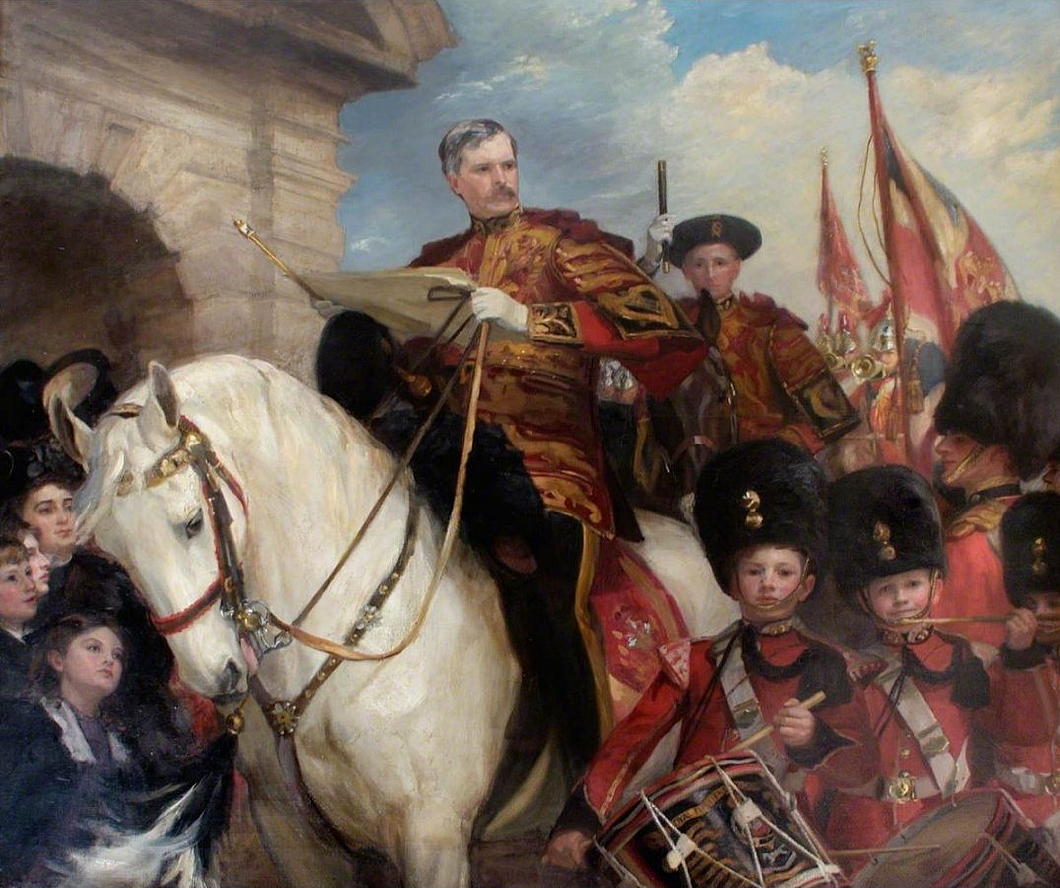
c. 1911; Oil on canvas, 68 in. x 76.9 in.
A triumphant painting, but a last hurrah. The central figure is Sir Nevile Wilkinson, the last ever Ulster King of Arms & Principal Herald of Ireland, exercising the duties of his office by proclaiming the accession of the new king at Dublin Castle.
The Anglo-Irish Treaty and its legislative acts neglected to make provision for transferring this ancient office to the new Irish Free State, but Sir Nevile carried on regardless for nearly two decades, even issuing two dozen grants of arms on the day before his death in 1940.
After his death, the Oireachtas created the office of the Chief Herald of Ireland to continue the granting of arms, and in some sense the Chief Herald is a spiritual successor to the Ulster King of Arms.
View from a Window
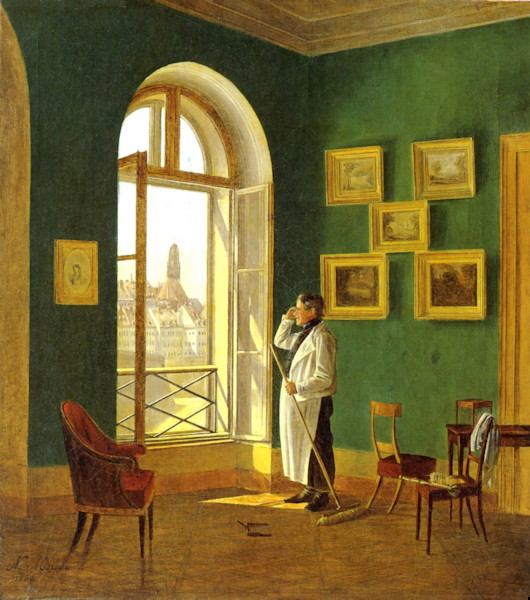
1830; Oil on canvas, 15½ in. x 13½ in.
I love the underappreciated Biedermeier, whether in art or literature, and this is a very Biedermeier painting.
The painter’s father, Charles de Moreau, was an architect – indeed he designed the very building that the son depicts here. As it happens, the painting now hangs in the Wien Museum am Karlsplatz, across from the main building of the Imperial & Royal Polytechnic Institute (now the Vienna University of Technology) which his father also designed.
Nikolaus painted this scene when he was twenty five, and he died just four years later not having reached his thirtieth year.
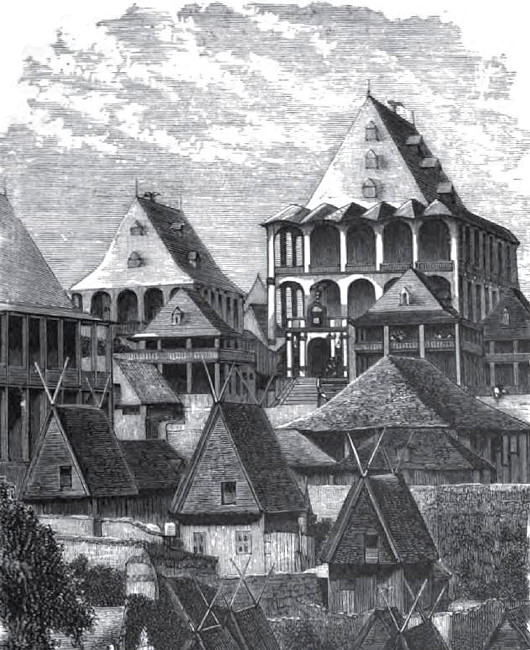
The Rova of Antananarivo
The Rova of Antananarivo
The Tranovola (left) and Manjakamiadana (right) in the Rova of Antananarivo.
The Manjakamiadana (“Where It is Pleasant to Rule”) was the royal residence, later pretentiously clad in stone by Protestant missionaries, while the Tranovola (“Silver House”) was where the nefarious Rainivoninahitriniony received foreign diplomats after the nobles’ coup of 1863.
His complicity in the supposed regicide of that year — no one’s really quite sure what happened to Radama II — eventually led to his downfall two years later. His younger brother Rainilaiarivony proved a more skilful political operator, succeding Rainivoninahitriniony as prime minister and arranging his own marriage to the last three queens of the Merina kingdom of Madagascar.
Interior of the Groote Kerk
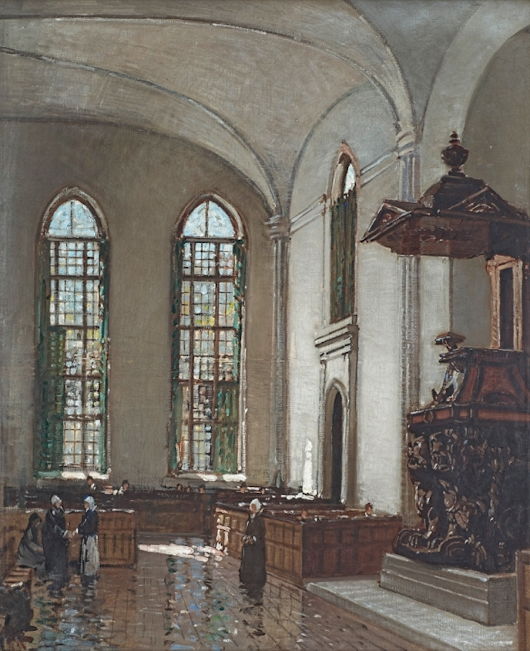
1916; Oil on canvas, 29½ in. x 24½ in.
Though the painting is just a hundred years old, Gwelo Goodman depicted the scene as if in the late seventeenth century — when the Groote Kerk was first built.
While the body of the church was replaced in the 1840s, the elders of this most senior Nederduits Gereformeerde gemeente wisely kept the stunning baroque pulpit, the work of the Cape’s greatest sculptor Anton Anreith.
No ‘Malvinas’ Here
Some difficulties of Latin place names in 1930s cartography
It’s no great secret I’m a lover of maps. When calling in to the Secretariat of State on the terza loggia of the Apostolic Palace in the Vatican the other day, I was very pleased to see the cartographic murals there, including the two hemispheres done by Ignazio Danti in the 1580s. Moving to the next interior offices, however, the visitor is greeted by a much more recent mappa mundi, dating from the 1930s, replete with the glamour of empire’s heydey. (more…)
Letter to the Editor
SIPPING a postprandial Coke last week while flipping through the Irish Times, my wandering eye was drawn towards that newspaper’s report on the Madrid congress of the European People’s Party, the grouping of Christian-democratic and centre-right political parties across the European continent (Madrid congress provides forum for delegates from EU centre-right parties, Suzanne Lynch, Irish Times, 22 October 2015). The correspondent first elucidates some of the purpose of these pan-European gatherings before going on to summarise a number of the issues raised. She ends, however, on a bit of a downer by describing Hungarian Prime Minister Viktor Orbán’s “lurch to the far right”, evidenced by his “clampdown on media and internet freedoms, apparent support for the death penalty and hardline approach to refugees”.
This breezy litany of crimes is little more than shoddy journalism. The alleged “clampdown” refers to proposed internet legislation which has been withdrawn while other media laws requiring balance reflect the U.S. broadcasting rules rescinded under Ronald Reagan. The “apparent support” for capital punishment is another damp squib: Orbán called for it to be debated as intellectual speculation — a canny “dog-whistle” political move to gain votes without requiring any legislative action or serious challenge to the E.U. ban on the death penalty. (It was abolished in Hungary at the fall of communism and there are absolutely positively no government plans to bring it back.)
The refugees allegation was the most interesting, however. As it happened, I had attended a small meeting of British MPs and Hungarian foreign ministry officials the day before Ms Lynch’s report was printed. The Welsh MP David Davies gave his first-hand account of visiting the refugee camps near the Hungarian-Serb border and reported that refugees were being well-looked-after, with the quality of the facilities on the whole at least as good as when he was in the British Army, often better. An advisor from the Hungarian Foreign Ministry briefed us on the general situation, which has calmed down immensely since the Serb border has been more or less closed. He noted that broadcast media across the continent showed footage of Budapest police’s treatment of migrants gathered at the railway station without pointing out that the police were responding to violent attacks from a small minority of migrants.
Proprotionate self-defence for officers of the law is the norm across Europe, but this has mattered little when it comes to depictions of Hungary: the bien-pensant official groupthink is that anything Hungary does is wrong, so long as Fidesz is in power. Luckily some voices of dissent have emerged. The novelist Tibor Fischer — no conservative — described in The Guardian the media treatment of Hungary as “hysterical” and “ignorant nonsense”.
Anyhow, I felt obliged to send off my “Disgusted of Tunbridge Wells” to the Irish Times and it’s very good of their letters staff to print a diverging (if abridged) opinion. The last letter to any editor I succeeded in having printed was in the Times Literary Supplement in 2008 about P.G. Wodehouse’s career in banking at H.S.B.C. Who knows what the next shall bring…
Search
Instagram: @andcusack
Click here for my Instagram photos.Most Recent Posts
- Brunel’s Unbuilt Capitol February 3, 2026
- Cricket at Fordham January 27, 2026
- Palacio Barolo Revisted January 14, 2026
- Learning to Love Liguria January 14, 2026
- Crux Alba No. 2 January 13, 2026
Most Recent Comments
Book Wishlist
Monthly Archives
Categories