Arts & Culture
About Andrew Cusack
 Writer, web designer, etc.; born in New York; educated in Argentina, Scotland, and South Africa; now based in London.
 read more
News
Blogs
Reviews & Periodicals
Arts & Design
World
France
Mitteleuropa
Knickerbockers
Argentina
The Levant
Africa
Cape of Good Hope
Netherlands
Scandinavia
Québec
India
Muscovy
Germany
Academica
Eton College Chapel
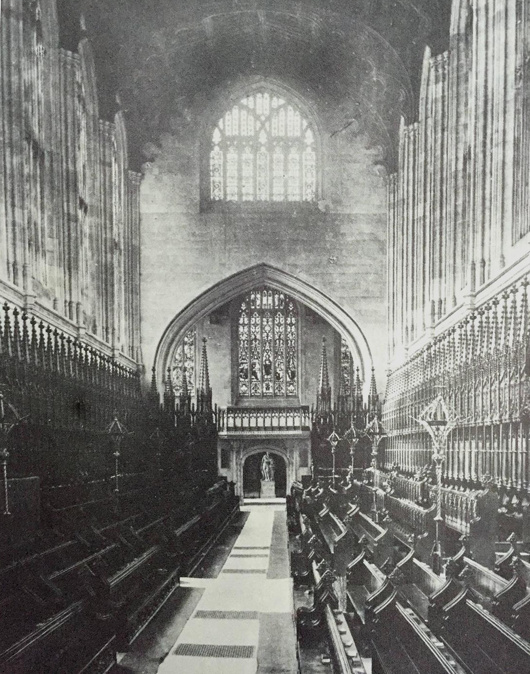
The interior of Eton’s chapel has changed markedly over the past hundred or so years, mostly so thanks to the rediscovery of the priceless medieval wall paintings which had been hidden for centuries by the choir stalls. Painted in the Flemish style in 1479–87, they were whitewashed over by the college barber in 1560 on orders from the wicked new Protestant authorities who had taken over this Catholic school.
The wall paintings were rediscovered in 1847 but it wasn’t until 1923 that the stall canopies in the photograph above were permanently removed, allowing the medieval paintings to be cleaned, restored, and permanently viewed.
In addition to this, in the 1880s (after this photograph was taken) the Great Organ was installed in the broad entrance arch between the narthex and the body of the chapel. The Victorians very handsomely painted it in the medieval fashion and it fits in rather well.
More recently, most of the stained glass was blown out by a German bomb landing in the adjacent Upper School in 1940. A decade later, deathwatch beetles claimed the wooden roof, which was then replaced by fan vaulting (of stone-fronted concrete) in line with the original intentions of Eton’s holy founder, King Henry VI.
A Chapel in Bavaria
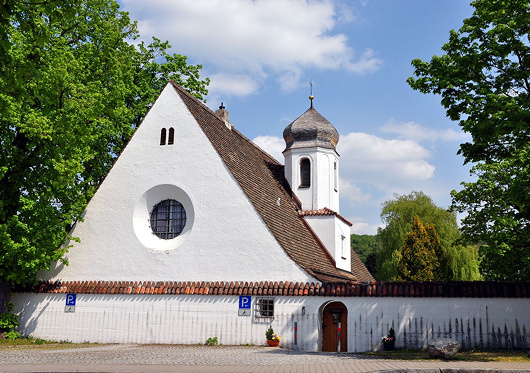
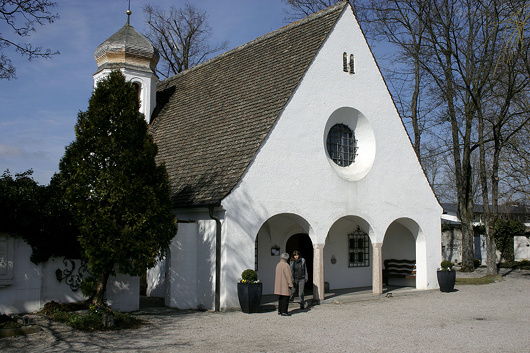
The Friedhofskapelle, or cemetery chapel, in Herrsching on the Ammersee in Upper Bavaria is a wonderful model of a small church or chapel.
It was designed in 1926 by Roderich Fick, who was a disciple of Theodor Fischer. Herr Fick participated in an expedition to traverse Greenland and joined the German colonial service in Cameroon, after the war moving to Herrsching in 1920.
During the Third Reich he was tasked with redesigning the city of Linz where Hitler had spent his childhood, but the dictator found Fick’s plans somewhat restrained, while Martin Bormann was constantly picking fights with the architect. The dominant style of the regime did not align with Fick’s preference for humble, unpretentious tradition in building design.
After the war he was sentenced to aid in the reconstruction of Munich, and also helped restore the magnificent Town Hall of Augsburg.
City Hall
These images of City Hall show the superb skill and eye for detail of the architectural photographer John Bartelstone — a licensed architect in his own right — and date from the completion of the most recent set of renovations in 2015.
Recent Reads
Few things are more enjoyable then a good old-fashioned take-down, and philosopher John Gray delivers the goods with this wonderful review of the latest book by the psychologist and “popular science” writer Steven Pinker, a “feeble sermon for rattled liberals”.
Meanwhile, the inestimable Pee Eee Gee – Pascal-Emanuel Gobry – argues that France’s reigning concept of laïcité is of much more recent vintage then its proponents claims.
The 1905 law ended public subsidies for religious institutions, but instituted no legal or cultural rule against public expression of religious values. So, why are we now told differently?
My only extremely tenuous brush with celebrity is that my Irish teacher (go raibh maith agat, Áine!) happened to tutor on-set the actress who played Luna Lovegood in the Harry Potter films. Among the sort of Dublin people who manage to continually drop into conversation that they went to Trinity, there is a (further) irritating tendency to look down upon the Irish language and use disdain for it as yet another attempt to assert their fragile sense of social superiority.
It is a contemptible and false dichotomy to think that if you appreciate Georgian architecture or Henry Grattan you can’t appreciate the Irish language or Éamon de Valera. Tiresome boors will always try to sell us such dichotomies, but we will not have them.
Paltry though my attempts to learn more Irish have been, what little I’ve picked up has been extremely rewarding and given better insight into the way English in Ireland is spoken and written. (Do the experts still call it “Hiberno-English”, I wonder?) It’s been a pleasure over the past however-long to see Michael Brendan Dougherty – one of America’s most talented journos and a fellow Irish New Yorker – share his own experiences with the Irish language.
MBD’s most recent books column at National Review explores two books concerning Irish, and moves from the Gaeltacht of the mind to a book about Leopolis/Lwów/Lviv/Lemberg in Galicia. City of Lions, incidentally, is published by Pushkin Press, which has proved an almost inexhaustible source of good reads (e.g. Oliver VII).
The recent read I most enjoyed, however, is Gordon Campbell’s delightful combative romp through English translations of the Bible, Making God Speak English. The professor sheds particular light on the thriving culture of pre-Reformation translations of holy writ in the vernacular in general and the English tongue in particular, bursting numerous bubbles of Protestant mythology along the way.
Par example:
Wyclif is a seminal figure in the long road to the catastrophe of the Reformation, with its legacy of decades of wars of religion and centuries of interconfessional animosities that live on in the twenty-first century, but the idea that he was the first translator of the complete Bible into English is a myth. The Middle English Bible, as Henry Ansgar Kelly calls it in his recent reassessment, was in Professor Kelly’s authoritative view neither the work of Wyclif nor of his Lollard followers, but was rather a wholly orthodox Bible with origins in the University of Oxford. It was immensely popular, because it enabled readers and their listeners to understand the readings from the Bible that they heard at Sunday Mass.
I learnt much from Prof. Campbell’s enjoyable submission and you might too.
Albert Power & Arthur Griffith
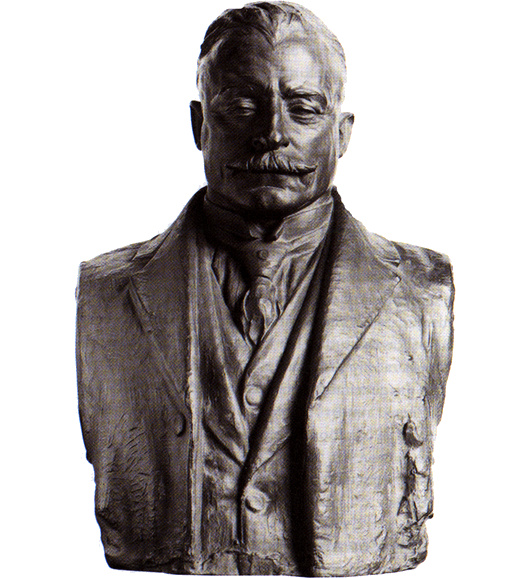
These days the Irish sculptor Albert Power is very rarely spoken of, and I can’t claim to know much about this bronze bust he did of the founder of the original Sinn Féin, Arthur Griffith.
It might be in the National Gallery in Dublin, though I didn’t notice it when I nipped in there with my sister the other day. More likely it is in Leinster House, where there are other busts of prominent figures of 1916-1921 by Albert Power and the better-known Oliver Sheppard.
Unlike Sheppard, Power was a Catholic, which is probably why he was chosen to sculpt the funerary monument of Archbishop Walsh of Dublin who died in 1921. He submitted designs for the new Irish coinage but the Free State wisely chose the far superior set designed by the English sculptor Percy Metcalfe.
As for the subject of this work of art, the Royal Irish Academy’s Dictionary of Irish Biography describes Griffith as “a lucid writer with a vivid turn of phrase”.
The first newspaper he edited was in South Africa where he took the helm of the Middelburg Courant in 1897, attempting to persuade the English-speaking readers with his Boer-friendly views. “I eventually managed to kill the paper,” Griffith wrote, “as the British withdrew their support, and the Dutchmen didn’t bother reading a journal printed in English – the Dutch were quite right.”
Griffith founded Sinn Féin more as a pressure group to support his pet project of reviving the “King, Lords, and Commons” of Ireland, influenced by the Austro-Hungarian Ausgleich of 1867. Independence, he argued, would satisfy the nationalists, while the shared monarchy would keep the unionists happy. In the event, neither half were much enthused by the prospect.
In the aftermath of 1916, Griffith came into his own as a leader and statesman rather than an agitating journalist. His role in the War of Independence and the Treaty negotiations is well known. Without his persuasive arguments in debates, it is highly unlikely the Dáil would have approved the Treaty.
Gloomy civil war soon overshadowed everything, but Griffith died of a cerebral haemorrhage on 12 August 1922 – just ten days before Collins was killed in ambush at Béal na Bláth.
Pretoria Philadelphia
Andries Pretorius grew up on his father’s farm near Graaf-Reinet in the Cape of Good Hope, but the Great Trek took him (and many other Boers) into the South African interior. Pretorius’s victory, against all odds, over Dingane’s Zulu forces at Blood River in 1838 was to be commemorated from that day forevermore by Afrikaner piety as Geloftedag — the Day of the Vow. When the South African Republic (ZAR) was established in 1852 the capital was Potchefstroom, but Andries’s son Marthinus founded the city of Pretoria Philadelphia in 1855 to be the new capital of the Transvaal.
The four colonies at the end of the continent were conjoined in 1910 as the Union of South Africa, with Pretoria (as it was soon shortened to) named the seat of the executive and thus the nation’s capital. The parliament met in Cape Town and the highest courts in Bloemfontein so that, in some sense, the new nation had three capitals — administrative, legislative, and judicial. As the seat of the visible sovereignty of the realm, the Governor-General, as well as the Prime Minister’s administration and cabinet, however, it was Pretoria that held precedence.
We’ve already examined Kerkplein — Church Square — at the heart of the city, but the rest of the capital is worth exploring further. (more…)
Lionel Smit
Suid-Afrikaanse portretskilder
Een van die mees geskoolde portretskilders vandag is die Pretoriaanse kunstenaar Lionel Smit (geb. 1982).
’n Skilder en beeldhouer, Mnr Smit woon en werk in Kaapstad en is die wenner van ’n ministeriële toekenning vir bydrae tot visuele kuns van die Wes-Kaapse regering. Sy werk is reeds ingesluit in die visuele kunste eksamen vir die Nasionale Senior Sertifikaat. Nie sleg vir ’n kêrel in sy dertigerjare!
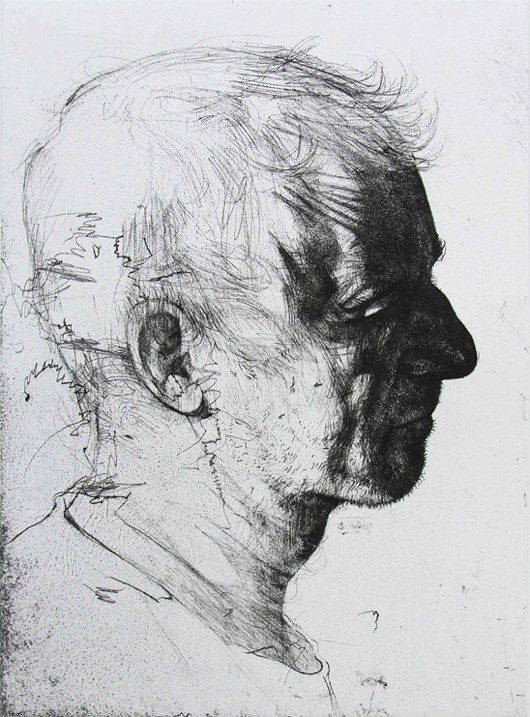
Smit se skilderye herriner my aan die werk van die Engelse skilder Catherine Goodman. Hier is net sommige van sy portrette.
Physical Energy
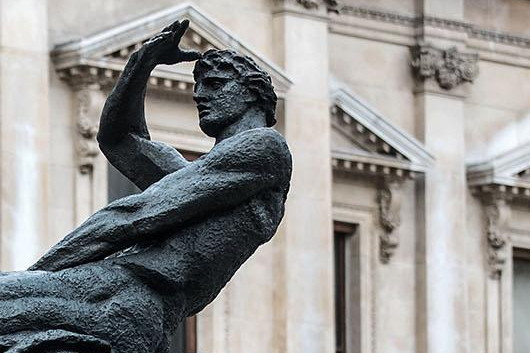
I came across it by surprise one day, walking through the park. It was almost eerie — all the more so for being unexpected. George Frederic Watts’s sculpture “Physical Energy” was well known to me when I lived in South Africa as it graces the Rhodes Memorial in Cape Town — a rough Greek temple staring out northwards into the vast continent of Africa, as Rhodes himself liked to do.
Unknown to me, another cast of the statue was made and given to the British government, which placed it in Kensington Gardens. It was this copy I stumbled upon while traversing the park to Lily H’s drinks party in the garden of Leinster Square.
It is one of the most aptly named sculptures I can think of, as there is a raw brutish physicality to it, and somehow a sense of tremendous force, power, and energy. Watts was primarily a painter, so that he achieved this great work of sculpture is all the more remarkable. I don’t actually like it: there is something uncomforting and almost vulgar about it, or perhaps just taboo. (Like Rhodes himself.) But it is amazing all the same.
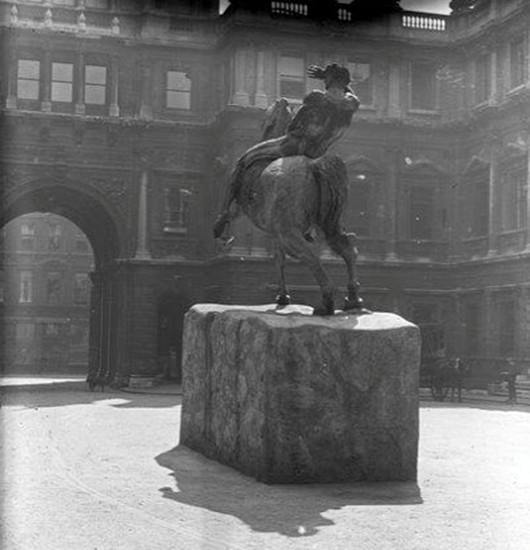
While “Physical Energy” is primarily associated with Cecil Rhodes it was not commissioned in his honour. Watts conceived it in 1886 after having done an equestrian statue for the Duke of Westminster. The first cast wasn’t made until 1902 and was exhibited at the Royal Academy for the first time in 1904 (above).
From there it made its way to Cape Town where it stands today a vital component of the monument to Rhodes. (It even features as the crest on Rhodes University’s coat of arms.) The second cast from 1907 is this one that sits in Kensington Gardens, while a third cast from 1959 now sits beside the National Archives of Zimbabwe in Harare.
This year the Watts Gallery in Surrey commissioned a fourth cast to commemorate the two-hundredth anniversary of the artist’s birth — and that cast now flaunts its bronze in the courtyard of the Royal Academy. It remains on view until the Cusackian birthday in March 2018.
“Get me ze Führer!”
Stereotypes of Nazi generals in British war films
“The reason for my uniform being a slightly different colour to yours
is never explained.”
The British are, of course, obsessed with the Nazis. There are many reasons for this, amongst which we must include the large number of really quite good war films produced during the 1950s and 1960s.
For some indiscernible reason these movies have the virtue of being eternally rewatchable and many a cloudy Saturday afternoon has been occupied by Sink the Bismarck!, Where Eagles Dare, or The Colditz Story.
The genre also deploys with a remarkable regularity a number of familiar tropes of ze Germans which the above clip from a British comedy sketch programme (introduced to me by the indomitable Jack Smith) aptly mocks.
Gallen-Kallela at the National Gallery
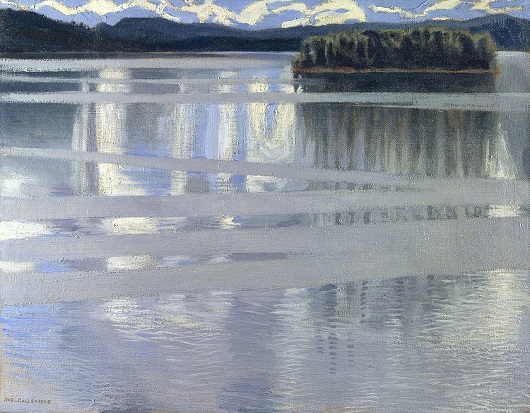
From November 15 until February of next year, the National Gallery here in London will mark the centenary of Finnish independence with a showing of the works of Akseli Gallen-Kallela. The Finnish painter is best known for his depictions of the Kalevala, the national epic compiled by Lönnrot and an influence on Tolkien.
The National Gallery, however, has focused on bringing together all four versions of Gallen-Kallela’s painting of Lake Keitele (alongside similar works by the artist). As a Swedish-speaking Finn, he signed the painting with his original Swedish name, Axel Waldemar Gallén, which he later Finnicised in 1907.
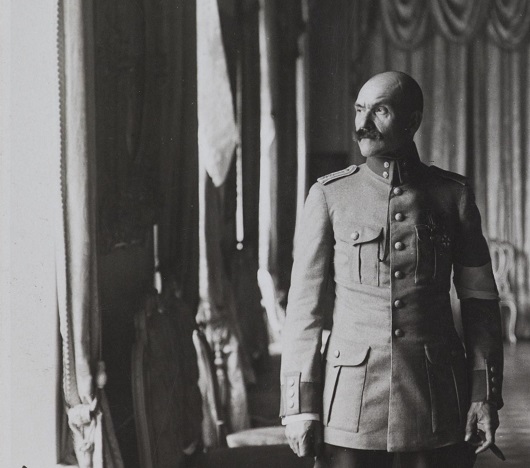
During Finland’s Civil War, Gallen-Kallela and his son Jorma both took up arms on the side of the Whites, who defended the country from the Soviet-backed Reds. The artist (below) served as adjutant to the regent of the kingdom, Gen Mannerheim, who asked him to design the flag, uniforms, and decorations of the new state. His student Eric O. Ehrström designed a crown for the kingdom, but eventually a republican form of government was decided upon and it wasn’t til the 1980s that a mock-up of the crown was actually crafted.
Having lived in Berlin and Kenya as well as having toured the United States, Gallen-Kallela’s influences were varied but he found the story and scenery of his homeland the most compelling of all. A fitting tribute to Finland in her hundredth year of statehood.
The ‘Other Modern’ in Portugal
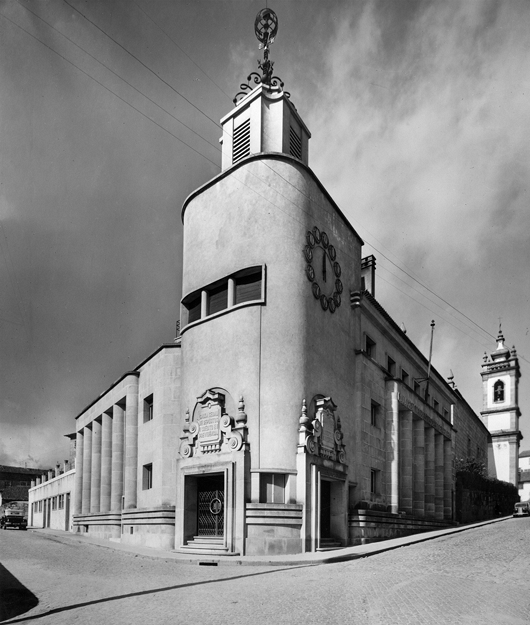
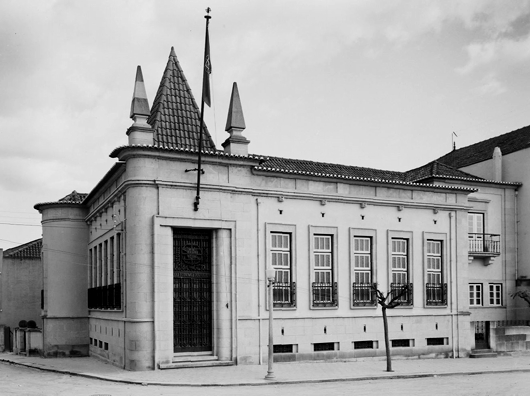
Guarda, Portugal; 1939–1942
[A] core aspiration can be discerned that runs through the entire [architectural] output of the “Estado Novo”, particularly from the second half of the 1930s. It is a catchphrase, never defined with absolute clarity and therefore tested by approximation, trial and error: the demand for a national modern style, a construction style that was at the same time contemporary and suited to the locality and/or specificity of the country. This agenda accommodated various formulations, depending on the evolution of the regime itself, the type of public building in question, the place for which it was intended, the profile of the people responsible for its appraisal and the margin granted to the architect-designer. […]
Salazarism never upheld anachronism or the practice of an archaeological type of architecture. It did not reject modernity entirely, but disliked disaggregating, standardising, stateless foreignness, embodied in its view by the architectural abstractionist internationalism (dubbed “boxes”). An alternative modernity was thus aspired to and achieved; far from being an exclusive diktat of the state, this idea of an alternative modernity pervaded the discourses of the timid specialist press, the opinions generally expressed by the civil society and the dilemmas of the architects themselves.
RIHA Journal 133, 15 July 2016
See also: The Other Modern
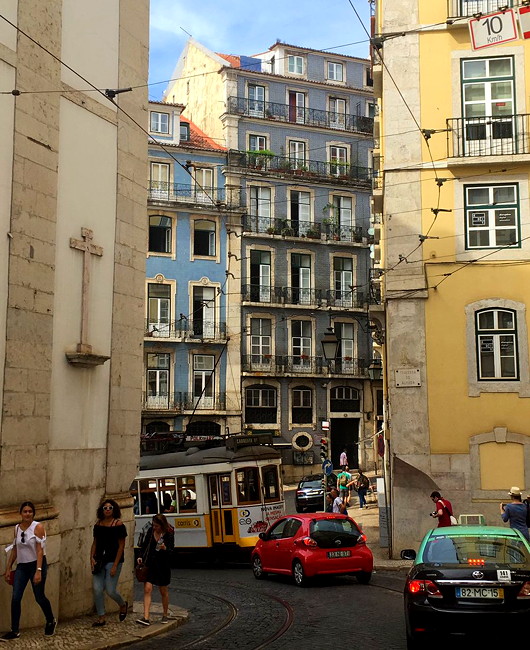
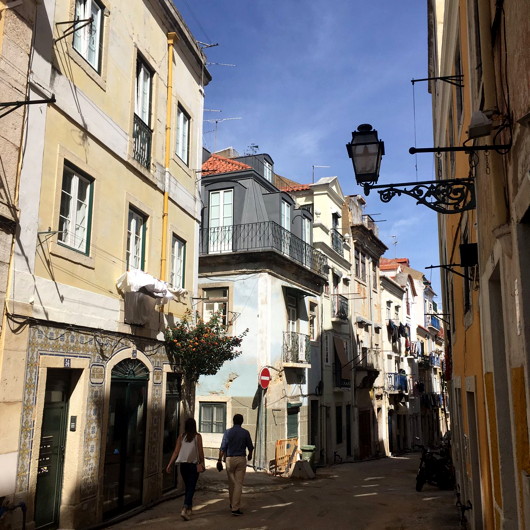
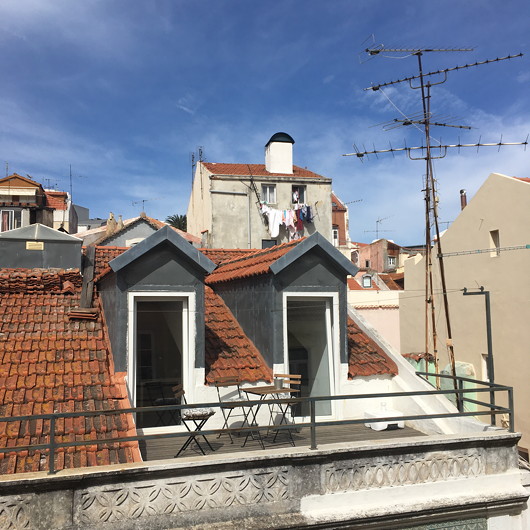
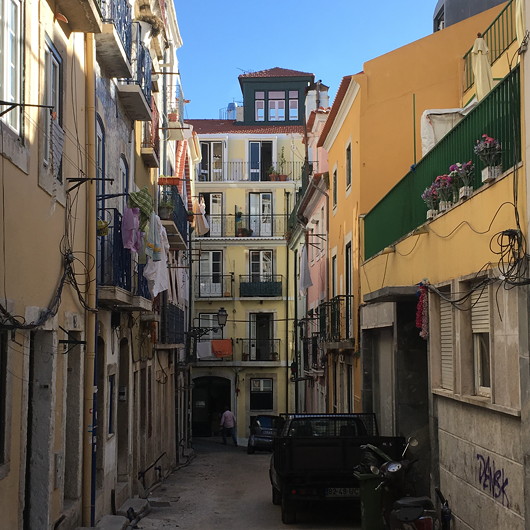
Lisbon
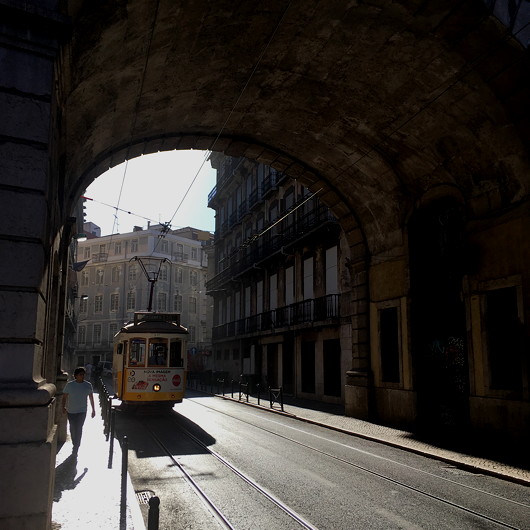
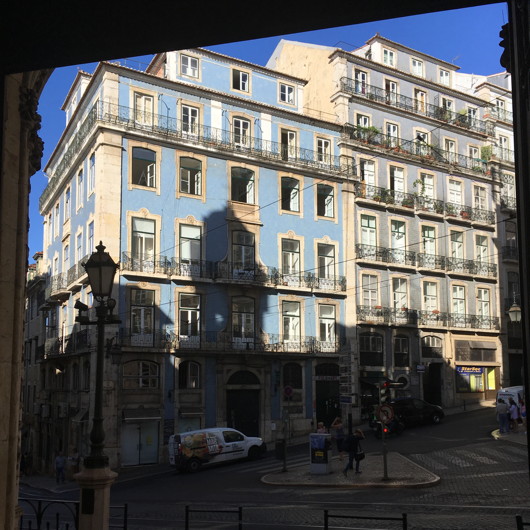
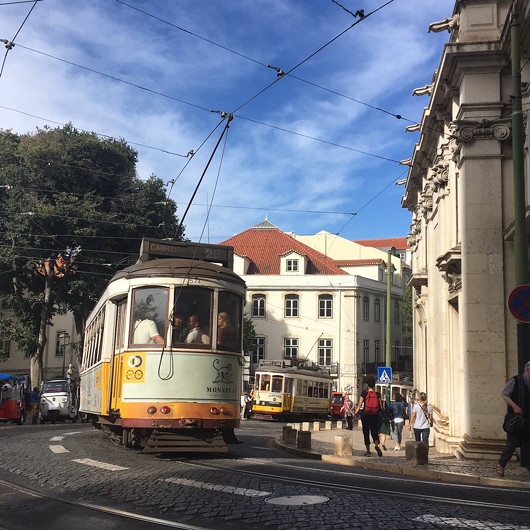
One of the finest cities I have had the privilege of visiting, only lightly touched by the grim hand of modernism.
Justice in the Royal Gallery
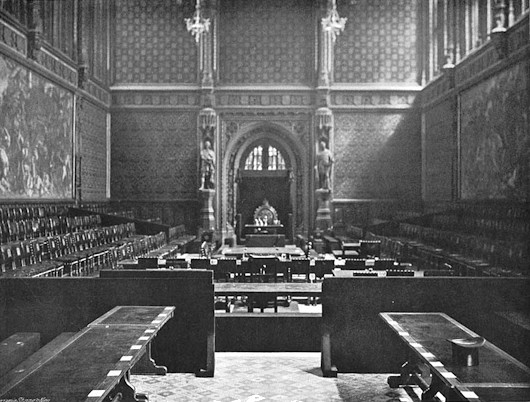
One of the great triumphs of Magna Carta was the assertion of the right of those accused of crimes to trial by one’s peers, or per legale judicium parium suorum if you insist on the Latin. For commoners this meant trial by other commoners, but for peers it meant just that: trial by other peers of the realm. It was a bit murkier for peeresses, though after the conviction for witchcraft of Eleanor, Duchess of Gloucester, (sentence: banishment to the Isle of Man) statute was passed including them in the judicial privilege of peerage.
Thanks to the ’15 and the ’45, there were a number of trials in the House of Lords in the eighteenth century, including that of the Catholic martyr Earl of Derwentwater. The whole of the nineteenth century, however, witnessed but one: the 7th Earl of Cardigan was acquitted of duelling by a jury of 120 peers. In 1901 the 2nd Earl Russell was found guilty of bigamy, and the last ever trial came in 1935 when the 26th Baron de Clifford was found not guilty of manslaughter.
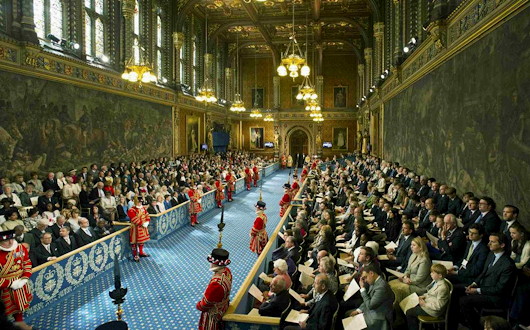
Cardigan’s trial was in the temporary Lords chamber while the last two trials took place in the Royal Gallery of the Palace of Westminster (central to current debates over renovation plans). For Cardigan’s trial the Lord Chief Justice of the Queen’s Bench was appointed Lord High Steward for the occasion, while for the final two the Lord Chancellor was likewise appointed to the role in order to be presiding judge with the Attorney General prosecuting the case.
The Royal Gallery is primarily used for the State Opening of Parliament (as above) and for the occasional address to both Houses of Parliament when important figures are invited to do so. De Gaulle was famously invited to speak here to both houses rather than in the larger Westminster Hall. It is thought that this is because the walls of the Royal Gallery feature two large murals, one of the Battle of Trafalgar, the other of the Battle of Waterloo – both British victories over the French.
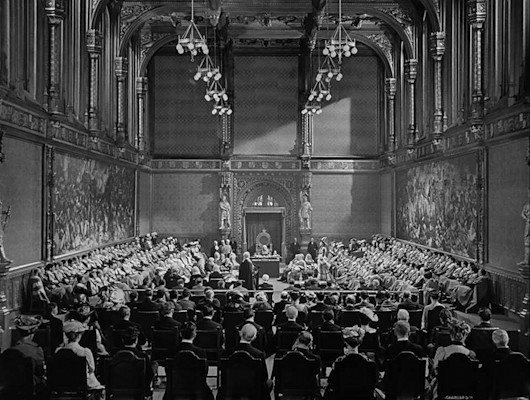
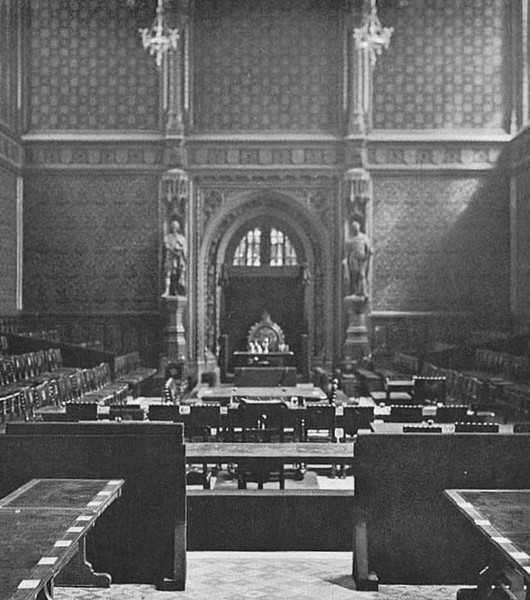
The most famous trial in the Royal Gallery was fictional. In the 1949 Ealing comedy “Kind Hearts and Coronets”, the 10th Duke of Chalfont is tried for the one murder in the film’s plotline he didn’t actually commit. Ealing Studios did a mock-up of the chamber for the occasion (above), which compares reasonably accurately with the Royal Gallery as set up for the Baron de Clifford’s trial in 1936 (below).
The Lords, however, were uncomfortable with exercising this judicial function and passed a bill to abolish the privilege in 1937. The Commons, facing more serious tasks, declined to give it any attention. In 1948, the Criminal Justice Act abolished trials of peers in the House of Lords, along with penal servitude, hard labour, and whipping.
Hougaard Malan
South African Landscape Photographer
When I lived in South Africa I began to understand the deficiencies of photography. The scenery in which one we had the privilege of acting out “the foolish deeds of the theatre of our day” (as Mr Mbeki put it in one of his better speeches) was stunning, but on the few occasions I bothered to put my Leica to good use the results were disappointing. You’d look at a photograph that was admittedly beautiful but still think to yourself “But in real life it was a thousand times more beautiful than that!” Needless to say, my own lack of skill as a photographer is the most obvious cause.
Hougaard Malan, meanwhile, is one of the few photographers who manages to almost, nearly capture the beauty of the South African landscape. In each and every shot — and some of these places are well known to me — the scale and drama of the location shines forth.
“Growing up, my grandmother always gave me illustrated encyclopedias and books about earth’s natural history that were filled with fantastic landscape images,” Mnr Malan says. “I spent many afternoons paging through these books and marvelling at nature’s beauty. Few things in life made me feel more alive than a landscape that engaged all my senses – seeing the rhythmic rolling of waves in a bay, smelling the coastal flora, hearing and feeling the ocean crash against the cliffs and then tasting the salt in the air.”
Mnr Malan’s website can be found here but here is just a small sampling of the photographs of southern Africa and well beyond which this talented man has taken.
From Realm to Republic
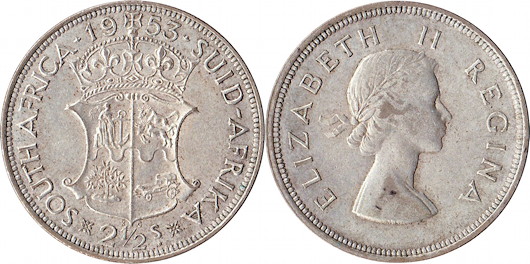
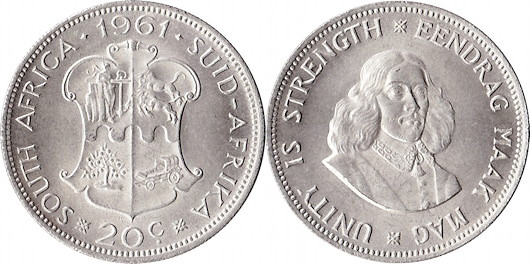
South Africa’s transition from a monarchy to a republic coincided with a change of currency. Out went the old South African pound (with its shillings and pence) and in came the decimilised rand.
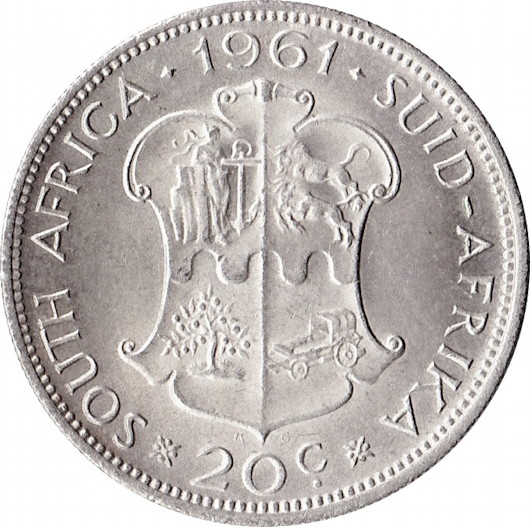
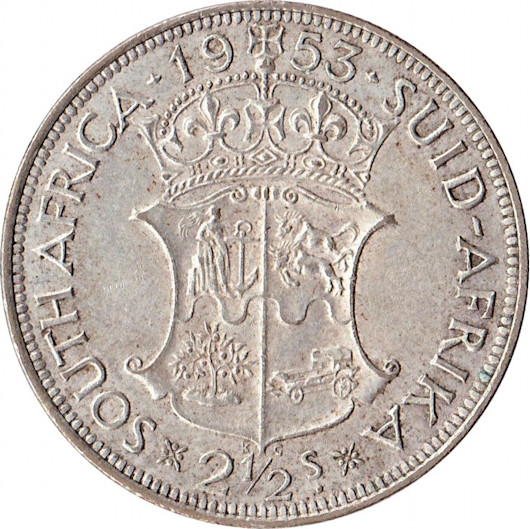
Luckily the republican government had the good taste to commission George Kruger Gray, responsible for the country’s most beautiful coinage, to design the new coins. HM the Queen was replaced by old Jan van Riebeeck, and the country’s arms were deprived of their crown.
Challoner’s House
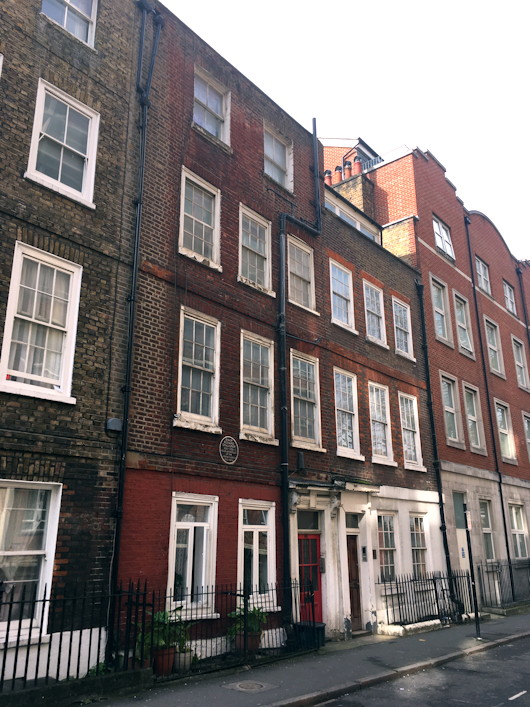
Challoner’s House — Rather humble for an episcopal palace, but such was the function of No. 44, Old Gloucester Street in Holborn during the time of Bishop Richard Challoner.
If it seems an odd spot for London’s Catholic bishop, it can be explained by its close proximity to the chapel of the Sardinian Embassy off Lincoln’s Inn Fields. At this time, of course, the Mass was still illegal and the only places Catholics in London could worship were the embassies of the Catholic nations. To protect the underground bishop, the house in Old Gloucester Street was actually rented in the name of his housekeeper, Mrs Mary Hanne.
After a perfect breakfast on Saturday morning the sun was shining so I decided the three-and-a-half miles home from St Pancras were best managed on foot. If architectural or historical curiosities are your fancy then foot is the way to travel, and so it was by pure chance that I stumbled upon No. 44. It seemed particularly appropriate that the night before a whole gang of us — Brits, Swedes, Italians, etc. — had been drinking in the Ship Tavern in Holborn where Bishop Challoner was known to offer the occasional clandestine Mass. (more…)
The Old Scots College
Via delle Quattro Fontane, Rome
Next month I’m off to Rome and the last time I was there I happened to walk past the old Scots College on the via delle Quattro Fontane. The Pontifical Scots College is probably the oldest Scottish institution abroad and certainly one of the most important, both historically and today. As Scotland’s primary seminary it has — almost literally — helped form the soul of the country, particularly during times of widespread persecution back in the mother country.
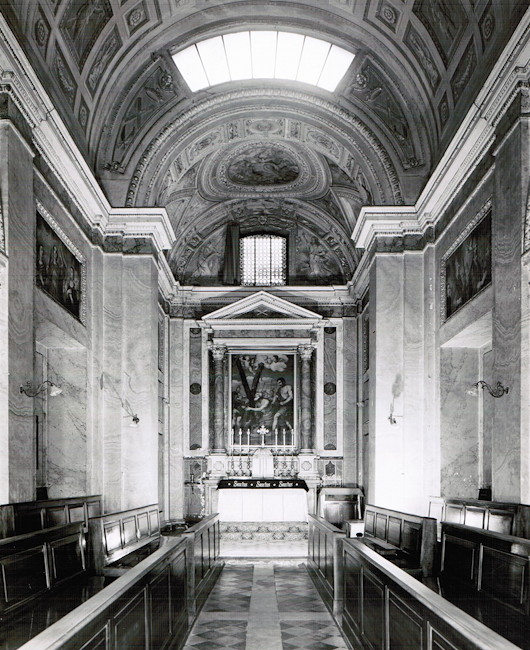
The church of Sant’Andrea degli Scozzesi (St Andrew of the Scots) was built in 1592 during the reign of Clement VIII, and early in the seventeenth century the church and neighbouring hospice were given over to the Scots College which had been founded a few years before. The seminary building itself was (I believe) built much later, in the nineteenth century after the college briefly ceased instruction due to the tumult of the French Revolution.
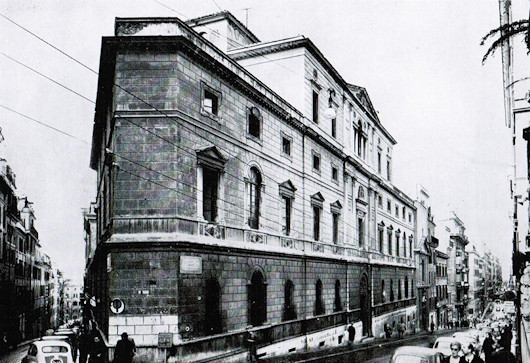
Sadly the building was not very well maintained and by 1960 it was falling apart. It was decided to sell the old college buildings in the Via delle Quattro Fontane and move to a larger site out the middle of nowhere in the Via Cassia. The move was made in 1964, and the Scots College has remained there ever since, while the old college housed a bank for many years and more recently a lawfirm.

Fillon: Which Right?
A Rémondian Analysis of the French Presidential Candidate
One of the most significant contributions of the historian and political scientist René Rémond was his theory regarding the tendencies of the French right wing. He contended that, broadly speaking, there are three right wings in France: legitimist, bonapartist, and orleanist. These terms are not bound by their historic use, but rather (Rémond argued) serve as useful guides to understanding French conservatism today.
Gaullism, for example, with both its populism and its reliance on the authority of a charismatic leader, is classified as bonapartist. Social conservatism, meanwhile, with its affinity for the Church and for tradition, comes in under legitimism. And economic liberalism — the bourgeois supremacy of the markets — is orleanist.
What to make of the current presidential candidate of the French right, M François Fillon? The Québécois website Dessinons les élections (“Let’s draw the elections”) sought to apply a Rémondian analysis of Monsieur Fillon in one of its weekly cartoons (by Frédéric Mérand & Anne-Laure Mahé).
Their conclusions are as follows:
Legitimism: 60%
– social conservatism
– Christian values
– order and traditionOrleanism: 30%
– economic liberalismBonapartism: 20%
– a sense of the State
– idea of the providential man with reference to de Gaulle
Of course, many now think that, due to the usual scandals, Fillon is yesterday’s man and that Macron is the man of the hour. The two are chalk and cheese. Fillon is the family man from the country, loves hunting, and clings to the values of the Church. Macron is a socialist énarque and investment banker who married one of his school teachers (twenty-four years his senior).
The elephant in the room: Madame Le Pen. The leader of the Front national will, there is almost no doubt, top the first round of the election but then, in the second round, will have to face whichever other candidate gains the next highest number of votes. Whoever that candidate is will almost certainly gain all the anti-frontiste votes and be propelled to victory and the Elysée.
At the moment, it looks like the second candidate will only have to win around 22 per cent of the vote in order to effectively gain the presidency. Such a low level of actual support is one of the things the 1962 changes to the constitution sought to prevent, but when faced with an FN candidate as in 2002 or (presumably) this year the two-round system fails to prevent this.
As usual, the conservatives are calling for change and the progressives arguing for stasis, but it remains to be seen which option France will choose.
The slums of the Louvre
We are so used to the now-familiar image of the palais du Louvre — with its central wing and flanking arms wide open to the Jardin des Tuileries — that it’s easy to forget just how recent a creation this ensemble is. The palace began as a square chateau expanding upon the site of the medieval citadel. The Tuileries it eventually stretched towards was then an entirely separate palace. In-between the Louvre and the Tuileries was a whole neighbourhood of buildings, streets, alleyways, and squares.
Henri IV built the grande galerie on the banks of the Seine connecting the Old Louvre to the Tuileries by 1610, but the Louvre we know today really only came together under Napoleon III in the 1850s.
Until that point, a slum was built right up to the walls of the Palace, and even within the old courtyard. Balzac, predicting that one day all this would be cleared, noted the slum with amusement as “one of those protests against common sense that Frenchmen love to make”. (more…)
Search
Instagram: @andcusack
Click here for my Instagram photos.Most Recent Posts
- Brunel’s Unbuilt Capitol February 3, 2026
- Cricket at Fordham January 27, 2026
- Palacio Barolo Revisted January 14, 2026
- Learning to Love Liguria January 14, 2026
- Crux Alba No. 2 January 13, 2026
Most Recent Comments
Book Wishlist
Monthly Archives
Categories