Architecture
About Andrew Cusack
 Writer, web designer, etc.; born in New York; educated in Argentina, Scotland, and South Africa; now based in London.
 read more
News
Blogs
Reviews & Periodicals
Arts & Design
World
France
Mitteleuropa
Knickerbockers
Argentina
The Levant
Africa
Cape of Good Hope
Netherlands
Scandinavia
Québec
India
Muscovy
Germany
Academica
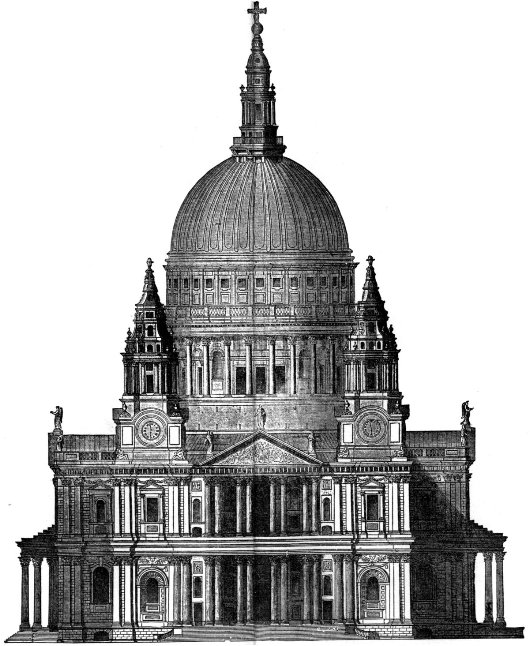
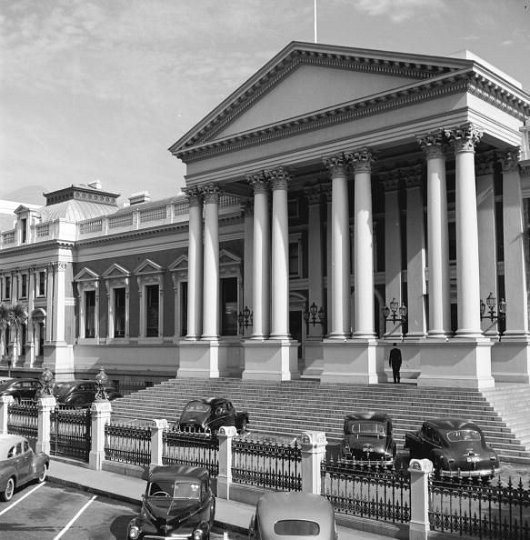
The Houses of Parliament, Cape Town
Die Parlementsgebou, Kaapstad.
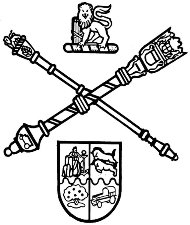
The insignia of the Parliament of South Africa, showing the Mace and Black Rod crossed between the shield and crest of the traditional arms of South Africa.
CAPE TOWN IS justifiably known as the “mother-city” of all South Africa, paying tribute to that day over three-hundred-and-fifty years ago when Jan van Riebeeck planted the tricolour of the Netherlands on the sands of the Cape of Good Hope. Numerous political transformations have taken place since that time, from the shifting tides of colonial overlords, to the united dominion of 1910, universal suffrage in 1994, and beyond. The history of self-government in South Africa has unfolded in a well-tempered, slow evolution rather than the sudden revolutions and tumults so frequent in other domains. No building has born greater witness to this long evolution than the Parliament House in Cape Town.
The British first created a legislative council for the Cape in 1835, but it was the agitation over a London proposal to transform the colony into a convict station (like Australia) that threw European Cape Town into an uproar. The proposal was defeated, but the colonists grew concerned that perhaps they were better guardians of their own affairs than the Colonial Office in far-off London. In 1853, Queen Victoria granted a parliament and constitution for the Cape of Good Hope, and the responsible government the Kaaplanders so desired was achieved. (more…)
Krummau, Crown of the Moldau
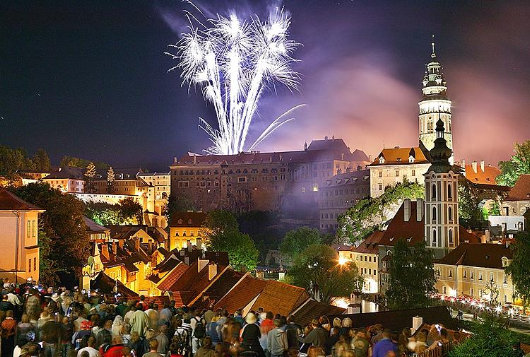
BY NOW THE denizens of this little corner of the web are surely aware of Krummau, the splendid castle and town that towers above the banks of the Moldau river in Bohemia. I was never particularly interested in Bohemia until Fr. Emerson came up to St Andrews and gave a talk on the Hapsburgs. Unfortunately, this was before they began to record the talks (and offer them online) as it was an excellent brief lecture that I’d love to revisit. Now Bohemia is one of my passions, in addition to an increasingly large burden of passions (Scotland, New York, Argentina, the Netherlands, South Africa, France, Hungary, Transylvania, Canada, Scandinavia, … ). The architecture is superb and varied, and of course the Duke of Krummau is none other than a certain Prague pol. The complex is no longer in the Schwarzenberg family, but is instead now the State Castle of Český Krumlov.
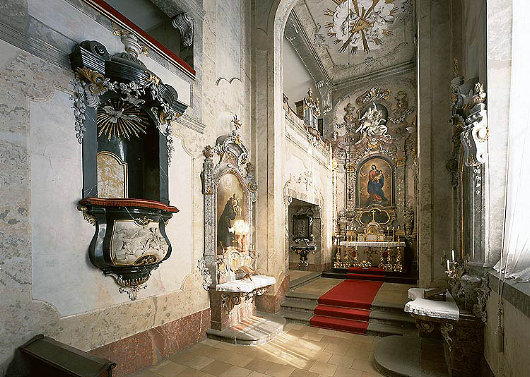
The Chapel of Saint George in the Castle once contained the skull and bones of Pope St. Callixtus I. The remains were obtained by the Emperor Charles IV, who gave them to the Rosenberg family who built the castle, from whom they (and the castle itself) passed to the Schwarzenbergs, only to be lost after 1614. Nonetheless, the skull of an unknown North African martyr came here in 1663, and tradition donated to the unknown saint the name of Callixtus also.

The Nook, Stellenbosch
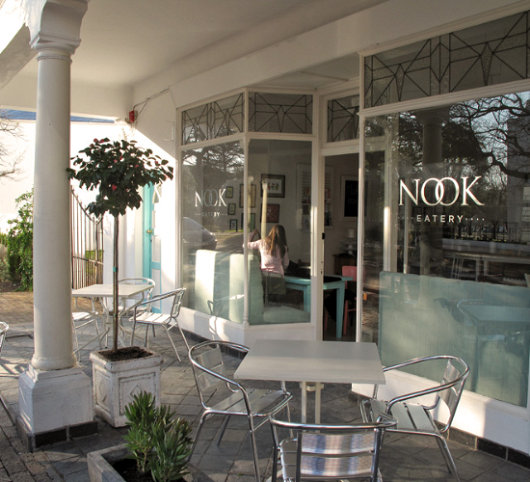
This place opened up in Stellenbosch just before I left South Africa, but I never had the chance to check it out. I like to look of the place, even though the colours are a bit too subdued for my taste. (more…)
Unbuilt Pugin in Boston
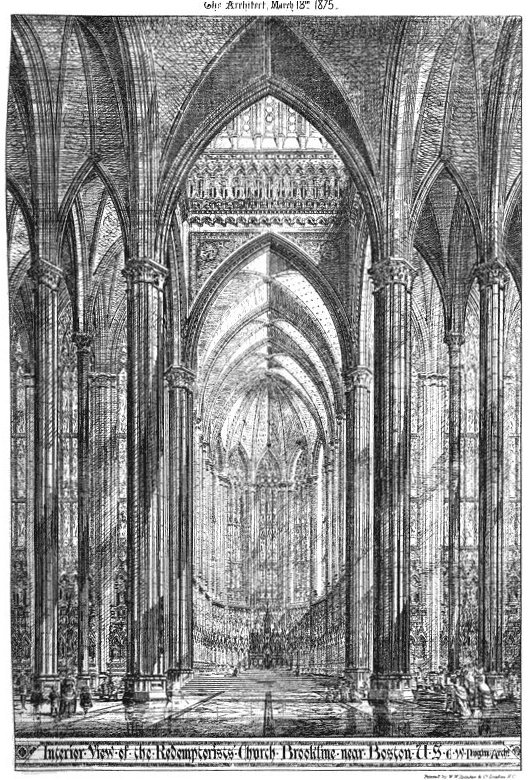
Unbuilt proposal for a Redemptorist church in Boston by Edward Welby Pugin, eldest son of Augustus Welby Northmore Pugin.
An Early Proposal
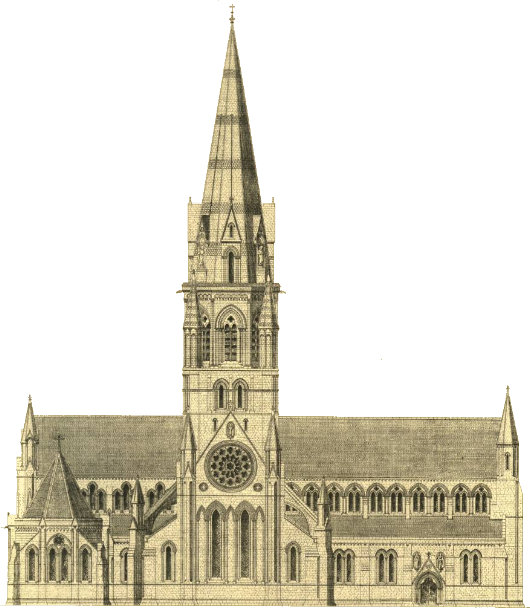
The Cathedral Church of St. Mary (Scottish Episcopal), Edinburgh.
A Viennese Study
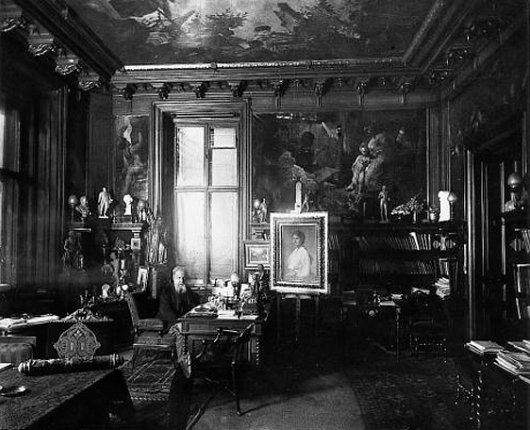
Nikolaus von Dumba, in the study of the Palais Dumba on the Ringstraße in Vienna. (more…)
The Church of Howard Johnson
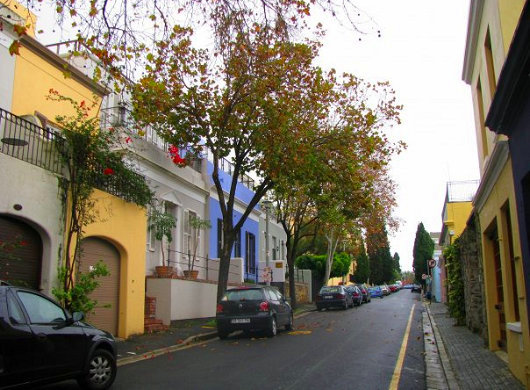
The Rhodes Memorial
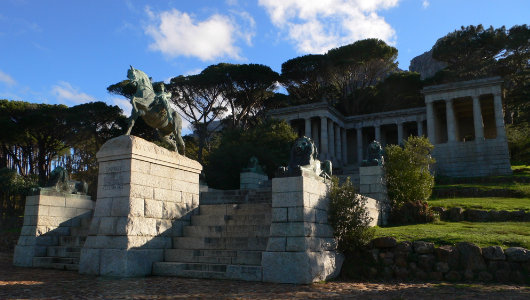
PERCHED AMID THE bluegum trees on the slopes of Devil’s Peak in Cape Town is the memorial to one of the most brilliant & cunning men the world has ever produced. Cecil John Rhodes may have been born in Bishop’s Stortford, England, but his worldly glories all emanated from the Cape of Good Hope, and so it’s appropriate that his memorial stands here in Cape Town. His first commercial enterprise in South Africa was founding the Rhodes Fruit Farms (now Rhodes Food Group) which still exist on the road from Stellenbosch to Franschhoek, and has since expanded throughout the Western Cape, and to the Transvaal and Swaziland. But it was his creation of the diamond monopoly De Beers out of the Kimberley mines that made him one of the wealthiest men in the world. Ten years after being elected to the Cape Parliament, he was made Prime Minister of the Cape in 1890, but his catastrophic and illegal attempt to seize the independent Transvaal in 1895 forced his resignation from politics in disgrace. (more…)
The University of Dublin
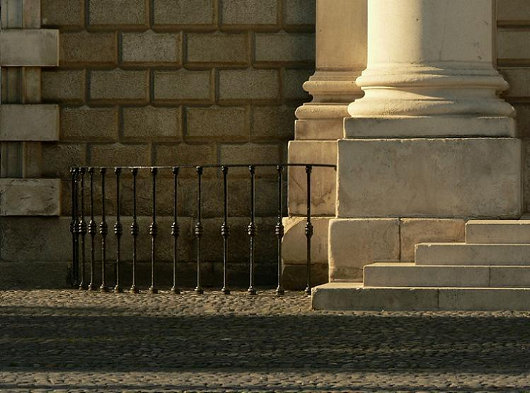
Founded in 1592, the University of Dublin is the youngest of the ancient universities of Great Britain & Ireland. (It’s ten years younger than the next youngest, Edinburgh, and nearly five-hundred years younger than the oldest, Oxford). On Archiseek, an Irish internet forum dedicated to architecture, there is a user named ‘grahamh’ who posts, from time to time, photographs he has taken from around the fair city of Dublin, of which those presented here are a selection. The University of Dublin is much more commonly known as Trinity College, Dublin, as the university has just the one college, unlike the multi-collegiate universities of Oxford, Cambridge, and elsewhere. (more…)
Wisconsin Baroque, Priests, and Paper Architecture
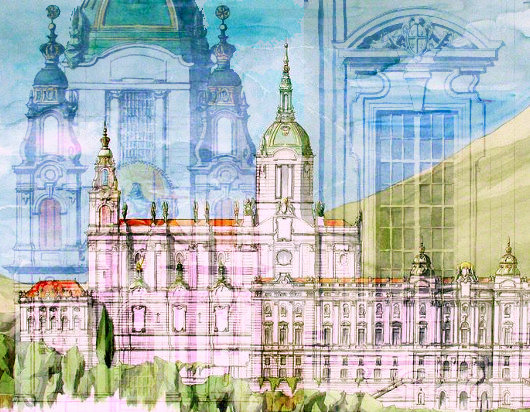
Matthew G. Alderman
Taken from: Dappled Things, Ss. Peter & Paul, 2009
MY FAVORITE BUILDINGS never got around to being built. Some, like Sir Edwin Lutyen’s majestic design for Liverpool Cathedral, fell victim to budget cuts and the vagaries of history. Others were consigned by good taste, or occasionally outright timidity, to competition honorable mentions, and still others, like numerous student proposals or visionary dreams—like Boulée’s alarming hemispherical cenotaph for Newton, or an imaginary papal palace in Jerusalem cooked up by one of the votaries of the Vienna Sezession—weren’t terribly serious to begin with, unfortunately.
Note that I say favorite buildings, my own personal favorites, rather than the best or the most beautiful. Lutyens’ and Boulée’s fantasies may cross into that sublime territory of beauty by the power of their imaginative vision, but so many of the others owe their charm to their dreamlike extravagances, their intriguing if perhaps incomplete answers. An architect’s education lies in gathering up such fragmentary answers for the questions he will face down the road from clients and patrons. And therein lies the lure, and the value, of paper architecture.
I, like most of my colleagues, spent much of my time in school devising such useful fantasies, sometimes grand, sometimes small. Yet, they were not castles in the air. Each, while often existing in something like the best of all possible worlds in terms of budget and client, was grounded by an actual site and the laws of nature.
The most elaborate of all was my thesis project. It was an imaginary American seminary for a very real religious order, the fast-growing Institute of Christ the King, Sovereign Priest. This new congregation, dedicated to evangelization through the beauty of art, music, and the traditional Latin Mass, started out in, of all places, Gabon in Africa, but its present headquarters lies in Tuscany, in a villa bursting at the seams with seminarians in formation. While their ranks are dominated by Germans and Frenchmen, the increasing number of American clergy and their recent erection of a number of apostolates scattered across the Midwest suggested that a seminary in the United States, if not planned, might at least make for a plausible student project. Also, they seemed to have adventurous taste. I have since developed a passion for the Gothic but my first love has always been the Italian baroque. Perhaps they might be open to its vigorous beauty.
I garnered an award for the end result, the Rambusch Prize for Religious Architecture, and my putative patrons wanted copies of my enormous presentation watercolors to hang on their office walls—though, of course, the seminary would forever remain unbuilt. Its gigantic scale—typical for a student project—put it outside budgetary reach, unless, as someone cheerfully quipped, Bill Gates converted. Yet, the design was logical, consistent, and helped hone design skills I use every day at my drafting board.
The notion for the seminary came shortly after my first real-life encounter with the Institute’s work. My friends and I were road-tripping through the hill country of central Wisconsin, thick with vivid fall colors, and had just come back from a serene, silent low Mass and a long, talkative, private tour of St. Mary’s Oratory in Wausau. The Institute had transformed from a bland Midwestern Gothic to a dazzling near-replica of a fourteenth-century Bavarian court chapel. Bill Gates or no, these priests think big. Since then, they’ve overhauled a historic church in downtown Kansas City, and they’re presently turning their American priory from a burnt-out shell in a borderline south-side Chicago neighborhood into something out of Counter-Reformation Rome, and I have no doubt they’re going to succeed. Lest these projects seem like archaeological transplants, they are in fact derived from a logical extrapolation from local Catholic culture—Chicago’s colorful Polish cathedrals brought back to their ultramontane source, or, as I had just discovered, Midwestern Gothic returned to its Germanic roots. (more…)
Leeuwenhof
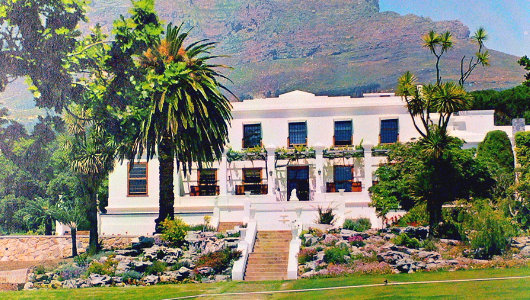
One of the better aspects of the job of Premier of the Western Cape is Leeuwenhof, the official residence that comes with the job. The estate on the slopes of Table Mountain dates from the days of the Dutch East India Company. That renowned governor of old, Simon van der Stel (after whom both Simonstad & Stellenbosch are named), granted the land to Guillaum Heems, a free burgher, to ‘clear, plant, plough, develop and work’. Heems christened the land Leeuwenhof — “Lions Court” — but sold it just two years later to Heinrich Bernhard Oldenland, Master Gardener of the Company’s Garden and Superintendent of Works for the Dutch East India Company.
Oldenland died just a few months after purchasing Leeuwenhof, and it passed into the hands of the fiscal Blesius, whose widow’s death put the estate under a series of masters until it was sold it for 14,000 guilders to Johan Christiaan Brasler, a Dane. Brasler enjoyed a good many years there in prosperity of late-eighteenth-century Cape Town, a period when the building of stately homes, townhouses, and government buildings became (as Cornelis de Jong put it at the time) “a passion, a craziness, a contagious madness that has infected nearly everyone”. This was the age of Thibault, Anreith, and Schutte — the true golden age of Cape Town’s stately finery. Inspired by the “madness” of which De Jong tells, the Dane Brasler converted the humble farmhouse of Leeuwenhof into the dignified abode we know today. (more…)
Avenida de Mayo
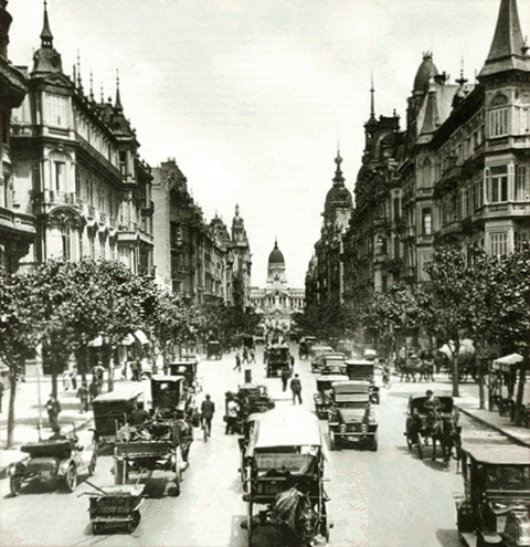
Looking down the Avenida de Mayo towards the Argentine Congress in the 1910s.
L’etoile du Nord
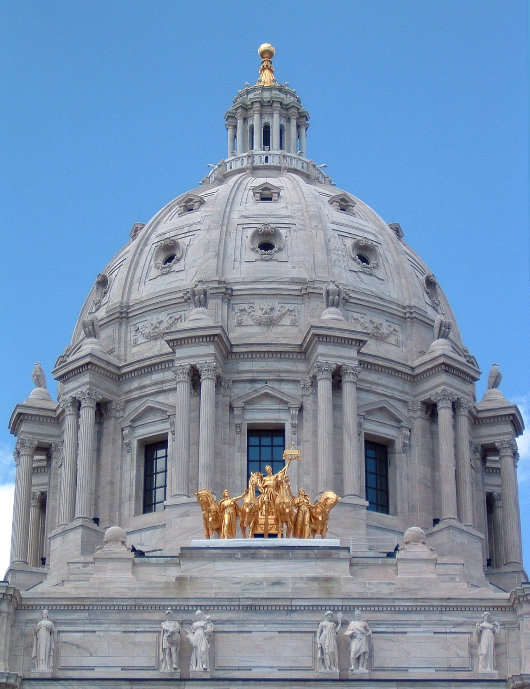
The dome of the Minnesota State Capitol, one of the finest government buildings in the New World.
The Goerke House, Lüderitz
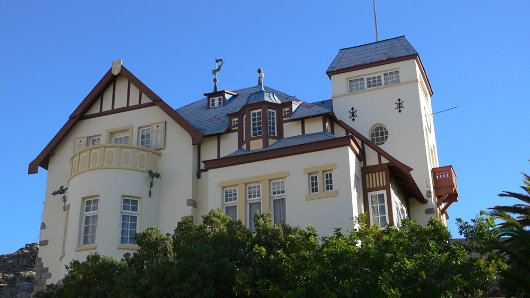
THE FAMILIAR PHRASE has a person in difficult circumstances being “between a rock and a hard place”. The Namibian town of Lüderitz is stuck between the dry sands of the desert and salt water of the South Atlantic — this is the only country whose drinking water is 100% recycled. Life in this almost-pleasant German colonial outpost on the most inhospitable coast in the world has always been something of a difficulty, but the allure of diamonds has at least made it profitable. One such adventurer who came from afar and made his fortune in this outer limit of the Teutonic domains was one Hans Goerke. (more…)
The Huguenot Monument, Franschhoek
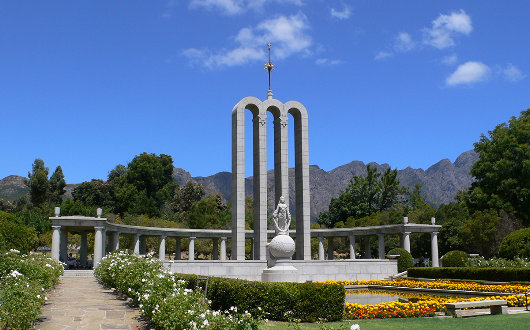
AMONG THE MANY peoples who, through the various vicissitudes of history, have found their home in South Africa are the Huguenots, or French Protestants. These people have always had a certain fascination for me, having being born so close to New Rochelle, the city in the New World founded by Huguenot refugees. The city’s public high school is a rather stately French neo-gothic chateau in the middle of Huguenot Park.
My own alma mater — a smaller private school in New Rochelle — counted Huguenot descendants among its first students and there was at least one remaining in my own school days. Street names such as Flandreau, Faneuil, and Coligni betray the French heritage of the city’s founders, and Trinity Church still has the old communion table brought over from La Rochelle. (more…)
The Saxon Palace, Warsaw
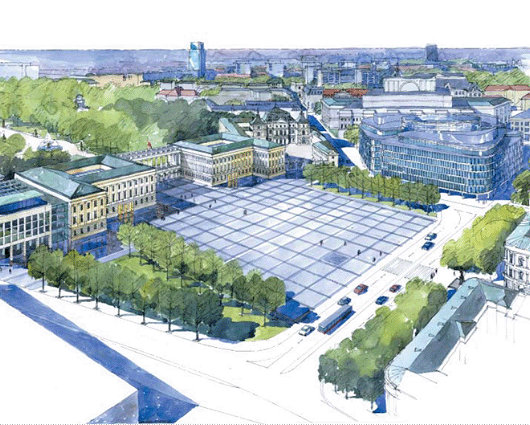
Unbenowst to me until recently, there are plans afoot to rebuild the Saxon Palace in Warsaw, though they have been — temporarily, I hope — suspended for lack of funds. The palace was almost totally destroyed in the Second World War (“The War Poland Lost Twice”), and the surviving part of the central arcade was turned into the Polish Tomb of the Unknown Soldier, now an obligatory stop for all foreign heads of state visiting the Polish capital.
The plan also provides for the neighbouring Brühl Palace to be rebuilt, to serve as the headquarters of the National Bank of Poland. Let’s hope they also decide to demolish that ugly modern monstrosity (to the right in the illustration above) that mars Piłsudski Square.
A Classical Summer in New York
ICA&CA 2009 Fellows’ Summer Lecture Series
 One of our greatest institutions here in New York is the Institute of Classical Architecture & Classical America which does such splendid work in propagating knowledge about and training in classical architecture and its allied arts. Every summer the ICA&CA presents a series of summer lectures, the first of which takes place next Wednesday. This year the series will be held in the library of the General Society (f. 1785), New York’s last remaining guild, whose 44th Street headquarters house the Institute’s offices.
In celebration of the quadricentennial of Captain Henry Hudson’s
sailing expedition on the river that now bears his name.
The Sanctified Landscape: Memory, Place, and the Mid-Hudson Valley in the Nineteenth Century
by Dr. David Schuyler, Professor of American Studies, Franklin & Marshall College. Sponsored by Hammersmith Studios.
17 June 2009
A Geography of the Ideal: The Hudson River and the Hudson River School
by Linda Ferber PhD, Executive Vice President & Museum Director of the New-York Historical Society. Sponsored by P.E. Guerin, Inc.
24 June 2009
Historic Hudson River Houses 1663-1915
by Gregory Long, President and CEO of The New York Botanical Garden. Sponsored by Peter Cosola, Inc.
8 July 2009
Edgewater: Building Classical Architecture along the Hudson River
by Michael Middleton Dwyer, architect and editor (Great Houses of the Hudson River, Bullfinch Press, 2001). Sponsored by Andrew V. Giambertone and Associates, Architects, PC.
General Society Library
No. 20, West 44th Street
Receptions at 6:30 pm
Lectures to follow at 7:00 pm
The ICA&CA Summer Lecture Series is free to ICA&CA Members and employees of Professional Member Firms, as well as all students with current identification. General Admission is $20 per lecture; $65 for the full series. Click here to become a member.
This program is supported, in part, by public funds from the New York Council for the Humanities and the New York City Department of Cultural Affairs. Special thanks to Balmer Architectural Mouldings.
Search
Instagram: @andcusack
Click here for my Instagram photos.Most Recent Posts
- Brunel’s Unbuilt Capitol February 3, 2026
- Cricket at Fordham January 27, 2026
- Palacio Barolo Revisted January 14, 2026
- Learning to Love Liguria January 14, 2026
- Crux Alba No. 2 January 13, 2026
Most Recent Comments
Book Wishlist
Monthly Archives
Categories