About Andrew Cusack
 Writer, web designer, etc.; born in New York; educated in Argentina, Scotland, and South Africa; now based in London.
 read more
News
Blogs
Reviews & Periodicals
Arts & Design
World
France
Mitteleuropa
Knickerbockers
Argentina
The Levant
Africa
Cape of Good Hope
Netherlands
Scandinavia
Québec
India
Muscovy
Germany
Academica
David Lumsden of Cushnie, 1933-2008
Garioch Pursuivant of Arms, sometime Baron of Cushnie-Lumsden, Knight of Malta, Patron of the Aboyne Highland Games

It was with great sadness that I learned this morning of the death of David Lumsden. He was an exceptionally genial and affable man, and was relied on to provide good company at many events, from balls to Sunday lunches and everything in between. But David was generous not only with his good company but with his patronage, as is attested to by the countless organizations he helped and guided. Here was a man who was generous of spirit. David’s death came very suddenly yesterday afternoon in his hotel room at the annual conference of the 1745 Association, of which he was president. Just last Sunday he had attended the traditional Mass at St. Andrew’s, Ravelston in Edinburgh, where a friend described him as “looking as hale and hearty as ever”.
David Gordon Allen d’Aldecamb Lumsden of Cushnie, sometime Baron of Cushnie-Lumsden, was born on 25 May in 1933 in Quetta, Baluchistan in the Empire of India. He was the son of Henry Gordon Strange Lumsden, a Major in the Royal Scots, of Nocton Hall, Lincolnshire and Sydney Mary, only child of Brigadier-General Charles Allen Elliot.
He was educated at Allhallows, Devon, Bedford School, and at Jesus College, Cambridge before serving in the Territorial Army with the London Scottish while working at British American Tobacco. He was a Knight of the Order of Malta, as well as of the Constantinian Order, and was Patron of the Aboyne Highland Games. David enthusiastically served as Garioch Pursuivant to the Chief of the Name and Arms of Mar (presently Margaret of Mar, the 30th Countess of Mar), one of the four surviving private officers of arms in Scotland recognised by the Court of the Lord Lyon.

Lumsden with friends, at the Aboyne Highland Games.
David co-founded the Castles of Scotland Preservation Trust and the Scottish Historic Organs Trust and was President of the Scottish Military History Society. In addition to his Magister Artium from Cambridge, he was a Fellow of the Society of Antiquaries of Scotland. He was on the council of The Admiral the Viscount Keppel Association and was one of the patrons of the famous Russian Summer Ball in London. He was Convenor of the Monarchist League of Scotland and was on the council of the Royal Stuart Society.
In the realm of sport, he was a keen shot and had rowed at Cambridge, in addition to his interest in sailing and riding.
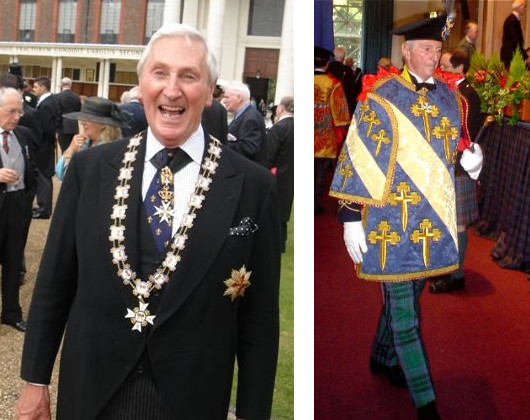
Left: Representing the Royal Stuart Society at the Henry IX commemoration at the Royal Hospital Chelsea. Right: In his capacity as Garioch Pursuivant of Arms, at the XXVIIth International Congress of Genealogical and Heraldic Sciences in 2006.
David had a passion for architecture, and especially that of his native Scotland. Returning in 1970 after a spell in Africa, he undertook the restoration of two family properties: Cushnie House, built in 1688 by Alexander Lumsden and Tillycairn Castle, built in 1540 by Matthew Lumsden. He later went on to restore Leithen Lodge at Innerleithen, an 1880s shooting lodge built in a distinctly Scottish take on the Arts & Crafts tradition. Under the auspices of the Castles of Scotland Preservation Trust, in 1994 he oversaw the restoration of Liberton Tower just south of the Royal Observatory in Edinburgh.
“David was a unique man possessed of an insatiable love of life and learning,” his friend Rafe Heydel-Mankoo said. “He will be deeply missed and fondly remembered by those fortunate enough to have met him.”
“David was at the centre of so many things, and brought together so many different people,” said Lorna Angus, the wife of Robin Angus. “He could bring life to any gathering and he made so many good things possible.”
Robin Angus, meanwhile, said that David Lumsden “personified a world of precious things — things which are imperilled, but which never seemed imperilled when he was there.”
“David no longer visibly with us is unimaginable,” Robin continued. “What his friends must now do is keep the flame, and — as he did — pass it on to others with the same generous wisdom. He was the soul of old Scotland. I hope that, in Heaven, Raeburn will make amends for what the centuries did not allow, and paint his portrait.”
While I wholeheartedly agree with Robin, it must be said that those who were blessed to know David are left with a portrait of him in our hearts and minds far greater than even the brush of Raeburn could achieve.
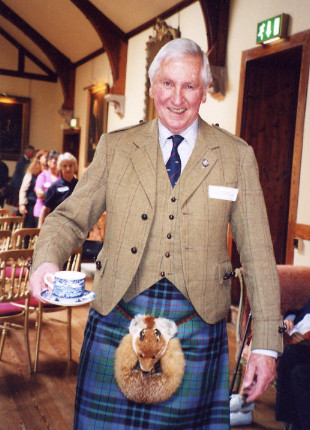
David Gordon Allen d’Aldecamb Lumsden
of Cushnie
1933–2008
“… hold fast to that which is good.”
— 1.Thess 5:21
Requiem aeternum dona eis Domine:
et lux perpetua luceat eis.
Requiescat in pace.
The Kingston Lacy Massacre
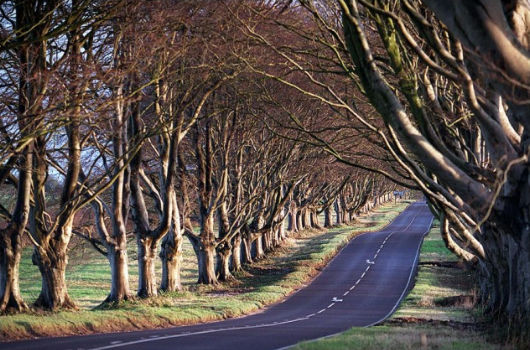
Look at this majestic avenue of trees on the Kingston Lacy estate in deepest dearest Dorset. The allee was planted by the art collector, architect, Egyptologist, MP, and adventurer William John Bankes, inheritor of the estate, as a gift for his mother. There are 365 trees on one side and 366 on the other, symbolizing a regular year and a leap year. The estate is now owned by National Trust, which has decided, to the protests of old tree experts (which is to say, experts on the subject of old trees), that twenty-one of them will have to be savagely cut down on the grounds of “health and safety”.
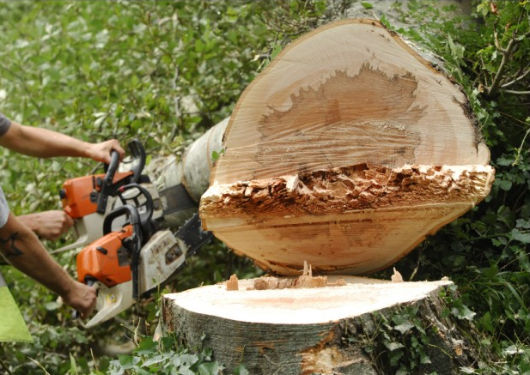
“We don’t want to fell these trees but we have a duty,” says a spokesman for the estate. “It’s a very busy B-road and the trees are only metres from the road. We’re following good Health and Safety practice.” Pity the poor fool, and weep for the beeches of Kingston Lacy.
The New Look of the Place
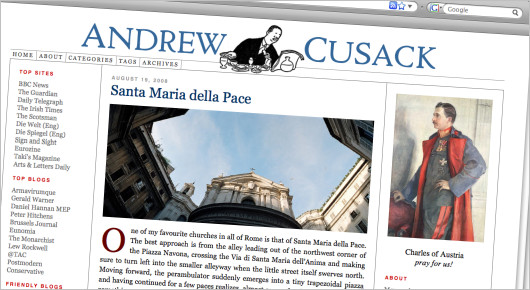
As you can see, we’ve adopted a new appearance at andrewcusack.com. Actually, it is not just a change of appearance but a roots-up wholesale change of web architecture — to use the pedantic jargon of the internauts. You are not seeing the andrewcusack.com that you once saw (and which you can actually still see at http://www.andrewcusack.com/blog/), but an entirely new set-up using WordPress instead of Movable Type, and combining the old contents of andrewcusack.com with the newer contents of cusack.norumbega.co.uk. All boring techno-stuff, I assure you.
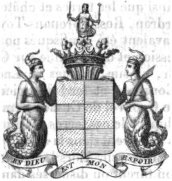 But wither, you ask, the splendid shield depicting the arms of the Empire State and the scroll beneath proclaiming New York’s proud motto of “Excelsior”? Well, I thought we needed something a bit different, but there’s always a possibility the New York arms might return, or that I get bored with the chap-eating-his-brekkers. I have given thought to assuming (as is the heraldic terminology) arms of my own, and have two or three designs lodged in my archives that I have never come to a decision upon. The traditional arms of the Cusacks can be seen at right, as depicted in the book Archives généalogiques et historiques de la noblesse de France (which a friend found in the Bodleian and kindly scanned for me). In the language of heraldry, the arms can be described as: Shield: Per pale, or and azure, a fess countercharged. Supporters: Two mermen with scimitars. Crest: A mermaid, holding in the dexter hand a sword, in the sinister a sceptre. Motto: “En Dieu est mon espoir” (sometimes “Ave Maria Plena Gratia”).
Part of my reason for never coming around to assuming arms was that for four years I spent most of my time in Scotland where the use of assumed arms is still illegal — as a fellow New Yorker who does business there found, to his chagrin. Still, if I get around to it, I doubt I’d keep you in the dark about it.
Anyhow, I hope you like the new look of the place. Bits and pieces are still under construction, as you can tell. The page of “tags” which you can access from the menubar applies only to the blog posts from when I started blogging at Norumbega to the present. While only some posts are tagged, all posts (or nearly all) are categorized, so once I have the category index up and running that’ll probably be a good way of poking one’s head about. And there is, of course, the handy search function in the right-hand column.
Santa Maria della Pace
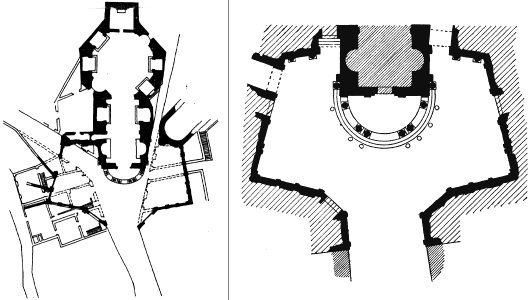
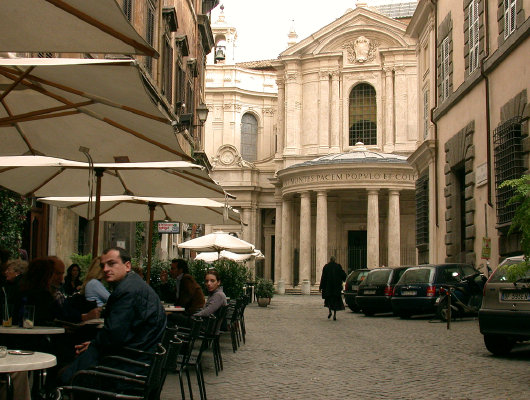
One of my favourite churches in all of Rome is that of Santa Maria della Pace. The best approach is from the alley leading out of the northwest corner of the Piazza Navona, crossing the Via di Santa Maria dell’Anima and making sure to turn left into the smaller alleyway when the little street itself swerves north. Moving forward, the perambulator suddenly emerges into a tiny trapezoidal piazza and having continued for a few paces realizes, almost as an afterthought, that there is something over your right shoulder. There is the Church of Santa Maria della Pace.
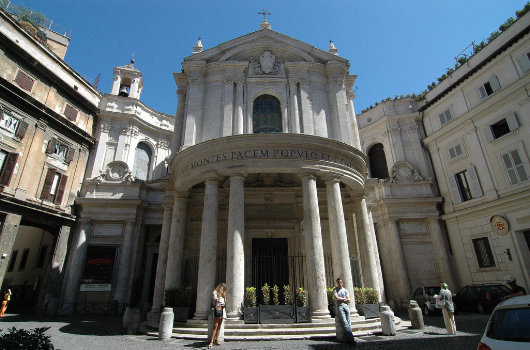
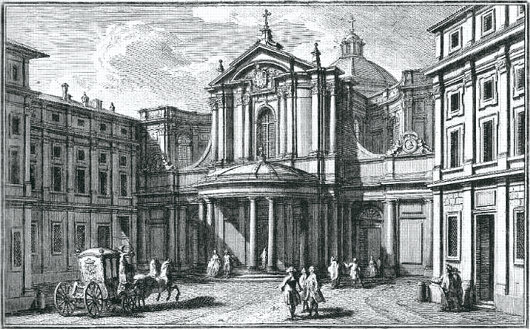
Like so many Roman edifices the Church is the work of many centuries. A church dedicated to the Apostle Andrew once stood on the site, and it was on the foundations of that church in 1482 that work on Santa Maria della Pace commenced. Sixtus IV, praying for peace in the Italian peninsula, vowed to build a church dedicated to Our Lady of Peace, and hence the Apostle’s patronage was superseded. While Baccio Pontelli deserves the credit for the church proper, Pietro da Cortona’s splendidly theatrical façade and its enveloping piazza were commissioned Alexander VII in the 1650s.
Santa Maria della Pace has a number of connections to the Chigi dynasty. The first prominent member of the Chigi family was Agostino (1465–1520), a wealthy banker and builder of the Villa Farnesina in Trastevere. Here at Santa Maria della Pace, Agostino commissioned the Capella Chigi (not to be confused with the Capella Chigi in Santa Maria del Popolo). Alexander VII himself was a Chigi, and perhaps this explains his patronage of Cortona’s façade and piazza. Among the later Chigi clan, there were a number of cardinals, some of whom were even nuncios, and more recently Ludovico Chigi Albani della Rovere was Prince & Grand Master of the Order of Malta from 1931 to 1951. Anyhow, the Chigi chapel features a fresco initiated by Raphael (and completed by his school), while the adjacent chapel includes sculptural decoration by Michelangelo.
In addition to greats such as Raphael, Michelangelo, and Cortona, the cloister of the church is by none other than Bramante, and indeed was his first work in the Eternal City. Somewhat exhaustively, it doesn’t end there. Santa Maria della Pace has a high altar by Carlo Maderno, a sculpture of the Deposition by Cosimo Fancelli, two small frescoes by il Rosso Fiorentino, and another fresco by Baldassarre Peruzzi who, shall we say in kindness, was a much better architect than painter. There are further works by Maratta and Gentileschi (Orazio, that is — not Artemisia).

The Catholic Herald

First Christian de Lisle, now Jennifer Roche: at this rate within a year everyone I know will have contributed to the Catholic Herald! (And, incidentally, I did have a brief chat in the Travellers Club once with the chap who wrote the piece on the Assumption).
I might just have to take out a subscription, though an electronic one — probably the most convenient for we across the seas — is still a hefty £38: at today’s exchange rate that’s seventy good ole American smackeroons! Probably worth it, though.
Monocled Monarch is the King of Fashion
Put Taft on a raft and forget Mr. Vorster: In terms of well-dressed heads of state, the King of Tonga is one of the last of his breed

 It’s an easily observable fact that, in terms of public attire, the heads of state of today generally leave much to be desired, yet the newly crowned King of Tonga (seen right) keeps up the sartorial tradition, not only of his ancestors, but of ours. George Tupou V (or Siaosi Taufa’ahau Manumataongo Tuku’aho Tupou V to give his full name) was crowned just a few weeks ago in a splendid ceremony in Nuku’alofa, the capital of “the Friendly Islands”.


Though Tonga is certainly not the only monarchy in the Pacific — Japan, Australia, and New Zealand are the most prominent — it is one of the smallest and certainly one of the most traditional. So traditional, in fact, that it is on the naughty list of the CIA-linked “Freedom House” foundation. Tonga’s crime? That only a minority of the members of Tonga’s parliament, the Fale Alea, are directly elected. Of the 30 members, 9 are elected by a general electorate, 9 are elected by the nobility, 10 are members of the Privy Council, and 2 are governors appointed by the King. Curiously, Freedom House does not treat the United Kingdom the same as Tonga, despite the majority of parliamentarians being either directly appointed by the Crown or elected by hereditary lords — elected MPs consist of less than half of parliament.
La Rural
The 122nd Exhibition of the Sociedad Rural Argentina
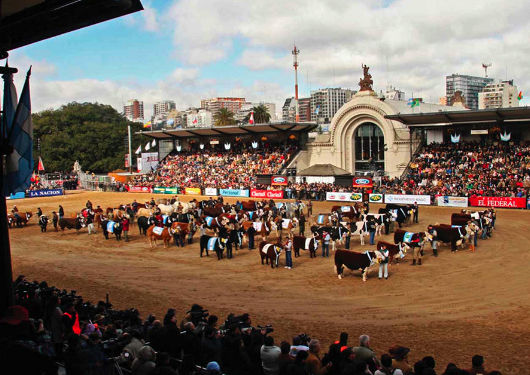
One of the highlights of the Argentina calendar is the Rural Exposition or “La Rural” which takes place every year at the Buenos Aires showgrounds of the Sociedad Rural Argentina. La Rural is one of the few events which takes up the entirety of the Society’s thirty-acre home nudged between Palermo Viejo and Palermo Nuevo and facing onto the Plaza Italia. Lasting from July 24 to August 4, with admission just 13 pesos (about $4.25 or £2.30), the show usually attracts a million visitors over its thirteen days.
Propaganda Fide

Cheers to the unknown wag who created this delightful poster, parodying the Obama “HOPE” posters.
The Great Club Revolution
What with all this democracy things will never be the same
 The Union Club |
By Cleveland Amory
American Heritage, December 1954, Vol. 6, Issue 1
In 1936 in New York City there occurred the 100th anniversary of the Union Club, oldest and most socially sacrosanct of New York’s gentlemen’s clubs. From all parts of this country and even from abroad there arrived, from lesser clubs, congratulatory messages, impressive gifts and particularly large offerings of floral tributes.
At the actual anniversary banquet, however, as so often happens in gentlemen’s clubs, there was, despite the dignity of the occasion, the severe speeches and the general sentimental atmosphere, a little over-drinking. And one member over-drank a little more than a little. Shortly before dessert he decided he had had enough, at least of the food, and he disappeared. Furthermore, he did not reappear.
Worried, some friends of his decided, after the banquet, to conduct a search. The faithful doorman in the hooded hallporter’s chair gave the news that no gentleman of that description had passed out, or rather by, him, and the friends redoubled their efforts. High and low they combed the missing member’s favorite haunts—the bar, the lounge, the card room, the billiard room, the locker room, the steam room, etc. One even tried, on an off-chance, the library. There, as usual, there was nothing but a seniority list of the Union’s ten oldest living members and a huge sign reading “SILENCE.”
Finally, in one of the upstairs bedrooms, they found the gentleman. He was lying on a bed, stretched out full length in his faultless white tie and tails, dead to this world.
A Rundbogenstil Library in New York
The handsome former Astor Library on Lafayette Street

One of my favorite buildings in all New York is the former Astor Library on Lafayette Street in Greenwich Village. Now the Public Theater, it is a superb example of the nineteenth-century German neo-romantic Rundbogenstil (“round-arch-style”) and one of the few remnants of that style in New York. The Astor Library was the legacy of John Jacob Astor, whose will provided for its establishment. Late in the nineteenth century, the Astor Library agreed to merge with the Lenox Library and the Tilden Trust to form the New York Public Library, one of the greatest libraries in the history of civilization. The building was bought by the Hebrew Immigrant Aid Society who tore out the book stacks and used it as a processing station for needy newcomers. In 1965, the HIAS sold it on to a developer who planned to demolish it, but, through a massive civic effort, Joseph Papp and his New York Shakespeare Festival purchased the building and turned it into the Public Theater.
Rabbiting on…
Readers might be interested in a new blog called Rabbiting On, by one V. Narayan Swami from Madras in the ancient land of India. Incidentally, the city council of Madras (known as the Chennai Corporation) is reputed to be the oldest municipal body in the Commonwealth of Nations outside the British Isles, its charter being granted by King James II (c.f. here & here) in 1687. The governor of Madras at that time was one Elihu Yale, who was subsequently removed in a corruption scandal and later became the patron of an academy in Connecticut which know proudly bears his name.
Alexander Solzhenitsyn, 1918–2008
Russian traditionalist, Nobel laureate, feted in the West for criticism of Soviet Communism, then spurned for rejecting liberal materialism

Alexander Isayevich Solzhenitsyn, the most famous Russian writer and historian of our age, has died at eighty-nine years of age. Solzhenitsyn was the earliest to bring first-hand knowledge of the Gulag, the Soviet system of prison colonies and labour camps, to wider Western attention. For this noble task, he was awarded the Nobel Prize for Literature in 1970 and expelled from the Soviet Union four years later, returning in 1994. After the fall of the Soviet regime, he despised Boris Yeltsin’s incompetence, identifying 1998 as the low point of Russia’s recent history. “Yeltsin decreed I be honored the highest state order,” Solzhenitsyn explained. “I replied that I was unable to receive an award from a government that had led Russia into such dire straits.”
He gave cautious support to the presidency of Vladimir Putin, and was pleased that while, in his words, “Moscow is still communist”, there was a growing readiness under Putin to admit (and even broadcast on state television) the crimes and outrages of the Soviet regime.
“Putin inherited a ransacked and bewildered country, with a poor and demoralized people. And he started to do what was possible — a slow and gradual restoration. These efforts were not noticed, nor appreciated, immediately. In any case, one is hard pressed to find examples in history when steps by one country to restore its strength were met favorably by other governments.”
Influenced by his experience in exile in both Switzerland and New England, Solzhenitsyn insisted on the need for local self-government in Russia. “Today I continue to be extremely worried by the slow and inefficient development of local self-government. But it has finally started to take place. In Yeltsin’s time, local self-government was actually barred on the regulatory level, whereas the state’s ‘vertical of power’ (i.e. Putin’s centralized and top-down administration) is delegating more and more decisions to the local population. Unfortunately, this process is still not systematic in character.”
Solzhenitsyn expressed further disappointment with the new Western imperialism being waged against Russia, embodied in the 1999 War against Serbia which turned so many Russian minds against the Western powers they had previously been quite friendly to.
In a recent interview with Der Spiegel, Solzhenitsyn was asked whether he was afraid of death:
“No, I am not afraid of death any more. When I was young the early death of my father cast a shadow over me — he died at the age of 27 — and I was afraid to die before all my literary plans came true. But between 30 and 40 years of age my attitude to death became quite calm and balanced. I feel it is a natural, but no means the final, milestone of one’s existence.”
When the interviewer from Der Spiegel wished him many more years of “creative life”, Solzhenitsyn calmly responded “No, no. Don’t. It’s enough.”
Le monde diplomatique

The German edition of Le monde diplomatique underwent a complete overhaul not too long ago. Unlike the main French edition of Le monde diplo, which exhibits the exact style of a French newspaper of mediocre design circa 1996, the German edition now exudes a certain calm and composed modernity. The redesign is the work of the German typographer and designer Erik Spiekermann, whom the Royal Society have named a Royal Designer for Industry (entitling him to an HonRDI after his name; only “hon” because he is not a British subject). Mr. Spiekermann was responsible for the much-lauded redesign of The Economist, the magazine you read when the airport lounge doesn’t have a copy of The Spectator.
Plumbing Cusackian Depths?
Robert Harrington recently insisted on interviewing me, taking many of his questions from a previous interview years ago which had been available at andrewcusack.com but which has since inexplicably disappeared into the ether. (Such are the mysterious ways of the internet). Mr. Harrington unconvincingly insists that the previous interview provided an interesting insight into the mind of Cusack, and no doubt he hoped to gain further useless insights with this period of interrogation. We will leave it to the reader to judge. What follows is an only barely edited version.
You’re known as an architecture fan. What’s your favourite city?
Edinburgh. Finest city in the British Empire.
Finer than London?
Oh, I’d say so. London has a great deal going for it — better clubs, for example — but it’s become incredibly vulgar. And foreign. Edinburgh is ten times as beautiful. What is more beautiful than an Edinburgh sunset, with the waning light reflecting off the stone buildings and the various spires and towers? The topography of the city is its saving grace, but can also be an incredible hassle. If you want to walk along George Street or Princes Street or the Royal Mile, you’re fine. But any perpindicular perambulation becomes a matter of climbing hills and stairs and such. Yet it makes the city all the more worthwhile somehow. It’s very striking.
Your favourite building though, the old Irish Parliament (now the Bank of Ireland) is in Dublin.
Dublin also has a great number of brilliant edifices, great buildings. Not just the Bank of Ireland but Trinity College, the Castle, the Four Courts, the Custom House, the King’s Inns and Henrietta Street and all those Georgian buildings. And two medieval cathedrals! But no, Edinburgh is still finer, and unsullied by republicanism.
But the ugly Scottish Parliament building is in Edinburgh.
True, true. A recent goiter upon an old friend though. Surgery can remove such things, if the patient is willing and a surgeon can be found.
High Drama in Argentina’s Halls of Power

IT IS AN age-old question: what happens when an irresistible force meets an immovable object? The force in question is the farming community of Argentina, once among the agricultural powerhouses of the world, and the object is the country’s slippery presidential couple, President Cristina Fernández de Kirchner and her husband (and predecessor in the top job) Néstor Kirchner. From all the way back in March, the Kirchners have been locked in a bitter dispute with the farming sector of the country since the presidential couple unilaterally imposed a massive tax on soy exports.
The Kirchners deride the farmers as “oligarchs” and claim that the exorbitant tax on one of Argentina’s most successful commercial sectors will be redistributed to the poor. Of course it would be irresponsible to simply take from the haves and give to the have-nots; the money raised would only go to the deserving poor, namely those who happen to support the Kirchner regime. Along the way, every cog in the machine will take his fair share, with a respectable amount left over to fatten the calves (metaphorically speaking) of the Kirchnerite street operators who quite openly buy votes during election time and pay union members to show up at pro-government rallies in between.

Argentine farmers protesting the Kirchner soy tax.
Revolution’s loss is counter-revolution’s gain
 As Christian de Lisle reports in the latest Catholic Herald, Chase Hilgenbrinck, the 26-year-old defense player for the New England Revolution, is leaving the world of professional soccer to pursue a vocation to the priesthood. “Playing professional soccer has been my passion for a long time,” Hilgenbrinck told the press, “and I feel blessed to have successfully lived out this dream. My passion now is to do the will of God, which is wanting only what He wants for me. Though I will miss the game of soccer, I know that I am moving on to something much greater.”
Earlier, Hilgenbrinck, who had a four-year career in Chile before returning this year to play professionally in the States, considered waiting until the end of his soccer-playing days. “Delayed obedience is disobedience,” he told the Associated Press. “We are all called to do something. I feel like my specific call is to the priesthood. So, no, it was not possible to continue with soccer. It’s absolutely inevitable.”
Hilgenbrinck will enter the seminary at Mount St. Mary’s University, one of the oldest Catholic institutions in the United States.
Amidst pickelhaubes resplendent
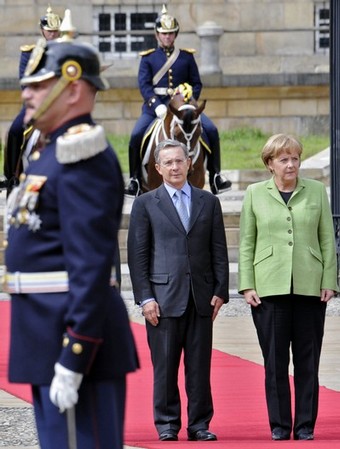
The Chancellor of Germany is seen here worriedly admiring the pickelhaubed cavalry on her state visit to Colombia. Such elements of tradition, widespread in South America, are unofficially but totally banned in Germany.
Humiliating Defeat in the Heart of Labour

Well, it looks like they’ve done it: the SNP have slashed a Labour majority of over 13,000 to win the parliamentary seat of Glasgow East with a new Nationalist majority of just 365 votes. The Conservatives and the Liberal Democrats came third and fourth, but with 1,693 and 915 votes respectively, this was very much a two-pony race between Labour’s Margaret Curran (above, left) and the SNP’s John Mason (above, right).
While Glasgow East is deep in the heart of Labour territory, pundits were saying this was going to be a close one. The defection of Catholics is likely to have played a significant role in Labour’s defeat. In the past year, Labour have legalized the creation of animal-human hybrids as well as siblings designed solely for the harvesting of their organs, and this campaign has been vociferously opposed by Catholics around the Union. Mr. Mason made sure to thank those who had prayed for him in his victory speech.
“This is an absolutely remarkable result,” said Angus Robertson, SNP leader at Westminster, “it’s Labour’s third-safest seat — rock-solid territory. Now it’s over. People have had enough and Gordon Brown had better listen because at the next Westminster election the SNP is coming.”
This is the second “safe” Labour seat lost in a by-election in just three months.

Catholic backlash sinks Labour in Glasgow East
Cranmer:
SNP victory in Glasgow East – the Christians won it
the Daily Telegraph:
Labour suffers humiliating defeat as SNP celebrates
the Times:
Nightmare result for Gordon Brown as SNP triumph over Labour in Glasgow East
the Guardian:
Glasgow East byelection victory adds remarkable new chapter to SNP history
Google News:
Glasgow East
The Pope at Government House

Pope Benedict XVI reviews the guard after being received by Maj. Gen. Jeffery, the Governor-General of Australia.
Teamdesertaxi

Teamdesertaxi is awa’, but you can keep track of them through their occasional updates on the website:
Stopping in Salzburg for lunch. 2 broken door hinges, 1 broken indicator, 1 broken electric window. 795 miles. …
A navigational error led to a brief sojourn in Slovakia. …
Both the charities they are supporting, MercyCorps Mongolia and Help for Heroes, get the Cusack two-thumbs-up, so perhaps you might think of making a little donation? Every bit counts.
Search
Instagram: @andcusack
Click here for my Instagram photos.Most Recent Posts
- West Point July 30, 2026
- Brunel’s Unbuilt Capitol February 3, 2026
- Cricket at Fordham January 27, 2026
- Palacio Barolo Revisted January 14, 2026
- Learning to Love Liguria January 14, 2026
Most Recent Comments
Book Wishlist
Monthly Archives
Categories