About Andrew Cusack
 Writer, web designer, etc.; born in New York; educated in Argentina, Scotland, and South Africa; now based in London.
 read more
News
Blogs
Reviews & Periodicals
Arts & Design
World
France
Mitteleuropa
Knickerbockers
Argentina
The Levant
Africa
Cape of Good Hope
Netherlands
Scandinavia
Québec
India
Muscovy
Germany
Academica
‘The man who walked’
The Daily Telegraph — 6 September 2008
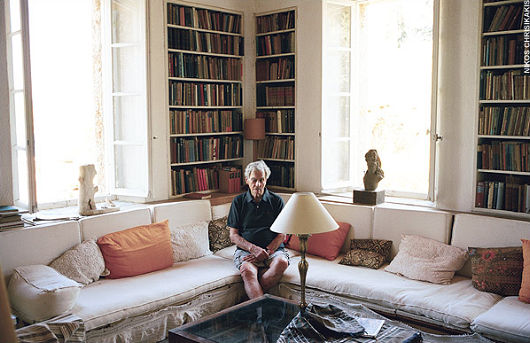
At 18 he left home to walk the length of Europe; at 25, as an SOE agent, he kidnapped the German commander of Crete; now at 93, Patrick Leigh Fermor, arguably the greatest living travel writer, is publishing the nearest he may come to an autobiography – and finally learning to type. William Dalrymple meets him at home in Greece
‘You’ve got to bellow a bit,’ Sir Patrick Leigh Fermor said, inclining his face in my direction, and cupping his ear. ‘He’s become an economist? Well, thank God for that. I thought you said he’d become a Communist.’
He took a swig of retsina and returned to his lemon chicken.
‘I’m deaf,’ he continued. ‘That’s the awful truth. That’s why I’m leaning towards you in this rather eerie fashion. I do have a hearing aid, but when I go swimming I always forget about it until I’m two strokes out, and then it starts singing at me. I get out and suck it, and with luck all is well. But both of them have gone now, and that’s one reason why I am off to London next week. Glasses, too. Running out of those very quickly. Occasionally, the one that is lost is found, but their numbers slowly diminish…’
He trailed off. ‘The amount that can go wrong at this age – you’ve no idea. This year I’ve acquired something called tunnel vision. Very odd, and sometimes quite interesting. When I look at someone I can see four eyes, one of them huge and stuck to the side of the mouth. Everyone starts looking a bit like a Picasso painting.’
He paused and considered for a moment, as if confronted by the condition for the first time. ‘And, to be honest, my memory is not in very good shape either. Anything like a date or a proper name just takes wing, and quite often never comes back. Winston Churchill – couldn’t remember his name last week.
‘Even swimming is a bit of a trial now,’ he continued, ‘thanks to this bloody clock thing they’ve put in me – what d’they call it? A pacemaker. It doesn’t mind the swimming. But it doesn’t like the steps on the way down. Terrific nuisance.’
We were sitting eating supper in the moonlight in the arcaded L-shaped cloister that forms the core of Leigh Fermor’s beautiful house in Mani in southern Greece. Since the death of his beloved wife Joan in 2003, Leigh Fermor, known to everyone as Leigh Fermor, has lived here alone in his own Elysium with only an ever-growing clowder of darting, mewing, paw-licking cats for company. He is cooked for and looked after by his housekeeper, Elpida, the daughter of the inn-keeper who was his original landlord when he came to Mani for the first time in 1962.
It is the most perfect writer’s house imaginable, designed and partially built by Leigh Fermor himself in an old olive grove overlooking a secluded Mediterranean bay. It is easy to see why, despite growing visibly frailer, he would never want to leave. Buttressed by the old retaining walls of the olive terraces, the whitewashed rooms are cool and airy and lined with books; old copies of the Times Literary Supplement and the New York Review of Books lie scattered around on tables between Attic vases, Indian sculptures and bottles of local ouzo.
A study filled with reference books and old photographs lies across a shady courtyard. There are cicadas grinding in the cypresses, and a wonderful view of the peaks of the Taygetus falling down to the blue waters of the Aegean, which are so clear it is said that in some places you can still see the wrecks of Ottoman galleys lying on the seabed far below.
There is a warm smell of wild rosemary and cypress resin in the air; and from below comes the crash of the sea on the pebbles of the foreshore. Yet there is something unmistakably melancholy in the air: a great traveller even partially immobilised is as sad a sight as an artist with failing vision or a composer grown hard of hearing.
I had driven down from Athens that morning, through slopes of olives charred and blackened by last year’s forest fires. I arrived at Kardamyli late in the evening. Although the area is now almost metropolitan in feel compared to what it was when Leigh Fermor moved here in the 1960s (at that time he had to move the honey-coloured Taygetus stone for his house to its site by mule as there was no road) it still feels wonderfully remote and almost untouched by the modern world.
When Leigh Fermor first arrived in Mani in 1962 he was known principally as a dashing commando. At the age of 25, as a young agent of Special Operations Executive (SOE), he had kidnapped the German commander in Crete, General Kreipe, and returned home to a Distinguished Service Order and movie version of his exploits, Ill Met by Moonlight (1957) with Dirk Bogarde playing him as a handsome black-shirted guerrilla.
It was in this house that Leigh Fermor made the startling transformation – unique in his generation – from war hero to literary genius. To meet, Leigh Fermor may still have the speech patterns and formal manners of a British officer of a previous generation; but on the page he is a soaring prose virtuoso with hardly a single living equal.
It was here in the isolation and beauty of Kardamyli that Leigh Fermor developed his sublime prose style, and here that he wrote most of the books that have made him widely regarded as the world’s greatest travel writer, as well as arguably our finest living prose-poet. While his densely literary and cadent prose style is beyond imitation, his books have become sacred texts for several generations of British writers of non-fiction, including Bruce Chatwin, Colin Thubron, Philip Marsden, Nicholas Crane and Rory Stewart, all of whom have been inspired by the persona he created of the bookish wanderer: the footloose scholar in the wilds, scrambling through remote mountains, a knapsack full of books on his shoulder.
Germany carved amongst her neighbours
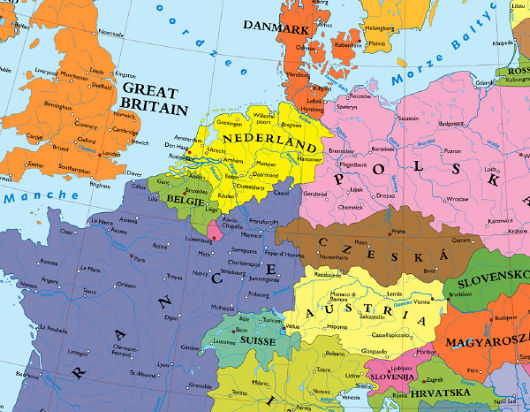
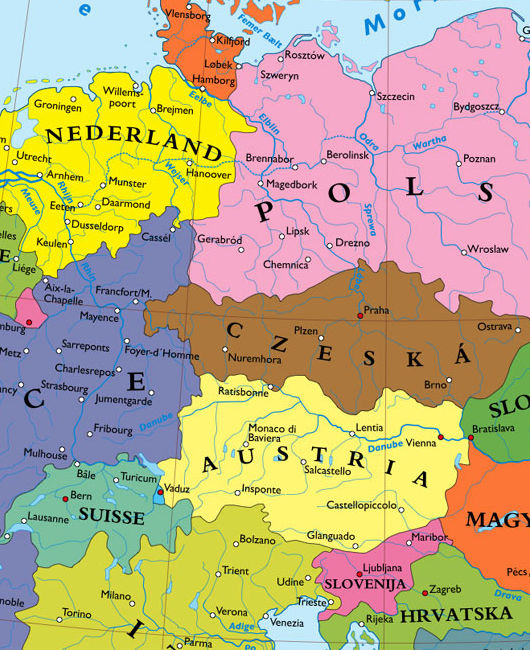
What is this cartographic madness? Hanover part of the Netherlands? Kassel ruled by France? Nuremburg part of a Bohemia that reaches to the Frankfurt suburbs? Hamburg in Denmark? Regensburg on the Austro-Czech border? I came across the company Kalimedia in an article from Die Zeit a month or two ago and discovered their map of a Europe without a Germany. Believe it or not, there were plans of one sort or another to achieve similar results at the end of the Second World War. The major plan for the dissection of Germany was merely a creation of Nazi propaganda, and while the vaguely similar Morgenthau Plan did exist, it was soon shelved once its impracticality became obvious.
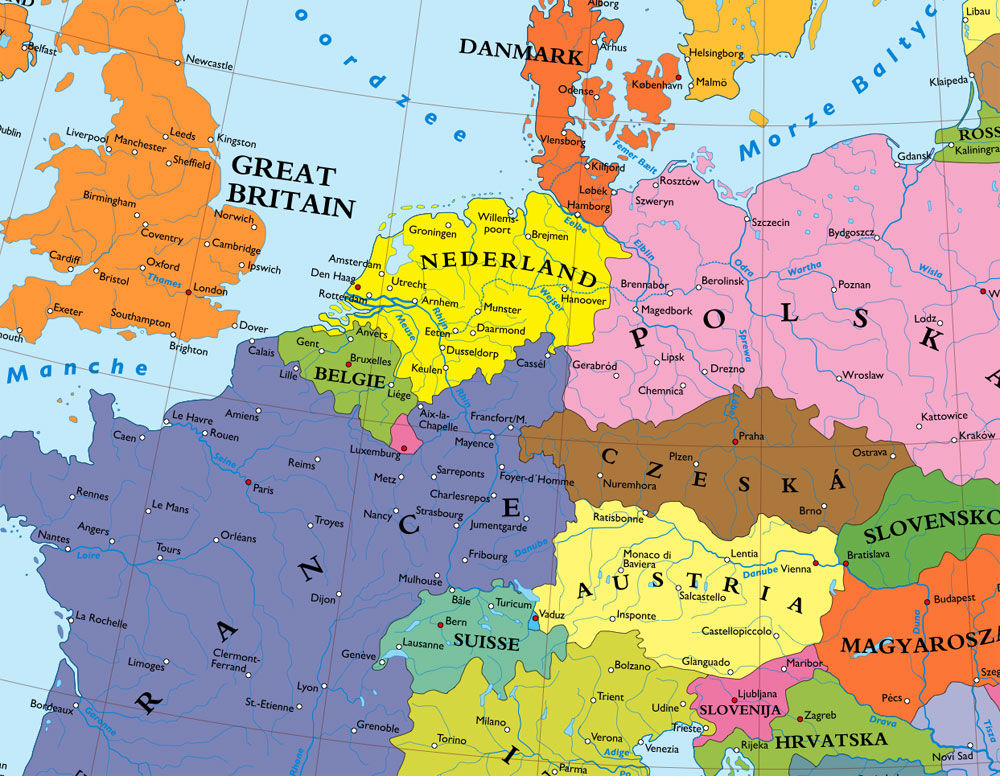
The Bakker-Schut Plan, meanwhile, was a Dutch proposal for the annexation of several German towns, and perhaps even a number of German cities. German natives would be expelled, except for those who spoke the Low Franconian dialect, who would be forcibly dutchified. They even came up with a list of new Dutch names for German cities: c.f. the post at Strange Maps on “Eastland, Our Land: Dutch Dreams of Expansion at Germany’s Expense”.
The Municipalidad
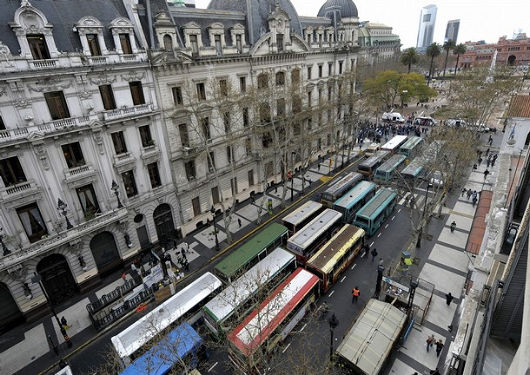
This news photo showing a protest (what else?) of bus drivers on the Avenida de Mayo in Buenos Aires gives a good view of the capital’s city hall. The municipal headquarters is located between the Plaza de Mayo and the former home of the newspaper La Prensa; the Casa Rosada, Argentina’s presidential palace (officially called Government House, Casa del Gobierno) can be seen in the distance at the end of the square.
I’ve long thought they should reduce the auto space by two lanes, one on each side, and double the width of the sidewalks — but that would probably make the bus drivers even more irate.
The Bad Shepherd
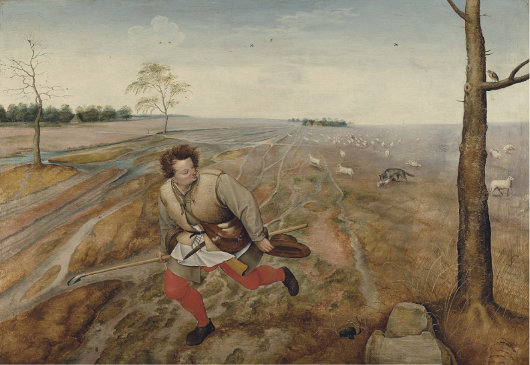
Pieter Brueghel II, The Bad Shepherd
Oil on panel, 29 in. x 41¼ in.
c. 1616, Private collection
With an original estimate of £1,000,000–£1,500,000, Pieter Brueghel the Younger’s The Bad Shepherd sold at a final hammer price of £2,505,250 at Christie’s in London this July. As the house lot notes state, it is “one of the most original and visually arresting of all images within the Brueghelian corpus of paintings”.
I am the good shepherd. The good shepherd lays down his life for the sheep. He who is a hireling and not a shepherd, whose own the sheep are not, sees the wolf coming and leaves the sheep and flees; and the wolf snatches them and scatters them. He flees because he is a hireling and cares nothing for the sheep.
It is significant that the distant horizon behind the sheep is broken only by a solitary church spire and a small farmstead. They seem to suggest that in abandoning his responsiblities the shepherd also rejects both the church and the community as he rushes headlong in the opposite direction. The mental anguish experienced by the shepherd is mirrored in a remarkable way by the barren landscape, shown from a dizzying bird’s eye perspective, stretching back into infinity. Interwoven only by vein-like tracks and ditches that lead the eye into the distance, the landscape is one of the artist’s most extraordinary achievements and very much a precursor to the psychological landscapes of the 20th century.
There is something arrestingly modern about this painting that fascinates me.
‘Feudal pomp and Latin Mass at funeral of a Scottish laird’
Gerald Warner reports on the funeral of David Lumsden of Cushnie:
Thursday, September 11, 2008
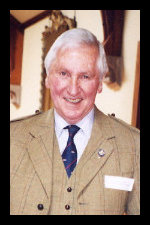 To Edinburgh yesterday, for a melancholy but magnificent and uplifting occasion: the funeral of David Lumsden of Cushnie, Garioch Pursuivant of Arms, restorer of ancient castles and Jacobite romantic. It was held in the Catholic cathedral where, for the first time since Vatican II, the Latin Tridentine Mass was sung, thanks to the permissive rules of Benedict XVI in his motuproprio Summorum Pontificum.
The coffin was draped in the banners of the Order of Malta and the deceased’s arms, with an heraldic hatchment and the decorations of the orders of chivalry to which he belonged. Knights of Malta and of the Constantinian Order processed behind their banner in mediaeval robes. The congregation was filled with peers, chieftains, lairds and splendid eccentrics, the pews awash with tartan. One of the tail-coated ushers was the grandson of a papal marquis. Robin Angus, whose day job is venture capitalist, dressed in the uniform of a papal Knight of St Sylvester, delivered a moving panegyric.
This occasion was a potent reminder of an alternative Scotland, a different pulse from the vulgar, mean-minded, politically correct clones in the abysmal Scottish parliament at Holyrood. It was shamelessly feudal, aristocratic and colourful. Evelyn Waugh would have loved it; Harriet Harridan would have burst her stays. It was reminiscent of the scene in Waugh’s Sword of Honour when, at the funeral of old Mr Crouchback, the members of ancient Catholic Recusant families murmur their sonorous names while the narrator, parodying a wartime poster, concludes: “Their journey was really necessary.”
At the subsequent reception, Lady Mar, whose personal herald David was and who came top of the ballot for the 92 surviving hereditary peers in the House of Lords, was pointedly addressed by Jacobites as “Your Grace”. This was because, although the British state recognises her as 30th Countess of Mar, her ancestor who led the Jacobite Rising of 1715 was created Duke of Mar by the exiled Stuart King James VIII.
Only a few of these Jacobite peerages created by the Stuarts in exile have heirs today. Now that such hereditary peerages no longer bestow an automatic seat in Parliament, it would be a gracious gesture for the Crown to recognise them and so heal old historical wounds. There is a precedent: Spain has recognised the titles of nobility created by the Carlist claimants in exile – Carlism being the Spanish equivalent of Jacobitism.
The dry-as-dust forms issued by government departments are normally very boring; but the most romantic document available online is issued by the Spanish Ministry of Justice, entitled Solicitud de Titulo Nobiliario por: Rehabilitacion/Reconocimiento de Titulo Carlista. It is the formal application for recognition of a title of nobility conferred by the Carlist kings in exile from 1833 to 1936. David Lumsden of Cushnie (RIP) would have appreciated it.
Fire at St. Jodard
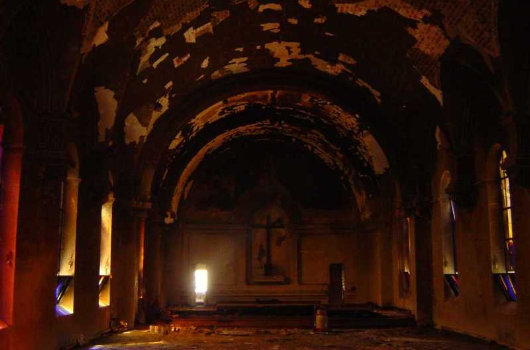
The chapel of the Community of St. Jean’s novitiate at Saint-Jodard in France was tragically consumed by an accidental fire late last month. The brothers give thanks that no one was harmed in the fire and look upon the event as “a favorable occasion to learn how to live together in the Great Hope and to redouble fraternal charity”.
Contributions can be sent to:
Prieuré Saint Joseph
42590 St Jodard
FRANCE
Ron Paul in The Economist

As self-styled newspapers go, The Economist is wrong on most things — furthermore it broadcasts its Establishment errors with an undeserved arrogance and a haughty tone. (For our hebdomadal reading, we prefer another publication). Nonetheless, we cannot resist giving credit where credit is due, and The Economist recently published a short, relatively balanced piece on Ron Paul’s counter-convention in Minneapolis. It is reproduced here:
Ingrid Betancourt at Castel Gandolfo
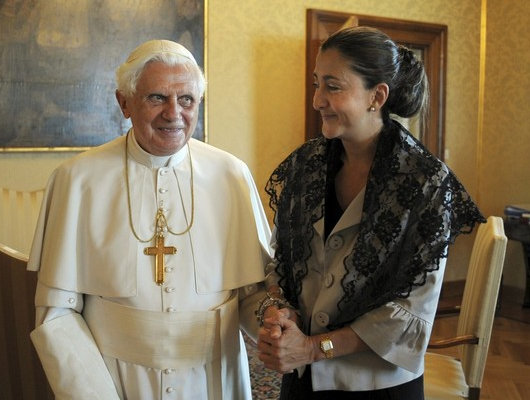
Ingrid Betancourt was welcomed by Pope Benedict XVI at the papal retreat of Castel Gandolfo this week. The Franco-Colombian politician was freed from the communist FARC guerrillas in July by a stealth operation of the Colombian Army in which not a single shot was fired. Betancourt had been held hostage for over six years in the South American jungle. After being reunited with her family, she made a pilgrimage to Lourdes to give thanks for the intercession of the Blessed Virgin in sustaining her during her capitivity.
Church music by the unchurched: Saint-Saëns
“No thoughtful Catholic will have difficulty distinguishing Mozart’s music from his Freemasonry, any more, for example, than separating Bach’s work from his Lutheranism. If we were to dismiss every human work that had been created by a sinner there might not be much left standing. I was once taken to task for leading a congregation in a ‘Protestant tune’, to which I replied, ‘Which note was Protestant?’. Let us move on.”
So begins a delightful appreciation of the sacred music of Camille Saint-Saëns written by R. J. Stove and printed in the latest issue of Oriens, an Australian publication devoted to traditional Catholic culture. It is but the first of a series discussing eminent composers who spent most of their lives outside orthodox Catholicism, but who made notable contributions to sacred music. Mr. Stove is also a contributor to The New Criterion and was kind enough to send me a copy of his article, which was both comprehensive and concise while remaining interesting throughout. More information on Oriens can be found at their website.
Swan Upping
The Palace has released this YouTube video on the ancient practice of swan upping.
Subway riders, New York City, 1914
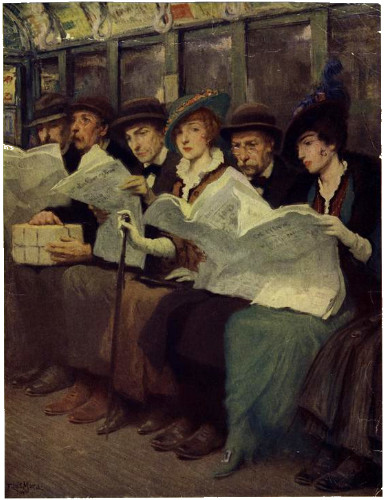
Francis Luis Mora, Subway riders, New York City, 1914
Print, 12½” x 9¼”
1914, New York Public Library
Tintin as Cusack or Cusack as Tintin?
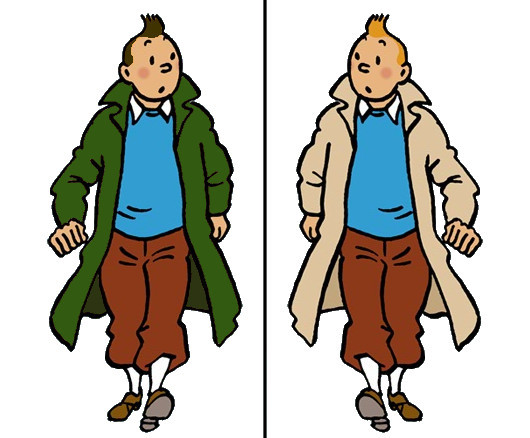
A VERY BORED Liz Smith mocked this up on a rainy day during her August hols on the Atlantic coast of France.
Previously: The almighty loden coat
Her Excellency
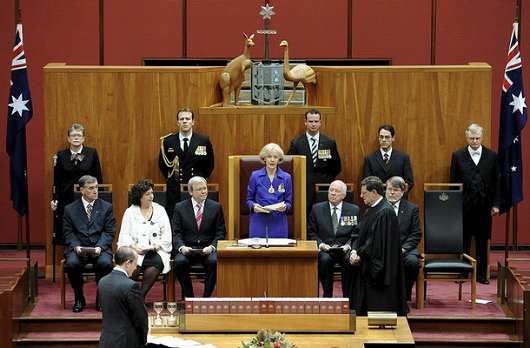
Quentin Bryce was yesterday sworn in as the Queen of Australia’s representative in her kingdom spanning that southerly continent.
The Tonga Coronation, 1967
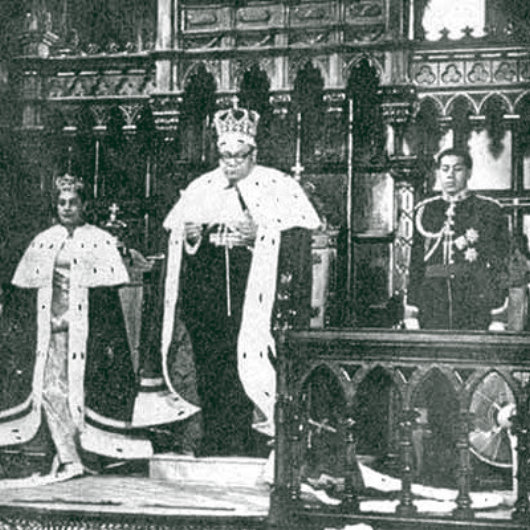
The 1967 coronation of the late King George IV of Tonga took place in the Chapel Royal. Unfortunately, the charming gothic revival structure burnt down some years ago, and so the latest coronation — that of George V — took place in the more spartan surroundings of the Centenary Church.
Elsewhere: See “islomaniac” Cheyenne Morrison’s coverage of the recent coronation at The Private Islands Blog.
New York Sun will no longer shine for all
Center-right New York daily will cease printing at end of month
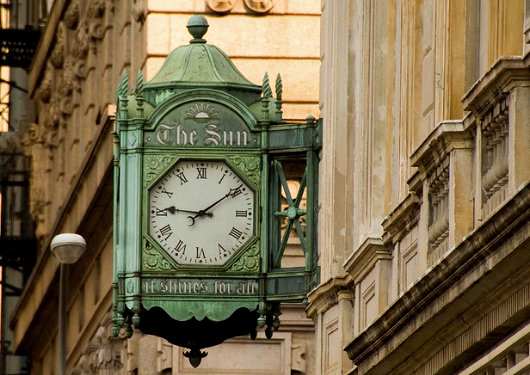
In a devastating blow to the intellectual life of the city, the New York Sun editor Seth Lipsky announced today that the small-but-influential daily newspaper will cease operations at the end of the month unless new investors can be found to put many millions of dollar into the revived title. The newspaper — known for its excellent arts & cultural coverage and willingness to lift the veil on corruption in addition to its hardcore neoconservative politics — is believed to be operating at a loss of tens of millions of dollars a year. Seth Lipsky announced the perilous state of the Sun in a letter to readers this morning:
A Colonel Inspects His Regiment
Nils Olav and the King of Norway’s Guards
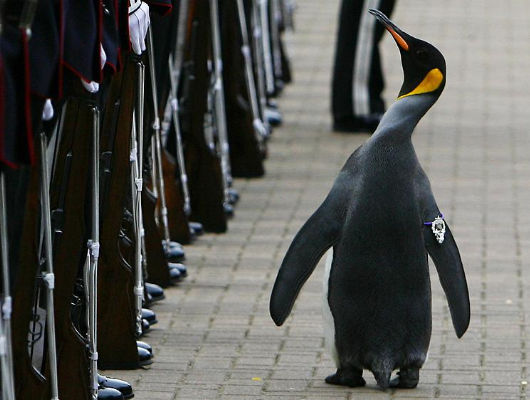
The King of Norway’s Guards is the household regiment of that Scandinavian sovereign, but their honorary colonel resides in Edinburgh, where the regimental band often performs in the famous Military Tattoo held each summer. This year, the Colonel was honored with no less than a knighthood and took the opportunity of the unit’s presence in Edinburgh to inspect the regiment. Ordinarily, this would be an unremarkable event were it not for the fact that the Colonel is Nils Olav, a penguin currently in residence at the Edinburgh Zoo.
St. Anthony Square
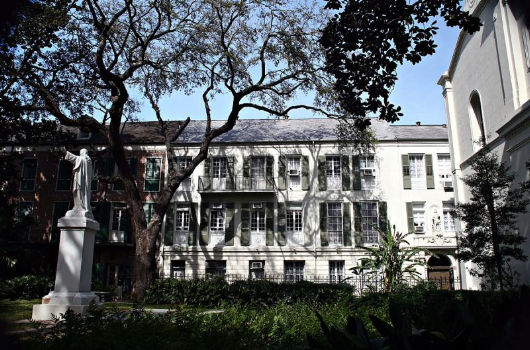
Behind the Cathedral of St. Louis, New Orleans.
The Newspaper for People in Sunglasses
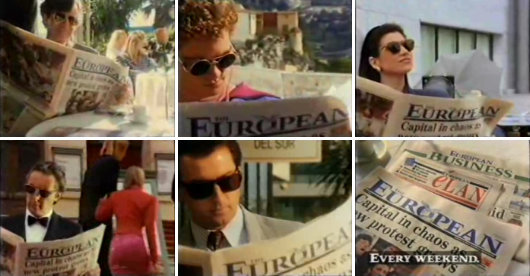
Watch this splendidly dated television advertisement for The European from 1991. In that year, the Soviet Union still existed, Eastern Airlines closed after sixty-two years in aviation, the IRA was still bombing London, Archbishop Lefebvre went on to his eternal reward, Édith Cresson became premier of France, and the Dow Jones closed above 3,000 for the first time — today it closed at 11,532.88.
What was that you were saying about “cheese-eating surrender monkeys”?
Yann Baly writes:
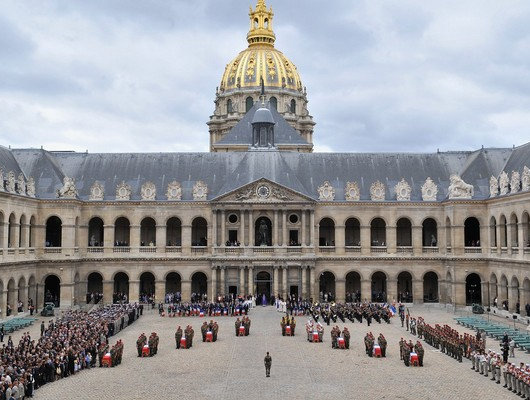
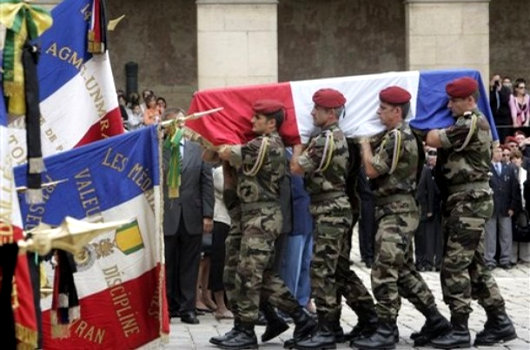
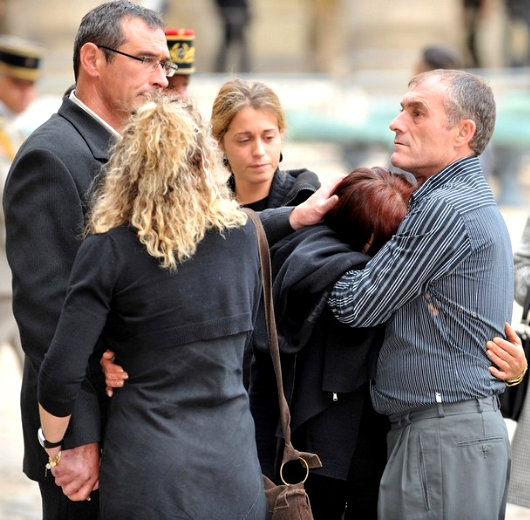
“Regarding the sacrifice of the 10 young French soldiers killed in combat in Afghanistan, we have heard many voices, including those of the families of the young parachutists, saying that they died for nothing.
“Politicians are duty-bound to question the timeliness of our engagement in Afghanistan under NATO command, in a war desired by the United States. We cannot remain silent when France, and French youth have, in the past, paid too heavy a price because of “sacred” unions in wars that diplomacy and sensible politics could have avoided.
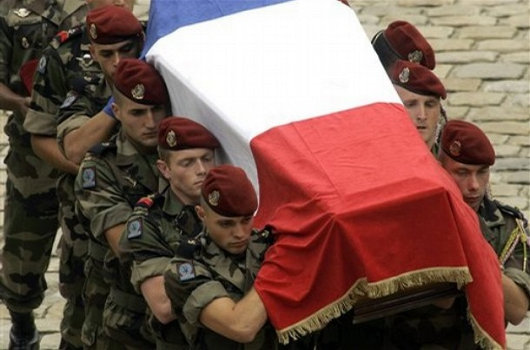
“Yesterday, in the majestic courtyard of les Invalides, the French people were able to recall that certain political errors are paid for in blood. It is therefore legitimate to wonder if Jacques Chirac (who was not present yesterday) and Lionel Jospin were right to send the French army into Afghanistan in 2001 and if Nicolas Sarkozy was not wrong to reenforce the contingent with the inadequate means we are all aware of. As Bernard Antony has reminded us, the United States has committed so many errors of foreign policy, so many criminal mistakes in its diplomatic and military actions, that one can doubt the need to be present in Afghanistan. History shows us that economic and oil interests have often been a decisive element in the American involvement in military conflicts. Fight efficiently against terrorism? There too, there are questions to be asked.
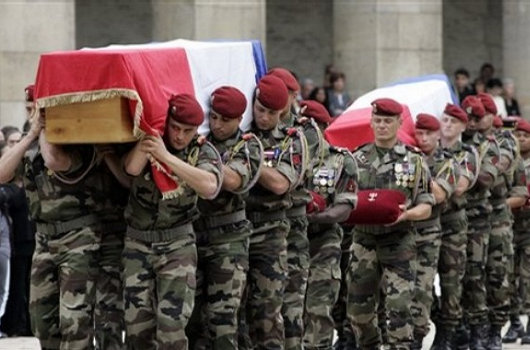
“Nonetheless, it is false to say that our young parachutists died for nothing. First of all, the French people have become conscious once again that they had an army. A month and a half after the tragedy in Carcassonne, the blood of these soldiers has washed away the lies, insults and spite, some of it coming from the head of State himself, heaped on the French army. But most of all, in our society where egoism and individualism are the rule, for a people who seem to have forgotten the meaning of sacrifice, their death in combat, at the age of 20 for most of them, is no doubt a sign of an imminent resurrection of the spirit of French resistance. In the current international and national context, this dimension is not insignificant. France, like the rest of the world, is entering into a period of uncertainties and grave risks. To be conscious of that and to prepare for it is not nothing.”
Search
Instagram: @andcusack
Click here for my Instagram photos.Most Recent Posts
- West Point July 30, 2026
- Brunel’s Unbuilt Capitol February 3, 2026
- Cricket at Fordham January 27, 2026
- Palacio Barolo Revisted January 14, 2026
- Learning to Love Liguria January 14, 2026
Most Recent Comments
Book Wishlist
Monthly Archives
Categories