About Andrew Cusack
 Writer, web designer, etc.; born in New York; educated in Argentina, Scotland, and South Africa; now based in London.
 read more
News
Blogs
Reviews & Periodicals
Arts & Design
World
France
Mitteleuropa
Knickerbockers
Argentina
The Levant
Africa
Cape of Good Hope
Netherlands
Scandinavia
Québec
India
Muscovy
Germany
Academica

Questions on the Present ‘Crisis’
I know next to nothing about finance and economics, but since stock prices which had previously been ridiculously inflated are now falling to their actual value: isn’t that a good thing? Shouldn’t we be glad the correction is finally happening and shouldn’t we have wished it had come sooner? Isn’t this something that should provoke a sigh of relief? Doesn’t all this panic on Wall Street make the financiers look like a bunch of little girls?
Of course in the old days, you had men in charge. J.P. Morgan was the head of J.P. Morgan, and by gum that meant something. There was someone to be accountable to. Nowadays, no one person owns anything, which is to say, everything is owned by everyone. As the American Loyalist of old oft said: “I would rather be ruled by one tyrant a thousand miles away then by a thousand tyrants not one mile away.” When you had a giant like Morgan around, he could invite everyone round and sort things out. Now, CEOs come and go and are accountable, not to one man, but to “shareholders”, who are apparently legion, and not terribly keen on holding their henchmen to account during the times when the profits are flowing in. The same goes for finance ministers and the central bankers.
Out with them all, I say, and bring back Mr. Morgan!
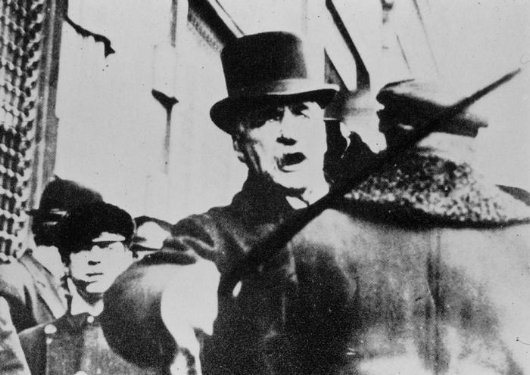
Mr. Morgan did not appreciate having his photograph taken.
The Queen of Aledo High
The overwhelming majority of Down’s Syndrome babies are killed before birth; This Texan girl was blessed enough to make the cut.

By MICHAEL E. YOUNG / The Dallas Morning News
Saturday, October 11, 2008
Never has the selection of a homecoming queen sent so many tears falling so freely.
Kristin Pass, an 18-year-old senior with Down syndrome, became Aledo High School’s homecoming queen Friday to a joyous standing ovation and the flutter of a thousand tissues on a remarkable night for an amazing young woman.
Her grandfather, Dr. David Campbell of Corsicana, escorted her onto the field and gave her a quick kiss on the cheek as Kristin joined eight other young women in the Homecoming Court to await the results of the vote, cast by the 360-plus members of Aledo High’s senior class.
Then came the announcement … and pandemonium.
Our Lady of Luján
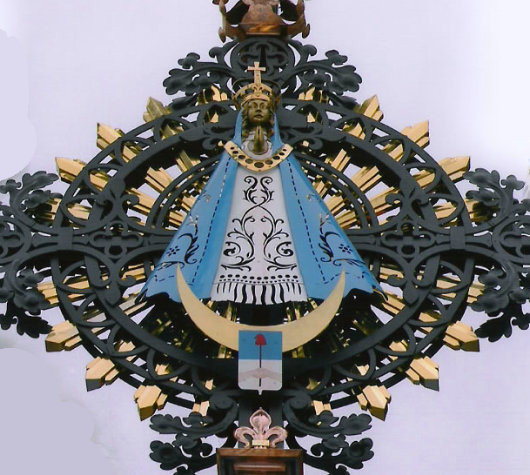
Fr. Finigan tells us that a million young people joined a recent pilgrimage to the Shrine of Our Lady of Luján, forty miles west of Buenos Aires. I had the privilege of being a pilgrim there myself on the Feast of the Assumption of the Blessed Virgin in the summer (or rather winter) of 2001.
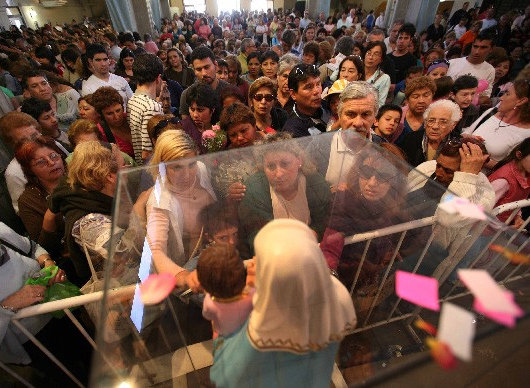
The Good Priest of Blackfen also recently pointed out an article from La Nacion about the twenty-fifth anniversary of the apparitions at San Nicolas (below).
Quo Vadis, Benedicte?
Roman Forum and Una Voce New York Event
October 19, 2008: 1:30—6:00 P.M.
Since the Catholic revival of the nineteenth century, the Papacy has found itself facing dangers on all fronts in its efforts to transform the world in Christ. On the one hand, this work has involved a need for protecting and deepening knowledge of the Deposit of Faith. On the other, it has entailed developing strategies for dealing with a globe filled with hostile visions of life that have nevertheless proven seductive to many Catholics. John Rao, Associate Professor of History at St. John’s University, discusses the historical development of the problem from the reign of Blessed Pius IX (1846-1878) until the near present; Christopher Ferrara, President of the American Catholic Lawyers Association, treats of it with respect to the specific difficulties of Pope Benedict XVI.
The Badge of the Cincinnati
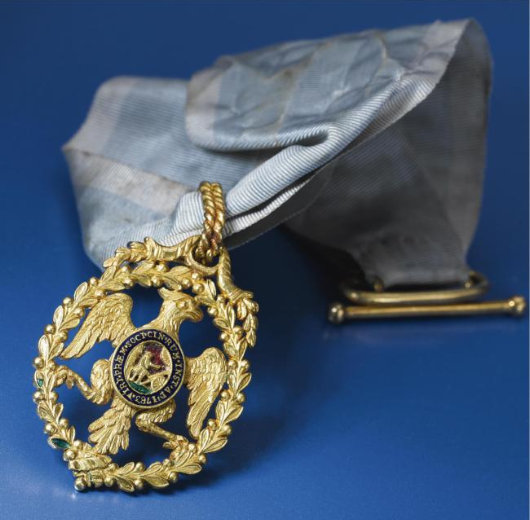
George Washington’s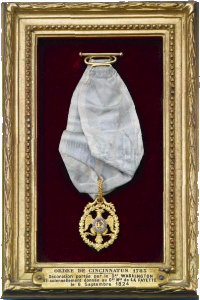 Society of the Cincinnati medal was auctioned off at Sotheby’s last year for a whopping $5,305,000. Founded by General Washington and other officers of the Continental and French armies who served in the American Revolution, the Society of the Cincinnati is the oldest and most prestigious of America’s many hereditary societies.
Louis XVI was himself a member, and the Society was known as the ordre de Cincinnatus in France, where it was added to the hierarchy of orders (even though it was not, strictly speaking, an order) as ranking just below the Order of Saint Louis.
General Washington’s Cincinnati badge was, after his death, given to the Marquis de Lafayette whose descendants kept it in the family until the auction last December.
Let Louis XVI Rest in Peace; A Funeral Mass in Manhattan
By PETER STEINFELS | The New York Times | July 17, 1989
They came not to praise the French Revolution but to bury it.
In the place of tricolor bunting, there were the black vestments of an old-fashioned Roman Catholic funeral Mass. Instead of fireworks, there were the flickering candles of a Manhattan church. Instead of the “Marseillaise,” there was the rise and fall of Gregorian chant.
They came not to praise the French Revolution but to bury it. In the place of tricolor bunting, there were the black vestments of an old-fashioned Roman Catholic funeral Mass. Instead of fireworks, there were the flickering candles of a Manhattan church. Instead of the “Marseillaise,” there was the rise and fall of Gregorian chant.
Pink champagne & civil war
In “Neither a Lender Nor a Borrower Be” from the October New English Review, Theodore Dalrymple discusses his own first-hand encounter with the lending crisis:
With a large loan outstanding, I continued to receive, about every month or so, offers of a further loan of $50,000, no questions asked and mine for the borrowing by mere telephone call, just in case there were any little extras or extravagances I happened to feel like treating myself to (but apply now, before next month’s offer of precisely the same thing!). The principal example given of the little extras or extravagances to which I might want to treat myself was the holiday of a lifetime.
Two considerations led me to turn down all these kind offers. The first is that my taste in holidays of a lifetime runs more to observing civil wars than to lolling in the lap of luxury, and while sometimes expensive to go to, civil wars offer little in the way of sybaritic possibilities (though there was a surprising availability of pink champagne during the Liberian civil war, even if it was difficult to chill).
The South African Fleet Review
Africa’s oldest navy parades its newest frigates
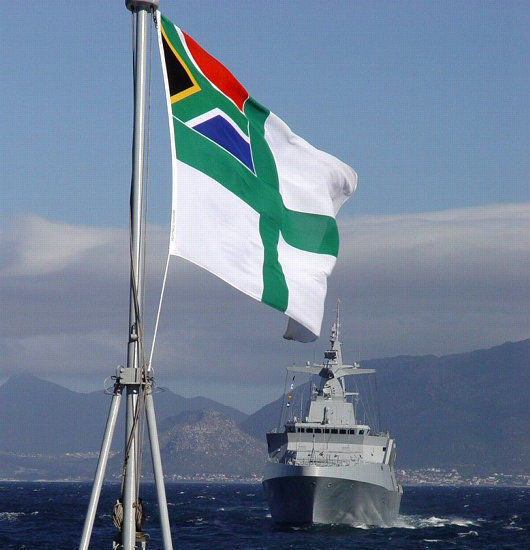
Fleet reviews are not very common occurrences. According to legend, the first fleet review took place when King Henry VIII on a whim gave the order to assemble his navy’s ships as he wanted “to see the fleet together”. On that occasion, the omnivorous monarch was rowed from vessel to vessel and enjoyed a repast on each. The tradition of the monarch reviewing the fleet continued, and usually took place to commemorate the coronation, to welcome a visiting monarch, or to commemorate some other event or occasion of great import.
Since the time of George III, British fleet reviews have typically taken place at Spithead between Portsmouth and the Isle of Wight. The 1814 review celebrating the Treaty of Paris was the last to be composed of only sailing ships, and included fifteen ships of the line and thirty-one frigates: “the tremendous naval armaments which has swept from the ocean the fleets of France and Spain and secured to Britain the domain of the sea”. The 1937 Coronation Fleet Review was made famous by the BBC radio commentary given by Lieutenant-Commander Thomas Woodrooffe. The retired naval officer had met up with a number of chums from his more sea-worthy days in a pub before the broadcast. Woodrooffe’s commentary was so incoherent that he was taken off the air within a couple of minutes; as the fleet was specially illuminated in the evening, Lt.-Cdr. Woodrooffe continually repeated “the Fleet’s lit up”; “lit up” also being a euphemism at the time for being drunk.
NRC, among others, gets it right
The Netherlands’ premier broadsheet has gone partly English online
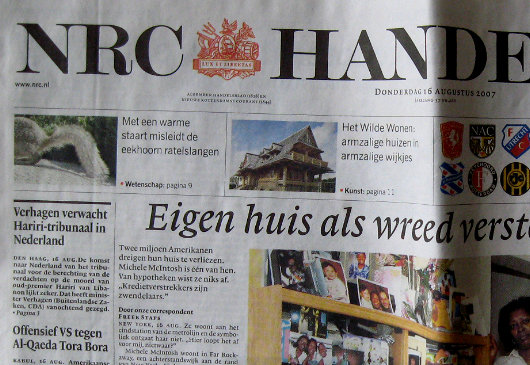
The moderate liberal Dutch broadsheet NRC Handelsblad is the latest of a series of European periodicals looking for a more international readership by translating part of their content into English for distribution on the world wide web. “NRC International” is partnered with the German weekly magazine Der Spiegel, itself a pioneer in featuring English content in an “international” section of its website. Aside from NRC and Der Spiegel, other news outlets now featuring web-only English-language content are Germany’s Die Welt and Hungary’s Heti Világgazdaság, while Eurozine features translated and original content from a broad spectrum of continental reviews and journals. Sadly, Sign and Sight recently had to reduce their “From the Feuilletons” — looking at the culture pages of German-language newspapers — from a daily to a weekly feature. Sign and Sight also features a weekly “Magazine Roundup” doing the rounds of a wide variety of European, Asian, and American magazines.
The move comes as print newspapers of the conventional variety across Europe and America are losing circulation. Some Manhattan newsstands have seen takers for the Sunday New York Times fall by as much as 80% in the past few years. The New York Times and Wall Street Journal both recently narrowed their page width in a move to save paper costs; the change, however, also means less room for advertising and a more ungainly appearance.
South Africa’s Herald, meanwhile, has bucked the gloomy trend and increased its readership by 14.5% in the past year. The Herald, the Eastern and Southern Cape’s regional broadsheet, attributes its success to a visual redesign and reorienting content to encourage readers to link up with the newspaper’s website. South Africa is also home to The Times (not to be confused with the older Cape Times), a new upmarket broadsheet newspaper launched as a daily extension of the century-old Sunday Times. The weekday Times was started a year ago and its circulation since just June has seen a 10.4% increase.
A major problem for the industry is that formerly high-end newspapers have driven down the quality of their product to a suicidal extent over the past decades. The middle market, for better or worse, is dead, and publishers have three alternatives to this disappearing sector: 1) go lowest-common-denominator — as The Times of London has done, with only moderate success; 2) go up-market — The Times and Sunday Times of South Africa have proved worthwile; or 3) go niche — the New York Observer is still in business after two decades of aiming towards Manhattan’s yuppie community.
Whichever path taken, integrating print and web operations is vital for the survival of print newspapers and other “dead tree” media. That European newspapers are providing at least part of their content in English is helpful in keeping up with events and ideas in countries like Germany, the Netherlands, and Hungary as our native English-language media are tightening their belts and cutting foreign correspondents and coverage. I hope more non-English papers follow this trend and help to permanentize it.
Words of Windisch-Grätz Wisdom
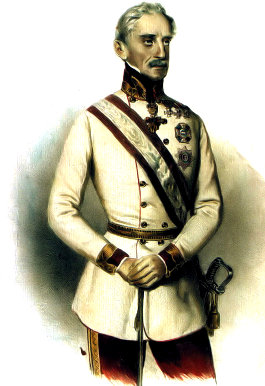
Prince of Windisch-Grätz
on the liberal constitutionalist rebels
Lumsden Requiem in Edinburgh
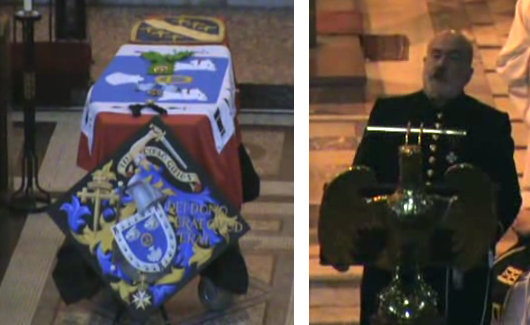
Some good Christian soul was kind enough to put most of our friend David Lumsden‘s funeral at St. Mary’s (Catholic) Cathedral in Edinburgh on YouTube. It was the first Latin requiem in the extraordinary form of the Mass held in the Cathedral for many decades — a fact which David would have particularly enjoyed. Of note is the address given by Robin Angus, embedded below, and of course Gerald Warner’s previously mentioned report should not be missed either.
Horse & Hound in Montreal

A splendid afternoon is the best way to describe it. Last Sunday up in St-Augustin-de-Mirabel it was the annual hunter trials of the Montreal Hunt Club – the oldest hunt in the New World. Club treasurer Annette Laroche suggested swinging by the Club sometime and as it happens a good friend had just moved to Montreal. So when Raymond Côté (seen in the previous post jumping on the beautiful white mare Frimousse) sent an invite to the hunter trials, I knew it’d be foolish not to take the opportunity to visit the beautiful land of Quebec for the first time in many years.
The Petit Séminaire de Québec
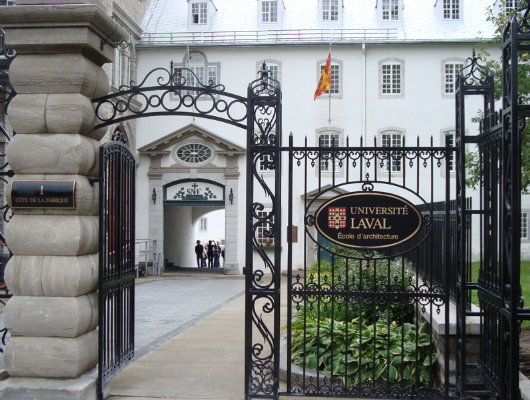
Adjoined to the ancient Cathedral Basilica of Notre-Dame in Quebec City is the Petit Séminaire. The Séminaire de Québec was founded in 1663 by the Blessed François Laval to train priests for the Vicariate Apostolic of New France, and the Petit Séminaire, its secondary school, was founded just five years later to teach both colonial French and native Indian youths. Among the school’s former pupils are four prime ministers of Québec, two lieutenant-governors (as the Queen’s viceregal representative in the province is known), and many other writers, politicians, and important figures of history. The Petit Séminaire survives today as a private Catholic secondary school.
Quebec

I will be off in Quebec for a few days.
St. Juan Macias
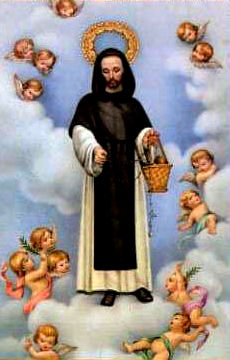
Posted in aid of a friend’s intention.
Lewis of the Porcellian
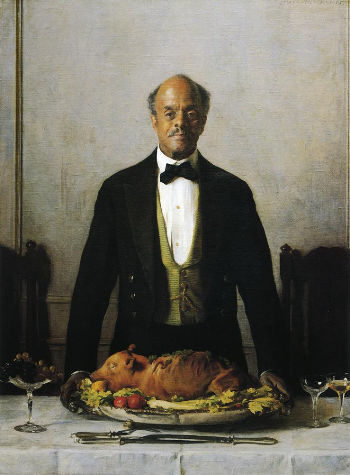
Oil on canvas, 54 in. x 40 in.
1919, the Porcellian Club
The Porcellian Club at Harvard University was founded in 1791 and McKean Gate, the entrance to Harvard Yard opposite the club’s quarters on Massachusetts Avenue in Cambridge, features a boar’s head in tribute. Digby Baltzell ranked the Porc (as it is colloquially known) as the most exclusive of Harvard’s “final clubs”, and Porcellian is known for having correctly turned its nose to Harvard seniors who later turned out to be no good: Joseph Kennedy was blackballed and Franklin D. Roosevelt described his failure to be elected to Porcellian as “the greatest disappointment of my life”.
Prinsjesdag
The State Opening of the States-General of the Netherlands
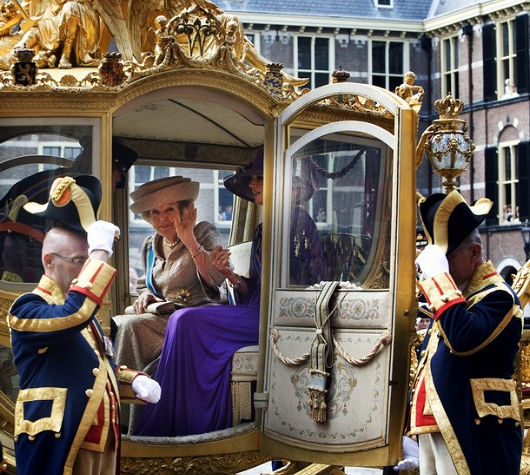
The third Tuesday in September beholds Prinsjesdag — the Day of the Princes — when the Queen of the Netherlands formally opens the annual parliamentary session of the States-General. Queen Beatrix arrives at the Ridderzaal (Knight’s Hall) of the Binnehof palace in the center of The Hague by means of the Gouden Koets (Golden Coach) presented to her predecessor Wilhelmina by the grateful burgers of the city of Amsterdam.
The Pope in Paris
Benedict XVI brings a message of love & hope to the City of Light
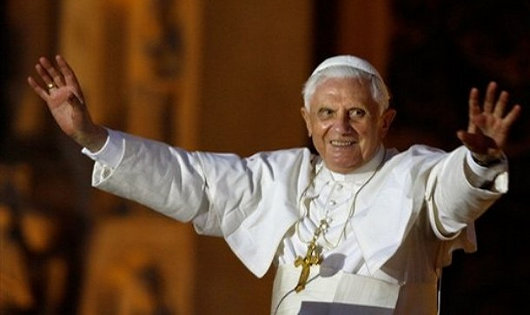
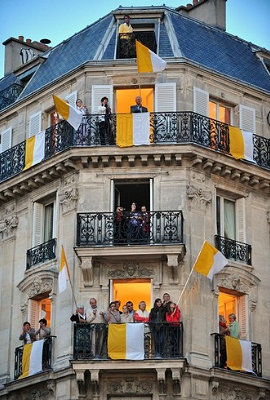 It is wholly appropriate that the motto of the city of Paris is Fluctuat nec mergitur: “Tossed by waves, she does not sink”. It would be hard to find better words to describe the Barque of Peter, whose Holy Father the Pope has spent the past two days in the French capital. From time immemorial, France has been described as “the eldest daughter of the Church”, its primatial see of Lyons established in the second century and Clovis, its first Christian king, receiving baptism in 498. But alongside the 1,500 years of Christianity, France has, for the past two centuries, also been a font of revolution and disruption — the very spirit of that first “non serviam“.
It was the French thinker Charles Maurras — not himself a Catholic until the very end of his life — who conceived of the notion that (since the Revolution) there was not one France but two: le pays réel and le pays legal; The real France, Catholic and true, versus the official France, irreligious and contrived. Just as Maurras differentiated the two visions of France, we in the English-speaking world know that England is truly a Catholic country that is suffering from a four-century interregnum (and so with Scotland, and Ireland, and America, and Canada, and Australia…). We love our homes but we know they are not truly themselves — they do not truly reflect that idea of their essence — until they enjoy the fullness of Christian communion.
Search
Instagram: @andcusack
Click here for my Instagram photos.Most Recent Posts
- West Point July 30, 2026
- Brunel’s Unbuilt Capitol February 3, 2026
- Cricket at Fordham January 27, 2026
- Palacio Barolo Revisted January 14, 2026
- Learning to Love Liguria January 14, 2026
Most Recent Comments
Book Wishlist
Monthly Archives
Categories