About Andrew Cusack
 Writer, web designer, etc.; born in New York; educated in Argentina, Scotland, and South Africa; now based in London.
 read more
News
Blogs
Reviews & Periodicals
Arts & Design
World
France
Mitteleuropa
Knickerbockers
Argentina
The Levant
Africa
Cape of Good Hope
Netherlands
Scandinavia
Québec
India
Muscovy
Germany
Academica
Dr. Strangelove & Dr. Timmerman
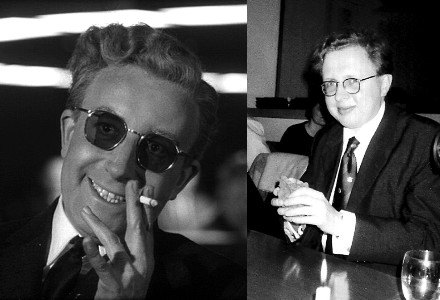
I’ve always had suspicions about my friend Dr. Jens Timmerman, a Göttingen/Balliol man and the Frankfurter Allgemeine Zeitung‘s only subscriber in the Royal Burgh of St Andrews. He clearly has some Strangelovian blood in his veins.
One of the best things about Jens (apart from being a man of erudition and taste) is his refusal to give in to the low standard of propriety maintained by students; especially the practice of arriving for his lecture, picking up the handout, and leaving immediately. One day he made a fake handout and waited for the lazybones to leave before distributing the real handout to the remnant. It included, under ‘Further Reading’, a guide to manners and etiquette. Also, I am informed that whenever a mobile phone goes off during one of his lectures he pronounces “Please turn off your walkie-talkies!”
Dawn Eden in the Irish Times

This morning I was browsing the front pages of a few of the world’s leading dailies and came across the Irish Times. I thought to myself “My, that lady bears a striking resemblence to Dawn Eden.” Then I read the headline ‘Chastity Can Make You Happier, Says Author’ and thought to myself “How bizarre! That sounds just like something Dawn would say.” Finally I put two and two together and thought “Crikey! That is Dawn!” C.f. the Dawn Patrol.
Our readers will no doubt recall that Dawn mentioned my comments regarding the Brooklyn Museum’s mauling of their own façade in her Daily News column. More recently she’s written a book and has been buying refrigerators for nuns.
Elsewhere: Superpower: The View from New York – Matt Alderman reports on a night on the town with Dawn Eden including the ever-prescient and incisive wisdom of Andrew Cusack
An Old Military Academy on Long Island
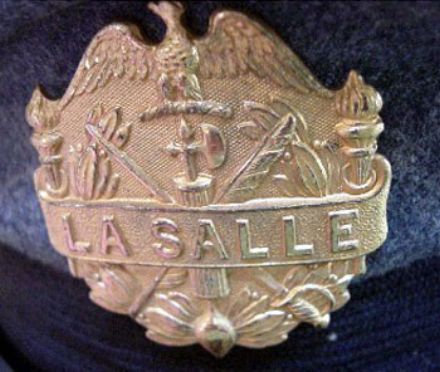
EDUCATION HAS BEEN one of the long-standing traditions of the Christian faith, as has service, and what better expression of education and service is there than the Catholic military school. La Salle Military Academy in Oakdale, L.I. was just one of these institutions, founded by the de la Salle Christian Brothers in 1883. The school was actually founded here in Westchester as the Westchester Institute, but moved in 1926 to Indian Neck Hall on Long Island, built by F.G. Bourne (whose upsate shack was Singer Castle on Dark Island) and once one of the largest estates on the Island. The main building was a 110-room mansion overlooking Great South Bay, designed by Ernest Flagg who, coincidentally, was responsible much of the Naval Academy at Annapolis including the great chapel which contains the tomb of John Paul Jones, sometime admiral of the United States and Imperial Russian navies. (more…)
An Old Boathouse in Spuyten Duyvil
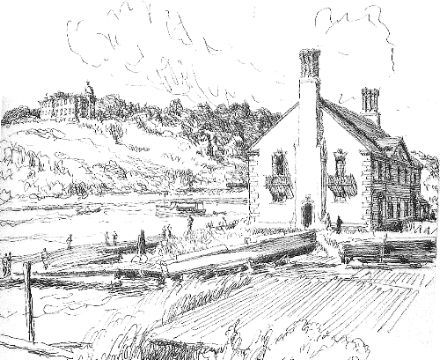
Flipping through an old book called ‘Magical City: Intimate Sketches of New York’, I came upon this sketch of the Gould Boathouse of Columbia University on the Harlem River by Spuyten Duyvil. I had never come across this little building before and had significant doubts as to whether it was still there, but to my pleasant surprise it does. I’m afraid I don’t know much about the boathouse nor its history, but here follows a number of photos and images of it, and of various Columbia boathouses of the past. (more…)
Politician Mentions Chesterton
Hold the Front Page!
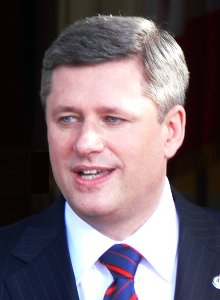 The Canadian Prime Minister, the Rt. Hon. Stephen Harper PC MP, has moved higher in my estimations since I read the transcript of his speech given this past Friday to the Canada-U.K. Chamber of Commerce. The Prime Minister recalled the words of Sir Winston Churchill speaking in Ottawa in 1929 that at the heart of the relationship between Canada and the United Kingdom “is the golden circle of the Crown which links us all together with the majestic past that takes us back to the Tudors, the Plantagenets, the Magna Carta, habeas corpus, petition of rights, and English common law… all those massive stepping stones which the people of the British race shaped and forged to the joy, and peace, and glory of mankind.”
The Prime Minister continued: “Britain gave Canada all that – and much more. Including: Parliamentary democracy; a commitment to basic freedoms; the industrial revolution; and the entrepreneurial spirit and free market economy. Not to mention Shakespeare, Dickens, Kipling, Lewis, and Chesterton.”
Chesterton! How splendid to hear a politician, not to mention a head of government – an American head of government (North American, if you insist) – include G.K. Chesterton as one of the precious gifts of the Mother Country to her far-flung children in the English-Speaking World.
Previously: Dilbert on Gilbert | Chesterton Remembered
Peter Simple I
The death not all too long ago of Mr. Michael Wharton of the Daily Telegraph‘s Peter Simple column was a great loss to skeptics of modernity in the English-speaking world. We have decided, in little helpings, to bring you a bit of the greatness of Peter Simple on this website so that you may at least have a small taste of what we have lost. Though the column ran for over half a century, we begin with two excerpts from 2000 and 2001 respectively.
Quiz
22 DECEMBER 2000
 HERE are the answers to the annual columnar quiz: (1) the boiling point of Zirconium; (2) the Papal Bull Neo Igitir Sufflaminanda, issued by Pope Innocent the Terrible in 1264; (3) In the slow movement of Mahler’s Symphony No 43 (“the Inexhaustible”), passages for tubular bells are marked con sarcasmo; (4) Douglas Sartre’s Through a Chiltern Window (1906).
(5) We know that Col Palamountain, Dr Znacz, the Rev Ian Yeast and Mrs Library-Smith were playing bridge in the residents’ lounge of the Seaview Hotel at Norquey at 4.25pm, the precise moment when Lord Haversnake’s body was found in the shrubbery by Bates, the head porter.
According to Wendy Kakopoulidis, a temporary Greek waitress, Adam Strongitharm, self-styled ex-commando, para-pharmacist and philanderer, was seen at 4.35 abseiling from the roof of the conservatory after trying unsuccessfully to set it on fire. Therefore the murderer can only have been Miss Bagster.
The questions will appear in the New Year.
A Model Planet
9 FEBRUARY 2001
THE status of Pluto, recognised since its discovery in 1930 as the outermost planet of the solar system, is threatened by American astronomers who maintain that it is not a planet at all but merely the largest of the icy bodies, called the Kuiper Belt, that orbit Neptune.
The American Dr Neil Tyson, whose astronomer’s heart seems to be as warm as Pluto is reputed to be cold, explains how Pluto has changed “from the most puny planet to the King of the Kuiper Belt. I think it is happier that way,” he says consolingly. But an English astronomer, Jacqueline Mitton, says “we have come to know Pluto as a planet and there is no need to downgrade it now”.
The latest probe by the columnar space vehicle “Don Carlos and the Holy Alliance III” sheds a new, balmy light on this quarrel. Daguerreotypes just received from space suggest that Pluto, far from being a miserable ball of ice and rock, is a pleasant little world with many lessons to offer our own.
For such a small planet, it seems to have a remarkable variety of landscape. There are fertile valleys, mountains neither too big nor too small for symmetry, trout streams and salmon rivers, forests plentifully supplied with deer and other game, as well as wolves and bears. Towards the poles there are wild regions to attract adventurous explorers.
A hereditary class of great landowners presides over a russet-cheeked, contented peasantry toiling dutifully in the fields as their forebears have done from time immemorial, remarkable for their godly and healthy lives. Machines other than ploughshares and, interestingly, a few bicycles are nowhere to be seen. Some of the daguerreotypes, taken by electro-galvanic telescopic camera obscura, show everyday scenes that cannot fail to move anyone who fears for the future of our own human race.
Here an aged peasant, snowy haired but still straight-backed and vigorous, sits at his cottage door in the Plutonian evening, carving wooden toys for the grandchildren clustering eagerly about his knees. Indoors, a young peasant woman, perhaps their mother, decked with quiet graces, sits by candlelight, bending her modest head over her needlework – surely a scene as beautiful and edifying as any planet can offer.
Is astronomy, like all science, subjective? In the light of our discoveries, it does not seem to matter much whether Pluto is a proper planet or King of the Kuiper Belt.
The Rome of the West
The Churches of Glorious St. Louis, Capital of Middle America
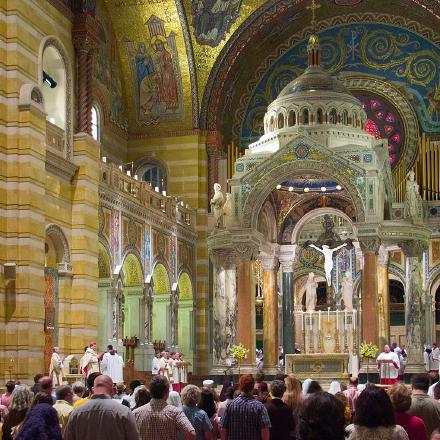
WE ON THE EASTERN Seabord often think that our cities are the last word in ecclesiastical architecture, but Mark Scott Abeln’s splendid ‘Rome of the West‘ site goes a long way towards reminding us of the great physical deposit of Western Civilization and Christian culture situated in the city of St. Louis on the Mississippi River, deep in the heart of America. To show my fellow provincial knickerbockers the richness of St. Louis’s church architecture, I’ve chosen a few photos from Mr. Abeln’s site for posting on this site. A wonderful exhibiton of America’s (which is to say Europe’s) rich cultural heritage.
The jewel in this crown of Catholic Middle America is most certainly the Cathedral Basilica of Saint Louis (above and below). The Cathedral was begun in 1907 and contains the largest collection of mosaic artwork in the world covering 83,000 square feet, the last tesserae of which was installed in 1988. The architecture of the basilica features a number of styles, from the Romanesque Revival exterior to the Byzantine plan and interior, and even contains a chapel designed in the Viennese Reconstructionist style. (more…)
Marshal Foch and the Old Guard
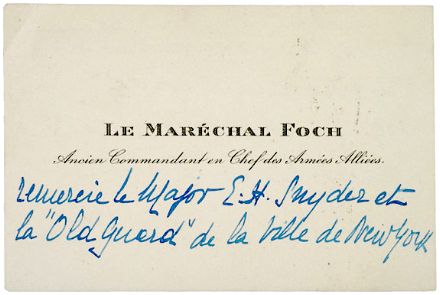
This calling card of Marshal Ferdinand Foch, Supreme Allied Commander during the First World War, was for sale in November of 2005. The text reads Le Maréchal Foch, Ancien Commandant en Chef des Armées Alliées, remercie le Major E.H. Snyder et la “Old Guard” de la Ville de New York or, in English, “Marshal Foch, Former Commander in Chief of the Allied Armies, thanks Major E.H. Snyder and the Old Guard of the City of New York”.
Previously: A New York Funeral | Old Guardsmen | The Old Guard | Grandpa
The Veteran Corps of Artillery
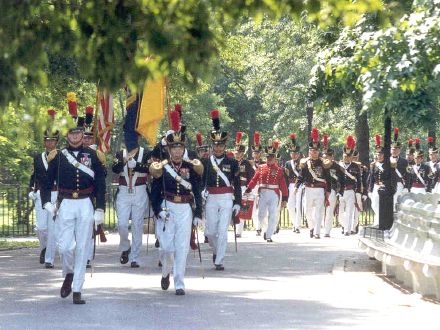
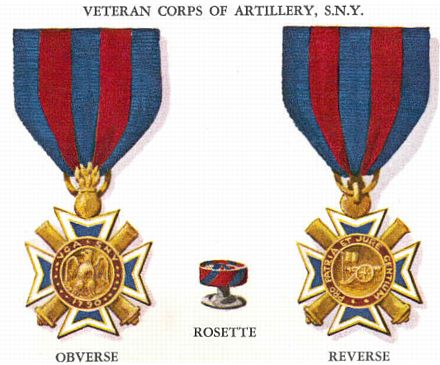 I PROMISED MYSELF I’d wake up this 4th of July morning and head down to the Battery for the annual Independence Day artillery salute by the Veteran Corps of Artillery. However, the gods of slumber ordained that I remain in bed asleep and so in recompense I thought I’d bring you, dear readers, an informative post about the Corps itself. While this site has featured a fair amount on the Old Guard we mustn’t let our readers be mistaken that we are somehow ignoring the VCA. After all, the Veteran Corps of Artillery, State of New York, founded in 1790, is more senior to the Old Guard, founded in 1826 (though in fact an amalgamation of the two older militia companies, if I recall correctly). While there is more of the Old Guard available from online research, I am more familiar with the VCA owing to my Uncle Matt’s membership thereof. And of course, like the Old Guard, the VCA operates on a seperate ranking structure, so that one could be a Major General in the Army, National Guard, or New York Guard, and yet be a mere private in the Veteran Corps of Artillery. (more…)
Graduation
In Which the Degree of Magister Artium is Conferred Upon the Author
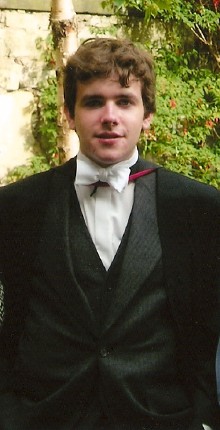 The reader is no doubt anxious to hear about the recent goings-on within the Royal Burgh of St Andrews, that ‘auld grey toon’, relating and pertaining to the awarding of a degree to yours truly in recompense for four arduous years of undergraduate study, and so I bring it upon myself to relate a chronicle of said events.
The Saturday preceding graduation week, I was sitting enjoying a cup of tea with young Miss Dempsey in the Common Room of Canmore on the Scores when I gazed out the window and chanced upon my own dear uncle, Col. Matthew Cusack himself, gazing back at me with surprise. I rushed outside to greet him and invited him in to Canmore to introduce him to Clare before continuing back outside to seek the remainder of my visiting relatives due to arrive. We found them all (bar my brother Airman Matthew Cusack, who would arrive a few days later) around the corner up Murray Park, and it was then that I was first introduced to my dear little nephew Finn, merely a few weeks after his happy arrival. My mother, father, sister, brother-in-law, uncle, aunt, and second uncle all accompanied the little one, whom I have placed under the protection of St. Marcellinus. We made our way to the surprisingly commodious house on the Scores which we rented for the duration of the week and settled down in our temporary abode. (more…)
Major General Lord Monckton of Brenchley, 1915-2006
Knight Grand Cross of Obedience of the Order of Malta
Maj-Gen the 2nd Viscount Monckton of Brenchley, who has died aged 90, was awarded an MC in 1940 and later became director of Army public relations at a time when the Armed Forces’ public profile was growing in importance.
At 50 he retired early to run his 350-acre farm in Kent and to join the boards of a series of firms to help pay for the education of his five children. In the House of Lords he became a persistent critic of the neglect of rural and military interests, and took a lifelong interest in archaeology and water divining.
The sole Roman Catholic trustee of a £3 million appeal for Canterbury Cathedral in 1974, Monckton was president of the British Association of the Sovereign Order of Malta, and helped to ease strained relations with its Anglican counterpart, the Venerable Order of St John of Jerusalem, by taking part in ecumenical services.
He also played a key role in forming the Order of Malta Volunteers, who aid the sick at the shrine of Lourdes, and in setting up trust care homes with the Venerable Order.
Empire State
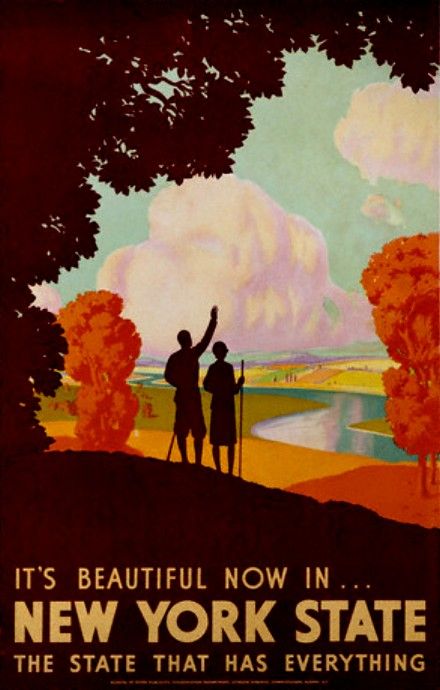
Having been duly capped on the head by the Rt. Hon. Menzies Campbell QC MP with John Knox’s breeks last Thursday I have returned to the land of my birth a Master of the Arts. Details of the various rites and festivities are forthcoming, but in the mean time I share with you these three travel posters from back in the day when they made proper travel posters. All three advertise our blessed Empire State, two of them West Point, the glorious gothic crown of the Hudson. Excelsior!
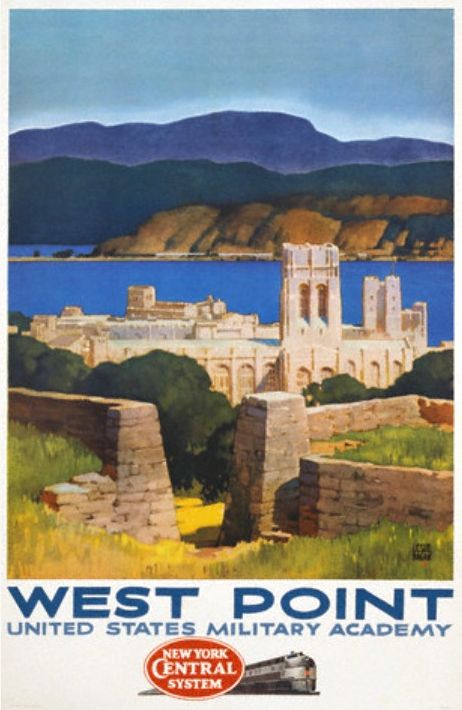
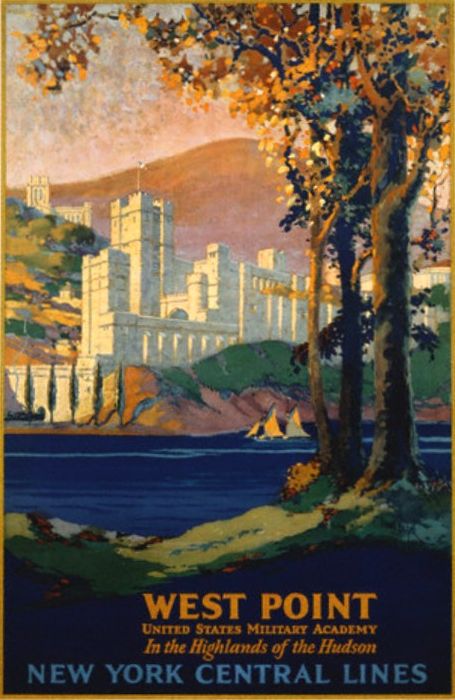
Click on the images for the full posters.
Awaiting Pars Secunda
Since my university years have now come to their scheduled conclusion, there has naturally been much speculation in the learned societies and respectable journals as to what shall become of me. One of our Novanglian fellow-travellers has suggested I follow young Winston Churchill’s aim of legislative service, though I’d rather be a subaltern in the 4th Hussars! Colonel Cusack, meanwhile, has suggested the Executive Mansion rather than the House of Assembly. Alas, the future of young Cusack remains as yet shrouded by a misted veil of uncertainty through which not even old Tiresias can portend. My own particular desire is to be rolled around Bronxville in a wheelchair, flannel blanket covering my lap, with a cane to shake in fury at passing vagrants.
Previously: Whither Cusack?
‘OUCA flag pilfered by splinter group’
Cherwell, 26 May 2006
THE FLAG of the Oxford University Conservative Association has been stolen by a splinter group and is being held at ransom. David Cochrane and Ian Wellby raised the flag up the Keble flag pole in an act that Cochrane says “claimed Keble for OUCA”.
“This does mark an historic occasion for OUCA as we have essentially created a new OUCA. We have got rid of all the gimps and all is fun now,” he said.
“This is a historical occasion comparable to Labour’s landslide in 1997, the end of the Hundreds Year War, the first time that William Shakespeare put pen to paper, the development of penicillin, or the winning of World War II,” he added.
By the next morning the flag had been taken down by the porters and had been claimed by a group calling themselves the People’s Front for the Liberation of OUCA, and who are believed to be loosely associated with the Moles Dining Club.
The Spiritual Leader of the People’s Front for the Liberation of OUCA said, “The OUCA colours have been liberated from under the very nose of the criminal Steel. They have been taken ‘Over The Water’. They shall remain there until True Monarchy is restored to OUCA. The nefarious Steel must be deposed and face justice for his manifold crimes.”
An ex-OUCA member who was present when the flag was stolen said that the oversized flag was a tradition, and that their actions were a response to rumours that Charlie Steele, the current OUCA President, planned to sell the flag.
Steel said, “Although it is no bad thing to see the OUCA flag grace the mast of the Keble flag pole, and indeed this is essentially harmless fun, it is very disappointing that people have taken it upon themselves to then steal it the following day. This amounts to nothing more than theft, and the Association will not tolerate illegal behavior of any kind.”
The Dean of OUCA, Reverend David Johnson, said, “It was incredibly stylish to fly the flag from Keble. It was bought at an extortionate cost of £400, and I thought it was ludicrous, but when it was draped over a table I thought it looked rather smart and was sort of nostalgic.”
The Royal Scots Dragoon Guards
The 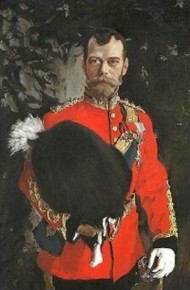 Royal Scots Dragoon Guards (Carabiniers and Greys), to give its full name, is a rather interesting outfit, being Scotland’s only cavalry regiment and indeed the senior Scottish regiment in the entire British Army. The oldest antecedents of the regiment date back to the late 1600s, though it only took its current form as SCOTS DG (the official abbreviation) in 1971. The unit’s cap badge displays the French Imperial Eagle captured by the Scots Greys (the main antecedent of the current regiment) at Waterloo. More interestingly, however, is that the cap badge is always, even to this day, worn on a black facing, in mourning for Czar Nicholas II.
The Czar was Colonel-in-Chief of the Scots Greys from 1894 until his grizly murder at the hands of the Bolsheviks. Indeed, at regimental dinners at which the band is present, ‘God Save the Czar’, the old Russian Imperial Anthem, is still played in memory of His Imperial Majesty and his family. In 1998, the Commanding Officer and a regimental party were present at the interrment of the Czar’s remains in St. Petersburg. The Czar is pictured above in his uniform as Colonel-in-Chief of the regiment. Unique amongst the British cavalry regiments, the full dress uniform of the Royal Scots Dragoon Guards includes the bearskin cap, a privilege inherited from the Scots Greys.
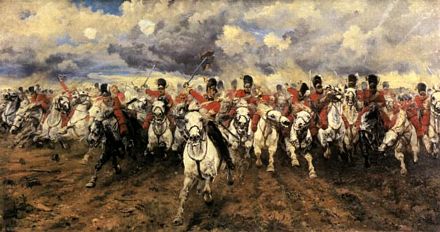
The Scots Greys were also the subject of one of Lady Elizabeth Butler’s great paintings, ‘Scotland Forever!’ (below, and in larger form here), depicting their charge at the Battle of Waterloo in 1815 and further described here by our own Man About Mayfair. Of course, the fact which we have no doubt will bring even greater reknown to the Royal Scots Dragoon Guards is its privilege of counting the great William Calderhead, M.A. (Hons), St Andrews 2004, among its officers.
Honours of Various Sorts
Sentenced to life…
The University of St Andrews Students Association has apparently decided to reward my tireless efforts towards the embetterment of my fellow St Andreans with Honorary Life Membership of that body. I find it rather nice and very amusing, not to mention ironic, being as a central part of said tireless efforts has been waging intellectual warfare against the Students Association. I asked those in the know (chiefly my former secretary, Miss Alexandra Jennings, who formerly held positions in the Association) and apparently I’ve been on the list to receive one since second year, except they’re only given to graduating magistrands (that’s fourth-years, ye laymen) so I had to wait until now for it. I assume it is in recognition for my foundation of the Mitre, the first quality student newspaper at the University of St Andrews in some many years. Alas, the Mitre was laid to rest owing to my dissertation work, but it just might be revived by the legendary Jon Burke and some of his crew next year. (Watch this space!). The ever-charming Miss Alexandra Harrod will also receive an Honorary Life Membership, so at least I’ll have someone to chat with at the ceremony next week. I wonder if I get to adoptd H.L.M as postnominals?
A degree
Speaking of postnominals, I’ve finally earned myself some. As of just a few days ago I am now Andrew K. B. Cusack, M.A. (Hons). The Universitas Doctorum Magistrorum et Scholarum Sancti Andreae apud Scotos has seen fit to award me with the title of Magister Artium, or to be more precise a Master of the Arts (Honours, Second Class, Division II). This degree is more commonly referred to as a 2:2, nicknamed a ‘Desmond’ after the former Archbishop of Cape Town, Desmond Tutu. I am very glad, even a little surprised, to be getting my degree on time in the allotted four years, but I must confess I am mildly disappointed with the 2:2. Evelyn Waugh was famously of the opinion that one should get either a First or a Fourth. Fourths have since been abolished on the grounds that they might hurt someone’s feelings, and thus Seconds became 2:1’s, Thirds became 2:2’s, and Fourths became Thirds. Firsts, naturally, remain Firsts, and chiefly go to two categories of persons: 1) Complete bores who do nothing but sit in the library, studying, revising, and doing lots of work, and 2) Interesting and rather clever people who say to themselves “Hmmm… think I’ll go for a first” and do. 2:1’s, then, have rather become the standard degree, awarded to most students. I, as stated, have been awarded the 2:2, which is the St Andrews equivalent of the Gentleman’s C. It shows you were either too busy with either your own individual research outwith the academic curriculum or you just couldn’t be bothered to waste your hours on academic work. I think I’m guilty on both counts. The Third, then, is the lowest of the low, but has a certain cachet about it for that. Certainly a number of stupid people get thirds, but then a number of clever folks do as well, and they have every right to wear it as a badge of honour. At any rate, I’m very happy to have my degree at all, and an M.A. to boot. Beats all those lousy BAs and BScs my camarades back home are receiving. My graduation exercises (a mere formality, which disgusting modernists like Nicholas Vincent neglect to attend) take place the Thursday of next week, and a large delegation of the Clan Cusack are hopping the pond for the event. Rather looking forward to it, actually.

Tom Grant, 1986-2006
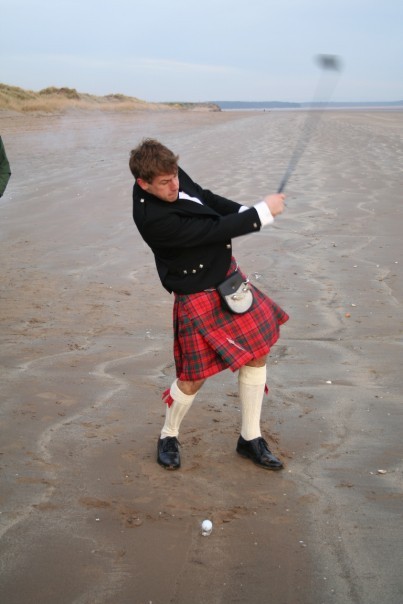
A good man and a brave man. May he rest in peace.
Brave student had heart set on Sandhurst (The Telegraph)
Cadet killed on train was role model for friends (The Times)
Stab victim, 19, died doing the right thing (The Daily Mail)
Tributes to train stabbing victim (BBC News)
The student who was stabbed for trying to break up a fight (The Independent)
Tributes to Hero Stabbed to Death on Train (The Daily Record)
Tributes for ‘joker’ Tom (The Sun)
The Perils of Over-Restoration
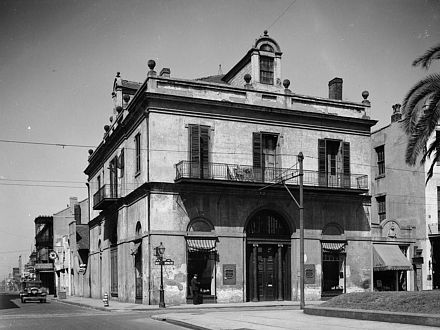
A rather good article I was reading in the Oxford American (via V&V) reminded me of a building I stumbled upon in the Historic American Buildings Survey, digitized at the Library of Congress. No. 403 Royal Street in the French Quarter of New Orleans was designed by one of the first master architects in America, Benjamin Latrobe, who also designed the Baltimore Basilica, the Mother Church of the United States. Resting at the corner of Royal and Conti streets, the building was constructed by the Louisiana State Bank (later subsumed into la Banque de la Louisiane) and features a domed banking hall in the center. After having outlived its usefulness under its original purpose, it became a private residence, with the central banking hall turned into a living room, before being turned into an events venue as it remains today. (more…)
Search
Instagram: @andcusack
Click here for my Instagram photos.Most Recent Posts
- Brunel’s Unbuilt Capitol February 3, 2026
- Cricket at Fordham January 27, 2026
- Palacio Barolo Revisted January 14, 2026
- Learning to Love Liguria January 14, 2026
- Crux Alba No. 2 January 13, 2026
Most Recent Comments
Book Wishlist
Monthly Archives
Categories