History
About Andrew Cusack
 Writer, web designer, etc.; born in New York; educated in Argentina, Scotland, and South Africa; now based in London.
 read more
News
Blogs
Reviews & Periodicals
Arts & Design
World
France
Mitteleuropa
Knickerbockers
Argentina
The Levant
Africa
Cape of Good Hope
Netherlands
Scandinavia
Québec
India
Muscovy
Germany
Academica
The Ukrainians’ Secret Weapon
For those looking for an explanation as to the notable success of the Ukrainians on the battlefield in the current unpleasantness taking place in their country, look no further.
In a thread of tweets, the biblophile Incunabula reveals the Ukraine’s secret weapon: the Peresopnytsia Gospels (Пересопницьке Євангеліє).
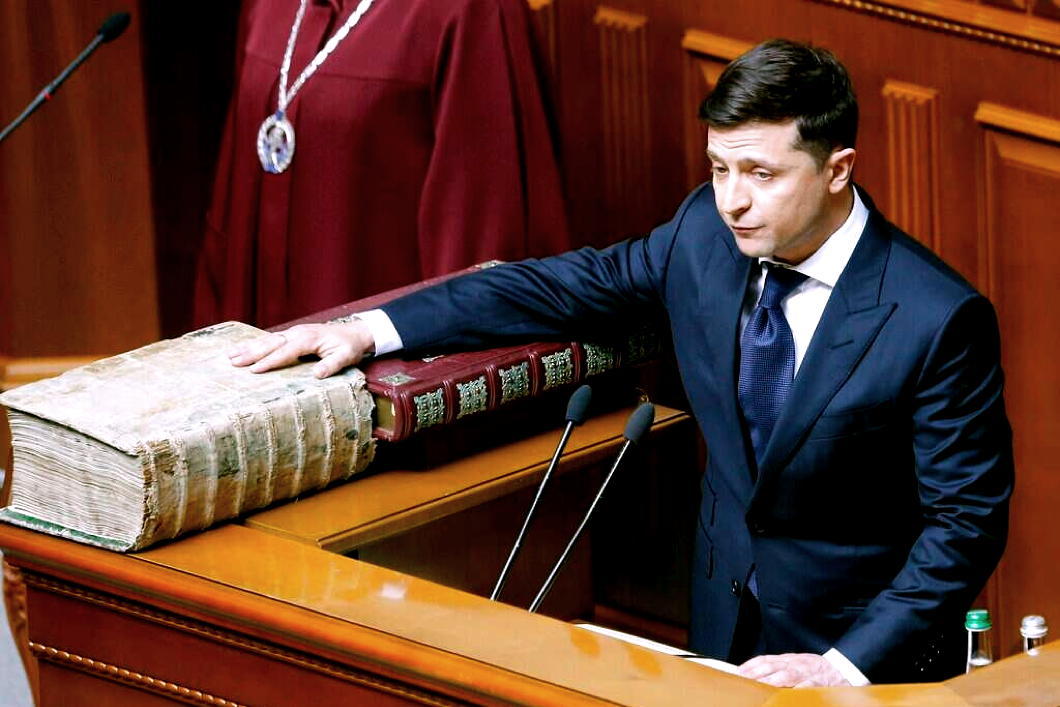
“All six Ukrainian Presidents since 1991,” Incunabula writes, “including Volodymyr Zelensky, have taken the oath of office on this book: the sixteenth-century Peresopnytsia Gospels, one of the most remarkably illuminated of all surviving East Slavic manuscripts.”
“The Peresopnytsia Gospels were written between 15 August 1556 and 29 August 1561, at the Monastery of the Holy Trinity in Iziaslav, and the Monastery of the Mother of God in Peresopnytsia, Volyn.”
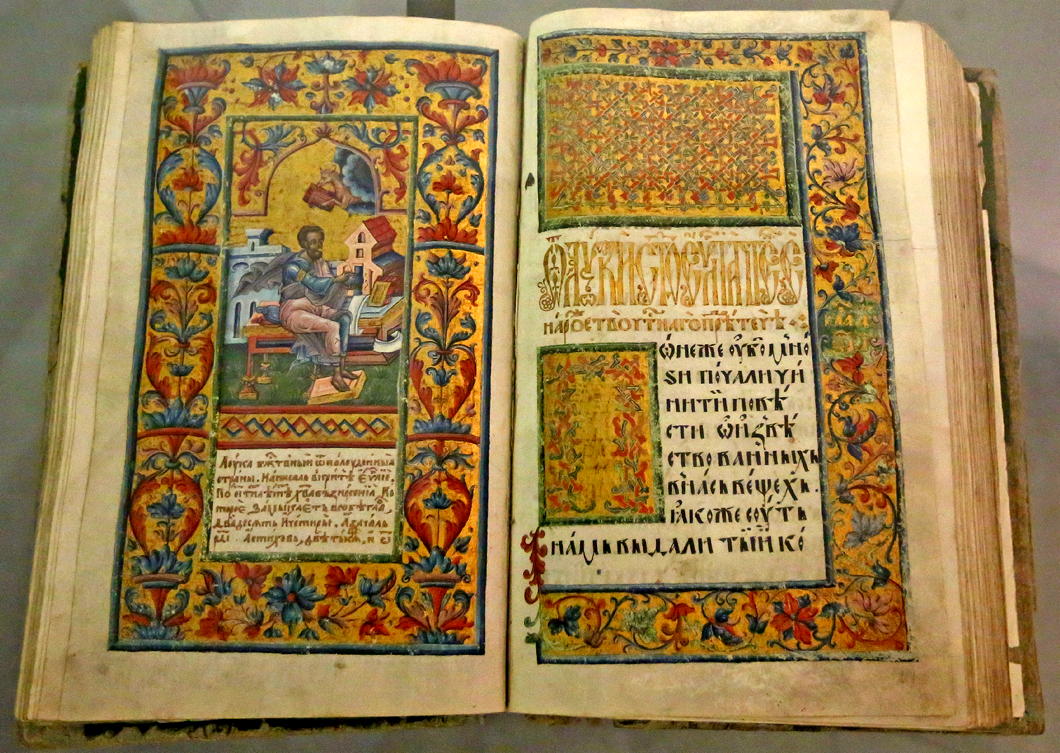
“This manuscript is the earliest complete surviving example of a vernacular Old Ukrainian translation of the Gospels. Its richly ornamented miniatures belong to the very highest achievements of the artistic tradition of the Ukrainian and Eastern Slavonic icon school.”
“The Peresopnytsya Gospels were commissioned in 1556 by Princess Nastacia Yuriyivna Zheslavska-Holshanska of Volyn, and her daughter and her son-in-law, Yevdokiya and Ivan Fedorovych Czartoryski. After its completion the book was kept in the Peresopnytsya Monastery.” (more…)
Special Mission to Rome
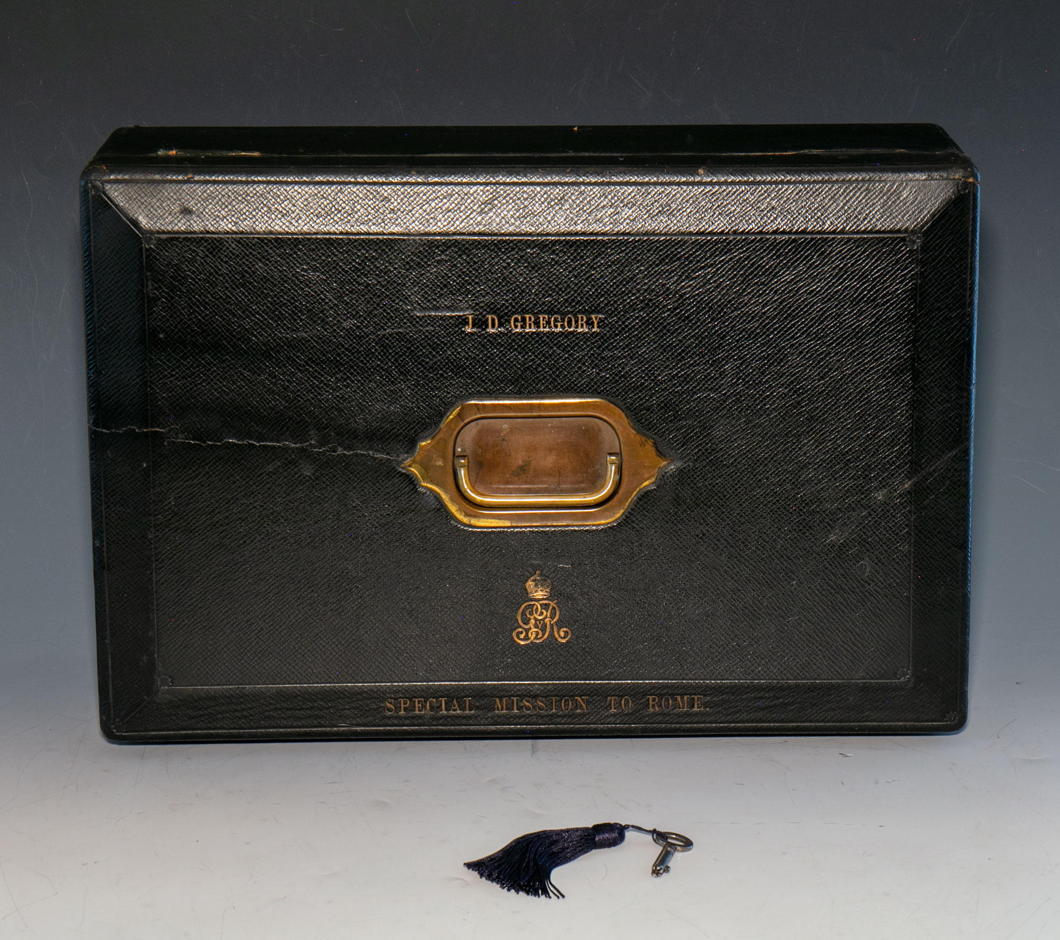
RELATIONS BETWEEN THE Court of St James’s and the Holy See have evolved in the many centuries since the Henrician usurpation. At times, such as during the Napoleonic unpleasantness, the interests of London and the Vatican were very closely aligned — despite the lack of full formal diplomatic relations. Later in the nineteenth century Lord Odo Russell was assigned to the British legation in Florence but resided at Rome as an unofficial envoy to the Pope.
It wasn’t until 1914 that the United Kingdom sent a formal mission to the Vatican, but this was a unique and un-reciprocated diplomatic endeavour — a full exchange of ambassadors would have to wait until 1982. (Until then, the Pope was represented in London only by an apostolic delegate to the country’s Catholic hierarchy rather than any representative to the Crown and its Government.)
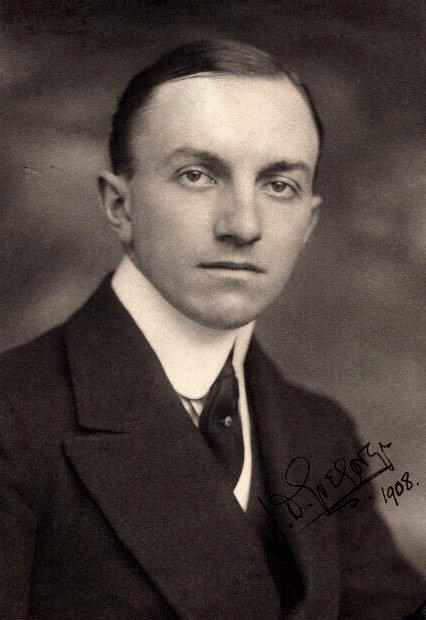 Within a year of the Special Mission to Rome being established, John Duncan Gregory (later appointed CB and CMG) was assigned to it. A diplomat since 1902 who had previously worked in Vienna and Bucharest, he was one of the central figures in the curious ‘Francs Affair’ of 1928, when two British diplomats were believed to have unduly abused their positions to speculate in currency. Despite being cleared of illegality, J.D. Gregory was dismissed from his diplomatic posting — though he was later rehabilitated.
If there are any enthusiasts of the curious subcategory of accoutrement known as the despatch box, J.D. Gregory’s one dating from his time in Rome is currently up for sale from the antiques dealer Gerald Mathias.
It was manufactured by John Peck & Son of Nelson Square, Blackfriars, Southwark — not very far at all from me as it happens. (more…)
175 Years of St George’s Cathedral
ONE HUNDRED AND SEVENTY-FIVE years ago, at a time of great uncertainty in Europe, St George’s in Southwark was opened solemnly by Bishop Wiseman — writes the Cathedral Archivist Melanie Bunch. The ceremony was attended by thirteen other bishops in all their finery, of whom four were foreign. Hundreds of clergy of all ranks were in the procession and many of the Catholic aristocracy of England were present. The music was magnificent, the choir including professional singers.
Pugin’s neo-Gothic church was impressive but not finished, and it was not to be a cathedral for another four years. Dr Wiseman, who was both the chief celebrant and the preacher, was bishop of a titular see, as the Catholic dioceses of England and Wales did not yet exist. Nonetheless the opening marked a significant stage in the revival of the Catholic Church in this region. The spur had been the spiritual needs of the poor Irish who had long formed settled communities in parts of London and other cities. The plans for the church had been drawn up in 1839 – before the severity of the famine in Ireland, which began in 1845, could have been foreseen. Some had considered the size of the new church unnecessary, but it turned out to be providential, as immigration from Ireland to this locality and elsewhere was reaching a peak at this time.
The extraordinary turmoil in Europe that had started early in the year in Sicily could not be ignored. In February Louis-Philippe was dethroned in France. There was anxiety that revolution might cross the Channel. Pugin decided that he should obtain muskets to defend his church of St Augustine under construction in Ramsgate. Revolution spread to German and Italian states and countries under Austrian rule. For four days in late June, there was a brief and bloody civil uprising in Paris.
While Europe was ablaze, London was calm, and the opening went ahead. In his homily, Wiseman praised God for all his mercies to this country. From our perspective, we might have expected that he would have spoken about the dark days of persecution, or at least the struggles of the recent past to get such a large church built, constantly hampered by lack of funds. Rev. Dr Thomas Doyle, whom we honour as the founder of the Cathedral, was present and assisting at the Mass, but his courage, faith, and dogged persistence over many years were not acknowledged on this occasion.
We might remember that a Catholic event like this had not been witnessed in England since the Reformation, seemingly prompting Wiseman to take the opportunity to explain to the non-Catholics present that the ceremony and display of the Catholic Church came from a desire to show greater respect for God. To the foreign bishops he said that their presence proved the unity and diversity of the Church. At the end of his homily, Wiseman caused a sensation by reading out a letter from the Archbishop of Paris, Mgr Affre, regretting that he could not attend the opening. By then it was known that he had already died from wounds received on the barricades while he was trying to mediate with the rebels. Wiseman called him a martyr.
Among others who never saw the opening are some who served St George’s mission with Thomas Doyle at the earlier chapel in London Road. Three of them had died before their time, only a few years before, from diseases endemic among their flock. We remember them and all who have served the Cathedral with gratitude. At the time of the opening, St George’s was the largest Catholic church in London, and for the next fifty years was to be the centre of Catholic life in the metropolis. Much has changed since, including the rebuilding of the Cathedral, but we give thanks to Almighty God who continues to sustain it. (more…)
A Realm That Never Was
The United Kingdom of the Rio de la Plata, Chile, and Peru
If we give in to temptation and attempt to see things without the benefit of hindsight, Brazil’s path to independence as a monarchy is less surprising than the fact that Argentina didn’t pursue a similar trajectory. After all: Argentina’s ‘Liberator’, José de San Martín, was himself a monarchist, as was Manuel Belgrano.
Belgrano’s project was to unite the Provinces of the River Plate with Chile and the old viceroyalty of Peru in one united kingdom under a Borbón king. This was to be the Infante Don Francisco de Paula, the youngest son of Charles IV of Spain, but the Spanish king ardently refused to yield his throne’s sovereignty over the new world, nor to allow any of his offspring to take part in the various projects for local monarchies.
When that failed, Belgrano proposed to the Congress of Tucumán that they crown an Incan as king. San Martín, Güemes, and others supported this, but Buenos Aires resisted the plan. They proposed instead to crown Don Sebastián, a Spanish prince living in Rio de Janeiro with his maternal grandfather, King João VI of Portugal.
João thought the scheme would end up injurious to Portugal’s interests and so put the kibosh on it.
And don’t get us started on Carlotism, which was a whole ’nother pile of tricks.

Belgrano’s monarchic project in its 1815 iteration was to unite the provinces of the River Plate with Chile and the old viceroyalty of Peru to create a single realm out of these Spanish-speaking territories.
He even drafted a constitution for the United Kingdom of the Rio de la Plata, Chile, and Peru, which is rudimentarily translated into English below. This even went so far as to specify the coat of arms and flag of the kingdom.
The best history covering these unconsummated plans remains Bernado Lozier Almazán’s 2011 book Proyectos monárquicos en el Río de la Plata 1808-1825: Los reyes que no fueron which sadly has not yet been translated into English.
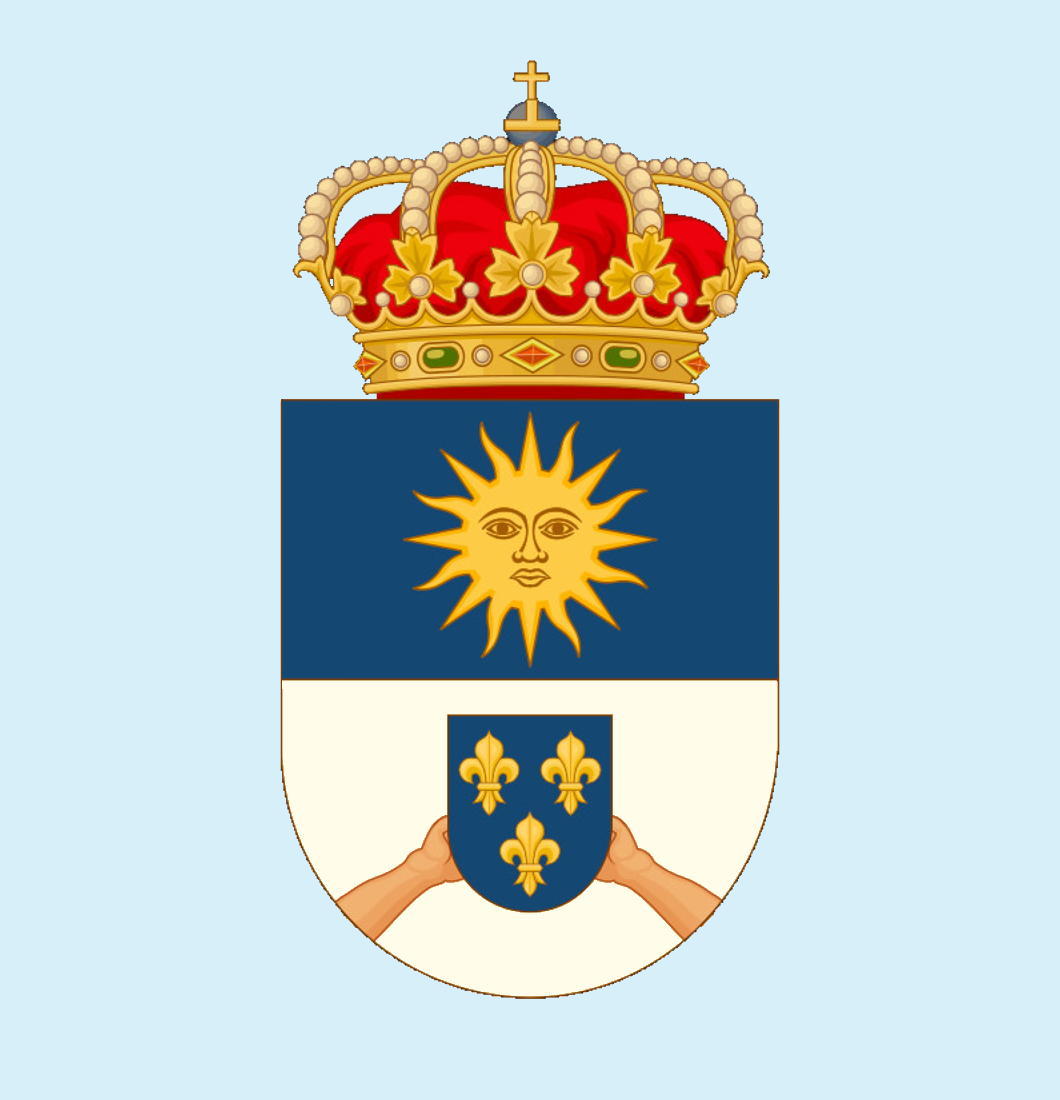
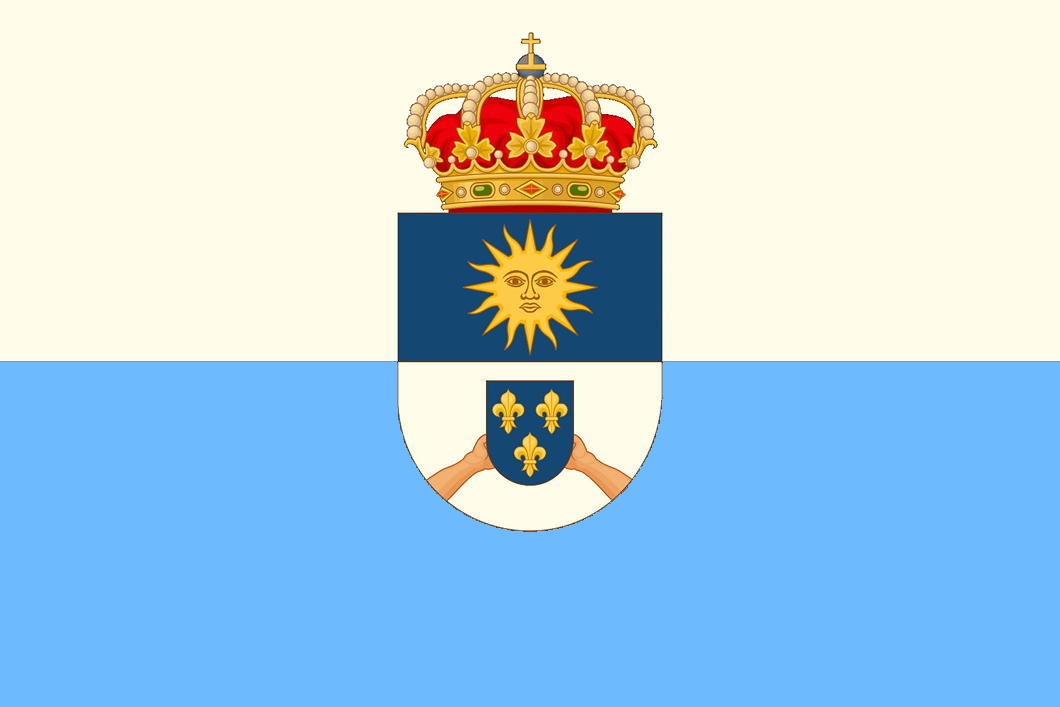
Article 1 — The new Monarchy of South America will have the name of the United Kingdom of the Río de la Plata, Peru, and Chile; its coat of arms will be a shield that will be divided into blue and silver fields; In the blue that will occupy the upper part, the image of the Sun will be placed, and in Silver two arms with their hands that will hold the three flowers of the emblems of My Royal Family; surmounted by the Royal Crown, and will have as supporters a tiger and a llama. Its flag will be white and light blue.
Article 2 — The Crown will be hereditary in order of proximity in the lines of agnation and cognation.
Article 3 — If, God forbid, the current King dies without succession, his rights will revert to me so that with the agreement and consent of the Legislative Body I choose another Sovereign from my Royal Family; but, if I no longer exist, said Chambers will have the power to elect one of the princes of my Blood Royal as their King.
Article 4 — The person of the King is inviolable and sacred. The Ministers are responsible to him. The King will command the forces of sea and land; he will declare war, he will make peace; he will make treaties of alliance and trade; he will distribute all the offices, he will be in charge of the public administration, the execution of the laws, and the security of the State to whose objects he will give the necessary orders and regulations.
Article 5 — The King will name all the nobility; he will grant all the dignities, he will be able to vary them and grant them for life, or make them hereditary. The King may forgive offences, commute sentences, or dispense them in the cases that the law grants him.
Article 6 — The nobility will be hereditary in the same terms as the Crown; it will be distinguished precisely in three grades, and cannot be extended to more: the first grade will be that of Duke, the second of Count and the third of Marquis; the nobles will be judged by only those of their class, they will have part in the formation of the laws, they will be able to be Deputies of the Towns and they will enjoy the honours and privileges that the law or the King grants them; but they may not be exempted from the charges and services of the State. Any individual of the State of any class and condition may opt for the nobility for their services, for their talents, or for their virtues. The first number of the nobility will be agreed by the King and Representative and at any other time by the Legislative Body.
The Legislative Body
Article 7 — The Legislative Body will be composed of the King, the Nobility, and Representation of the Commons.
The Upper Chamber will be formed: the first part by all the Dukes, whose right is declared inseparable from their dignity; the third part of the Counts, by election among themselves, presided over by a King’s Commissioner; the fourth part of the Marquises, elected on their own terms; and the fifth part of the Bishops of the Kingdom, elected the first time by the King, being in charge of it and the other Chamber, to establish the bases for the election of this body for the future.
Article 8 — The Second Chamber will be made up of the Deputies of the Peoples, who will be elected for the first time in the customary terms that allow less play to the parties, and will consult the greatest opinion, it being an essential charge to the Legislative Body to establish for the latter the most adequate and precise laws.
Article 9 — The power to propose the law will be common to the King and both Chambers; the order of the proposition will be from the King to the First Chamber, and from this to the King, and from the Second to the First, in the event that a proposal is not admitted by its immediate chamber, it cannot go to the third, nor be repeated until another session. Every law will be the result of the plurality of both Chambers, and secondly of the King; the sanction and promulgation of the law will be exclusively his.
The chambers may not join or dissolve without the express order of the King. He will be able to extend them for as long as he deems it necessary, and dissolve that of the Deputies when he deems it appropriate.
Article 10 — The designation of the King’s income, his Royal House and Family, the expenses of his Minister and Cabinet, the civil list, the military, and extraordinary expenses will be exclusively agreed by both Chambers, to which in the same way belongs to the arrangement and imposition of rights and contributions.
The Ministry
Article 11 — No order of the King without the authorisation of his corresponding Minister will be fulfilled; the Ministers will have the power to propose to both Chambers what they deem appropriate, and enter any of them to report what they deem appropriate; the Ministers will indispensably be Members of the High Court, and only by it may they be judged. The Ministers may not be accused except for treason or extortion, the accusation will not be admissible unless it is made by the plurality of one or another Chamber; the Minister of Finance will present to both Chambers for their knowledge and approval the accounts of the previous year.
The Judiciary
Article 12 — The judges will be appointed by the King; they will be perpetual and independent in their administration, only in the case of notorious injustice or ruling can they be accused before the Upper Chamber who will judge them independently of the King, who will protect and execute their decisions in this part; The judges of the fact will be established, called the jury in the most adaptable way to the situation of the Towns.
The Commonalty of the Nation
Article 13 — In addition to the proportionate and uniform distribution of all charges and services of the State, the option to nobility, jobs and dignities, and the common competition and subjection to the law; The Nation will enjoy, with the inalienable right to property, freedom of worship and conscience, freedom of the press, the inviolability of property, and individual security in the terms clearly and precisely agreed upon by the Legislative Power.
Those elected by the nobility, clergy, and commonalty will last six years, starting to renew the first elected by half every three years: The Common Deputies may not be executed, persecuted, or tried during their commission, except in cases that the law designated and by the Chamber itself to which they belong.
The George
“FORTUNATE IS SOUTHWARK in her possessions,” Sir Albert Richardson wrote, “for she holds in this fragment a key to the aspect of her many vanished inns…”
The George Inn features largely in the deep psychogeography of Southwark, ours the most ancient of boroughs. Here is the greatest living remnant of the coaching inns of old, even if much reduced in form. The current structure dates from the 1670s but we know an inn on this site was well established by the 1580s. It is now in the possession of the National Trust, but is a functioning Greene King pub where you can find a good pint.
Up and down our High Street, for centuries merchants, travellers, traders, and revellers would slake their thirst in a procession of pubs, inns, and taverns. English pilgrims heading to Canterbury would start off here, and recent arrivals to London from the Continent would make their first acquaintance with England’s capital by arriving at “The” Borough after journeying from the Channel ports.
“One enters the inn yard with pleasurable anticipation,” Sir Albert continues in his 1925 volume, The English Inn, Past and Present; A Review of Its History and Social Life.
“There is fortunately sufficient of the old building remaining to carry the mind back to the days of its former prosperity. There are the sagging galleries, the heavily-sashed windows and the old glass in the squares. The rooms are panelled. In the dining-room are the pews, and the bar is typical.”
In Richardson’s time, just a century ago, these rooms would have often been full of hop growers from Kent and the hop merchants who traded with them, though they are all gone now.
And yet, some things have not changed:
“Here we can obtain old English fare, and, heedless of the beat of London, commune with ghostly frequenters to whom the place was at one time a reality.” (more…)
Weiter vorwärts

The Pale Blue Eye
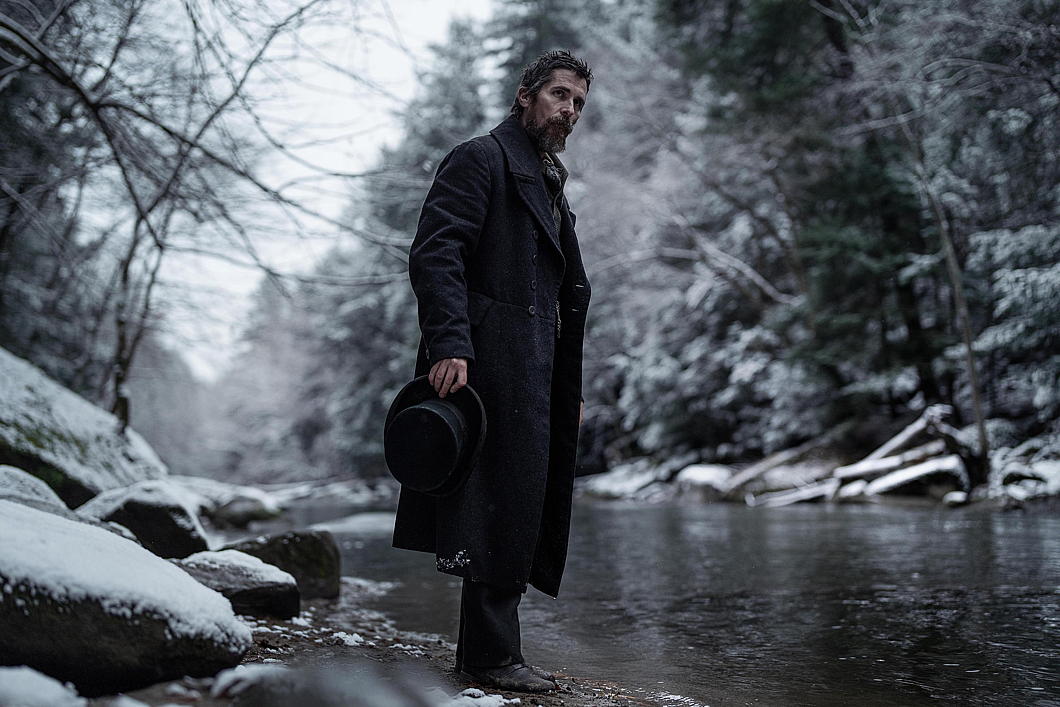
Just as there aren’t enough films set in seventeenth-century Holland, we don’t get enough films set in God’s own Hudson Valley of New York. When I saw the trailer for ‘The Pale Blue Eye’, a semi-supernatural mystery set in 1830s West Point, I thought: yes, sign me up.
A cadet at the military academy is found hanged and, a day later, his heart carved out. USMA commandant Sylvanus Thayer enlists the help of Augustus Landor, a former detective from New York City — in the pre-NYPD days when crime was fought by an odd hodge-podge of the night watch, city magistrates, and a few dozen constables.
Conveniently for Thayer, the highly reputed Landor has retired to the Hudson Highlands. Thayer hopes his investigation will prevent any scandal giving impetus to the still-fledgling Academy’s enemies in Washington.
Conveniently for Landor, he is aided and abetted in this task by an eccentric bohemian amongst the “Long Gray Line” of cadets: Edgar Allan Poe. The paragon of American Gothick was indeed a cadet at West Point in 1830 under his own name, after having spent a few years in the Army as an enlisted man under a pseudonym.
It would be easy to reduce any film with Poe as a central character to a procession of campy retro-emo tropes, but the role is played by Harry Melling with surprising skill. Timothy Spall plays Sylvanus Thayer — rather unfairly, I thought — with Simon McBurney as the commandant’s sidekick Captain Hitchock.
Toby Jones is the academy doctor with Gillian Anderson as his scheming, driven wife, Lucy Boynton the beautiful daughter (apple of the eye of many a cadet) and Harry Lawtey as their smug son Artemis, also enrolled in the Academy.
It is a fundamental Cusackian principle never to let the perfect be the enemy of the good, so I won’t complain that ‘The Pale Blue Eye’ is actually filmed in western Pennsylvania rather than along the actual banks of the Hudson. Riparian overdevelopment makes it difficult to evoke the Hudson of 1830s effectively today, and the filmmakers have done well recreating the spirit of the gothic revival era in America’s Rhineland with the locations they chose and the set design. This is fiction, after all, and it needn’t be pedantically true to the time-period — so long as nothing jars.
As it proceeds, the plot is intriguing, fantastic, and absurd and it gives us a final twist in the end. Some strands develop a little two quickly — the connection between Poe and Lea — and Robert Duvall’s role as an expert in the occult is too much of a deus ex machina.
But this is simple fun, not high art, and as a gothick conjuring of a formative but under-explored time and place it is well worth a viewing. (more…)
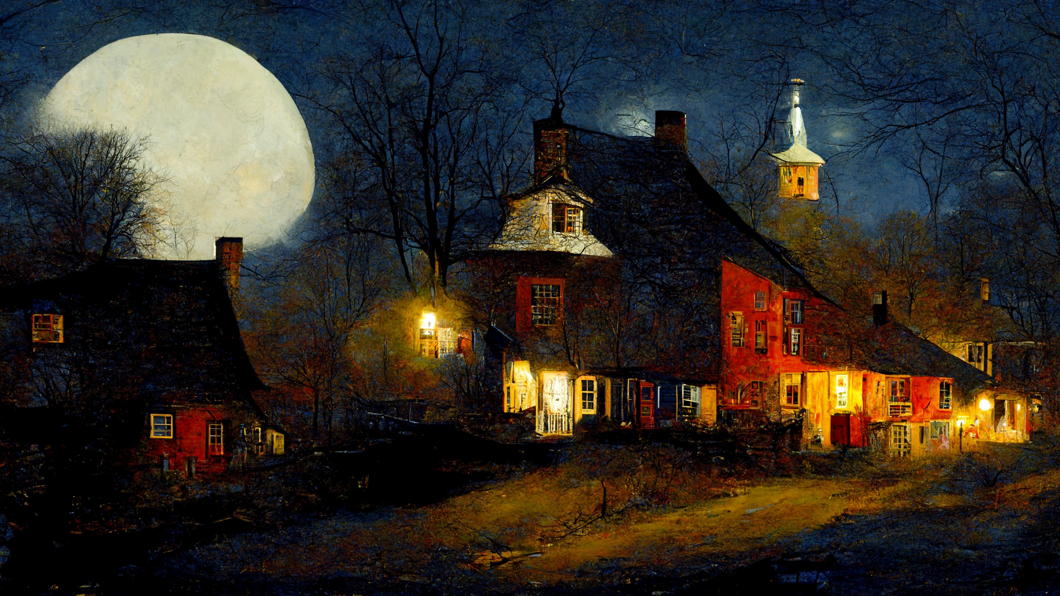
The Headless Horseman & Hallowe’en
Washington Irving’s Legend of Sleepy Hollow — perhaps better known as the tale of the Headless Horseman — is inevitably and almost universally linked to the great feast of Hallowe’en.
There are obvious reasons for this in that Hallowe’en has become the festival of ghoulish otherworldliness, sadly now devolved into plastic mawkishness in a manner old followers of the Knickerbocker ways must surely condemn and mourn.
But this tale is always worth a revisiting; even now in early Advent.
Irving purists — we exist — might point out there there is no indication Ichabod Crane’s fateful evening ride through the Hollow took place on Hallowe’en.
Indeed, Hallowe’en is not mentioned at all in the text of the Legend, and all the author shares with us regarding the date is that it was “a fine autumnal day”:
…the sky was clear and serene, and nature wore that rich and golden livery which we always associate with the idea of abundance.
The forests had put on their sober brown and yellow, while some trees of the tenderer kind had been nipped by the frosts into brilliant dyes of orange, purple, and scarlet.
Streaming files of wild ducks began to make their appearance high in the air; the bark of the squirrel might be heard from the groves of beech and hickory-nuts, and the pensive whistle of the quail at intervals from the neighboring stubble field.
It makes for a luscious harkening of old Westchester and the Hudson Valley in the early days of the republic.
Tastier still is the scene set as the Yankee newcomer Crane enters the home of an old Dutch household for the evening’s revelries:
Fain would I pause to dwell upon the world of charms that burst upon the enraptured gaze of my hero, as he entered the state parlor of Van Tassel’s mansion.
Not those of the bevy of buxom lasses, with their luxurious display of red and white; but the ample charms of a genuine Dutch country tea-table, in the sumptuous time of autumn.
Such heaped up platters of cakes of various and almost indescribable kinds, known only to experienced Dutch housewives!
There was the doughty doughnut, the tender oly koek, and the crisp and crumbling cruller; sweet cakes and short cakes, ginger cakes and honey cakes, and the whole family of cakes.
And then there were apple pies, and peach pies, and pumpkin pies; besides slices of ham and smoked beef; and moreover delectable dishes of preserved plums, and peaches, and pears, and quinces; not to mention broiled shad and roasted chickens; together with bowls of milk and cream, all mingled higgledy-piggledy, pretty much as I have enumerated them, with the motherly teapot sending up its clouds of vapor from the midst—Heaven bless the mark!
I want breath and time to discuss this banquet as it deserves, and am too eager to get on with my story.
Happily, Ichabod Crane was not in so great a hurry as his historian, but did ample justice to every dainty.
So celebrate Hallowe’en not with plastic costumes and cheap trinketry but with Dutch delicacies and tasty treats. (And for helpful suggestions, see Peter G. Rose’s Food, Drink, and Celebrations of the Hudson Valley Dutch.)
Put aside the vampire capes and risqué nurses’ kit and, amidst candles and pumpkins of all shapes and sizes, think of the Dutch Hudson of long ago that lingers still in heart and mind.
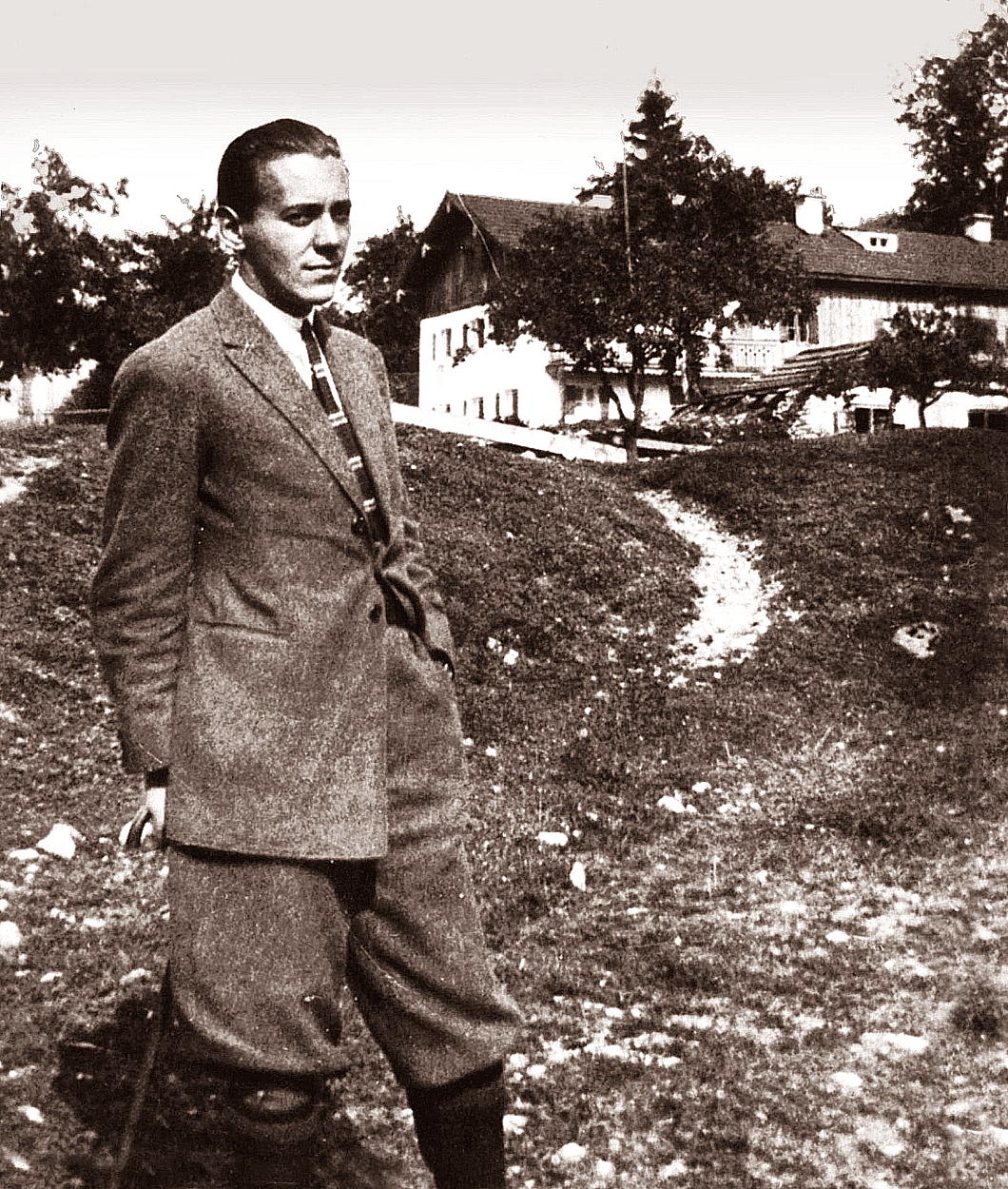
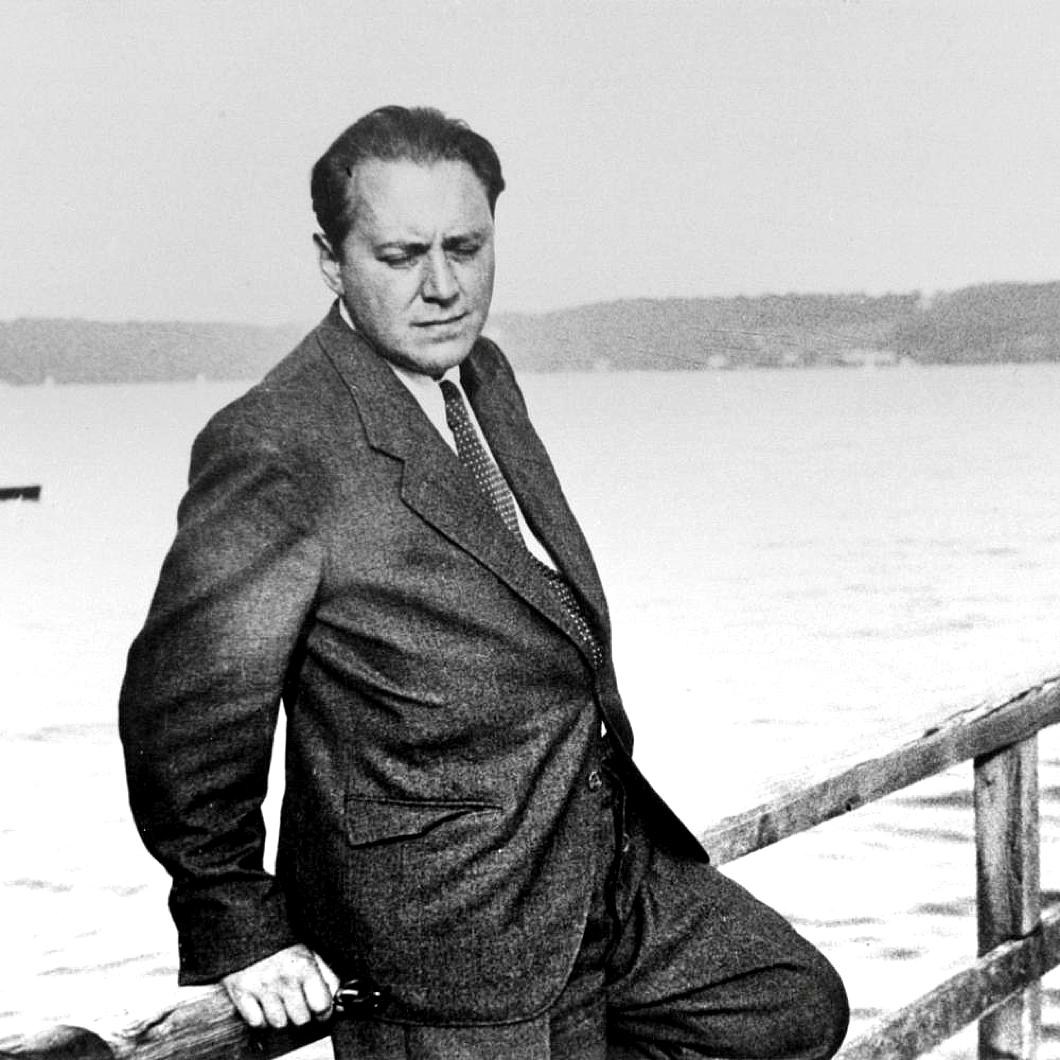
Ödön von Horváth
When the shop purveying diacritical marks opened one morning in Vienna, in my mind the writer Ödön von Horváth turned up and said “Thanks. I’ll have the lot.”
It wasn’t even his real name, of course — which was Edmund Josef von Horváth. A child of the twentieth century, von Horváth was born in Fiume/Rijeka in 1901. His father was a Hungarian from Slavonia (in today’s Croatia) who entered the imperial diplomatic service of Austria-Hungary and was ennobled, earning his “von”.
“If you ask me what is my native land,” von Horváth said, “I answer: I was born in Fiume, grew up in Belgrade, Budapest, Preßburg, Vienna, and Munich, and I have a Hungarian passport.”
“But homeland? I know it not. I’m a typical Austro-Hungarian mixture: at once Magyar, Croatian, German, and Czech; my name is Hungarian, my mother tongue is German.”
From 1908 his primary education was in Budapest in the Hungarian language, until 1913 when he switched to instruction in German at schools in Preßburg (Bratislava) and Vienna.
Von Horváth went off to Munich for university studies — where he began writing in earnest — but quit midway through and moved to Berlin.
He once told his friends the story of when he was climbing in the Alps and stumbled upon the remains of a man long dead but with his knapsack intact.
Intrigued, he opened the knapsack and found an unsent postcard upon which the deceased had written “Having a wonderful time”.
“What did you do with it?” his friends naturally inquired. “I posted it!” was von Horváth’s reply.
In 1931 he was awarded the Kleist Prize for literature, but two years later the National Socialists took the helm and von Horváth thought it best to move across the border to his old imperial capital of Vienna.
Despite his anti-nationalism, he did initially join the guild for German writers set up by the Nazis, possibly to keep his works in print in the Reich while he was living in still-independent Austria.
It was in Vienna he published his best-known work: Jugend ohne Gott — “Youth without God” (first translated into English as The Age of the Fish), which marked his public point-of-no-return break with the Hitlerites.
The novel depicts a jaded schoolteacher increasingly disconnected from his profession and the world around him as the ideology of National Socialism begins to take root in the education system. (Bizarrely, it was also scantly used as the basis for a 2017 dystopian thriller.)
When Hitler’s troops marched into Austria the following year, von Horváth fled to Paris.
“I am not so afraid of the Nazis,” he told a friend there one day. “There are worse things one can be afraid of, namely things you are afraid of without knowing why. For instance, I am afraid of streets. Roads can be hostile to you, can destroy you. Streets frighten me.”
Days later, in the middle of a thunderstorm, von Horváth was walking down the Champs-Élysées — the most famous street in Paris — when a flash of lightning struck a tree, felled a branch, and struck the writer dead. He had been on his way to the cinema to see Walt Disney’s ‘Snow White and the Seven Dwarfs’.
Years ago someone recommended The Eternal Philistine: An Edifying Novel in Three Parts to me, but I have to admit I haven’t yet read it, or much else of von Horváth’s work. (He’s on my fiction wish-list though.)
His plays have been revived, too — here in London at the Almeida and the Southwark Playhouse in the past decade or so — and both The Eternal Philistine and Youth Without God are available in English from the estimable Neversink Library imprint of Melville House.
Lafayette at the Seventh
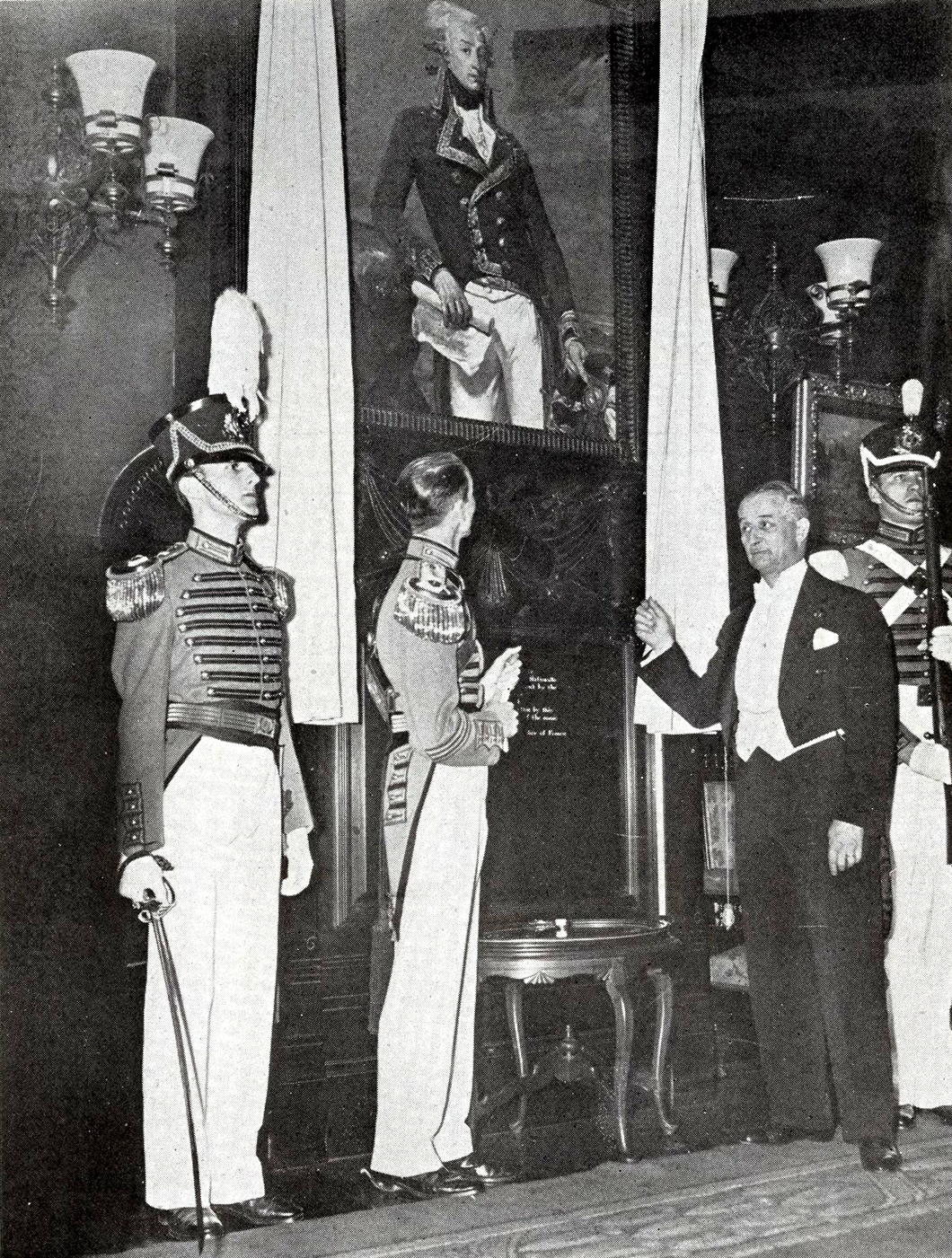
For the first century or so in the history of the United States, there was no more popular Frenchman in America than the Marquis de Lafayette. This nobleman of the Auvergne was an officer in the King’s Musketeers aged 14 and was purchased a captaincy in the Dragoons as a wedding present aged 18 in 1775. Within a year the rebel faction in North America had sent Silas Deane of Groton to Paris as an agent to negotiate support from the French sovereign, but Paris acted cautiously at first.
Lafayette — a young aristocratic freemason and liberal with a head full of Enlightenment ideas — escaped to America in secret and was commissioned a major-general on George Washington’s staff in the last of his teenage years.
Given his relative youth, Lafayette inevitably turned out to be the final survivor of the generals of the Continental Army, and his 1824 trip to the United States solidified his popularity. He visited each of the twenty-four states in the Union at the time, including New York where the predecessor of the Seventh Regiment named itself the National Guards in honour of the Garde nationale Lafayette commanded in France.
This was the first instance of an American militia unit taking the name National Guard, which in 1903 was extended to all of state militia units which could be called upon for federal service.
In honour of this connection and on the centenary of Lafayette’s 1834 death, the French Republic presented the Seventh Regiment with a copy of Joseph-Désiré Court’s portrait of the general that hangs in the 1792 Room of the Palace of Versailles. The Seventh set this in the wall of the Colonel’s Reception Room in their Armory, facing a copy of Peale’s portrait of General Washington.
The privilege of unveiling the portrait went to André Lefebvre de Laboulaye, the French Ambassador to the United States, who was given the honour of a full dress review of the Seventh Regiment on Friday 12 April 1935 before a crowd of three thousand in the Amory’s expansive massive drill hall.
Also present at the occasion was his son François, who eventually in 1977 stepped into his late father’s former role as French Ambassador to the United States. His Beirut-born grandson Stanislas served as French Ambassador to Russia 2006-2008 before being appointed to the Holy See until 2012. In April 2019, Stanislas de Laboulaye was put in charge of raising funds for the rebuilding of Notre-Dame following the fire that devastated the cathedral.
The Irishman at Yorktown
General Charles O’Hara and the Surrender of Lord Cornwallis
Today marks two-hundred-and-forty-one years since the British general Lord Cornwallis surrendered to a joint Rebel-French force at Yorktown in Virginia — perhaps the most embarrassing British defeat until the Fall of Singapore to the Japanese more than a century and a half later.
Every American schoolboy, or indeed any visitor to the United States Capitol, is familiar with John Trumbull’s oil painting of the scene at Yorktown.
Somewhat pitifully, Lord Cornwallis pled ill health and did not attend the formal ceremony of surrender.
Instead, he sent his adjutant to act on his behalf: a wily character by the name of General Charles O’Hara.
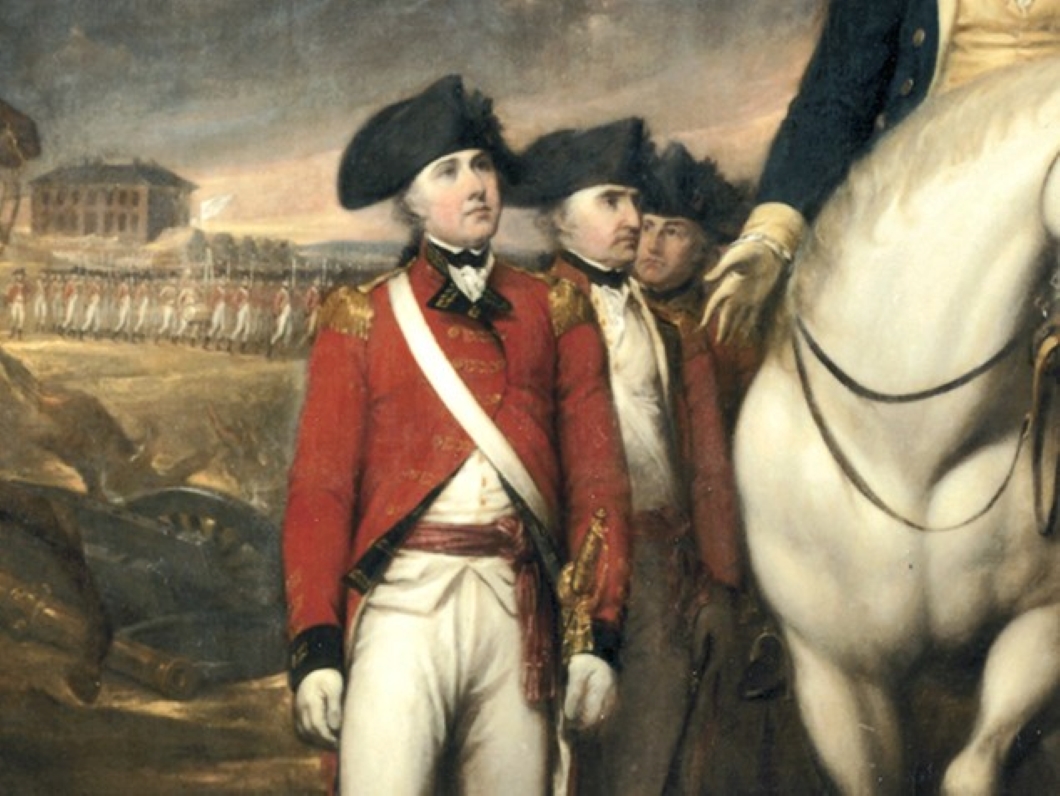
O’Hara had soldiering in his blood, being the illegitimate son of a Portuguese woman and Field Marshal the Rt Hon James O’Hara, 2nd Baron Tyrawley and 1st Baron Kilmaine. The elder O’Hara was the sometime envoy-extraordinary to the King of Portugal, where he made the acquaintance of the woman who bore him one of at least three of his sons-born-the-other-side-of-the-blanket.
Lord Tyrawley looked after his son, sending him to Westminster School before buying him an army commission and keeping him close by in the Coldstream Guards which the father commanded himself.
Young Charles was at one point sent on assignment to Senegal commanding a corps of African army convicts which, reading between the lines, may have been a punishing demotion.
He soon regained his command with the Guards though and was sent to America where the royal troops were fighting against a surprisingly cohesive force of rebel English colonists.
Despite being surrounded by numerous American loyalists, O’Hara tended to distrust the colonists and viewed them with suspicion, tarring them all with the brush of rebellion openly practiced only by a distinct (but ultimately successful) minority.
He was wounded at the Battle of Guildford Court House in March 1781, and by the Siege of Yorktown had been promoted to Cornwallis’s second-in-command. (more…)
Harlem Reformed Dutch Church
For much of Manhattan’s early colonial history, the island was home to two primary settlements: the port of New Amsterdam (later, from 1664, New York) way down at the southern tip and the town of Harlem up where the East River meets the Harlem River.
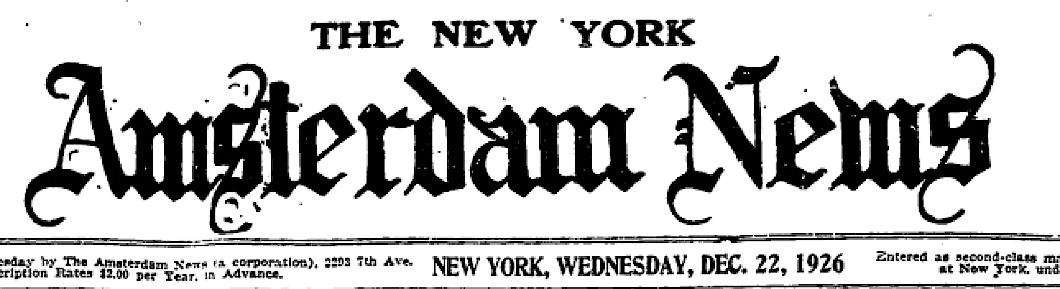
Christened after the Dutch city, Harlem is one of Manhattan’s most visible links to the Netherlands. The local newspaper is even called the New York Amsterdam News, once a prominent voice in Black America given this neighbourhood became predominantly African-American in the early twentieth century, and Amsterdam Avenue runs up as the spine of West Harlem.
Harlem was founded in 1658, thirty-four years after New Amsterdam was founded and thirty-two since Peter Minuit bought the whole island of Mannahatta off the Indians for sixty guilders.
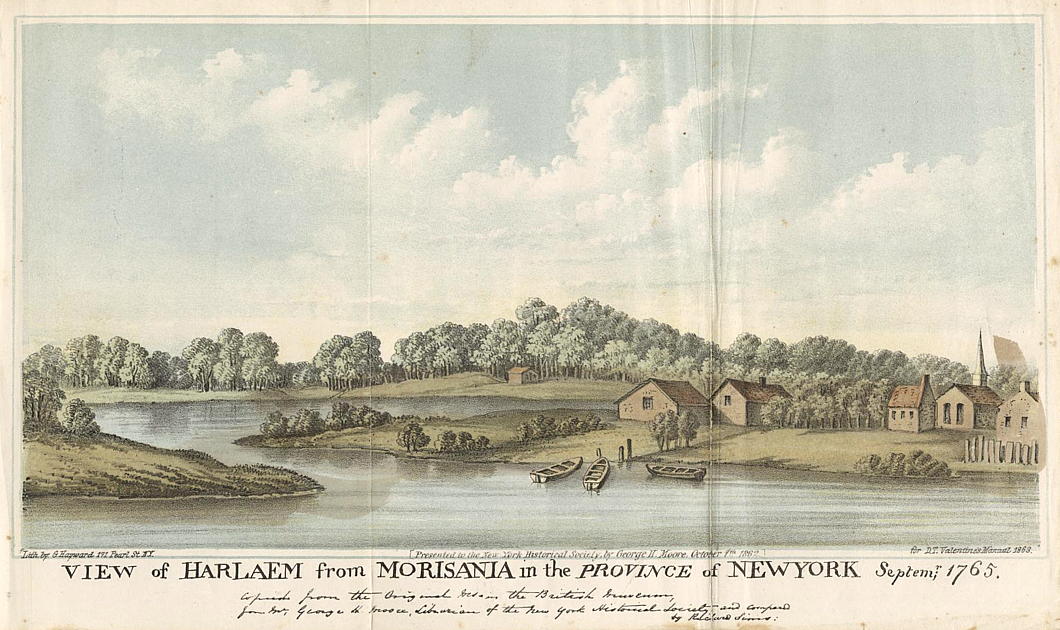
The town’s first church was founded in 1660 but didn’t have its own dedicated building for a few years. The Harlem Reformed Dutch Church, or Collegiate Church of Harlem, was built in 1665-67 right on the banks of the Harlem River, around the site of East 127th Street and First Avenue today.
Both the building and site was abandoned twenty years later when the congregation moved to its second building, completed 1687, just a little bit further south — near where East 125th meets First Avenue, or where the entrance ramp to the Triborough Bridge meets 125th.
It is this second building, which is depicted in the view above of Harlem village from Morissania across the river in the Bronx in 1765 (below).
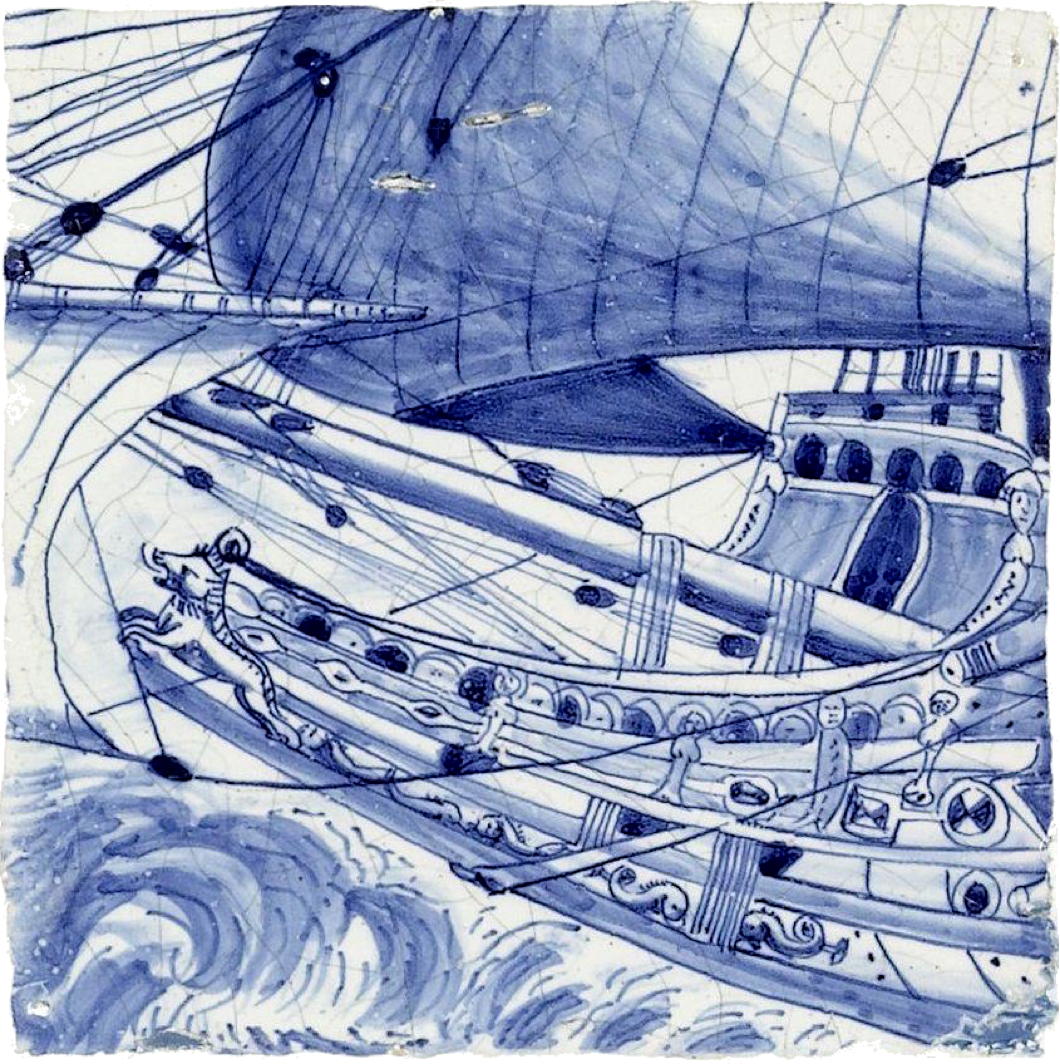
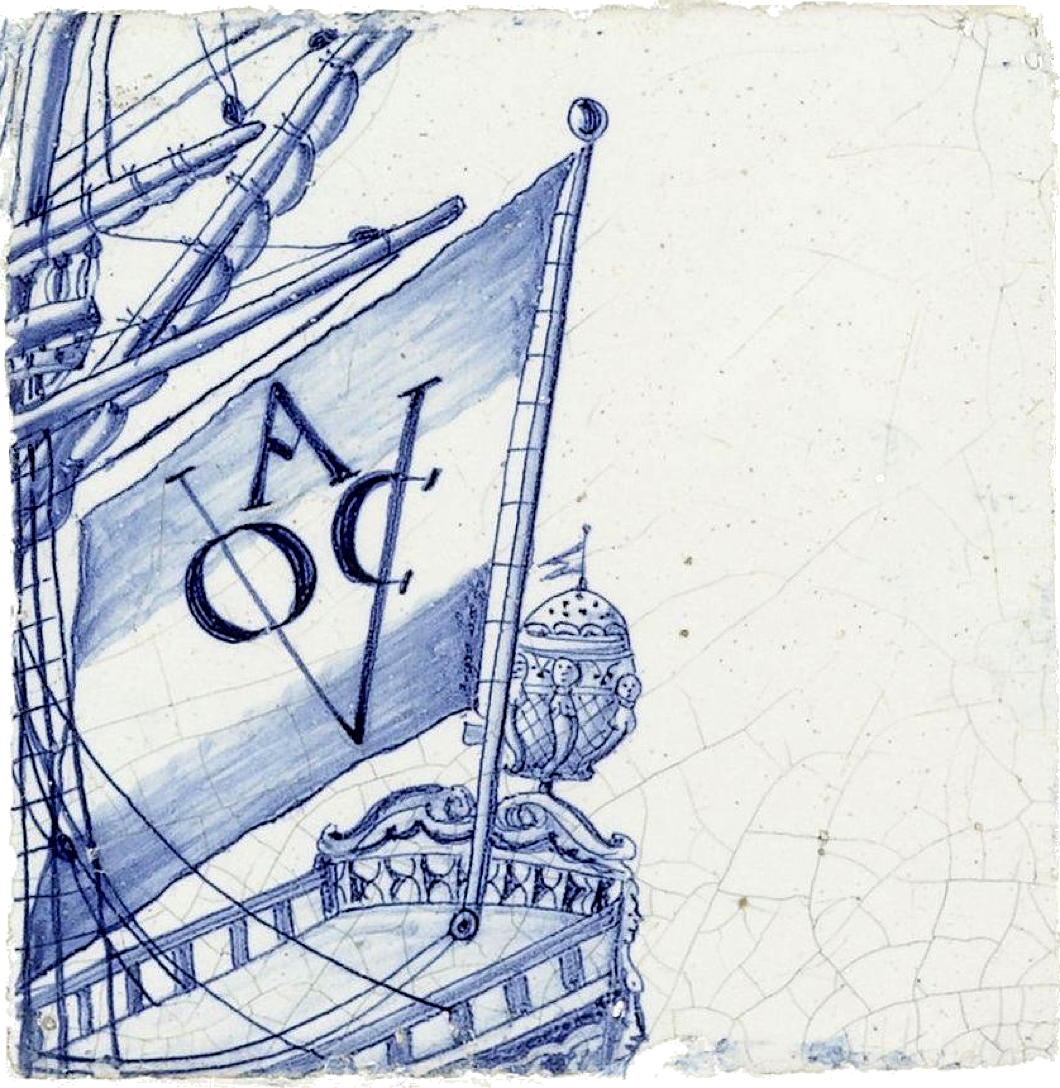
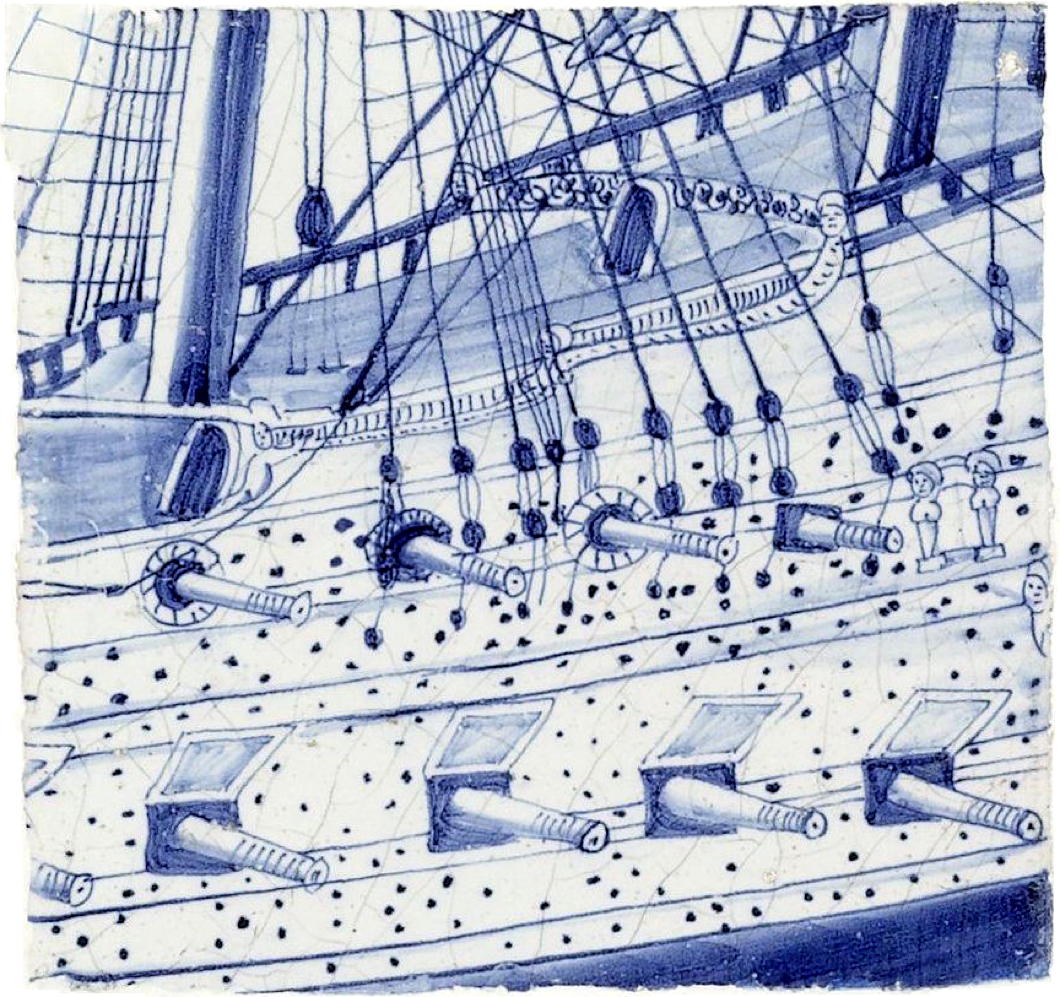
An East Indiaman
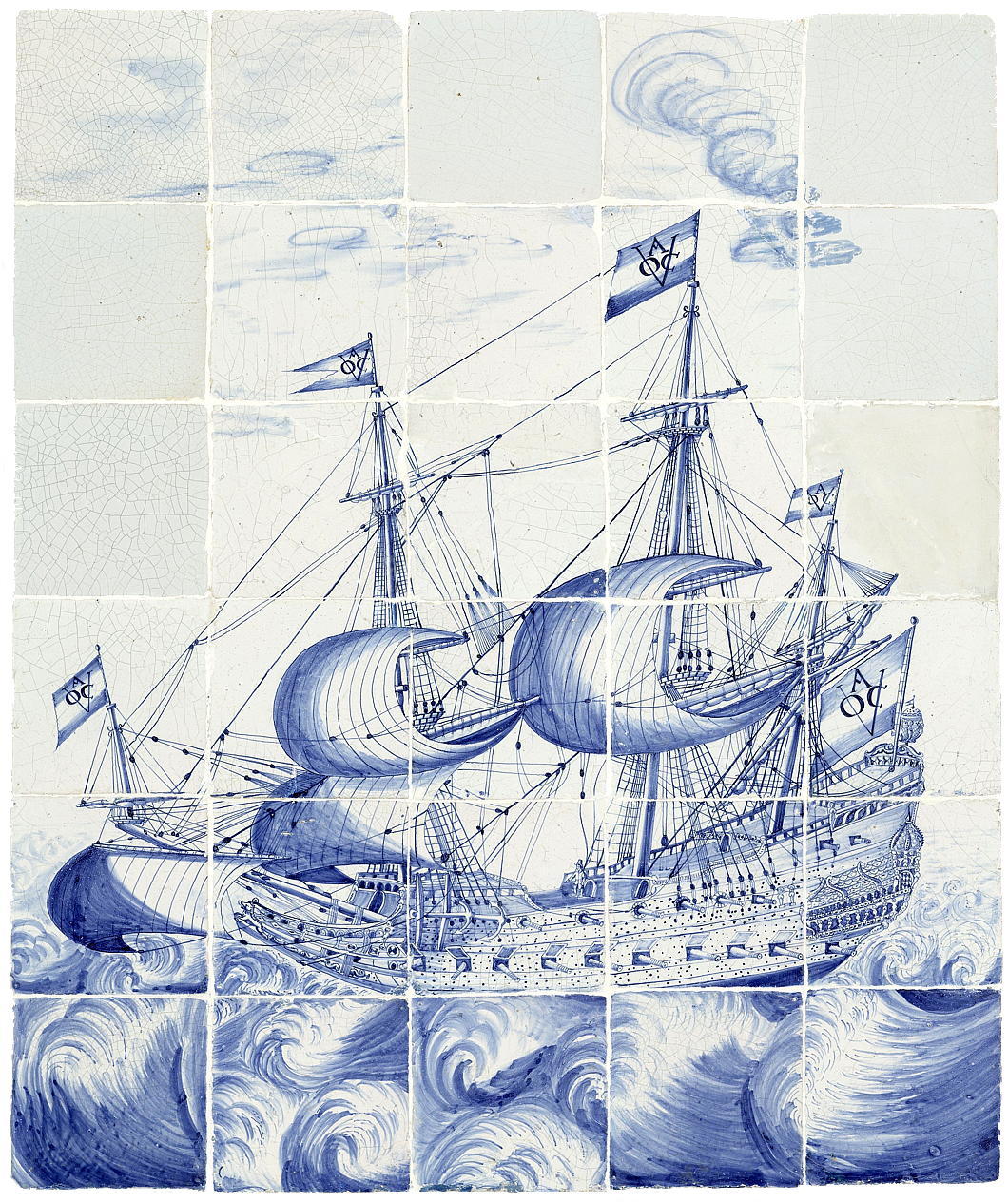
English sea-goers and merchants commonly referred to any ship of the Dutch VOC (or of other similar companies) as an ‘East Indiaman’.
Monolingual Limitations
I’m 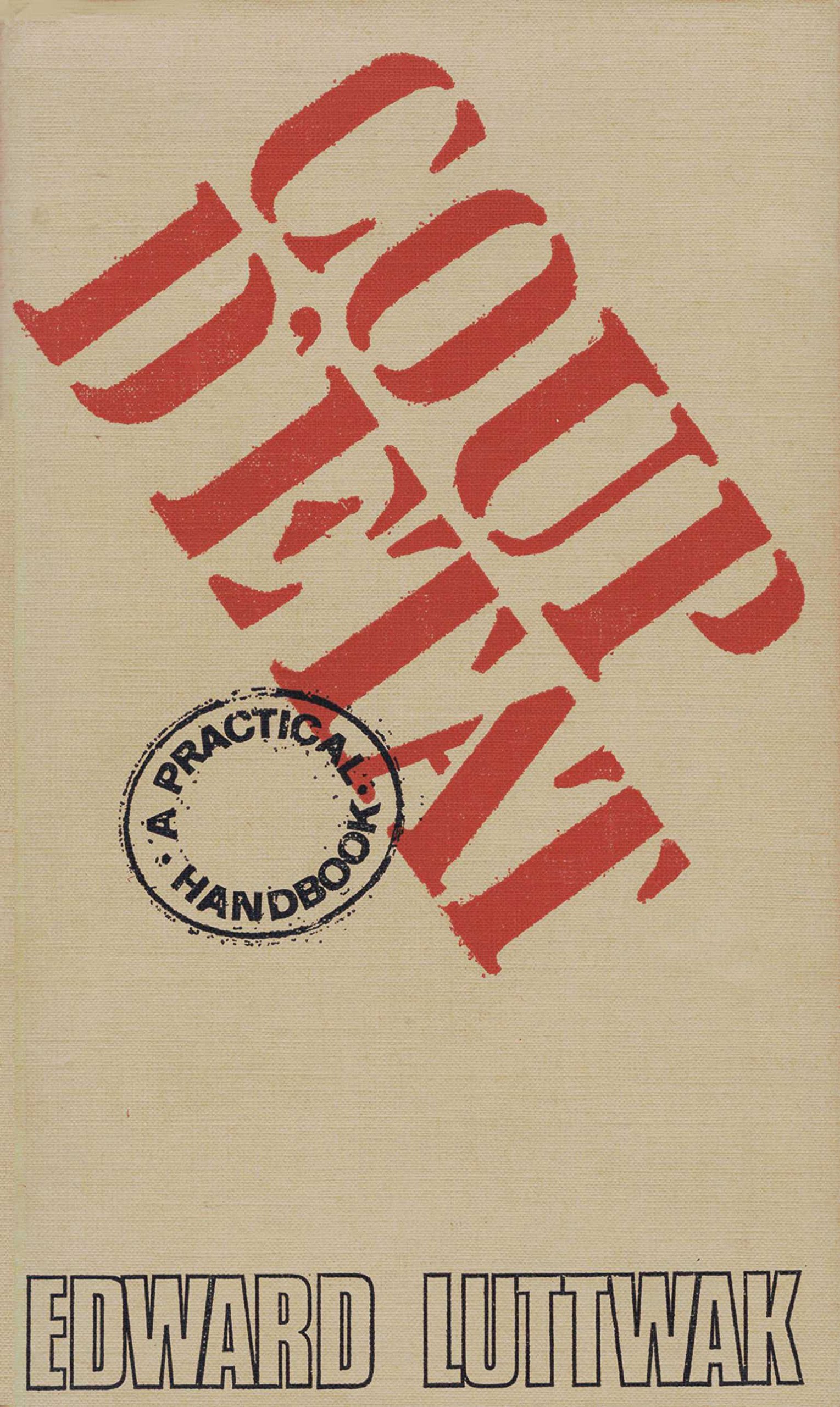 sure I wasn’t the only twelve-year-old whose favourite book was Edward Luttwak’s delicious Coup d’État: A Practical Handbook — an excellent gift from my father. The work gave me a lifelong fascination with the golpe de Estado, a phenomenon of government all too increasingly a rare species in our post-Cold War era.
Just about everything written or said by Luttwak — lately a cattle farmer in Paraguay — is worth reading or listening to. For a start you could read his contributions to the LRB or to the excellent American Jewish Tablet magazine.
I have been waiting for someone to offer a refutation of his provocative Prospect essay on how the Middle East is less relevant than ever, and it would be better for everyone if the rest of the world learned to ignore it.
David Samuels chat with Luttwak this month on the subject of the Three Blind Kings — Putin, Biden, and Xi — offers some superb insights as well as amusements.
Among the lessons that Luttwak is keen to drive home — and he says so over and over and over again on Twitter — is that American intelligence-gathering (and government in general) is too reliant on technology with too few officials, analysts, and operatives actually learning the language of those they are attempting to surveil.
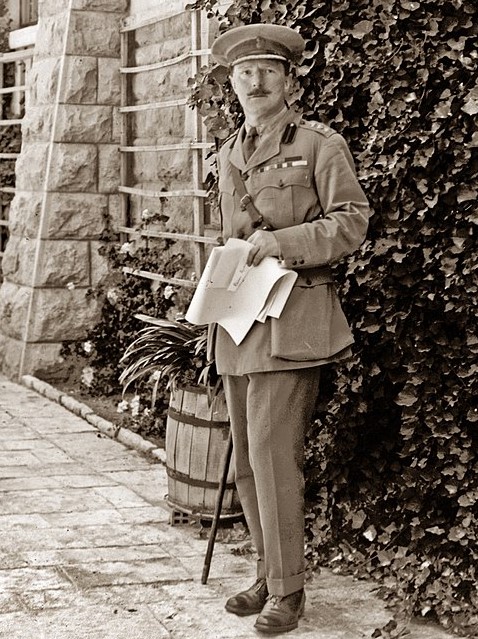 That this state of monolingual limitation was not always the case was driven home in an excellent piece by Jonathan Gaisman in the February 2022 New Criterion concerning Sir Ronald Storrs (left, 1881–1955) — “the most brilliant Englishman in the Near East” as Lawrence of Arabia called him.
An accomplished Arabist, Storrs served as Oriental Secretary for the British administration in Egypt before going on to become Military Governor of Jerusalem, Governor of Cyprus, and Governor of Northern Rhodesia, from which role he retired on health grounds, returned to the metropole, and served a few years on London County Council.
Gaisman relays this delicious anecdote from the British official’s 1937 autobiography Orientations:
Sometime in 1906 I was walking in the heat of the day through the Bazaars. As I passed an Arab café an idle wit, in no hostility to my straw hat but desiring to shine before his friends, called out in Arabic, “God curse your father, O Englishman.”
I was young then and quicker-tempered, and foolishly could not refrain from answering in his own language that I would also curse his father if he were in a position to inform me which of his mother’s two and ninety admirers his father had been.
I heard footsteps behind me and slightly picked up the pace, angry with myself for committing the sin [of] a row with Egyptians. In a few seconds I felt a hand on each arm. “My brother,” said the original humorist, “return, I pray you, and drink with us coffee and smoke. I did not think that Your Worship knew Arabic, still less the correct Arabic abuse, and we would fain benefit further by your important thoughts.”
Gaisman further spoils us with another excellent story — this time about Storrs’ predecessor as Oriental Secretary in Cairo, Mr Harry Boyle:
[Boyle] was taking his tea one day on the terrace of Shepheard’s Hotel when he heard himself accosted by a total stranger: “Sir, are you the Hotel pimp?”
“I am, Sir,” Boyle replied without hesitation or emotion, “but the management, as you may observe, are good enough to allow me the hour of five to six as a tea interval. If, however, you are pressed perhaps you will address yourself to that gentleman,” and he indicated [the self-made tea magnate] Sir Thomas Lipton, “who is taking my duty; you will find him most willing to accommodate you in any little commissions of a confidential character which you may see fit to entrust to him.”
Boyle then paid his bill, and stepped into a cab unobtrusively, but not too quickly to hear the sound of a fracas, the impact of a fist and the thud of a ponderous body on the marble floor.
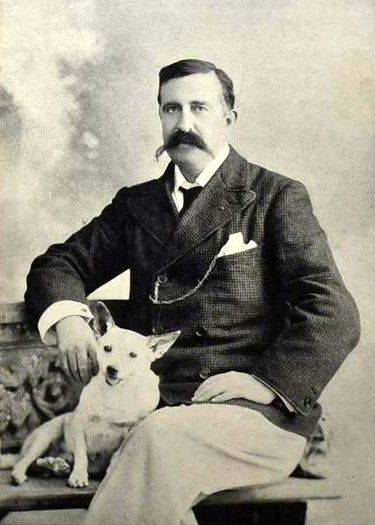 Boyle’s 1937 obituary in the Palestine Post noted he was “a gifted linguist, speaking no fewer than twelve languages”. When Lord Cromer was Britain’s proconsul in Egypt, he and Boyle were such frequent perambulators along the Nile that Boyle earned the nickname Enoch, for he “walked daily with the Lord”.
During these walks, Cromer was keen to mix with Egyptians of the most humble backgrounds and was aided by Boyle’s linguistic skills. Such was his excellence in Arabic that, returning to Egypt many years later, Boyle was recognised by a peasant farmer many miles outside of Cairo and warmly embraced as the man who used to walk the Nile with the British lord.
“In the hot and brooding nights of the Egyptian summer,” the Post appreciation also relates, “when all who were at liberty to do so had fled to cooler climes, Cromer and Harry Boyle might often have been seen seated after dinner on the veranda of the Agency in Cairo reading aloud alternately passages from the Iliad.”
Perhaps all is not lost. While I can’t speak for the state of the gift of tongues at Langley, at least the Prime Minister of the United Kingdom can launch into Homer, in Greek, from memory.
But Luttwak would surely be right to retort that it is among the mid-level officials and analysts that linguistic skills are most missing — nor are we currently threatened by Athens, Sparta, or Corinth.
30 mai 1968
The events of May 1968 have been fetishised by the romantic radical left but ended in the triumph of the popular democratic right. Battered by two world wars, France had enjoyed an unprecedented rise in living standards since 1945 — especially among the poorest and most hard-working — and a new generation untouched by the horrors of war and occupation had risen to adulthood (in age if not in maturity). The ranks of the middle class swelled as more and more people enjoyed the material benefits of an increasingly consumerised society, while those left behind shared the same aspirations of moving on up.
Like any decadent bourgeois cause, the spark of the May events was neither high principle nor addressing deep injustice but rather more base impulses: male university students at Nanterre were upset they were restricted from visiting female dormitories (and that female students were restricted from visiting theirs). The ensuing events involved utopian manifestos, barricades in the streets, workers taking over their factories, a day-long general strike and several longer walkouts across the country.
The French love nothing more than a good scrap, especially when it’s their fellow Frenchmen they’re fighting against. Working-class police beat up middle-class radicals but for much of the month both sides made sure to finish in time for participants on either side to make it home before the Métro shut for the evening. But workers’ strikes meant everyday life was being disrupted, not just the studies of university students. When concessions from Prime Minister Georges Pompidou failed to calm the situation there were fears that the far-left might attempt a violent overthrow of the state.
De Gaulle himself, having left most affairs in Pompidou’s hands, finally came down from his parnassian heights to take charge but then suddenly disappeared: the government was unaware of the head of state’s location for several tense hours.
It turned out the General had flown to the French army in Germany, ostensibly to seek reassurance that it would back the Fifth Republic if called upon to defend the constitution. De Gaulle is said to have greeted General Massu, commander of the French forces in West Germany, “So, Massu — still an asshole?” “Oui, mon général,” Massu replied. “Still an asshole, still a Gaullist.”
The morning of 30 May 1968, the unions led hundreds of thousands of workers through the streets of Paris chanting “Adieu, de Gaulle!” The police kept calm, but the capital was tense and there was a sense that things were getting out of hand. Pompidou convinced de Gaulle the Republic needed to assert itself.
Threatened by a radicalised minority, de Gaulle called upon the confidence of the ordinary people of France. At 4:30 he spoke on the radio briefly, announcing that he was calling for fresh elections to parliament and asserting he was staying put and that “the Republic will not abdicate”.
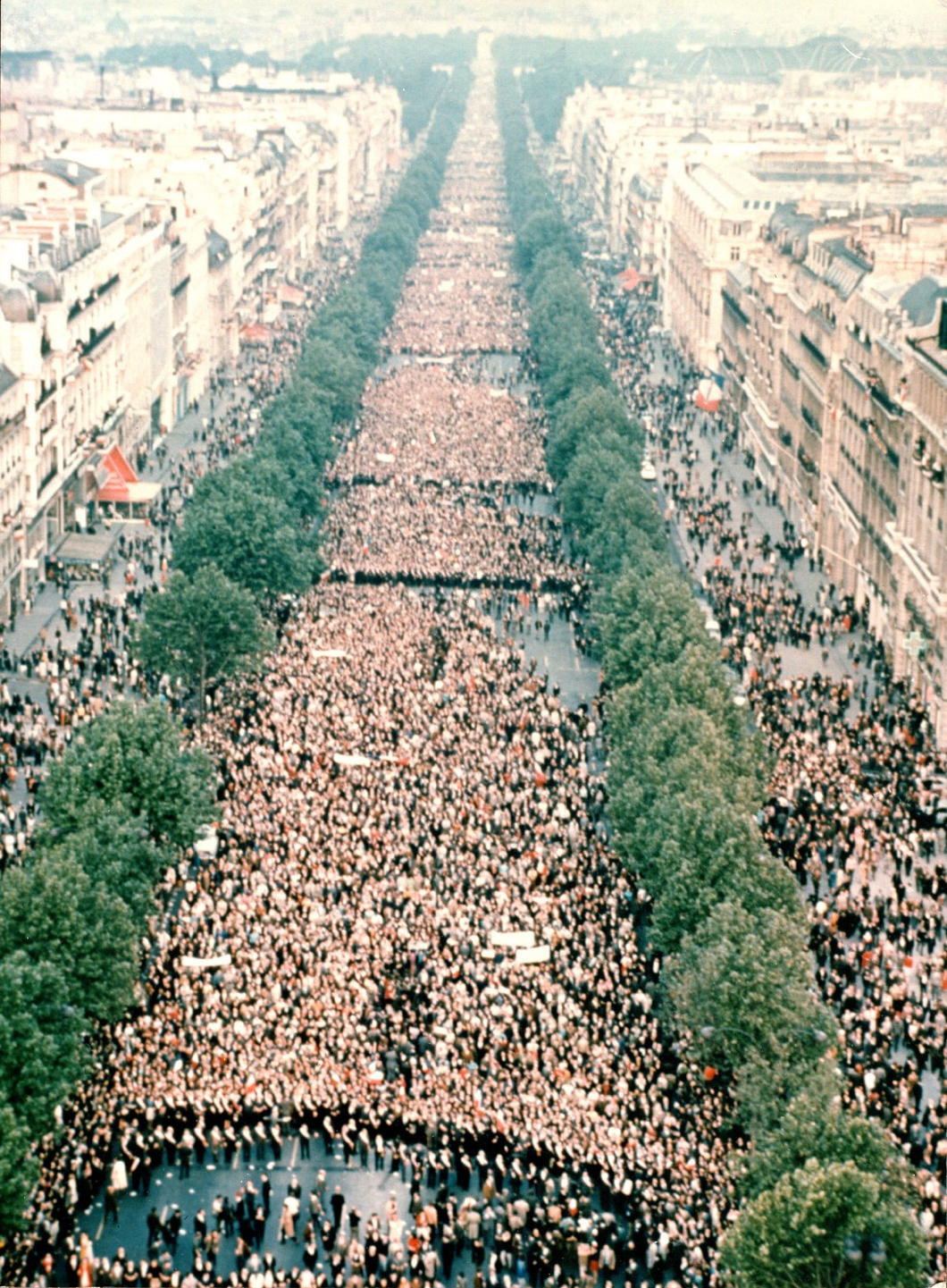
Before the General even spoke some his supporters (organised by the ever-capable Jacques Foccart) were already on the avenues but the short four-minute broadcast inspired teeming masses onto the streets of central Paris, marching down the Champs-Élysées in support of de Gaulle.
Lebanon Green
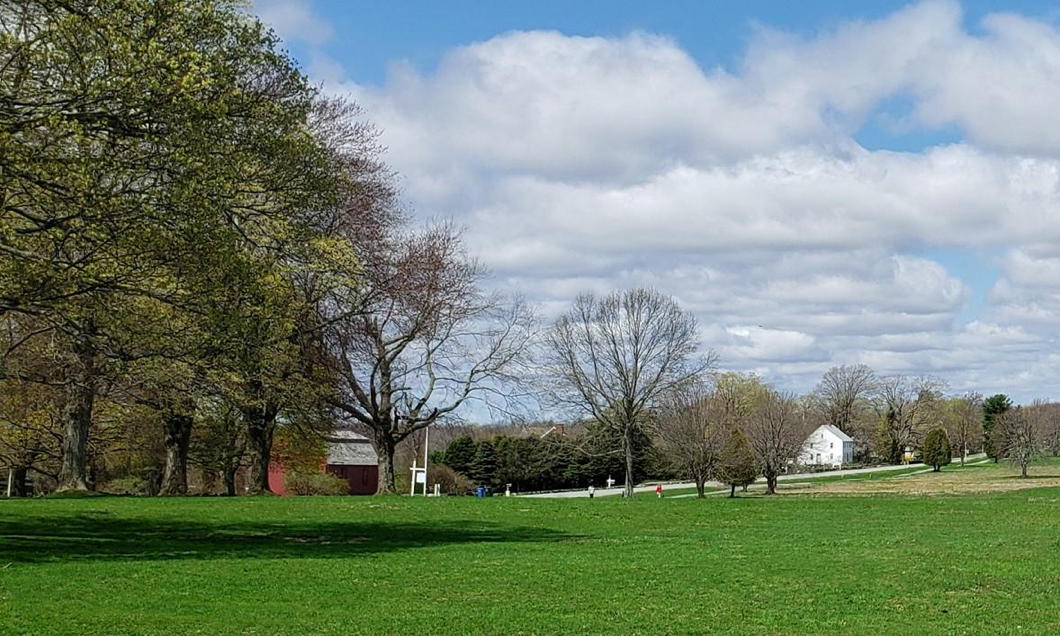
The Connecticut town of Lebanon is known for many things. It is the birthplace of Jonathan Trumbull, the only colonial governor to turn traitor during the American Revolution, as well as of his son the famous painter. The Rev. Eleazar Wheelock founded Moor’s Charity School in the town to teach Native Americans, later moving it to New Hampshire where it became Dartmouth College. Prince Saunders, the Free Black socialite and later Attorney General of the Empire of Haiti, was probably born in Lebanon too.
The town’s most famous feature, however, is its mile-long town green: the longest village common in the world. New England is famous for its town and village greens, originally enclosed land held in common and put to practical use for locals to use as pasture for their animals. Given the size of farms in New England, this purpose quickly faded and the green became a meeting or strolling place. Usually the most important buildings could be found either on or bordering the green: the church, the school, the town hall or court house, and eventually the library.
Part of Lebanon Green is still worked as a hay field, which means this is the last town green in New England that is still in agricultural use. There is even an adjacent vineyard, God bless them.
The green also provoked a recent legal case of some interest. When the Town of Lebanon proposed expanding the public library, located right on the green alongside the Congregationalist church, a problem arose.
Before a permit could be issued, the State of Connecticut required proof of ownership of the land on which the library to be submitted. Alas, no proof could be found, the green having been held in common more or less from the town’s incorporation in 1700.
The last known owners of the green were believed to be the town proprietors listed in 1705, and delineating their heirs or assigns over the dozen or more generations that had passed in the meantime was deemed impossible, or at least strenuous beyond any desirable effort. The town historian estimated there may be as many as 10,000 descendants with a potential claim.
In January 2018, the Town of Lebanon instead requested the court grant them quiet title to three parcels of the town green hosting the library, the town hall, and the town’s public works facilities. In March 2019, their request was granted, and the First Congregational Church likewise took legal action to see it recognised as the owner of the parcel of the green it has occupied for centuries.
Courts have also granted the local historical society conservation authority over 95 per cent of the green — excluding the church, town hall, and library. This means the local histos will have a say on any future use, though the courts declined extending this to the whole of the green. So it looks like the future of Lebanon Green will be safe for some centuries yet.
Scoring the Hales
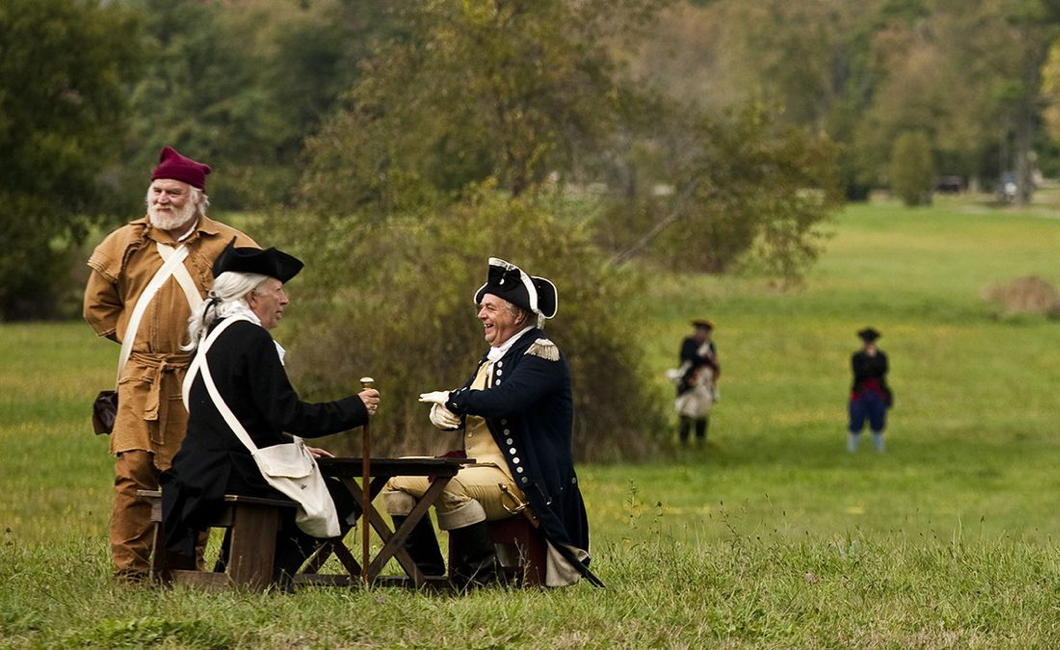
One of the great Northumbrian traditions is the yearly Scoring the Hales, a mediaeval football match between the parishes of St Michael and St Paul in Alnwick. The first records of this match are from 1762 but it almost certainly began many, many generations earlier. This year’s match marked a return after a two-year absence thanks to the virus.
The match takes place every Shrove Tuesday but this is football as seen long before the modern rules of the sport were codified into ‘soccer’ (association football) and ‘rugger’ (rugby football).
The day begins with the Duke of Northumberland dropping the ball from the barbican of his seat, Alnwick Castle. Led by the Duke’s piper, the two teams are led down the Peth to the furlong-deep pitch beside the River Aln called the Pastures.
Rules are very few but the match consists of two teams of usually about 150 players from their respective parishes, battling it out over two halves of half-an-hour each. The goal posts are covered with greenery and stand 400 yards apart. Whoever scores two ‘hales’ first is deemed the winner. If the score is even after two periods, a further 45-minute period decides the match.
Once the match is over, the football is then thrown in the River Aln and all the players scramble to capture it and whoever gets it through the river to the other bank is allowed to keep it.
Like golf, Scoring the Hales used to be played in the streets but its destructive potential has seen it moved to an open space — here in Alnwick’s case since the 1820s.
The Newcastle Chronicle (founded 1764) sent a photographer along to this year’s match, duly won by the denizens of St Paul’s parish. (more…)
Liverpool’s Irvingite Church
The soi-disant “Catholic Apostolic Church” was one of the strangest but most fascinating Protestant sects the Victorian world brought forth. It was entirely novel — perhaps outright bizarre is a better description — in its combination of millenarian theology, evangelical preaching, and inventive ceremonialism. They were often referred to as Irvingites as a shorthand, owing to their origins amongst the followers of the Rev. Edward Irving, a Church of Scotland minister who led a congregation in Regent Square, London.
The Irvingites — after the death of Irving, it must be said — invented an elaborate hierarchy of twelve “apostles”, under whom served “angels”, “priests”, “elders”, “prophets”, “evangelists”, “pastors”, “deacons”, “sub-deacons”, “acolytes”, “singers”, and “door-keepers”. Coming from a very Protestant, low-church background, they curiously concocted elaborate liturgies influenced by Catholic, Greek, and Anglican forms of worship.
Another unique aspect of this group was its lack of denominational thinking: the Catholic Apostolic Church did not demand any strict or exclusive communion but was happy for its members and supporters to continue to be members of other churches or denominations.
One of the founding “apostles” of the Irvingite Church, Henry Drummond, married his daughter off to Algernon Percy, later the 6th Duke of Northumberland. That duke and his two immediate successors were known to be supporters of the Catholic Apostolic Church without disowning their established Anglican affiliation.
Despite this aristocratic land-owning connection, socially the Irvingite church spread most rapidly amongst the well-to-do mercantile classes, which meant they had congregations in places like Manchester, Birmingham, Liverpool, Edinburgh, and even Hamburg. They were also very strict about tithing, which — combined with their mercantile status — meant they had a fair amount of money to spend on church building.
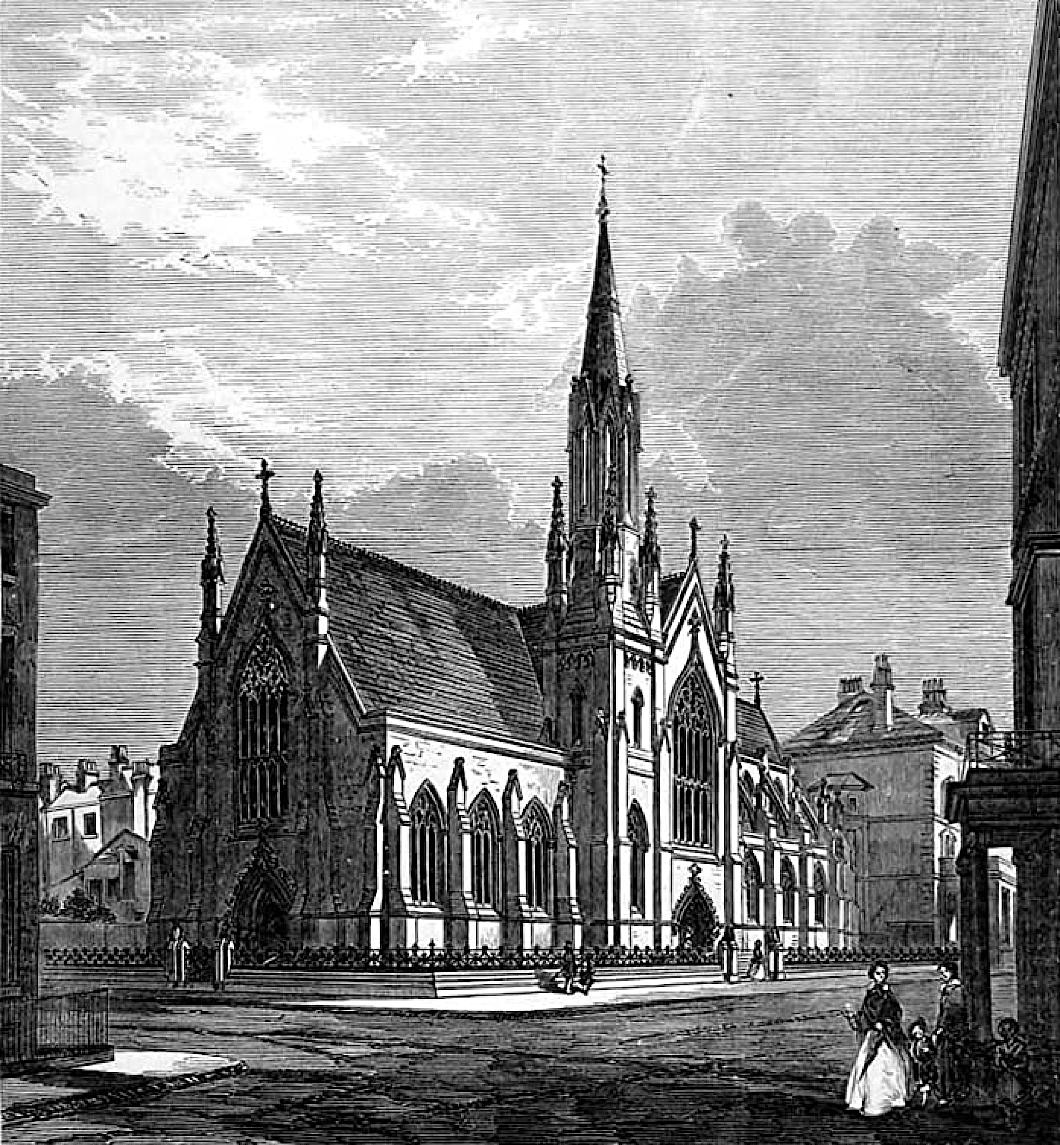
In Liverpool their church was built on the corner of Canning Street and Catherine Street in 1855-56. The design by architect Enoch Trevor Owen was influenced by Cologne Cathedral, with a nave more than 70 feet high.
Owen later moved to Dublin where he was employed as architect to the Board of Works, though he also designed the Catholic Apostolic Church in that city as well. (Today that building serves as Dublin’s Lutheran Church.) There’s some indication he designed the Catholic Apostolic Church in Manchester, so he might very well have been a member of the sect himself.
Another centrally important fact about the Irvingites: they didn’t believe that their original “apostles” could appoint further apostles. So when the last living “apostle” ordained his last “angel”, no further angels and so forth could be created. It endowed the clergy of this unique branch of Protestantism with an effective end date, but you have to give them credit for sticking with it. The last “apostle” died in 1901, the last “angel” in 1960, and their last “priest” in 1971.
Gone are all their elaborate inventive liturgies, and unsurprisingly the congregations have tended to fade away as well. The last clergy often recommended the lay people in their charge attend Church of England services when their own services stopped. The body continues to exist, and beside paying for the maintenance of its properties also makes annual grants to mostly Anglican but also Catholic and Eastern Orthodox bodies. In some very rare places, like Little Venice, prayer services are still held.
Indeed they still own their great central church in Gordon Square in Bloomsbury, though its chief use in the past decades has been being rented out first to an Anglican university chaplaincy, and now to the use of High-Church Anglicans as well as an Anglican evangelical mission.
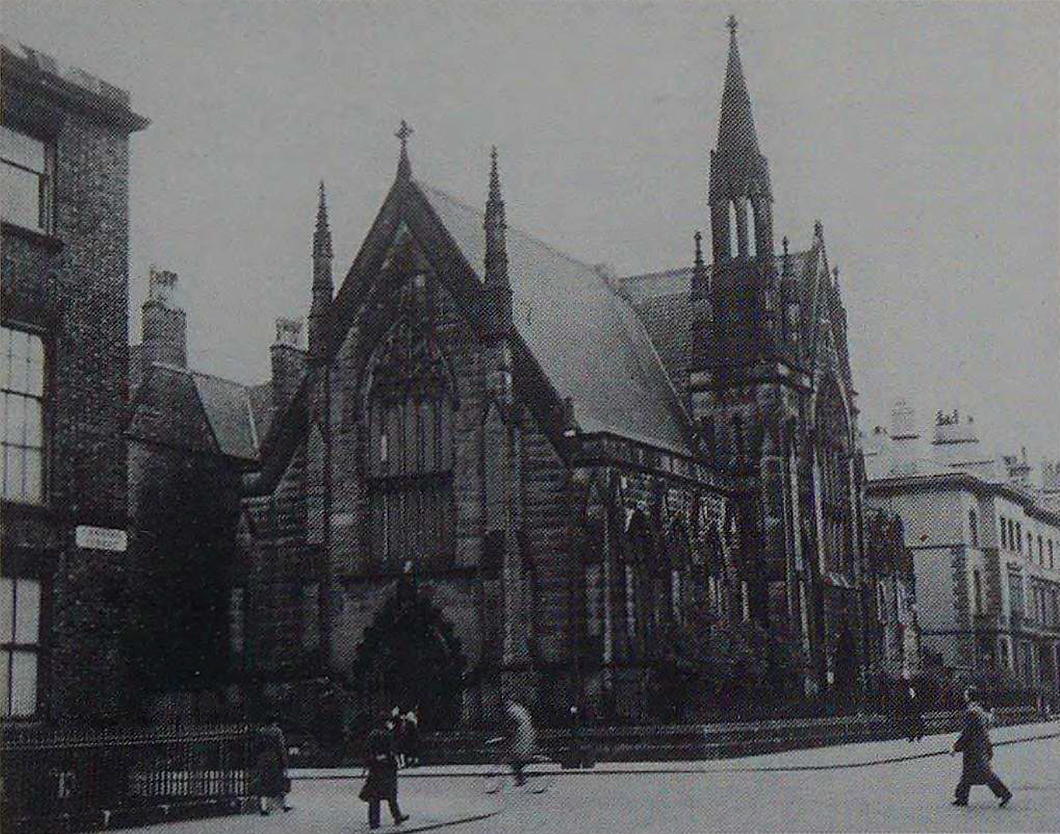
In Liverpool their church was given Grade II listing protection in 1978, possibly when prayers services were still being held. By 1982 the church was up for sale, but without a buyer it succumbed to a fire in 1986.
The church lingered in ruins until the late 1990s when it was demolished and a nondescript block of flats erected on the site.
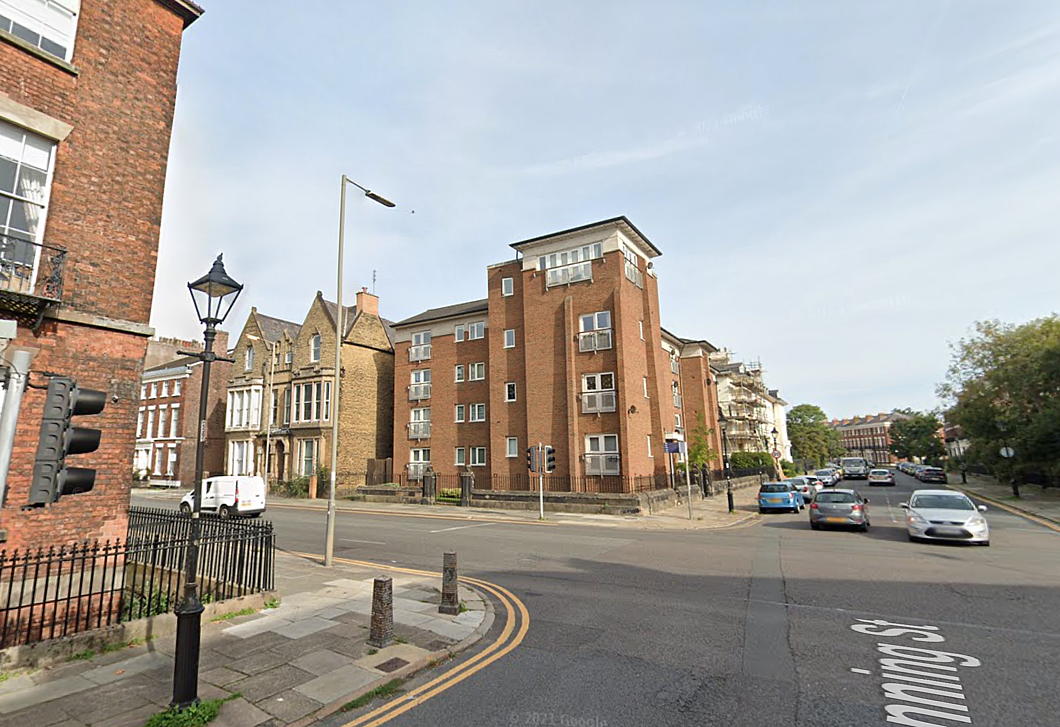
Elsewhere: Liverpool: Then and Now | Velvet Hummingbee
Merton
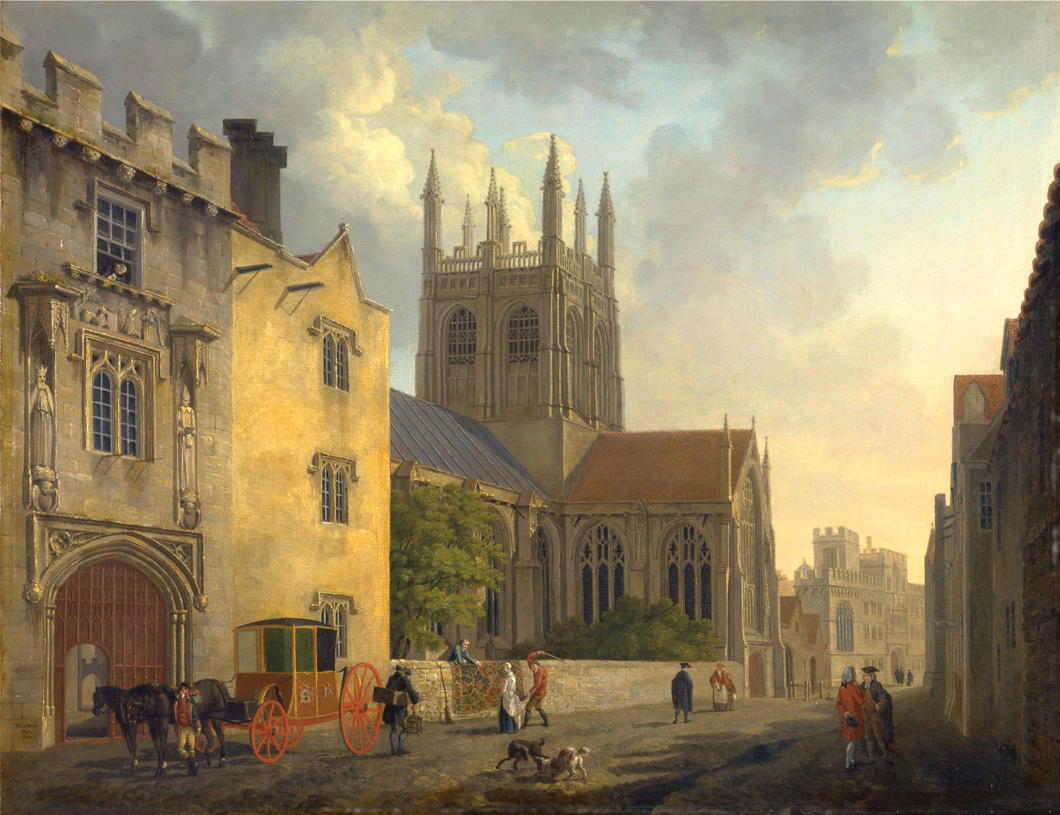
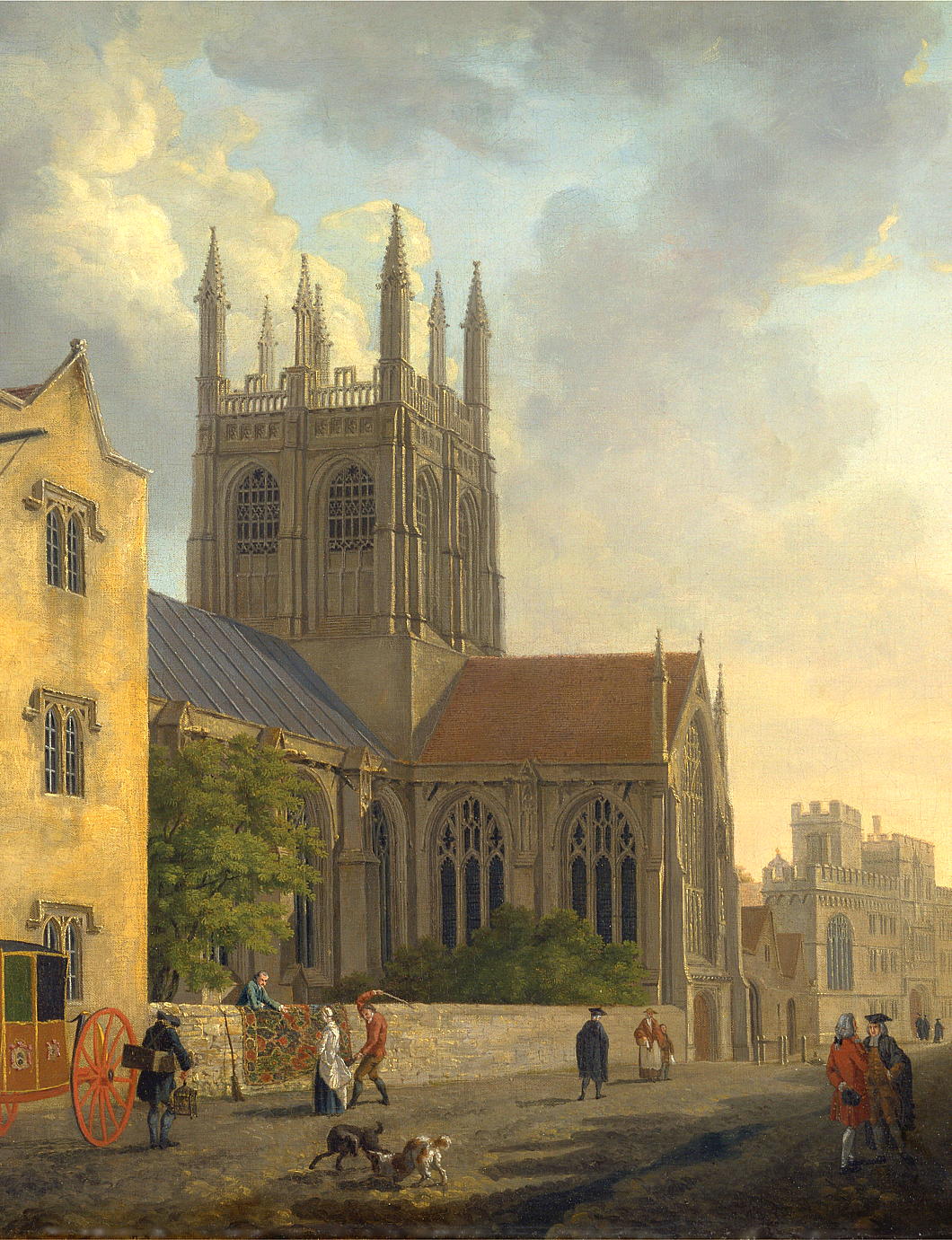
The ‘House or College of Scholars of Merton in the University of Oxford’ — more commonly called Merton College — is one of the smaller colleges in Oxford, located right next door to lovely little Corpus.
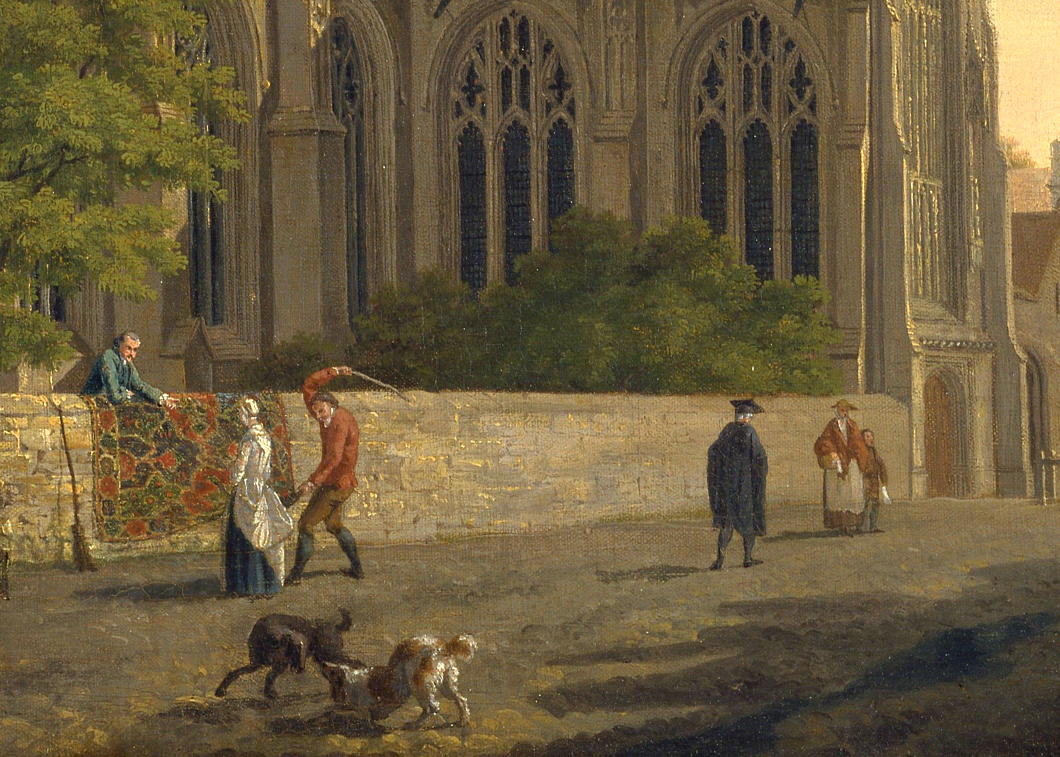
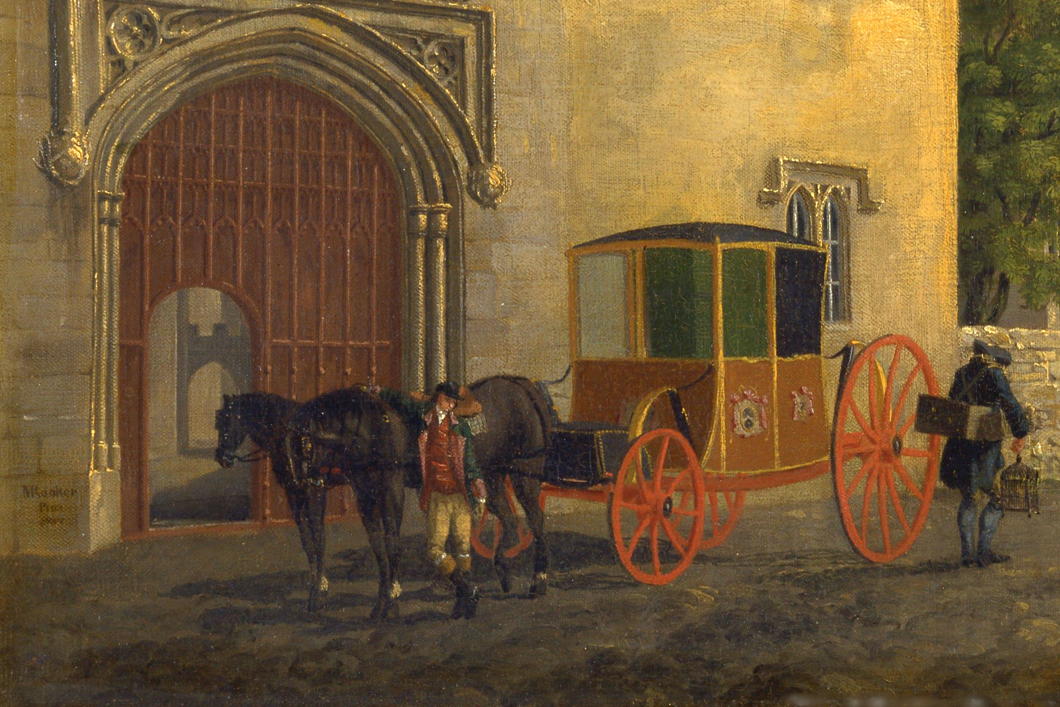
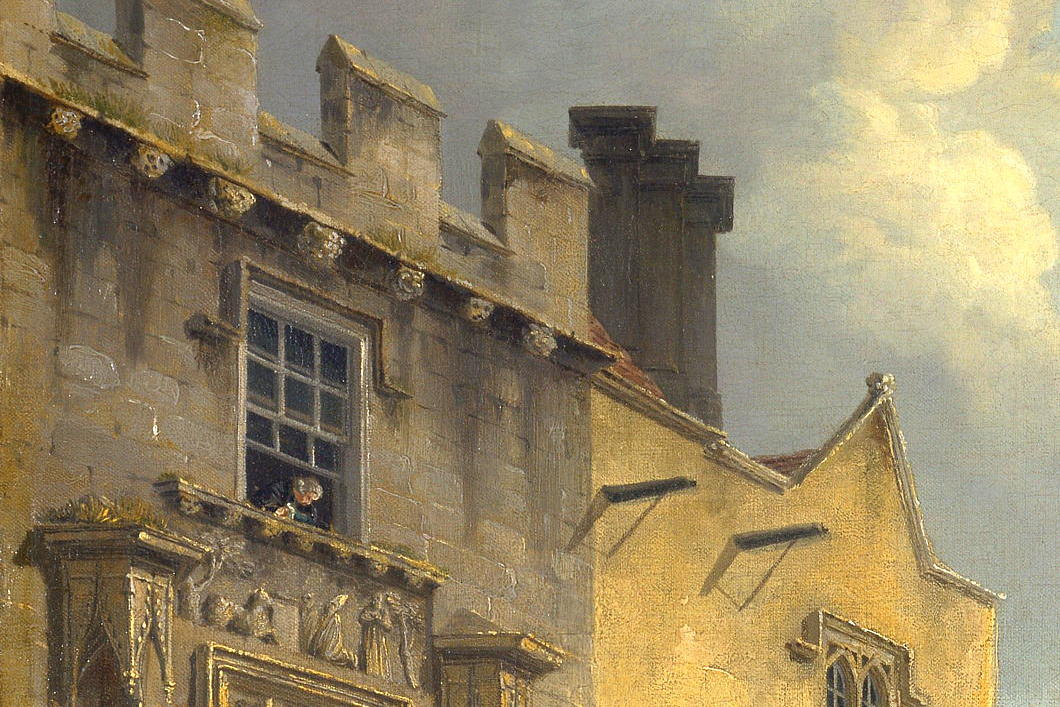
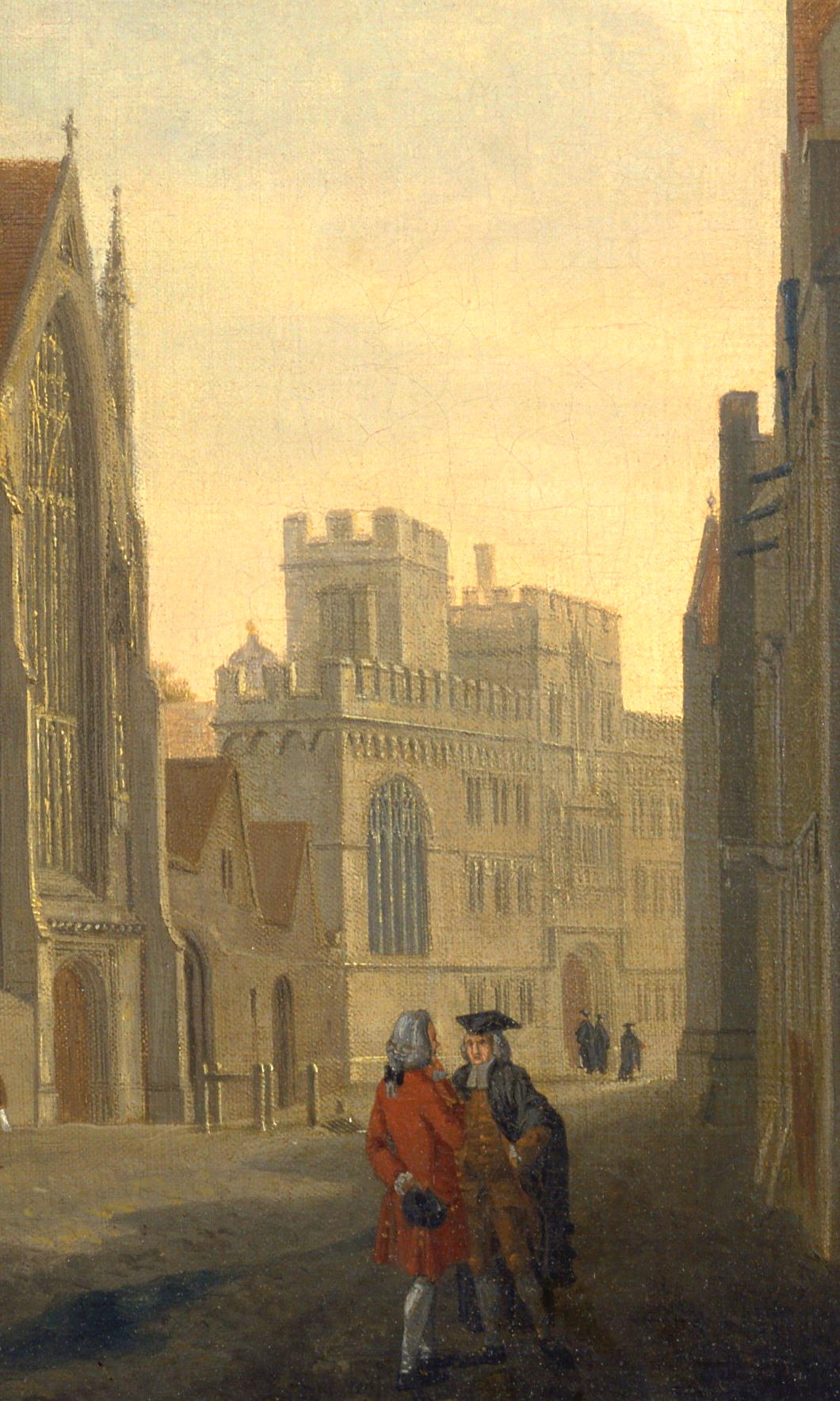
Aside from rendering the architecture well, townscapes from the eighteenth century often give delightful little hints of city life. Michael Rooker (1746–1801) painted this scene of Merton College from its eponymous street in 1771, and the view today is hardly changed at all.
One of my favourite cityscapes is Canaletto’s view of the back end of Downing Street looking towards the old Horse Guards which you can pop into the Tate and see thanks to the generosity of Lord Lloyd-Webber. Incidentally, both scenes depict carpets being hung out for beating.
If you love the capital of the Netherlandosphere I recommended adding to your library Kijk Amsterdam 1700-1800: De mooiste stadsgezichten (‘See Amsterdam 1700-1800: The Most Beautiful Cityscapes’), the well-produced catalogue of the 2017 exhibition of the same name at the Amsterdam City Archives which includes 300 illustrations in full colour.
It’s high time the Museum of Oxford or the Ashmolean — or anyone really — put together a similar exhibition of Oxford cityscapes from the same century.
Incidentally, it was in Merton Field as a teenager that I played my first game of cricket. Who would have guessed then that eighteen years later your humble and obedient scribe would be facing the Vatican on the field of battle in the same sport? (We lost.)
On the coast of Arabia
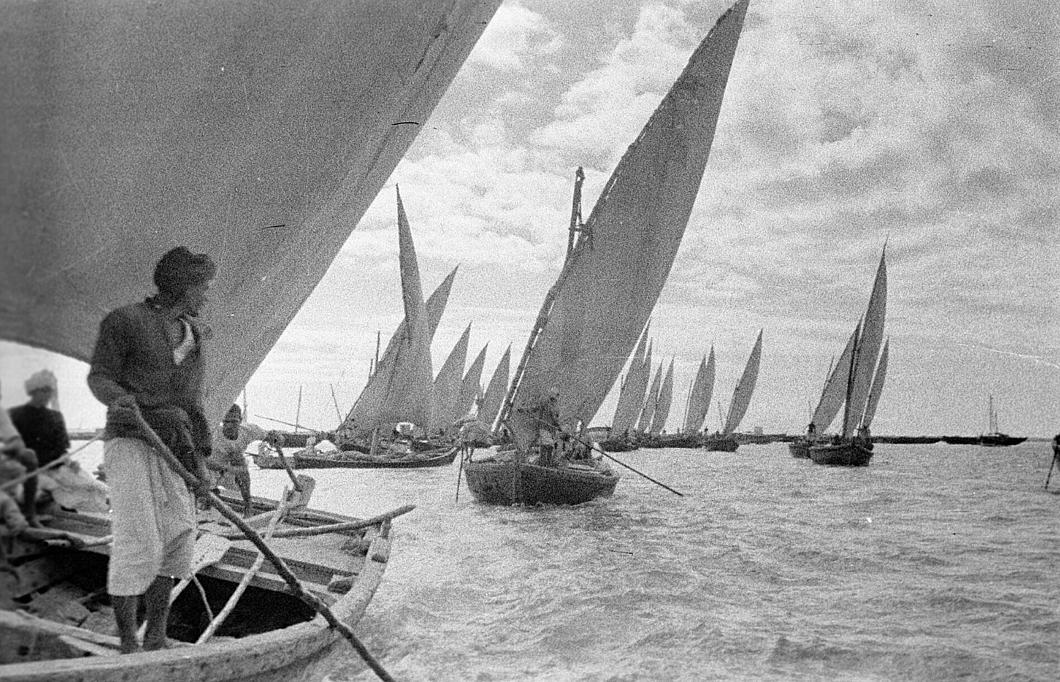
With 231 million Muslims, Indonesia today has the largest Islamic population of any country. The obligation of all Muslims who are capable to perform the Hajj — the annual pilgrimage to Mecca — at least once in their life meant that there was a continual flow of travel and traffic between the Arabian peninsula and the Dutch East Indies (as they once were).
The writer, photographer, and explorer Daniël van der Meulen was appointed the Dutch consul in Jeddah in 1923. Then followed three full years of intensive study of Arabic and Islam under the tutelage of the great Hollandic arabist Christiaan Snouck Hurgronje before van der Meulen arrived in Arabia in 1926, just as the Sultan of Nejd, Ibn Saud, was securing his hold over the Hejaz.
The primary role of the Dutch consul at Jeddah was to look after the interests of the Netherlands-Indies pilgrims on the Hajj but, as that only took place once a year for several days, van der Meulen took full advantage of the down time to explore the Arabian peninsula.
Hadhramaut in Yemen was of particular interest to him and he completed several expeditions there between 1931 and 1944, forming strong friendships with many Hadhrami people along the way.
In 2003, the Koninklijk Instituut voor de Tropen (KIT, or Royal Tropical Institute) in Amsterdam published Daniel van der Meulen in Arabia Felix: Travels and Photographs of a Dutch Diplomat in Yemen, 1931–1944 by Steven Vink, the photographic curator of the Tropical Museum.
It was published in cooperation with the Yemeni Embassy in the Hague and the Royal Netherlands Embassy in Sana’a. William Facey of the British-Yemeni Society gives it a strong review here, but hard copies are tricky to get hold of.
Not all European journeys to South Arabia have proved as fruitful as van der Meulen’s. Thorkild Hansen wrote a book about the Danish expedition of 1761 to 1767, a ‘spellbinding true story of a scientific expedition gone disastrously awry’.
This 1962 book has happily been brought back to life in a recent printing from the ever-estimable New York Review Books.
Search
Instagram: @andcusack
Click here for my Instagram photos.Most Recent Posts
- Brunel’s Unbuilt Capitol February 3, 2026
- Cricket at Fordham January 27, 2026
- Palacio Barolo Revisted January 14, 2026
- Learning to Love Liguria January 14, 2026
- Crux Alba No. 2 January 13, 2026
Most Recent Comments
Book Wishlist
Monthly Archives
Categories