Architecture
About Andrew Cusack
 Writer, web designer, etc.; born in New York; educated in Argentina, Scotland, and South Africa; now based in London.
 read more
News
Blogs
Reviews & Periodicals
Arts & Design
World
France
Mitteleuropa
Knickerbockers
Argentina
The Levant
Africa
Cape of Good Hope
Netherlands
Scandinavia
Québec
India
Muscovy
Germany
Academica
St. Anthony Square
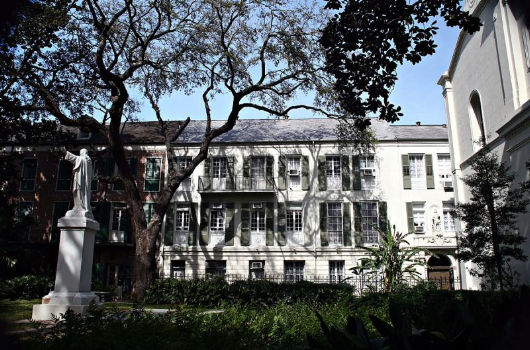
Behind the Cathedral of St. Louis, New Orleans.
Santa Maria della Pace
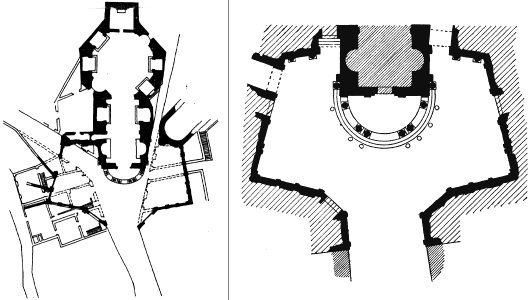
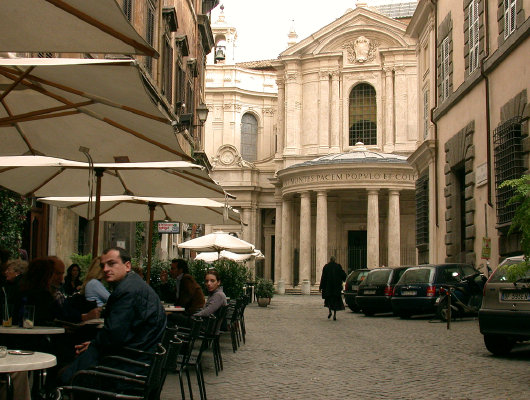
One of my favourite churches in all of Rome is that of Santa Maria della Pace. The best approach is from the alley leading out of the northwest corner of the Piazza Navona, crossing the Via di Santa Maria dell’Anima and making sure to turn left into the smaller alleyway when the little street itself swerves north. Moving forward, the perambulator suddenly emerges into a tiny trapezoidal piazza and having continued for a few paces realizes, almost as an afterthought, that there is something over your right shoulder. There is the Church of Santa Maria della Pace.
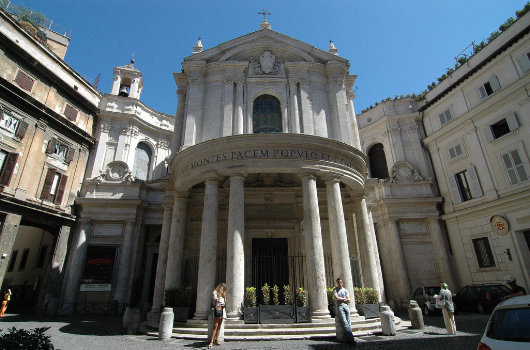
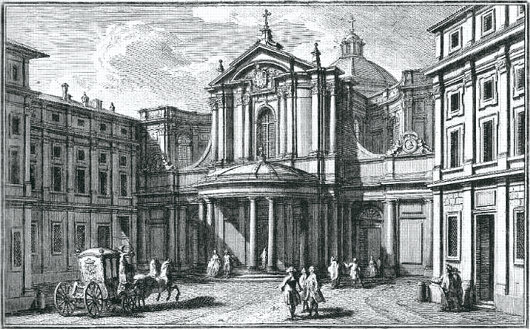
Like so many Roman edifices the Church is the work of many centuries. A church dedicated to the Apostle Andrew once stood on the site, and it was on the foundations of that church in 1482 that work on Santa Maria della Pace commenced. Sixtus IV, praying for peace in the Italian peninsula, vowed to build a church dedicated to Our Lady of Peace, and hence the Apostle’s patronage was superseded. While Baccio Pontelli deserves the credit for the church proper, Pietro da Cortona’s splendidly theatrical façade and its enveloping piazza were commissioned Alexander VII in the 1650s.
Santa Maria della Pace has a number of connections to the Chigi dynasty. The first prominent member of the Chigi family was Agostino (1465–1520), a wealthy banker and builder of the Villa Farnesina in Trastevere. Here at Santa Maria della Pace, Agostino commissioned the Capella Chigi (not to be confused with the Capella Chigi in Santa Maria del Popolo). Alexander VII himself was a Chigi, and perhaps this explains his patronage of Cortona’s façade and piazza. Among the later Chigi clan, there were a number of cardinals, some of whom were even nuncios, and more recently Ludovico Chigi Albani della Rovere was Prince & Grand Master of the Order of Malta from 1931 to 1951. Anyhow, the Chigi chapel features a fresco initiated by Raphael (and completed by his school), while the adjacent chapel includes sculptural decoration by Michelangelo.
In addition to greats such as Raphael, Michelangelo, and Cortona, the cloister of the church is by none other than Bramante, and indeed was his first work in the Eternal City. Somewhat exhaustively, it doesn’t end there. Santa Maria della Pace has a high altar by Carlo Maderno, a sculpture of the Deposition by Cosimo Fancelli, two small frescoes by il Rosso Fiorentino, and another fresco by Baldassarre Peruzzi who, shall we say in kindness, was a much better architect than painter. There are further works by Maratta and Gentileschi (Orazio, that is — not Artemisia).
A Rundbogenstil Library in New York
The handsome former Astor Library on Lafayette Street

One of my favorite buildings in all New York is the former Astor Library on Lafayette Street in Greenwich Village. Now the Public Theater, it is a superb example of the nineteenth-century German neo-romantic Rundbogenstil (“round-arch-style”) and one of the few remnants of that style in New York. The Astor Library was the legacy of John Jacob Astor, whose will provided for its establishment. Late in the nineteenth century, the Astor Library agreed to merge with the Lenox Library and the Tilden Trust to form the New York Public Library, one of the greatest libraries in the history of civilization. The building was bought by the Hebrew Immigrant Aid Society who tore out the book stacks and used it as a processing station for needy newcomers. In 1965, the HIAS sold it on to a developer who planned to demolish it, but, through a massive civic effort, Joseph Papp and his New York Shakespeare Festival purchased the building and turned it into the Public Theater.
Saskatoon Cathedral
Matthew Alderman’s hypothetical counter-proposal

Matthew Alderman has designed a hypothetical counter-proposal for the new Catholic cathedral in Saskatoon, Saskatchewan which is infinitely more beautiful than the ugly modernist thingamajig that the diocese is actually building. Matt elaborates upon the problematic nature of the modernist design here and here.


Yet another reason to love the Boers
“Oom Paul” Kruger’s thoughts on the circumnavigation of the globe
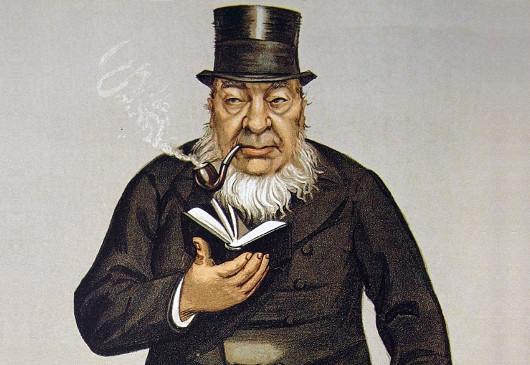
Joshua Slocum was a native of Nova Scotia who became an adventurer, seaman, and writer of some reknown in his time, and is perhaps best known both for his mysterious death and for being the first person to single-handedly circumnavigate the planet. Capt. Slocum published his memoirs of this trip in his 1899 book, Sailing Alone Across the World and one of the delightful little tales relayed is of the Captain’s docking at Durban in Natal and his journey inland to Pretoria in the Transvaal:
At Pretoria I met Mr. Kruger, the Transvaal president. His Excellency received me cordially enough; but my friend Judge Beyers, the gentleman who presented me, by mentioning that I was on a voyage around the world, unwittingly gave great offense to the venerable statesman, which we both regretted deeply.
Mr. Kruger corrected the judge rather sharply, reminding him that the world is flat. “You don’t mean round the world,” said the president; “it is impossible! You mean in the world. Impossible!” he said, “impossible!” and not another word did he utter either to the judge or to me. The judge looked at me and I looked at the judge, who should have known his ground, so to speak, and Mr. Kruger glowered at us both.
My friend the judge seemed embarrassed, but I was delighted; the incident pleased me more than anything else that could have happened. It was a nugget of information quarried out of Oom Paul, some of whose sayings are famous. Of the English he said, “They took first my coat and then my trousers.” He also said, “Dynamite is the corner-stone of the South African Republic.” Only unthinking people call President Kruger dull.
— Chapter XVIII, Sailing Alone Around the World, by Joshua Slocum
I agree entirely with Capt. Slocum’s conclusion.
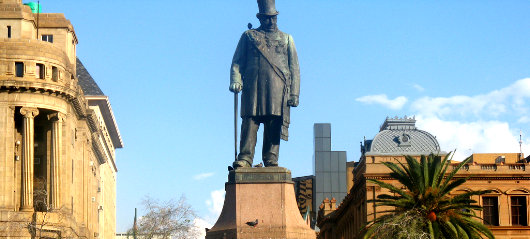
While his views on geography may not have been strictly orthodox, President Kruger is honored with an imposing monument in the Kerkplein, the central square of Pretoria, now the capital of all South Africa, not just the Transvaal. The President’s statue rests in an enviable position between two of the most handsome edifices in all of South Africa:
So this is why people live in California

Jackson Street, San Francisco: 20 rooms, 9 bedrooms, 7 full bathrooms, 3 half-bathrooms, 7 fireplaces, hardwood floors, 4 storeys, an elevator, 4-car garage, and off-street parking.
Abomination
This act of willful cultural vandalism is noxious in the sight of both God and Man and is a complete and utter abomination. Whoever is responsible for this should be hanged, drawn, and quartered, and buried at a crossroads with a stake through his heart.
Observe the beauty of this building at the corner of Harrison & Penn in Williamsburg, Brooklyn: its classic composition, its complete vernacular ease. And look at the cheap, tawdry, wrongly-colored brick used to hide and ultimately destroy this ordinary gem.
How can the perpetrator of this act sleep at night? It boggles the mind…
Athens of the North
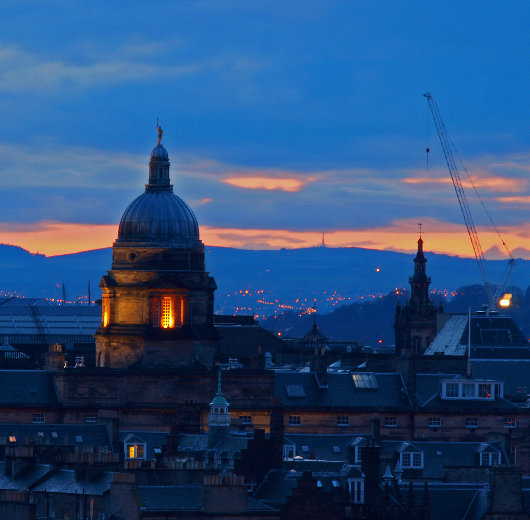
Photo: Steven Lees
The Other Modern
An Architecture of Continuity:
Luis Moya Blanco’s Universidad Laboral de Gijón
In 1944, an undersecretary of Francoist Spain’s Ministry of Labour visited the city of Gijón to attend the funerals of a group of miners killed in a mine collapse. After the solemn rites took place, Turiño Carlos Pinilla met with a group of locals filled with concern for the offspring of the dead workers. All they asked of the bureaucrat was an orphanage; what they ended up with ten years later was a magnificent palace of charity, almost a city unto itself and the largest building in Spain: the Universidad Laboral de Gijón.
An example of Catholic social teaching (which upholds the essential dignity of work and the working man), the “labor university” was founded as a secondary-level institution to teach vocational and technical skills to the children of Spain’s working class. At over 2,900,000 sq. ft. of space, it is more than double the size of the great Royal Monastery and Palace of El Escorial built by Phillip II in the sixteenth century, and was accompanied by over 380 acres of farmland.
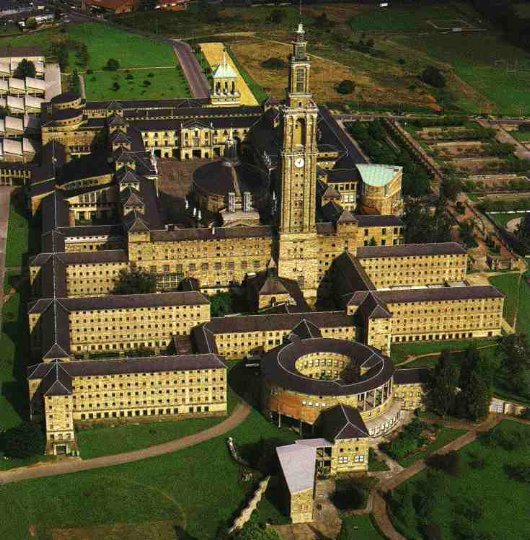
The goal was to accommodate 1,000 students (eventually doubling) from the age of 12 to 16, with residences, school facilities, industrial workshops, working farmland, athletic facilities, and sporting fields. The educational aspect and leadership of the Laboral was entrusted to the Jesuits, while the Poor Clares also had a convent on the premises, performing various household tasks and caring for the girls as their particular charism. (more…)
Q&A: Lady Cochrane Sursock

In a fascinating interview, Canadian journalist and Monocle editor-in-chief Tyler Brûlé talks with Lady Yvonne Cochrane, “doyenne of the Christian East”, discussing Beirut past, Beirut present, and Beirut future.
Update: She is actually Yvonne, Lady Cochrane Sursock, not Lady Yvonne Cochrane as Monocle styles her. Hat tip to Mr. Bond.
Glass-plating the Coliseum
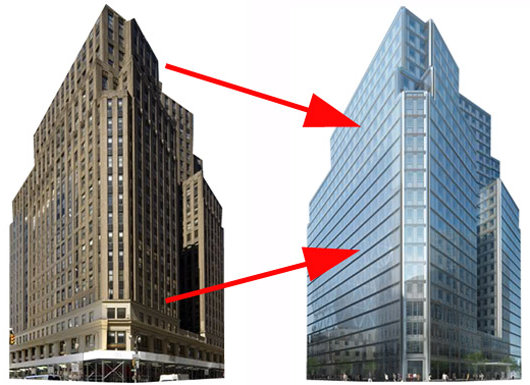
1775 Broadway, formerly the home of Coliseum Books (which I believe got its name from the splendid columns ringing the first two floors, as well as from the nearby now-demolished New York Coliseum), is to be glass-plated and re-addressed as “3 Columbus Circle”. As John Massengale commented, “Because if there’s anything New York City needs it’s another glass-covered office building…”.
Slot Zeist
A country house in the Province of Utrecht

Utrecht is the smallest of Dutch provinces, being little more than a remnant of the once-powerful Prince-Bishopric of Utrecht. The city of Utrecht is the province’s capital and namesake, not to mention the primatial see of all the Netherlands. Just outside the provincial capital is the town of Zeist with its splendid little ‘palace’, Slot Zeist. The house was built from 1677 to 1686 on the ruins of Kasteel Zeist, the castle of the von Zeist family which died out in the fourteenth century (or survived through the Borre van Amerongen family, depending on how you look at it).
Our Lady of Esperanza
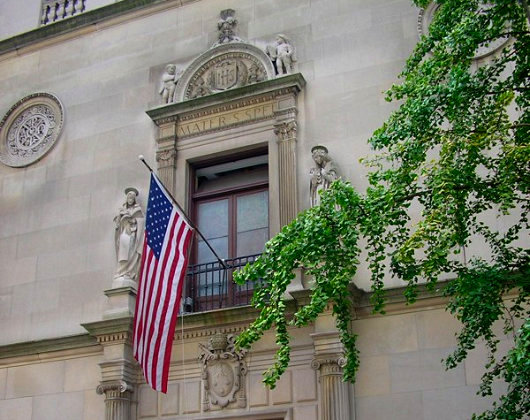
The Church of Our Lady of Esperanza, 156th Street & Broadway. The Church was built by Archer Huntington at the urging of Doña Manuela de Laverrerie de Barril and designed by Huntington’s brother Charles. The sanctuary lamp was a gift from King Alfonso XIII of Spain. The present façade dates from 1924, when the Church was expanded under the direction of Lawrence G. White, the son of Stanford White of McKim Mead & White and himself a partner in his father’s firm.
The right direction
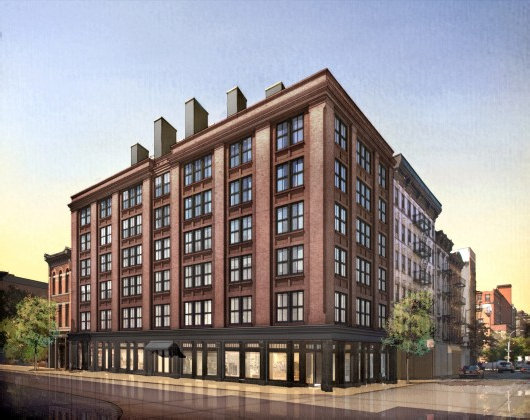
What’s this? A building built from the ground up by a developer in New York, and designed to look like a New York building? Something to look forward to at 211 Elizabeth Street.
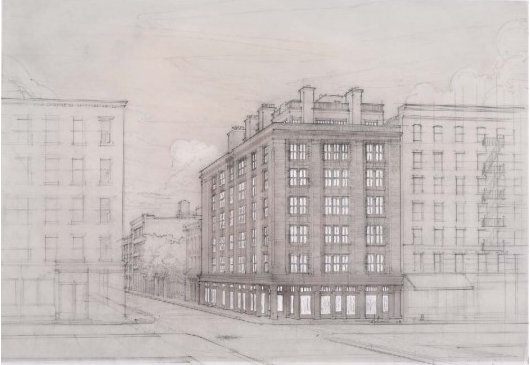
(more…)
The Library of Congress
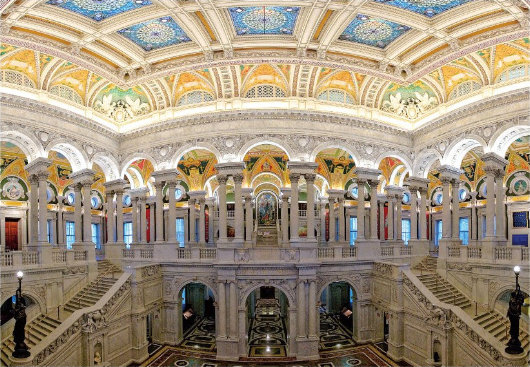
The national library is one of our underappreciated architectural achievements. Henry Hope Reed put together a handsome tribute to and record of the building. What a shame it is located in Washington, D.C.
A Lawyer’s Studio in Recoleta
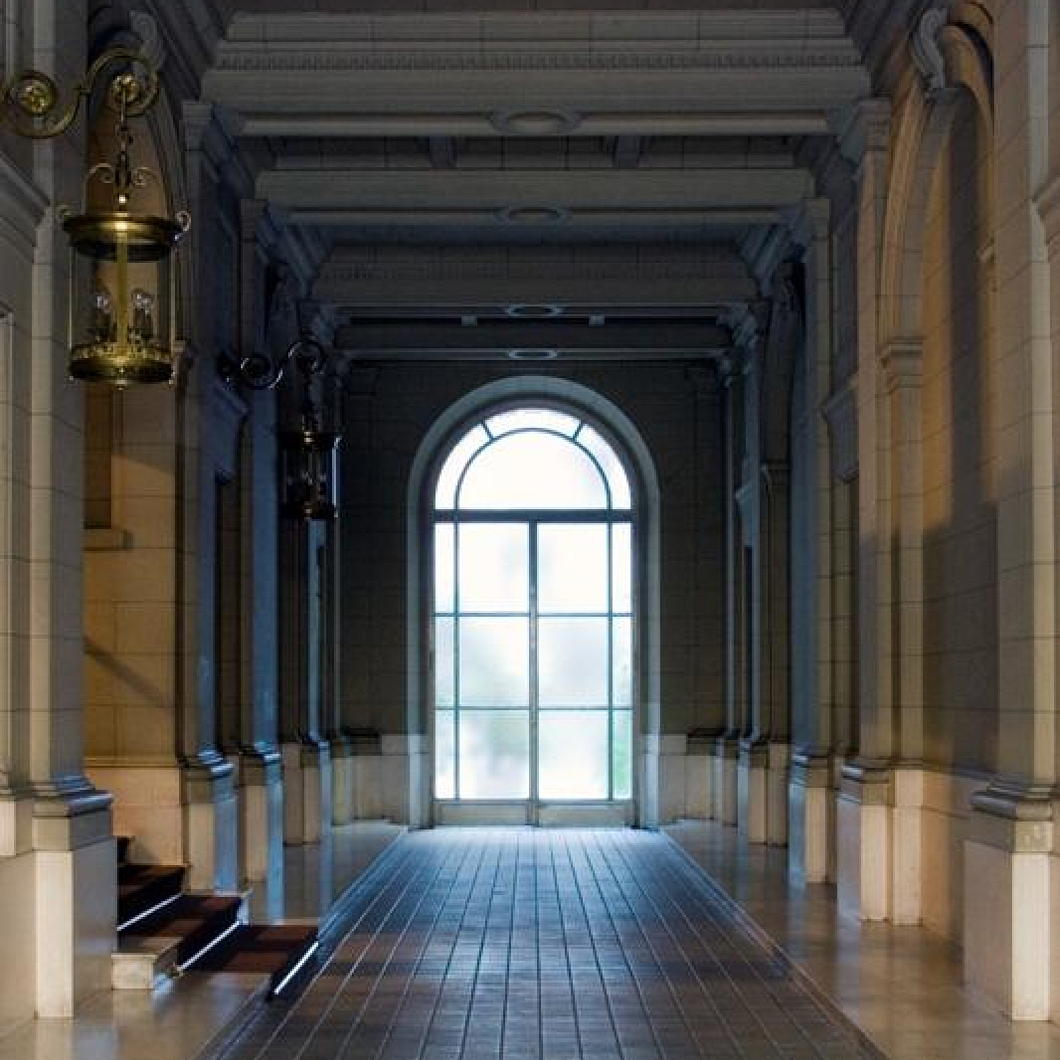
This property in the Recoleta neighborhood of Buenos Aires was once a residential apartment until a multi-generational family of lawyers bought and transformed it into a law office. (more…)
Boullée’s Opera
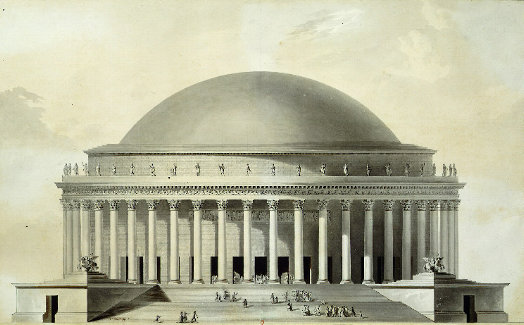
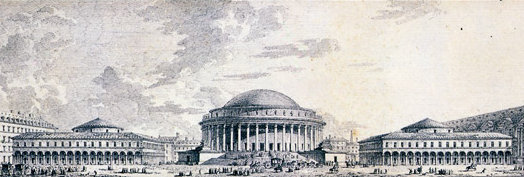
ÉTIENNE-LOUIS BOULLÉE was an architect whose great influence can chiefly be attributed more to his unexecuted designs than to those that were actually constructed. His most famous creation is the Cenotaph to Isaac Newton of 1784, conceived but never built. Many of his designs — especially his plan for a metropolitan basilica — exude a certain feeling as cold and soulless as can be expressed within the welcome restraints of classicism. One of his museum designs is almost proto-secessionist. But I am rather fond of his design for an opera house.

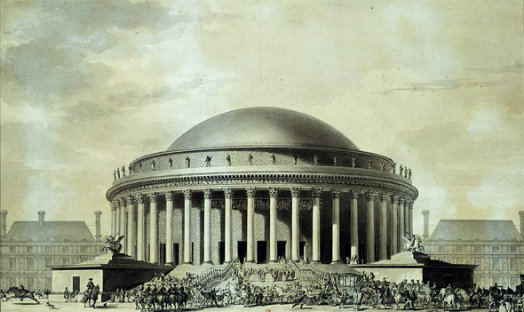
The perennial problem with opera house design is the flyspace: the large area above the stage into which elements of the set design can be lifted to change scenes during a performance. Garnier’s Paris Opera House uses a recessed pediment for its flyspace, while the Teatro Colon has a consistent sloped roof the length of the building tall enough to conceal the space. The modernist Metropolitan Opera House at Lincoln Center here in New York has a bland rectangular box stuck on top. At first, you glance at the exterior of Boullée’s design and think “Where’s the flyspace?” Boullée’s solution was simply to design on a scale large enough to encase the entire auditorium, stage, and flyspace in a single unified domed structure.
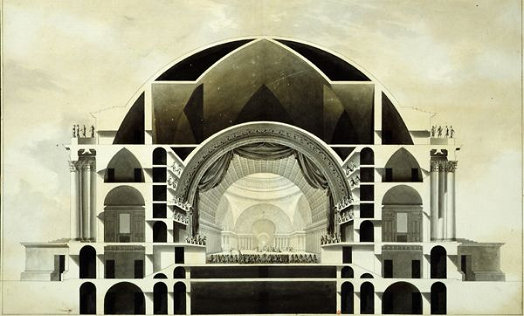
A sectional view towards the proscenium.
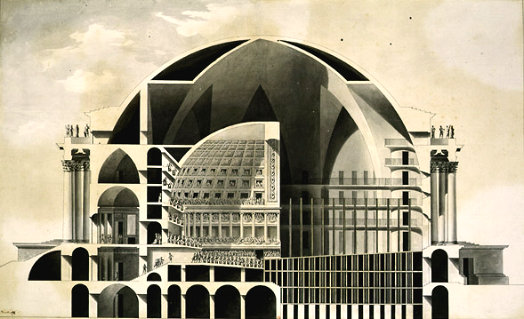
A cross-section from the side showing the auditorium on the left and the stage on the right.
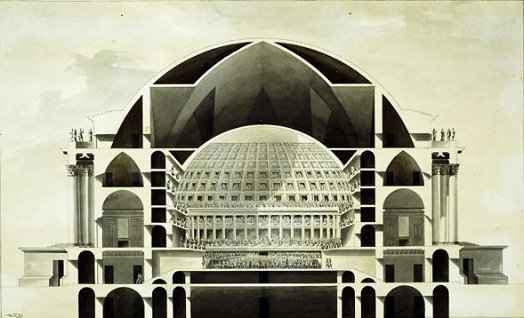
A sectional view looking from the stage towards the auditorium.

While Boullée’s opera was never built, I’ve often thought it had something of an imitator in the opera house of Novosibirsk, Russia’s third-largest city. The Novosibirsk State Academic Opera and Ballet Theatre is the largest theater in all of Russia and is located right at the center of the Siberian capital (which, founded in 1893, had originally been known as Novonikolayevsk, after Czar St. Nicholas II).
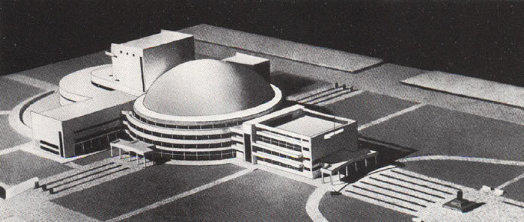
The first scheme for the Novosibirsk opera house was a modernist design drawn up in the 1930’s.
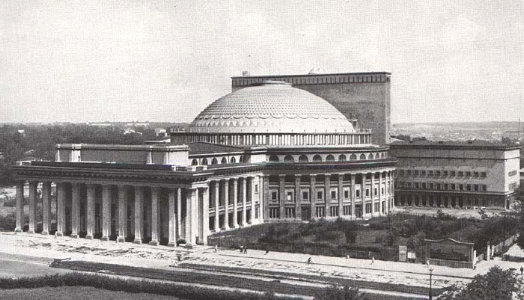
A classical design won the day, however, and the building was completed in 1945. As you can see, the Novosibirsk structure fails to follow Boullée in unifying the entire opera house under a single dome, but rather opts for the more pragmatic if less handsome separate flyspace. (Interestingly, the ratio of its dome’s thickness to its radius is less than that of a typical chicken egg). I still hope someone comes around and fulfills Boullée’s plan.
A Tribute to Cockerell
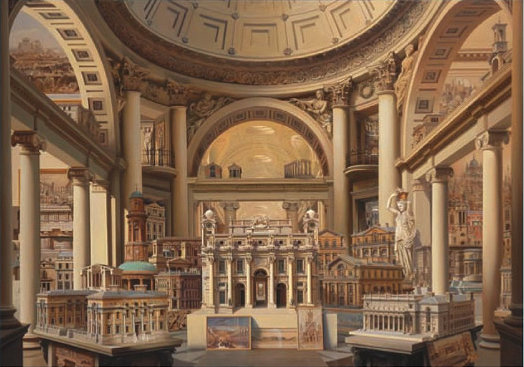
Carl Laubin, A Tribute to Charles Robert Cockerell, RA
Oil on canvas, 39′ 11″ x 60′
2005, Private collection
Krummau on the Moldau
Český Krumlov Revisited
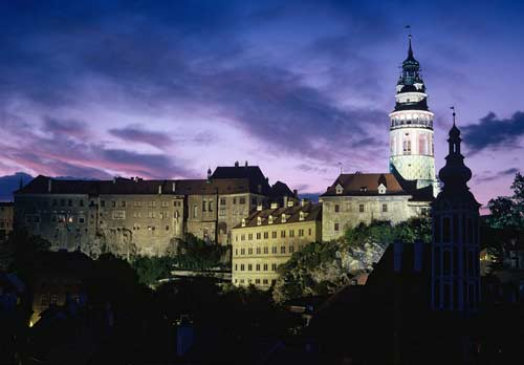
THE CASTLE OF Krummau in Bohemia stands majestically on its crag in a bend of the Moldau river, presiding confidently over the town below. Český Krumlov, as the town is known in the currently-reigning Czech language, began in the thirteenth century under the Rosenberg family and was purchased by the Emperor Rudolf II in 1602. Yet it was under the princely house of Schwarzenberg (proprietors of Krumau from 1719 to 1945) that the castle flourished. The name Český Krumlov means Bohemian Krummau, to differentiate it from a Moravian town of the same name. (It is also often rendered as Krumau or Krumau-an-der-Moldau).
While the advent of Communism deprived the Schwarzenbergs of this great castle and numerous other vast properties of theirs behind the Iron Curtain, the Schwarzenbergs have since regained their natural prominence in Bohemia. His Serene Highness Prince Karl VII of Schwarzenberg, Duke of Krummau, Count of Sulz, Princely Landgrave of Kelttgau currently serves his country as Minister of Foreign Affairs of the Czech Republic, as well as being a member of the Czech Senate which convenes in the Wallenstein Palace in Prague. For the sake of convenience, however, His Serene Highness goes by ‘Karel Schwarzenberg’. (more…)
Search
Instagram: @andcusack
Click here for my Instagram photos.Most Recent Posts
- Brunel’s Unbuilt Capitol February 3, 2026
- Cricket at Fordham January 27, 2026
- Palacio Barolo Revisted January 14, 2026
- Learning to Love Liguria January 14, 2026
- Crux Alba No. 2 January 13, 2026
Most Recent Comments
Book Wishlist
Monthly Archives
Categories