Great Britain
About Andrew Cusack
 Writer, web designer, etc.; born in New York; educated in Argentina, Scotland, and South Africa; now based in London.
 read more
News
Blogs
Reviews & Periodicals
Arts & Design
World
France
Mitteleuropa
Knickerbockers
Argentina
The Levant
Africa
Cape of Good Hope
Netherlands
Scandinavia
Québec
India
Muscovy
Germany
Academica
St Margaret Relic Heads to St Andrews
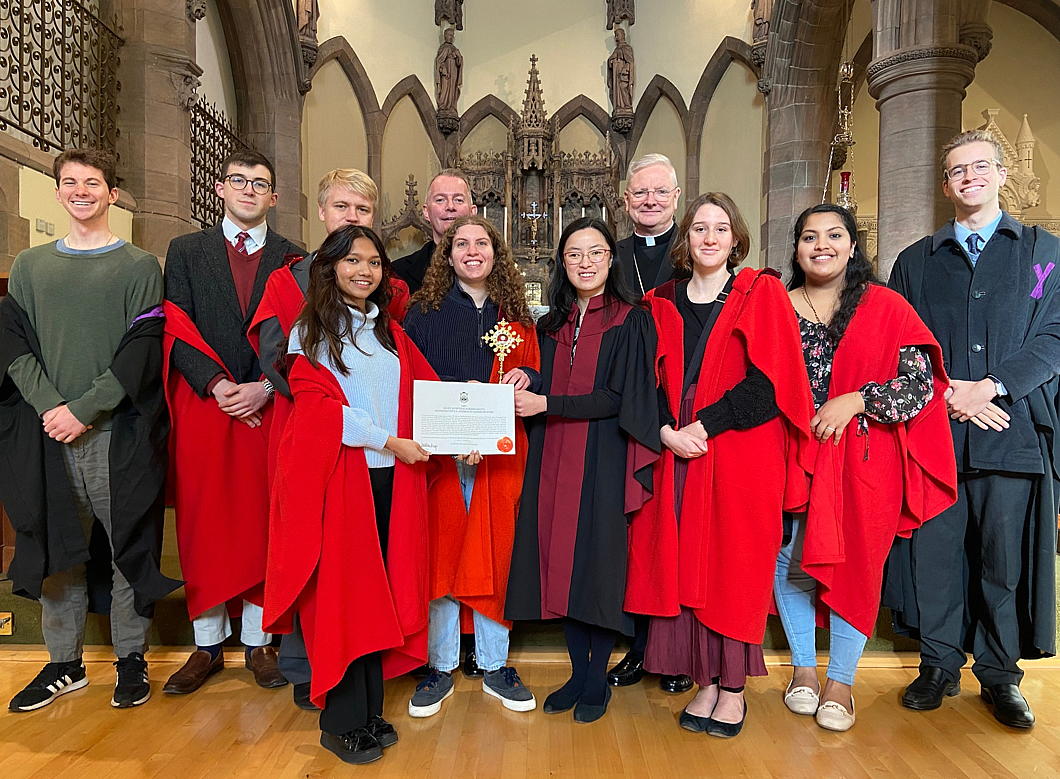
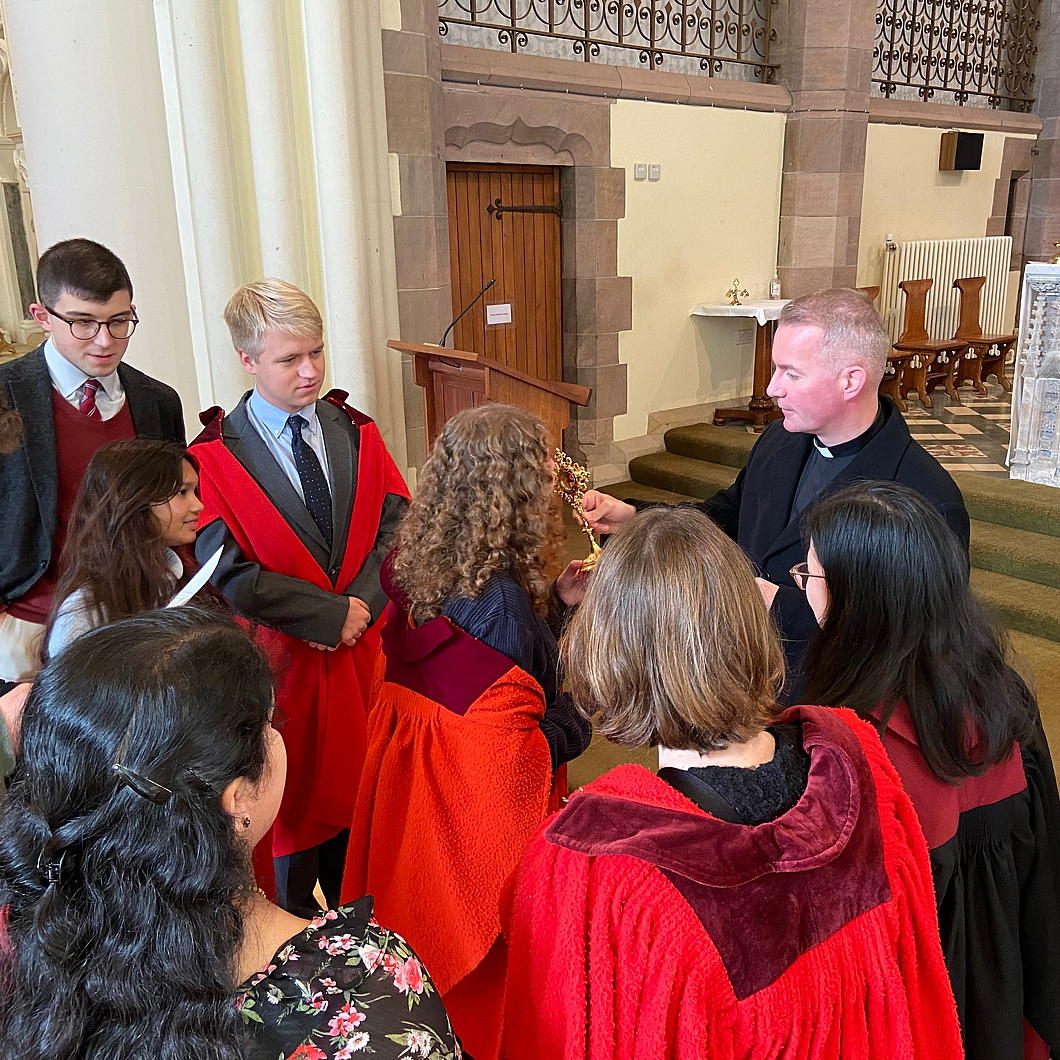
Students from St Andrews University have accompanied their Catholic chaplain to receive a relic of St Margaret of Scotland from the Archbishop of St Andrews & Edinburgh, Dr Leo Cushley.
The relic was put in the care of Canmore, the Catholic chaplaincy at St Andrews, whose chapel is dedicated to the Hungary-born English princess who became Scotland’s saintly queen.
When the relic in St Margaret’s Church in Dunfermline — the country’s royal centre in the twelfth and thirteenth centuries — were being removed from their reliquary the piece of bone fragmented.
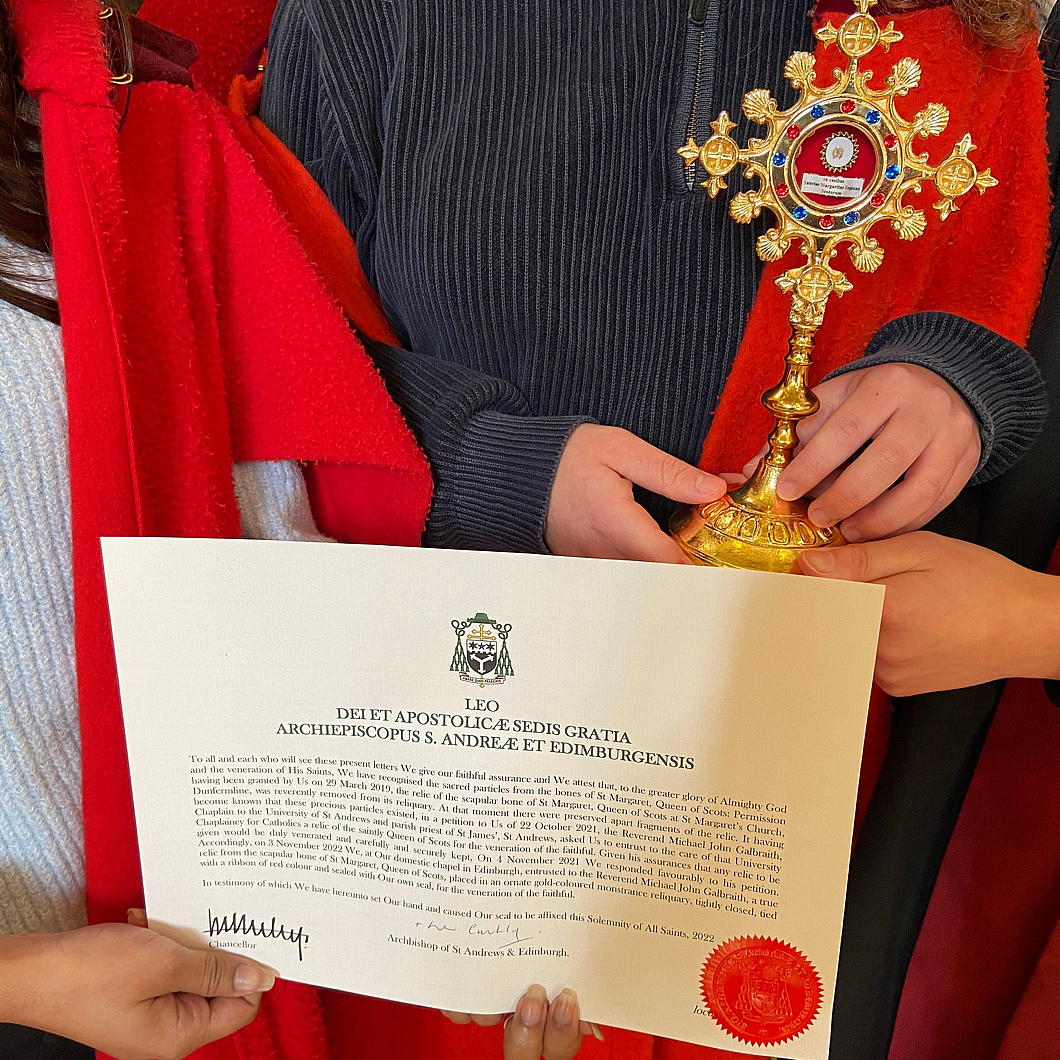
The Archdiocese decided to make this an opportunity for the relics of the royal saint to be distributed further.
This relic of St Margaret will remain in Canmore where it will be available for veneration by students and other visitors.
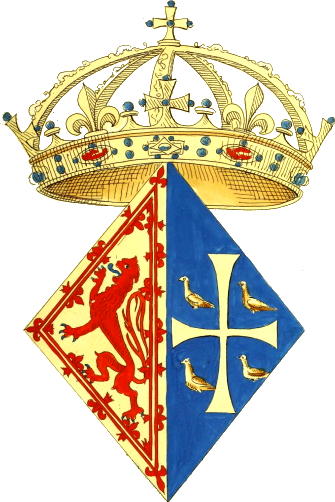
SAINT MARGARET
QUEEN OF SCOTLAND
pray for us
The Sultan Nazrin Shah Centre
Níall McLaughlin Architects at Worcester College, Oxford
WORCESTER is one of the most spacious and scenic of Oxford’s colleges. The classical symmetry of its entrance terminates the view down the gentle curve of Beaumont Street from the Ashmolean Museum. The twenty-six acres of its grounds are pastoral, with lake, gardens, and the broad expanse of a cricket pitch.
Craftily inserted into this arcadia is the Sultan Nazrin Shah Centre designed by Níall McLaughlin Architects. Collegiate work is familiar to this firm, whose new library at Magdalene College, Cambridge, has won them this year’s Stirling Prize, and the Shah Centre provides new useful facilities for the college without giving it the middle finger.
It is named in gratitude to the generosity of an old boy of the college, HRH Nazrin Ali Shah of Perak, who delights in the title of Sultan, Sovereign Ruler, and Head of the Government of Perak, the Abode of Grace, and its dependencies. Judging by the outcome — itself shortlisted for a Stirling Prize in 2018 — I think he spent his money well.
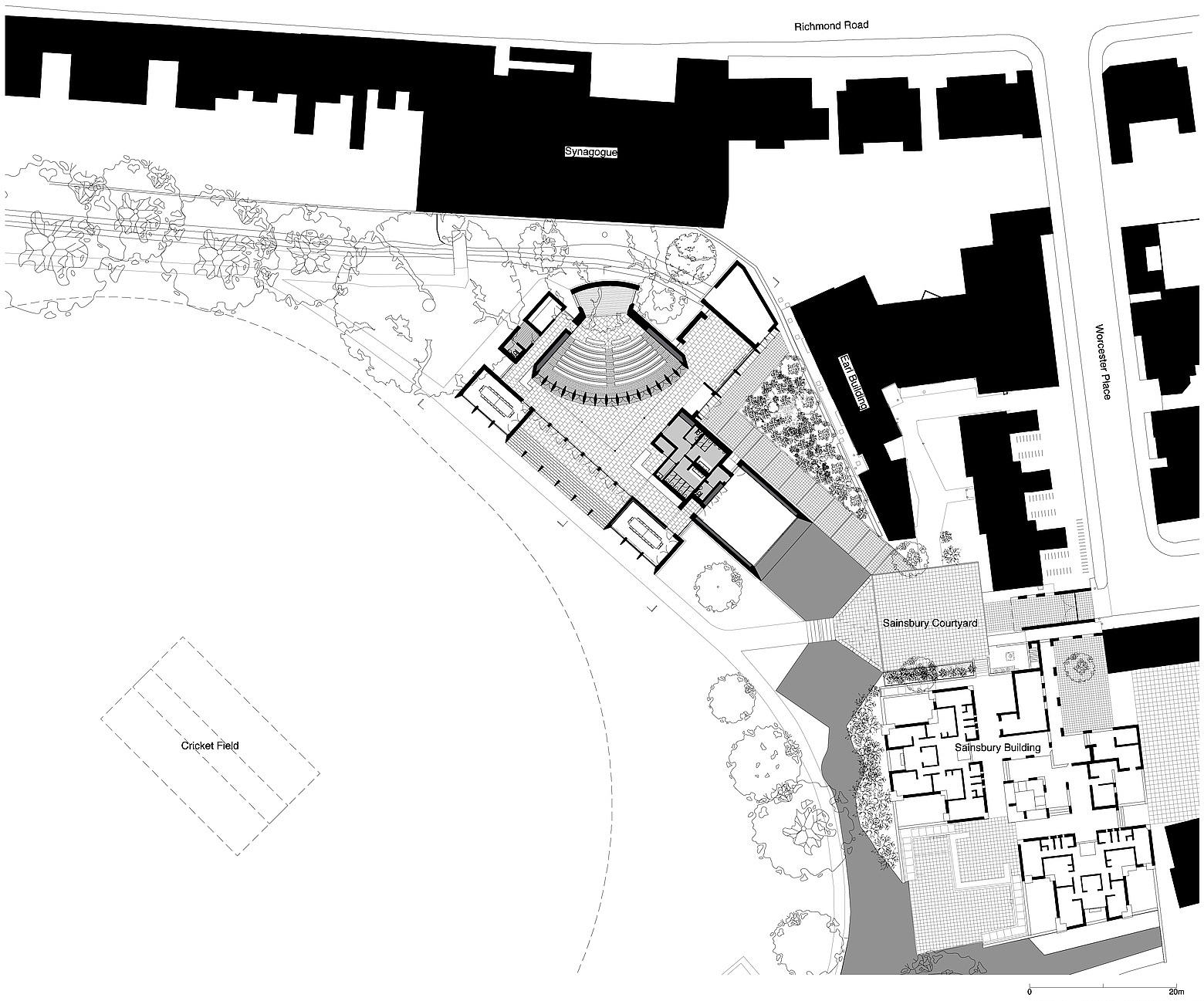
Tempting though it might be to have a gentle wander through the grounds of the college first, the Shah Centre is best approached through the humble entrance lodge nestled in the corner of the L-shaped Worcester Place north of the college.
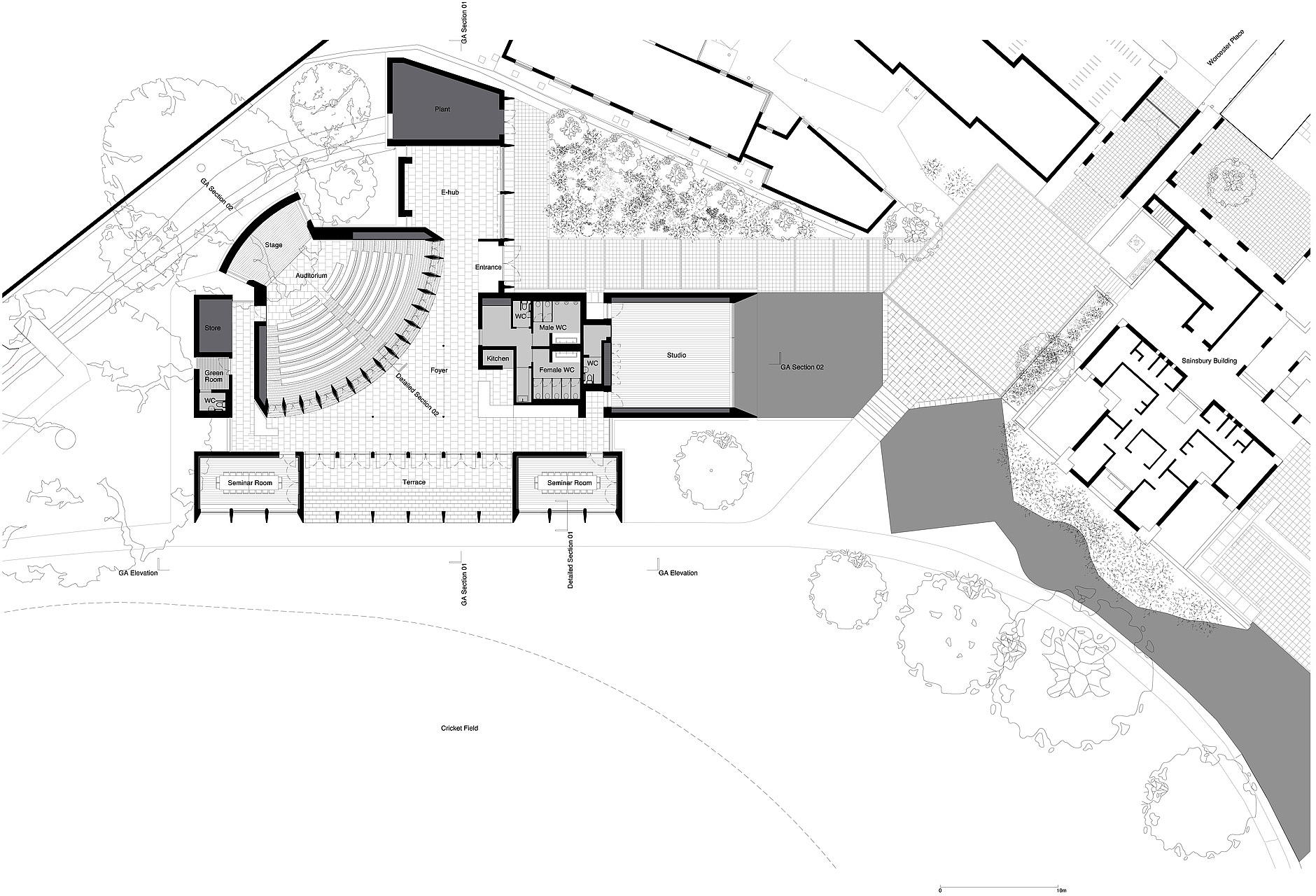
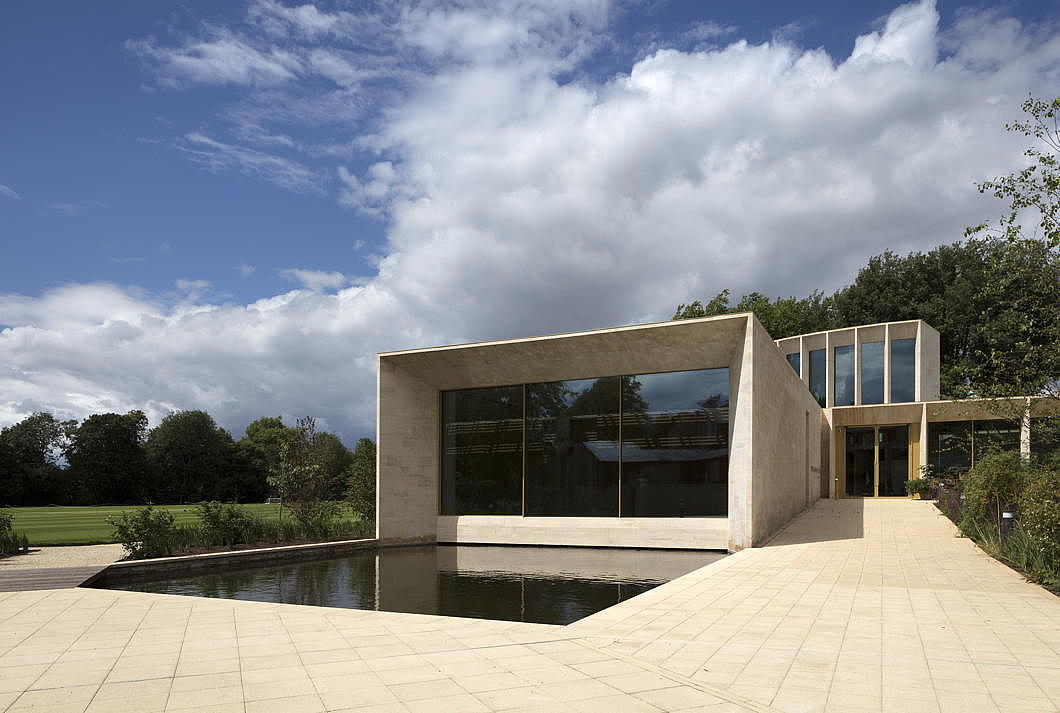
You are led to a little piazza — the Sainsbury Courtyard — framed by a pair of just-below-foot-level diamond-shaped shallow ponds of Kahn-ian geometry. (They are actually a tiny extension of the college lake.) The broad expanse of cricket pitch beyond, connected by a flat wooden bridge segmenting the two diamond ponds, is alluring. But off at a 45-degree-angle on the right, the entrance to the Shah Centre bids the visitor on.
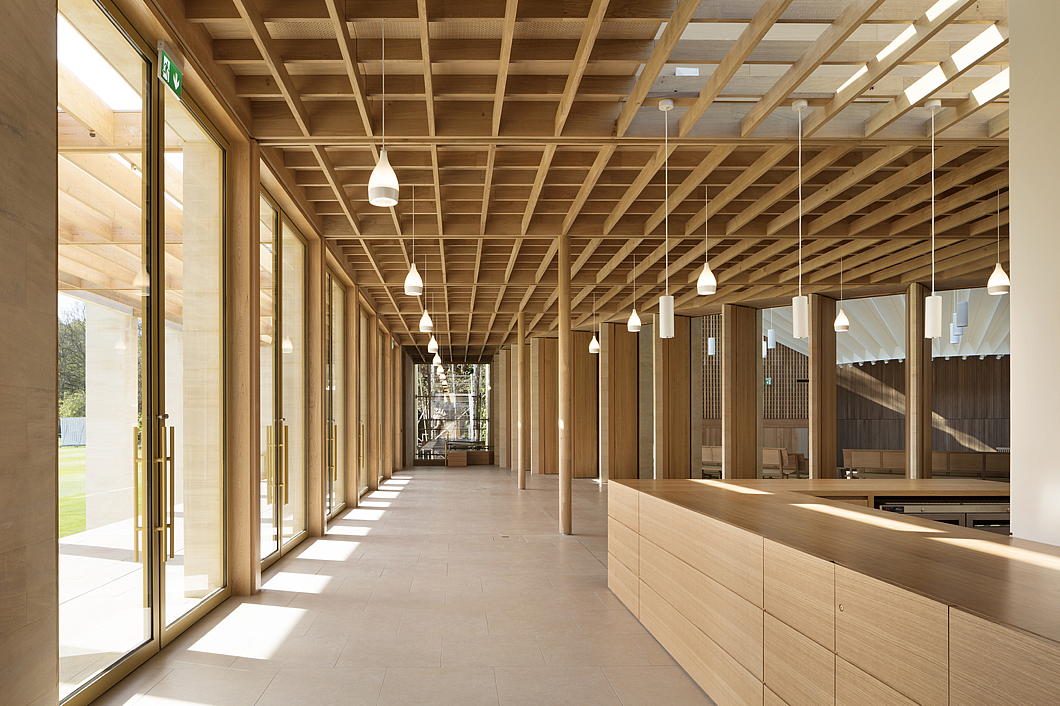
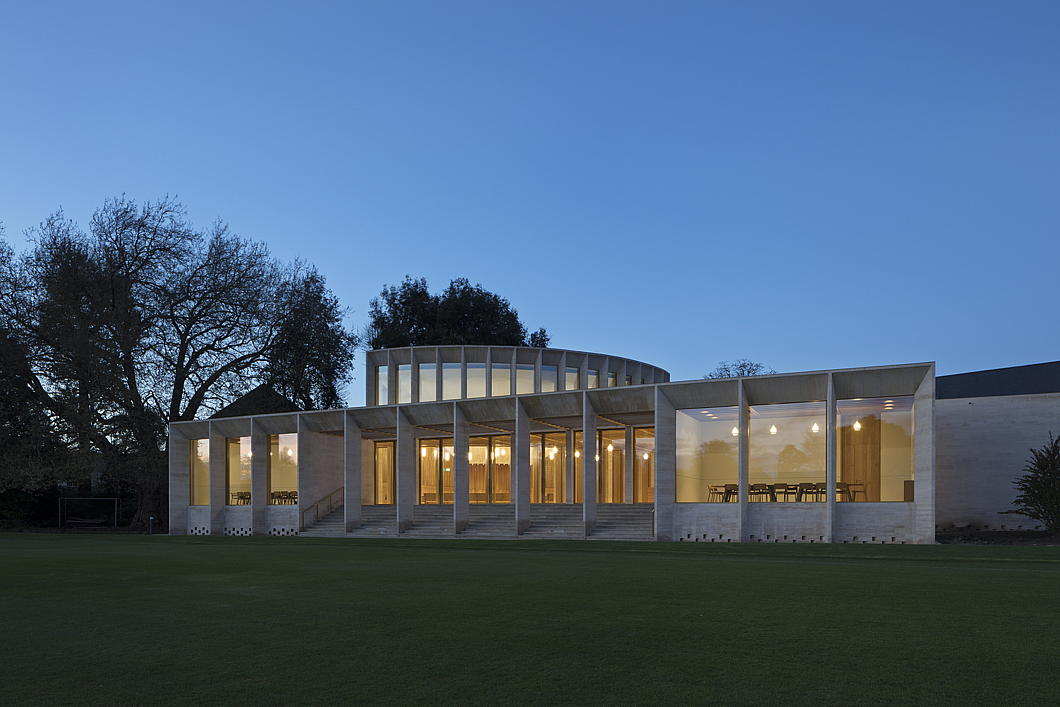
Beyond the limestone cladding you move indoors to a sea of light-treated oak, in the thin supporting columns of the one-storey entrance hall curving around the arc of the lecture theatre and in the trelliswork ceiling.
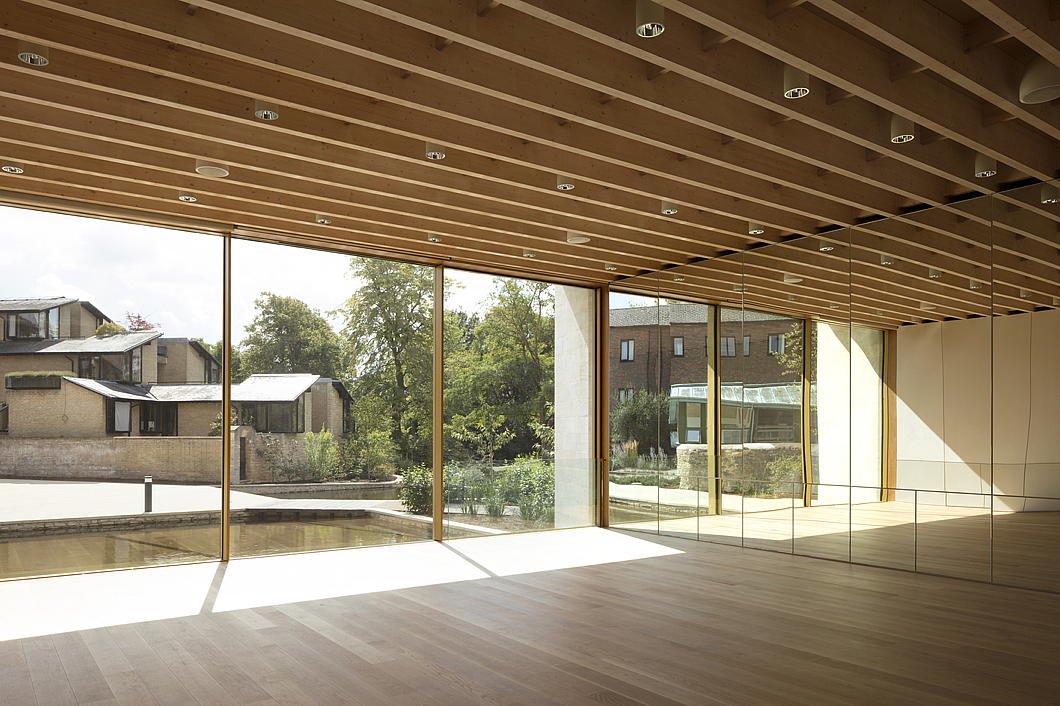
To the left, the dance studio looks out onto the pools through three giant panes of floor-to-ceiling glass.

To the right, a small bar can double as a registration desk.
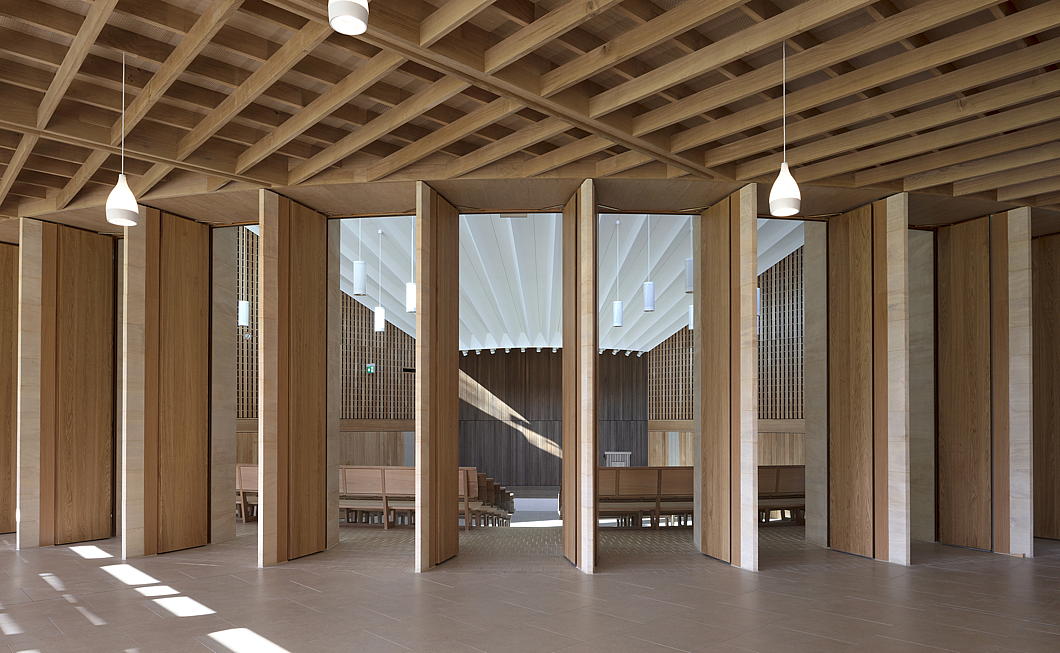
The lecture theatre seats 170 and is accessed through a curve of wooden slats that hide panels that can swing out if closing the space is necessary.
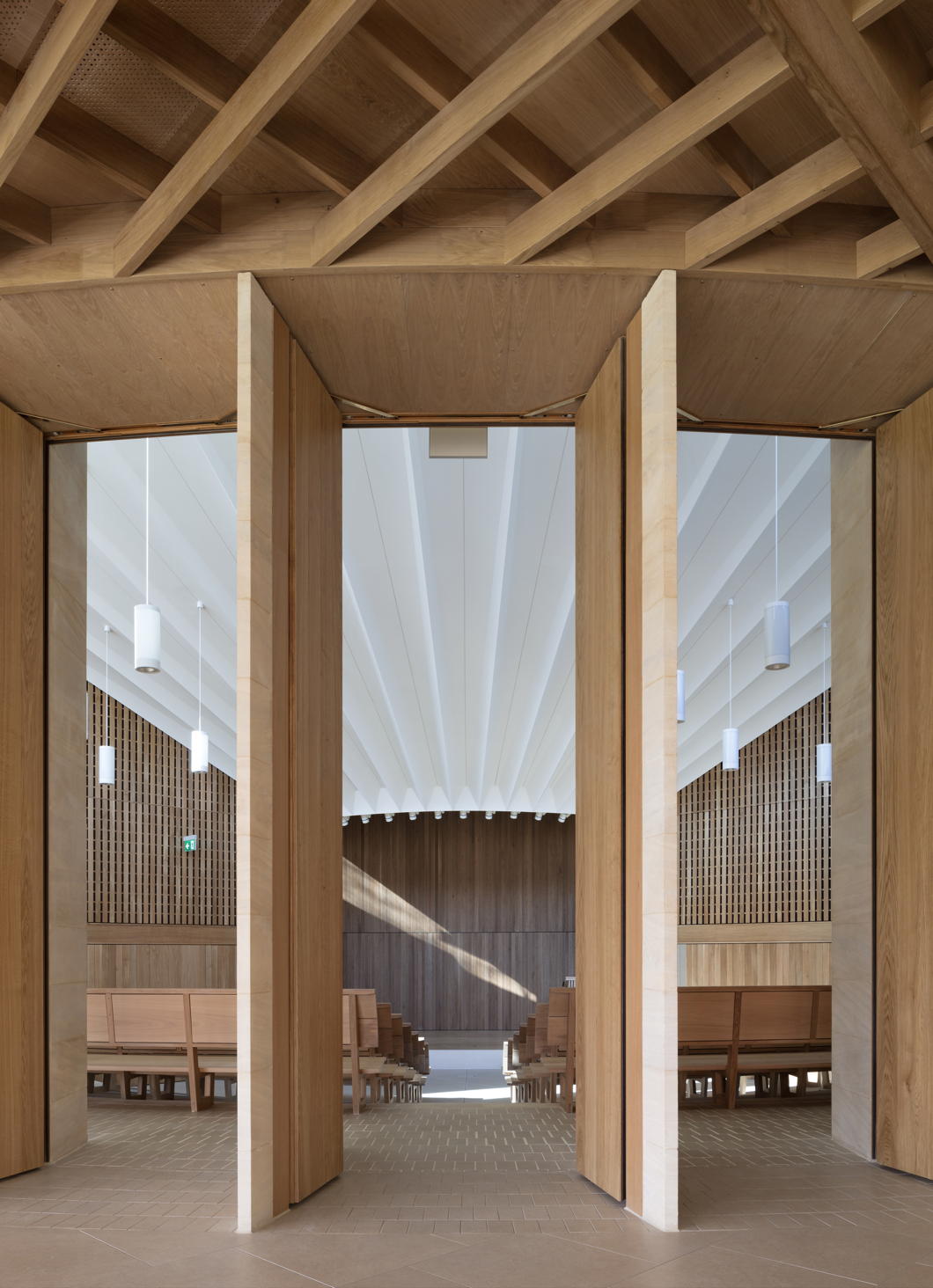
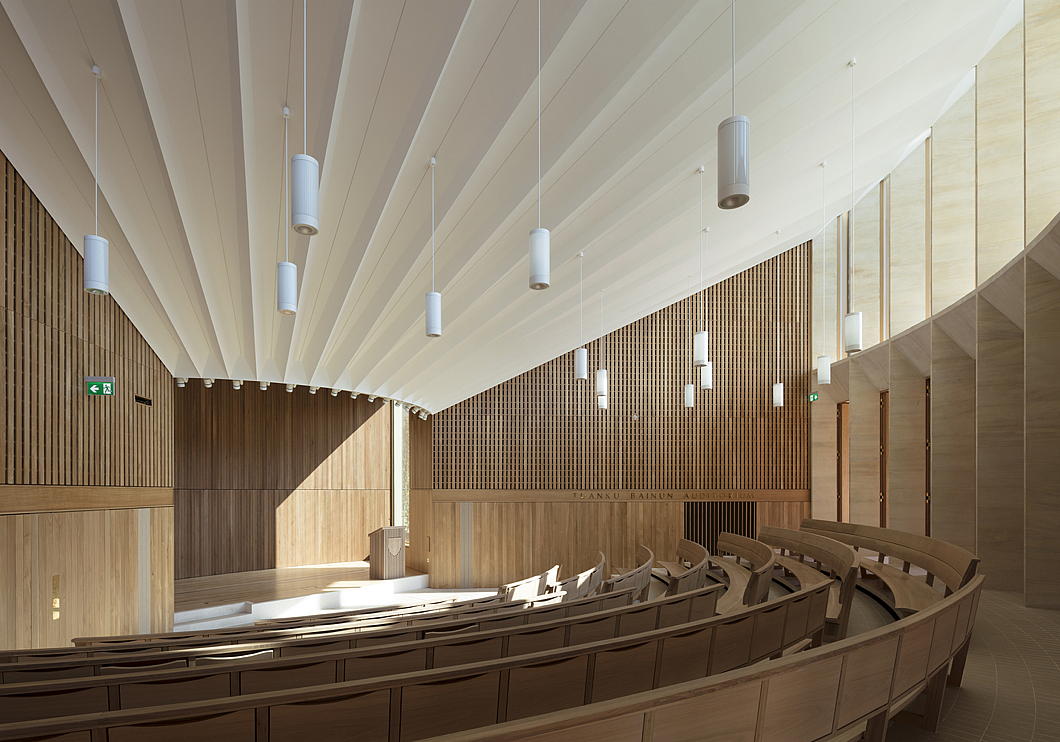
Auditoria with ceilings sloping down toward the stage usually feel cramped but here the ceiling is arranged in sharp corrugations (like the flanges of the Gonbad-e Qabus) which capture the light from the clerestory behind.
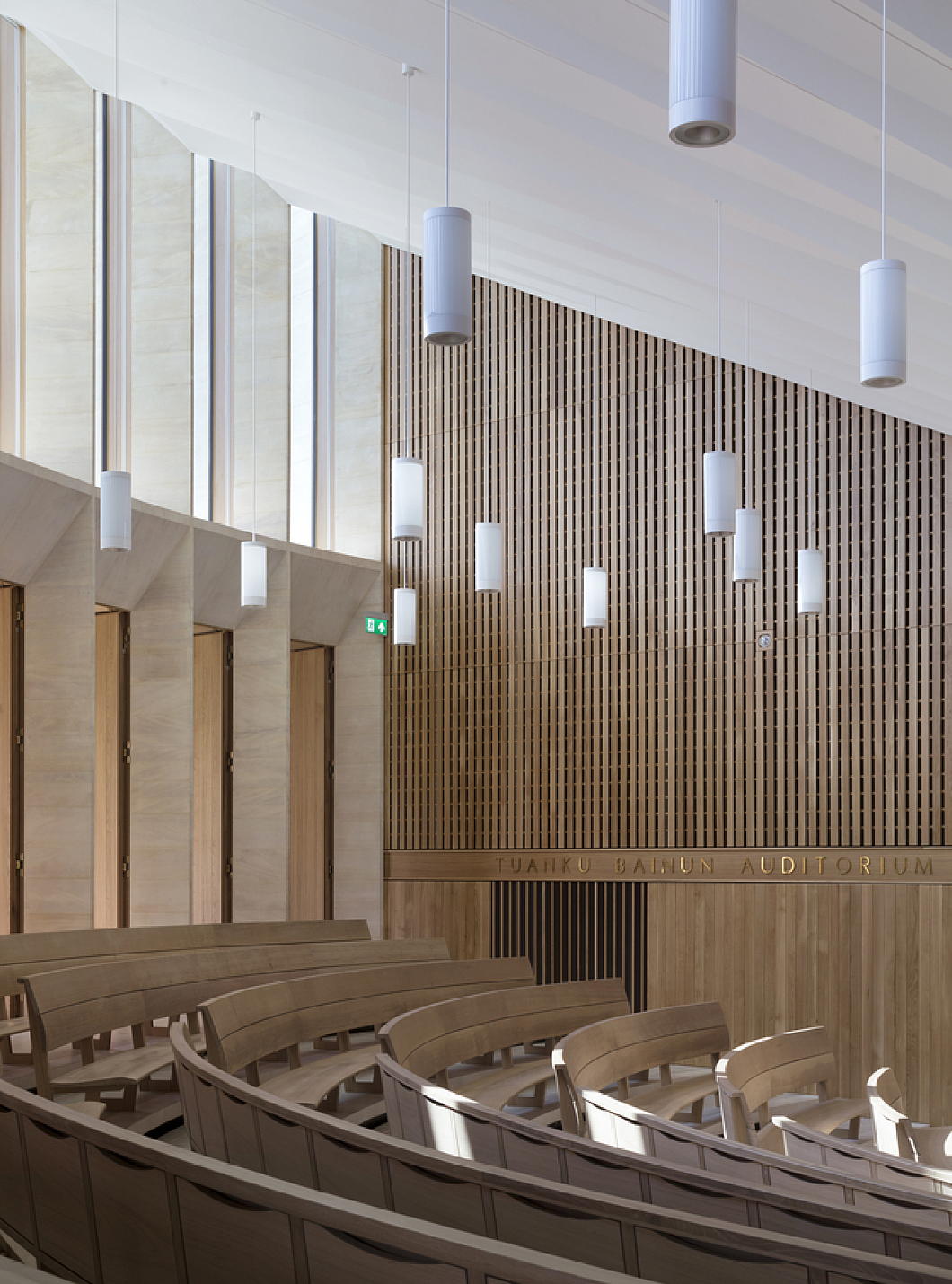
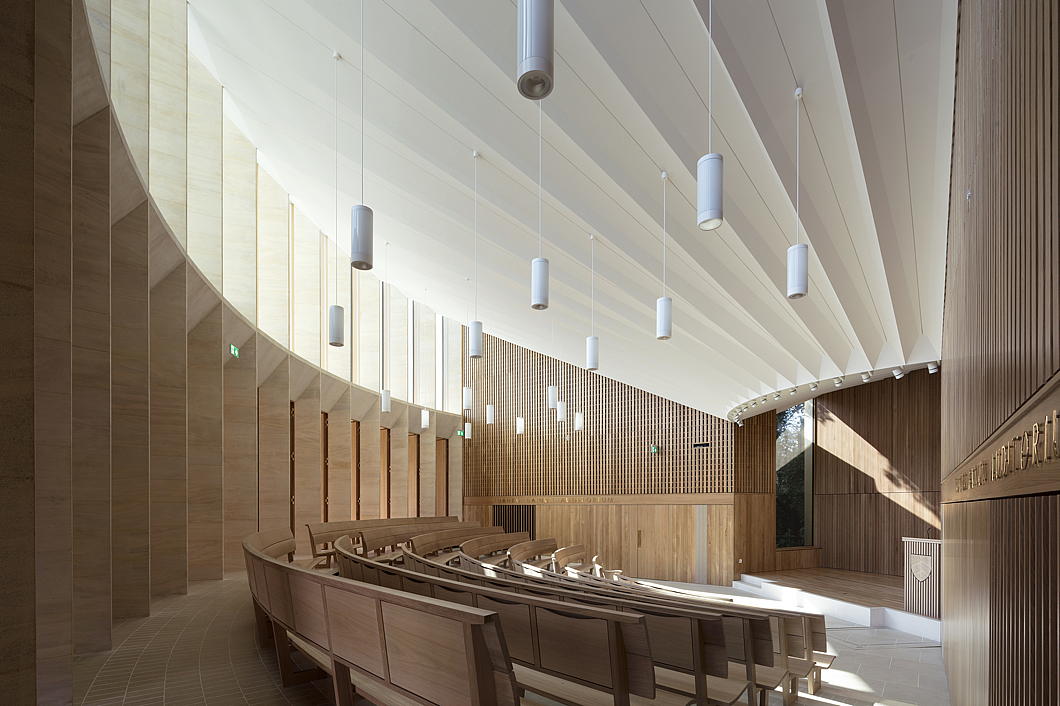
The feeling is one of spaciousness: rather than facing downwards they are like rays of the sun reaching outwards and up. Instead of wings offstage, there are tall windows of a single sheet of glass flanking, offering natural side light.
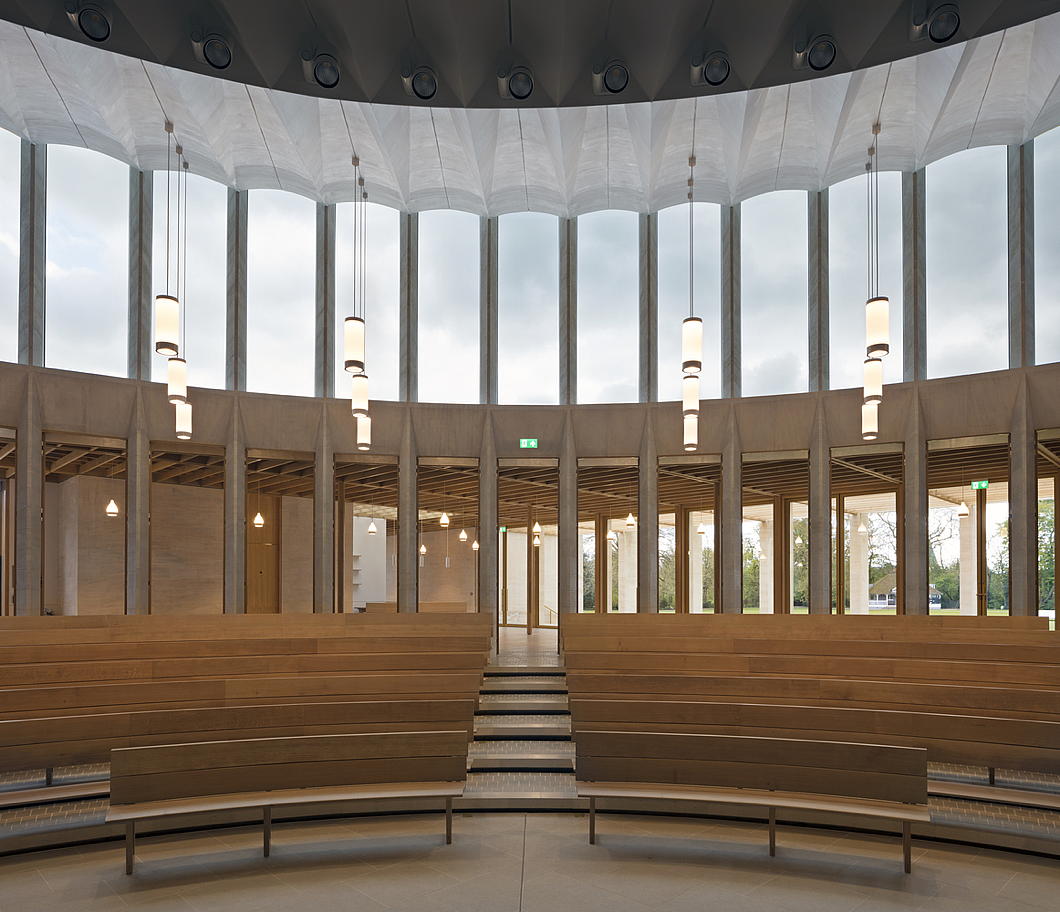
The view from the stage is even better, looking out at the gentle curve of clear windows breaking at near-half-way, dividing the anterior spaces below from the open skies above.
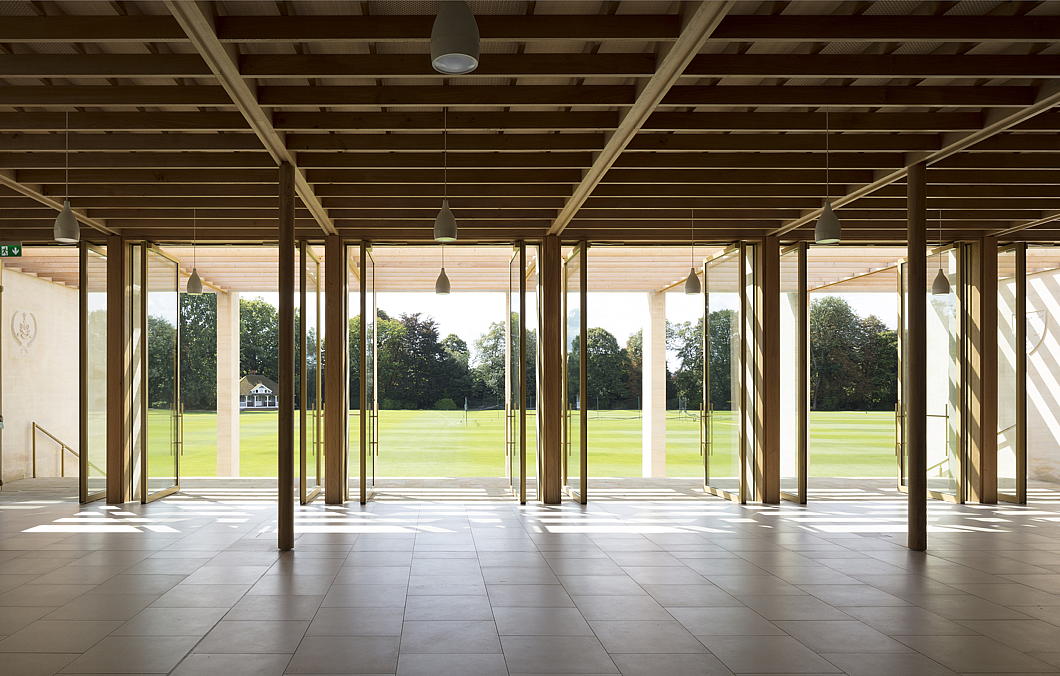
Straight out from the auditorium is the terrace with its steps flowing gently down to the field beyond.

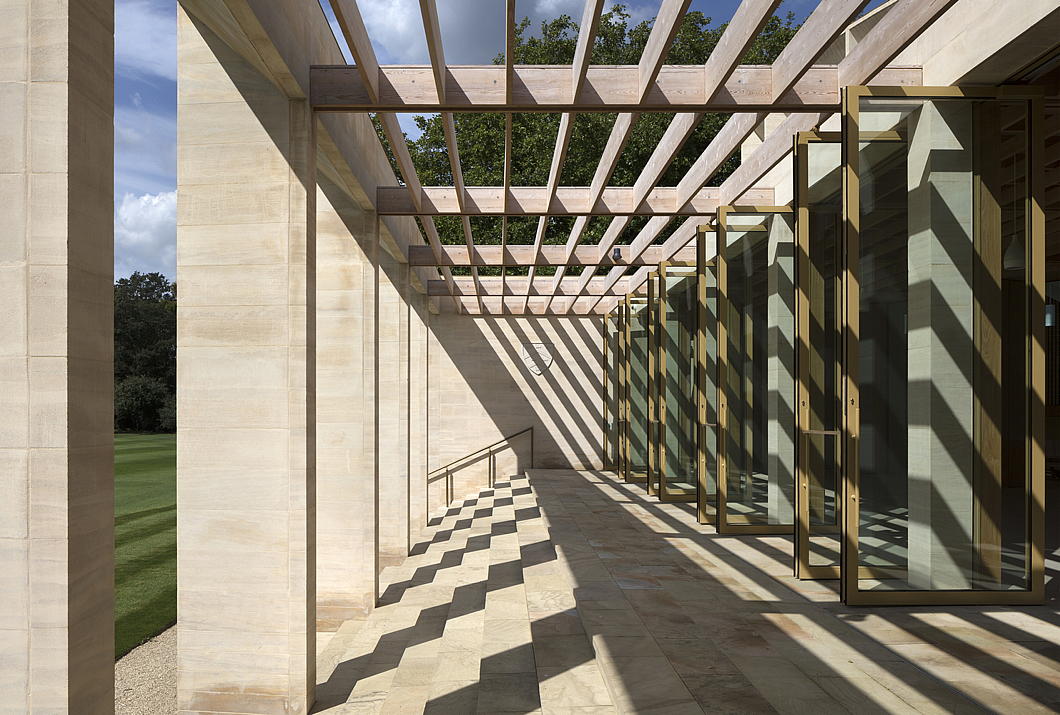
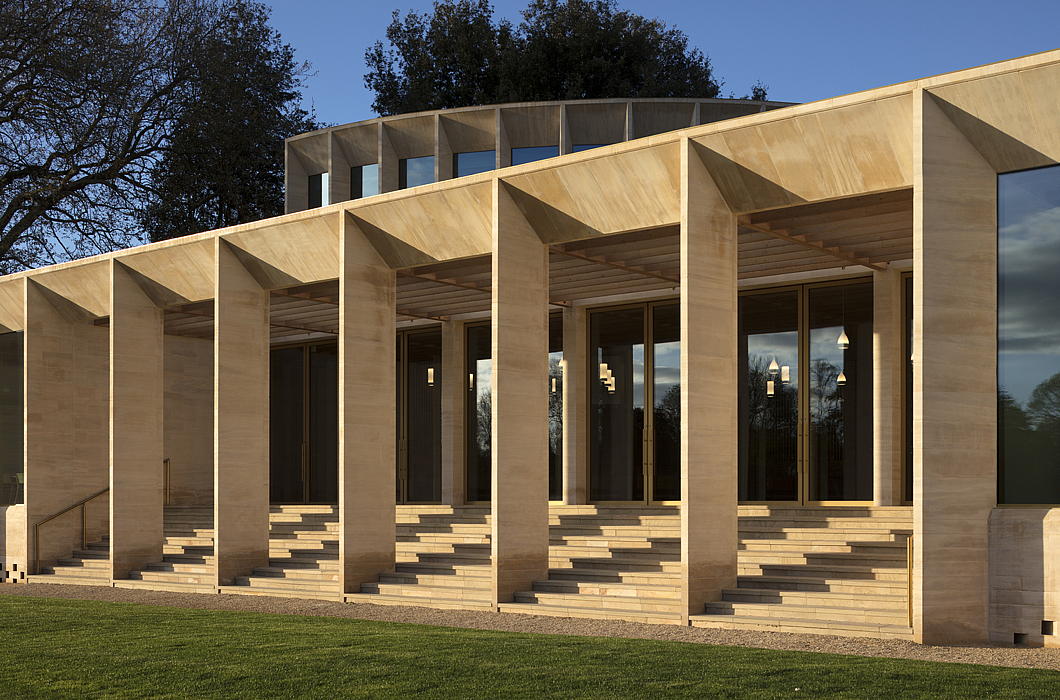
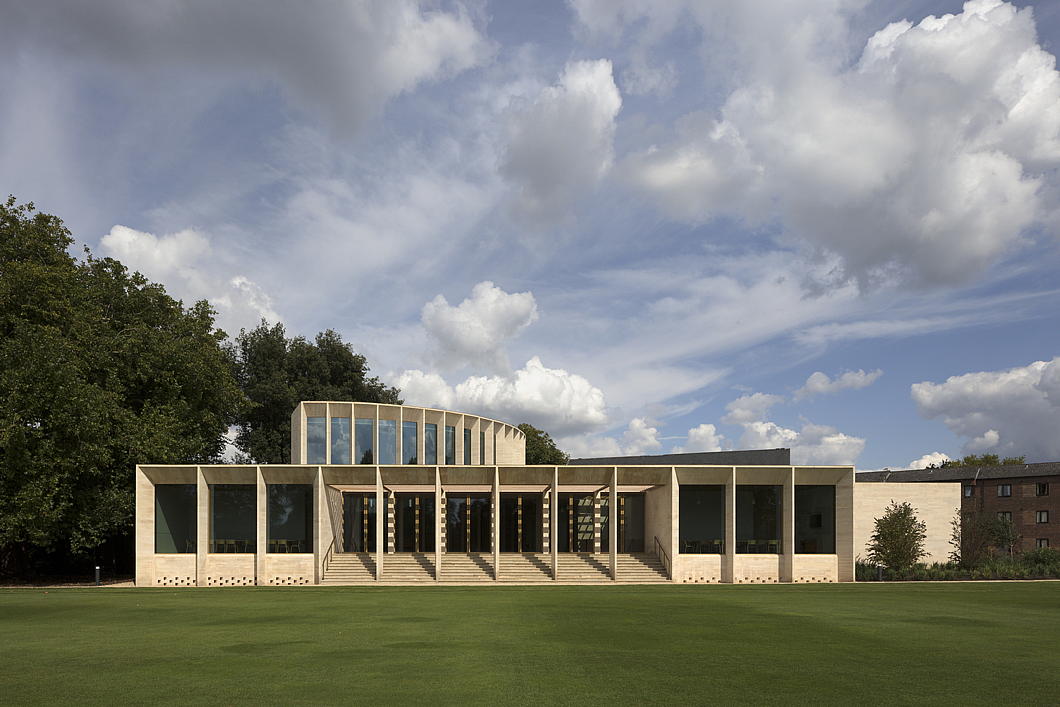
It is from the cricket ground that we get the best view of the Shah Centre. The lines are elegant, and there’s a hint of the better architects from Italy’s fascist era — Pagano or Terragni, not Piacentini. The easy movement of space and light, with a gentle breeze rolling off the green.
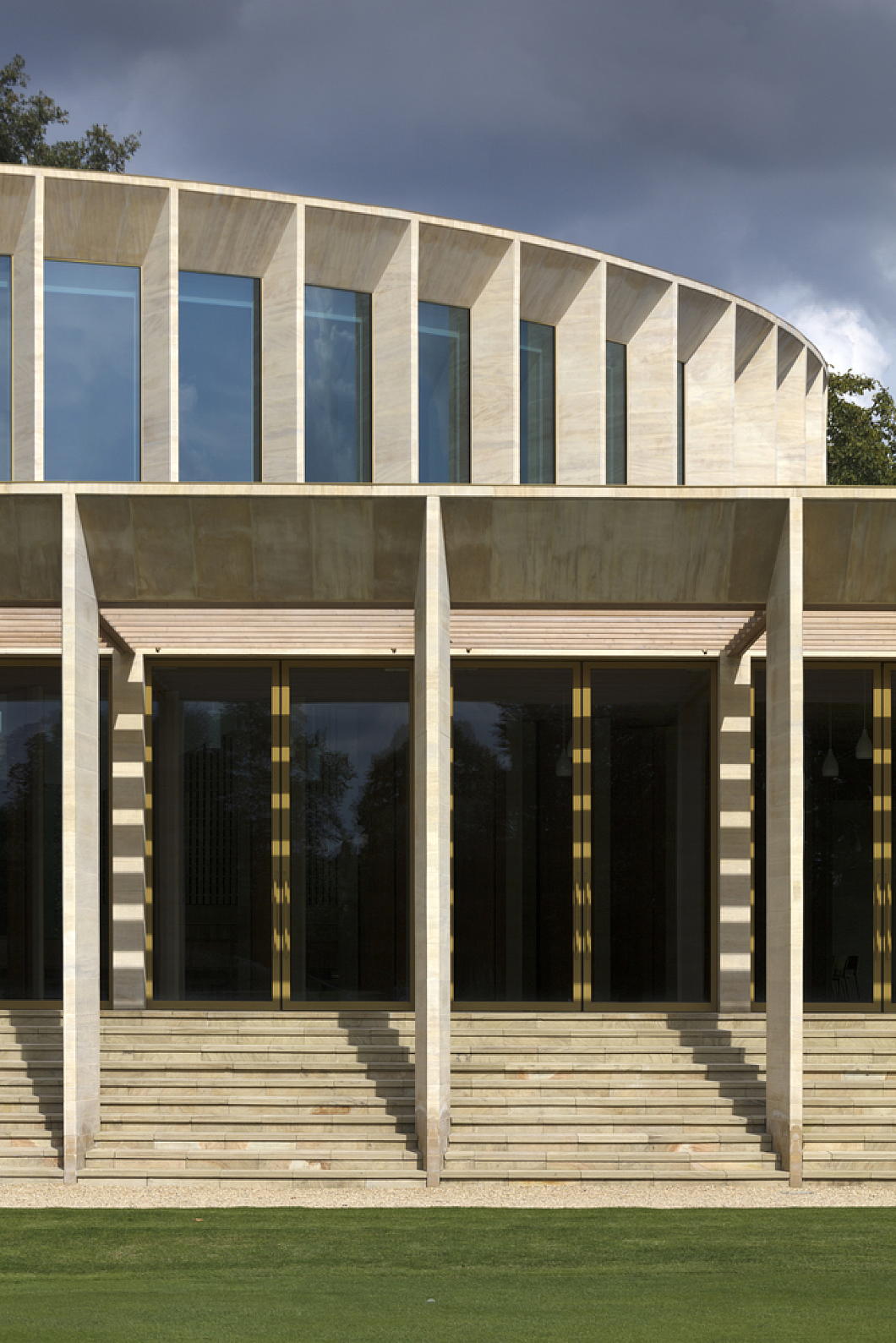
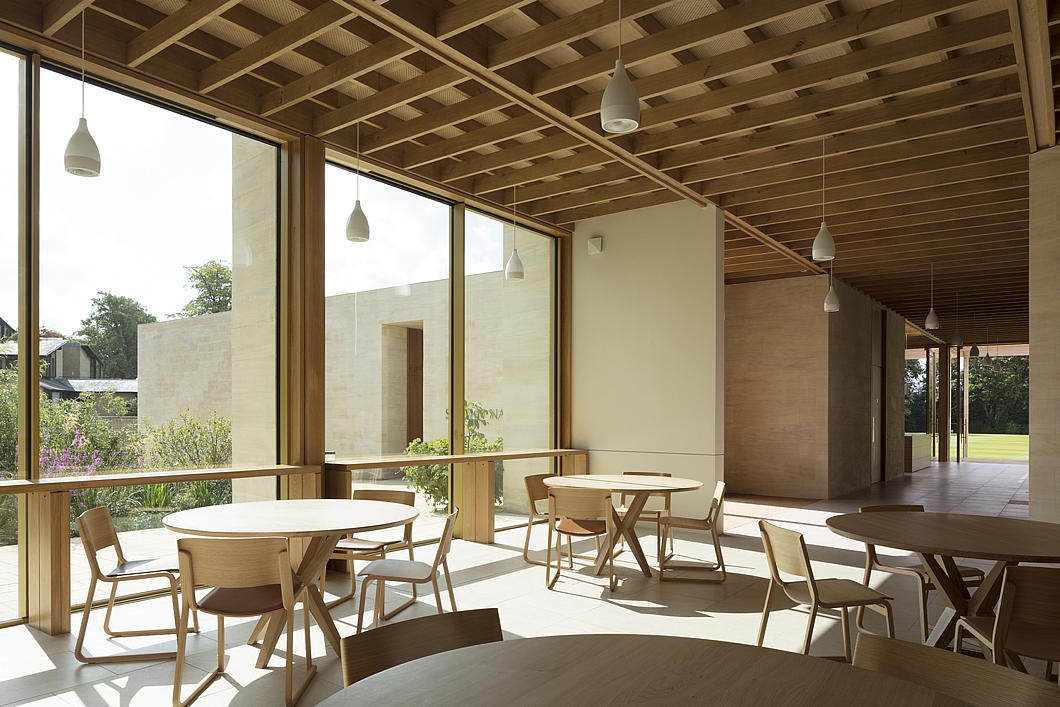
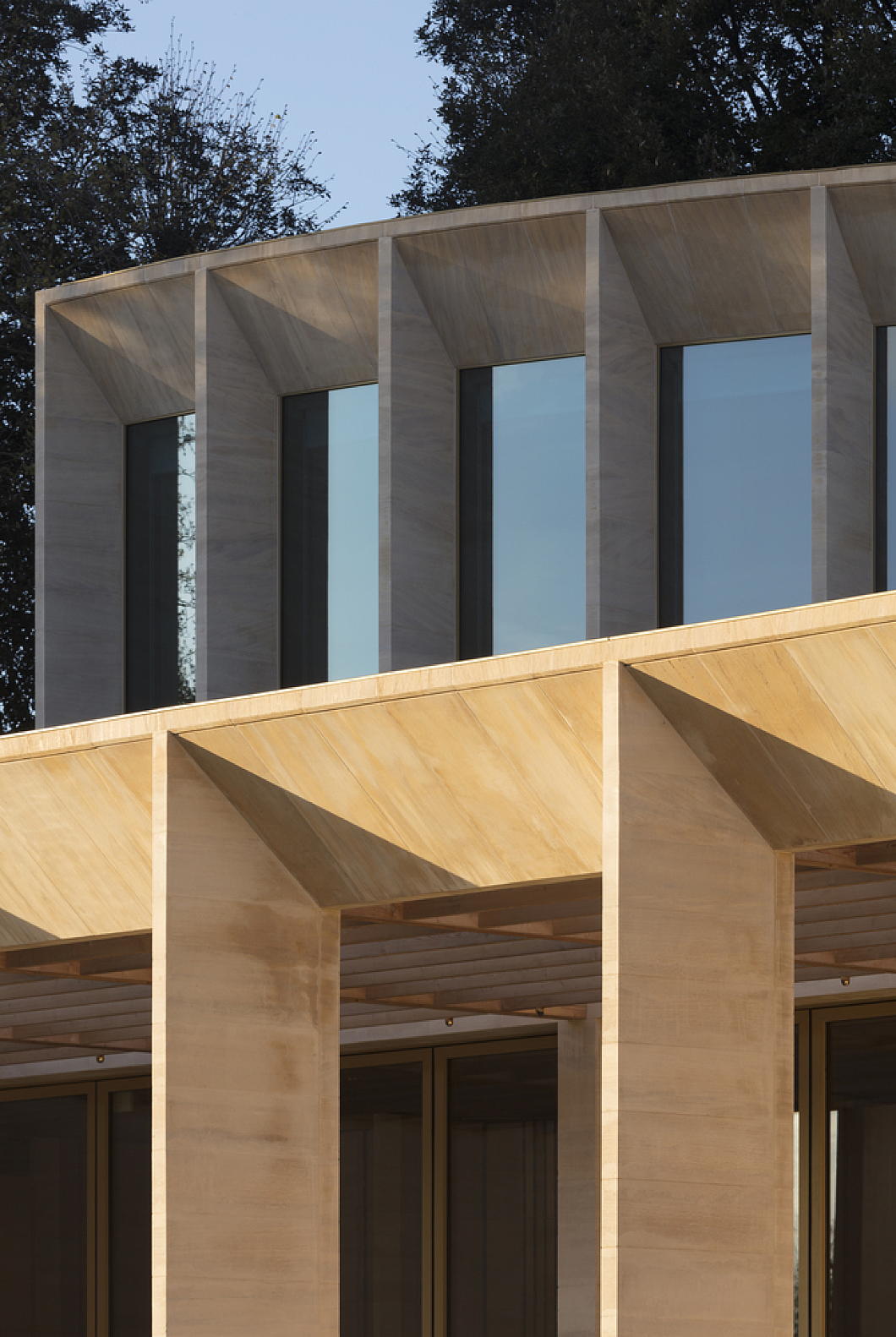
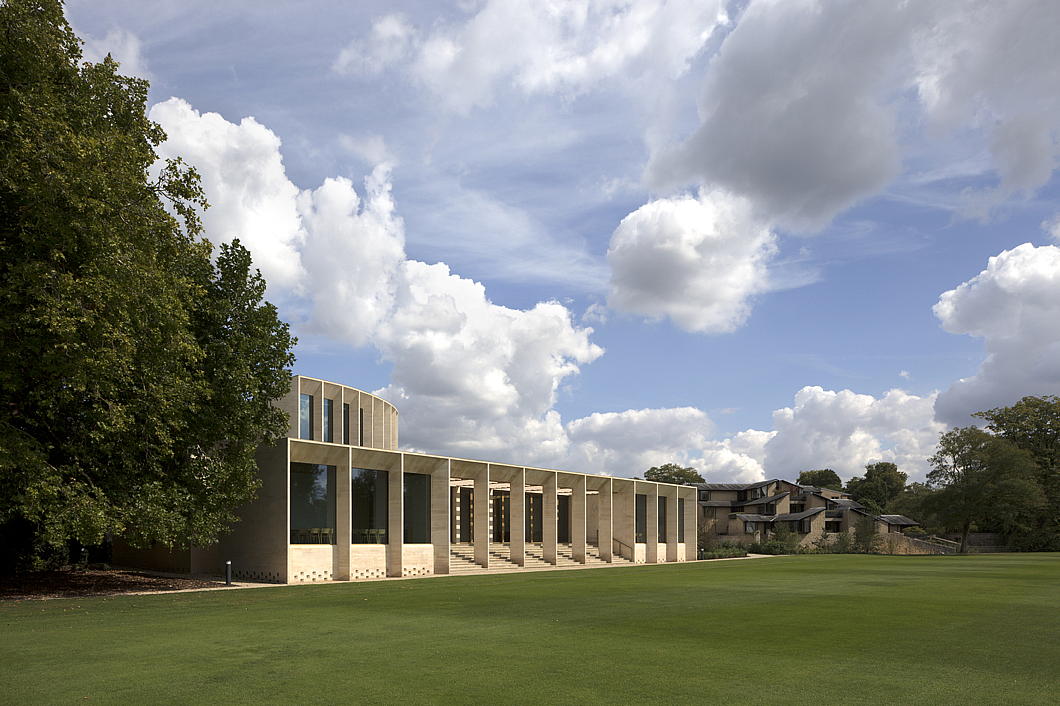
The architectural genius of the Oxford college as a type is that it allows for the magnificent to be completed on a humane scale for an intimate community of students, scholars, and academics. Níall McLoughlin’s skill at achieving this in a modern idiom is what makes the accolades he accrues — fickle gifts at the best of times — so justified in his case.
Cypher Shift

Out with the old, in with the new: the King has released his new royal cypher, with a stylised CR III replacing the familiar EIIR. As with so many things, I am sure we will get used to it with time.
Given the longevity of the late Queen’s reign it will be some time before we see it appearing on pillarboxes, but it will enter our lives more quickly via postal franking, stamps, currency, and uniforms.
Many are trying to come up with complex, almost mystical, explanations for why St Edward’s Crown has been replaced with the Tudor crown atop the cypher. More likely, I suspect, is that it is a useful means of giving the new reign a respectful visual differentiation from its preceding one.

I’ve always been rather fond of the Tudor crown, and the Caledonian version of the new cypher rightly includes the Crown of Scotland — the oldest amidst the Crown Jewels of this realm as (unlike England) Scotland was spared the iconoclastic destruction of Cromwell’s republic.
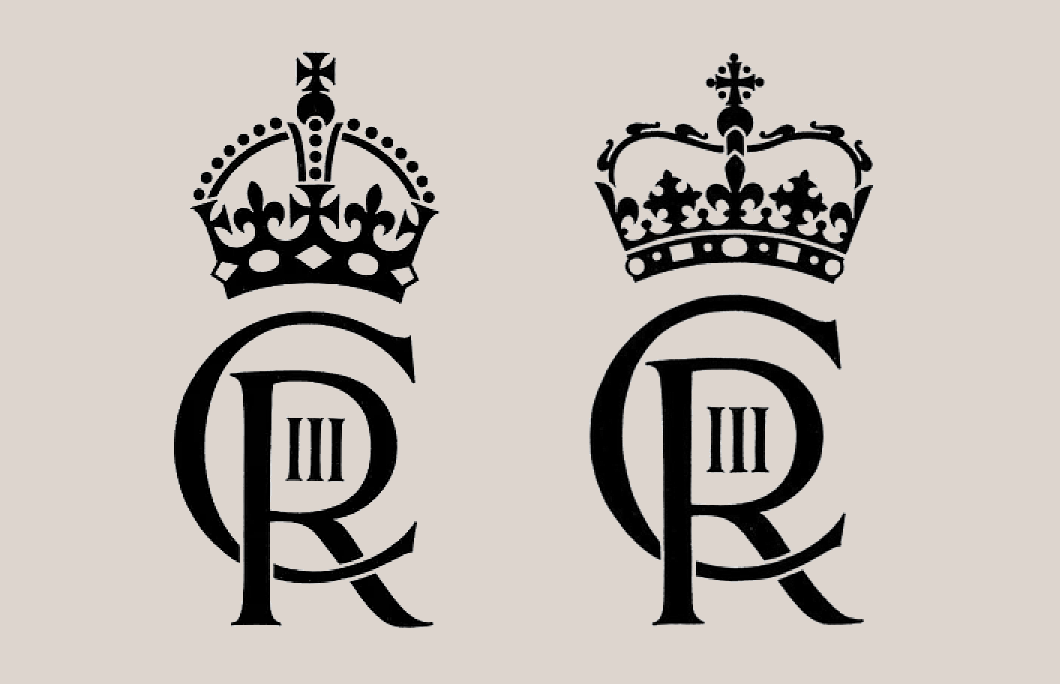
The new royal cypher, left, and its Scottish variant, right.
Bonnington Square
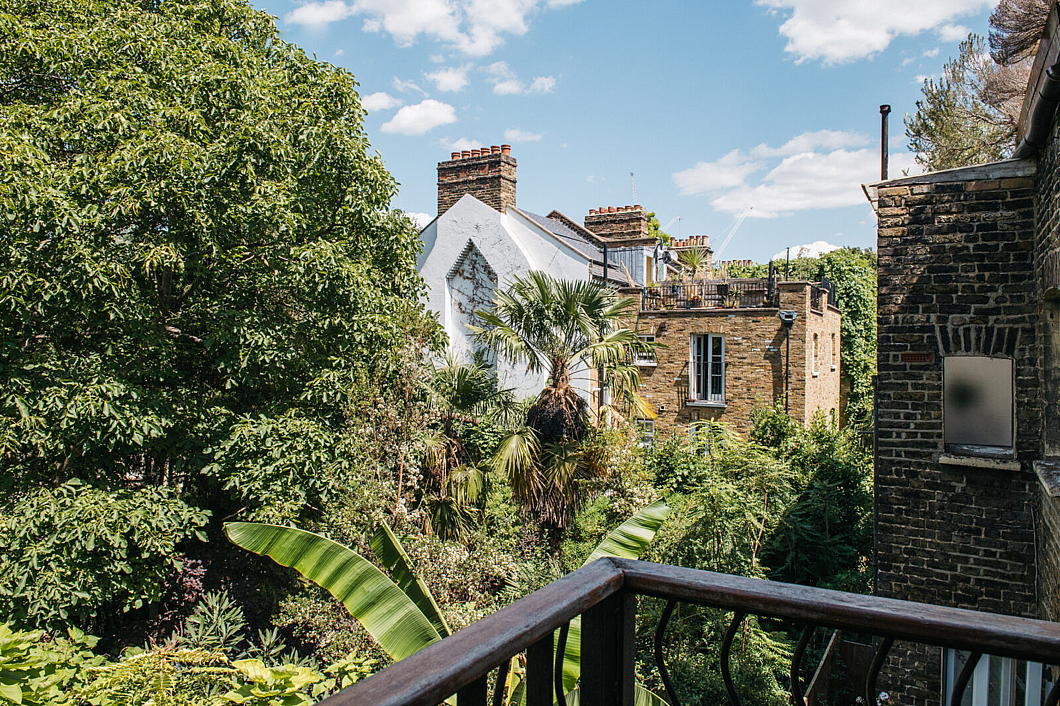
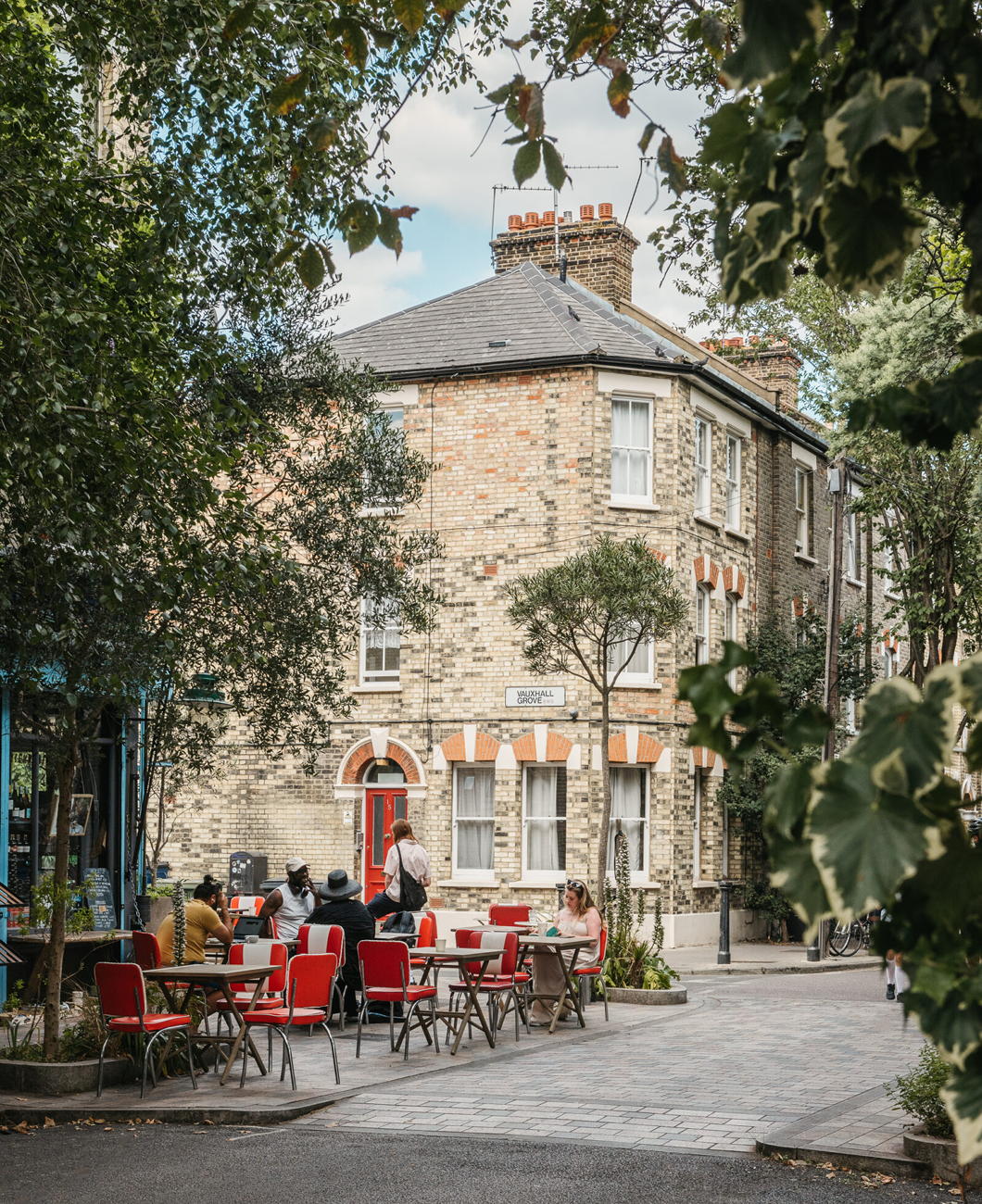
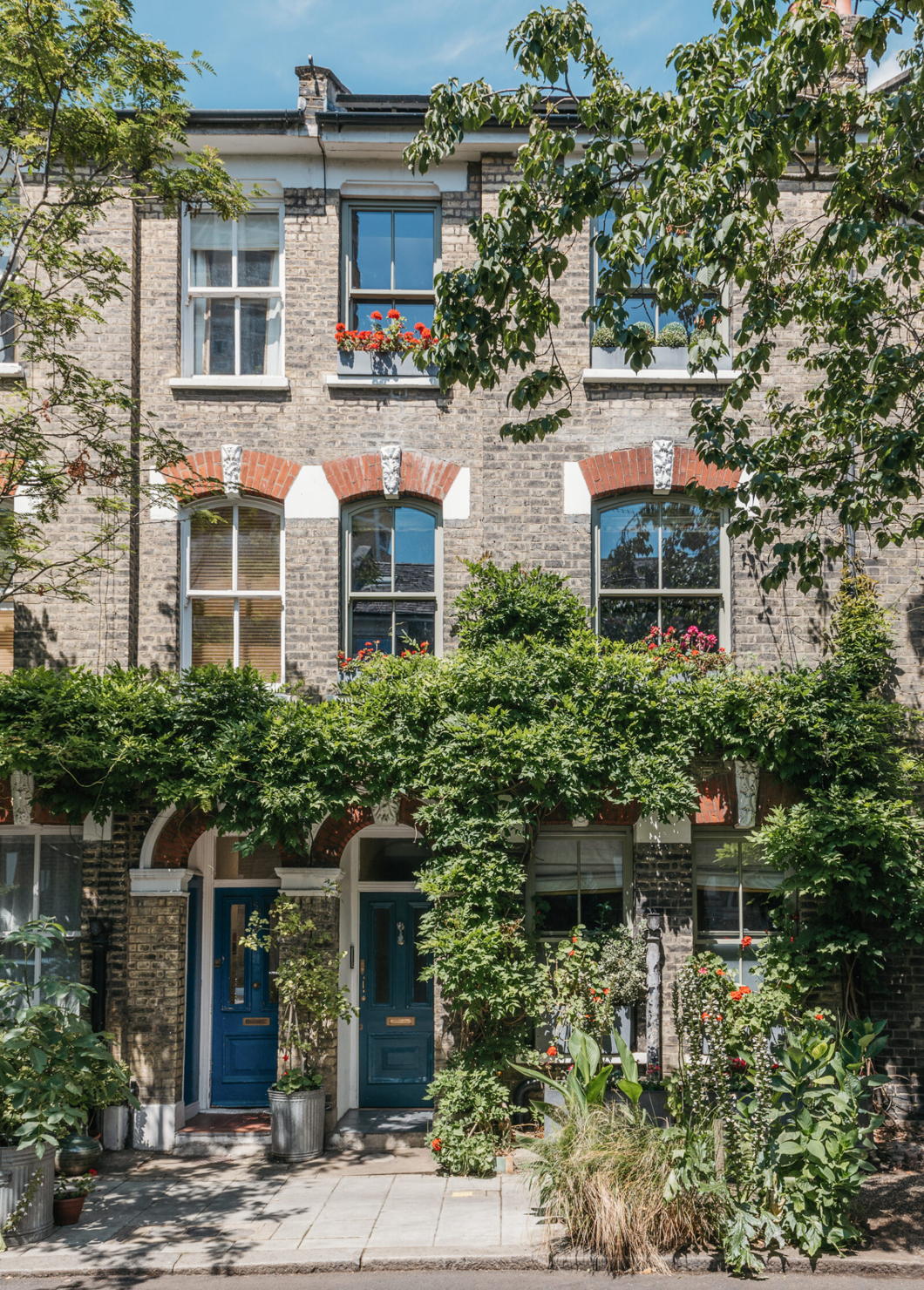
This little enclave is one of the best-kept secrets of London. I used to live just around the corner from Bonnington Square and walking into it was like entering a secret world.
Just steps from the gritty urban world of the Vauxhall gyratory there is a verdant realm where a good coffee can be had and where many neighbours actually know eachothers’ names.
Built to house railway workers, the whole square was compulsorily purchased by that archetype of grim 1970s misery, the Inner London Education Authority, to be demolished as a sports ground for the neighbouring school.
Within a decade, however, no demolition had been approved and the squatters had moved in — in this case organising a cooperative, building a community garden, and running a shop. They managed to negotiate the purchase of their homes from the Greater London Council and Bonnington Square was saved.
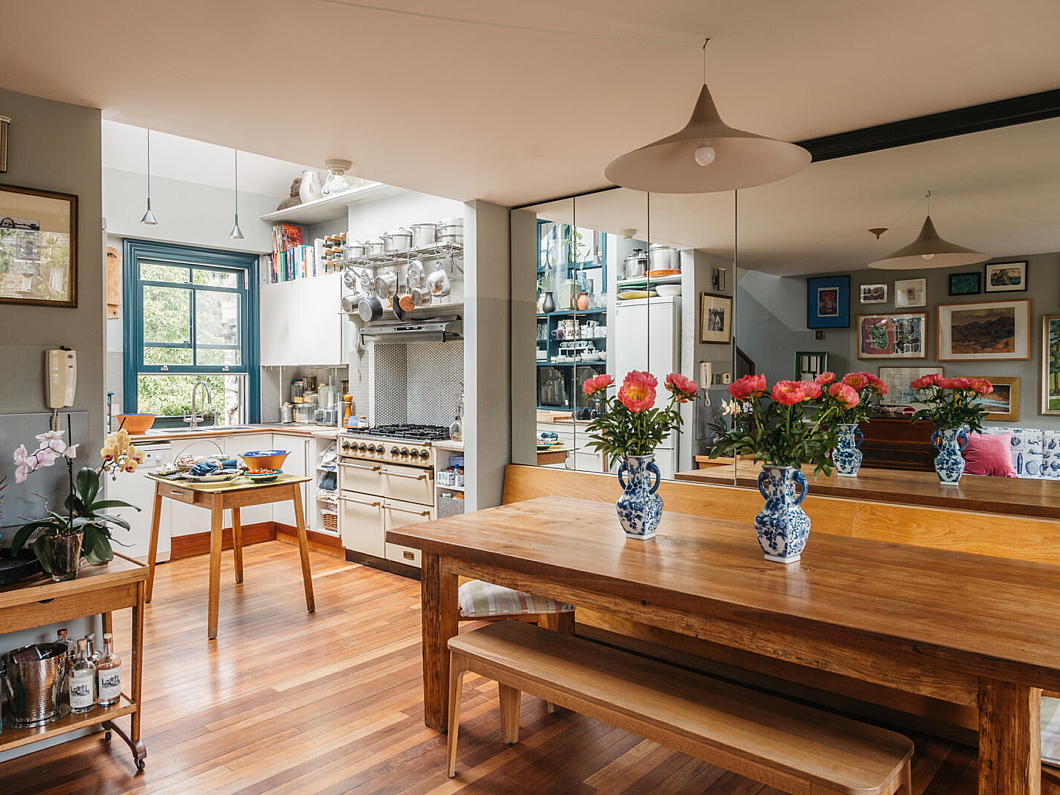
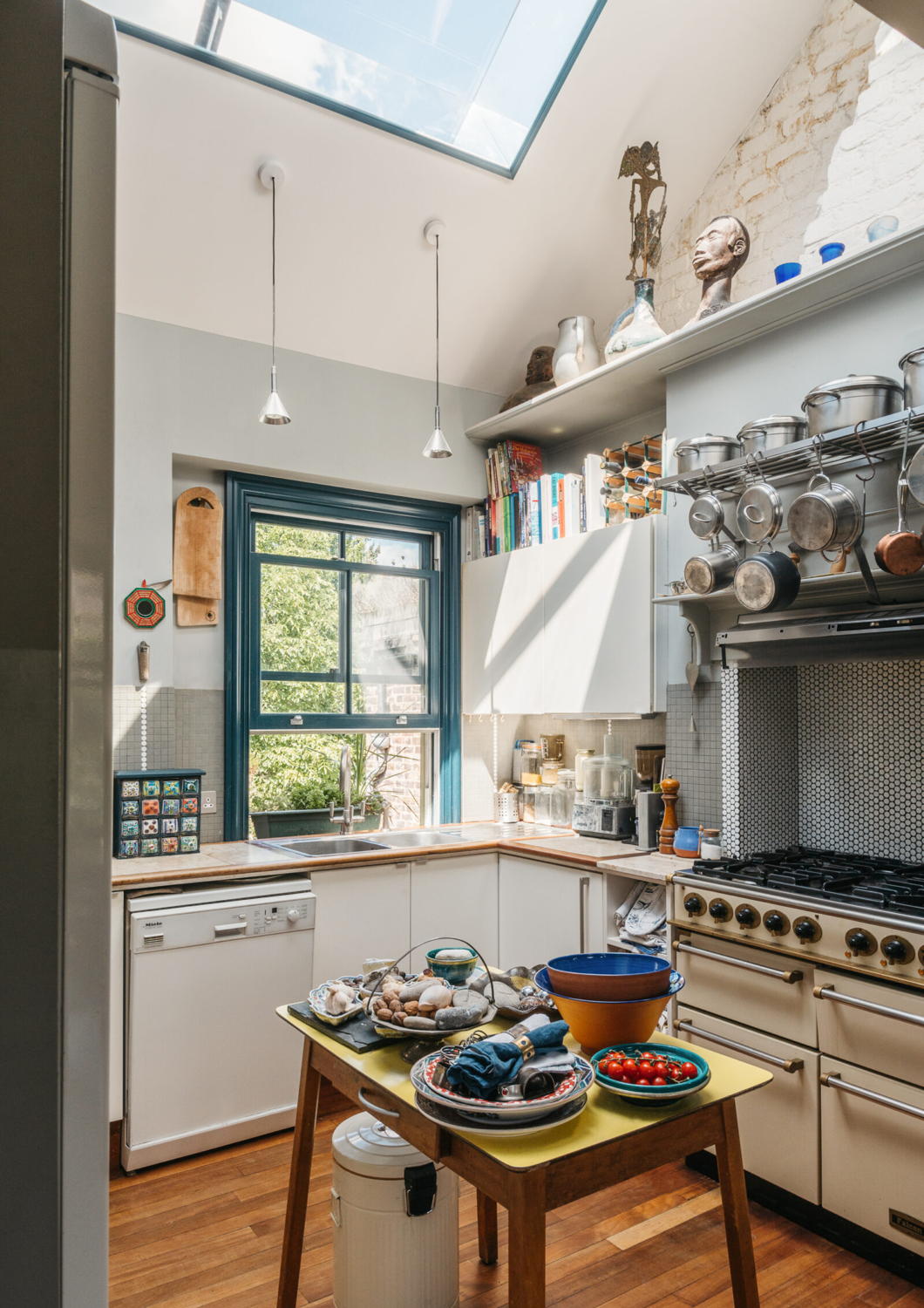
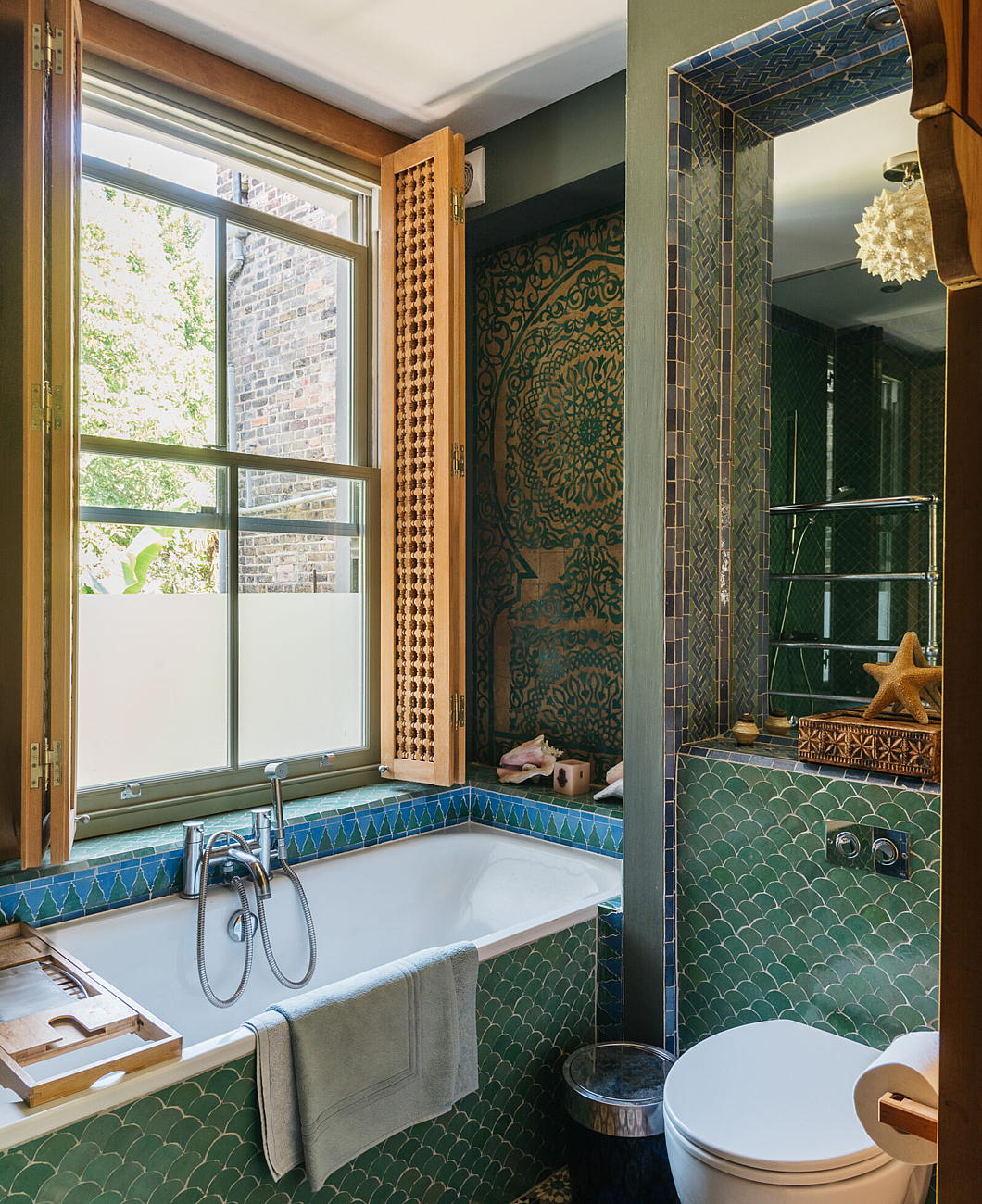
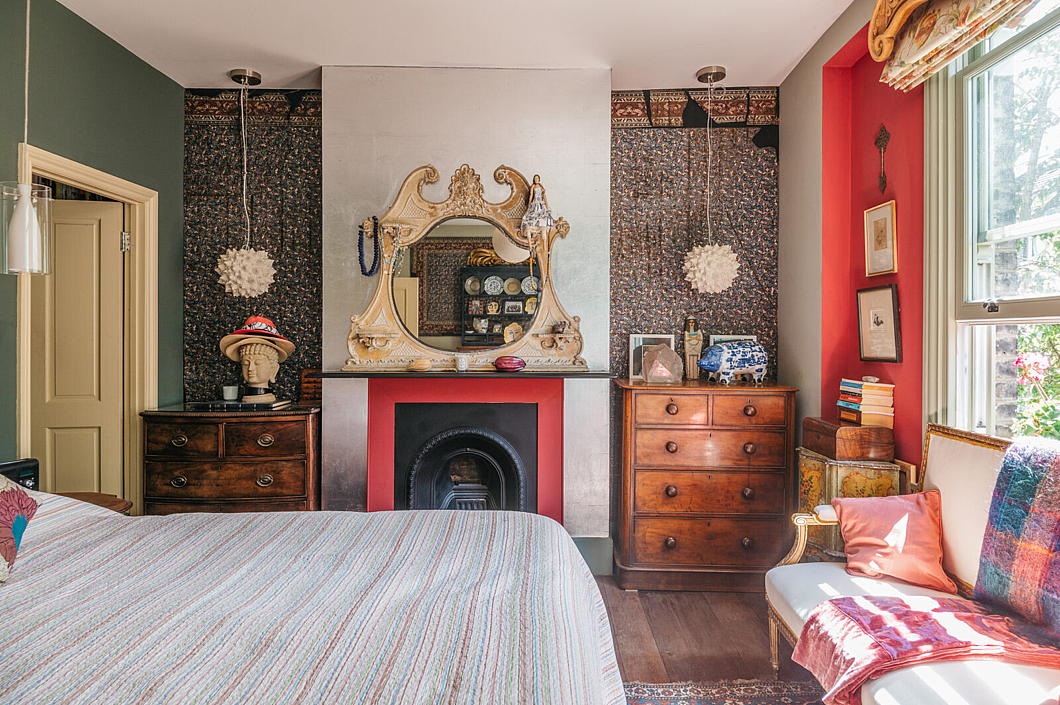
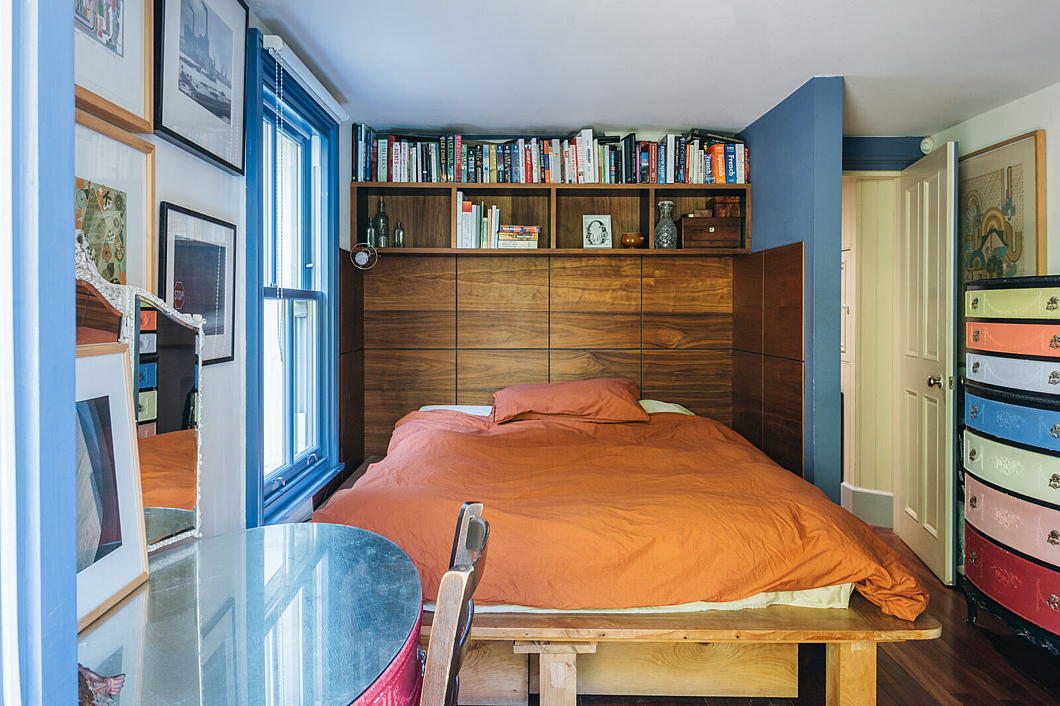
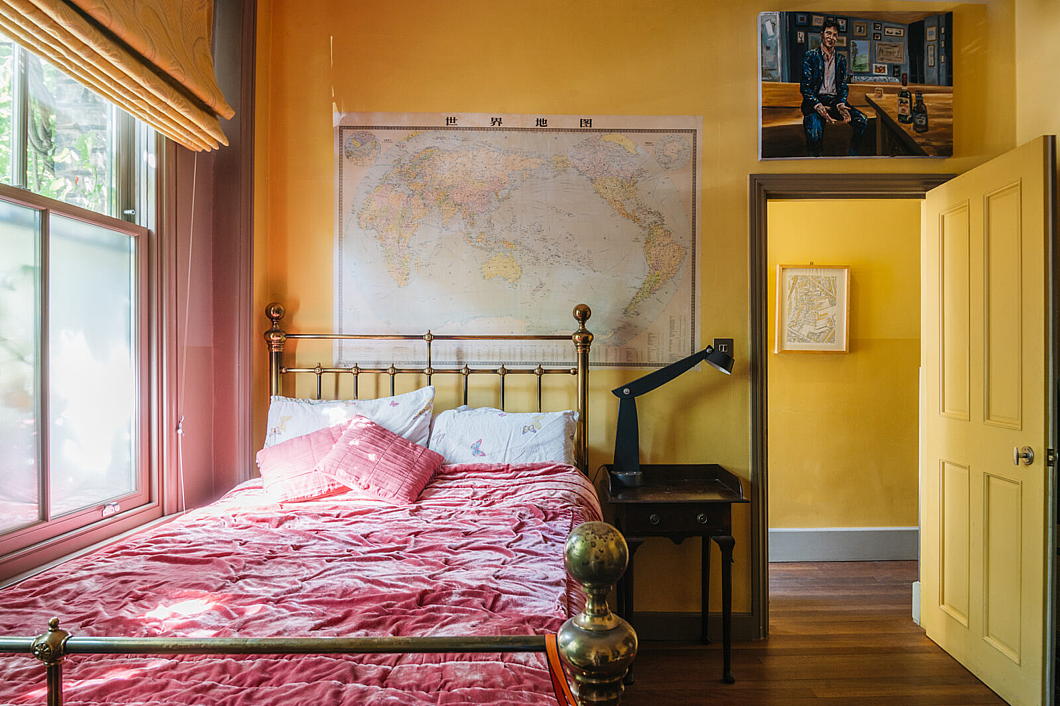
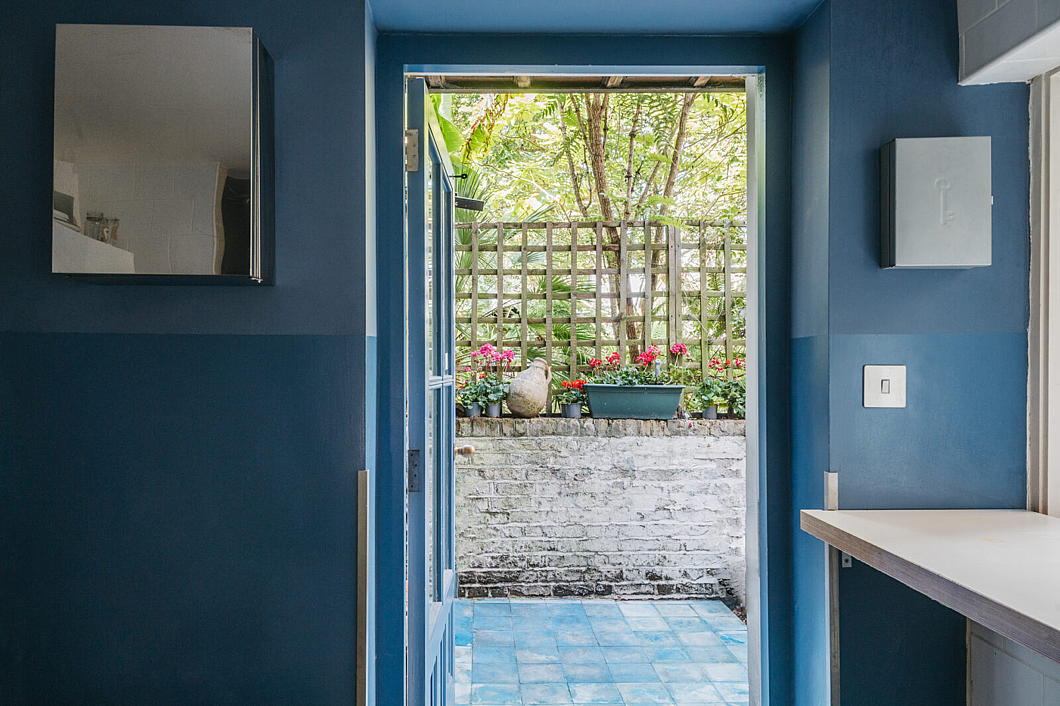
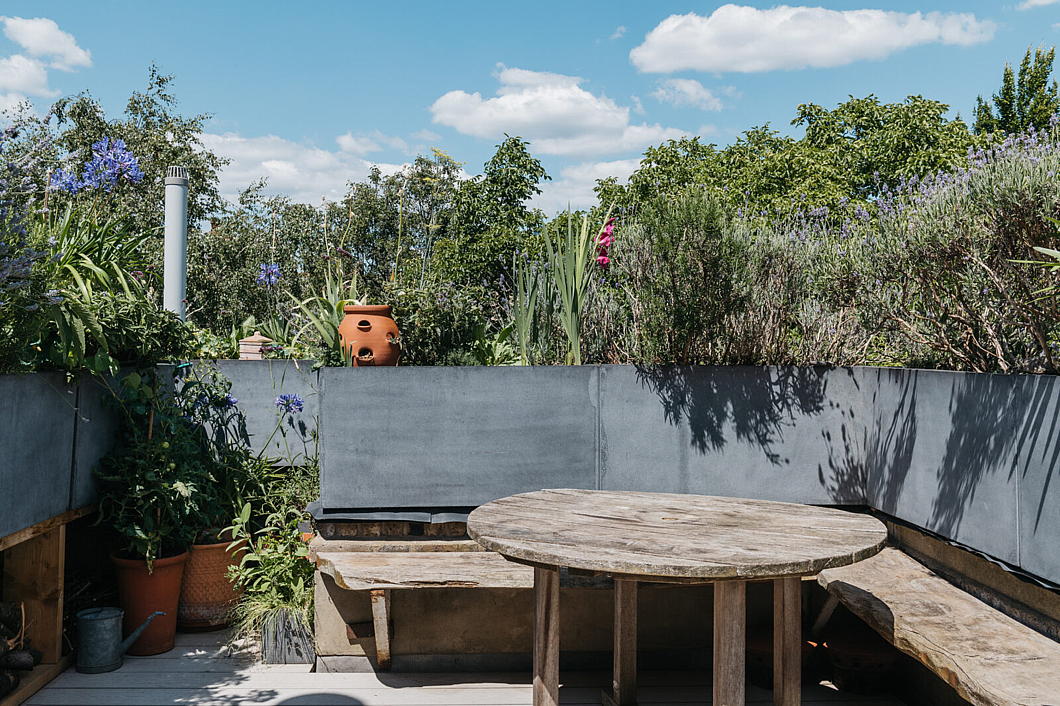
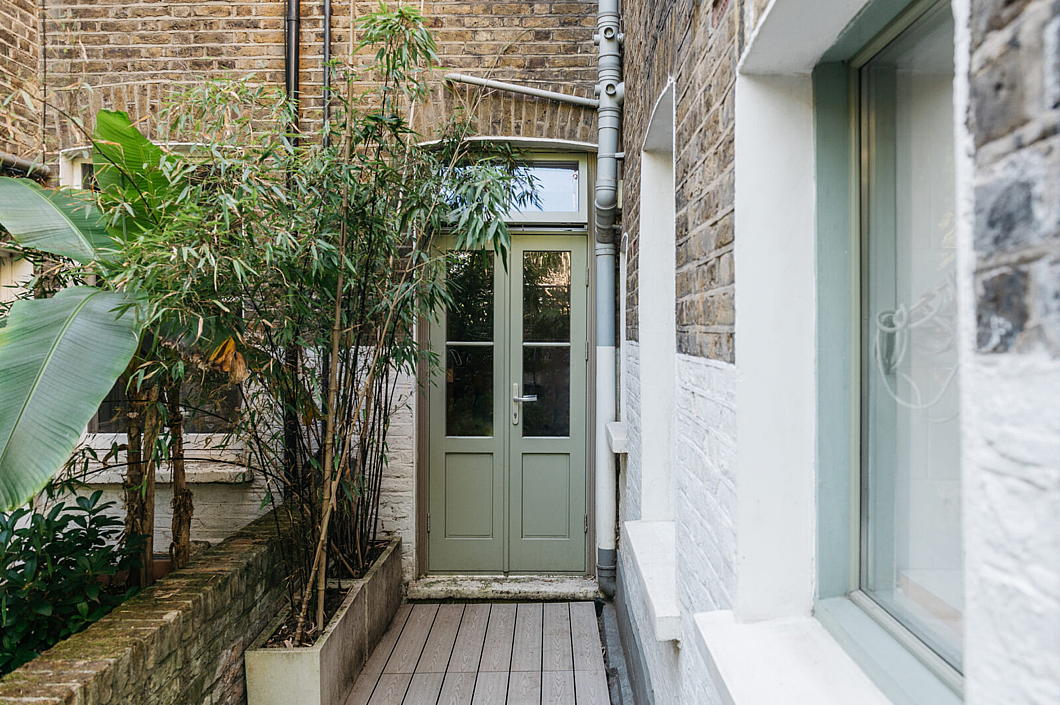
Gardeners have turned its streets into one of the most lushly verdant corners of central London, and now this five-bedroom house is up for grabs. If you have £1.9 mil going spare it would be a nice place to live.
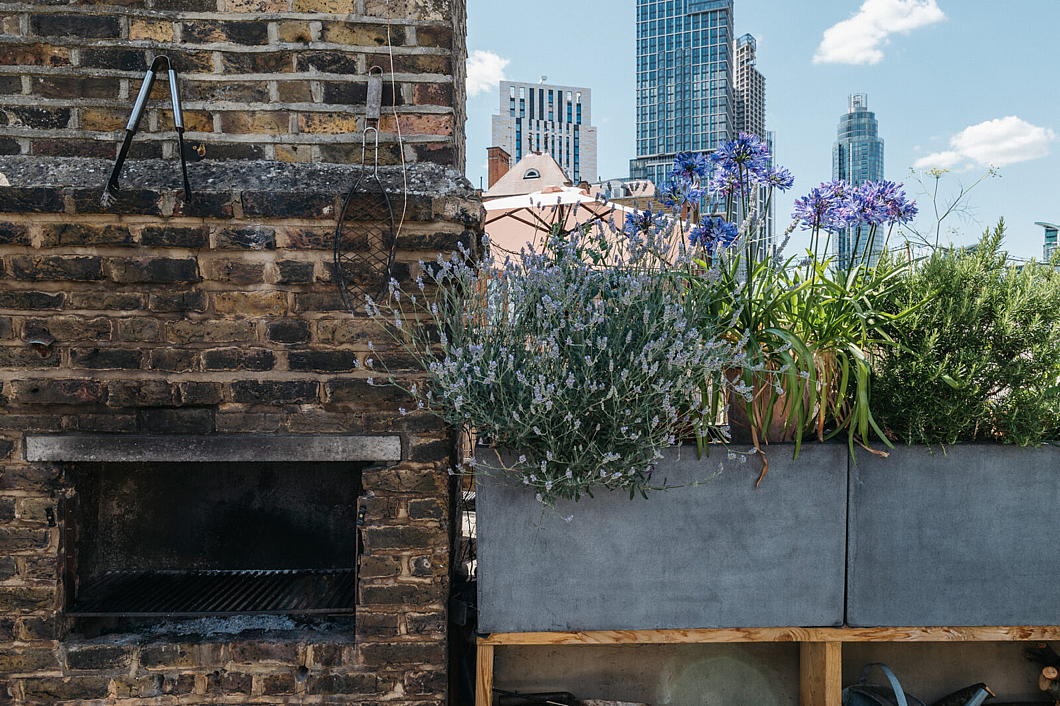
For an ardent sun-lover like me the roof terrace — with barbecue artfully inserted into the old chimney breast — is the best feature, along with the proximity to the excellent Italo Deli.





Monolingual Limitations
I’m 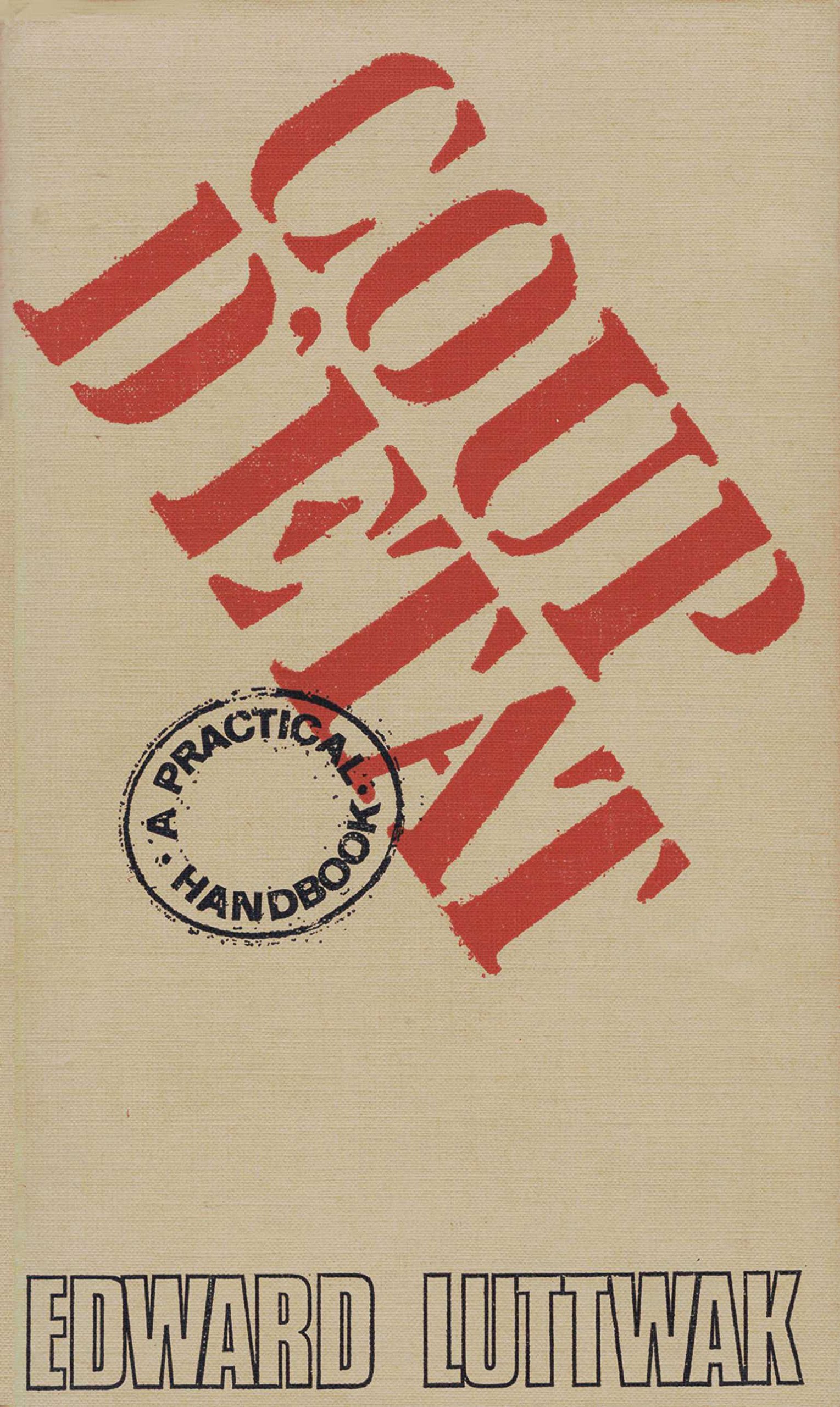 sure I wasn’t the only twelve-year-old whose favourite book was Edward Luttwak’s delicious Coup d’État: A Practical Handbook — an excellent gift from my father. The work gave me a lifelong fascination with the golpe de Estado, a phenomenon of government all too increasingly a rare species in our post-Cold War era.
Just about everything written or said by Luttwak — lately a cattle farmer in Paraguay — is worth reading or listening to. For a start you could read his contributions to the LRB or to the excellent American Jewish Tablet magazine.
I have been waiting for someone to offer a refutation of his provocative Prospect essay on how the Middle East is less relevant than ever, and it would be better for everyone if the rest of the world learned to ignore it.
David Samuels chat with Luttwak this month on the subject of the Three Blind Kings — Putin, Biden, and Xi — offers some superb insights as well as amusements.
Among the lessons that Luttwak is keen to drive home — and he says so over and over and over again on Twitter — is that American intelligence-gathering (and government in general) is too reliant on technology with too few officials, analysts, and operatives actually learning the language of those they are attempting to surveil.
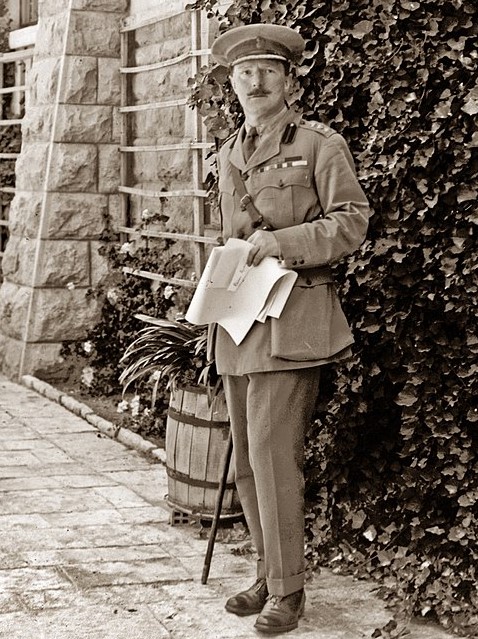 That this state of monolingual limitation was not always the case was driven home in an excellent piece by Jonathan Gaisman in the February 2022 New Criterion concerning Sir Ronald Storrs (left, 1881–1955) — “the most brilliant Englishman in the Near East” as Lawrence of Arabia called him.
An accomplished Arabist, Storrs served as Oriental Secretary for the British administration in Egypt before going on to become Military Governor of Jerusalem, Governor of Cyprus, and Governor of Northern Rhodesia, from which role he retired on health grounds, returned to the metropole, and served a few years on London County Council.
Gaisman relays this delicious anecdote from the British official’s 1937 autobiography Orientations:
Sometime in 1906 I was walking in the heat of the day through the Bazaars. As I passed an Arab café an idle wit, in no hostility to my straw hat but desiring to shine before his friends, called out in Arabic, “God curse your father, O Englishman.”
I was young then and quicker-tempered, and foolishly could not refrain from answering in his own language that I would also curse his father if he were in a position to inform me which of his mother’s two and ninety admirers his father had been.
I heard footsteps behind me and slightly picked up the pace, angry with myself for committing the sin [of] a row with Egyptians. In a few seconds I felt a hand on each arm. “My brother,” said the original humorist, “return, I pray you, and drink with us coffee and smoke. I did not think that Your Worship knew Arabic, still less the correct Arabic abuse, and we would fain benefit further by your important thoughts.”
Gaisman further spoils us with another excellent story — this time about Storrs’ predecessor as Oriental Secretary in Cairo, Mr Harry Boyle:
[Boyle] was taking his tea one day on the terrace of Shepheard’s Hotel when he heard himself accosted by a total stranger: “Sir, are you the Hotel pimp?”
“I am, Sir,” Boyle replied without hesitation or emotion, “but the management, as you may observe, are good enough to allow me the hour of five to six as a tea interval. If, however, you are pressed perhaps you will address yourself to that gentleman,” and he indicated [the self-made tea magnate] Sir Thomas Lipton, “who is taking my duty; you will find him most willing to accommodate you in any little commissions of a confidential character which you may see fit to entrust to him.”
Boyle then paid his bill, and stepped into a cab unobtrusively, but not too quickly to hear the sound of a fracas, the impact of a fist and the thud of a ponderous body on the marble floor.
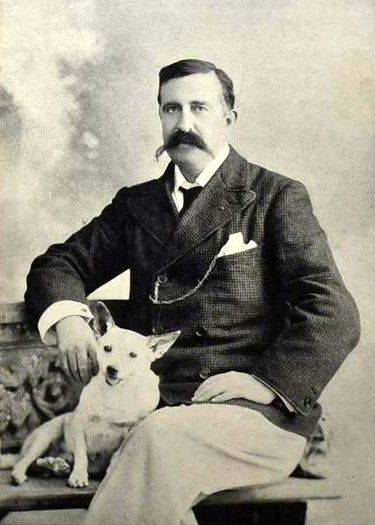 Boyle’s 1937 obituary in the Palestine Post noted he was “a gifted linguist, speaking no fewer than twelve languages”. When Lord Cromer was Britain’s proconsul in Egypt, he and Boyle were such frequent perambulators along the Nile that Boyle earned the nickname Enoch, for he “walked daily with the Lord”.
During these walks, Cromer was keen to mix with Egyptians of the most humble backgrounds and was aided by Boyle’s linguistic skills. Such was his excellence in Arabic that, returning to Egypt many years later, Boyle was recognised by a peasant farmer many miles outside of Cairo and warmly embraced as the man who used to walk the Nile with the British lord.
“In the hot and brooding nights of the Egyptian summer,” the Post appreciation also relates, “when all who were at liberty to do so had fled to cooler climes, Cromer and Harry Boyle might often have been seen seated after dinner on the veranda of the Agency in Cairo reading aloud alternately passages from the Iliad.”
Perhaps all is not lost. While I can’t speak for the state of the gift of tongues at Langley, at least the Prime Minister of the United Kingdom can launch into Homer, in Greek, from memory.
But Luttwak would surely be right to retort that it is among the mid-level officials and analysts that linguistic skills are most missing — nor are we currently threatened by Athens, Sparta, or Corinth.
A Home for Bard and Ballet
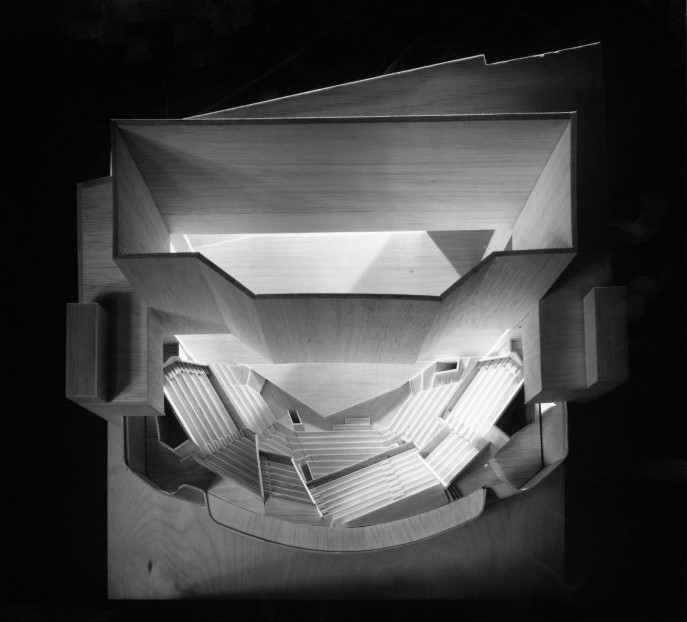
Sir Basil Spence’s unbuilt Notting Hill theatre
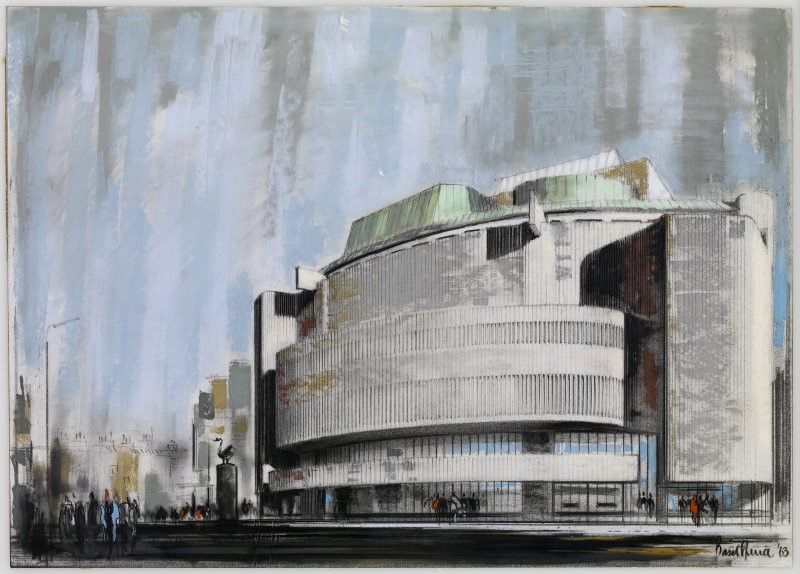
Sir Basil Spence was just about the last (first? only?) British modernist who was any good. His British Embassy in Rome is hated by some but combines a baroque grandeur appropriate to the Eternal City with the crisp brutalism of modernity that makes it true to its time.
In 1963, Spence accepted the commission from the Royal Shakespeare Company and the Ballet Rambert for a London venue to host the performances of both bodies.
The poet, playwright, and theatre manager Ashley Dukes had died in 1959, leaving a site across Ladbroke Road from his tiny Mercury Theatre (in which his wife Marie Rambert’s ballet company performed) for the building of a new hall.
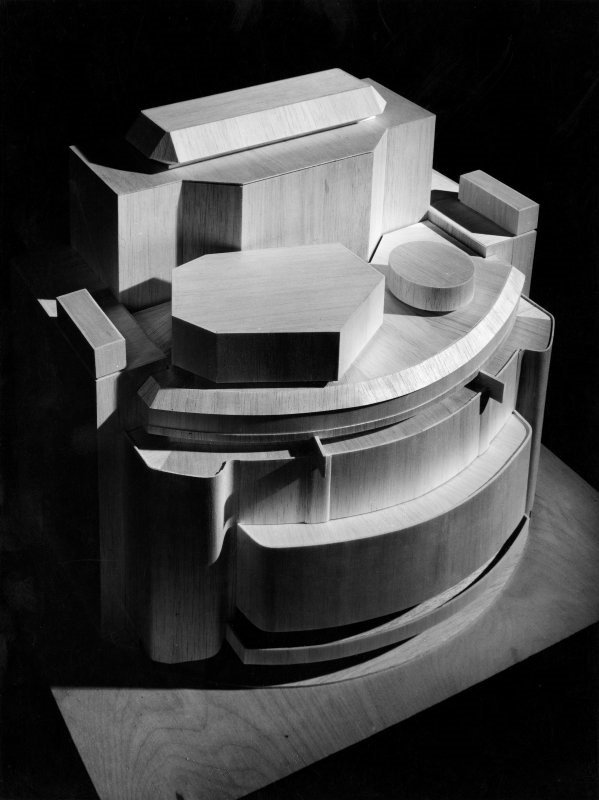
The design moves from the sweeping curve of the street frontage up to a series of angular concoctions and finally the large fly-space above the stage itself.
It made the most of a highly constricted site and would have housed 1,100-1,600 patrons (historical sources vary on this figure). This was a big step up from the old Mercury Theatre which housed 150 at a push.
Ultimately, the plan failed. London County Council was worried there wasn’t enough parking in the area, and the Royal Shakespeare Company was tempted away by the City of London Corporation which was building the Barbican Centre.
Thomas More’s London
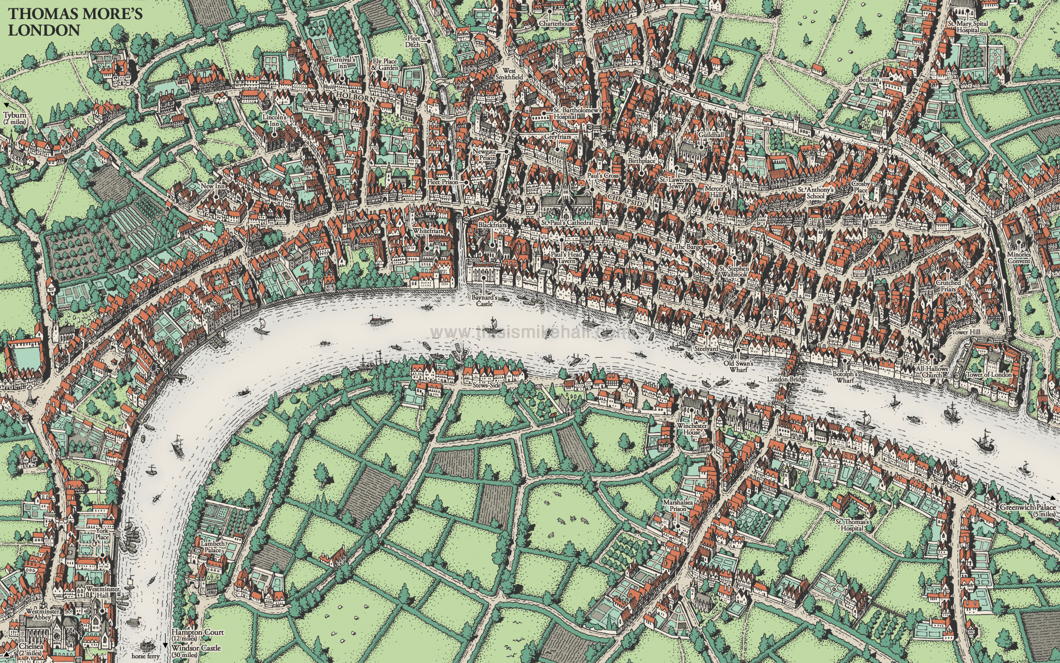
There are almost as many Londons as there are Londoners. There’s Shakespeare’s London, Pepys’s London, Johnson’s London — even fictional characters like Sherlock Holmes have their own London.
The city of Saint Thomas More takes form in a representation made by the excellent map designer Mike Hall, Harlow-born but now based in Valencia.
This map was commissioned from Hall by the Centre for Thomas More Studies in Texas and the designer based the view and the colour scheme on Georg Braun and Frans Hogenberg’s map of London from their 1617 Civitates Orbis Terrarum
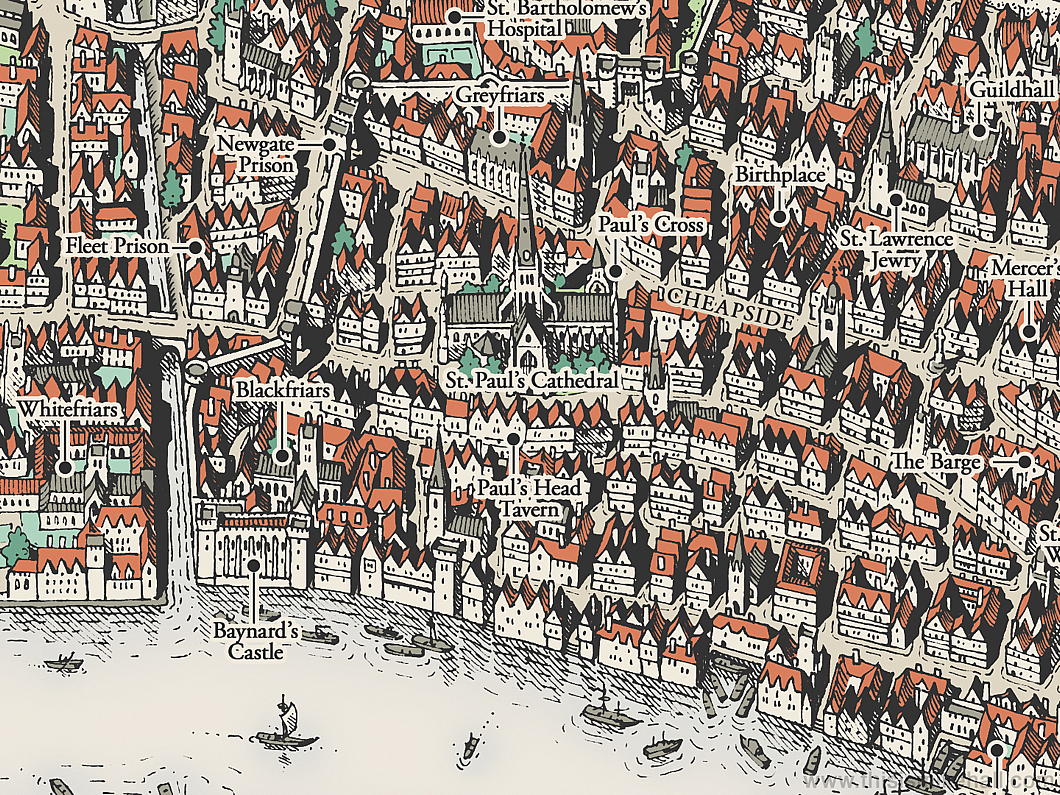
From his birthplace in Milk Street to the site of his execution, all the sites from the great points of More’s life are here in this map.
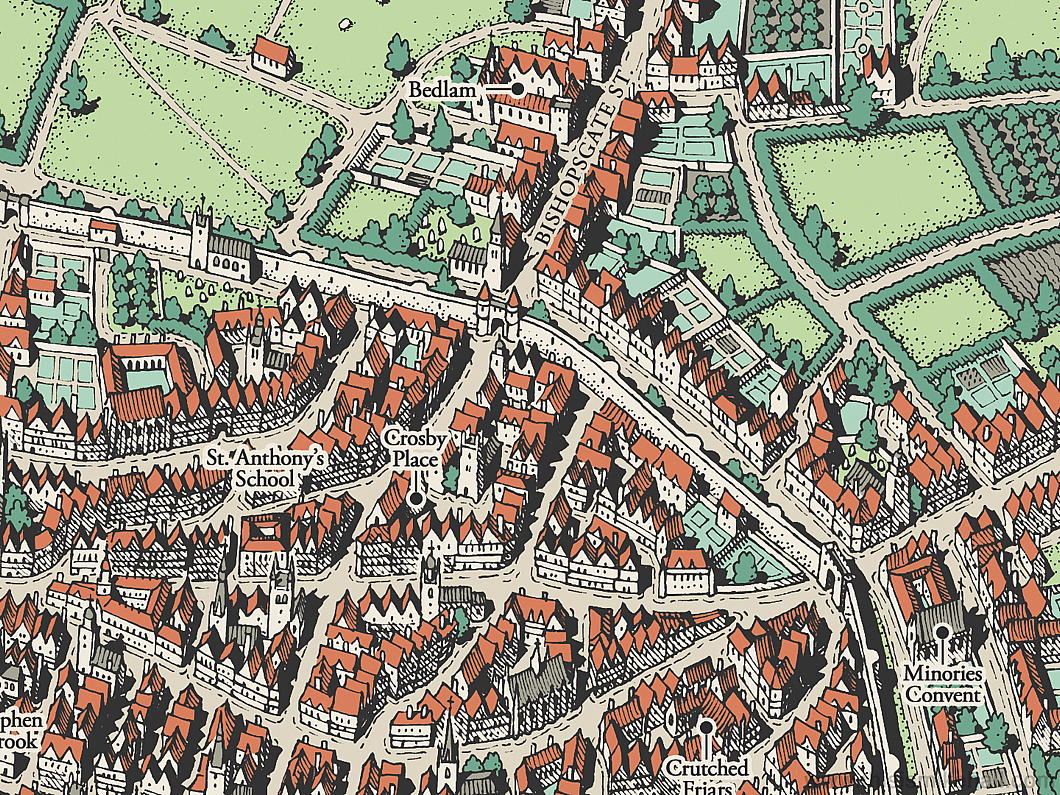
The future Lord Chancellor was educated at the school founded by the Hospital Brothers of Saint Anthony, one of the best in the City of London, and when he finished at Oxford returned to London to study law at New Hall and Lincoln’s Inn.
Crosby Place, the house that he bought in 1523 is not far from St Anthony’s School though its surviving remnant was moved brick by brick to Cheyne Walk in 1910 — a site close to More’s Chelsea residence of Beaufort House.
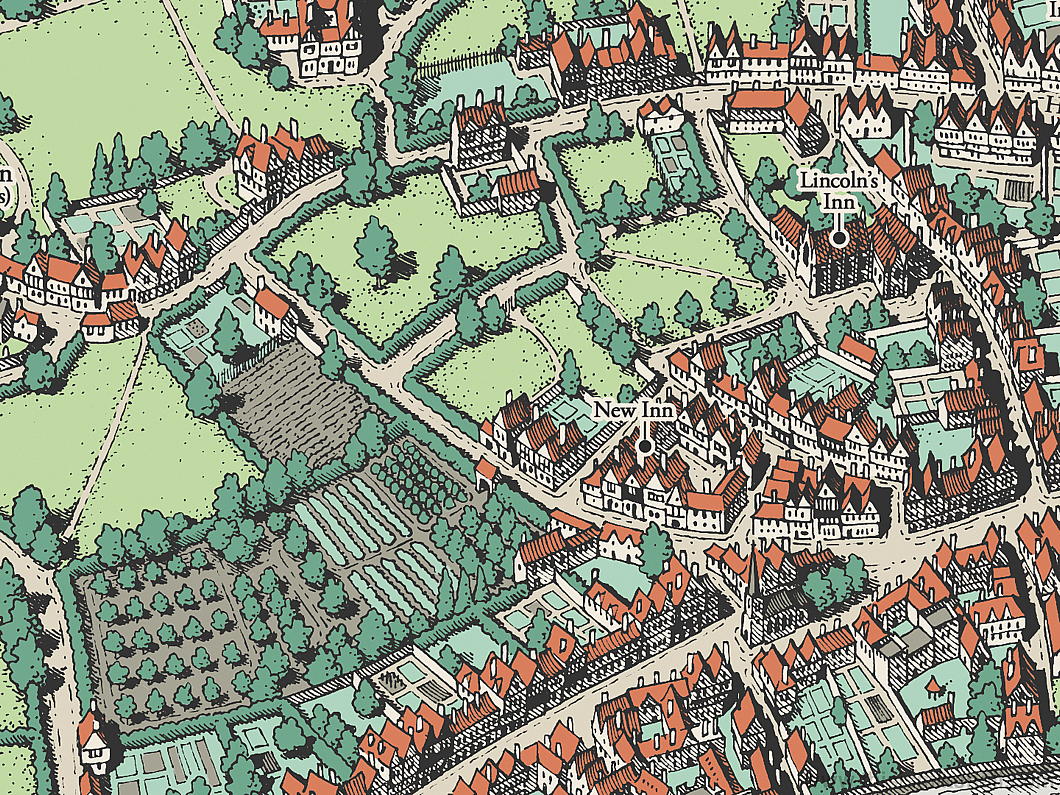
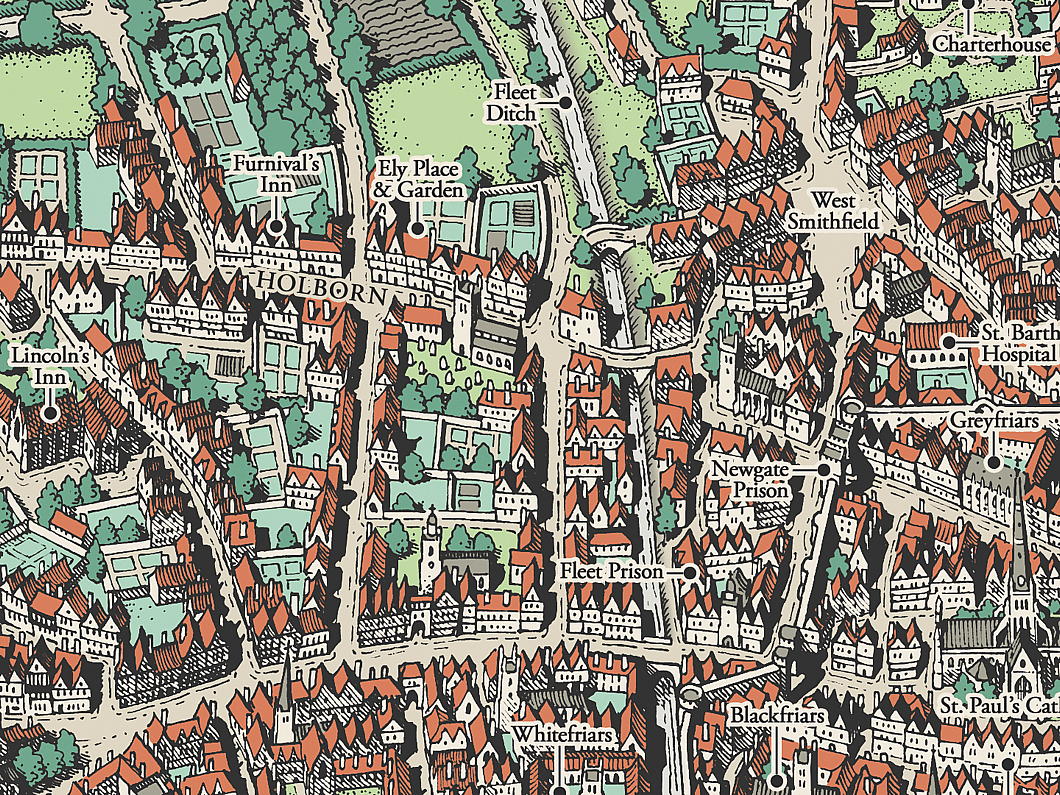
The chapel of Ely Place — town palace of the Bishop of Ely — still survives as St Etheldreda’s, the only mediæval church in London now in use as a Catholic parish.
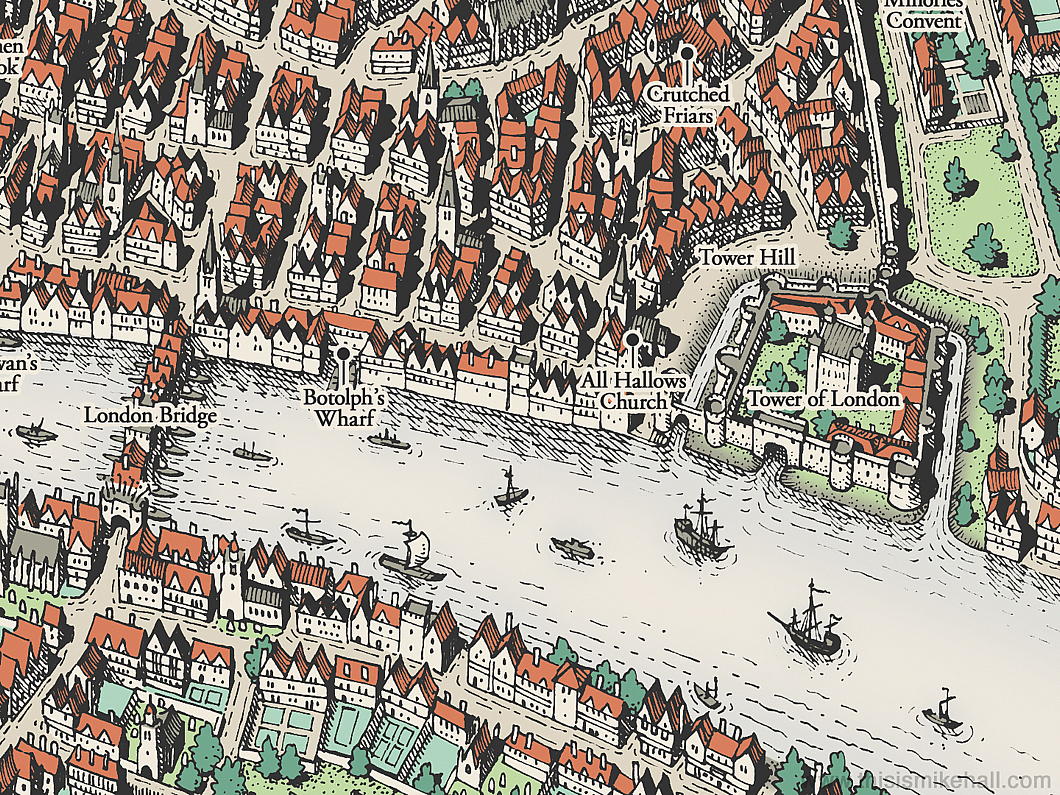
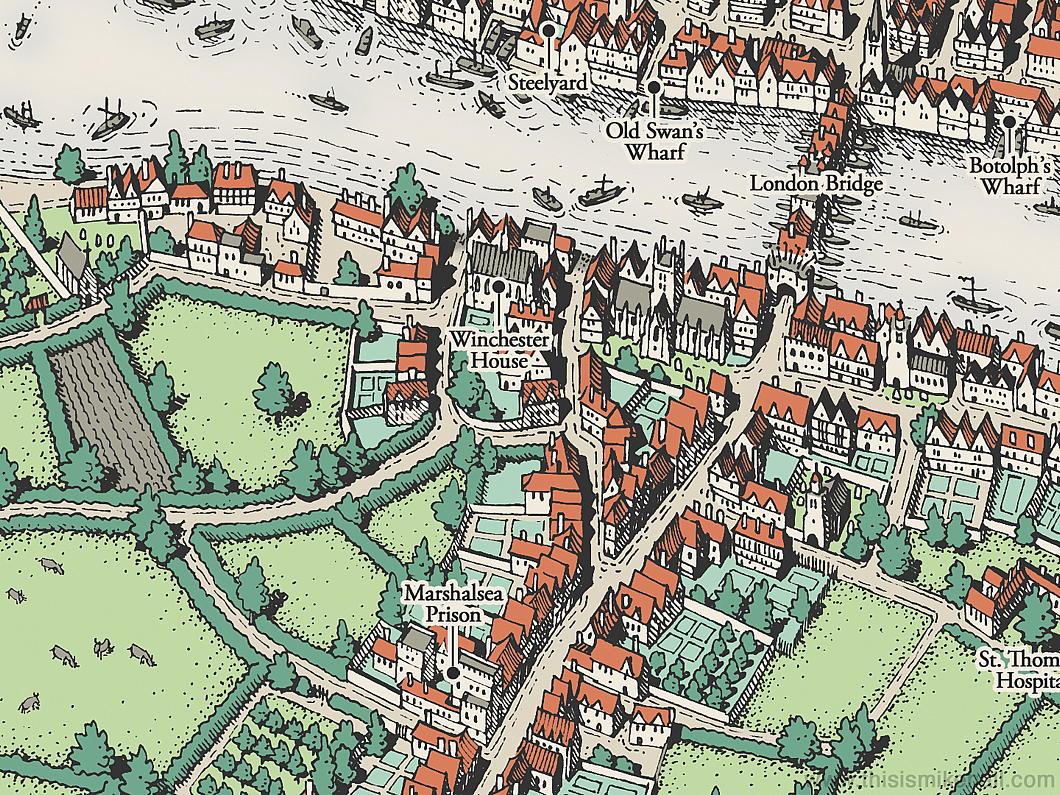
God’s own Borough of Southwark gets a look in as well, with the Augustinian priory of St Mary Overs (now the Protestant cathedral of Southwark) and the town palace of the bishops of Winchester. Remnants of the great hall of Winchester Palace remains standing to this day.
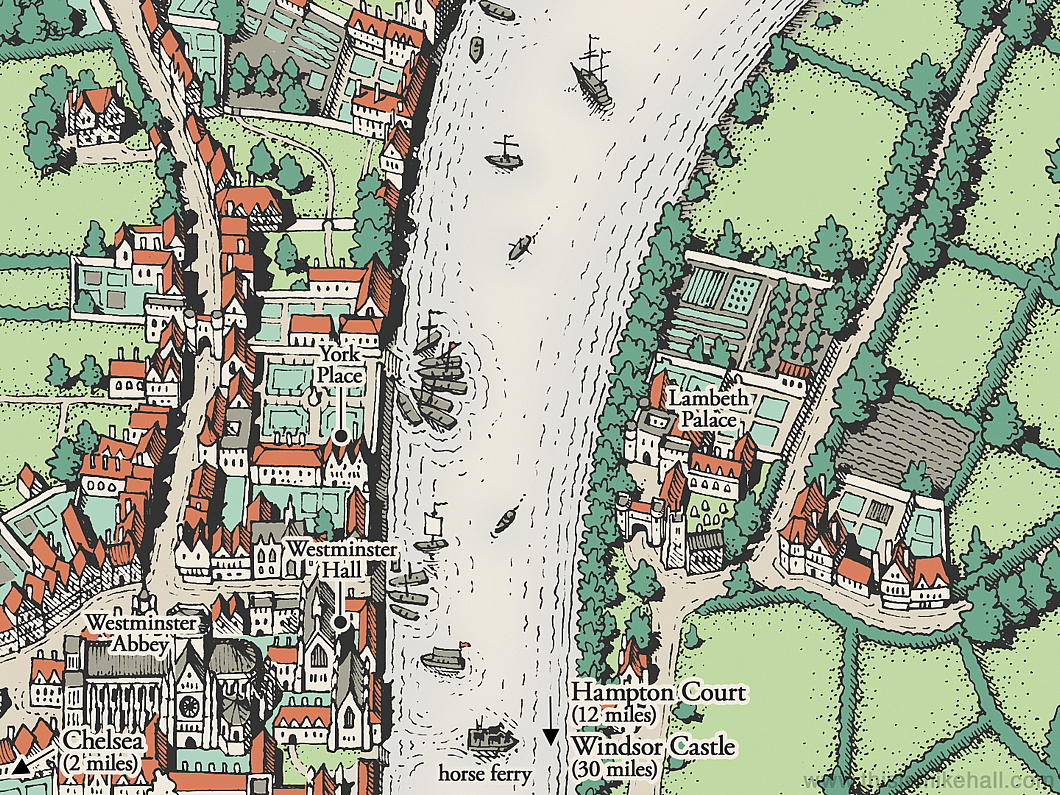
As is the mapmaker’s privilege, Mr Hall has taken some liberties: in order to fit Lambeth Palace — the residence of the Archbishop of Canterbury (and Primate of All England) he’s shifted it a bit north of its actual spot.
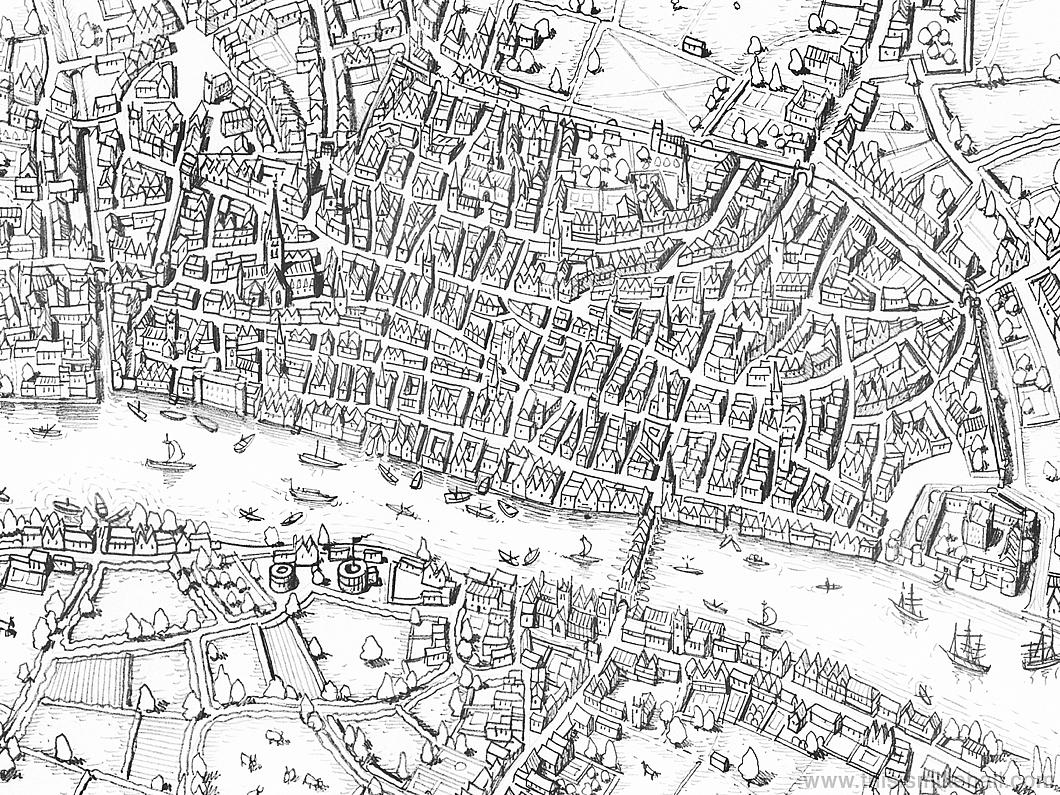
I wish he’d kept the Rose and Globe theatres which he included in his initial sketch for the map — Southwark was the theatre district of its day.
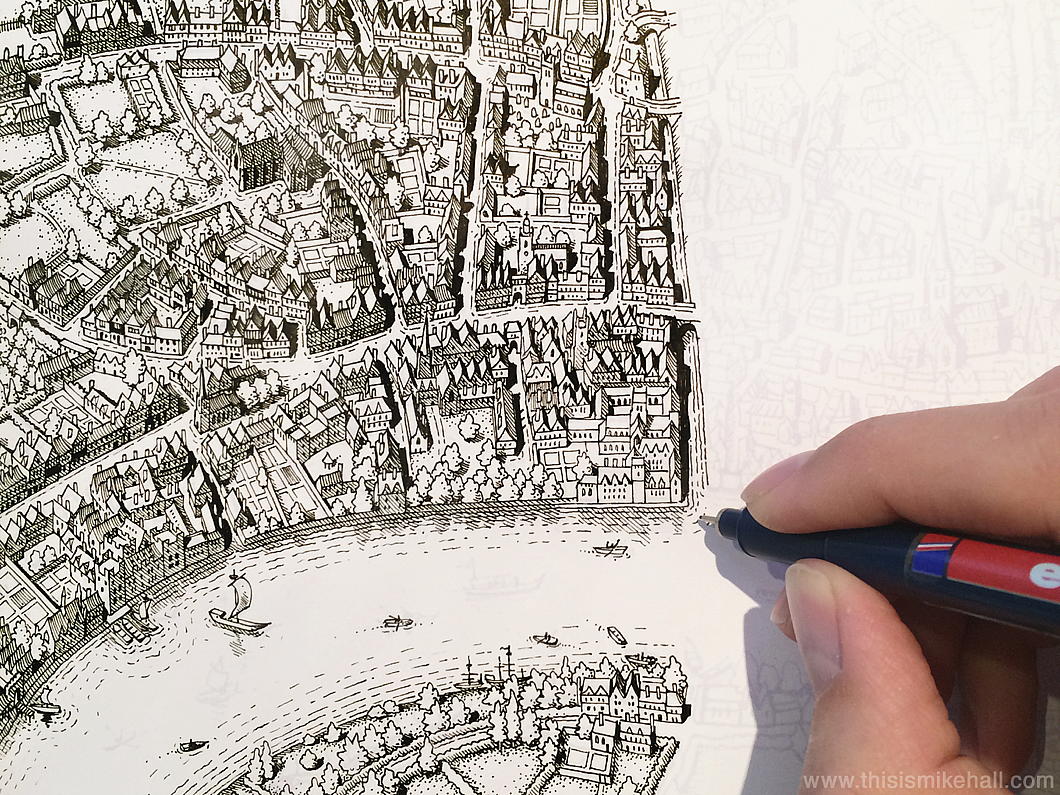
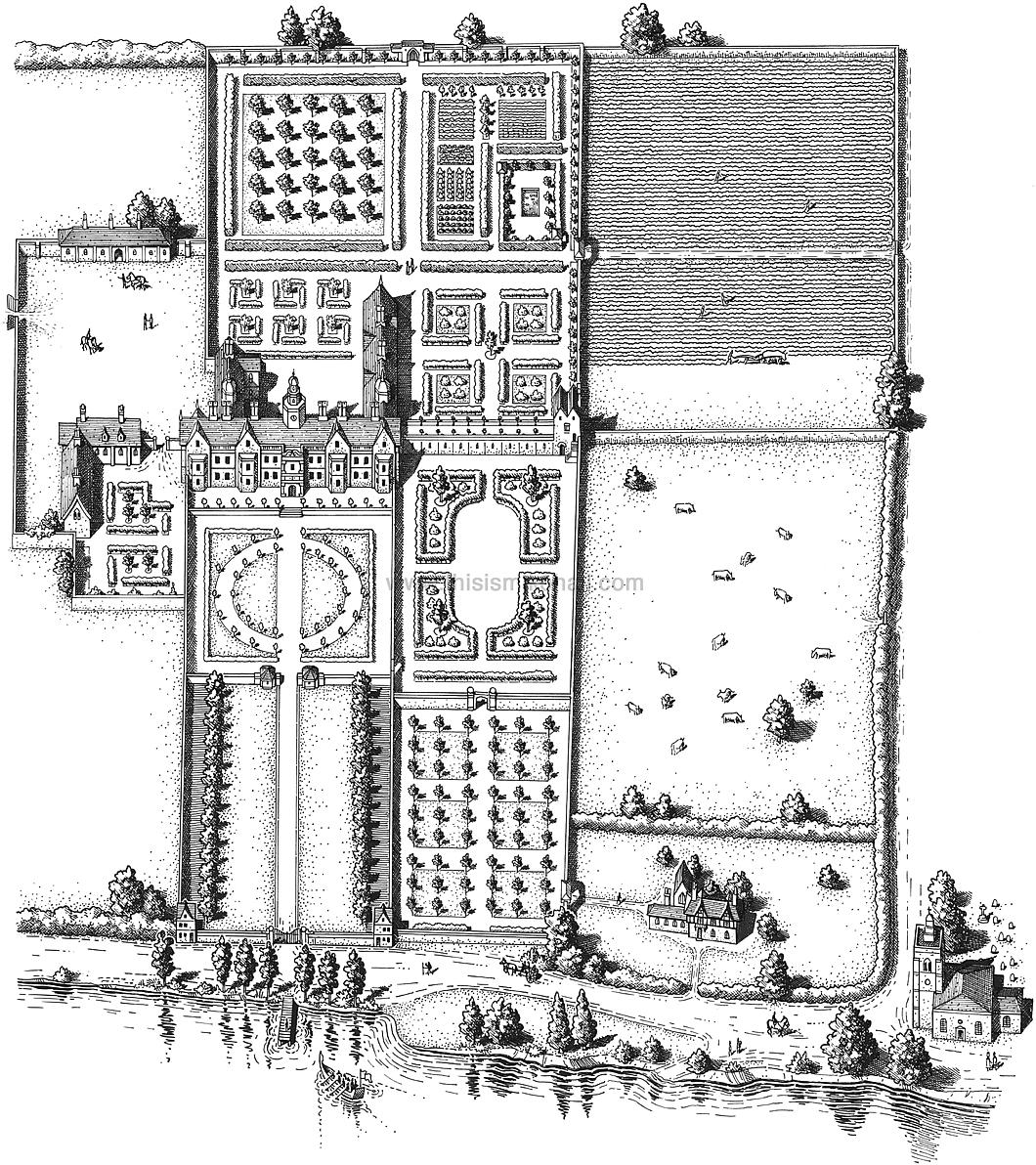
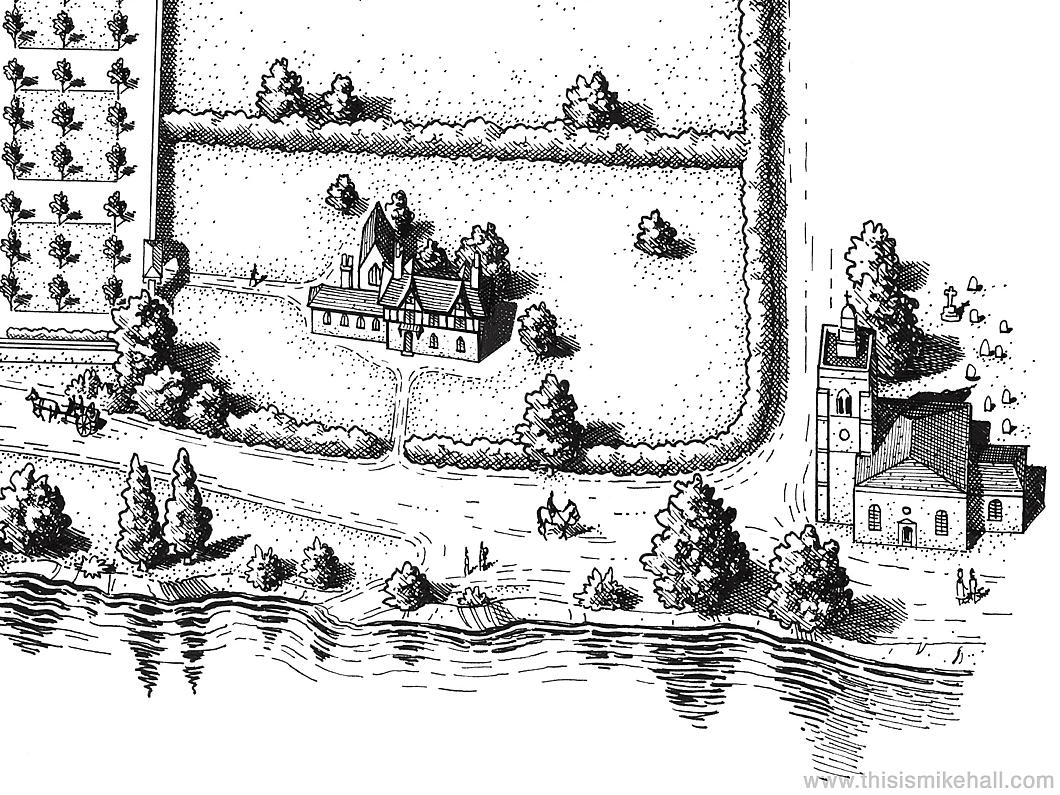
Hall also completed a sketch of Beaufort House as it would have appeared during St Thomas More’s lifetime. The house was demolished in 1740, and today’s Beaufort Street runs the line of the main drive leading up to it.
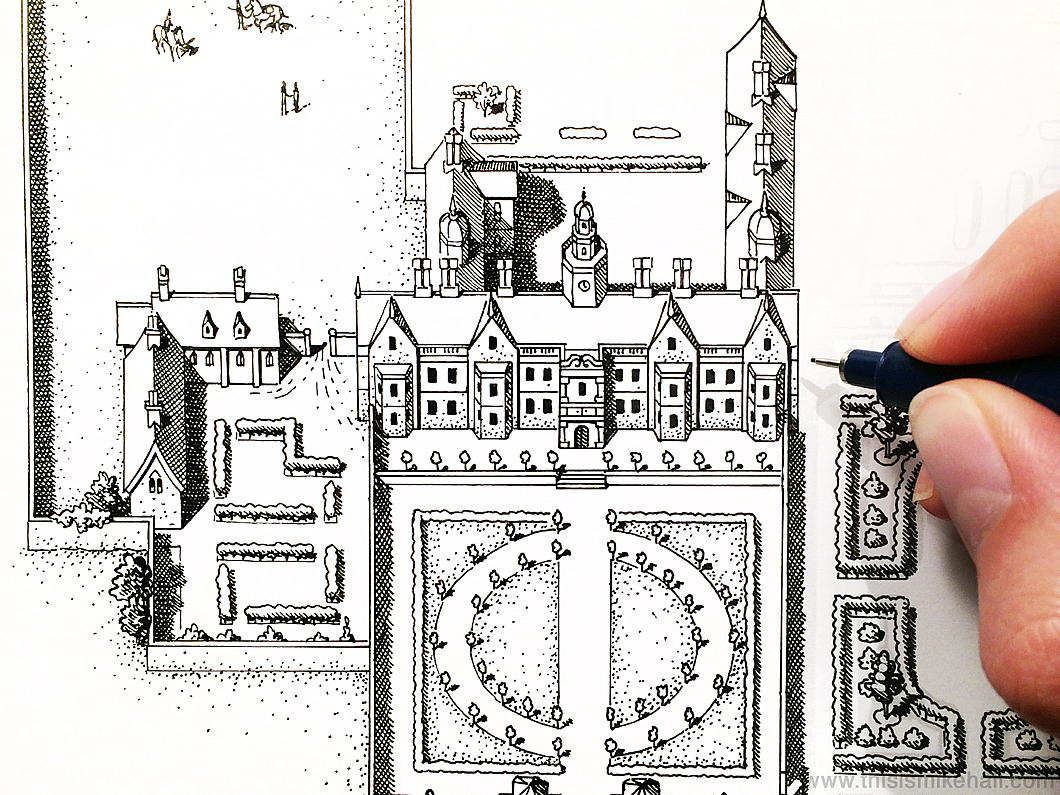
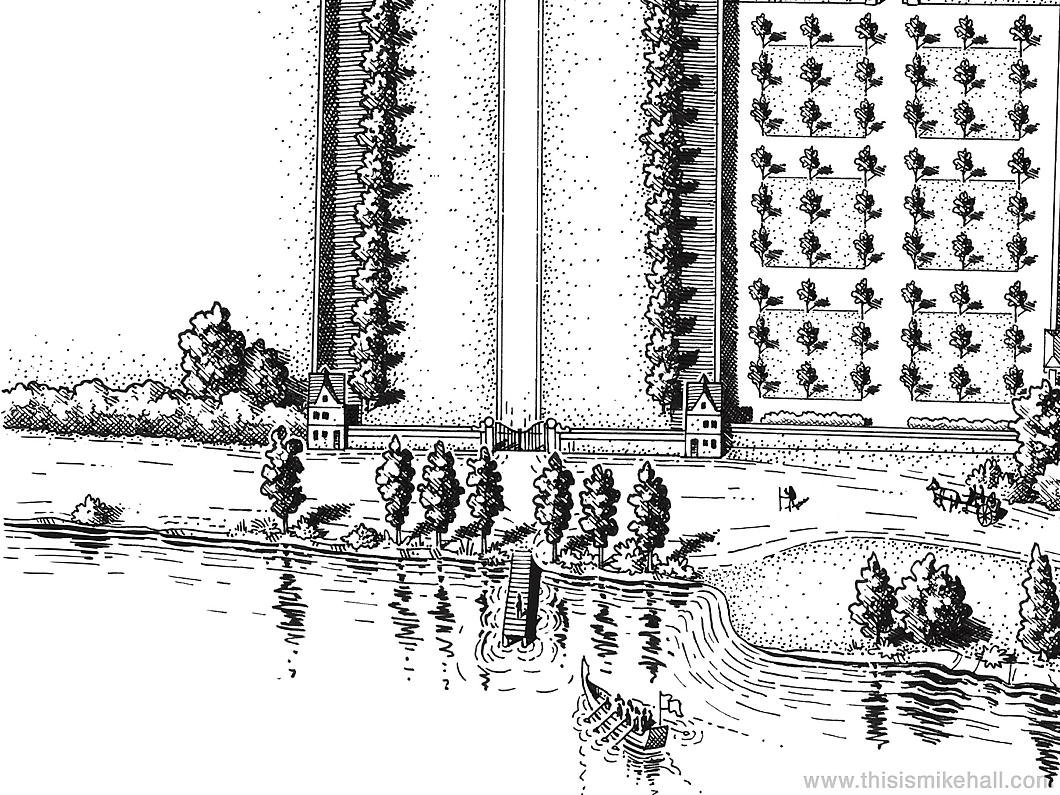
The Church of All Saints at Chelsea (now known as Chelsea Old Church) is at the bottom of the sketch and is where the More family burial vault is. His severed head is believed to be entombed there to this day.
Anglo-Gaullist Reading Update
The latest round of news or commentary of Gaullist content or interest:
Mercator: Charles de Gaulle: a wise ruler of France
Financial Times: France invokes the golden age of de Gaulle
Politico: Why all French politicians are Gaullists
Variety: Cliché-Ridden ‘De Gaulle’ is Unworthy of Its Iconic Subject
Scoring the Hales
One of the great Northumbrian traditions is the yearly Scoring the Hales, a mediaeval football match between the parishes of St Michael and St Paul in Alnwick. The first records of this match are from 1762 but it almost certainly began many, many generations earlier. This year’s match marked a return after a two-year absence thanks to the virus.
The match takes place every Shrove Tuesday but this is football as seen long before the modern rules of the sport were codified into ‘soccer’ (association football) and ‘rugger’ (rugby football).
The day begins with the Duke of Northumberland dropping the ball from the barbican of his seat, Alnwick Castle. Led by the Duke’s piper, the two teams are led down the Peth to the furlong-deep pitch beside the River Aln called the Pastures.
Rules are very few but the match consists of two teams of usually about 150 players from their respective parishes, battling it out over two halves of half-an-hour each. The goal posts are covered with greenery and stand 400 yards apart. Whoever scores two ‘hales’ first is deemed the winner. If the score is even after two periods, a further 45-minute period decides the match.
Once the match is over, the football is then thrown in the River Aln and all the players scramble to capture it and whoever gets it through the river to the other bank is allowed to keep it.
Like golf, Scoring the Hales used to be played in the streets but its destructive potential has seen it moved to an open space — here in Alnwick’s case since the 1820s.
The Newcastle Chronicle (founded 1764) sent a photographer along to this year’s match, duly won by the denizens of St Paul’s parish. (more…)
Liverpool’s Irvingite Church
The soi-disant “Catholic Apostolic Church” was one of the strangest but most fascinating Protestant sects the Victorian world brought forth. It was entirely novel — perhaps outright bizarre is a better description — in its combination of millenarian theology, evangelical preaching, and inventive ceremonialism. They were often referred to as Irvingites as a shorthand, owing to their origins amongst the followers of the Rev. Edward Irving, a Church of Scotland minister who led a congregation in Regent Square, London.
The Irvingites — after the death of Irving, it must be said — invented an elaborate hierarchy of twelve “apostles”, under whom served “angels”, “priests”, “elders”, “prophets”, “evangelists”, “pastors”, “deacons”, “sub-deacons”, “acolytes”, “singers”, and “door-keepers”. Coming from a very Protestant, low-church background, they curiously concocted elaborate liturgies influenced by Catholic, Greek, and Anglican forms of worship.
Another unique aspect of this group was its lack of denominational thinking: the Catholic Apostolic Church did not demand any strict or exclusive communion but was happy for its members and supporters to continue to be members of other churches or denominations.
One of the founding “apostles” of the Irvingite Church, Henry Drummond, married his daughter off to Algernon Percy, later the 6th Duke of Northumberland. That duke and his two immediate successors were known to be supporters of the Catholic Apostolic Church without disowning their established Anglican affiliation.
Despite this aristocratic land-owning connection, socially the Irvingite church spread most rapidly amongst the well-to-do mercantile classes, which meant they had congregations in places like Manchester, Birmingham, Liverpool, Edinburgh, and even Hamburg. They were also very strict about tithing, which — combined with their mercantile status — meant they had a fair amount of money to spend on church building.
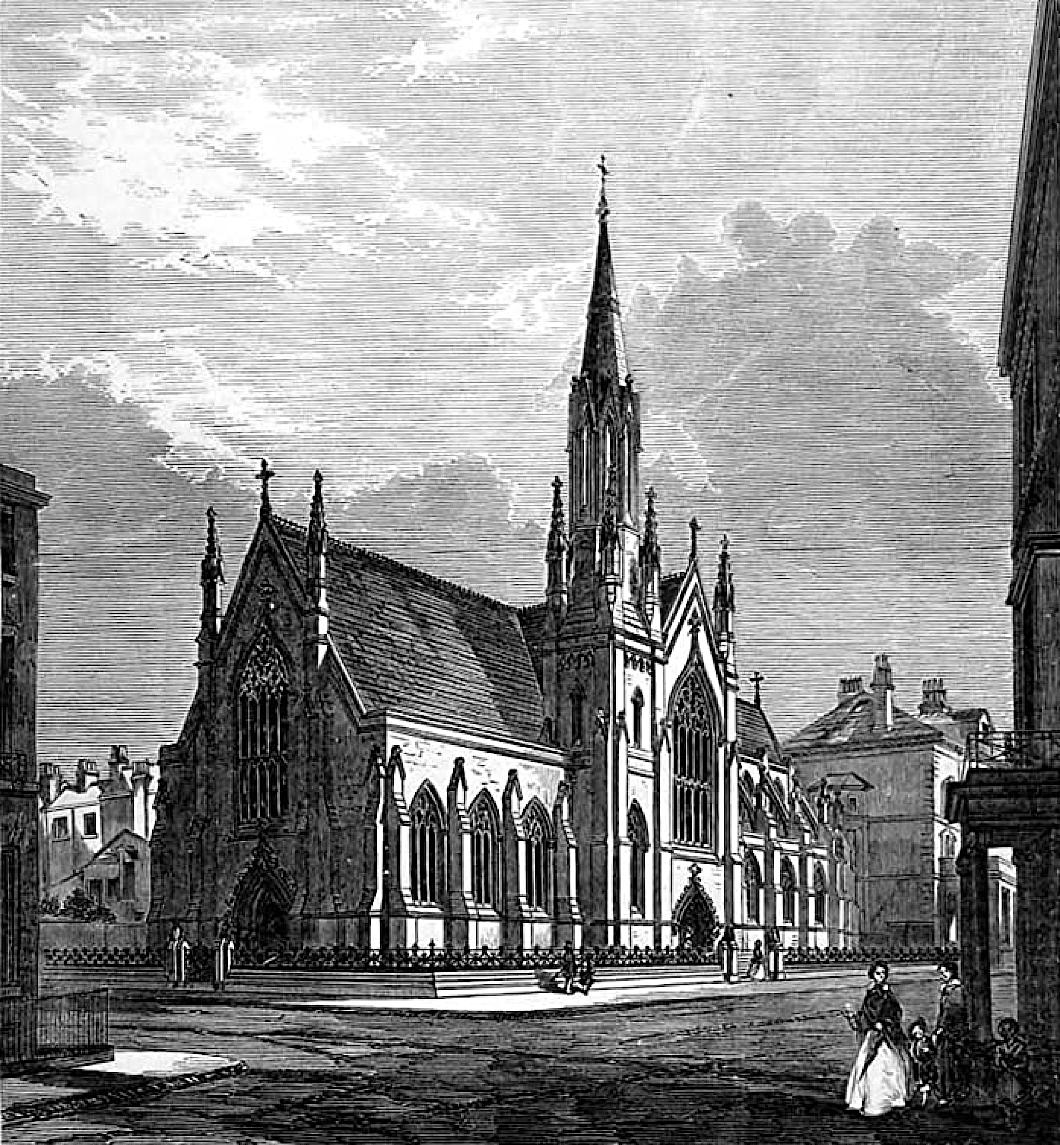
In Liverpool their church was built on the corner of Canning Street and Catherine Street in 1855-56. The design by architect Enoch Trevor Owen was influenced by Cologne Cathedral, with a nave more than 70 feet high.
Owen later moved to Dublin where he was employed as architect to the Board of Works, though he also designed the Catholic Apostolic Church in that city as well. (Today that building serves as Dublin’s Lutheran Church.) There’s some indication he designed the Catholic Apostolic Church in Manchester, so he might very well have been a member of the sect himself.
Another centrally important fact about the Irvingites: they didn’t believe that their original “apostles” could appoint further apostles. So when the last living “apostle” ordained his last “angel”, no further angels and so forth could be created. It endowed the clergy of this unique branch of Protestantism with an effective end date, but you have to give them credit for sticking with it. The last “apostle” died in 1901, the last “angel” in 1960, and their last “priest” in 1971.
Gone are all their elaborate inventive liturgies, and unsurprisingly the congregations have tended to fade away as well. The last clergy often recommended the lay people in their charge attend Church of England services when their own services stopped. The body continues to exist, and beside paying for the maintenance of its properties also makes annual grants to mostly Anglican but also Catholic and Eastern Orthodox bodies. In some very rare places, like Little Venice, prayer services are still held.
Indeed they still own their great central church in Gordon Square in Bloomsbury, though its chief use in the past decades has been being rented out first to an Anglican university chaplaincy, and now to the use of High-Church Anglicans as well as an Anglican evangelical mission.
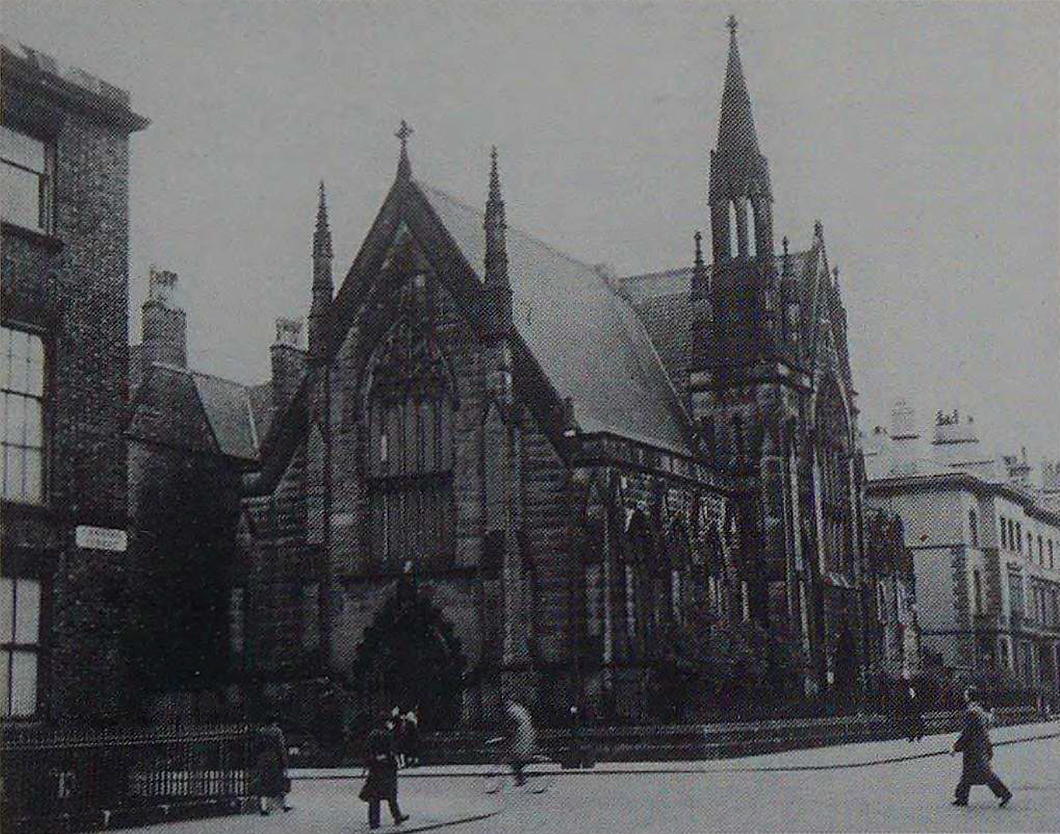
In Liverpool their church was given Grade II listing protection in 1978, possibly when prayers services were still being held. By 1982 the church was up for sale, but without a buyer it succumbed to a fire in 1986.
The church lingered in ruins until the late 1990s when it was demolished and a nondescript block of flats erected on the site.
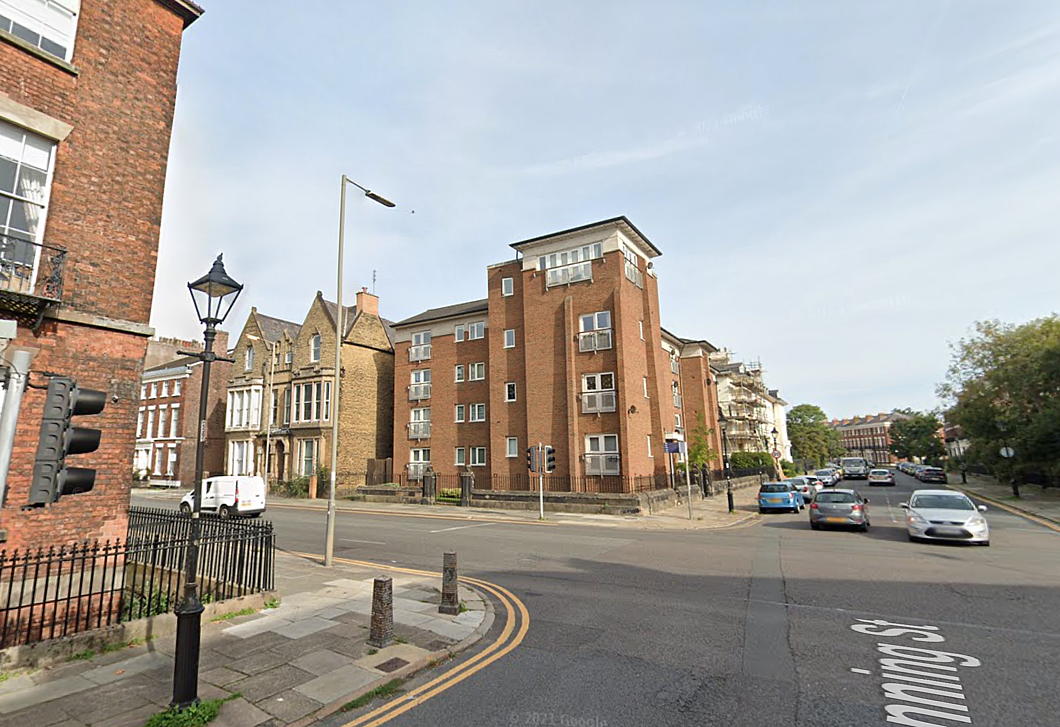
Elsewhere: Liverpool: Then and Now | Velvet Hummingbee
Merton
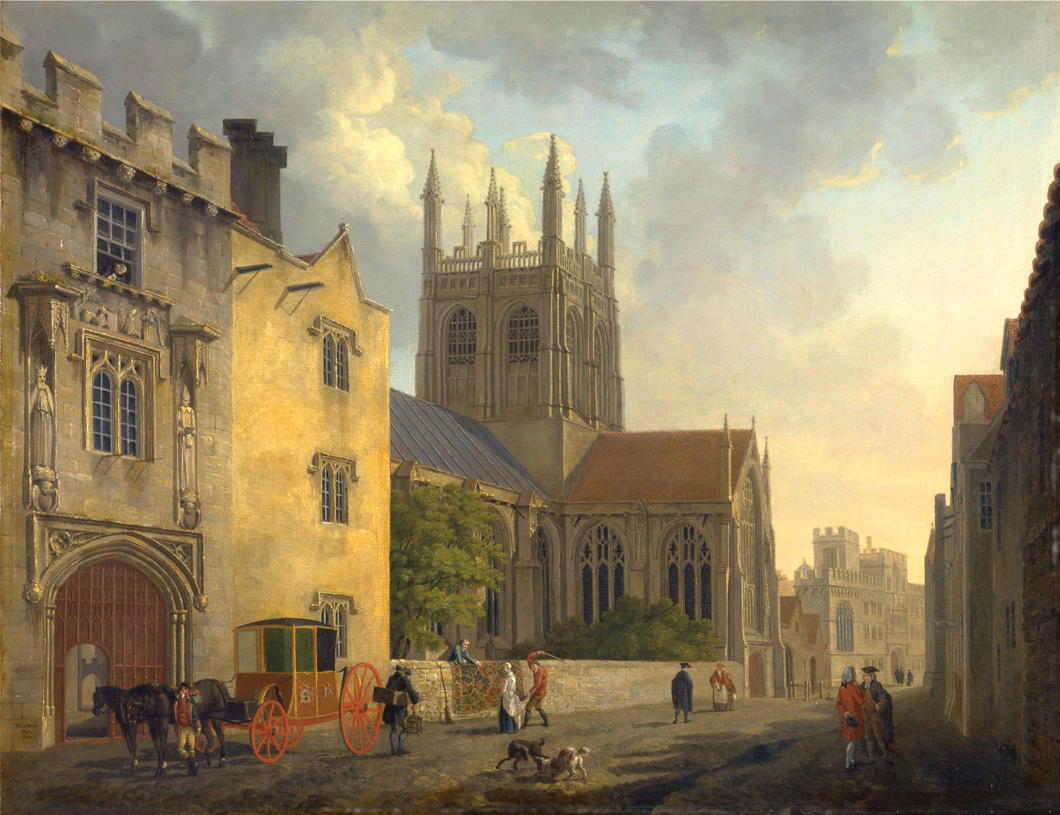
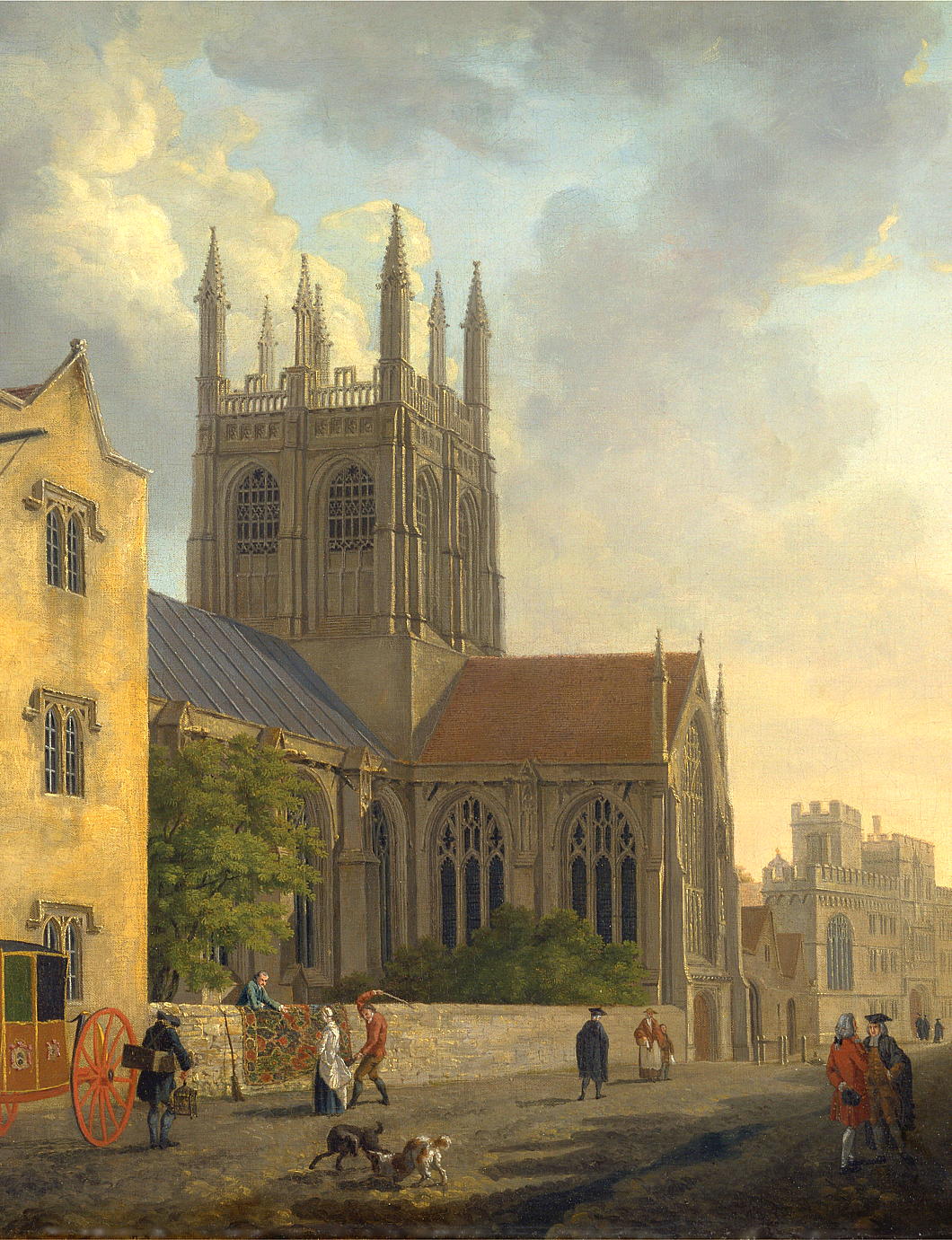
The ‘House or College of Scholars of Merton in the University of Oxford’ — more commonly called Merton College — is one of the smaller colleges in Oxford, located right next door to lovely little Corpus.
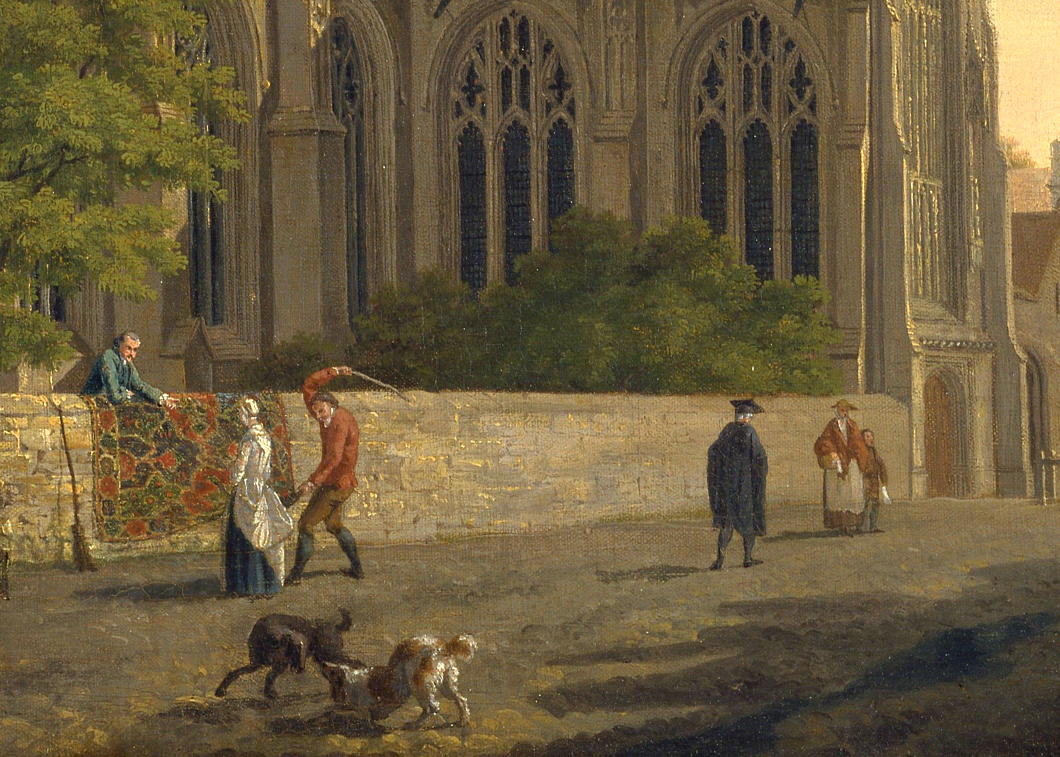
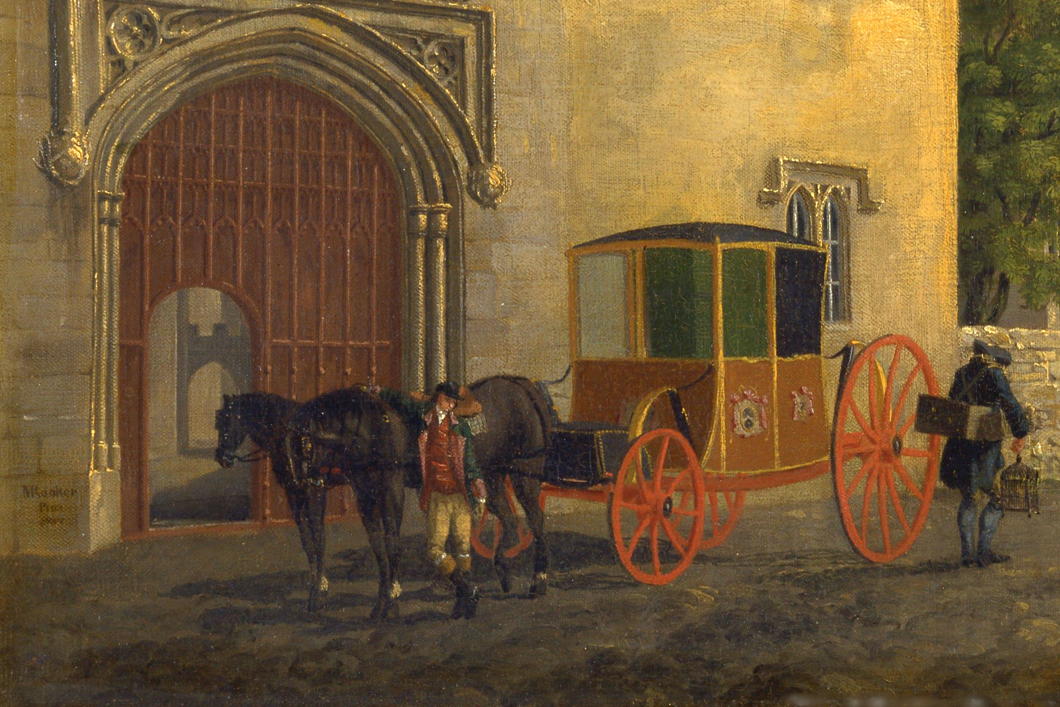
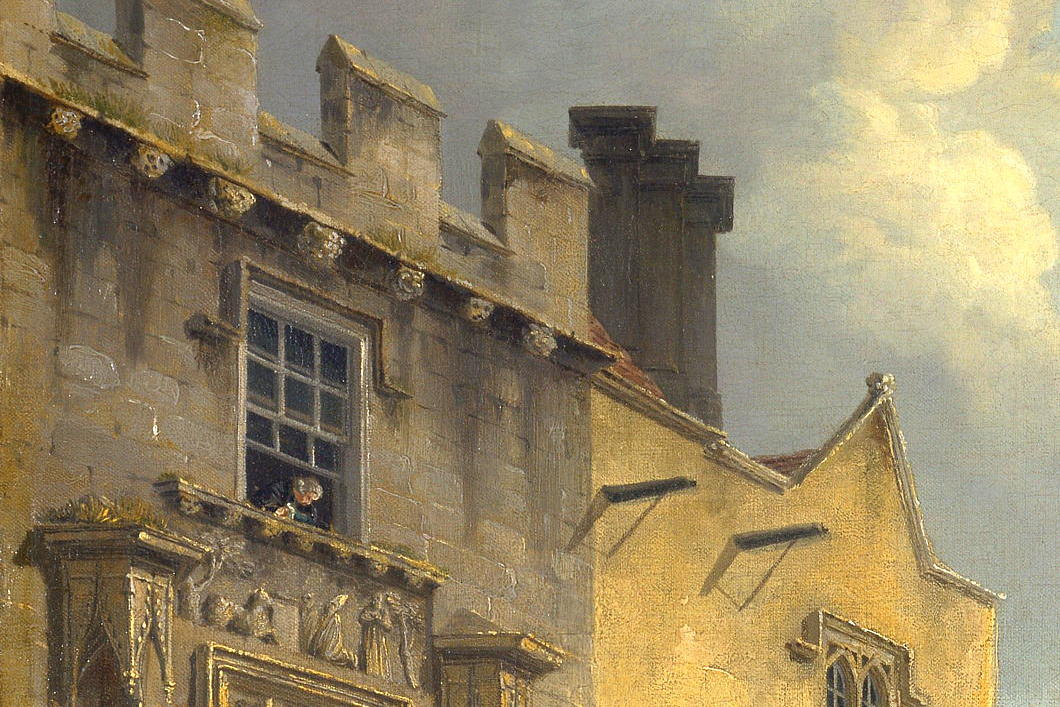
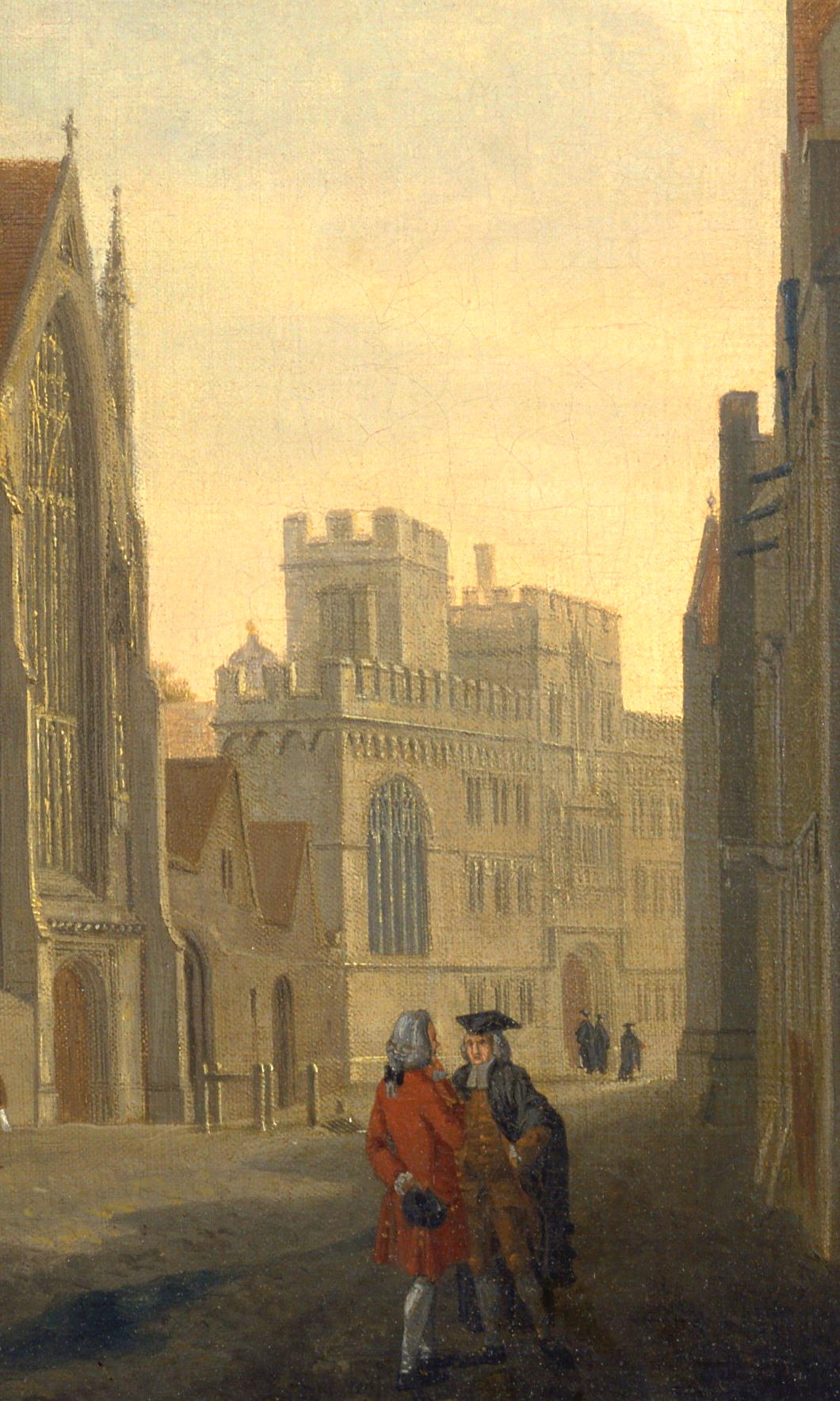
Aside from rendering the architecture well, townscapes from the eighteenth century often give delightful little hints of city life. Michael Rooker (1746–1801) painted this scene of Merton College from its eponymous street in 1771, and the view today is hardly changed at all.
One of my favourite cityscapes is Canaletto’s view of the back end of Downing Street looking towards the old Horse Guards which you can pop into the Tate and see thanks to the generosity of Lord Lloyd-Webber. Incidentally, both scenes depict carpets being hung out for beating.
If you love the capital of the Netherlandosphere I recommended adding to your library Kijk Amsterdam 1700-1800: De mooiste stadsgezichten (‘See Amsterdam 1700-1800: The Most Beautiful Cityscapes’), the well-produced catalogue of the 2017 exhibition of the same name at the Amsterdam City Archives which includes 300 illustrations in full colour.
It’s high time the Museum of Oxford or the Ashmolean — or anyone really — put together a similar exhibition of Oxford cityscapes from the same century.
Incidentally, it was in Merton Field as a teenager that I played my first game of cricket. Who would have guessed then that eighteen years later your humble and obedient scribe would be facing the Vatican on the field of battle in the same sport? (We lost.)
The St George’s Crucifix
A little bit goes a long way at Southwark’s Catholic cathedral
One of the privileges of living in St George’s Fields on the western marches of Southwark is the presence of St George’s Cathedral: the Catholic mother church for London south of the Thames, and indeed all the way out to Kent and the English Channel.
London’s two cathedrals match one another well. Both serve congregations that are incredibly diverse. At Westminster you are just as likely to find a peer of the realm as a Filipino cleaner. St George’s has an earthier mix, much populated by pious Africans of great dignity, young people, old people, and all the odd bits and bobs who give this part of London its welcoming character.
St George’s is a beautiful cathedral as well. Not without its flaws: the tower is unbuilt, the flooring is too bright and too cheap, and the sanctuary needs some ordering. But never let the perfect be the enemy of the good. The Cathedral took a direct hit from a German firebomb during the war, and — despite the immense loss of most of the Pugin ornamentation and decoration — architect Romilly Craze’s postwar re-building was an immense improvement on Pugin’s original design which that great architect had never really been satisfied with.
A reordering of the sanctuary as late as 1989 very much reflected the ideas of a decade or two earlier. The altar was brought forward into the nave, with the bishop’s throne the focus of attention and the choir shoved behind it. To avoid the visual distraction of the choirmaster, an metal installation with textile hangings stood behind the throne (colloquially known as “the towel rack”).
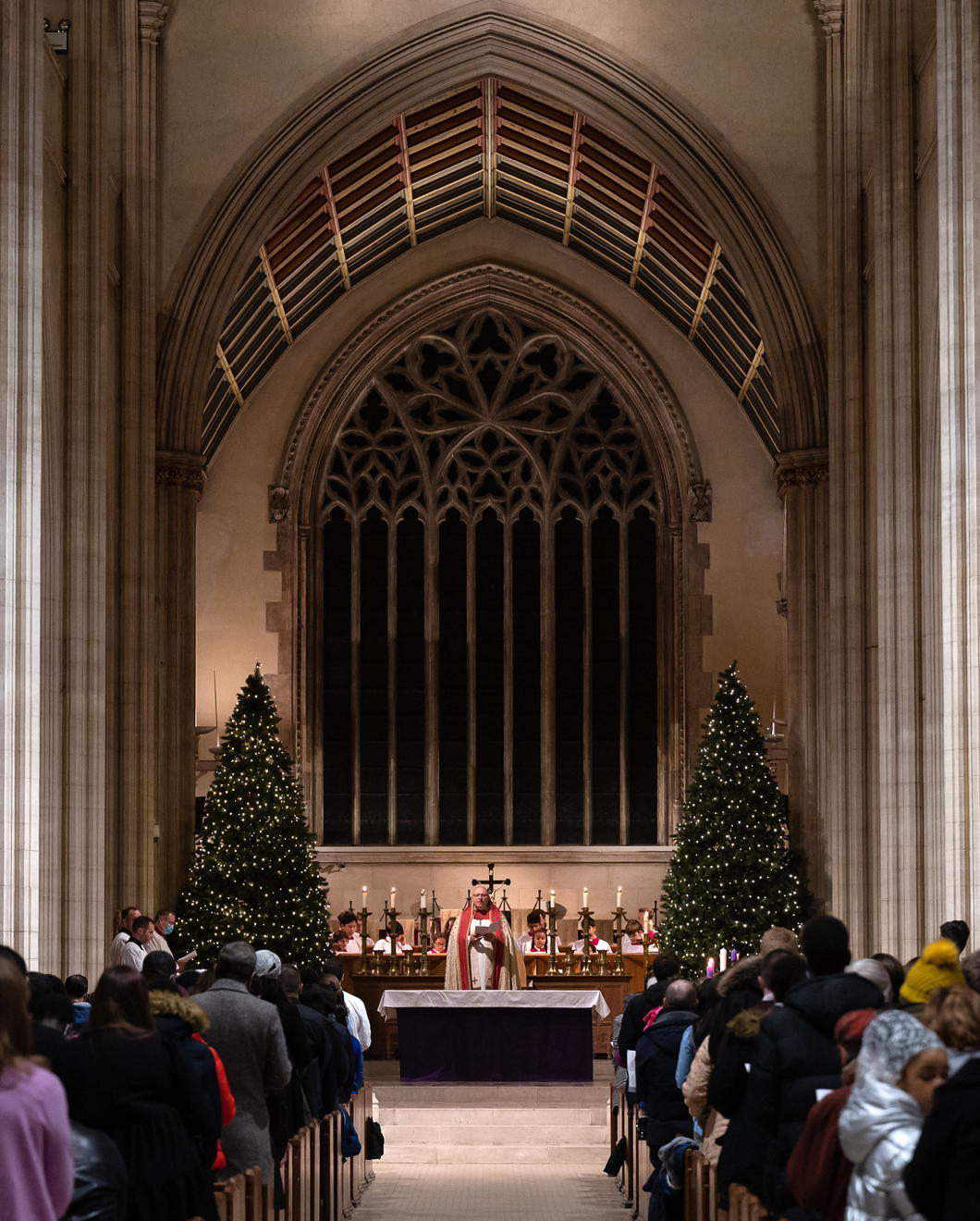
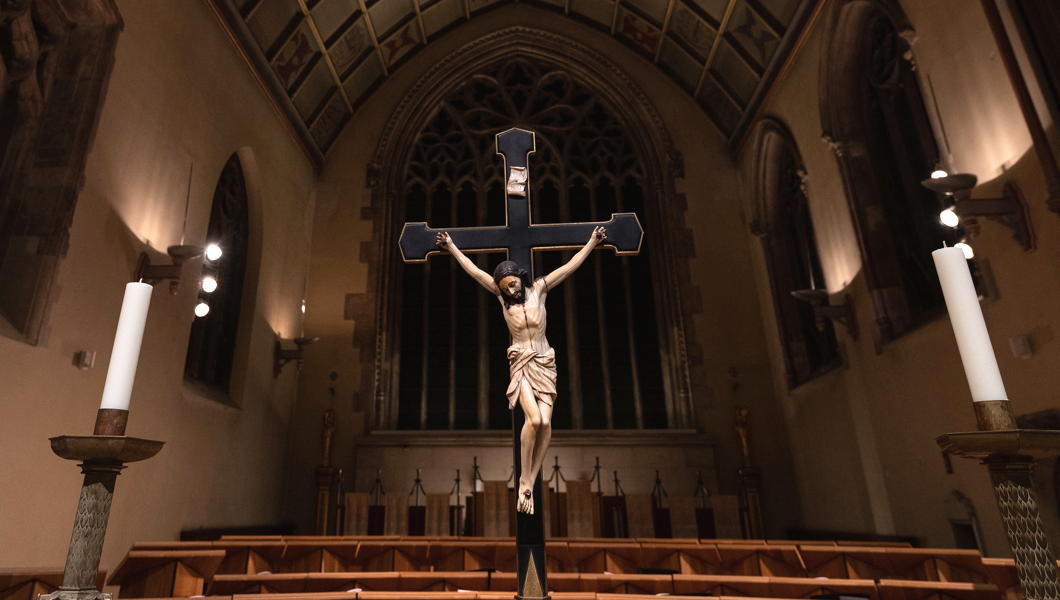
Luckily the crucifix and “big six” candlesticks from the 1958 re-consecration were found hidden away. Last month they were restored atop a short retable behind the cathedra and this small change has helped immensely in providing a more prayerful atmosphere and a stronger visual focus to the cathedral.
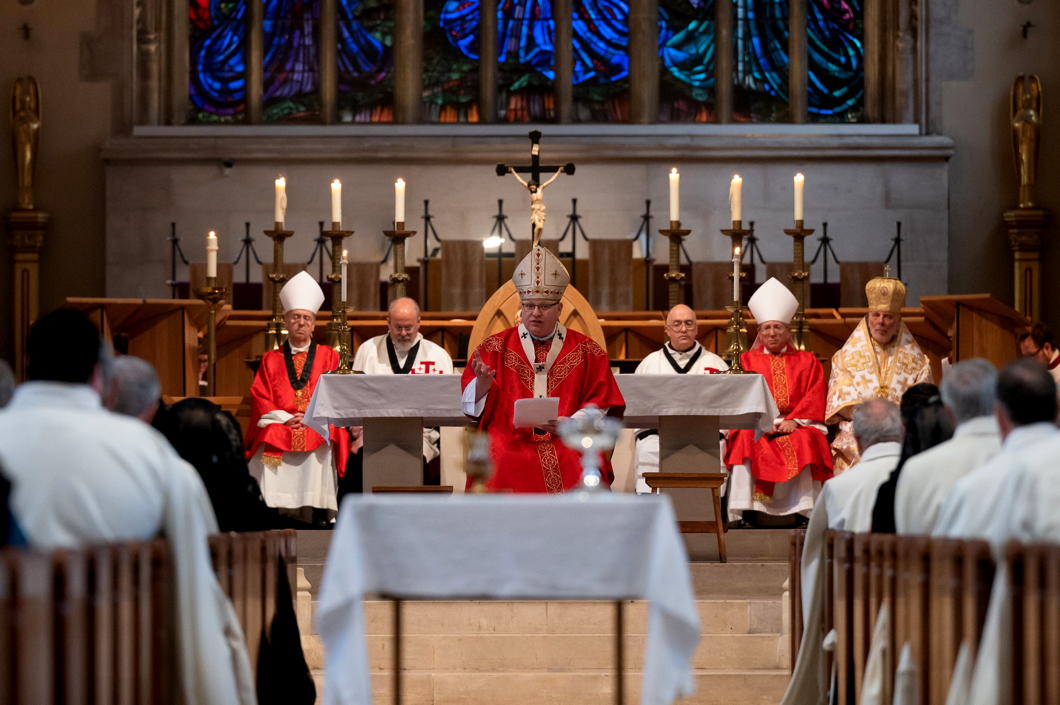
The photos above and below are from the Cathedral’s Advent Carol Service.
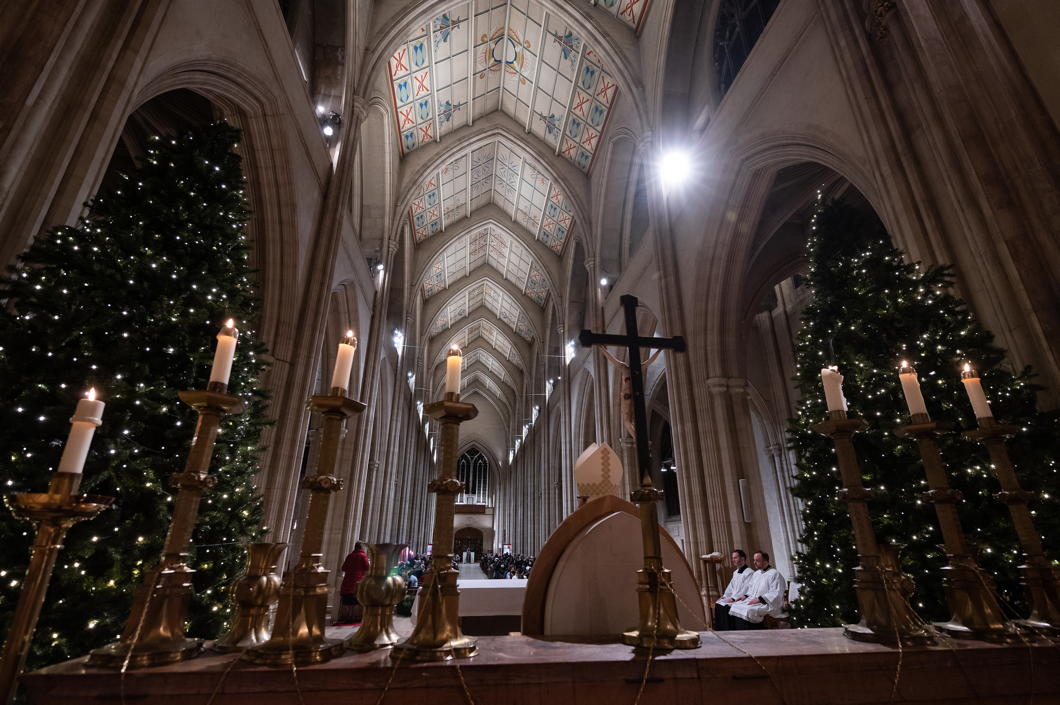
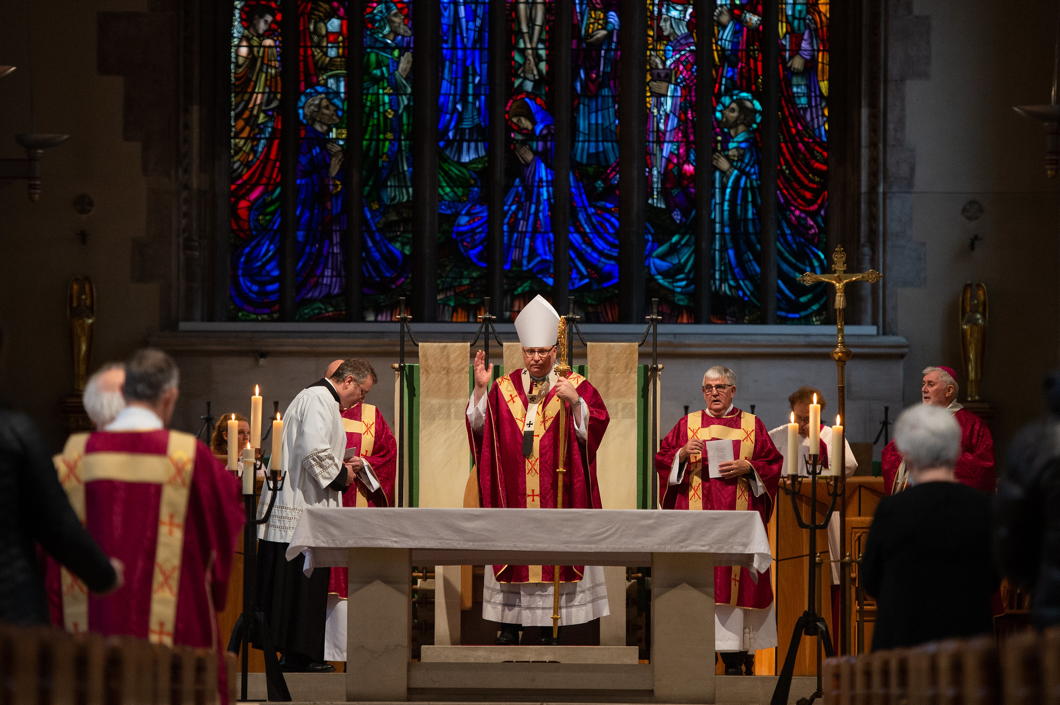
The contrast between before (above) and after (below) is subtle but effective.
Know Your Counties!
A very useful resource: the Wikishire map
While we all still live in the ruins left by the Tyrant Heath when he destroyed local government in this realm, it is always re-assuring to hear of those who perpetuate the old ways of eternal England. Heath created ‘administrative counties’ on top of the traditional counties, and these new counties ran riot over ancient boundaries.
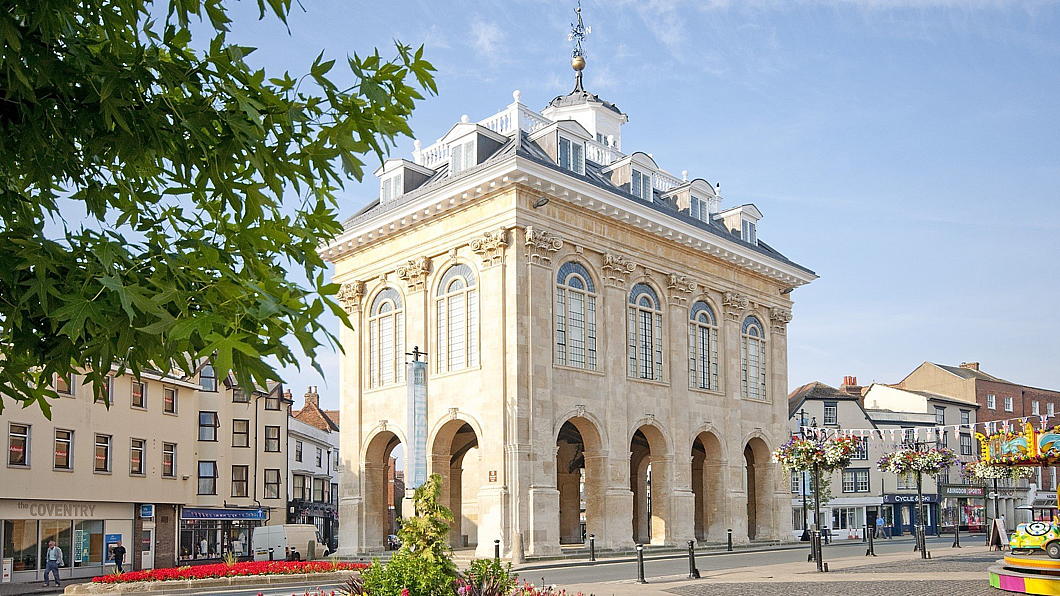
For example, Abingdon, which is the county town of Berkshire, now finds itself confusingly administered by Oxfordshire County Council. Worse, many newly arrived emigrants from London and other parts know no better and refer to Abingdon as being ‘in’ Oxfordshire rather than merely being administered by it.
Berkshire’s beautiful baroque County Hall now sits empty and unused, frozen in formaldehyde and reduced to the status of a mere museum rather than a living, breathing thing.
Contrary to the belief of some, traditional counties have never been abolished and they are even perfectly valid for postal addresses. Many, when doing their annual round of Christmas cards, prefer to include the traditional county when addressing envelopes.
If you are unsure of what county your addressee lives in, there is now a very useful resource from a website called Wikishire: a Google map of all the traditional counties in the home nations — England, Scotland, Ireland, and Wales.
Simply plug in the post code or town name and it will show you the proper county in which the spot in question is located. A happy marriage of new technology and the old, undying ways!
How to deal with ‘Direct Action’
A lesson from the experienced generation of not so long ago
BRITONS have a habit of being slow to move initially but they do get their act in order sooner or later — and usually in time to prevent disaster. Many in the metrop. have been damned irritated that the police seemed impotent when the fascist death cult “Extinction Rebellion” first reared its ugly head.
“XR” prevented working-class Londoners from getting to work on the Underground and seized bridges to publicise their claim that — despite global agricultural yields being higher than ever before in human history — we are somehow all going to be starving in a few years’ time due to “climate catastrophe”.
Nonetheless, having returned from Guernsey this morning, I find the streets of London pleasantly filled with the flying squads of the Metropolitan Police. The boys in blue are moving about in rapid response units, ready to deploy immediately whenever and wherever the Extincto-Nazis rear their ugly heads, thus keeping the streets open to all comers (bar those with nefarious designs of un-civic disorder).
“XR” are not the first to threaten (nor to deliver) “direct action”, but I was heartened when a friend shared this splendid example of how to deal with irate students allegedly delivered by the Warden and Fellows of Wadham College, Oxford, in 1968:
Dear Gentlemen,
We note your threat to take what you call ‘direct action’ unless your demands are immediately met.
We feel it is only sporting to remind you that our governing body includes three experts in chemical warfare, two ex-commandos skilled with dynamite and torturing prisoners, four qualified marksmen in both small arms and rifles, two ex-artillerymen, one holder of the Victoria Cross, four karate experts and a chaplain.
The governing body has authorized me to tell you that we look forward with confidence to what you call a ‘confrontation,’ and I may say, with anticipation.
This was less than a quarter-century after the victory of the Second World War, so Wadham could call upon an experienced gang to fill the ranks of its fellowship in those days.
I suppose Maurice Bowra was Warden of Wadham at this time. While a renowned buggerer, he did manage to die with a knighthood, a CH, and the Pour le Mérite (civil class) — which is not a bad innings all things considered.
Articles of Note: 15.I.2021
• Autumn and winter are a time for ghouls and ghosts and eery tales. At Boodle’s for dinner two or three years ago I sat next to the wife of a friend and exchanged favourite writers. I gave her the ‘Transylvanian Tolstoy’ Miklos Banffy, in exchange for which she introduced me to the English writer M.R. James — whose work I’ve immensely enjoyed diving into. The inestimable Niall Gooch writes about Christmas, Ghosts, and M.R. James, as well as pointing to Aris Roussinos on how Britons’ love for ghostly tales is a sign of (little-c) conservatism.
• There can be few figures in English history more ridiculous than Sir Oswald Mosley. But the Conservative MP who became a Labour government minister and then British fascist führer-in-waiting was also forceful in his condemnation of the savagery unleashed by the Black-and-Tans. In 1952 a local newspaper in Ireland announced that Sir Oswald and Lady Mosley “charmed with Ireland, its people, the tempo of its life, and its scenery” had taken up residence at Clonfert Palace in Co. Galway. “Sir Oswald,” the paper noted with amazing restraint, “was the former leader of a political movement in England.” Maurice Walsh presents us with the history of Mosley in Ireland.
• The death of the late Lord Sacks, Britain’s former Chief Rabbi, was the subject of much lament. Rabbi Sacks was obviously no Catholic, but his intellect, frankness, and generosity were much appreciated by Christians. Sohrab Ahmari, one of the editors at New York’s most ancient and venerable daily newspaper, offers a Catholic tribute to Jonathan Sacks.
• “Education, Education, Education” has become a mantra in the past quarter-century and while there is a point there’s also a certain error of mistaking the means to an end for the end itself. After all, in the 1930s Germany was the most and highest educated country in the world. At Tablet, probably America’s best Jewish magazine, Ashley K. Fernandes explores why so many doctors became Nazis.
• Fifty years ago the great people of the state of New York rejected both the Republican incumbent and a Democratic challenger to elect the third-party Conservative candidate James Buckley as the Empire State’s senator in Washington. At National Review Jack Fowler tells the gleeful story of the unique circumstances that brought about this victory for Knickerbocker Toryism and how Mr Buckley went to the Senate.
The Galloway Cross
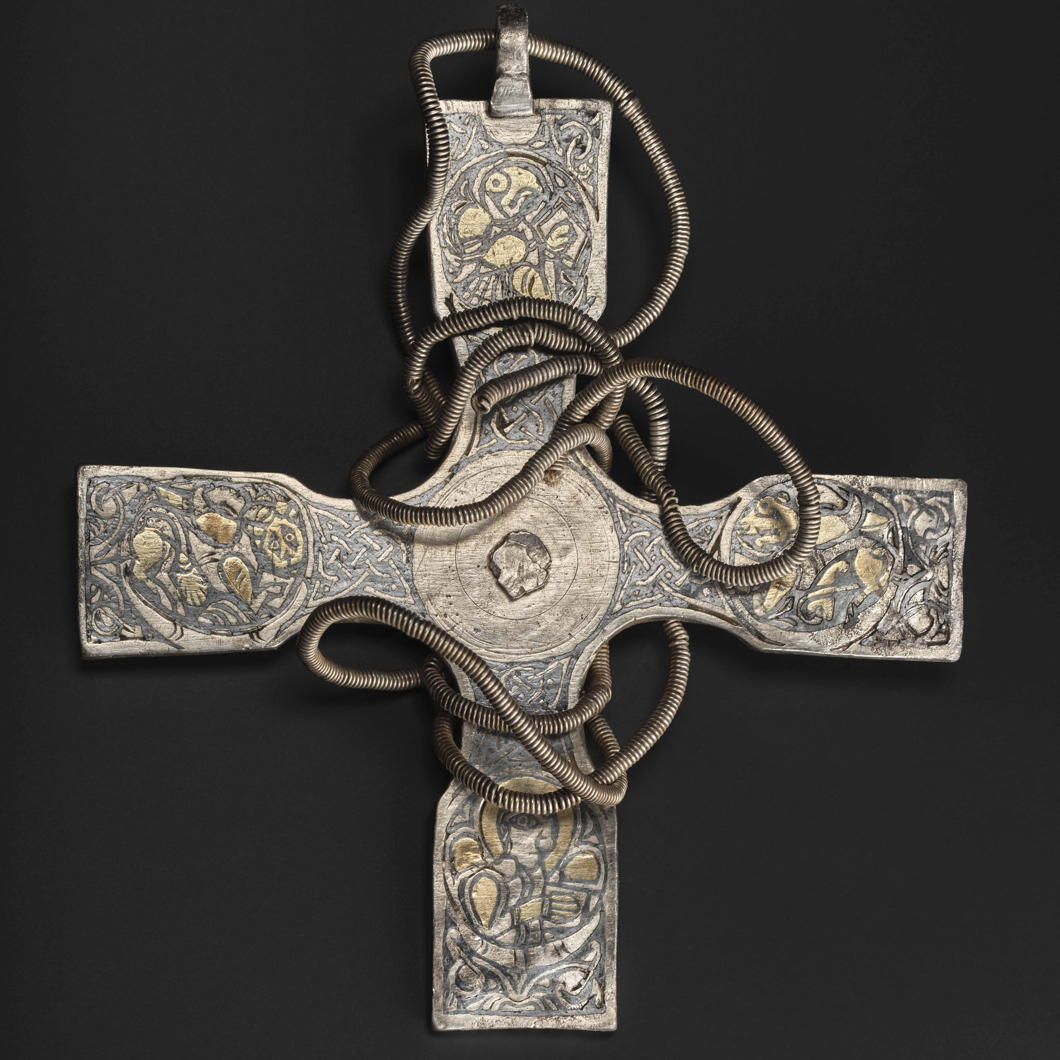
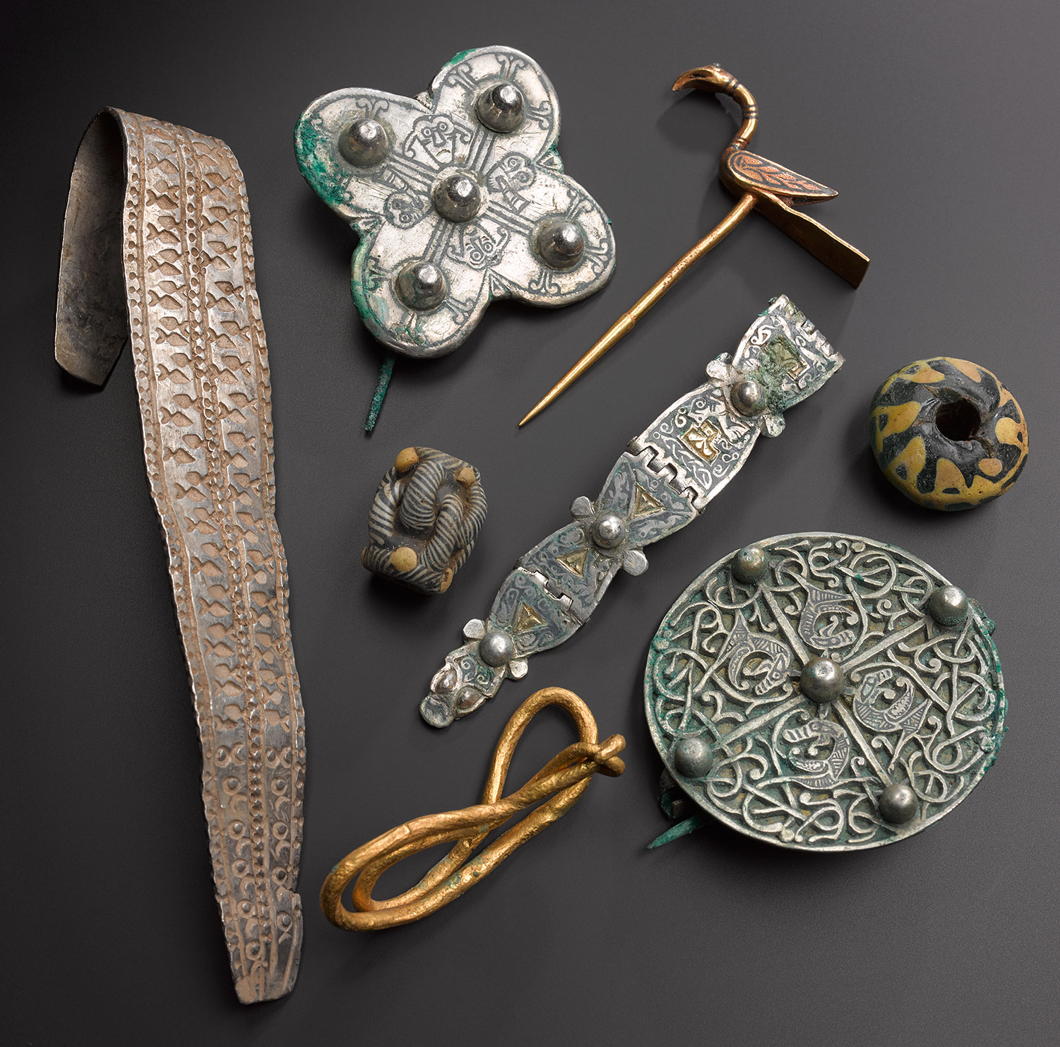
What could be better than a hoard — and a Kircudbrightshire hoard at that? Sometime during the tenth century, a gentleman decided to deposit an interesting array of objects in Galloway only for them to be rediscovered by a metal detectorist in 2014.
Thus have come to us the Galloway Hoard, a collection of objects the most important of which is this pectoral cross made of silver and decorated with symbols of the four evangelists: the eagle of John, the ox of Luke, the angel of Matthew, and the lion of Mark.
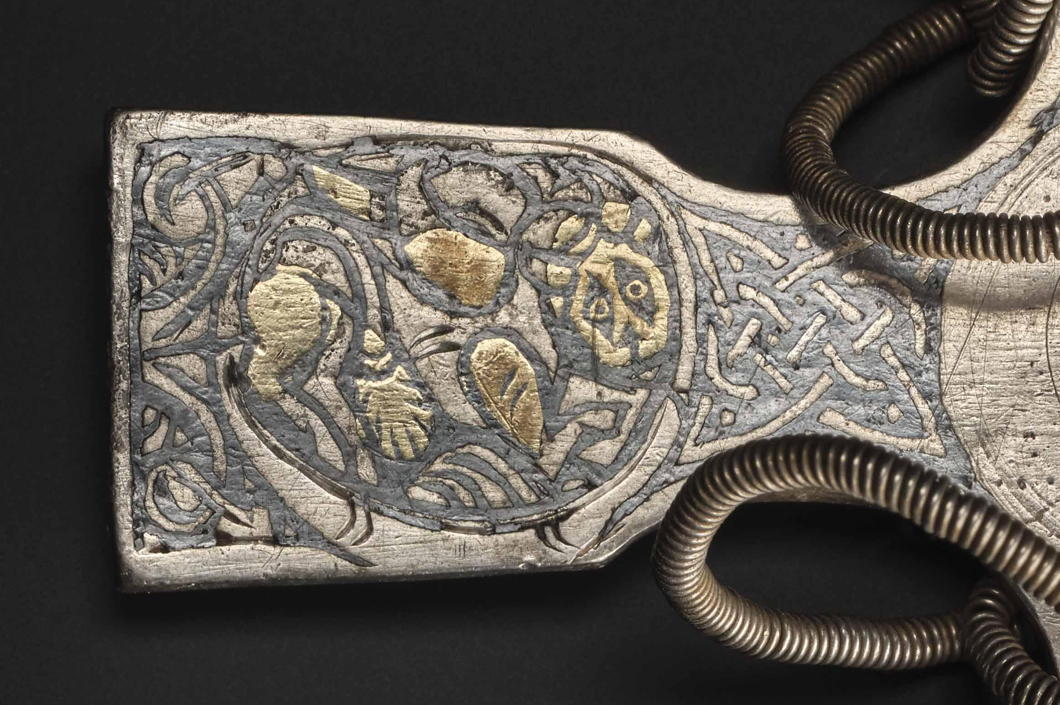
As the hoard was buried when Kircudbrightshire was part of Northumbria — before the area became Scottish — the art has been identified as Anglo-Saxon from the age of the Vikings. My theory is an expert thief was at work, nicking precious objects from hapless victims — an armband gives the name of one poor Egbert in runes.
“The pectoral cross, with its subtle decoration of evangelist symbols and foliage, glittering gold and black inlays, and its delicately coiled chain, is an outstanding example of the Anglo-Saxon goldsmith’s art,” Dr Leslie Webster, an expert, said. “It was made in Northumbria in the later ninth century for a high-ranking cleric, as the distinctive form of the cross suggests.”
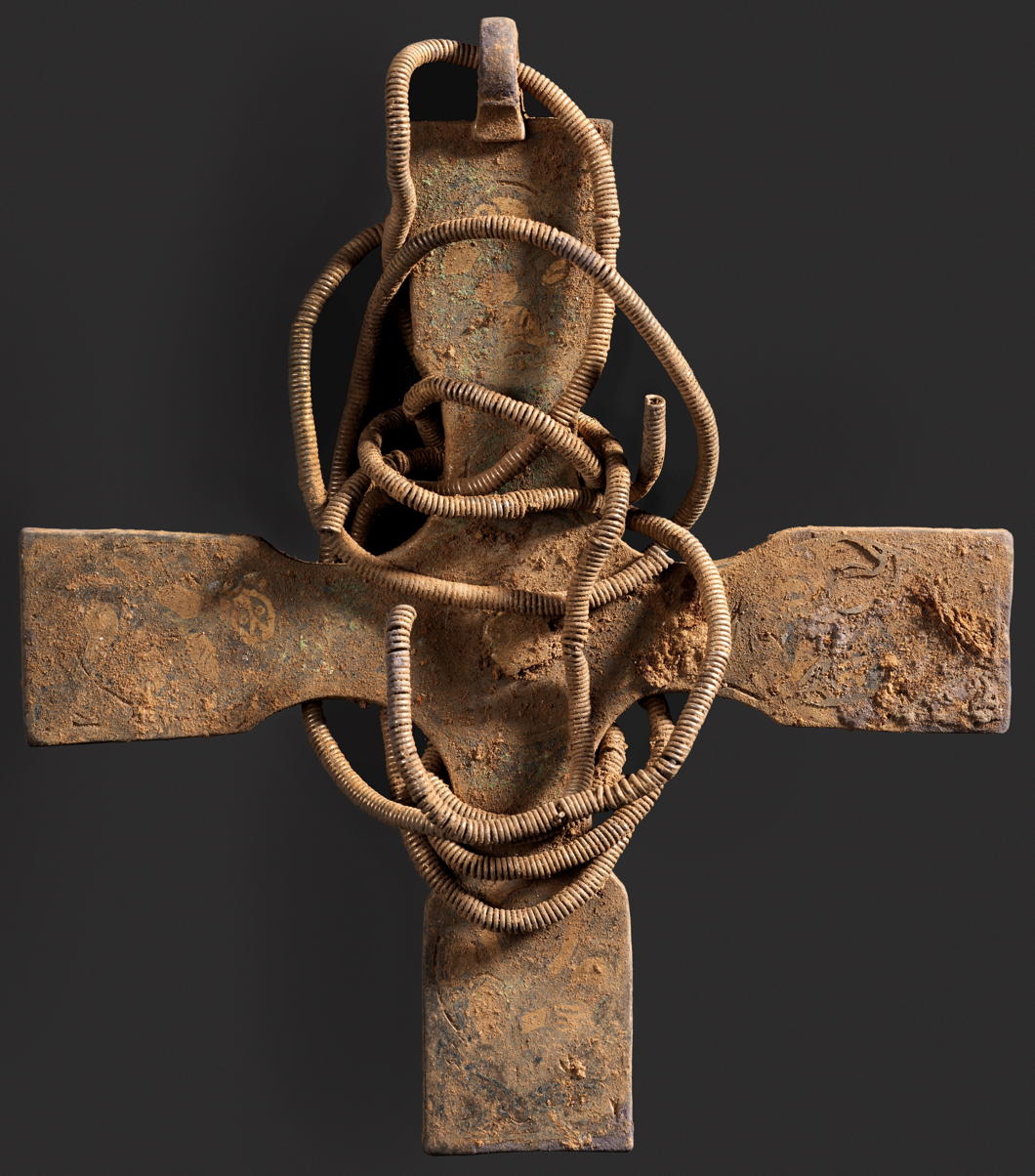
The Galloway Cross, before cleaning and conservation
All treasure found in Scotland must be reported to the Queen’s and Lord Treasurer’s Remembrancer who in 2017 determined the hoard’s value at £1.8 million. Scots law allows the discoverer to keep the full value of the hoard if there is no owner, though as it was found on glebelands belonging to the Church of Scotland that body’s General Trustees demanded a cut as well.
The objects themselves have found a home in the National Museum of Scotland who will be exhibiting them from February until May when they will go on tour to Aberdeen and Dundee.
F.X. Velarde: Forgotten & Found
Many of the architects of the “other modern” in architecture were forgotten or at least neglected once the craft moved in a more avant-garde direction.
The British Expressionist architect F.X. Velarde who produced a number of Catholic churches in and around Liverpool in the interwar period and beyond is the subject of a new book from Dominic Wilkinson and Andrew Crompton.
There will be a free online lecture tomorrow on ‘The Churches of F. X. Velarde’ given by Mr Wilkinson, Principal Lecturer in Architecture Liverpool John Moores University. Further details are available here.
The book is available from Liverpool University Press with a 25% discount through the Twentieth Century Society. (more…)
Wardour
The news from the West Country is that Jasper Conran OBE is selling up his place in Wiltshire, the principal apartment at Wardour Castle.
Wardour is one of the finest country houses in Britain, designed by James Paine with additions by Quarenghi of St Petersburg fame. It was built by the Arundells, a Cornish family of Norman origin, but after the death of the 16th and last Lord Arundell of Wardour the building was leased out and in 1961 became the home of Cranborne Chase School.
A friend who had the privilege of being educated there confirms that Conran’s assertion of Cranborne Chase being “a school akin to St Trinian’s” was correct, and tells wonderful stories of the girls’ misbehaviour.
Alas the modern world does not long suffer the existence of such pockets of resistance, and the school shut in 1990. The whole place was sold for under a million to a developer who turned it into a series of apartments, for the most part rather sensitively done, if a bit minimalist.
The real gem of Wardour, however, is the magnificent Catholic chapel which is owned by a separate trust and has been kept open as a place of worship. Richard Talbot (Lord Talbot of Malahide) chairs the trust and takes a keen interest in the chapel and the building. I was down there the Sunday the chapel re-opened for public worship after the lockdown and Richard was there making sure all was well.
Those interested in helping preserve this chapel for future generations can join the Friends of Wardour Chapel.
Corpus Christi
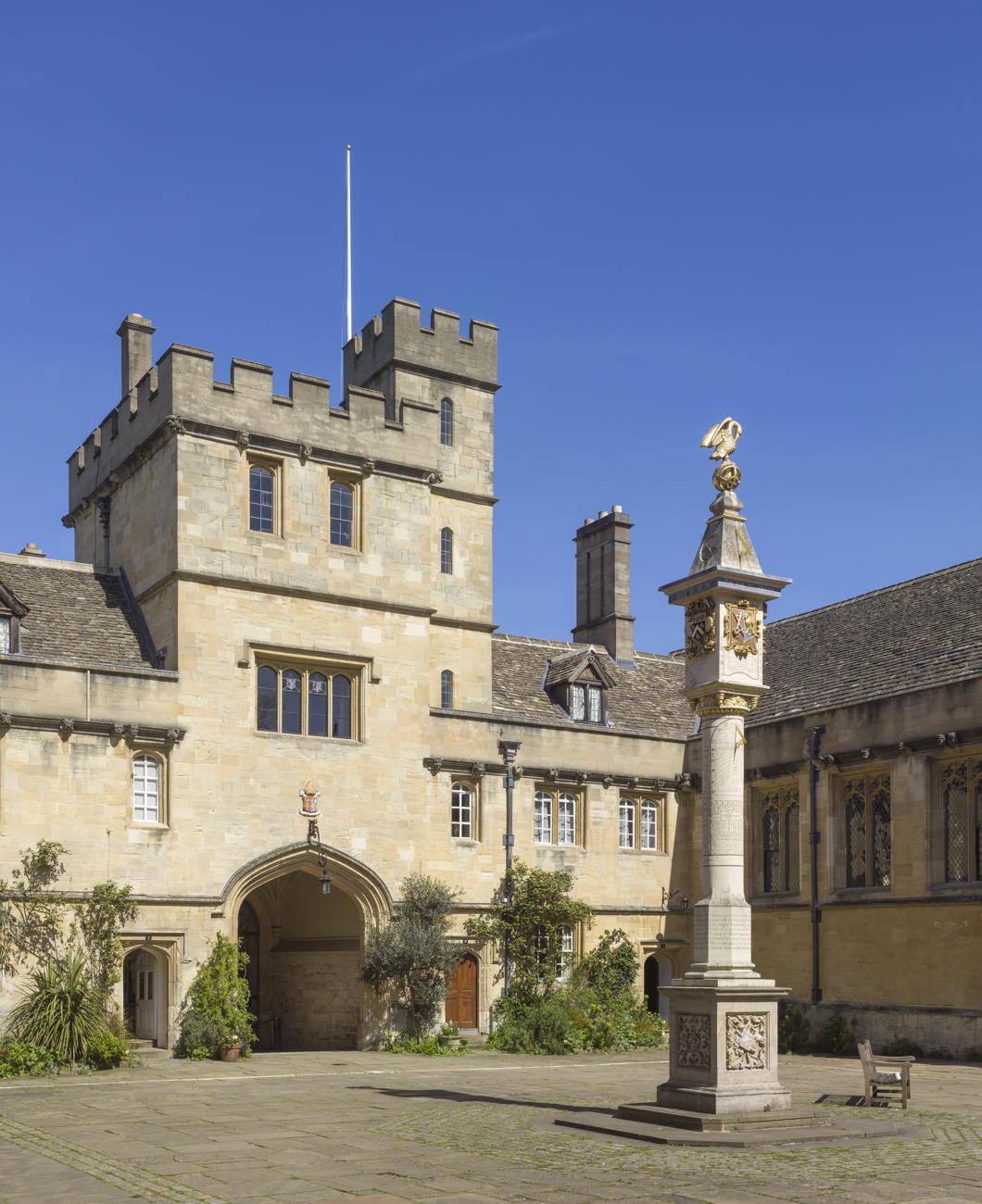
It seems silly to let today’s feast pass without mentioning Corpus Christi College at the University of Oxford. It’s one of the smaller colleges, with about 250 undergraduates and a hundred or so postgraduates studying in its charming quadrangles.
Founded in 1517, Erasmus hailed its library as inter praecipua decora Britanniae, “among the chief ornaments of Britain”, and Cardinal Pole — the last legitimate Archbishop of Canterbury — was a founding fellow.
More recently, John Keble became an undergraduate there in 1806, before accepting a fellowship at Oriel in 1811, and having Keble College founded and named after him a few years after his death in 1866.
Architecturally, Corpus’s most remarkable feature is the Pelican Sundial, which is actually a column dating from 1579 that contains twenty-seven different sundials. It was most recently restored in 2016, and copies exist at Princeton and Pomfret.
The terrace atop the new auditorium affords an excellent view of the former priory of St Frideswide, now used by the Protestants as Christ Church. (more…)
Onze Grootste President
The London Residence of President Martin van Buren
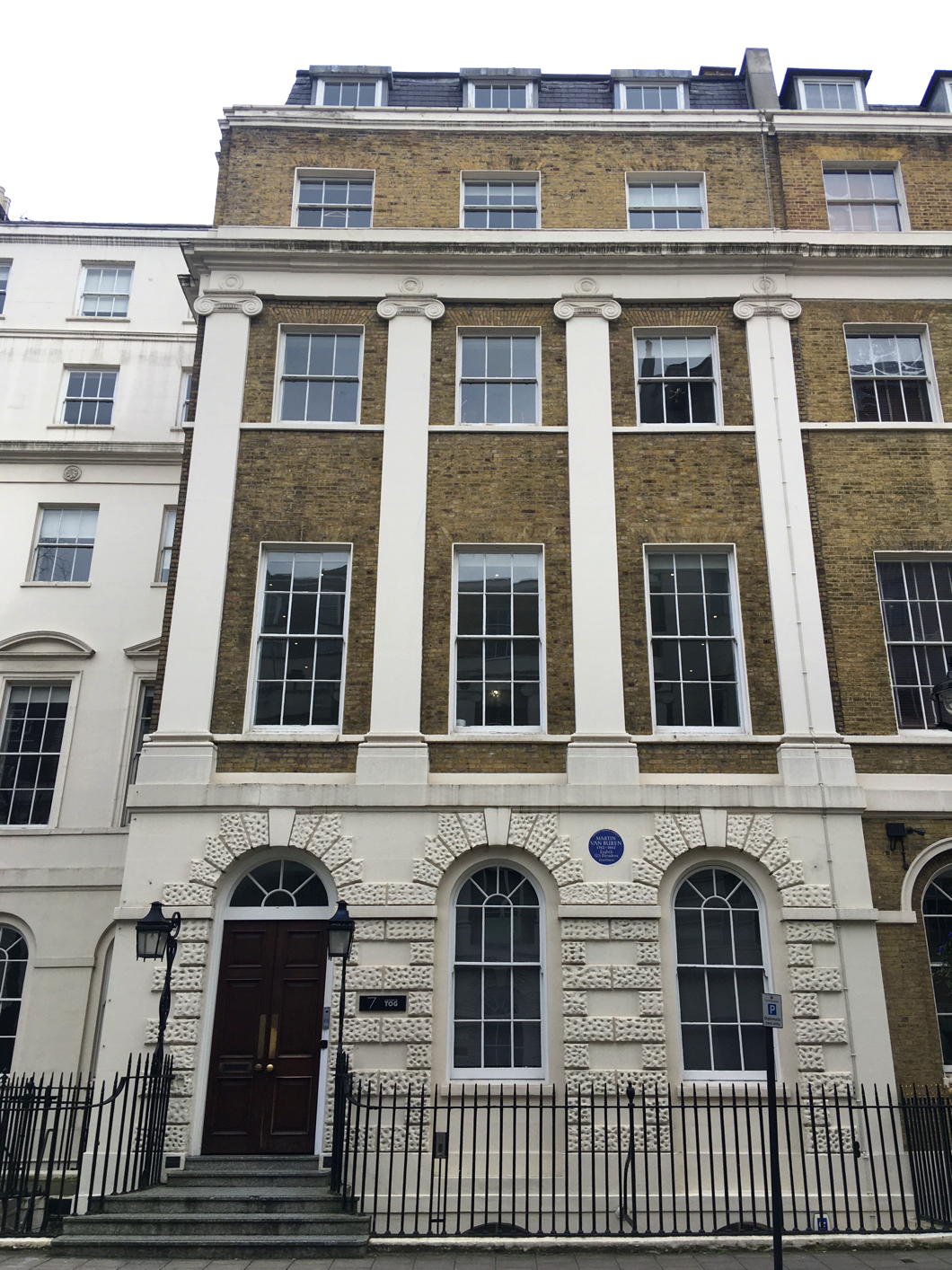
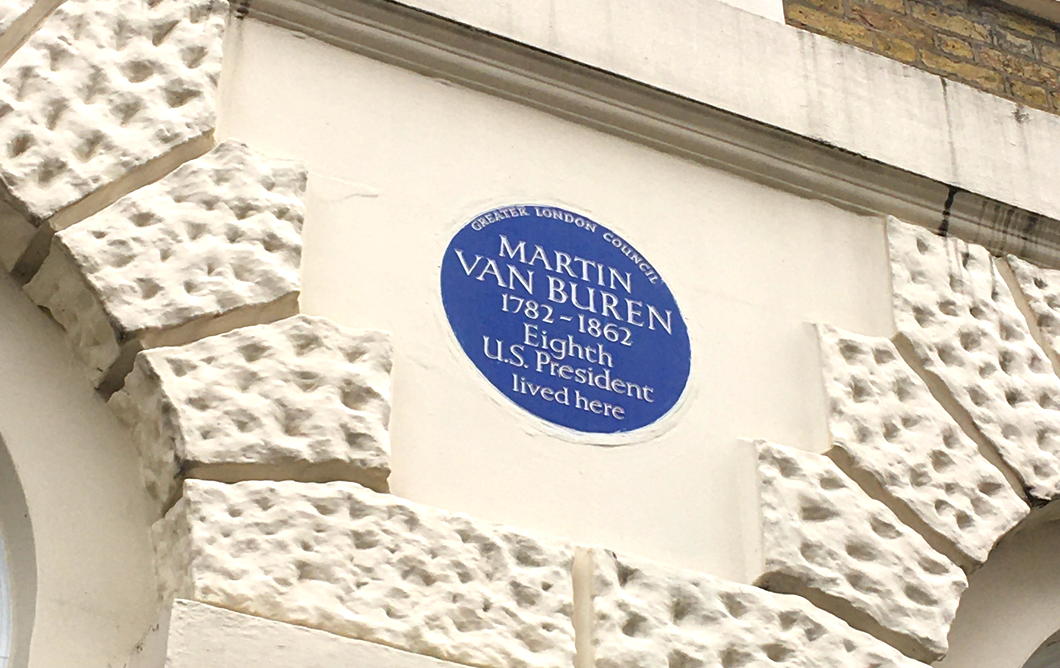
Transacting some business in March before the plague struck us here in London I found myself with a moment to spare and made a brief pilgrimage to No. 7, Stratford Place. It was in this handsome townhouse that Martin van Buren, the first New Yorker to ascend to the chief magistracy of the American Republic, had his residence when he served as the United States’s minister to Great Britain in 1831.
While I often claim that Calvin Coolidge was America’s greatest president in reality my chief devotion in that contest is to the Little Magician himself, the Red Fox of Kinderhook.
Among the many characteristics of this esteemed Knickerbocker is that English was not his native language and throughout his career as a democratically elected politician he spoke with a thick Dutch accent. To his wife, he spoke almost entirely in Dutch.

Jay Cost and Luke Thompson’s Constitutionally Speaking podcast at National Review recently released the first of a two episodes about van Buren and while I’m no fan of podcasts in general this was worth listening to.
One of the factors Cost and Thompson highlight is the utility of the party machine structures of the day in solidifying the practice of America’s democracy and acting as a vehicle of accountability, something too little appreciated by most later observers of the period.
We keen Kinderhookers and Van Buren Boys await the second instalment with anticipation.
Shamefully I have not yet made the pilgrimage to Kinderhook itself, but it’s pleasing to learn that the dominie of the Dutch Reformed Church is a graduate of the greatest university in the southern hemisphere.
Search
Instagram: @andcusack
Click here for my Instagram photos.Most Recent Posts
- West Point July 30, 2026
- Brunel’s Unbuilt Capitol February 3, 2026
- Cricket at Fordham January 27, 2026
- Palacio Barolo Revisted January 14, 2026
- Learning to Love Liguria January 14, 2026
Most Recent Comments
Book Wishlist
Monthly Archives
Categories