Quebec
About Andrew Cusack
 Writer, web designer, etc.; born in New York; educated in Argentina, Scotland, and South Africa; now based in London.
 read more
News
Blogs
Reviews & Periodicals
Arts & Design
World
France
Mitteleuropa
Knickerbockers
Argentina
The Levant
Africa
Cape of Good Hope
Netherlands
Scandinavia
Québec
India
Muscovy
Germany
Academica
Horseshoe for Quebec’s Salon bleu
Refit will change seating plan in Quebec’s parliament chamber
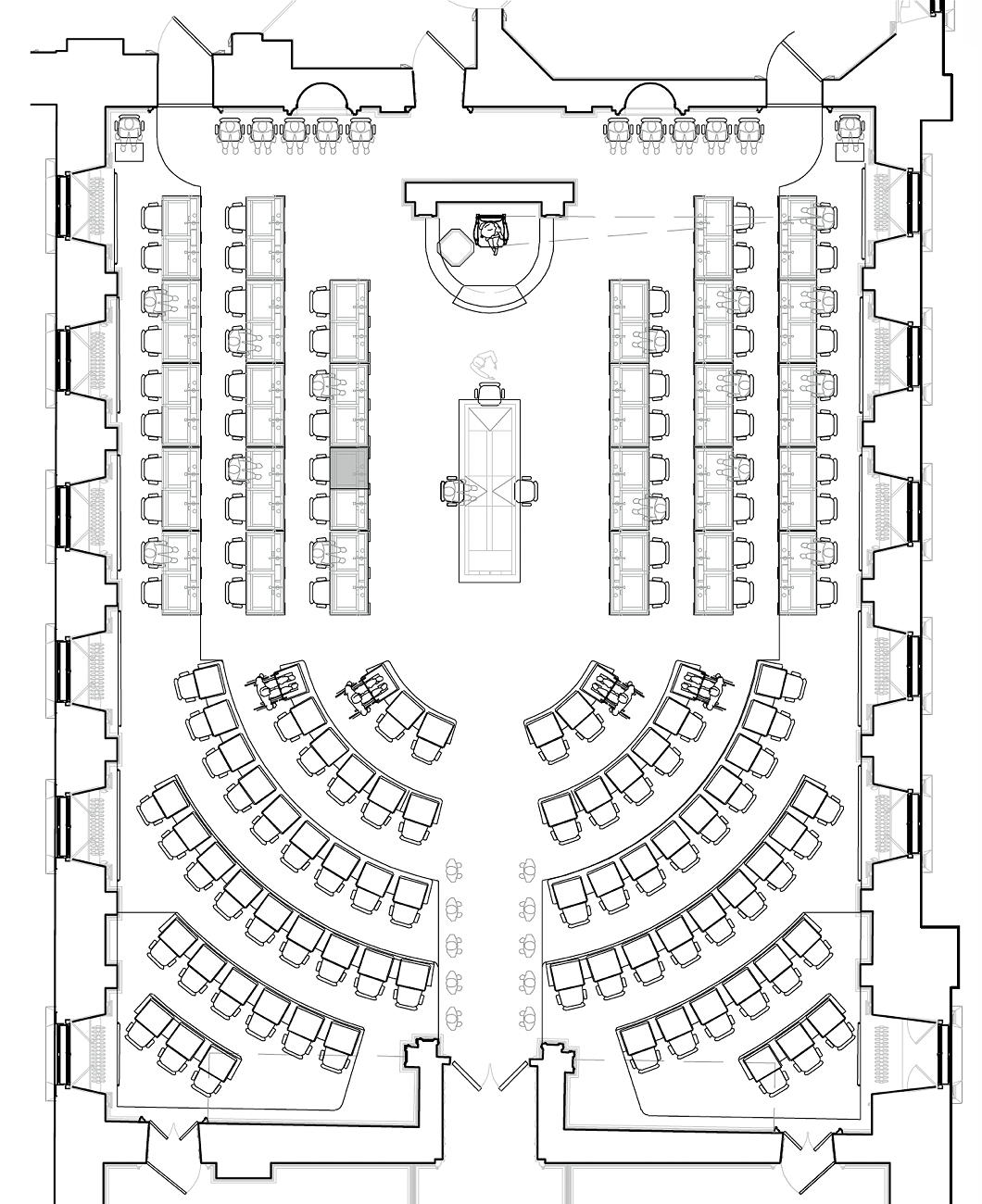
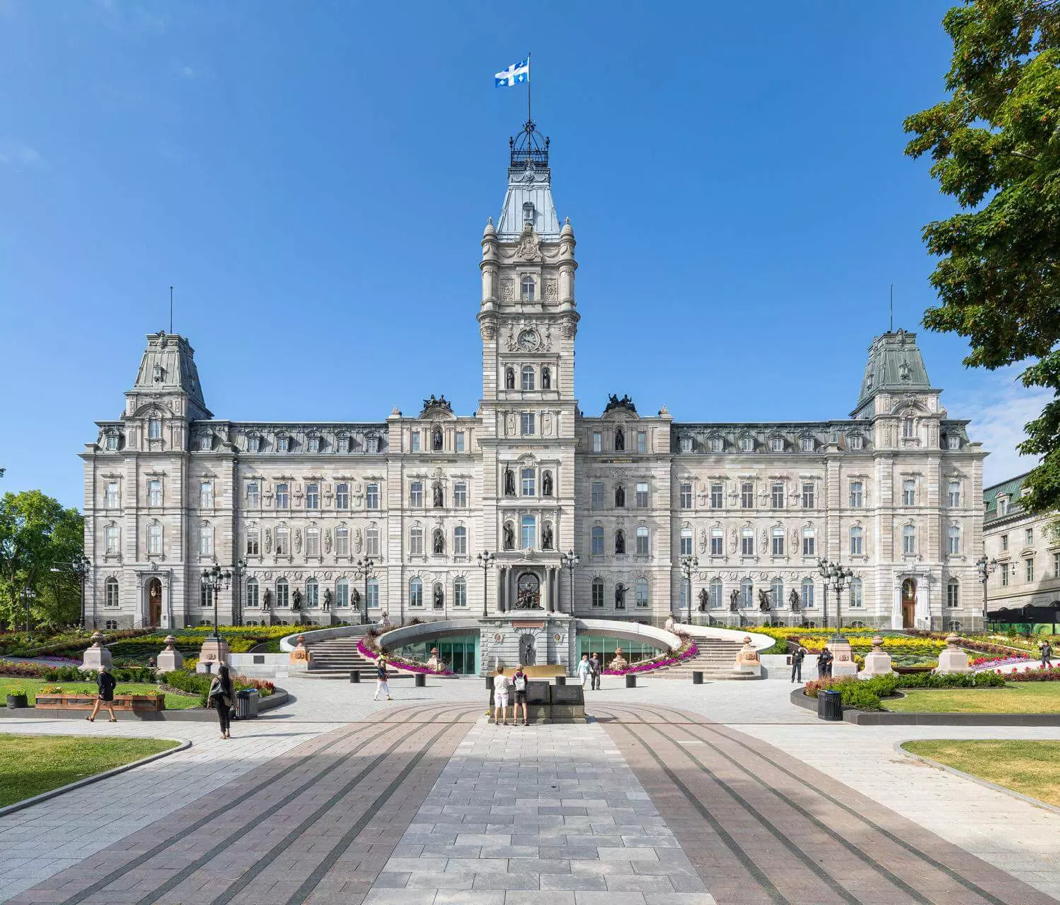
An upcoming renovation to the Hôtel du parlement in Quebec City will also bring a change in the seating plan of the Assembly’s parliamentary chamber. Deputés agreed a moderate alteration to the current Westminster-style seating plan: a horseshoe shape will replace the crowded back two rows of desks with a curved arrangement.
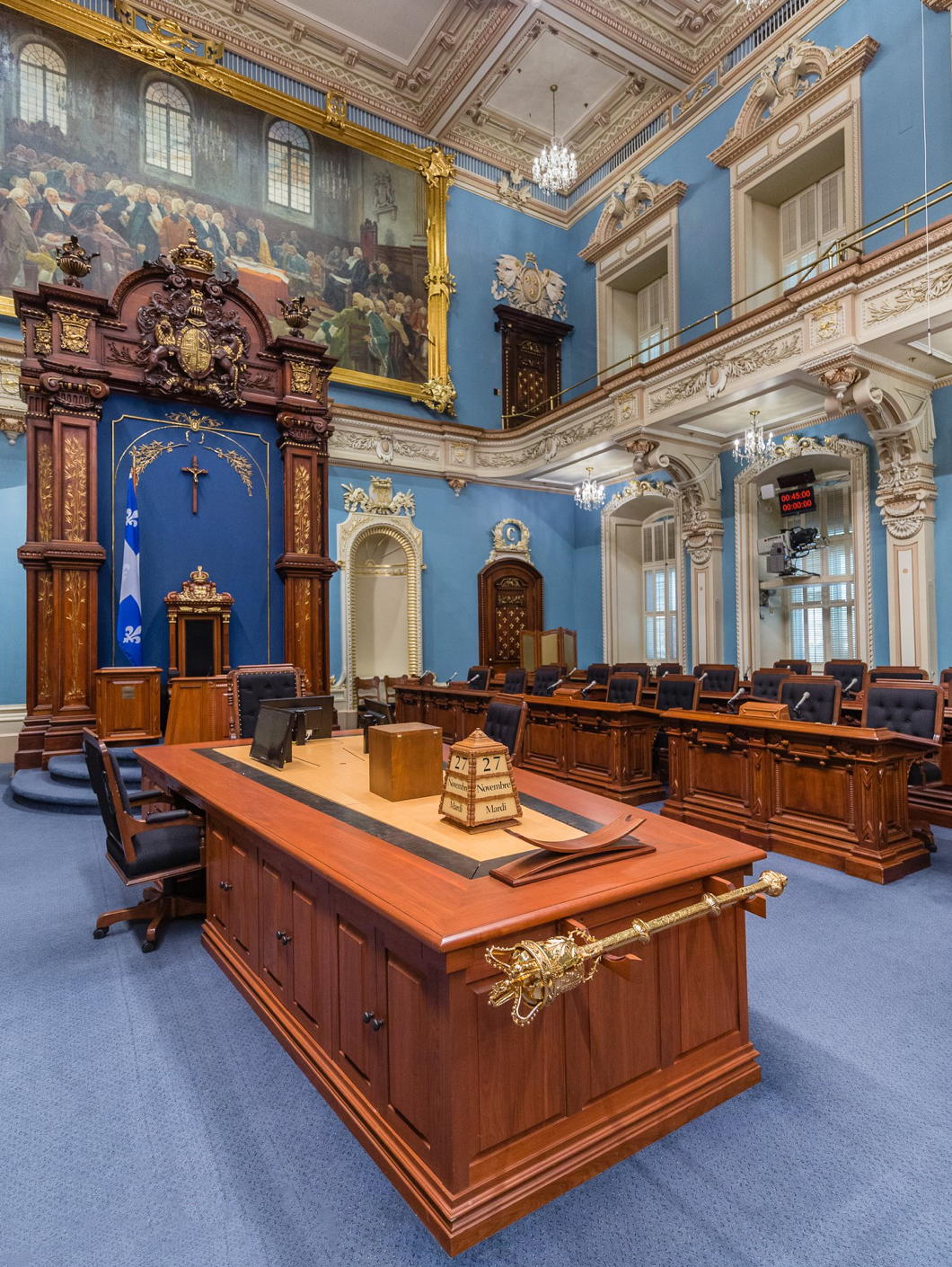
The original clerks’ table designed by the building’s architect, Eugène-Étienne Taché, in 1886 will also be returned to centre-stage in the Salon bleu (formerly the Salon vert) of Quebec’s National Assembly. The room is also, I believe, the only parliamentary chamber to feature in a film by Alfred Hitchcock.
Renovations are scheduled to begin in January of next year, when deputés will start convening in the Salon rouge that formerly housed Quebec’s Legislative Council, abolished in 1968. (Quebec was the last Canadian province to abolish the upper house of its parliament.)
“The Salon bleu has a strong symbolic value for the Quebec nation,” claims Éric Montigny, professor of political science at Laval University (founded 1663).
“We must respect this tradition and evolve in a very, very gradual manner,” Professor Montigny told the Journal de Québec. “A parliament is not trivial.”
The Assembly numbered only sixty-five members when Taché’s edifice was completed in 1886, while today 125 deputés have to fit into the parliamentary chamber.
The new arrangement would make room for as many as 130 legislators, plus the Président in the speaker’s chair. It will also allow for a good number of the historic desks in the chamber to be retained.

Other potential arrangements were considered and rejected, including introducing a half-moon hemicycle akin to Paris, Washington, and other republican legislatures.
Prof Montigny dismissed claims that semicircular arrangements lead to more collaborative dialogue and constructive work between government and opposition parties:
“It’s an argument that is raised regularly, but I don’t know of any studies that will support this theory.”
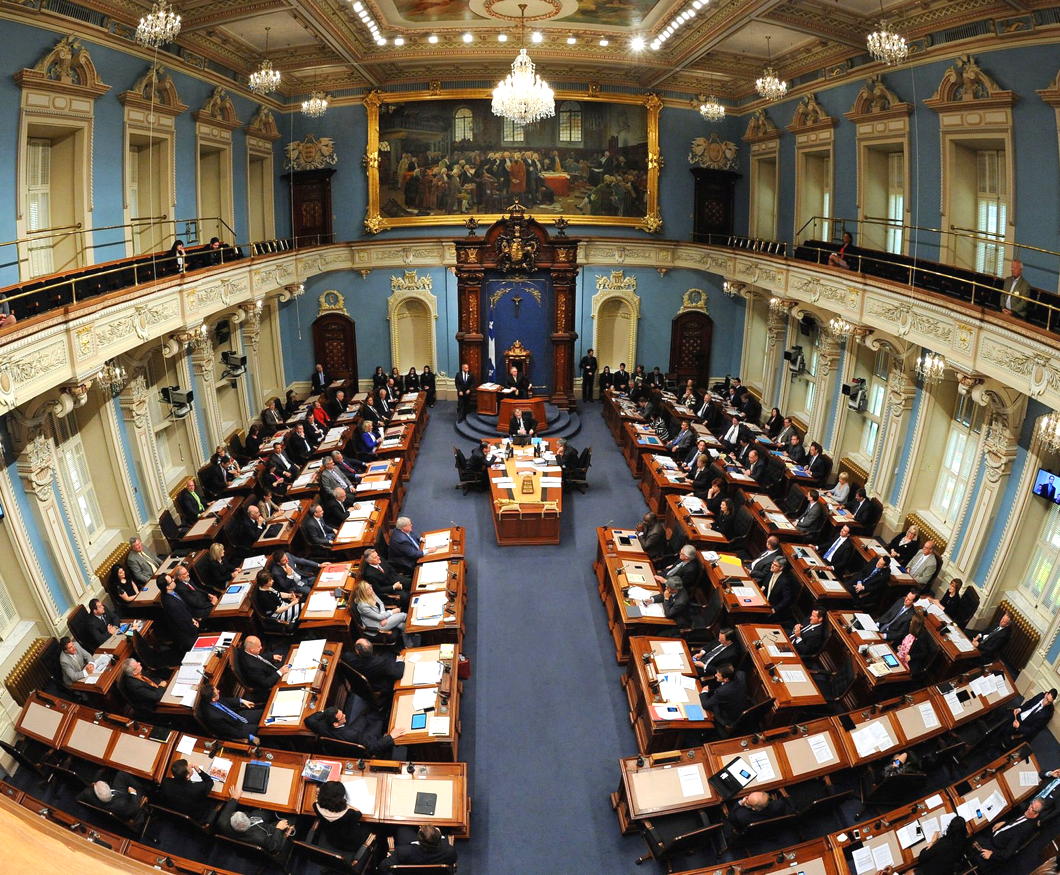
The most significant change to the chamber in recent years was the removal of the crucifix from above the président’s chair, first installed in 1936 by the giant of Quebec politics, premier Maurice Duplessis.
That crucifix, and its 1982 replacement, were removed in 2019 and are now displayed as historical artefacts in an ancillary part of the parliament building.
[NDLR: I wrote about the crucifix back in 2008.]
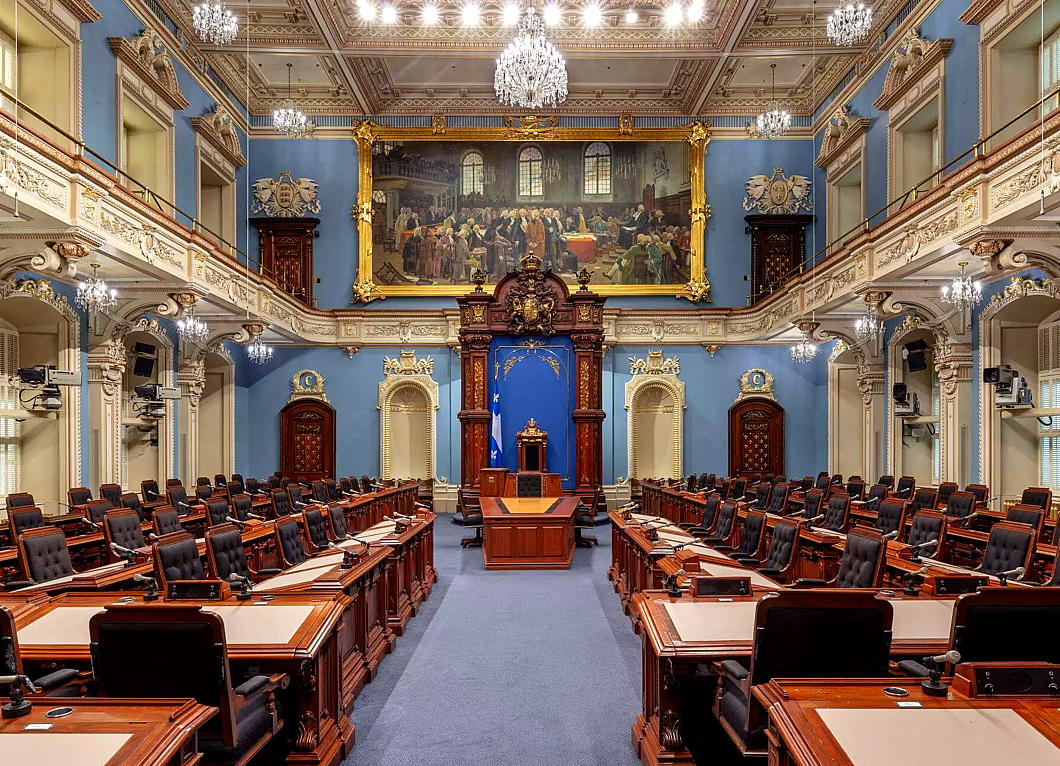
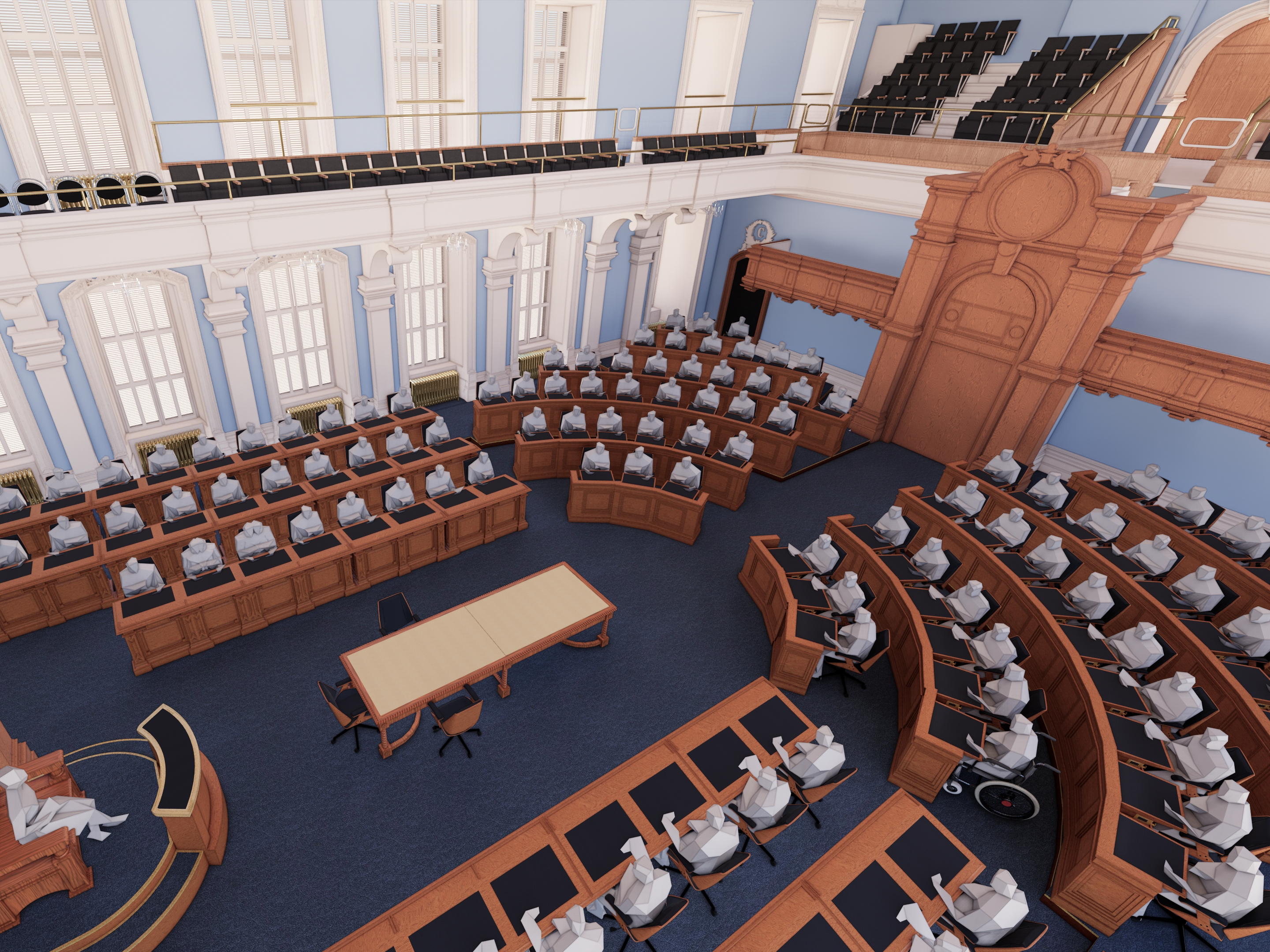
The horseshoe seating plan seems a happy compromise: Westminster-style parliaments — even those that are unicameral like Quebec’s — are honest about the antagonism between government and opposition, and the horseshoe preserves the antiphonal arrangement conducive to this, while rounding it off with a curve at the end.
For my part, I will be happy to see the removal of the arbitrary trapezoid of the modern clerks’ table (below) and its replacement by its historic predecessor.
Buchan in Quebec
While the Salon bleu in Quebec’s parliament used to be green, the Salon rouge has kept its lordly colour. Conservative Quebec was the last of the Canadian provinces to abolish its unelected upper house which faced the chop in 1968, that year so beloved of duty-shirkers and ne’er-do-wells.
Thirty-three years earlier, the Salon rouge was the scene of a more regal ceremony: the official installation of the Scots writer and statesman John Buchan as Governor General of Canada. Being a Presbyterian with an in-built (but in his case only occasional) tendency to dourness, Buchan wanted to go as an ordinary commoner but the King of Canada insisted on a peerage for his viceregal representative in the dominion.
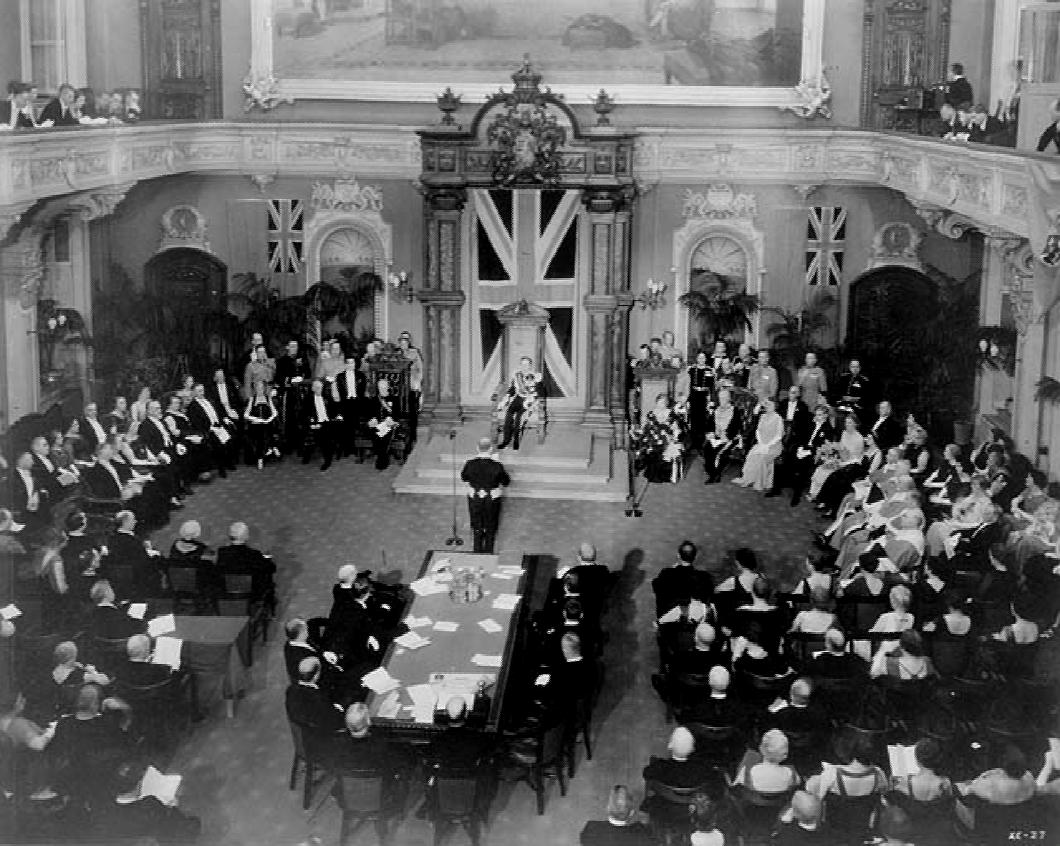
Thus it was Lord Tweedsmuir who arrived in Quebec in 1935 and was installed as Governor General in the Salon rouge on All Souls’ Day of that year. Above, the Prime Minister William Lyon Mackenzie King gives an address after the swearing-in.
Buchan proved an influential Governor General and helped set the tone of Canada’s monarchy in the aftermath of the 1931 Statue of Westminster that recognised the distinct nature of the Commonwealth realms. He also orchestrated the King’s successful 1939 trip across Canada — which also featured the King and Queen holding court in the Salon rouge of Quebec’s Parliament.
By the time of his death in post in 1940, John Buchan had become His Excellency The Right Honourable The Lord Tweedsmuir GCMG GCVO CH PC. Not a bad end to a good innings.
The politics of parliamentary colour
When Quebec’s « Salon bleu » was the « Salon vert »
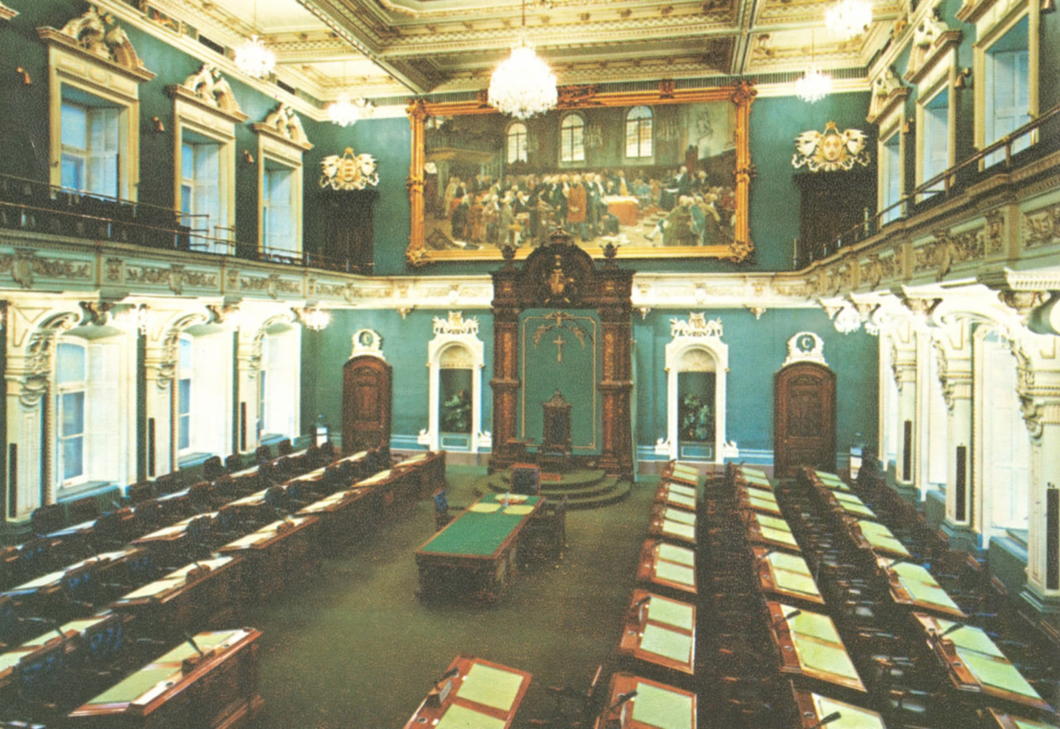
One Westminster tradition replicated in many times and places across the Commonwealth is a convention of colour: the lower house of a parliament is decorated in green, while the upper chamber is decorated in red. This reflects the green benches of the House of Commons and the red ones of the House of Lords.
Officially the plenary chamber of Quebec’s unicameral parliament is boringly the salle de l’Assemblée nationale but because of the colour of its walls it is more often known as the Salon bleu. One’s never surprised when Quebec bucks a trend or (more specifically) rejects an Anglo convention but it turns out the province’s plenary chamber did in fact used to be green until relatively recently.
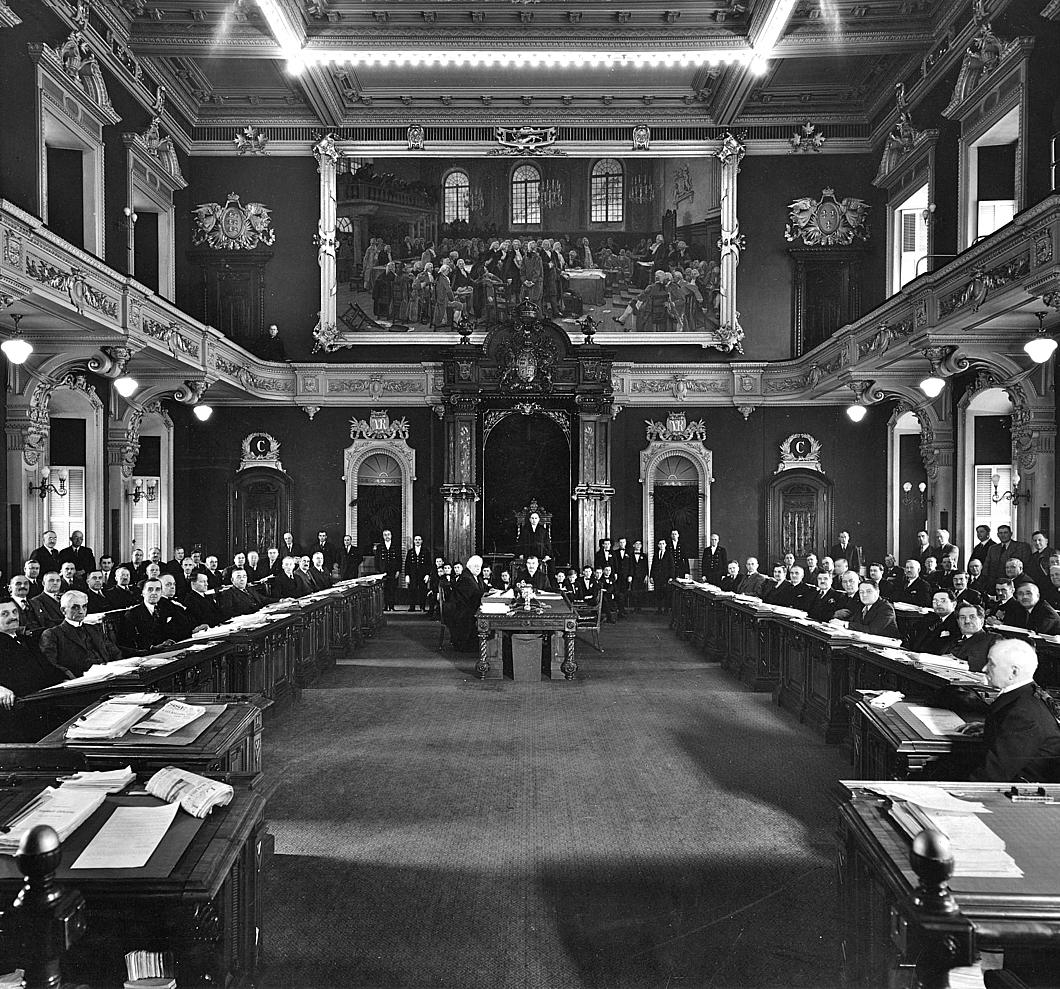
When the members of the Legislative Assembly (as it then was) first convened in the Hôtel du Parlement in 1886 the walls were actually white. By the opening of the 1895 session the desks had been reappointed in green, but Le Soleil still made reference to the room as the “chambre blanche”. It was only in 1901 that the room was painted a “soft green” and the carpets and other furnishings changed accordingly. It even made an appearance in Alfred Hitchcock’s 1953 film “I Confess”.
From then the chamber was a Salon vert until 1978, when the decision was taken to begin broadcasting the proceedings of the Assemblée nationale.
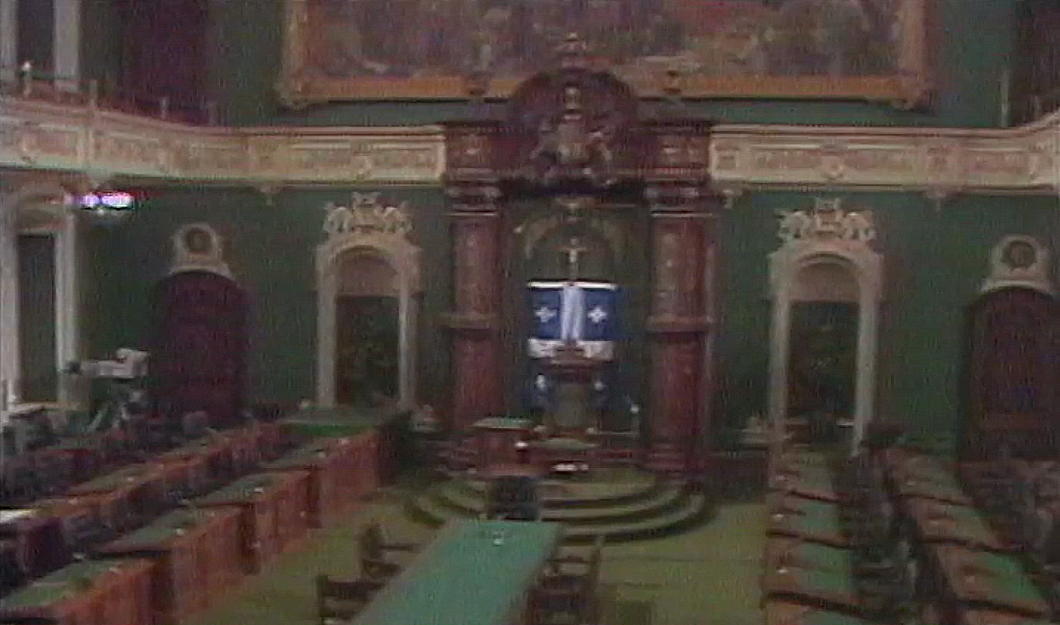
The television specialists complained that the dark green of the chamber was not visually conducive to the TV cameras available at the time and, looking at the evidence from the 1977 test session (above), one can see their point. Walls of either beige or blue were the options recommended in an official report, and unsurprisingly the national colour was chosen.
The historian Gaston Deschênes has mentioned the technical requirements of broadcasting also coincided with a desire to break with a “British” tradition. Certainly the government of the day, René Lévesque’s Parti Québécois, didn’t mind the change, while Maurice Bellemare — “the old lion of Quebec politics” and sometime leader of the old Union nationale — was deeply pleased that the chamber adopted the colour of Quebec’s flag.
So the walls were repainted sky blue and the furnishings changed accordingly, resulting in the Salon bleu we know today (below).
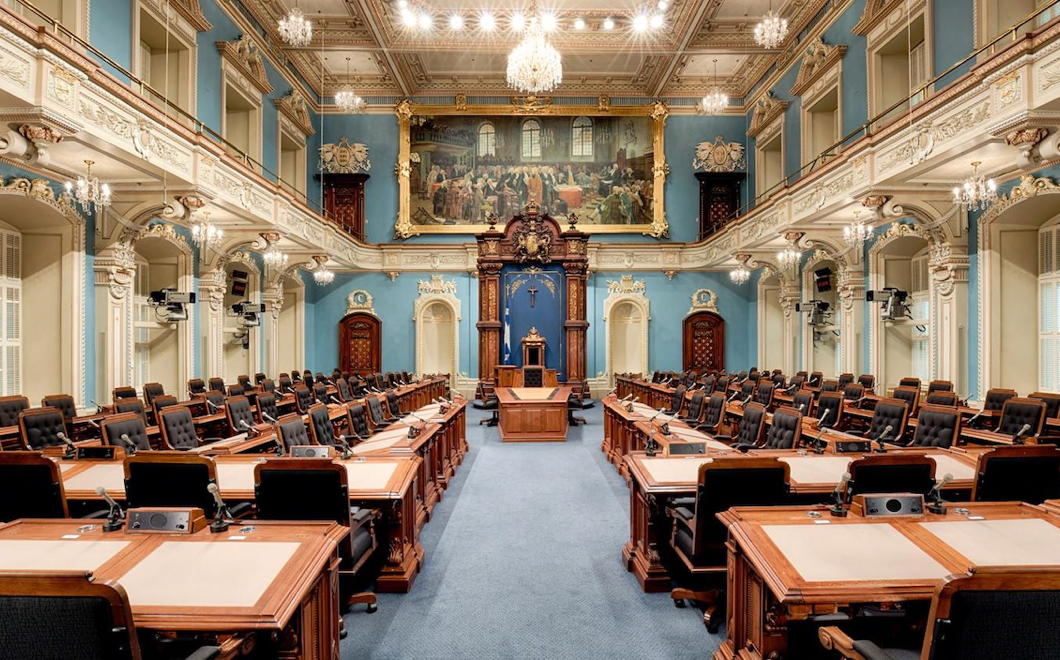
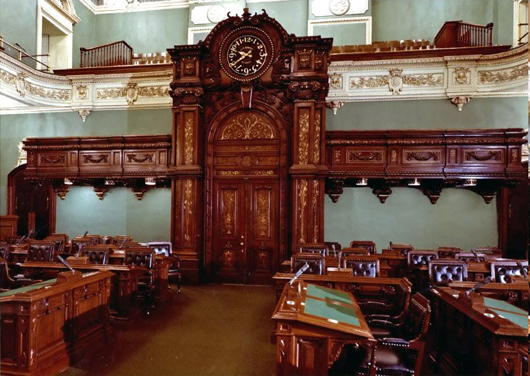
A tweet from the Assemblée’s official account shows two photos looking towards the chamber’s entrance from before (above) and after (below) it was made ready for television.
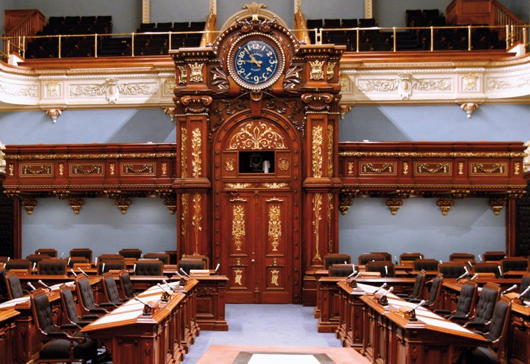
All the same, green is not universal amongst Commonwealth lower (or only) chambers. It’s not even universal in Canada: Manitoba joins Quebec in its azure tones while British Columbia’s is red-dominated.
Quebec was the last of Canada’s provinces to abolish its upper house, the Legislative Council, in 1968 (at the same time the lower house was renamed the National Assembly). The Legislative Council’s former meeting place is, of course, red, and the Salon rouge is used for important occasions like inductions into the Ordre national du Québec or the lying-in-state of the late Jacques Parizeau.
Protestant King in His Catholic Realm
George VI in Quebec
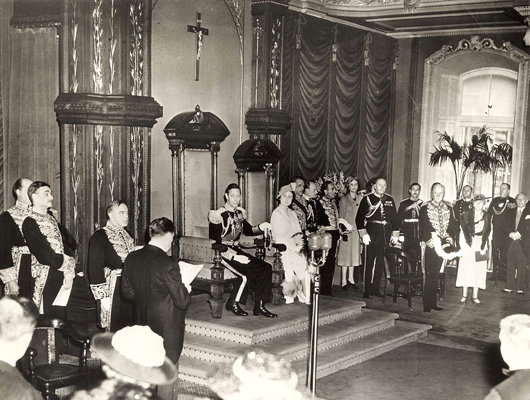
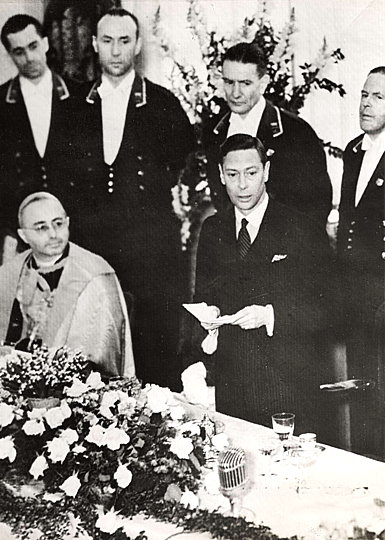
In the midst of some unrelated research the other day, I came across these photos of George VI on his first visit to Quebec as King in 1939. I think the Parlement du Québec is probably the only Commonwealth legislature to have a crucifix in its plenary chamber (c.f. ‘Christ at the heart of Quebec’, 25 May 2008). No, no, of course the Maltese do as well, in their surprisingly ugly parliament chamber. But Malta is now an island republic, while Quebec retains its monarchy.
In the above picture, the King and Queen of Canada hear a loyal address in the Salle du Conseil législatif of the Hôtel du Parlement in the city of Quebec. Below, the King speaks at a state dinner in the Chateau Frontenac. Seated is Cardinal Villeneuve, the Primat du Canada and Archbishop of Quebec.
The UN at Quebec
IN 1943, THE BRITISH, Canadian, and American governments descended upon the city of Quebec, capital of la vieille province, for an intergovernmental conference to plan the invasion of France — surely one of the greatest military tasks ever undertaken in the modern era. The site proved auspicious due to a peculiar combination of factors: Quebec City enjoys a certain European cachet but with both the geographic safety of North America and the more spacious accommodation usual to that continent. The three governments held a second conference there in 1944, and in 1945 the International Labour Organisation met in the city, followed a few months later by the Food & Agriculture Organisation of the nascent United Nations.
With this track record of indisputable experience, the ville de Québec, lead by its mayor Lucien Borne, put in a bid to be the permanent seat of the United Nations Organisation. (more…)
Le drapeau « Jacques Cartier »
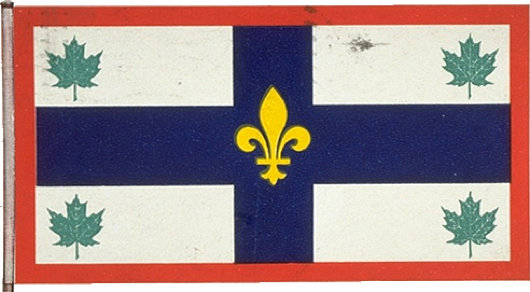
To be filed under ‘Flags I Never Knew Existed’: the Québécois heraldist Maurice Brodeur designed a flag commemorating the French explorer Jacques Cartier, founder of Quebec and Canada.
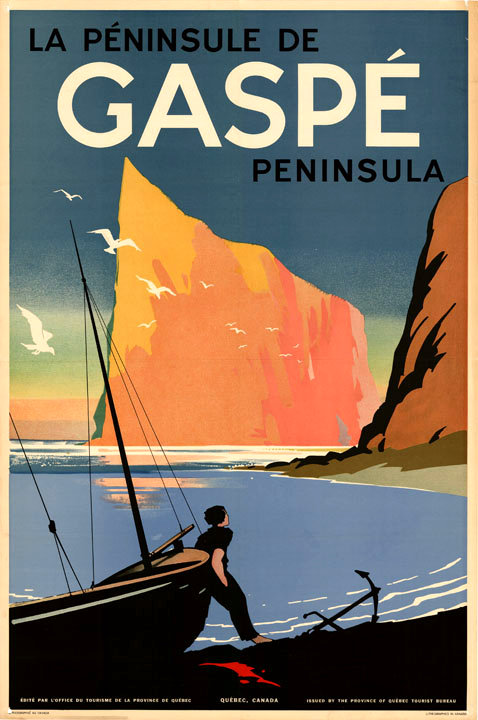
The banner was designed to hang as an ex-voto in the Memorial Basilica of Christ the King in Gaspé, conceived in the 1920’s as an offering of thanks for the four-hundredth anniversary of the claiming of Canada by Cartier.
The Great Depression brought the project to a halt, and the church was finally finished in 1969 as a modernist cathedral in wood — the only wooden cathedral in Catholic North America.
Was the flag ever actually executed? I don’t know, but I doubt it.
Les fondements de notre civilisation occidentale
« Les fondements de notre civilisation occidentale sont chrétiens ; le respect du christianisme est une condition sine qua non d’une droite qui veut conserver non seulement la prospérité économique, mais ce qui est au fondement de toute prospérité durable : le souci du bien commun, le respect de la loi naturelle, le sens de la justice. »
The latest issue of Égards, the premier journal of traditional conservatism in Quebec, contains an interesting analysis of the current situation faced by the various streams of the centre-droit spectrum in the province. I am, however, very much against the perpetual organisation-founding that goes on in political circles. There seems to be a belief that, when in doubt, start a new organisation, but this is precisely what the author, M. Décarie, proposes.
Interesting Things Elsewhere
This determined Celt is gunning for Thabo
Kevin Bloom | The Daily Maverick
Ireland’s  Paul O’Sullivan took over as head of security at South Africa’s airport authority in 2001, and discovered something was wrong from the start: why didn’t the policeman on duty want to take a statement about the attempted theft of his baggage? Since then, his life has been a series of bizarre events leading him ever deeper into the most complex criminal network of the post-apartheid era, including the recent the trial and conviction of former national police chief Jackie Selebi. But O’Sullivan’s determined quest to expose crookedness isn’t over yet, and he now has former president Thabo Mbeki in his sights. read more
The apparatus of state will simply ignore the government
‘Inspector Gadget’ | Police Inspector Blog
Police across England were told by the responsible minister of the democratically elected government that they must not chase performance targets any longer. “I can also announce today that I am also scrapping the confidence target,” said the Home Secretary, Theresa May, “and the policing pledge with immediate effect”. But the ‘senior management team’ of the West Yorkshire Police have stated they will go on no matter what the government says. read more
Has Christian Democracy reached a dead end?
Jan-Werner Mueller | Guardian.co.uk
The commentator completes a brief survey of the struggles of Christian Democracy in Germany and Europe today. The French leader Georges Bidault claimed that Christian Democracy meant “to govern in the centre, and pursue, by the methods of the right, the policies of the left”. But Christian Democracy’s brief French moment in the 1950s didn’t survive the return of de Gaulle, and Christian Democratic parties on the continent today face an existential crisis. read more
Also: Monsignor Ignacio Barreiro’s talk at the Roman Forum’s 2010 Summer Symposium, entitled The Problem of Christian Democracy will be made available online in audio form sometime in the coming months.
Deep in Shanxi, the most Catholic village in China
Anthony E. Clark | Ignatius Insight
Church after church dot the landscape and high steeples rise above small villages as they do in southern France. Passing through a narrow side road one arrives and is welcomed by three great statues at the village entrance: St. Peter holding his keys is flanked by Saints Simon and Paul. Thirty minutes before Mass the village loudspeakers, once airing the revolutionary voice of Mao and Party slogans, now broadcasts the rosary. Welcome to Liuhecun, the most Catholic village in China. read more
Look for me in the Cotswolds.
Dino Marcantonio
The apologists for modernist architecture have tried for a century to gain public acceptance of and appreciation for their horrors. While the elites have almost overwhelmingly been converted, the general populace around the world still sees that the Emperor has no clothes, and almost always prefers architecture that reflects the tried and true, the local and the natural. Alain de Botton, the Swiss essayist, ‘pop philosopher’, and former ‘writer-in-residence’ at Heathrow Airport, is the latest to give it a go, this time in the pages of the modernist Architectural Record. Dino Marcantonio provides a most useful fisking. read more
Canada is a French country
Andrew Coyne | Maclean’s
At the recent Canada Day celebrations on Parliament Hill, Canadian PM Stephen Harper spoke of “the steadfast determination and continental ambition of our French pioneers, who were the first to call themselves ‘Canadians.’” At other times he has spoken of Canada as having been “born in French,” of French as “Canada’s first language,” and, most famously, of Quebec City as “Canada’s first city,” its founding in 1608 as marking “the founding of the Canadian state.” While the sentiment may seen anodyne, moreover, the implications are radical. read more
Tintin à Quebec
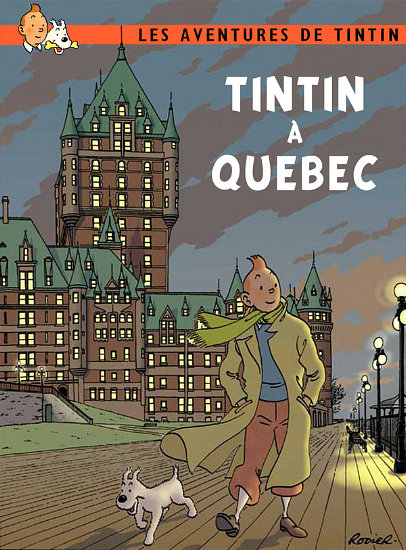
Tintinophilia and its allied science of Tintintology can almost seem like a cult sometime, with Moulinsart, the commercial wing of the Hergé Foundation, acting feverishly to quell any and all unauthorised outbreaks of Tintin resurrection. Their assiduity notwithstanding, Tintin pastiches are fairly common (though illegal) and vary in nature from respectful admiration to downright mockery. The Quebecois cartoonist Yves Rodier is one of the foremost pasticheurs of the famous Belgian boy reporter, and produced this cover (above) of a non-existant Tintin book set in the beautiful capital city of Canada’s French province.
While Tintin did visit Scotland in The Black Isle, I’d love to see a Tintin in Edinburgh book, and even more so Tintin in the Cape.
La Grande Séduction
This is a perfectly charming film. “La Grande Séduction” comically celebrates the dignity of work and the assault on the human character that inevitably results from reliance upon government welfare for survival. The inhabitants of the small fishing village of Ste-Marie-La-Mauderne have refused to abandon their homes after the collapse of fishing, but lack the resident doctor a potential investor requires in order to build his factory in the town. “La Grande Séduction” (released in Anglophone cinemas as “Seducing Dr. Lewis”) depicts the efforts of prominent townsfolk to unite and persuade the arrogant city-slicker Dr. Lewis to sign up as doctor for their little corner of the world.
Fans of “Local Hero” or “Waking Ned Devine” will find the theme familiar, but with a remote corner of maritime Quebec substituting for the Celtic hinterlands of the British Isles. If anything, the film allows the viewer an opportunity to hear that charming Québécois back-country accent. There are also elements that will grate somewhat the prudish tendencies of Anglos like us, but one must make allowances for the Latin temperament that survives in la Nouvelle-France and the other Romance realms.
Overall, a celebration of place, work, and community, and an interesting exploration of the conflict between artificiality and authenticity.
First Things, Three Songs
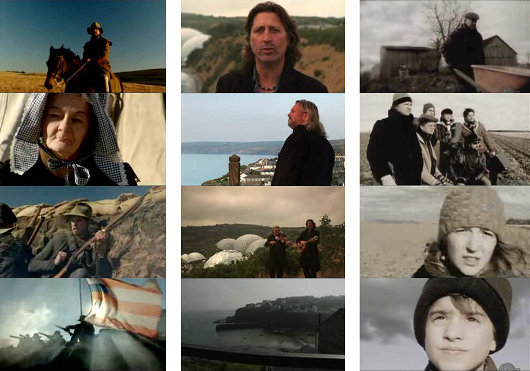
Through an interesting post by Joseph Bottum on the First Things blog, I discover that R. R. Reno posted all three of the songs I elaborated upon in my June 2007 post “We’ve Lost More Than We’ll Ever Know”, though (so far as I can tell) he arrived at the same three without stumbling across my entry on them. I always read First Things in New York (it’s one of my favourites, and simply a must-read), but it’s sadly not available in South Africa (bar actually scraping one’s pennies together for a subscription) so I’ll just have to wade through friends’ archives when I return to the Empire State. (Or does the Society Library have a subscription? And if not, why not?).
While it has a reputation among some Catholics as being a bit too liberal & democratist, I suspect the whiff of Americanism one finds in the pages of First Things is akin to the aroma of tobacco in an old bar: the smell lingers but that doesn’t mean anyone’s actually still smoking. Nonetheless, they often feature top-notch articles and writing that are of interest to Catholics & other traditionalists.
Quebec Stamp
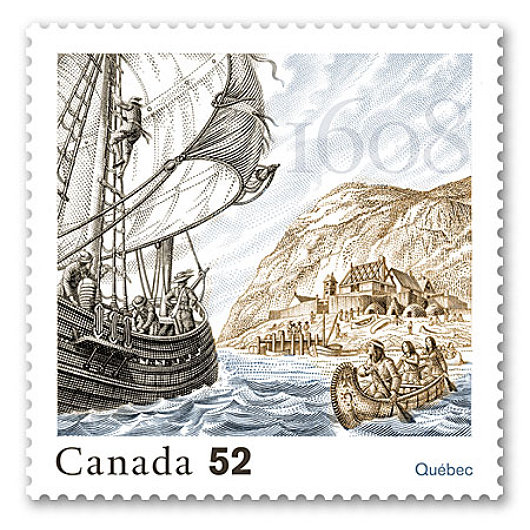
This stamp was designed by Jorge Peral, the artistic director of the Canadian Bank Note Company, for Canada Post to commemorate the four-hundredth anniversary of the foundation of Quebec.
Peter Hitchens on America
On returning from America
I have spent the past two weeks in the United States, not working but travelling on my own account, revisiting some favourite places and coming up for air. It remains an exhilarating and beautiful place, wrongly sneered at by too many British people who simply haven’t experienced enough of it to know how good it can be, and how much worse off we would be if it weren’t there. But it is also a foreign country, not some kind of special friend – but a foreign country to which we have unique access because we speak a similar language. Only fluent French or German speakers could ever know as much about those countries as any British visitor can swiftly learn about the USA – if he wants to.
Rather than re-immerse myself in the small-scale squalor of British politics, which seems even less appealing or interesting than it was when I set out, I thought I would muse a little on what an English person experiences in the great republic, and what it means (or might mean) for us.
The arms of the Hon. Paul Comtois
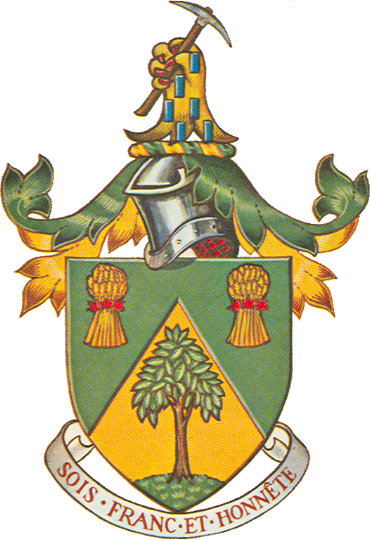
Our friend Mr. Bruce Patterson, who is St-Laurent Herald up in the Canadian Heraldic Authority, was kind enough to send along this rendering of the arms of the Hon. Paul Comtois from Beddoe’s Canadian Heraldry. As Bruce points out, the garbs probably refer to Comtois’s agricultural background, and the miner’s pick in the crest alludes to his ministerial portfolio. The motto is “Be frank & honest”.
Paul Comtois of Québec
Farmer, Politician, Hero, Saint

FROM TIME TO TIME there are men in history whose heroism runs so counter to the spirit of the age that the arbiters of passing fashion must simply ignore him rather than run the risk of acknowledging his embarrassing greatness and goodness. God has graced the New World with many of His saints, some of whom — Rose of Lima, Martin de Porres, Mother Seton — have already been raised to the altar, others — Fulton Sheen, Fr. Solanus Casey — are certainly on their way. Yet more remain unsung and almost forgotten: Paul Comtois (1895–1966), Lieutenant-Governor of Québec until his heroic death, is just one of these saints.
A New Speaker in Quebec
Opposition parties unite to elect new President of the Assembly
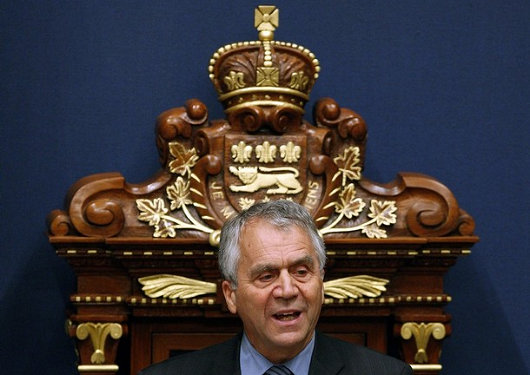
François Gendron, the longest-serving member of Quebec’s National Assembly, has been elected Speaker against the will of the province’s prime minister, Jean Charest. The ADQ (conservative, autonomist) and PQ (social-democratic, pro-independence) are opposition parties but combined have more seats than the Libéral (center-left/center-right) minority government Mr. Charest leads. Action democratique du Québec and the Parti Québécois united to select Mr. Gendron without consulting Mr. Charest, which the premier described as a “breach of confidence” that was the result of “subterfuge”. The vote took place by secret ballot, and it was only in the hours before that the opposition parties withdrew their respective candidates in favour of a united ticket for Gendron.
Charles & Zita
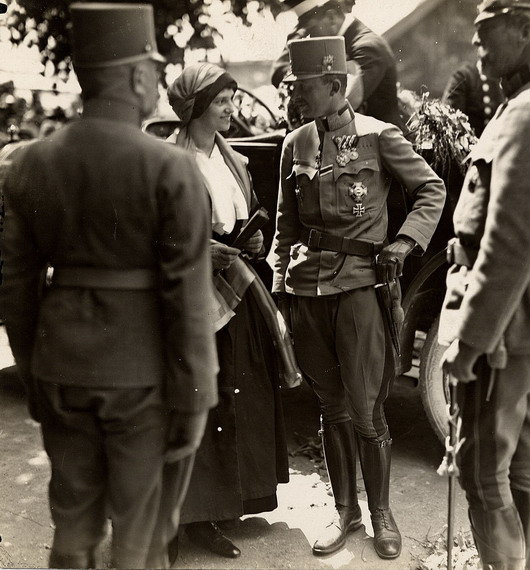
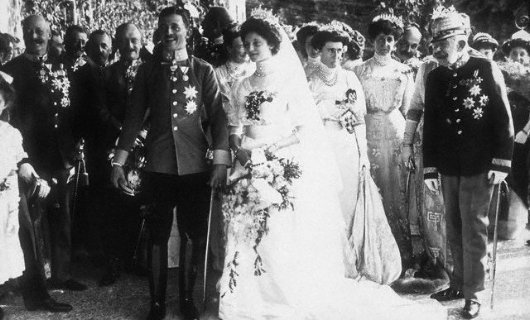
October 21 was chosen as the Feast of the Blessed Emperor Charles not because it is the date of his death — which is 1 April 1922 — but rather to commemorate the marriage (photo, below) between Archduke Charles of Austria (as he was then) and Princess Zita of Bourbon-Parma in 1911. While Charles died a mere thirty-four years of age, Zita lived on to ninety-six before passing away in 1989 (when I myself was four).
Not very long ago I was in Quebec City, which was where the Empress Zita and the Imperial Family spent their exile during the Second World War. The Hapsburgs, dispossessed first by the Socialists and then by the Nazis, were then so poor they had to collect dandelions from which to make a soup, but they took poverty in their stride. Passing a grassy bit near the Chateau Frontenac, I wondered “Did Crown Prince Otto once pluck weeds from this plot to feed his hungry mother and siblings?”
Also in that ancient Canadian city is La Citadelle, that great hunk of stone and earthworks, perhaps the oldest operational military installation in the New World. There we were lucky enough to be granted access to the tomb of the greatest Canadian, Major General the Rt. Hon. Georges-Philéas Vanier, Governor-General of Canada from 1959 until his death in 1967. General Vanier and his wife had such a reputation for Christian charity and piety that the Vatican is collecting evidence towards their eventual recognition as saints. Their son is Jean Vanier, the founder of the famous l’Arche communities that care for the handicapped and the disabled. I wonder if the Hapsburgs and the Vaniers ever crossed paths in wartime Quebec…
pray for us!
Horse & Hound in Montreal
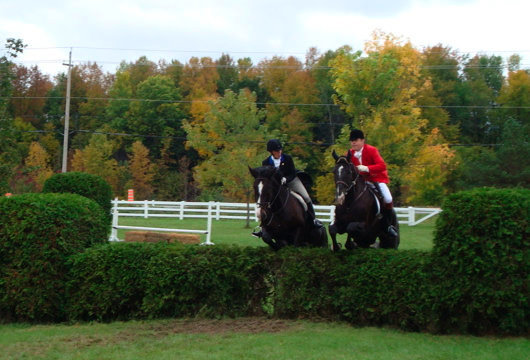
A splendid afternoon is the best way to describe it. Last Sunday up in St-Augustin-de-Mirabel it was the annual hunter trials of the Montreal Hunt Club – the oldest hunt in the New World. Club treasurer Annette Laroche suggested swinging by the Club sometime and as it happens a good friend had just moved to Montreal. So when Raymond Côté (seen in the previous post jumping on the beautiful white mare Frimousse) sent an invite to the hunter trials, I knew it’d be foolish not to take the opportunity to visit the beautiful land of Quebec for the first time in many years.
The Petit Séminaire de Québec
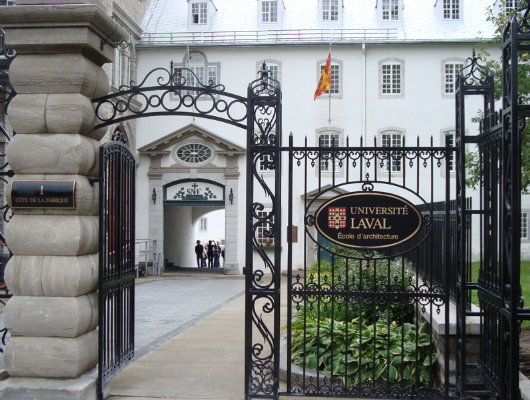
Adjoined to the ancient Cathedral Basilica of Notre-Dame in Quebec City is the Petit Séminaire. The Séminaire de Québec was founded in 1663 by the Blessed François Laval to train priests for the Vicariate Apostolic of New France, and the Petit Séminaire, its secondary school, was founded just five years later to teach both colonial French and native Indian youths. Among the school’s former pupils are four prime ministers of Québec, two lieutenant-governors (as the Queen’s viceregal representative in the province is known), and many other writers, politicians, and important figures of history. The Petit Séminaire survives today as a private Catholic secondary school.
Search
Instagram: @andcusack
Click here for my Instagram photos.Most Recent Posts
- West Point July 30, 2026
- Brunel’s Unbuilt Capitol February 3, 2026
- Cricket at Fordham January 27, 2026
- Palacio Barolo Revisted January 14, 2026
- Learning to Love Liguria January 14, 2026
Most Recent Comments
Book Wishlist
Monthly Archives
Categories