Church
About Andrew Cusack
 Writer, web designer, etc.; born in New York; educated in Argentina, Scotland, and South Africa; now based in London.
 read more
News
Blogs
Reviews & Periodicals
Arts & Design
World
France
Mitteleuropa
Knickerbockers
Argentina
The Levant
Africa
Cape of Good Hope
Netherlands
Scandinavia
Québec
India
Muscovy
Germany
Academica
Alexander McCall Smith & the Sisters of Jaipur
The Scottish writer Alexander McCall Smith — noted for the fact that his books are actually a pleasure to read — pens a letter to readers every few months. In the latest letter, he mentions that he recently attended the Jaipur Literary Festival in Rajasthan’s famous “Pink City”:
But the visit to Jaipur was not all literary festival. My wife and I paid a visit to the Mother Theresa Home in the city, which was, as you can imagine, a very moving experience. Over two hundred residents, most of them with nowhere else to go, no possessions, and no money, are looked after by some seven sisters. These sisters are tireless – completely tireless – and give their lives over to the living care of these abandoned people.
At a time when the Catholic Church is coming under severe criticism for its failures (which have been, understandably, very much in the news), we should perhaps remember the extraordinary work of people such as the nuns of this community, who have done so much to bring love into the lives of those who have nothing and who would otherwise die alone and uncared for. I cannot tell you how moved I was by what I saw and by my conversation with the nuns.
An apposite reminder.
If you haven’t yet read Prof. McCall Smith’s 44 Scotland Street series, I suggest you float down to your nearest bookseller and purchase the first installation (handily titled 44 Scotland Street) today. They are a procession of delightful stories surrounding a number of fictional characters in an Edinburgh townhouse, and if you’re familiar with the capital city, you might just come a cross the occasional non-fictional friend interspersed amongst the creations of McCall Smith’s mind.
Diaz Point
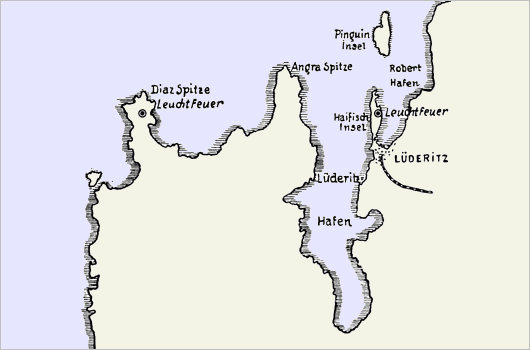
You drive to the end of the world, turn left, and continue. That’s the way to get to Diaz Point. Namibia’s coastline is supposed to be the least hospitable on the planet, with desert meeting salty ocean with naught in between. Staying the night at Seeheim, an agglomeration of half a dozen houses nearby a stone castle hotel, we woke early and drove the 200+ miles west through the arid rocky desert. The experience is made all the more interesting for the 16,000-square-mile “Restricted Diamond Zone” one drives on the northern periphery of. Namibia’s diamonds are primarily alluvial deposits, meaning they rest on ancient river beds, sitting on the soil or resting just a few feet below. The forbidden territory’s guards are believed to have a policy of shooting first and asking questions later. There are over sixty countries in the world smaller than the Sperregebiet (forbidden area), as the Restricted Diamond Zone is colloquially known.
Eventually — passing through the area inhabited by the wild horses of the Namib, descendants of German cavalry horses and farm animals variously escaped or set free — you arrive at the town of Lüderitz on the Atlantic coast. Besides its German street names (Zeppelinstraße, not to mention Bismarck, Bahnhof, Moltke), the town’s architecture is a curious Teutonic colonial, reinvented for the almost-tropical locale. From one or two of the local businesses, one could easily imagine a slightly overweight German in a linen suit and panama hat, with an eye-patch as well as a cane for his limp, ordering around the natives crudely while engaged in some nefarious criminal enterprise or campaign of sabotage.
But for Diaz Point, you go to Lüderitz, turn left, and go further still. Driving south from the colonial town, you encounter a barren, rocky, and utterly colourless landscape, the grey tones of which immediately bring to mind the surface of the Moon. Am I still on Earth? Only the blue sky and the occasional appearance of vegetation remind you that you’re still on the third planet from the Sun. (more…)
A little lack of logic on Pope Benedict from the Guardian’s John Hooper
Over at the Guardian (Britain’s best daily, whether you like it or not!), Rome correspondent John Hooper writes an informative article about the upcoming beatification of Spanish journalist Manuel Lozano Garrido (1920-1971). I’d never heard of “Lolo”, as the saintly journo was known both during his life and afterwards, and was happy to be introduced to yet another shining star of Spain’s happy glut of twentieth-century saints & blesseds.
Lozano Garrido, Mr. Hooper informs us, “wrote his first article for — and went on to edit — a magazine called Cruzada (Crusade). That was a pretty loaded title for a publication of the time because, in the language of the dictatorship, ‘cruzada’ referred to the campaign Franco pursued with ruthless and bloody determination against any Spaniard who dared to hold opinions much to the left of fascism.”
Up to a point Lord Copper! For a Christian periodical — written by Christian journalists, read by Christian people, in a Christian country — to have the name “Crusade” hardly seem loaded at all, despite the Spanish state’s contemporaneous use of the word cruzada. But this is incidental and entirely beside the point.
Mr. Hooper wonders where Lozano Garrido fits in to the bigger picture of Spanish journalism at the time because, Hooper claims, “by approving his beatification, Pope Benedict is sending a message to the world about the sort of journalism that he regards as worthwhile”.
Well, in a word: no. As Hooper admits, “Lolo” isn’t being beatified because of his journalism but because of his heroic virtues exhibited in the face of suffering. In a sense, his journalism has nothing to do with it. If he had been a baker of rye bread instead of a journalist, would we extrapolate that Benedict XVI is sending a message to the world about the sort of bread he regards as worthwhile? Of course not. It simply does not follow.
The Patriarchal Cathedral Basilica of Saint Mark the Evangelist, Venice
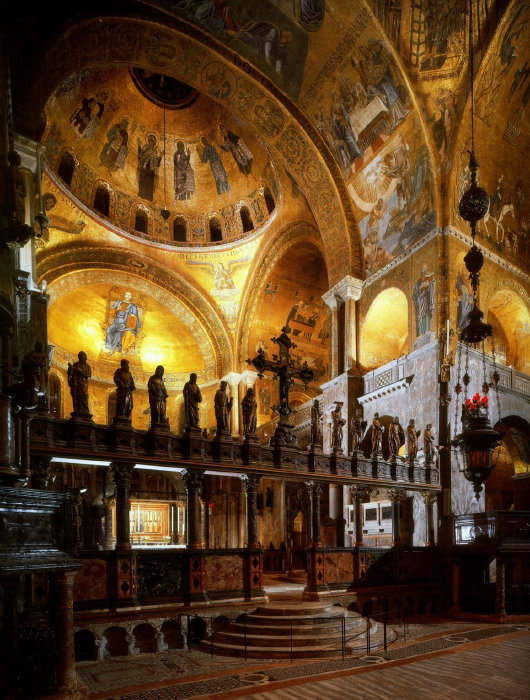
One of the readers over at the NLM sent in these photos of St. Mark’s Basilica in Venice. The reason why St. Mark’s is usually referred to as a mere basilica is because for centuries this was not the seat of the Patriarch of Venice. From the seventh century, the Church of San Pietro di Castello was the cathedral of Venice, while St. Mark’s was the house church of the Doge, the elected duke of the Venetian aristocratic republic. It was only in 1807 that St. Mark’s was made the cathedral of Venice, and San Pietro di Castello reduced to co-cathedral status. But by the time St. Mark’s became a cathedral, everyone had already become accustomed to referring to it as “St. Mark’s Basilica”. (more…)
Relic of Blessed Charles in Catalonia
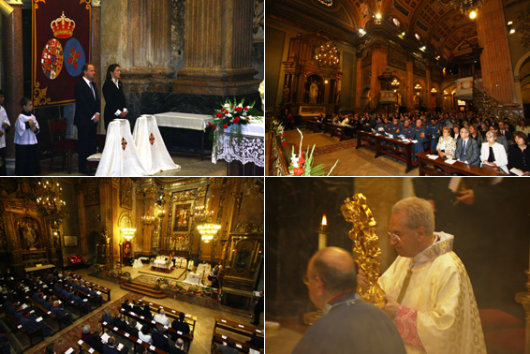
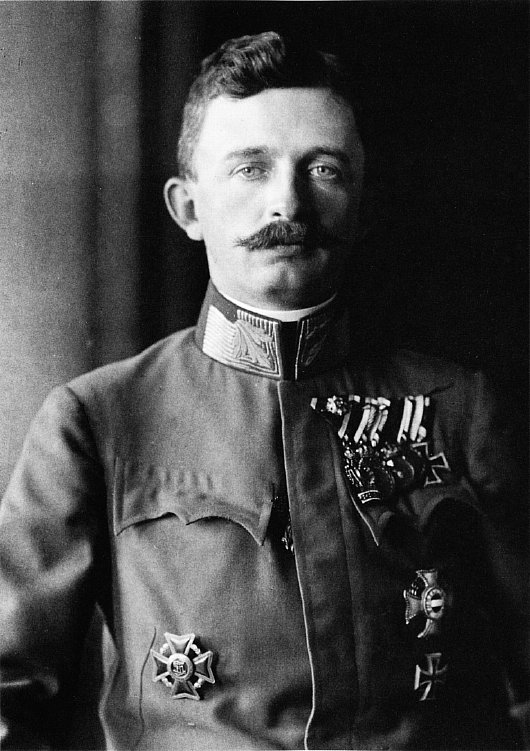
In October of last year, a relic ex ossibus of Blessed Charles I was formally received at the Basilica Church of Our Lady of Mercy & St. Michael Archangel in Barcelona, the capital city of the Spanish principality of Catalonia. The bone fragment is the first relic of the last Emperor of Austria, Apostolic King of Hungary, and King of Bohemia to be publicly venerated in the Kingdom of Spain. It was requested by His Grace the Bishop of Solsona, Don Jaume Traserra y Cunillera, at the request of the Catalonian Delegation of the Constantinian Order. The relic has been enshrined in the chapel of St. Michael the Archangel, alongside a portrait of the Emperor.
A grandson of Blessed Charles, HIRH the Archduke Simeon of Austria, attended (with his wife) as the representative of HRH the Infante Don Carlos, Duke of Calabria, the Grand Master of the Constantinian Order and head of the Royal House of Bourbon-Two Sicilies. Also in attendance were Lt. Gen. Don Fernando Torres Gonzalez (Army Inspector General), General Mainar Don Gustavo Gutierrez (Chief of the 3rd Sub-inspection Pyrenees and Military Commander General of Barcelona and Tarragona), as well as representatives of the Order of Malta, the Order of the Holy Sepulchre, various guilds and corps of Spanish nobility, and lay fraternities.
When an American aristocrat meets a European Grand Duke
Mother Margaret Georgina Patton, OSB of Regina Laudis Abbey in New England is the daughter of Gen. George S. Patton IV and granddaughter of the famous Gen. George S. Patton III. Mother Patton remembers being introduced to the Grand Duke of Luxembourg when she was but five years of age. At the instruction of her parents, she spent a week practicing her curtsey. When the moment finally came and she was brought before His Royal Highness, she looked him over, and stuck out her hand. The young girl had expected a crown, and, seeing none, thought a regular old handshake would do.
The elder Gen. Patton did have a connection to the Abbey himself. “General George Patton, Sr., liberated France as the commanding general of the Third Army,” explains Mother Delores Hart (the former film actress, and only nun among the members of the Academy of Motion Picture Arts & Sciences). “His was the army that liberated Jouarre, the abbey where Mother Benedict was in hiding.” Mother Benedict Duss founded the Abbey of Regina Laudis after the war, and died at the ripe age of 94.
“This connection continues through the whole Patton family to this day,” Mother Delores continued. George S. Patton V lives close to the Abbey in Connecticut, with his brothers Robert H. Patton in nearby Darien, and Benjamin Wilson Patton in New York, while their sister Helen lives in Saarbrücken, Germany.
General Patton père died in a car accident in Germany, but his son followed in his footsteps by choosing a career in the army. When his daughter Margaret, the future nun, was born, he was fighting in the wilds of Vietnam. Nonetheless, General Patton fils felt compelled to write a letter to his newborn daughter, introducing himself from abroad. He ended it simply “Play it cool” and signed his full name.
It’s no wonder that Margaret joined Regina Laudis, a community of Benedictines in full, traditional habits, as she came from a well-dressed family. General Patton père designed his own uniforms and even the family of the younger general continued the tradition of dressing for dinner, “despite the trend toward informality that was sweeping the nation” as the Patton Saber puts it. The old habits are returning — any bets on when folks will start dressing for dinner again?
From Parking Places to People Spaces
Transforming a Suburban Parish into a Traditional Neighborhood

The widespread unsightliness of suburban development in the United States is one of the most significant counts one can hold against the country. The earliest suburbs, or indeed any that are pre-war, came out fairly well by contrast. One of the pleasures of living in Westchester is our system of verdant parkways (from the inter-war period) with arched stone bridges spanning the little creeks and carrying local thoroughfares over the road. The transformation of Long Island, after the Second World War, from countryside to row after row of mass-produced cookie-cutter homes was disastrous. (Levittown is my personal vision of Hell — identical homes completely divorced from any sense of livable social order.) Post-war suburban development combines ugliness, boringness, and an astonishing misuse of available land. Erik Bootsma, however, here presents a model proposal of how to transform the medium-sized property of a modern suburban parish church in Virginia into a small, livable neighborhood. (more…)
Brother Ursus of Blackfriars, Oxford
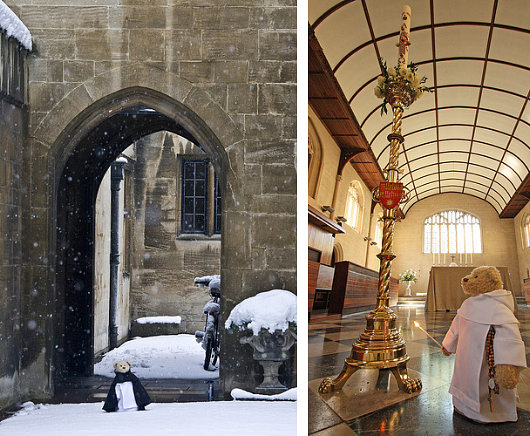
Left, contemplating the winter snow. Right, contemplating how the deuce a bear of his particular stature can light the Easter candle.
The Roman Forum
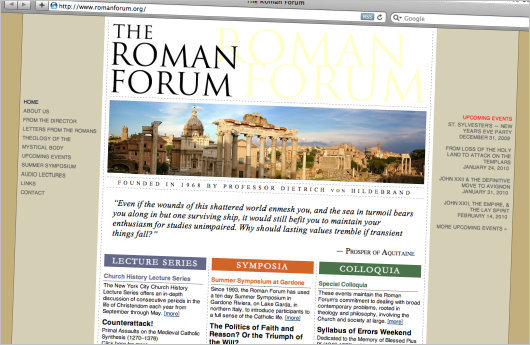
Over at The Hermeneutic of Continuity, Fr. Finigan points out the website of the Roman Forum, which (as it happens) was recently renovated by none other than yours truly. The Roman Forum is an excellent institution which organizes a church history lecture series here in New York, special colloquia such as the Syllabus of Errors weekend I recently attended, and of course its renowned Summer Symposium every year at Gardone on Lake Garda in Italy.
The theme of this year’s symposium is The Politics of Faith and Reason? Or the Triumph of the Will?. The list of illustrious names who will be in attendance this coming summer is indeed impressive: Jamie Bogle, the Chesterton Society’s Dale Ahlquist, Msgr. Barreiro, the Spanish jurist Miguel Ayuso, James Kalb, “Front Porcher” John Médaille, and Fr. Richard Trezza, who often says the old Mass at St. Agnes in New York on Sundays. And my friend Josh Copeland will be singing.
Each day involves three lectures (morning and before dinner), with sung Mass at noon, and musical and theatrical entertainments take place in the evenings after dinner. For years I’ve heard testimony from Gardone-goers about how enlightening, entertaining, and fun these ten-day symposia are, but I’ve not yet been able to attend myself.
The Roman Forum’s events are among the splendid outposts of civilization that preserve the animated spirit of the Faith so aptly captured by Hilaire Belloc’s lines: “Wherever the Catholic sun doth shine / There’s always laughter and good red wine.” I hope some of our readers will take a gander at their site and consider attending some of the numerous events they organize.
Hapsburg Hebraica
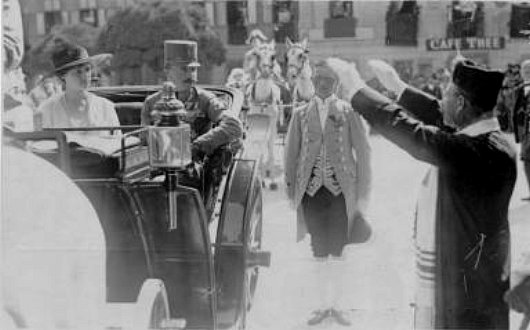
After the passing of the Hapsburg empire, which had been so protective of its Jewish subjects (especially compared to the regimes which succeeded it), numerous prominent Jews were received into the Catholic faith, perhaps having come to a full appreciation of precisely what they had lost. The subject of “Literary Jewish Converts to Christianity in Interwar Hungary” is worthy of further investigation (some graduate student should write a dissertation on just such a matter). I am no longer surprised when, in my researches, I come across yet another fascinating Hungarian Jew — be he a writer, playwright, poet, or patron — and discover, usually buried in some footnote, that he died a good Catholic.
Chartres 2009
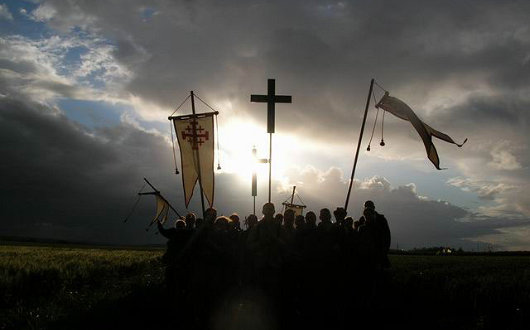
While there are but a few days to go, I can’t let this year depart without finally showing you photos of the 2009 Paris-Chartres pilgrimage which takes place every year on the weekend of Pentecost. (See 2008, 2005, 2004). The theme for the upcoming 28th Pilgrimage from Notre-Dame de Paris to Notre-Dame de Chartres was recently announced by the Association Notre-Dame de Chrétienté which organises the event. The 28th Pilgrimage will take place on the 22nd, 23rd, and 24th of May 2010, with the theme “The Church is Our Mother”. The themes for the individual days will be: 1) Teaching, under the patronage of St. Peter; 2) Sanctifying, under the patronage of St. Jean Vianney, the Curé d’Ars; 3) Governing, under the patronage of St. Pius X.
The following photos, however, are compiled from various sources, and show the pilgrimage which took place this past Pentecost. (more…)
La Bandiera dell’Io Amo L’Italia

In most countries, the voter of sound mind and disposition is hard pressed to find a political party worthy of his vote. One of the charming aspects of Italy is that the inverse is true: there are usually at least half-a-dozen political parties worth voting for, sound in policies and public morals, though the more recent trend has been towards amalgamation. It nonetheless often seems that every Italian of public stature has, at some time or another, founded his own political party.
Readers will no doubt recall the Holy Father’s rather brave baptism of the Egyptian-born Italian journalist Magdi Allam during the Easter Vigil of 2008. Signore Allam has proven his Italicity by following the peninsular trend of founding one’s own political party. Founded as Protagonisti per l’Europa Cristiana (Protagonists for Christian Europe), Allam’s party is now known as Io Amo L’Italia (I Love Italy). The party has had an early success in that its founder was elected to the European Parliament in the most recent elections, and he caucuses with the Christian-democratic Unione di Centro in the continental assembly.
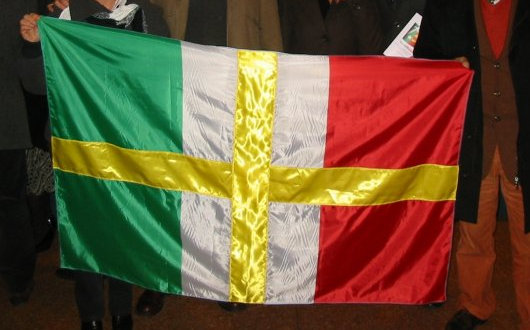
Anyhow, the relevance for us is that Magdi Cristiano Allam’s political party has adopted a “baptized” tricolore of its own: the green-white-red tricolour defaced (as is the proper vexillological term) with a simple golden cross the arms of which reach to the ends of the field. A very simple solution, and not half bad really. One of the party’s Facebook followers suggests having a tricolore with a Constantinian-style cross in the center, which is another not half bad idea.

The Oratory as It Was Built
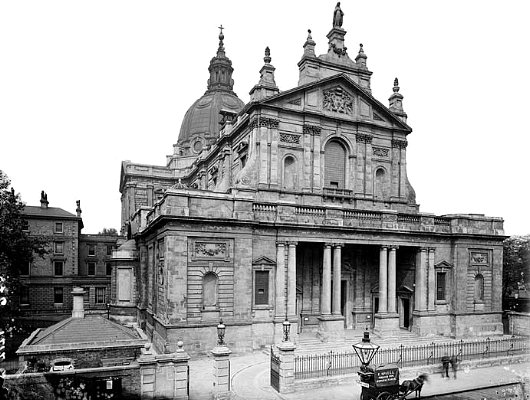
Since we explored Brompton Oratory as it might have been, here is the Oratory as it was built. The façade were finally completed in 1893 to a design by George Sherrin, with the dome following in 1894-95 by Sherrin’s assistant E. A. Rickards. How is the Oratory as depicted above different from the Oratory today? The fence and gates were replaced with a curved design at some date unknown to me, perhaps in response to a road-widening scheme.
Baptizing the Tricolore
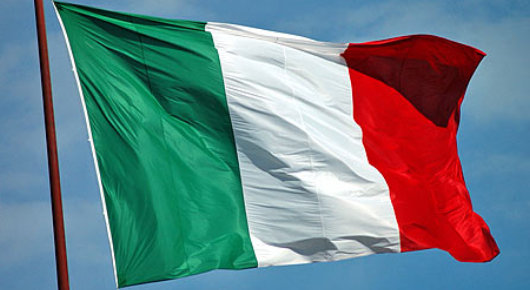
THE RECENT RULING of the self-styled “European Court of Human Rights” that the presence of crucifixes in Italian schools is a violation of the rights of a non-practicing Lutheran from Finland has sparked a surge of outrage against European institutions in Italy, and indeed elsewhere. While (as Gerald Warner has reported), the Italian Constitutional Court has shown the proverbial two fingers to the ECHR judgement in a ruling of its own, one junior cabinet minister has a suggestion of his own. Roberto Castelli, Italy’s deputy minister for infrastructure and transportation, suggests the country should reassert its Christian identity by adding a cross or crucifix to the Italian flag.
“I believe,” Mr. Castelli said, “that Europe has the right to recognize its true identity that we are starting to lose completely.” Even the Minister of Foreign Affairs, the Freemason and ex-Socialist Franco Frattini, seemed amenable to the idea. “Nine European countries already have the cross on their flag,” Frattini pointed out. “It is an extremely common proposition.” (more…)
St. Zita?
Church Opens Investigation into Sanctity of Zita of Bourbon-Parma, Wife of Blessed Charles and Last Empress of Austria-Hungary
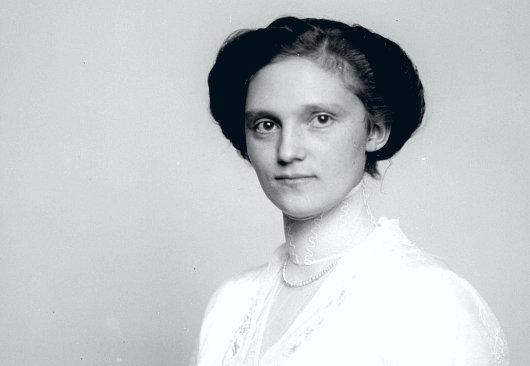
It was announced recently that Mgr. Yves Le Saux, Bishop of Le Mans in the traditional province of Maine (Pays de la Loire), France has opened the cause for the beatification of Zita of Bourbon-Parma, the long-lived wife of Blessed Emperor Charles of Austria. Charles, the last (to date) Emperor of Austria, Apostolic King of Hungary, and King of Bohemia (&c.), died in exile in Madiera in 1922, aged just thirty-four years. Zita Maria delle Grazie Adelgonda Micaela Raffaela Gabriella Giuseppina Antonia Luisa Agnese de Bourbon-Parma, meanwhile, was born in Tuscany in 1892 and lived a long life, giving up the ghost in March 1989, and interred in the Capuchin vault in Vienna following a funeral of imperial dignity.
“The process was opened in Le Mans,” Gregor Kollmorgen of TNLM reports, “and not in the Swiss diocese of Chur, where the Empress died twenty years ago in 1989 in Zizers, with the consent of Msgr. Huonder, the Bishop of Chur, and the permission of the Congregation for the Causes of the Saints, because within the diocese of Le Mans is situated the Abbey of Solesmes, well known to NLM readers for its leading rôle in the early liturgical movement in the nineteenth century, especially regarding Gregorian chant, and which was the spiritual center of the Servant of God Zita, her home among her many exiles.”
Zita’s relationship with Solesmes dates back to 1909 when she first visited its sister-abbey of St. Cecilia on the Isle of Wight in England. She became an oblate of the Abbey of Solesmes itself in 1926. Her daily life after the exile & death of her saintly husband included the Rosary, hearing multiple daily masses, and praying part of the Divine Office. (more…)
The Feast of the Immaculate Conception at the Piazza di Spagna, Rome
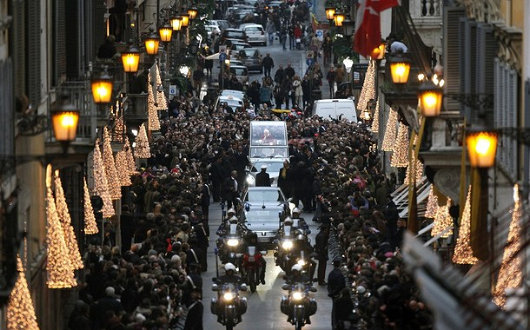
In 1856, Pope Pius IX erected a column dedicated to the Blessed Virgin in the Piazza di Spagna, commemorating the Proclamation of the Dogma of the Immaculate Conception just two years before, and since that year every reigning pontiff has remembered the Virgin at her column on the feast of the Immaculate Conception. Above, the Pope is seen turning onto the Via Condotti which leads to the Piazza di Spagna. The Palazzo Malta is designated by the flags on the right. (more…)
Canada’s Bastion of Catholicism
Our Lady Seat of Wisdom in Barry’s Bay, Ontario
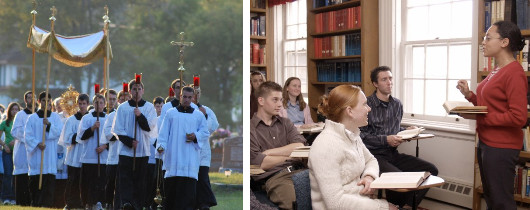
Many of our readers doubtless enjoy this blog for its unabashed defence of the glories of Christendom, all too many of which have passed into the pages of history. But highlighting those glimmers of hope that yet exist is another worthwhile task. The renaissance of Catholic higher education in the United States proceeds apace, with new institutions like Thomas Aquinas College, Christendom College, and such leading the way, while others retake the older Catholic universities from the inside. These places of learning have been gathered together in the Newman Guide to Choosing a Catholic Colleges, the guide to Catholic colleges for Catholics who actually want their Catholic colleges to be Catholic. An almost ridiculous thing to say, but such is the state of modern higher education.
While the Guide‘s purview was initially limited to the United States, Canada’s Our Lady Seat of Wisdom Academy — a college in Ontario offering one-, two-, and three-year Catholic liberal arts programs of study — began to get such rave reviews that, as Joseph Esposito, editor of the guide, put it, “we were so impressed by Our Lady Seat of Wisdom that we felt compelled to include it as well. The academy has accomplished much in a short period of time, and we look forward to it being an influential force in Catholic higher education.” In particular, the Academy has excelled at introducing home-schooled students to a more formal style of education to ease their transition into higher studies.
That, as the Newman Guide puts it, Our Lady Seat of Wisdom “provides a wonderful curriculum at a breathtakingly low cost” to students and the families supporting them is admirable, but the word on the street is that current economic woes of the world have landed the Academy in a bit of a financial bad-patch. The folks in charge are taking the proper steps of reducing pay and seeking out other savings, but I hope & pray that Catholics will be able to keep afloat this splendid institution which is utterly loyal to the Magisterium and devoted to educating the next generation of America’s and Canada’s Catholics.
Those interested in helping out can find out how to do so here. Americans in particular might take advantage of the non-profit status of the U.S.-based Friends of Our Lady Seat of Wisdom Academy. There is also a PayPal button in the right-hand column on the college’s main page. Having been on the receiving end of generosity myself, I know that every little bit helps.
Giving something to help this institution keep going is an act in keeping with the spirit of this Advent season.
Brompton Oratory as It Might Have Been
Failed Entries of the 1878 London Oratory Architectural Competition
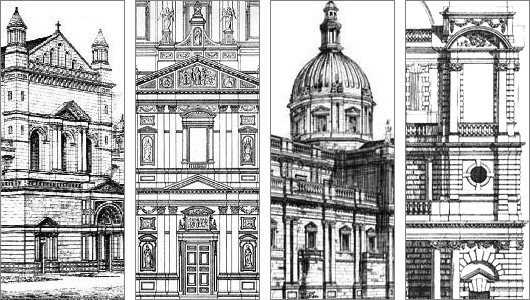
ARCHITECTURAL COMPETITIONS have always fascinated me because they give us the opportunity to glance at multiple executions for a single concept, to see different minds solve a “problem” with their own particular formulas and theorems. The designs of many of the world’s prominent buildings were chosen by competition, perhaps the Palace of Westminster — Britain’s Houses of Parliament — is most famous among them. When the Hungarian Parliament held a competition to design a grand palace to house the body, it found the top three prize designs so compelling that it built the first-prize design as parliament and the second and third places as government ministries nearby. To my surprise, I have only ever come across one book which adequately surveyed the subject of competitive architecture, Hilde de Haan’s Architects in Competition: International Architectural Competitions of the Last 200 Years. Most of the contests covered in the book are, naturally, for government buildings of national importance — private clients usually have a very firm idea of what they want and choose an architect accordingly.
One building not mentioned in the book but nonetheless very dear to me (and no doubt to many readers of this little corner of the web) is the Church of the Immaculate Heart of Mary of the Congregation of the London Oratory, more popularly known to friend and foe alike as the Brompton Oratory. It was the first church in Britain in which I ever heard mass, the summer after kindergarten when I was still but a tiny, blond-haired whippersnapper, in the midst of my first visit ever to the Old World, and the Oratory made quite a strong impression upon my young mind. It is usually one of my very first ports of call whenever I am in the capital, and I once even managed to slip in having just arrived at Heathrow while making my way to King’s Cross and the train to Scotland.
The Brompton Oratory is known for having good priests, traditional liturgy, and beautiful architecture. The final design was by one Herbert Gribble, but there was quite a bit of to-ing and fro-ing before Gribble was selected. The temporary church which had been erected on the site had been condemned by one critic as “almost contemptible” in its exterior design. In 1874, the Congregation of the Oratory (which is to say, the priests) put out an appeal for funds towards the construction of a permanent church. The 15th Duke of Norfolk obliged with £20,000 to get the ball rolling, and the next year a design by F. W. Moody and James Fergusson was agreed upon in principle. But the Reverend Fathers soon began to get creative and hatch ideas and contact other architects and very soon it was claimed that there were as many counter-proposals as there were priests of the Oratory, and perhaps more. A pack of clerics supported a suggested design by Herbert Gribble, but no accord could be reached among the Congregation as a whole.
In January 1878, then, it was announced that a competition would take place to decide the design of the permanent church of the London Oratorians. First prize was £200, with £75 for the runner-up. All entries had to meet the certain requirements drawn up by the Congregation. The style was to be “that of the Italian Renaissance”. The sanctuary, at least sixty feet deep, must be “the most important part of the Church. … Especially the altar and tabernacle should stand out as visibly the great object of the whole Church.” The minimum width of the nave was fifty feet, and maximum length 175 feet. Subsidiary chapels must be “distinct chambers”, not merely side altars. One aspect not mentioned was the projected execution costs of the designs — “an omission criticized by architectural journalists and disgruntled competitors,” the London Survey tells us, “whose designs called for expenditure ranging from £35,000 to £200,000”.
Over thirty entries were submitted to the competition, and Alfred Waterhouse was commissioned by the Fathers to provide comment on the submissions. Significantly, George Gilbert Scott, Jr. submitted a design, though I haven’t been able to get my hands on any depictions of it. Waterhouse praised it as “of no ordinary merit. … I feel that it is impossible to speak too highly of its beauty, its quiet dignity, its absence of all vulgarity and its concentration of effect around the high altar.” (more…)
Search
Instagram: @andcusack
Click here for my Instagram photos.Most Recent Posts
- Brunel’s Unbuilt Capitol February 3, 2026
- Cricket at Fordham January 27, 2026
- Palacio Barolo Revisted January 14, 2026
- Learning to Love Liguria January 14, 2026
- Crux Alba No. 2 January 13, 2026
Most Recent Comments
Book Wishlist
Monthly Archives
Categories