Art
About Andrew Cusack
 Writer, web designer, etc.; born in New York; educated in Argentina, Scotland, and South Africa; now based in London.
 read more
News
Blogs
Reviews & Periodicals
Arts & Design
World
France
Mitteleuropa
Knickerbockers
Argentina
The Levant
Africa
Cape of Good Hope
Netherlands
Scandinavia
Québec
India
Muscovy
Germany
Academica
Christen Købke in London
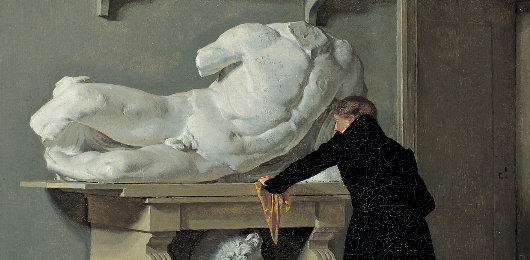
THROUGH JUNE 13, the National Gallery in London is exhibiting “Christen Købke: Danish Master of Light”, a small show of the neglected Danish Golden Age painter but the first exhibition exclusively of his works outside of Denmark. “Kobke generally chooses the quietest corner, or a view from the side,” writes Waldemar Januszczak in The Times. “What fascinates him is the way light falls on the old stones, or the tufts of grass growing between the cracks. Throughout his art, whether he is painting landscapes or people, Købke seems always to be noticing the decay of the world he grew up in.” Januszczak suggests that the warmth of Købke’s work is in reaction to the turbulence of his country’s position in Europe at the time — Denmark backed the wrong horse in the Napoleonic wars and turned to neutrality, only to face a pre-emptive attack by the British in which Copenhagen was ferociously bombarded. The painter was born three years after this humiliation, and at age 12 began his studies at the Royal Danish Academy, where he studied under Christoffer Wilhelm Eckersberg, the ‘Father of Danish painting’.
The talented Købke painted portraits, landscapes, and other scenes. The show at the National Gallery includes my favourite Købke portrait, that of his friend and fellow artist, the landscape painter Frederik Hansen Sødring, on loan from Copenhagen’s Hirschsprung Collection.
His capability aside, what I like about Købke is that he is a certifiable local boy, rarely straying from the vicinity of his native Copenhagen except for the period of study in Italy required of the academically trained artist. His portraits are of his family and his friends, his landscapes of nearby rustic lanes and royal castles. A shame he died of pneumonia just 37 years old.
I haven’t had the chance to view any of his works in the flesh, but Londoners might want to avail themselves of this rare chance to see most of Købke’s capable work while on show in the metropolis. (more…)
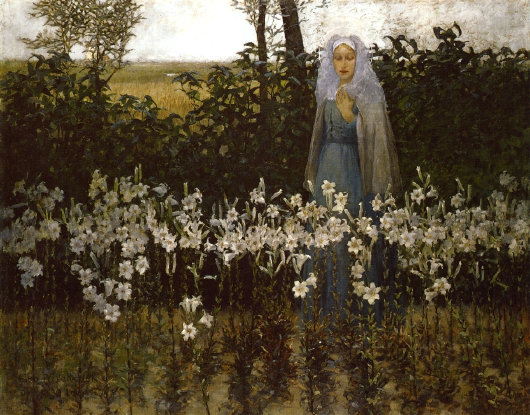
Hans Laagland
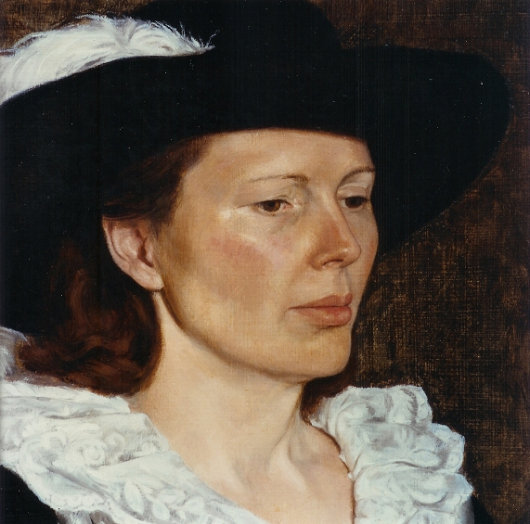
Oil on wood, 1980
“It does not matter what the artist paints, but how he paints it,” proclaims the painter Hans Laagland. “That is why Rubens is a genius while Picasso’s work is passable.” Laagland, a Fleming himself, is one of the scant few artists in our day who paint in the grand style of the Flemish baroque master. He was born in Belgium’s Dutch province in 1965 and took up the brush and easel when ten years old. The young boy quickly developed a fascination with Rubens, considering and absorbing his works in the neighbouring city of Antwerp. Laagland’s emphasis is on traditional craftsmanship, painting in oils on wood panel, investigating and recreating the Old-Dutch lead white used by Rembrandt and the vermilion of Rubens. With a particularly capable hand at portraits, his work can be seen everywhere from the Norbertine abbey at Postel to the Belgian parliament in Brussels.
“It has been downhill ever since Rubens,” the painter says. Rembrandt — “Rubens’s disabled cousin” according to Laagland — was the last great painter; “What comes after him no longer has any significance.” Those versed in the Netherlandic tongue can read Mr. Laagland expounding upon his artistic ideas in De Kunstverduistering (“The Eclipse of Art”), his extended essay on art and painting now published as a book by KEI Zutphen. (more…)
A Wander Through the V&A
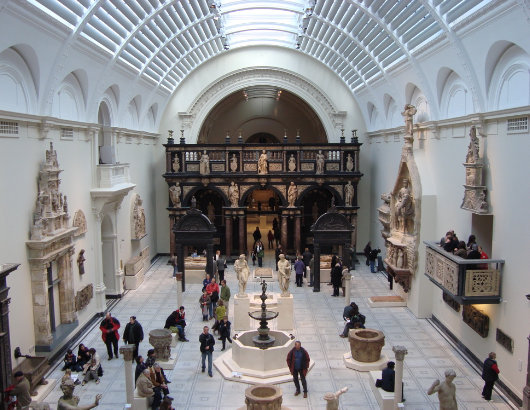
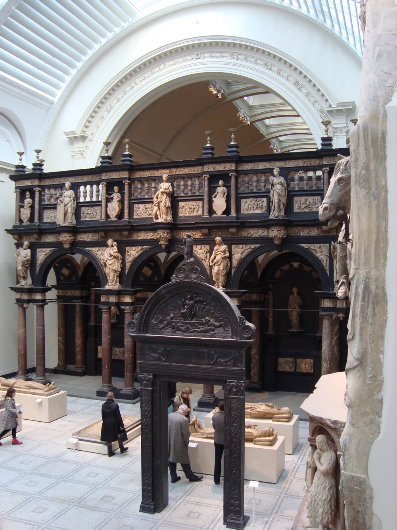 When on earth was the last time I was in the V&A? To be honest, I’ve no idea, though I’m certain my first visit was (like that of many others) as a wee one, the summer after kindergarten to be precise. It’s a stonking great place with tons of stuff in it, and one of the startling few that deal with architecture as a subject in its own right. (A fact which wins admiration in the heart of this architecture fan).
Of course the Victoria & Albert Museum has been fresh in the minds of many most recently for the re-opening of its Medieval & Renaissance sculpture galleries. The new arrangement cost over £30 million, took seven years to complete, and includes ten new display rooms displaying, as the Guardian put it, “a world of ravishing luxury”. So it seemed silly not to have a little wander round the South Ken institution yesterday, especially since it was a rainy afternoon. (more…)
Old Master & 19th Century at Christie’s
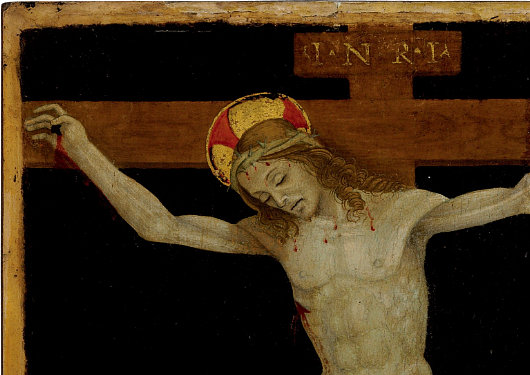
Being something of an auction-house dilettante — I last brought you a virtual update from the Dublin bidding chambers — there are a number of works up for grabs in tomorrow’s Old Master & 19th Century Paintings, Drawings, and Watercolors auction at Christie’s here in New York that caught my eye. A few other items sold in recent auctions follow at the bottom. (more…)
Early Morning, Madison Square
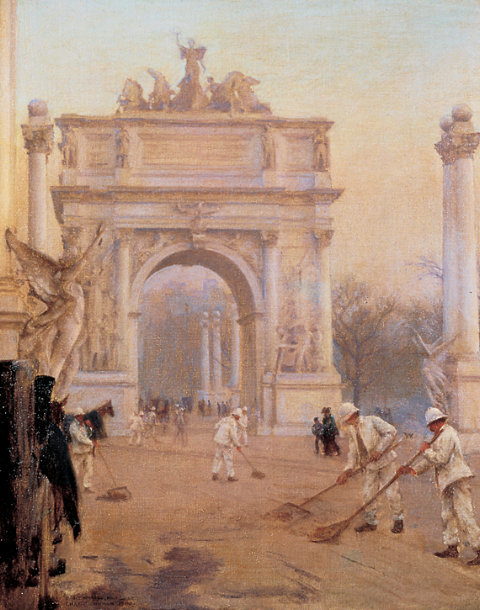
Charles Courtney Curran, Early Morning, Madison Square
Oil on canvas, 22 in. x 18 in.
1900, National Arts Club, New York
In the Dublin auction houses
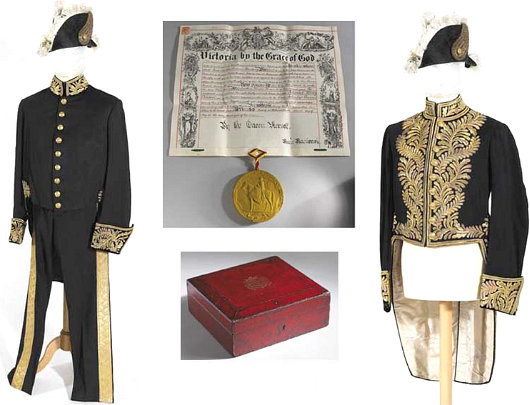
THOUGH THE BORING brains of tawdry metropolitan Londoners are all too quick at relegating Dublin to the provincial periphery of the mind, the Irish capital is a perpetual treasure trove for the old-fashioned and right-minded. A number of items of interests have recently been sold at the auction houses of the fair city, including two ceremonial uniforms (above) of that famous Dubliner, Sir Edward Carson QC. Carson was the lawyer and statesmen who passionately, but without bigotry, opposed the cause of Irish home rule. He was the defending barrister in the Archer-Shee case and led the Marquess of Queensberry’s team in Oscar Wilde’s doomed libel action. Carson and Wilde had been at Trinity together (where — little known fact! — Carson was a keen hurler), and the famous wit quipped of Carson “I trust he will conduct his cross-examination with all the added bitterness of an old friend.”
Having a fine mind for the law and being politically active meant that Carson moved through several layers of British government, holding numerous offices and positions. He was a Privy Counsellor twice over (of both Ireland and the United Kingdom), a Queen’s Counsel, served in the House of Commons as leader of the Irish Unionists, and held portfolios in the British Cabinet. The two ceremonial uniforms auctioned at Whyte’s of Molesworth Street are from his appointment as Solicitor General for England & Wales in 1900. (He had been Solicitor-General for Ireland in 1892, and was later Attorney General for England & Wales, in which position he was succeeded by the F.E. Smith of Chesterton’s famous poem).
The two black wool morning coats feature gold bullion trimming and buttons, and are sold with a pair of trousers with gold filigree stripe matching the lesser uniform, and knee breeches & silk stockings for the greater uniform. The vellum appointment as Solicitor General was also included, in a red leather box with a gilt impression of the royal arms. Whyte’s estimated a sale of €50,000-€70,000, but the lot’s realised price was €42,000. (more…)
‘The Feast of St Nicholas’, Jan Steen
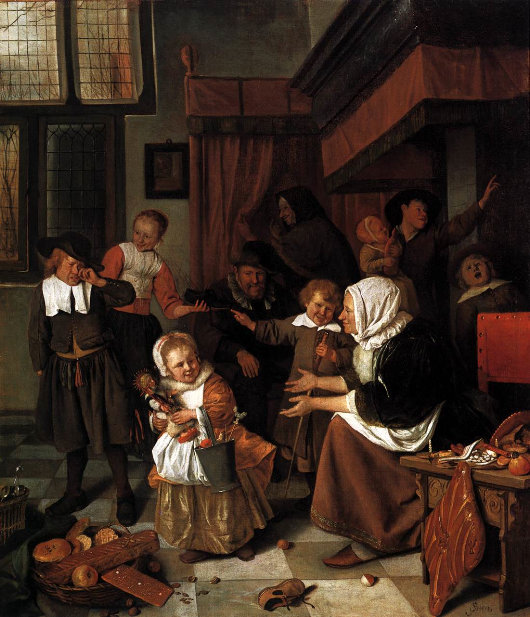
1665-68, Rijksmuseum
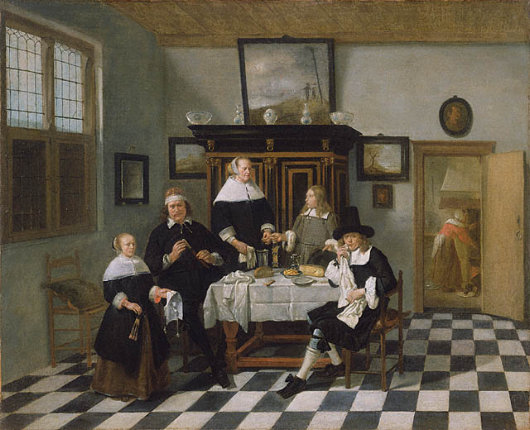
Quiringh Gerritsz. van Brekelenkam, Family Group at Dinner Table
Oil on canvas, 22 5/8 x 28 3/8 in.
1658-1660, J. Paul Getty Trust
Note: Previously attributed to Cornelis de Man.
A Message from the Minister of Culture
I’ve sometimes thought that the Director of the Metropolitan Museum is New York’s unofficial Minister of Culture. Concerned New Yorkers were at the edge of their seats with anticipation to discover who would be chosen to direct this great museum once it was announced that the legendary Philippe de Montebello was relinquishing the throne. As The New Criterion put it “Few events have been awaited with more trepidation in the world of culture — we were going to say ‘the art world,’ but it embraces much more than that — than the appointment of the next director of the Metropolitan Museum of Art.”
The massive sigh of relief when Thomas Campbell was announced as the successor could probably be heard as far as the Louvre (or even the Hermitage), even though Campbell’s name was on none of the supposed shortlists for the job. Judging by his past as curator of tapestries, Campbell is widely believed to be utterly reliable at continuing the high standard maintained during de Montebello’s reign. May God guide him well in his task! (more…)
Richard Demarco
“We didn’t know quite how to take this, but we sat there entranced.”
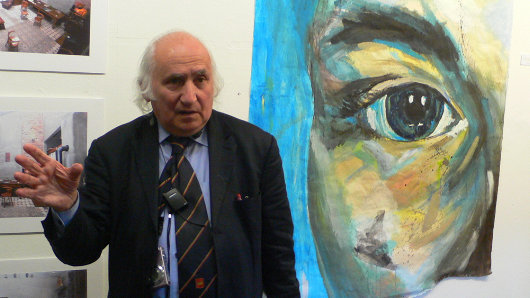
ONE OF THE markedly few deficiencies of the English language is coming up with a word to describe Richard Demarco. The Scottish press have generally settled upon “impresario” but even that somewhat-ambiguous word fails to do the man justice. Ricky was born in Edinburgh in 1930, grew up in Portobello, and remembers the day when his mother held him back from school because Italy — from whence he stock came — had just declared war on Great Britain. He’s attended every Edinburgh Festival since the very first one began in 1947 — as the founders put it, to “provide a platform for the flowering of the human spirit” in the grim aftermath of the Second World War.
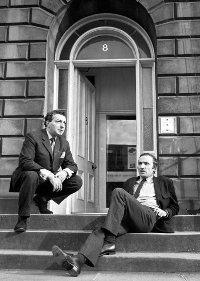 Richard Demarco, couchant, with noted Scots caricaturist Emilio Coia.
In 1963, he cofounded the Traverse Theatre, Scotland’s theatre for new writing, and three years after that founded the Richard Demarco Gallery which promoted Scotland’s cultural interchange with artists across Europe including — very importantly to Richard — from behind the Iron Curtain that divided the continent into free and captive halves. This was during an age when many in the arts world were too busy sympathizing with the murderous totalitarianism that had subjugated half of Europe. Richard has been a deep critic of the choices made by the British government as patron of the arts throughout the decades of his life, but not too long ago he finally patched things up with the Scottish Arts Council.
Readers of Alexander McCall Smith’s 44 Scotland Street might recall the man who comes to speak to the Scottish Police College. The “really important person from the art world in Edinburgh”, as Mr. McCall Smith puts it, comes and tells the trainee constables about the gorgeousness of Italian carabinieri uniforms and how the Scottish psyche still suffers from the iconoclasm of the Reformation, and even suggests architectural alterations and more sympathetic decoration of the Police College. “We didn’t know quite how to take this, but we sat there entranced,” the character admits in 44 Scotland Street. Anyone who either knows Ricky or has been to one of his lectures would immediately recognize the unnamed subject of the passage.
I first met the man when I was a first-year student at St Andrews and he had come up from the capital to give a lecture. I can’t remember what the stated subject was but this is entirely irrelevant as so vast and wide-ranging is the mind & experience of Richard Demarco that he is known for (some would say “notorious for”) never keeping within the bounds of the stated subject. Those who invite Richard to speak shouldn’t bother with a subject, just make posters stating “RICHARD DEMARCO SPEAKS”, giving the date, time, and place, and a crowd of interested characters is bound to turn up. (more…)
The Young Emperor
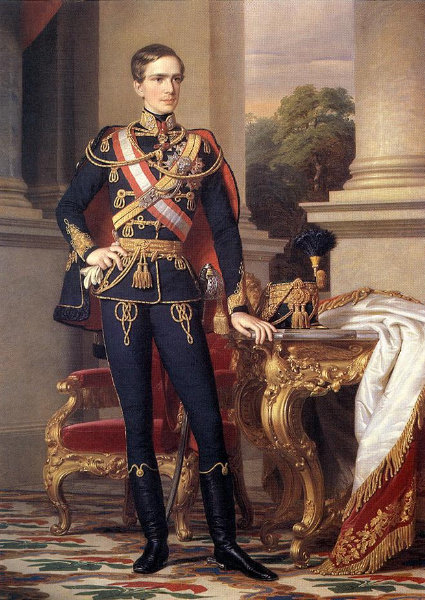
A reader notes in correspondence that Franz Joseph was not always old — though the popular conception certainly is of the Emperor in his later years. Here is the young Franz Joseph (or Ferenc József), just five years after he became Emperor of Austria, King of Hungary, Bohemia, &c. The Emperor became so at such a young age because his father, Ferdinand I, abdicated after the revolts of 1848.
This portrait is by the Hungarian painter Miklós Barabás, who also completed portraits of the composer Franz Liszt, the novelist Baron József Eötvös de Vásárosnamény, William Tierney Clark, the Bristol engineer responsible for Budapest’s famous Chain Bridge, and many, many others.
Cropsey in the City
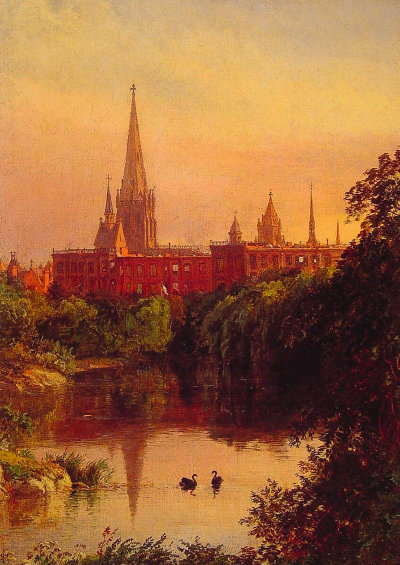
Jasper Francis Cropsey, A View in Central Park — The Spire of Dr. Hall’s Church in the Distance
Oil on canvas, 17⅛ in. x 12⅛ in.
1880, Private collection
THE HUDSON RIVER SCHOOL artist Jasper Francis Cropsey has obtained of late an almost cult-like following, the kool-aid being distributed from the well-oiled machinery of the Newington-Cropsey Foundation in Hastings-on-Hudson, New York. Whether the object of worship is worthy of the faithful’s adulation is a matter of some speculation, but it’s admittedly refreshing to see a fan base surrounding a painter of the old school rather than one of the numerous gimmicky hacks floating around the New York art scene these days. Cropsey (like most Hudson River painters) is known for his luscious landscapes, so I thought it markedly unusual when I stumbled upon this painting, a cityscape. The artist’s vantage point is from The Pond in Central Park, looking over Fifty-ninth Street (Central Park South) towards where the old Plaza Hotel now stands. (more…)
The Tappan Zee in the Age of Rig & Sail
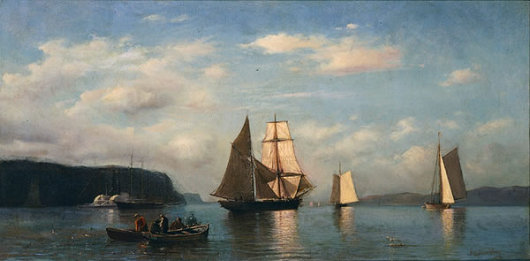
Julian Oliver Davidson, The Hudson River from the Tappan Zee
Oil on canvas, (size not on record)
1871, Private collection
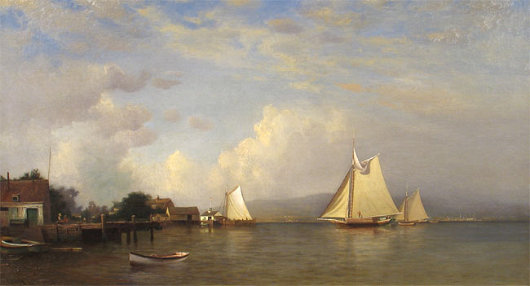
Francis Augustus Silva, On the Hudson near Tappan Zee
Oil on canvas, 20 in. x 36 in.
1880, Private collection
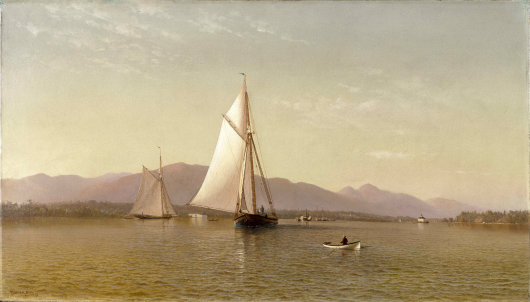
Francis Augustus Silva, The Hudson at the Tappan Zee
Oil on canvas, 24 in. x 42 3/16 in.
1876, Brooklyn Museum
Allies Day, May 1917
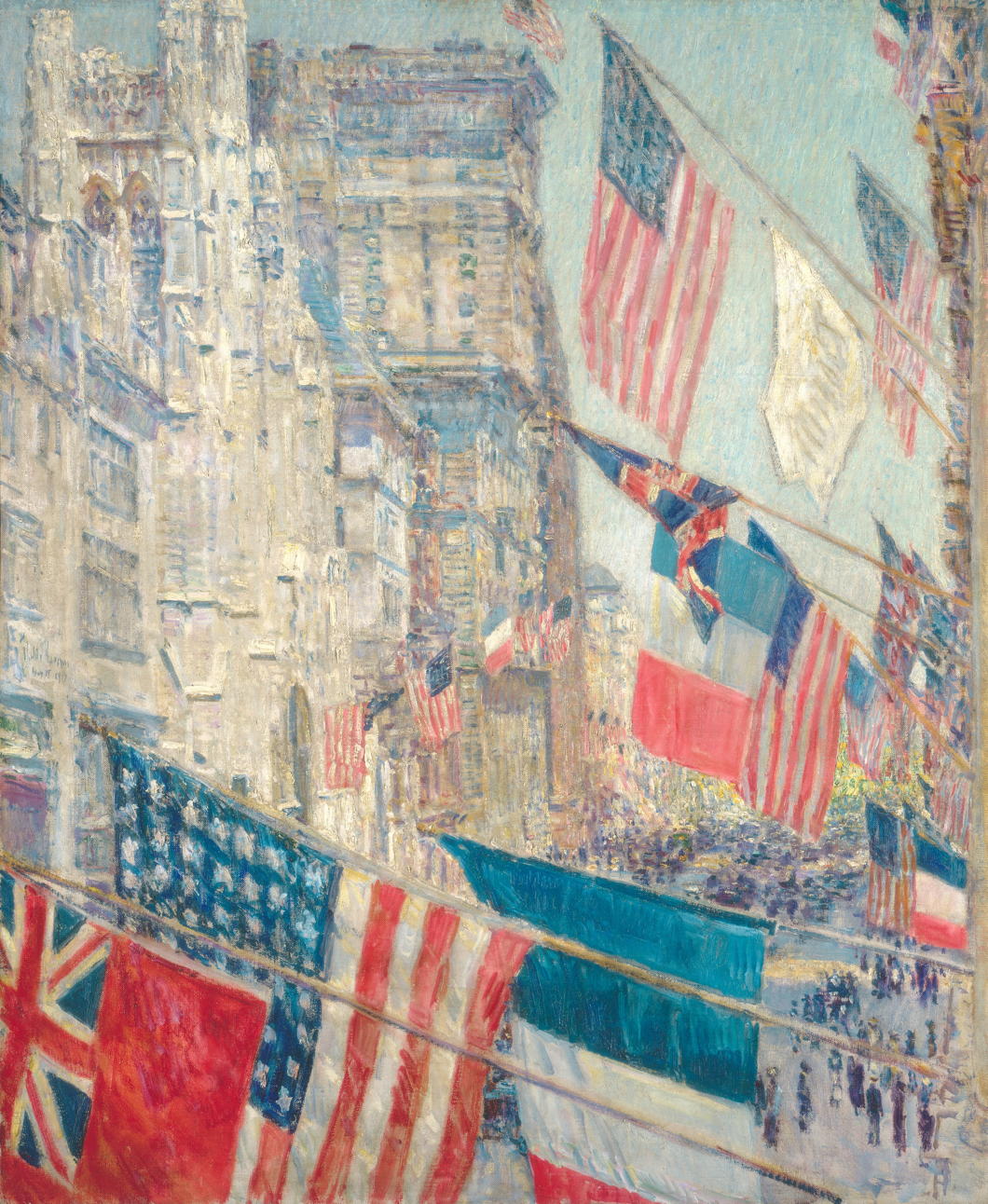
Childe Hassam, Allies Day, May 1917
Oil on canvas, 36½ in. x 30¼ in.
1917, National Gallery of Art (U.S.)
This has long been one of my favourite paintings, ever since I first saw it one day when I was very young while it was on loan to the Metropolitan. On a May day in 1917, Fifth Avenue was temporarily proclaimed “the Avenue of the Allies” and the British and French commissioners paraded down the boulevard with great ceremony. Childe Hassam set his easel on a balcony on the corner of Fifth Avenue and 52nd Street and took in the splendid scene towards the Church of St. Thomas and the University Club. Patriotic displays were much more lively then, involving bursts of flags and banners, than the rather dull and monotonous display of the single Stars-and-Stripes that became widespread after the World Trade Center attacks.
Interestingly, “Avenue of the Allies” aside, the United States was not actually allied to France and Great Britain during the First World War. President Wilson thought the United States was not so lowly as to merely intervene in a biased manner on the side of those it had lent money, but rather for the high-minded goal of establishing justice (or, as we might honestly call it, the destruction of Catholic Europe). The U.S., then, was merely a “co-belligerent” rather than an “ally”, though obviously this high-minded euphemism was lost on most people. During the Second World War, Finland found itself invaded by the Soviet Union and abandoned by the West, so — having no taste for Hitler and his Nazi charades — they became “co-belligerents” with Germany, rather than concluding a more distasteful alliance.
Hassam, who died in 1935, had little time for the avant-garde schools of art that came after the Impressionism he practised, and described modernist painters, critics, and art dealers as a cabal of “art boobys”. He was almost forgotten in the decades after his death, but the rising tide of interest in Impressionism from the 1970s onwards lifted even the boats of American Impressionists, and his Flags series of paintings are widely-known and much-loved today.
De Volkskrant
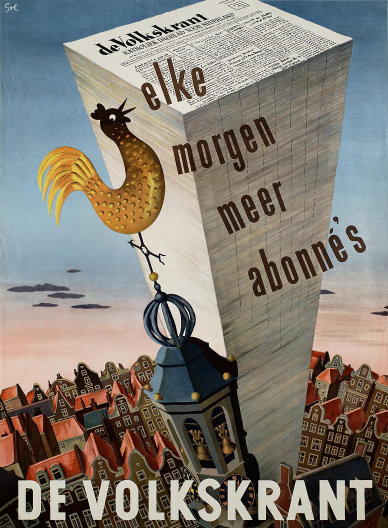
A FAVOURITE POSTER of mine combines a number of the things I love: newspapers, architecture, and the Netherlands. Arthur Goldsteen designed this handsome poster to advertise the daily newspaper De Volkskrant in 1950.
Paris Arts & American Arms
Maj. T. L. Johnson’s Cartographic Mural on Governors Island
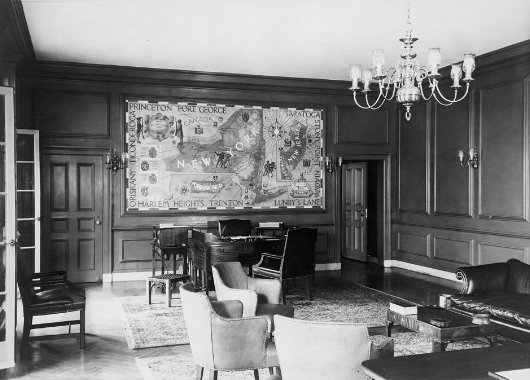
One of the best aspects of the inter-war construction of Governors Island is that the refinement of McKim Mead & White’s architecture is matched inside by a series of interior murals painted under the auspices of the WPA. These murals often veered towards the refreshingly jocular, as can be seen in the War of 1812 mural in Pershing Hall (a corner of which is captured here by photographer Andrew Moore). The mural by Major Tom Loftin Johnson (educated at the Ecole des Beaux-Arts in Paris) depicted here, however, is a map of the area under the purview of the Second Corps, U.S. Army headquartered at Governors Island; namely the states of New York, New Jersey, and Delaware, and the then-territory of Puerto Rico.
A Turbaned Pasha with an Elephant
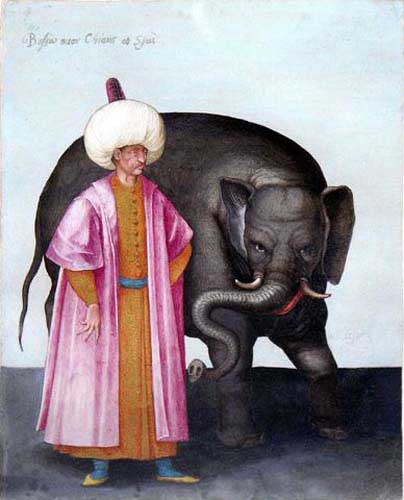
Tempera and shell gold on paper, 10.0 in. x 8.8 in.
c. 1580-1585, Private collection (now for sale)
While known as a painter of large-scale works, a draftsman, and a printmaker, Jacopo Ligozzi — the court painter to the Grand Dukes Francesco I, Ferdinando I, Cosimo II, and Ferdinando II — also completed a series of drawings depicting Turkish traditional dress and costume. Interest in the Ottoman empire and its people increased after the great victory over the Turks at Lepanto in 1571, commemorated as a Christian feast to this day. Ligozzi never visited the Turkish realm himself but derived his inspiration for this particular illustration from the drawings accompanying the Venetian edition of Nicolas de Nicolay’s chronicle of the 1551 embassy of Henri II to the court of Suleyman the Magnificent.
That, at any rate, is the source of the Pasha; the inspiration for the elephant (of the African variety) remains undetermined. Suleyman gave an African elephant accompanied by a turbaned mahout and a staff of thirty to the future Holy Roman Emperor Maximilian II, and it’s probable that Ligozzi used a printed depiction of this as a source for the picture here. (Earlier, in 1514, the King of Portugal gave an elephant named Hanno to Pope Leo X, a Medici).
This charming work, available from the Arader gallery of New York, is one from the series of tempera depictions of Turkish costume by Ligozzi, twenty of which are in the Uffizi, one in the Metropolitan Museum of Art, and another in the Getty Museum of Los Angeles. It was probably painted between 1580 and 1585 while the artist was in the service of Grand Duke Francesco I de Medici. Ligozzi’s depictions were first bound in a single volume in the possession of the Gaddi family before, in 1740, the manuscript reached the hands of the Manifattura Ginori de Doccia, the porcelain factory founded outside Florence in 1735 by Marchese Carlo Ginori. There, it inspired a number of porcelain platters which are today dispersed around collections worldwide. The principal group of these illustrations were donated to the Uffizi in 1867.
Search
Instagram: @andcusack
Click here for my Instagram photos.Most Recent Posts
- Brunel’s Unbuilt Capitol February 3, 2026
- Cricket at Fordham January 27, 2026
- Palacio Barolo Revisted January 14, 2026
- Learning to Love Liguria January 14, 2026
- Crux Alba No. 2 January 13, 2026
Most Recent Comments
Book Wishlist
Monthly Archives
Categories