About Andrew Cusack
 Writer, web designer, etc.; born in New York; educated in Argentina, Scotland, and South Africa; now based in London.
 read more
News
Blogs
Reviews & Periodicals
Arts & Design
World
France
Mitteleuropa
Knickerbockers
Argentina
The Levant
Africa
Cape of Good Hope
Netherlands
Scandinavia
Québec
India
Muscovy
Germany
Academica
A Walk in the Country

In need of a little fresh air this morning, I went for a walk amidst the lush greenery of our fair county, and took a few snapshots to show you my explorations. Shall we? (more…)
The Dahlgren Residence
No. 15 East Ninety-Sixth Street, New York
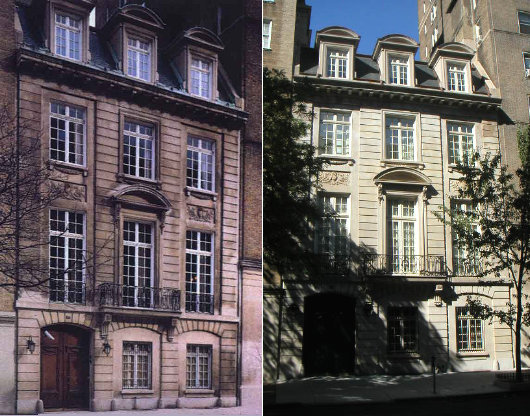
THE UPPER EAST SIDE is crossed by a number of wider cross-streets, of which 96th Street has long been agreed as the northern boundary of the neighborhood. (Overeager real estate agents have recently taken to advertising properties above that boundary as being located in the “Upper Upper East Side”). At number 15 on East 96th Street sits a splendid townhouse of superb design and execution often known as the Dahlgren residence. (Seen above, before and after complete restoration).
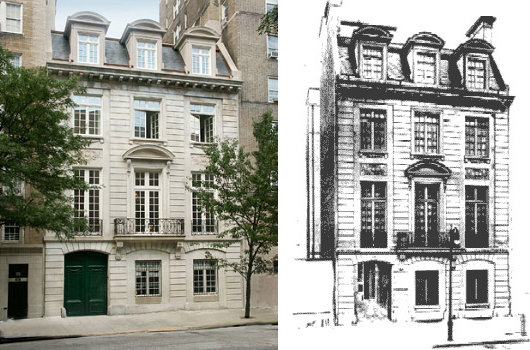
Lucy Wharton Drexel was of the Philadelphia Drexels, from which also came Saint Katharine Drexel, the founder of the Sisters of the Blessed Sacrament, as well as the initiators of Drexel University in that Pennsylvanian city. Young Miss Drexel married Mr. Eric B. Dahlgren, son of Admiral John A. Dahlgren, inventor of the Dahlgren Gun used during the Civil War at a ceremony in the Philadelphia cathedral officiated by Archbishop Corrigan of that see, and the couple soon moved to Manhattan where Mr. Dahlgren had a seat on the New York Stock Exchange. The Dahlgrens themselves were a prominent Catholic family, with Eric and his brothers attending Georgetown University, where to this day the main chapel bears the Dahlgren name. (Well-to-do Catholics must have been in short supply at the time, because after Lucy and Eric’s marriage, Lucy’s sister Elizabeth was married to Eric’s brother John).
The Army, the Navy, and the Air Force
Our Armed Forces Support Ron Paul With Their Checkbooks

THE RECENT REPORT from the Federal Election Commission on second-quarter donations to presidential candidates contained an interesting piece of information. Observers extrapolated those donors who listed the branches of the military as their employer to see who our fighting men (and women) were backing in the presidential election. Who came first in military donors? None other than our own Dr. Ron Paul, the Air Force veteran who is determined to end the empire and save the republic. This didn’t surprise me, but it was a welcome reassurance that good old-fashioned common sense still prevails amongst the brave souls in our armed forces. (more…)
CNN Comes to St Agnes
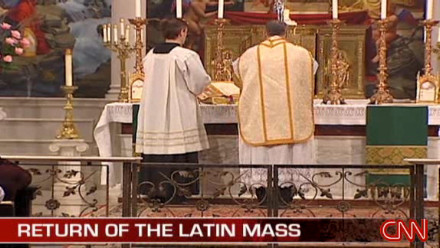
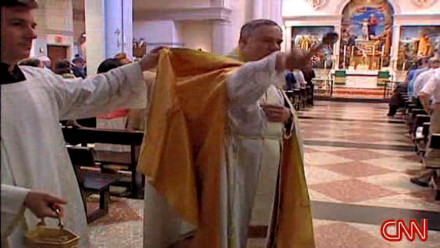
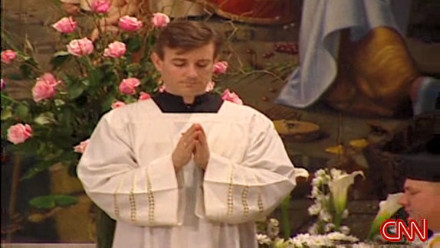
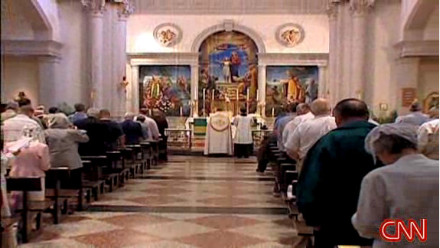
A month or so ago, Ms. Delia Gallagher of the Cable News Network (and cameraman) came to the Church of St. Agnes to take a few shots of the 11:00 Tridentine mass and to interview a few folks on the street afterwards. Those who spoke with her said she was genial, and the report she filed is available from the CNN website here (2:08, following a thirty-second advertisement).
Dino!
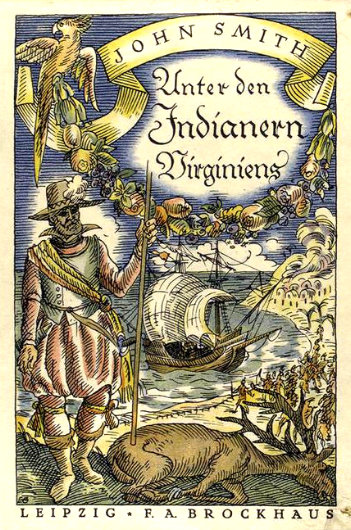
‘The Mass of All Time answers that need.’
In his superb column in this week’s Scotland on Sunday, Gerald Warner responds to the Holy Father’s motu proprio.
The bishops of England and Wales tried furiously to prevent the liberalisation of access to the Traditional Mass, lobbying the Vatican against it, although they had recently approved the regular celebration of a Mass for homosexuals. On the eve of the publication of the Papal document, Bishop Kieran Conry, of Arundel and Brighton, said: “Any liberalisation of the use of the rite may prove seriously divisive. It could encourage those who want to turn the clock back throughout the Church.” So, a liberal opposes liberalisation – why are we not surprised?
As for turning the clock back throughout the Church, it is the only possible remedy for the crisis that has afflicted it since the Second Vatican Catastrophe. The Novus Ordo (New Order of Mass) was invented by Archbishop Annibale Bugnini, assisted by six Protestant pastors, after the Vatican Council. When this appalling confection was presented to the 1967 Synod of Bishops it was indignantly rejected. Yet two years later it was universally imposed. Bugnini described it in 1974 as “a major conquest of the Catholic Church”.
Strange language from a Catholic bishop; but there were stranger things to come. In July, 1975 Bugnini was abruptly sacked after Pope Paul VI was shown evidence he was a Freemason. Bugnini denied the fact, but when the register of Italian Freemasonry came to light in 1976, it recorded Bugnini as having been initiated on April 23, 1963, with the esoteric code name ‘Buan’. So, even during the Vatican Council, Bugnini was already under automatic excommunication for Masonic membership. What possessed Paul VI to sack the author of the New Mass, but retain his liturgy for universal use? At least this episode throws light on the handshake at the ‘kiss of peace’ in the new rite. […]
For 40 years frenzied efforts have been made to stamp out the Traditional Mass and yet it has flourished. It is now past the point where there is the remotest prospect of extinguishing it. As Pope Benedict said in his explanatory letter accompanying the motu proprio Summorum Pontificum (“Of Supreme Pontiffs”), one of his reasons for freeing the Old Mass was the number of young people now flocking to it.
That is what the faded 1960s trendies who are now bishops and seminary rectors fear: the impossibility of maintaining a revolution that has burned itself out. The Second Vatican Council means as little to today’s youth as the Council of Chalcedon. Its elderly adherents are like dads dancing at the school disco. Many young people are seeking the mystical and the numinous. The Mass of All Time answers that need.
Within the past month the Vatican has issued two other documents: one restoring the requirement for a two-thirds majority at Papal conclaves, which rules out the future election of an extreme radical; and a reassertion of the doctrine that the Protestant sects cannot be recognised as ‘churches’. It will not damage ecumenism, because that died long ago. Its premise was that Rome must endlessly divest, while Canterbury ordained priestesses and moved ever further from Catholicism. [Ed.: bold mine.] When you see a Church of Scotland congregation praying the rosary you may believe ecumenism is a two-way process.
‘The Mass of All Time will outlive the Sixties revolutionaries‘, by Gerald Warner; Scotland on Sunday, 15 July 2007.
Previously: Martyrs of Spain, Pray for Us! | Warner on the Gotha
California Wedding
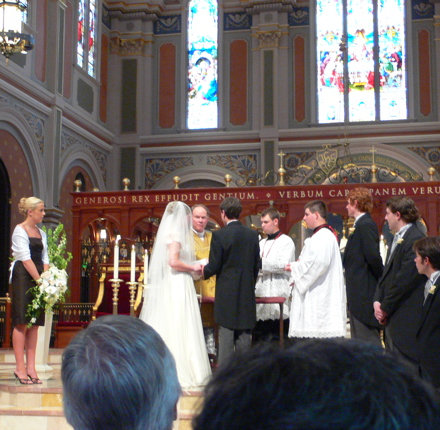
WHERE DOES ONE begin? Scotland, I suppose. I’ve known Abby since Day One in St Andrews. I was among the number of poor souls who were foolish enough to participate in the ‘overseas orientation’ for non-UK/RoI students. Through pure chance, a group of us who sat down to dinner in Andrew Melville Hall that night decided to venture into town that evening and see what was what. We went to the Central, which became my regular for a very long time, until replaced by the Russell for my tertian and magistrand years. Jon I met just over a year later, during his first few weeks at St Andrews (as I entered my second year). It was at the Catholic Society and he told me he came from Bristol. I was fairly ignorant of Bristol other than that it is home to the British Empire and Commonwealth Museum. I asked Jon about the museum and his answer was such as to confirm that he and I were on the same page of the book, so to speak. He didn’t come much to Canmore at the start and so we were not instant friends, though I do recall running into him in the corridor of New Hall at 2 or 3 in the morning one night and striking up a brief conversation (most likely telling him he ought to be coming to Canmore, since like-minded folk are a dime a dozen there).
Anyhow, by some time or another we were all best of friends, and both Jon and Abby have been the source of (and butt of) so many of the great amusements we enjoyed at St Andrews. Good God, how many laughs! In Canmore, the Cellar Bar, the Central, the Russell, in flats, in Edinburgh, in Rome, in Dublin, in New York, and most recently in California, whenever one is with Jon and Abby there is always a good time to be had, and an appropriately inappropriate comment to relish. I have picked up the habit of simply saying “ledge” (that is, short for “legend”) every time I utter the name of Jon Burke. Abby once desired that I verbally express precisely what it was that makes Jon such a legend, but all I could say was that it was of the same nature as the Sacraments in Eastern theology: appreciated, nourishing, and clung-to, but ultimately a mystery.
It was California then, which was host to our latest adventure, namely the joining in matrimony of Miss Abigail Hesser and Mr. Jonathan Burke. I flew in on Wednesday and upon checking in at the hotel, the desk clerk handed me a written message from Jon: “We’re in the bar, free cocktails!” The wonderful rehearsal dinner was the next evening, and I was privileged to have the best seat in the house, with Fr. E and Mrs. Hesser on my left and Abigail and Jon on my right. But Friday… Friday was the wedding! (more…)
Remember!
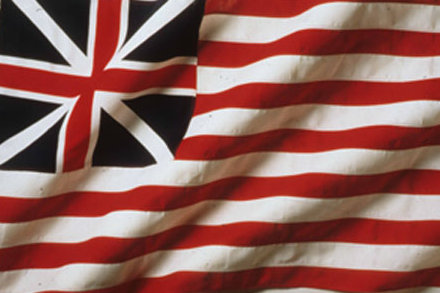
Two hundred and thirty-one years ago today, the tragedy of our people commenced.
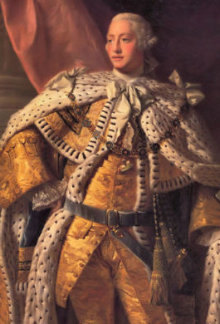
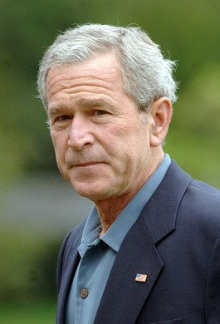
I’ll take the old George over the new one any day of the week.
Elsewhere: Charles Coulombe writes Still Rebels, Still Tories while Daniel Larison reflects on Law and Loyalism.
Wedding Bells
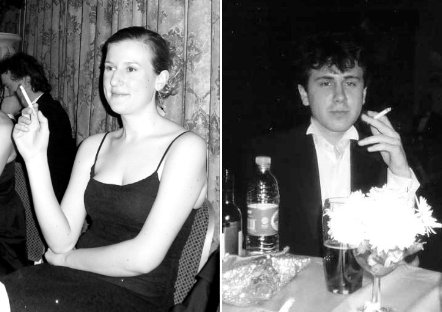
I’m off to California for a few days (I’ve never been before) for the wedding of two friends with whom some of the readers of this blog may be acquainted, Abigail Hesser & Jonathan Burke. It should prove quite good fun, and of course we certainly had a ball at the the last wedding. And it’ll be in the old rite as well!
‘First of Britain’s Sons To Die’
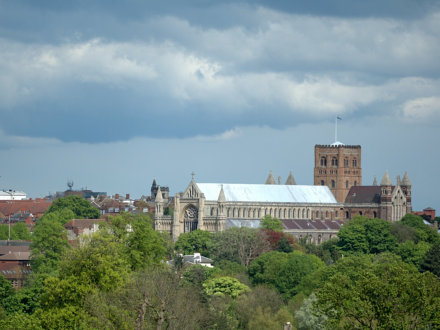
Saint Alban, June 22
Sing triumphant o’er the foe;
Tell of him, a Martyr glorious,
For the changeless truth laid low;
Faithful servant, bright example,
Whom all lands and ages know.
Valiant soldier, noble Martyr,
First of Britain’s sons to die,
Pagan ire and cries withstanding,
By the grace of God Most High,
By the strength of Him, Protector
Who, in strength and power, was nigh.
Laud and honour to the Father,
Equal honour to the Son,
Adoration to the Spirit,
Ever Three and ever One,
Consubstantial, Co-eternal,
While unending ages run.
These were the words to the school hymn at St. Alban’s College down in Argentina, which I briefly had the privilege of attending and which is currently celebrating its centenary year (more on that in another post). It was down beneath the Southern Cross that I first became more closely acquainted with good Saint Alban, who was the first Christian martyr of Britain.
‘We’ve Lost More Than We’ll Ever Know’
In Three Corners of the Commonwealth, Popular Musicians Demonstrate Rejection of Modernity
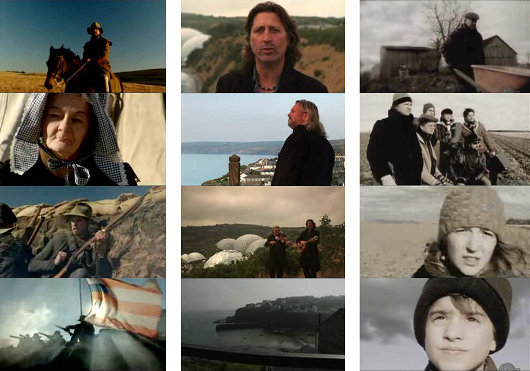
In South Africa, England, and Quebec, popular musicians have expressed regret over the rejection of their traditional cultures by the destructive onward march of modernity. The hugely popular song ‘De La Rey’, sung in Afrikaans by Bok van Blerk I have already explored in greater depth in an article for Norumbega, but ‘Roots’ by England’s Show of Hands and ‘Dégénération’ by Québécois group Mes Aïeux are worthy of notice.
‘Roots’, as one would expect from the title, decries the severing of the English people from their lyrical musical tradition and lifestyle, being replaced by “Indian, Asian, Afro-Celt”, while the song’s refrain evokes images of a people adrift: “Haul away boys let them go/ Out in the wind and the rain and snow/ We’ve lost more than we’ll ever know/ On the rocky shores of England”. In one verse, the song taps into a particular pet peeve of mine, the complete invasion of pubs by the dreaded television screen:
Is three folk singers in a pub near Wells
Well I’ve got a vision of urban sprawl
Pubs where no one ever sings at all
And everyone is staring at a TV screen
Overpaid soccer stars, prancing teens
Australian soap, American rap
Estuary English, Baseball cap
There is no greater killer of good conversation than the massive influx of television screens into the pubs. Just the other evening I was down in our regular in Bronxville and from my vantage point alone I could see three television screens. The bright technicolor projection of baseball, soccer, football, and rugby into an otherwise dark space is too great a distraction for the eye. Bad enough sitting in a booth, it is even worse having dinner at the bar when you do not at least have the advantage of sitting opposite your drinking companion. How much more of a good time it would be without those dazzling displays, and without the obnoxiously loud music, either piped in from the jukebox or else some third-rate band singing third-rate cover songs of third-rate rock groups. Bleccch! It is those moments when one yearns to be ensconced by the fire in the Russell on the Scores in St Andrews, either accompanied solely by a book and a solid pint, or engaged in the usual joviality with the after-Rosary crowd.
The Québécois song, meanwhile, laments the decline of the family from large in size and from tied to the earth to solitary and confined in the city. The name of the band — Mes Aïeux — means “My Ancestors” and ‘Dégénération’ is a play on words, meaning ‘degeneration’ but also soundling like ‘des generations’ — ‘of the generations’. The song opens:
Ton arrière-grand-père, il a labouré la terre
Et pi ton grand-père a rentabilisé la terre
pis ton père, il l’a vendu pour devenir fonctionnaire
Et pi toé mon p’tit gars, tu sais pu c’que tu vas faire
Dans ton p’tit trois et d’mi ben trop cher, frète en hiver
Il te vient des envies de dev’nir propriétaire
Et tu rêves la nuit d’avoir ton petit lopin d’terre
Your great-great grandfather cleared the earth
Your great-grandfather laboured on the earth
Your grandfather turned a profit from the earth
Then your father sold the earth to become a bureaucrat
Now you, my little man, you don’t know what to do
In your little 3 room apartment – too expensive and cold in the winter
You want something to call your own
And you dream at night of having your own little piece of earth.
The next verse goes on about the maternal line of the family: the great-great grandmother “had fourteen kids”, the next generation “had about as many”, the next “had three, that was enough for her” but “Your mom didn’t want any, you were an accident”.
Quand tu fais des conn’ries, tu t’en sauves en avortant
Mais y’a des matins, tu te réveilles en pleurant
Quand tu rêves la nuit d’une grande table entourées d’enfants
Now you, my little lady, change partners all the time
When you make a mistake you escape by aborting
But there are mornings you awake crying
When you dream in the night of a large table surrounded by little ones.
The song is one of the most popular downloads on iTunes Canada, and the band’s most recent album has gone double-platinum.
Music videos of ‘De La Rey’, ‘Roots’, and ‘Dégénération’ after the jump.
Sources Fides et Ardor: Sign of Hope – Mes Aïeux | Fides et Ardor: The People Speak (or sing…)
Previously: Breaking the Mold in Quebec | The Men Who Saved Quebec | Hitchcock in Quebec
Diary

EARLY YESTERDAY EVENING I found myself on the West Side and with a bit of free time, so I sauntered down Broadway to Columbus Circle to finally investigate in the flesh this great public place after its complete rehabilitation some two years ago. I am happy to report that the Circle’s refurbishment is quite a successful one. My only reservations were minor details, but as these were all done in an extremely simple and smooth modern style, they are much less objectional, and perhaps serve to focus attention on the sculptor Gaetano Russo’s splendid monumental column from which Cristóbal Colón, Admiral of the Ocean Sea, Viceroy and Governor of the New World presides over the grand plaza consecrated to his memory.
Colón’s name is rendered on the monument as ‘Cristoforo Colombo’, which seems appropriate since the monument was paid for by public subscription raised by Italian-Americans, and it is commonly assumed that Columbus was Italian. He may have been Genoese, Catalan, Portuguese, or Corsican, but he described himself as being from lands under the rule of Genoa, which lends significant credence to the Genoese and Corsican theories. In Spain, however, he is apparently Spanish, or so one daughter of Iberia, the wife of a frequent reader of this little corner of the web, informs us. The happy couple were strolling through Columbus Circle recently and the good lady was shocked to discover the purported Italian origin of the man who brought Christianity to the New World. After all, Spain’s national day — the Día de la Hispanidad — is October 12, the day in 1492 that Columbus first set foot in the New World. (In woebegone Venezuela, the vulgar socialist dictator has proclaimed October 12 as the Día de la Resistencia Indígena, or Day of Indigenous Resistance, and the Columbus Column in their capital city of Caracas was toppled on that day in 2004).
Anyhow, not only was the good lady was shocked at our monument’s proclamation of the Discoverer’s Italian-ness but the combination of that with the presence in Columbus Circle of the beautiful U.S.S. Maine Monument led the observer to conclude that the public plaza should be instead be named “Anti-Spain Square”. It was the disastrous sinking of the Maine, after all, which led to the Spanish-American War, the result of which was America’s most unfortunate and regretful act of taking Spain’s empire off her hands. (Contrary to Mr. Kipling’s idealistic urging of America to take up the imperial mantle in his poem ‘White Man’s Burden’, this turned out to be a fairly good deal for the Spaniards, and a very poor deal for the peoples of the United States).
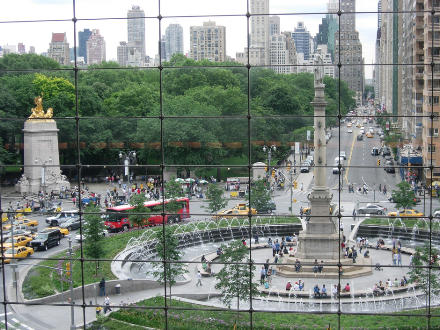
Politics aside, I enjoyed the few minutes during which I ruminated in the square (or circle, if ye be pedants). I recall many years ago the debate surrounding how to improve Columbus Circle that there was a near-universal desire for there to be more trees but that the very shallow depth between the street surface and the subway below presented difficulties in this regard. The redesigners have solved this problem by encircling the center of the circle with a raised ridge, on which are planted a number of trees which, we trust, will be even more appreciated as they mature. The raised ridge, which features jets of flowing water around the inner circle, also serves to innoculate the center from the noise of the traffic which, the Circle being situated at the confluence of Broadway, Central Park West, Central Park South, and Eigth Avenue, is considerable.
And so, I judge the new Columbus Circle a success, and I am happy to the report that the American Society of Landscape Architects concur, having awarded it their General Design Award of Honor. Another random fact which surprisingly few people know is that Columbus Circle is the spot from which distances to New York are numerated, akin to Moscow’s Red Square and London’s Trafalgar Square (if I recall correctly).
LEAVING COLUMBUS CIRCLE, I sauntered back up Broadway to another of Manhattan’s engaging places, Lincoln Center. Critics accused the architects of the performing arts complex of cribbing off of Rome’s E.U.R., but one wishes the three halls facing Lincoln Center’s plaza had the same crispness of those modern Roman structures. The thirty years between the E.U.R. of 1930s Italy and the Lincoln Center of 1960s New York were years in which the quality of modernism declined just as greatly as its supremacy increased. Despite this, the plaza of Lincoln Center is one of the most successful public places in Manhattan. I have often lamented the absence from New York of the open piazza so common on the Continent. This plaza competes with Central Park’s Bethesda Terrace as the best example of the type in Manhattan.
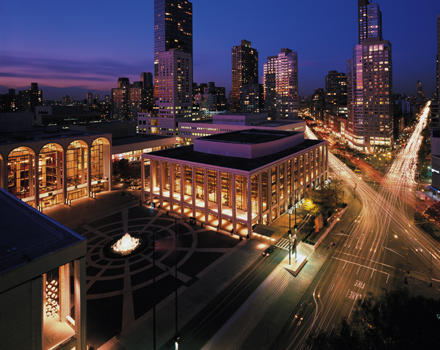
The plaza is raised above the neighboring Lincoln Square (one of the many triangular squares created by Broadway’s healthy disregard for the grid) and is reached by a gentle rise of stairs. Viewed from the square it appropriately seems like a stage upon which all our great dramas are played. The dance of the New York City Ballet in the State Theatre on the left, the music of the New York Philharmonic in Avery Fisher Hall on the left, and in the center, the Metropolitan Opera in the Metropolitan Opera House; the greatest opera company in the Americas, not to mention one of the best in the entire world. And from the hour of seven or so on the evening of performances, the three arts mix and mingle in the plaza as attendées wait to meet their companions and enter whichever of the respective halls they are to spend the evening. Some jealously preserve a seat of honor on the rim of the central fountain, while others hide from the elements (the beating sun, the heaving rain) in the shelter of the arcades, while still more meander slowly to and fro around this piazza dell’arte.
It’s unfortunate, then, that the elders of Lincoln Center insist on erecting temporary stage structures in the middle of the plaza, partially obstructing the fountain, during the warmer months when, above all other times, it should be open for all to enjoy. The creators of Lincoln Center conceived of the obvious desire for outdoor performances during the summer, and so they built the bandshell in Damrosch Park in between the Opera House and Avery Fisher Hall, just diagonally adjacent to the plaza. Surely the plaza is meant to be an open space where all the events can mix, blend, interact, influence, before finally separating into their appropriate places. If there are to be outdoor performances, hold them where they were meant to be, and if that place suffers from some malfunction of design, then redesign that place rather than rudely interjecting a particular event into what was meant to be the public square for all.
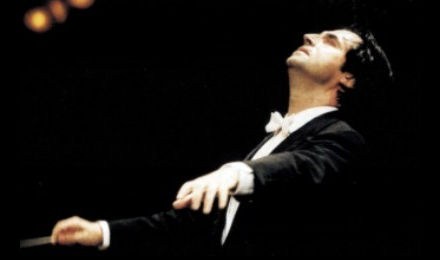
THIS PARTICULAR EVENING it was into Avery Fisher Hall for a performance of the New York Philharmonic, now in its 165th year. The program was Rossini’s overture to Semiramide and Schubert’s Symphony No. 3 in D major (D.500), with Dvořák’s Symphony No. 5 in F major (Op. 76). Riccardo Muti wielded the conductor’s baton and the result was definitely less than was expected. I had only heard Muti’s conducting on the radio in passing and, while admittedly not devoting much thought to it, he seemed a fairly capable conductor. In person, however, he left much to be desired. Rossini’s overture was merely lackluster but Schubert’s symphony was actually surprisingly poor. Perhaps the worst thing was observing Muti in action, for the man looked like an utter fool. His conducting seemed unnatural, choreographed, even foppish. And those ridiculous jestures towards the first violins! I wanted to slap the man, and I shouldn’t be surprised if the violins wanted to themselves. Towards the middle of the Schubert symphony, I began to think of the man as a proper ass, the tails of his evening jacket acting the part of hind legs. My only solution to the St. Vitus’s dance on the conductor’s dais was to shut my eyes and imagine that I was there in the Austrian capital in that autumn of 1815, after the chancellors and ministers of the crowned heads of Europe had departed the Congress of Vienna when peace and order were plotted, in the home of Otto Hatwig where (scholars posit) the work was premiered.
The friend I accompanied that evening actually knows about the inner workings of music (I am actually an ignoramus on the subject, and simply like what sounds good to me) and agreed completely with me on the subject during the intermission. Luckily, the Dvořák fared better, but one had the niggling suspicion that this was the Philharmonic working its magic in spite of Mr. Muti, rather than at the command of his baton. My knowledge and appreciation of Dvořák has slowly grown, from that first passing fondness we all have for his Symphony No. 9 “From the New World”. My appreciation for the Philharmonic grows, when I see they have printed in the program that Mr. Dvořák was born in Mühlhausen, Bohemia, rather than the more modish style of “Nelahozeves, Czech Republic” that would find favor elsewhere.
Perhaps I am too hard on Mr. Muti. Perhaps he and the Philharmonic were simply not a good fit for eachother. At any rate, I shouldn’t complain as one doesn’t often get box seats to a sold-out performance with every seat in the hall occupied (though, to be honest, the sound is better down in the orchestra seats). But how I wish I could have seen von Karajan while he was alive!
After the baton had finally fallen for the night, my friend and I had the same stroke of genius at exactly the same moment and decided to head up to good old Café Lalo, but unfortunately everyone else had the same idea (Saturday night? Lalo’s? What did we expect?) so we comforted ourselves with a pint or two at the Parlour instead.
Ron Paul on the Box
Above, the scene outside as Ron Paul heads in to Stephen Colbert’s faux news show and below, the interview itself.
On the Daily Show:
Interestingly, Ron Paul remains on top for Technorati tags, tracking what people are talking about on blogs, even beating Paris Hilton at the height of her media kerfuffle.
Peter Simple V
A wise old man once said ‘good fences make good neighbours’ but history is chock full of territorial disputes nonetheless. Woefully, ancient land claims and cross-border irridentism reared their ugly head on the pages of the Daily Telegraph as well. These two columns, the fifth installment in our series introducing you to the greatest newspaper columnist who ever lived and breathed, retells just such a territorial dispute which erupted over changes in the layout and denomination of the newspaper page on which the Peter Simple column perenially (since the dawn of time, beyond the age of our forefathers) appeared.
A Small Crisis
 For some time now, the eastern part of the region in which my column occasionally appears has been headed “End Column” no matter what appears on it, whether literary criticism, humour or chess (which has taken permanent occupation of the southern part of the territory). Then one morning the world woke to a startling innovation: the territory was simply headed “Chess”. What had happened? Had an extremist group of chess writers suddenly claimed sovereignty over the whole region? It was the more surprising in that of all the paginal powers, Chess, devoted as it is to pure intellect, has historically always been the least aggressive, well satisfied with the ample territory it occupies and threatening no other power.
A serious diplomatic incident followed. Our own columnar government was not slow in sending a strong protest to the chess authorities. Partial mobilisation was ordered. A squadron of Blériot Mark II reconnaissance aircraft was sent to patrol the whole area. A gunboat of the Don Carlos class was despatched to the Interpaginal Sea.
Fortunately, the traditional panic and flight of the peasantry was quelled in time. Soon, wiser counsels prevailed and the crisis evaporated as rapidly as it had arisen. But it cannot be too strongly emphasised that in the event of a serious threat to the paginal balance of power, the column could not and would not stand idly by. For although this column is not always corporeally present in the eastern territory it is always present in a metaphorical and mystical sense, in all the territories where it has ever been.
Signs and Wonders
AS veteran readers of this column will recall (“Are there any others?” our boring expert “Narcolept” never fails to ask), a diplomatic impasse was caused last month when the chess flag was raised over the territory formerly known as “End Column”, implying an exclusive claim to suzerainty over a territory shared by other powers including ourselves.
The situation was supposed to have been normalised when, as is so often the case, wiser counsels prevailed. Sadly, this is not so. Extremist elements in the column, who have long been impatient with its conciliatory policy, are thought to be planning direct action by launching a surprise attack on the heartland of chess itself, the southern region in which its authority has never been disputed, and setting up a puppet state with only nominal allegiance, perhaps, to the parent column.
Are these hotheads and firebrands harking back to the so-called “time of troubles” in the 1970s, the time of “Peter Simple II” and the labyrinthine intrigues that led to a coup by General Waugh and the present “binary” dispensation? As a timely pronunciamiento from the Ministry of Columnar Guidance warns, “Such irresponsible day-dreaming could have the gravest possible consequences,” even leading to the onset of the long dreaded Fimbul Winter and the end of the column itself.
To make matters worse, certain elements seem bent on defying the basic columnar Law of Non-Interaction, which prevents different aspects of the column from interfering with each other. For example, it is rumoured that certain senior officers of that normally inactive regiment, the Stretchfordshire Yeomanry, are sympathetic to the extremists and, in the event of an attack on the chess territory, might join an expeditionary force (which would be styled a “liberation army”). As the pronunciamiento insists, this would be “playing with fire”.
Nor is this all. General Sir Frederick (“Tiger”) Nidgett, veteran war hero, founder of the Royal Army Tailoring Corps and Saviour of Port Said in the “dark days of 1942 when the Nazi hordes were bawling tastelessly at the gates of Egypt” – see Nidgett’s autobiography Up Sticks and Away (Viper and Bugloss, £25; paperback, £15; bulk orders welcomed) – is reported to have offered his services to the insurgents as military adviser and expert on combined operations. In a startling development, sources in the Columnar Foreign Office have dismissed Nidgett as “a buffoon and play actor whose boasted wartime service was in fact confined to looting bales of cloth and blackmailing shopkeepers in the bazaars of Cairo”. But a statement issued “from the desk of Gen Sir Frederick Nidgett” countered these criticisms with a firm “no comment”. Members of the Tailoring Corps Veterans Association have already hit back in defence of their founder, threatening reprisals with their traditional weapons, the dreaded armoured trouserpresses, failing an immediate withdrawal and apology.
To add to the confusion and breakdown of basic columnar principles, Sir Alywin Goth-Jones, the unpopular chief constable of Stretchford, has offered to place a squadron of his controversial police submarine force (currently patrolling the lake in sex-maniac-haunted Sadcake Park in pursuit of drink-drivers) at the disposal of the proposed expedition for a landing on the supposedly undefended shores of chess’s southern territories.
The pronunciamiento goes on to say that the extremists have “stirred up a veritable hornets’ nest and it is high time wiser counsels prevailed”. But will this deter irresponsible hotheads encouraged by intelligence reports, almost entirely fallacious, of growing dissent within chess itself, and signs of a modernising tendency which would put this noble and august game under the control of that most un-English authority, the Ministry of Sport?
This would lead to assimilation in the West Midland Chess League, responsible for the up-to-the-minute vandalism and hooliganism which mark the disgustingly popular annual matches between Stretchford Chess Circle and Nerdley Boardsmen, when drunken fans invade and overturn the board, and even assault the pieces without distinction between queen and pawn.
As the pronunciamiento inevitably states, it is time to draw back from the precipice. Equally, it cannot be too strongly (or too often) emphasised that, in the event of a serious threat to the paginal balance of power, this column could not and would not stand idly by.
A matter of degrees
Gerald Warner wrote a recent Scotland on Sunday column on the occasion of Edinburgh University revoking the honorary degree bestowed upon Zimbabwean President Robert Mugabe.
He discussed various honorary degrees which had been bestowed upon monsters, tyrants, and evil men, and finished his column with a case from Spain.
The most morally grotesque academic elevation was perpetrated in Spain, in 2005, when the Universidad Autónoma de Madrid conferred a doctorate honoris causa on Santiago Carrillo, former leader of the Spanish Communist Party.
As chief of police in Madrid in 1936, he had presided over Cheka death squads that murdered huge numbers of people (2,800 in one weekend) for the crime of being ‘bourgeois’.
Throughout the squalid degree ceremony, people concerned with the honour of Spanish academe punctuated the proceedings with shouts of “Murderer!”
The most effective denunciation of this naked emperor, however, had been made during his journey back from exile. As the aircraft approached Madrid, with the arrogance of a reinstated member of the nomenklatura, he told the stewardess to ask the captain if he could enter the cockpit to get a better view of the capital.
Moments later the public address system came to life: “This is your captain speaking. In 15 minutes we shall be landing at Madrid Barajas airport. Before that, I would like you to see the historic site of Paracuellos de Jarama to the right of us. That was where thousands of innocent people were executed during our civil war. The man responsible for those executions is one of your fellow passengers, Don Santiago Carrillo Solares. He is sitting in seat 27-B.”
“That pilot,” Gerald writes, “deserved an honorary degree”.
The Grand Master in Poland
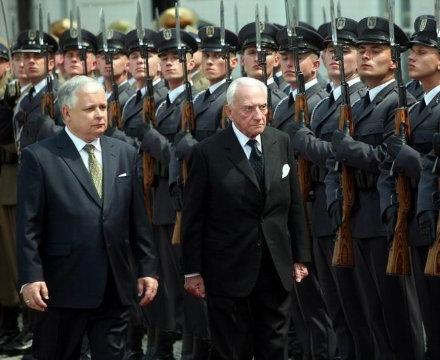
ROME, 21 MAY 2007 (From the Order of Malta) — The Grand Master’s meeting in Warsaw with the President of the Polish Republic Lech Kaczynski and the joint signature with the Health Minister of a framework cooperation agreement were two of the most significant moments of the state visit of His Most Eminent Highness Fra’ Andrew Bertie to Poland.
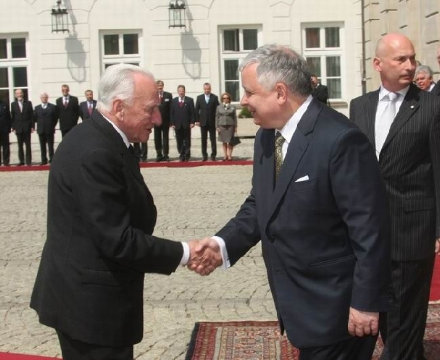
Received at the presidential palace with military honours, after the exchange of decorations, the Grand Master and the President of the Republic, flanked by their respective delegations and by ambassadors Vincenzo Manno and Hanna Suchocka, enjoyed a long and cordial conversation. A tangible sign of solid bilateral relations is the signature of the cooperation agreement for medical and hospital assistance. The order’s Grand Hospitaller and the Polish Health Minister signed a document that will help to improve the assistance given by the Order of Malta’s Polish Association, and in particular to the poorest and most needy. There will also be increasing support for terminal patients and the disabled through the numerous Order of Malta centres active in Poland, as well as cooperation for the development of emergency and first-aid medicine.
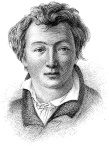
Im wunderschönen Monat Mai
Als alle Knospen sprangen,
Da ist in meinem Herzen
Die Liebe aufgegangen.
Im wunderschönen Monat Mai,
Als alle Vögel sangen,
Da hab ich ihr gestanden
Mein Sehnen und Verlangen.
This poem by Heinrich Heine (I’m sure I need not tell you) is one of my favorites, and was famously set to music by Schumann. I had intended to post it to herald the beginning of May, but distractions got the better of me, so I am afraid it must herald the month’s departure.
Ron Paul for President
What can one say about Ron Paul? This man is clearly the dream candidate for the presidency. A doctor and Air Force veteran with years of experience in congress (with a record to be proud of), Ron Paul tells the simple, honest truth and applies common sense to politics. Who knew, until Paul told us, that if we returned to year-2000 spending levels, we could eliminate the federal income tax entirely. Entirely. Imagine that! Paul is the only Republican candidate willing to tell it like it is rather than spew meaningless piously ideological bits of nonsense to please the Republican establishment. I almost wish I was a Republican so that I could have the satisfaction of voting for him in the primary.
Naturally, the media have done their utmost to ignore Dr. Paul or pidgeon-hole him as irrelevant but the word’s been getting out anyhow. He’s even managed to turn up as a topic of discussion on ABC’s ‘The View’, flagship television program of the bored suburban housewife.
The Mayoress of Cape Town
Die Burgemeester van Kaapstad
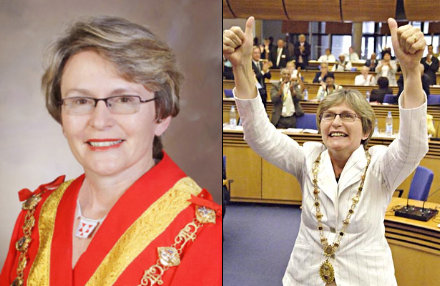
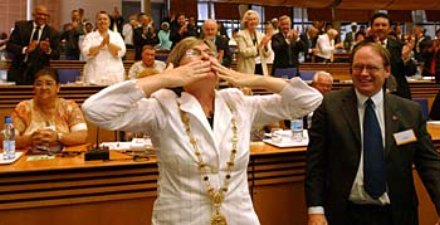
AND SO, Helen Zille, the Mayor of Cape Town, has been elected Leader of the Opposition in South Africa, a somewhat curious choice to head the country’s (liberal) Democratic Alliance against the current government (the ANC alliance of racial nationalists, the Communist Party, and the trade union confederation) as she is not actually a member of parliament and has stated that she has no intention of seeking election to that body. If only she would bring a little more reserve to the council chamber, a virtue she is sadly lacking (as evidenced in pictures above and below).
Ms. Zille has a reputation as a bit of a go-get-em mayor, and something of a pragmatist, which is welcome, as any efforts that chip away at the rule of the noxious African National Congress are wholeheartedly welcome. And she’d have to try hard to be any worse in her new job than her noxious predecessor, ‘Tony’ Leon. While we would probably vote (depending on geography) for the Inkhata Freedom Party or the Vryheidsfront, we wish Ms. Zille luck as Leader of the Opposition.
Introducing Norumbega

Charles Coulombe takes on Europe and the Empire.
Thomas Marshall discusses the rising tide of Scotland’s SNP.
Andrew Cusack tackles an Afrikaans folk song and Anglosphere Union.
George Irwin ponders his move to Zululand.
In Bohemian Living, Lord Michael Pratt’s The Great Country Houses of the Czech Republic and Slovakia is reviewed.
And of course we have Thirty Facts About the Duke of Edinburgh.
Search
Instagram: @andcusack
Click here for my Instagram photos.Most Recent Posts
- West Point July 30, 2026
- Brunel’s Unbuilt Capitol February 3, 2026
- Cricket at Fordham January 27, 2026
- Palacio Barolo Revisted January 14, 2026
- Learning to Love Liguria January 14, 2026
Most Recent Comments
Book Wishlist
Monthly Archives
Categories