About Andrew Cusack
 Writer, web designer, etc.; born in New York; educated in Argentina, Scotland, and South Africa; now based in London.
 read more
News
Blogs
Reviews & Periodicals
Arts & Design
World
France
Mitteleuropa
Knickerbockers
Argentina
The Levant
Africa
Cape of Good Hope
Netherlands
Scandinavia
Québec
India
Muscovy
Germany
Academica
An Imperial Birthday
Gerald Warner has a splendid post over on his Daily Telegraph blog on Crown Prince Otto’s ninety-sixth birthday. Heavens! how time flies. It seemed like only yesterday was his ninety-fifth.
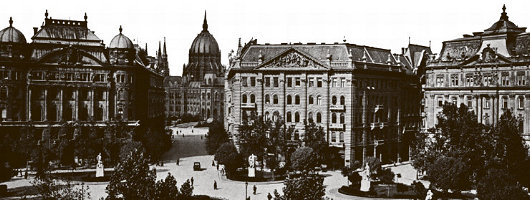
My favorite scene that Gerald mentions is this one:
Bravo, Budapest. And Hoch Habsburg!
The Kaiser Karl Soldiers’ Homes
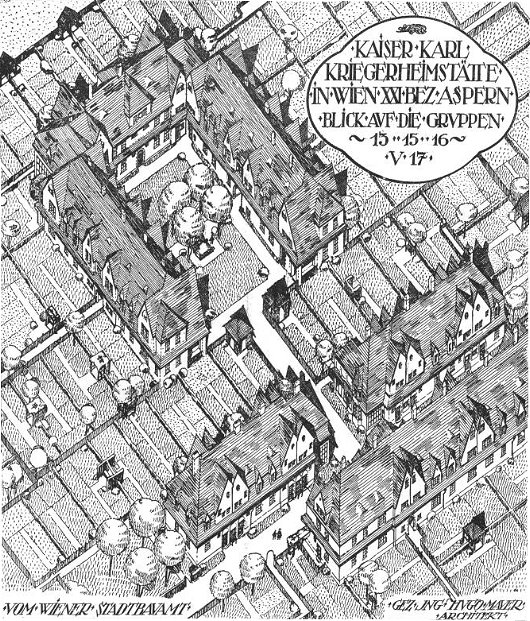
An unexecuted design. The architect later designed a number of housing projects during the First Austrian Republic.
Victory in Uruguay
Leftist president defies his own coalition, vetoes bill to legalize abortion.
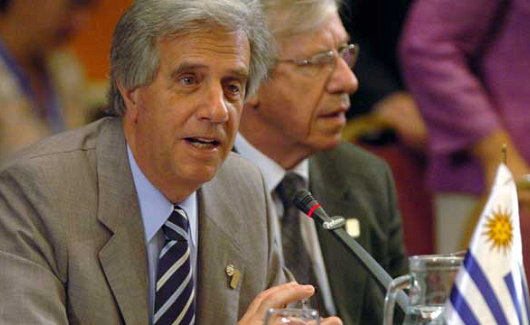
The President of Uruguay, Dr. Tabaré Vázquez, has vetoed a bill passed by the two chambers of the country’s congress that would overturn the ban on abortion. Pre-natal infanticide has been illegal in Uruguay since 1938, and the left-wing Frente Amplio coalition that has a congressional majority sought to enact one of the most permissive abortion laws in Latin America. While President Vázquez, an oncologist by training, is a member of the Frente Amplio party, his constituent group in the alliance is the Christian-Democratic Party which proclaims as part of its platform an “absolute respect for human rights”. The veto sends the bill back to the congress, where the Frente does not have the two-thirds majority necessary to override the veto.
Aquinas Visited Yugoslav Abortionist in Dream, Now Defender of the Unborn
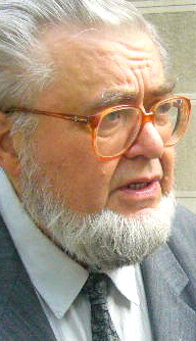 Madrid, Nov 12, 2008 / 09:21 pm (CNA). — The Spanish daily “La Razon” has published an article on the pro-life conversion of a former “champion of abortion.” Stojan Adasevic (pictured, right), who performed 48,000 abortions, sometimes up to 35 per day, is now the most important pro-life leader in Serbia, after 26 years as the most renowned abortion doctor in the country.
“The medical textbooks of the Communist regime said abortion was simply the removal of a blob of tissue,” the newspaper reported. “Ultrasounds allowing the fetus to be seen did not arrive until the 80s, but they did not change his opinion. Nevertheless, he began to have nightmares.”
In describing his conversion, Adasevic “dreamed about a beautiful field full of children and young people who were playing and laughing, from 4 to 24 years of age, but who ran away from him in fear. A man dressed in a black and white habit stared at him in silence. The dream was repeated each night and he would wake up in a cold sweat. One night he asked the man in black and white who he was. ‘My name is Thomas Aquinas,’ the man in his dream responded. Adasevic, educated in communist schools, had never heard of the Dominican genius saint. He didn’t recognize the name”
“Why don’t you ask me who these children are?” St. Thomas asked Adasevic in his dream.
“They are the ones you killed with your abortions,’ St. Thomas told him.
“Adasevic awoke in amazement and decided not to perform any more abortions,” the article stated.
“That same day a cousin came to the hospital with his four months-pregnant girlfriend, who wanted to get her ninth abortion—something quite frequent in the countries of the Soviet bloc. The doctor agreed. Instead of removing the fetus piece by piece, he decided to chop it up and remove it as a mass. However, the baby’s heart came out still beating. Adasevic realized then that he had killed a human being,”
After this experience, Adasevic “told the hospital he would no longer perform abortions. Never before had a doctor in Communist Yugoslavia refused to do so. They cut his salary in half, fired his daughter from her job, and did not allow his son to enter the university.”
After years of pressure and on the verge of giving up, he had another dream about St. Thomas.
“You are my good friend, keep going,’ the man in black and white told him. Adasevic became involved in the pro-life movement and was able to get Yugoslav television to air the film ‘The Silent Scream,’ by Doctor Bernard Nathanson, two times.”
Adasevic has told his story in magazines and newspapers throughout Eastern Europe. He has returned to the Orthodox faith of his childhood and has studied the writings of St. Thomas Aquinas.
“Influenced by Aristotle, Thomas wrote that human life begins forty days after fertilization,” Adasevic wrote in one article. La Razon commented that Adasevic “suggests that perhaps the saint wanted to make amends for that error.” Today the Serbian doctor continues to fight for the lives of the unborn.
Diary
Nothing ever happens in New York, or at least nothing when compared to Edinburgh, London, or Paris; this is my perpetual complaint. But when it rains, it pours, and so it was last night. Not only was it press day, the busiest day of the month-long cycle of creating each issue of The New Criterion, but then the evening beheld both “A Festive Evening Celebrating the Mission of the von Hildebrand Project” at the University Club and “The Reception and Dinner to Present the Medal for Heraldic Achievement” at the Racquet & Tennis Club. The simultaneous events were organized by the Dietrich von Hildebrand Legacy Project and the Committee on Heraldry of the New York Genealogical & Biographical Society, respectively.
A rarely-assembled fun crowd was promised at the von Hildebrand event, but nor was the presentation of the G&B’s medal a common occurrence (there have been only three awarded to date) so I simply resolved that I would do my best to attend both. (more…)

Peter van Dongen
Dutch champion of the Ligne Claire style

No doubt one of the most enjoyable aspects of Hergé’s great Tintin series of bandes desinées is the brilliant ligne claire style in which they are drawn; the most talented living exponent of which is surely Peter van Dongen. This Dutch striptekenaar (“comic-strip draughtsman”) first came to the attention of the comic world in his mid-twenties with Muizentheater (1990), a tale of two working-class Amsterdammers growing up during the Great Depression. As van Dongen despises clichés, it is one of the few books about Amsterdam that doesn’t feature a single canal. It was nearly ten years before van Dongen produced his second comic work, Rampokan, depicting the Dutch East Indies during their final years before independence. (On Rampokan, van Dongen collaborated with fellow ligne-clairist Joost Swarte, whose work is often seen in The New Yorker).

Van Dongen works as a commercial illustrator, and he often provides illustrations for NRC Boeken, the book review of the NRC Handelsblad. A celebration of the tenth anniversary of NRC Boeken was held at the Felix Meritis and is commemorated in the drawing above.
The New York Central Building

The New York Central building once presided majestically over an equally elegant Park Avenue, which is cleverly directed through the building from the south, emerging through the double arches on the north side. Sadly, while the tower (now known as the Helmsley Building) still stands, the view of it has been marred since 1963 when the Pan Am building was built between it and Grand Central Terminal. When it opened, the Pan Am building was the largest commercial office building in the world, and it was certainly one of the least graceful. The 1960s and 70s were not kind to Park Avenue on either side of Grand Central, and many of the traditional-style buildings have been demolished or re-clad in glass.

Russia Turns a Cinematic Page in History
Big-budget film celebrating anti-Communist hero & White Russian leader Admiral Kolchak is partly funded by Russian government

Here’s a film that has it all: naval battles, mutiny, revolution, civil war, brave men, beautiful women, sin, sacrifice, and betrayal on multiple levels. But “Admiral” («Адмиралъ»), which opened in Russia this month, is notable for another reason: this is the first major film depicting the tsarist White Russians as the good guys to receive at least part of its funding from the Russian government. The eponymous hero of the film is Alexander Kolchak, the naval commander and polar explorer who later led part of the White Army fighting the Bolsheviks during the Russian Civil War.
A New Speaker in Quebec
Opposition parties unite to elect new President of the Assembly

François Gendron, the longest-serving member of Quebec’s National Assembly, has been elected Speaker against the will of the province’s prime minister, Jean Charest. The ADQ (conservative, autonomist) and PQ (social-democratic, pro-independence) are opposition parties but combined have more seats than the Libéral (center-left/center-right) minority government Mr. Charest leads. Action democratique du Québec and the Parti Québécois united to select Mr. Gendron without consulting Mr. Charest, which the premier described as a “breach of confidence” that was the result of “subterfuge”. The vote took place by secret ballot, and it was only in the hours before that the opposition parties withdrew their respective candidates in favour of a united ticket for Gendron.
Bless!

From a Louisiana newspaper:
The Hanover Bank: A Classical Gem
No. 35, East Seventy-second Street
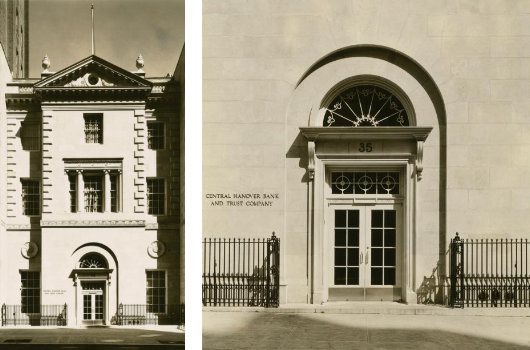
Passing by, as I sometimes do, the Chase branch bank at East 72nd St., I think to myself “There’s a fine establishment, in which I should keep my money”. The thought never jumps from theory to practice, however, as I am a patriot in everything but finance, and keep my florins safe with the Hongkong & Shanghai Bank instead. Nonetheless, it’s a handsome building, and the Central Hanover Bank & Trust Company should be commended for erecting it. Central Hanover merged with the Manufacturers Trust Company in 1961 to form Manufacturers Hanover (“Manny Hanny”), which was taken over by Chemical Bank in 1991, which was acquired by Chase Manhattan Bank in 1995, which merged with J.P. Morgan in 2000, and the consumer & commercial banking arm of J.P. Morgan Chase & Co. is now simply known as “Chase”.
While the original Chase National Bank was only formed in 1877, with all these mergers and acquisitions, “Chase” can now trace its lineage back to the foundation of the Bank of the Manhattan Company in 1799, the second oldest bank after the Bank of New York. But — would you believe it? — “Chase” is now headquartered not in the hallowed caverns of Wall Street but — wait for it — Chicago, Illinois!
The Coronation of Blessed Charles
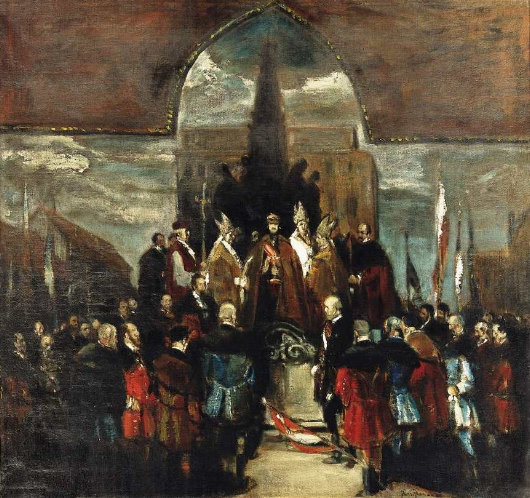
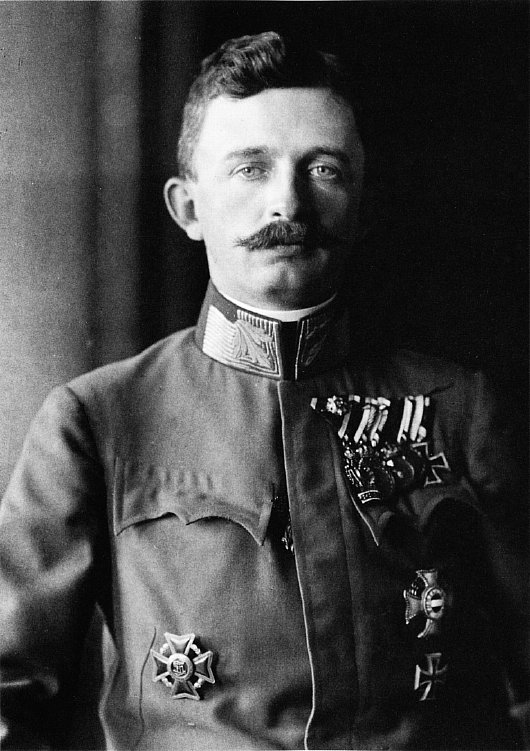
Blessed Emperor Charles was crowned as Apostolic King of Hungary on the 30th of December in 1916. It was the last Hapsburg coronation to this day. For those interested there are two accounts which do justice to the sacred rites. One is by that most devoted admirer of the Hapsburgs, Gordon Brook-Shepherd, in his excellent biography of Charles, The Last Hapsburg. (Brook-Shepherd also wrote excellent and quite readable biographies of the Empress Zita, of Crown Prince Otto, of Chancellor Dollfuß, and Baron Sir Rudolf von Slatin Pasha).
Charles & Zita
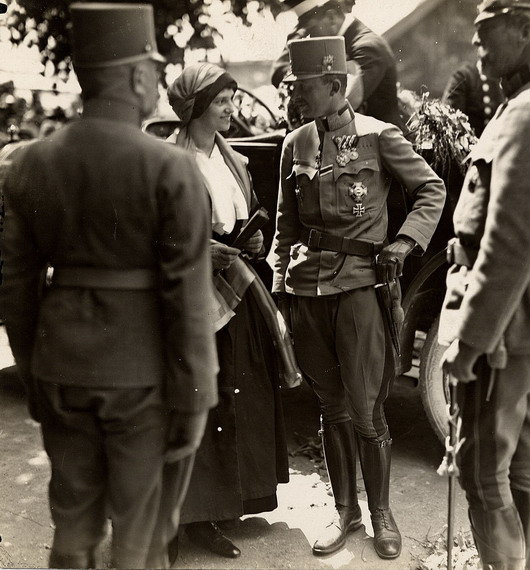
October 21 was chosen as the Feast of the Blessed Emperor Charles not because it is the date of his death — which is 1 April 1922 — but rather to commemorate the marriage (photo, below) between Archduke Charles of Austria (as he was then) and Princess Zita of Bourbon-Parma in 1911. While Charles died a mere thirty-four years of age, Zita lived on to ninety-six before passing away in 1989 (when I myself was four).
Not very long ago I was in Quebec City, which was where the Empress Zita and the Imperial Family spent their exile during the Second World War. The Hapsburgs, dispossessed first by the Socialists and then by the Nazis, were then so poor they had to collect dandelions from which to make a soup, but they took poverty in their stride. Passing a grassy bit near the Chateau Frontenac, I wondered “Did Crown Prince Otto once pluck weeds from this plot to feed his hungry mother and siblings?”
Also in that ancient Canadian city is La Citadelle, that great hunk of stone and earthworks, perhaps the oldest operational military installation in the New World. There we were lucky enough to be granted access to the tomb of the greatest Canadian, Major General the Rt. Hon. Georges-Philéas Vanier, Governor-General of Canada from 1959 until his death in 1967. General Vanier and his wife had such a reputation for Christian charity and piety that the Vatican is collecting evidence towards their eventual recognition as saints. Their son is Jean Vanier, the founder of the famous l’Arche communities that care for the handicapped and the disabled. I wonder if the Hapsburgs and the Vaniers ever crossed paths in wartime Quebec…
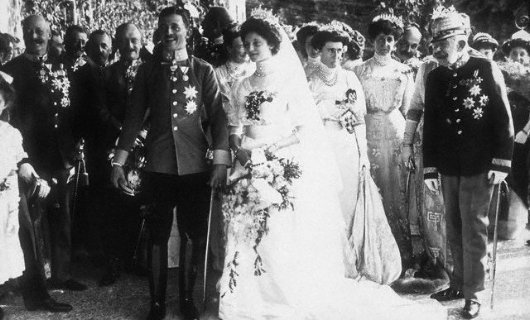
pray for us!
Sorb Serf Story Shown on Silver Screen
Otfried Preußler’s retelling of old Wendish legend hits German cinemas

Follow your dreams! It may sound like a Hollywood cliché, but what’s a fourteen-year-old orphaned Sorb peasant to do? Currently showing in German cinemas, “Krabat” is the first film version of Otfried Preußler’s 1971 novel of an old Sorbian tale whose eponymous protagonist is a beggar boy in the eastern Saxony of the early 1700s. Krabat is plagued by dreams of an old watermill outside the tiny hamlet of Schwarzkollm, which seems to be operational though farmers never bring grain to be milled.
From the memoirs of Miklos Banffy
« After getting home I must admit that I slept soundly, although occasionally, when still half-asleep, I seemed to hear more rumbling of heavy lorries passing under my windows than on previous nights. However, since the street outside was the habitual route for deliveries to the market halls nearby, and the market cars had always rattled past noisily long before dawn, it did not seem to be different from any other night in the year.
It was only later that I heard what had happened early that morning. When my old valet called me he announced three things: my bath had been prepared, revolution had broken out, and Count Mihály Károlyi was now Minister-President. »

Search
Instagram: @andcusack
Click here for my Instagram photos.Most Recent Posts
- Brunel’s Unbuilt Capitol February 3, 2026
- Cricket at Fordham January 27, 2026
- Palacio Barolo Revisted January 14, 2026
- Learning to Love Liguria January 14, 2026
- Crux Alba No. 2 January 13, 2026
Most Recent Comments
Book Wishlist
Monthly Archives
Categories