About Andrew Cusack
 Writer, web designer, etc.; born in New York; educated in Argentina, Scotland, and South Africa; now based in London.
 read more
News
Blogs
Reviews & Periodicals
Arts & Design
World
France
Mitteleuropa
Knickerbockers
Argentina
The Levant
Africa
Cape of Good Hope
Netherlands
Scandinavia
Québec
India
Muscovy
Germany
Academica
The Mitre
I’ve uploaded the last eleven issues of The Mitre — “the quality student newspaper at the University of St Andrews” — before its demise after the Midsummer’s Day issue of 2005. The old Mitre website can be found here.
Unbuilt Pugin in Boston
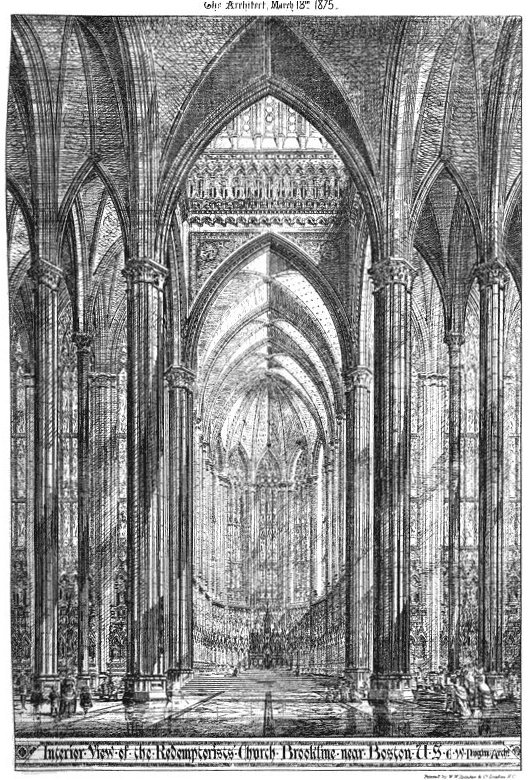
Unbuilt proposal for a Redemptorist church in Boston by Edward Welby Pugin, eldest son of Augustus Welby Northmore Pugin.
The Freiherr of Finance
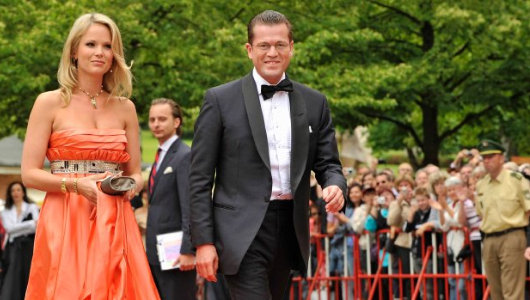
Germany’s new finance minister, Freiherr zu Guttenberg & his wife, Freifrau Stephanie.
Unmentioned by this editorial is that Baron zu Guttenberg’s grandfather (his mother’s father) was the late German winemaker & Croatian politician the Count of Vukovar. From the Count, Baron zu Guttenberg is descended from the noble house of Eltz, who are responsible for one of my favourite castles in the whole world, Burg Eltz, which once graced the 500-deutschmark note.
At the ripe age of 70, the Count of Vukovar took up arms in defence of the town of Vukovar during the Yugoslav Wars of 1991. The Count was elected to the Croatian parliament the following year as an independent, and served in that body until 1999, when he retired from politics. Nonetheless, the Croatian parliament persuaded him to accept honourary membership of parliament in his own right, in which role he continued until his death in 2006.
The Baron’s wife, meanwhile, is Stephanie, Countess of Bismarck-Schönhausen, great-great-granddaughter of the “Iron Chancellor”, Otto von Bismarck. A portent of this economics minister’s future?
An Early Proposal
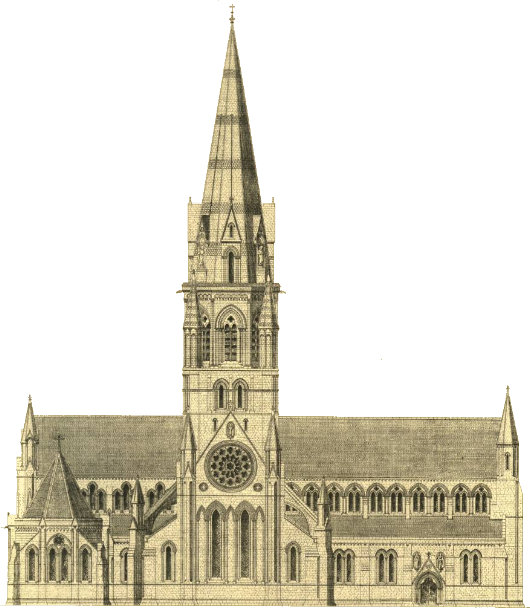
The Cathedral Church of St. Mary (Scottish Episcopal), Edinburgh.
A Viennese Study
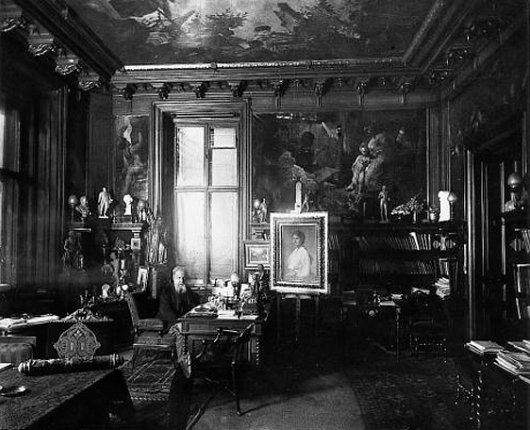
Nikolaus von Dumba, in the study of the Palais Dumba on the Ringstraße in Vienna. (more…)
The Evolving Heraldry of the Dominions
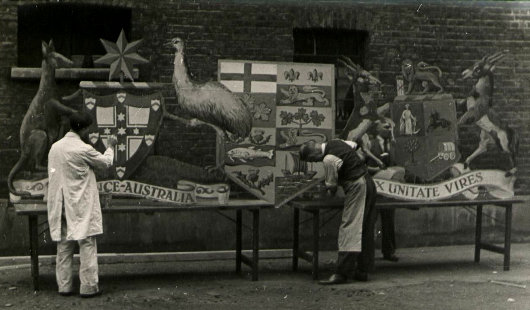
WHAT DO THESE three coats of arms, their representations produced for the 1910 coronation, have in common? The first thing that might come to the mind of most of the heraldically-inclined is that all three are the arms of British dominions; from left to right, of Australia, Canada, and South Africa. Aside from this commonality, however, each of these three arms have been superseded.
The Australian arms above were granted in 1908, and superseded by a new grant in 1912, though the old arms survived on the Australian sixpenny piece as late as 1963. The kangaroo and emu were retained as the shield’s supporters in the new grant of arms which remains in use today.
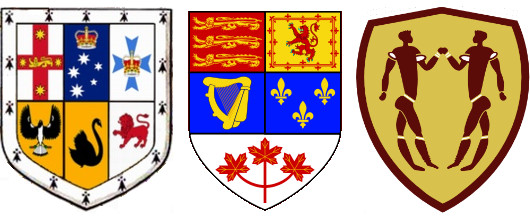
The Confederation of Canada took place in 1867, but no arms were granted to the dominion so it used a shield with the arms of its four original provinces — Ontario, Québec, Nova Scotia, and New Brunswick — quartered. As the remaining colonies of British North America were admitted to Canada as provinces, their arms were added to the unofficial dominion arms, which became quite cumbersome as the number of provinces grew. A better-designed coat of arms was officially granted in 1921, and modified only slightly a number of times since then.
South Africa‘s heraldic achievement, meanwhile, was divided into quarters, each quarter representing one of the Union’s four provinces: the Cape of Good Hope, Natal, the Transvaal, and the Orange Free State. While South Africa is (like Scotland, England, Ireland, and Canada) one of the few countries to have an official heraldic authority — the Buro vir Heraldiek in Pretoria — the country’s new arms were designed by a graphic designer with little knowledge of the rules & traditions of heraldry. As a result, the design produced is unattractive and very unpopular, unlike the new South African national flag, introduced in 1994, which was designed by the State Herald, Frederick Brownell, which enjoys wide popularity and universal acceptance.
The current arms of Australia, Canada, and South Africa are represented below.
The Church of Howard Johnson
Ask not for whom the MacBook clicks, it clicks for thee…
My computer, a splendid little MacBook, circa 2006 (and thus past its warranty), has started falling apart. I’m not joking! A little corner of the lower right-hand corner plastic casing has fallen off.
What’s more of a bother is that the click-button is malfunctioning. Half the times I single-click it, it interprets it as a double-, or sometimes even triple-click. This is getting REALLY REALLY irritating, and interfering in my general operations in countless ways. Imagine something that a single-click opens or closes: you single-click it, but the computer double-clicks it. So it’s opened for a nanosecond and then closed. Repeat six times until it decides to single-click. Molto molto irritante!
If there are any Apple genii who can solve this disconcerting click-problem, please let me know. Or, alternatively, some generous soul can purchase a new machine for me, and guarantee techno-happiness for your humble and obedient servant.
Parking

I’ve long suspected that most cars permanently inhabit the best parking spaces in Manhattan — their owners wary to leave them for fear of giving up that spot. But every now and then you get that spot. In my case, it’s through the intercession of St. Martin de Porres, who likes to make sure this altar-server makes it to St. Agnes next to Grand Central every Sunday with time to spare.
Oranje in New York
The Prince & Princess of Orange Celebrate 400 Years of the Hudson
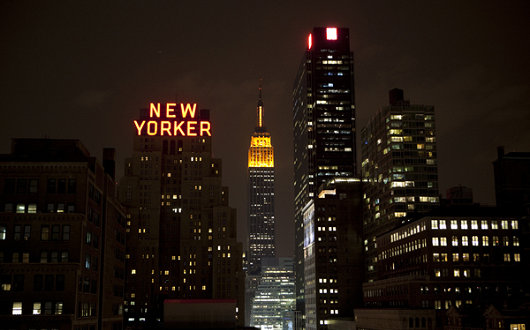
THE CONNECTIONS BETWEEN New York and the Netherlands go back far; back to the very beginning indeed, to 1609 when Henry Hudson, in the service of the Dutch, first set eyes on the greatest harbour of the Atlantic seaboard. The four-hundredth anniversary of that event brought the Prince and Princess of Orange, the heirs to the Dutch throne over to old New Amsterdam for the culmination of the year’s quadricentenary celebrations.
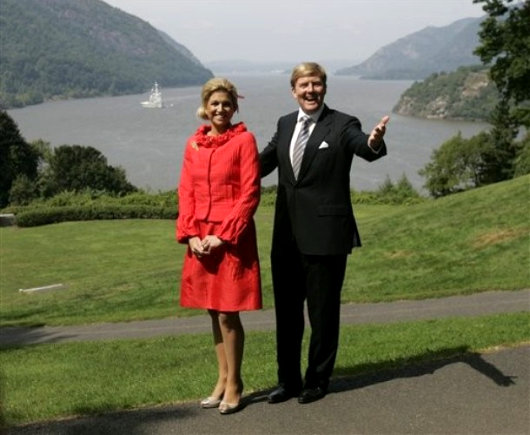
After their arrival in the Empire State, Prince Willem-Alexander and Princess Maxima sped straight up the Hudson Valley to West Point, the pearl of the river. The Kingdom of the Netherlands and the United States are official military allies, with at least 1,770 Dutch soldiers serving in Afghanistan, plus an undisclosed number of special forces from the Korps Commandotroepen. (more…)
David Kerr for Glasgow North East
 While the baggage-handler and much-celebrated hero of the Glasgow Airport attacks, Mr. John Smeaton QGM (“This is Glasgow; we’ll set aboot ye. … You’re no’ hitting the Polis mate, there’s nae chance.”) has announced he is going to contest the Glasgow North East by-election for some fringe electoral outfit, this blog is happy to report that there is already a perfectly laudable candidate who is seeking the privilege of serving the constituents of that district at Westminster.
Mr. David Kerr, a Catholic graduate of the University of St Andrews and until recently a senior editor of BBC Scotland’s “Reporting Scotland” programme, is the Scottish Nationalist candidate for Glasgow North East. The Labourite newspapers have already set David Kerr as the target of their sleaze machine, first for a derogatory comment about Glasgow Caledonian University “not having a reputation to tarnish” made in a jocular spirit of inter-academic rivalry, then over a television investigation into the availability of weaponry in which Mr. Kerr was pictured with… well, weapons! (Oh, the horror! Vote Labour!)
Mr. Kerr is believed to be a favourite of SNP leader Alex Salmond, the First Minister of Scotland. The SNP are currently the only major party in mainland Britain who are actively pursuing the Catholic vote. While SNP members tend to be vaguely left-wing and pro-independence (as is the official party policy), SNP voters are often more traditional or conservative and in favour of preserving some form of union. (The Conservative Party, meanwhile, is frequently perceived as a party for liberal English toffs; a perception reinforced by David Cameron’s leadership). The Nationalists are doubtless trying to repeat their victory over Labour in last year’s Glasgow East by-election, in which ethical issues are believed to have played a significant role in Labour’s defeat.
The bookmakers Ladbrokes are currently giving David odds of 5/4 in winning the seat, against 4/6 for Labour’s Willie Bain.
‘Dim Tim’ & Chick-lit Bagshawe go twit for tat over “slobbering” devotees of Thérèse
Tim Cheetham, a Labourite councillor in the legendary south Yorkshire town of Barnsley, has expressed his disdain for the enthusiasm his fellow countrymen and women have shown for the beloved Saint Thérèse of Liseux via the medium of Twitter: “With all those slobbering zealots kissing that glass case, I hope it has some mystical power to prevent swine flu.” As Catholic Herald editor Damian Thompson states, “That’s the authentic voice of 21st-century Labour.”
Louise Bagshaw, a “chick-lit” novelist, prospective Tory party candidate, and Woldingham old girl, wasted no time in responding. “Nice to describe faithful Catholics venerating a relic as slobbering zealots. Would you use such bigoted language about Muslims?”
Cheetham’s rather lame retort: “As the church has issued new guidlines [sic] about the conduct of ceremonies to protect against spreading disease, it needed saying.”
Bagshawe: “Labour’s anti-Catholicism is breathtaking sometimes.”
Damian Thompson continues:
Another tweet from Cheetham: “It’s not Bigotry to highlight the lunacy of dark age mysticism in the modern world.” Really? OK, then let me put you on the spot, councillor.
You say: “I will decry any faith that denies my right to question it in whatever form I wish.” Well, Muslims in Barnsley do object to the slightest criticism of their Prophet (who lived during the dark ages, as it happens) with his child wives and message of violence. But you’re a brave man, it seems. So go on: speak fearlessly and with your trademark withering disdain about the zealots in your own town.
Dim Tim later tried to backtrack by blaming the medium of Twitter for his own idiotic remarks.
To my knowledge, Barnsley’s not a town short on Catholics. Let’s hope those “slobbering zealots” make it to the polling place the next time the council’s up for election.
Prague Prince Propels Pristine Party
New Grouping May Hold Balance of Power After Next Bohemian Vote
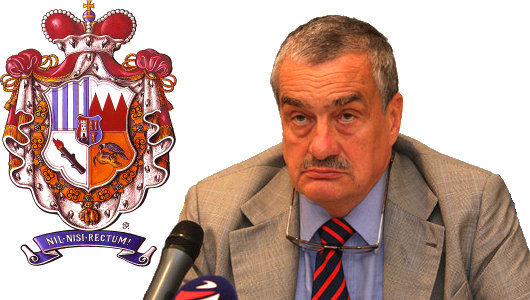
PRINCE KARL VII, current head of the House of Schwarzenberg and sometime foreign minister of the Czech Republic, recently combined with other political colleagues to form a new party in time for the upcoming parliamentary elections in Bohemia. A number of supporters of the Christian & Democratic Union – Czechoslovak People’s Party (KDU-ČSL) were disappointed with the selection of the left-leaning Cyril Svoboda as party chairman, and have formed a new conservative group, Tradice Odpovědnost Prosperita 09 or “Tradition Responsibility Prosperity ’09″.
Prince Karl — or Karel Schwarzenberg as he is known for electoral purposes — suggests that Bohemian voters have grown disenchanted with the current choice of political parties on offer. “The results of the last elections – the worst were the election to the European Parliament, but even the national elections – show that the degree of support for political parties by Czech citizens is going steadily down,” the Prince told Radio Prague.
“People are evidently not content with the parties that are offered to them, and they are more and more fed up. I read this in the e-mails I get and letters, and hear it in pubs and wherever. And as we think that there is still a lot of work to be done in our country, we decided to offer at least some alternative. That’s it.” (more…)
Requiescat in pace
Please pray for the repose of the soul of Kevin Sinnott who died on Monday evening. Kevin, a former pupil at Chavagnes (the British Catholic school in the Vendée), was swimming with a group of friends on Monday night near Southern Catholic College in Georgia when he tragically drowned.
Kevin was the son of Kathy Sinnott, the Chicago-born disability rights campaigner and former independent Member of the European Parliament for Munster in Ireland. He had just begun his final year at Southern Catholic College in Dawsonville, Georgia. According to his friends, Kevin had gone to confession earlier that day, which is no doubt a source of consolation for his mother, his three sisters, and his five brothers.
Requiescat in pace.
Amen.
A Sad Day in Pretoria
The Proclamation of the Republic and the End of the South African Monarchy
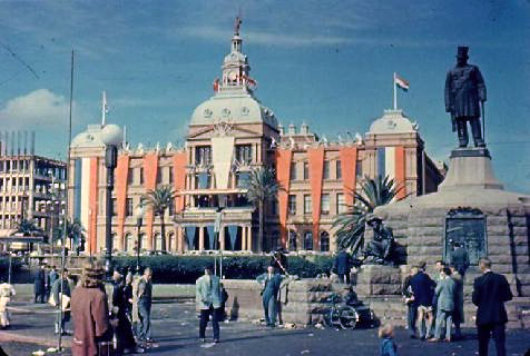
“For every monarchy overthrown, the sky becomes less brilliant, because it loses a star,” wrote Anatole France. “A republic is ugliness set free.” South Africa’s history betrays a long struggle between monarchy and republic, most typified in the horrendous Boer War between the British Empire and the two Afrikaner republics. Many of the Boers were shocked and surprised by the leniency of the British following their surrender to the forces of the Empire, given the brutality inflicted upon the Afrikaner people by the British during the war. Their old republics became colonies but were granted the right to rule themselves within just a few years of that bitter conflict’s end. In 1910, all four British colonies — the Cape, Natal, the Orange River Colony, and the Transvaal — were consolidated in the Union of South Africa, a self-governing dominion which became an independent kingdom after the Statue of Westminster was passed in 1931.
Yet Britain’s munificence towards the defeated people could not assuage the cold-hearted bitterness formed by their cruelty during the Boer War. The term “concentration camp” first arrived in the English language in South Africa, but it was the speakers of Dutch and Afrikaans who were interned in the camps and left without rudimentary medicine or food. The photos of the interned tell the tale better than any words. When the National Party won an outright majority of seats in the South African parliament in 1948, the republican-oriented party began a gradual process of loosening the country’s ties with Great Britain. Just a year later, the Citizenship Act was passed providing for South African citizenship apart from British subjecthood. Previously, any British subject living in South Africa would be considered ‘South African’ after two years of residence. Now, it would take five years of residence for a British subject to gain South African citizenship.
In 1950, the right of appeal to the Privy Council was abolished, and the Supreme Court in Bloemfontein became the court of last instance for the country. In 1957, that court asserted the sovereignty of the Parliament of South Africa (consisting of the Crown, Senate, and House of Assembly) in its ruling over the Collins v. Donges, Minister of the Interior case. That same year the Union Jack ceased to be an official national flag alongside the oranje-blanje-blou, and “Die Stem van Suid-Afrika” was given sole official status as the national anthem; thenceforth the Union Jack and “God Save the Queen” would only be used on specifically British or Commonwealth occasions. The old Royal Navy base at Simon’s Town, founded 1806, was handed over to the South African Navy, though the Royal Navy had continued use of it under a bilateral accord. The creeping republicanism manifested itself in smaller ways too, as with “OFFICIAL” replacing the designation “O.H.M.S.” (On Her Majesty’s Service) on government correspondence. (more…)
Georg Christoph Lichtenberg
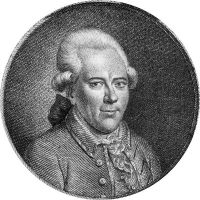 « I ceased in the year 1764 to believe that one can convince one’s opponents with arguments printed in books. It is not to do that, therefore, that I have taken up my pen, but merely so as to annoy them, and to bestow strength and courage on those on our own side, and to make it known to the others that they have not convinced us. »
Over There
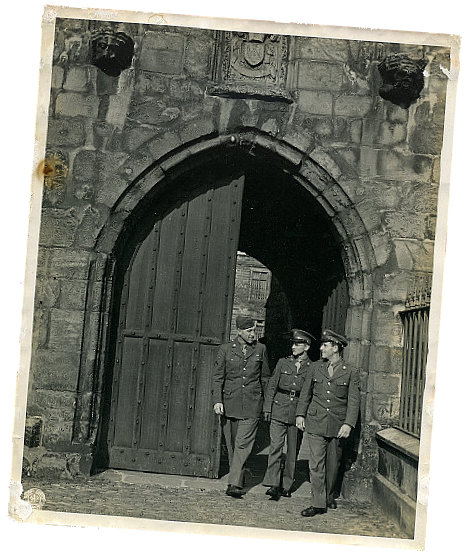
American GIs in St Andrews, 1943.
Die Wapenskild van die Universiteit

 EDUCATION IN STELLENBOSCH began as early as 1685, but it wasn’t until 1866 that the Stellenbosch Gimnasium was founded. Like the (English-language) South African College in Cape Town, the Dutch/Afrikaans Gimnasium was a school covering secondary, and tertiary education. Twenty years after the foundation of the Gimnasium, it was renamed the Victoria Kollege in honour of the Queen’s jubilee of 1887. In 1918, the Parliament of South Africa finally reorganised education in the Cape, and separated both the South African College and the Victoria Kollege into their respective secondary and tertiary parts. SAC was divided into the University of Cape Town & the South African College Schools, while the Victoria Kollege was divided into the University of Stellenbosch & the Paul Roos Gymnasium.
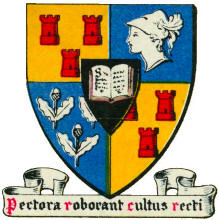
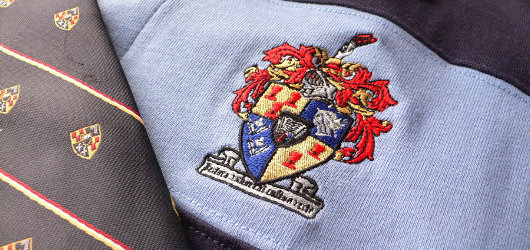
Along with gaining proper status as a university, the Universiteit van Stellenbosch also adopted a coat of arms in 1918. In the language of heraldry, the University’s coat of arms (or wapenskild in Afrikaans) is described as:
The “three towers gules” come from the arms of the town of Stellenbosch, and find their origin in the personal arms of Governor Simon van der Stel who founded the town in 1679. The quartering of yellow and blue (“or” and “azure”) was also inspired by van der Stel’s arms. Minerva symbolizes learning obviously, while the oak twigs represent the magnificent oak trees planted by Governor van der Stel, many of which still grace the streets of the town. The motto, Pectora roborant cultus recti, is Latin for “A sound education strengthens the spirit/character”.
Regrettably, the university tends to use its corporate logo of a stylised ‘S’ and oak leaf instead of its splendid heraldic achievement. The arms of the university can nonetheless be found around the town, displayed architecturally on numerous university buildings, in official university publications, on student clothing, and of course on the university tie.


Search
Instagram: @andcusack
Click here for my Instagram photos.Most Recent Posts
- Brunel’s Unbuilt Capitol February 3, 2026
- Cricket at Fordham January 27, 2026
- Palacio Barolo Revisted January 14, 2026
- Learning to Love Liguria January 14, 2026
- Crux Alba No. 2 January 13, 2026
Most Recent Comments
Book Wishlist
Monthly Archives
Categories