About Andrew Cusack
 Writer, web designer, etc.; born in New York; educated in Argentina, Scotland, and South Africa; now based in London.
 read more
News
Blogs
Reviews & Periodicals
Arts & Design
World
France
Mitteleuropa
Knickerbockers
Argentina
The Levant
Africa
Cape of Good Hope
Netherlands
Scandinavia
Québec
India
Muscovy
Germany
Academica
Bertie Monument Unveiled in Malta
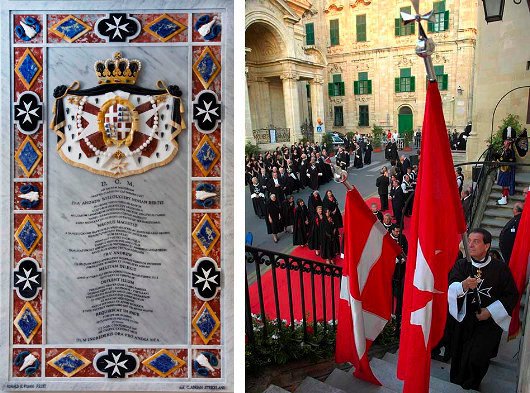
During Fra’ Andrew Bertie’s reign as Guardian of the Poor of Jesus Christ, the “of Malta” at the end of “the Sovereign Military Hospitaller Order of Saint John of Jerusalem of Rhodes and of Malta” was not a mere historical anachronism. The Prince & Grand Master had a house in Malta where he attended to his cultivation of oranges (the old Grand Master’s Palace in Valetta is now the Presidential Palace of the Maltese Republic). “A friend of Malta,” a recent statement from the Maltese knights of the Order states of Fra’ Andrew Bertie, “his love for Malta and the Maltese peoples’ affection for him originated the inspiration to this wonderful project, to erect a befitting marble lapidary in his memory.” This summer Fra’ Matthew Festing, successor to Fra’ Andrew as head of the Order of Malta, travelled to the Mediterranean island to unveil the Bertie Monument at Casa Lanfreducci, the Order’s Maltese seat. (more…)
Opening the Riksdag
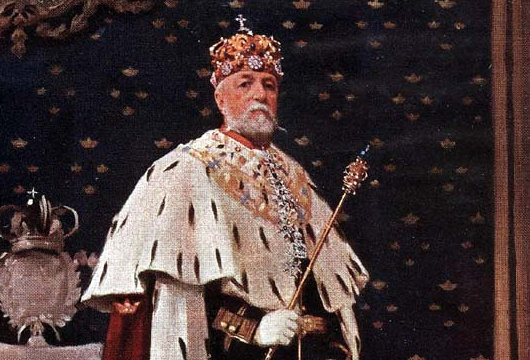
Ek probeer om Sweeds te leer, om my skamele kennis van wêreldtale te verhoog. I’ve also taught the English word ‘purgatory’ to a Finnish friend of mine, who happily reports back that she recently saw the word used on an episode of “South Park” and was glad to already be aware of it. In the meantime, I stumbled upon these photographs of Oscar II (by the Grace of God, King of Sweden, the Goths, and the Wends, erstwhile King of Norway) opening the Riksdag, Sweden’s parliament. You would think reading Kristin Lavransdatter and watching “Max Manus” would get me into a Norwegian frame of mind (and they do!) but all of Scandinavia is of interest to me. (more…)
The Australian
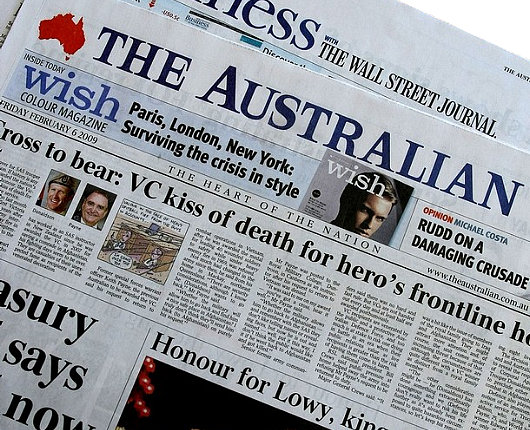
A surprisingly handsome newspaper, especially considering it is owned by (and, indeed, was founded by) Rupert Murdoch. Reminds me of The Scotsman in its broadsheet days.
Troubadour
A musical about Saint Francis of Assisi for people who don’t like musicals about Saint Francis of Assisi
For those who are interested, “Troubadour”, a new musical about Saint Francis of Assisi, is being produced in a limited run here in New York. The show’s lyrics are by the local Catholic playwright John Martin (often seen at St. Agnes on Sundays), with music by Bert Draesel.
The show runs until November 2nd at the Theater at the Church of the Epiphany, 1394 York Avenue (at E. 74th Street):
Fridays at 8:00pm, Saturdays at 8:00pm, Sundays at 3:00pm, and Mondays at 8:00pm.
For tickets, visit www.smarttix.com or call 212.868.4444. Tickets are $18 for adults and $15 for children.
For more information call 212.737.2720 ext. 56, or see here.

Scottish Field
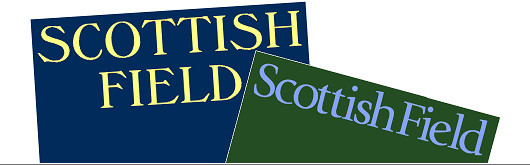
“He looked up from Scottish Field and all the colour, all the warmth of the world of those pages seemed to drain away.” So writes Alexander McCall Smith in The World According to Bertie, in which the eponymous minor’s enforced visits to the child psychiatrist at the command of his overbearing mother are made at least somewhat bearable by the freedom to flip through the pages of the magazine. Scottish Field is an institution, a staple of doctors’ waiting rooms and bed-and-breakfast sideboards, as well as acting as a Caledonian companion to Country Life and The Field (both of which are produced south of the Tweed, a world away). Your humble & obedient scribe even once graced the high-and-mighty social pages of Scottish Field, beside Lt. Col. Bogle and His Eminence the Cardinal Archbishop of St Andrews & Edinburgh.
Scottish Field recently underwent a bit of a redesign, which included a typographical change to its old-fashioned nameplate (often called a banner or, erroneously, the masthead). (more…)
Max Manus
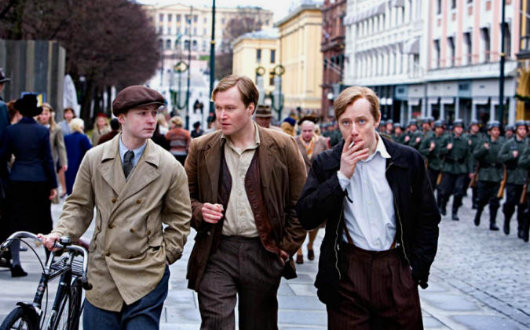
WHEN I WROTE about the Danish film “Flammen et Citronen” in July, I mentioned that it’s not very often that a big-budget period film comes out of Scandinavia, but that recently there’ve been not just one, but two. Readers may have been wondering about the other film which remained unmentioned. I caught the single showing of “Max Manus” during Norwegian Film Week (actually a fortnight) at Scandinavia House on Park Avenue here in New York. This was undoubtedly one of the best films I’ve seen all year, vying with “The Baader-Meinhof Complex” for the top position.
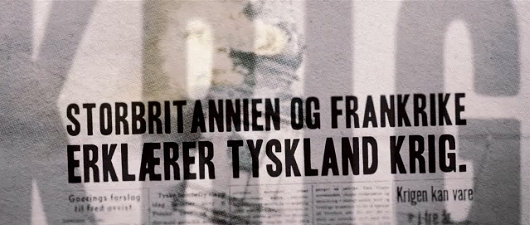
The film begins with newspaper headlines showing the increasingly precipitous situation in Europe from the beginning of the Great Depression onwards. Germany’s economy is ruined and inflation is rampant, Hitler rises to power, Hitler and Stalin invade and divide Poland, Great Britain and France declare war on Germany, and finally Stalin invades Finland. The eponymous hero of our film, Max Manus, is Norwegian but volunteers to fight for Finland when it is invaded by its Nazi-aligned totalitarian neighbour the Soviet Union in the Winter War of 1939-1940. (more…)
Joost Swarte

This year’s summer issue of The Walrus featured a cover from the cartoonist Joost Swarte, which occasioned a post about the Dutch ligne-clairist on the magazine’s blog. Mijnheer Swarte actually invented the term ligne-claire (or klare lijn) to describe the Tintin-esque school of bandes-dessinees, and has collaborated with the noted Peter van Dongen on the latter’s Rampokan series depicting the late years of the Dutch East Indies before it became Indonesia. Swarte’s work has also featured in The New Yorker, our “local” weekly which partly inspired the Canadian Walrus. Jumping from the printed page to brick and mortars, the new Musée Hergé in Louvain-le-Neuve was actually designed by Swarte. His previous architectural work includes a theatre building in his home town of Haarlem in North Holland. (more…)
Benedict in Bohemia and Moravia
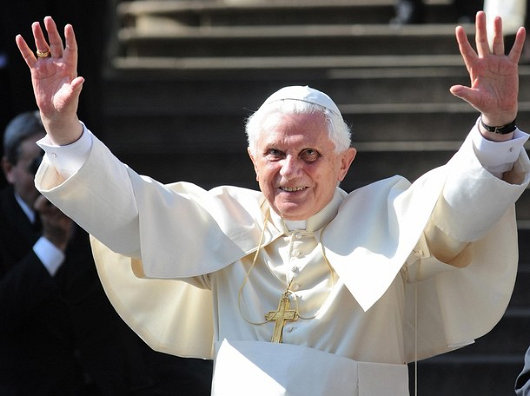
THE HOLY FATHER, Pope Benedict XVI, recently travelled to the Czech Republic in a journey he described as “both a pilgrimage and a mission.” The ancient land of Bohemia was once at the very center of Christian civilization. It was from here that the brother saints Cyril and Methodius launched their mission to convert the Slavic world. From Prague, the realms of the Přemyslid and then Luxembourg dynasties were ruled, followed by the most illustrious house of Hapsburg. Oh to have been in Prague under the reign of the Emperor Rudolf II! With his mysterious court of astrologers and magicians and his cabinet of curiosities. With Arcimboldo, Spranger, Heintz, and Hans von Aachen putting paint to canvas, Giambologna and de Vries sculpting, while Kepler and Tycho Brahe searched the night skies. Centuries later, long after the nucleus of Hapsburg power had moved to Vienna, it was to Prague that the Emperor Ferdinand came following his abdication and remained until his death in 1875.
But of course there is the other Prague — the city of heresy, rebellion, and warfare. (more…)
Notes of the Netherlandic Church
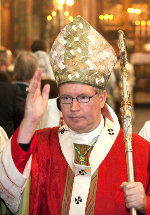
Willem Jacobus Eijk, Primate of the Netherlands
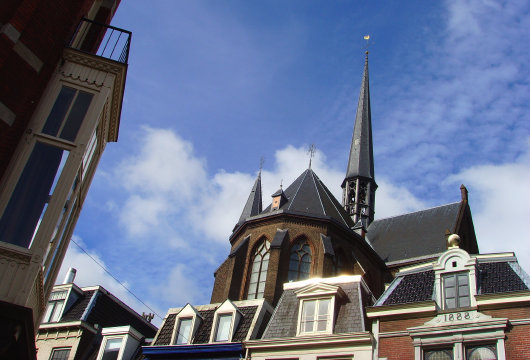
THE ANCIENT FORM of the Roman rite has returned to weekly use in Utrecht, the primatial see of the Netherlands. Under the guidance of Wim Eijk, Archbishop of Utrecht, the Church of St. Willibrord has introduced a weekly Tridentine liturgy each Sunday at 5:30 pm, to complement the 10:30 am Mass in Latin in the Ordinary Form. (Previously the old rite was offered only once monthly). The Extraordinary Form will be offered by Fr. A. Komorowski & Fr. M. Kromann Knudsen, both of the Priestly Fraternity of Saint Peter (FSSP, or Priesterbroederschap Sint Petrus in Dutch). St. Willibrord’s is a brilliant example of the nineteenth-century revival of gothic architecture, and the concurrent revival of Dutch Catholicism. Yet the parish was also emblematic of the Dutch church’s implosion in the 1960s & 70s. This beautiful, polychromatic monument to God was deconsecrated in 1967, and the diocese planned on demolishing the building. It was later sold, however, and occupied by an Assumptionist priest who continued saying the older form of mass. Joseph Luns, sometime NATO secretary-general and Dutch foreign minister, was a supporter of the apostolate at St. Willibrord’s.
The recently installed archbishop was keen to regularize the former parish’s situation, and erected it as a non-territorial parish under the auspices of the Vereniging voor Latijnse Liturgie (Association for Latin Liturgy) which promotes Latin in both the ordinary & extraordinary forms of the liturgy. The parish newsletter now proclaims that, at St. Willibrord’s, “all masses are once again celebrated ‘ad orientem'”, and both Sunday masses are accompanied by Gregorian chant. The church also revived, starting in 2002, the Procession of the Relics of St. Willibrord, which is held during the annual festival that opens the cultural season in Utrecht, in order to expose the tradition to a wider audience. (more…)
The Nook, Stellenbosch
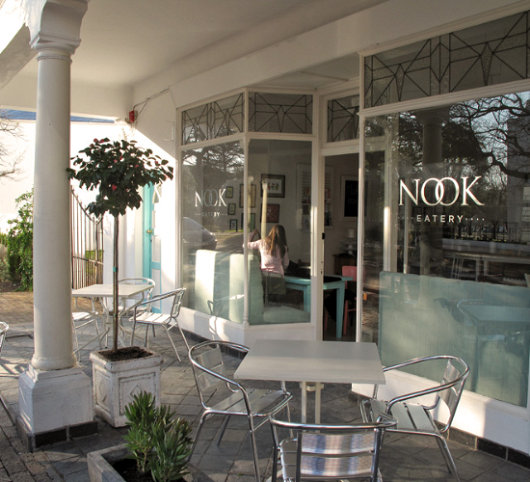
This place opened up in Stellenbosch just before I left South Africa, but I never had the chance to check it out. I like to look of the place, even though the colours are a bit too subdued for my taste. (more…)
Swanndri

Founded in 1913, this New Zealand outdoor clothing company advertises: “We have to make a good garment. Most of our customers have guns.” Their classic heavy woollen garment with a lace-up section at the neck has been a favourite of Kiwi farmers for decades, but the firm now produces clothing for city-dwellers and outdoor adventurers as well.
I just like their logo.
Richard Demarco
“We didn’t know quite how to take this, but we sat there entranced.”
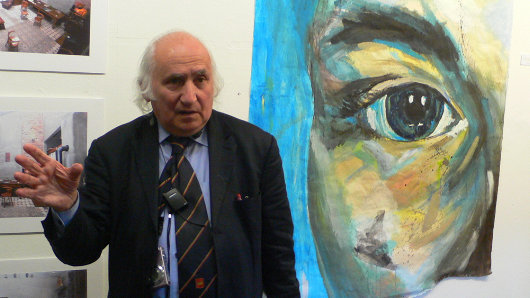
ONE OF THE markedly few deficiencies of the English language is coming up with a word to describe Richard Demarco. The Scottish press have generally settled upon “impresario” but even that somewhat-ambiguous word fails to do the man justice. Ricky was born in Edinburgh in 1930, grew up in Portobello, and remembers the day when his mother held him back from school because Italy — from whence he stock came — had just declared war on Great Britain. He’s attended every Edinburgh Festival since the very first one began in 1947 — as the founders put it, to “provide a platform for the flowering of the human spirit” in the grim aftermath of the Second World War.
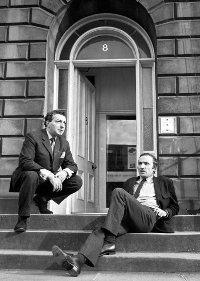 Richard Demarco, couchant, with noted Scots caricaturist Emilio Coia.
In 1963, he cofounded the Traverse Theatre, Scotland’s theatre for new writing, and three years after that founded the Richard Demarco Gallery which promoted Scotland’s cultural interchange with artists across Europe including — very importantly to Richard — from behind the Iron Curtain that divided the continent into free and captive halves. This was during an age when many in the arts world were too busy sympathizing with the murderous totalitarianism that had subjugated half of Europe. Richard has been a deep critic of the choices made by the British government as patron of the arts throughout the decades of his life, but not too long ago he finally patched things up with the Scottish Arts Council.
Readers of Alexander McCall Smith’s 44 Scotland Street might recall the man who comes to speak to the Scottish Police College. The “really important person from the art world in Edinburgh”, as Mr. McCall Smith puts it, comes and tells the trainee constables about the gorgeousness of Italian carabinieri uniforms and how the Scottish psyche still suffers from the iconoclasm of the Reformation, and even suggests architectural alterations and more sympathetic decoration of the Police College. “We didn’t know quite how to take this, but we sat there entranced,” the character admits in 44 Scotland Street. Anyone who either knows Ricky or has been to one of his lectures would immediately recognize the unnamed subject of the passage.
I first met the man when I was a first-year student at St Andrews and he had come up from the capital to give a lecture. I can’t remember what the stated subject was but this is entirely irrelevant as so vast and wide-ranging is the mind & experience of Richard Demarco that he is known for (some would say “notorious for”) never keeping within the bounds of the stated subject. Those who invite Richard to speak shouldn’t bother with a subject, just make posters stating “RICHARD DEMARCO SPEAKS”, giving the date, time, and place, and a crowd of interested characters is bound to turn up. (more…)
Life of St. Hildegard Hits the Silver Screen
But is it the Hildegard of historical fact or modern fantasy?

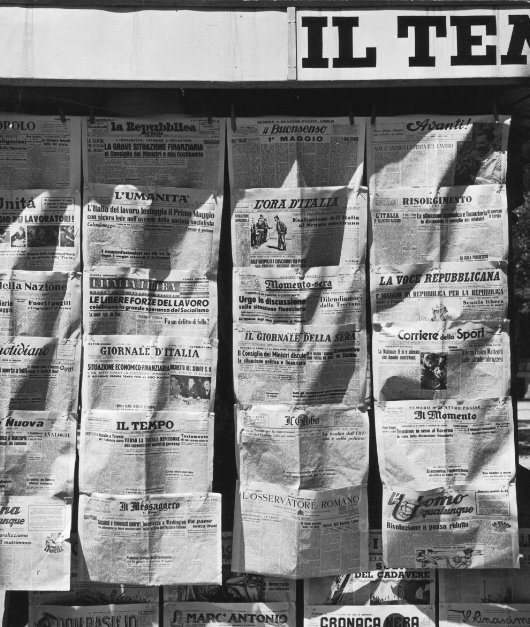
THE LIFE OF Saint Hildegard von Bingen — the Benedictine nun, writer, scientist, physician, and poet perhaps best known as a composer — has been brought to the screen in a new German-produced film. “Vision – Aus dem Leben der Hildegard von Bingen” was released in Germany & Austria in September and may receive a wider European release in 2010. From the voluntary confinement of the cloister, this woman corresponded with the Emperors Lothair II and Frederick Barbarossa, the popes Eugene III and Anastasius IV, the great patron of art Abbot Suger, and of course the great Cistercian reformer St. Bernard of Clairvaux. Hildegard was authorised to go on four preaching tours, and her Ordo Virtutum was the first allegorical morality play of the medieval period. She even invented a demi-language, Lingua Ignota (“unknown language”), and created an alternative alphabet in which to write it. (more…)
The Zamoyski Window
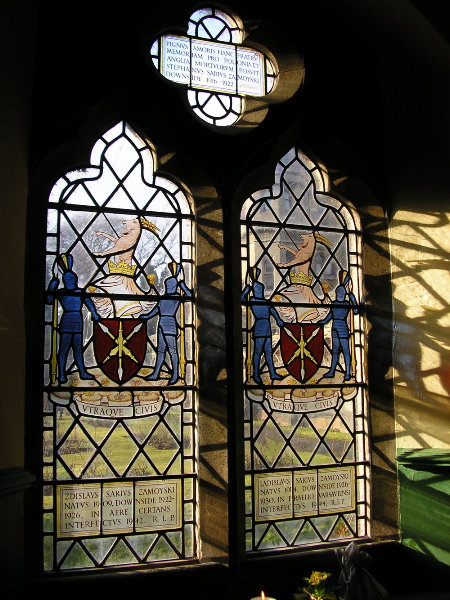
Downside Abbey, Somerset, England. (more…)
A Wanderer Anecdote
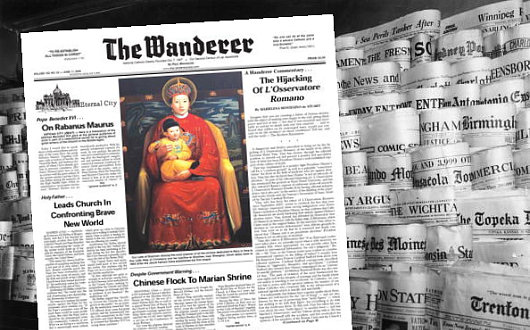
“It’s too easy for theological writers to sling around Abstractions with Capital Letters, as if with each stroke of the pen they’re tapping into Plato’s realm of changeless, ineffable Forms. Or at least that they’re writing in German, where all nouns start with caps.”
So begins John Zmirak, who tells a delightful story about one of America’s premier Catholic newspapers.
“A friend of mine used to write weekly for the estimable investigatory journal The Wanderer. Founded by German-Catholic immigrants, it was published auf Deutsch well into the twentieth century.
As my friend recalled, ‘The editors were, I think, waiting for the rest of the country to catch up with them. At last they admitted that this was unlikely, and agreed to translate the paper. But they kept on as their typesetter someone named Uncle Otto, who for years insisted on capitalizing every noun.’”
The He/She/It Whatnot
Seraphic Spouse held a poll on what pronouns people prefer using when referring to God: 1) He/Him/Himself, 2) he/him/himself, or 3) avoiding male pronouns. The unsurprising results were 89% for the traditional He/Him/Himself, 9% for the New York Times option of he/him/himself, and just over 1% for the radical choice of avoiding male pronouns altogether.
“Some readers may be wondering why this matters so much,” saith Lady Seraphic. “The answer is that people do care about these things, and I don’t want any reader of the book to feel alienated. I want everyone who might read such a book to feel embraced. And just as a now-elderly generation of Catholic women felt alienated by masculine language for God, younger generation of Catholics want to conserve the great respect for God now lacking in secular society.”
Over at Epigone’s Eloquence, meanwhile, Turgonian watched a biased BBC documentary (those three words go together so often!) on Gnosticism and was inspired to write ‘Why God is a He’, looking to the Monologion of St. Anselm for the answer.
“St. Anselm has previously established that God is Spirit, not a body, and that it is therefore nonsensical to say that He is a man or a woman. He has also shown that it is reasonable to believe that God exists as Father and Son (the Holy Spirit will come later in the book). But, he asks, why Father and Son, rather than Mother and Daughter? Why not call them by feminine names?” Read on to find out.
Search
Instagram: @andcusack
Click here for my Instagram photos.Most Recent Posts
- Brunel’s Unbuilt Capitol February 3, 2026
- Cricket at Fordham January 27, 2026
- Palacio Barolo Revisted January 14, 2026
- Learning to Love Liguria January 14, 2026
- Crux Alba No. 2 January 13, 2026
Most Recent Comments
Book Wishlist
Monthly Archives
Categories