About Andrew Cusack
 Writer, web designer, etc.; born in New York; educated in Argentina, Scotland, and South Africa; now based in London.
 read more
News
Blogs
Reviews & Periodicals
Arts & Design
World
France
Mitteleuropa
Knickerbockers
Argentina
The Levant
Africa
Cape of Good Hope
Netherlands
Scandinavia
Québec
India
Muscovy
Germany
Academica
30,000 More into the Mouth of Moloch
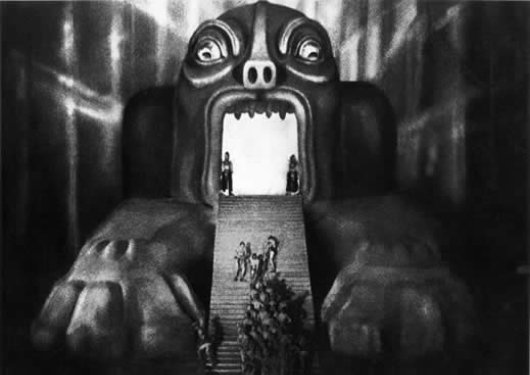
Earlier this month, as part of his policy to appear ever more like his predecessor, President Obama announced his new Afghanistan strategy. The President exhibited his environmentalist credentials by craftily recycling the lamentable Bush plans for an Iraq “surge” and rehashing them for use in Afghanistan. The happy result is that Obama’s approval ratings have nose-dived — again, the similarities to former president G.W. Bush are striking.
“Barack Obama has found his Vietnam moment,” reports the redoubtable Gerald Warner. “His West Point speech was a travesty of dishonesty, indecision, half-measures and vicious partisanship.”
“To say he was economical with the truth would be putting it mildly. The porkie count was astronomic. In his rampantly partisan style he claimed of the Bush administration: ‘Commanders in Afghanistan repeatedly asked for support to deal with the re-emergence of the Taliban, but these reinforcements did not arrive.’ Not true. The Bush administration never hesitated to commit troops to Middle Eastern killing grounds: that was one of its worst defects.” (more…)
How Not to Build a Library
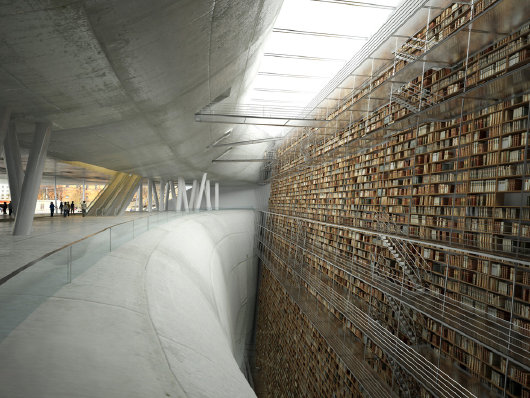
This computer-generated image has been doing the rounds on a variety of blogs across the internet. It depicts one of the numerous proposals for the extension of the Stockholm Public Library, this one drafted by a team from the Paris-Val de Seine architecture school. Over at the Long Now Blog, Alexander Rose calls it “awesome” and says “This design seems like it would lend itself well to a 10,000 year library”. As a monument this design is impressive — perhaps intimidating is the more appropriate word — but as a library it’s hard to conclude it would be anything other than a complete and total failure. And as for lasting 10,000 years, all those walkways to access the books look exceptionally brittle — I doubt they’d last a hundred years let alone ten thousand. (more…)
Le « dingbat » du Figaro
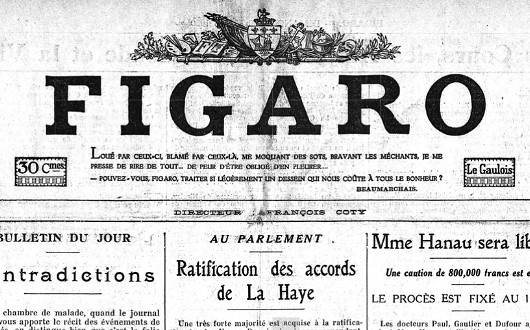
Did you know that Le Figaro used to have a “dingbat”? No, neither did I, until I was stumbling through the archives the other day. For a brief period in the 1930s, the Fig stylistically dropped the article “le” from its nameplate, while continuing to be known as “Le Figaro” for all intents and purposes. Simultaneously, they introduced a handsome horizontal dingbat to sit atop the newspaper’s unique name. (more…)
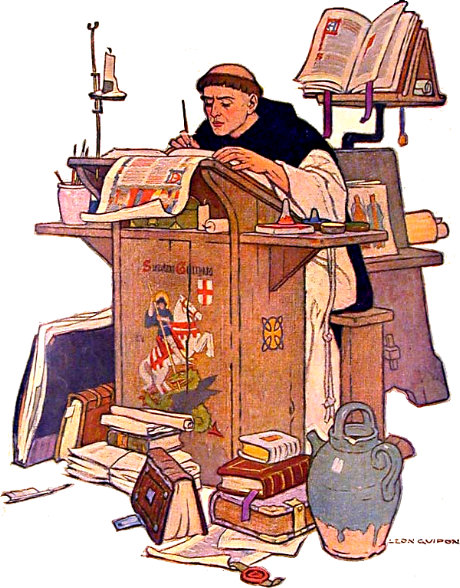
St. Zita?
Church Opens Investigation into Sanctity of Zita of Bourbon-Parma, Wife of Blessed Charles and Last Empress of Austria-Hungary
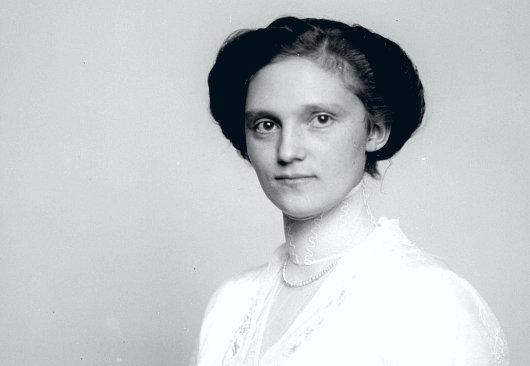
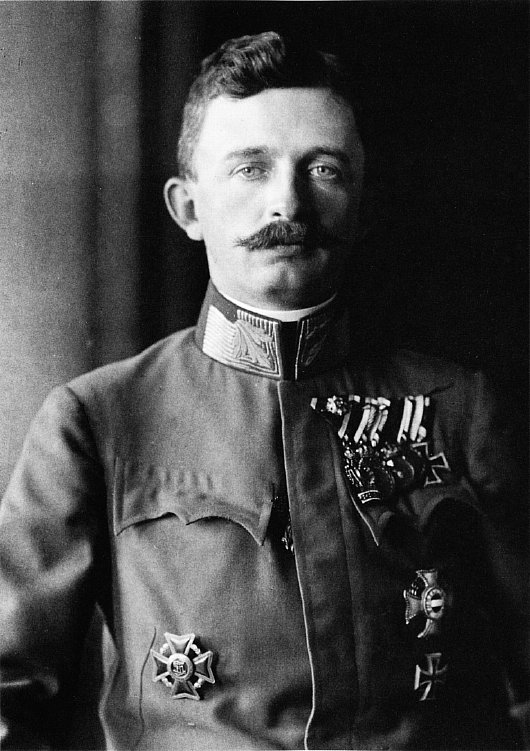
It was announced recently that Mgr. Yves Le Saux, Bishop of Le Mans in the traditional province of Maine (Pays de la Loire), France has opened the cause for the beatification of Zita of Bourbon-Parma, the long-lived wife of Blessed Emperor Charles of Austria. Charles, the last (to date) Emperor of Austria, Apostolic King of Hungary, and King of Bohemia (&c.), died in exile in Madiera in 1922, aged just thirty-four years. Zita Maria delle Grazie Adelgonda Micaela Raffaela Gabriella Giuseppina Antonia Luisa Agnese de Bourbon-Parma, meanwhile, was born in Tuscany in 1892 and lived a long life, giving up the ghost in March 1989, and interred in the Capuchin vault in Vienna following a funeral of imperial dignity.
“The process was opened in Le Mans,” Gregor Kollmorgen of TNLM reports, “and not in the Swiss diocese of Chur, where the Empress died twenty years ago in 1989 in Zizers, with the consent of Msgr. Huonder, the Bishop of Chur, and the permission of the Congregation for the Causes of the Saints, because within the diocese of Le Mans is situated the Abbey of Solesmes, well known to NLM readers for its leading rôle in the early liturgical movement in the nineteenth century, especially regarding Gregorian chant, and which was the spiritual center of the Servant of God Zita, her home among her many exiles.”
Zita’s relationship with Solesmes dates back to 1909 when she first visited its sister-abbey of St. Cecilia on the Isle of Wight in England. She became an oblate of the Abbey of Solesmes itself in 1926. Her daily life after the exile & death of her saintly husband included the Rosary, hearing multiple daily masses, and praying part of the Divine Office. (more…)
The Internal Exile of the Saar
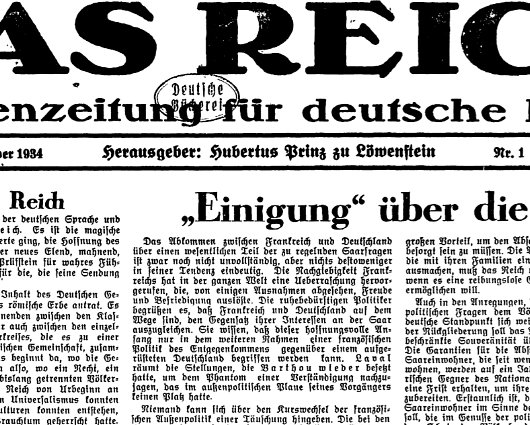
At the beginning of Hitler’s rule, many patriotic German anti-Hitlerites fled to the Saarland, which was Germany but still under French occupation. In a bizarre state of internal exile, anti-Nazi publications, be they Christian, Nationalist, Communist, or Jewish flourished for a very brief period. One of these journals was Das Reich, founded by Hubertus Prinz zu Löwenstein, who (if I recall my personal studies from St Andrews years properly) was a bit of a rogue in his own way, sympathizing with the Red forces during the Spanish Civil War.
A plebiscite on rejoining the Saarland with Germany proper had been scheduled before Hitler’s rise to power (just like the lamentable award of the 1936 Olympics to Berlin, though they turned out to be some of the most influential and well-run games to date) and, while the inhabitants were no keen Hitlerites, they had naturally tired of French occupation and duly voted to kick the French out. Right result, but very poor timing.
The anti-Hitlerites had to flee further, to Paris (where Pariser Tageblatt and later Pariser Tageszeitung were founded), London, and New York. German Jews sometimes fled as far as Shanghai where the English-language Shanghai Jewish Chronicle began a German edition in response to the influx. (There are some interesting stories about Shanghai Jews, and of course the famous newspaper-owning family of Jewish converts to Catholicism in Shanghai, but they’ll have to wait for another day).
The Feast of the Immaculate Conception at the Piazza di Spagna, Rome
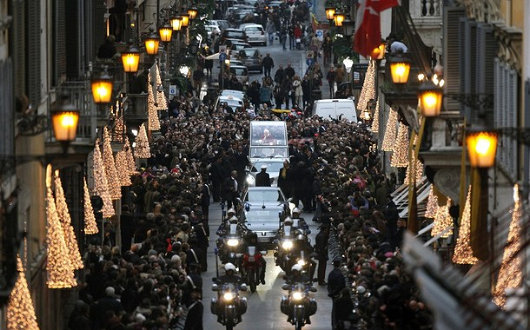
In 1856, Pope Pius IX erected a column dedicated to the Blessed Virgin in the Piazza di Spagna, commemorating the Proclamation of the Dogma of the Immaculate Conception just two years before, and since that year every reigning pontiff has remembered the Virgin at her column on the feast of the Immaculate Conception. Above, the Pope is seen turning onto the Via Condotti which leads to the Piazza di Spagna. The Palazzo Malta is designated by the flags on the right. (more…)
Baron Bossom’s Bridge
The Unbuilt ‘Victory Bridge’ Crossing the Hudson River at Manhattan
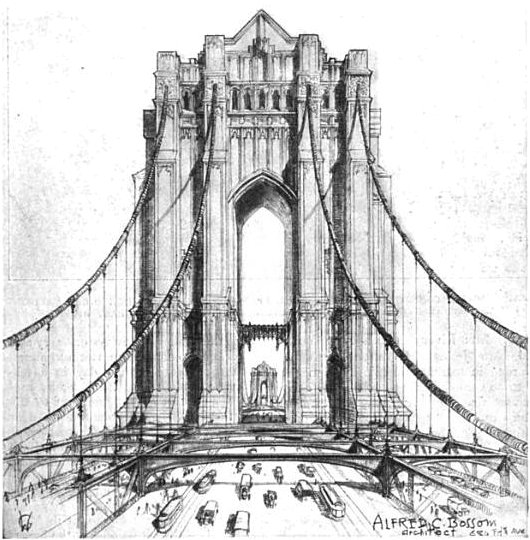
After the victory of America and her “co-belligerents” in the First World War, a temporary victory arch was erected out of wood and plaster to welcome the troops home from Europe. After the arch was dismantled, however, discussions soon arose on how to permanently commemorate the war dead of New York, with a surprising variety of suggestions made. A beautiful water gate for Battery Park was suggested, with a classical arch flanked by Bernini-like curved colonnades, so that a suitable place existed to welcome important dignitaries and visitors to New York. (Little did they know how soon the airlines would replace the ocean lines). Another proposal was for a giant memorial hall located at the site of a shuttered hotel across from Grand Central Terminal, while others suggested a bell tower.
An entirely different proposal, however, was made by the New York architect Alfred C. Bossom (later ennobled as Baron Bossom of Maidstone). Bossom, an Old Carthusian, was an Englishman by birth and eventually returned to his native land, where (in 1953) he gave away the future prime minister Margaret Roberts at her marriage to Denis Thatcher. He himself served in parliament from 1931 until 1959, excepting his wartime Home Guard service. Jokes were often made about his surname resembling both “bottom” and “bosom”. Upon being introduced to Bossom, Churchill jested “Who is this man whose name means neither one thing nor the other?” (more…)
Simon Kuper: Coloured Identity is an “Artificial, Ugly Leftover from Apartheid”

Honestly, a man like Simon Kuper should know better. The sports columnist for the Financial Times was born in Uganda, raised in the Netherlands, but both his parents are South African. In a recent article (“Apartheid casts its long dark shadow on the game”, Financial Times, 4 December 2009), Kuper discusses the racial divisions in South Africa and how they are reflected in terms of sport: White South Africans tend to gravitate towards rugby and cricket, whereas their Black compatriots overwhelmingly prefer soccer.
There exists in South Africa, however, a very large community known as the Coloureds, who are of mixed ethnic descent. Mr. Kuper, in his article, implies that they exist merely thanks to “the racial classifications of apartheid”, as if there were no Coloured people before 1948. Furthermore, he explicitly calls the difference between Coloured and Black South Africans “artificial” and an “ugly leftover from apartheid”. This is simple ignorance. He also refuses to use the word Coloured without quotation-marks, though one suspects he does not refer to Basques as “Basques”, Scots as “Scots”, Maoris as “Maoris” or so on and so forth.
The Coloureds (or kleurlinge or bruinmense in Afrikaans) are a very distinct people who form the majority of the population in the Western Cape and Northern Cape provinces. They are over four million in number and, while their distinct identity only came about after the intermarriage (and interbreeding) between the Dutch and natives after 1652, they include the genetic descendants of the old Khoisan tribes, the first people of the Cape. The Coloureds have been hugely influential in the history of the Afrikaans language, which is spoken by nine out of ten Coloured people. Just as the majority of Coloureds speak Afrikaans, the majority of Afrikaans-speakers are Coloured, not Afrikaner.
In short, Coloured people are real. They exist, and are a distinct, historical, vibrant, active culture. It is true that Coloureds are sometimes lobbed together with Zulus, Xhosa, Tswana, and others as “Black” but if one is forced to pigeon-hole them in Black-and-White terms it would be much more accurate to say either that they are both or that they are neither. Indeed, Coloureds, like Indian and White South Africans, have often faced discrimination at the hands of the ruling party, which is multi-ethnic in composition but dominated by Xhosas & Zulus in practice. The differences between Blacks and Coloureds are no more “artificial” than those between English and Irish. Mr. Kuper may want to ignore those differences (ergo, erase Coloured identity) but I say vive la différence.
Baroness Scotland
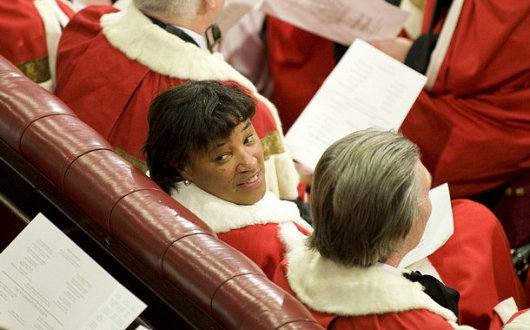
Ironically, Baroness Scotland is the Attorney-General for England, Wales, and Northern Ireland, but not Scotland.
The Diogenes Club
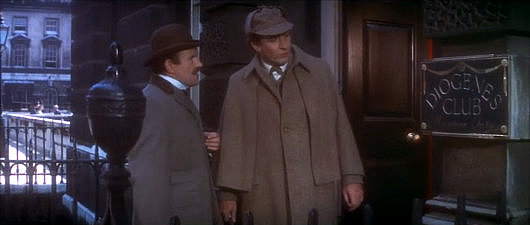
“There are many men in London, you know, who, some from shyness, some from misanthropy, have no wish for the company of their fellows,” says Sherlock Holmes in The Greek Interpreter. “Yet they are not averse to comfortable chairs and the latest periodicals. It is for the convenience of these that the Diogenes Club was started, and it now contains the most unsociable and unclubable men in town. No member is permitted to take the least notice of any other one. Save in the Stranger’s Room, no talking is, under any circumstances, allowed, and three offences, if brought to the notice of the committee, render the talker liable to expulsion. My brother was one of the founders, and I have myself found it a very soothing atmosphere.” (more…)
Canada’s Bastion of Catholicism
Our Lady Seat of Wisdom in Barry’s Bay, Ontario
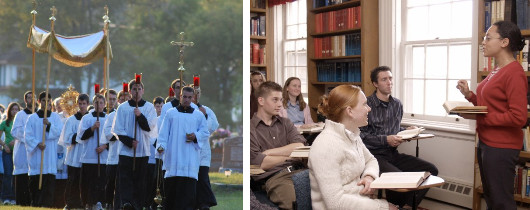
Many of our readers doubtless enjoy this blog for its unabashed defence of the glories of Christendom, all too many of which have passed into the pages of history. But highlighting those glimmers of hope that yet exist is another worthwhile task. The renaissance of Catholic higher education in the United States proceeds apace, with new institutions like Thomas Aquinas College, Christendom College, and such leading the way, while others retake the older Catholic universities from the inside. These places of learning have been gathered together in the Newman Guide to Choosing a Catholic Colleges, the guide to Catholic colleges for Catholics who actually want their Catholic colleges to be Catholic. An almost ridiculous thing to say, but such is the state of modern higher education.
While the Guide‘s purview was initially limited to the United States, Canada’s Our Lady Seat of Wisdom Academy — a college in Ontario offering one-, two-, and three-year Catholic liberal arts programs of study — began to get such rave reviews that, as Joseph Esposito, editor of the guide, put it, “we were so impressed by Our Lady Seat of Wisdom that we felt compelled to include it as well. The academy has accomplished much in a short period of time, and we look forward to it being an influential force in Catholic higher education.” In particular, the Academy has excelled at introducing home-schooled students to a more formal style of education to ease their transition into higher studies.
That, as the Newman Guide puts it, Our Lady Seat of Wisdom “provides a wonderful curriculum at a breathtakingly low cost” to students and the families supporting them is admirable, but the word on the street is that current economic woes of the world have landed the Academy in a bit of a financial bad-patch. The folks in charge are taking the proper steps of reducing pay and seeking out other savings, but I hope & pray that Catholics will be able to keep afloat this splendid institution which is utterly loyal to the Magisterium and devoted to educating the next generation of America’s and Canada’s Catholics.
Those interested in helping out can find out how to do so here. Americans in particular might take advantage of the non-profit status of the U.S.-based Friends of Our Lady Seat of Wisdom Academy. There is also a PayPal button in the right-hand column on the college’s main page. Having been on the receiving end of generosity myself, I know that every little bit helps.
Giving something to help this institution keep going is an act in keeping with the spirit of this Advent season.
Brompton Oratory as It Might Have Been
Failed Entries of the 1878 London Oratory Architectural Competition
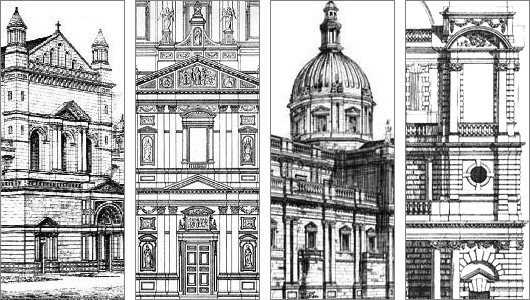
ARCHITECTURAL COMPETITIONS have always fascinated me because they give us the opportunity to glance at multiple executions for a single concept, to see different minds solve a “problem” with their own particular formulas and theorems. The designs of many of the world’s prominent buildings were chosen by competition, perhaps the Palace of Westminster — Britain’s Houses of Parliament — is most famous among them. When the Hungarian Parliament held a competition to design a grand palace to house the body, it found the top three prize designs so compelling that it built the first-prize design as parliament and the second and third places as government ministries nearby. To my surprise, I have only ever come across one book which adequately surveyed the subject of competitive architecture, Hilde de Haan’s Architects in Competition: International Architectural Competitions of the Last 200 Years. Most of the contests covered in the book are, naturally, for government buildings of national importance — private clients usually have a very firm idea of what they want and choose an architect accordingly.
One building not mentioned in the book but nonetheless very dear to me (and no doubt to many readers of this little corner of the web) is the Church of the Immaculate Heart of Mary of the Congregation of the London Oratory, more popularly known to friend and foe alike as the Brompton Oratory. It was the first church in Britain in which I ever heard mass, the summer after kindergarten when I was still but a tiny, blond-haired whippersnapper, in the midst of my first visit ever to the Old World, and the Oratory made quite a strong impression upon my young mind. It is usually one of my very first ports of call whenever I am in the capital, and I once even managed to slip in having just arrived at Heathrow while making my way to King’s Cross and the train to Scotland.
The Brompton Oratory is known for having good priests, traditional liturgy, and beautiful architecture. The final design was by one Herbert Gribble, but there was quite a bit of to-ing and fro-ing before Gribble was selected. The temporary church which had been erected on the site had been condemned by one critic as “almost contemptible” in its exterior design. In 1874, the Congregation of the Oratory (which is to say, the priests) put out an appeal for funds towards the construction of a permanent church. The 15th Duke of Norfolk obliged with £20,000 to get the ball rolling, and the next year a design by F. W. Moody and James Fergusson was agreed upon in principle. But the Reverend Fathers soon began to get creative and hatch ideas and contact other architects and very soon it was claimed that there were as many counter-proposals as there were priests of the Oratory, and perhaps more. A pack of clerics supported a suggested design by Herbert Gribble, but no accord could be reached among the Congregation as a whole.
In January 1878, then, it was announced that a competition would take place to decide the design of the permanent church of the London Oratorians. First prize was £200, with £75 for the runner-up. All entries had to meet the certain requirements drawn up by the Congregation. The style was to be “that of the Italian Renaissance”. The sanctuary, at least sixty feet deep, must be “the most important part of the Church. … Especially the altar and tabernacle should stand out as visibly the great object of the whole Church.” The minimum width of the nave was fifty feet, and maximum length 175 feet. Subsidiary chapels must be “distinct chambers”, not merely side altars. One aspect not mentioned was the projected execution costs of the designs — “an omission criticized by architectural journalists and disgruntled competitors,” the London Survey tells us, “whose designs called for expenditure ranging from £35,000 to £200,000”.
Over thirty entries were submitted to the competition, and Alfred Waterhouse was commissioned by the Fathers to provide comment on the submissions. Significantly, George Gilbert Scott, Jr. submitted a design, though I haven’t been able to get my hands on any depictions of it. Waterhouse praised it as “of no ordinary merit. … I feel that it is impossible to speak too highly of its beauty, its quiet dignity, its absence of all vulgarity and its concentration of effect around the high altar.” (more…)
‘The Feast of St Nicholas’, Jan Steen
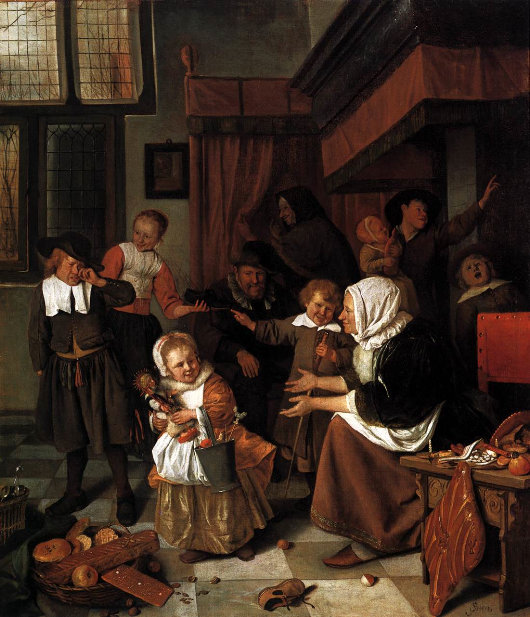
1665-68, Rijksmuseum
H.H. the Maharaja of Patiala
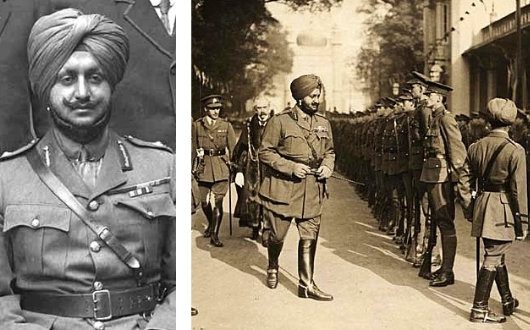
Lieutenant-General His Highness Farzand-i-Khas-i-Daulat-i-Inglishia, Mansur-i-Zaman, Amir ul-Umara, Maharajadhiraja Raj Rajeshwar, 108 Sri Maharaja-i-Rajgan, Maharaja Sir Bhupinder Singh, Mahendra Bahadur, Yadu Vansha Vatans Bhatti Kul Bushan, Maharaja of Patiala, Knight Grand Commander of the Order of the Star of India, Knight Grand Commander of the Order of the Indian Empire, Knight Grand Cross of the Royal Victorian Order, Knight Grand Cross of the Order of the British Empire, Knight Grand Cross of the Order of St. Gregory the Great, Knight Grand Cross of the Order of the Dannebrog, Grand Cross of the Order of the Redeemer, Grand Cross of the Order of Charles III, Grand Cross of the Legion d’Honneur, Knight Grand Cross of the Order of Sts. Maurice & Lazarus, Knight Grand Cross of the Order of the Crown of Italy, Grand Cross of the Order of the White Lion, Grand Cordon of the Order of the Nile, Grand Cordon of the Order of Leopold, ascended to the throne of Patiala in 1900. A keen cricketer, the Maharaja captained the 1911 Indian cricket tour of England, and played in twenty-seven games of cricket at first-class level between 1915 and 1937. Indeed, for the 1926-27 season he played for the MCC itself. (more…)
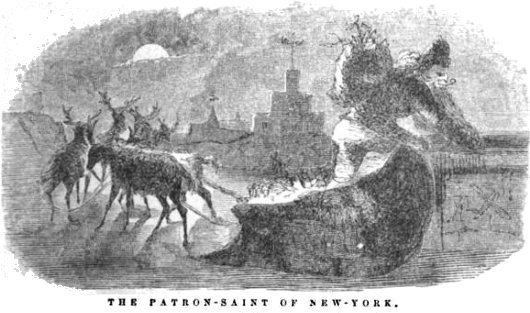
Patron of the Knickerbockers, pray for us
Die Nuwe Kanselier
Johann Rupert is die 14de seremoniële hoof van die Universiteit van Stellenbosch
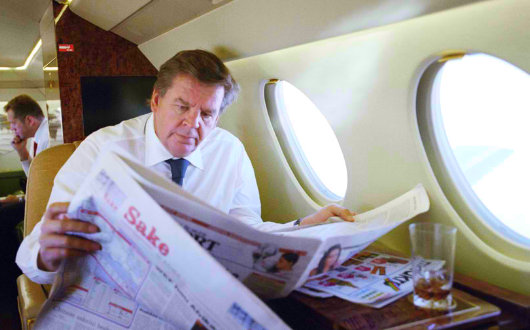
Mnr Johann Rupert, ’n afgesonderde sakeman en die seun van een van Suid-Afrika se bekendste entrepreneurs, is om die nuwe kanselier van Stellenbosch Universiteit. Dit is baie goeie nuus vir die universiteit en vir die taal, soos is mnr Rupert ’n vurige verdediger van Afrikaans. Waneer die Britse ontwerp- en leefstyltydskrif Wallpaper beskryf die taal soos “the ugliest language in the world”, Rupert — voorsitter van die Switserse luukse goedere conglomeraat Richemont — het alle advertensies vir sy groep se merken van die tydskrif verwyder. Die tydskrif het miljoene ponde in inkomste verloor, uit prominente Richemont maatskaapye soos Cartier (juweliers), Vacheron Constantin (horlosiemakers), Montblonc (penne), en Alfred Dunhill. Die Suid-Afrikaanse Akademie vir Wetenskap en Kuns, die AKTV, en ander kulturele organisasies het Rupert se optrede geondersteun.
Agtergrond van die oudste seun
Johann is die seun van die wyle entrepreneur en omgewingsbewaarder Anton Rupert, en Stellenbosch is sy tuisdorp. Hy het ook studeer ekonomie aan Stellenbosch Universiteit, wat verleen hom ‘n eredoktorsgraad in 2004. In sy vroeë jare in die sakewêreld, mnr Rupert het vir Lazard Frères in New York vir drie jaar gewerk, maar hy terug na Suid-Afrika in 1979 om Rand Merchant Bank te oprig. In 1988, Rupert stig die Compagnie Financière Richemont, en hy is nog steeds voorsitter. Ten spyte van sy rykdom, hy die soeklig vermy, en die Financial Times noem hom “reclusive”. Die selfde koerant bynaam hom “Rupert the Bear” vir sy korrek pessimistiese ekonomiese voorspellings.
’n Sterk kampvegter vir Afrikaans
Die Burger, die Kaap se koerant van rekord, sê: “Hoewel die pos van kanselier grootliks seremonieel is, kan ’n mens verwag dat iemand van Rupert se statuur en ywer ook hier sy rol op ’n vars en innoverende wyse sal vervul.”
“Sy openbare rekord as deeglike sakeman en uitsonderlike entrepreneur spreek immers vanself,” sê die koerant. “Rupert se uitmuntende sakeleierskap en visie het hom reeds verskeie toekennings op internasionale en nasionale vlak besorg. Hieronder tel Mees Invloedryke Leier in Suid-Afrika (drie keer), een van die internasionale leiers van die toekoms en handevol ander toekennings.”
“Die Burger het natuurlik sélf bande met Rupert. Hy is ’n vorige sakeleier van die jaar van dié koerant en en die Kaapstadse Sakekamer. Buite die sake-arena is Rupert ’n sterk kampvegter vir Afrikaans en is hy nou betrokke by sportontwikkeling.”
“Die mantel van kanselier val op hom in ’n tyd van besondere uitdagings aan tersiêre inrigtings. Maties self worstel met die uitdagings van transformasie en veral met die kwessie van Afrikaans as onderrigmedium. Daar kan verwag word dat Rupert ook by die US ’n sterk en rigtinggewende rol sal speel.”
NOTA VIR AFRIKAANS-SPREKENDES: Ek hoop dat u my arme grammatika sal verskoning. Dit is nie my moedertaal nie, maar ek hou van die taal.
The Sovereign Scotch Order of Whisky
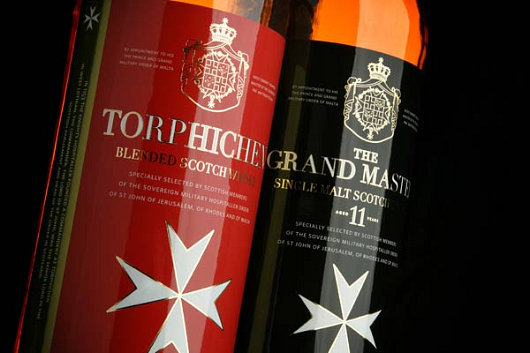
The Order of Malta recently paired up with Scotland’s own Adelphi Distillery to produce two variants of Scotch, proceeds from the sale of which support the Order’s worldwide charitable efforts. Adelphi produced a single malt called ‘The Grand Master’ and a blend named ‘Torphichen’, after Torphicen Preceptory, the headquarters of the Order in Scotland until the Reformation.
The last Preceptor of the Order in Scotland lamentably converted to Calvinism, surrendered the Order’s lands to the Crown (which were then re-granted to him specifically), and received the title Lord Torphichen (pronounced Tor-fikken).
Unlike most peerages, that of Lord Torphichen can be inherited by any assigned heir. In practice, it has descended through the Chiefs of Clan Sandilands, but in principle the holder could decide to designate any old Tom, Dick, or Harry as the next Lord Torphichen. (more…)
Clueless blogger: Alistair Bruce

Over at Sky News, we read the following from blogger Alistair Bruce:
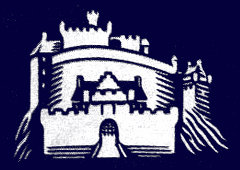 Or… perhaps because it was November 30… the Feast of Saint Andrew… Scotland’s national day? It strikes me, however, that Google UK’s little image of Edinburgh Castle is as astonishingly poor one. They should’ve commissioned Iain McIntosh, who designed the Edinburgh Castle logo of the Edinburgh Evening News (at right). Mr. McIntosh also does the splendid illustrations for the 44 Scotland Street series, not to mention the Professor von Igelfeld Entertainments, depicting the trials and tribulations of poor Professor Dr Moritz-Maria von Igelfeld of the Institute of Romance Philology at Regensburg.
Search
Instagram: @andcusack
Click here for my Instagram photos.Most Recent Posts
- Brunel’s Unbuilt Capitol February 3, 2026
- Cricket at Fordham January 27, 2026
- Palacio Barolo Revisted January 14, 2026
- Learning to Love Liguria January 14, 2026
- Crux Alba No. 2 January 13, 2026
Most Recent Comments
Book Wishlist
Monthly Archives
Categories