About Andrew Cusack
 Writer, web designer, etc.; born in New York; educated in Argentina, Scotland, and South Africa; now based in London.
 read more
News
Blogs
Reviews & Periodicals
Arts & Design
World
France
Mitteleuropa
Knickerbockers
Argentina
The Levant
Africa
Cape of Good Hope
Netherlands
Scandinavia
Québec
India
Muscovy
Germany
Academica
David Goldblatt: Structures
“THE FIRST GROUP of photographs that I attempted of structures,” writes photographer David Goldblatt, “was a series made in 1961 on places of worship on the Witwatersrand. I came to this from two starting points. The first was a fascination with the idea of faith. Notwithstanding recurrent nightmares during childhood about the infiniteness of everlasting hellfire and uncertainty over the domicile of my unbaptised Jewish soul in the hereafter, arising from an otherwise happy primary school education by nuns, I don’t think I was ever able to believe in or pray to the deity with much conviction — except momentarily under extreme threat of imminent disaster. Neither nuns nor rabbi could ever enable me to transcend the banal with that leap of faith required of true believers. … I was — am — then, generally sceptical of believers’ beliefs but also in awe, and sometimes envious, of their ability to believe. If blind, unreasoning faith often repels me it sometimes moves and always intrigues.”
“Thus it was endlessly mysterious, even incredible to me that people — for the most part ‘ordinary’, ‘practical’ people, probably not much given to abstruse thought and discussion — should pour such effort and resource into the erection of structures devoted to so abstract an idea as God.” The photographer, understandably, doesn’t understand that, for we Christians, God is no less abstract than our father, mother, or neighbour down the street. “The ubiquity and persistence of the phenomenon, the immensity of humankind’s investment in God was to me quite awesome.”
“The second starting point for this early series of photographs of structures was an inchoate but growing awareness that whereas some structures seemed quite detached from this place, the Witwatersrand or, more broadly, South Africa, others grew almost viscerally from it. This seemed to have less to do with architecture than with indefinable qualities of ‘belonging’. I wanted to explore these notions and bring them into the light with the camera.” (more…)
Monument to the Latin Genius
The Palacio Barolo, Avenida de Mayo, Buenos Aires
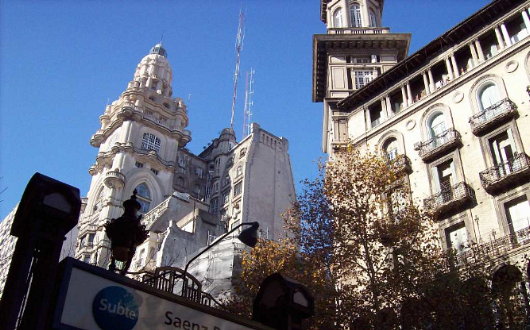
THE PROSPECT WAS horrifying. The year was 1919, and Europe had only just brought to an end an orgy of self-destruction lasting several years. The negotiations to conclude a peace treaty at Versailles were ongoing, but from abroad it looked as if the continent had descended into a trend of violence, decline, and destruction. That year, Luis Barolo, an Italian textiles manufacturer who had immigrated to Argentina, commissioned his fellow-countryman Mario Palanti to design a fascinating and mysterious structure as a monument to “the Latin Genius” Dante Alighieri — a repository in the New World for the poet’s legacy as the continent that gave him birth slid into oblivion. (more…)
French Flag-Fiddling
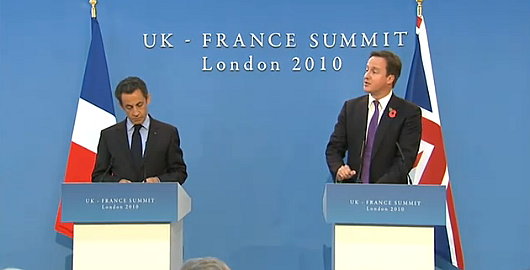
As if you needed more reasons to despise Nicolas Sarkozy! Well, this one we can’t even blame on him. Shall I explain? The national flag of France is a tricolour of three equal vertical stripes of blue, white, and red. Excepting the heady days of the Bourbon restoration, this has consistently been the French flag for the past two centuries now. A little while into the Sarkozy presidency, however, I began noticing a change only in the French flag as displayed whenever the President gave a press conference. The white stripe was reduced in width by half and the space on either side given to the neighbouring colours. The obvious deduction made was that the President wanted all three colours of the national flag shown whenever there were close-up press photographs of himself, and research confirms that this is the case. This shows an awareness for visual representation, but is nonetheless a highly unusual assault on the official flag of a nation. (more…)
Antipopes We Have Known
The University of St Andrews is commencing the celebrations of its 600th anniversary, as the institution was founded in stages between 1410, when teaching started, and 1413, when a bull was issued recognising it as a university by Pedro de Luna, an antipope who styled himself Benedict XIII. Yesterday I attended a fascinating lecture by Dr. John Rao — From the Triple Papacy to the Council of Constance — as part of the 2010–2011 lecture series organised by the Roman Forum.
Boy was Benedict a baddie! Even the council he called passed resolutions condemning him and the cardinals he appointed turned against him. He ended his days maintaining his schismatic claim, holed in island fortress of Peñiscola. The day before he died, he appointed four cardinals, who elected de Luna’s friend Gil Sanchez Muñoz y Carbón as Clement VIII. Or rather, three of the cardinals did while the fourth — Jean Carrier, the archdeacon of Rodez — wasn’t present, so he went and single-handedly elected his sacristan Bernard Garnier as pope, who took the name Benedict XIV.
Garnier was permanently in hiding, and his location was only ever known to Carrier. B-14 did manage to choose four cardinals of his own, and on the antipope’s death they elected Carrier pope, who was inconveniently captured and imprisoned by his rival antipope, Clement VIII. Oddly, having just succeeded the supposed Benedict XIV, Carrier chose to use the name and style Benedict XIV also. A novel by Jean Raspail (L’Anneau du pêcheur) depicts a line of anti-papal successors to the two Benedict XIVs.
As a lecturer, Dr. Rao is both informative and entertaining, and I’d encourage anyone interested to attend the remaining lectures in this year’s series. There’s always wine on offers and little things to nibble on, with a box for generous donations to be made towards the cost of the program. The next lecture is Martin V and the Troubled Return to Rome — this week is the 593rd anniversary of that pope’s election, as it happens.
Also, Dr. David Allen White, retired Professor of World Literature at the United States Naval Academy, returns to New York in December for the Syllabus of Errors Weekend, on the subject of Charles Dickens and the Evils of Modernity. I went to last year’s Syllabus of Errors weekend, and Professor White is entrancingly engaging, a veritable font of knowledge.
An Aldermanian Skyscraper
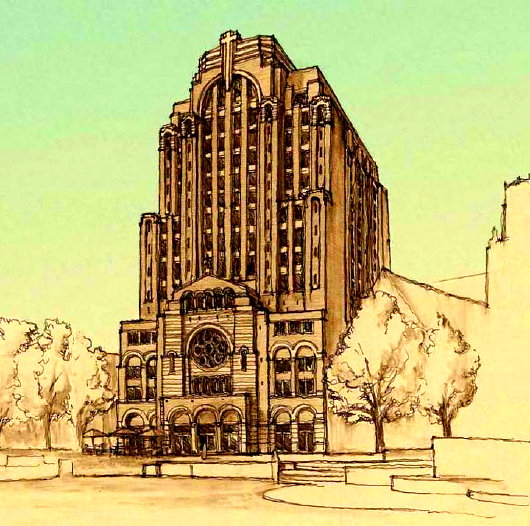
Good news from the Middle West: the Catholic chaplaincy at the University of Wisconsin at Madison announced plans for multi-use, high-rise structure in the city built in a traditional style. Matthew Alderman Studios served as the principal designer for the elevations of the St. Paul University Catholic Center, a 14-storey, $45-million structure in a Romanesque-Deco style that will include a chapel, meeting rooms, and student housing.
“Catholic life in Madison has undergone a remarkable renaissance under Bishop Morlino,” Matt Alderman says, “and St. Paul’s is one of the foundations of this resurgence. I can assert from personal experience that it is really heartening what is going on over there. St. Paul’s is molding a new generation of faithful, responsible, and joyfully serious young Catholics.”
Matt noted that the concept for the St. Paul Center is reminiscent of the skyscraper-church designs mooted during the first half of the twentieth century. In most of those proposals, however, the skyscraper factor tended to overwhelm the ecclesiastical visuality of the overall design. Matt has deftly avoided this in the St. Paul plans: from the perspective of the man on the street, the most prominent part of the façade is obviously ecclesiastical, and the many storeys above flow naturally, but unobtrusively, therefrom.
“It was important to impart an ecclesiastical character to the principal facade while at the same time asserting the building’s mixed-use status. In my own sketches, I drew on the work of Ralph Adams Cram at Christ Church Methodist in New York, a rugged urban ecclesiastical plant with a great deal of dignity and personality, and Bertram Goodhue’s slightly earlier St. Bartholomew’s, just down the street on Park Avenue.”
RDG Design and Planning of Omaha acted as principal architects of record. Matt Alderman is not yet an architect officially — the certification process in America is wisely prolonged — but as a design consultant he’s already serving up enough to whet our appetite. Diocesan chancelleries, parish boards, heck, anyone who wants to build anything: keep this guy in mind!
Windsor
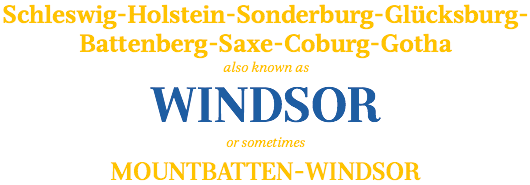
The word conjures up majestic imagery: Windsor — the castle viewed from the Long Walk and the Royal Standard snapping above the Round Tower. At the same time, it has a strange tinge of domesticity to it, an almost middle-class quality. Perhaps a 1950s development of semi-detached suburban houses along a ‘Windsor Drive’. What on earth does the word mean? (more…)
Imperial Mexico
The Forgotten Monarchs that Shaped a Great Nation
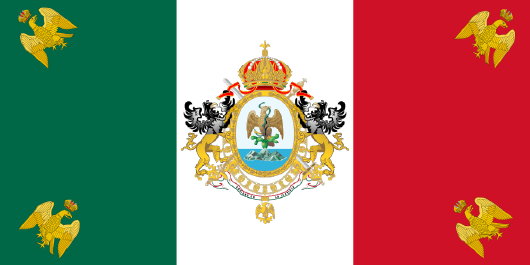
THE NEW WORLD has such a republican reputation these days. Even though there remain thirteen monarchies in the Americas, concentrated in the Caribbean, there are only three monarchs between them (all, curiously, women: Elizabeth II, Beatrix, and Margrethe II). But it’s usually forgotten that the Americas have had two great empires of their own: the Empire of Brazil in South America and the Empire of Mexico in North America.
Napoleon’s Peninsular War in Spain had caused quite a ruckus in the Spanish Americas, where liberals had seized the opportunity to wage long, rebellious wars of independence with fluctuating levels of popular support. In Mexico, two of the rebel generals, Agustín de Iturbide and Vicente Guerrero composed a plan to change the balance of power in the Spanish empire as a whole while simultaneously securing Mexican independence. The three main aims of the ‘Plan of Iguala’ were: 1) Catholicism as the established religion, 2) The independence of Mexico, and 3) The end of legal distinctions between the races; summed up as “Religión, Independencia, y Unión”.
But the larger scheme of the Plan was to convince King Ferdinand VII to move to Mexico and become Emperor of Mexico, shifting the center of power in the Spanish empire from Madrid to Mexico City. If Ferdinand would not accept, then the crown would be offered to his brother and the rest of his family down the line until someone accepted, or if even that failed then to a member of another European dynasty. (more…)
¡Viva México!
The Cry of Independence
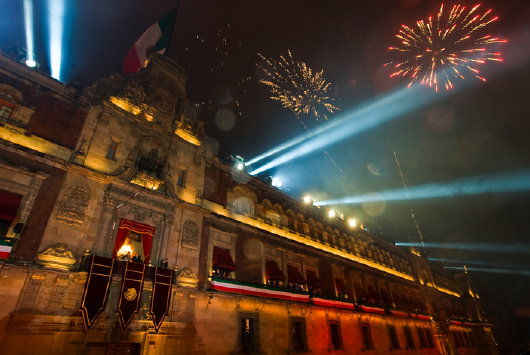
ONE OF THE established rituals of Mexico’s remembrance of her fight for independence is the Grito or “Cry of Independence”. Around eleven o’clock in the evening on the night of September 15th, the President of Mexico rings the bell of the National Palace on the Zócalo square in the center of Mexico City. The head of state hails the names of the leaders of the country’s independence struggle before shouting a threefold ¡Viva Mexico! Then, as the crowd in the plaza below goes wild, the President rings the bell again, waves the Mexican flag for all to see, and the national anthem is sung:
Gird, oh Fatherland, your brow with olive
by the divine archangel of peace,
for in heaven your eternal destiny
was written by the finger of God!
The whole thing has a strange buoyant solemnity about it, a splendid civic ritual set in the baroque surrounds of the old palace — it almost reminds one of the joyous Habemus papam from the balcony of St. Peter’s after the election of a pontiff. (more…)
Brown 26, Yale 14
B.U.R.F.C. 1st XV v. Y.U.R.F.C. 1st XV
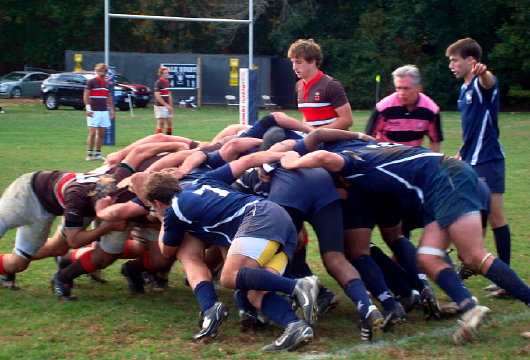
I never paid much attention to rugby before I lived in South Africa, where it is inescapable, especially since I was studying at Stellenbosch, which the rugby-est of rugby universities. After becoming a rugby spectator you cannot go back to watching American football, which, with its stopping and starting, suddenly has the feeling of being a demented child’s game. And so, across the Connecticut border to trusty old New Haven, to join some friends and fellow club-members for some Saturday afternoon rugby and revelry, with champagne, whiskey, and home-brewed porter on offer. (more…)
Popping in to the Yale Daily News
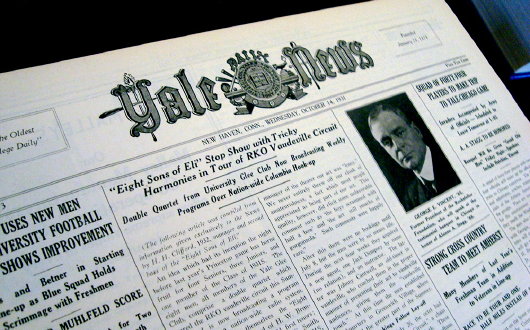
With a bit of time to spare between the rugby match and dinner, we discovered a friend of ours was exploring the newly renovated headquarters of the Yale Daily News and were invited to join in. The handsome gothic structure is now overshadowed by an ugly extension to the previously ugly Yale School of Architecture, widely believed to be the ugliest building in town. Henry Luce paid for the YDN building out of his own pocket in memory of his Yale classmate Briton Hadden, who died just 31 years old. The place went up in 1932 and underwent a multi-million-dollar renovation over the summer, and the place was looking good. (more…)
Mexico’s Military Parade
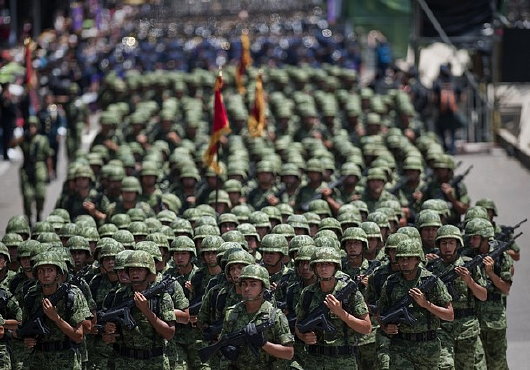
SIX-HUNDRED TROOPS, seventeen countries, field dress, full dress, and everything in between: the military parade to mark Mexico’s bicentennial was a remarkable sight to see. The parade moved down the Paseo de la Reforma, originally the Paseo de la Emperatriz, or Promenade of the Empress. The seven-and-a-half-mile-long boulevard was built on the orders of Maximilian I, Emperor of Mexico and was modelled after the Champs-Élysées in Paris and the Ringstrasse in Vienna. It stretches from the Zócalo square at the center of the city (where the Cathedral and National Palace are) to the Chapultepec Castle, the imperial residence during the Second Mexican Empire. (more…)
A Festive Flotilla
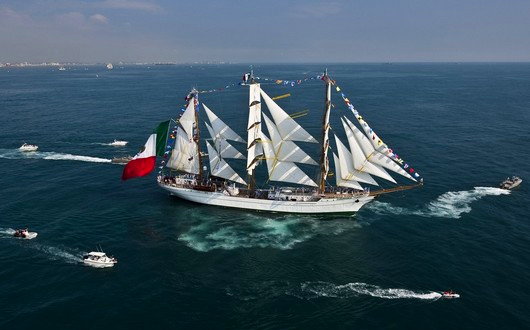
A great flotilla of tall ships from twelve countries set sail from Rio de Janiero on February 7th of this year for a months-long regatta to commemorate the bicentennial year of Mexico, Chile, and other Latin American countries. After departing Rio, “Sails of South America 2010” called in at Buenos Aires, Ushuaia, Punta Arenas, Valparaíso, and other points before finishing in Veracruz, Mexico in time for the commencement of the Mexican bicentennial in September.
ARM Cuauhtémoc (above), the training ship of the Mexican Navy, is a steel-hulled barque built in Bilbao in 1982. (more…)
A Miscellany of Mexican Music
Juan Gutiérrez de Padilla was born in Malaga, Spain in 1590 but moved to New Spain in 1620, and was appointed choirmaster of Puebla Cathedral in 1628. His corpus is massive, with over 700 works surviving. His Stabat Mater is above, but you should also hear his Missa ego flos campi. (more…)
Dodgy ‘knighthood’ for a dodgy lady
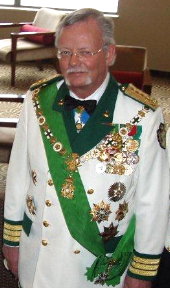
An example of the ‘Lazarus bling’, more medals than you can shake a stick at.
From the blog of John Smeaton we read that the former Irish president (and genial enemy of all that is good and holy) Mary Robinson has received a ‘knighthood’. Last month she was invested as a Dame in the self-styled ‘Order of St. Lazarus’, a fake order of knighthood. The group claims links to the old Order of St. Lazarus of which the last remnants faded away in the 1780s.
The current ‘Order’ was founded as a fake order of knighthood in 1910 by the confidence trickster Jean-Joseph Moser, and has grown by perhaps surprising leaps and bounds in the past few decades, taking into account P. T. Barnum’s famous maxim about a sucker being born every minute. The group has split into various factions and it has become notorious for having members in its ranks who don more metal “bling” than rap stars or Soviet generals.
The so-called Order of St. Lazarus exists throughout Europe and the Spanish- and English-speaking countries abroad, including the United States. The French branch of St. Lazarus was forced by the Grand Chancellor of the Legion of Honour to cease claiming to be an ‘order’, and members of the Order of Malta are forbidden from participating in St. Lazarus’s activities.
“The Order’s pretensions have been strongly condemned by the Holy See as aiming to replace ‘the legitimate forms of chivalric awards’,” according to Guy Stair Sainty, the acknowledged expert on these somewhat arcane affairs. Nonetheless, Guy points out that “supporters of Saint Lazarus include the heads of a handful of great noble families and, over the years, several leading Churchmen and Cardinals”.
“The Order of Saint Lazarus, although it is to be complimented for its considerable charitable efforts (notably in Germany), need not pretend to an historical continuity to which its claims, at the very least, are unsubstantiated,” Guy Stair Sainty concludes. “Were it to assume the character of a private association, founded in 1910, to emulate the traditions of the ancient crusader Order, it could deflect much of the hostility it has attracted… It would be much more successful and be more readily welcomed into the wider community of international humanitarian bodies, however, if it was to permit an honest appraisal of its origins.”
Ciudad de México
The Greatest City of the Americas
WITH A population of 20,000,000 people, Mexico City is the greatest city in the Americas — Tokyo and Seoul are the only metropolitan areas in the world that can claim a higher count of inhabitants. The old city of Tenochtitlan was founded by the Aztecs in the middle of a lake, 7,000 feet above sea level in 1325. According to legend, Huitzilopochtli — the Zeus or Jupiter of the Aztecs — indicated the site of the new capital through an eagle perched on a cactus with a snake in its beak. The city grew as the Aztec Empire augmented in size and strength, conquering hundreds of smaller surrounding tribes, enslaving their members, and offering their prisoners as human sacrifices. With great ceremony, vast numbers of prisoners were led one-by-one to the summit of the temples, where the priest would carve the living victim’s chest open with a blade of obsidian or jade, remove the still-beating heart and offer it to the appropriate god while the victim’s body was thrown down the steps of the temple. During the re-consecration of the city’s Great Temple in 1487, the Aztecs claim to have sacrificed 80,400 prisoners over the course of four days. It is not hard to imagine the relief of the conquered tribes when their liberation came at the hands of the Spanish. (more…)
The House of Moctezuma
Noble Descendants of the Aztec Emperor
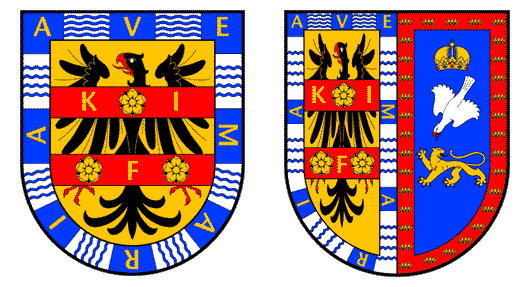
The last Emperor of the Aztecs, Moctezuma II (usually anglicised as ‘Montezuma’) suffered an ignominious end: defeated by the Spanish, some accounts have him being stoned by his former subjects, while others claim he died of starvation, refusing to eat food not worthy of an emperor, still more claim Cortés had him killed. Many of his descendants embraced Christianity and found favour from Mexico’s new overlord, the King of Spain. (more…)
Mexico Week
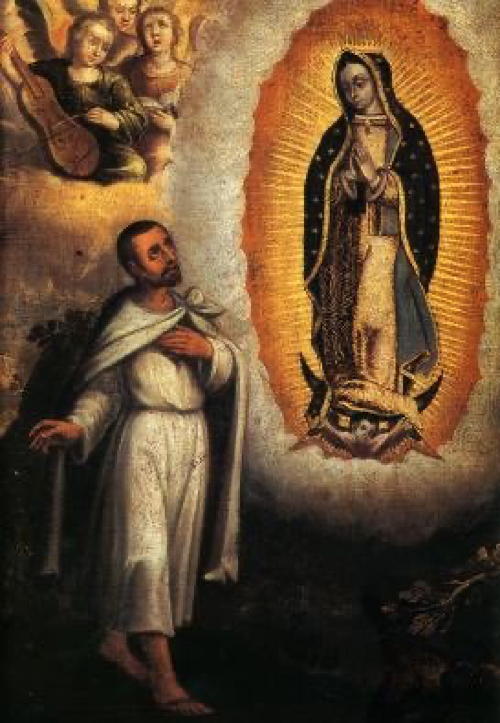
Over the course of this week our little corner of the web will feature a series of posts relating to Mexico, the great American nation which this year commemorates the two-hundredth anniversary of the beginning of its war of independence. That revolt was begun by a heretic priest, Miguel Hidalgo, under the influence of the contemptible ideas of “the Enlightenment”, but he nonetheless marched under the banner of the Blessed Virgin of Guadalupe, who is venerated to this day as Queen of Mexico and Empress of the Americas. This curious rebel presaged so much of the history of Mexico: rebellion and devotion, religion and irreligion.
Our ‘Mexico Week’ is not intended to give any sanction to rebel priests or violent revolt against legitimate authority, but we instead aim to take this opportunity to display to readers some of the greatness of this brilliant yet troubled nation, oft forgotten due to its rather famous and prominent neighbour to the north.
Growing up in the United States, as I did, Mexico was (and still is) often written off as a place of drug killings and drunk American college students. But digging beneath the surface one easily discovers a Mexico rich in story. ‘Mexico Week’ will by no means be a comprehensive survey of the country, its history, and traditions, but rather a little cabinet of curiosities, a Mexican miscellany if you will.
ora pro nobis!
Burma’s New Flag

Burma Colony (1937–1948)
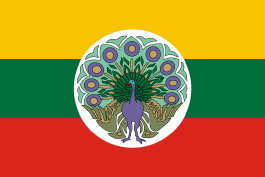
State of Burma (1943–1945)

Union of Burma (1948–1974)

Socialist Republic of the Union of Burma (1974–1988) and Union of Myanmar (1988–2010)
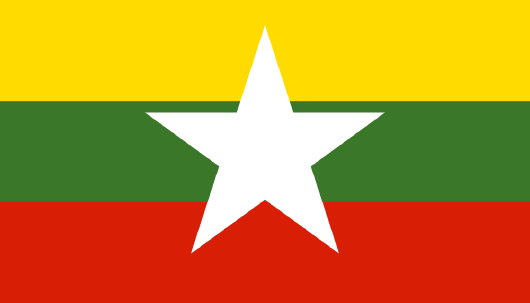
The military government of Burma (officially ‘Myanmar’) unveiled a new flag for the southeast-Asian country last week. The new design (above) rejects the general form of Burmese national flags since the country was granted independence from Great Britain in 1948, but instead harkens back to the ‘State of Burma’, a puppet regime set up by the Japanese to integrate Burma into their ‘Greater East Asia Co-Prosperity Sphere’.
Somewhat paradoxically, the Minister of Defence in the puppet ‘State of Burma’ was General Aung Sang, the father of Aung Sang Suu Kyi, pro-democracy activist and winner of the Nobel Peace Prize. Aung Sang Suu Kyi is the most prominent leader of the opposition to the military junta that rules Burma, and has spent fourteen of the past twenty years either in jail or under house arrest.
The flag change is part of a transition period devised by the military junta in their attempt to reform the country into a managed democracy that will be less isolated from the rest of the world without threatening the junta’s grasp on power.
Burma became a British possession in 1824, and was made a province of the Empire of India in 1886. In 1937 the province was separated from India, excluding it from the reforms aimed at eventually granting dominion status to the sub-continent but also introducing important reforms for Burma, including an elected assembly with a prime minister. The country saw some of the heaviest fighting during the Second World War, but the forces of the Japanese puppet regime, the ‘State of Burma’ eventually saw the tide turning against the Empire of Japan and switched sides to join the British and Indian armies under Lord Mountbatten.
Charles of Austria
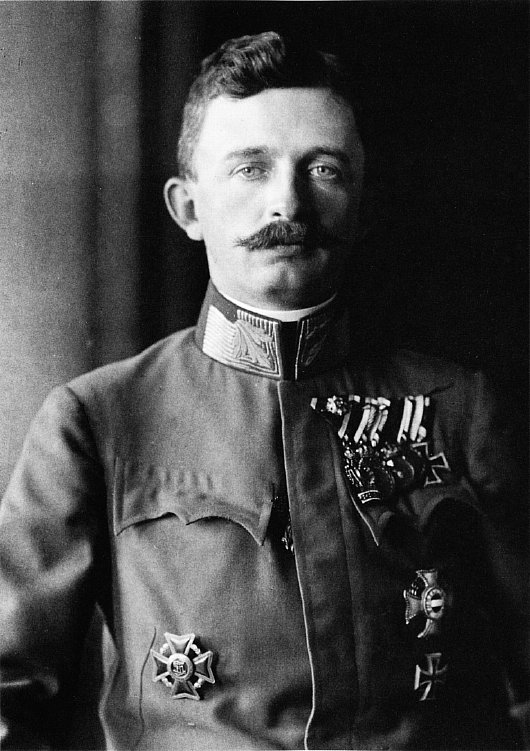
TODAY IS THE first feast of Blessed Charles since the announcement last December that the cause for the canonisation of his wife, Zita of Bourbon-Parma, has been opened as well. In an age when most people in government and public leadership seem barely even decent, let alone saints, it is all the more important to seek the prayers and intercession of Charles and Zita — husband and wife, mother and father, Emperor and Empress — for the preservation of peace, the prevention of war, and the renovation of our families as well as our societies at large. (more…)
A Forgotten Architectural Fantasist
Wilhelm Cornelis Bauer of the Netherlands
Boullée isn’t the only architect known more for the designs never built than for those that were. Wilhelm Cornelis Bauer (1862–1904) was a Dutch architect with a flair for the fantastic. He was born into an aesthetically minded environment in the Hague, where his father ran an interior decoration firm; his brother, the painter and engraver Marius Bauer, is better known. W.C. Bauer (sometimes known as Willem) studied at the Craft School before heading to the Royal Academy of Visual Arts and became involved in the circle of Dutch architects that included Berlage, Walenkamp, Kromhout and others.
Bauer had a very high opinion of himself, being convinced of his own genius, which often brought him into conflict with others, including potential patrons. The buildings of his that were constructed (such as a handful of houses in Bussum) were within the reasonable bounds of the Dutch contemporary vernacular, but Bauer was an inveterate dreamer with elaborate visions. Architectural competitions proved a perpetual draw, and while Bauer’s designs were often commended as highly artistic they usual brought simultaneous comments about impracticability. (more…)
Search
Instagram: @andcusack
Click here for my Instagram photos.Most Recent Posts
- Brunel’s Unbuilt Capitol February 3, 2026
- Cricket at Fordham January 27, 2026
- Palacio Barolo Revisted January 14, 2026
- Learning to Love Liguria January 14, 2026
- Crux Alba No. 2 January 13, 2026
Most Recent Comments
Book Wishlist
Monthly Archives
Categories