About Andrew Cusack
 Writer, web designer, etc.; born in New York; educated in Argentina, Scotland, and South Africa; now based in London.
 read more
News
Blogs
Reviews & Periodicals
Arts & Design
World
France
Mitteleuropa
Knickerbockers
Argentina
The Levant
Africa
Cape of Good Hope
Netherlands
Scandinavia
Québec
India
Muscovy
Germany
Academica
The Start of Something Big in Argentina
The first-ever Nuestra Señora de Cristiandad Pilgrimage to Luján
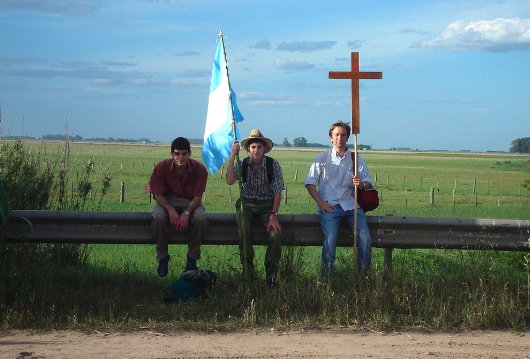
SMALL SEEDS, IF well-planted and tended to, flower into much larger growths. On a Friday morning last month, just four pilgrims set out from the town of Rawson in the Buenos Aires province of Argentina, but by the time they reached their destination — a Latin Mass in the Marian basilica of Luján — their numbers swelled to nearly a hundred. The pilgrimage of November 5th, 6th, and 7th, under the patronage of ‘Our Lady of Christendom’ (Nuestra Señora de Cristiandad) was inspired by the traditional Paris-Chartres pilgrimage every Pentecost weekend. The organisers hope that, like the Chartres pilgrimage, this trek to Luján will become an annual recurring event.
“Renewing Christendom in Argentina” was the theme of this year’s pilgrimage, which “seeks to promote the rich tradition of the Roman Catholic Church for our times” the organisers announced in a press release after its completion.
“This new 100-kilometre pilgrimage was an act of reparation and praise to God, imploring the salvation of souls through the renewal of Christian culture and the rediscovering of the bi-millennial tradition of the Church.” (more…)
Napier in the Overberg
NESTLED IN the Overberg, the little town of Napier owes its existence to a dispute between two neighbours. In the earlier part of the nineteenth century, as the little farm villages of the Cape became more firmly settled, the Dutch Reformed synod had to choose which towns were deserving of their own church. In 1833, the congregation in Swellendam decided to build a church further south to meet the needs of its members there, but couldn’t decide between two locations. Michiel van Breda wanted the church sited on his farm, Langefontein, while Pieter Voltelyn van der Byl wanted it built on his property, Klipdrift. Neither van Breda nor van der Byl would give way, so churches were built in both places, the town of Bredasdorp growing around van Breda’s church and the town of Napier founded around van der Byl’s church. (more…)
Solution «N» for Flanders?
Matthias Storme’s thoughts on keeping Flanders in the E.U.
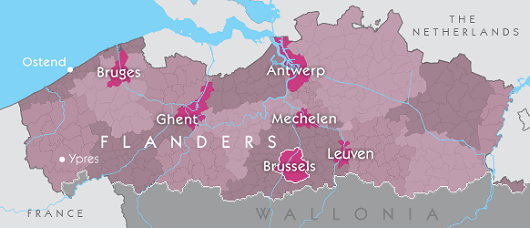
PURSUANT TO OUR previous discussion of the dissolution of the confederal Hollandic archipelago in the Caribbean, the ever-interesting Flemish philosopher & university professor Matthias Storme suggests an interesting solution to the Belgian question. Opponents of Flemish secessionism frequently argue that should Flanders gain independence from Belgium, it would not automatically continue its membership in the European Union and would be forced to seek re-admission on its own. Professor Storme posits what he calls Solution «N», which has its basis in the Charter for the Kingdom of the Netherlands and Article 355, Paragraph 3 of the Treaty on the Functioning of the European Union. (more…)
Afrikaans Rachmaninoff Vespers a Surprise Hit
In an attempt to make great music more accessible to South African audiences, Rachmaninoff’s Vespers have been translated into Afrikaans and have proved a surprise hit. The translation of texts from the Russian Orthodox all-night vigil service was commissioned by the Vriende van Afrikaans society at the suggestion of Leon Starker, director of the Pro Cantu Youth Choir and the Cape Chamber Choir, and the translation was done by the Durbanville musicologist and polyglot Hélène Dippenaar.
The work, composed in 1915, was performed across the country during the past year, including at the Voortrekkermonument in Pretoria. A final concert at St. George’s Cathedral in Cape Town was added in response to the high demand from the music-loving public.
A compact disc of the Rachmaninoff Vespers in Afrikaans has also been released by Pro Cantu, which rehearses at Hoërskool D.F. Malan in Bellville and draws its members from across the Cape Peninsula.
Autumn by the Hudson
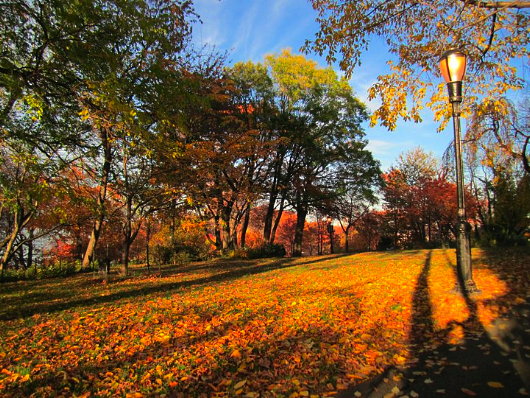
Some consider winter the time of death and desolation but I disagree. Winter for me is the incubation, the child in the womb, the seed beneath the soil waiting for the moment to sprout. Autumn, rather, is the time of melancholy and retrospection. Most of the trees here in New York are now bare, but before the leaves fell our friend the Brooklyn-based graphic & web designer Emily E. Owen (website here) caught these photographs of New York in the brilliant crepuscular light. The views are from Fort Tryon Park at the very top of the isle of Manhattan. (more…)
Scotland in Snowfall
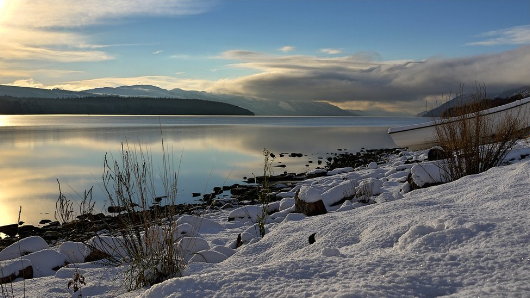
Scotland has been enveloped in snowfall, and the BBC has put a photo gallery up of reader-submitted images of the recent precipitation. The In Pictures feature of BBC News Online’s Scottish section has for years been one of my favourite parts of the website, offering a new series of photographs every week varying from the startling to the quotidian. Above is Michael Rennie’s view of a rather peaceful-looking Loch Ness. (more…)
The Spott Estate, Dunbar
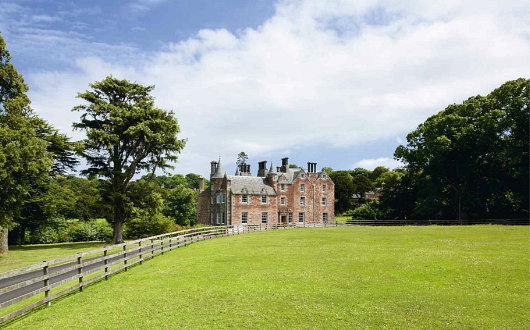
HERE IS A lordly demesne! In East Lothian, thirty-one miles from the centre of Edinburgh and three from the Royal Burgh of Dunbar, sits the Spott House and estate, now on the market from Knight Frank. The property is a whopping 2,463 acres in total, including 1,779 acres of arable land, 214 of pasture, and 356 acres of woodland. The estate has more than quadrupled in size in the past decade, under the ownership of the Danish-born Lars Foghsgaard, who bought just 600 acres in the year 2000.
As The Times wrote of Mr. Foghsgaard, “Clad in tweed jacket, plus fours and Hunter wellingtons, with several brace of partridge in his hand and his labrador at his side, he looks the very image of the country gentleman as he strides though his East Lothian estate.”
“The previous owner was very involved in the land,” Mr. Foghsgaard told the Times. “I am not a farmer, so I employed a farm manager: it’s crucial to have the necessary skills and connections in the area to do the job well, and as a foreigner I did not have those.” But the Dane does enjoy seeing the workings of the farm. “When I walk the dog, I always pass through the cowshed, where we have lambs being born each day — it’s such a joy to see.” (more…)
The Bozen Gate
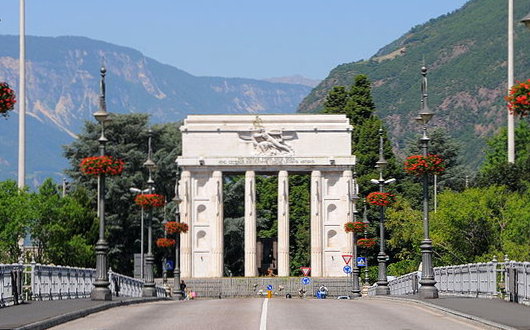
TRIUMPHALISM IN architecture is a double-edged sword. When done properly, it is glorious, like the Arc de Triomphe, standing majestically as avenues radiate forth from the stout, sculpted monument to Napoleon’s victories. The Italian monument at Bozen in Südtirol is the other end of the spectrum. The French emperor was wise enough to construct his triumphal arch in Paris, on his own turf, where it would prove relatively uncontroversial over the span of the years. Mussolini, meanwhile, had this gate celebrating the Italian victories of the First World War in Bozen, the capital of Südtirol, a region whose inhabitants are mostly German-speakers despite it being part of the Italian Republic. While the existence of a monument to Italian victories is acceptable, the placement and nature of this monument is a direct insult to the local population. (more…)
Stellenbosch in the FT
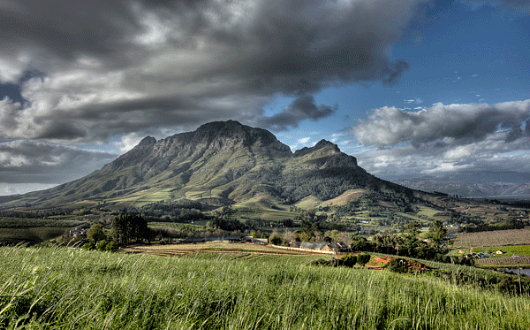
‘THE RESIDENTS of South Africa’s winelands seem to care very much about their appearance,’ claims last week’s Financial Times Weekend section, reviewing the newly reopened Delaire estate owned by Laurence Graff, the diamond man who controversially had the Wittelsbach Diamond re-cut to remove some flaws. ‘A university town, Stellenbosch is full of well-groomed students with beach-ready figures. Judging from the upscale boutiques and bistros, there is also lots of money in these parts,’ says the writer. (more…)
The Most British Place in the World?
The Islands of the Anglo-Caribbean: Where Old Britain Lives
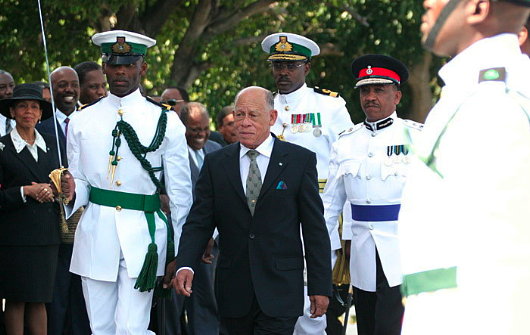
Spoke to a friend recently, who just had a friend of her’s report back after a six-month stint in the Bahamas. “This is the Britain my grandparents always told me about. It must be the most British place on earth. Men in ties and blazers and women in lovely hats. Just the right mixture of formal and laid-back.” (more…)
Media Lies About the Pope
In an interview, Benedict XVI reaffirmed the immorality of using condoms, but the press have spread a lie claiming he did the exact opposite
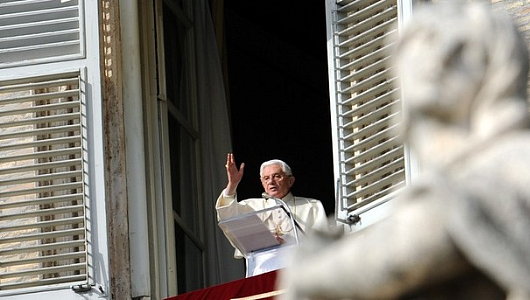
Wow. Just wow. No matter how low my opinion of journalists and the media already is, they’ve proved that they still have the ability to astound by the depths of their depraved mendacity. The latest big giant whopper the media are dealing out is that Pope Benedict XVI has ‘changed church teaching’ by ‘lifting the absolute ban on condom use’. You should know by now that when the media report almost anything relating to the Pope or the Church, the reality is either A) the media have completely made it up, or B) the exact opposite of what the media say is true.
This one we can file under “B”: the Pope has reaffirmed the immorality of using condoms and the media have decided to claim the opposite. A new book, Light of the World is being published this week containing several interviews with the Pope by the German journalist and editor Peter Seewald.
When asked about the Church’s teaching on condoms, the Pope reaffirmed that the Church “of course does not regard it as a real or moral solution”. However, the Holy Father speculated about the intent of some condom users. (more…)
The Situation at St Andrews
Or: A Lesson in Corroborating Your Sources
AS IF, WITH THE recent announcement that a certain St Andrean couple are getting engaged, there wasn’t enough for us to expend our idle chatter about, the University of St Andrews is thrust into the fore on an entirely separate matter. Damian Thompson, the provocative and informative Catholic Herald editor and indispensable Daily Telegraph blogger wrote a blog entry — Catholic students at St Andrews ‘can’t have the Latin Mass’ — relaying the claims of a student that he and a stable group of students have asked to have a monthly Mass in the Extraordinary Form, found a priest willing to say it, and have been denied. Fr. Z, the world’s most famous clerical blogger, soon picked up the story as well and made a few comments of his own.
The reality of the situation, it appears, is far removed from the one student’s claims. (more…)
Another Prayer Request
Please pray for a little eight-year-old who was medivaced to New York from St. Louis yesterday. The doctors at Roosevelt Hospital were operating on her today for her very rare and life-threatening condition, AVM.
Murder in Gugulethu
IT’S ONE OF those things where you just think to yourself: “Why? Why on earth did they do it?” Why on earth would a tourist couple finish a lovely dinner in smart Somerset West and think “Oh, I know, let’s head to a poverty-ridden township alone in the middle of the night”. Apparently some ninny of a television chef recommended a place in Gugulethu as a hip-happening nightspot. Sometimes you’re just astounded. And why didn’t the driver say no? Wasn’t he a local? Shouldn’t he have just refused?
Supposedly the poor victim was moved by a desire to see “the real Africa”. As Seraphic points out, I was in South Africa for most of last year and I didn’t go wandering around looking for “the real Africa”. The reason is because it was all around me. The vineyards, the oak-lined streets, the white-washed houses, and the mouth-watering restaurants — this is real Africa. The culture of the Cape has been around for four-hundred years; how long before it’s considered “real”?
Those who feel disappointed if they don’t see the depraved horrors of poverty are peddling a false stereotype that if it isn’t poor, black, and filthy, it isn’t African. (more…)
‘Don’t expect the busy Big Apple…’
Cape Town Tourism organised the My Cape Town Video Competition “inviting aspirant moviemakers to get out and about as tourists in their own city and capture their experience in video format”. The winning entry from Cat Pritchard and Charlton Cleophas — “Ode to Cape Town” — is less than 45 seconds long. My favourite line, which perfectly expresses why I prefer Cape Town to New York: “Now don’t expect the busy Big Apple — we prefer the slow, cultured grape.”
A Tale of Two Piazzas
My good friend Ian Corbin offers what he described to me as “a mere diversion” contrasting the brutality of Boston’s ‘Government Center’ with the beauty of Rome’s Piazza San Pietro.
A Pro-Life Politico in Argentina
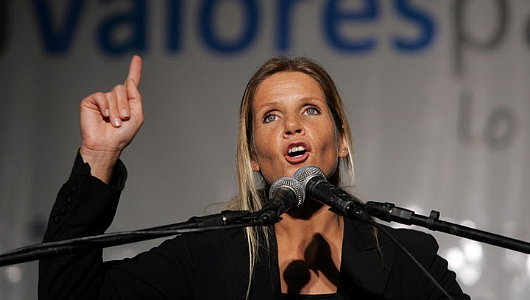
In the Sunday after-church tea-drinking circles of Manhattan, much thought and disputation was provoked by Damian Thompson’s recent revelation that the senator-elect from Florida, Mr. Marco Rubio, is in fact an evangelical Protestant despite his office claiming he is a Catholic. Word comes from Argentina about a member of parliament named Cynthia Hotton, a brazen defender of the right to life and solidarity with the unborn. (more…)
Saints in Heaven, Pray for Us!
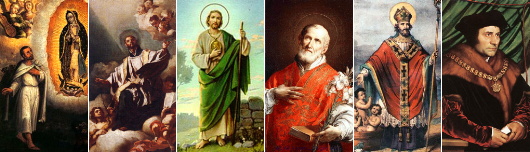
There are events occurring very soon which have massive life-changing potential for your humble & obedient scribe, and which could go quite horribly wrong or astoundingly well.
I absolutely implore you to pray to all the saints in Heaven, and especially to whichever Guardian Angels may be relevant, to combine, conspire, pray, and intercede for my special intention.
Thank you in advance for all your prayers, and I will keep you all in my prayers as well.
Remembrance 2010
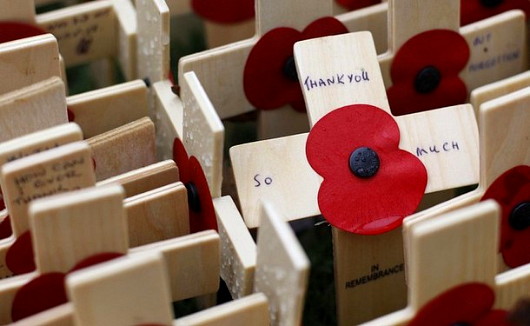
IN A WORLD utterly deprived of solemnity, Remembrance Day (and Remembrance Sunday) provides one of the few opportunities for silence, reflection, and appreciation. The First World War was truly a war without victory, the war that Europe lost. Its end is marked not with marching bands proclaiming triumph but with two minutes’ silence. How appropriate that the guns of the Great War finally fell silent on Martinmas day, the feast of the patron saint of soldiers, in this gloomy time of year. On this day there is no triumph nor victory, no vain pomp and glory of this world, but instead a deep respect for the awesome sacrifice of the fallen — a respect whose only expression can be found in that silence. (more…)
The Festival of Remembrance
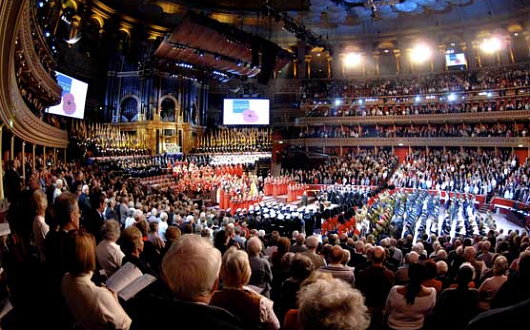
The Royal British Legion, the organisation which supports Britain’s veterans, organises the annual Festival of Remembrance at the Royal Albert Hall in London. The first half of the event is part military tattoo, part popular concert, but the second half is a Christian service of remembrance for the dead of all wars. The Festival takes place the Saturday before Remembrance Sunday: a 2:00pm matinee for the general public, and a 7:00pm one for veterans, servicemen, and their families in the presence of the Royal Family. The 7:00pm festival is broadcast on BBC1 every year, but sadly is not yet simulcast via internet for those abroad. Here are a few YouTube clips from different parts of the service in the past two years. (more…)
Search
Instagram: @andcusack
Click here for my Instagram photos.Most Recent Posts
- Brunel’s Unbuilt Capitol February 3, 2026
- Cricket at Fordham January 27, 2026
- Palacio Barolo Revisted January 14, 2026
- Learning to Love Liguria January 14, 2026
- Crux Alba No. 2 January 13, 2026
Most Recent Comments
Book Wishlist
Monthly Archives
Categories