About Andrew Cusack
 Writer, web designer, etc.; born in New York; educated in Argentina, Scotland, and South Africa; now based in London.
 read more
News
Blogs
Reviews & Periodicals
Arts & Design
World
France
Mitteleuropa
Knickerbockers
Argentina
The Levant
Africa
Cape of Good Hope
Netherlands
Scandinavia
Québec
India
Muscovy
Germany
Academica
The End of Liberalism
Viktor Orban on the end of the liberal age and the threat to Europe
In a speech to supporters at the Fidesz party’s fourteenth annual Kötcse picnic, the Hungarian prime minister Viktor Orbán has claimed that the refugee crisis is a portent of the end of “the era of liberal babble”. The current “identity crisis” of liberalism, Orbán argued, presented both “huge risk” and “a new opportunity” to return to Christian and communal identities.
Mr Orbán said that the dominant liberal ideology had weakened Europe while preserving its wealth. “The most dangerous combination known in history is to be both rich and weak,” he argued. “It is only a matter of time before someone comes along, notices your weakness, and takes what you have.”
“The liberal philosophy is a result of a Europe which is weak and which also wants to protect its wealth; but if Europe is weak, it cannot protect this wealth.”
Mr Orbán also attacked the liberal imperialism of military intervention, asserting it has been based on fundamental hypocrisy and simplistic Manichean thinking: (more…)
April to September
Between the vernal equinox and its autumnal confrère tomorrow there has been perhaps an excess of fevered activity. Aside from the usual time in London, I have been in Amsterdam, the Wolds of Lincolnshire, the Essex seaside, the Pyrenees, Kent, Paris (much scrubbed up since my last stay), Chartres, Oxford, Hertfordshire, Buckinghamshire, Lebanon, Midlothian, Connacht, and Norfolk. And before Christmas I should have two trips to Rome.
Regardless, here are just a few photos from the past six months, arranged in roughly chronological order and lightly explained, in order to keep you up to speed. (more…)
Putin: ‘I’d really like to see Europe show some real independence and sovereignty’
‘Europe is facing a specific problem: an influx of immigrants’ the Russian president asserts in an interview for Swiss television
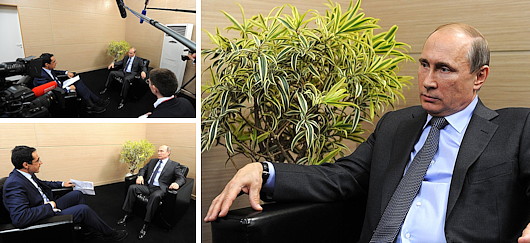
Here are a few excerpts from the interview, dealing with (among other issues) the balance of power, independence and sovereignty in Europe, and relations with the United States.
Vladimir Putin: Bonsoir.
Vladimir Putin: This is done by dishonest and inattentive people. The process of starting a new arms race began from the moment of the United States’ unilateral withdrawal from the ballistic missile defence treaty. Because this agreement was a cornerstone for the entire international security system. And when the United States withdrew from it and began to create a missile defence system as part of its global strategic weapons system, we immediately said: we will be obliged to take reciprocal steps to maintain a strategic balance of power.
I want to say something very important: we are doing this for ourselves, to ensure the security of the Russian Federation, but we are also doing it for the rest of the world, because this strategic stability ensures the balance of power.
Vladimir Putin: My mother and father. My brother, whom I never met, died here during the seige.
Vladimir Putin: I hope not. But I would really like to see Europe demonstrate some real independence and sovereignty and be capable of defending its national interests, the interests of its people and its nations. […]
Vladimir Putin: […] Participation in any military and political organisation or bloc is associated with the voluntary renunciation of a certain share of one’s sovereignty.
I think that at the time, France withdrew from NATO to preserve its sovereignty more than it is possible within the framework of a military bloc. It is not our business to analyse European nations’ foreign policy. But I think you’ll agree that if we need to discuss intra-European affairs with European partners in Washington, it is not very interesting.
Vladimir Putin: I think that this is not so much support for me as the realisation of national interests as the political parties see them.
There are certain tectonic changes underway throughout the world and in Europe within the public consciousness, which are aimed at defending national interests. You must understand that right now, Europe is facing a specific problem, an influx of immigrants. And did Europe make the decision that ultimately led to this situation? We need to be sincere and honest: these decisions were made across the ocean, but Europe must deal with the problem.
Vladimir Putin: Of course. This is just one example, but there are many. But this does not mean – and I already said this – that we should somehow demonise US policy; that is not my goal. They are conducting their policy as they see necessary in their interests.
We must strive to find a balance of interests; we need to invigorate our work, give new momentum to the work by the UN Security Council. The US is certainly a great power and the American people created this nation over several centuries, it is simply an amazing result. But that does not mean that today’s US authorities have the right to travel throughout the world and grab anyone to drag back to their prison or act from a position of “anyone who is not with us is against us.”
We need to be patient and work with our American colleagues to find solutions, the way we have in some areas of our cooperation, such as with the Iranian nuclear issue.
[…]
Vladimir Putin: After our interview, do you think I am mad?
Vladimir Putin: This is part of political struggle; it has been part of my life for quite a number of years. I try not to pay too much attention to it. I simply do what I think is necessary in the interests of my country and my people.
It is not in Russia’s interests to be in confrontation with other countries, but sometimes we are forced to protect our interests, and we will undoubtedly continue to do so. However, we will seek solution not in confrontation, particularly military confrontation, but in finding compromise and mutually acceptable solutions.
With your help I would like to address not those who criticise me, but those who support me. I would like to thank them for their support and tell them that we will continue moving ahead together. Above all, I am referring not to those who portray me [as Stalin], but to those who sympathise with what we are doing and agree with it deep inside.
Merci beaucoup.
Caped Bear Cubs in Canadian Arms

As my sister was educated (or something to that effect) by Ursulines, a recent addition to Canada’s Public Register of Arms, Flags, and Badges caught my attention. The Queen of Canada granted a coat of arms to the Quebec municipality of Sainte-Angèle-de-Mérici in 2013 (pictured above).
The shield of the arms features three chevronels represent the mountains surrounding the area while their number reminds us that Sainte-Angèle-de-Mérici is a municipality formed from two townships — Cabot and Fleuriault — and the single seigneury of Lepage-et-Thivierge. The wavy blue stripe represents the Mitis River, while gold symbolises the agricultural industry of the Sainte-Angèle-de-Mérici.
The charming aspect are the supporters: two bear cubs. St Angela Merici was the founder of the Ursulines — the Order of St Ursula — and ‘Ursula’ is Latin for ‘little female bear’.
“The bear also symbolizes bravery, thus signifying St. Angela Merici’s martyrdom,” the Canadian Heraldic Authority further explains. “The cloak is one of her traditional attributes. The flags (drapeau in French) honour Angèle Drapeau (1799-1876), the youngest daughter of Seigneur Joseph Drapeau and benefactor of the municipality.”
In Old Rio
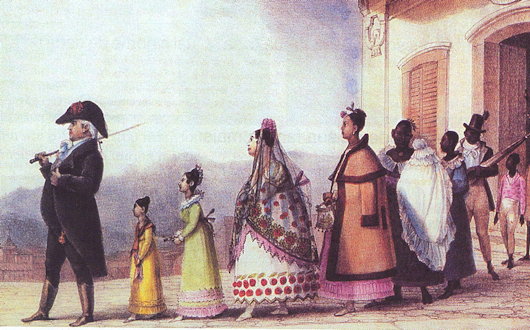
The city’s administrative and electoral units were its parishes, and the tallest buildings were all church towers. The day of the colonial port began with the cannon shot announcing the beginning of harbour commerce, at half past five.
This was followed by the opening of shops and homes of merchants and tradesmen. Early mass was signalled by church bells, and it was church bells which marked the day’s turn as they sounded the day’s regular prayers as the sun rose and set. …
One of the first, common sights in the city was that of Catholic brotherhoods seeking alms in the streets and shops, or, perhaps, a lady, humbly barefoot, seeking to fulfil a vow by begging alms with a heavy silver tray covered with rich cloth — accompanied by her servant, of course.
The Conservatives, the State, and Slavery in the Brazilian Monarchy, 1831-1871
Chartres 2015
Chartres is filed in my mind as the cathedral of my childhood. I must’ve been around 4 or 5 when I first walked amidst this medieval vision of stone and stained glass — some years before I ever visited the cathedral of New York where I was born. Cathedrals offer a prodigious mental stomping ground for the imagination of a young boy, and David Macaulay’s pen-and-ink book Cathedral (winner of the 1975 Deutscher Jugendliteraturpreis — take note!) I read and re-read over and over again as a child.
The marvel of this great church is that, while most medieval cathedrals took centuries to build, Chartres was constructed in an astonishing fifty-four years between 1194 and 1250, lending it a unity as an architectural composition that puts its rivals to shame. Chartres was made a diocese as early as the third century and tradition even upholds that from around the year 50 B.C., local Druids who had heard the prophecies of Isaiah here enshrined a statue of the ‘Virgo Paritura’, the Virgin-who-will-give-birth.
Having such a long history, Chartres’ fortunes have waxed and waned. In medieval times it was one of the most popular pilgrimage shrines in all of Europe, and in the 11th and 12th century its cathedral school far outshone England’s provincial attempt at a university at Oxford. But France’s civil wars and then revolution put an end to the town’s days as a destination for pilgrims until the poet Charles Péguy revived them himself in the years leading up to the First World War.
For the past thirty-three years, the largest pilgrimage to Chartres has been undertaken over Pentecost weekend, a bank holiday in France which happily coincided with our second May bank holiday in Great Britain this year. On this trek, over 11,000 pilgrims walk all the way from Notre Dame de Paris to Notre Dame de Chartres. Our chapter of about twenty pilgrims marched under the banner of Notre Dame de Philerme, patroness of the Order of Malta — mostly French and British but with a few participants from other countries as well. (more…)
A Horror in the Hague
The old and new buildings of the Royal Academy of Fine Arts
SINCE 1682, the Hague has been home to the oldest art school in the Netherlands, the Koninklijke Academie voor Beeldende Kunsten or Royal Academy of Fine Arts. The school has its origins in the civic corporations of the late medieval period. The Guild of Saint Luke incorporated all the artists of the Hague, and later from this group emerged a self-selecting gang of painters and sculptors who founded themselves as the Pictura Brotherhood. This fraternity in turn founded an academy of art which on its 275th anniversary was granted the royal patronage and name.
Having had previous quarters in the Korenbeurs and the Boterwaag, the Academy engaged the architect Zeger Reyers (or Reijers) to design its own building in the Prinsessegracht in 1839 (above, top). This neo-classical temple to the arts was very much in keeping with the French academic tradition which the school practised at the time, but in later years this fashion faded. Just before the Second World War, the barbarians sacked the temple and erected in its place a Bauhaus-style box (below).
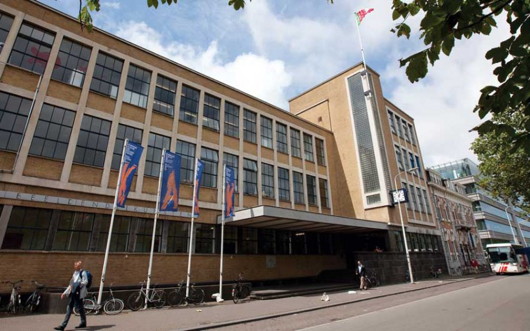
Like all too many changes, it was not an improvement. (more…)
UNHQ
United Nations Headquarters, New York
AMONG THE LEGACIES of my New York childhood is a sentimental fondness for the United Nations, and especially for the stylish swank of its headquarters at Turtle Bay in Manhattan. The name of the small neighbourhood originates (scholars tell us) not from the turtles which were once abundant upon the shores of the island and its environs but rather from a small inlet shaped, in the eyes of the old New Netherlanders, like a particular type of bent or curved blade called a deutal knife in Dutch. The woods and meadows surrounding Deutal Bay were easily rechristened as Turtle Bay once the English established their ascendancy and New Amsterdam became New York.
Over the course of the eighteenth and nineteenth centuries the tiny port founded at the bottom tip of Manhattan grew further and further up the island, swallowing up the old colonial villages like Greenwich, Bloemendal, and Haarlem, or farms like Turtle Bay, Inclenberg, and Kip’s Bay, until as today there is just one giant urban mass stretching from the Battery at the bottom tip of the island all the way to Spuyten Duyvil at the top.
While New Yorkers like to think that there is no possible competitor to the city’s status as capital of the world, there was of course a great debate over where the United Nations should be based. Geneva was an obvious candidate, as the beautiful art-deco Palais des Nations provided a ready-made home for an international organisation. The fathers of the UN, however, did not want to associate themselves so closely with the failure of the old League of Nations the Palais was built for, and so the Geneva option was nixed.
Given the shifting balance of world power, it was thought a New World site might be a wiser choice than a European location. Quebec, as I have written previously, was an obvious possibility as the city is a beautiful melange of Old World and New, and for Europeans was easily accessible by passenger liner. Australia, New Zealand, and the Pacific states, however, were in favour of San Francisco for geographic reasons to their obvious benefit, and cited the Californian city’s hosting the 1945 Conference on International Organisation which brought forth the UN Charter.
Fears that the United States would refuse to participate fully in the UN (as with the League of Nations of old) almost guaranteed that the US permanently hosting the world body in order to solidify American resolve in the UN’s favour, but the squabble over precisely where dragged on. The Rockefeller family intervened by offering to the fledgling United Nations Organisation, at no cost whatsoever, a large riparian site at Turtle Bay on the banks of the East River, largely consisting of slaughterhouses at the time. Settled then, but what would the complex look like? (more…)
What You Should Read
Three recommendations and some honourable mentions
Over at ISI’s Intercollegiate Review, there’s a post by Joseph Cunningham suggesting eight publications you should be reading. In September I came up with a handful of suggestions of what blogs or websites readers ought to take note of, particularly if they exist in the Catholic/traditionalist/conservative realm so difficult to sum up in a single word or term.
Of course, most of what you should be reading is by dead people (suggestions of who I proffered herein, including some actually alive), but while Chesterton described tradition as the democracy of the dead we would be remiss to carry forth in ignorance of the living.
Publications wise, then, what is the well-read gent, or lady, reading? I’ve judged this question by what I’ve managed to persuade/force/intimidate my friends into subscribing to or buying, as well as by my own habits.
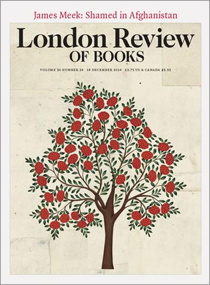
This fortnightly review is one of the last places where long-form essays are still the norm. One of the adventures of starting to read a piece in the LRB is that one has no idea whether it will continue for two of the Review’s large pages, or six, or maybe more. In addition to intellectual essays it also contains occasional reporting from Patrick Cockburn, arguably the best journalist reporting on the Middle East today. (You can read my review of Cockburn’s latest book over at Quadrapheme.)
Is it left-wing? Unquestionably. But if you’re only reading what you already agree with, you’re missing the point. Your principles should be strong enough to face challenges, or to be informed by them, and the ability to separate the wheat from the chaff is the most necessary task for any thinking person.
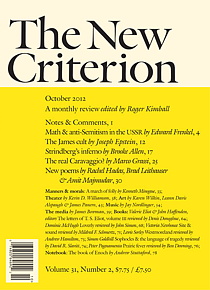
This American monthly came in for a lot of flak from a lot of conservative intellectuals for propagating and defending the neo-con support for the Iraq War, but the Daily Telegraph’s description of The New Criterion as ‘America’s leading review of the arts and intellectual life’ remains true to this day. (Disclosure: I was an editor at TNC from 2006-2008.) Feature articles are informative and expanding, the book reviews provide a good guide for reading, and art-wise I’ve always admired the clean prose of James Panero’s Gallery chronicle.
In recent months New Criterion readers have had the privilege of learning about the Jesuit linguist Albert Jamme’s hatred for sleep — “I hate my bed because it keeps me from my texts!” — and a Duke of Mantua’s expensive interest in female dwarves while last year they published the Quaker pacifist classical scholar Sarah Ruden on the darker side of Mandela’s government. Worth reading every month.
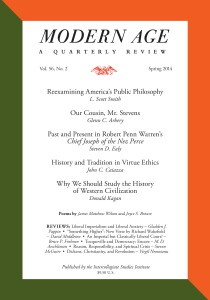
Founded in 1957 by Russell Kirk — the greatest St Andrean of the twentieth century — Modern Age is an academic journal which Wikipedia describes as ‘traditionalist, localist, against most military interventions,’ as well as critical of neo-conservatism and generally sympathetic to religious orthodoxy.
Its archive over the past sixty years provides articles and essays of great value by Erik von Kuehnelt-Leddihn, Virgil Nemoianu, Lee Congdon, Pierre Manent, and others. Take, for example, Lee Congdon on ‘Conservatism, Christianity, and the Revitalization of Europe’.
A rewarding, more scholarly read, with footnotes that will lead you elsewhere.
These three will prove worthwhile reading for any intellectual of sound principles, but are there any other honourable mentions?
My weekly workplace reads are The Spectator and The Economist which are useful for keeping tabs on things in general.
I have to admit I do read Monocle every month. While it’s aimed at wealthy jetsetters rather than our own constituency of cosmopolitan conservatives living in genteel poverty the magazine nonetheless combines an exacting stylistic excellence with an admirably broad focus.
First Things I would read every month but it doesn’t seem to be available anywhere in London except by subscription.
Two or three times a year I pick up The Art Newspaper, another superbly put-together periodical. Fr Christopher Colven of St James, Spanish Place, writes for it often, as it happens.
Faith, Freedom, and Respect
Religion grows in the very depths of our being. Mocking it, ridiculing it, can be especially hurtful.
by FRANÇOIS HUGUENIN
Unanimous France has marched on January 11 in the name of Charlie to defend freedom of expression. Is it useful to say at the start that, at this moment of national unity, I agree with the condemnation of these heinous acts of terrorism and that I welcome hearing some courageous voices dare to finally name the danger — radical Islamism? But I am surprised and worried to see a France that, with the resultant “diversity” noticeable in its absence, is becoming a supporter of a newspaper that it never bothered to read. The defence of freedom of expression seems to have created an epidemic of blindness with respect to the problems, not of the freedom to express ideas, but of the manner in which that freedom is used.
It is clear that freedom of expression is regulated in France, since some words (such as those inciting racial hatred) are legitimately subject to prosecution, while there are no laws against blasphemy. But the question posed by the humour of Charlie Hebdo, that everyone will enjoy according to their own standards, seems to be beyond the law. If liberty is a core value of our society, conquered after many struggles, is it assigned an absolute value that is greater than all the others? Doesn’t the motto of our republic put it at the same level of equality and fraternity? In the name of fraternity, we can not take seriously a value that is unlikely to be framed in legal texts, as it is impossible to codify, and yet is inherent in the dignity of man and entered in the heart of everyone: that of respect for others. This is precisely what makes a large contribution to the charm of life: giving up one’s seat on the bus to let an elderly person sit; politely asking your neighbour to lower the volume of his music instead of yelling in the stairway “Turn it down!” — none of this is prescribed by law, but it makes life better.
Now, if there is a value to be respected in others, it is his religion. (more…)
Kerkplein, Pretoria
Gauteng, the province which forms the highly urbanised heart of the old Transvaal, is not my area of specialty in South Africa, enamoured as I am of the Western Cape. Johannesburg, for all its financial prowess, is one of those towns that went from a collection of tents to a major city almost overnight with the Witwatersrand gold boom.
Pretoria, on the other hand — Pretoria Philadelphia to give its original name — exudes a more detached respectability perhaps enlivened by the ceremony of its century-long status as the executive capital of a unified South Africa. And sitting at the heart of the city of jacarandas is Kerkplein — Church Square. (more…)
Shedding light on the Cape Baroque
Nuwe lig op die Kaapse barok deur Dr Hans Fransen
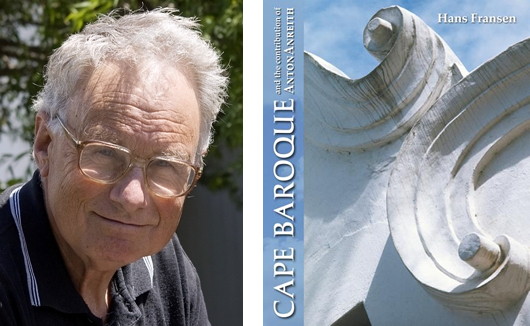
A NEW BOOK BY Dr Hans Fransen, the leading authority on Cape Dutch architecture, intends to shed new light on the Cape Baroque style through an examination of the work of the sculptor Anton Anreith. Cape Baroque and the contribution of Anton Anreith offers us the hefty subtitle of ‘A stylistic survey of architectural decoration and the applied arts at the Cape of Good Hope 1652-1800’, covering the period of the Dutch East India Company’s rule at the Cape.
The author investigates (says the publisher’s note) whether, and to what extent, the surprisingly rich body of Cape material culture can be seen as part and parcel of the international Baroque: that ebullient style of painting, architecture, and design that swept across Europe and some of its spheres of influence. After a highly interesting account of the origins of the Baroque in Italy and of its development in other parts of the world, the author concludes that ‘Cape Baroque’ does indeed form part of this. But he also points out that it has a very distinctive character of its own.
The book of 180 pages contains over 200 illustrations, mostly from the author himself, whose other works include The Old Towns and Villages of the Cape, The Old Buildings of the Cape, Drie Eeue Kuns in Suid-Afrika, and the introduction to A Cape Camera, the book illustrating the photography of early Cape photographer Arthur Elliott.
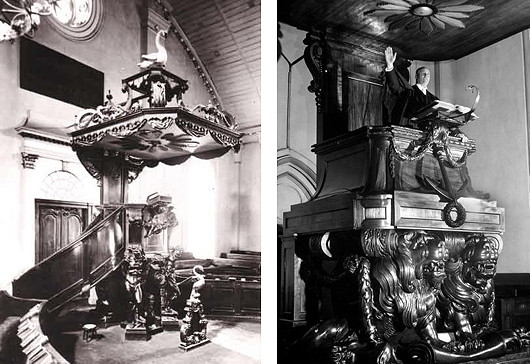
The sculptor Anreith, born in Germany at Riegel between the Rhine and the foothills of the Black Forest, was the finest and most florid artist of the Baroque in the Cape of Good Hope. His exceptional work on the pulpit of the Lutheran Church in Cape Town provoked the envy of the more prominent Dutch Reformed congregation, who quickly commissioned Anreith to carve an even more ornate pulpit for the Groote Kerk.
by Dr Hans Fransen, 160 pages, R250
deur Dr Hans Fransen, 160 bladsye, R250
Papal Mace for St Andrews
Archbishop Presents New Mace to Scotland’s Oldest University Amidst 600th Anniversary
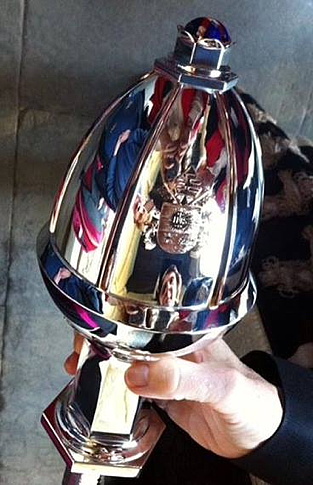
Above: The 600th Anniversary Mace.
Below: The University’s three medieval maces:
St Salvator’s College, 1461; Faculty of Canon Law, circa 1450; Faculty of Arts, 1416.
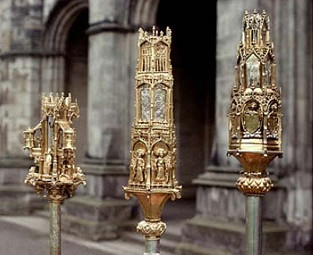
ST ANDREWS University already boasts the world’s finest collection of medieval maces, but a new ceremonial mace was added to the university’s hoard recently. In honour of the University’s six-hundredth anniversary, the Most Rev Leo Cushley, Archbishop of St Andrews & Edinburgh, has presented the institution with a new ceremonial mace on behalf of the Catholic Church.
“This completes a triple recognition of the University St Andrews,” said Dr John Haldane, the University’s professor of philosophy.
“During his visit to Scotland at the outset of this decade, Pope Benedict referred to the university beginning to mark the 600th anniversary of its foundation, then last year Pope Francis sent a message of congratulation, and now his office has granted permission for the inclusion of his coat of arms on the head of a mace commissioned to mark the completion of several centuries and the beginning of who knows how many more.”
The silver mace with gold rose details was crafted by Hamilton & Inches of Edinburgh, who also constructed the mace of the Faculty of Medicine at St Andrews over a half-century ago. Their master silversmith Jon Hunt designed the mace, in consultation with Prof Haldane.
The mace’s head is reminiscent of Brunelleschi’s dome of Florence Cathedral, recalling St Andrews’s links with the Continent which were foremost in the University’s first century and a half while it was a Catholic institution. Atop the head a saltire design is incorporated, referencing the apostle who gave his name to both the Royal Burgh and the University as well as the country who’s first university St Andrews is.
Heraldic shields display the arms of the University and of Pope Francis who invoked “upon all the staff and students of the University, past and present, the abundant blessings of Almighty God, as a pledge of heavenly peace and joy”. (more…)
Change in the air at the Catholic Herald
Title will cease to operate as a newspaper and relaunch in magazine format
Britain’s leading Catholic publication, the Catholic Herald, will be relaunching as a magazine before the end of this year. Invites have already gone out to an event celebrating the change to be held in early December.
The relaunch might be interpreted as a move against the Tablet, which styles itself “the international Catholic weekly” and has been nicknamed “The Bitter Pill” by English Catholics for its widely perceived lack of faithfulness to Catholic teaching. The Tablet is associated with the country’s old liberal Catholic elite, counting among its trustees such figures as Chris Patten and Sir Gus O’Donnell. A Herald reader, meanwhile, is more likely to be young, intellectual, and strongly influenced by John Paul II and Benedict XVI.
When told of the news, one young churchman welcomed the change as a good move for the generally orthodox Herald against its looser rival. (more…)
New Yorkers: See New York!
Old-School Ads Employed for City’s Internal Tourism Campaign
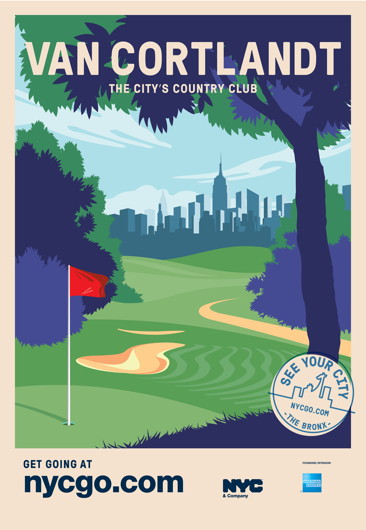
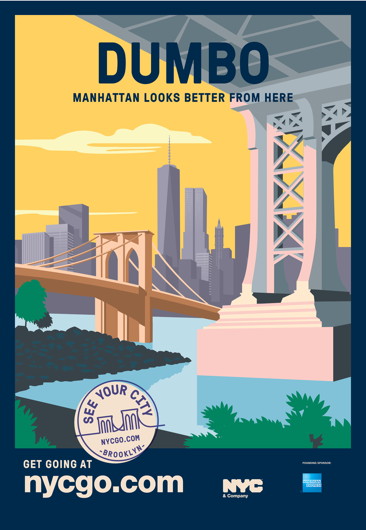
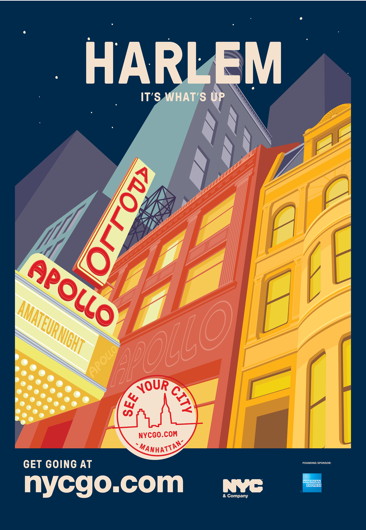
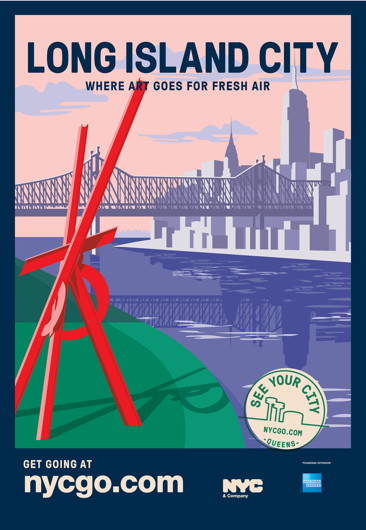
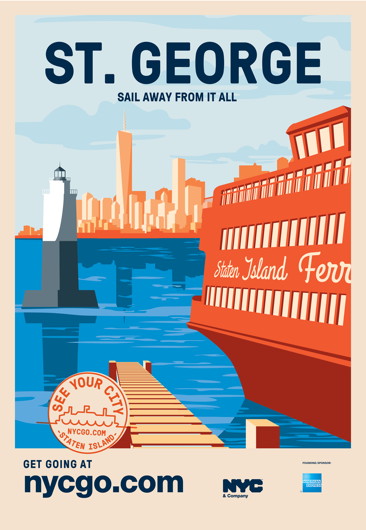
NYC & Company, the official tourism and marketing board of New York City, has cottoned on to the fact that in such a vast metropolis many parts of the city are virtually unknown to the natives of whichever particular borough.
They recently launched the ‘See Your City’ campaign encouraging New Yorkers to visit places perhaps less familiar to them within their own city. Part of the campaign involves the above series of posters for display in bus shelters.
The style evokes old-school travel posters of the 1920s & 30s, and NYC&Co commissioned one for each of the five boroughs.
Elsewhere: Adweek | New York Times | Untapped Cities | NYCgo
Russia’s Classical Future
Design chosen for St Petersburg’s new judicial quarter
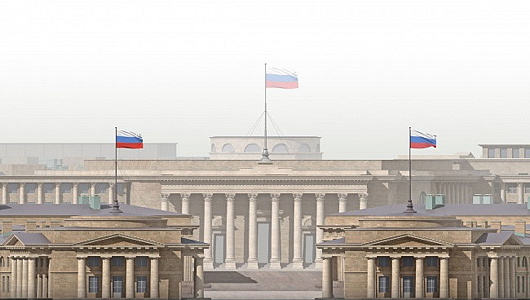
While a vast and multifacted state, the Soviet Union was nonetheless one in which power was highly centralised, not just within one city — Moscow — but even within one complex of buildings, the Kremlin. For the past fourteen years, however, a St Petersburg boy — Vladimir Putin — has been the man at the helm of the ship of state, and while Moscow is still the top dog St Petersburg is increasingly stealing the limelight. The number of commercial bodies (several subsidiaries of Gazprom, for example) moving from Moscow to St Petersburg is growing, and even a few government departments and other entities have moved back to the old imperial capital.
Among these is the Constitutional Court of the Russian Federation, which transferred to the old Senate and Synod buildings in St Petersburg in 2008. The Supreme Court and Higher Arbitration Courts have yet to make the move, however, and a scheme by architect Maxim Atayants has been chosen as the winner of the design competition for the new judicial quarter on the banks of the Neva. (more…)
Ones to Watch (or Read)
In this commonwealth of knowledge, it is necessary to share out our sources of insight and wisdom. Here are just a few sites (“blogs”, even) that readers of this little corner of the web ought to take notes of.
Sancrucensis
http://sancrucensis.wordpress.com/
Fr Edmund Waldstein is a monk of Stift Heiligenkreuz near Vienna. He has been writing at Sancrucensis for some years now, but of course with so many distractions it often takes time to realise what is actually of value.
Fr Waldstein writes clearly and likes Charles de Koninck, so he can’t be all bad. His subject matter ranges from Saki to Žižek, and not long ago he weighed in on the Zmirak controversy.
His Amazon wish list is even larger — much, much larger — than my own, so perhaps you might think of shortening it through buying him a book.
Foolishly I neglected to visit Heiligenkreuz when I was in Vienna last year (though I did meet a chap there who wrote a history of the abbey), so I must make a pilgrimage next time I venture to the Kaiserstadt.
Opus Publicum
http://opuspublicum.wordpress.com/
This blog by Modestinus somewhat irritatingly uses the same WordPress theme as Sancrucensis, leading to occasional confusion in the Cusackian mind about who read what where. (UPDATE: It’s changed its design now.) Regardless, his ‘Weekly Reading’ updates feature selections that are very small-c catholic in taste (as well as big-C Catholic).
The names of Juan Donoso Cortes and Carl Schmitt are bandied about, and Modestinus is keen on elaborating upon Catholic Social Teaching, which seems to be getting a bit more attention all around these days.
Like Sancrucensis, Modestinus too has weighed in on our friend John Zmirak’s apostasy into liberalism. As a certain clerical personality on the outer reaches of London might put it: “Illiberal Catholicism? I’m into that!”
The Josias
http://thejosias.com/
This is not quite a blog, more of an occasionally updated resource. A multi-part series explores the American ‘Founders’ and the Aristotelian tradition, and be sure to check out ‘Have the Principles of the Right Been Discredited? Leo Strauss’s Rome and Ours’.
Worth reading also are ‘Theses against American Whig Catholicism, prompted by the atmosphere of 2012 and by the antiliberal writings of Deneen’, which De Koninck fans will enjoy.
For the Whole Christ
http://jcrao.freeshell.org/
Dr John C Rao posts a great deal of his work online at For the Whole Christ — skip to ‘Shorter pieces’ to find the more recent updates.
I am proudly in the Raovista camp, and this history professor and Catholic intellectual’s ongoing series of lectures in New York is enlivening, entertaining, and above all enlightening. Scandalously I have yet to attend the Summer Symposium in Gardone John organises every year under the auspices of the Roman Forum (it clashes with the part of the summer I am usually in the Lebanon). Some day, though, some day…
&c., &c., &c.
Of course there are the other usual places one ought to check often: The American Conservative and the much re-invigorated First Things. The Benedictus Trust (Patron: HMEH the P&GM) has been putting some of its lectures up on YouTube and Roger Scruton is headlining their Research Forum in London next year at the Linnean Society.
What have I been reading offline? Some Antal Szerb (Journey by Moonlight), some Tom Holland (In the Shadow of the Sword), and greatly enjoying some Régis Debray.
I recently forced the remnants of a dinner party I was hosting to listen to two and half pages of Voltaire-hatred from Maistre’s Soirées de Saint-Petersbourg (a sublime work!). The consistently interesting Dorchester Review featured an article on Joseph de Maistre not long ago, but it is impossible to obtain in London and I am too poor to subscribe. Perhaps I should give in and get a cheapo online-only subscription — this, after all, is what my iPad mini is for.
The Cusackian Academy
The other day I started drawing up a list. It started out as a list of people you should know, but then it took on its own life in the realms of my imagination as an assemblage of notables whether of thought, word, or deed. There is, of course, an Académie française, so why not an Académie cusackienne?
Membership of this list does not necessitate approval or sanction. It is more that these are the stars that speckle the Cusackian sky and in some way shine down providing some form or another of illumination. Some I like, others I admire, others still I disapprove of but at least find amusing.
As you might expect, it’s rather French-heavy, with a disproportionate dash of Magyars as well. Needless to say, very few of these illustrious academicians are still amongst the living. (more…)
Rowing Blazers Book Launch
© Steve Finn Photography
© Steve Finn Photography
by Jack Carlson, 2014
Thames and Hudson, 255 pages
£34.95 / ISBN: 978-0-500-51755-0
I am probably Jack Carlson’s worst friend — luckily for me, he is long-suffering. Many have been the mornings I have awakened in Oxford on some friend’s uncomfortable sofa (or worse: floor) and toddled haphazardly down to Jack’s regular coffee place for a restorative morning brew and inflicted upon the poor fellow my recounting of the previous night’s events in untrustworthy detail. Jack sits there, politely, smiling, waiting for the caffeine to take effect on me so that my tedious monologue can miraculously give way to the honoured pastime of friends: conversation.
It was during one of these chats — or it may have been over a winter evening pint in the King’s Arms; or a late summer afternoon pint in the Bear — that Jack revealed his book project: a coffee-table book on rowing blazers.
How tedious is that term ‘coffee table book’ which contemptuously mediocratises such beautiful, large-format, lusciously illustrated, and well-researched printed volumes into a mere additament of interior design. This format is probably my favourite kind of book, and I’m frightened to think how many pounds, dollars, rand, and euros I’ve invested in them over years.
But never mind. Rowing Blazers is now hot off the presses from Thames and Hudson here in Britain (and soon from Vendome Press across the Atlantic). And of course the perfect accompaniment to a good new book is a launch party to celebrate.
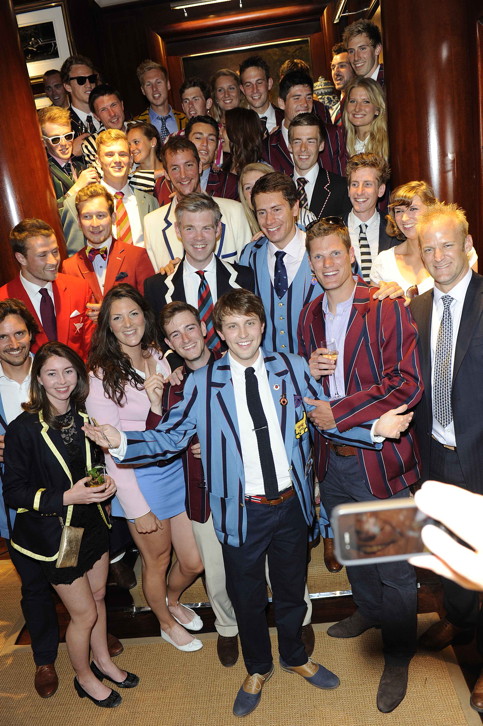
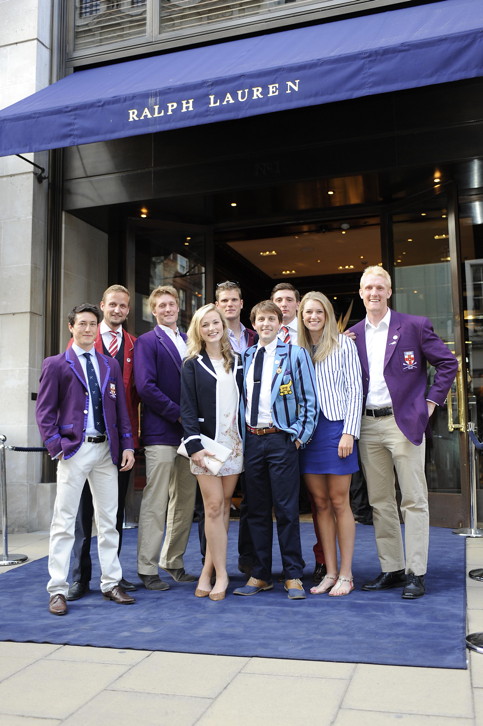
Jack assembled an impressive array of friends, rivals, and rowers to launch his latest book at Ralph Lauren in Bond Street last Thursday. There was an even more impressive array of stripes, colours, and piping on display amidst the bottomless glasses of Pimm’s and flutes of champagne generously refilled to no end by our hosts.
What about the book? It is beautifully presented, well-written, and includes a surprising variety of clubs from across the world. Rowing Blazers is a perfect gift for any rower — a must-have — so keep it in mind for birthdays and Christmases.
A number of the guests on Thursday flicked through the book’s pages to find their own clubs, rival clubs, friends photographed, and a fair amount of gossip was shared as well. Even when it came time to close up shop (literally, for once), the party continued at Bodo’s Schloss late into the wee hours. (more…)
Evolution of a Napoleonic Parliament
The Salle des états in the Palais du Louvre
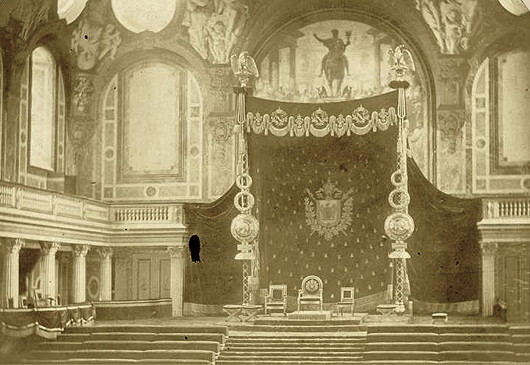
Among the numerous rituals of the ordinary visitor’s pilgrimage to Paris — trip up the Eiffel Tower, lunch at a tourist-trap café — braving the teeming hordes in the Louvre to view da Vinci’s ‘Mona Lisa’ ranks near the top. What very few of the camera-toting hordes realise is that they are shuffling through the room that once housed France’s parliament. The history of the Palais du Louvre is long, exceptional, and varied.
Originally built as a stern castle in the 1190s, the Louvre’s secure reputation led Louis IX to house the royal treasury there from the mid-thirteenth century. Charles V enlarged it in the fifteenth century to become a royal residence, while François Ier brought the grandeur of the Renaissance to the Louvre — as well as acquiring ‘La Gioconda’. In 1793, amidst the revolutionary tumult, part of the palace was opened to the public as the Musée du Louvre, but the Louvre has always housed a variety of institutions — the Ministry of Finance didn’t move out until 1983.
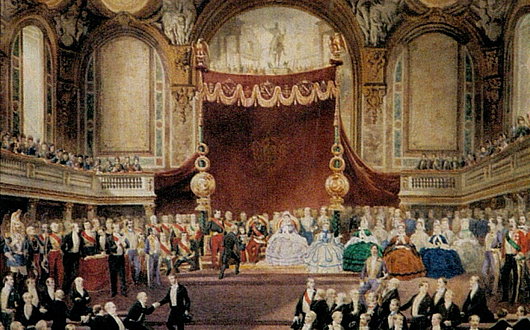
Napoleon III took as his official residence the Tuileries Palace which the Louvre was slowly enlarged towards over the centuries to incorporate. The Emperor needed a parliament chamber close at hand so he could easily address joint sittings of the Senate and the Corps législatif (as the lower house was called during the Second Empire) which opened the parliamentary year. By doing so at his residence, the Bonaparte emperor was following the example left by his kingly Bourbon predecessor Louis XVIII. (more…)
Search
Instagram: @andcusack
Click here for my Instagram photos.Most Recent Posts
- Brunel’s Unbuilt Capitol February 3, 2026
- Cricket at Fordham January 27, 2026
- Palacio Barolo Revisted January 14, 2026
- Learning to Love Liguria January 14, 2026
- Crux Alba No. 2 January 13, 2026
Most Recent Comments
Book Wishlist
Monthly Archives
Categories