About Andrew Cusack
 Writer, web designer, etc.; born in New York; educated in Argentina, Scotland, and South Africa; now based in London.
 read more
News
Blogs
Reviews & Periodicals
Arts & Design
World
France
Mitteleuropa
Knickerbockers
Argentina
The Levant
Africa
Cape of Good Hope
Netherlands
Scandinavia
Québec
India
Muscovy
Germany
Academica
View from a Window
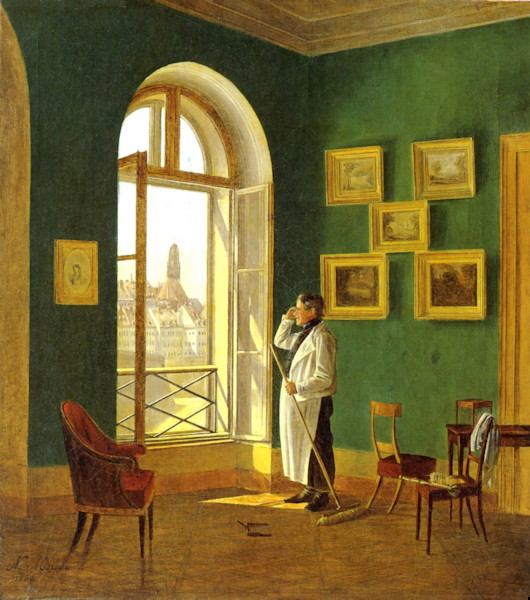
1830; Oil on canvas, 15½ in. x 13½ in.
I love the underappreciated Biedermeier, whether in art or literature, and this is a very Biedermeier painting.
The painter’s father, Charles de Moreau, was an architect – indeed he designed the very building that the son depicts here. As it happens, the painting now hangs in the Wien Museum am Karlsplatz, across from the main building of the Imperial & Royal Polytechnic Institute (now the Vienna University of Technology) which his father also designed.
Nikolaus painted this scene when he was twenty five, and he died just four years later not having reached his thirtieth year.
The Rova of Antananarivo
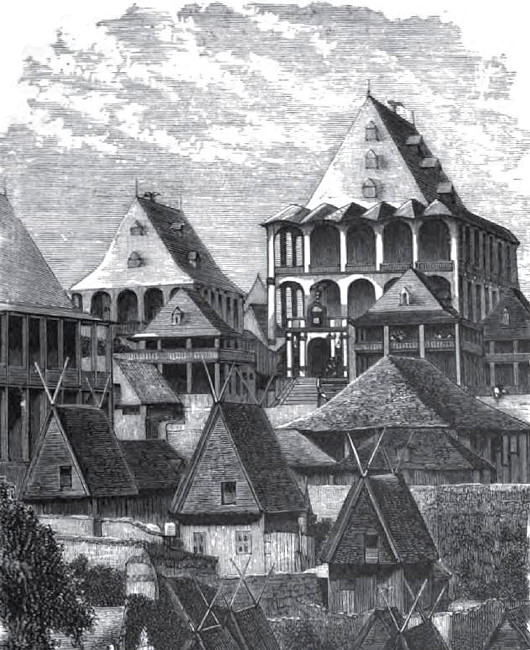
The Rova of Antananarivo
The Tranovola (left) and Manjakamiadana (right) in the Rova of Antananarivo.
The Manjakamiadana (“Where It is Pleasant to Rule”) was the royal residence, later pretentiously clad in stone by Protestant missionaries, while the Tranovola (“Silver House”) was where the nefarious Rainivoninahitriniony received foreign diplomats after the nobles’ coup of 1863.
His complicity in the supposed regicide of that year — no one’s really quite sure what happened to Radama II — eventually led to his downfall two years later. His younger brother Rainilaiarivony proved a more skilful political operator, succeding Rainivoninahitriniony as prime minister and arranging his own marriage to the last three queens of the Merina kingdom of Madagascar.
Monday 18 January

– Architectural historian Catesby Leigh looks at Ralph Adams Cram and Pittsburgh’s gothic architectural legacy.
– In October for the first time ever Polish voters handed a parliamentary majority to a single party, putting the Law and Justice (PiS) party in power after nine years in opposition. But, alarmed by the new government’s attempts to correct the stacking of state media by their political opponents, western European powers have attacked the new government and suggested it be investigated by the European Union.
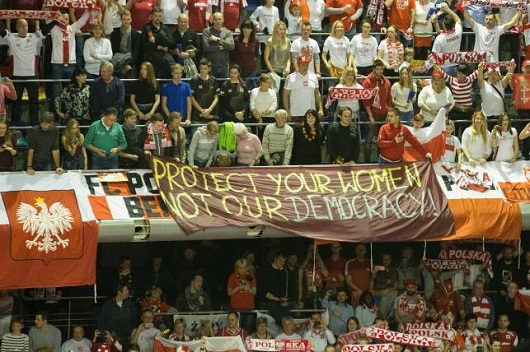
The PiS delegation of the European Conservatives & Reformists Group in the European Parliament has released a measured statement asking What is really happening in Poland? Given recent events in Cologne, however, Polish fans at a volleyball match in Berlin viscerally suggested the Germans should get their own act in order before criticisng others.
– Polish academic Artur Rosman explores both the history and future of the pro-life movement in America, citing the New York Times’s Kristen Dombek’s surprise at discovering that abortion is not an exclusively conservative concern:
Among those of us who wish to protect access to abortion, it’s easy to feel that “right to life” language is a cover for an attack on feminism. It’s a feeling supported by a common story about history: The anti-abortion movement began after Roe v. Wade, because conservative evangelicals were threatened by women’s newfound power over their bodies. What else could explain the movement’s swift rise in the decade following the Supreme Court’s decision, if not a widespread reaction against equal rights? […]
[I]t’s hard to imagine a country where the most prominent voices against abortion were Catholic physicians, and evangelical Protestants were either in favor of lifting restrictions on abortion, or didn’t really care. A country where Democrats and the Black Panthers opposed abortion, and Ronald Reagan, like most conservatives, supported it. Where more men than women supported legalizing abortion, and Hugh Hefner was one of those men, leading one activist to call legalized abortion the “final victory of the Playboy philosophy.” Where opposition to abortion found common cause with opposition to the exploitation of women, to the abandonment of the poor, to big business and to the Vietnam War.
– And finally, Sam the Eagle has a message for all the prospective candidates in the American presidential election:
Remembering James III & VIII
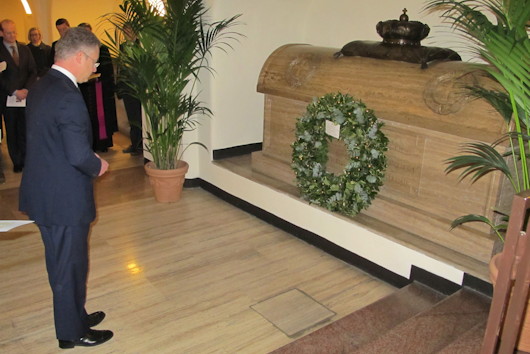
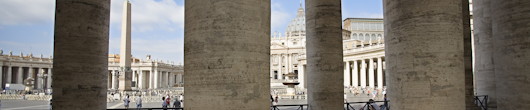
On the two-hundred-and-fiftieth anniversary of his state funeral in Rome, James III & VIII was remembered with a wreath-laying by Her Majesty’s Ambassador to the Holy See, Nigel Baker. The message on Nigel’s wreath read simply ‘In memoriam – James Francis Edward Stuart – ‘The Chevalier’ – 1688-1766’.
As the Ambassador notes in his blog post:
[O]ur simple wreath-laying ceremony was, in a way, one of historical reconciliation. The Chevalier always considered himself a patriot, and his court in exile welcomed Britons of all political and religious stripes. His younger son, Henry Benedict, Cardinal York, received a pension from the British Crown after his lands had been seized by Napoleon, and the Prince Regent offered to contribute to the magnificent Stuart monument by Canova that can still be seen in St Peter’s. The tomb in the crypt where I laid the wreath was restored by Queen Elizabeth the Queen Mother, through the good offices of my predecessor, Sir D’Arcy Osborne, in the early 1940’s. And in 2012 HRH The Duke of Gloucester unveiled a restored Coat of Arms of Cardinal York in the Pontifical Scots College, where the original Stuart gravestones had been transferred.
James III was the last of the Jacobite claimants to the English, Scots, and Irish thrones to be recognised by the Pope. He was succeeded in the line by his eldest son Charles (Bonnie Prince Charlie) and, after Charles’s death, by James’s second son Henry, who — having been ordained a priest, then a bishop, and being created a cardinal — was generally known as the Cardinal Duke of York.
Cardinal Comastri — Archpriest of St Peter’s Basilica, President of the Fabric of St Peter’s, and Vicar General of the Vatican City State — took part in the ceremony and also present were Lord Nicholas Windsor, and the Rectors of the Venerable English College, the Pontifical Scots College, the Pontifical Irish College, and the Pontifical Beda College, the Polish Ambassador to the Holy See (in honour of James’s wife Queen Maria Clementina), and the Irish Ambassador to the Holy See.
“The presence of the Irish ambassador to the Holy See,” Nigel notes, “also reminded us of the importance of commemorating together, rather than remembering apart. The past leaves many wounds. But do not underestimate the healing power of history and remembrance, done well.”
Also a sign, one might add, of what good value we get out of this most unique of British diplomatic postings.
Interior of the Groote Kerk
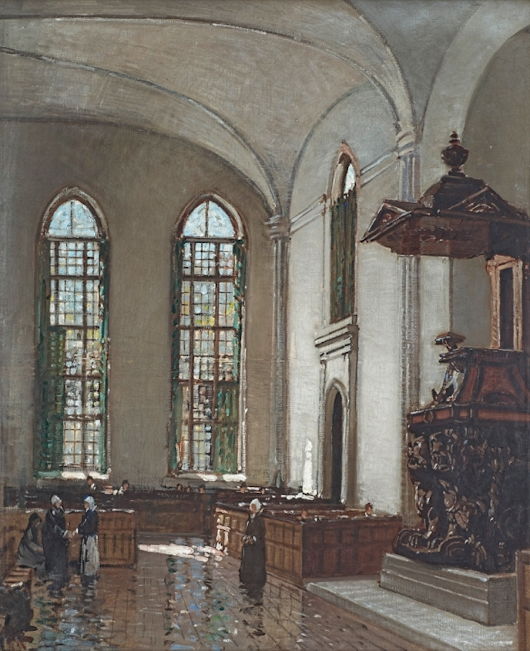
1916; Oil on canvas, 29½ in. x 24½ in.
Though the painting is just a hundred years old, Gwelo Goodman depicted the scene as if in the late seventeenth century — when the Groote Kerk was first built.
While the body of the church was replaced in the 1840s, the elders of this most senior Nederduits Gereformeerde gemeente wisely kept the stunning baroque pulpit, the work of the Cape’s greatest sculptor Anton Anreith.
Naples
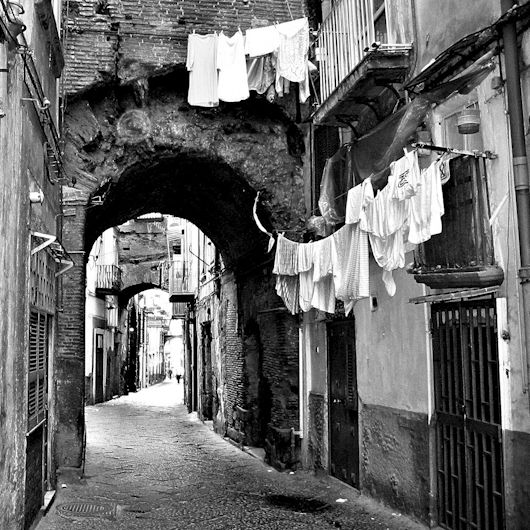
THERE ARE CITIES that defy the centuries; time does not change them. Empires succeed each other, civilisations leave their remains in them like geological strata, but they preserve their character through the ages, their peculiar ambience, the sound and rhythm which distinguish them from all other cities upon the earth. Naples is one of these cities, and it appears to the traveller today, as it was in the Middle Ages, and doubtless a thousand years before, half-African, half-Latin, with its terraced alleys, its street-cries, its smell of olive oil, charcoal, saffron and frying fish, its sun-coloured dust, the sound of bells ringing on the necks of horses and of mules.
The Greeks founded it, the Romans conquered it, the barbarians despoiled it, the Byzantines and the Normans each in turn took possession of it as masters. But they did no more than modify a little the architecture of its houses and add certain superstitions, a few legends, to the traditions of its streets.
The population is neither Greek, Roman nor Byzantine; the people are Neapolitan in perpetuity, a population distinct from all others in the world. Their gaiety is but a facade concealing the tragedy of poverty, their magniloquence an accent relieving the monotony of the daily round, their leisure a virtue in refusing to pretend to be busy when there is in fact nothing to do; its population is life-loving, meeting the setbacks of fate with guile, with a gift of speech and a contempt for all things military because peace never becomes boring. …
Tuesday 12 January
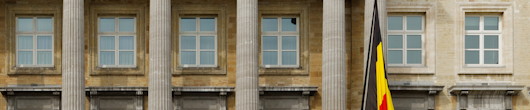
– Imagine you find out your mother has been killed. Then imagine her killer not only goes unpunished but that he’s subject to a continual stream of awards and honours. At school your son is handed a leaflet promoting the man who ended his grandmother’s life. The only objectors (Catholics and Holocaust survivors) are easily brushed aside.
This isn’t an alternate universe: this is Belgium today, as the New Yorker reports. (via M.B.D.)
– Fr Edmund Waldstein relates a stimulating dialogue upon Star Wars between Over-Bearing, Past-Bearing, and Baring (with a cameo appearance from Duff Cooper).
– I’ve mentioned Tolkein and his love of Finnish before. More recently, the BBC inquired about Finland’s influence on the writer.
– “It’s the most nauseating display in American public life,” says Kevin D Williamson in his splendid jeremiad, “and I write that as someone who has just returned from a pornographers’ convention.”
– Fredrik de Boer puts his head above the parapet and gives us a little insight into how things work.
– And finally, some good news: a study claims French is set to overtake Chinese as the world’s most widely spoken language by 2050. (But, as P.E.G. noted in 2014, the methodology is a bit dodgy.)
Let’s hope they’re reading Bossuet rather than Voltaire.
Ball
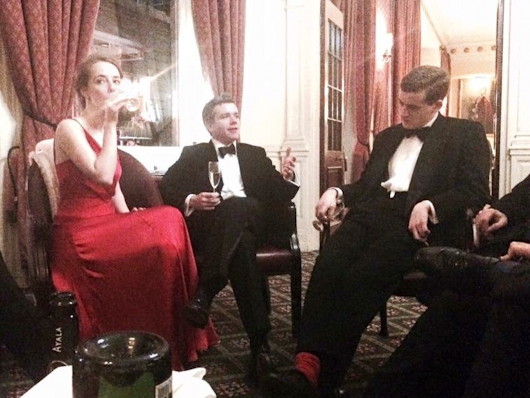
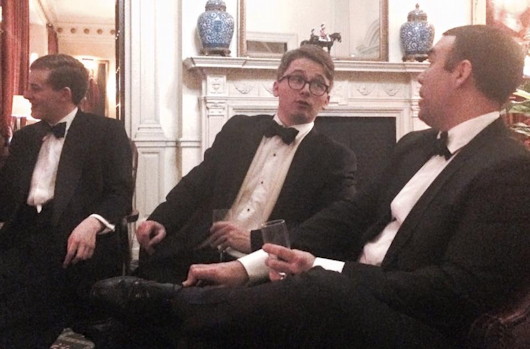
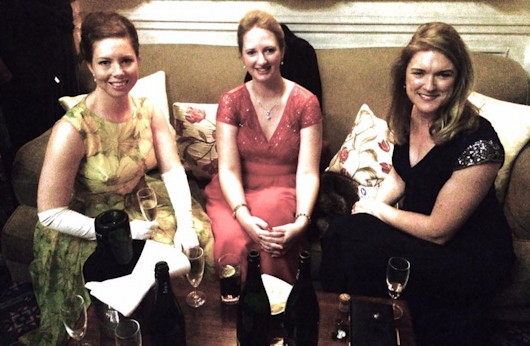
The Cusackian table used to be the only one having our pre-ball drinks at the Cavalry & Guards Club (thanks to Maj Ibbs & Capt de Stacpoole) but this year the place was choc-a-bloc with ballgoers. Our ladies were looking particularly lovely, though there were moments when various of their fur accoutrements were redeployed as judges’ wigs and sentence was passed on those worth of condemnation.
Despite the rather late hour I left the after-party, I somehow made it to the 11 o’clock mass at the Oratory the following morning and noticed a somewhat depleted congregation (though added to by the presence of Gerald Warner up from Scotland). Very wisely the ball organisers arrange a special afternoon mass at 2 o’clock for survivors, but by the time it commenced I had not only already fulfilled my Sunday obligation but also downed a delicious plate of pappardelle and was en route back home to bed and further recovery.
Friday 8 January 2016
– Ross Douthat’s sensitive and thoughtful commentary on the state of the Catholic church (in the New York Times, of all places) has previously sparked apoplexy on the part of liberals, hilariously inspiring a host of bien-pensant establishment lefties to point out he has “no professional qualifications for writing on the subject”.
In a recent blog post, Douthat points out how difficult it is to engage in dialogue with lefty Catholic thinking given that it often assumes we can reinterpret anything whenever we want while ignoring centuries of fervent intellectual inquiry and church teaching. For these liberals, it is always Catholicism: Year Zero.
– The British writer Tibor Fischer is no conservative, but he’s often written how ridiculous it is for people to claim the Viktor Orbán is a dictator, whether in the Guardian or in Standpoint. (I myself had to take to the pages of the Irish Times to defend the Hungarian PM.)
Now Fischer writes in the Telegraph asserting that Viktor Orbán is no fascist: he’s David Cameron’s best chance at reforming the European Union.
– Still in Hungary, the British Embassy in Budapest is moving out of its home of nearly seventy years and into the recently vacated Dutch embassy.
– Everyone loves the leader of the Scottish Conservatives, Alex Massie says. But still no one will vote for her.
– Agnostic Southern Episcopalian chain-smoking monarchist with a penchant for misanthropy: Florence King, RIP.
– Speaking of misanthropy, is Groucho Marx’s humour nihilist? Shon Arieh-Lerer thinks Lee Siegel’s book might be overthinking things a bit.
– And finally, the United Nations Library in New York has announced which of its books was checked out the most often in 2015: Immunity of heads of state and state officials for international crimes.
Borris House
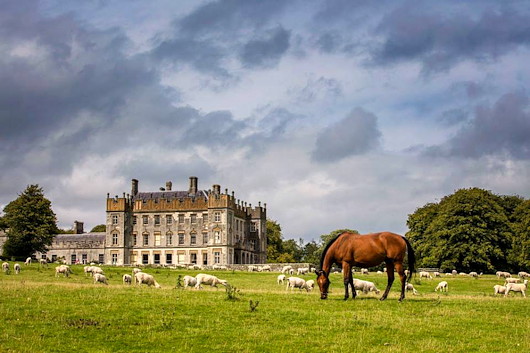
The County Carlow seat of the MacMorrough Kavanaghs, ancient Kings of Leinster, whose sixteenth generation live here still.
The Epiphany 6 January 2016

Architectural historian Gavin Stamp argues that if Rhodes really was such a vicious baddie as his opponents claim, why stop with just removing his statue?
South African academic and Rhodes scholar R. W. Johnson has compared the campaign to remove Rhodes statues to ISIL’s destruction of antiquities in the Middle East while clerical commentator Fr Alexander Lucie-Smith recalls the damnatio memoriae.
Most interesting perhaps is the treatment of Rhodes not in the ivory towers of Oxford or Cape Town but in the land that once bore his name. Rhodes’s grave still lies in a prominent spot in the Motopos, but even President Robert Mugabe is against exhuming him.
From the Telegraph:
The last time that a call was made for the grave in the Matopos to be exhumed, Middleton Nyoni, then Town Clerk of Bulawayo, offered a telling response. “It is the Taliban who destroy history – and I am not a Taliban,” he declared. “After Rhodes’s grave, who is next?”
When Rhodesia became Zimbabwe in 1980, the city fathers of Bulawayo shifted Rhodes’s statue from the town centre to the town museum, while covering up the plaque commemorating his indaba with the chiefs of the Matabele. But in 2010 the city council voted to uncover the plaque while last year the Zimbabwean playwright Cont Mhlanga provocatively suggested returning Bulawayo’s statue of Rhodes to its former place of prominence.
U.C.T. has dumped Rhodes – though he remains elsewhere on Table Mountain – and his statue is still at Oriel… for now.
– This time last year, Pascal-Emmanuel Gobry asked if the Christian revival was starting in France. My pilgrimage to Chartres provided me with evidence that the faith across the Channel is deep, strong, and growing.
Now, looking forward to the year ahead, P.E.G. notes that Catholic France used to be old and rural — now it is young and urban: “In the major cities, all the churches are full on Sunday morning, something unthinkable even 10 years ago.”
– Former CIA agent Philip Giraldi visits Russia for the first time.
— All across the world, evidence shows that poverty is dropping dramatically. Why then, Fraser Nelson asks, is it so hard to believe?
Bicycle polo at the Wellington Monument in the Phoenix Park, 1938.
Tuesday 5 January 2016

— It was once thought that when a key doctrine is abandoned or modified there is no turning back. But, writes Richard J Mouw at First Things, the turning-away from theological liberalism at Amsterdam’s Vrije Universiteit should make us think again.
— Christopher Akers at Quadrapheme argues Dostoevsky is right that beauty will save the world.
— Norfolk MP and former Guards officer Adam Holloway spent his teenage gap year fighting with the Afghan resistance against the Soviets.
An eccentric undergraduate in Edinburgh I knew exhibited a rare progressivism when she argued that in Afghanistan, the West should’ve backed the Soviets and backed them hard. I’m not convinced.
— “The overwhelming aesthetic is glam,” writes Nasri Atallah in his insider’s guide to Beirut for the Guardian. “People even dress up to go to the grocery store.”
— Underreported: Prince Charles has made a personal donation of £2,000 to St Patrick’s Church, the Catholic parish in Belfast targeted by Protestant Loyalist marchers.
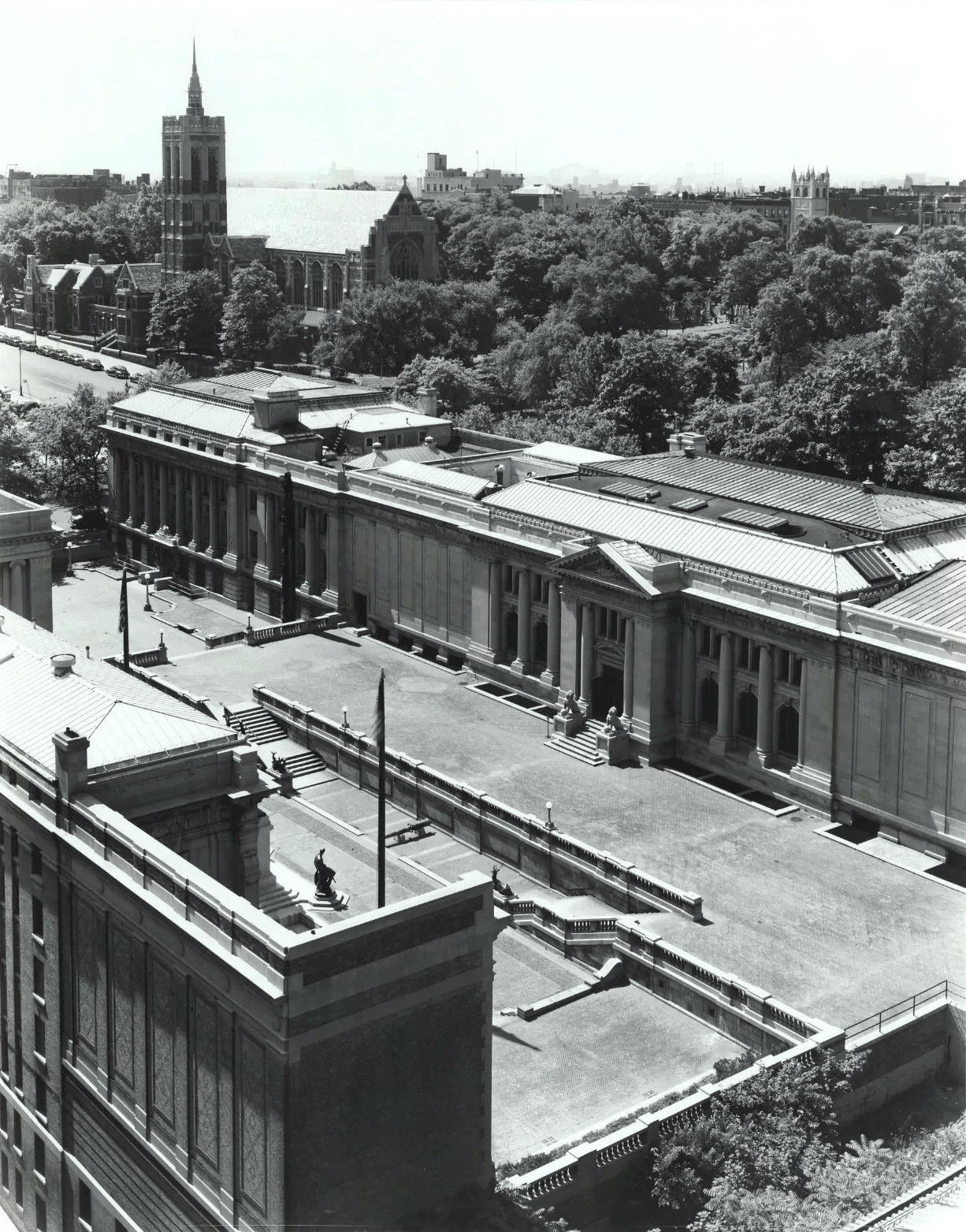
A view in Manhattan
Monday 4 January 2016
A curious thing about London is that, even though it’s a world-class global city with all the tiresomeness that entails, it often manages to feel small and somewhat cozy. This is only enhanced by numerous chance encounters when one runs into friends on the street without any forethought.
Late on a Saturday in November I had just made a rather wet and windy crossing of the Solent: my hovercraft had been cancelled and I had to take a much later catamaran instead. I arrived in London, late, soggy, and laden with a sack of apples gifted to me by the nuns of St Cecilia’s Abbey from their orchard there on the Isle of Wight. Not feeling quite up to the evening’s plan of a drink in Marylebone and a night on the tiles all the way out east in Dalston, I demurred and opted for other plans.
Something calm and quiet was called for — a film at the Curzon on the King’s Road. Having purchased a ticket to see Spielberg’s latest (‘Bridge of Spies’) who should waltz up along the pavement but James, who I’d just been speaking to at 1:30 that morning, and Frankie, who I hadn’t seen in far too long. They were immediately convinced to join in and thus we made up a troika at the Curzon, which is going to be torn down and shifted next door to the old Gaumont under the Cadogan Estate’s latest plans.
Franks and I remained outside as James went in to buy tickets and then who should pop out of the cinema but the great Charles Dance himself. Even more satisfyingly — for Francisca and I are ideological smokers — he immediately pulled out a cigarette and lit up. It’s good to see the old ways die hard.
Dance put in a superb performance in the BBC’s dramatisation of Agatha Christie’s ‘And Then There Were None’ broadcast over the Christmas break. The dark and chilling adaptation returned to the book’s original grim storyline rather than the happy ending Christie invented for the 1943 stage version.
But last night’s premiere of ‘Deutschland 83’ steals the biscuit in telly-box news. The drama follows a 24-year-old Volksarmee officer sent to the West to spy for the GDR as aide-de-camp to the Bundeswehr general charged with handling the plan to site American Pershing-II missiles in West Germany.
‘Deutschland 83’ had aired on RTÉ 2 late last year so whisperings had crossed the Irish Sea warning me to keep an eye out for it. I love a good spy thriller and was disappointed that the Beeb decided against a second season for last year’s ‘The Game’, which followed 1970s MI-5 agents foiling a Cold War plot against Her Majesty’s Government. Channel 4 is picking up the slack, not just with D’83 but also the French political drama Les Hommes de l’ombre (being broadcast here as ‘Spin’) debuting Friday 8 January.
Television used to be the most boring thing in the universe. Good to see some things can actually get better.
Blogging is dead. Long live blogging!
Your daily dose of Cusack
It is a well-known fact that blogging is dead. I remember the old days! Armavirumque, the Jacksons, and the Emperor Seth of Azania! That was an astonishing ten years ago, and very few of you will remember it (except Steve). Now it’s all Twitter and Instagram and — gulp! — ‘social media’.
Never mind. As a bit of a New Year’s Resolution, I’ve decided to personally, single-handedly, and by our own will and instrument revive the blog qua blog.
Pieces of a bit more substance will continue to appear on andrewcusack.com — for that must never die — but I intend to share some ephemera here, for your own personal edification.
Caledonian Expedition
Sun, sand, champagne, Scotland: there’s not much more you could ever want, but to have an alignment of these four in the month of October is rare. It had been quite some time since the Cusackian feet had last graced the cobbles of the beloved ‘auld grey toun’ – the Royal Burgh of St Andrews – but a friend got in touch on a Monday morning with the provocative text “Scotland Friday?” I couldn’t resist. (more…)
No ‘Malvinas’ Here
Some difficulties of Latin place names in 1930s cartography
It’s no great secret I’m a lover of maps. When calling in to the Secretariat of State on the terza loggia of the Apostolic Palace in the Vatican the other day, I was very pleased to see the cartographic murals there, including the two hemispheres done by Ignazio Danti in the 1580s. Moving to the next interior offices, however, the visitor is greeted by a much more recent mappa mundi, dating from the 1930s, replete with the glamour of empire’s heydey. (more…)
Best Foot Forward in Peru
A return to tradition for the Peruvian armed forces
One of the results of Peruvian voters electing the left-wing nationalist Lt Col Ollanta Humala as the president of their republic in 2011 has been a renewal of the traditions of the country’s armed forces – under this Excelentísimo Señor Presidente there has been a return to a much more traditional style of military uniform. A long decline in standards only accelerated during the first presidency of the liberal Alan García (1985-1990) who altered the Changing of the Guard at the Government Palace, while his populist successor Alberto Fujimori had the more pressing task of defeating an insurgency to turn his attention to such matters.
It’s often alleged that cultural trends in the Americas have long been riven by a conflict between one tendency favoruing European influences against another which favours national or indigenous inspiration. This dichotomy seems false, as the Americas are at their best when they take the finest in the European tradition and develop it in a new way with the addition of more local flavours.
In the nineteenth century, however, the European was in the ascendant, and particularly in South American militaries which relied upon European advisors to update and train their armed forces. Countries like Colombia and Chile imported Prussian advisors, which has given their militaries a Teutonic air to this day (viz. Colombia’s pickelhaube and Chile’s parada militar).
In Peru, however, it was the French who were brought in to bring the army up to speed, and that lasting influence is obvious from the uniforms seen here at a recent passing-out ceremony at the Escuela Militar de Chorrillos attended by the President. No pickelhaube here, the kepi reigns supreme.
It’s not turning the clock back: it’s choosing a different future. (more…)
Letter to the Editor
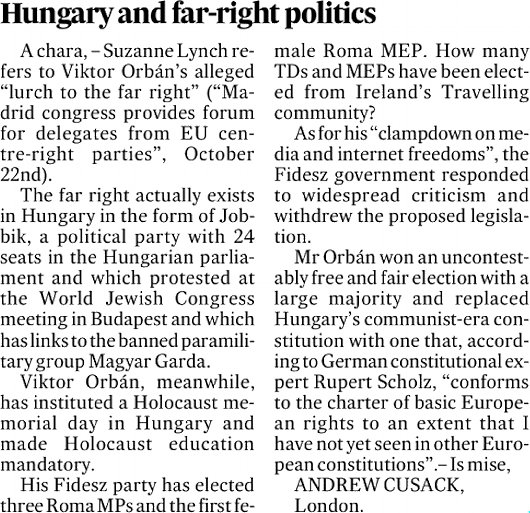
SIPPING a postprandial Coke last week while flipping through the Irish Times, my wandering eye was drawn towards that newspaper’s report on the Madrid congress of the European People’s Party, the grouping of Christian-democratic and centre-right political parties across the European continent (Madrid congress provides forum for delegates from EU centre-right parties, Suzanne Lynch, Irish Times, 22 October 2015). The correspondent first elucidates some of the purpose of these pan-European gatherings before going on to summarise a number of the issues raised. She ends, however, on a bit of a downer by describing Hungarian Prime Minister Viktor Orbán’s “lurch to the far right”, evidenced by his “clampdown on media and internet freedoms, apparent support for the death penalty and hardline approach to refugees”.
This breezy litany of crimes is little more than shoddy journalism. The alleged “clampdown” refers to proposed internet legislation which has been withdrawn while other media laws requiring balance reflect the U.S. broadcasting rules rescinded under Ronald Reagan. The “apparent support” for capital punishment is another damp squib: Orbán called for it to be debated as intellectual speculation — a canny “dog-whistle” political move to gain votes without requiring any legislative action or serious challenge to the E.U. ban on the death penalty. (It was abolished in Hungary at the fall of communism and there are absolutely positively no government plans to bring it back.)
The refugees allegation was the most interesting, however. As it happened, I had attended a small meeting of British MPs and Hungarian foreign ministry officials the day before Ms Lynch’s report was printed. The Welsh MP David Davies gave his first-hand account of visiting the refugee camps near the Hungarian-Serb border and reported that refugees were being well-looked-after, with the quality of the facilities on the whole at least as good as when he was in the British Army, often better. An advisor from the Hungarian Foreign Ministry briefed us on the general situation, which has calmed down immensely since the Serb border has been more or less closed. He noted that broadcast media across the continent showed footage of Budapest police’s treatment of migrants gathered at the railway station without pointing out that the police were responding to violent attacks from a small minority of migrants.
Proprotionate self-defence for officers of the law is the norm across Europe, but this has mattered little when it comes to depictions of Hungary: the bien-pensant official groupthink is that anything Hungary does is wrong, so long as Fidesz is in power. Luckily some voices of dissent have emerged. The novelist Tibor Fischer — no conservative — described in The Guardian the media treatment of Hungary as “hysterical” and “ignorant nonsense”.
Anyhow, I felt obliged to send off my “Disgusted of Tunbridge Wells” to the Irish Times and it’s very good of their letters staff to print a diverging (if abridged) opinion. The last letter to any editor I succeeded in having printed was in the Times Literary Supplement in 2008 about P.G. Wodehouse’s career in banking at H.S.B.C. Who knows what the next shall bring…
Open-minded Stellenbosch
Paul Moorcraft is a Cardiff-born journalist and academic who spent many years in southern Africa, lecturing, researching, and working. I stumbled across this passage about Stellenbosch from his 2011 book Inside the Danger Zones: Travels to Arresting Places and found it interesting (though not surprising):
I found many of my all-white students at the University of Cape Town tediously dogmatic in their supposed progressiveness. I also lectured at the Afrikaans-language university of ‘Maties’ at Stellenbosch, established in 1918 [sic, f. 1866; accorded university status in 1918] as the Afrikaner Oxbridge, where I found the students much more open-minded. Simon van der Stel, a stiff Dutch bureaucrat, founded a frontier town on the banks of the Eerste River in 1679. Van der Stel loved oaks, and the graceful boulevards he planted still adorned picturesque Stellenbosch. I spent as much time as possible in the area because of the architecture. The Cape Dutch style contains elements from Dutch architecture but is also influenced by colonial Indonesian traditions and the local environment. The most characteristic feature is the graceful gabled section built around the front door, which is flanked by symmetrical wings, thatched and whitewashed, extending on either side.
I was supposed to be using my visiting lectureship to finish my doctoral research, so I became friendly with Retha, a librarian at Maties. She was a fund of knowledge on Afrikaner culture and offered herself as an intellectual guide. My scholarly investigations soon degenerated into a three-month tour of the local wine farms, for which I am eternally grateful. We drove through the old, beautiful vineyards of the valleys around Paarl, Franschoek, and Tulbagh; then returned to eat in splendid eighteenth-century farmhouses converted to hotels.
Search
Instagram: @andcusack
Click here for my Instagram photos.Most Recent Posts
- Brunel’s Unbuilt Capitol February 3, 2026
- Cricket at Fordham January 27, 2026
- Palacio Barolo Revisted January 14, 2026
- Learning to Love Liguria January 14, 2026
- Crux Alba No. 2 January 13, 2026
Most Recent Comments
Book Wishlist
Monthly Archives
Categories