About Andrew Cusack
 Writer, web designer, etc.; born in New York; educated in Argentina, Scotland, and South Africa; now based in London.
 read more
News
Blogs
Reviews & Periodicals
Arts & Design
World
France
Mitteleuropa
Knickerbockers
Argentina
The Levant
Africa
Cape of Good Hope
Netherlands
Scandinavia
Québec
India
Muscovy
Germany
Academica
Ludlow Street
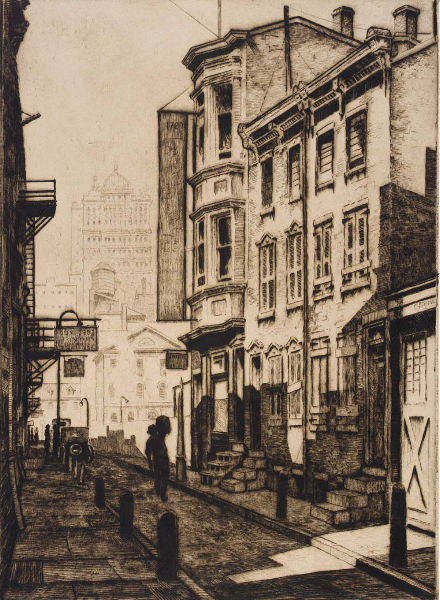
George A. Bradshaw, Ludlow Street
Drypoint on paper, 8 7/8 ” x 6 3/8 ”
1935, Smithsonian American Art Museum
Ludlow Street is the home of the world-famous Katz’s Delicatessen.
New Netherland Medal
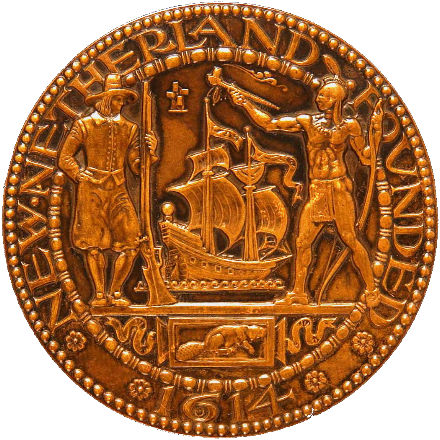
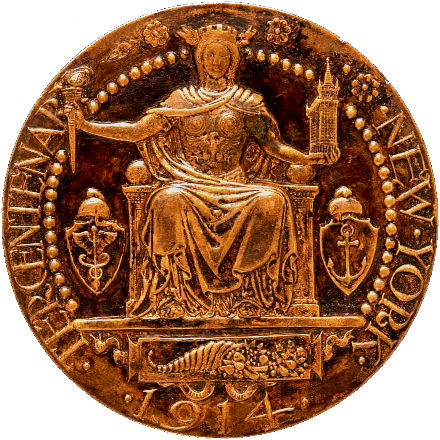
Paul Manship, New York Tercentenary Medal
Bronze, 2 3/4 inch diameter
1914, Smithsonian American Art Museum
BASMOM Appeal for Peru
I received the following via e-mail this morning:
 You will have read about the terrible earthquake that recently struck Peru. Over 40,000 homes have been destroyed or seriously damaged, 20 hospitals destroyed or damaged and over 1,500 people killed or wounded. A state of emergency has been declared in the region; and the local authorities are struggling to help all those affected.
The Peruvian Association of the Order of Malta has already started its relief activities with teams of doctors and paramedics on the ground tending to victims of the earthquake. The Association is preparing to bring relief goods into the disaster area and is working with local parishes to distribute them in the most effective way. The longer-term challenge will be to rehabilitate those affected.
The greatest need now is for medical supplies, foodstuffs and the wherewithal to start rehabilitation. Much of this is best bought locally. The Order worldwide is now launching an appeal to help our Peruvian Association by sending money that will enable them to continue the work that it has already started. The British Association is determined to contribute to this effort; and we are therefore writing to ask you for your help.
Please consider donating to this very urgent and worthwhile cause. Your money will go directly to help those who have lost everything in this earthquake: as an organization of volunteers, the Order incurs only minimal overheads.
You can donate online through our website, where you can stay up-to-date on the progress we are making, or by sending a cheque made payable to BASMOM Foreign Aid Service. If you are a UK taxpayer and complete the GiftAid form below, we can also reclaim the tax on your donation.
We thank you for any donation you can make.

The Edificio Metrópolis, Madrid
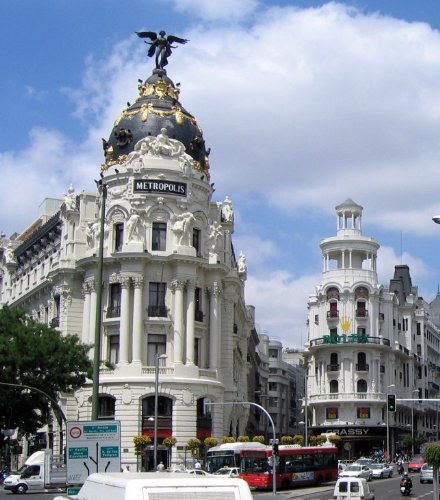
WHERE THE GRAN VÍA meets up with the Calle Alcalá in Madrid, there is a wonderful building which these days is known as the edificio Metrópolis. Designed by Jules and Raymond Février of France, it was built in 1911 for the Union and Fénix insurance company. The architects took advantage of the awkward but prominent site to create a landmark building for the company, one of the largest insurance firms in Spain. At the apex of its triangular site is a splendidly decorated round tower, originally topped by the Union and Fénix symbol of a phoenix with Ganymede. (more…)
Understanding the Revolution
St. Alban’s College: 1907-2007

ASTUTE READERS OF the Buenos Aires Herald, itself over one hundred and thirty years old, would have noticed in the paid announcements section a week ago Sunday the following notification: (more…)
Diary
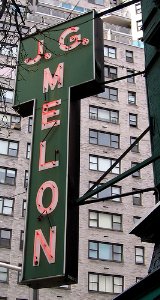
SITTING PROUDLY ON the corner of 74th Street and Third Avenue, J.G. Melon is one of those splendid establishments that make living in New York tolerable. It has a distinct 1930’s feel to it, despite only dating from the 1970’s, which speaks to the taste of its founders. I remember a very jolly gathering there in the winter of our last year in high school; Will, Caro, Scott, Emma, her mother “Momma Kate”, as well as her aunt who still lives in a townhouse nearby (and, as is typical of New York, is currently entrenched in a legal battle with neighbors over an obtrusive wall). It was a splendid evening, boisterous, lively, and full of good conversation, and a window was even broken, though thankfully not by our merry band.
 Then there was that one Saturday during the summer when a young lady and I went to the Metropolitan to see the Byzantium exhibit which had received much praise. We duly made our entrance donation, obtained our little ‘M’ tags, and then asked a guard, “Could you point us to the Byzantium exhibit?” “No can do, boss. Closed yesterday.” Brilliant. We had a trawl through the Greek and Roman galleries anyhow (the old Greek and Roman galleries, that is, not the new Greek and Roman galleries that everyone raves about), had a quick (overpriced) drink on the rooftop sculpture garden, and dropped in on the Astor Chinese Court in recompense for missing the glories of Byzantium. Anyhow, leaving the Metropolitan we immediately decided to escape the sun to J.G. Melon’s for a stiff drink and a late lunch and it was the most delicious and satisfying repast you could’ve dreamed of at that precise moment.
I could go on and on, but suffice to say that J.G. Melon’s is a place of happy memories, as is the Upper East Side in general. That neck of the woods was our particular stomping ground towards the end of high school and the first years of college during the breaks, until the gradual dissolution and dispersal of the East 86th Street Conspiracy. I don’t see much of the East Side anymore. Since I began working in the city I have generally avoided staying within its bounds any longer than necessary before skipping back to the lush green quietude of Westchester. Nonetheless, one has to be social from time to time, and its not as if the company of friends is a loathsome burden.
Still, when I suggested to a friend that, it having been over a year since our graduation, perhaps a drink was in order, and she agreed and asked where we should enjoy our cold beverage of choice, I thought “Why not J.G. Melon?” Miss Breed had never been, and so I had the added privilege of introducing someone to one of our favorite little institutions. As I said, I don’t see this neck of the woods as often as I probably should and, inadvertently arriving at Melon’s with time to spare, I decided to head over to Second Avenue to revisit some other old haunts.
During high school we spent hours and hours at Taja, a Moroccan lounge/bar, sipping cocktails, conversing, and getting to know the immigrant waiters from the Maghreb, who were all very happy to be in New York and not Fez or Marrakech, and learning about the utterly different world from which they sprang. There was also Sultan, the Turkish restaurant right next door to Taja, which was always pronounced SULL-tan, not sultin, probably because our circle was mostly composed of diplobrats, the sons and daughters of the New York diplomatic corps. “Mehmet” and “Omar” (names changed for security’s sake) were brothers and the sons of Egyptian diplomats. I remember them bringing a Californian friend to Sultan once, who instantly fell in love with one of the belly dancers who danced there three nights a week. So far as we know, nothing ever came of it. I also remember dining at Sultan with seven or eight of the Bronxville/Fordham Prep circle and for some reason we all decided to order apple martinis to accompany our food (which, by the way, was superb).
Having, as I said, time to spare, I strolled over to Second Avenue to revisit these haunts of my youth and turned at the corner where Baroanda (where they never let us drink) sits. Heading down, I expected to see Sultan and then Taja its happy neighbor, but no. Gone, all gone. Not just closed, but demolished, half the bloody block. These sites of happiness and drink, of conversation and argument were completely destroyed, without a trace of the joy they once provided us. In their place, an empty hole for now, but soon an ugly glass-plated skyscraper full of three-bedroom apartments (for vulgar financiers no doubt). I must take a note of when that shiny edifice will be topped out, so I can go and spit on its foundations.
I HAVE ALWAYS loved the rain, but even higher than rain ranks its offspring, the thunderstorm. From the gentle rolling in the distance to the quite-close strikes, there are few meteorological occurences more dramatic and enjoyable than the clash of thunder and the flash of lightning. This morning I was wakened by the clap and patter of the storm outside, and by the sudden presence of my dog. The poor beast has no appreciation for such weather, and was attempting to gain admittance to the underside of my bed. He was thwarted by the presence of the Encyclopedia of New York State, Tintin: The Complete Companion (by Michael Farr, leading Tintinologist of the English-speaking world), a coffee table book of a Dutch master, and a few discarded copies of the Irish Times with the crosswords half-completed. Sobbing and crying, he gave up and left to find shelter elsewhere.
It was quite a storm, however, and there was no rail service into Grand Central for much of the morning because of flooding along the line. When the MTA finally announced that service had been restored, I went down to the station in town and caught the 9:45 to the city. As one might expect, it was exceptionally crowded and I was forced to stand, leaning uncomfortably against the wall at the back of the train car while I tried to read Rodolfo Fogwill’s Malvinas Requiem (o en castellano, Los Pychyciegos, 1983).
It took forty-five minutes to reach Grand Central instead of the usual thirty-one and the relief upon entering that cool marble temple was dissipated (as it always is, but particularly this morning) by descending into the depths of the subway. I made my way, as per usual, towards the 4/5/6 but found the steps down blocked and an MTA employee standing in front. “No trains?” “No trains.” Blast. Well, I’ll just have to take the shuttle over to Times Square and then the N/R/Q/W down to Union Square. Then the harsh crackle of the station loudspeaker “There is no Times Square shuttle service. No shuttle to Times Square.” Very well, I’ll take the 7 to Times Square instead, and descended myriad other stairways to the platform of the No. 7 train. The 7 must be the deepest line in all Manhattan! It was like falling down into Wonderland to get to it. Anyhow, hopping off the 7 at Times Square, and heading towards the N/R/Q/W platforms, there was a sight of much disappoinment. It’s not the fact that the N/R/Q/W platform was crowded per se but that there was a crowd waiting to even get down to the N/R/Q/W platform. I quit! I decided to ascend to street level, summon a taxi, and get to work the easy way.
Ascending the escalator out of the Times Square subway station, I remembered a time six years previous. Elena Fichtel and I had gone to one of the giant multiplexes on 42nd Street to see “The Others”, a psychological suspense film. There was one very quiet and tense point in the movie where Nicole Kidman holds a glass lamp and look towards the staircase of the grand, dark country house her character inhabits in the film. She believes she has just heard the sound of running feet on the floorboards above when she knows no one could possibly be there. She just glances at the staircase and nothing happens. However there was a very quick change of perspective, and even though nothing happened in the film, the suddenness made Elena elicit an almighty shriek of horror. Her’s was the only one, and the entire jam-packed cinema erupted in laughter at her. It was a truly classic moment.
After the film we ran to the subway, hoping to get to Grand Central in time to catch an advantageous train back to Westchester and make it home for dinner, and it was the very entrance we entered then that I today egressed and made my way to Broadway. A whole mob of people had the same idea as me and were waiting at the side of the Great White Way, forlornly hoping that an empty cab. Weighing my chances, I figured I’d just walk down Broadway from 42nd Street to Herald Square on 34th and pick up the N/R/Q/W there. I should mention at this point that the morning storm had gone completely and had done nothing to lessen the extraordinary temperature, which was certainly in the 90s. Very uncivil of Mother Nature.
I walked down the shady side of Broadway. A Vietnamese woman rested on a crate at a street corner and fanned herself with a nonchalance indicative of her ancestry. A young boy strode determinedly up the boulevard, finger in one ear and cell phone to the other, disputating with (one presumes) a parental figure on the line. A Belgian-looking man bedecked in Venetian red trousers walked fastidiously in the same direction as I. Finally, through Herald Square (which, by the way, has been done up very nicely with those little Parisian chairs and tables akin to Bryant Park) and to the subway entrance. Flooded. Just a few inches, but I was wearing sandals. (Sandals? In the metrop.? It’s summer! And they are sandals of substance, I assure you.) A clever girl in wellies was undeterred. Luckily, another entrance around the corner provided the necessary access.
Then, of course, minutes waiting on a stiflingly hot subway platform. I processed up and down the platform very slowly, feeling that if I stood still I might not budge again. Office-types in suits held their jackets over their shoulders and wiped the sweat from their brows with hankies while a fat black woman sat silently on a bench, shaking her head with dismay at the temperature. After what seemed like eons, the Broadway Express rolled into the station and I was swept away to Union Square in a fine, cool, air-conditioned seat. Exiting the subway into the farmer’s market in the square, I passed the Belgian-looking man in red trousers. We had made it there in the same amount of time, but I had a comfortable air-conditioned seat much of the way. (Or so I rationalized).
By the time I arrived at my office it had been a full two hours since I had left the comfort of my home! Nonetheless, I enjoyed the morning’s storm as I lay comfortably under the covers in my room. The pitter-pat on glass, the sudden flash, and the anticipation finally quenched by the rolling boom. When we were children, we always counted the seconds between the flash and the boom and multiplied it by some magical number to discover how far away the lightning struck. When we were younger than that, we believed that thunderstorms were when the angels and demons were bowling. And whenever a storm cleared, I thought to myself “Oh good, the angels won again”.
Salve Regina
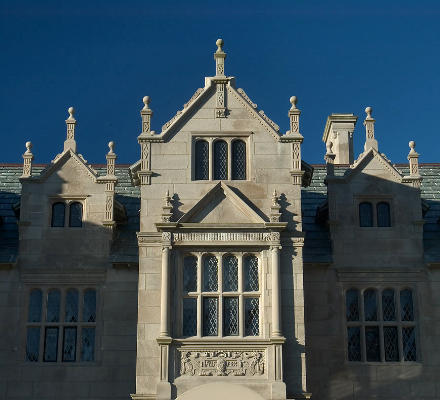
ONE OF THE MORE unfortunate aspects of the twentieth century was the decline of the country house in the British Isles and North America during the post-war period. Innumerable homes of great history and beauty were lost to the wrecking ball and the developer’s avarice. Newport, the former capital of the Colony of Rhode Island and Providence Plantations, became a summer capital to many of America’s well-to-do during the so-called “gilded era”. (It was avowed then that the highest level of society was determined by those whom Mrs. Vanderbilt could fit in the great hall of her Newport house). While many of the great homes of Long Island fell to ruin after the war, and the legendary Meadowbrook Hunt dissolved, many of the best Newport homes found a welcome new role under the wings of Salve Regina University, the city’s Catholic university. The decline of these great houses and the ascent of Salve Regina proved a quite fortunate coincidence, and has inspired the university to start one of the first academic programs in historical preservation and restoration. These great summer ‘cottages’ now house lecture halls, seminar rooms, academic offices, dormitory space, and a Catholic chapel. They are appropriate surroundings for Western civilization to be passed on to the next generations. (more…)
Film of the Year: “Zwartboek”

UNQUESTIONABLY: “Zwartboek”, or “Black Book” as it was released here in the United States. Sebastian Koch you will recall from “Das Leben der Anderen” (which, come to think of it, probably ties with “Zwartboek” for film of the year), while Carice van Houten will be in the next James Bond flick.
But is it better than director Paul Verhoeven’s previous Dutch World War II film, “Soldaat van Oranje”? Difficult choice! Happily, both films display a certain monarchist tendency.
A Walk in the Country

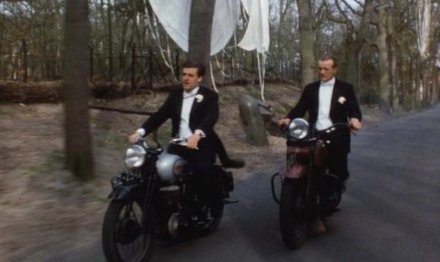
In need of a little fresh air this morning, I went for a walk amidst the lush greenery of our fair county, and took a few snapshots to show you my explorations. Shall we? (more…)
The Dahlgren Residence
No. 15 East Ninety-Sixth Street, New York
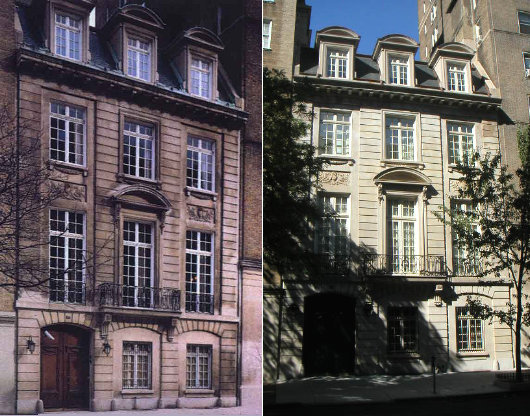
THE UPPER EAST SIDE is crossed by a number of wider cross-streets, of which 96th Street has long been agreed as the northern boundary of the neighborhood. (Overeager real estate agents have recently taken to advertising properties above that boundary as being located in the “Upper Upper East Side”). At number 15 on East 96th Street sits a splendid townhouse of superb design and execution often known as the Dahlgren residence. (Seen above, before and after complete restoration).
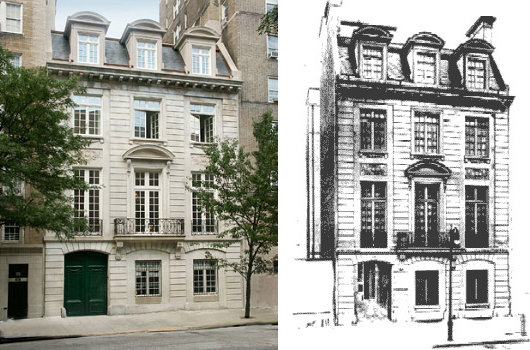
Lucy Wharton Drexel was of the Philadelphia Drexels, from which also came Saint Katharine Drexel, the founder of the Sisters of the Blessed Sacrament, as well as the initiators of Drexel University in that Pennsylvanian city. Young Miss Drexel married Mr. Eric B. Dahlgren, son of Admiral John A. Dahlgren, inventor of the Dahlgren Gun used during the Civil War at a ceremony in the Philadelphia cathedral officiated by Archbishop Corrigan of that see, and the couple soon moved to Manhattan where Mr. Dahlgren had a seat on the New York Stock Exchange. The Dahlgrens themselves were a prominent Catholic family, with Eric and his brothers attending Georgetown University, where to this day the main chapel bears the Dahlgren name. (Well-to-do Catholics must have been in short supply at the time, because after Lucy and Eric’s marriage, Lucy’s sister Elizabeth was married to Eric’s brother John).
The Army, the Navy, and the Air Force
Our Armed Forces Support Ron Paul With Their Checkbooks

THE RECENT REPORT from the Federal Election Commission on second-quarter donations to presidential candidates contained an interesting piece of information. Observers extrapolated those donors who listed the branches of the military as their employer to see who our fighting men (and women) were backing in the presidential election. Who came first in military donors? None other than our own Dr. Ron Paul, the Air Force veteran who is determined to end the empire and save the republic. This didn’t surprise me, but it was a welcome reassurance that good old-fashioned common sense still prevails amongst the brave souls in our armed forces. (more…)
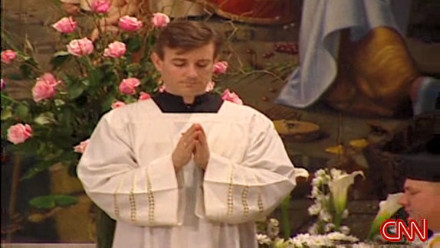
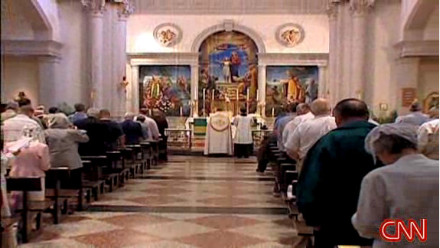
CNN Comes to St Agnes
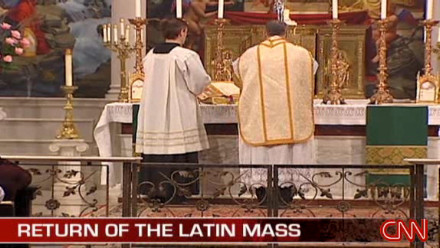
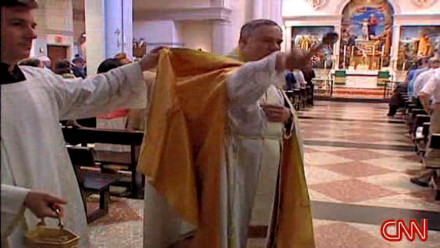
A month or so ago, Ms. Delia Gallagher of the Cable News Network (and cameraman) came to the Church of St. Agnes to take a few shots of the 11:00 Tridentine mass and to interview a few folks on the street afterwards. Those who spoke with her said she was genial, and the report she filed is available from the CNN website here (2:08, following a thirty-second advertisement).
Dino!

‘The Mass of All Time answers that need.’
In his superb column in this week’s Scotland on Sunday, Gerald Warner responds to the Holy Father’s motu proprio.
The bishops of England and Wales tried furiously to prevent the liberalisation of access to the Traditional Mass, lobbying the Vatican against it, although they had recently approved the regular celebration of a Mass for homosexuals. On the eve of the publication of the Papal document, Bishop Kieran Conry, of Arundel and Brighton, said: “Any liberalisation of the use of the rite may prove seriously divisive. It could encourage those who want to turn the clock back throughout the Church.” So, a liberal opposes liberalisation – why are we not surprised?
As for turning the clock back throughout the Church, it is the only possible remedy for the crisis that has afflicted it since the Second Vatican Catastrophe. The Novus Ordo (New Order of Mass) was invented by Archbishop Annibale Bugnini, assisted by six Protestant pastors, after the Vatican Council. When this appalling confection was presented to the 1967 Synod of Bishops it was indignantly rejected. Yet two years later it was universally imposed. Bugnini described it in 1974 as “a major conquest of the Catholic Church”.
Strange language from a Catholic bishop; but there were stranger things to come. In July, 1975 Bugnini was abruptly sacked after Pope Paul VI was shown evidence he was a Freemason. Bugnini denied the fact, but when the register of Italian Freemasonry came to light in 1976, it recorded Bugnini as having been initiated on April 23, 1963, with the esoteric code name ‘Buan’. So, even during the Vatican Council, Bugnini was already under automatic excommunication for Masonic membership. What possessed Paul VI to sack the author of the New Mass, but retain his liturgy for universal use? At least this episode throws light on the handshake at the ‘kiss of peace’ in the new rite. […]
For 40 years frenzied efforts have been made to stamp out the Traditional Mass and yet it has flourished. It is now past the point where there is the remotest prospect of extinguishing it. As Pope Benedict said in his explanatory letter accompanying the motu proprio Summorum Pontificum (“Of Supreme Pontiffs”), one of his reasons for freeing the Old Mass was the number of young people now flocking to it.
That is what the faded 1960s trendies who are now bishops and seminary rectors fear: the impossibility of maintaining a revolution that has burned itself out. The Second Vatican Council means as little to today’s youth as the Council of Chalcedon. Its elderly adherents are like dads dancing at the school disco. Many young people are seeking the mystical and the numinous. The Mass of All Time answers that need.
Within the past month the Vatican has issued two other documents: one restoring the requirement for a two-thirds majority at Papal conclaves, which rules out the future election of an extreme radical; and a reassertion of the doctrine that the Protestant sects cannot be recognised as ‘churches’. It will not damage ecumenism, because that died long ago. Its premise was that Rome must endlessly divest, while Canterbury ordained priestesses and moved ever further from Catholicism. [Ed.: bold mine.] When you see a Church of Scotland congregation praying the rosary you may believe ecumenism is a two-way process.
‘The Mass of All Time will outlive the Sixties revolutionaries‘, by Gerald Warner; Scotland on Sunday, 15 July 2007.
Previously: Martyrs of Spain, Pray for Us! | Warner on the Gotha
California Wedding
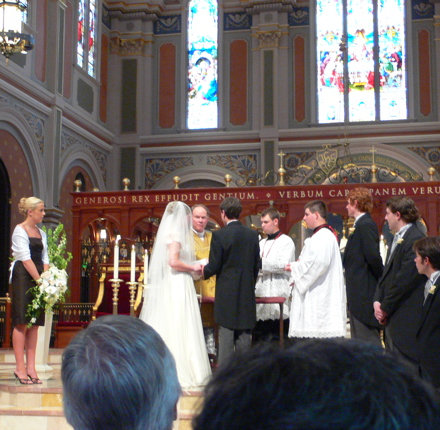
WHERE DOES ONE begin? Scotland, I suppose. I’ve known Abby since Day One in St Andrews. I was among the number of poor souls who were foolish enough to participate in the ‘overseas orientation’ for non-UK/RoI students. Through pure chance, a group of us who sat down to dinner in Andrew Melville Hall that night decided to venture into town that evening and see what was what. We went to the Central, which became my regular for a very long time, until replaced by the Russell for my tertian and magistrand years. Jon I met just over a year later, during his first few weeks at St Andrews (as I entered my second year). It was at the Catholic Society and he told me he came from Bristol. I was fairly ignorant of Bristol other than that it is home to the British Empire and Commonwealth Museum. I asked Jon about the museum and his answer was such as to confirm that he and I were on the same page of the book, so to speak. He didn’t come much to Canmore at the start and so we were not instant friends, though I do recall running into him in the corridor of New Hall at 2 or 3 in the morning one night and striking up a brief conversation (most likely telling him he ought to be coming to Canmore, since like-minded folk are a dime a dozen there).
Anyhow, by some time or another we were all best of friends, and both Jon and Abby have been the source of (and butt of) so many of the great amusements we enjoyed at St Andrews. Good God, how many laughs! In Canmore, the Cellar Bar, the Central, the Russell, in flats, in Edinburgh, in Rome, in Dublin, in New York, and most recently in California, whenever one is with Jon and Abby there is always a good time to be had, and an appropriately inappropriate comment to relish. I have picked up the habit of simply saying “ledge” (that is, short for “legend”) every time I utter the name of Jon Burke. Abby once desired that I verbally express precisely what it was that makes Jon such a legend, but all I could say was that it was of the same nature as the Sacraments in Eastern theology: appreciated, nourishing, and clung-to, but ultimately a mystery.
It was California then, which was host to our latest adventure, namely the joining in matrimony of Miss Abigail Hesser and Mr. Jonathan Burke. I flew in on Wednesday and upon checking in at the hotel, the desk clerk handed me a written message from Jon: “We’re in the bar, free cocktails!” The wonderful rehearsal dinner was the next evening, and I was privileged to have the best seat in the house, with Fr. E and Mrs. Hesser on my left and Abigail and Jon on my right. But Friday… Friday was the wedding! (more…)
Remember!
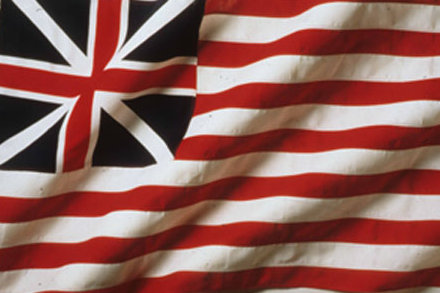
Two hundred and thirty-one years ago today, the tragedy of our people commenced.
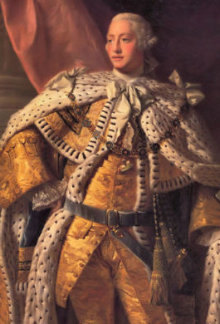

I’ll take the old George over the new one any day of the week.
Elsewhere: Charles Coulombe writes Still Rebels, Still Tories while Daniel Larison reflects on Law and Loyalism.
Wedding Bells
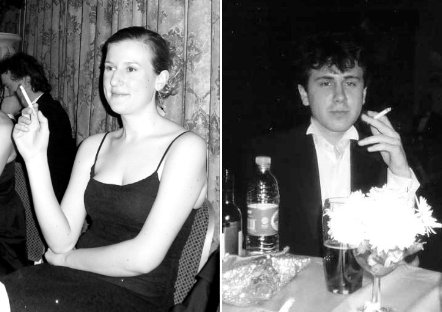
I’m off to California for a few days (I’ve never been before) for the wedding of two friends with whom some of the readers of this blog may be acquainted, Abigail Hesser & Jonathan Burke. It should prove quite good fun, and of course we certainly had a ball at the the last wedding. And it’ll be in the old rite as well!
‘First of Britain’s Sons To Die’
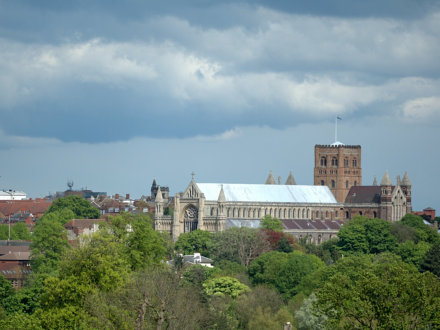
Saint Alban, June 22
Sing triumphant o’er the foe;
Tell of him, a Martyr glorious,
For the changeless truth laid low;
Faithful servant, bright example,
Whom all lands and ages know.
Valiant soldier, noble Martyr,
First of Britain’s sons to die,
Pagan ire and cries withstanding,
By the grace of God Most High,
By the strength of Him, Protector
Who, in strength and power, was nigh.
Laud and honour to the Father,
Equal honour to the Son,
Adoration to the Spirit,
Ever Three and ever One,
Consubstantial, Co-eternal,
While unending ages run.
These were the words to the school hymn at St. Alban’s College down in Argentina, which I briefly had the privilege of attending and which is currently celebrating its centenary year (more on that in another post). It was down beneath the Southern Cross that I first became more closely acquainted with good Saint Alban, who was the first Christian martyr of Britain.
‘We’ve Lost More Than We’ll Ever Know’
In Three Corners of the Commonwealth, Popular Musicians Demonstrate Rejection of Modernity
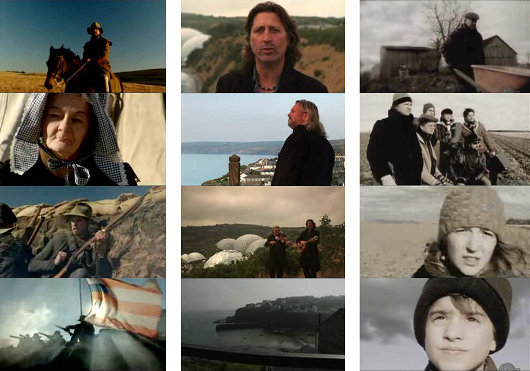
In South Africa, England, and Quebec, popular musicians have expressed regret over the rejection of their traditional cultures by the destructive onward march of modernity. The hugely popular song ‘De La Rey’, sung in Afrikaans by Bok van Blerk I have already explored in greater depth in an article for Norumbega, but ‘Roots’ by England’s Show of Hands and ‘Dégénération’ by Québécois group Mes Aïeux are worthy of notice.
‘Roots’, as one would expect from the title, decries the severing of the English people from their lyrical musical tradition and lifestyle, being replaced by “Indian, Asian, Afro-Celt”, while the song’s refrain evokes images of a people adrift: “Haul away boys let them go/ Out in the wind and the rain and snow/ We’ve lost more than we’ll ever know/ On the rocky shores of England”. In one verse, the song taps into a particular pet peeve of mine, the complete invasion of pubs by the dreaded television screen:
Is three folk singers in a pub near Wells
Well I’ve got a vision of urban sprawl
Pubs where no one ever sings at all
And everyone is staring at a TV screen
Overpaid soccer stars, prancing teens
Australian soap, American rap
Estuary English, Baseball cap
There is no greater killer of good conversation than the massive influx of television screens into the pubs. Just the other evening I was down in our regular in Bronxville and from my vantage point alone I could see three television screens. The bright technicolor projection of baseball, soccer, football, and rugby into an otherwise dark space is too great a distraction for the eye. Bad enough sitting in a booth, it is even worse having dinner at the bar when you do not at least have the advantage of sitting opposite your drinking companion. How much more of a good time it would be without those dazzling displays, and without the obnoxiously loud music, either piped in from the jukebox or else some third-rate band singing third-rate cover songs of third-rate rock groups. Bleccch! It is those moments when one yearns to be ensconced by the fire in the Russell on the Scores in St Andrews, either accompanied solely by a book and a solid pint, or engaged in the usual joviality with the after-Rosary crowd.
The Québécois song, meanwhile, laments the decline of the family from large in size and from tied to the earth to solitary and confined in the city. The name of the band — Mes Aïeux — means “My Ancestors” and ‘Dégénération’ is a play on words, meaning ‘degeneration’ but also soundling like ‘des generations’ — ‘of the generations’. The song opens:
Ton arrière-grand-père, il a labouré la terre
Et pi ton grand-père a rentabilisé la terre
pis ton père, il l’a vendu pour devenir fonctionnaire
Et pi toé mon p’tit gars, tu sais pu c’que tu vas faire
Dans ton p’tit trois et d’mi ben trop cher, frète en hiver
Il te vient des envies de dev’nir propriétaire
Et tu rêves la nuit d’avoir ton petit lopin d’terre
Your great-great grandfather cleared the earth
Your great-grandfather laboured on the earth
Your grandfather turned a profit from the earth
Then your father sold the earth to become a bureaucrat
Now you, my little man, you don’t know what to do
In your little 3 room apartment – too expensive and cold in the winter
You want something to call your own
And you dream at night of having your own little piece of earth.
The next verse goes on about the maternal line of the family: the great-great grandmother “had fourteen kids”, the next generation “had about as many”, the next “had three, that was enough for her” but “Your mom didn’t want any, you were an accident”.
Quand tu fais des conn’ries, tu t’en sauves en avortant
Mais y’a des matins, tu te réveilles en pleurant
Quand tu rêves la nuit d’une grande table entourées d’enfants
Now you, my little lady, change partners all the time
When you make a mistake you escape by aborting
But there are mornings you awake crying
When you dream in the night of a large table surrounded by little ones.
The song is one of the most popular downloads on iTunes Canada, and the band’s most recent album has gone double-platinum.
Music videos of ‘De La Rey’, ‘Roots’, and ‘Dégénération’ after the jump.
Sources Fides et Ardor: Sign of Hope – Mes Aïeux | Fides et Ardor: The People Speak (or sing…)
Previously: Breaking the Mold in Quebec | The Men Who Saved Quebec | Hitchcock in Quebec
Search
Instagram: @andcusack
Click here for my Instagram photos.Most Recent Posts
- Brunel’s Unbuilt Capitol February 3, 2026
- Cricket at Fordham January 27, 2026
- Palacio Barolo Revisted January 14, 2026
- Learning to Love Liguria January 14, 2026
- Crux Alba No. 2 January 13, 2026
Most Recent Comments
Book Wishlist
Monthly Archives
Categories