Interesting Things Elsewhere
About Andrew Cusack
 Writer, web designer, etc.; born in New York; educated in Argentina, Scotland, and South Africa; now based in London.
 read more
News
Blogs
Reviews & Periodicals
Arts & Design
World
France
Mitteleuropa
Knickerbockers
Argentina
The Levant
Africa
Cape of Good Hope
Netherlands
Scandinavia
Québec
India
Muscovy
Germany
Academica
Around
“By contrast, Hungary’s 100,000 Jews—a larger presence relative to the country’s population of 8 million—walk unmolested to synagogue in traditional Jewish costume and hold street fairs with minimal security presence.” The Real Modern Anti-Semitism
No American writer has wielded such influence, John Rossi writes. So why is he so little known today? The Strange Death of H.L. Mencken
Damon Searl on Uwe Johnson: The Hardest Book I’ve Ever Translated.
Then there are the mythical and miraculous islands of the medieval Atlantic
120 years after the Spanish-American War, here are five books to help you better understand American imperialism.
The always-worth-reading Michael Brendan Dougherty explores what the Catholic traditionalists of the 1960s and 1970s were thinking. (More people, however, are talking about his look at Francis’s record as pope.)
In Manhattan, John Massengale suggests there are better ways to get around town.
Argentina’s most beloved bibliophile Alberto Manguel on the great books that are now lost to history.
In Hungary, like everywhere else, people are marrying later, with demographic consequences. Or is this changing? The country is not just experiencing a fertility spike, Lyman Stone reports. Hungary is winding back the clock on much of the fertility and family-structure transition that demographers have long considered inevitable. Is Hungary Experiencing a Policy-Induced Baby Boom?
Speaking of which, from the same author, what about Poland’s Baby Bump?
Meanwhile in New England, an entitled Harvard academic pulls rank on the mother and child living in an affordable unit in their apartment building in a telling tale of class and hierarchy in America.
The Epiphany 6 January 2016

Architectural historian Gavin Stamp argues that if Rhodes really was such a vicious baddie as his opponents claim, why stop with just removing his statue?
South African academic and Rhodes scholar R. W. Johnson has compared the campaign to remove Rhodes statues to ISIL’s destruction of antiquities in the Middle East while clerical commentator Fr Alexander Lucie-Smith recalls the damnatio memoriae.
Most interesting perhaps is the treatment of Rhodes not in the ivory towers of Oxford or Cape Town but in the land that once bore his name. Rhodes’s grave still lies in a prominent spot in the Motopos, but even President Robert Mugabe is against exhuming him.
From the Telegraph:
The last time that a call was made for the grave in the Matopos to be exhumed, Middleton Nyoni, then Town Clerk of Bulawayo, offered a telling response. “It is the Taliban who destroy history – and I am not a Taliban,” he declared. “After Rhodes’s grave, who is next?”
When Rhodesia became Zimbabwe in 1980, the city fathers of Bulawayo shifted Rhodes’s statue from the town centre to the town museum, while covering up the plaque commemorating his indaba with the chiefs of the Matabele. But in 2010 the city council voted to uncover the plaque while last year the Zimbabwean playwright Cont Mhlanga provocatively suggested returning Bulawayo’s statue of Rhodes to its former place of prominence.
U.C.T. has dumped Rhodes – though he remains elsewhere on Table Mountain – and his statue is still at Oriel… for now.
– This time last year, Pascal-Emmanuel Gobry asked if the Christian revival was starting in France. My pilgrimage to Chartres provided me with evidence that the faith across the Channel is deep, strong, and growing.
Now, looking forward to the year ahead, P.E.G. notes that Catholic France used to be old and rural — now it is young and urban: “In the major cities, all the churches are full on Sunday morning, something unthinkable even 10 years ago.”
– Former CIA agent Philip Giraldi visits Russia for the first time.
— All across the world, evidence shows that poverty is dropping dramatically. Why then, Fraser Nelson asks, is it so hard to believe?
Bicycle polo at the Wellington Monument in the Phoenix Park, 1938.
What You Should Read
Three recommendations and some honourable mentions
Over at ISI’s Intercollegiate Review, there’s a post by Joseph Cunningham suggesting eight publications you should be reading. In September I came up with a handful of suggestions of what blogs or websites readers ought to take note of, particularly if they exist in the Catholic/traditionalist/conservative realm so difficult to sum up in a single word or term.
Of course, most of what you should be reading is by dead people (suggestions of who I proffered herein, including some actually alive), but while Chesterton described tradition as the democracy of the dead we would be remiss to carry forth in ignorance of the living.
Publications wise, then, what is the well-read gent, or lady, reading? I’ve judged this question by what I’ve managed to persuade/force/intimidate my friends into subscribing to or buying, as well as by my own habits.
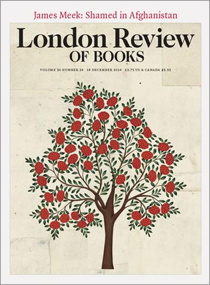
This fortnightly review is one of the last places where long-form essays are still the norm. One of the adventures of starting to read a piece in the LRB is that one has no idea whether it will continue for two of the Review’s large pages, or six, or maybe more. In addition to intellectual essays it also contains occasional reporting from Patrick Cockburn, arguably the best journalist reporting on the Middle East today. (You can read my review of Cockburn’s latest book over at Quadrapheme.)
Is it left-wing? Unquestionably. But if you’re only reading what you already agree with, you’re missing the point. Your principles should be strong enough to face challenges, or to be informed by them, and the ability to separate the wheat from the chaff is the most necessary task for any thinking person.
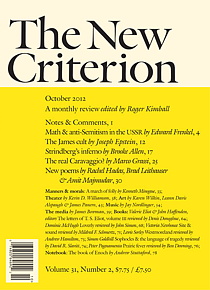
This American monthly came in for a lot of flak from a lot of conservative intellectuals for propagating and defending the neo-con support for the Iraq War, but the Daily Telegraph’s description of The New Criterion as ‘America’s leading review of the arts and intellectual life’ remains true to this day. (Disclosure: I was an editor at TNC from 2006-2008.) Feature articles are informative and expanding, the book reviews provide a good guide for reading, and art-wise I’ve always admired the clean prose of James Panero’s Gallery chronicle.
In recent months New Criterion readers have had the privilege of learning about the Jesuit linguist Albert Jamme’s hatred for sleep — “I hate my bed because it keeps me from my texts!” — and a Duke of Mantua’s expensive interest in female dwarves while last year they published the Quaker pacifist classical scholar Sarah Ruden on the darker side of Mandela’s government. Worth reading every month.
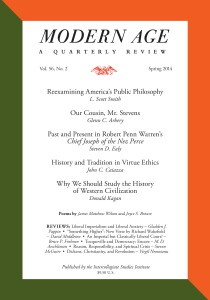
Founded in 1957 by Russell Kirk — the greatest St Andrean of the twentieth century — Modern Age is an academic journal which Wikipedia describes as ‘traditionalist, localist, against most military interventions,’ as well as critical of neo-conservatism and generally sympathetic to religious orthodoxy.
Its archive over the past sixty years provides articles and essays of great value by Erik von Kuehnelt-Leddihn, Virgil Nemoianu, Lee Congdon, Pierre Manent, and others. Take, for example, Lee Congdon on ‘Conservatism, Christianity, and the Revitalization of Europe’.
A rewarding, more scholarly read, with footnotes that will lead you elsewhere.
These three will prove worthwhile reading for any intellectual of sound principles, but are there any other honourable mentions?
My weekly workplace reads are The Spectator and The Economist which are useful for keeping tabs on things in general.
I have to admit I do read Monocle every month. While it’s aimed at wealthy jetsetters rather than our own constituency of cosmopolitan conservatives living in genteel poverty the magazine nonetheless combines an exacting stylistic excellence with an admirably broad focus.
First Things I would read every month but it doesn’t seem to be available anywhere in London except by subscription.
Two or three times a year I pick up The Art Newspaper, another superbly put-together periodical. Fr Christopher Colven of St James, Spanish Place, writes for it often, as it happens.
Interesting Things Elsewhere
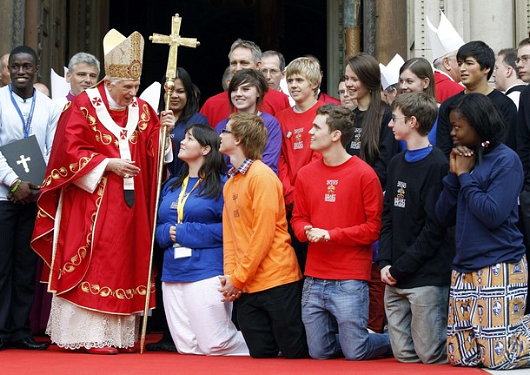
Benedict and Britain
The papal visit began in Scotland, and the smaller setting (Scotland has just five million people, fewer than London alone) proved a wiser starting point of the pontiff’s trip to Great Britain. “Would the first day have been the success it was if it had taken place in England?” asked William Oddie. “Would the papal chemistry have worked so soon in London, that vast and engulfing megalopolis, if the reception by Her Majesty had taken place in the impersonal splendours of Buckingham palace rather than in that ancient architectural wonder Holyrood house (whose very stones are a testimony to its Catholic origins) and if the Popemobile ride through the streets afterwards had been down the Mall?”
Damian Thompson has argued that the papal visit has proved a triumph for Benedict and a humiliation for the secular-humanist crowd. The Daily Telegraph blogs editor and Catholic Herald editor-in-chief says that the Pope’s natural shyness has worked to his advantage, while the former Spectator editor Dominic Lawson argued in the Independent that Benedict’s unpolitical nature gives him a popular appeal.
The volume and biliousness of the media’s campaign against Benedict XVI has actually backfired and turned the lukewarm into pope-welcomers (like Kate Hoey MP, reports Christina Odone). Another blogger reported the influence a television programme produced by the gay activist and sometime paedophilia sympathiser Peter Tatchell that was broadcast just before the Pope’s arrival:
‘Are you going tomorrow?’ I asked. ‘Yes, I am,’ she replied. ‘I wasn’t going to at first, because it’s a long day, but when I saw that rubbish last night on the telly, I changed my mind. I’m don’t care if I die there; I’m going.’
Meanwhile Mark Dowd, another homosexual, was determined to be even-handed in his documentary “Benedict: Trials of a Pope”, and his broadcast was well-received. The filmmaker wrote in the Catholic Herald “when you have to make a one-hour programme on one of the most clever and gifted people on the planet you have to look behind the headlines and the angry rants on the blogosphere. In short, you have to do justice to the man as best as you can.”
Hilary White had a chat with barrister and Catholic Union chairman Jamie Bogle, who argued that the visit has taken the wind out of the sails of Benedict’s enemies.
“Jamie also pointed out that the protesters were having a bit of fun with the numbers,” Hilary writes. “A friend in Vancouver said that 25,000 turned out for the demonstration. The National Secular Society said it was ‘between 10 and 12,000’. But Jamie told me he had spoken with some of the cops present, and they said it was no more than 2,000.”
It was like a scene from 1984
Atheist Brendan O’Neill reported being disturbed by the anti-papal demonstrators, reporting that there is “a sharp authoritarian edge” to the radical pope-haters. “Things turned ugly outside Downing Street when Terry Sanderson of the National Secular Society branded the pope an ‘enemy of the state’, giving rise to the cacophonous chant: ‘GO HOME POPE, GO HOME POPE.’ It was like a scene from 1984. I have been on many a radical demo that has challenged the branding of some group or individual as ‘enemies of the state’; but this is the first radical demo I’ve been on where the protesters themselves demanded the silencing and even expulsion from Britain of someone they decreed to be an ‘enemy of the state’. Even one-time ‘enemies of the state’ – the so-called queers and the old left – were using that criminalising phrase, that piece of political demonology, to chastise the pope. It was the world turned utterly upside down.”read more
Also: The campaigners against the pope’s visit have more in common with the fanatical Inquisitors of old than with Enlightened liberal humanists, says Frank Furedi.
The conservative case for rail
File this one under “things we always knew and are glad someone agrees”: the dissident conservative fortnightly The American Conservative presents a symposium of articles about getting the USA back on the rails. William Lind attempts to destroy the myth of public-transport-hating conservatives while attacking the rampant subsidisation of federal highways. Former Milwaukee mayor John Norquist says the Right shouldn’t surrender the cities to the Left. Glen Bottoms does the numbers on the return to rail and tries to figure out how much it will cost. Finally, John Robert Smith argues that there’s still some life in America’s Main Streets. Christopher Leinberger discusses how private development can fund public infrastructure. read more
The Thomist constitution
St. Thomas Aquinas, the “Dumb Ox”, stated that “all should take some share in the government: for this form of constitution ensures peace among the people, commends itself to all, and is most enduring”. Aelianus muses on a Thomistic view of government, explores the pros and cons of monarchy, aristocracy, democracy, and ponders the political position of the family in society. read more
Swedish under threat in Finland
Swedish was historically the language of Finland’s nobility and intelligentsia, as well as of the country’s ethnic Swedish minority — Finland’s first president and greatest hero, Field Marshal Mannerheim, could barely even speak Finnish. But while the Scandinavian land is still officially bilingual in education and government, the 5.5% of the population who are Swedish-Finns is increasingly viewed as “the world’s most pampered minority”. read more
The Südtirol success story
Amid the warnings of doom and gloom ahead for the Italian economy, one province has almost full employment and a healthy economy, not to mention a governor who has ruled for over twenty years. “We are living in the promised land,” — Südtirol. read more
Interesting Things Elsewhere
This determined Celt is gunning for Thabo
Kevin Bloom | The Daily Maverick
Ireland’s 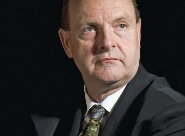 Paul O’Sullivan took over as head of security at South Africa’s airport authority in 2001, and discovered something was wrong from the start: why didn’t the policeman on duty want to take a statement about the attempted theft of his baggage? Since then, his life has been a series of bizarre events leading him ever deeper into the most complex criminal network of the post-apartheid era, including the recent the trial and conviction of former national police chief Jackie Selebi. But O’Sullivan’s determined quest to expose crookedness isn’t over yet, and he now has former president Thabo Mbeki in his sights. read more
The apparatus of state will simply ignore the government
‘Inspector Gadget’ | Police Inspector Blog
Police across England were told by the responsible minister of the democratically elected government that they must not chase performance targets any longer. “I can also announce today that I am also scrapping the confidence target,” said the Home Secretary, Theresa May, “and the policing pledge with immediate effect”. But the ‘senior management team’ of the West Yorkshire Police have stated they will go on no matter what the government says. read more
Has Christian Democracy reached a dead end?
Jan-Werner Mueller | Guardian.co.uk
The commentator completes a brief survey of the struggles of Christian Democracy in Germany and Europe today. The French leader Georges Bidault claimed that Christian Democracy meant “to govern in the centre, and pursue, by the methods of the right, the policies of the left”. But Christian Democracy’s brief French moment in the 1950s didn’t survive the return of de Gaulle, and Christian Democratic parties on the continent today face an existential crisis. read more
Also: Monsignor Ignacio Barreiro’s talk at the Roman Forum’s 2010 Summer Symposium, entitled The Problem of Christian Democracy will be made available online in audio form sometime in the coming months.
Deep in Shanxi, the most Catholic village in China
Anthony E. Clark | Ignatius Insight
Church after church dot the landscape and high steeples rise above small villages as they do in southern France. Passing through a narrow side road one arrives and is welcomed by three great statues at the village entrance: St. Peter holding his keys is flanked by Saints Simon and Paul. Thirty minutes before Mass the village loudspeakers, once airing the revolutionary voice of Mao and Party slogans, now broadcasts the rosary. Welcome to Liuhecun, the most Catholic village in China. read more
Look for me in the Cotswolds.
Dino Marcantonio
The apologists for modernist architecture have tried for a century to gain public acceptance of and appreciation for their horrors. While the elites have almost overwhelmingly been converted, the general populace around the world still sees that the Emperor has no clothes, and almost always prefers architecture that reflects the tried and true, the local and the natural. Alain de Botton, the Swiss essayist, ‘pop philosopher’, and former ‘writer-in-residence’ at Heathrow Airport, is the latest to give it a go, this time in the pages of the modernist Architectural Record. Dino Marcantonio provides a most useful fisking. read more
Canada is a French country
Andrew Coyne | Maclean’s
At the recent Canada Day celebrations on Parliament Hill, Canadian PM Stephen Harper spoke of “the steadfast determination and continental ambition of our French pioneers, who were the first to call themselves ‘Canadians.’” At other times he has spoken of Canada as having been “born in French,” of French as “Canada’s first language,” and, most famously, of Quebec City as “Canada’s first city,” its founding in 1608 as marking “the founding of the Canadian state.” While the sentiment may seen anodyne, moreover, the implications are radical. read more
Interesting Things Elsewhere
Copernicus re-buried: an interesting but misleading story
Phil Lawler | catholicculture.org
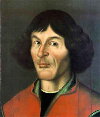 An interesting AP story is making the rounds this week, reporting that the Catholic Church has finally given due honors to Copernicus. Unfortunately the story is chock-full of statements that are severely misleading if not downright wrong. Start with the opening sentence… read more
Britannia still rules the waves
Rian Malan | The Daily Telegraph
Natal was founded in the early 1840s by Sir Benjamin d’Urban on a stretch of elephant-infested bush. Some would say d’Urban stole the land from the Zulu kingdom, but the occupiers of record in 1843 were Boer Voortrekkers, who reloaded their ox wagons and headed back into the wild interior rather than submit to Queen Victoria. English-speaking Natalians heaved a sigh of relief and proceeded to turn their territory into a shrine to straight bats, and stiff upper lips. read more
Sarkozy’s arch rival Dominique de Villepin sets up rival party
conservativehome
 Dominique de Villepin, the eloquent opponent of the Iraq war and leader of the anti-Sarkozist centre-right in France, has set up a new political movement to bring the French right back to its sense. De Villepin used the launch to attack France’s involvement in the Afghan debacle, and Sarkozy’s decision to bring France back into the NATO military structure. ConservativeHome’s International section writes about the new movement with a sceptical eye. read more
Amadeo Guillet
Obituary | The Daily Telegraph
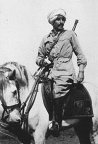 Daybreak on January 21, 1941: 250 horsemen erupted through the morning mist at Keru, cut through the 4/11th Sikhs, flanked the armoured cars of Skinner’s Horse and then galloped straight towards British brigade headquarters and the 25-pound artillery. At a distance of 25 yards they fired, cutting swathes through the galloping horses but also causing mayhem as the shells exploded amid the Sikhs and Skinner’s Horse. After a few more seconds the horsemen disappeared into the network of wadis that criss-crossed the Sudan-Eritrean lowlands. read more
Are Czechs the least religious of all?
Dana Hamplová | guardian.co.uk
This claim is usually based on the sociological surveys and census data which show that only a small proportion of Czechs goes regularly to church and that most of the Czech Republic’s population does not report even a formal affiliation to any church. But the idea that Czechs are almost completely indifferent to any religion is not accurate. read more
Search
Instagram: @andcusack
Click here for my Instagram photos.Most Recent Posts
- Brunel’s Unbuilt Capitol February 3, 2026
- Cricket at Fordham January 27, 2026
- Palacio Barolo Revisted January 14, 2026
- Learning to Love Liguria January 14, 2026
- Crux Alba No. 2 January 13, 2026
Most Recent Comments
Book Wishlist
Monthly Archives
Categories