Great Britain
About Andrew Cusack
 Writer, web designer, etc.; born in New York; educated in Argentina, Scotland, and South Africa; now based in London.
 read more
News
Blogs
Reviews & Periodicals
Arts & Design
World
France
Mitteleuropa
Knickerbockers
Argentina
The Levant
Africa
Cape of Good Hope
Netherlands
Scandinavia
Québec
India
Muscovy
Germany
Academica
London Lately
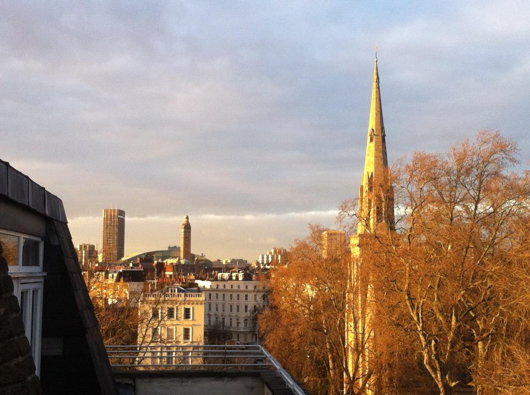
From a Pimlico rooftop, Friday afternoon.
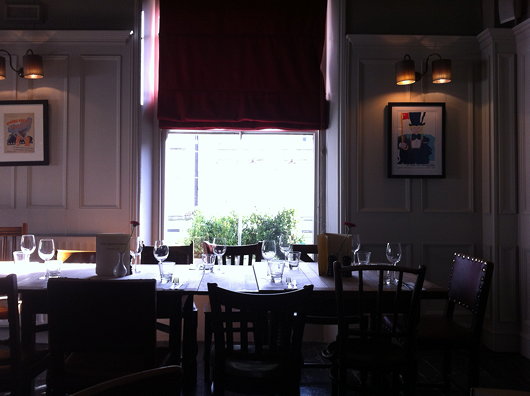
At lunch, Friday.
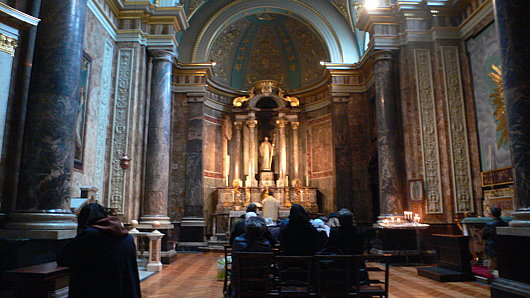
A Saturday Mass in St Wilfrid’s Chapel, the Oratory.
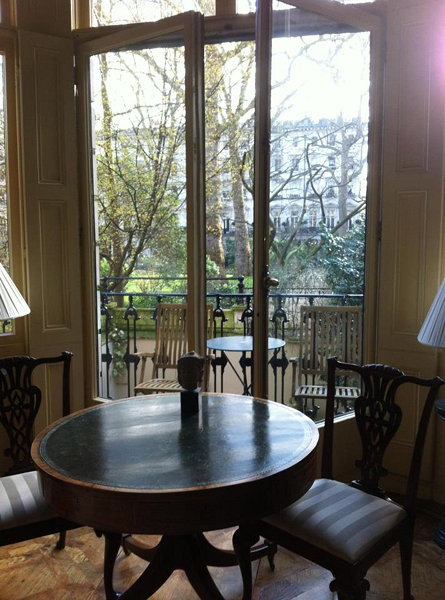
A surprisingly sunny afternoon, yesterday in Ennismore Gardens.
A Rainy Day in Winchester
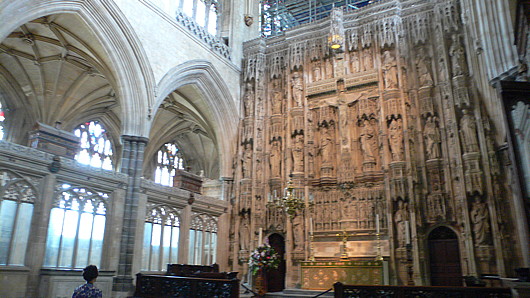
IT WAS LATE summer, neither particularly warm nor cold, and a bit rainy. I hadn’t seen Nicholas in a while but he wasn’t particularly keen on travelling into London. “Why not meet in Winchester?” he suggested, and, never having been to England’s former capital, I thought it was a good idea. I popped on the tube to Waterloo, got on a train, and in no time at all was in the county town of Hampshire. It’s a humanely size town, admirably located, and most famous for its medieval cathedral.
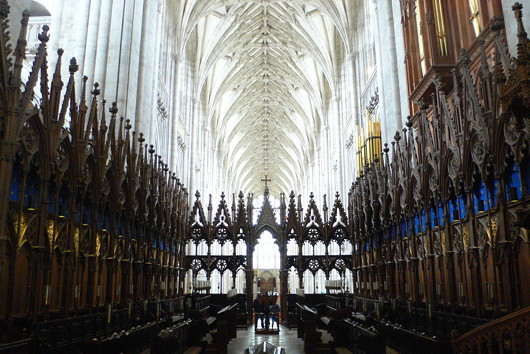
The thieving Protestants, not content with stealing all the cathedrals we built throughout the width and breadth of the land, highten the insult by charging admission to these former shrines and places of worship. I had arranged to meet Nicholas in the Cathedral, though, and the blighters got a good £6.50 out of me. I had a good wander round, though.

These mortuary chests contain the remains of the Saxon royalty of the kingdom of Wessex and later England.
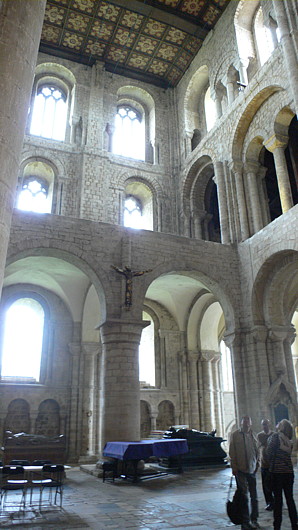
Norman architecture is woefully underappreciated, and might form a useful style to return to today given its relative simplicity. So much Norman architecture was destroyed and replaced by Gothic during later periods of medieval prosperity, but at Winchester the Norman transepts remain.
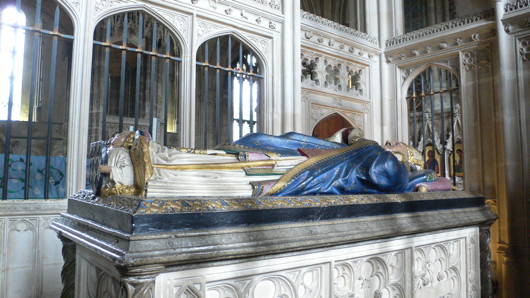
William of Waynflete, buried here, was a high-flyer in his day. He was, varyingly, Bishop of Winchester, Headmaster of Winchester College, Provost of Eton, Lord Chancellor of England, and founded Magdalen College, Oxford. Not a bad innings.
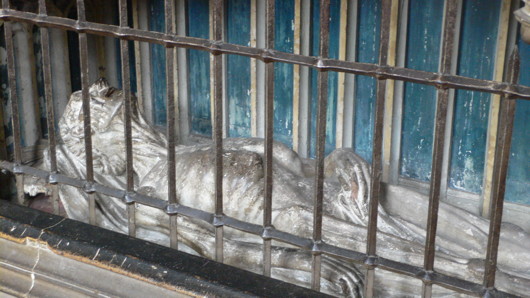
Richard Foxe chose a more macabre memorial, but enjoyed similar success in this world: he was Bishop of Exeter, then of Bath & Wells, then of Durham, and finally of Winchester. He was Lord Privy Seal and founded Corpus Christi College at Oxford. Foxe and Erasmus sometimes wrote to eachother, and his elaborate crozier is on display at the Ashmolean.
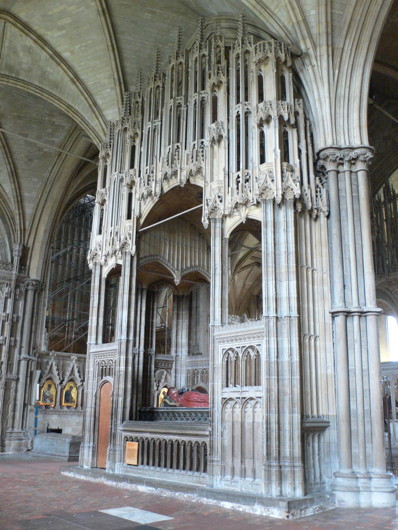
The tomb of Henry Cardinal Beaufort is my favourite memorial in the cathedral. Beaufort — a Plantagenet — was Dean of Wells, Chancellor of the University of Oxford, Bishop of Lincoln, Lord Chancellor of England, and finally Cardinal Bishop of Winchester. He was a sometime papal legate for Germany, Hungary, and Bohemia, and most famously presided over the trial of St Joan of Arc.
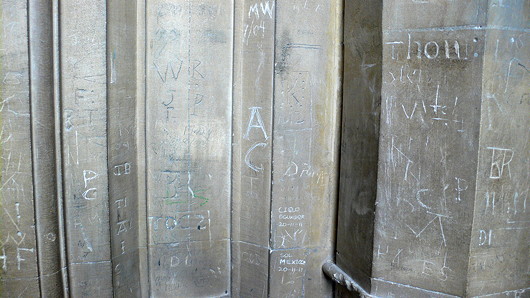
One of the walls was inscribed with graffiti.
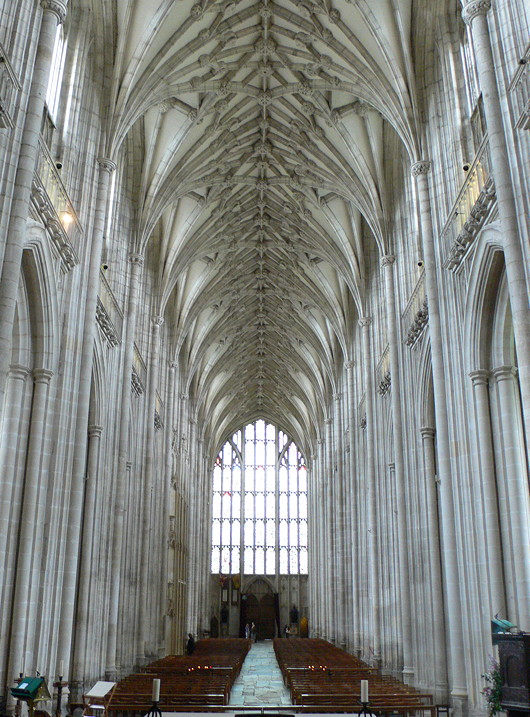
The cathedral is also the final resting place for the earthly remains of Hampshire native Jane Austen, but nevermind that.
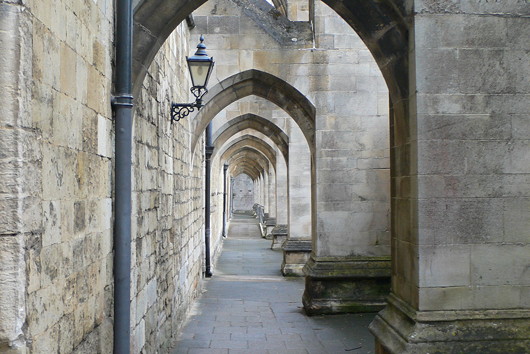
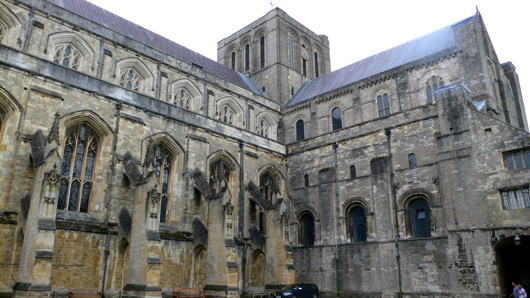
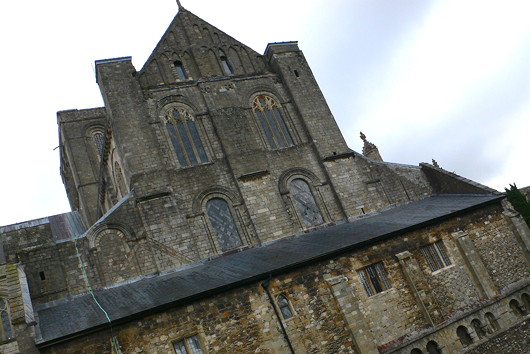
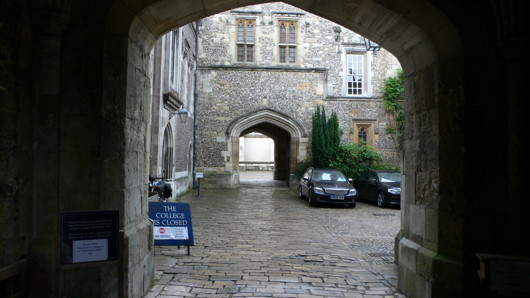
Tours of the College were available, but we decided to leave it for another visit, and went on a wander in the direction of the Hospital of St Cross.
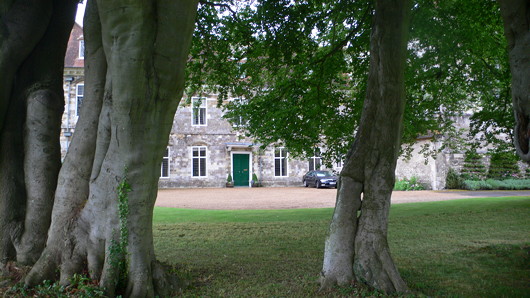
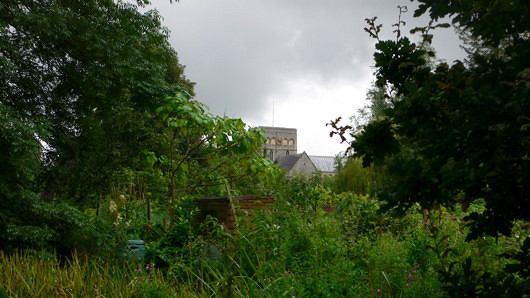
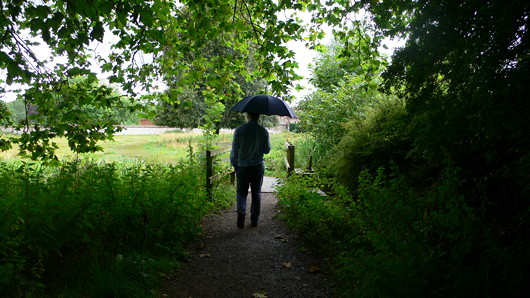
The Hospital of St Cross and Almshouse of Noble Poverty is the oldest charitable institution in England and the largest medieval almshouse. The church could be a small cathedral in and of itself, but as we arrived an interment was taking place, so we thought it best that it, too, was left for another day.
A Bill Committee in the Commons
A Bill Committee meeting in one of the richly decorated committee rooms of the Palace of Westminster. The Minister is standing, rattling on in an explanatory defence of his government’s bill. Ostensibly these committees exist so that MPs can examine legislation in line-by-line detail and raise questions about whatever points or aspects they believe might cause problems if enacted.
“The question is that Clause 15 stands as part of the Bill.”
The Chairman, an MP of considerable experience, presides, assisted by a retinue of civil servants. He chews a pen and stokes his brow, frustrated by the boredom of the subject at hand. He is perhaps thinking of the weekend and the extreme unlikeliness that he will get down to the coast, and his sailboat, given the inclement weather.
A Scottish Member rises on a Point and the Minister yields the floor. Concerns are expressed about the precise meaning of Subclause 36 Paragraph C and insinuations made about potential costs. The Minister rises and suggests the Member’s criticism is excessively harsh. He then concedes he may have been imprecise in his explanation of the process involved in Subclause 36 Paragraph C.
The Doorkeeper, absurdly and arcanely attired in white tie, tails, and with the royal arms hanging from a gold chain round his neck, wears thick-rimmed glasses and leans back on a desk in a carefree fashion, blissfully paying little attention to the point the Hon. Gentleman has made in response to the proposed amendment.
“Just for the sake of clarity, we are not now talking about Amendment 13?”
“I have no intention of moving Amendment 13.”
“On a Point of Order then, Mr Chair, is it proper that the Member discuss Amendments 21 and 26 when he is not moving Amendment 13, which is the first Amendment to be considered?”
The Chairman corrects that it is perfectly alright for the Member to discuss whichever amendment he would like.
There are at least eleven civil servants in the room. One on the side hands a paper to another. He reads it and nods approvingly before passing it on to the civil servant next to the Chair. Another Member rises to discuss Amendment 54 Clause C.
“There’s an important role for an independent body to exercise scrutiny over this area and it would be wise for it to have a statutory basis.”
The entire proceedings are overshadowed by the continual sound of shuffling papers. One Member doodles on the day’s order-paper. A journalist leaves. The Member stops doodling and consults his iPhone. Then the Minister is grateful for that point. He is surprised but aware, since he was given this junior ministerial role, by the frequency with which this matter has arisen and has spoken before the relevant Select Committee.
Another Member’s face is illuminated by the glow of the iPad he is leaning over.
“Now before I become too Churchillian,” the Minister continues, “I think we’d better turn to the matter of the Amendments. Now the Honourable Member has, perhaps understandably, raised the point…”
A female Member smiles and shares a jest with one of her party colleagues. The Doorkeeper’s shift ends and he is replaced by one of his bearded confrères. The civil servant beside the Chairman folds a paper and stares unthinkingly into the distance.
“In respect for the Hon. Gentleman’s desire for continuing debate and discussion with the relevant authorities…”
“He hasn’t addressed my point about Subsection 2!”
The portly Doorkeeper moves with surprising adroitness in delivering a note from a Member to a civil servant across the room. The Minister’s PPS hands him a relevant paper. The Chairman smiles in response to one of the Minister’s light-hearted remarks.
“I’m sure the Minister will agree that this is not the beginning of the end but merely the end of the beginning.”
“If only!” a Member interjects.
It is 3:32pm. The MPs will be here for hours yet.
Little Ben
 WALKING THROUGH Victoria recently, I was horrified to see the recent renovations and street improvements have led to the disappearance of ‘Little Ben’, the small Victorian clocktower that sat in a traffic island halfway between Westminster Cathedral and Victoria Station. Little Ben is a convenient meeting place in a district that is rather uninspiring and surprisingly lacking in conveniences.
Why, for example, is there no decent pub in Victoria? If you need a meal, Grumbles of Pimlico is walking distance, and they treat you well at Il Posto. But a decent pub atmosphere is not to be had, unless you fancy The Pub Formerly Known as the Cardinal (now styling itself as ‘The Windsor Castle’).
Happily, a simple Google search reveals that Little Ben’s absence is merely temporary: indeed, Little Ben is taking a rest-cure. The goodly folk at Wessex Archaeology have informed us as such.
The clock owes its creation to Gillet & Johnston of Croydon, who built Little Ben in 1892 and erected it in the middle of Victoria Street. It fell victim to a road-widening scheme and was removed in 1964 but, after sitting in storage unappreciated for some years, it was finally renovated and restored to its original location in 1981.
Transport for London is currently working on a significant upgrade to Victoria Underground Station, including a rearranged traffic alignment on surface level, in addition to new entrances and exits and a great big whopping ticket hall sous la terre. When all is finished and done and in tip-top shape, Little Ben will be returned to his traditional location, and some semblance of order will return to this sector of the most unglamorous Victoria Street.
St Andrew’s & Blackfriars Hall, Norwich
NORWICH, THAT CITY of two cathedrals, is known for Colman’s Mustard and the television cook Delia Smith (herself Catholic). Unknown to me until recently is that the capital of one of England’s greatest counties is also home to the most complete Dominican friary complex in all of England. The Dominicans had arrived in Norwich in 1226 — the swiftness with which they reached the city comparative to the foundation of the Order of Preachers is indicative of England’s inherent inclusion in the Catholic Europe of the day.
From 1307, the OPs occupied this particular site in Norwich until the Henrician Revolt, when the friary was dissolved and the city’s council purchased the church to use as a hall for civic functions. The nave became the New Hall (later St Andrew’s Hall) while the chancel was separated and used as the chapel for the city council and later as a place of worship for Norwich’s Dutch merchants. (The last Dutch service was held in 1929).
The complex has been put to a wide variety of uses. Guilds met here, as did the assize courts. It was used as a corn exchange and granary. King Edward VI’s Grammar School began here. Presbyterian and Baptist non-conformists worshipped in various parts during the late seventeenth century. William III had half-crowns, shillings, and sixpences minted here. In 1712, the buildings became the city workhouse until 1859, when a trades school was established the continues today elsewhere as the City of Norwich School. The East and West Ranges are now part of the Norfolk Institute of Art and Design. (more…)
Fra Freddy, Rest In Peace
Yesterday, I was very saddened to hear of Fra Freddy’s death. Fra Freddy was a legendary character whom I was introduced to in my first year at St Andrews. He was invited to speak to the Catholic students most years on some subject or another — an introduction to prayer or a lenten meditation. I was quite pleased when he was so taken with a poster I designed to advertise one of his talks that on his way back to Edinburgh he nipped out of the car at the last minute and grabbed a large copy. Fra Freddy was an old-fashioned stick-in-the-mud with a good sense of humour, but he also had the capability to surprise with a kind word when you least expected it.
Fra Fredrik John Patrick Crichton-Stuart was born September 6, 1940 to Lord Rhidian Crichton-Stuart (son of the 4th Marquess of Bute) and his wife Selina van Wijk (daughter of the Ambassador of the Queen of the Netherlands to the French Republic). He was raised in Scotland and North Africa (where his father was British Delegate to the International Legislative Assembly of Tangier) and was educated first at Carlekemp in North Berwick and then at Ampleforth. He joined the Order of Malta in 1962, later being named the Delegate for Scotland & the Northern Marches. In 1993 he was appointed Chancellor of the resurrected Grand Priory of England. Fra Freddy became Grand Prior himself when his cousin, Fra Andrew Bertie, died in 2008 and was succeeded by the then-Grand Prior of England, Fra Matthew Festing.
Fra Freddy was a devoted follower and promoter of the traditional form of the Roman rite. He joined Una Voce Scotland in 1996 and became secretary in 2000. Two years later he was named councillor and senior vice-president of FIUV, the International Federation ‘Una Voce’, and briefly served as its president in 2005.
Over the past year or so Fra Freddy had been varying ill but seemed to recover. I am told he was found dead yesterday morning, still clasping his breviary. He was well-known in Edinburgh and beyond, and he will be missed by his many friends as well as those who worked and volunteered with him or interacted with him in his charitable activities.

FREDERICK JOHN PATRICK CRICHTON-STUART
Grand Prior of England
of the
Sovereign Military & Hospitaller Order of St John
of Jerusalem of Rhodes and of Malta
6 September 1940 – 14 June 2011
Eternal rest grant unto him, O Lord,
and let perpetual light shine upon him.
May he rest in peace.
Amen.
The Commons in the Lords
IT WAS THE NIGHT of 10 May 1941. For nine solid months the Luftwaffe had thrown everything it had at the people of London, as Hitler hoped to bomb the English into despair and surrender. By early May, the Nazis realised the campaign had failed, and resources had to be directed elsewhere. The Blitz had to end, but on its final night, it hit one of its most precious targets. Twelve German bombs hit the Palace of Westminster that night, with an incendiary striking a direct hit at the House of Commons. The locus of Britain’s parliamentary democracy was consumed by flame and completely destroyed. (more…)
The South Kensington Museum
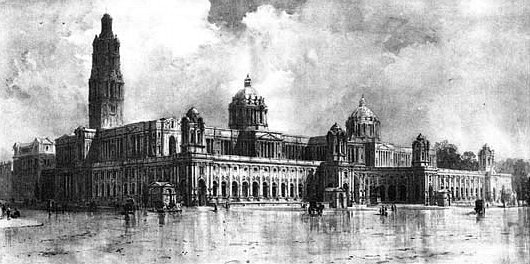
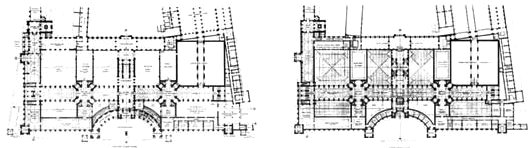
ANOTHER unbuilt project: this time a plan for completing the South Kensington Museum (or the Victoria & Albert as it’s now called) in the part of London which has become known as ‘Albertopolis’. The museum grew incrementally from its first foundation as the Museum of Manufactures after Prince Albert’s Great Exhibition of 1851. 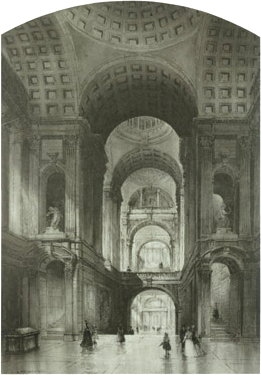 The first design for the museum at its current site was by Gottfried Semper, but the plan was rejected as being too expensive. And so over the years the facilities grew incrementally and according to to haphazard plans. In the 1890s, eight architects were invited to submit proposals for a grand scheme completing the site under a unified architectural plan.
The judges cited this plan, by John Belcher, as the most original of the eight submissions. It’s a splendid composition in high Edwardian neo-baroque. The duality of the main domes is a particular confident touch, and harks back to Greenwich. Belcher’s baroque conception was not just an external factor: his interiors featured vast, sweeping spaces that would have been impressively monumental and reflecting the power and influence of the British Empire at its presumed cultural zenith.
“Although unsuccesful in the competition,” writes Iain Boyd Whyte of Edinburgh University, “this project attracted considerable praise in the professional journals for the plasticity of the main street facade and for its grand, Michelangelesque domes.” While the judges appreciated Belcher’s design, they worried about the cost of its execution, and awarded first prize to Aston Webb instead. His scheme was inaugurated in 1899 by the Queen-Empress, who renamed the institution ‘the Victoria & Albert Museum’ simultaneously.
I wonder if Belcher’s design would have gone better with the neighbouring Brompton Oratory, or if the Oratory benefits from having the V&A in a differing, brick-based style.
South Africa in the New Year’s Honours
One CMG and three MBEs show links between Britain and South Africa
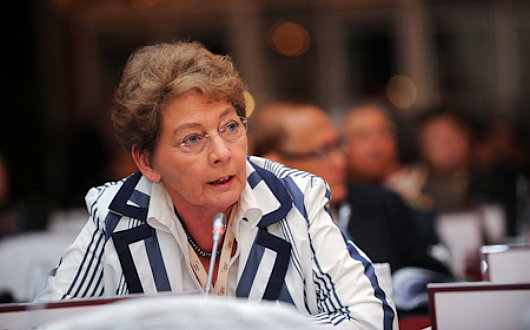
Despite breaking its constitutional links with the Crown over fifty years ago (c.f. here), South Africa continues to enjoy close social, economic, and cultural ties with Great Britain, a fact borne out in the recent New Year’s Honours list. Of the numerous individuals awarded for their public service, four from this year’s list show the relationship between these two countries. Most prominent is Fleur Olive Lourens de Villiers (above), who has been named a Companion of the Most Distinguished Order of St. Michael and St. George. Ms. de Villiers, a graduate of Pretoria & Harvard, is Chairman of the Board of Trustees of the London-based International Institute for Strategic Studies. From 1960 onwards, she has been a theatre critic, economics correspondent, leader writer, columnist, political correspondent, newspaper editor, and travelling correspondent around the world, in addition to working with the De Beers Group and Anglo-American. She was one of the four contributors to the Institute of Economic Affairs’ 1986 study Apartheid: Capitalism or Socialism? which examined the role of the state and its race policy in the South African economy. (more…)
Diary
HOW MANY COUNTRIES have you been to? As for myself, not many, perhaps a dozen, although I’ll concede that that dozen is spread over four continents. I know people who have been to two or three times as many countries as I have, particularly if they’ve travelled through the Continent, where you can notch up several in a single day. My travel plans tend to be those of saturation rather than spread: I visit places and start relationships with them and then keep coming back.
And how do you decide that you’ve “been” to a country? There are various methods of determination. (more…)
Remembrance 2010
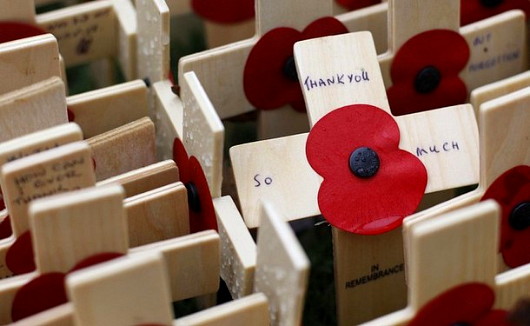
IN A WORLD utterly deprived of solemnity, Remembrance Day (and Remembrance Sunday) provides one of the few opportunities for silence, reflection, and appreciation. The First World War was truly a war without victory, the war that Europe lost. Its end is marked not with marching bands proclaiming triumph but with two minutes’ silence. How appropriate that the guns of the Great War finally fell silent on Martinmas day, the feast of the patron saint of soldiers, in this gloomy time of year. On this day there is no triumph nor victory, no vain pomp and glory of this world, but instead a deep respect for the awesome sacrifice of the fallen — a respect whose only expression can be found in that silence. (more…)
The Festival of Remembrance
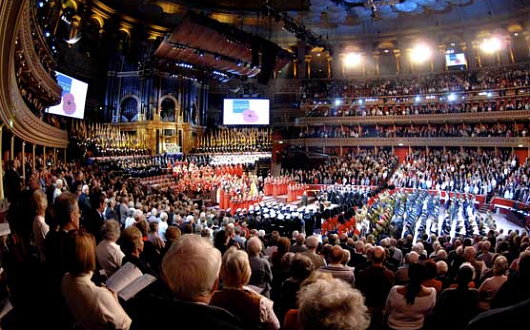
The Royal British Legion, the organisation which supports Britain’s veterans, organises the annual Festival of Remembrance at the Royal Albert Hall in London. The first half of the event is part military tattoo, part popular concert, but the second half is a Christian service of remembrance for the dead of all wars. The Festival takes place the Saturday before Remembrance Sunday: a 2:00pm matinee for the general public, and a 7:00pm one for veterans, servicemen, and their families in the presence of the Royal Family. The 7:00pm festival is broadcast on BBC1 every year, but sadly is not yet simulcast via internet for those abroad. Here are a few YouTube clips from different parts of the service in the past two years. (more…)
Windsor

The word conjures up majestic imagery: Windsor — the castle viewed from the Long Walk and the Royal Standard snapping above the Round Tower. At the same time, it has a strange tinge of domesticity to it, an almost middle-class quality. Perhaps a 1950s development of semi-detached suburban houses along a ‘Windsor Drive’. What on earth does the word mean? (more…)
Interesting Things Elsewhere
Benedict and Britain
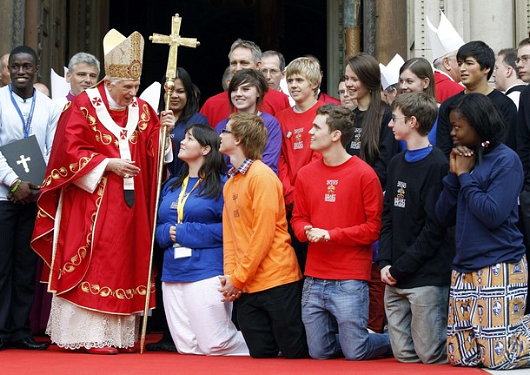
The papal visit began in Scotland, and the smaller setting (Scotland has just five million people, fewer than London alone) proved a wiser starting point of the pontiff’s trip to Great Britain. “Would the first day have been the success it was if it had taken place in England?” asked William Oddie. “Would the papal chemistry have worked so soon in London, that vast and engulfing megalopolis, if the reception by Her Majesty had taken place in the impersonal splendours of Buckingham palace rather than in that ancient architectural wonder Holyrood house (whose very stones are a testimony to its Catholic origins) and if the Popemobile ride through the streets afterwards had been down the Mall?”
Damian Thompson has argued that the papal visit has proved a triumph for Benedict and a humiliation for the secular-humanist crowd. The Daily Telegraph blogs editor and Catholic Herald editor-in-chief says that the Pope’s natural shyness has worked to his advantage, while the former Spectator editor Dominic Lawson argued in the Independent that Benedict’s unpolitical nature gives him a popular appeal.
The volume and biliousness of the media’s campaign against Benedict XVI has actually backfired and turned the lukewarm into pope-welcomers (like Kate Hoey MP, reports Christina Odone). Another blogger reported the influence a television programme produced by the gay activist and sometime paedophilia sympathiser Peter Tatchell that was broadcast just before the Pope’s arrival:
‘Are you going tomorrow?’ I asked. ‘Yes, I am,’ she replied. ‘I wasn’t going to at first, because it’s a long day, but when I saw that rubbish last night on the telly, I changed my mind. I’m don’t care if I die there; I’m going.’
Meanwhile Mark Dowd, another homosexual, was determined to be even-handed in his documentary “Benedict: Trials of a Pope”, and his broadcast was well-received. The filmmaker wrote in the Catholic Herald “when you have to make a one-hour programme on one of the most clever and gifted people on the planet you have to look behind the headlines and the angry rants on the blogosphere. In short, you have to do justice to the man as best as you can.”
Hilary White had a chat with barrister and Catholic Union chairman Jamie Bogle, who argued that the visit has taken the wind out of the sails of Benedict’s enemies.
“Jamie also pointed out that the protesters were having a bit of fun with the numbers,” Hilary writes. “A friend in Vancouver said that 25,000 turned out for the demonstration. The National Secular Society said it was ‘between 10 and 12,000’. But Jamie told me he had spoken with some of the cops present, and they said it was no more than 2,000.”
It was like a scene from 1984
Atheist Brendan O’Neill reported being disturbed by the anti-papal demonstrators, reporting that there is “a sharp authoritarian edge” to the radical pope-haters. “Things turned ugly outside Downing Street when Terry Sanderson of the National Secular Society branded the pope an ‘enemy of the state’, giving rise to the cacophonous chant: ‘GO HOME POPE, GO HOME POPE.’ It was like a scene from 1984. I have been on many a radical demo that has challenged the branding of some group or individual as ‘enemies of the state’; but this is the first radical demo I’ve been on where the protesters themselves demanded the silencing and even expulsion from Britain of someone they decreed to be an ‘enemy of the state’. Even one-time ‘enemies of the state’ – the so-called queers and the old left – were using that criminalising phrase, that piece of political demonology, to chastise the pope. It was the world turned utterly upside down.”read more
Also: The campaigners against the pope’s visit have more in common with the fanatical Inquisitors of old than with Enlightened liberal humanists, says Frank Furedi.
The conservative case for rail
File this one under “things we always knew and are glad someone agrees”: the dissident conservative fortnightly The American Conservative presents a symposium of articles about getting the USA back on the rails. William Lind attempts to destroy the myth of public-transport-hating conservatives while attacking the rampant subsidisation of federal highways. Former Milwaukee mayor John Norquist says the Right shouldn’t surrender the cities to the Left. Glen Bottoms does the numbers on the return to rail and tries to figure out how much it will cost. Finally, John Robert Smith argues that there’s still some life in America’s Main Streets. Christopher Leinberger discusses how private development can fund public infrastructure. read more
The Thomist constitution
St. Thomas Aquinas, the “Dumb Ox”, stated that “all should take some share in the government: for this form of constitution ensures peace among the people, commends itself to all, and is most enduring”. Aelianus muses on a Thomistic view of government, explores the pros and cons of monarchy, aristocracy, democracy, and ponders the political position of the family in society. read more
Swedish under threat in Finland
Swedish was historically the language of Finland’s nobility and intelligentsia, as well as of the country’s ethnic Swedish minority — Finland’s first president and greatest hero, Field Marshal Mannerheim, could barely even speak Finnish. But while the Scandinavian land is still officially bilingual in education and government, the 5.5% of the population who are Swedish-Finns is increasingly viewed as “the world’s most pampered minority”. read more
The Südtirol success story
Amid the warnings of doom and gloom ahead for the Italian economy, one province has almost full employment and a healthy economy, not to mention a governor who has ruled for over twenty years. “We are living in the promised land,” — Südtirol. read more
Follow the Pope’s Visit
What are the best ways of following the Pope’s visit to Great Britain? The official website is offering a live webcast of all events, with highlights from the day interspersed between events. The Daily Telegraph is live-blogging the papal events each day, with frequent updates; today can be found here. The Catholic Herald is also live-blogging the Papal Visit, and updates on today’s events can be found here.
Check catholicherald.co.uk and telegraph.co.uk for more throughout the visit.
The Blitz was Wrong
In his latest column for the Mail on Sunday, the commentator and Orwell Prize winner Peter Hitchens shares his thoughts on the Blitz — the Luftwaffe’s bombing campaign over London that commenced sixty years ago this month. His comments have special relevance given the previous posts on andrewcusack.com regarding the immorality of the Hiroshima & Nagasaki bombings, and likewise of the intentional and deliberate targeting of civilian non-combatants. (more…)
Douglas Murray: In Order to Prevent the Use of WMDs, We Must Use WMDs
The slightly camp Old Etonian atheist neo-con Douglas Murray got himself into a bit of trouble recently when he and Baroness Deech unleashed a splenetic rant against Scotland and the Scots on BBC Radio 4. As head of the HFEA, Baroness Deech presided over the deaths of an untold number of humans in the embryonic stage of development, but it turns out that Mr. Murray (who is Scottish-born, curiously) has advocated hypothetical wholesale slaughter.
In 2007, Mr. Murray helped compose Towards a Grand Strategy for an Uncertain World: Renewing Transatlantic Partnership ostensibly written by Gen. Dr. Klaus Naumann (former Bundeswehr Chief of Staff), Gen. Prince John Salikashvili (Georgian prince and former U.S. Chairman of the Joint Chiefs of Staff), Field Marshal the Lord Inge (former U.K. Chief of the General Staff), Adm. Jacques Lanxade (former Chief of the French Navy), and Gen. Henk van den Breemen (accomplished organist and former Chief of Staff of the Dutch military).
This interesting document made a number of recommendations, the most intriguing of which is the suggestion that NATO should be prepared to make a pre-emptive nuclear strike… in order to prevent the use of weapons of mass destruction (“WMDs”) such as, er, nuclear weapons. You read that correctly: in order to prevent the use of WMDs, NATO should be prepared to use WMDs. You couldn’t make it up!
À bas l’Académie anglaise!
Proponents of an Academy of English are guilty of leaps of logic
IT STANDS AS one of the great monuments of autonomy and decentralisation that ever existed — the English language. But this great monument is under threat from an unlikely source: one sworn to defend it. The Queen’s English Society has announced plans to form an “Academy of English” along the lines of the Académie française for French or the Real Academia Española for Spanish.
“People misunderstand things if language is not used correctly,” argues Rhea Williams of the Queen’s English Society. “Misuse of apostrophes is the best-known problem, but people also don’t seem to know about tenses any more, for example, you hear ‘we was’ a lot.”
“An academy is needed because the correct information is not something that people can find easily. I suspect that many people in this country have easier access to a computer than to a reference book. They will be able to search without embarrassment, although people should be unafraid to say that they do not know what a word means.”
“At the moment, anything goes,” says Martin Estinel, the founder of the new academy. “Let’s set down a clear standard of what is good, correct, proper English. Let’s have a body to sit in judgment.”
No less an authority than Gerald Warner of Craiggenmaddie has waded into the debate, asserting on his Telegraph blog that “all champions of literacy will wish the society success.”
The complaints raised have a great deal of justification behind them, but the establishment of an academy does absolutely nothing to solve them. Indeed, the very complaint that the misuse of English is rampant and on the rise correctly presupposes that we are already able to discern proper English from improper English.
Rhea Williams and her confrers assume that when a person says “we was”, he is also claiming that it is right and proper English for him to say so. But, on the contrary, if you heard someone on the bus say “we was” and then inquired “Is that proper English?” he would almost certainly, if perhaps sheepishly, admit that it is not.
Similarly we hear complaints about “text speak”, as the shorthand version of English used in text messages (also known as SMSs) is called. But text speak similarly makes no claims to being acceptable as proper English. None would dream of preparing a job application, for example, in text speak.
Furthermore, the Queen’s English Society does not even use proper English on its website.
The Society aims to start using its BLOG [sic] again, following a period of inactivity. If you have something to say about the English language, in the context of education, employment, the media and feel able to contribute to the debate, we invite selected guest bloggers to send in their blogs.
“Blog” is a contraction of “web log” which has rapidly achieved legitimacy, and refers to the entirety of a blog, but the QES almost certainly used the word “blog” instead of what they actually meant, “blog entries”.
The very word “blog” itself is a perfect example of the threat to English that establishing an academy poses. I dislike the word myself, but its usefulness is inescapable. We needn’t refer to that wide and varying array of websites which are in fact an agglomeration of personal writings and links to other items of note — we can simply say “blogs”. An English Academy, on the other hand, might have banished “blog” from its fatuous version of what constitutes proper English early on, in which case the language would be all the poorer, or at least all the more cumbersome.
English speakers know good use from poor use, and when they’re not sure they overwhelmingly defer to those who do know. An Academy of English would do more harm than good and would solve none of the problems that would provoke its foundation. A massive and broad-based information campaign, on the other hand, paired with the return of authoritative teaching in schools, would aid the better use of English infinitely more than a body of pedants to settle disputes that do not exist. Pressure must be exercised against broadcasters, who spread improper English through a misguided attempt at authenticity, and we must also challenge the widespread perception of a social bias against proper speaking.
All these things can be done without any academy, and indeed establishing one would take energy away from these efforts. I’m sure therefore that, pace Mr. Warner, all champions of literacy will join me in shouting “À bas l’Académie anglaise!”
Our Cardinal Strikes Again
Cardinal O’Brien, Scottish Primate, Preaches at Newly Ordained Priest’s First Mass in the Extraordinary Form at St. Mary’s Cathedral Edinburgh
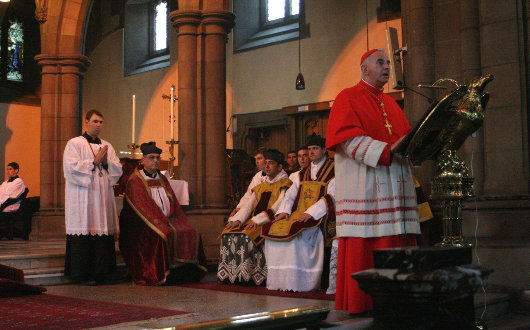
Keith Patrick O’Brien, the Primate of Scotland and Cardinal Archbishop of St Andrews & Edinburgh, this weekend preached at the first mass offered by the recently ordained Fr. Simon Harkins of the Priestly Fraternity of St. Peter. The mass was offered in the Cardinal’s own Cathedral of St. Mary in Edinburgh, Fr. Harkins’s own home town. The Very Rev. Fr Josef Bisig FSSP and the Very Rev. Fr. Franz-Karl Banauch FSSP assisted, and monks from the Transalpine Redemptorists of Papa Stronsay (who provided these photos) were also present, in addition to a number of diocesan priests.
I’ve spent the past eight years of my life divided between three (arch-) dioceses and I have to admit that Cardinal O’Brien is still the one I feel the greatest affection for. He’s an affable, uncomplicated fellow, and can be relied upon to defend what’s right in the media — unquestionably one of the best prelates in Britain today.
“I find him a much more approachable figure than other Scots prelates,” writes Damian Thompson, “less inclined to stand on his dignity despite (or perhaps because of) his red hat. I met him once at a party to relaunch the Scottish Catholic Observer, to whom he’s been a good friend; he didn’t sweep in surrounded by flunkeys, but hung around chatting in ordinary priest’s dress, reminding me a bit of Basil Hume in that respect.”
As it happens, I’m head of Cardinal O’Brien’s fan club on Facebook, which I encourage any Facebook users out there to join.
God bless our cardinal, and many congratulations to Fr. Hawkins! (more…)
The new Times of London online
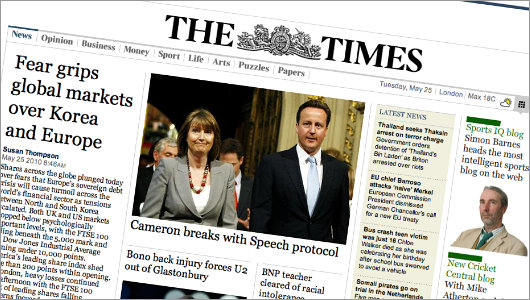
IAM MILDLY obsessed with newspaper design (in case you hadn’t noticed that already). But even those few newspapers that manage to either be attractive or worth reading (or indeed both) usually have websites that are astoundingly ugly. Check out the websites of The Scotsman, Le Monde, or the Times of India. They vary from awful to “meh”. The website of The Hindu is ugly, but is being replaced by a much more handsome design. Despite the over-sized ad on the index page, Die Zeit‘s website is on the handsome side of things, but that of the Neue Zürcher Zeitung is a mixed bag, some well-done details here, other poor ones there. I despise lefigaro.fr, especially since they started charging for their e-paper edition. The structure and flow of telegraph.co.uk is actually good, but the detailing isn’t and (like faz.net) it poorly reflects its newspaper’s personality.
Along then strolls the once-venerable Times (f. 1785), with a brand spanking new website at thetimes.co.uk. Clear, orderly, precise in its details, and just plain handsome in its overall design. There’s nothing particularly special or over-the-top about it; it’s just well done, but that is shockingly rare for newspapers today. (more…)
Search
Instagram: @andcusack
Click here for my Instagram photos.Most Recent Posts
- Brunel’s Unbuilt Capitol February 3, 2026
- Cricket at Fordham January 27, 2026
- Palacio Barolo Revisted January 14, 2026
- Learning to Love Liguria January 14, 2026
- Crux Alba No. 2 January 13, 2026
Most Recent Comments
Book Wishlist
Monthly Archives
Categories