Belgium
About Andrew Cusack
 Writer, web designer, etc.; born in New York; educated in Argentina, Scotland, and South Africa; now based in London.
 read more
News
Blogs
Reviews & Periodicals
Arts & Design
World
France
Mitteleuropa
Knickerbockers
Argentina
The Levant
Africa
Cape of Good Hope
Netherlands
Scandinavia
Québec
India
Muscovy
Germany
Academica
Churchill’s Beguinage

The last beguine Marcella Pattyn was born in Thysstad, the Belgian Congo, in 1920 and died in the beguinage of Kortrijk in West Flanders in 2013.
At the time many were tempted to mark this as the final chapter in a legacy dating back eight-hundred years, but I would not be surprised if the beguines made at least a partial comeback.
One can easily imagine a town like Oxford hosting a beguinage for the many pious ladies pursuing lifelong academic interests but seeking some sense of Christian life in common. (And the perfect property for it has just come on the market if a patron with deep pockets can be found).
Who were the beguines? As The Economist explains:
Appearing around 1200 in the Low Countries, the Beguines’ semi-religious lifestyle forged a third way for women. Though its chaste sisters, of all ranks and fortunes, prayed together, they were not bound by permanent vows. Beguines belonged to no religious order, so made their own rules.
They lived apart from society in beguinages — self-sufficient clusters of individual houses grouped around a church—but could enter the town at will (though they had to return at dusk). That allowed for an exceptional degree of independence, unknown by their medieval sisters, whether wives or nuns. Even a married woman could become a Beguine (though few did: celibacy was prized).
Most Flemish beguinages were built in urban communities, near hospitals and leper houses. The sisters ministered to the poor and sick in their own infirmaries or at nearby hospitals. But they also washed raw wool and laundered sheets, earning their livelihood through Europe’s booming cloth industry; and, later, by making lace and weaving. Others worked on farms and in gardens.
No visit to Amsterdam is complete without an exploration of its Begijnhof. Somehow, the beguines of the city miraculously survived “The Alteration” of 1578, when Amsterdam’s Catholic city fathers were overthrown, seized, and expelled by a group of Calvinists.
The old chapel was given over to the city’s English Reformed community and many of the founders of New England worshipped there before heading off to land at Plymouth Rock. The Catholic beguines made do with a clandestine chapel built in one of the houses and the last beguine of Amsterdam died in 1971.
The Great Begijnhof of Leuven is likewise well worth a wander: it is an entire quarter covering ten streets. Having fallen into disrepair while owned by the state as alms-houses, it was purchased by the University in the 1960s and restored under the guidance of Professor (and Baron) Raymond Lemaire to house students and academics.
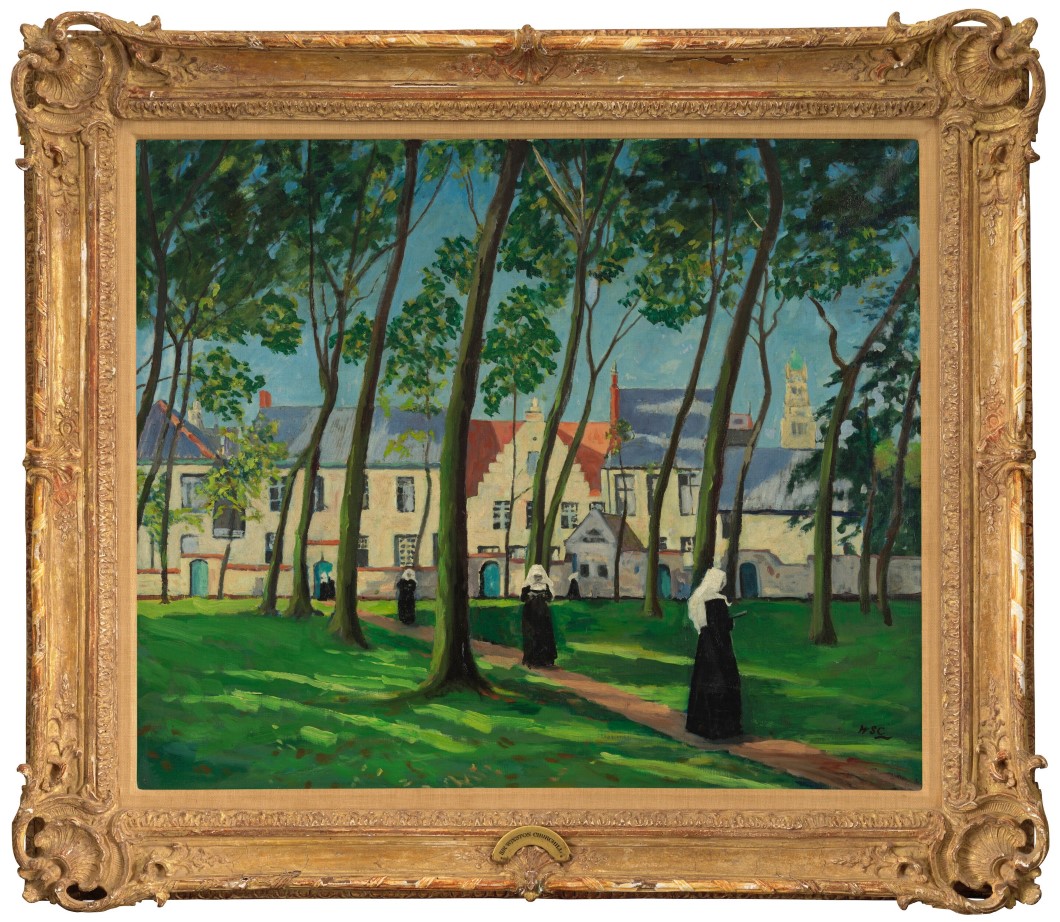
That inescapable man Sir Winston Spencer Churchill KG OM CH &c. counted painting amongst his many pastimes. A year after the British voter gave him the boot and expelled him from Downing Street, Churchill was amidst his typically extensive travels when he found time to visit Belgium and paint the beguinage of Bruges.
The sisters depicted are not actually beguines but Benedictines. They arrived at the Princely Beguinage Ten Wijngaerde in 1927 when the Grand Mistress’s house and adjacent quarters were converted into a convent. The overall site is now owned by the city of Bruges, but four Benedictine sisters remain. The other houses are run as secular alms-houses and sheltering for single women.
Churchill’s ‘Le Béguinage, Bruges’ is up for auction at Bonham’s later this month and the auctioneers provide Churchill’s secretary Grace Hamblin’s explanation of how she came to own it:
He put [a different painting] up and then he said, ‘What do you think of it?’ It was one of his most terrible paintings. And he must have seen my expression, because I wouldn’t dare to criticise it, I promise you, I know nothing about painting.
I said ‘Well, it’s not my favourite.’ And he said, ‘Which is your favourite?’ And I said, ‘Well, I love the Béguinage.’ So he said, ‘Oh, well, we’ll put that here.’
Some years later it went on exhibition with others to New York. When it came back and I was helping him unpack it, he said, ‘This is yours. Take it home.’ That’s all there was to it. Just like that… enough to kill anybody. I couldn’t believe it… to receive one of his paintings, and from him!’
The secretary had good taste.
My own collection of art by a parliamentarian — still just one item — started in a similarly haphazard manner.
I was walking down a street in Westminster one day when I came across a certain poet-painter-politician who shall remain nameless. He was parked in front of his house and packing one of his sons’ possessions into the back of his car to head off to university but was making an absolute hash of it.
I intervened saying “No, no, no: that’s no way to do it at all” and promptly re-organised the assembled items into a much more efficient arrangement. He thanked me and, as recompense for my small service, handed me a painting he had done of Santa Maria della Salute in Venice which still hangs in my somewhat meagre collection.
If you’d like to start your own collection of art by parliamentary painters, Churchill’s beguinage is going for a guide price of £300,000 to £500,000.
Tuesday 12 January
– Imagine you find out your mother has been killed. Then imagine her killer not only goes unpunished but that he’s subject to a continual stream of awards and honours. At school your son is handed a leaflet promoting the man who ended his grandmother’s life. The only objectors (Catholics and Holocaust survivors) are easily brushed aside.
This isn’t an alternate universe: this is Belgium today, as the New Yorker reports. (via M.B.D.)
– Fr Edmund Waldstein relates a stimulating dialogue upon Star Wars between Over-Bearing, Past-Bearing, and Baring (with a cameo appearance from Duff Cooper).
– I’ve mentioned Tolkein and his love of Finnish before. More recently, the BBC inquired about Finland’s influence on the writer.
– “It’s the most nauseating display in American public life,” says Kevin D Williamson in his splendid jeremiad, “and I write that as someone who has just returned from a pornographers’ convention.”
– Fredrik de Boer puts his head above the parapet and gives us a little insight into how things work.
– And finally, some good news: a study claims French is set to overtake Chinese as the world’s most widely spoken language by 2050. (But, as P.E.G. noted in 2014, the methodology is a bit dodgy.)
Let’s hope they’re reading Bossuet rather than Voltaire.
Florence to London on Twenty Euros
THERE COMES A POINT in every young man’s life when his trust fund manager goes on holiday. It is fitting that what follows occurred during International Poverty & Homelessness Awareness Week and, certainly, I hope that my experience will raise awareness among the demographics concerned as to how they should conduct themselves.
ITALY
Let me tell you about poverty: there is poverty, there is urban poverty, and there is urbane poverty. The story of my rapid regression through these strata starts in the billionaire’s playground that is Forte dei Marmi. I had already accepted the invitation when I realised I had blown my last €30 on a bottle of Frescobaldi (I’m not a wine snob, but I only buy from friends). We had arrived in Vieri’s 1988 Posche 911 and being a Friday night in early August, Mina’s Bussola club was chocked to the gunnels with a vast array of Eurotrash. There were refugees from Biarritz, Ibiza clubbers who got rich, Moscow clubbers who fell out with Putin, abstract artists, Botox-pumped bankers wives and industrialists’ daughters from Munich and Frankfurt, all vamped up on HRT, champagne, and Prozac. It was as raucous as the bombing of Dresden, and nearly as fun. Imagine someone had pumped laughing gas into the celebrity arrivals gate at Heathrow, and you’ll get the picture. (more…)
Solution «N» for Flanders?
Matthias Storme’s thoughts on keeping Flanders in the E.U.
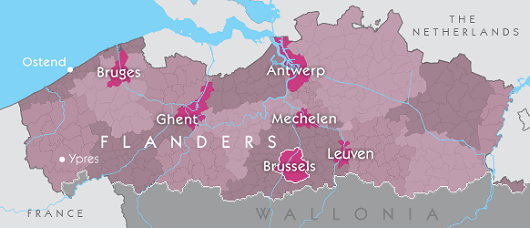
PURSUANT TO OUR previous discussion of the dissolution of the confederal Hollandic archipelago in the Caribbean, the ever-interesting Flemish philosopher & university professor Matthias Storme suggests an interesting solution to the Belgian question. Opponents of Flemish secessionism frequently argue that should Flanders gain independence from Belgium, it would not automatically continue its membership in the European Union and would be forced to seek re-admission on its own. Professor Storme posits what he calls Solution «N», which has its basis in the Charter for the Kingdom of the Netherlands and Article 355, Paragraph 3 of the Treaty on the Functioning of the European Union. (more…)
Hans Laagland
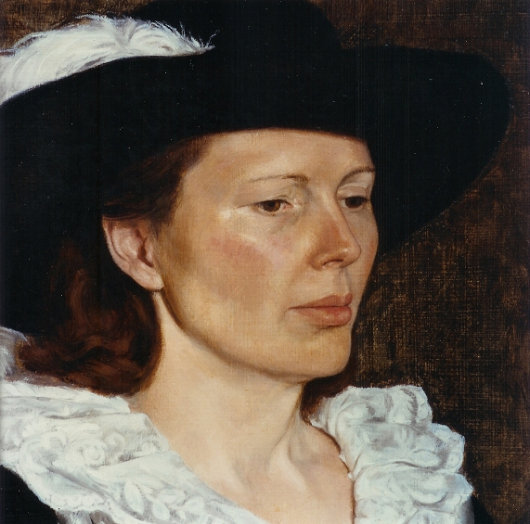
Oil on wood, 1980
“It does not matter what the artist paints, but how he paints it,” proclaims the painter Hans Laagland. “That is why Rubens is a genius while Picasso’s work is passable.” Laagland, a Fleming himself, is one of the scant few artists in our day who paint in the grand style of the Flemish baroque master. He was born in Belgium’s Dutch province in 1965 and took up the brush and easel when ten years old. The young boy quickly developed a fascination with Rubens, considering and absorbing his works in the neighbouring city of Antwerp. Laagland’s emphasis is on traditional craftsmanship, painting in oils on wood panel, investigating and recreating the Old-Dutch lead white used by Rembrandt and the vermilion of Rubens. With a particularly capable hand at portraits, his work can be seen everywhere from the Norbertine abbey at Postel to the Belgian parliament in Brussels.
“It has been downhill ever since Rubens,” the painter says. Rembrandt — “Rubens’s disabled cousin” according to Laagland — was the last great painter; “What comes after him no longer has any significance.” Those versed in the Netherlandic tongue can read Mr. Laagland expounding upon his artistic ideas in De Kunstverduistering (“The Eclipse of Art”), his extended essay on art and painting now published as a book by KEI Zutphen. (more…)
Stat Belgium, stat Europa

Search
Instagram: @andcusack
Click here for my Instagram photos.Most Recent Posts
- Brunel’s Unbuilt Capitol February 3, 2026
- Cricket at Fordham January 27, 2026
- Palacio Barolo Revisted January 14, 2026
- Learning to Love Liguria January 14, 2026
- Crux Alba No. 2 January 13, 2026
Most Recent Comments
Book Wishlist
Monthly Archives
Categories