About Andrew Cusack
 Writer, web designer, etc.; born in New York; educated in Argentina, Scotland, and South Africa; now based in London.
 read more
News
Blogs
Reviews & Periodicals
Arts & Design
World
France
Mitteleuropa
Knickerbockers
Argentina
The Levant
Africa
Cape of Good Hope
Netherlands
Scandinavia
Québec
India
Muscovy
Germany
Academica
Copenhagen’s Courthouse

Photo: Finn Christoffersen
THE CURIOSITY of classicism in building is that its principals are universal and yet the way it is carried out in each land is so distinct. Scandinavian classicism embodies the beauty of restraint: clear lines, harmonious proportions, and a sober dignity in the northern light.
Pale façades and measured ornament convey a sense of calm order, neither ostentatious nor overly severe, with interiors bathed in colours that provide the warmth so dearly needed to keep life humane in a cold climate.
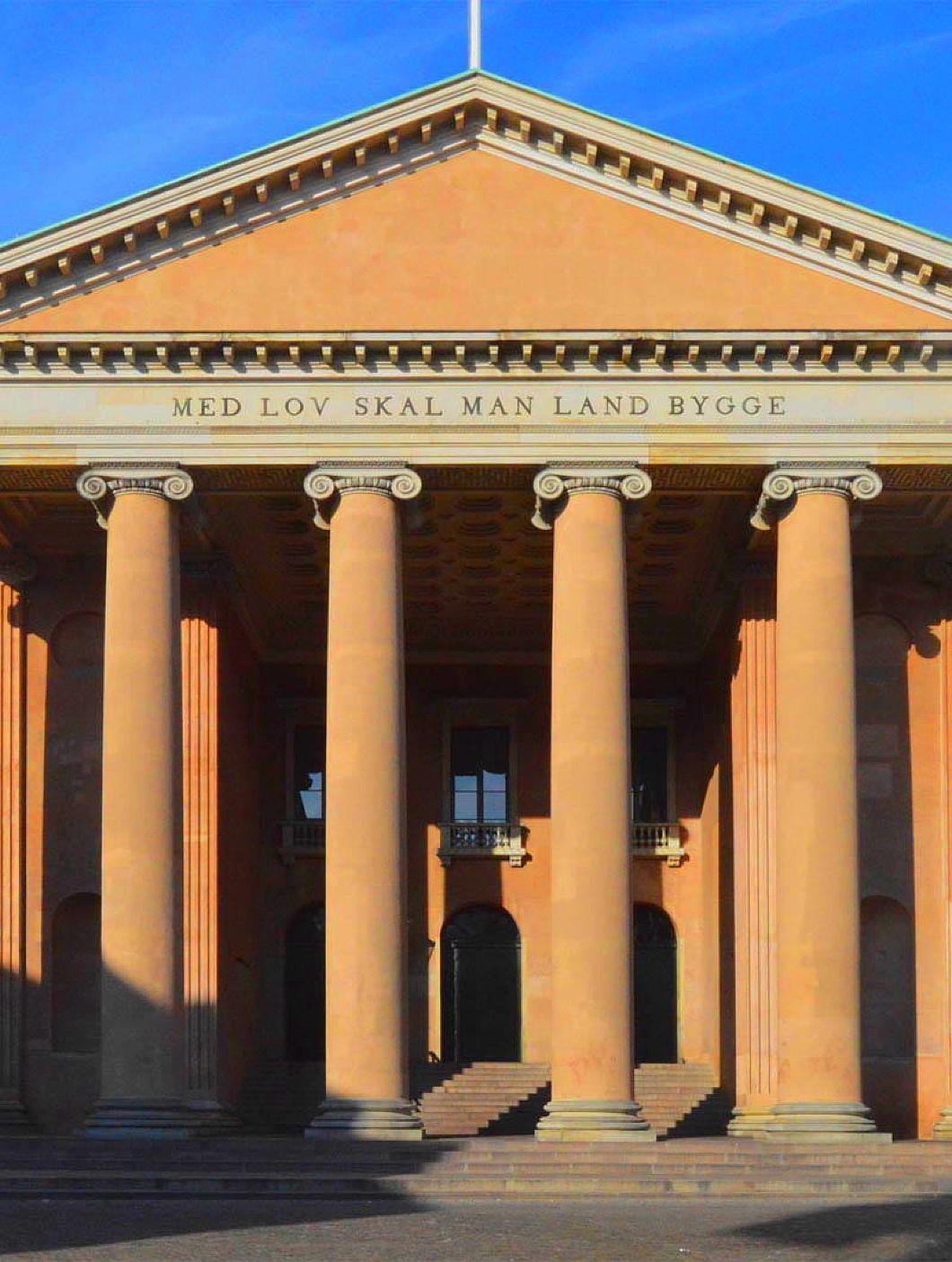
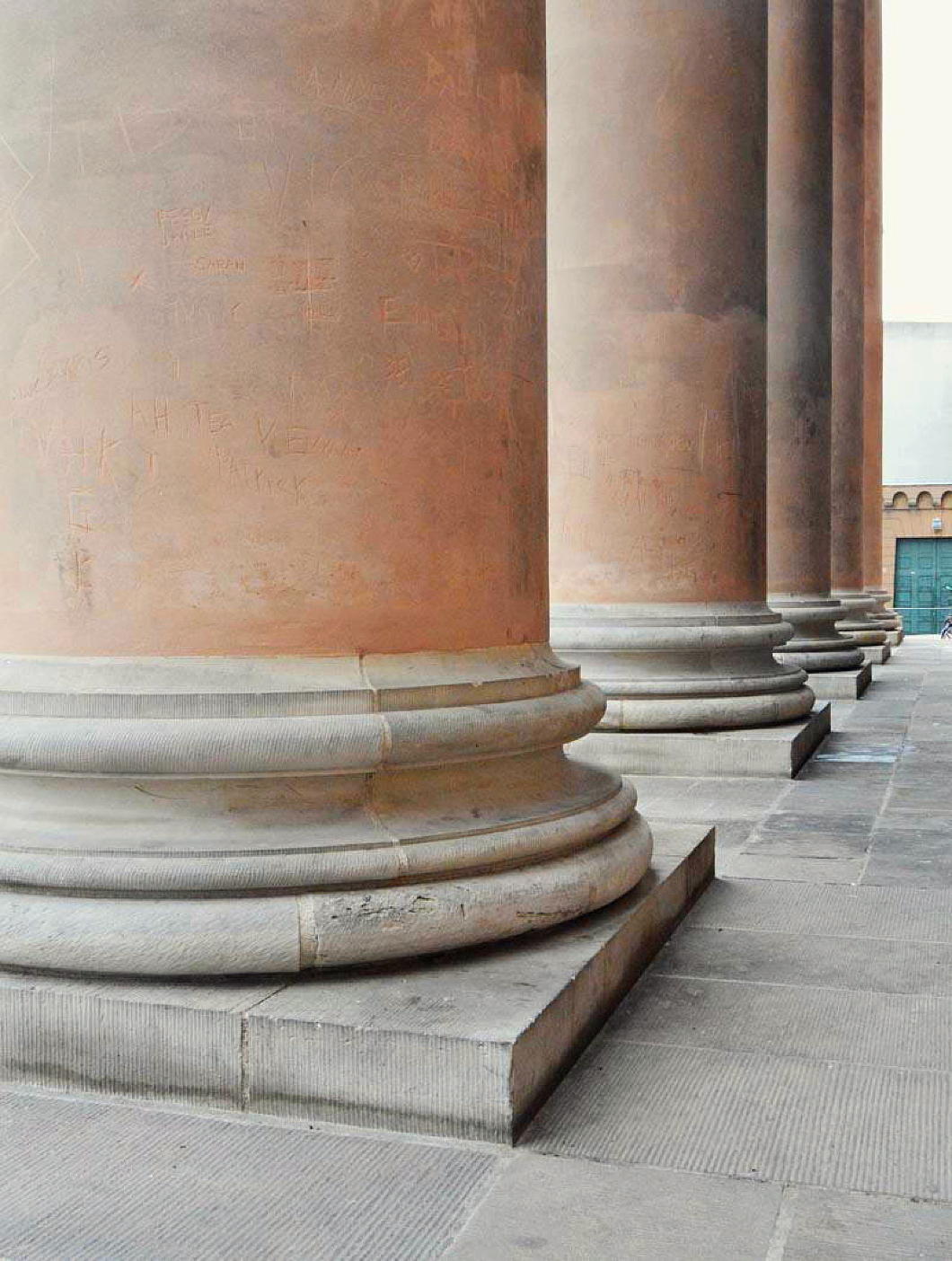
On Nytorv in the heart of Copenhagen stands a sober neoclassical edifice whose measured columns and austere pediment speak to the ideals of law and order: first built as the city hall of the Danish capital, today it is the Københavns Domhus, or city courthouse.
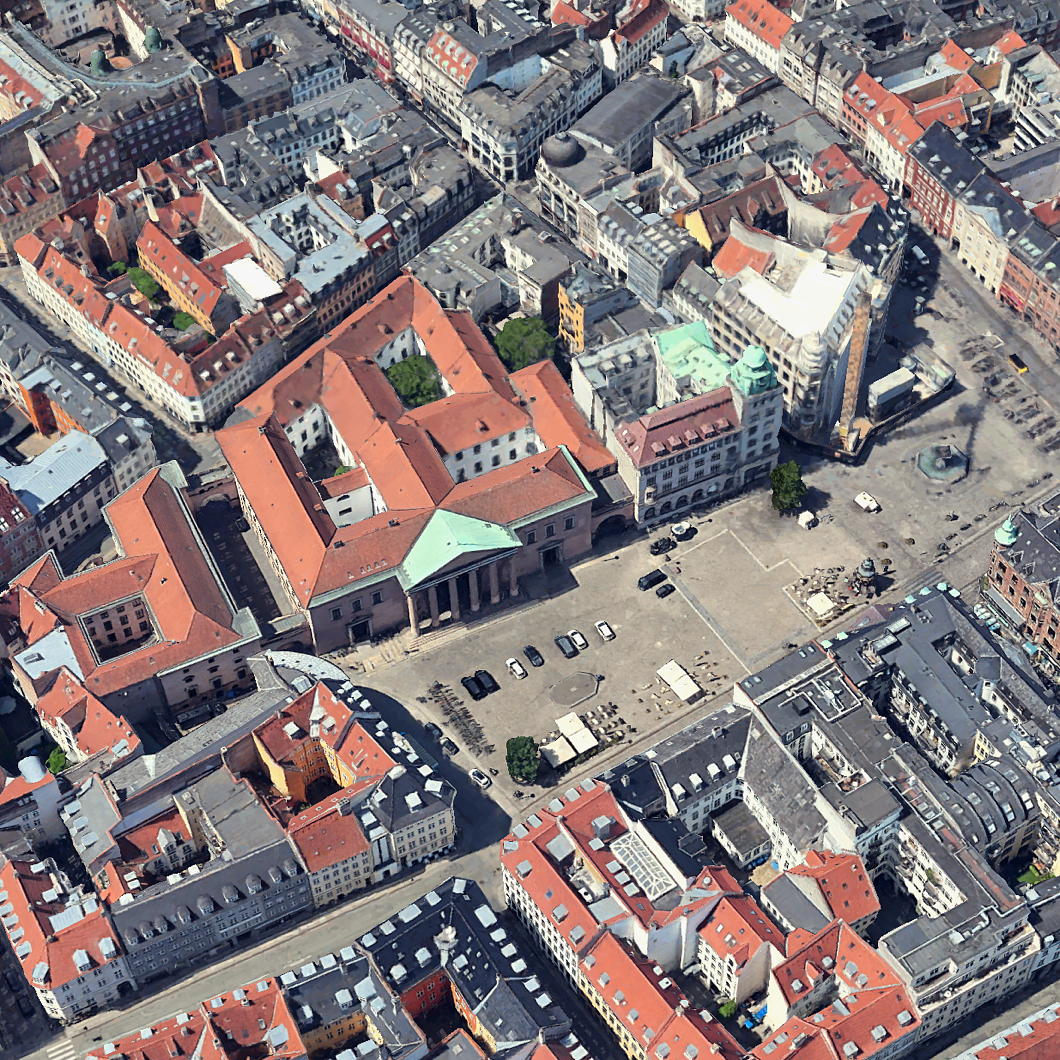
Its origins lie in the Great Fire of Copenhagen that swept through the old town hall in 1795, consuming not only the old town hall but also much of the city around it.
The destroyed building faced onto Gammeltorv — literally ‘old turf’, more colloquially ‘old square’ or ‘old market’ — with the new market of Nytorv behind it. The outline of that lost structure is marked in bright stone on the ground today.
Judicial reforms introduced by the Lensgreve Struensee in the 1770s expanded the powers and responsibilities of the local courts, but the old town hall was already too cramped to house the newly important legal chambers.
Out of the ashes of the Great Fire, civic leaders resolved to raise a new structure, one that would gather both the municipal council and the judiciary under a single roof.
The charred remains of the old hall were levelled flat to join Gammeltorv and Nytorv into a single open space, while the old Royal Orphanage on Nytorv was cleared to build the new seat of civic authority.
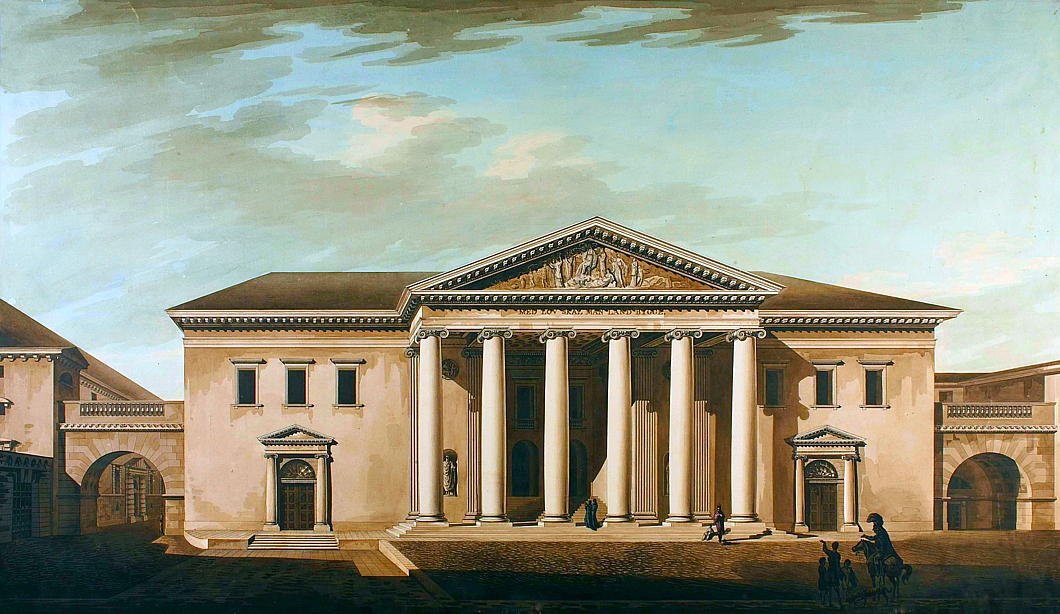
The task of designing the new city hall fell to Christian Frederik Hansen, the foremost Danish architect of his day. In this building and later commissions, Hansen’s neoclassical vision reshaped Copenhagen in the wake of the Great Fire of 1795 and the British Bombardment of 1807.
The restrained yet dignified façade expressed the height of modernity in its day, but across the frieze of the pediment were proclaimed the words MED LOV SKAL MAN LAND BYGGE — With law shall the land be built.
This mediæval maxim comes from the old Law of Jutland of 1271 (preserved in the Codex Holmiensis), rooting this up-to-date building in the ancient roots of Danish justice.
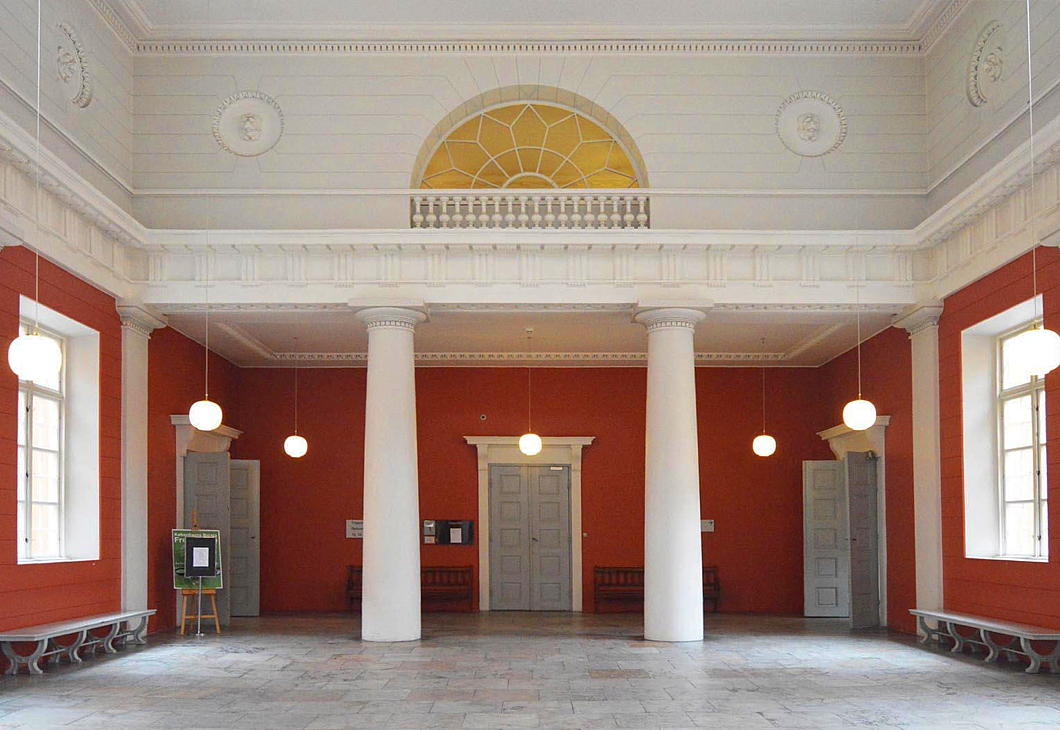
Hansen’s design created suitably dignified meeting rooms for Copenhagen’s city council as well as courtrooms, judges’ chambers, and a municipal lock-up joined to the building by arched bridges across an open lane to the side.
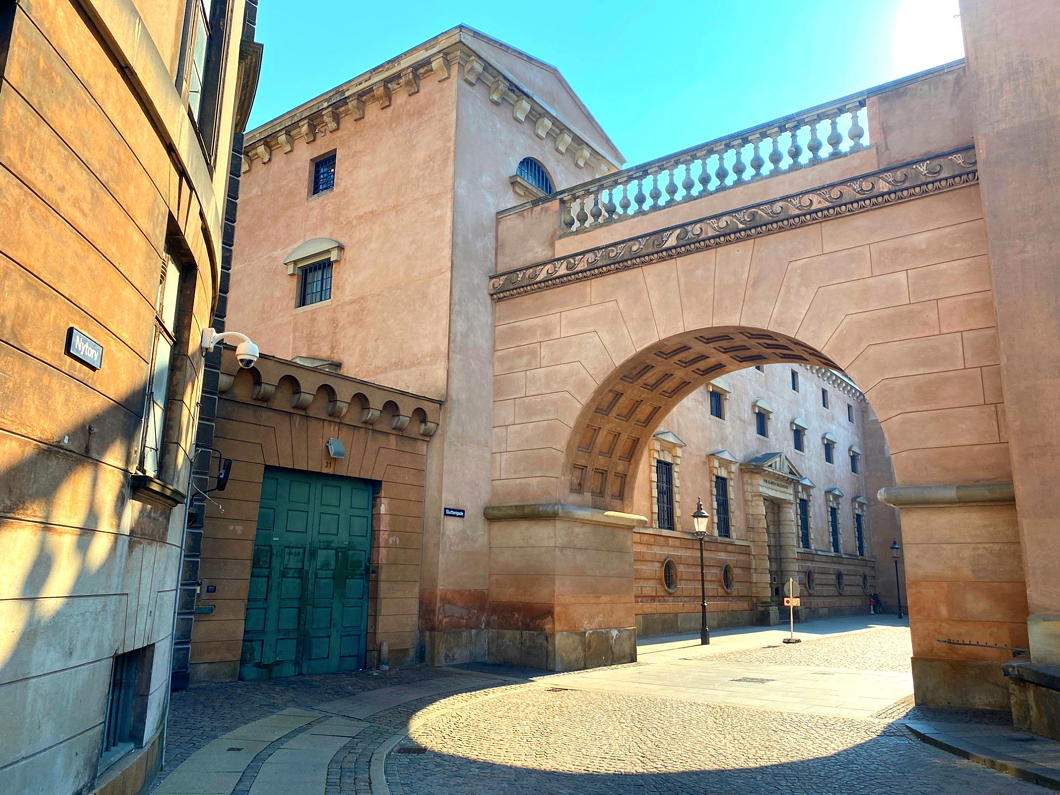
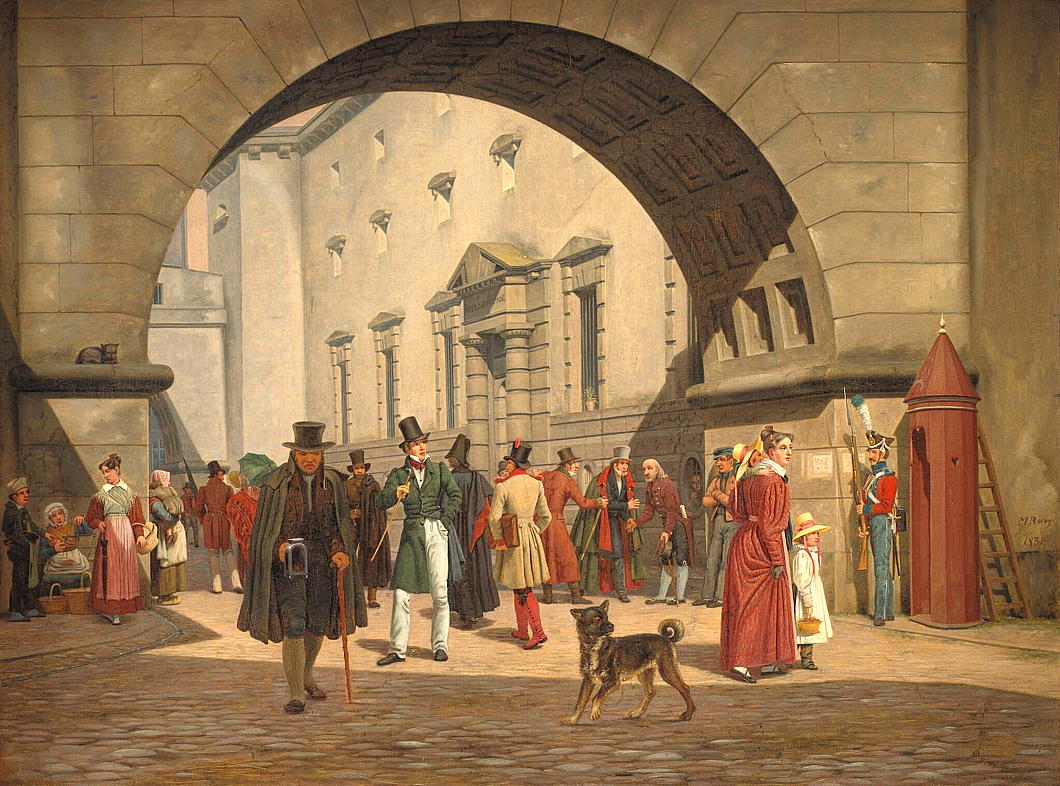
An 1831 painting by Martinus Rørbye depicts a lively street scene in the Slutterigade dividing the holding cells from the city hall.
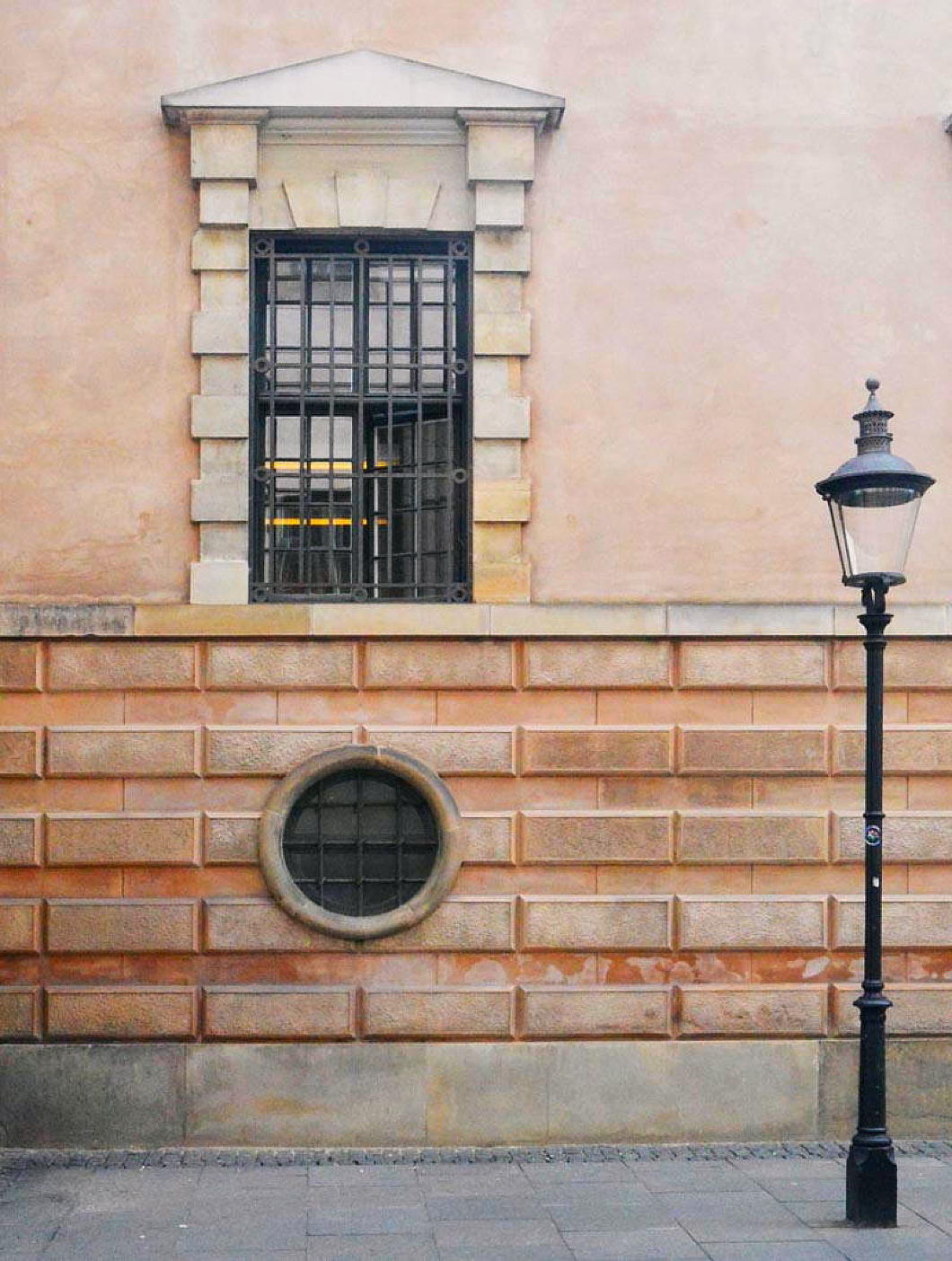
Construction began in 1805 but was soon beset by delay. The Napoleonic wars pressed hard upon Denmark, and the British bombardment of Copenhagen in 1807 — a strong demonstration to Britain’s allies of its commitment to defeat Buonaparte — left the city scarred anew.
Building materials were difficult to obtain and progress slowed to a crawl. Only after these crises subsided could Hansen’s design advance toward completion, and the new City Hall and Courthouse finally opened its doors in 1816.
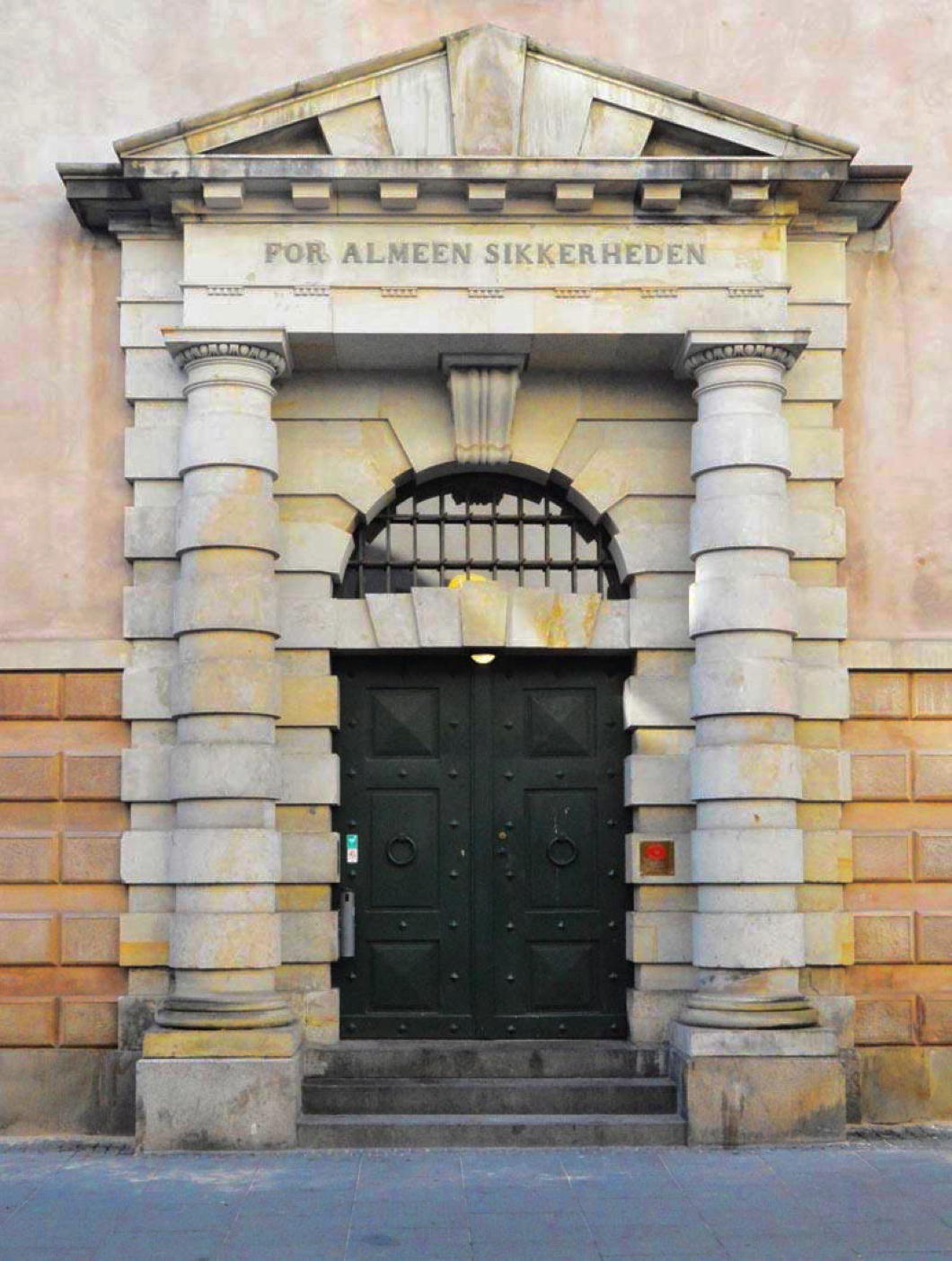
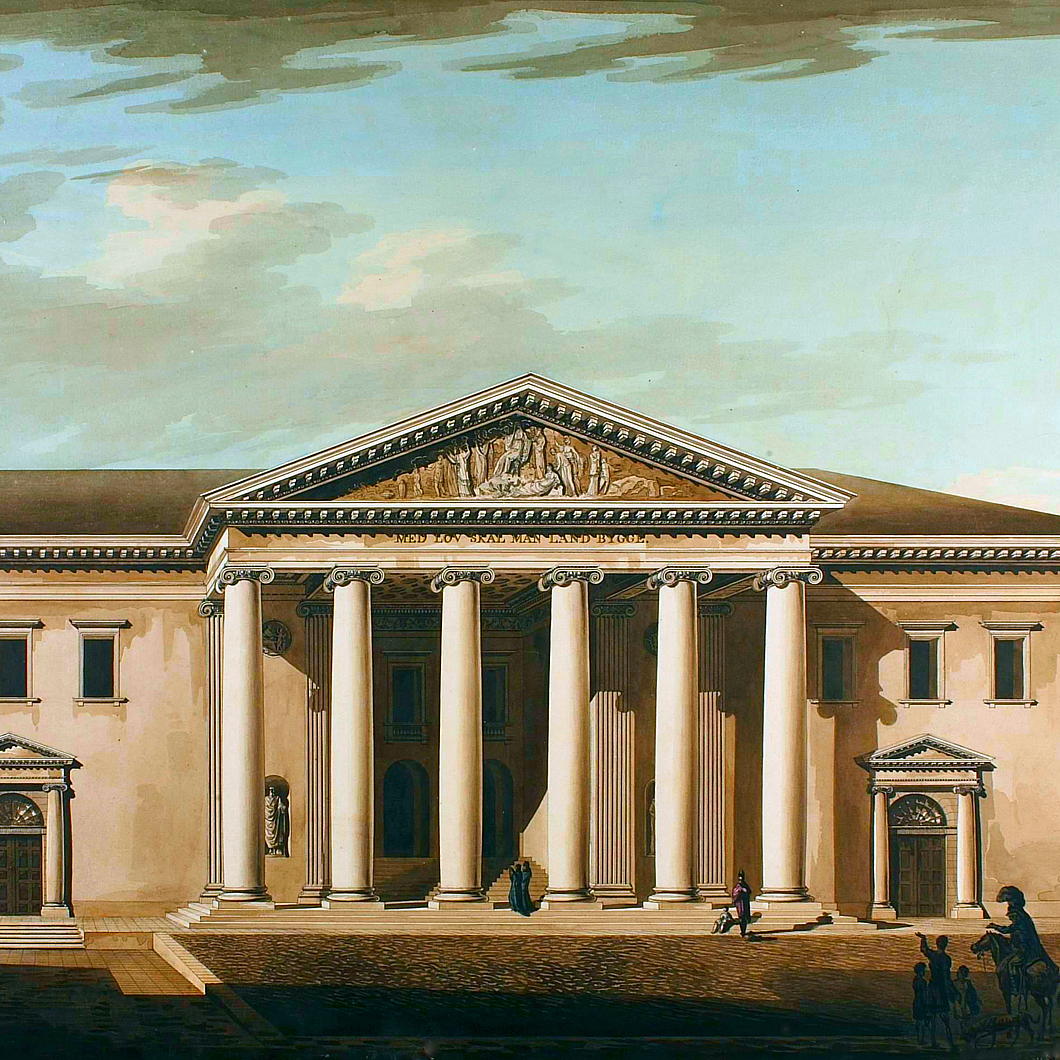
Thorvaldsen had submitted two different schemes for a sculptural relief in the pediment of the new building but although they are sometimes depicted in renderings of the building, neither was ever completed.
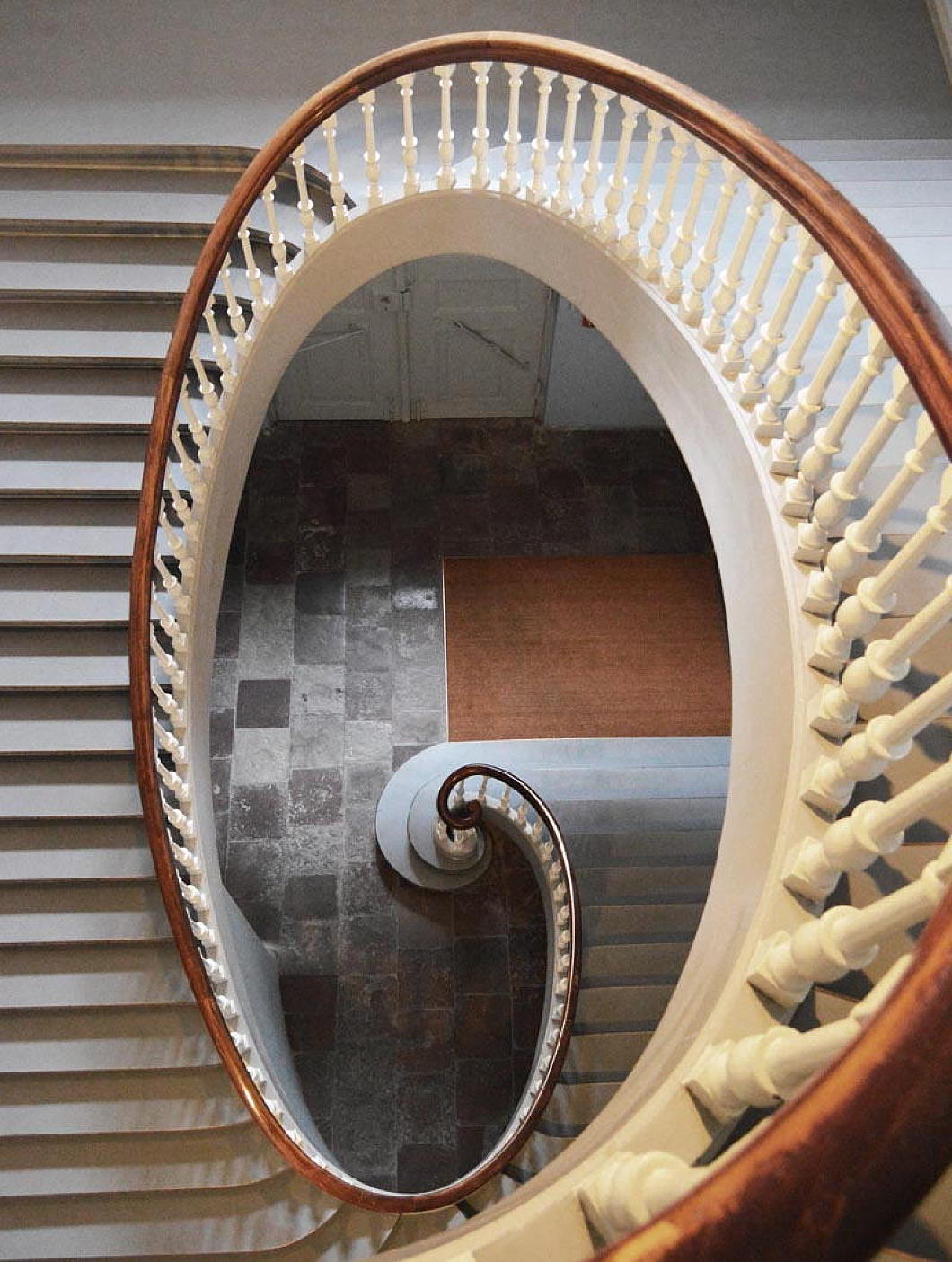
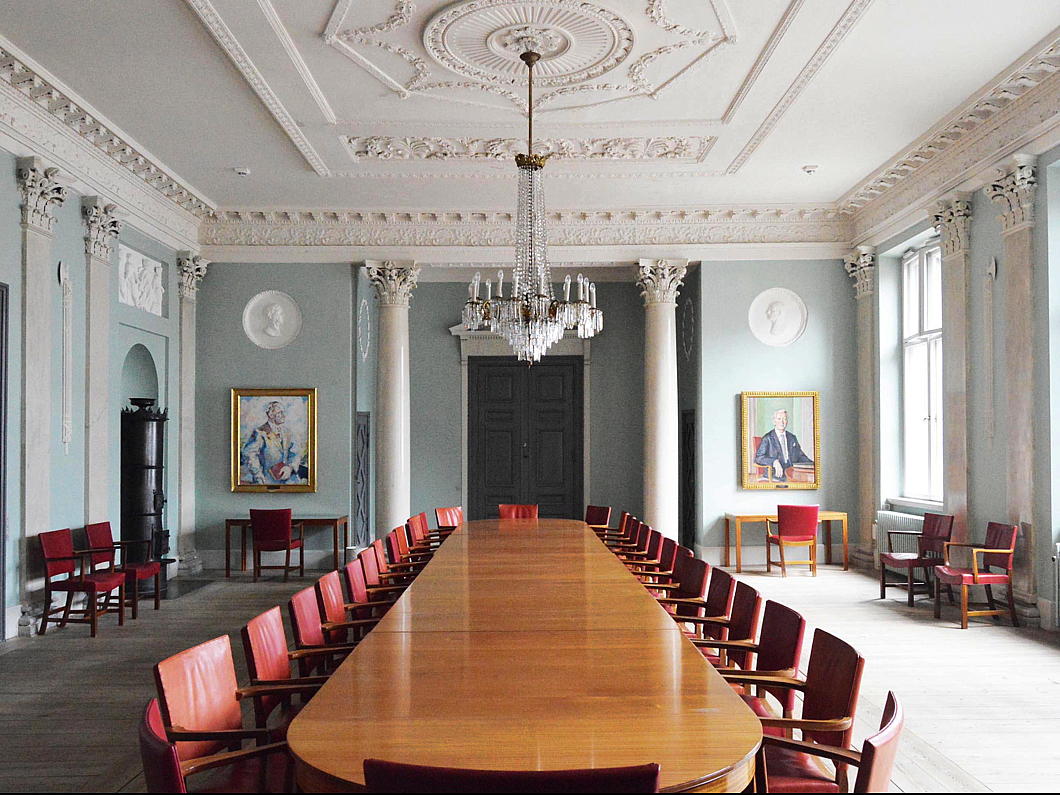
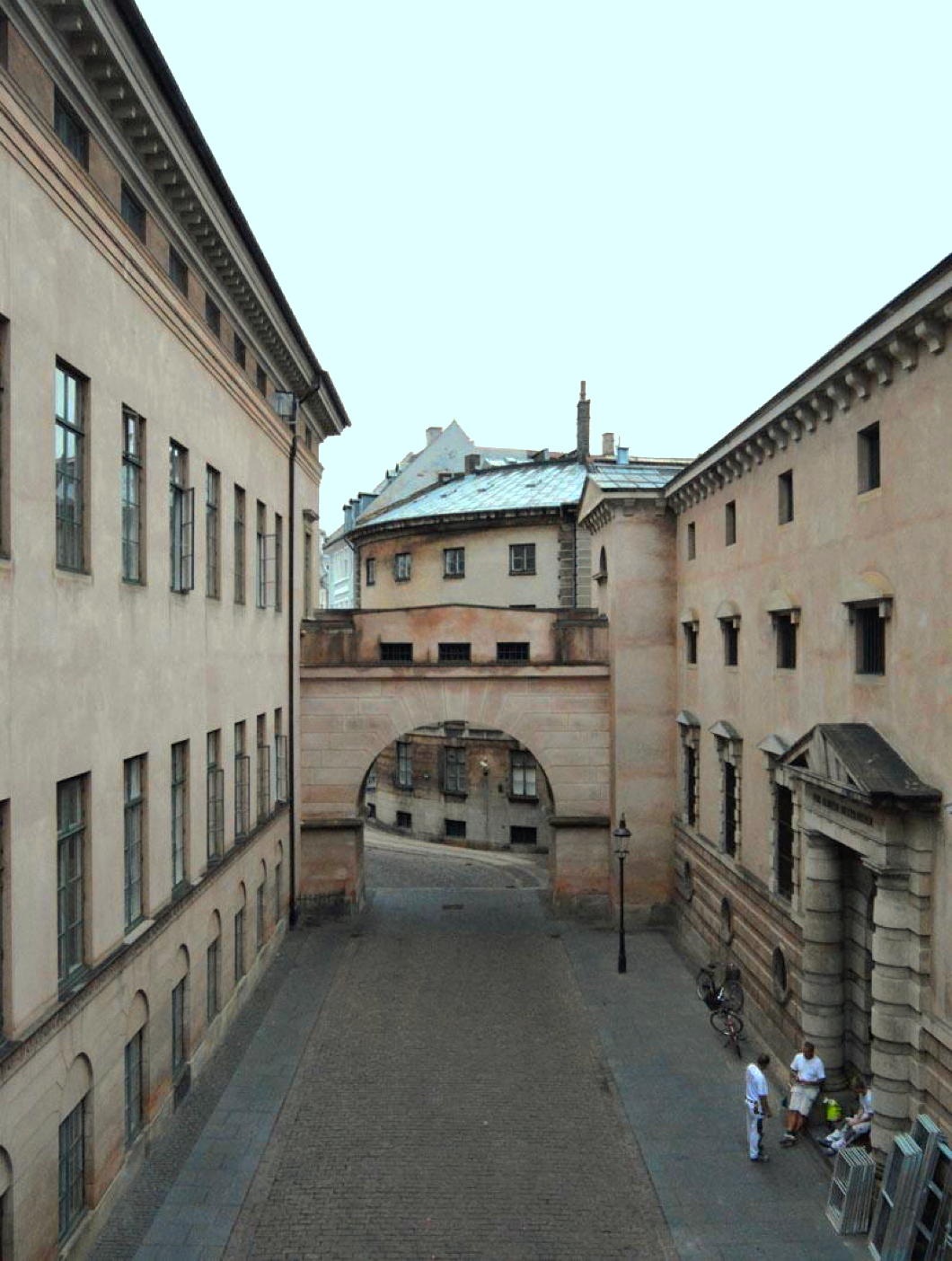
For nearly ninety years the building served its dual role until the city’s growing needs demanded a larger, more modern hall.
In 1905, the council moved to Martin Nyrop’s new City Hall on Rådhuspladsen, leaving Hansen’s work for the exclusive use of the courts.
More than two centuries on, the courthouse at Nytorv remains what Hansen intended: a monument to civic order, and the continuing home of Copenhagen’s judiciary.
Search
Instagram: @andcusack
Click here for my Instagram photos.Most Recent Posts
- Brunel’s Unbuilt Capitol February 3, 2026
- Cricket at Fordham January 27, 2026
- Palacio Barolo Revisted January 14, 2026
- Learning to Love Liguria January 14, 2026
- Crux Alba No. 2 January 13, 2026
Most Recent Comments
Book Wishlist
Monthly Archives
Categories