2025 October
About Andrew Cusack
 Writer, web designer, etc.; born in New York; educated in Argentina, Scotland, and South Africa; now based in London.
 read more
News
Blogs
Reviews & Periodicals
Arts & Design
World
France
Mitteleuropa
Knickerbockers
Argentina
The Levant
Africa
Cape of Good Hope
Netherlands
Scandinavia
Québec
India
Muscovy
Germany
Academica
The Long Homecoming of Eliza Monroe
A presidential daughter is reunited with her parents
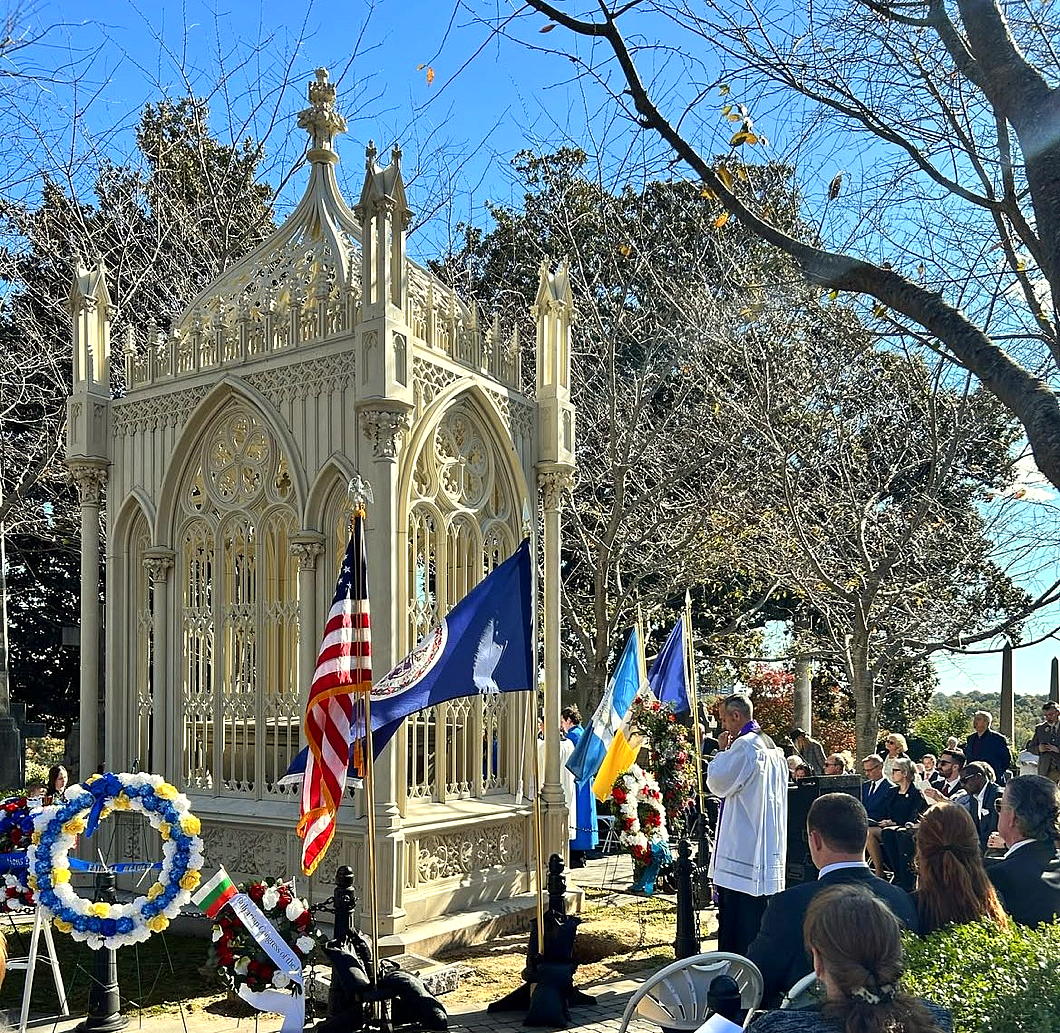
Nearly one hundred and eighty-five years after her death in Paris, the mortal remains of Eliza Monroe Hay — daughter of the fifth President of the United States — have been laid to rest in Richmond, Virginia. Her reburial beside her parents President James Monroe and First Lady Elizabeth Monroe marks the end of a long and curious chapter in the history of this illustrious American family.
The return of Eliza’s remains was the work of Barbara VornDick, a retired Virginia educator who spent more than a decade tracing Monroe descendants, searching archives and navigating French and American bureaucracy.
Working with the U.S. Embassy in Paris and the Diocese of Richmond, VornDick secured the exhumation and transport of Eliza’s remains from an unmarked Parisian grave to the family plot.
The Holy Sacrifice of the Mass was offered for the repose of Eliza Monroe Hay’s soul at the Cathedral of the Sacred Heart before the re-interment in Hollywood Cemetery on 23 October 2025.
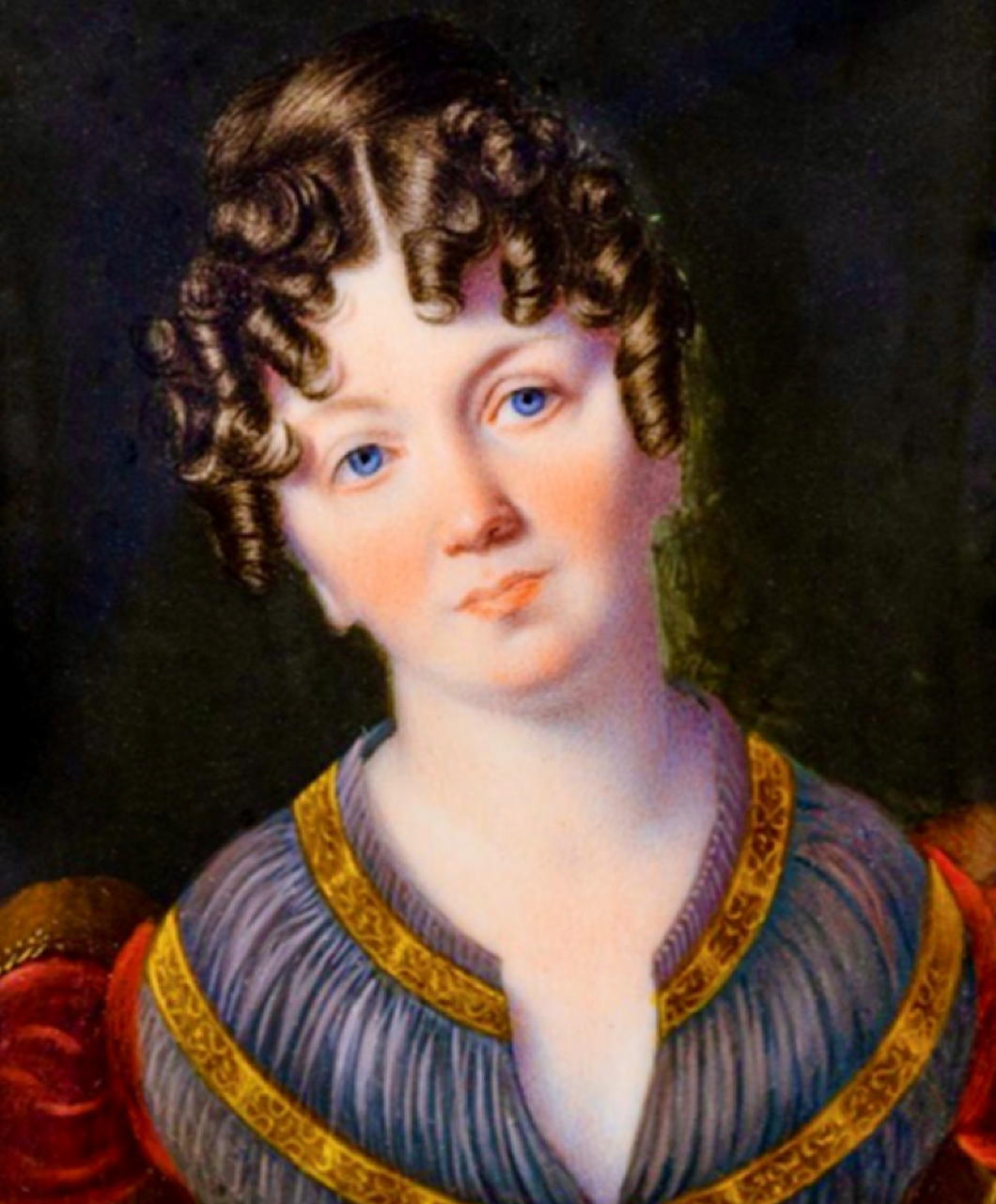
Born in Fredericksburg in 1786, Eliza Kortright Monroe grew up between Virginia and revolutionary France, where her father served as U.S. minister (as ambassadors were generally called then). A great part of her education took place in Paris where became accustomed to the courtly formality of Europe. Among the friends she made was Hortense de Beauharnais, stepdaughter of Napoleon and eventually queen consort of Holland as the wife of Lodewijk I (Luigi Buonaparte), the Emperor’s younger brother.
When James Monroe became president in 1817, her mother’s poor health led Eliza to assume many of the social duties expected of the chatelaine of the White House. Later commentators sometimes judged her reserved manner harshly, but it reflected both her upbringing and her experience of diplomacy.
In 1808 Eliza married George Hay, a Virginia lawyer best known as the U.S. Attorney who prosecuted Aaron Burr in his trial for treason before Chief Justice John Marshall the previous year. They had one daughter who was christened Hortensia after the mother’s childhood friend who acted as godmother. Hay died in 1830, followed within a year by Eliza’s mother and father.
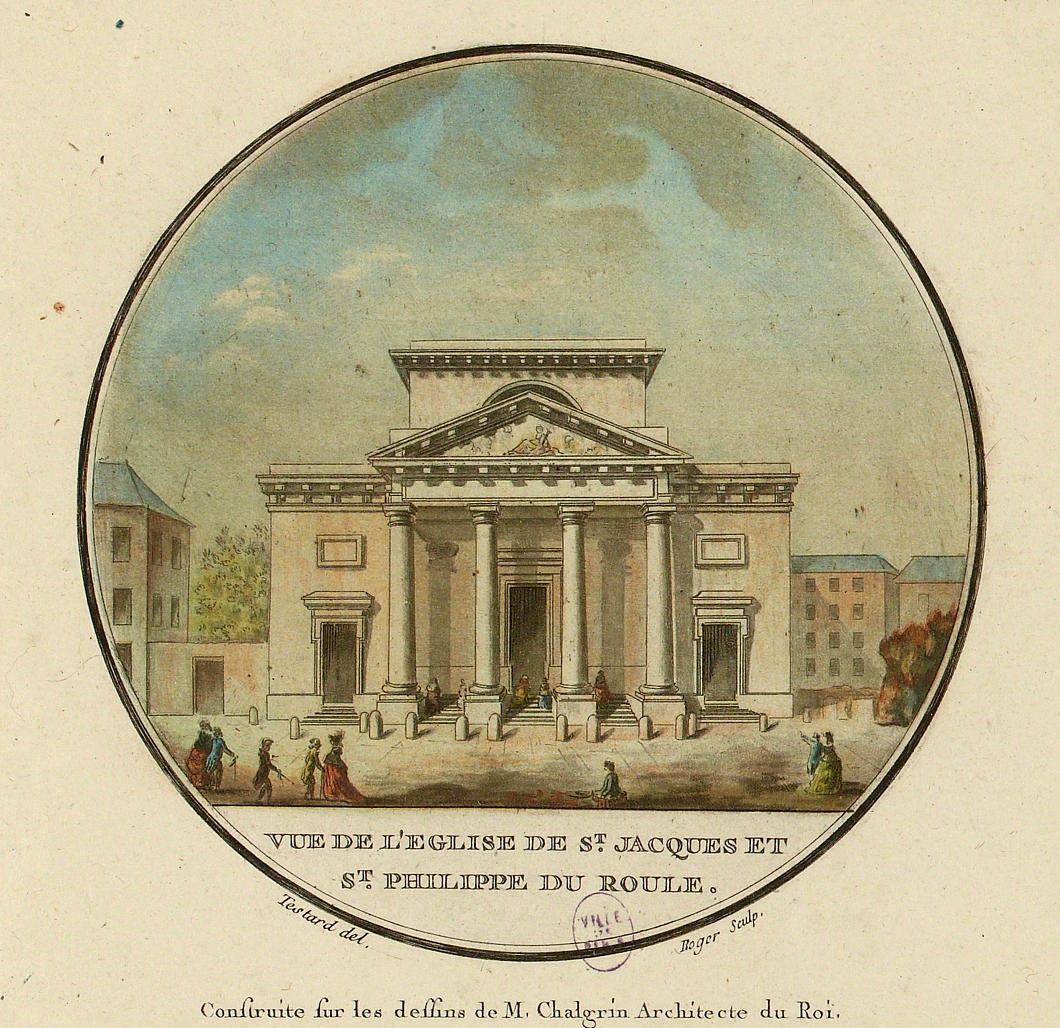
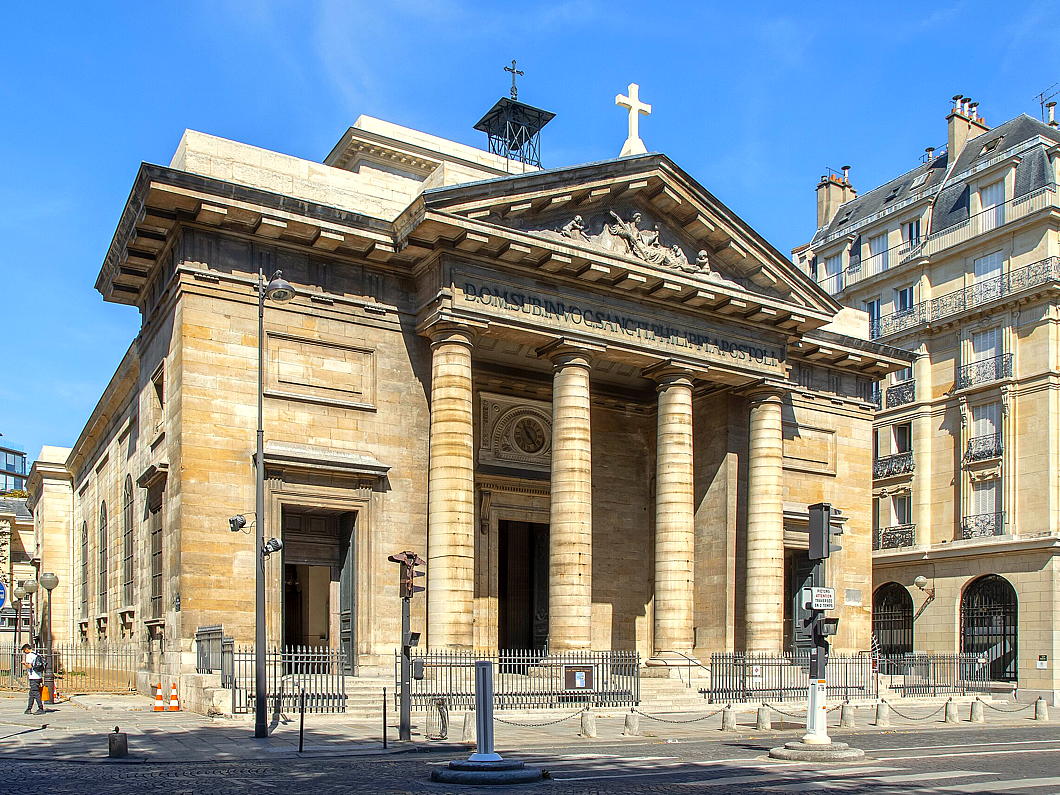
Widowed, grieving, and facing financial difficulty, Eliza returned to Paris, where Louis-Philippe had usurped the throne. Back in the French capital, Eliza embraced the Catholic faith and was received into full communion with the Church. Records identify her as a member of the parish of St-Philippe-du-Roule in the Faubourg Saint-Honoré. In 1833, she went on pilgrimage to Rome where she received a cameo depicting the head of Christ from Gregory XVI’s secretary of state.
Eliza’s final years in Paris were not entirely happy ones. A family member had deprived her of what she thought was her inheritance and she persevered in a state of penury with few possessions. Eliza Monroe Hay died in 1840, with a funeral Mass offered in her parish church and her unmarked grave purchased by the American consul, Daniel Brent.
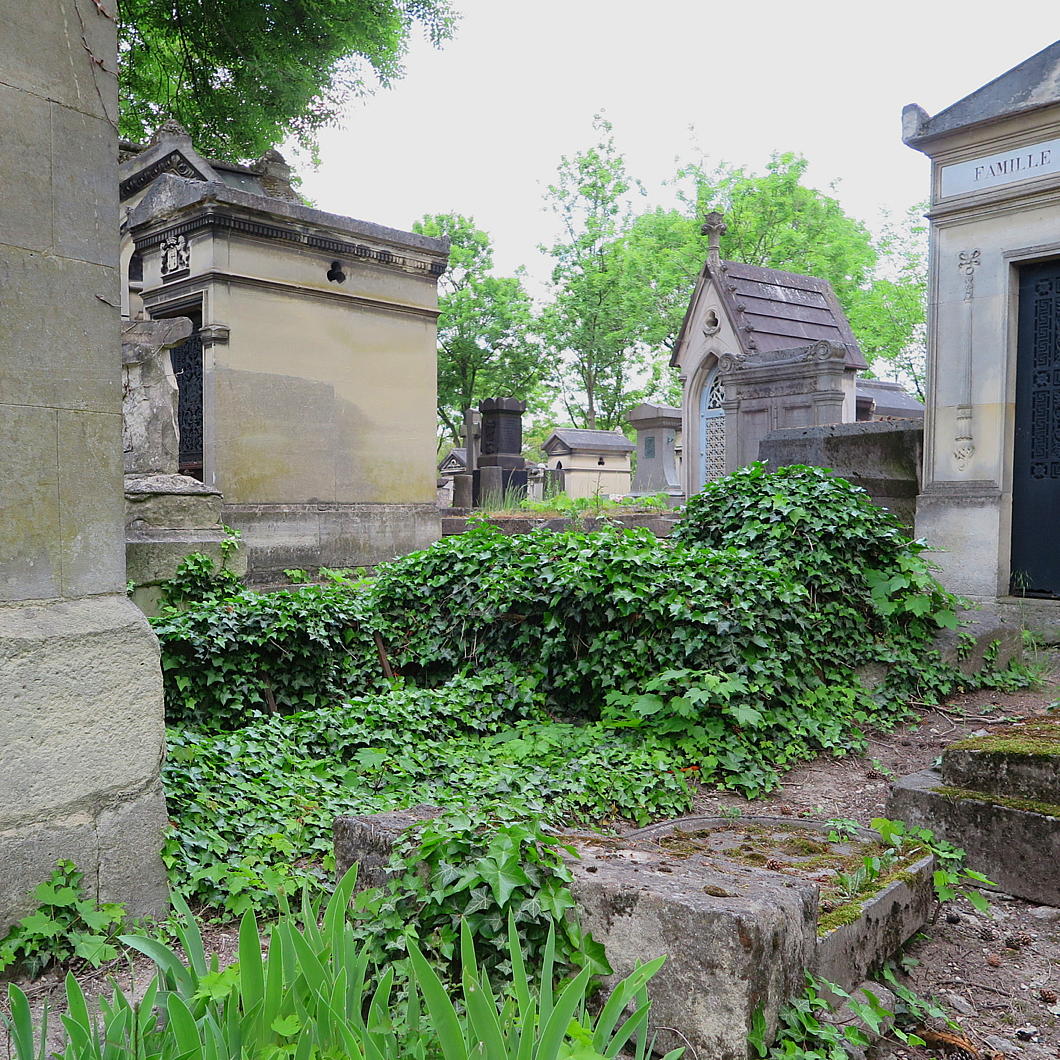
The unmarked grave of Eliza Monroe Hay.
Her memory faded, surviving mainly in family lore. The rediscovery of her letters and her reburial in Virginia have brought her back into view: a woman of faith and dignity, wronged in inheritance, isolated by loss, and now restored to her place among her own thanks to VornDick’s efforts and to her biography Eliza’s True Story: The First Biography of President Monroe’s Eldest Daughter.
For generations a family tradition held that Eliza entered a convent after her conversion. That story appears in some older biographical sketches and even in occasional press references. Recent research — especially VornDick’s examination of Eliza’s correspondence in the archives of the College of William & Mary — has found no documentary evidence that she ever took vows or joined a religious order. The legend of the nun in Paris may have arisen from confusion between her Catholic piety and the religious circles she frequented.
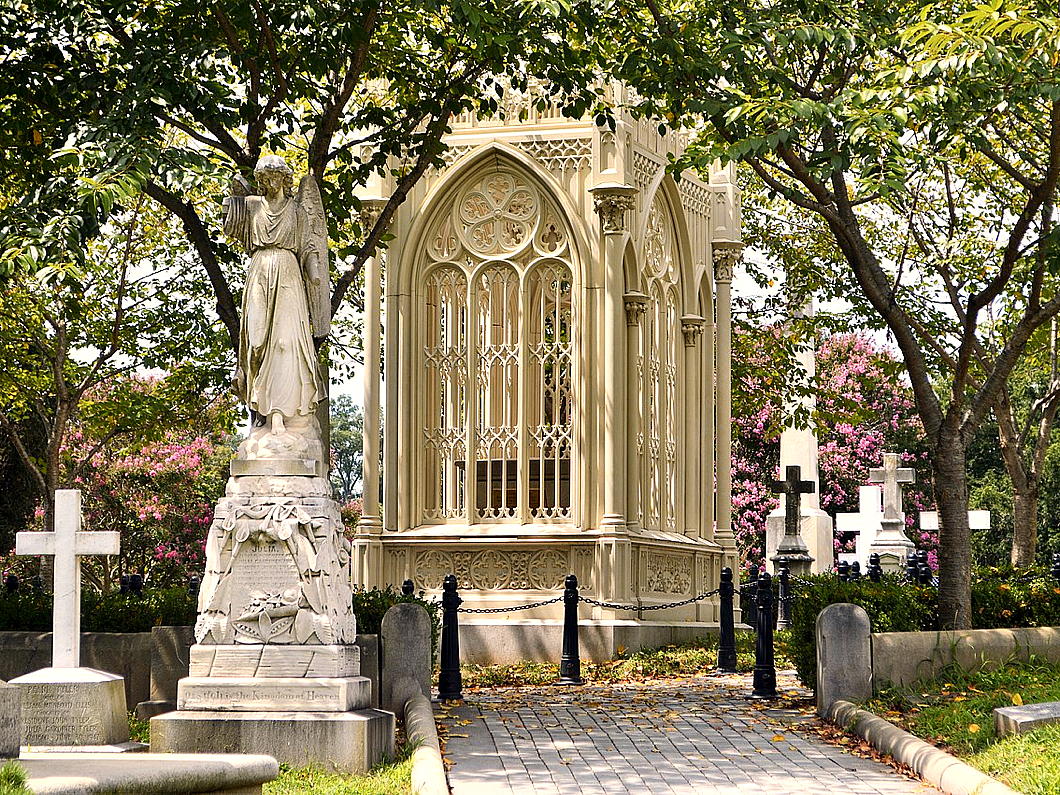
The new resting place is beside hr father’s Gothic tomb — a birdcage of traceery designed by Albert Lybrock in 1859, arches emerging like a filigree chapel above the President’s grave, but in cast-iron painted the colour of stone. The striking funerary monuments now shelters not only the nation’s fifth president but his daughter as well.
The repatriation of Eliza Monroe Hay was not a grand state ceremony but an act of personal devotion. It completes a family story interrupted by distance and time, and restores to American history a figure once nearly forgotten. In the quiet of Hollywood Cemetery, overlooking the James River, the Atlantic divide that once separated the Monroes has finally closed.


College of William & Mary: The forgotten daughter: Eliza Monroe Hay’s story revealed in her last letters
The Brooklyn Tablet: Daughter of President James Monroe Laid to Rest
Catholic News Agency: A Founding Father’s Catholic Daughter is Laid to Rest
Northern Virgina: Author Led Efforts to Rebury Monroe’s Daughter
Compact Grandeur in Genoa

In the heart of Genoa, the corner apartment of an historic palazzo has been rescued from graceless subdivision and given back a measure of domestic dignity.
Once part of the great salon of a palace overlooking the Piazza San Giorgio, the space had suffered the usual indignities of time: partitions, mezzanines, false ceilings — all conspiring to diminish its height and its grace.
Architects Luca Scardulla and Federico Robbiano of llabb began by clearing away the clutter and restoring the luminous hall, whose three windows frame the churches of San Giorgio and San Torpete (where you can find St Thomas Becket in the altarpiece).
The owners — a couple whose work in communications and photography — asked for a space that could accommodate books, art, friends, and the occasional guest, and all within fifty-eight square metres.
The entrance hallway leads past a discreet utility room, bathroom, and bedroom before opening into a double-height living space that unites kitchen, dining, and sitting areas beneath the restored ceiling.
One wall is entirely given over to books: a towering library with a sliding aluminium ladder gliding along its rail. An open staircase turns upward to a mezzanine level with a desk for work and a bed-nook for guests. Beside the steps, a translucent glass screen allows daylight to reach the bedroom beyond.
“We like the apartment not to be completely revealed at one glance,” says Scardulla, “but to be discovered by moving through it”. The result is indeed a procession rather than a panorama — a space composed to unfold.
The architects allowed themselves a playful update: the missing corner of the ceiling’s stucco decoration was faithfully replicated, though the human figure of the other corners was replaced by a 3D-printed Lego man.
If I allow myself one quibble, it’s with the terrazzo flooring: Give me wood any day of the week, with a Persian carpet thrown atop when needed. That aside, this Genoese apartment stands as a model of intelligent adaptation: respectful of the past, confident in the present, and, like all good architecture, a pleasure to look at.
If the grand salons of Genoa were once the preserve of aristocratic families, here the scale is domestic but generous. Within its compact boundaries, this apartment restores the dignity of the palazzo to the measure of contemporary life — a little palace for two (and the occasional guest), quietly reborn among the twisting caruggi of this ancient noble port. (more…)
Swift’s Spire
An unbuilt cathedral in Monrovia, Liberia
Arthur Swift and the architectural partnership he founded have something of a mixed legacy. Established in London in 1953, Swift & Partners expanded quickly, opening offices in Dublin and Edinburgh.
Specialising in large-scale public housing and mixed-use urban development, Swift & Partners were firm believers in the utility of concrete, even when the public baulked at the harsh and uninviting cityscapes they created. In the Irish capital the partnership is primarily known for the Ballymun towers, the modernist housing estate that became synonymous with urban blight. (There were literal shouts of joy when the towers were demolished.)
Liberia, meanwhile, was in need of something less prosaic than housing: a new Protestant cathedral for the nation’s capital. From Ghana’s independence in 1957, one after another of Liberia’s neighbours achieved sovereignty from their former colonial rulers. Though Liberia had enjoyed a unique status as Africa’s only independent black republic for more than a century, it still shared in the wave of optimism that accompanied the birth of these new West African states.
The Protestant Episcopal Church in Liberia had been long established, American Episcopalians having consecrated one of their own as bishop for this part of West Africa in 1851. What better way for this smaller but socially prominent denomination to affirm its place at the heart of the republic than through a modern cathedral in the centre of the capital?
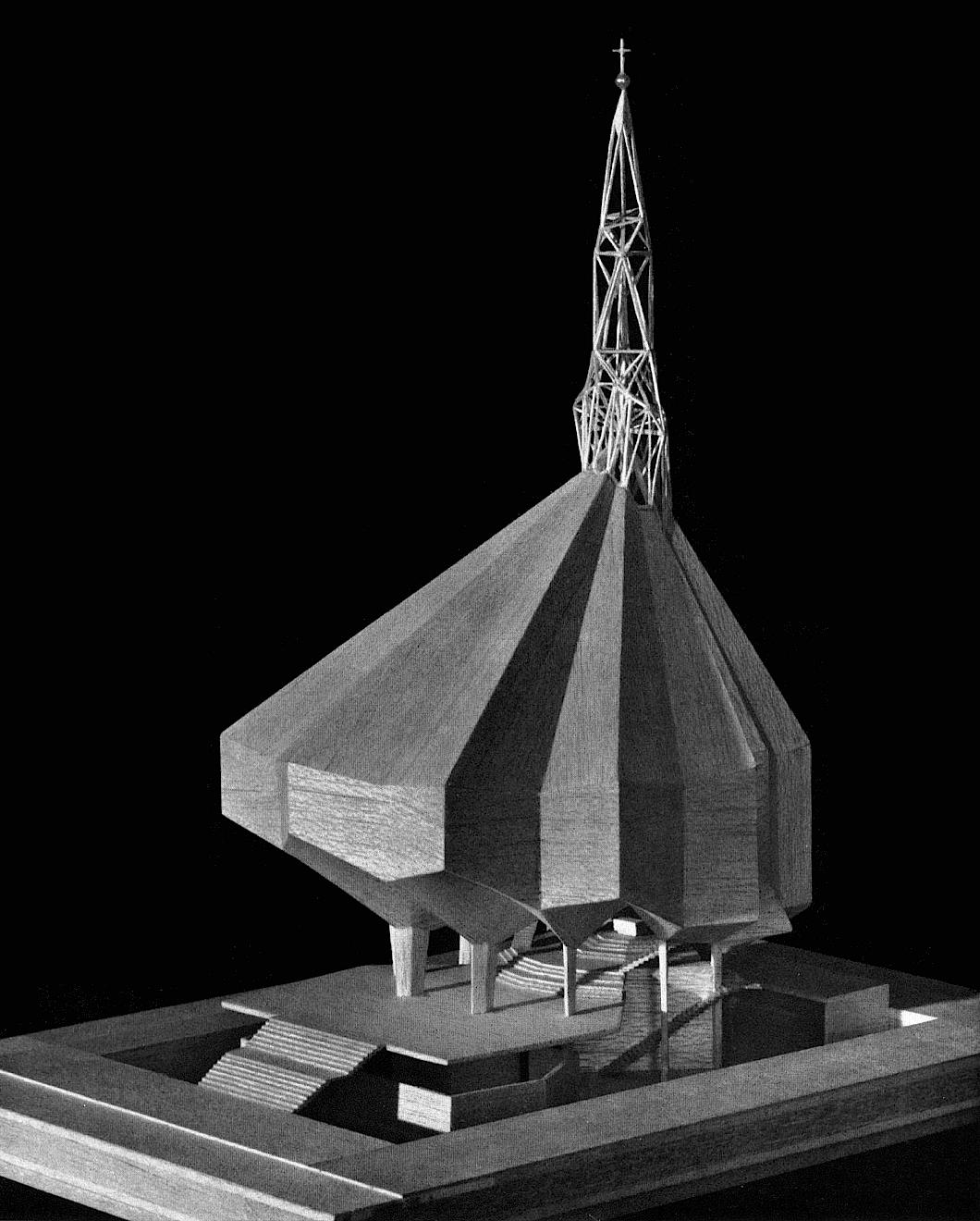
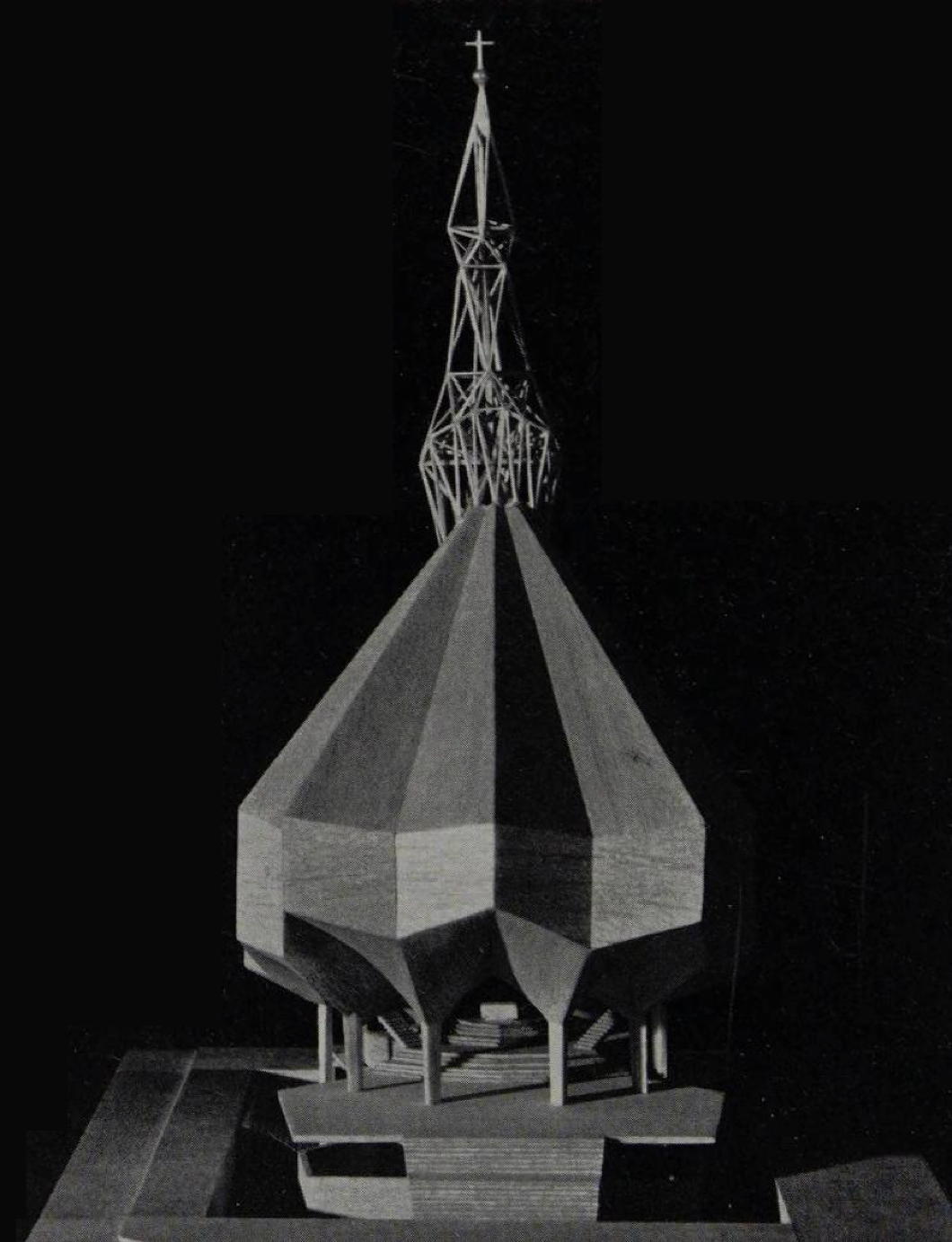
Swift & Partners delivered a striking and idiosyncratic proposal. The site was severely constrained — a mere eighty-two by one-hundred-and-thirty-two feet — yet they contrived a luminous polyhedral glass spire atop a many-sided concrete shell with raked, theatre-style seating for eight hundred worshippers. The main altar lay below, opening to a lower plane that could seat an additional two hundred, with the bishop’s throne and choir rising behind the altar.
The approach was suitably processional: a broadening flight of steps ascended over a reflecting pool. Beneath, a lower level would contain a chapel, baptistry, classrooms, and functional spaces for the clergy.
While the model accurately depicts the poured-in-place reinforced concrete exterior, there were also plans for tiled mosaics to decorate the exterior walls, while coloured glass in the spire would filter light down into the body of the church below.
The cathedral plan, with its congregation encircling the altar, translated into architecture the ideal of a united people worshipping under one roof — a civic theology for a republic that claimed to prize both progress and order.
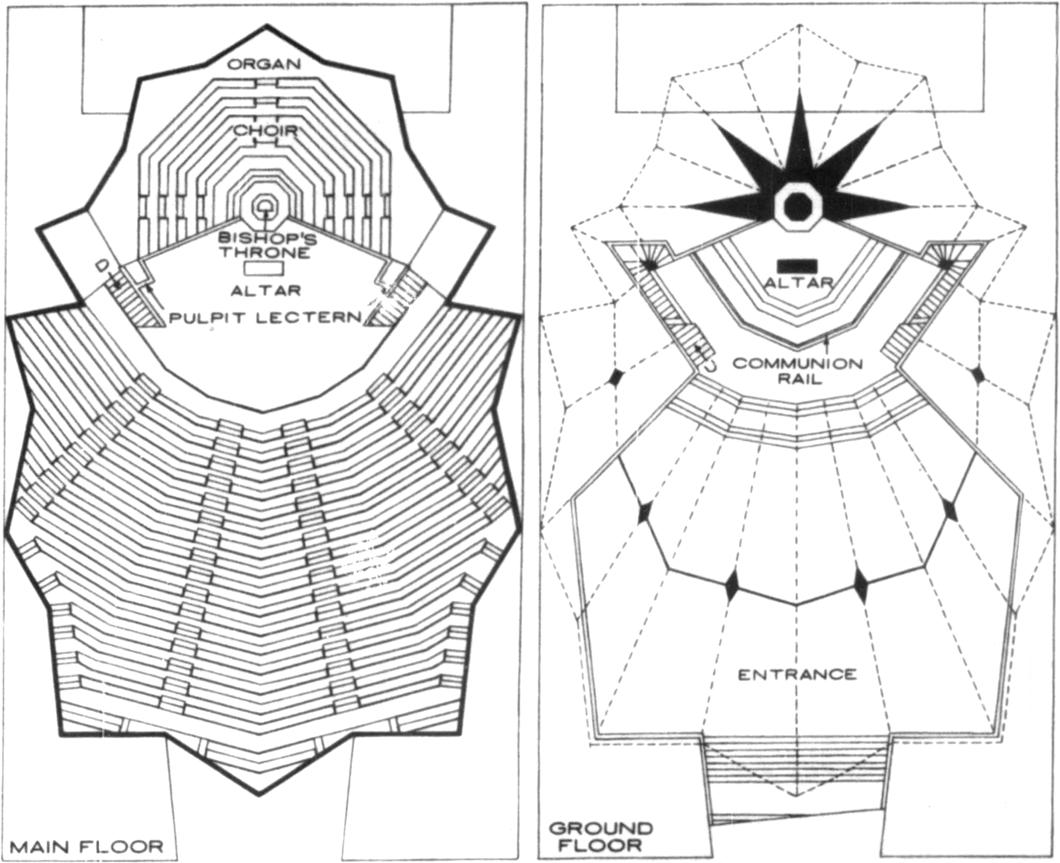
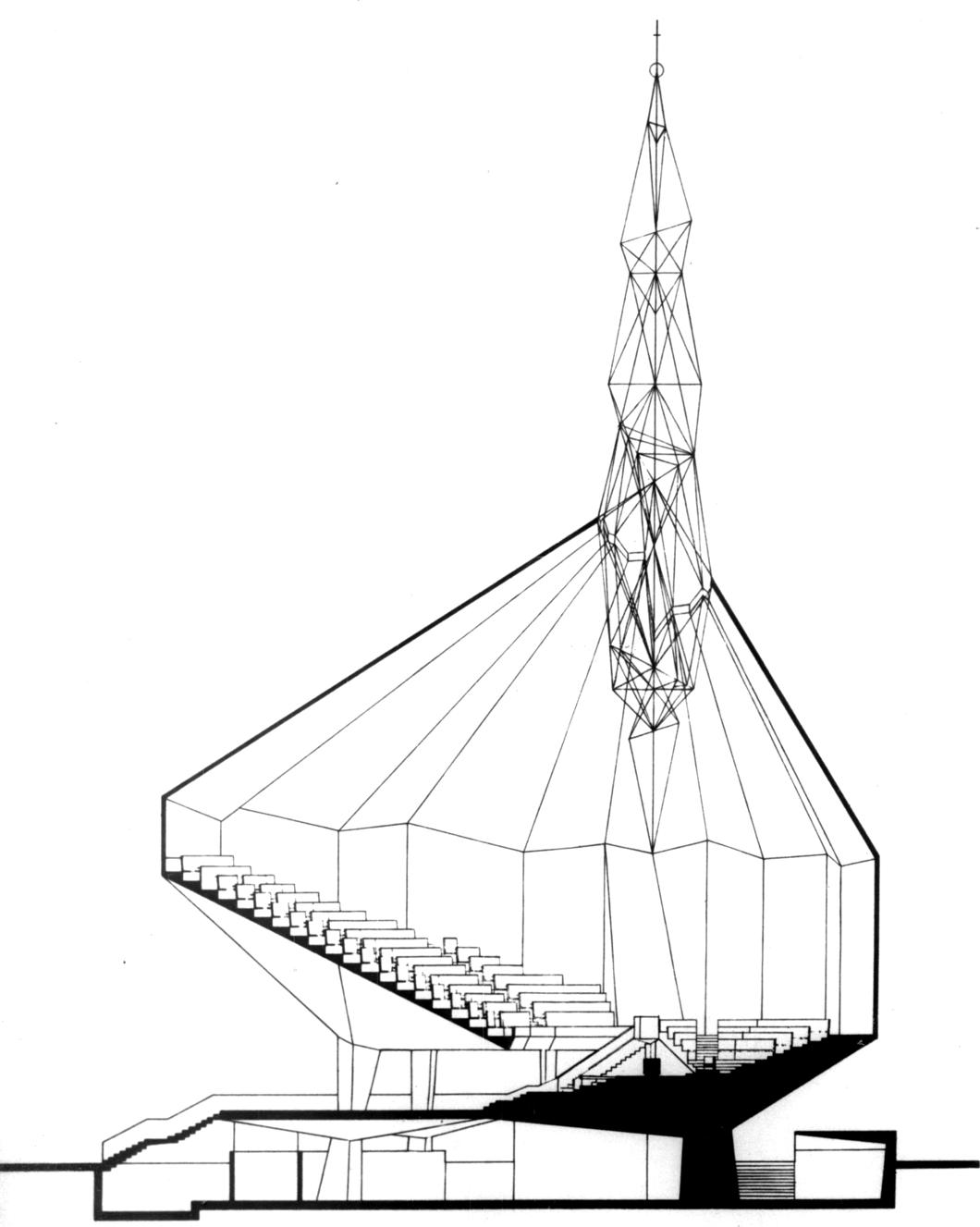
It is a striking and curiously beautiful design, but also too clever by half. The raked seating is immensely appropriate for a lecture hall or a theatre but less so for a church. In a place for liturgical worship it is less than ideal for the worshippers as a whole to look down on the altar of sacrifice where, as Anglican theology holds, God is made physically present.
While the African sun can be unrelenting, Swift & Partners’ proposal provides for natural light to reach the body of the church only through the coloured glass of the spire. There is no need for cathedral interiors to be bright — ideally there are rich gradations of light and shadow — but it strikes me this proposal would be unduly dark inside.
The architects explained they were inspired by words from Columbia University engineer Mario Salvadori that described the ideal church as “a jewel which represents the integration of feelings, of form, of structure, of all that makes for a complete expression of religious feelings in the materials of architecture”.
As it happened, Swift & Partners’ jewel remained uncut. Their proposal was set aside, and in its place came a new vision from within Liberia itself. Aaron Milton and Winston Richards — both Liberian architects — designed the church that was eventually built as Trinity Cathedral. Their work was more restrained: a rectilinear concrete frame that hints at Gothic precedent while retaining a trace of geometric abstraction. It retained the modernist idiom but translated it into something quieter, sturdier, and arguably more grounded in local sensibility.

I can’t help but like Swift’s plan, flawed though it is. The arboreal form of the design is delightful, but it would have served better as the Sheldonian of some West African Oxford than as a cathedral church of a diocese. A striking and beautiful modern work, but far from the ideal of a church.
A Gorgeous Tomb
Sir Thomas Gorges’ monument in Salisbury Cathedral

We all love a good funerary monument.
If you are wandering in Salisbury Cathedral you will inevitably stumble upon the beautiful tomb of Sir Thomas Gorges, bedecked with polyhedra.
Gorges was a bit of a character who managed to woo the somewhat saucy Swede Helena Snakenborg, who had become Marchioness of Northampton for a few months in 1571 before the Marquess rather suddenly dropped dead.
Sir Thomas fell for her and they were married in secret in 1576 to escape the wrathful gaze of the jealous usurper Elizabeth I.
He should not be confused for his relation, also Sir Thomas Gorges, who went to the New World to serve as deputy to William Gorges, the first governor of Maine before the province’s absorption by the Massachusetts-Bay Colony.
The proprietor of Maine, Sir Ferdinando Gorges, aimed to foster a neo-feudal community in New England based on the model of the West Country, and named his land New Somersetshire accordingly. (What a pity it failed, although Maine in summer is the very best of everything American.)
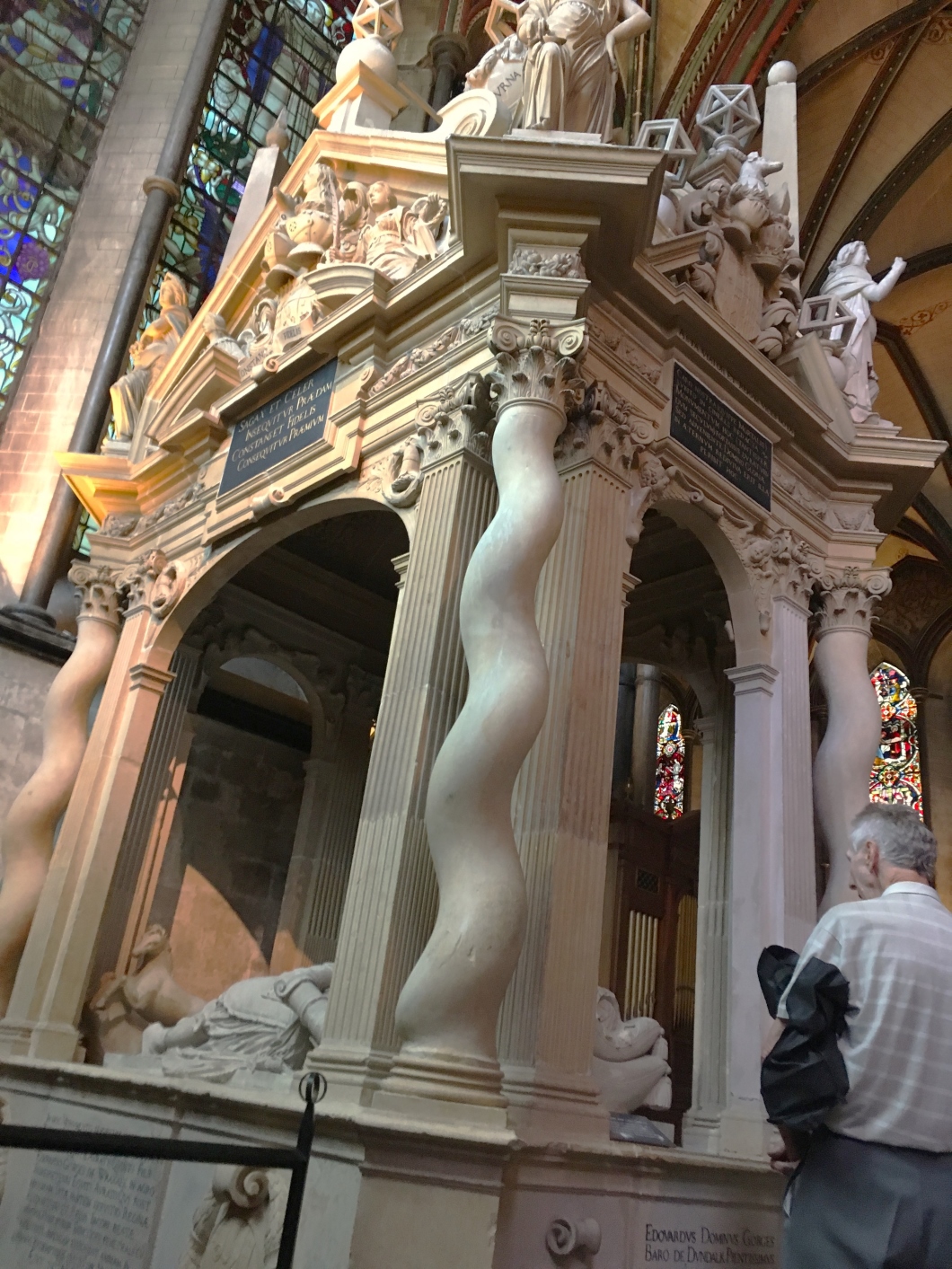
Our Sir Thomas, however, died in 1610 and this gorgeous monument was erected fifteen years later by son Edward. In addition to wonderful swirling sugarstick columns, the tomb is topped by a cuboctahedron, dodecahedron, and icosahedron (amongst others).
Not fifteen miles away in the Dorset church of Wimborne St Giles — much augmented by Sir Ninian Comper — you can find the lavishly ornate tomb of Sir Anthony Ashley and his wife. At Sir Anthony’s feet lies a truncated octahedron, indicating these geometric forms followed something of a deathly fashion.
You can even find a partially truncated rhombic dodecahedron at the final dwelling place of Sir Thomas Bodley — of Bodleian fame — in Merton College, Oxford.
The great majority of funerary polyhedra date from a period of about three decades during which, we are told, England and Europe “saw a resurgence of interest in quasi-mystical geometric symbolism”.
Search
Instagram: @andcusack
Click here for my Instagram photos.Most Recent Posts
- Brunel’s Unbuilt Capitol February 3, 2026
- Cricket at Fordham January 27, 2026
- Palacio Barolo Revisted January 14, 2026
- Learning to Love Liguria January 14, 2026
- Crux Alba No. 2 January 13, 2026
Most Recent Comments
Book Wishlist
Monthly Archives
Categories