2025 July
About Andrew Cusack
 Writer, web designer, etc.; born in New York; educated in Argentina, Scotland, and South Africa; now based in London.
 read more
News
Blogs
Reviews & Periodicals
Arts & Design
World
France
Mitteleuropa
Knickerbockers
Argentina
The Levant
Africa
Cape of Good Hope
Netherlands
Scandinavia
Québec
India
Muscovy
Germany
Academica
The New Yorker Rows

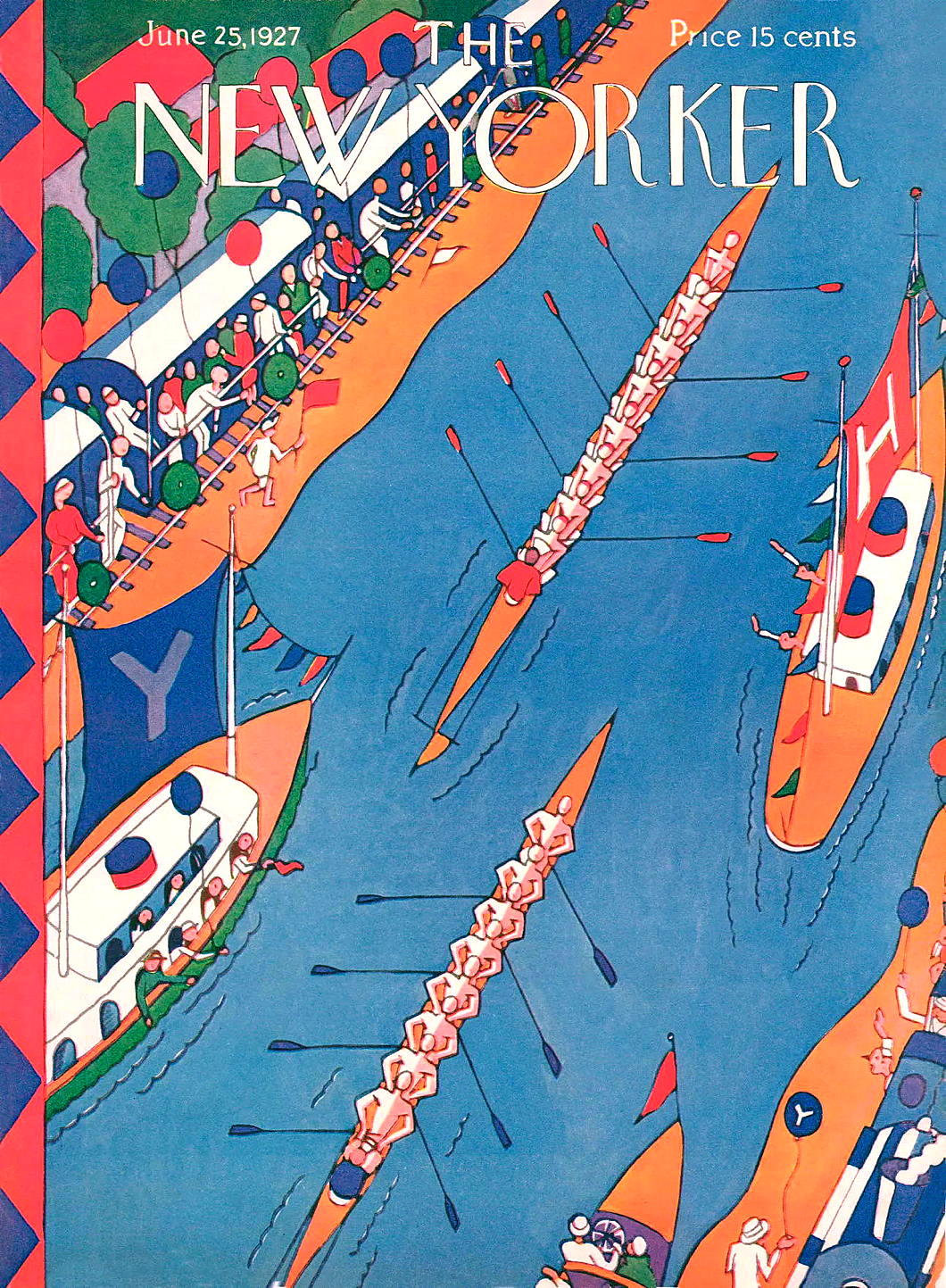
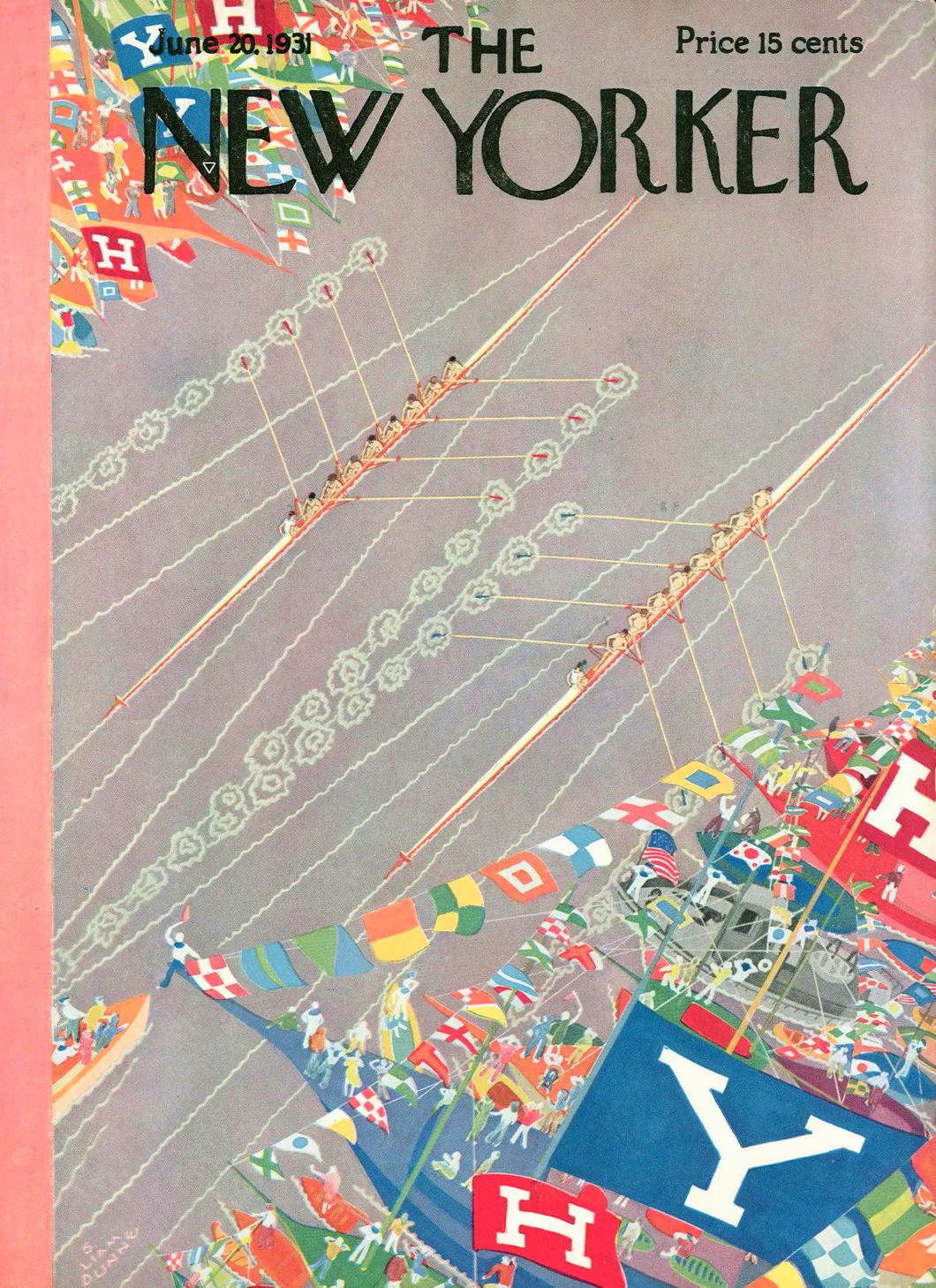
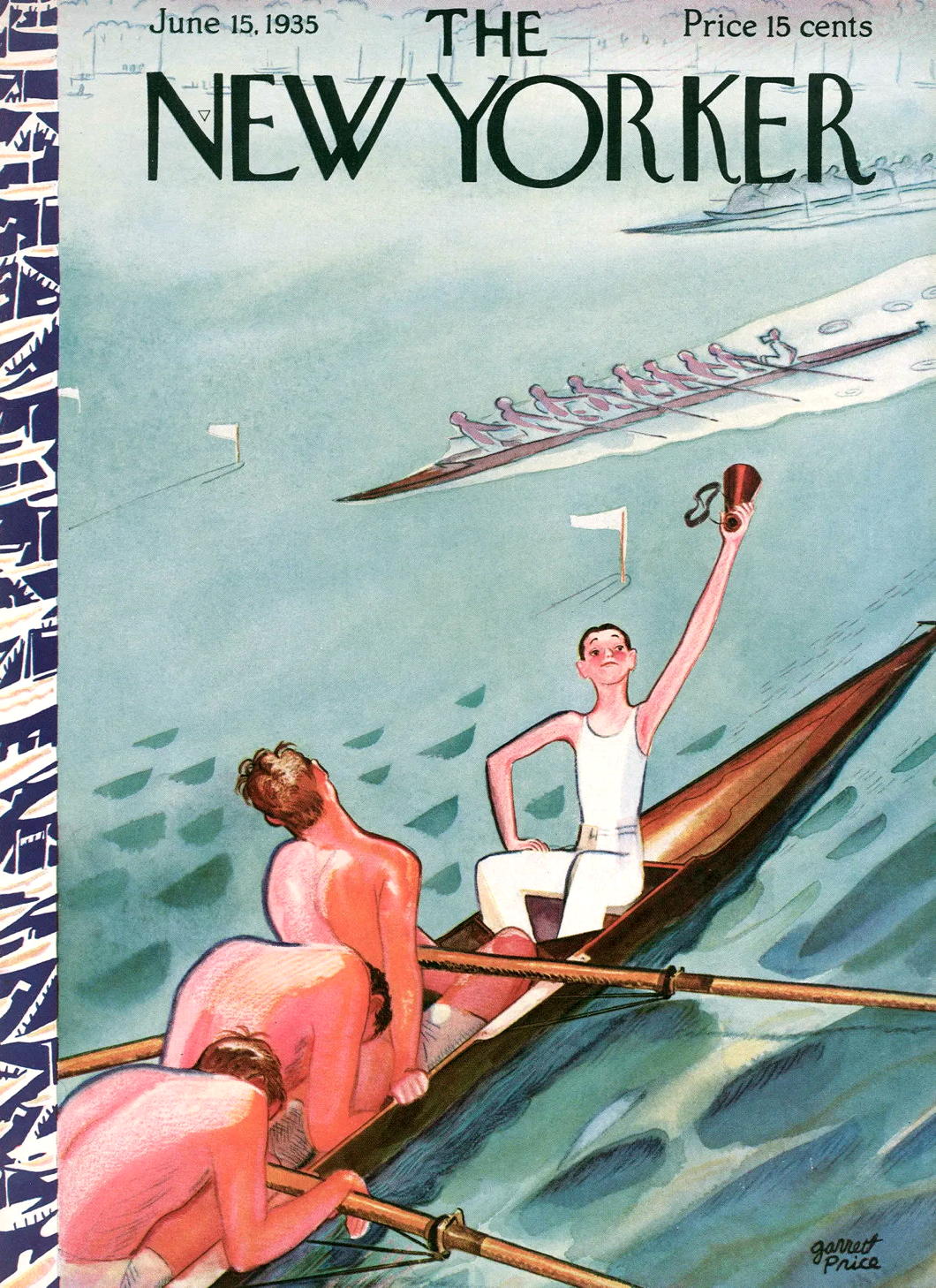
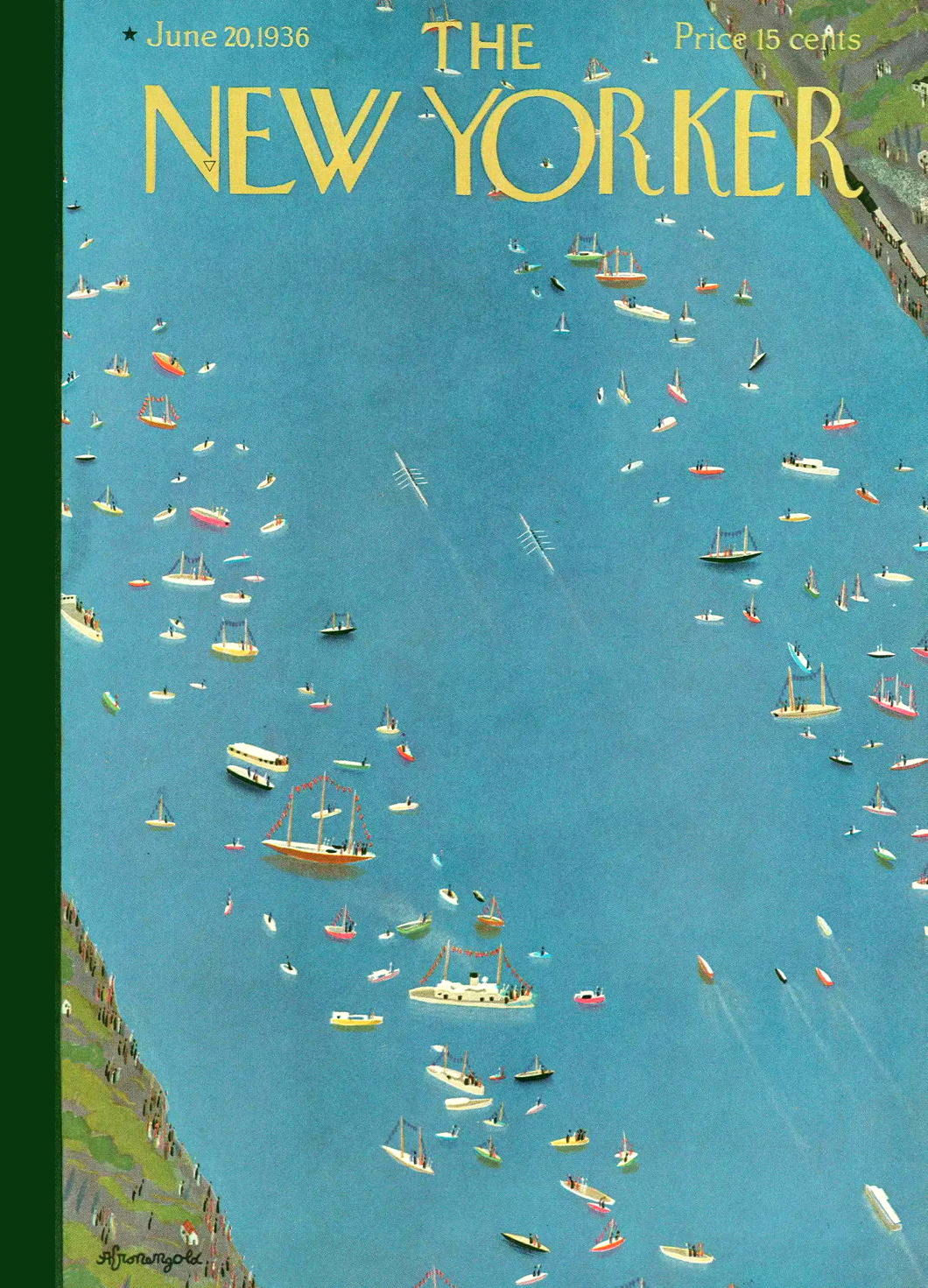
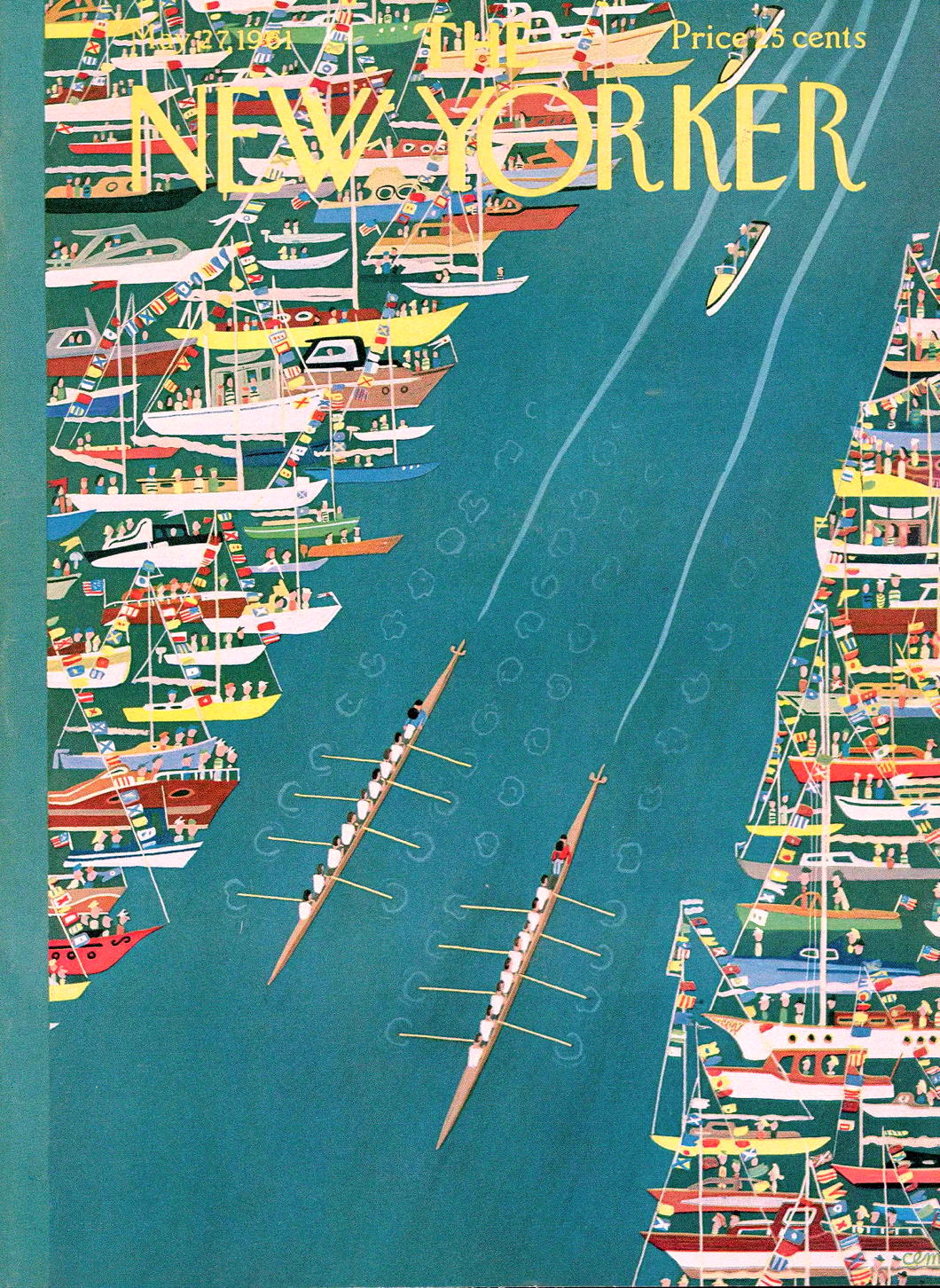
England has “The Boat Race” between Oxford and Cambridge, but America has the annual competition that sees Harvard face Yale on the Thames River in New London, Connecticut.
First held in 1852, “The Race” predates “The Game” — the two universities’ annual football match — by twenty-three years which makes it the oldest collegiate athletic competition ongoing in the States.
The Harvard/Yale battle on the river was a major sporting event for much of the twentieth century, and found its way to the cover of The New Yorker more than once.
Alas, like many totems of old New England, “The Race” has receded from the view of the common culture. Like foxhunting, it might even surprise some today that it ever held such a prime spot in people’s attention.
Pope Leo XIV Cricket Trophy
Emeriti C.C. Triumph over Old Dowegians and Vatican sides

On 6 July 2025, Her Grace the Duchess of Somerset presented the inaugural Pope Leo XIV Cricket Trophy to the winners of this new sporting competition, Emeriti Cricket Club.
The Emeriti, founded in 1871 by Monsignor the Lord Petre, beat out Old Dowegians C.C. and the visiting Vatican cricket team, St Peter’s C.C., in the triangular competition.
The club takes its members from the old boys and masters of Catholic schools across England. Emeriti captain Tom Fleming received the cup from the Duchess of Somerset on behalf of his XI.
Emeriti also sponsor the Catholic Schools Cricket Festival and recently inaugurated the Catholic Schools Girls Cricket Festival to complement it. There are hopes for an independent Emeriti women’s side to emerge in the near future.
As a former Lords & Commons XI cricketer — we were beaten on the field of battle by the Vatican side — it’s good to see that cricket is alive and well in Catholic England.
Les immortels

Today’s Fête Nationale gives me an excuse to talk about the Académie française, probably the coolest secular institution in the world.
In 2018, James Reginato wrote an article for Vanity Fair that peeked into the world of the « immortels ».
He pointed out that the election of an academician is sometimes compared to the election of a Pope, with Xavier Darcos joking the difference is that each academician “is convinced he is more important than the Pope”.
The College of Cardinals is also more efficient than the Académie: this year’s conclave took just two days to elect our new supreme pontiff.
It’s true the immortals have already chosen Alain Aspect to take the seat vacated by the death of the Marqués de Vargas Llosa, but there are six further empty seats.
According to the operations of the Académie, though six seats are empty, only one is actually designated as vacant.
For a vacancy to formally exist it must be declared during a formal session of the body, after which time a new academician is to be elected within three months (in theory, at least).
Seat 3’s most recent inhabitant was Jean-Denis Bredin who died in 2021. The other empty seats are number 10 (Florence Delay, m. 2025), number 11 (Gabriel de Broglie, m. 2025), number 14 (the great Hélène Carrère d’Encausse, m. 2023), number 20 (Angelo Rinaldi, m. 2025), and number 27 (Pierre Nora, m. 2025).
Needless to say, if one was called upon, one could not turn down so great an honour.
France24 recently did a small feature looking behind the scenes at the Académie française.

Fictions

Éditions Gallimard
A beautiful book cover for a great mind.
The design is not specific to the book but was common to all those printed in Gallimard’s La Croix de Sud collection of South American writing, selected by Roger Caillois.
Irritatingly, we don’t know who designed it.
The famous Gallimard book designer Robert Massin only joined the firm in 1958 and rose to the post of artistic director which he held for two decades.
This isn’t Massin’s style, however, and the book was printed years before he arrived anyhow.
More likely it was designed by Roger Parry, who did design some covers for Gallimard around the time Fictions was published.
Parry is also suggested by the researchers Brigitte Adriaensen and Lies Wijnterp in their recent attempt to interpret Borges through his book covers.

Druze Stirrings
The secretive sect that helped topple Assad
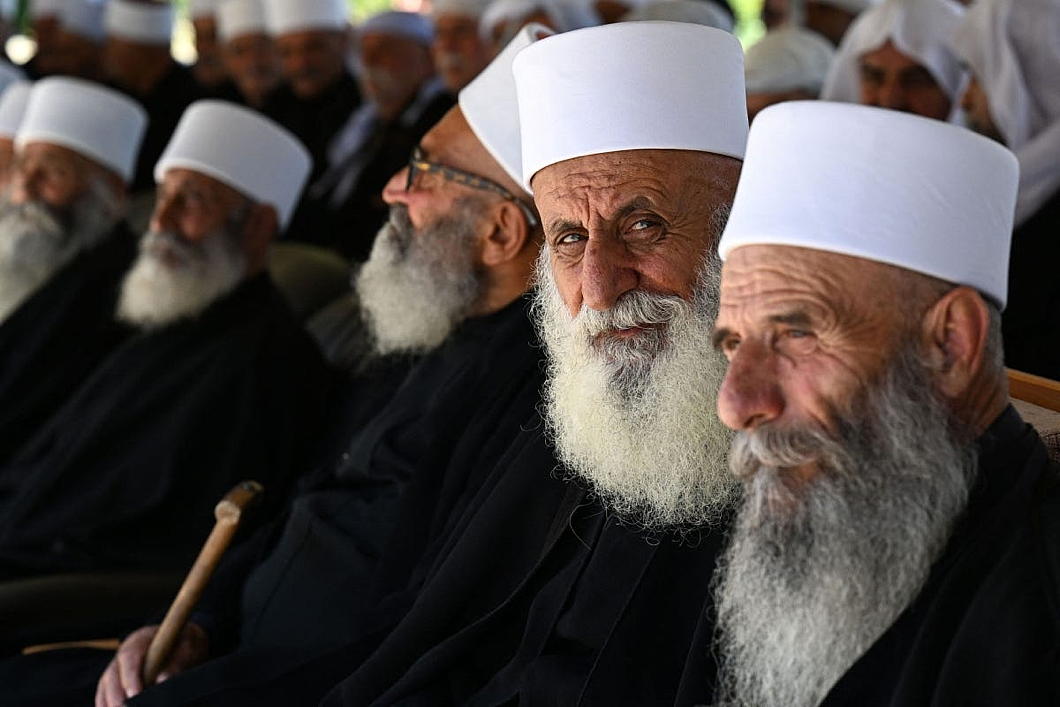
The Druze are an elusive people. During the few summers I spent in Lebanon I met Maronites, Melkites, Sunni, Shi’a, Armenians, and many others but I only recall knowingly meeting one Druze — and that’s a story for another day.
Druze beliefs are as secretive as they are distinct. Most file them as (for lack of a less judgemental word) a schismatic branch of Islam that emerged out of Isma’ilism; others argue that they are gnostics who took up the Islamic mantle to avoid oppression. Naturally they do not call themselves Druze, but muwaḥidūn, which more or less means ‘monotheists’ or ‘singularists’ — believers in the singularity of God. Ethnically, they are Arab, and migrated to the Lebanese mountains and Jabal al-Druze from south Arabia before the advent of Islam.
Christians have traversed the four corners of the globe in order to share the Gospel, but the Druze are completely at odds with this mentality. They are not bothered if you are uninterested in their religion: In fact, altogether they very much prefer you don’t ask too many questions because, frankly, they don’t want you to know. Since the closing of the daʿwa — the call to belief — in AD 1043, no converts may be accepted, nor can rituals or worship take place in public, and all marriage outside the community is prohibited.
There is only one famous Druze in the world: the perennial survivor of Lebanese politics, Walid Joumblatt. He ascended to the political headship of Lebanon’s Druze in 1977, succeeding his father Kamal as the leader of the Progressive Socialist Party — whose name elides the sectarian tribal nature of the entity as the outlet for political Druzism in the Lebanon — and maintained his leadership throughout the devastation of the fifteen-year civil war.
Joumblatt is an educated and entertaining fellow, sharing his holiday snaps on the Nile with pith helmet and parasol, mockingly comparing himself to Hercules Poirot.
Search
Instagram: @andcusack
Click here for my Instagram photos.Most Recent Posts
- Brunel’s Unbuilt Capitol February 3, 2026
- Cricket at Fordham January 27, 2026
- Palacio Barolo Revisted January 14, 2026
- Learning to Love Liguria January 14, 2026
- Crux Alba No. 2 January 13, 2026
Most Recent Comments
Book Wishlist
Monthly Archives
Categories