Portugal
About Andrew Cusack
 Writer, web designer, etc.; born in New York; educated in Argentina, Scotland, and South Africa; now based in London.
 read more
News
Blogs
Reviews & Periodicals
Arts & Design
World
France
Mitteleuropa
Knickerbockers
Argentina
The Levant
Africa
Cape of Good Hope
Netherlands
Scandinavia
Québec
India
Muscovy
Germany
Academica
A Magnificent Portuguese
Gonçalo Ribeiro Telles: environmentalist, democrat, monarchist, professor, government minister, landscape architect
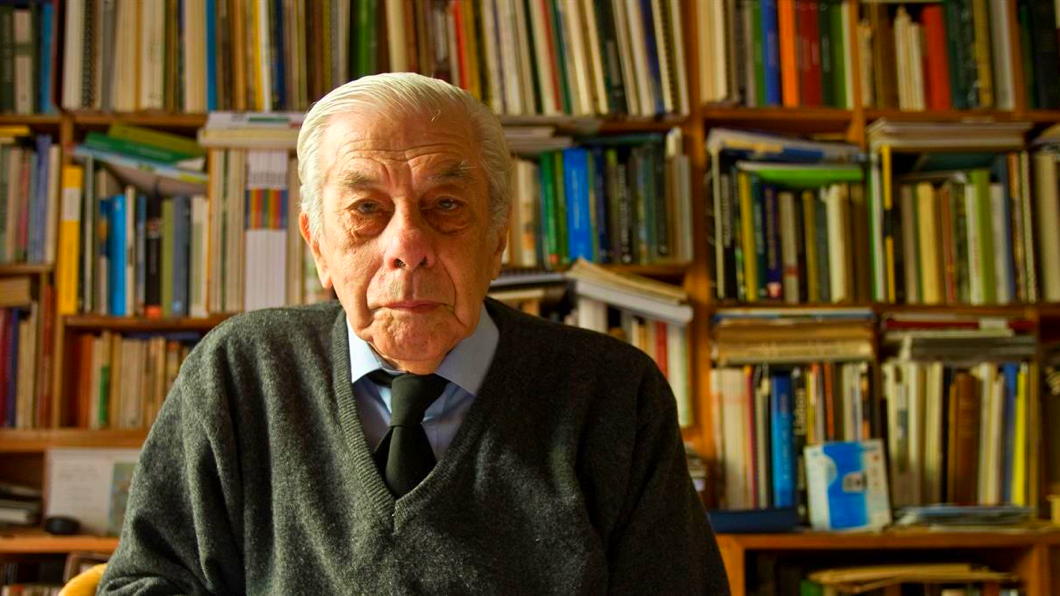
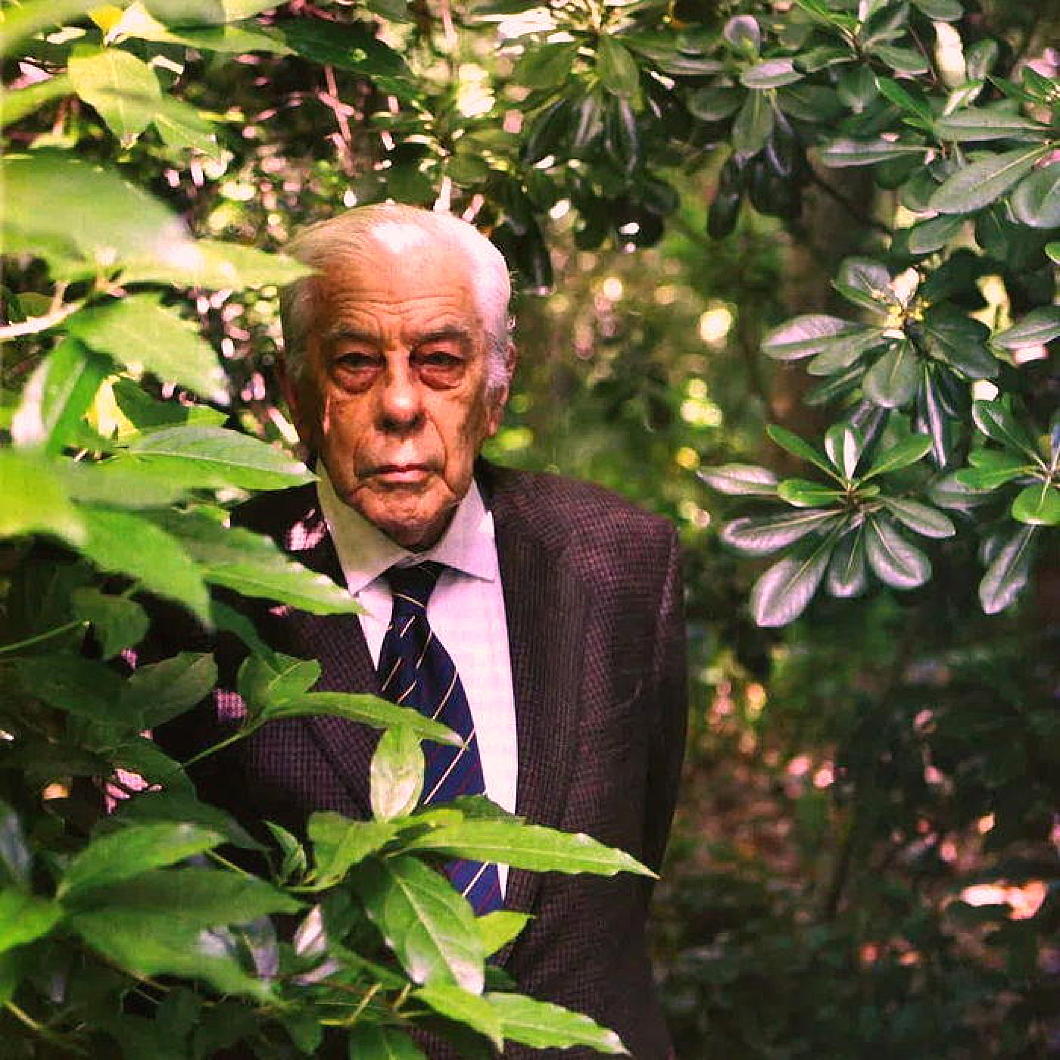
No one ever thinks about the landscape architects. Portugal is a small country that gave birth to great poets, explorers, navigators, merchants, and the entire nation of Brazil. Gonçalo Ribeiro Telles (1922-2020) followed none of those callings, but his career was by no means typical for a landscape architect.
Born a lisboeta, young Gonçalo studied at the Instituto Superior de Agronomía, then part of the Technical University of Lisbon, and housed in an inexplicably grand baroque mansion in the 250-acre leafy Tapada da Ajuda, a sprawling green space on Lisbon’s outskirts.
During the 1940s and early 1950s, the Instituto Superior de Agronomía was a hub of scientific and practical education. The school balanced rigorous agronomic and forestry studies with an increasing interest in landscape architecture — a discipline still in its infancy in Portugal. The sometimes-dry atmosphere was one of disciplined inquiry, shaped by professors with strong ties to both traditional Portuguese forestry and emerging European environmental thought.
Students were trained not merely as technicians but as stewards of the land, tasked with managing Portugal’s varied ecosystems and agricultural resources amid the challenges of modernisation. While the curriculum remained grounded in agronomy and forestry sciences, the period saw the beginnings of a more holistic approach, championed by figures like Professor Francisco Caldeira Cabral, who encouraged students to consider landscape as an integrated ecological and cultural entity.

The year Ribeiro Telles arrived at the Institute was the first in which Caldeira Cabral began offering the degree course of landscape architecture. The professor — the father of nine children, including the composer and musician Pedro Caldeira Cabral — took Gonçalo under his wing and with him the the four students on the programme made annual trips to West Germany to study and draw the landscapes there.
“My first trip was by Volkswagen to Hanover,” Ribeiro Telles told a reporter later in life. “We crossed Spain on the roads of Old Castile, France, and then went up the Rhine. Imagine what you see! Germany was a landscape ravaged by war. They were rebuilding everything, and we had the opportunity to witness it.”
After graduating, Ribeiro Telles worked for the Municipality of Lisbon, also taking time to work with his mentor Caldeira Cabral to co-author A Árvore em Portugal — even today a standard reference work detailing the trees, woods, and hedges of the country, whether in natural or contrived landscapes.
It was in the 1960s that Ribeiro Telles was drafted in to help work on redeveloping a park which had been purchased by the Calouste Gulbenkian Foundation in order to house one of the most significant private art collections in Europe.
Calouste Gulbenkian was an Ottoman-born Armenian businessman (naturalised as British in 1902) whose richesse from petroleum allowed him to become one of the most generous men in the world. In addition to being an art collector, he endowed hospitals, schools, and churches — particularly in the scattered Armenian communities — for many decades.
When the Second World War came, Gulbenkian spent a spell as the Shah’s ambassador to Vichy France before moving to the relative peace of neutral Lisbon in 1942. (His son Nubar, meanwhile, helped run the “Pat O’Leary” network helping Allied airmen escape German-occupied France to Franco’s Spain.) Calouste remained in the Portuguese capital until his death in 1955.
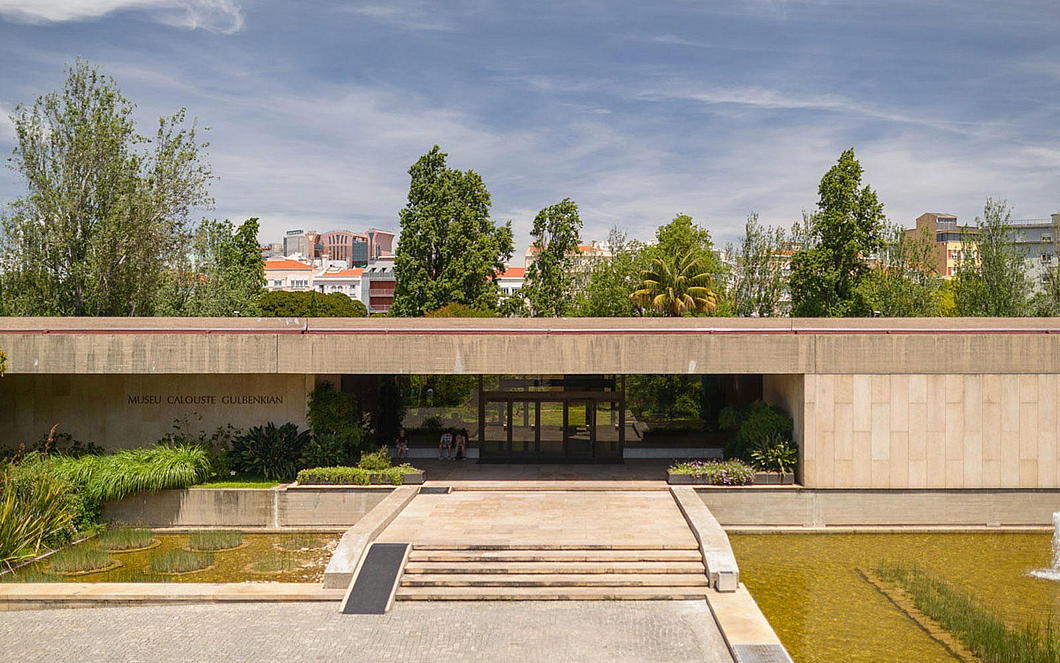
Gulbenkian’s legacy included a foundation to care for and display the art he had collected across his many decade. The trustees commissioned a team of architects to devise a strikingly modern building in Lisbon to house it within a verdant garden setting. Ruy Jervis d’Athouguia, the lead architect, recruited Ribeiro Telles to reshape the park around the museum to suitably complement its bold architecture.
Drawing on his expertise in agronomy and his philosophy of integrating native Portuguese flora with thoughtful spatial design, Ribeiro Telles conceived the garden as a harmonious blend of natural and cultivated elements. He sought to create a space that was both tranquil and educational, showcasing indigenous Mediterranean plants and trees that reflected the local ecology.
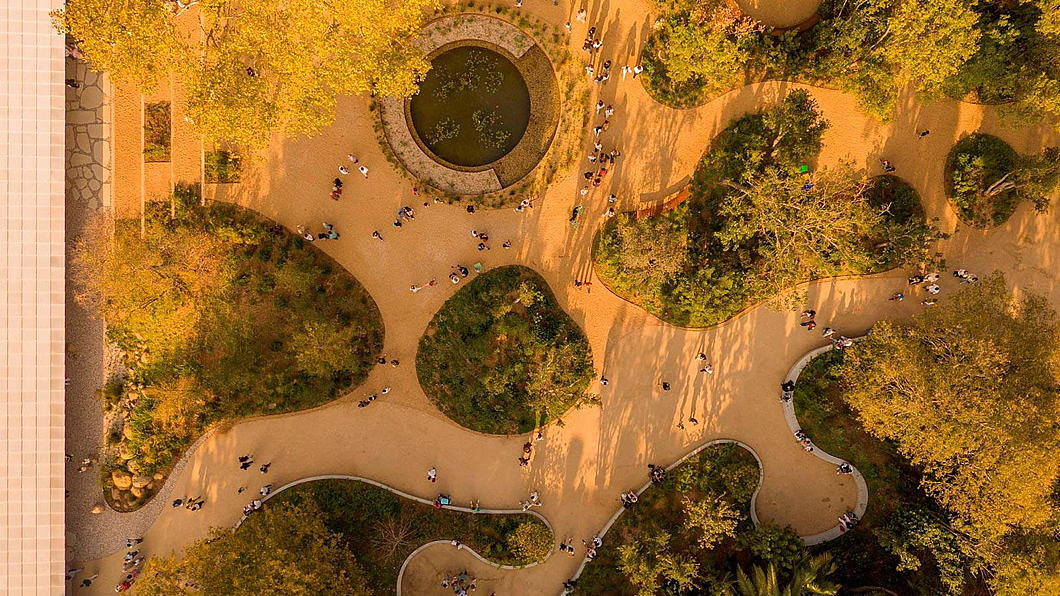
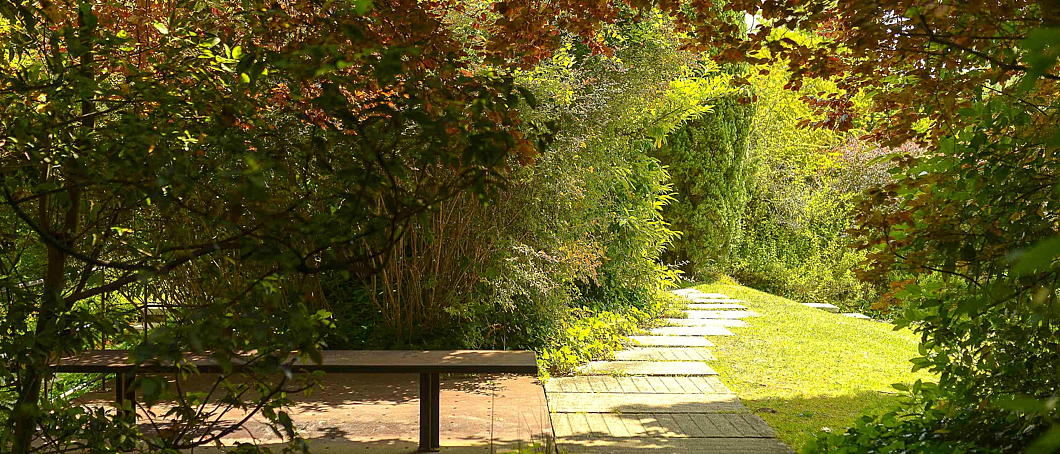
The garden’s design emphasises natural contours, water features, and a careful balance of open lawns and wooded areas, inviting visitors to experience a variety of landscapes in an urban setting. The Gulbenkian Garden is a landmark in Portuguese landscape architecture and remains a testament to Ribeiro Telles’s vision of ecological continuity and cultural identity.
As the Estado Novo began to show cracks, Ribeiro Telles’s deep-rooted Catholic sensibilities and monarchist convictions led him to notch up his role in a rapidly developing political scene. While the 1974 revolution unleashed the expression of Marxist and other far-left tendencies, it also presented an opening for the rebirth of a constitutionalist conservative tradition in Portugal — one that had been frozen in amber during the preceding decades of technocratic authoritarianism.
Ribeiro Telles was among the chief founders of the Partido Popular Monárquico — the People’s Monarchist Party — a curious coalition that brought together traditional monarchists, Catholic intellectuals, rural landowners, and a smattering of constitutional nostalgists whose political lineage traced back to the late liberal Cartistas.
The PPM claimed a place in the democratic process for the politics of rootedness, subsidiarity, cultural continuity, and the organic nature of society. It opposed the materialism of Marxism as well as the managerial blandness of Euro-technocracy and promoted a vision of Portugal as a living inheritance — not just a nation-state, but a civilisation. The party’s early years were marked by an improbable (and ultimately unfulfilled) optimism, bolstered when it was invited to join the coalition governments of the centre-right in the post-revolutionary years.

Ribeiro Telles himself entered government in 1979 under Prime Minister Francisco Sá Carneiro, serving as Secretary of State for the Environment and later as Minister for the Quality of Life. These titles, seemingly anodyne, belied the originality of his vision. He championed ecological zoning, the protection of agricultural peripheries, and the integration of green spaces within urban plans — initiatives that in retrospect seem prescient, but at the time were borderline revolutionary.
Under his guidance the Reserva Ecológica Nacional and Reserva Agrícola Nacional were established, preserving swathes of Portuguese land from the unchecked sprawl that consumed other southern European capitals. He saw farming and cultivation not as the enemy of the natural world but as integral to it. Ribeiro Telles advanced his policies not through bombast or ideology but by presenting common sense in the idiom of tradition.
For him, landscape and the countryside are a ultimately the work of centuries of human hands, and the environmentalism that seeks to undo human habitation must be called out as an Enlightenment rustic romanticism antithetical to the real countryside.
“We tend to think of landscape as a natural thing,” he told a journalist from Expresso. “It’s just there. When I began studying it, I realized it’s linked to a very important antecedent: humanity. Every landscape is the work of man, not nature. Without human influence, it would be worthless. When you begin to understand this, the greatest surprise is to see how a given landscape has an origin, not pictorial, not scenic, but how it functions in its diversity.”
By the 1990s, Ribeiro Telles became disenchanted with the limited ambitions of Portugal’s mainstream parties — including his own. In response he founded the Movimento Partido da Terra (MPT), a green-conservative party that rejected the rhetoric of metropolitan environmentalism and rooted itself instead in the lived realities of rural and regional Portugal. It was anti-centralist, pro-municipal, and unapologetically rooted in an understanding of stewardship — not ownership — of the earth that was fundamentally (but not explicitly) Catholic in inspiration. Like the PPM, the MPT occasionally participated in electoral coalitions with the larger centre-right parties in Portugal, the PSD and the CDS-PP but achieved limited success.
In his later career, Gonçalo Ribeiro Telles continued to shape the green fabric of the Lisbon metropolitan area through a series of influential projects. He played a key role in the planning and expansion of the Monsanto Forest Park, an urban forest three times the size of Manhattan’s Central Park that became known as the “lung of Lisbon,” preserving natural landscapes amid rapid urban growth. Ribeiro Telles also contributed to the design of green corridors and the rehabilitation of degraded areas, advocating for ecological connectivity across municipal boundaries. Despite his advancing years, he continued to play an active role in politics, particularly in the 2010 movement opposing the redefinition of civil marriage.
On his 98th birthday in May 2020, the landscape architect was hailed by the President of Portugal as “one of the most admirable people I have the privilege of knowing”. President Marcelo Rebelo de Sousa praised “his visionary spirit, which led him, before all of us, to anticipate the problems we face today — and which would have taken on a very different profile if, in due time, we had heeded his wise warnings.”
Four months later, on 11 November 2020, Gonçalo Ribeiro Telles drew his last breath. On the day his funeral took place in the Jerónimite monastery of Belém the Portuguese government declared a state of national mourning.
A Portuguese friend of mine who met Ribeiro Telles described him to me as “deeply free, democratic, monarchist, a true municipalist in terms of his view of politics.” Ribeiro Telles “was talking about allotments, municipal farms, green spaces… in the 1970s!”
He had an excellent mind and a good hand at drawing, but somehow it seems wrong that he was not also a poet. I feel certain he must have written at least a few verses scribbled somewhere, left amongst his papers to be discovered decades from now by some earnest researcher. Instead of words, Ribeiro Telles crafted scenes out of soil, plant, water, and wood.
Next time you are in Lisbon, nip in to the garden of the Gulbenkian and spare a thought for old Gonçalo.
Si monumentum requiris, circumspice.
Articles of Note: 13 March 2024
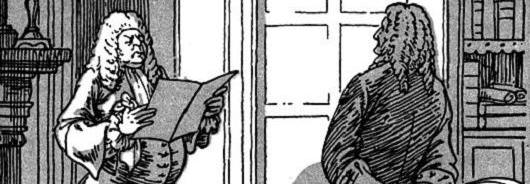
My then-flatmate was getting married the next day and much pottering-about sorting things was required but the idiosyncratic beauty of this building captured my imagination — part Norman, part Moorish. I was almost insulted that I hadn’t come across it in any of my bookish explorations.
The historian Edmund Harris covers Chideock in his lusciously illustrated post on Recusancy in Dorset and the ‘other tradition’ of Catholic church-building.
■ Generations ago it was said that the three institutions no British politician dared offend were the trade unions, the Catholic Church, and the Brigade of Guards. In 2020s Britain there is only one caste which must always be obeyed: the ageing, moneyed homeowners.
Not only do these “NIMBYs” (“Not In My Back Yard”) jealously guard their freeholds, they do whatever they can to prevent more houses being built to guard the value of their prize possessions, vastly inflated by a combination of lacklustre housebuilding and irresponsible leap in migration. As old people vote and young people don’t — and when they do, vote badly — few sensible people can find a way out of this quagmire.
It might be worth looking to the Mediterranean, where Tal Alster tells us How Israel turned urban homeowners into YIMBYs.
■ It’s disappointingly rare to see intelligent outsiders give a considered impression of the current state of play in the Netherlands — that’s Mother Holland for us New Yorkers. Too often commentators in English are either rash cheerleaders for the hard right or bien-pensant liberals eager to castigate and chastise. Both rush to judgement.
What a rare diversion then to read Christopher Caldwell — the only thinking neo-con? — attempt to explore and explain the success of Geert Wilders in the recent Dutch elections.
■ One in ten of Lusitania’s inhabitants are now immigrants, and this discounts those — many from Brazil and other former parts of the once-world-spanning Portuguese empire — who have managed to acquire citizenship through various routes.
Ukrainian number-plates are now frequently be seen on the roads of Lisbon, as far in Europe as you can get from Big Bad Uncle Vlad.
Vasco Queirós asks: Who is Portugal for?
■ Speaking of world-spanning empires, in true andrewcusackdotcom fashion, we haven’t had enough of the Dutch — but we have had enough of their wicked wayward heresies.
Historian Charles H. Parker explores the legacies of Calvinism in the Dutch empire.
■ The City of New York itself is the best journalism school there is. Jimmy Breslin dropped out of LIU after two years, eventually taking up his pen. Pete Hamill left school at fifteen, apprenticed as a sheet metal worker, and joined the navy.
William Deresiewicz argues that a dose of working-class realism can save journalism from groupthink.
■ The New Yorker tells us how a Manchester barkeep found and saved a lost (ostensible) masterpiece of interwar British literature.
■ Our inestimable friend Dr Harshan Kumarasingham explores David Torrance’s history of the first Labour government on its hundredth anniversary.
■ And finally, one for nous les normandes (ok, ok, celto-normandes): Canada’s National Treasure David Warren briefly muses that the Norman infusion greatly refined Anglo-Saxon to give us the superior English tongue we speak today.
The ‘Other Modern’ in Portugal
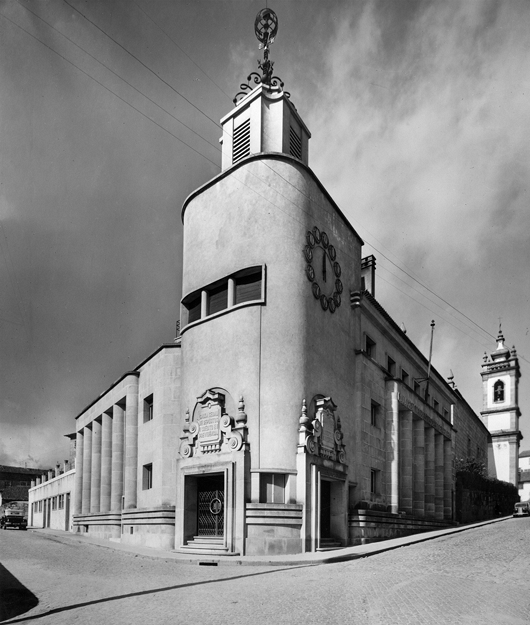
Guarda, Portugal; 1939–1942
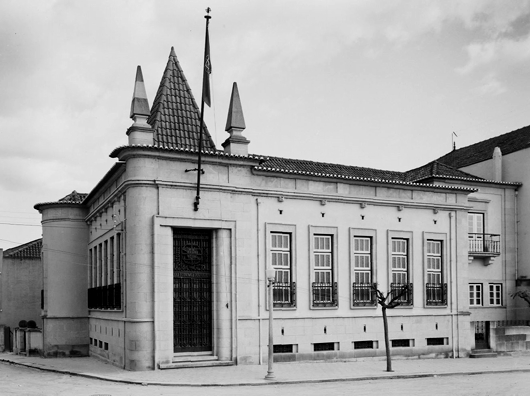
[A] core aspiration can be discerned that runs through the entire [architectural] output of the “Estado Novo”, particularly from the second half of the 1930s. It is a catchphrase, never defined with absolute clarity and therefore tested by approximation, trial and error: the demand for a national modern style, a construction style that was at the same time contemporary and suited to the locality and/or specificity of the country. This agenda accommodated various formulations, depending on the evolution of the regime itself, the type of public building in question, the place for which it was intended, the profile of the people responsible for its appraisal and the margin granted to the architect-designer. […]
Salazarism never upheld anachronism or the practice of an archaeological type of architecture. It did not reject modernity entirely, but disliked disaggregating, standardising, stateless foreignness, embodied in its view by the architectural abstractionist internationalism (dubbed “boxes”). An alternative modernity was thus aspired to and achieved; far from being an exclusive diktat of the state, this idea of an alternative modernity pervaded the discourses of the timid specialist press, the opinions generally expressed by the civil society and the dilemmas of the architects themselves.
RIHA Journal 133, 15 July 2016
See also: The Other Modern
Lisbon
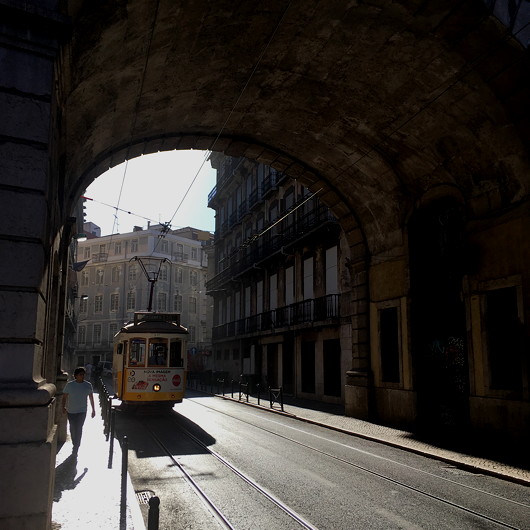
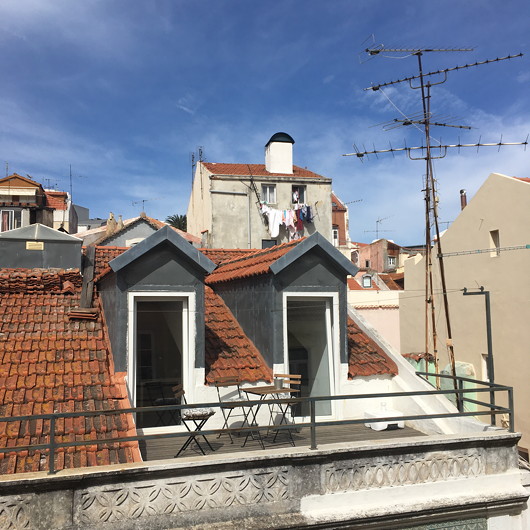
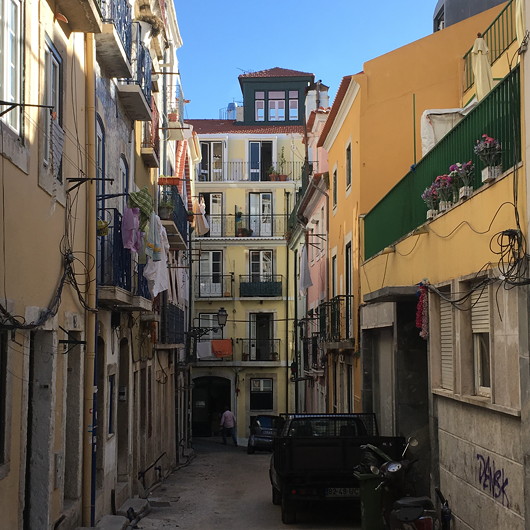
One of the finest cities I have had the privilege of visiting, only lightly touched by the grim hand of modernism.
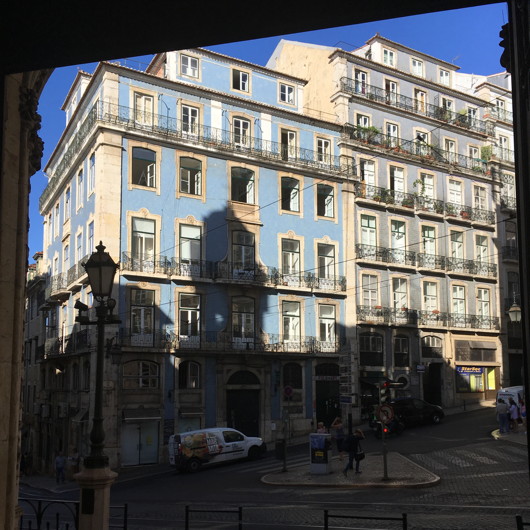
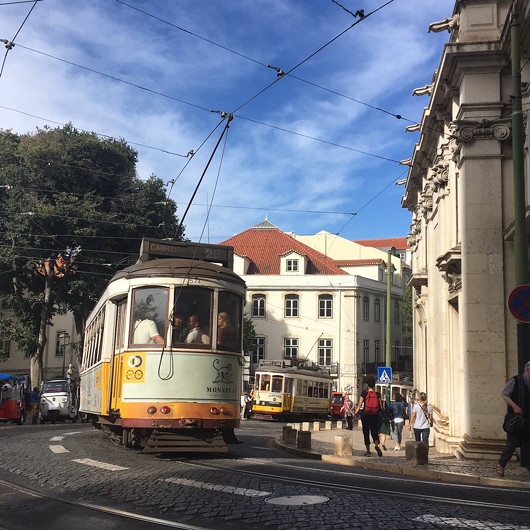
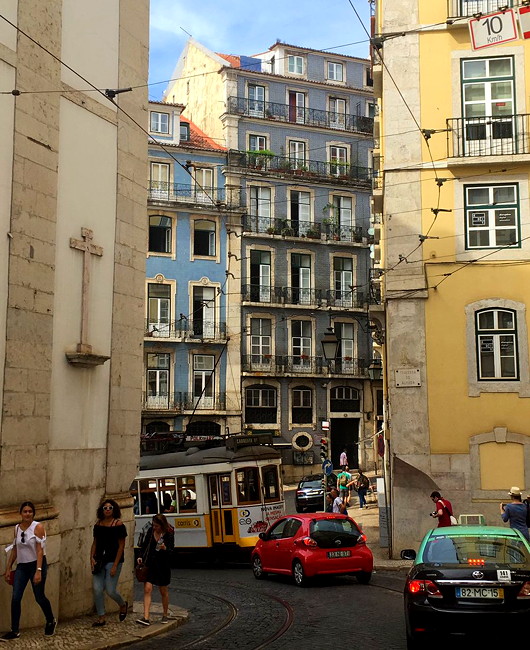
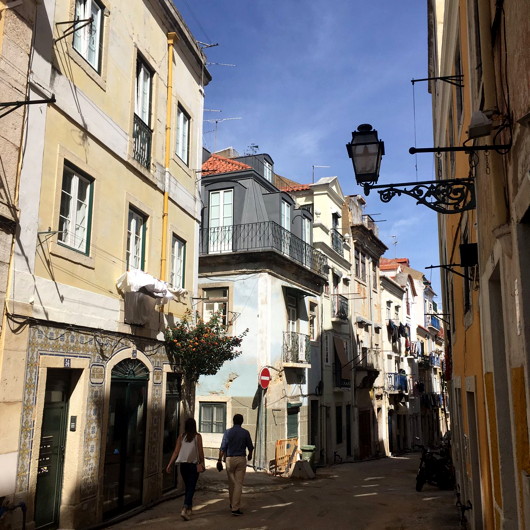
Salazar-plein / Salazar Square
Cape Town’s monument to a Portuguese friend of South Africa
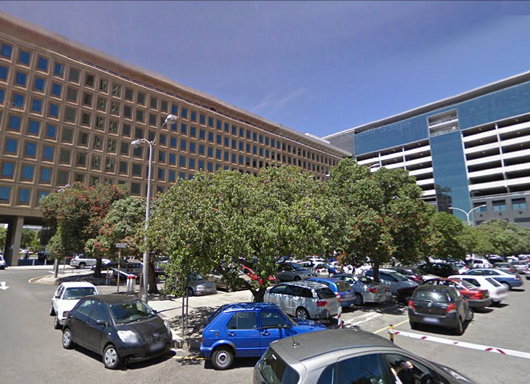
Doubtless there were once many streets, squares, and places named after António de Oliveira Salazar, Portugal’s longtime dictator — the Ponte Salazar being the one that springs immediately to mind. That bridge, like most other Salazarian toponyms in the Lusosphere, was renamed after Portugal’s Carnation Revolution, even though the dictator remains a reasonably popular figure (a poll for the RTP television programme The Greatest Portuguese he came out top with twice as many votes as the runner-up). (more…)
Portugal in the 1950s
I felt as if I were going from a noisome prison out into the morning air in the countryside. … After the clangor and tension [of New York], and so many faces taut or ugly or vicious, life in Portugal might be unaffluent but it was still quiet, still kindly, still human. The lack of development and the poverty struck one as a blessing. The absense of advertisers and of mass media men and of vote-catching politicians, bawling out their meretricious wares, was like relief from the presence of the demented.
via R.J. Stove
Search
Instagram: @andcusack
Click here for my Instagram photos.Most Recent Posts
- Brunel’s Unbuilt Capitol February 3, 2026
- Cricket at Fordham January 27, 2026
- Palacio Barolo Revisted January 14, 2026
- Learning to Love Liguria January 14, 2026
- Crux Alba No. 2 January 13, 2026
Most Recent Comments
Book Wishlist
Monthly Archives
Categories