History
About Andrew Cusack
 Writer, web designer, etc.; born in New York; educated in Argentina, Scotland, and South Africa; now based in London.
 read more
News
Blogs
Reviews & Periodicals
Arts & Design
World
France
Mitteleuropa
Knickerbockers
Argentina
The Levant
Africa
Cape of Good Hope
Netherlands
Scandinavia
Québec
India
Muscovy
Germany
Academica
Abbott’s Gun
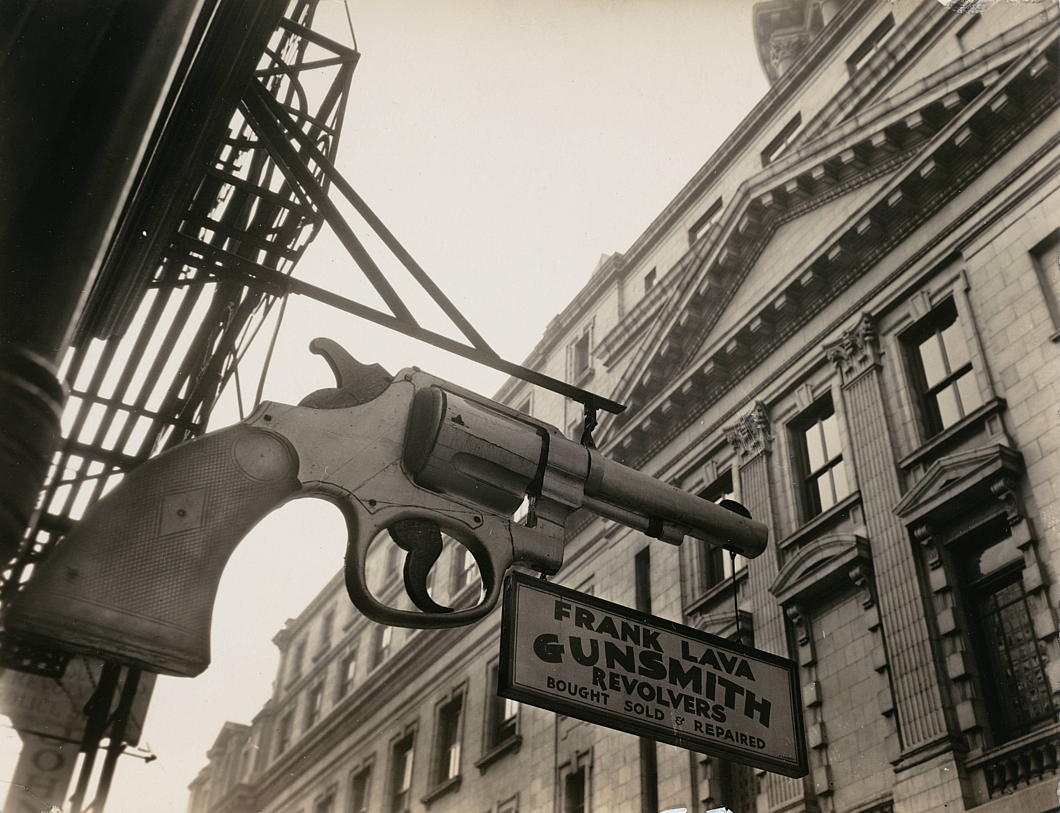
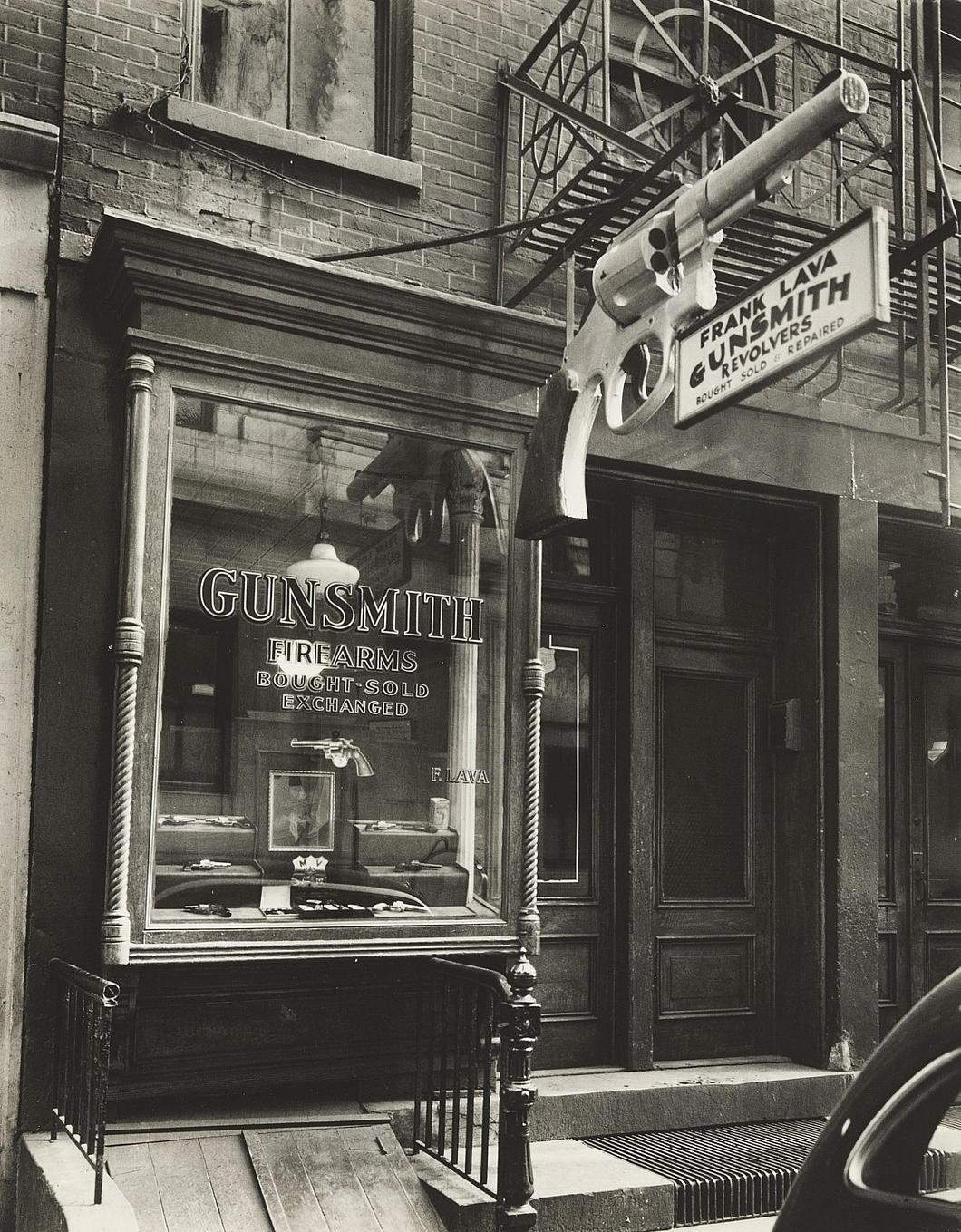
Berenice Abbott took a few photographs of New York’s old Police Headquarters viewed from one of the gunsmiths across Centre Market Place.
This street behind the NYPD HQ (which fronts on to Centre Street) became the gunsmiths’ district of Manhattan — policemen being one of the best customers for many of these businesses. (Criminals being another.)
There is something almost mediæval about the giant gun hanging outside, advertising to one and all what the shop had to offer.
Frank Lava, the gunsmith photographed, shut decades ago, but the John Jovino Gun Shop was originally next door before moving around the corner into Grand Street.
Like Lava’s, Jovino’s continued the tradition of hanging a giant gun outside the shop like in Abbott’s photograph.
The John Jovino Gun Shop, founded 1911, chucked in the towel last year when “Gun King Charlie” — owner Charlie Yu — decided the rent was too damn high.
An Interview with Philippe de Gaulle
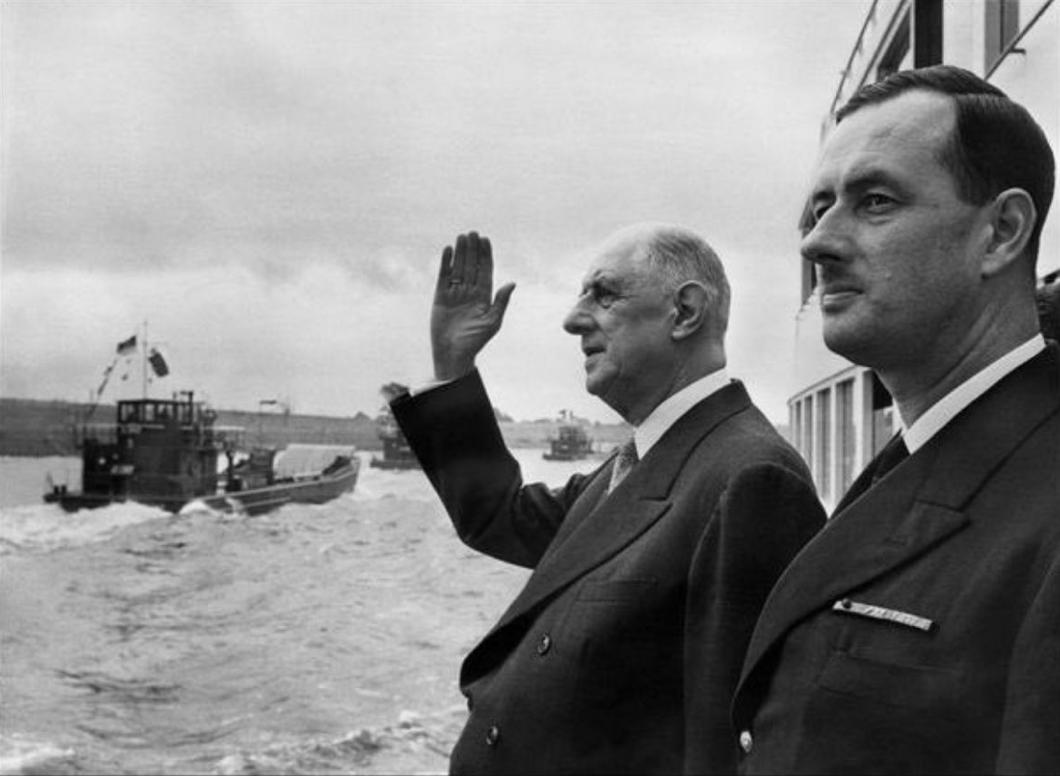
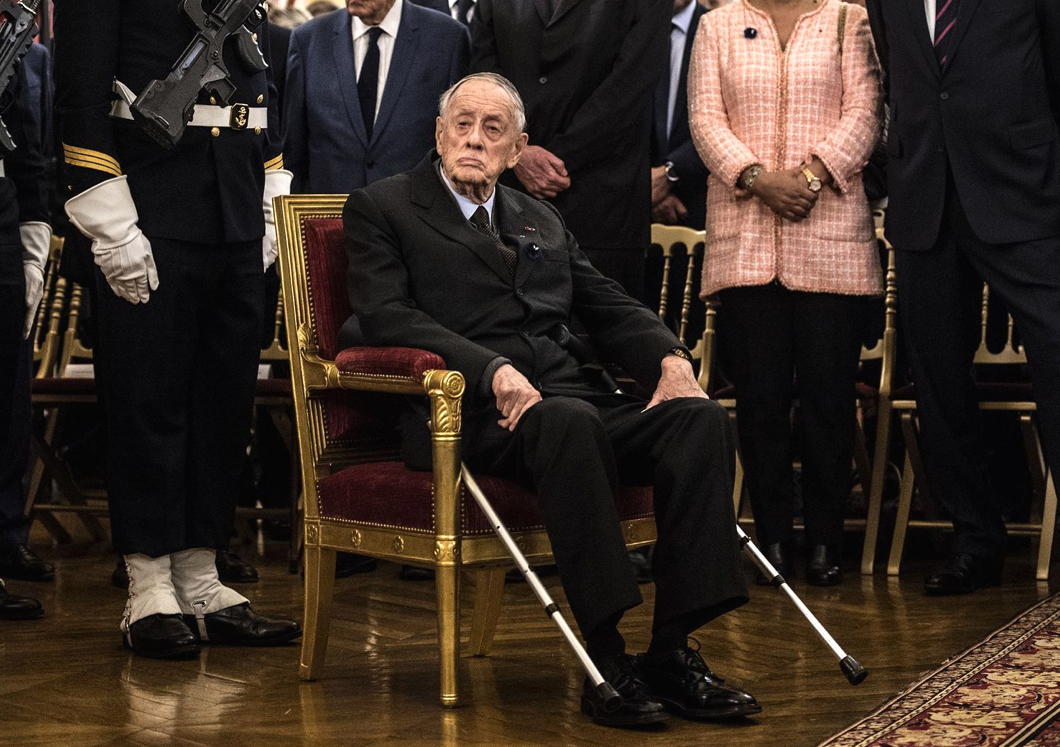
Last year, in advance of the Admiral’s ninety-ninth birthday and the fiftieth anniversary of his father’s death, Paris Match sent Caroline Pigozzi to interview Philippe de Gaulle.
What follows is an abridged and completely unofficial translation of what Admiral de Gaulle insists will be his “last interview”.
ADMIRAL PHILIPPE DE GAULLE: Everyone has appropriated their share, even the Communists. All those who refer to General de Gaulle’s policy respect his Constitution, that of the Fifth Republic…
But, over the elections, my father’s imprint has faded. Pompidou, he was not quite his ideas anymore. Giscard d´Estaing, even less so… Mitterrand, basically, had the ideas of General de Gaulle, but he could not say it.
How do you judge the current president?
Emmanuel Macron is quite right to reference himself to the General as well as to other heads of state — France comes from the depths of the ages and the centuries call for it.
However, he is too involved in parliamentary life: the president should have a little more perspective. But anyway, it’s a Gaullist talking to you! The head of state is above Parliament and the government he appointed. It’s up to them to discuss day-to-day business. He has a prime minister who has to fight every day with his ministers and with Parliament.
And it’s up to the president, of course, to give direction, to choose. It is his “job”, just like dealing with the health crisis, which cannot stand any delay.
Which annual ceremonies have marked you the most?
The parade of 14 July, a commemoration of real scale which bears witness to the victories of the Republic.
My father would have liked to have celebrated on November 1 and 2 [All Saints’ and All Souls’ days] the remembrance of all war dead, for families, but that there were no other commemorations.
Why continue indefinitely with November 11, which marks the armistice of 1918, and May 8, the victory of 1945? Leave the public holidays to which the French are so attached, and let the state stick to these two dates.
Did your father like sports?
It was very important for him, because it marked the vitality of France. In his eyes, a country that had no athletes was a country half-dead.
Did he read the press?
He watched the news every night — it interested him to see what the French saw.
And, of course, he read Paris Match every week. I’m not saying that to flatter you: your newspaper is the only one that reported on La Boisserie during his lifetime.
He also read the dailies, even [the Communist] L’Humanité, but not always Le Monde, which he called for a time L’Immonde [“the foul”].
Do you know that it was de Gaulle who founded it? We do not mention it, but it’s the truth! Just after the war, in his office in rue Saint-Dominique, he asked Pierre-Henri Teitgen, Minister of State for Information, to find a journalist with a resistance background and recognised competence. The name Hubert Beuve-Méry was put forward.
My father summoned him: “You are going to make a newspaper like Le Temps before the war, which is politically neutral and with columnists. I’ll give you the money and the paper.
The first issue didn’t mention the General; in the second they started writing against him. In fact, Beuve-Méry never stopped running a pro-Fourth Republic daily, criticizing de Gaulle…
In another style, later on, my father discovered “Tintin” and “Asterix” thanks to my children, immersed in these readings during their vacations in Colombey.
Why was your mother known colloquially as “Aunt Yvonne”?
It was a nickname, as it sounded like Becassine. The truth is, people initially thought she was clumsy or frumpy. She wore her hair in a bun then, never interfering in anything.
She would go to see nuns for her charitable work, but on condition that no reporter showed up. Otherwise, she would turn right around.
You have never heard my mother speak of her charitable work, although she was devoted to it all her life! Sometimes I went with her. One day, with her, with nuns caring for hearing-impaired boys aged 4-5, the sisters played the piano for them and they put their little heads close to the keyboard. Poor people!
My mother had a knack for tackling little-known causes. She ended her life in the retirement home of the Sisters of the Immaculate Conception in Paris. There she was sure the nuns would neither speak to nor receive journalists.
Did the General use the familiar form “tu” easily?
He said “vous” to women, “tu” was more often used for regimental comrades. But he never used the familiar with men, out of a sense of honour. Not even the Companions of the Liberation! How could he have said “tu” to a soldier? People who fight, risk their lives, deserve a certain dignity. Even if they are not worthy elsewhere…
My father vouvoyer-ed my two sisters, used “tu” with my sons, but not his granddaughter. My sister and I vouvoyer-ed our mother, and she tutoyer-ed all of us.
As for my father with his wife, sometimes he was formal, sometimes he was familiar — but in public it was generally “vous”. Me, he was familiar with me and I used “tu” with him.
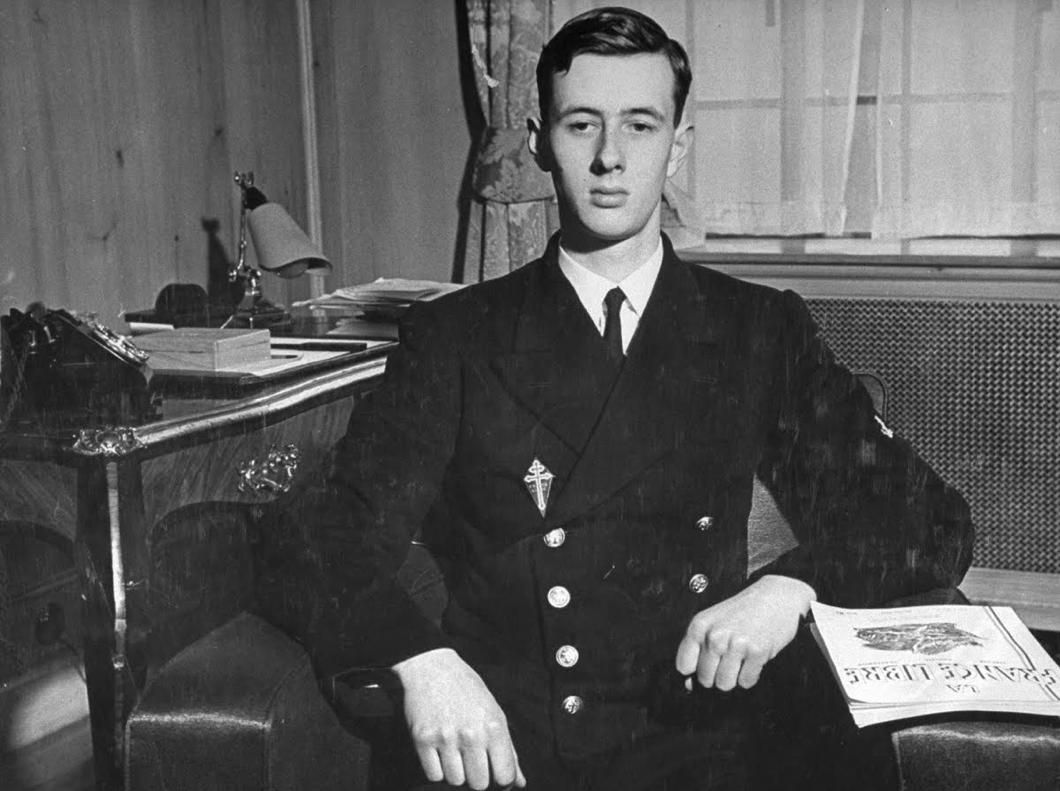
Your father should have made you a Companion of the Liberation.
He hesitated and said to me, “After all, you were my first companion.”
I replied: “Not the first, the second after your aide-de-camp, Geoffroy de Courcel.”
“Yes, but I cannot name you companion, because then I would have to name three times as many and I cannot do it. Everyone will know that you were one of my first companions.”
(The admiral, his voice charged with emotion, will say no more.)
The last companion of the Liberation will be buried in the crypt of Mont Valérien.
This is the rule they drew up, and the General endorsed it. They settled it a bit like the Marshals of the Empire — when the Companions were united with their first chancellor, Admiral Georges Thierry d’Argenlieu, a monk-soldier who then returned to the Carmel under the name of Father Louis de la Trinité.
After the war, they chose to commemorate the Appeal, every June 18, outside the official state — that is to say not at the Arc de Triomphe but at Mont Valérien, where more than a thousand hostages and resistance fighters had been shot. They erected a wall and a crypt, the Fighting France Memorial, and decided that the last of them would rest there.
Of the 1,038 who received the Order of Liberation, including 271 posthumously, they are now only three: Pierre Simonet, 99 years old, formerly a soldier, Daniel Cordier, centenarian, former secretary of Jean Moulin then merchant of art, and Hubert Germain, the dean of the order, also a hundred years old, who was deputy then minister under Georges Pompidou. He was supposed to join the navy with me and I found him on the “Courbet”, but he ultimately didn’t want to be a sailor anymore.
My father created the order on 16 November 1940 to reward individuals, civilian and military units, and civilian communities working to liberate France. He maintained a special bond with his Companions from all walks of life and from all political parties, even the Communist Party…
[Hubert Germain, the last Companion, died earlier this year and was buried at Mont Valérien after being recognised with full honours at Les Invalides.]
Father Euvé, the Jesuit who heads the prestigious review Etudes, explains that the Society of Jesus educates people for great destinies.
No less than two presidents under the Fifth Republic: de Gaulle and Macron!
It is clear that the Jesuits teach the meaning of the state and how to present oneself. Emmanuel Macron, a former student of La Providence in Amiens, a Jesuit institution, indeed has this talent.
Certainly he should speak a little more briefly, but he presents himself well and he is young. For me, he has not exhausted his full potential… And if he goes, who will be there? Tell me! I don’t see anyone else at the moment.
But back to the Jesuits, where my father studied. As a kid, I was in Saint-Joseph in Beirut, but it was the nuns who took care of us. Charles de Gaulle, on the other hand, attended the College of the Immaculate Conception, rue de Vaugirard, in Paris, which is now closed. His father taught there and was even its lay director after the expulsion of the Jesuits in 1901.
What a training! You should know that when a seminarian enters the Jesuits, he begins his studies again for nine years. Jesuits have a taste for the state and a sense of power. They educate people for administration, science, exploration, astronomy… So it’s important first, I stress, to know how to present yourself. Thus, the theater, rich in lessons, helps in this.
Was the General’s piety one of their legacies?
For him, life did not exist without the Creator. He could not believe in a universe that emerged out of pure chance and found the Catholic religion to be the most human, the most balanced, the one that accompanied you best until the end, and that had given rise to the most sacrifices and dedication.
The General had a deep fervour throughout his existence, with great Christian roots, marked among others by the readings of Jacques Maritain and Charles Péguy, and also by the Jesuits. It corresponded to an intimate devotion, to an interiorisation of his faith, that of a being active in the world who did not keep his baptismal certificate in his pocket.
Doesn’t France have centuries of Christianity behind it? However, in the courtyard of the Elysée, laïcité oblige: there was no waltz of cassocks.
On the other hand, remember, in 1946 it was picturesque to see, for example, Canon Kir and Abbé Pierre sitting amidst the benches of the National Assembly.
Nevertheless, men of God must be concerned with the spiritual and, in a certain way, the social.
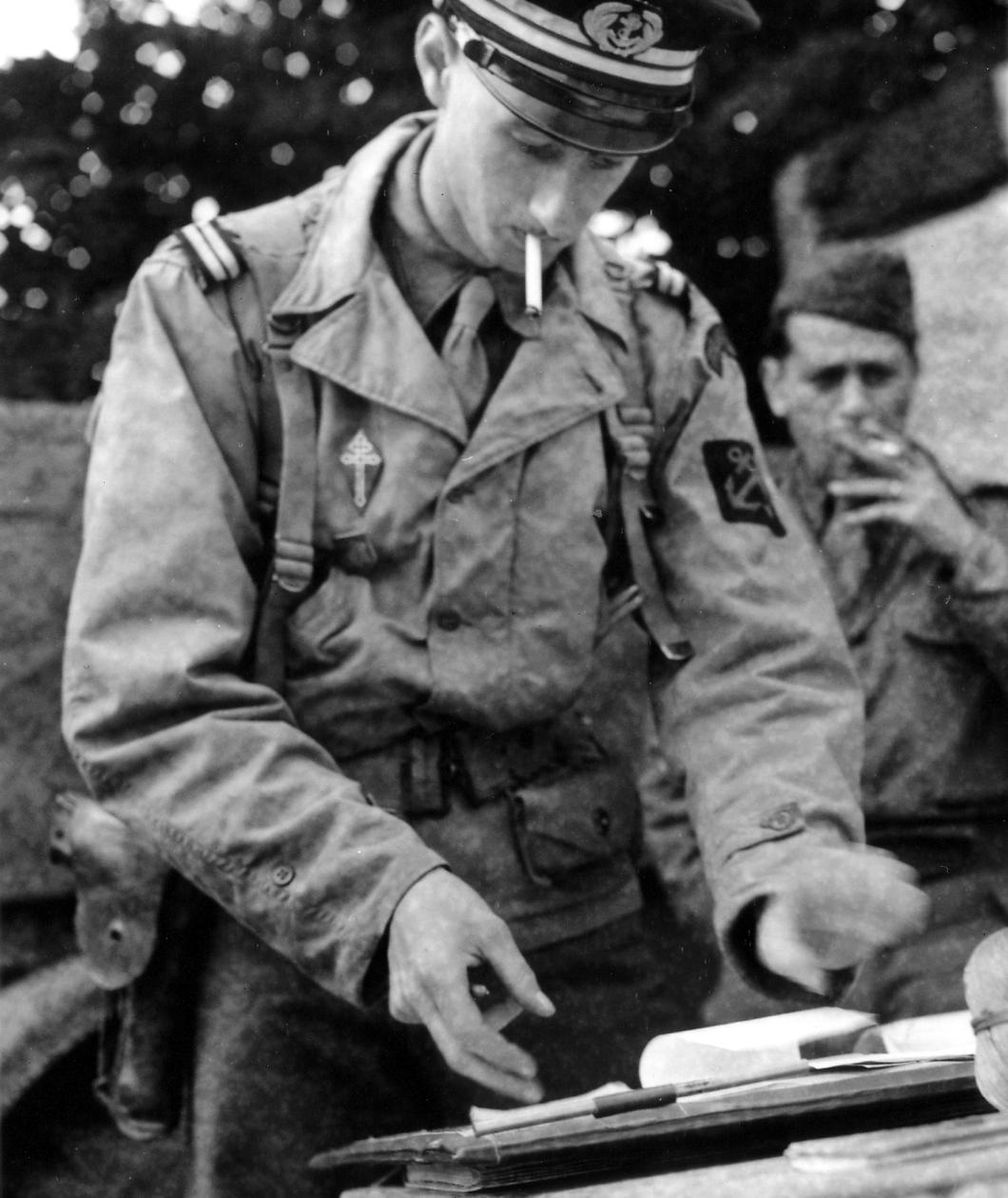
Admiral, tell us about your second professional life.
Indeed, from September 1986 to September 2004, I was in the Senate for the RPR and then elected a UMP city councillor in Paris.
Chirac had come to get me for the municipal elections. We campaigned all over the capital and, on March 6, 1983, he snatched eighteen out of twenty arrondissements!
It was until I was 84 — the age at which my maternal grandfather died, which at the time seemed very old to me — that I was a senator for Paris. Although the cliché of the senator dozing after meals is outdated, it was no longer the navy when I was constantly running around. An admiral is a fellow who moves from boat to boat, day and night.
How did you experience the lockdown?
I haven’t been out at all but, as I’ll be 99 soon, that doesn’t really matter! It was sometimes awkward to get to the bank or run an errand as I’m now a widower on my own.
I can’t walk anymore. Taking five steps one way and five the other, your knees are rusting. Many old people are dead, masked, “emblousinés”.
My children brought me fruit but it had to be put in a bag — it was all very compartmentalised.
And how is your daily life going now?
When everything is going well, I get visits from time to time from my family — my four sons gave me six grandchildren and two great grandchildren.
I read a lot of history books; I answer a lot of the mail that mostly comes from the descendants of Free French people. I listen to classical music, I watch the big games of tennis, rugby, football on television.
And also the James Bond films, films by Melville, Louis de Funès like ‘Le Petit Baigneur’, westerns, and documentaries on animals, nature with its distant landscapes, deserts, the Far North… There are magnificent places, countries where I have not been and where I will never go: Mongolia, the Himalayas… I only did mountaineering on screen. (He laughs.)
Was the cinema one of the General’s rare “distractions”?
He liked to see films, pre-war comedians and great actors such as Charles Boyer, Fernandel, Louis de Funès… He also liked Michèle Morgan, whom he found quite jolie, with a lot of allure, acting well.
At the Elysée Palace, having little time, he mainly watched the news. This had led to some myths, such as that of an announcer who was said to have been kicked out because my mother thought it was inappropriate for her to show her knees. Completely ridiculous! My mother did not get involved in this, especially since those in the audiovisual sector were more for de Gaulle, while the print media were often against him.
Has President Macron come to visit you, a few days before this historic anniversary?
Why would he do that? Be serious: he has no time to waste! He already sees far too many people and, at almost 99 years old, you are just a vestige of yourself.
[But on this, Admiral de Gaulle’s 100th birthday, President Macron has issued a communiqué.]
A vestige with the great pride of being called de Gaulle!
I admit I found it heavy, but hey, that’s how it is. We don’t choose such things. Carrying this name hindered my own freedom, constrained me to a lot of discretion. Besides, I joined the navy so as not to be in the army, where I would have had an impossible life. The navy is looking out to sea!
Lastly: write it down that this is my last interview. I insist! I am now too old for that. And don’t tell my sons that I gave you an interview. I’ll have to tell them that it was you who caught me, “caught” me. So, thank you for the photos, the historic Paris Matches and the cake. I shouldn’t eat cake anymore… At my age, sugar isn’t very good!
From Buda towards Pest
A 1959 view from the Vienna gate of Budapest’s Castle district
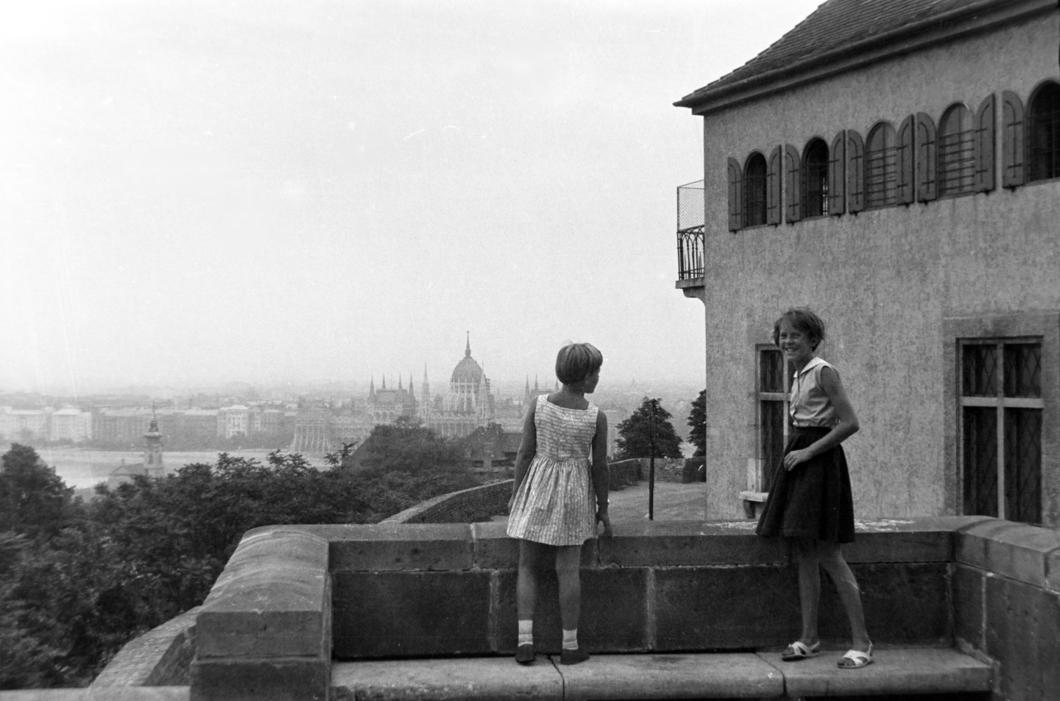
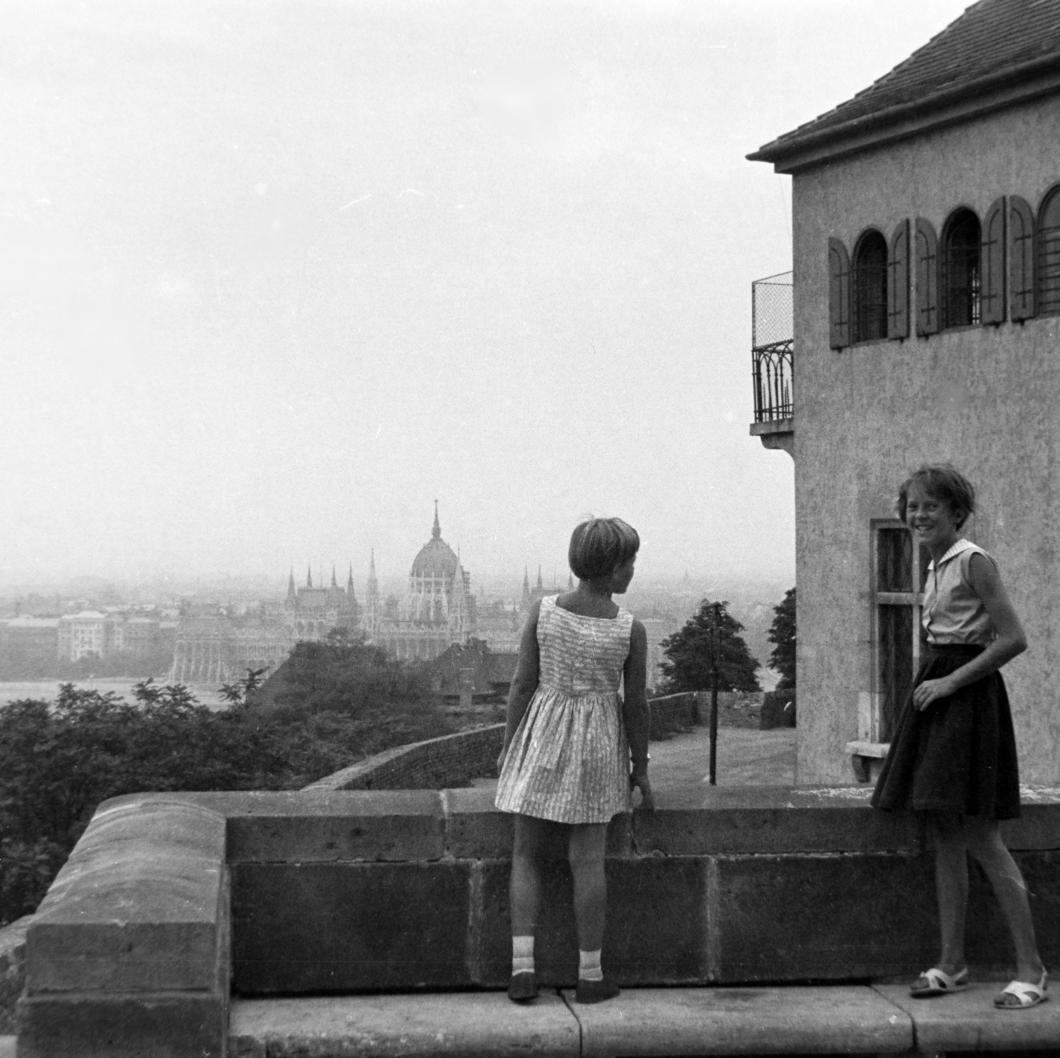
Taken in 1959, a photograph in the Fortepan archive shows two girls standing on the stone bench of the Vienna Gate — rebuilt in 1936 to mark the two-hundred-and-fiftieth anniversary of Buda’s liberation from the Ottomans.
Hungary’s domed neogothic Parliament Building sits in Pest on the opposite bank of the Danube in the distance, with the baroque spire of the Church of the Wounds of St Francis nearer on the Buda side of the river.
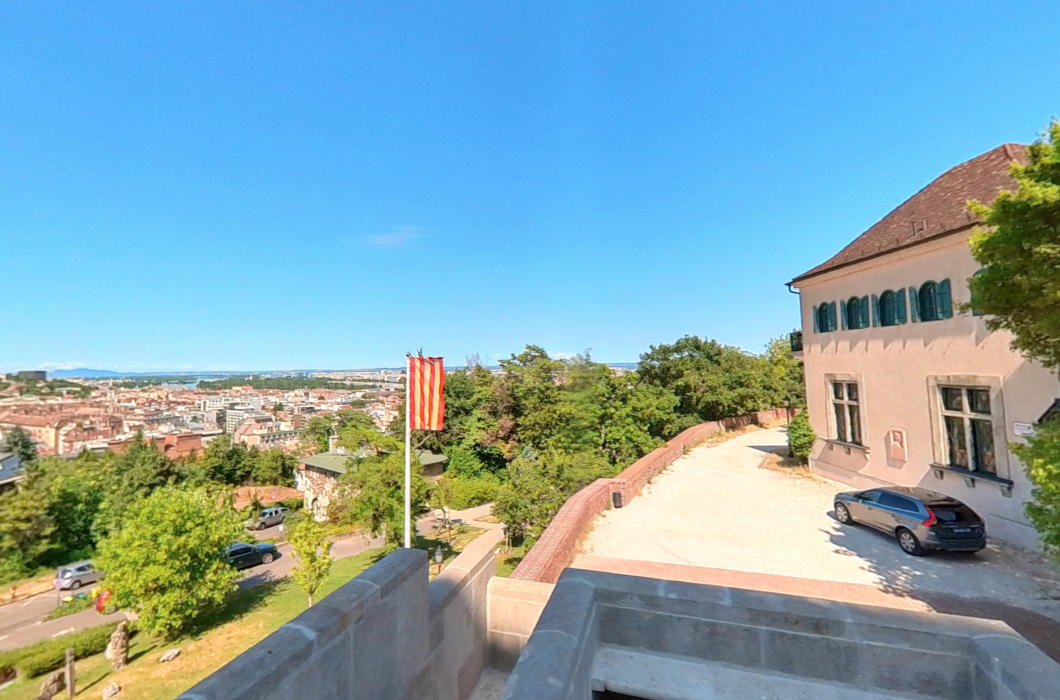
Sadly, this fine view can no longer be seen: the trees in the park below the Bastion promenade have been allowed to grow too tall. A somewhat superfluous flagpole bears the banner of Budapest’s 1st District.
The Hungarian government has invested a great deal of care and attention (not to mention investment) to the Castle quarter in recent years, so perhaps restoring this view could be added to their to-do list.
Fifth Republic Britain
An Anglo-Gaullist Reading Round-up
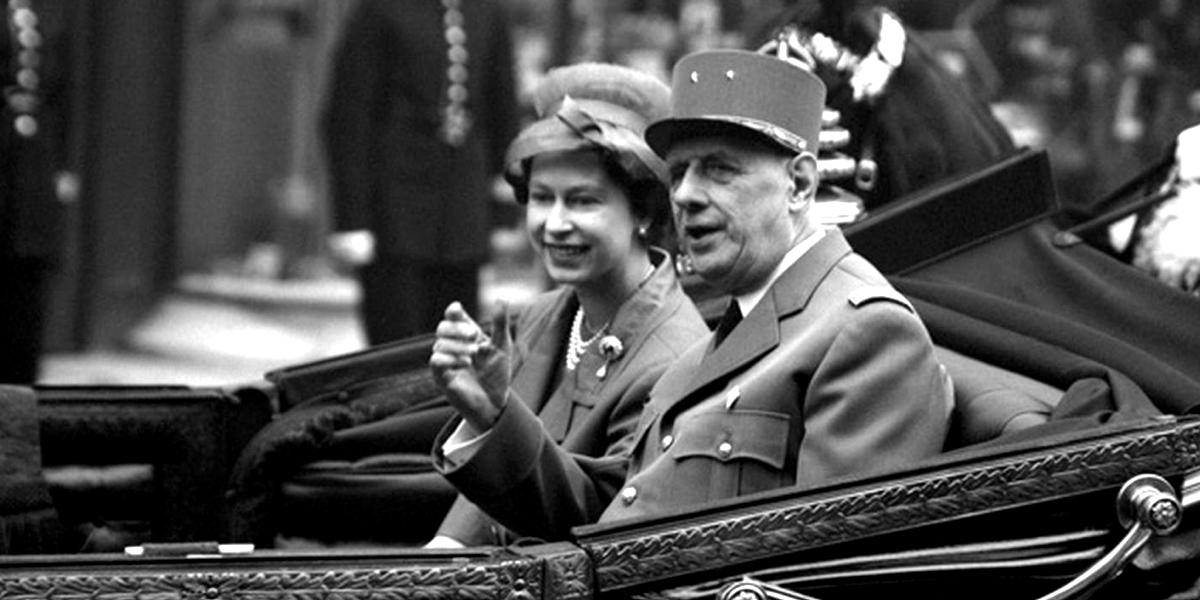
While I’m a big Adenauer fan there’s little doubt that de Gaulle was the greatest European statesman of the twentieth century and an historical figure of such a position will always be the subject of interest.
Both Jonathan Fenby’s 2010 book The General: Charles de Gaulle and the France He Saved and Dr Sudhir Hazareesingh’s 2012 In the Shadow of the General: Modern France and the Myth of de Gaulle received wide notice, but neither as much as Julian Jackson’s 2019 A Certain Idea of France: The Life of Charles de Gaulle.
Jackson’s work is indeed magisterial and Lord Sumption’s praise of it as “the best biography of de Gaulle in any language” is only just an exaggeration. (For a strong bibliography of works on the general, see the appendix of Charles Williams’s 1993 The Last Great Frenchman: A Life of General de Gaulle.)
Study of the life and contradictions of de Gaulle is always worthwhile, but many spy a Gaullist moment in the Tory party’s refreshingly surprising turn away from ideological liberalism towards a more pragmatic conservatism under Boris Johnson.
Painting Johnson as Britain’s first Gaullist prime minister would be a stretch, but there is certainly some crossover: nationalist, economically interventionist, focused on national sovereignty and national exceptionalism.
■ Eliot Wilson pointed out this summer that Boris has always been difficult to classify in ideological terms.
■ Speccie political editor James Forsyth wrote in The Times that Boris the Gaullist puts action over ideas. Just before the party conference Forsyth also predicted the PM’s speech would be “in line with his recent Gaullist turn”.
■ QMUL’s Nick Barlow explores the parallels between de Gaulle’s Fifth Republic and Boris’s style of government.
■ Meanwhile Aris Roussinos argues that de Gaulle was always right in vetoing British entry into the EEC, and that true-blue FBPE types should welcome Brexit as advancing the cause of European integration.
■ Dean Godson (New Statesman) says that Defence Secretary Ben Wallace is pursuing “almost Gaullist trajectory for future British policy”.
■ When asked (on GB News) where he sits on the political spectrum, national treasure Peter Hitchens expressed his surprise that the Gaullist combination of “strong defence, patriotism, a strong welfare state, and national independence” isn’t more common in British politics.
■ ‘Bagehot’, the political column in The Economist, put it that the man who rebuilt post-war France has some important lessons for Britain’s prime minister: What Boris could learn from de Gaulle.
■ The American Conservative embarrassingly illustrated a piece on Europe’s Gaullist Revival with a picture of General Kœnig. (Always check the képi — as a brigadier general, de Gaulle only had two stars!)
■ Mike Bird discerned some Anglo-Gaullism in a pile of recent newspaper headlines.
■ As long ago as 2017 — what a world away that was! — Prospect argued in a somewhat rambling piece that the Brexiteers were Britain’s new Gaullists.
■ Honourable mention: Frederick Studemann chides Churchill and dumps de Gaulle, saying Boris should model himself on Bismarck and make for a Prussian Brexit.
But, for all this, when New Labour bigwig John McTernan suggested that Boris is not a Churchill but a de Gaulle, the great Julian Jackson himself pointed out there are still great differences between the PM and le général.
All the same, I’m welcoming our Anglo-Gaullist future with open arms.
How to deal with ‘Direct Action’
A lesson from the experienced generation of not so long ago
BRITONS have a habit of being slow to move initially but they do get their act in order sooner or later — and usually in time to prevent disaster. Many in the metrop. have been damned irritated that the police seemed impotent when the fascist death cult “Extinction Rebellion” first reared its ugly head.
“XR” prevented working-class Londoners from getting to work on the Underground and seized bridges to publicise their claim that — despite global agricultural yields being higher than ever before in human history — we are somehow all going to be starving in a few years’ time due to “climate catastrophe”.
Nonetheless, having returned from Guernsey this morning, I find the streets of London pleasantly filled with the flying squads of the Metropolitan Police. The boys in blue are moving about in rapid response units, ready to deploy immediately whenever and wherever the Extincto-Nazis rear their ugly heads, thus keeping the streets open to all comers (bar those with nefarious designs of un-civic disorder).
“XR” are not the first to threaten (nor to deliver) “direct action”, but I was heartened when a friend shared this splendid example of how to deal with irate students allegedly delivered by the Warden and Fellows of Wadham College, Oxford, in 1968:
Dear Gentlemen,
We note your threat to take what you call ‘direct action’ unless your demands are immediately met.
We feel it is only sporting to remind you that our governing body includes three experts in chemical warfare, two ex-commandos skilled with dynamite and torturing prisoners, four qualified marksmen in both small arms and rifles, two ex-artillerymen, one holder of the Victoria Cross, four karate experts and a chaplain.
The governing body has authorized me to tell you that we look forward with confidence to what you call a ‘confrontation,’ and I may say, with anticipation.
This was less than a quarter-century after the victory of the Second World War, so Wadham could call upon an experienced gang to fill the ranks of its fellowship in those days.
I suppose Maurice Bowra was Warden of Wadham at this time. While a renowned buggerer, he did manage to die with a knighthood, a CH, and the Pour le Mérite (civil class) — which is not a bad innings all things considered.
The old Dutch houses of the Cape
From Here There and Everywhere (1921) by Lord Frederic Hamilton:
THESE OLD DUTCH HOUSES are a constant puzzle to me. In most new countries the original white settlers content themselves with the most primitive kind of dwelling, for where there is so much work to be done the ornamental yields place to the necessary; but here, at the very extremity of the African continent, the Dutch pioneers created for themselves elaborate houses with admirable architectural details, houses recalling in some ways the chateaux of the Low Countries.
Where did they get the architects to design these buildings? Where did they find the trained craftsmen to execute the architects’ designs? Why did the settlers, struggling with the difficulties of an untamed wilderness, require such large and ornate dwellings? I have never heard any satisfactory answers to these questions.
Groot Constantia, originally the home of Simon Van der Stel, now the government wine-farm, and Morgenster, the home of Mrs. Van der Byl, would be beautiful buildings anywhere, but considering that they were both erected in the seventeenth century, in a land just emerging from barbarism seven thousand miles away from Europe, a land, too, where trained workmen must have been impossible to find, the very fact of their ever having come into existence at all leaves me in bewilderment.
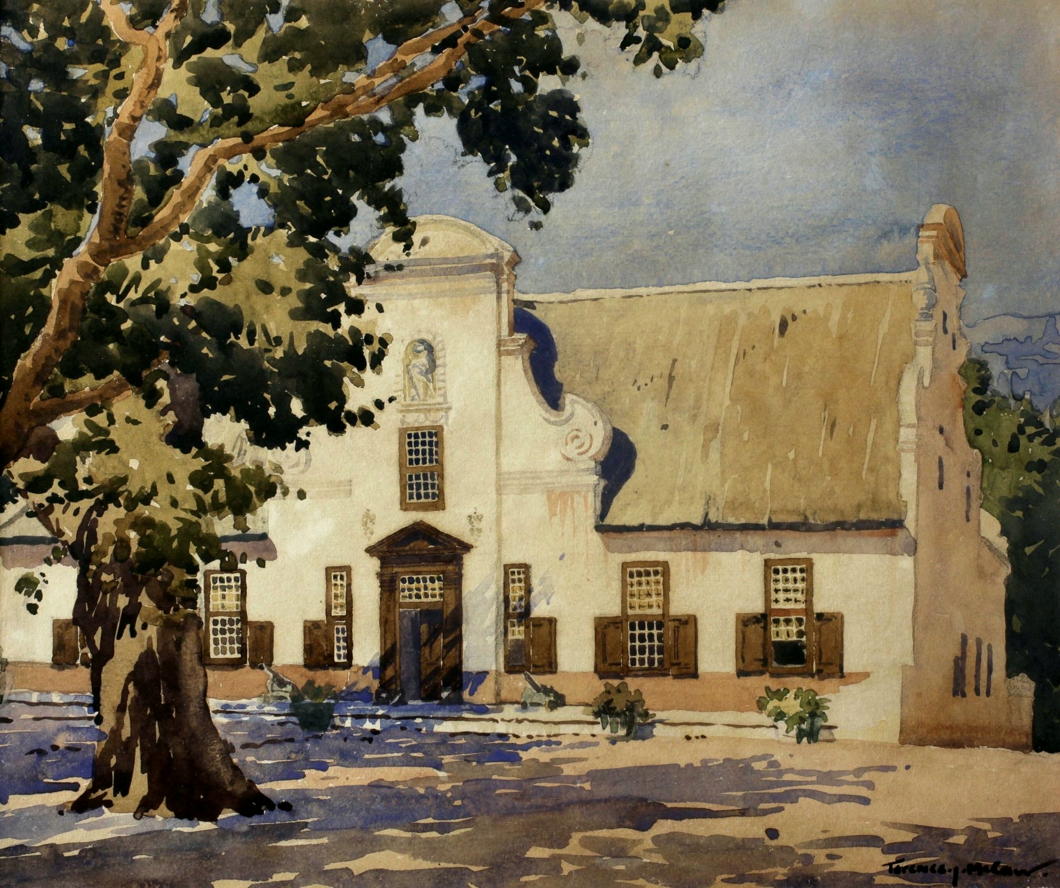
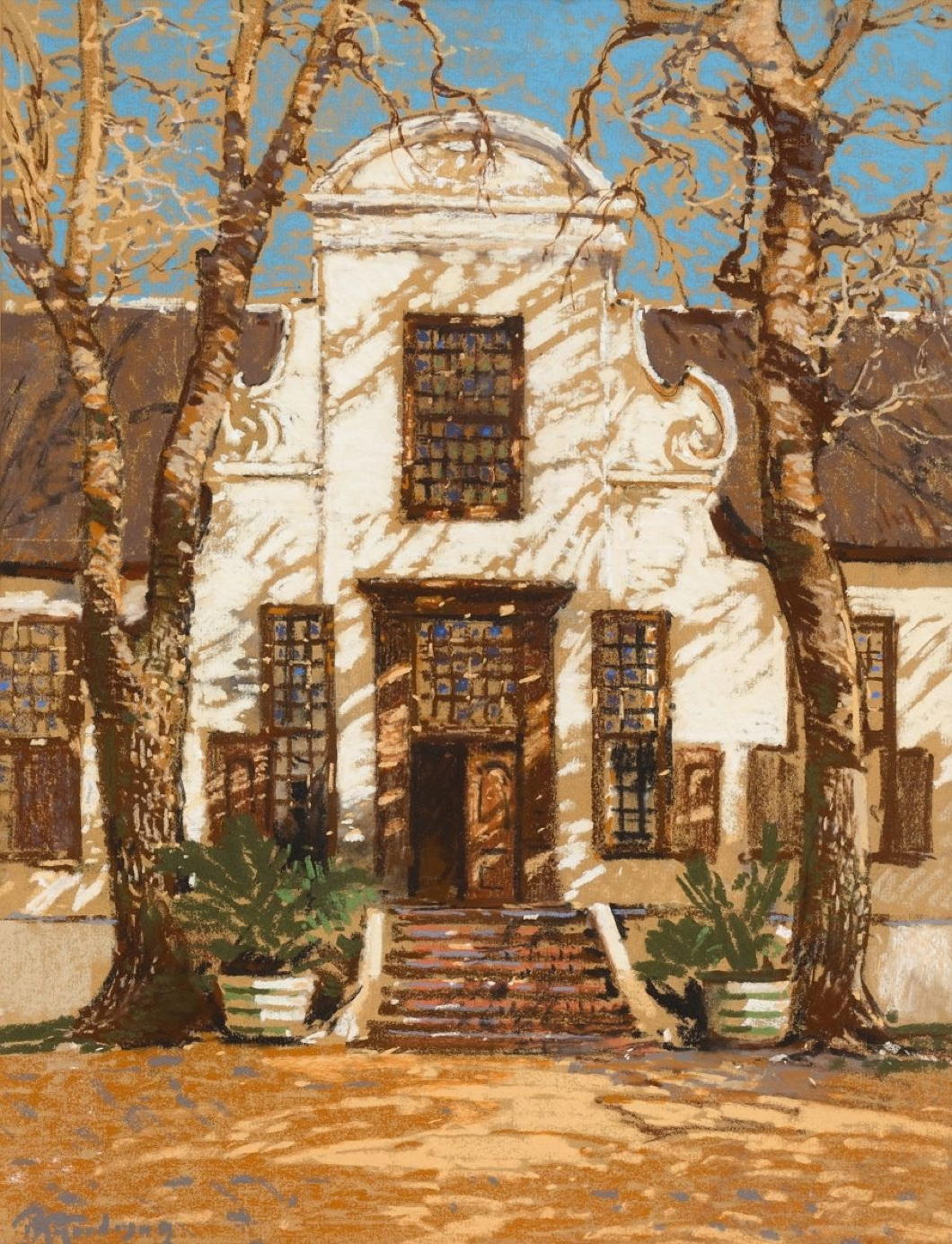
These Colonial houses, most admirably adapted to a warm climate, correspond to nothing in Holland, or even in Java. They are nearly all built in the shape of an H, either standing upright or lying on its side, the connecting bar of the H being occupied by the dining-room. They all stand on stoeps or raised terraces; they are always one-storied and thatched, and owe much of their effect to their gables, their many-paned, teak-framed windows, and their solid teak outside shutters. Their white-washed, gabled fronts are ornamented with pilasters and decorative plaster-work, and these dignified, perfectly proportioned buildings seem in absolute harmony with their surroundings.
Still I cannot understand how they got erected, or why the original Dutch pioneers chose to house themselves in such lordly fashion. At Groot Constantia, which still retains its original furniture, the rooms are paved with black and white marble, and contain a wealth of great cabinets of the familiar Dutch type, of ebony mounted with silver, of stinkwood and brass, of oak and steel; one might be gazing at a Dutch interior by Jan Van de Meer, or by Peter de Hoogh, instead of at a room looking on to the Indian Ocean, and only eight miles distant from the Cape of Good Hope.
How did these elaborate works of art come there? The local legend is that they were copied by slave labour from imported Dutch models, but I cannot believe that untrained Hottentots can ever have developed the craftsmanship and skill necessary to produce these fine pieces of furniture.
I think it far more likely to be due to the influx of French Huguenot refugees in 1689, the Edict of Nantes having been revoked in 1685, the same year in which Simon Van der Stel began to build Groot Constantia. Wherever these French Huguenots settled they brought civilisation in their train, and proved a blessing to the country of their adoption. […]
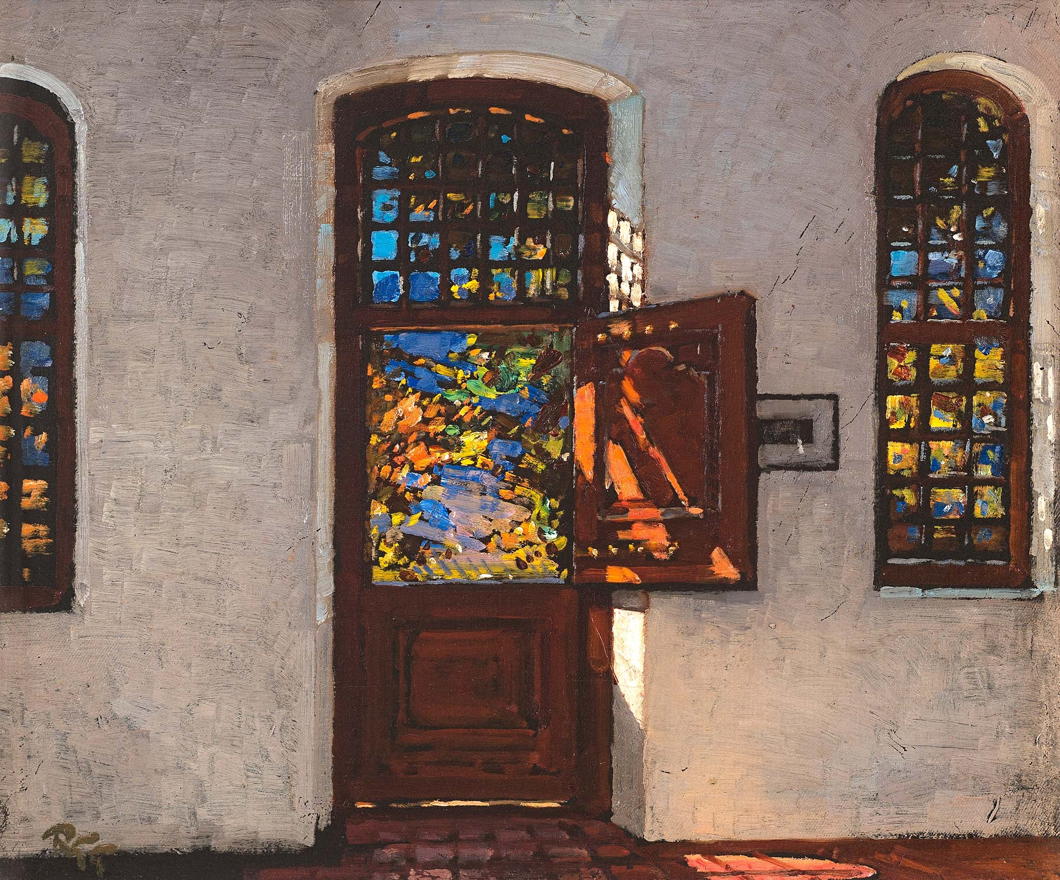
Here, at the far-off Cape, the Huguenots settled in the valleys of the Drakenstein, of the Hottentot’s Holland, and at French Hoek; and they made the wilderness blossom, and transformed its barren spaces into smiling wheatfields and oak-shaded vineyards. They incidentally introduced the dialect of Dutch known as “The Taal,” for when the speaking of Dutch was made compulsory for them, they evolved a simplified form of the language more adapted to their French tongues.
I suspect, too, that the artistic impulse which produced the dignified Colonial houses, and built so beautiful a town as Stellenbosch (a name with most painful associations for many military officers whose memories go back twenty years ) must have come from the French.
Stellenbosch, with its two-hundred-year-old houses, their fronts rich with elaborate plaster scroll-work, all its streets shaded with avenues of giant oaks and watered by two clear streams, is such an inexplicable town to find in a new country, for it might have hundreds of years of tradition behind it!
Wherever they may have got it from, the artistic instinct of the old Cape Dutch is undeniable, for a hundred years after Van der Stel’s time they imported the French architect Thibault and the Dutch sculptor Anton Anreith. To Anreith is due the splendid sculptured pediment over the Constantia wine-house illustrating the stoiy of Ganymede, and all Thibault’s buildings have great distinction.
But still, being where they are, they are a perpetual surprise, for in a new country one does not expect such a high level of artistic achievement.
A rood-stair pulpit
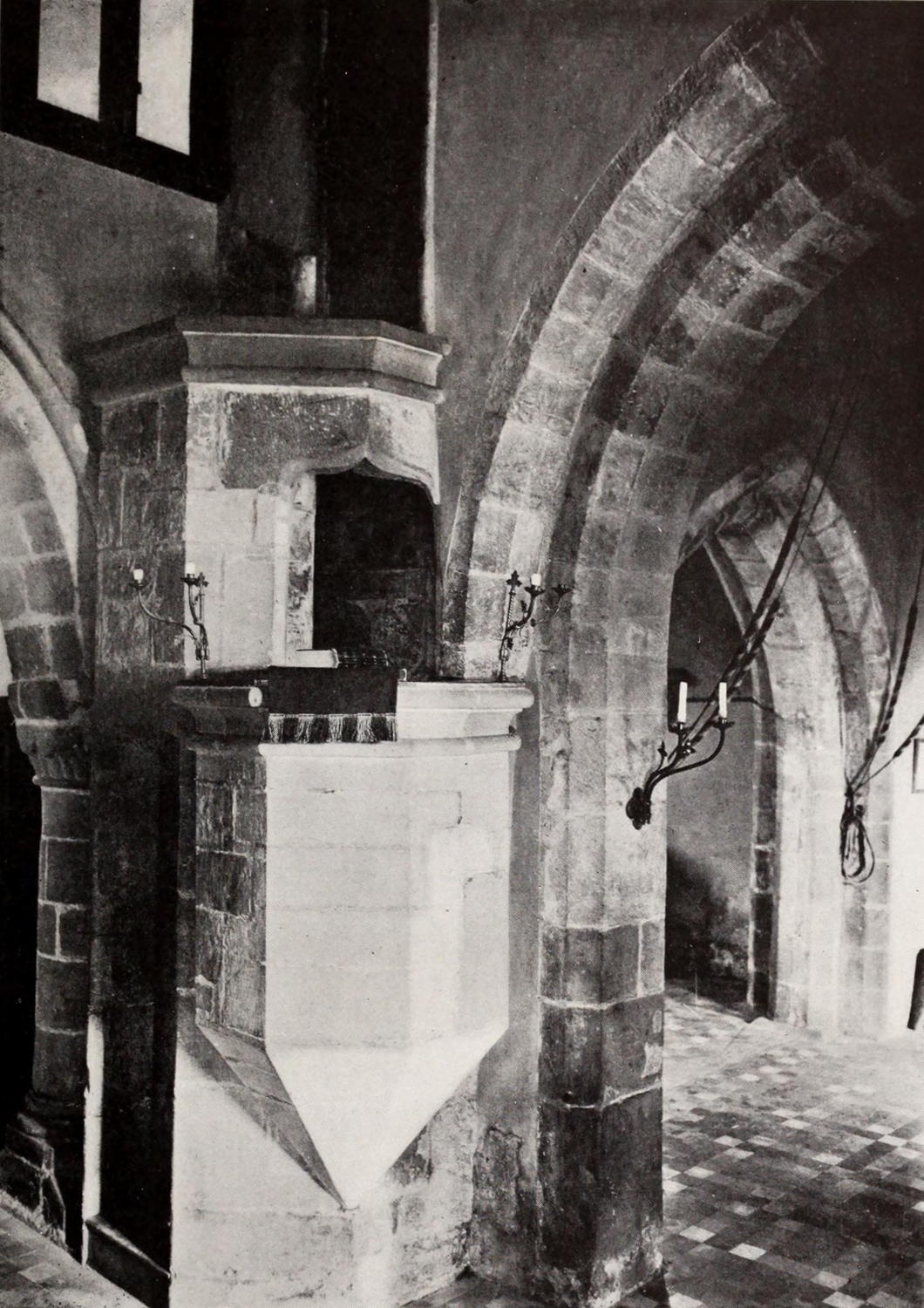
Among the features of the Church of All Saints in the Forest of Dean village of Staunton, Gloucestershire, is this fifteenth-century stone pulpit.
It is built into a rood-stair that once led to a wooden rood loft, demolished and removed some centuries ago.
This church also has a Norman font thought to have been hollowed out of an earlier square pagan Roman altar.
Articles of Note: 24.II.2021
• It is almost certain that we will never know who the actual winner of the 2020 presidential election was: the methods of fraud which might have been deployed are by their very nature ephemeral. Anton is right in that the best summary of the irregularities is from the U.S.-based Swedish academic Claes Ryn: How the 2020 Election Could Have Been Stolen. Ryn’s academic work is always an insightful read so his take here is worthwhile.
• I’ve said it before and I’ll say it again: the Frenchman Pascal-Emmanuel Gobry is always worth reading and always brings something to the table. P.E.G. argues the pre-Trumpers, anti-Trumpers, and never-Trumpers on the American centre-right need to recognise the reasons why Trump became a political phenomenon in the first place: Why Establishment Conservatives Still Miss the Point of Trump.
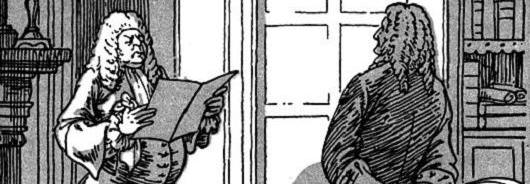
• One of the best books on urbanism in the Cusackian library is Allan Jacobs’s Great Streets. The expert work with its illustrative maps, diagrams, and line drawings is now a quarter-century old and on this anniversary Theo Mackey Pollack examines What Makes a Great Street.
• A new book argues that our vision of Northern Ireland as a corrupt and gerrymandered statelet from its birth in 1921 until the imposition of direct rule in 1972 is largely a myth. The editors Patrick J Roche and Brian Barton take to the pages of the once-great Irish Times to offer A Unionist History of Northern Ireland. It’s… an interesting perspective that will doubtless provoke a debate, but colour me sceptical.
Benedict of Palermo
The island of Sicily is a cross-section of the numerous kingdoms and empires which have ruled and inhabited it from the Phoenecians down to the present day. During the Norman conquest of the island — those Normans did get around — many Lombards came to help secure the Normans’ rule over the existing Sicilians who were mostly Greek and Arab. The Gallo-Italic dialect of those Lombards is still spoken in a few towns and villages speckled across the island and the settlements they founded are known as the Oppida Lombardorum.
In one such Lombard town, San Fratello, in the 1520s a son was born to an enslaved couple named Cristoforo and Diana whose piety was so highly regarded that their master granted this first-born son, Benedetto (Benedict), his freedom from birth.
From his earliest days Benedict was prone to solitude to the extent that he was mocked by his peers, in addition to being insulted frequently for his black skin. As a teenager he left the family home and became a shepherd but gave whatever he could to help the poor and those even less fortunate than him.
Discerning the call to solitude, Benedict entered the hermitage of Santa Domenica in Caronia but his reputation for holiness was such that the pious people of the island began to visit him and implore him for his prayers and miracles.
Accompanied by another member of the community, Benedict fled to other places around the island, offering great and severe penances in reparation for the sins of humanity, but no matter where he went within days the faithful had found out and pestered him.
When the founder of the hermetic community at Santa Domenica died, the brothers elected Benedict his successor, despite his lack of education and illiteracy. Benedict returned to lead the community until it was abolished in 1562 by the reforms of Pope Pius IV who urged independent groups of Francis-inspired hermits to regularise themselves into existing Franciscan orders.
Benedict went first to a Franciscan friary in Giuliana before settling into that of Santa Maria di Gesù in Palermo, the primary city of Sicily. Having been a superior of his old community, Benedict arrived at the Palermo community as a simple cook but even here his piety and talents were recognised. He was first put in charge of the novices and then, in 1578, his confrères elected him their custos or superior though he was only a brother rather than a priest.
He was known as a miracleworker across the island, but it was not only the poor, the sick, and the destitute who flocked to Benedict to seek his help. Theologians and men of learning came to visit this humble and uneducated friar. Even the viceroy of the island was known to take his counsel on important affairs of state.
In his later years, Benedict returned to being the cook of the friary until his death in April 1589. By that time the whole island of Sicily — Greeks, Arabs, Latins, all — revered this poor, humble, and unlettered friar.
Sicily’s ruler, King Philip III of Spain, ordered a magnificent tomb to be built to house Benedict’s remains in the friary of Santa Maria di Gesù, and in death his cult spread far beyond the island.
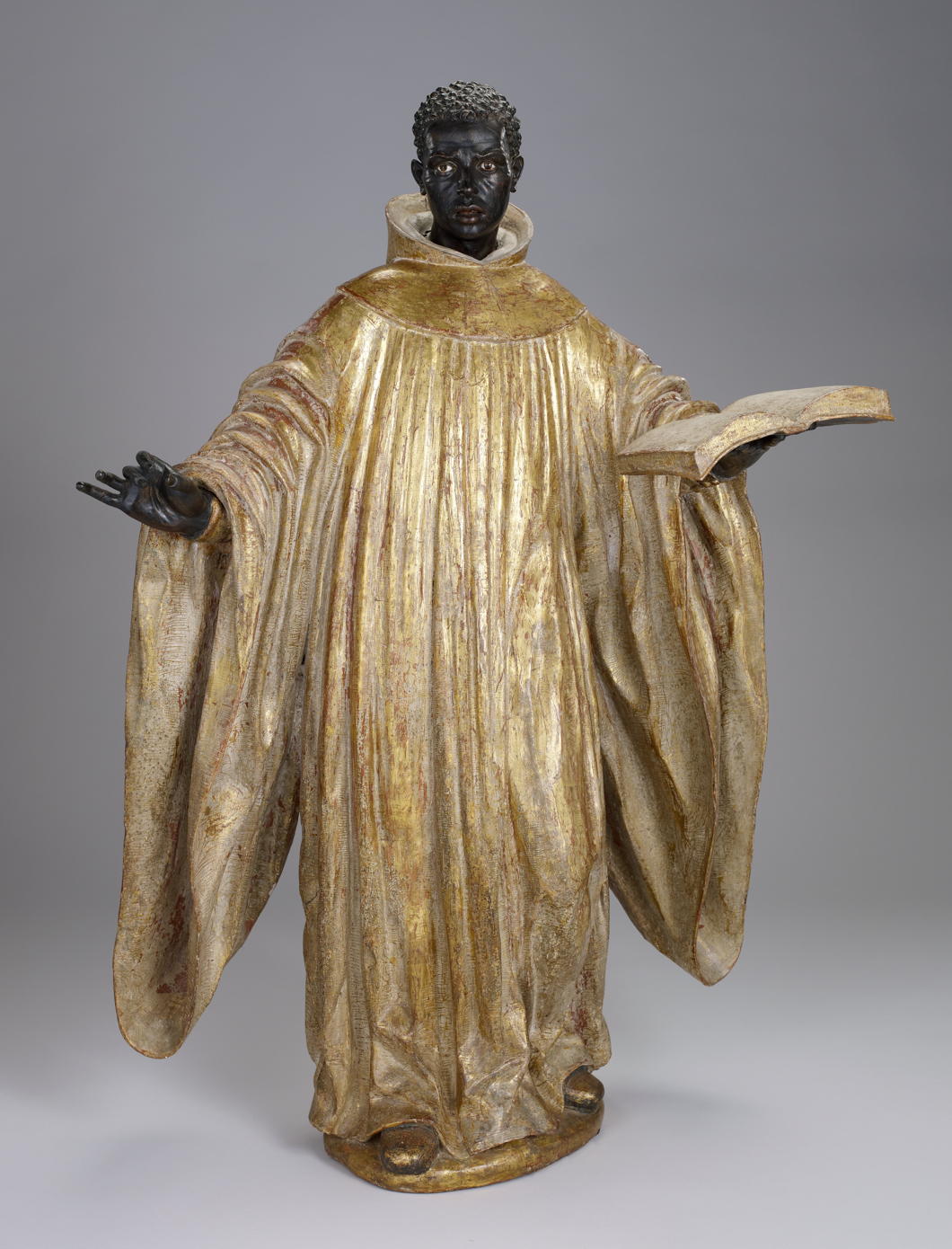
St Benedict of Palermo — or Benedict the Moor — was beatified by Benedict XIV in 1743 and canonised by Pius VII in 1807. Over the centuries, many non-white Christians came to implore his intercession and he became particularly popular among natives and mixed-race peoples in South America, in Africa itself, and amongst African-Americans in the United States.
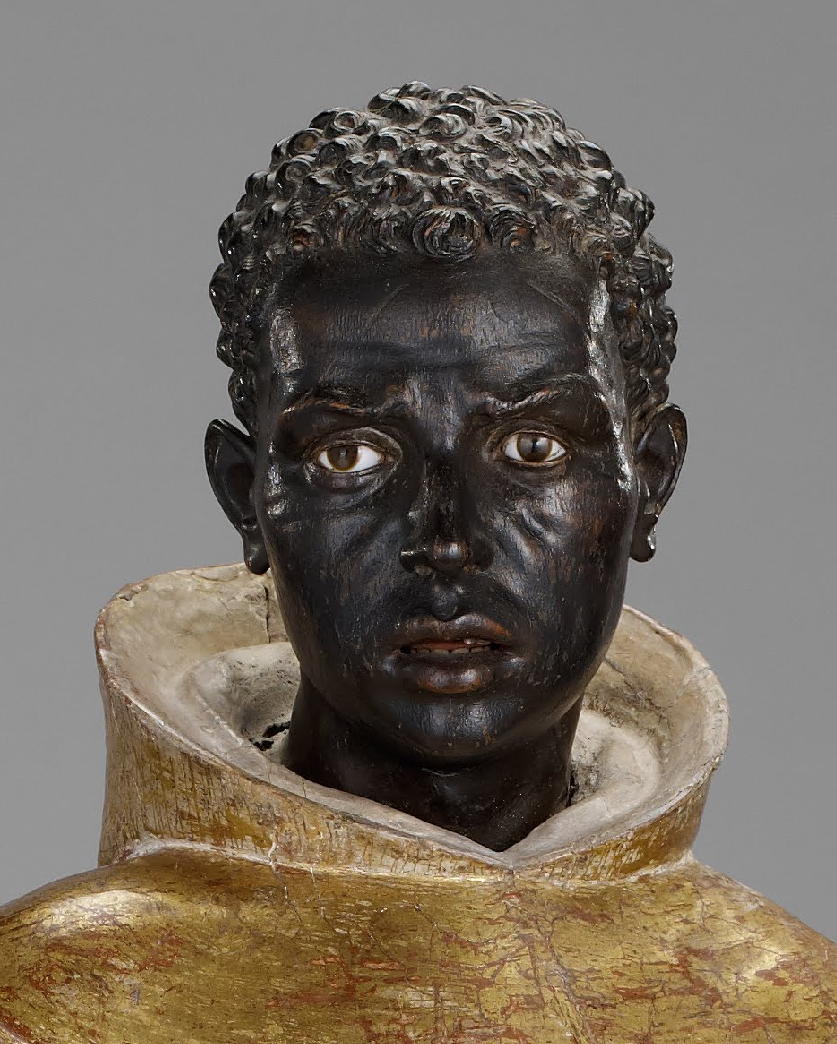
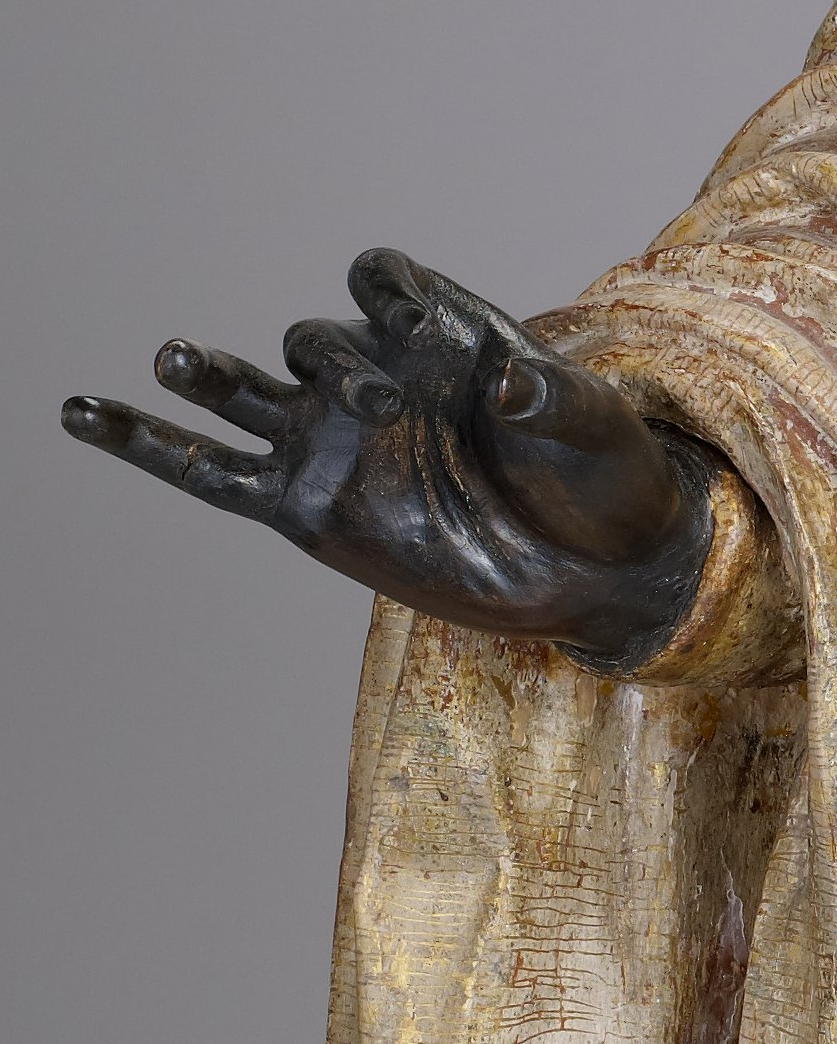
This statue is believed to be the work of the Sevillian sculptor José Montes de Oca and was carved in the 1730s. Long in a private collection in Milan, since 2010 it has formed part of the collection of the Minneapolis Institute of Art.
The Galloway Cross
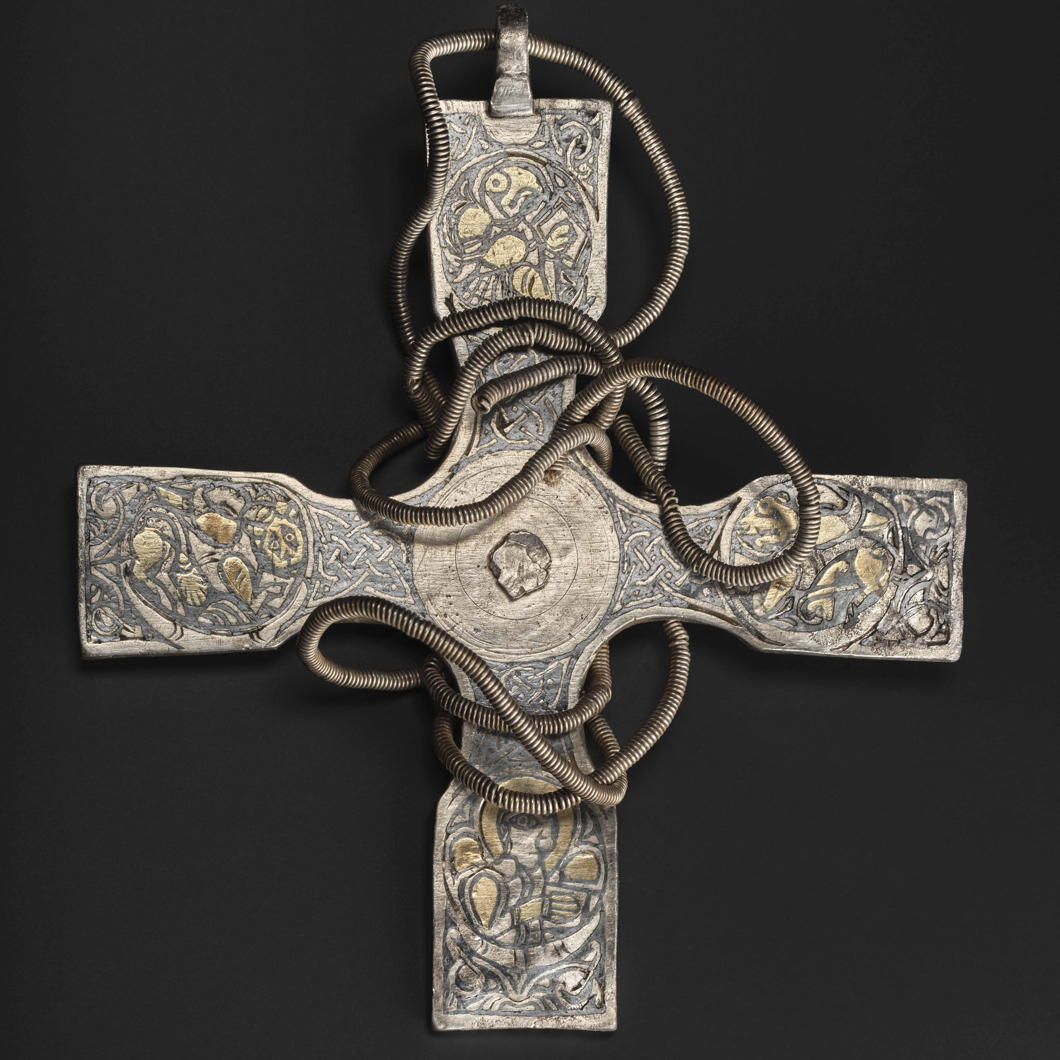
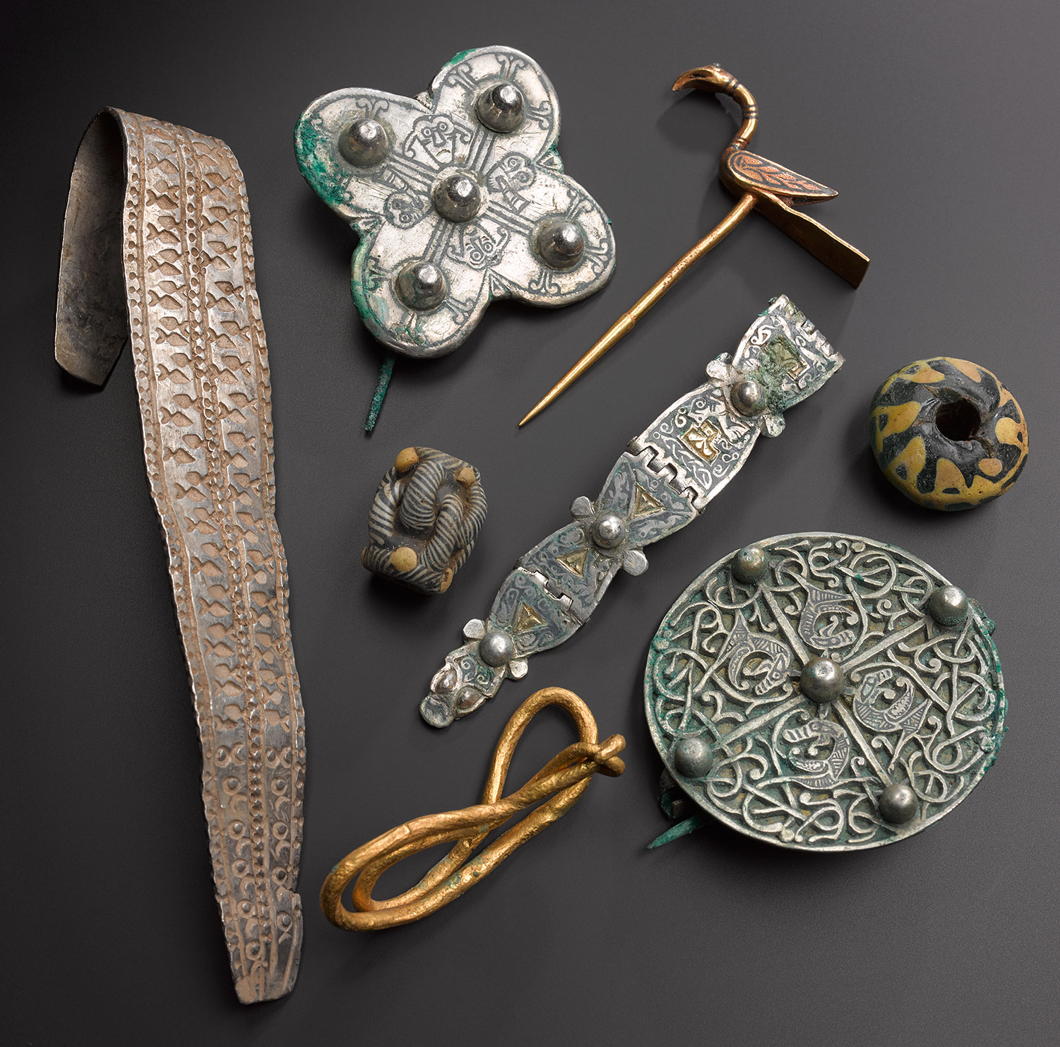
What could be better than a hoard — and a Kircudbrightshire hoard at that? Sometime during the tenth century, a gentleman decided to deposit an interesting array of objects in Galloway only for them to be rediscovered by a metal detectorist in 2014.
Thus have come to us the Galloway Hoard, a collection of objects the most important of which is this pectoral cross made of silver and decorated with symbols of the four evangelists: the eagle of John, the ox of Luke, the angel of Matthew, and the lion of Mark.
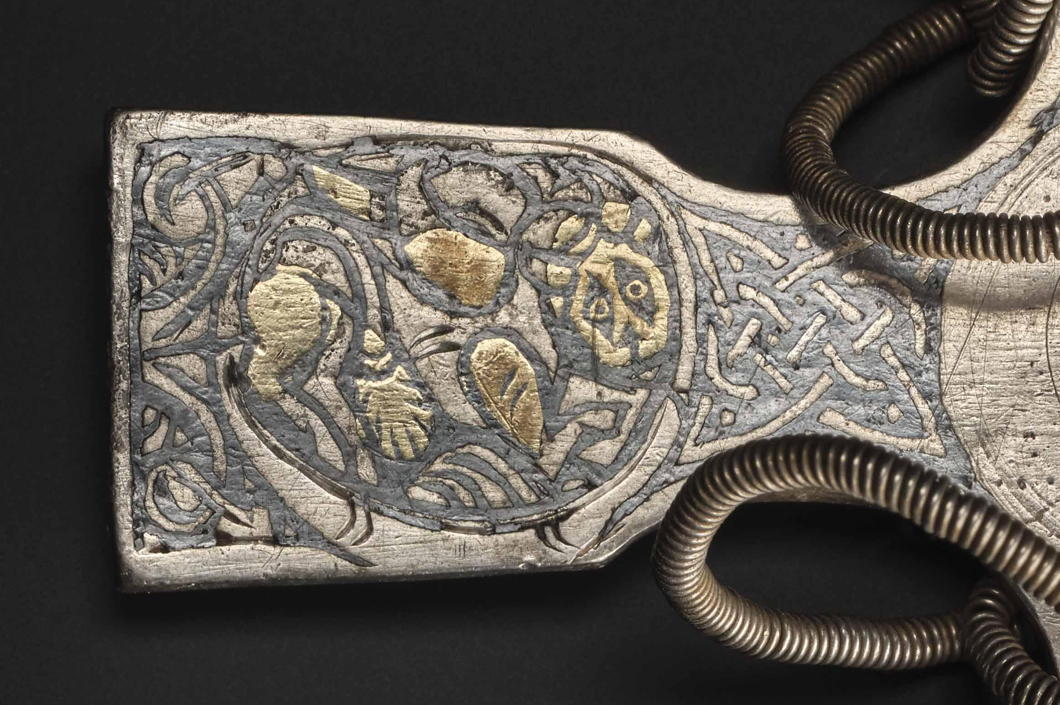
As the hoard was buried when Kircudbrightshire was part of Northumbria — before the area became Scottish — the art has been identified as Anglo-Saxon from the age of the Vikings. My theory is an expert thief was at work, nicking precious objects from hapless victims — an armband gives the name of one poor Egbert in runes.
“The pectoral cross, with its subtle decoration of evangelist symbols and foliage, glittering gold and black inlays, and its delicately coiled chain, is an outstanding example of the Anglo-Saxon goldsmith’s art,” Dr Leslie Webster, an expert, said. “It was made in Northumbria in the later ninth century for a high-ranking cleric, as the distinctive form of the cross suggests.”
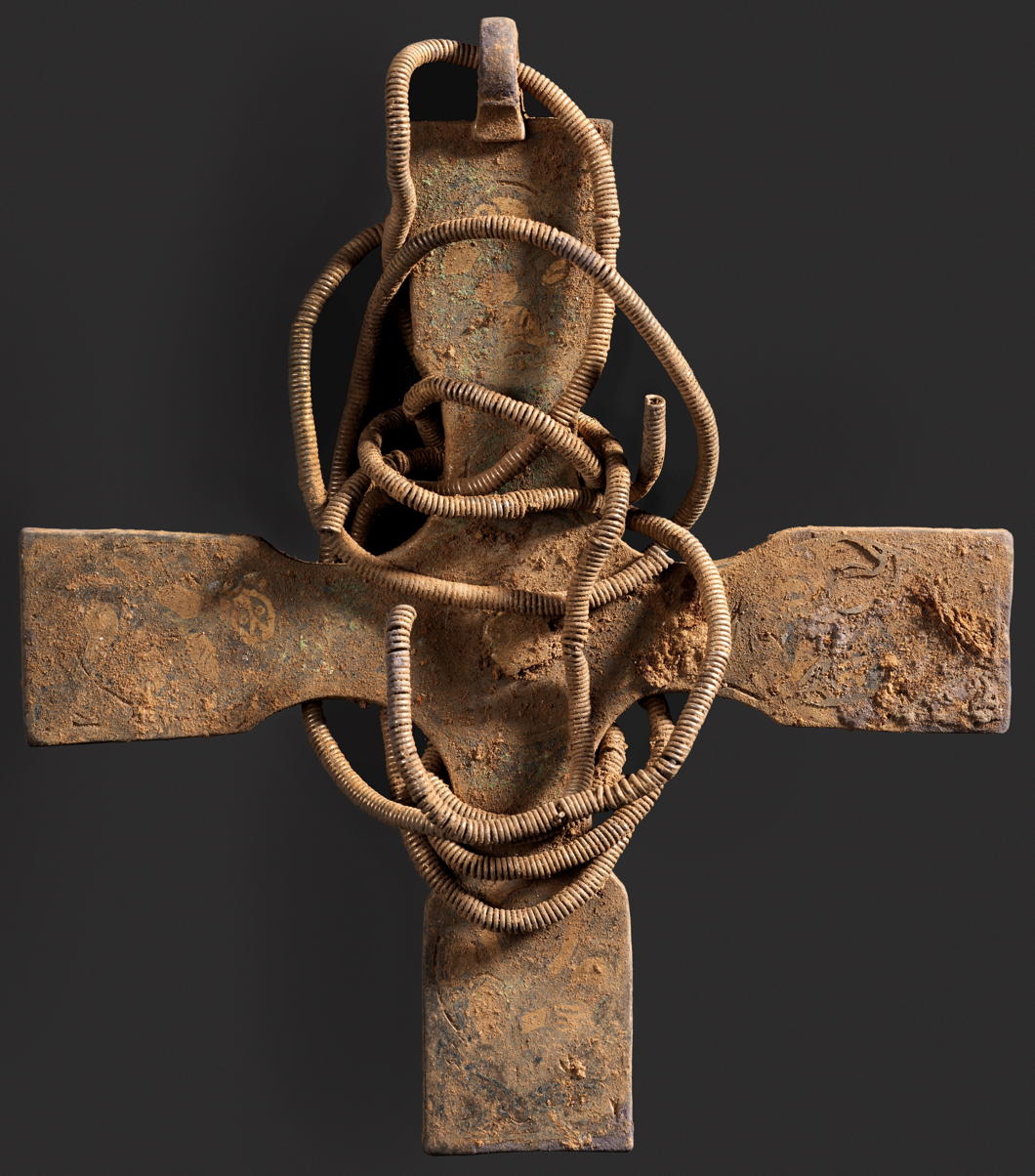
The Galloway Cross, before cleaning and conservation
All treasure found in Scotland must be reported to the Queen’s and Lord Treasurer’s Remembrancer who in 2017 determined the hoard’s value at £1.8 million. Scots law allows the discoverer to keep the full value of the hoard if there is no owner, though as it was found on glebelands belonging to the Church of Scotland that body’s General Trustees demanded a cut as well.
The objects themselves have found a home in the National Museum of Scotland who will be exhibiting them from February until May when they will go on tour to Aberdeen and Dundee.
Romes that Never Were
When the splendidly named Saint Sturm – Sturmi to his friends, apparently – founded the Benedictine monastery of Fulda in A.D. 742 we can presume he had no idea that the magnificent church eventually erected there (above) would one day be considered for housing the Supreme Pontiff of the Universal Church.
Rome, caput mundi, is ubiquitously acknowledged by all Christian folk as the divinely ordained location for the Papacy, but this has not always been acknowledged in practice. Most memorable is the “Babylonian Captivity” of the fourteenth century when the papal court was based at the enclave of Avignon surrounded by the Kingdom of Arles. The illustrious St Catherine of Siena was influential in bringing that to an end.
Since the return from Avignon the Successor of Peter has prudently been keen to stay in Rome, but various crises over the past two centuries have seen His Holiness shifted about. General Buonaparte successively imprisoned Pius VI and Pius VII while he made to refashion Europe in his likeness, and the later slow-boil conquest of the Italian peninsula by the Kingdom of Sardinia caused much worrying in the courts of the continents as well.
In 1870, the Eternal City fell to the troops of General Cadorna, and while the Vatican itself was not violated it was widely assumed the papacy could not stay in Rome. Pope Pius IX evaluated several options, one of them seeking refuge from – of all people – the Prussian king and soon-to-be German emperor Wilhelm I.
Bismarck, no ally of the Church, but shrewd as ever, was in favour of it:
I have no objection to it — Cologne or Fulda. It would be passing strange, but after all not so inexplicable, and it would be very useful to us to be recognised by Catholics as what we really are, that is to say, the sole power now existing that is capable of protecting the head of their Church. …
But the King [Wilhelm I] will not consent. He is terribly afraid. He thinks all Prussia would be perverted and he himself would be obliged to become a Catholic. I told him, however, that if the Pope begged for asylum he could not refuse it. He would have to grant it as ruler of ten million Catholic subjects who would desire to see the head of their Church protected. …
Rumours have already been circulated on various occasions to the effect that the Pope intends to leave Rome. According to the latest of these the Council, which was adjourned in the summer, will be reopened at another place, some persons mentioning Malta and others Trent.
Bismarck mused to Moritz Busch what a comedy it would be to see the Pope and Cardinals migrate to Fulda, but also reported the King did not share his sense of humour on the subject. The advantages to Prussia were plain: the ultramontanes within their territories and throughout the German states would be tamed and their own (Catholic) Centre party would have to come on to the government’s side.
In the end, of course, the Pope decided to stay put in Rome and became the “Prisoner of the Vatican”, surrounded by an awkward usurper state that made attempts at friendship without betraying its hopes for legitimising its theft of the Papal States. It was the diplomatic coup of the Lateran Treaty in 1929 that finally allowed both states to breathe easy and created the State of the City of the Vatican, an entity distinct from but subservient to the Holy See of Rome.
The Second World War brought its own threats to the Pope’s sovereignty, and the wise and cautious Pius XII feared he might be imprisoned by Hitler just as his predecessor and namesake had been by Buonaparte. Pius was determined the Germans would not get their hands on the Pope and so signed an instrument of abdication effective the moment the Germans took him captive. He would have burnt his white clothing to emphasise that he was no longer the Bishop of Rome.
The record is not yet firmly established but it is rumoured that the College of Cardinals was to be convened in neutral Éire to elect a successor. One wonders where they would have met. The Irish government would undoubtedly have put something at their disposal — Dublin Castle perhaps? Despite the whirlwind of war, the election of a pope in St Patrick’s Hall would have warmed the cockles of many Irish hearts.
But what then? Ireland’s neutrality would have been useful but a German violation of the Vatican’s territory would have been grounds for open, though obviously not military, conflict. Further rumours, also totally unsubstantiated, had it that the King of Canada, George VI, quietly had plans drawn up for offering the Citadelle of Quebec to the Pope to function as a Vatican-in-Exile. Others claim it wasn’t until the 1950s that Quebec was investigated as a possibility by the Vatican in case Italy went communist, as was conceivable.
So Cologne, Fulda, Malta, Trent? None of these plans ever occurred, thank God.
And what about England? Why not? The court of St James and the Holy See, despite obvious and significant differences, enjoyed close relations and overlapping interests in many particular circumstances from the Napoleonic wars until present. Pius IX had put feelers out to Queen Victoria’s minister in Rome, Lord Odo Russell, in 1870 but the British ambassador more or less told him of course the Pope would be welcomed in England but don’t be silly, the Sardinians would never conquer Rome.
One imagines the British sovereign would grant a palace of sufficient grandeur to the exiled Pontiff. Hampton Court would do the job. It’s far enough from the centre of London but large enough to house a small court and the emergency-time administration of the Holy Roman Church. Would the ghost of Cardinal Wolsey plague the Princes of the Church?
Thanks be to God, we’ve never had cause to find out. At Rome sits the See Peter founded and so it looks to remain. Ubi Petrus, ibi ecclesia.
Wardour
The news from the West Country is that Jasper Conran OBE is selling up his place in Wiltshire, the principal apartment at Wardour Castle.
Wardour is one of the finest country houses in Britain, designed by James Paine with additions by Quarenghi of St Petersburg fame. It was built by the Arundells, a Cornish family of Norman origin, but after the death of the 16th and last Lord Arundell of Wardour the building was leased out and in 1961 became the home of Cranborne Chase School.
A friend who had the privilege of being educated there confirms that Conran’s assertion of Cranborne Chase being “a school akin to St Trinian’s” was correct, and tells wonderful stories of the girls’ misbehaviour.
Alas the modern world does not long suffer the existence of such pockets of resistance, and the school shut in 1990. The whole place was sold for under a million to a developer who turned it into a series of apartments, for the most part rather sensitively done, if a bit minimalist.
The real gem of Wardour, however, is the magnificent Catholic chapel which is owned by a separate trust and has been kept open as a place of worship. Richard Talbot (Lord Talbot of Malahide) chairs the trust and takes a keen interest in the chapel and the building. I was down there the Sunday the chapel re-opened for public worship after the lockdown and Richard was there making sure all was well.
Those interested in helping preserve this chapel for future generations can join the Friends of Wardour Chapel.
Onze Grootste President
The London Residence of President Martin van Buren
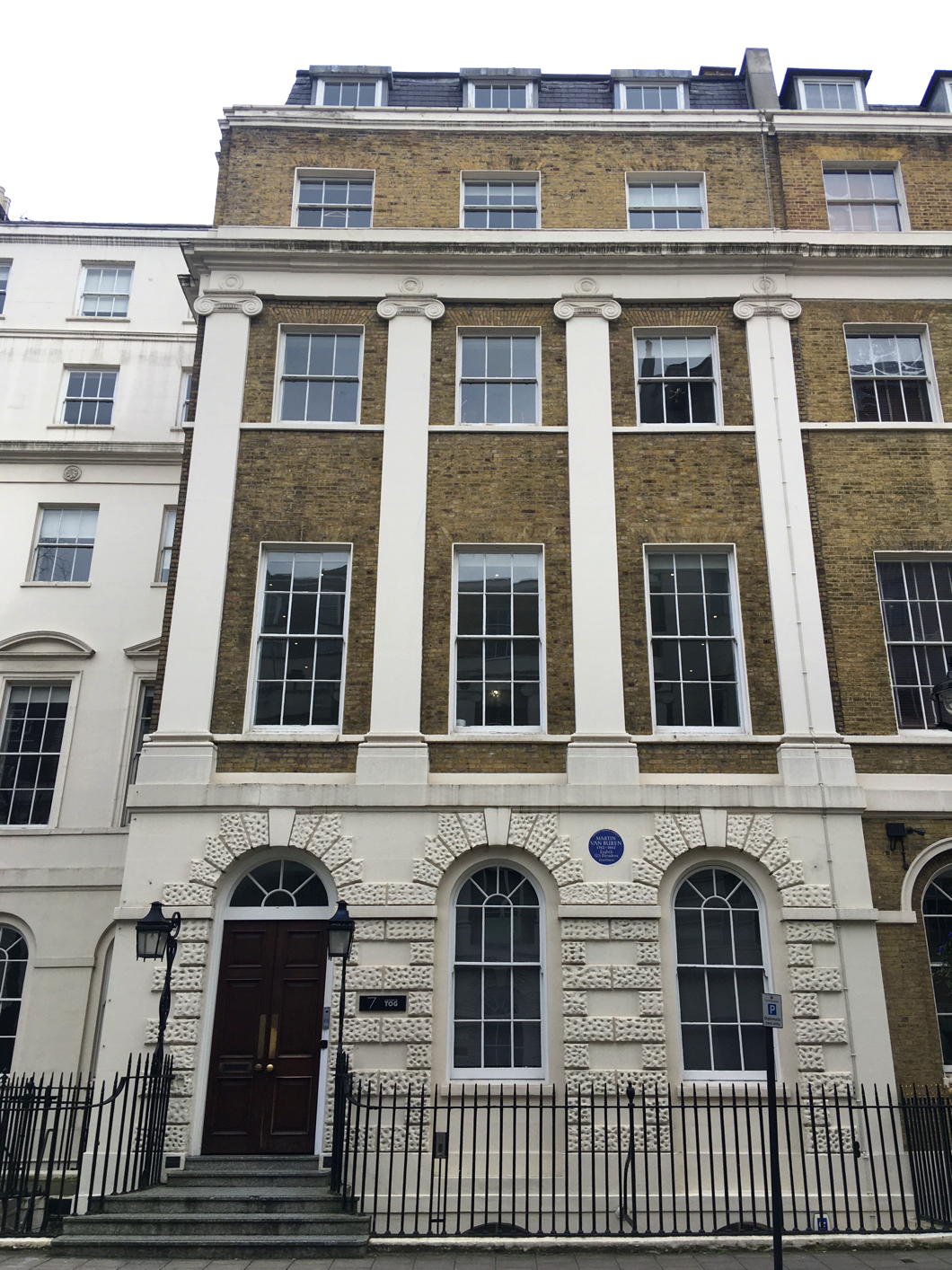
Transacting some business in March before the plague struck us here in London I found myself with a moment to spare and made a brief pilgrimage to No. 7, Stratford Place. It was in this handsome townhouse that Martin van Buren, the first New Yorker to ascend to the chief magistracy of the American Republic, had his residence when he served as the United States’s minister to Great Britain in 1831.
While I often claim that Calvin Coolidge was America’s greatest president in reality my chief devotion in that contest is to the Little Magician himself, the Red Fox of Kinderhook.
Among the many characteristics of this esteemed Knickerbocker is that English was not his native language and throughout his career as a democratically elected politician he spoke with a thick Dutch accent. To his wife, he spoke almost entirely in Dutch.
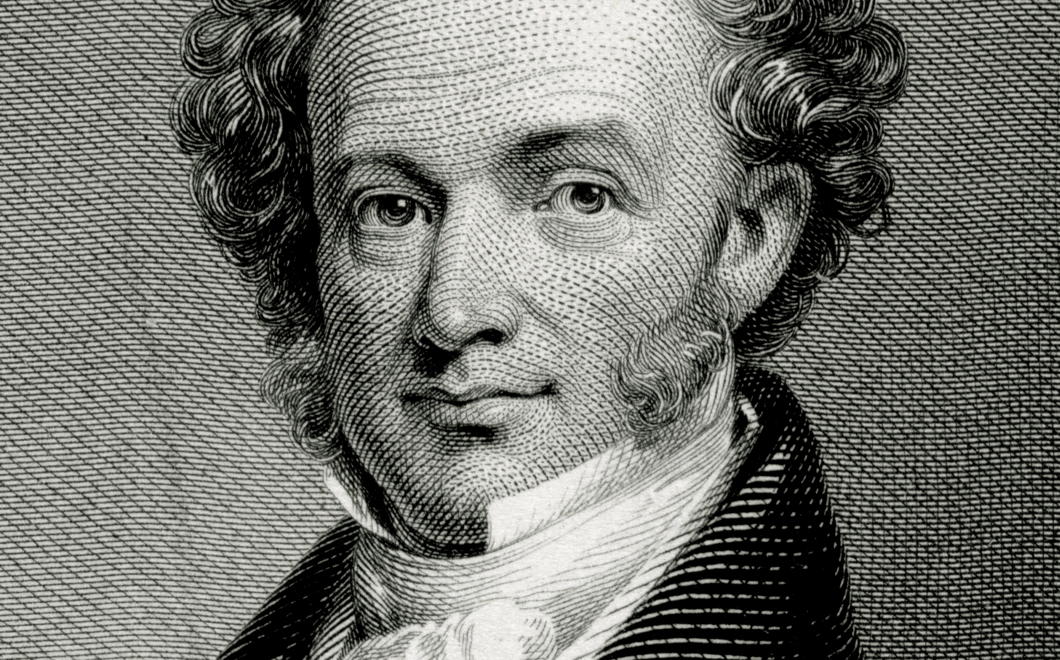
Jay Cost and Luke Thompson’s Constitutionally Speaking podcast at National Review recently released the first of a two episodes about van Buren and while I’m no fan of podcasts in general this was worth listening to.
One of the factors Cost and Thompson highlight is the utility of the party machine structures of the day in solidifying the practice of America’s democracy and acting as a vehicle of accountability, something too little appreciated by most later observers of the period.
We keen Kinderhookers and Van Buren Boys await the second instalment with anticipation.
Shamefully I have not yet made the pilgrimage to Kinderhook itself, but it’s pleasing to learn that the dominie of the Dutch Reformed Church is a graduate of the greatest university in the southern hemisphere.
How Our Ancestors Built
The Hudson River Day Line Building in Albany
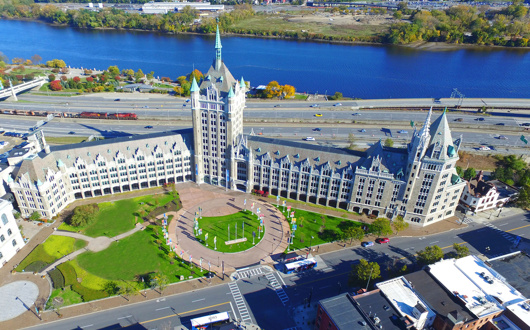
The visitor arriving at Albany, the capital of the Empire State, might be forgiven for presuming the riparian French gothic mock-chateau he first views is the most important building in town.
Built as the headquarters of the Delaware & Hudson, a canal company founded in 1823 that successfully transitioned into the railways, the chateau now houses the administration of the State University of New York. (Indeed, the Chancellor once had a suitably grandiose apartment in the southern tower.) That building, with its pinnacle topped by Halve Maen weathervane, is worthy of examination in its own right.
But next to this towering edifice is an altogether smaller charming little holdout: the ticket office of the Hudson River Day Line.
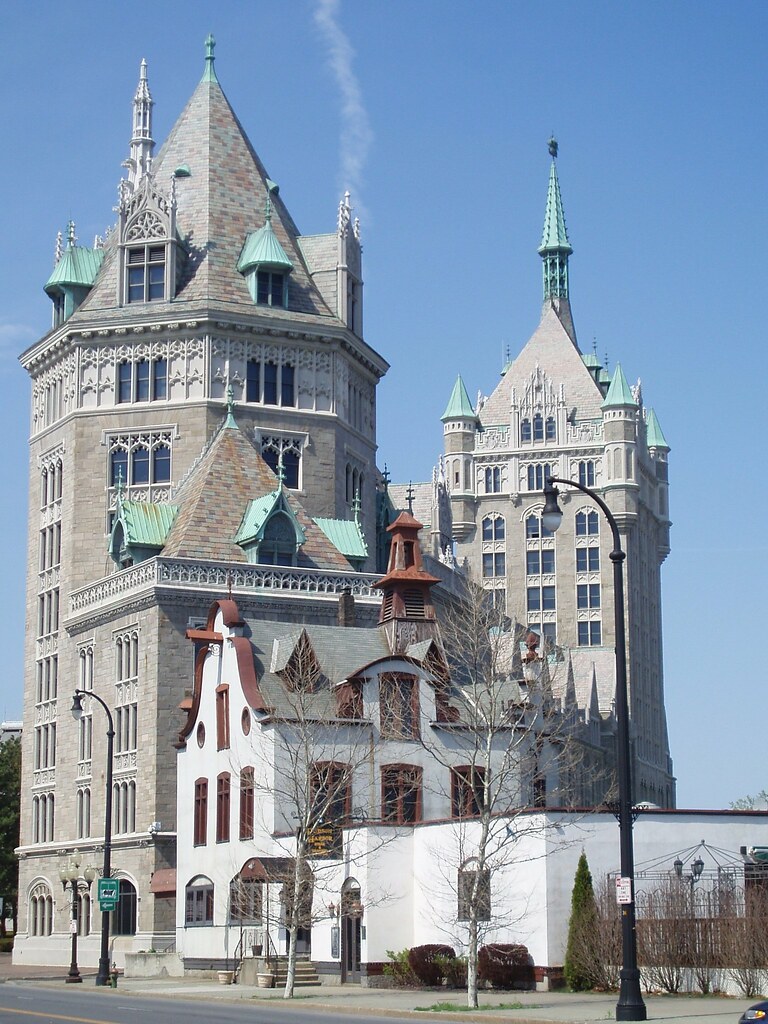
In the nineteenth century the Hudson River Valley was often known as “America’s Rhineland” and travel up and down the river was not just for business but also for the aesthetic-spiritual searching that inspired the Hudson River School of painters.
The Day Line’s origins date to 1826 when its founder Abraham van Santvoord began work as an agent for the New York Steam Navigation Company. Van Santvoord’s company merged with others under his son Alfred’s guidance in 1879 to form the Day Line. (more…)
Buchan in Quebec
While the Salon bleu in Quebec’s parliament used to be green, the Salon rouge has kept its lordly colour. Conservative Quebec was the last of the Canadian provinces to abolish its unelected upper house which faced the chop in 1968, that year so beloved of duty-shirkers and ne’er-do-wells.
Thirty-three years earlier, the Salon rouge was the scene of a more regal ceremony: the official installation of the Scots writer and statesman John Buchan as Governor General of Canada. Being a Presbyterian with an in-built (but in his case only occasional) tendency to dourness, Buchan wanted to go as an ordinary commoner but the King of Canada insisted on a peerage for his viceregal representative in the dominion.
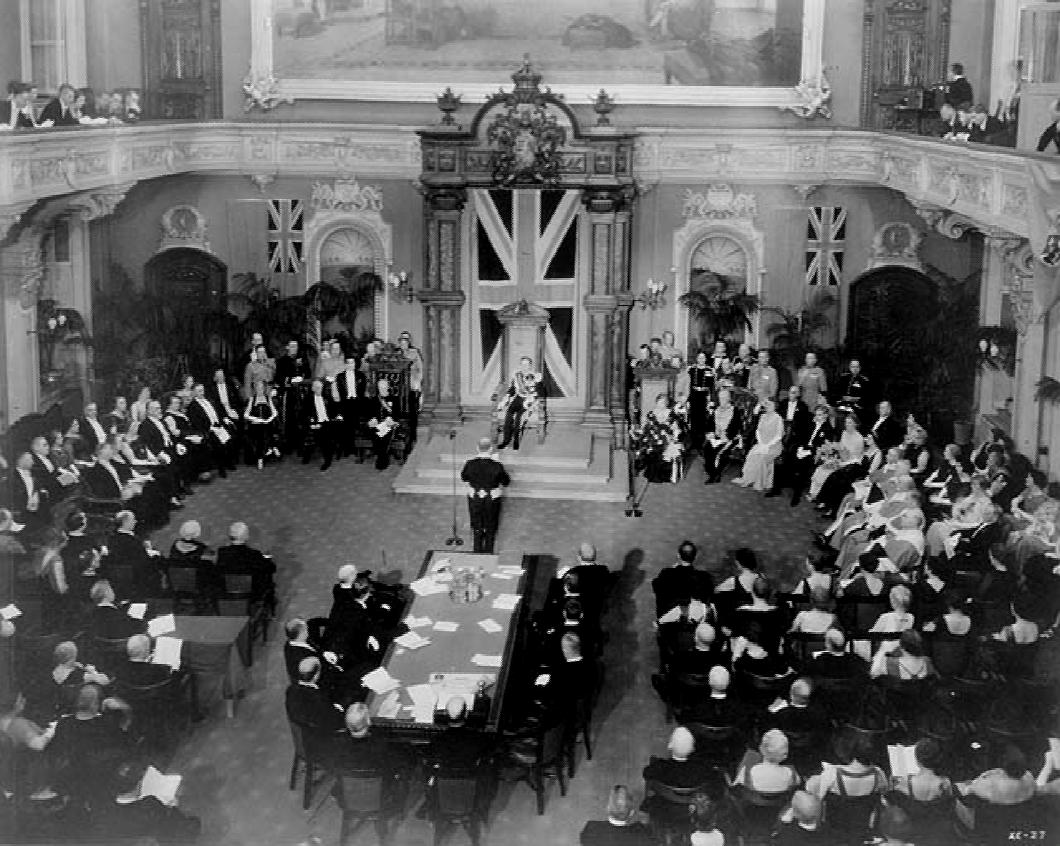
Thus it was Lord Tweedsmuir who arrived in Quebec in 1935 and was installed as Governor General in the Salon rouge on All Souls’ Day of that year. Above, the Prime Minister William Lyon Mackenzie King gives an address after the swearing-in.
Buchan proved an influential Governor General and helped set the tone of Canada’s monarchy in the aftermath of the 1931 Statue of Westminster that recognised the distinct nature of the Commonwealth realms. He also orchestrated the King’s successful 1939 trip across Canada — which also featured the King and Queen holding court in the Salon rouge of Quebec’s Parliament.
By the time of his death in post in 1940, John Buchan had become His Excellency The Right Honourable The Lord Tweedsmuir GCMG GCVO CH PC. Not a bad end to a good innings.
Doom in Bloom
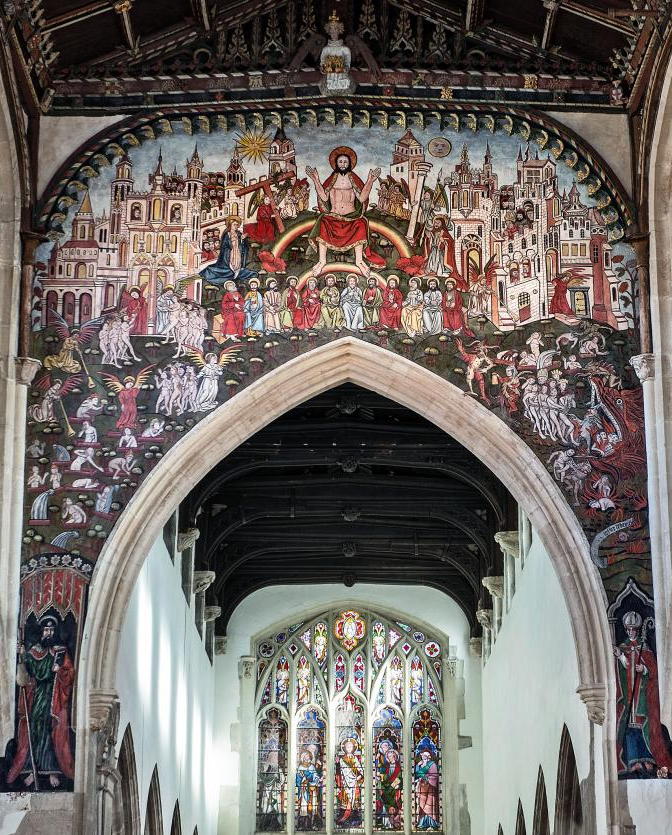
Such paintings were widespread in Catholic England where they served as a vital reminder to the faithful worshipping below of not just the torments of Hell but also the joys of Heaven. In the aftermath of the Protestant revolt, however, such vivid imagery was frowned upon, and the Salisbury Doom was painted over with limewash in 1593. Christ in Majesty was replaced by the royal arms of the usurper queen, Elizabeth I.
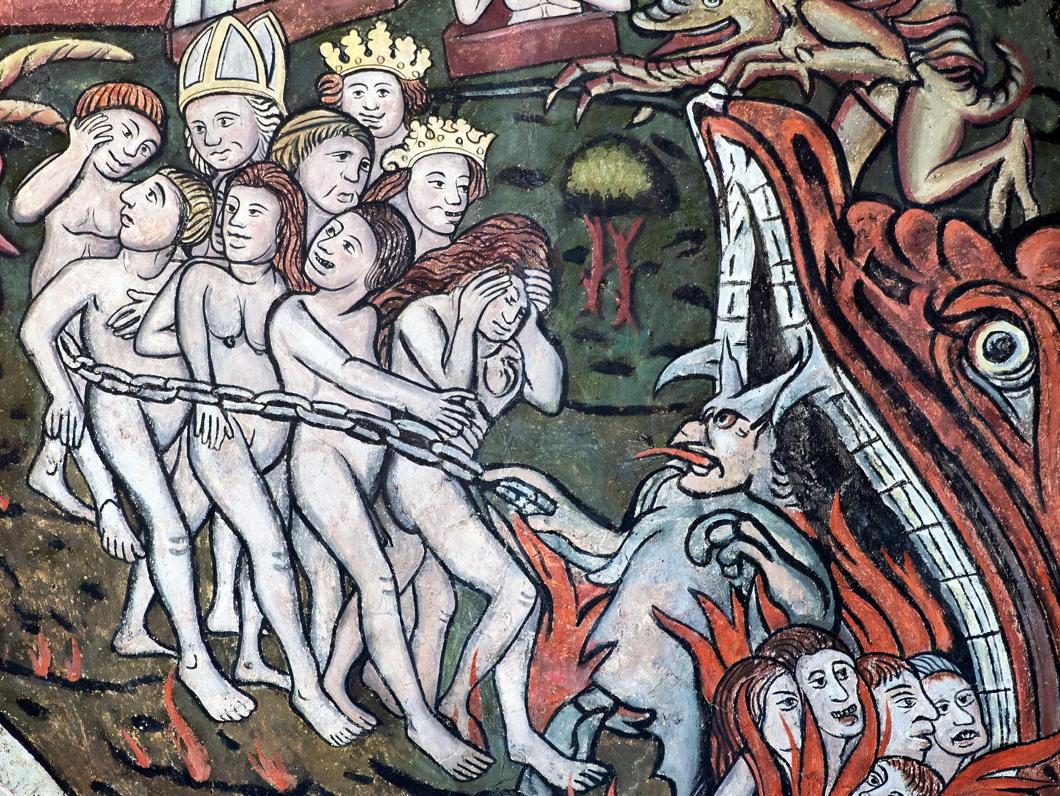
It was then forgotten about til its rediscovery in 1819 when hints of colour were discovered behind the royal arms. The limewash was removed, the remnants of the painting were revealed, recorded by a local artist, and then covered over yet again in white. Finally in 1881 the Doom was revealed to the world and subject to a Victorian attempt at restoration with mixed results.
Work on the church’s ceiling in the 1990s allowed experts to better examine the Doom which determined that, while there was a bit of fading, dirt was hanging loosely to the painting and it would be ripe for restoration. It has only been more recently, however, that money has been raised to restore the Doom.
There are other glories in this church yet to be restored, about which more information can be found on the parish’s website.
.jpg)
The Salisbury Doom before restoration (above) and after (below).
‘Solving’ Middle Europe
Ralph Adams Cram’s First-World-War Plan for Redrawing Borders
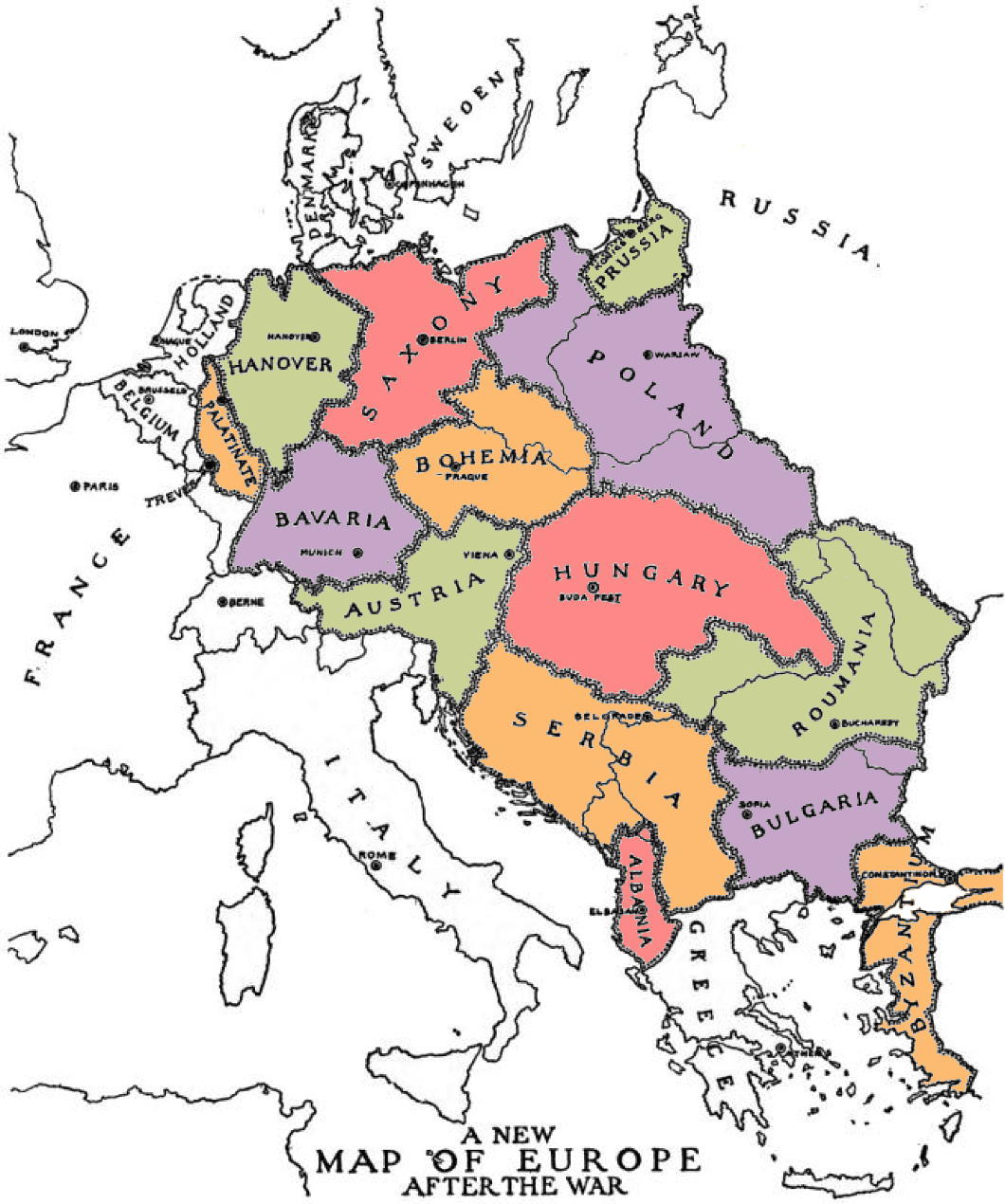
Ralph Adams Cram was not just one of the most influential American architects of the first half of the twentieth century: he was a rounded intellectual who expressed his thinking in fiction, essays, and books in addition to the buildings he designed.
Cram (and arguably even more his business partner Goodhue) had a gift for bringing the medieval to life in a way that was neither archaic nor anachronistic but instead conveyed the gothic (and other styles) as living, organic traditions into which it was perfectly legitimate for moderns to dwell, dabble, and imbibe.
His literary efforts include strange works of fiction admired by Lovecraft and political writings inviting America to become a monarchy. These have value, but it’s entirely justifiable that Cram is best known for his architectural contributions.
All the same, amidst the clamours of the First World War this architect of buildings played the architect of peoples and sketched out his idea of what Europe after the war — presuming the defeat of the Central Powers — would look like.
In A Plan for the Settlement of Middle Europe: Partition Without Annexation, Cram set out his model for the territorial redivision of central and eastern Europe “to anticipate an ending consonant with righteousness, and to consider what must be done… forever to prevent this sort of thing happening again”.
Cram, who provided a map as a general guide, predicted the return of Alsace-Lorraine to France, Schleswig-Holstein to Denmark, the Trentino and Trieste to Italy, much of Transylvania to Romania, Posen to a restored Poland, and Silesia divided in three.
Fundamental to the architect’s thinking was that “neither Germany, Austria-Hungary, nor Turkey can be permitted to exist as integral or even potential empires”. Austria and Hungary would be split and Germany needed to be partitioned (not, as some later plans had it, annexed). (more…)
Lady Day
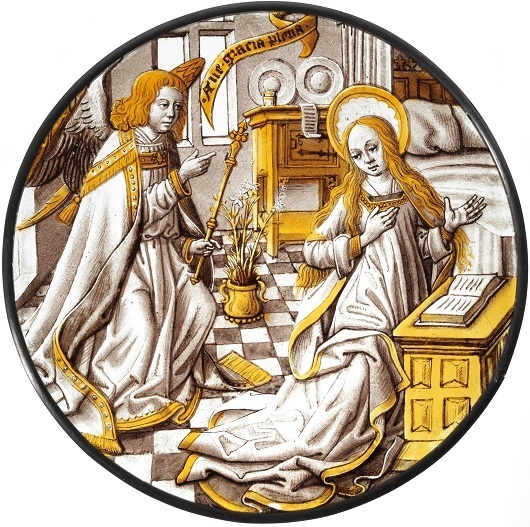
Today is Lady Day, the Feast of the Annunciation when the Archangel Gabriel appeared to the Blessed Virgin Mary and announced that she would conceive and bear the child Jesus.
The angelic salutation – “Hail Mary, full of grace, the Lord is with thee… Blessed art thou amongst women, and blessed is the fruit of thy womb, Jesus” – forms the basis of the Ave Maria, one of the most widely uttered prayers in Christendom.
Traditionally this has been one of the greatest of devotions to the Virgin amongst the English, which is why there are so many pubs across England named ‘The Salutation’.
For centuries in England and Scotland (as well as elsewhere), Lady Day was the first day of the calendar year. Scotland moved this to 1 January in 1600 and England did likewise in 1750.
Nonetheless, the English tax year is still based on this date as it commences on 6 April, which is the Annunciation plus twelve days to mark the difference between the old Julian calendar and the modern Gregorian one.
In the realms of fiction, 25 March is the day Tolkien chose for when Frodo destroyed the Ring in Mount Doom, securing the fall of Sauron – with obvious parallels to Christ’s Incarnation securing the defeat of Satan.
This stained glass roundel above is not English, however, but from the Southern Netherlands around 1500-1510.
Elsewhere, A Clerk of Oxford has a good section on the Annunciation.
Weimar’s Black, Red, and Gold
In fact, there was a great deal of overlap between these two sides, and in the most recent Junge Freiheit Dr Karlheinz Weißmann explains how the troubled Weimar Republic made its choice of national symbols.
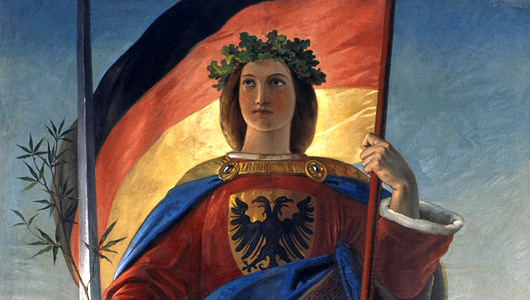
The colours of the Republic
by Karlheinz Weißmann — Junge Freiheit 18 February 2019
(slapdash unofficial totally unauthorised translation)
At the end of December 1918, Harry Graf Kessler noted confusedly in his diary that supporters of the [liberal republican] German Democratic Party (DDP) had marched through the centre of Berlin, with the “Greater German colours” black-red-gold and singing Der Wacht am Rhein.
In fact, the left-wing liberals were the only political group next to the Völkisch movement who had clung on to the black-red-gold. For both of them, it was about the ideal of an all-German state, including the Austrians. For the Liberals, it also represented the ideals of the revolution of 1848, while for the Völkisch there was the idea that black, red, and gold were the ancient Aryan colours.
During the period of downfall in 1918 it wasn’t the black-red-gold that mattered: it was the red of the socialists. Majority and Independent Social Democrats as well as the Communists all used it as a symbol. Red armbands, red cockades, and red flags marked the followers of the new republic, whose socialist underpinning was generally believed.
Black-red-gold as last option
By contrast, the old imperial colours of black-white-red almost disappeared. Significantly, the naval mutineers in Kiel had barely raised a hand to defend them. But the soldiers returning home from the front marched under black-white-red flags — which they had made themselves — and were received in the cities, even in Berlin, with black-white-red flags and decorations. The newly established Freikorps also deployed the old imperial colours, as did the cockade of the new Reichswehr whose ranks included many opposed to the republican order.
With this juxtaposition of revolutionary red and the black-white-red of tradition, black-red-gold — Schwarz-Rot-Gold — came as the last option. Some hoped that, on the one hand it would stand for moderation and against total upheaval, while on the other hand it suggested that defeat in the war did not spell the final downfall of the nation.
On 9 November 1918 an organ of the far right, the Alldeutschen Blätter, published an essay entitled “Black-Red-Gold”:
“The birth of Greater Germany is approaching! … Cheer the old black-red-golden colours! Decorate like Vienna your houses with the black-red-golden flags, bows, and bands and show all the world from Aachen and Königsberg to Bozen [Bolzano], Klagenfurt, and Laibach [Ljubljana] that we are a united people of brothers, in no distress of separation or peril.”
Symbol of treason
The 18 February 1919 decision of the State Committee of the Republic to adopt black-red-gold as provisional colours of the Reich was still supported by the expectation that a Greater German Republic would emerge. But the “Anschluss” of Austria was banned at the instigation of the victorious powers and in flagrant contradiction to the right of the self-determination of peoples. This resulted in the first serious discrediting of the black-red-gold.
The second was that black, red, and gold had been reputed to be a symbol of treason since the beginning of the war. A group of deserters and pacifists calling themselves the “Friends of the German Republic” — financed with French money and operating from Switzerland — used the colours for their cause as early as 1915, and as early as the spring of 1918 Entente aircraft distributed calls for desertion and revolution along the western front, marked with a black-red-gold stripe or border.
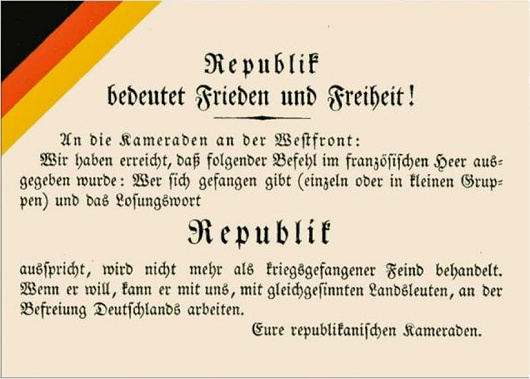
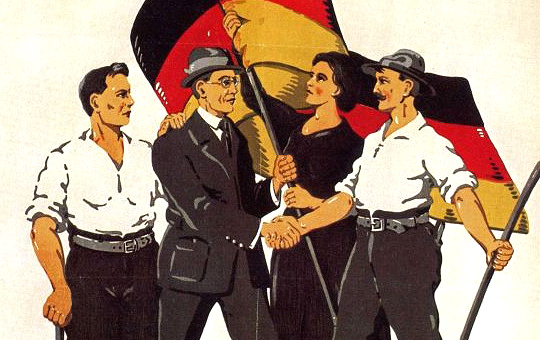
Almost certainly the majority of the population was relieved when, on instructions from the national government, the workers’ and soldiers’ councils adopted the black-red-gold [replacing the red of revolution] but passive acceptance was not enough to give the colour combination permanent support. This was particularly evident in the peculiar “flag compromise” presented by the government with the support of Majority Social Democrats, the Center Party, and part of the DDP during the deliberations of the National Assembly.
According to this compromise, the black-red-gold was introduced as the national flag, while the merchant ensign was the old black, white, and red — albeit with a small black-red-gold flag infelicitously shoved in the canton. Interior Minister Eduard David’s rationale for the choice — that the old colours had been “party” rather than “national” colours — simply did not correspond to fact.
Symbol of Greater Germany
Closer to the truth was the justification that black, red, and gold were the symbols of a Greater Germany. Interior Minister David said:
“What dynastic Germany could not do, democracy must succeed in doing: achieving moral conquests beyond the frontier and, above all, among those who by blood and language belong to us. To win the Greater German unity must now be our goal, not through war and violence, but through the recruiting power of the new republican Germany, and let us fly forward in front of the black-and-red-gold banner!”
In any case, Article 3 of the Weimar Constitution, which entered into force on 11 August 1919, was far from providing a sound answer to the flag question of the young state. As constiutional scholar Ernst-Rudolf Huber wrote:
“This Weimar flag compromise became the cause of endless strife. If the constitutional function of state colours exists in their symbolic power to integrate the state’s unity, the state-sanctioned dualism of contrasting colours manifested in the Weimar flag compromise is a permanent element of disintegration. The flag compromise, with its juxtaposition of the old and new colours, did not diminish the problem of the colour change but rather aggravate it.”
Claudia McNeil
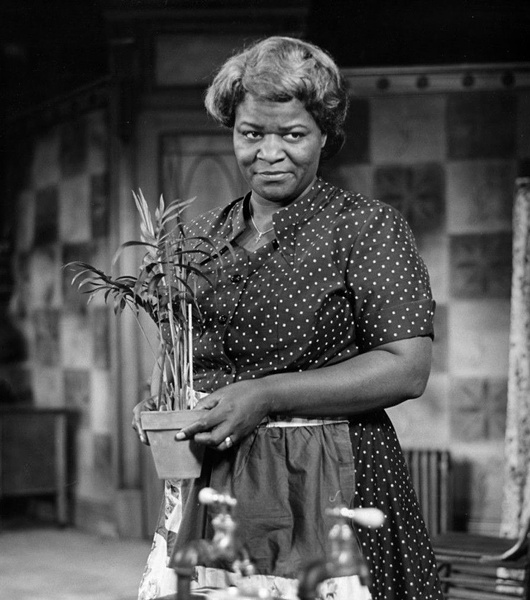
As a black Jewish Catholic, Claudia McNeil was pretty much everything the Ku Klux Klan hated. She was born to a black father and a part-Apache mother in Baltimore, Maryland but in her teenage years was adopted by a Jewish family in New York who instructed her in Judaism and taught her fluent Yiddish.
She married aged 19 but lost her husband in the Second World War and both her sons in the Korean War.
After training as a librarian, McNeil drifted into vaudeville theatre and nightclubs, eventually making her Broadway debut in 1953 as Tituba in The Crucible.
“The Jewish faith left an indelible stamp on her spirit,” Ebony magazine reported in 1960, “but she became a convert to Catholicism in 1952.” McNeil often reported that she stopped to pray before every evening’s performance.
Her most famous role was as the matriarch in A Raisin in the Sun in 1959, reprised in the 1961 film in both of which Sidney Poitier also starred.
Deeply appreciative of the gifts God gave her, McNeil was known never to turn down a chance to appear at charity benefit performances, especially for the NAACP and the American Jewish Congress.
Despite the losses she suffered in her life Claudia McNeil insisted “I have everything I’ve ever wanted from life.”
“I have more work than I can do. I have a nice, cheerful, comfortable home. I am solvent. Above all, I have strength, health, and peace of mind. I know where I’m going. I am an American citizen. I love my country. I pay my taxes and vote, and I intend to have a say in how my country is run.”
McNeil retired in 1983 and died ten years later.
Search
Instagram: @andcusack
Click here for my Instagram photos.Most Recent Posts
- Brunel’s Unbuilt Capitol February 3, 2026
- Cricket at Fordham January 27, 2026
- Palacio Barolo Revisted January 14, 2026
- Learning to Love Liguria January 14, 2026
- Crux Alba No. 2 January 13, 2026
Most Recent Comments
Book Wishlist
Monthly Archives
Categories