Architecture
About Andrew Cusack
 Writer, web designer, etc.; born in New York; educated in Argentina, Scotland, and South Africa; now based in London.
 read more
News
Blogs
Reviews & Periodicals
Arts & Design
World
France
Mitteleuropa
Knickerbockers
Argentina
The Levant
Africa
Cape of Good Hope
Netherlands
Scandinavia
Québec
India
Muscovy
Germany
Academica
The Other Modern: Otto Schöntal
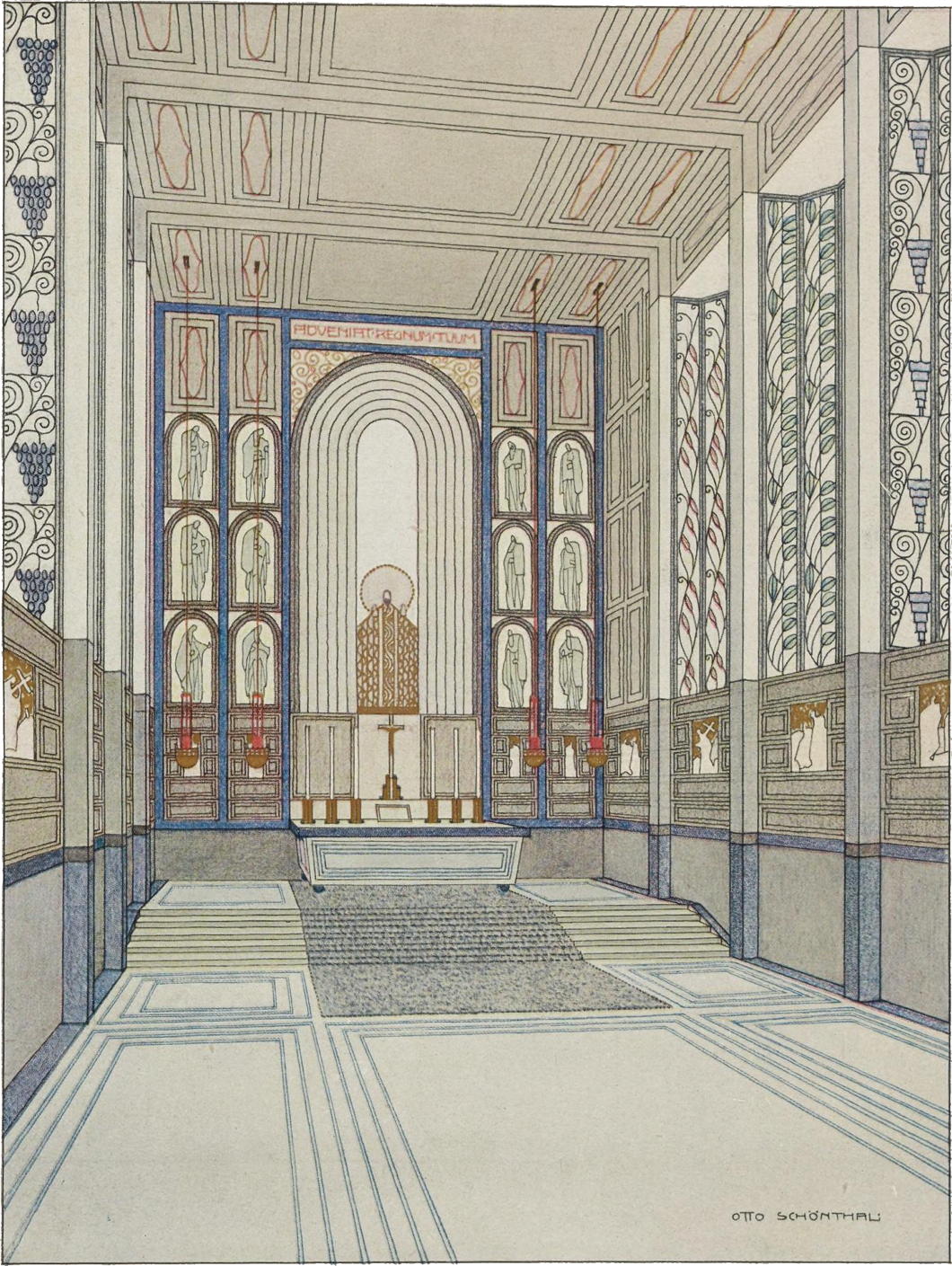
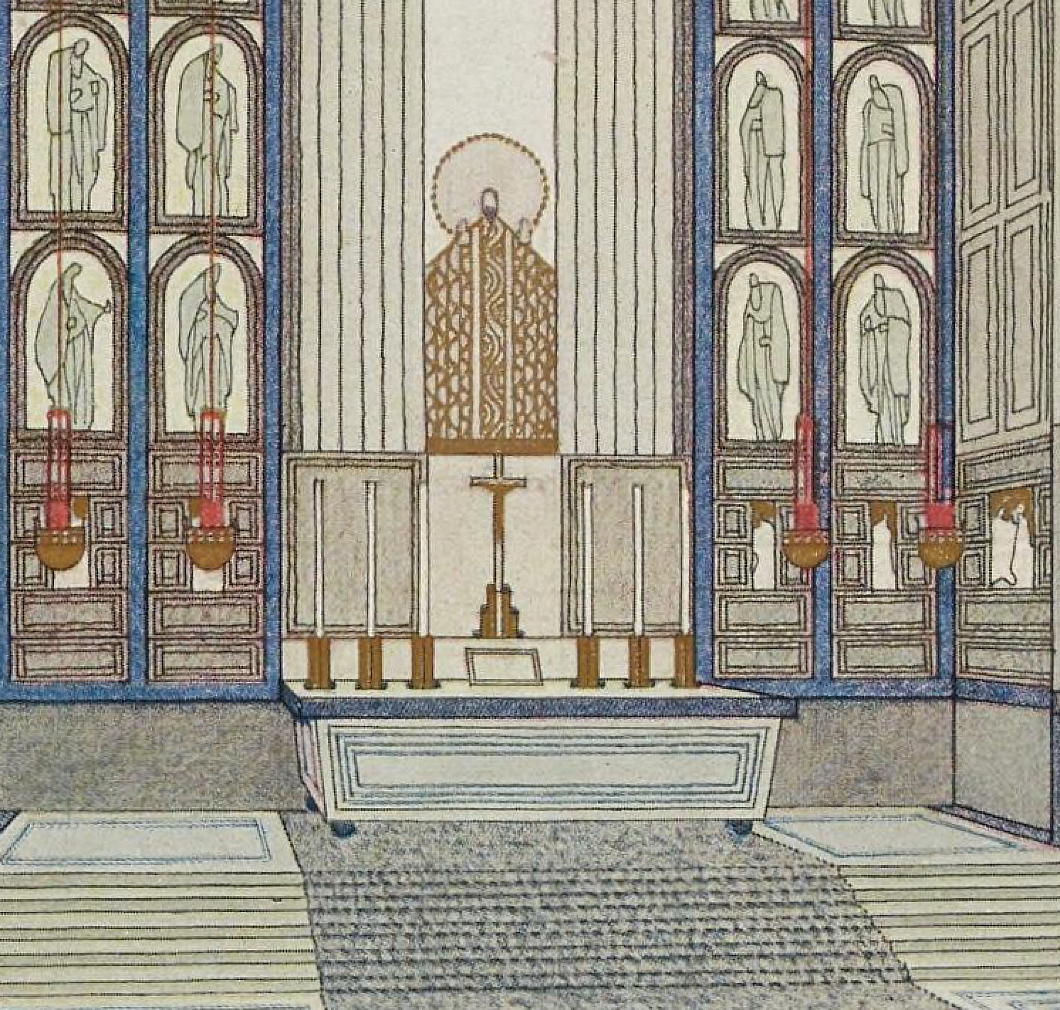
The Viennese architect Otto Schöntal was a student of Otto Wagner at the Academy of Fine Arts and exhibited this project for a Schloßkapelle in the periodical Moderne Bauformen in 1908.
It combines a simplicity of form with greater complexity in its decoration but like the work of many of the more mid-ranking architects of the Secession it comes across as a bit rigid and angular despite a certain freeness in its design.
A rood-stair pulpit
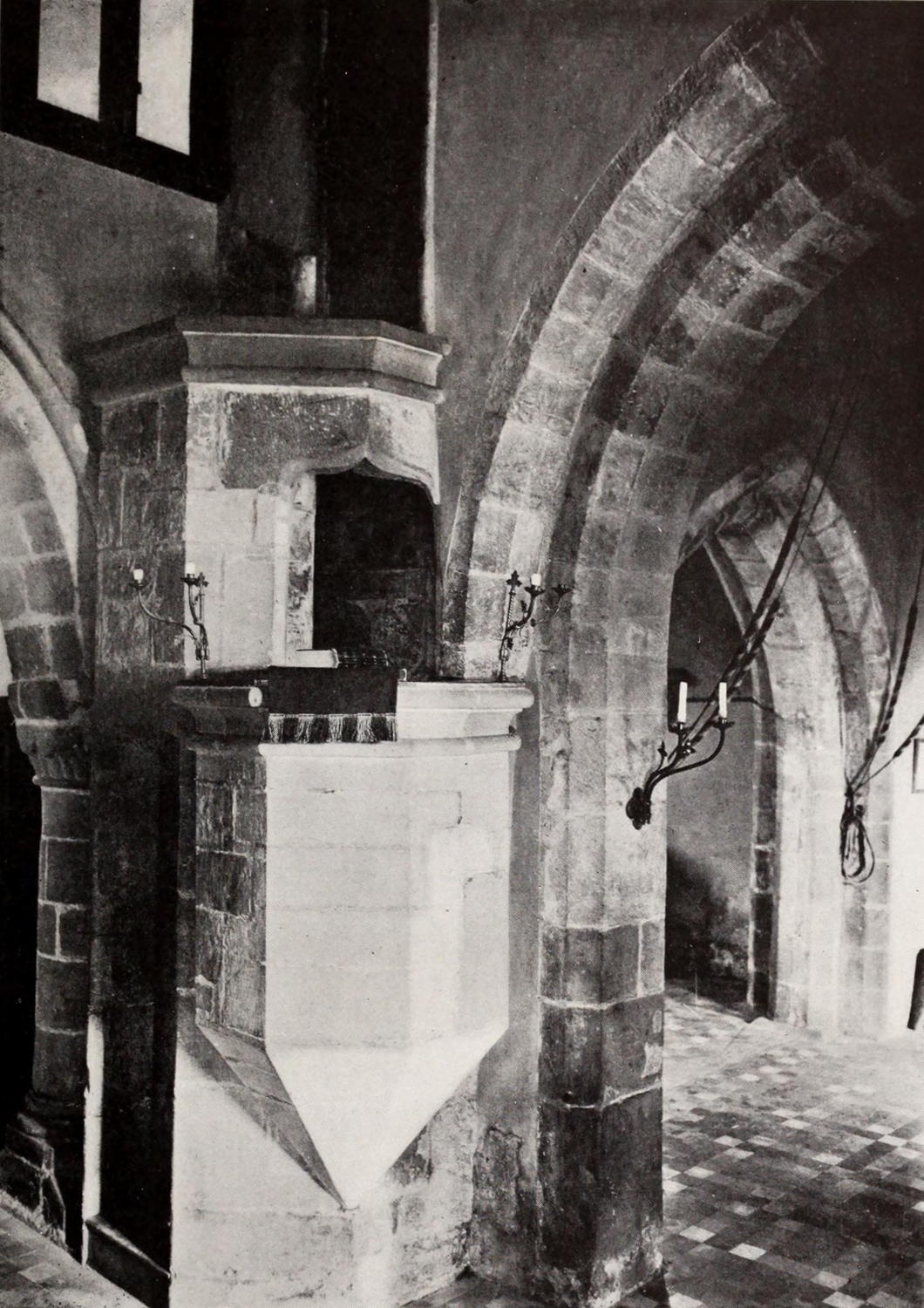
Among the features of the Church of All Saints in the Forest of Dean village of Staunton, Gloucestershire, is this fifteenth-century stone pulpit.
It is built into a rood-stair that once led to a wooden rood loft, demolished and removed some centuries ago.
This church also has a Norman font thought to have been hollowed out of an earlier square pagan Roman altar.
Pentonville Expressionism
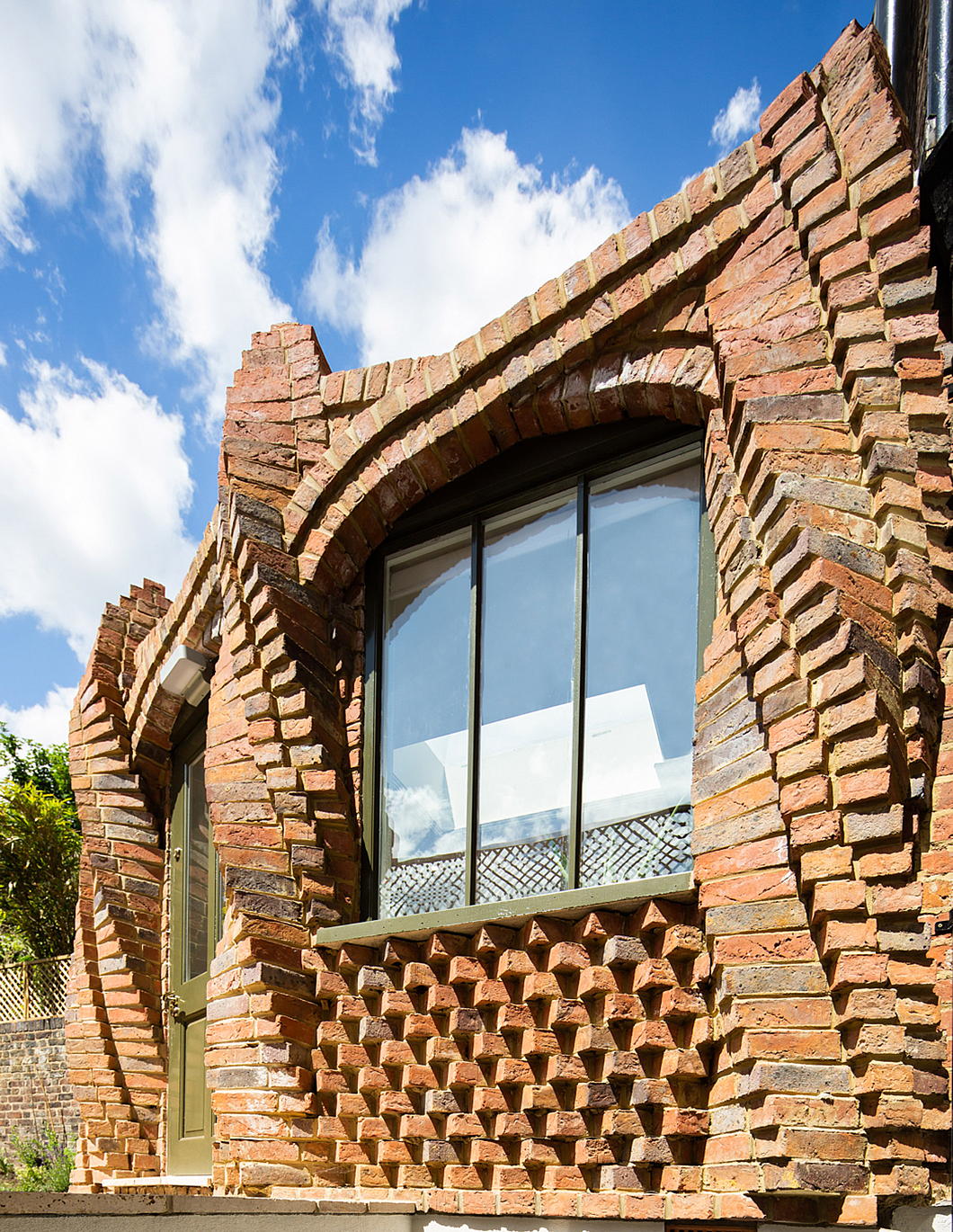
When partner James Beazer of architectural firm Urban Mesh wanted to build an extension onto his Pentonville townhouse his tenderness towards brick expressionism took physical form.
“I love the work of the German Expressionists,” Beazer told the FT. “The playfulness of their use of brick. I think we’ve become uncomfortable with decoration today. Perhaps property has become too valuable. If it wasn’t, we’d all feel more able to take risks.”
Bringing brick expressionism down to a smaller scale produces interesting results here in Beazer’s case. It’s fun and somewhat slapdash — all the unconcerned confidence of an amateur delivered by a professional in his back garden. Hamburg meets the Shire in Islington.
I would have gently arched the windows, however, and the choice of lighting fixture is mundane. But it is a fundamental Cusackian principle never to let the perfect be the enemy of the good.
“I would probably have struggled to convince a client to do it,” Beazer says. But he has no confidence in the twisted brick add-on’s future once he moves house. “To be honest, the next people who move in will probably flatten it and replace it with a huge glass extension.”
The late Gavin Stamp gave an excellent lecture under the auspices of the Twentieth Century Society entitled ‘Hanseatic visions: brick architecture in northern Europe in the early twentieth century’.
It had been available online but now, alas, seems to be lost in the mists of time since the new incarnation of the Society’s website went up. Hope they stick it back online soon.
The Perfect Home Garage
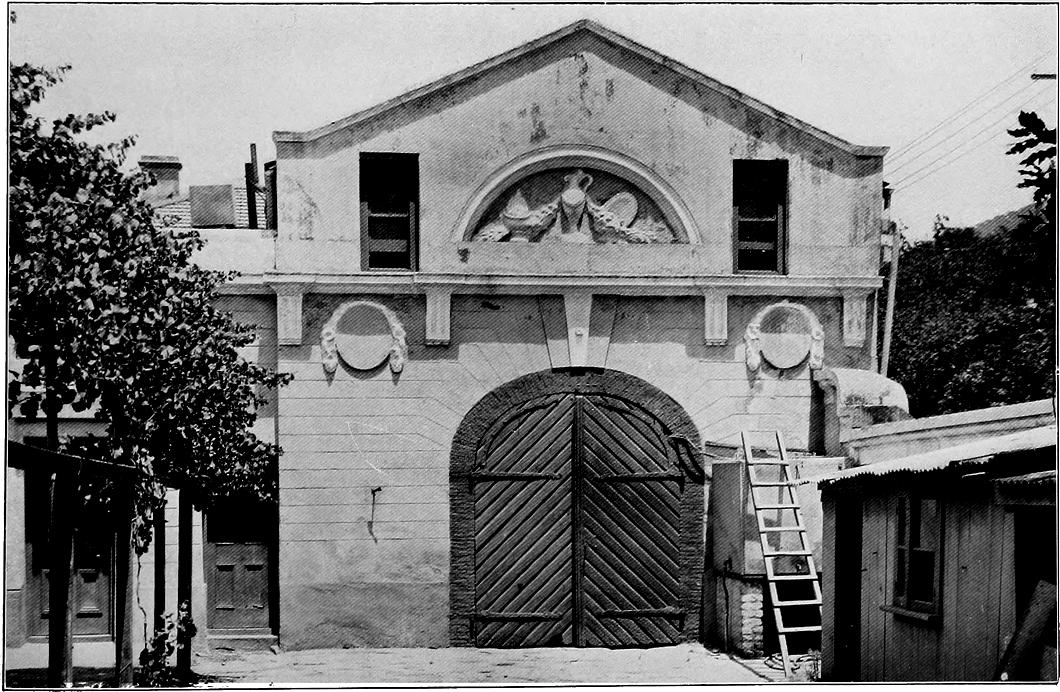
The Coach-House at Saasveld, Cape Town
With all of Suburbia working from impromptu home offices set up in their garages during Covidtide — presumably clinging to their space heaters at this time of year — the subject of the residential garage came up in conversation.
America, being a land of plenty, has the very worst and the very best of home garages. The best are, if a separate structure, often in an arts-and-crafts style and ideally with a floor above perfect for extra storage, conversion to a rental unit, or space for disgruntled teenagers. If attached to the house itself, it is to the side, and only one storey, so as not to distract attention.
The worst, however, are double wide and take up most of the facade, as well documented by McMansion Hell.
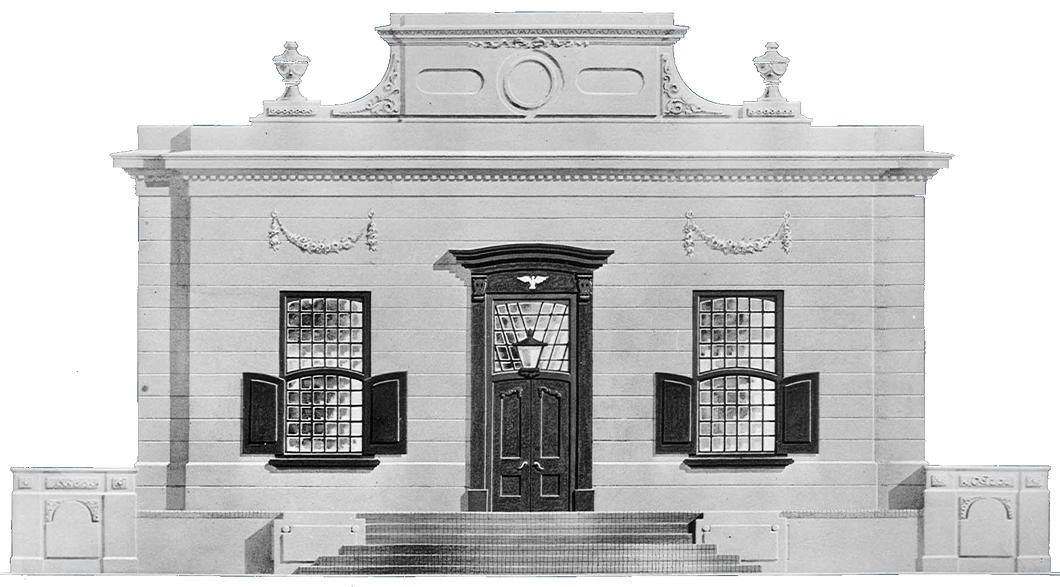
My perfect residential garage, however, is not in the States but from the Western Cape. Saasveld was the home of Baron William Ferdinand van Reede van Oudtshoorn, also 8th Baron Hunsdon in the Peerage of England.
In the 1790s, the Baron built the house on his Cape Town estate — between today’s Mount Nelson Hotel and the Laerskool Jan van Riebeeck. The elegant house and outbuildings were almost certainly the work of Louis Michel Thibault, the greatest architect of the Cape Classical style.
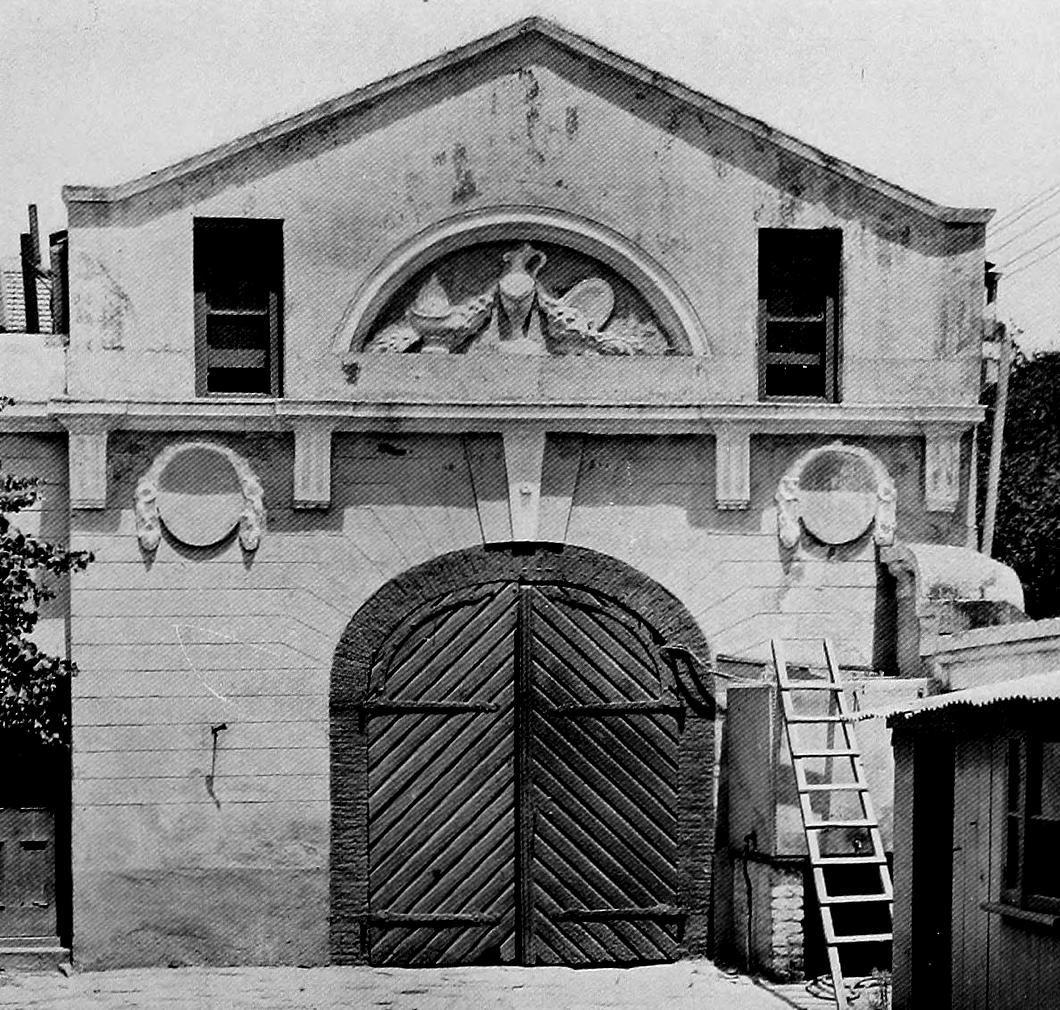
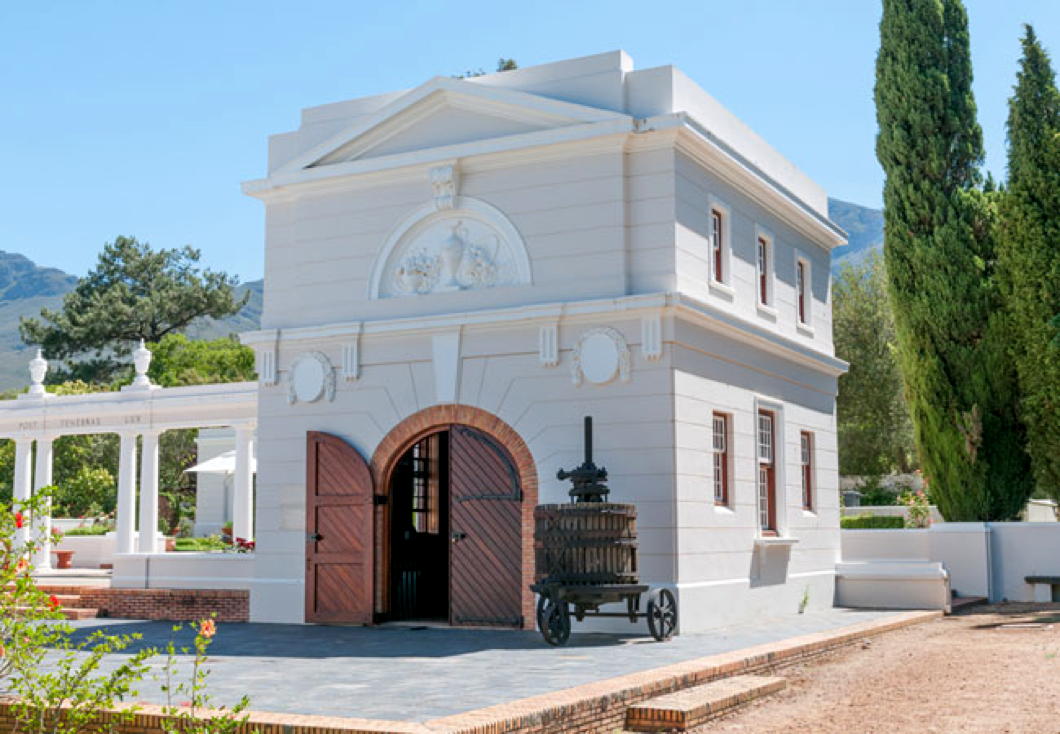
Behind the house were two flanking wine cellars linked by a colonnade, at least one of which (above) was eventually put to use as a coach house or garage and photographed by Arthur Elliott.
Unfortunately the house and its grounds fell into ruin and the Dutch Reformed Church bought the site for development and decided to demolish Saasveld. Architectural elements from the house were preserved and eventually re-assembled at Franschhoek where a reconstructed Saasveld serves as the Huguenot Memorial Museum today.
As Mijnheer van der Galiën reports, however, the tomb of William Ferdinand is still at the original site.
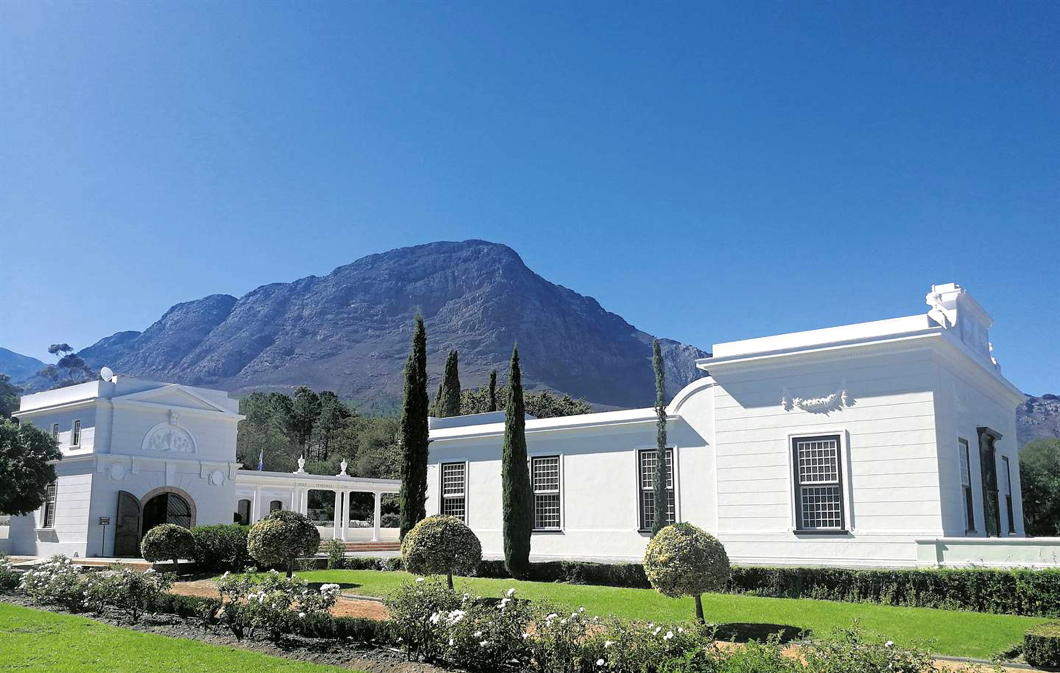
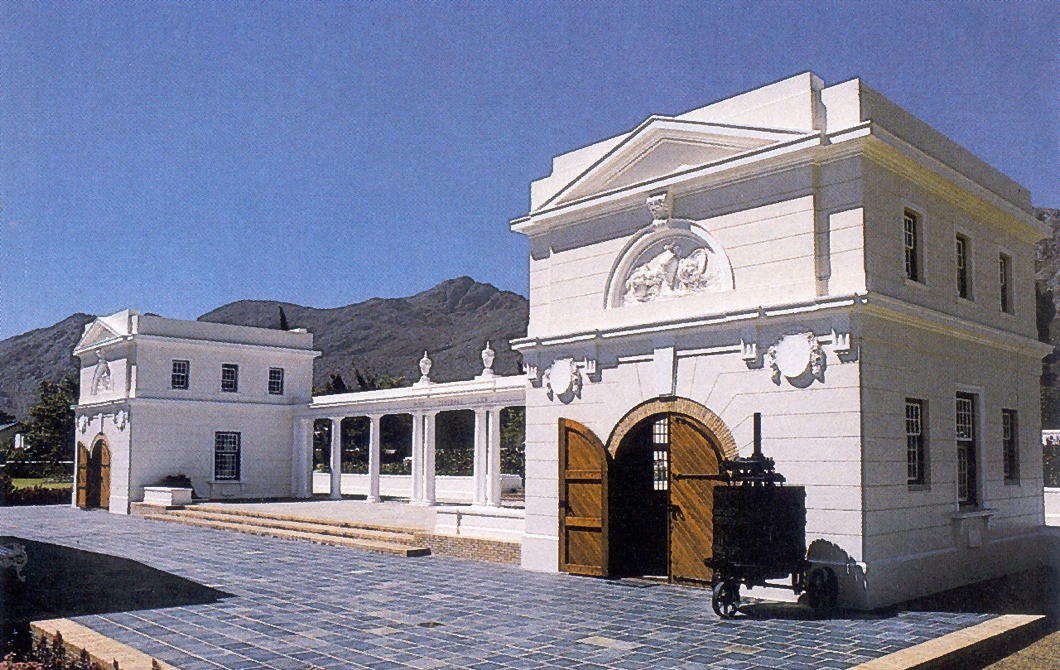
Here in Franschhoek the matching wine-cellars-turned-coach-houses are reproduced with their linking colonnade. And I still can’t help but think that — so long as you could fit a Land Rover through the doors — they would make the perfect home garage.
A Scene in Buenos Aires
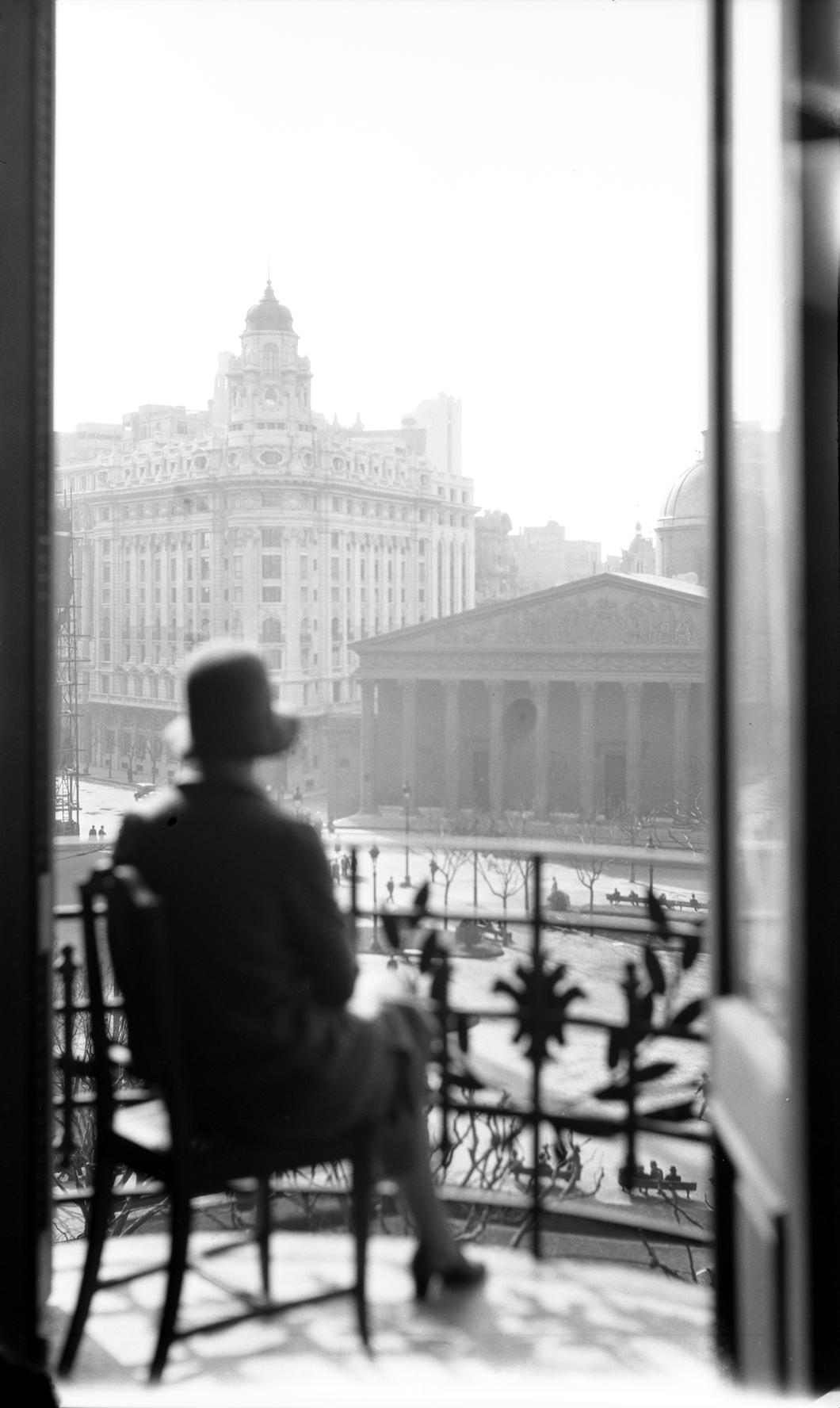
A hatted woman sits on a balcony, looking away out over the Plaza de Mayo, the Cathedral of Buenos Aires, and the city beyond.
It looks like the sort of thing taken by one of the French photographers, but in fact it is by a total amateur: Henry Dart Greene, the son of the Californian architect Henry Mather Greene (of Greene & Greene).
From 1928 to 1931, Dart Greene worked for the Argentine Fruit Distributors Company, founded by the Southern Railway to make use of the individual smallholdings long its line.
Upon his death, Dart Greene’s papers were deposited in the library of the University of California at Davis including this photograph from his time in Argentina.
While the building it’s taken from has been demolished and replaced with a bank, most of what you see beyond is still there.
A Palace for the States-General
A Palace for the States-General
The nineteenth century was the great age for building parliaments. Westminster, Budapest, and Washington are the most memorable examples from this era, but numerous other examples great and small abound in Europe and beyond.
The States-General of the Netherlands missed out on this building trend, perhaps more surprisingly so given their cramped quarters in the Binnenhof palace of the Hague. The Senate was stuck in the plenary chamber of the States-Provincial of South Holland with whom it had to share, while the Tweede Kamer struggled with a cold, tight chamber with poor acoustics.
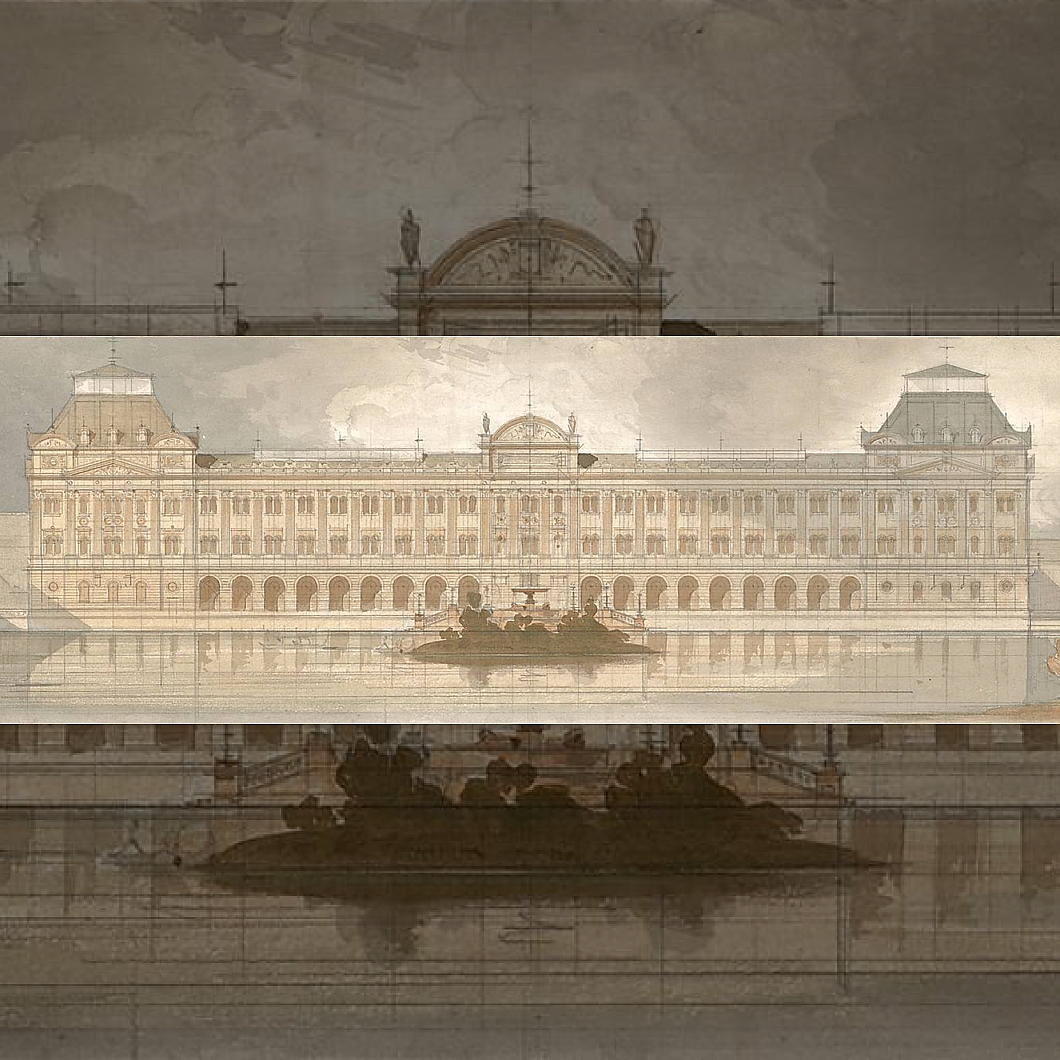
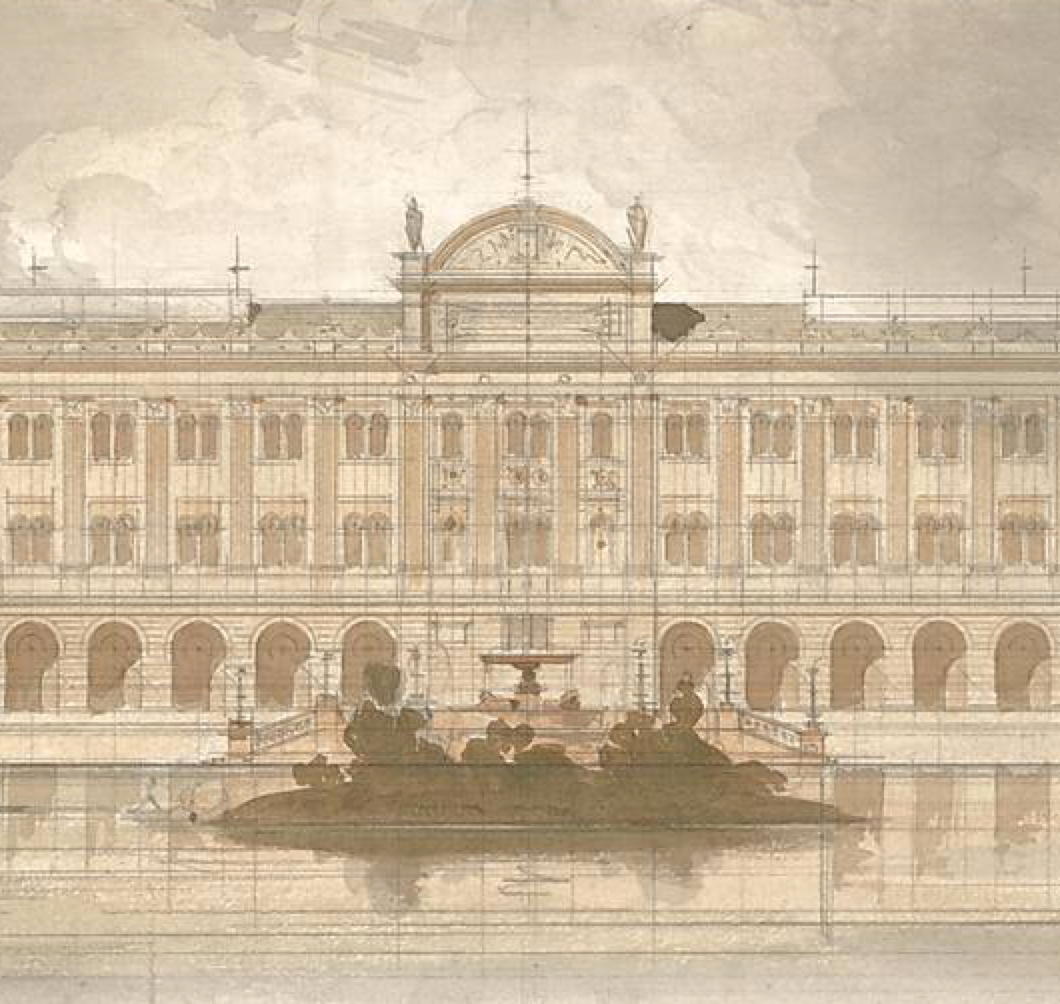
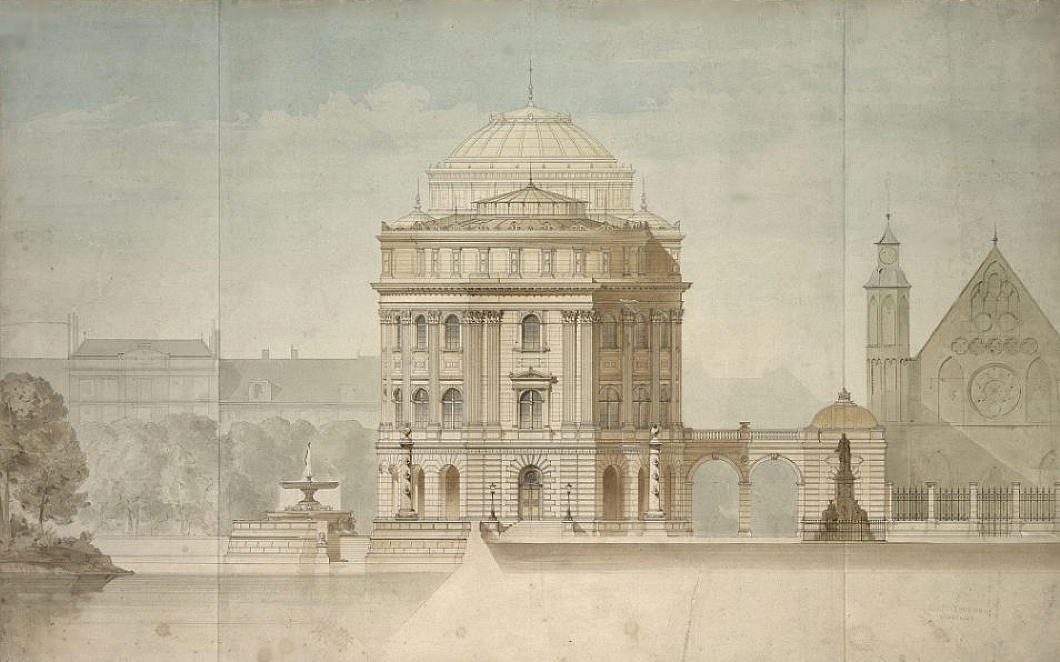
The liberal leader Johan Rudolph Thorbecke who pushed through the 1848 reforms to the Dutch constitution thought the newly empowered parliament deserved a building to match, and produced a design by Ludwig Lange of Bavaria. All the Binnenhof buildings on the Hofvijver side would be demolished and replaced by a great classical palace.
Despite members of parliament’s continual complaints about their working conditions, Thorbecke and Lange’s plans were vigorously and successfully opposed by conservatives. As the academic Diederik Smit has written,
A large part of the MPs was of the opinion that such an imposing and monumental palace did not fit well with the political situation in the Netherlands. […] In the case of housing the Dutch parliament, professionalism and modesty continued to be paramount, or so was the idea.
In fact, as Smit points out, significant alterations were made to the Binnenhof, like the demolition of the old Interior Ministry buildings by the Hofvijver, but these were replaced with structures that were actually quite historically convincing.
Further plans were drawn up in the 1920s — including a scheme by Berlage — but MPs felt that none of the proposals quite got things right and they were shelved accordingly. It wasn’t til the 1960s that the lack of space and the poor conditions in the lower chamber forced action. All the same, efficiency was the order of the day, as the speaker, Vondeling, made clear: “It is not the intention to create anything beautiful”.
Even then it wasn’t until the 1980s that the work was started, and the MPs moved into their new chamber in 1992. As you can see in this photograph, Vondeling’s aim of avoiding anything beautiful or showy has been achieved. The new chamber is certainly spacious — indeed some MPs claim it is too spacious. The art historian and D66 party leader Alexander Pechtold pointed out the distance between MPs inhibits real debate, unlike in the British House of Commons, and to that extent parliamentary design is inhibiting real democracy.
F.X. Velarde: Forgotten & Found
Many of the architects of the “other modern” in architecture were forgotten or at least neglected once the craft moved in a more avant-garde direction.
The British Expressionist architect F.X. Velarde who produced a number of Catholic churches in and around Liverpool in the interwar period and beyond is the subject of a new book from Dominic Wilkinson and Andrew Crompton.
There will be a free online lecture tomorrow on ‘The Churches of F. X. Velarde’ given by Mr Wilkinson, Principal Lecturer in Architecture Liverpool John Moores University. Further details are available here.
The book is available from Liverpool University Press with a 25% discount through the Twentieth Century Society. (more…)
Wardour
The news from the West Country is that Jasper Conran OBE is selling up his place in Wiltshire, the principal apartment at Wardour Castle.
Wardour is one of the finest country houses in Britain, designed by James Paine with additions by Quarenghi of St Petersburg fame. It was built by the Arundells, a Cornish family of Norman origin, but after the death of the 16th and last Lord Arundell of Wardour the building was leased out and in 1961 became the home of Cranborne Chase School.
A friend who had the privilege of being educated there confirms that Conran’s assertion of Cranborne Chase being “a school akin to St Trinian’s” was correct, and tells wonderful stories of the girls’ misbehaviour.
Alas the modern world does not long suffer the existence of such pockets of resistance, and the school shut in 1990. The whole place was sold for under a million to a developer who turned it into a series of apartments, for the most part rather sensitively done, if a bit minimalist.
The real gem of Wardour, however, is the magnificent Catholic chapel which is owned by a separate trust and has been kept open as a place of worship. Richard Talbot (Lord Talbot of Malahide) chairs the trust and takes a keen interest in the chapel and the building. I was down there the Sunday the chapel re-opened for public worship after the lockdown and Richard was there making sure all was well.
Those interested in helping preserve this chapel for future generations can join the Friends of Wardour Chapel.
Corpus Christi
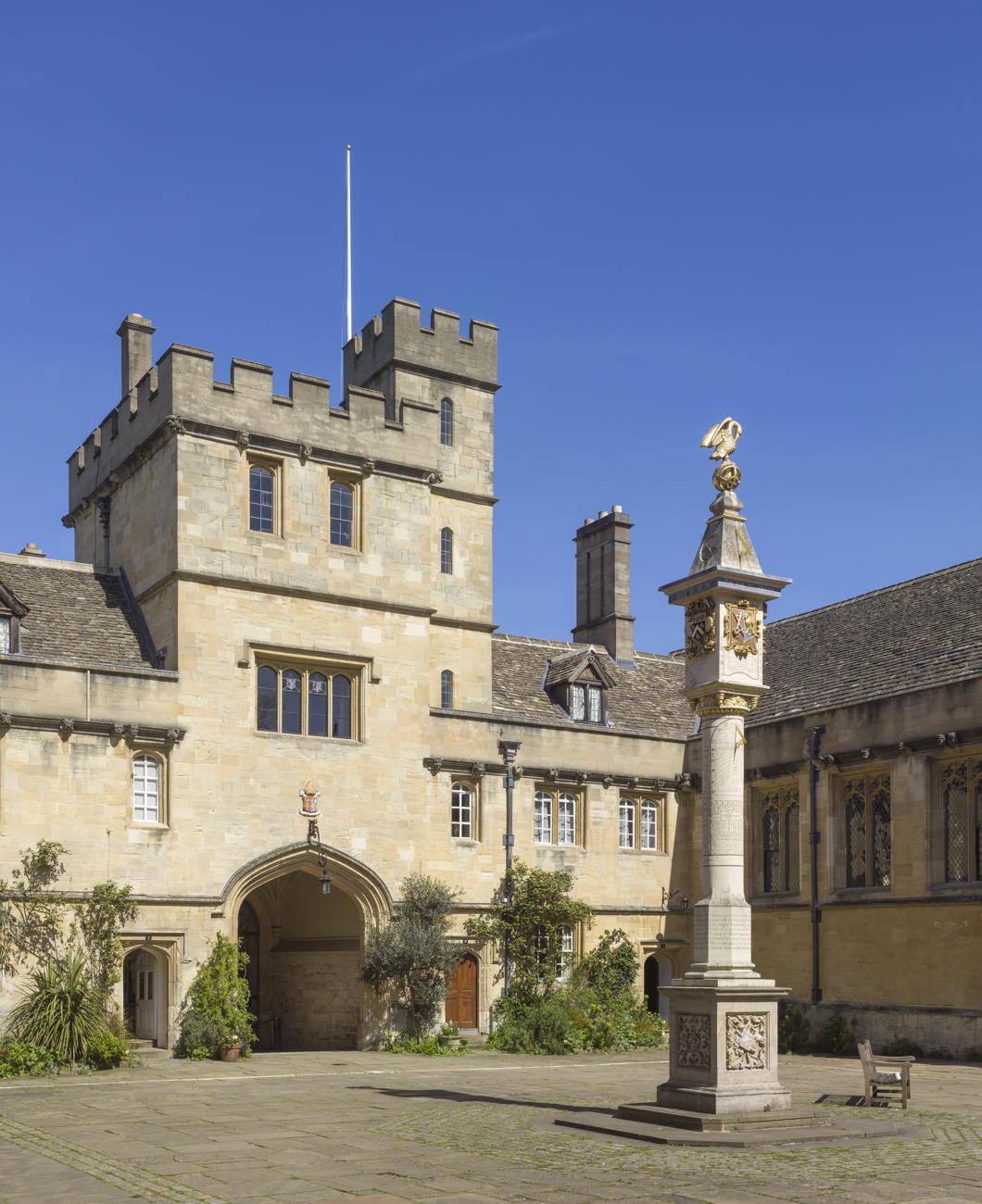
It seems silly to let today’s feast pass without mentioning Corpus Christi College at the University of Oxford. It’s one of the smaller colleges, with about 250 undergraduates and a hundred or so postgraduates studying in its charming quadrangles.
Founded in 1517, Erasmus hailed its library as inter praecipua decora Britanniae, “among the chief ornaments of Britain”, and Cardinal Pole — the last legitimate Archbishop of Canterbury — was a founding fellow.
More recently, John Keble became an undergraduate there in 1806, before accepting a fellowship at Oriel in 1811, and having Keble College founded and named after him a few years after his death in 1866.
Architecturally, Corpus’s most remarkable feature is the Pelican Sundial, which is actually a column dating from 1579 that contains twenty-seven different sundials. It was most recently restored in 2016, and copies exist at Princeton and Pomfret.
The terrace atop the new auditorium affords an excellent view of the former priory of St Frideswide, now used by the Protestants as Christ Church. (more…)
Onze Grootste President
The London Residence of President Martin van Buren
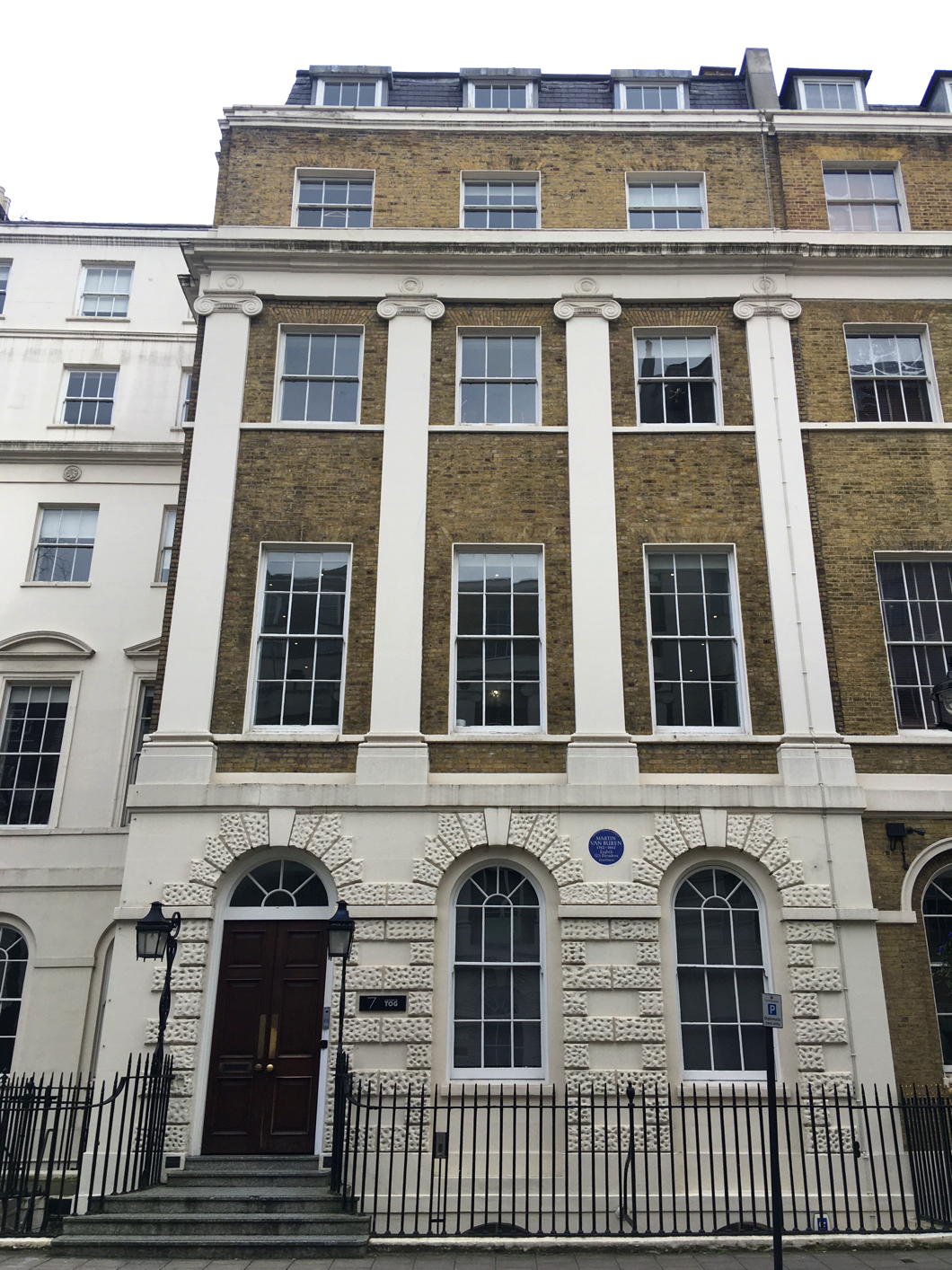
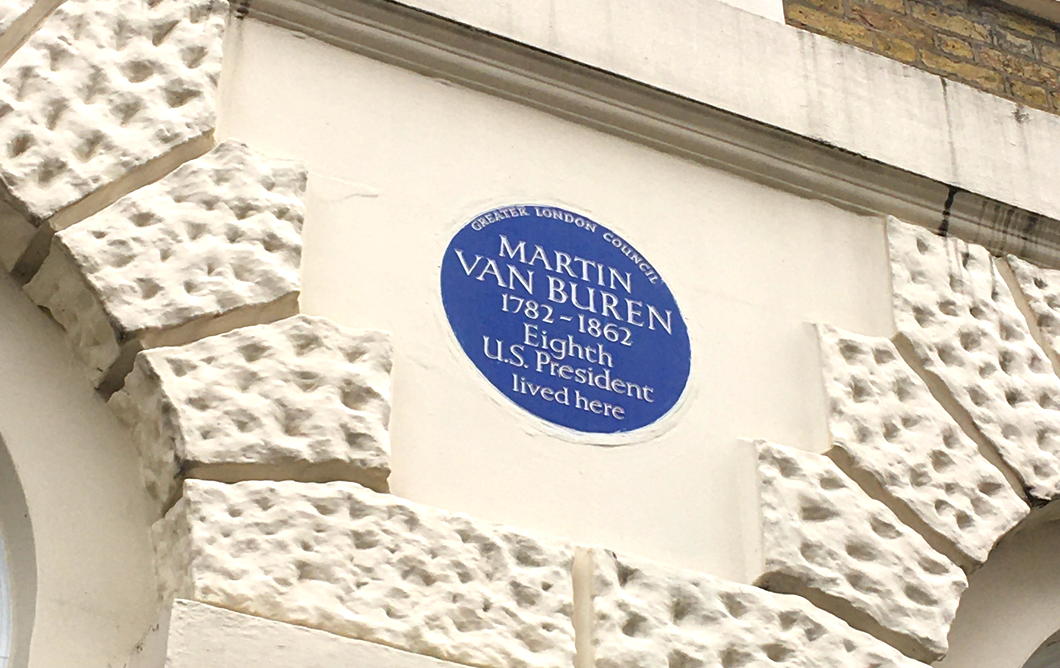
Transacting some business in March before the plague struck us here in London I found myself with a moment to spare and made a brief pilgrimage to No. 7, Stratford Place. It was in this handsome townhouse that Martin van Buren, the first New Yorker to ascend to the chief magistracy of the American Republic, had his residence when he served as the United States’s minister to Great Britain in 1831.
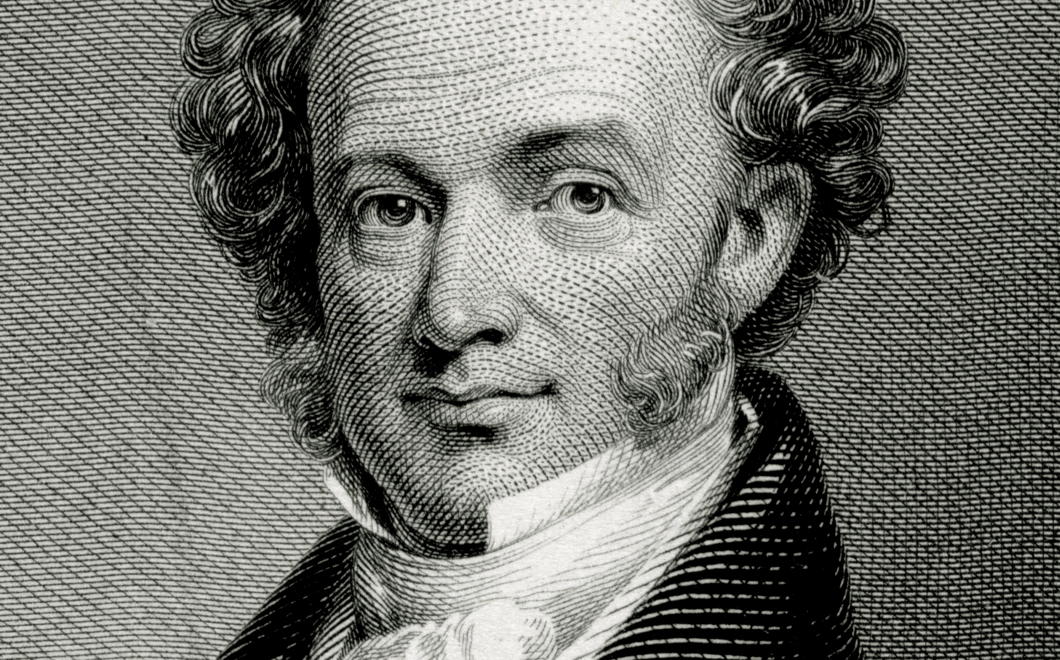
While I often claim that Calvin Coolidge was America’s greatest president in reality my chief devotion in that contest is to the Little Magician himself, the Red Fox of Kinderhook.
Among the many characteristics of this esteemed Knickerbocker is that English was not his native language and throughout his career as a democratically elected politician he spoke with a thick Dutch accent. To his wife, he spoke almost entirely in Dutch.
Jay Cost and Luke Thompson’s Constitutionally Speaking podcast at National Review recently released the first of a two episodes about van Buren and while I’m no fan of podcasts in general this was worth listening to.
One of the factors Cost and Thompson highlight is the utility of the party machine structures of the day in solidifying the practice of America’s democracy and acting as a vehicle of accountability, something too little appreciated by most later observers of the period.
We keen Kinderhookers and Van Buren Boys await the second instalment with anticipation.
Shamefully I have not yet made the pilgrimage to Kinderhook itself, but it’s pleasing to learn that the dominie of the Dutch Reformed Church is a graduate of the greatest university in the southern hemisphere.
A Chapel for Chernobyl
The Belarusian Church in London
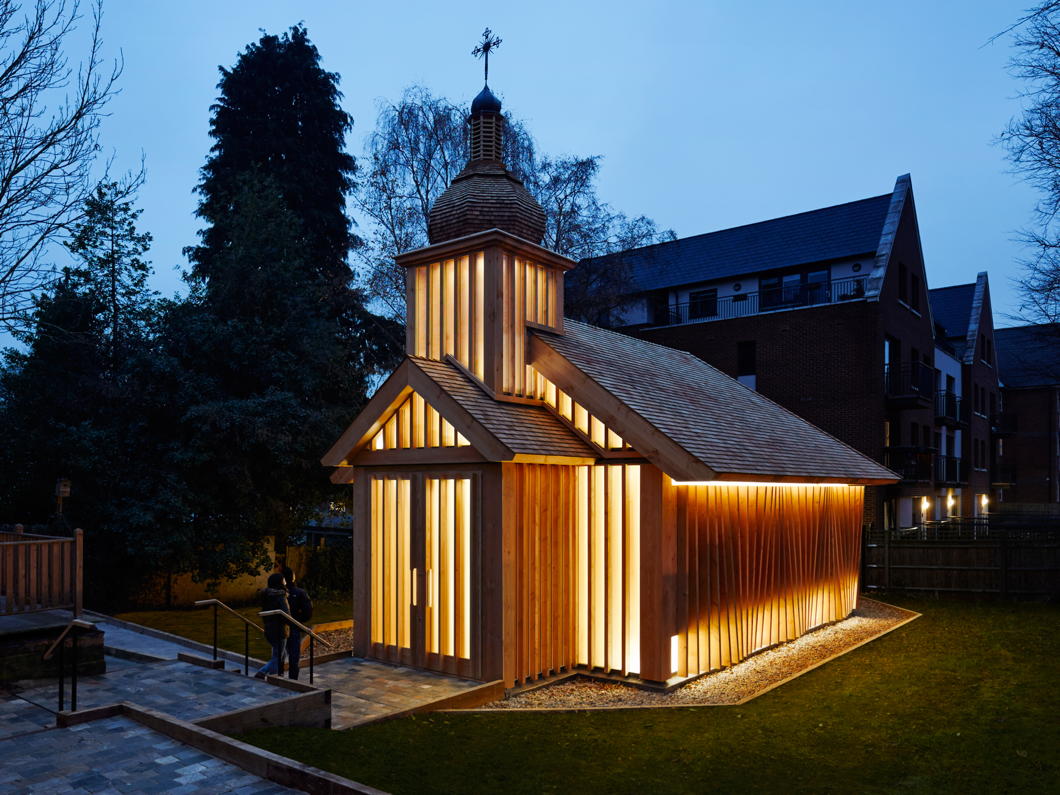
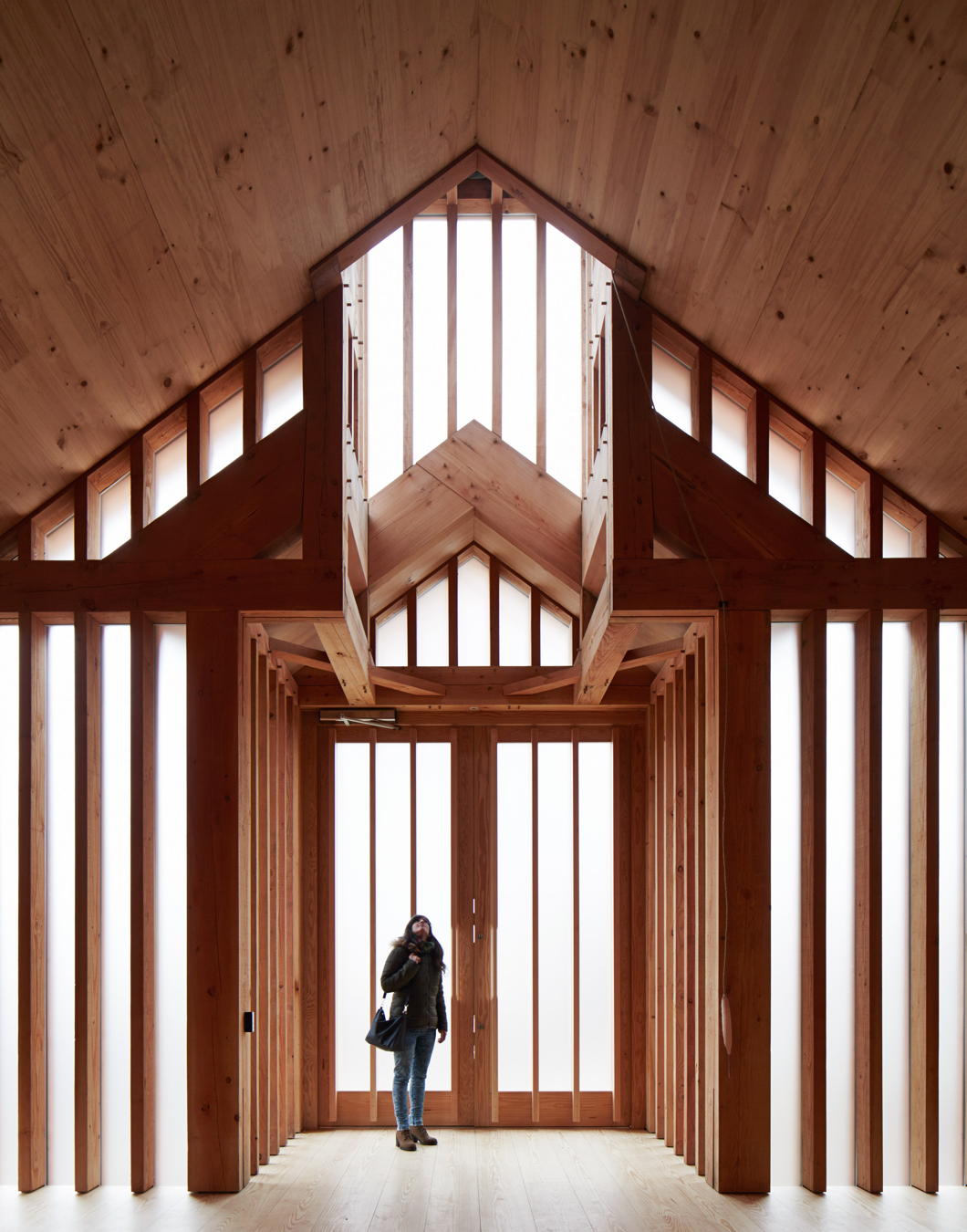
Belarus was heavily affected by the disaster at the Chernobyl nuclear power plant in the neighbouring Ukraine back in 1986 when both countries were part of the Soviet Union. In the thirtieth anniversary year of that event, the Belarusian Catholic community in London dedicated a new chapel built to a striking modern design but evoking the folk churches of the old country.
Founded in 1947 as the White-Ruthenian Catholic Mission of the Byzantine-Slavonic Rite, the church grew out of the postwar migration to London of Belarusians who had served with the Polish army during the Second World War.
Succeeding the chapel of Sts Peter & Paul in Marian House, the new chapel is dedicated to St Cyril of Turau and All the Patron Saints of the Belarusian People.
In terms of church hierarchy, this mission is under the wing of the Ukrainian Catholic eparchy in Great Britain, part of the eastern-rite Ukrainian Greek Catholic Church which is in union with Rome. (more…)
Stave Churches
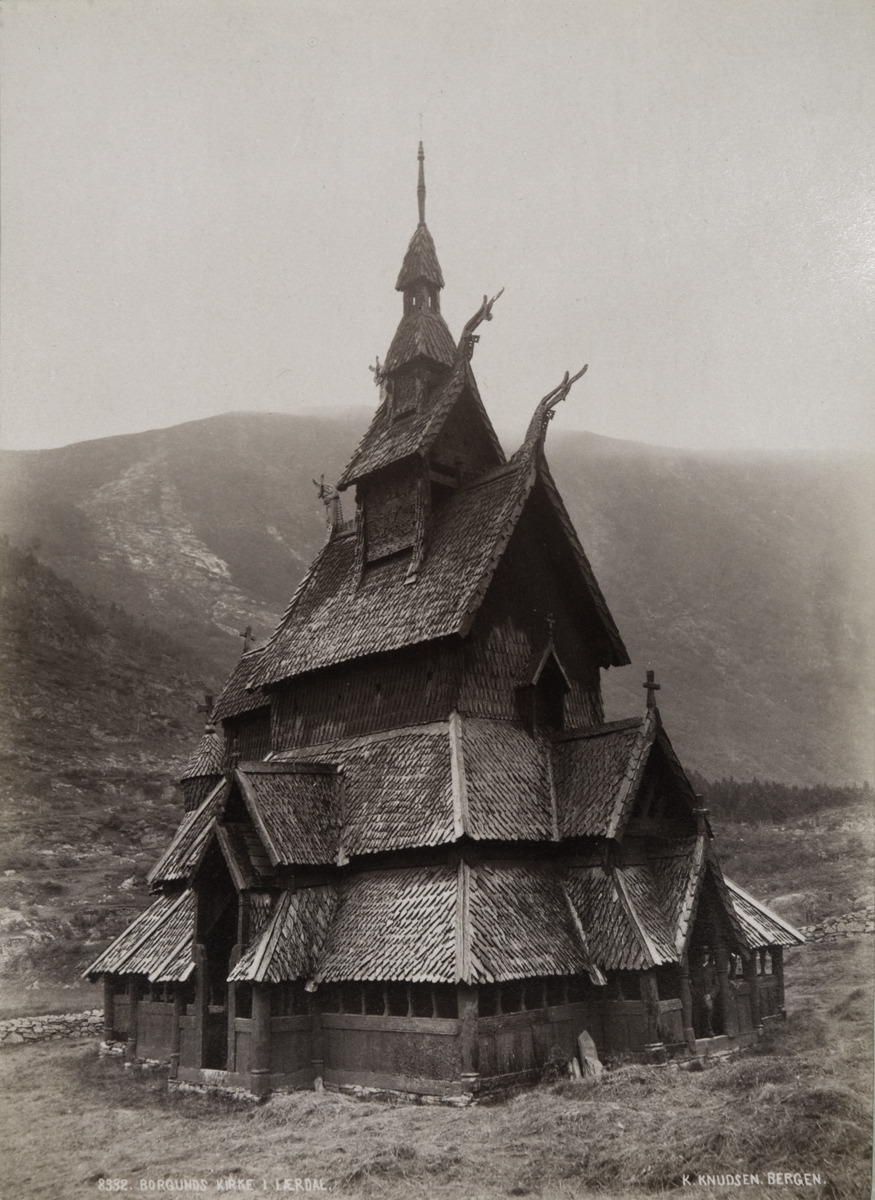
The category of the Stave Church is the only great Norwegian contribution to architecture.
Sigrid Undset attempts to explain why other contributions are scant:
As one of the most extensive and thinly settled countries in Europe, Norway possesses only a few architectural monuments.
There is a good reason for this.
In the Middle Ages Norway belonged to a united, Christian Europe. At that time art flourished here, though the artists themselves are nameless because their work was deeply rooted in the people. Their power of expression streamed from the people through them. This creative power left its imprint on us in the form of buildings and pictures, poems and music.
Then came the spiritual earthquake of the sixteenth century, the Renaissance and the Reformation. Norway was cut off. It became a land apart, and lost touch with the spiritual life of Europe. Much later our increasing world trade again brought us into contact with other countries.
Pester Lloyd, 1932
But at least we have the stave churches.
How Our Ancestors Built
The Hudson River Day Line Building in Albany
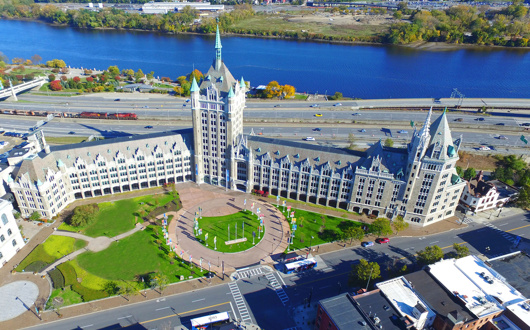
The visitor arriving at Albany, the capital of the Empire State, might be forgiven for presuming the riparian French gothic mock-chateau he first views is the most important building in town.
Built as the headquarters of the Delaware & Hudson, a canal company founded in 1823 that successfully transitioned into the railways, the chateau now houses the administration of the State University of New York. (Indeed, the Chancellor once had a suitably grandiose apartment in the southern tower.) That building, with its pinnacle topped by Halve Maen weathervane, is worthy of examination in its own right.
But next to this towering edifice is an altogether smaller charming little holdout: the ticket office of the Hudson River Day Line.
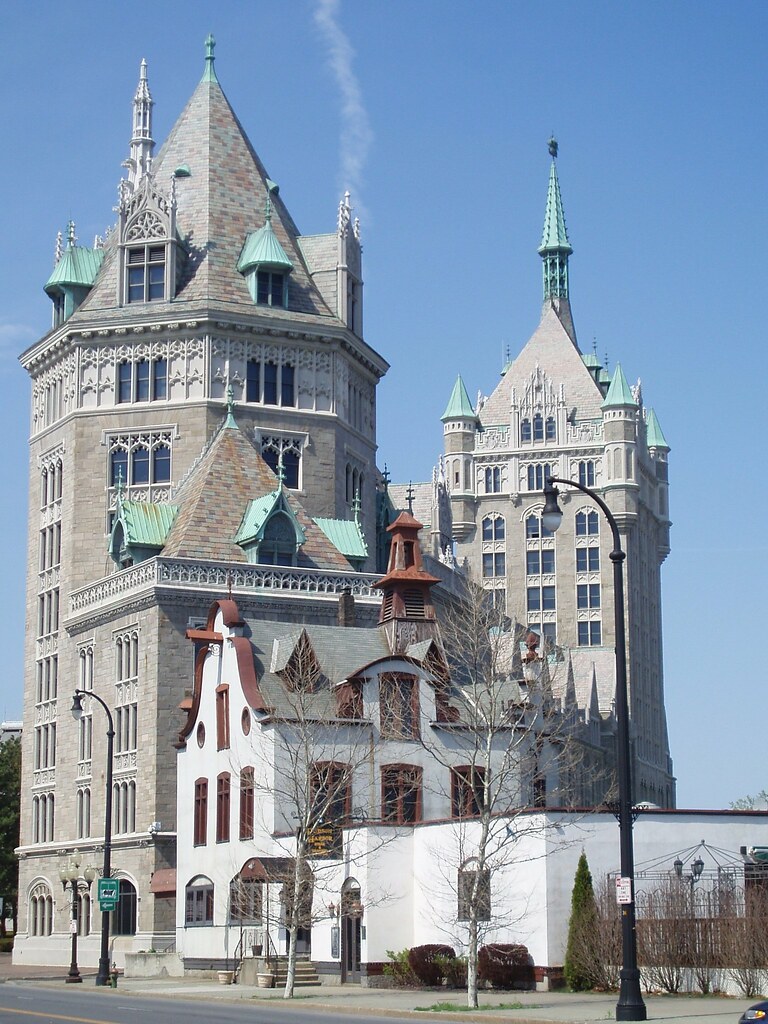
In the nineteenth century the Hudson River Valley was often known as “America’s Rhineland” and travel up and down the river was not just for business but also for the aesthetic-spiritual searching that inspired the Hudson River School of painters.
The Day Line’s origins date to 1826 when its founder Abraham van Santvoord began work as an agent for the New York Steam Navigation Company. Van Santvoord’s company merged with others under his son Alfred’s guidance in 1879 to form the Day Line. (more…)
The greatest church architect you’ve never heard of
The greatest church architect
you’ve never heard of
Ludwig Becker and His Churches
For such a prolific church architect of such high quality, not much is known about Ludwig Becker and, alas, he seems to be little studied. Born the son of the master craftsman and inspector of Cologne Cathedral, Becker had church building in his blood. He studied at the Technische Hochschule in Aachen from 1873 and trained as a stone mason as well.
In 1884 Becker moved to Mainz where he became a church architect and in 1909 he was appointed the head of works at Mainz Cathedral, a position he held until his death in 1940. His son Hugo followed him into the profession of church architecture.
That’s about all I can find out about Becker. But here are a selection of some of his churches, to get a sense of his agility in a wide variety of styles.
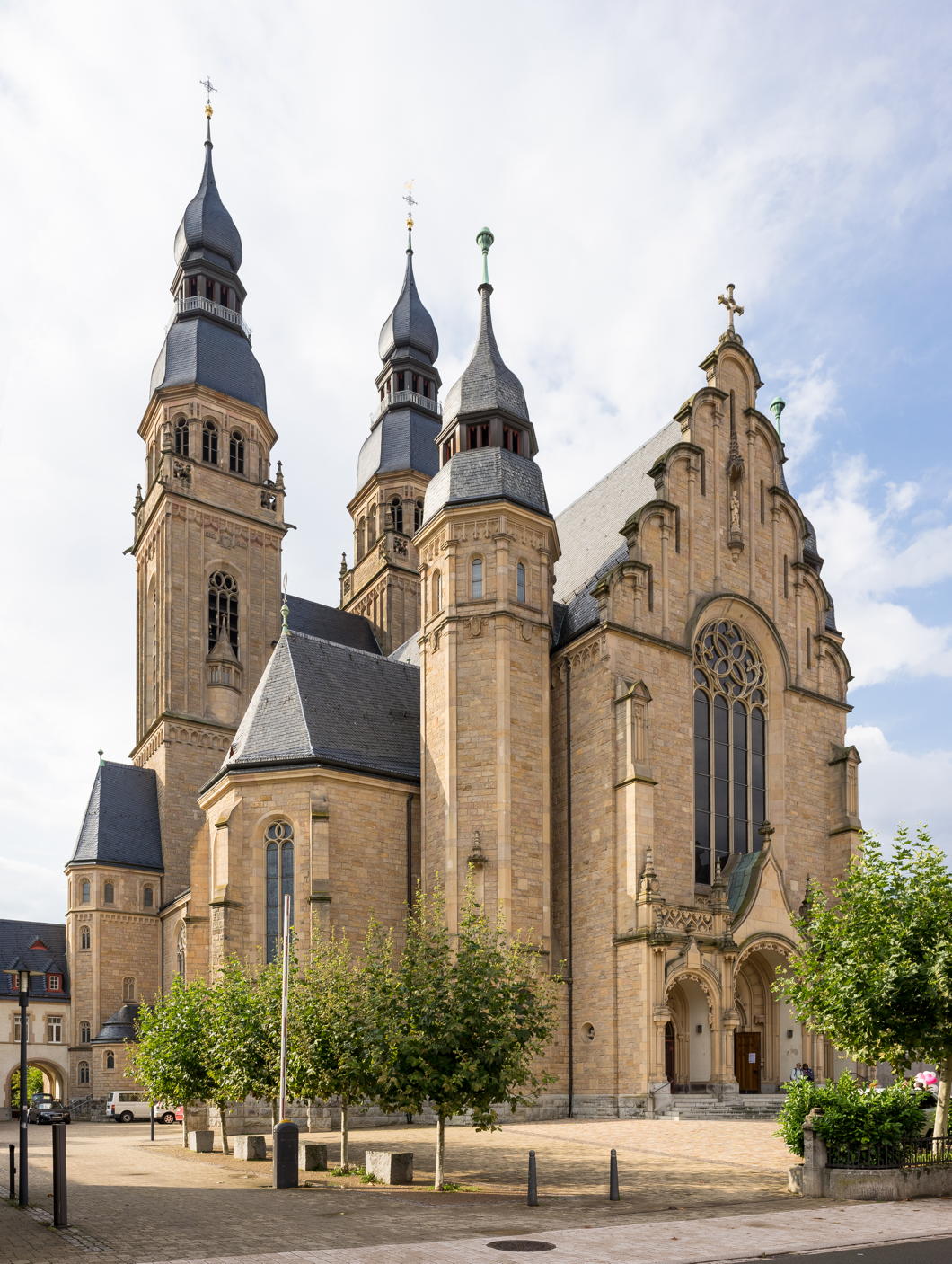
St Joseph, Speyer, is my favourite of Becker’s churches for the beautiful organic fluidity of its style. Here Art Nouveau, Gothic, and Baroque are mixed somehow without affectation. Rather enjoyably, it was built as a riposte to a nearby monumental Protestant church commemorating the Protestant Revolt. These two rival churches are the largest in the city after its famous cathedral. (more…)
Rashtrapati Bhavan
Debates rage in the trad community as to whether, in the context of India, it is more sound to support the Congress Party or to take some relief in the policies of Mr Modi and his Indian People’s Party (curiously always known in English as the BJP).
Presented with the choice of left-leaning instability with Congress or Hindutva-oriented instability with the BJP, one recalls Hofrat Kissinger’s comment about the Iran-Iraq War: “Isn’t it a shame they can’t both lose?”
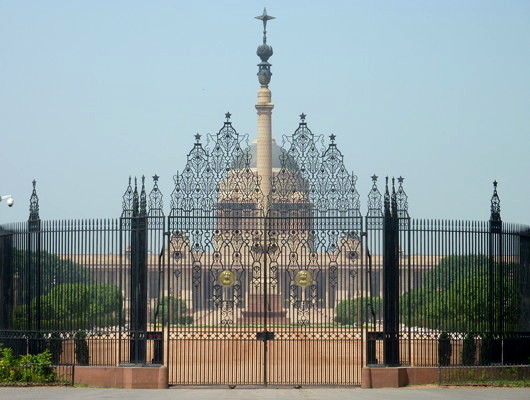
But the recent visit to India of my fellow New Yorker, His Excellency the President of the United States, necessitated his calling in to one of the grandest residences of any head of state the world over: Rashtrapati Bhavan, the residence of the President of India.
Originally called Viceroy’s House, it was designed by Lutyens as the palace of one of the most powerful men on the face of the planet: the Viceroy of India.
But the building of this magnificent structure was an imperial swansong. Opened in 1931, just sixteen years later the subcontinent was partitioned, the Indian Empire and its Viceroy abolished. The Union of India took its place, with a Governor General instead of a Viceroy.
In 1950, this too was abolished as the Union became a republic, and the office of governor general was given a republican whitewash and renamed as President of India.
This head of state is not elected by the voters of the world’s largest democracy except indirectly through a combined college of the national parliament and the state legislative assemblies. Like a governor general, he does have some power but the real force lies in the prime minister — today Mr Modi.
Nevertheless, this building reflects the glory, power, and influence of one of the greatest nations of the earth.
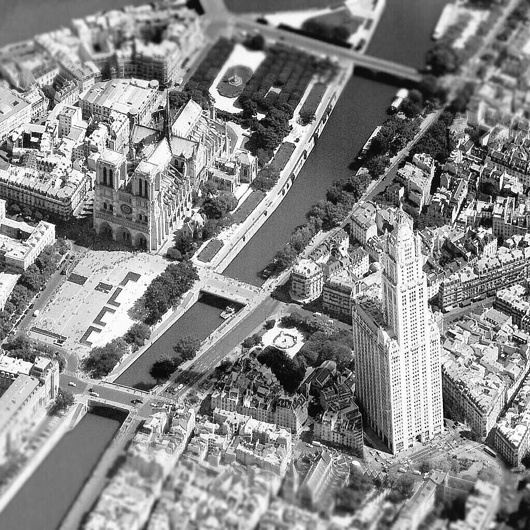
Notre-Dame de Paris
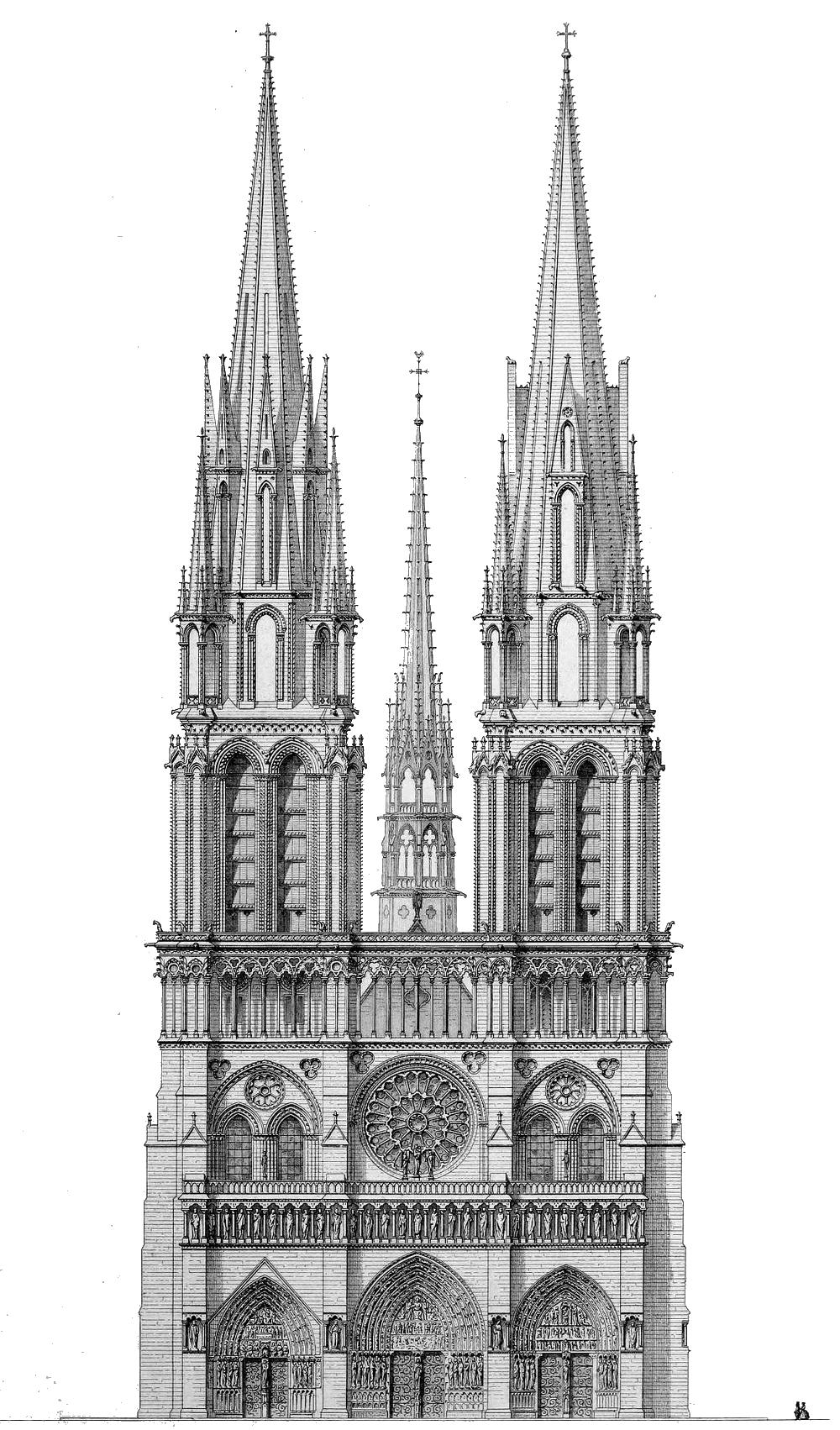
Eugène Viollet-le-Duc
1844
A Corner in Camberwell
4a-6 Grove Lane by MATT Architecture
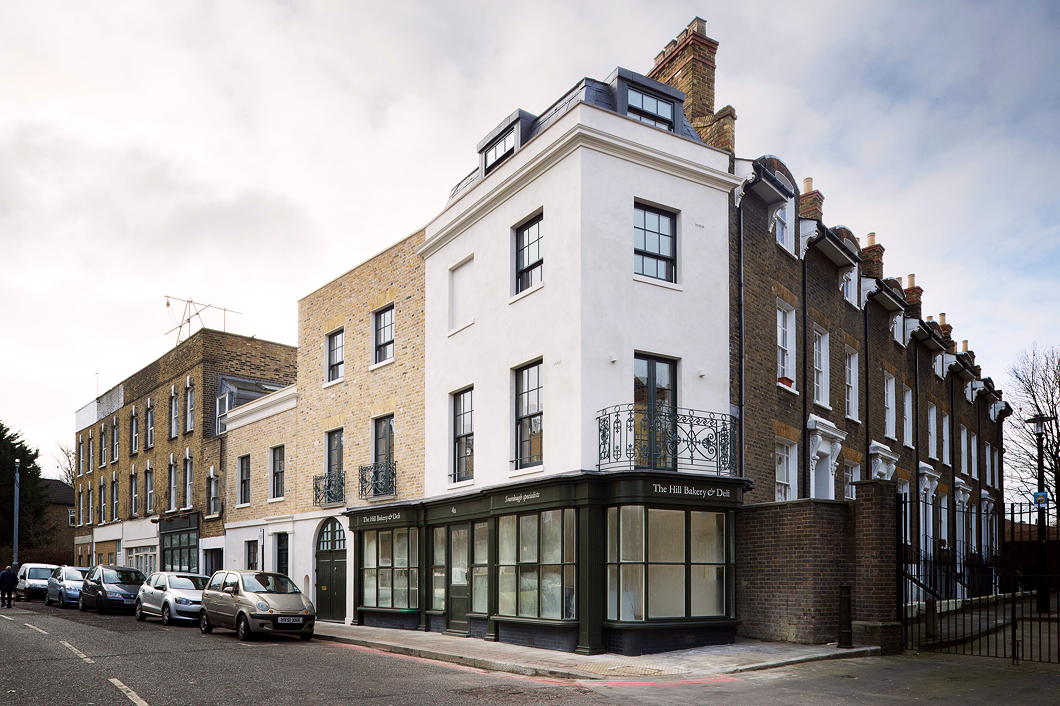
Alongside some of its neighbouring streets in Camberwell, Grove Lane has some of the best preserved rows of Georgian houses in south London, interspersed with a few buildings of a more recent vintage. The latest addition to this street is no ostentatious interloper but a contextual classic showing admirable humility and good manners.
Designed by Leicester Square-based MATT Architecture, it’s easy to see why the Georgian Group deemed 4a-6 Grove Lane worthy of a Giles Worsley Award for a New Building in a Georgian Context in 2015.
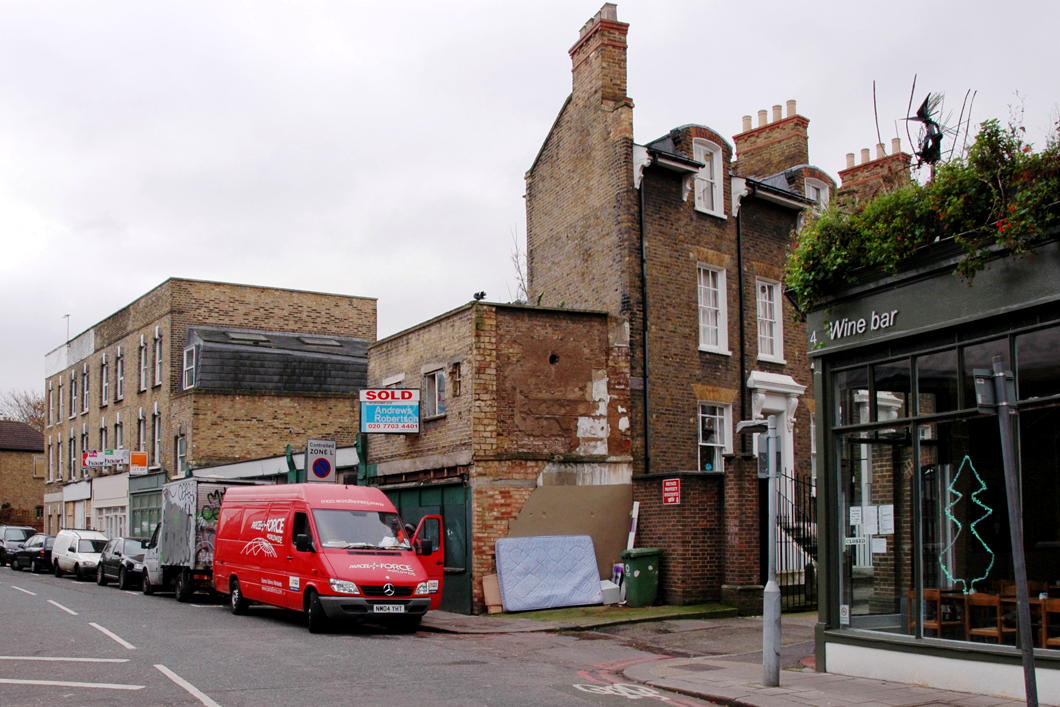
“The long, thin, wedge–shaped site had lain derelict for decades before being purchased by the current owner,” the architects note.
“The elevation is deliberately split into three to echo the plot width of neighbouring terraces and relies heavily on high quality detailing to lift it beyond pastiche.”
The Manor House
 Image: © HughJLF
For devoted fanatics of Netherlandic architecture — I’m sure you’d count yourself as one as much as I do — a curious example of Dutch revival architecture can be found at No. 316 Green Lanes in the Borough of Hackney. Alighting from Manor House tube station the other day I was surprised to find myself confronted by a fine building which, it turns out, used to be the pub that gave its name to the Underground station.
The first ‘public house and tea-gardens’ of that name was built in the 1830s, and in 1843 Queen Victoria and Prince Albert stopped there for a change of horses. This tavern soldiered on until the arrival of the Piccadilly line which necessitated street widening and the demolition of the pub in 1930.
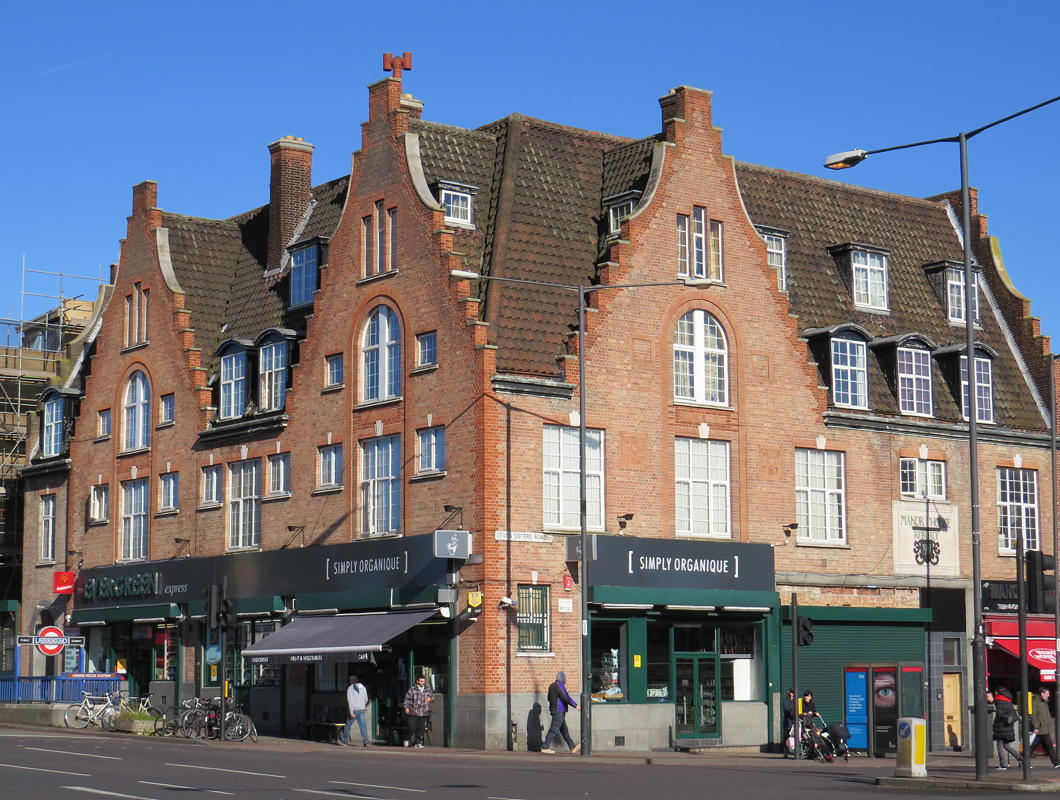 Image: © Stephen Benton
It was rebuilt in a very handsome brick Netherlandic revival in 1931 and continued on as a pub supplied by the London brewers Watneys.
A purist would object that the style of windows on the gables suggests a vulgar pakhuis (warehouse) on the Amstel while the stepped gable itself is more informed by domestic architecture. But is the privilege of architectural revivals to mix and match, so I don’t think we should complain.
Evidence suggests the pub shut in 2004 and the building was converted to its current retail use.
Alas, I can find no record of the architect, and the building remains un-listed, but I’m glad Hackney is home to this happy Hollandic interloper.
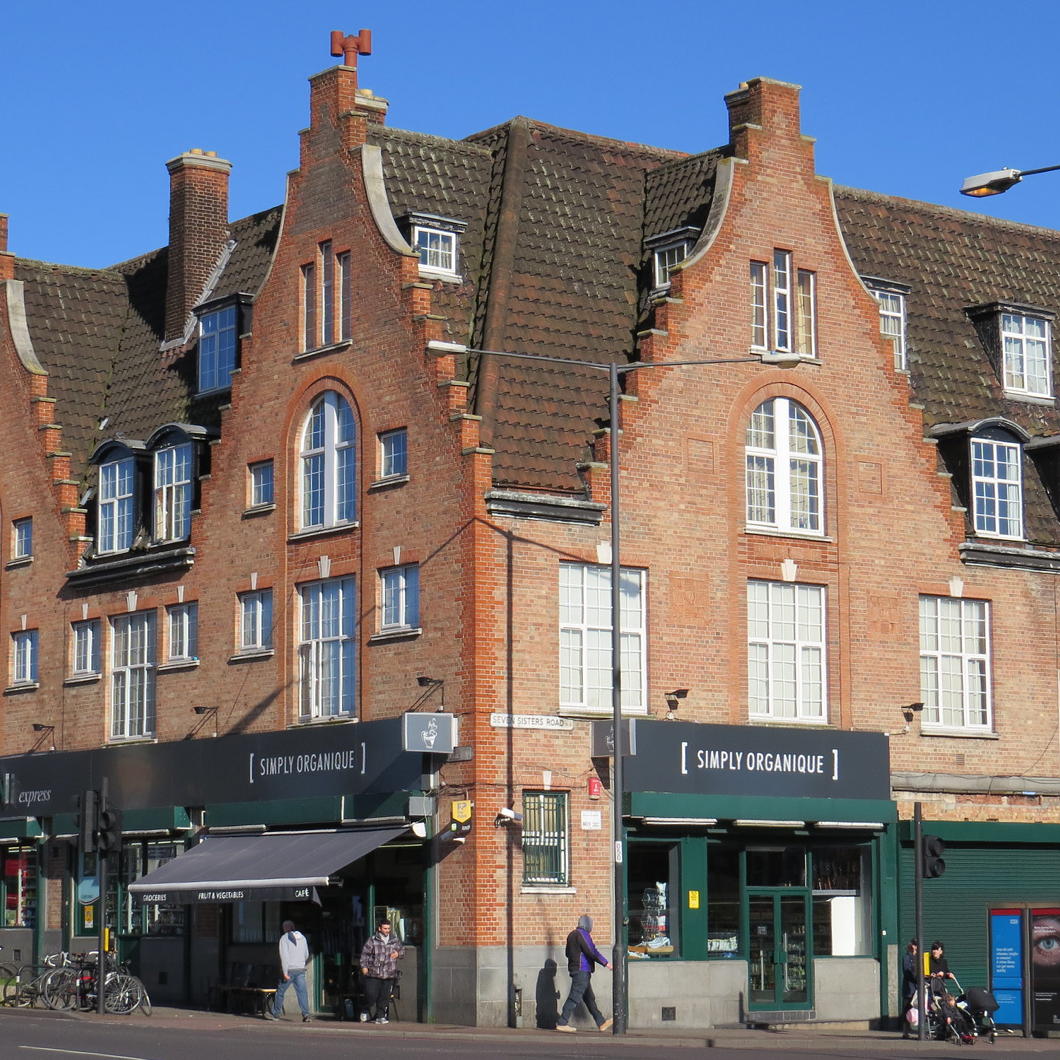 Image: © Stephen Benton
Haussmanhattan
Paris and New York are two cities radically different in design and character, but they are smashed together in this little project from architect Luis Fernandes.
‘Haussmanhattan’ is a portmanteau of Baron Haussmann, the Prefect of the Seine whose reconfiguration of the French capital made it the Paris we know today, and Manhattan, the most renowned of New York City’s five boroughs.
Haussmann’s plan of broad boulevards and radial avenues is a far cry from the artless Commissioners’ Plan of 1811 which created the unforgiving city blocks that colonised the entire island of Manhattan ad infinitum.
The contrast only makes the pick-and-mix Fernandes has confected all the more fun/ridiculous/interesting.

Sir John Soane
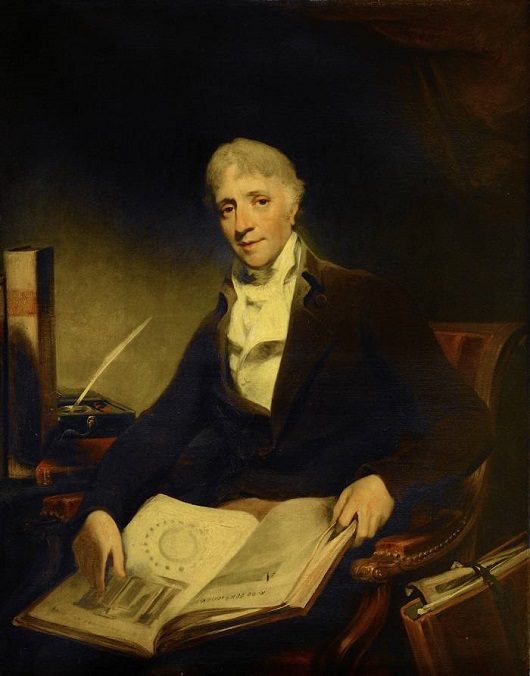
Sir John Soane still looms over the intervening centuries of architecture and design in Great Britain, but I’ve never actually known what he looked like. Apparently this is him, in an 1804 portrait by William Owen.
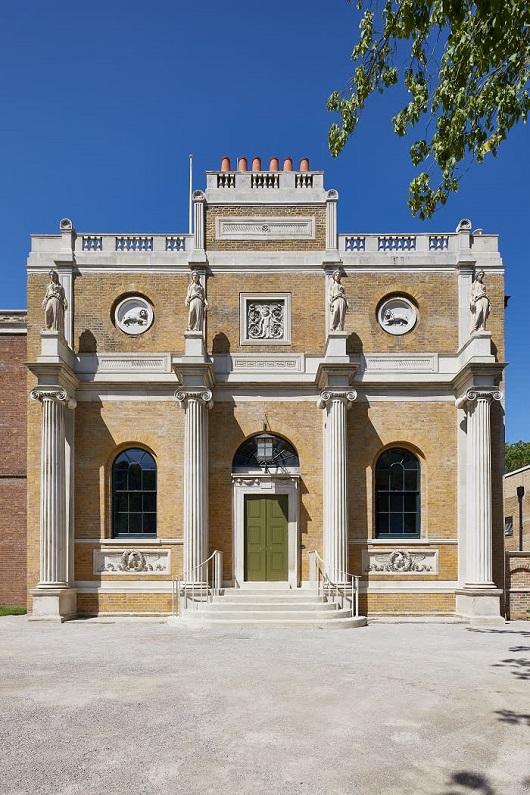
Everyone’s been to his house in Lincoln’s Inn Fields, but Pitzhanger Manor, his place in the country (though Ealing hardly seems rural today) was recently reopened after serious conservation works ongoing since 2015.
Hope to pay it a visit soon.
Search
Instagram: @andcusack
Click here for my Instagram photos.Most Recent Posts
- Brunel’s Unbuilt Capitol February 3, 2026
- Cricket at Fordham January 27, 2026
- Palacio Barolo Revisted January 14, 2026
- Learning to Love Liguria January 14, 2026
- Crux Alba No. 2 January 13, 2026
Most Recent Comments
Book Wishlist
Monthly Archives
Categories