Architecture
About Andrew Cusack
 Writer, web designer, etc.; born in New York; educated in Argentina, Scotland, and South Africa; now based in London.
 read more
News
Blogs
Reviews & Periodicals
Arts & Design
World
France
Mitteleuropa
Knickerbockers
Argentina
The Levant
Africa
Cape of Good Hope
Netherlands
Scandinavia
Québec
India
Muscovy
Germany
Academica
Hipódromo Argentino de Palermo
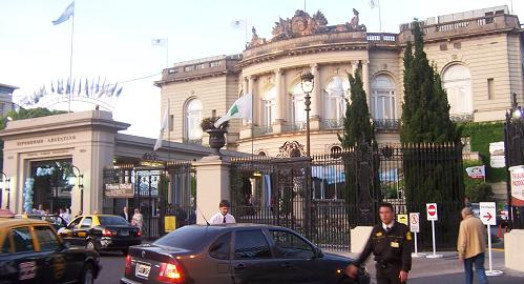
THE PALERMO RACETRACK is the main center for equestrian events in Buenos Aires. It was first built in 1876. In 1908 the current main stand was built to the beaux-arts design of a French architect, Louis Faure Dujarric. The Argentine Grand National, a race of 2,500 meters, has been run here annually since 1885. (more…)
Irish Parliament House
Please see the updated article of the Irish Houses of Parliament, College Green, Dublin here.
The Teatro Colón in Buenos Aires
Finest opera house of the New World
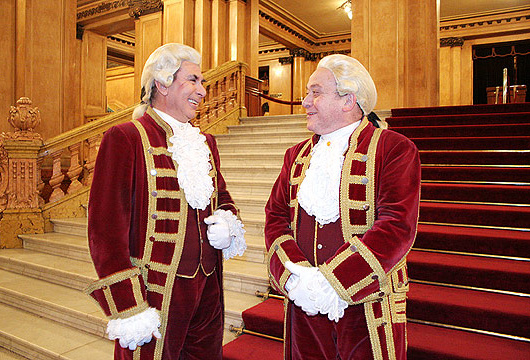
Am I old-fashioned, or aren’t footmen not supposed to smile?
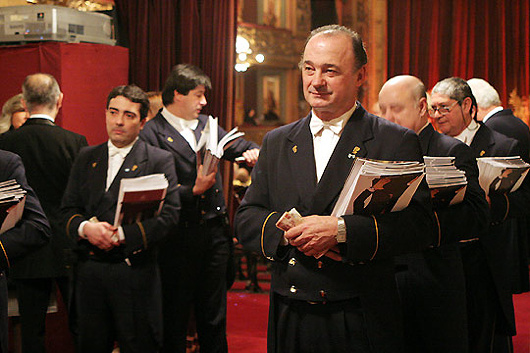
This usher knows precisely how much (which is to say, how little) emotion to show.
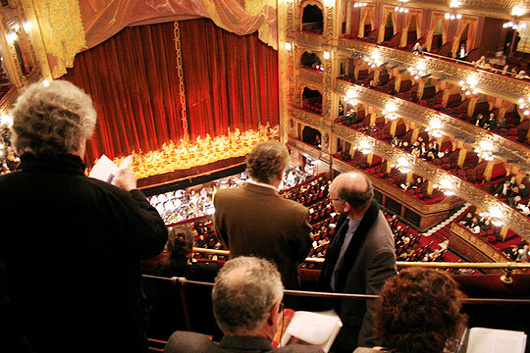
But now, everyone to their seats…
The magnificent Teatro Colón is currently closed for refurbishment until 25 May 2008, when the most prominent opera house under the Southern Cross will reopen brighter and better than ever.
The Rathaus of Gladbeck
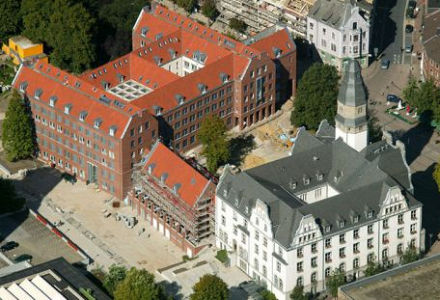
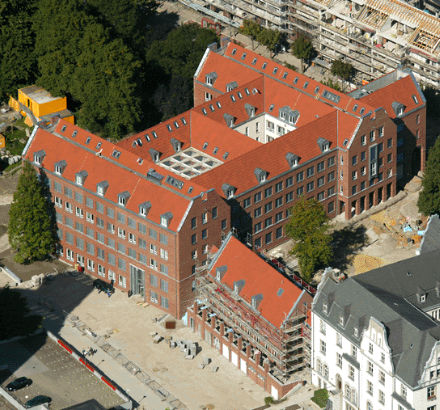
JUST SO YOU ARE aware that not all the architects hate us, let us travel to the Westphalian town of Gladbeck where the city fathers, in their infinite sagacity and wisdom and ever open to changes in inclination, have seen fit to correct the errors of the not-too-distant past by tearing down two hideous concrete boxes and replacing them with a more appropriate annex to the handsome art-nouveau Rathaus (town hall). The man to thank, apparently, is Gladbeck’s Stadtbaurat (town planning advisor) Herr Michael Stojan (a tweedy sort of fellow, it appears), who initiated the project. What a pity the directors of the Morgan Library could not exercise a similar wisdom.
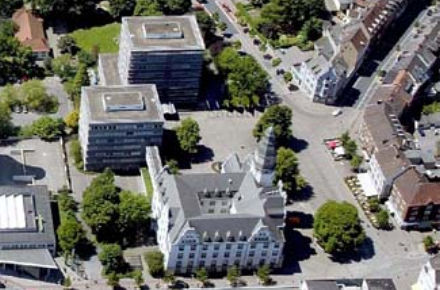
Gladbeck’s ‘Willy Brandt Platz’ before the offensive structures were removed.
The new building is modern but not modernist, and has no pretensions to being the original Rathaus’s contemporary. It exhibits a certain simplicity, and while it lacks exterior ornamentation it does not suffer much from that absence. Internal courts provide natural light to the offices within, while arcades offer shelter to passers-by in the event of an impromptu opening of the heavens. With its saddleback gables, the annex complements but does not compete with the town hall it is intended to augment. Improvements such as this are deserving of our applause.
Elsewhere: Die Welt: Wie sich eine Stadt repariert (12 April 2007)
The Old Archbishop’s Palace, New Orleans
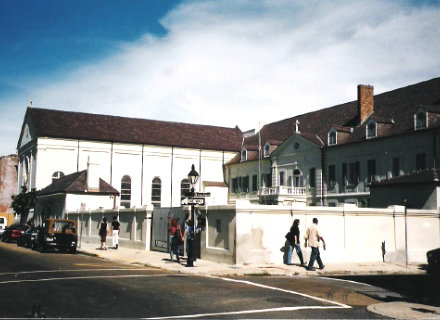
BUILT IN 1745, the Old Archbishop’s Palace in New Orleans is believed to be the oldest building in the entire Mississippi Valley. The building has gone through a number of ecclesiastical uses through the centuries, originally constructed to French plans for the Ursuline sisters who came to foster the Christian faith in la Louisiane. On the corner of Chartres Street and Ursulines Avenue in western corner of the Vieux Carré, the Convent survived the Great Fire of 1788, along with the neighboring barracks and Royal Hospital. The Ursuline nuns took orphans into their care here, and educated the daughters of the city’s elite and of the local plantation owners (among them Baroness Pontalba), as well as organizing special handiworks classes for Indian and Negro girls. And it was in the Chapel of the Convent that the Ursuline nuns kept vigil during the Battle of New Orleans in 1815, praying ceaselessly for the salvation of New Orleans from destruction. This great event was attributed to the Blessed Virgin, and Notre Dame de Bon Secours (Our Lady of Prompt Succour) was adopted as the patron of the city and diocese of New Orleans and the state of Louisiana. (more…)
The Edificio Metrópolis, Madrid
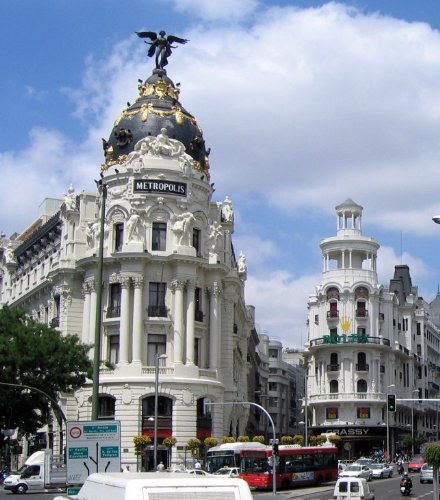
WHERE THE GRAN VÍA meets up with the Calle Alcalá in Madrid, there is a wonderful building which these days is known as the edificio Metrópolis. Designed by Jules and Raymond Février of France, it was built in 1911 for the Union and Fénix insurance company. The architects took advantage of the awkward but prominent site to create a landmark building for the company, one of the largest insurance firms in Spain. At the apex of its triangular site is a splendidly decorated round tower, originally topped by the Union and Fénix symbol of a phoenix with Ganymede. (more…)
The Dahlgren Residence
No. 15 East Ninety-Sixth Street, New York
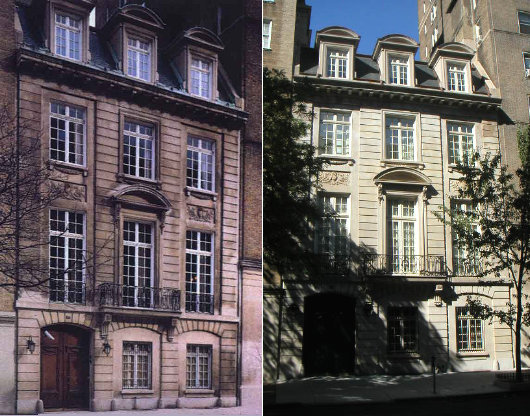
THE UPPER EAST SIDE is crossed by a number of wider cross-streets, of which 96th Street has long been agreed as the northern boundary of the neighborhood. (Overeager real estate agents have recently taken to advertising properties above that boundary as being located in the “Upper Upper East Side”). At number 15 on East 96th Street sits a splendid townhouse of superb design and execution often known as the Dahlgren residence. (Seen above, before and after complete restoration).
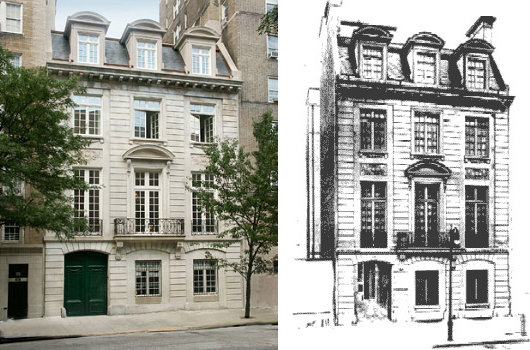
Lucy Wharton Drexel was of the Philadelphia Drexels, from which also came Saint Katharine Drexel, the founder of the Sisters of the Blessed Sacrament, as well as the initiators of Drexel University in that Pennsylvanian city. Young Miss Drexel married Mr. Eric B. Dahlgren, son of Admiral John A. Dahlgren, inventor of the Dahlgren Gun used during the Civil War at a ceremony in the Philadelphia cathedral officiated by Archbishop Corrigan of that see, and the couple soon moved to Manhattan where Mr. Dahlgren had a seat on the New York Stock Exchange. The Dahlgrens themselves were a prominent Catholic family, with Eric and his brothers attending Georgetown University, where to this day the main chapel bears the Dahlgren name. (Well-to-do Catholics must have been in short supply at the time, because after Lucy and Eric’s marriage, Lucy’s sister Elizabeth was married to Eric’s brother John).
Felix Meritis
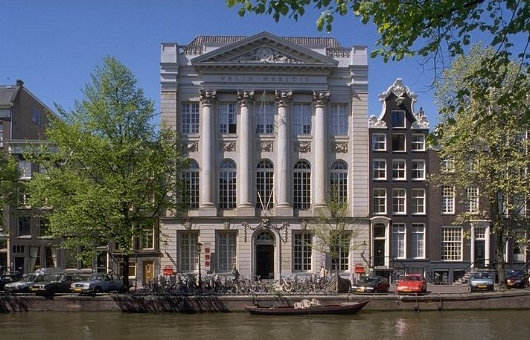
ONE OF MY FAVORITE handsome and dignified, and yet relatively small, buildings is the Felix Meritis on the Keizersgracht in Amsterdam. It has a long and interesting history to accompany the beauty of its design. The ‘Felix Meritis’ was a learned society founded by a number of prominent burghers of Amsterdam in 1777 for the promotion of the arts and sciences in their city. Its name is Latin for ‘fortunate (or more literally, ‘happy’) by merit’. Ten years later, the Felix Meritis purchased four narrow homes on the Keizersgracht and constructed a building, designed by the architect Jacob Otten Husly, on the site. (more…)
Argentina’s Henley
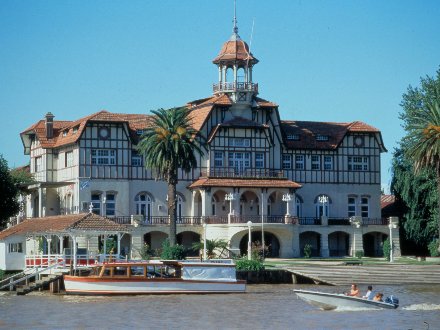
JUST NORTH OF Buenos Aires lies the city of Tigre. The city sits on the southern edge of the series of rivers, rivulets, islands, and eyots collectively known as the Parana Delta, after the Rio Parana which breaks up as it reachs the Rio de la Plata. The town’s riparian geography combined with its closeness to Buenos Aires—a mere twenty miles from the Obelisco—make Tigre a popular weekend and summertime getaway. Since the 1870s, however, it has also been the birthplace and focal point of rowing in the country—Argentina’s Henley. (more…)
San Fernando Cathedral
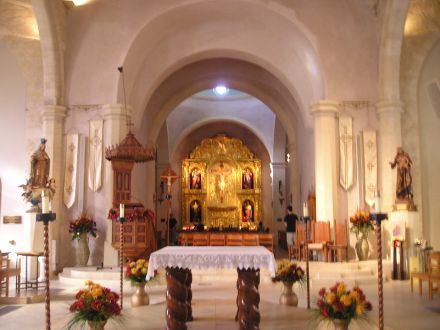
SAN FERNANDO CATHEDRAL in San Antonio, Texas, named after the holy King Ferdinand III of Castile, is one of the oldest cathedrals in the United States. Indeed, there is considerably debate as to precisely which church is the oldest cathedral in the United States. The Baltimore Basilica, recently restored, was the first cathedral to be located in the political entity known as the United States. The Cathedral Basilica of Saint Augustine in the Floridian city of that name was founded in 1594 (making it the oldest parish in the U.S.) but the current structure was not built until 1793, and the church did not become a cathedral until 1870. The core of San Fernando was built from 1738 to 1750, but the nave was replaced in 1868 with one of a neo-Gothic design. It became a cathedral when the See of San Antonio was erected in 1874. So the Baltimore Basilica (or the Basilica of the National Shrine of the Assumption of the Blessed Virgin Mary, to give it its full name) was certainly the first cathedral in the United States, though not the oldest church serving as a cathedral. To add to the fray, the Cathedral of Our Lady of Peace claims that it is the oldest continuously operating cathedral in the United States, since the Baltimore Basilica is no longer the cathedral of Baltimore, but rather merely co-cathedral to the bizarre art-deco-gothic Cathedral of Mary Our Queen in that city. It’s all quite mad really. Suffice to say, San Fernando is old and it is a cathedral; it’s an old cathedral. (more…)
Old Dutch Gable
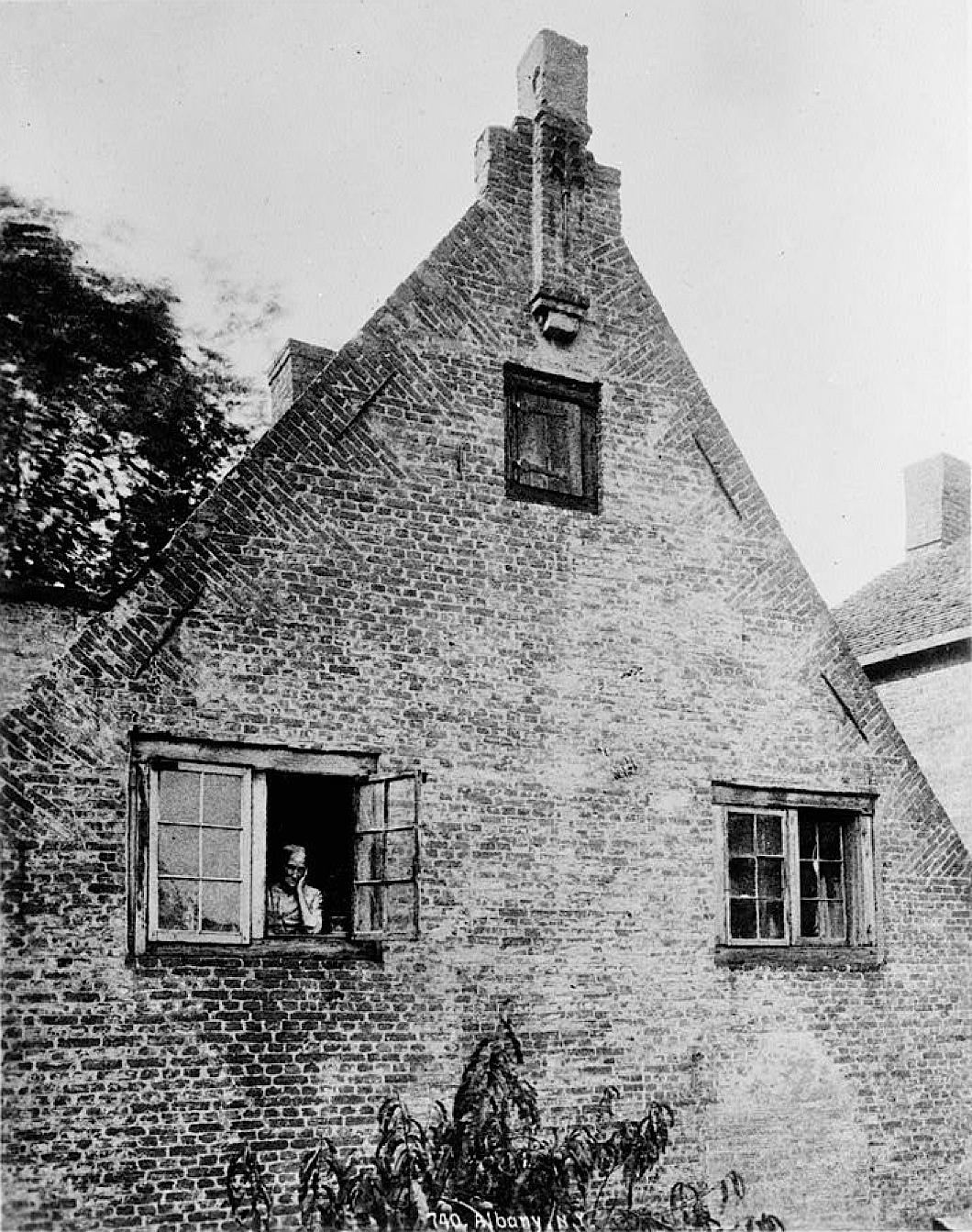
An old Dutch gable complete with old Dutch vrouw gazing miserably from the window. Albany County, New York, 1930’s.
The form of brick course on the gable is known as ‘mouse-tooth’ and is found primarily in Holland, East Anglia, and the Hudson Valley of New York, though also here and there in the American South.
Old Yale Boathouse Faces Wrecking Ball
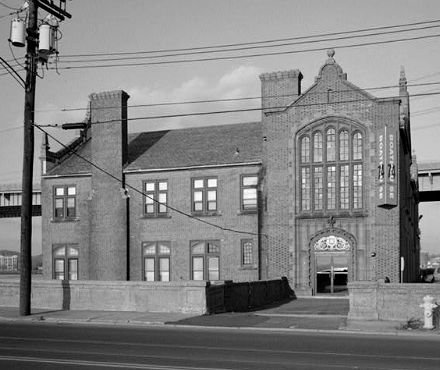
AND SO, THE ONWARD march of progress continues. Yale University’s old Adee Boathouse on New Haven harbor is to face the wrecking ball to make way for traffic improvements to the Pearl Harbor Memorial Bridge which carries Interstate 95 across the Quinnipiac River. Despite some quite extraordinary plans to physically cut the building from the shore and float it across to the opposite side of the river, it now appears that the boathouse is to be demolished. (more…)
Vienna on 43rd Street
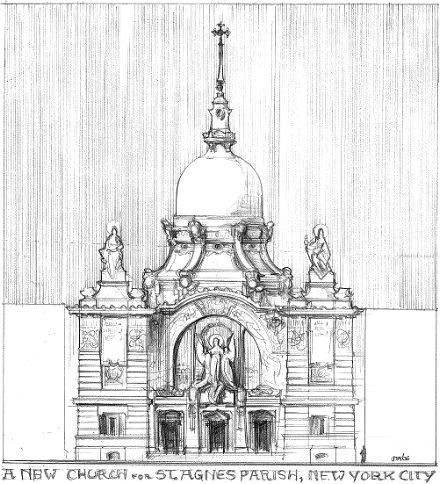
A WEEK AGO AFTER the 11 o’clock Sunday Mass at St. Agnes, Dino Marcantonio, Matt Alderman, and I stood in front of the church and fantasized about how we would fix the old place. Well, perhaps ‘old’ isn’t the right word for the place. While the parish was founded in the 1840’s, the current church building only dates from the late 1990’s, built after the old Victorian edifice was consumed by fire. As for design, its heart is in the right place, but as they say the Devil is in the details. The interior is marred by quite obviously large joints between component parts of arches and cornices and the exterior just looks fake. Is craftsmanship dead? No, but it helps to search it out instead of accepting just any old thing.
At any rate, Matt Alderman has thrown together these esquisses of what his St Agnes would look like, and it’s all rather Austrian. (more…)
The Neue Galerie

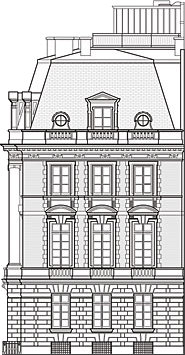 THE RECENT PURCHASE for the Neue Galerie of Gustav Klimt’s 1907 ‘Adele Bloch-Bauer I’ (above), alledgedly for a record-breaking price of $135,000,000, gives me the perfect opportunity to write a post on the eponymously recent addition to New York’s coterie of art museums. Since its 2001 opening, the Neue Galerie has resided in the handsome 1914 beaux-arts mansion on the corner of Fifth Avenue and 86th Street, designed by Carrère and Hastings (of New York Public Library fame) for industrialist William Starr Miller and later inhabited by Mrs. Cornelius Vanderbilt III. In the time since the construction of No. 1048, the rest of Fifth Avenue has undergone a lamentable transformation from a boulevard of beautiful townhouses and mansions to an avenue predominantly consisting of apartment buildings. While one appreciates the inoffensive design of the pre-war buildings on Fifth, there remain a number of thoroughly opprobrious modern interlopers which offend the graceful avenue. One can’t help but pine for Fifth Avenue before the mansions came down, but we can at least give thanks for holdouts like the Neue Galerie. (more…)
An Old Boathouse in Spuyten Duyvil
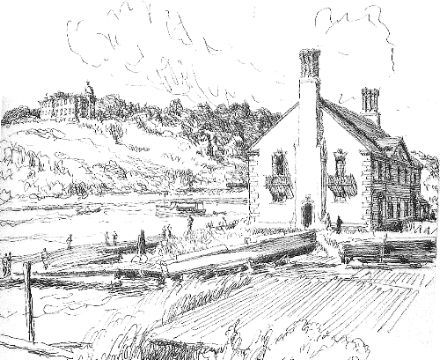
Flipping through an old book called ‘Magical City: Intimate Sketches of New York’, I came upon this sketch of the Gould Boathouse of Columbia University on the Harlem River by Spuyten Duyvil. I had never come across this little building before and had significant doubts as to whether it was still there, but to my pleasant surprise it does. I’m afraid I don’t know much about the boathouse nor its history, but here follows a number of photos and images of it, and of various Columbia boathouses of the past. (more…)
The Perils of Over-Restoration
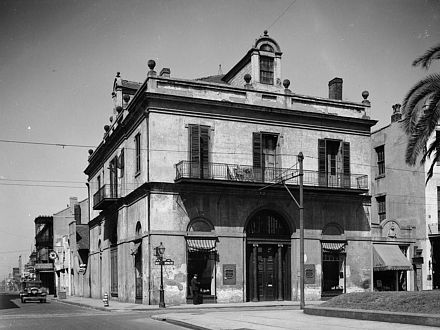
A rather good article I was reading in the Oxford American (via V&V) reminded me of a building I stumbled upon in the Historic American Buildings Survey, digitized at the Library of Congress. No. 403 Royal Street in the French Quarter of New Orleans was designed by one of the first master architects in America, Benjamin Latrobe, who also designed the Baltimore Basilica, the Mother Church of the United States. Resting at the corner of Royal and Conti streets, the building was constructed by the Louisiana State Bank (later subsumed into la Banque de la Louisiane) and features a domed banking hall in the center. After having outlived its usefulness under its original purpose, it became a private residence, with the central banking hall turned into a living room, before being turned into an events venue as it remains today. (more…)

The Governor’s Suite, City Hall
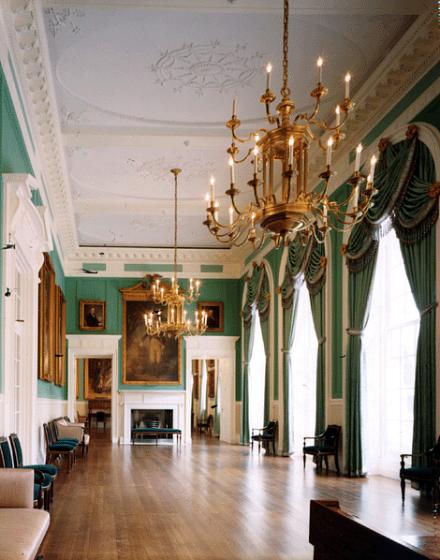
I HAVE NEVER been inside New York’s City Hall, though I have walked or driven past it on a number of occasions. With tall skyscrapers of various ilks towering over it, it always seemed rather small and inconsequential, and I knew nothing of the interiors save the Blue Room in which the Mayor usually gives press conferences and the rotunda which is fairly well-known as well.
I was delighted, therefore, to stumble upon the above photo of the recently-restored Governor’s Suite in City Hall, which shows it to have a rather handsome interior. Since the state government embarked upon an up-river journey to Albany, I presume the purpose of the Governor’s Suite is to provide a place for New York’s head of state to receive and entertain important dignitaries visiting the Big Apple. The current green color of the walls seems much preferable to the previous and rather dull white. I must endeavour to visit City Hall when I next return to the metropolis. (more…)
The Restitution of Romanian Castles
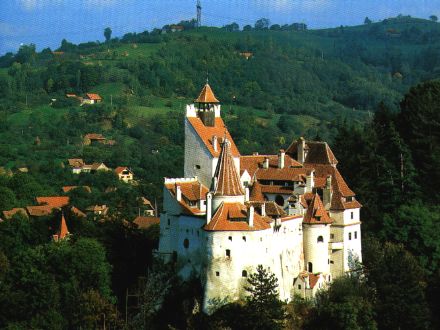
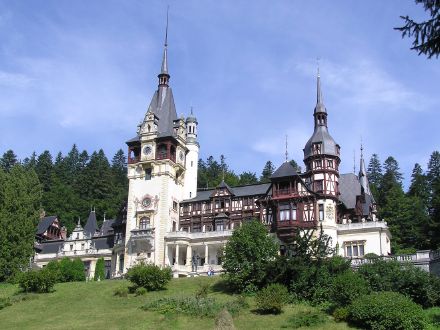
The castle of Bran (above), and the castles of Peles (below), and Pelisor (bottom) are to be restituted by the Romanian government to the Habsburgs and the Hohenzollern-Sigmaringens respectively, and then purchased back by the government for over $60 million, according to Adrian Iorgulescu, the Romanian Minister of Culture. The castles were illegitimately seized by the Communist authorities after they took power in 1947, and after buying them back the government will keep the castles as museums.
The Habsurgs are the Imperial Family of Austria as well as being the Royal Family of Hungary, Bohemia, Dalmatia, Croatia, Slavonia, Galicia, Lodomeria, Illyria, and Jerusalem, and the Ducal Family of Tuscany, Krakow, Lorraine, Salzburg, Styria, Carinthia, Carniola, the Bukovina, Transylvania, Upper Silesia, Lower Silesia, Modena, Parma, Piacenza, Guastalla, Auschwitz, Zator, Teschen, Friuli, Ragusa, and Zara. The Hohenzollern-Sigmaringen family, on the other hand, are a cadet branch of the senior Swabian branch of the Hohenzollerns, and are the Royal Family of Romania, which has been a republic since the Communist takeover in 1947 and has since, sadly, failed to restore its monarchy. Unlike the more reknowned Hohenzollerns of Brandenburg, the Romanian Royal Family are not Protestant.
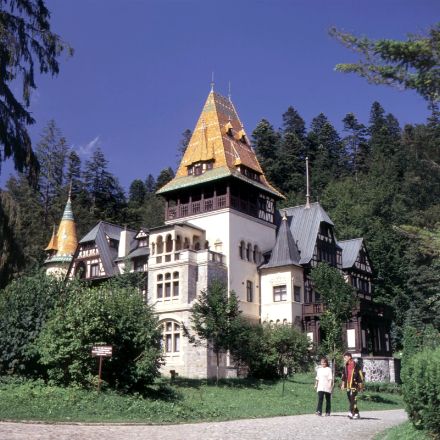
UPDATE: A reader corrects: “The Hohenzollern-Sigmaringens are not the cadet branch, but in fact the surviving senior branch, which position they inherited upon the extinction in the male line of the true senior line, the Hohenzollern-Hechingens, in 1869. Historically they are of minor importance in comparison to their apostate cousins, but still a storied family. Schloss Sigmaringen, by the way, is a magnificent seat, romantically restored in the 19th century. They own it still, but do not tend to live within its forbidding walls. I was shown round it once in dead of winter: an unforgettable experience.”
The English Tower and Kavanagh Building
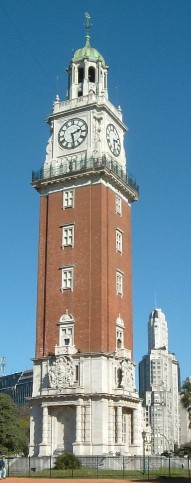 THE SAYING GOES that Argentines are all Italians who speak Spanish and want to be English, which is only just short of the truth. Whatever the quip’s verity, Argentina is a nation of the expatriated and for the centennial year of the 1810 May Revolution, the communities from each of the major mother countries — Spain, Italy, Germany, et cetera — built monuments in dedicated places both to commemorate the contributions their kinsman made to their adopted country as well as to celebrate peace and friendship between Argentina and the given motherland. The Plaza Italia, for example, lamentably bears a monument to the scoundrel Garibaldi, donated by the Italian community.
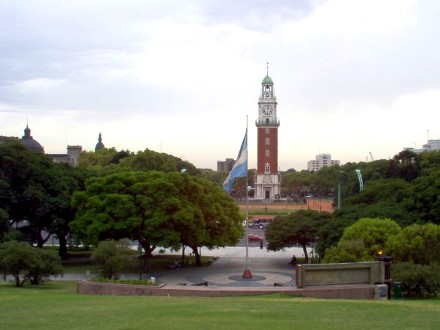
For their monumental contribution to the city of Buenos Aires, the English built a tower in the Edwardian style, rather cleverly as it was still the Edwardian period, and the depth of their cleverness was furthered by their naming it the English Tower (officially Torre de los Ingleses, or Tower of the English). Situated in the center of the Plaza Britannia (Britannia Square) at the junction of the San Martin and Libertador avenues, the Tower was designed by engineer Ambrose Poynter and built by Hopkins and Gardom completely (except for mortar) out of materials from England. Around the base are sculptural representations of the English rose, the Scottish thistle, the Welsh dragon, and the Irish shamrock. The dedication at the entrance to the Tower reads “Al Gran Pueblo Argentino. Los residentes británicos. Salud. 25 de mayo 1810-1910” or: “To the Great Argentine People, from the British residents: Salud. May 25, 1810-1910″. Towards the rear of the photo to the right you can see the Kavanagh building (Edificio Kavanagh).
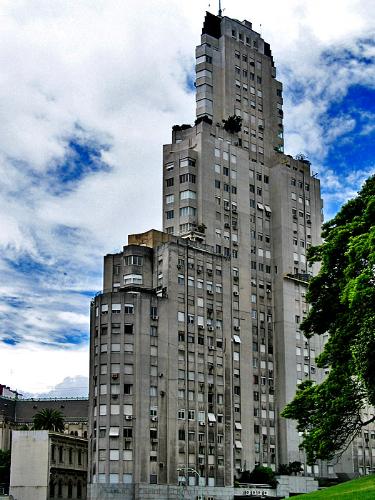
The Kavanagh building is situated on the Plaza San Martin across the avenue from the Plaza Britannia. This 29-storey apartment building was designed by the firm of Sanchez, Lagos, and de la Torre, and was the tallest building in Latin America when built in 1936. The sharp art deco design on an angulated plot is said to resemble a ship at sea, and of course Buenos Aires is a port city — its residents are called porteños after all.
The Kavanagh is unquestionably my favorite ‘modern’ building in Buenos Aires, but then modern architecture has not been kind to the city, at least not in the post-war period (c.f. the National Library). The structures built in the 1950’s were only drab and dull whereas the 60’s and 70’s bore the ill fruits of the ‘lets see how many things we can do with concrete’ trend and tended towards the insidiously hideous rather than the mundane. But no matter however irritating these later obtrusions are, at least Buenos Aires still has the Kavanagh.

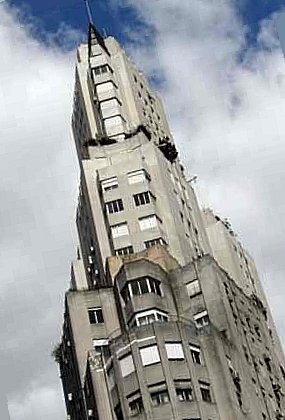
Despite the generations of immigration, investment, interbreeding, and cultural interchange, relations between Argentina and Great Britain were somewhat marred, shall we say, by the shameful attempt by the unhinged wing of the Argentine military to annex the Falklands and rename every geographical feature therein (seriously, I’ve seen the maps). When they were done renaming everything in the Falklands (or ‘Malvinas’ as they would have us believe) the craze apparently spread homewards to the capital. The Plaza Britannia was renamed the Plaza Fuerza Aerea Argentina (from Britannia Square to Argentine Air Force Square), while the Torre de los Ingleses was rechristneed the more ambiguous Torre Monumental. In an even more unfriendly move, the Memorial to the Fallen of the ‘Malvinas’ was built in Plaza San Martin facing the English Tower across the street. In the spirit of peace and friendship, especially regarding two countries which have such deep links as Britain and Argentina, the Memorial really ought to be removed and placed in some other suitable location in the city. Until that time, it remains the Plaza Britannia in my books, and as for the ‘Malvinas’, no such place exists.
The ‘Malvinas’ memorial viewed from the rear, with the English Tower across the Avenue.
Search
Instagram: @andcusack
Click here for my Instagram photos.Most Recent Posts
- Brunel’s Unbuilt Capitol February 3, 2026
- Cricket at Fordham January 27, 2026
- Palacio Barolo Revisted January 14, 2026
- Learning to Love Liguria January 14, 2026
- Crux Alba No. 2 January 13, 2026
Most Recent Comments
Book Wishlist
Monthly Archives
Categories