World
About Andrew Cusack
 Writer, web designer, etc.; born in New York; educated in Argentina, Scotland, and South Africa; now based in London.
 read more
News
Blogs
Reviews & Periodicals
Arts & Design
World
France
Mitteleuropa
Knickerbockers
Argentina
The Levant
Africa
Cape of Good Hope
Netherlands
Scandinavia
Québec
India
Muscovy
Germany
Academica
New Eyewitness Goes Blind
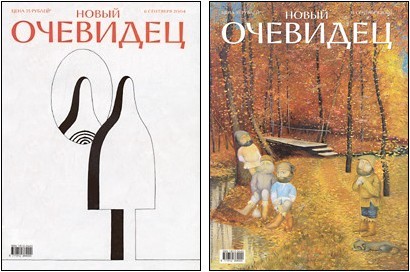
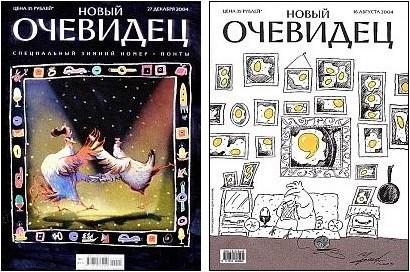
 Novy Ochevidets, Russia’s blatant imitation of the New Yorker is shutting down after only five months in operation, according to the Moscow Times.
Novy Ochevidets, which translates as the ‘New Eyewitness’, specially commissioned a Cyrillic font that fashioned after that of its mentor, and even had it’s own version (seen at right) of the New Yorker‘s classic fopp, Eustace Tilly.
I mourn for the New Yorker. It has yet to recover from Tina Brown’s years at the helm, and shows no signs of getting better. Indeed, quite the opposite, as was shown this past year when the magazine endorsed a political candidate for the first time in its history. (If you hadn’t already guessed, it was the man perenially described by James Taranto as ‘the haughty French-looking senator from Massachusetts who, by the way, also served in Vietnam’).
Via the indispensible Arts & Letters Daily.
Res Publica Nova Eboraci
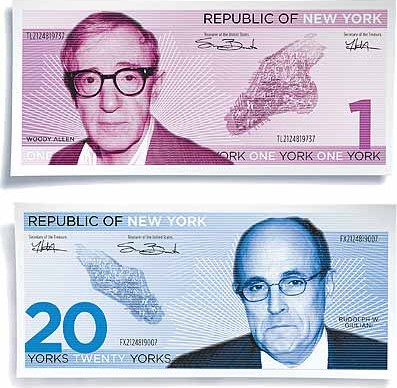
Gothamist picks up the idea of the City of New York seceding from either the State or the Country. Normally I’m in favor of anything seceding from anything else. However, the City and State have to stick together. I wouldn’t mind the State of New York regaining complete sovereignty, but I think we’d want to take Connecticut and northern New Jersey with us for the sake of geographic integrity.
New York currency illustrations from an article on secession in New York magazine.
Leisure
I AM BACK HOME in New York after having completed my Martinmas term examinations. This morning, my mother, sister, brother-in-law, and I went out for breakfast to celebrate my “triumphant return from another term at university.” (I suggested it might be wiser to wait until the casualty reports are released before we declare it a triumph).
Nonetheless, I now have three weeks of time almost entirely free from obligations to do whatever I please. It is perhaps how a man spends his free time that defines him, as free time is the foundation of civilization itself. Roger Kimball reflects on this in a recent Armavirumque posting, mentioning Josef Pieper and Leisure: The Basis of Culture, a book I was first introduced to by Robert O’Brien whilst still half-asleep at 7:30 in the morning waiting for a train at Leuchars station so we could attend the Tridentine mass in Edinburgh.
Leisure, by which we mean doing something merely for its own sake, is entirely different from mere pleasure. Unfortunately for the English language, we oft mistake the two for synonyms. It is leisure in that latter sense, of idleness and cheap pleasure, which our good friend Prof. Richard Demarco resoundly condemned in a lecture he gave at St Andrews. This kind of leisure, he stated, was leading to the destruction of Scotland, of Europe, and of civilization. Art today, according to Richard, is a collection of usually talentless kitsch which seeks merely to create an arrangement that is pleasing or clever. Art, in Richard Demarco’s world, should not aim to be pleasing, or to be clever, but should have as its essence the very highest that man can achieve: the sanctification of souls. In pursuit of pleasure rather than leisure, tourism is taking over entire countries; a false economy which can enslave the entire population of a given area.
It is certainly rampant in St Andrews. There are many good reasons to visit St Andrews. The third-oldest university in the English-speaking world, for example, or perhaps to see ruins of one of the greatest shrines in Christendom, bearing witness to the visceral damage wrought by the Protestant Revolution (we should refuse to dignify that revulsion with the name of ‘reformation’; it destroyed and replaced, not reformed). Most, however, come for the golf.
While niches once full remain empty from the holocausts of five centuries ago, the Scottish Parliament would prefer to spend its millions (which, you must never forget, are the people’s millions) on encouraging this pointless and ineffective idleness, Demarco pointed out. More recently, South Street, where I live, will soon be shorn of its beautiful trees, those which make it one of the most inviting and comely thoroughfares in the Royal Burgh. This must be done, we are told, to increase the number of parking spaces, the paucity of which might be driving away potential tourists. Perish the thought! Heaven forbid a town be run for the benefit of its inhabitants, for the benefit of itself (but surely by now they have already forbidden Heaven).
As Mr. Kimball points out, the opposite of the former leisure, the leisure which Pieper posits is the basis of culture, is busyness. Perhaps we can extend this to business, for it is the dollar, the pound, and the euro which enslave St Andrews to transient tourists. Without tourism, some say, St Andrews, or Oxford or Venice or wherever, would not survive. But at what price survival? And who defines this survival? That these places are still on the map and are inhabited is for sure. But in some sense have not these places, while encouraging tourism as a mode of survival, been so changed and transformed that in fact they have not survived. Decrepit and rundown, they may have been, but at least they had authenticity; at least they were themselves. Now most of the goods sold in St Andrews – saltires, fake kilts, tam o’shanters, and Scotland t-shirts – are in fact things that can be purchased in half the towns in Scotland, and now with the advent of the internet, you can purchase them while you remain at home. Their cheapness is only accompanied by the sentiment of being a souvenir in the original French sense of the word: to remember. But they are remembrances for short memories, and likely will be thrown out within a year, because we, and it all comes back to this, do not have the time for longer memories.
Thus one of the chief values of an education must be free time. St Andrews affords this, I am glad to say; especially if you are an arts student and are not aiming for a first. All too often friends of mine at universities in the States or at Oxbridge are busy. They are either busy with busywork, (assignments for school which must be done to stay in the university but have little graded value or academic merit) or else busy with social activity and other amusements which vary greatly as to whether one’s in a big city or not (most often the case with NYU students I find).
When I finally start my university, we must make sure that students have enough free time then, perhaps the greatest argument for not locating it in an overactive urban metropolis. Though of course a good part of education is that which transmits information and ideas and, more importantly, inculcates moral values, much must be left up to the student. There is an inherent value in reading not what is required but what is desired.
And so I will get on with my post-exam break, reading the Pickwick Papers, the Everlasting Man, and This Side of Paradise, hopefully with some time to browse through Haldane’s Faithful Reason: Essays Catholic and philosophical (which, on a typographical note, makes ample use of the Gill Sans font).
Travels
I’m back off to Caledonia this evening for my examinations. But I’m back to New York by the evening of next Sunday anyhow, so I’m not gone for long.
For a peek at what our exams are actually like, here are the questions from last year’s exam for “MO3322 French Algeria 1830-1962”. Three questions must be answered in the space of three hours.
2. To what extent did Algerian resistance obstruct the extension of French control in Algeria between 1830 and 1871?
3. ‘For a settler to show that he is Republican he has to show his hostility and disdain for the Muslims’. (Charles-André Julien). To what extent does this describe the development of colonialism in Algeria after 1871?
4. Which factors shaped French views of Algeria and the Algerians, and what do such views reveal about French attitudes to colonialism?
5. Can the Algerian nationalists of the inter-war period be seen with justification as precursors of the independence movement?
6. Assess the role played by Algerian immigrants in France in the development of Algerian nationalism and the War of Independence.
7. Discuss the view that the Algerian War of Independence was in many respects a civil war.
8. Is the controversy over torture during the Algerian War of Independence a satisfactory explanation for France’s difficulties in coming to terms with the war’s legacy?
9. How important were tensions between central government in Paris and the colons in determining the nature of French policies in colonial Algeria?
University College Durham
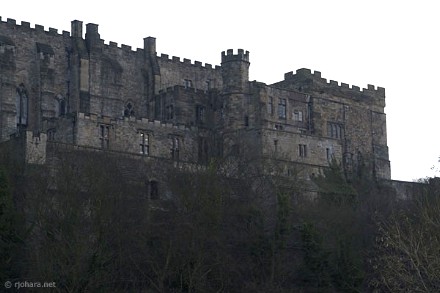
Dr. Robert O’Hara (who runs one of my favorite website) recently took it upon himself to visit the University of Durham and provided a few snapshots. Of most interest to me is University College Durham, situated in ancient Durham Castle. I think perhaps when I start my university our very first college might be partly modelled on this. (more…)
Dingbat Through the Ages
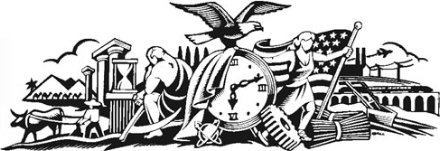
Newsdesigner.com has an interesting post enlightening us to the history of the ‘dingbat’, the vignette which can be found atop the International Herald Tribune.
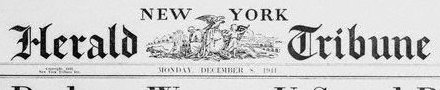
The design first originated in the nameplate (also called, varyingly, the ‘masthead’, ‘banner’, or ‘flag’) of the New-York Tribune. The Tribune became the New York Herald Tribune, which my Aunt Naomi informs me was a very good newspaper while it lasted. The NYHT died in 1966, being merged into the ill-fated New York World Journal Tribune (aka the Widget) which only produced a few numbers before labor troubles killed it too.

The Herald Tribune, however, has two remnants which still exist today: the Paris edition (now the IHT) which continued under the auspices of the New York Times and the Washington Post, now solely owned by the Times; and New York magazine, which started out as a weekly supplement to the Herald Tribune.
Wallabout Market

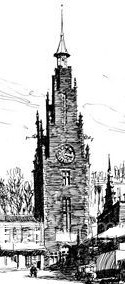 New York’s Wallabout Market was once the second-largest market in the world. From about 1884 onwards, vendors would gather in this district adjacent to Wallabout Bay in Brooklyn and sell their various wares. It was then that the market vendors had been banned from Fulton Street for making too much noise, and so took up their trades further down by the Wallabout Canal, next to the New York Naval Shipyard, more commonly known as the Brooklyn Navy Yard (founded 1801, decommissioned 1966).
The market featured permanent two-story brick structures designed in a nostalgic Dutch style, commemorating the Netherlandish origins of New York and Brooklyn, centered around an open plaza known as Farmers’ Square where stalls were erected. The centerpiece was a tall clock tower, seen at right and further below.
The market buzzed with activity from about midnight until just after dawn, by which time trading had died down. During the majority of the daylight hours the vast market stood empty. (more…)
St. Paul’s, Eastchester
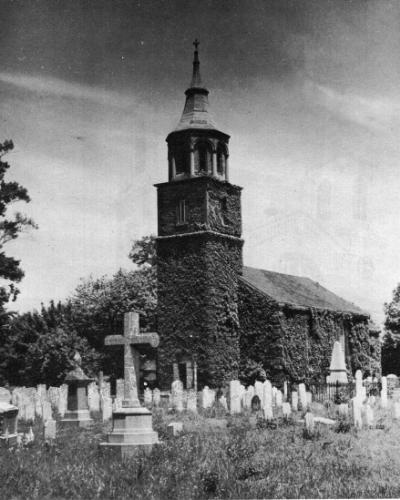
One of the hidden gems of our county is St. Paul’s Church, Eastchester. The church has been within the City of Mt. Vernon since the late 19th century, but was the original town church for Eastchester, situated on the village green. The first church building on the site, a simple wooden structure, was built in 1692. The current structure was built in 1763, with numerous additions and subtractions since that date. (more…)
Christmas Eve 1886
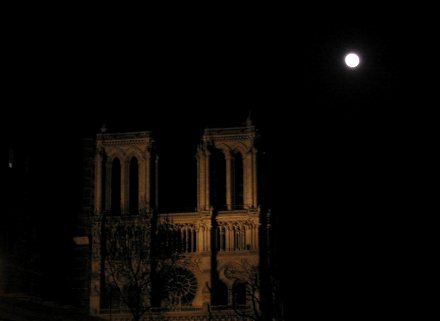
It was on this evening in 1886 that two souls experienced a profound conversion. Thérèse Martin, or Thérèse of Lisieux as she is now known, wrote of it in her spiritual biography, recounting: “On that luminous night, Our Lord accomplished in an instant the work I had not been able to do during years.”
At the same time, almost the same hour, a young man in his twenties, Paul Claudel stood in the Cathedral of Notre-Dame de Paris and began his return to the church. He was later to become a diplomat, poet, writer, and exegist.
Well I could go on further about both, but Philip Zaleski describes the conversion of Thérèse in his recent article ‘The Love of Saint Thérèse’ in First Things whereas Paul Claudel’s conversion is described by Eric Ormsby on the first page of the Arts section in today’s New York Sun. So do some research yourself. There’s a vast kingdom out there waiting to be learnt.
A very happy and blessed Christmas to you all!
Christmas at Schloss Cusack
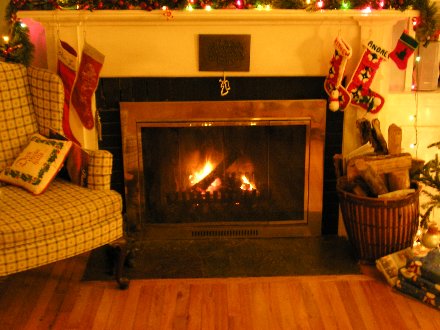
Ah, the fire burns, the tree is lit, and another Christmas is had amongst the fam.
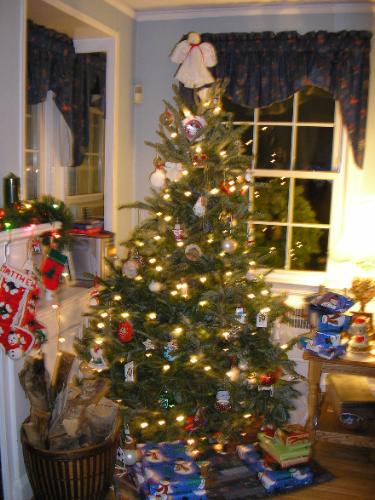
Photos taken with my brand new digital camera. It replaces the one which was lost amidst the chaos of the 2003 Kate Kennedy Club May Charity Ball. Drowned in vodka.
More Saintliness
The brouhaha over our university’s ironically-titled tabloid, the Saint, has made it to the respectable papers.
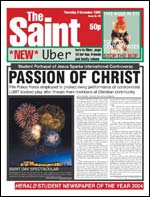 The Scotsman‘s Education Correspondent, Kevin Schofield, writes today under the headline of “University challenge to freedom of speech – and Welsh jokes“. Slightly misleading since in this instance the challenge is from the Students Union not the University administration, but it was given a mention on the front page of Scotland’s national newspaper. The Scotsman also published an opinion piece entitled “New puritanism we last witnessed in ’20s Germany” which seems slightly hyperbolic.
Andrew Murray-Watson reports in the Telegraph of “Student newspaper at St Andrews University closed after ‘making racist attack on the Welsh’“. The most amusing bit from this article is a quote from Saint editor Jo Kerr:
The terms “broadsheet quality” and “sophisticated manner” appearing in an article about the Saint are hilarious! This from a newspaper which feels free to lecture about Christians and Christianity while displaying a wholesale ignorance of the Faith (e.g. referring to St. Patrick as a “biblical superhero” and ridiculous statements about the Christian Union).
Winter in Westchester
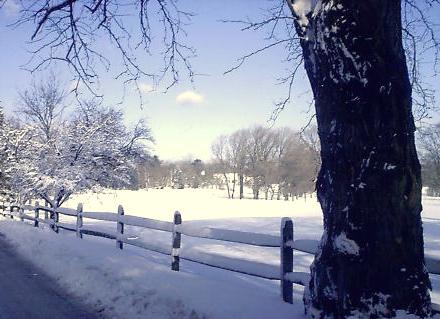
Last night we received the first bout of snowfall since my return home, which means I’m currently in that wonderful period of grace when snow is charming and beautiful. Doubtless it will be but a few days I will be sick of it and yearn for better driving conditions. But for now, it is welcomed and enjoyed. I think tonight I will sit and read by the fire.
Fourth Sunday in Advent
Well today was rather heartening. I went to the midday mass at St. Joseph’s (the local church) and Msgr. Doyle (the pastor) addressed the congregation before mass, donning a cassock, something I’d never seen him do before. He then told us all that our beautiful tabernacle was being moved back to the centre of the sanctuary, where it would be joined by the fronting of the 1927 altar which had be found and restored, and that the priest’s chair would move to the side. All this would be finished before Christmas, too! I had often considered writing a letter suggesting this very thing, but never got around to it.
Monsignor also pointed out that there were four pages of guidelines for church regarding dress, behavior, reception of Communion, and various other important things that have oft been ignored in the past forty years. (See pages 5-8 of this pdf file – very good stuff).
Gosh, St. Joe’s is becoming more like St. Agnes. What a Christmas present! Now we just need them to give us some Latin.
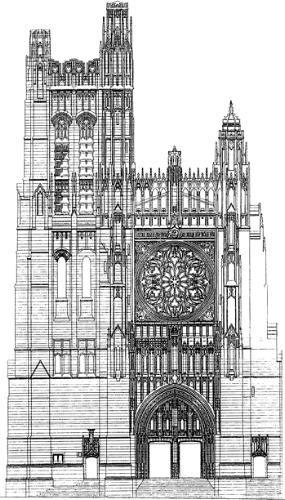
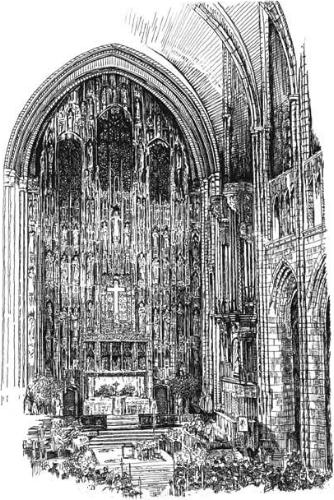
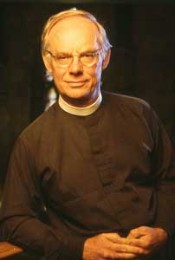
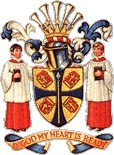 Later, Adam Brenner and I went off to the Festival of Nine Lessons and Carols with the Rev. Andrew C. Mead, OBE at St. Thomas Church (Episcopal) on Fifth Avenue. Caroline Gill dropped out to take a look at a house. Anyways, I’m a big fan of Lessons and Carols, so that was much enjoyed. St. Thomas really do have a superb choir. They also have the reredos to end all reredoses – a massive stone affair that takes up most of the west (liturgical east) end of the Church. Beautiful church, but I still prefer St. Vincent Ferrer (which in addition to being beautiful is a proper church with valid sacraments).
L’Église de St. Jean Baptiste, New York
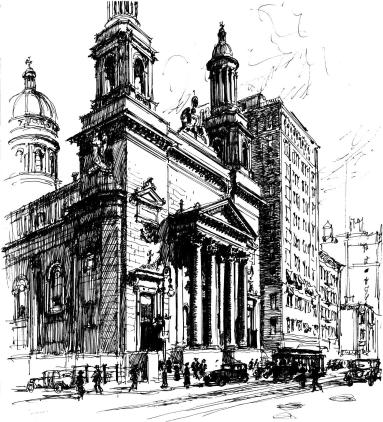
A comment of Mr. Hiss on Fr. Sibley’s blog mentioned the Church of St. Jean Baptiste on the Upper East Side. There are few churches in New York, let alone all America, which are as beautiful as St. Jean Baptiste (or “St. JB’s” as people ridiculously call it). A restoration only a few years ago brought the church back to its full splendour.
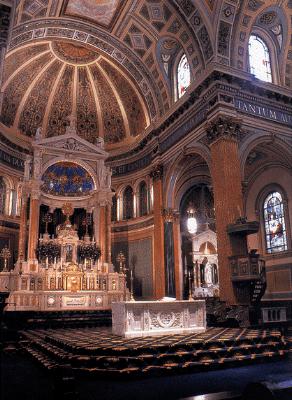
It used to be the national parish of the French Canadians in New York, hence the French name, and is now home to the National Shrine of St. Anne, formerly further downtown in what became St. Anne’s Armenian Catholic Cathedral (one of a few beautiful and very active church buildings being pawned off by the wretched bureaucrats who run the Archdiocese of New York).
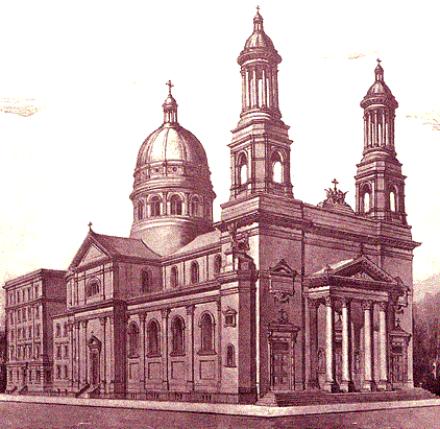
The church is open most of the day and definitely worth stepping into even if you only have a few minutes. Their parish website (link above) has a somewhat detailed history of the parish and the architecture of the church.
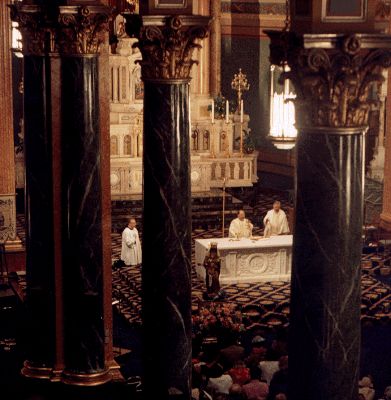
The parish and girls’ high school are now staffed by priests of the Congregation of the Blessed Sacrament as well as sisters from the Congrégation de Notre-Dame, and the Body of Christ is adored all day long except during Mass.
If London Were Like New York
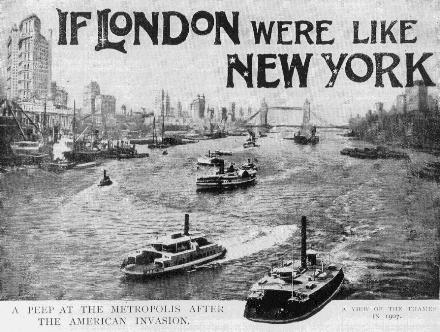
I stumbled upon this rather drole piece from 1902 about the prophesized New-Yorkification of London in Harmsworth’s Magazine. “If London Were Like New York: A Peak At The Metropolis After The American Invasion” is accompanied by some amusing illustrations of the anonymous authors vision of the future.
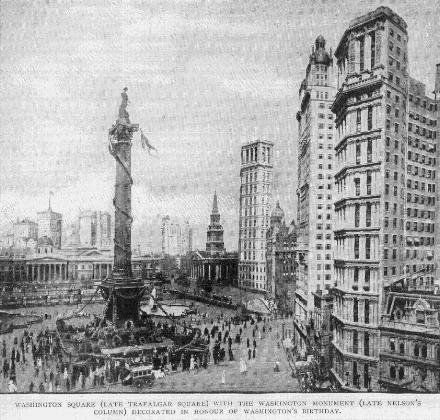
Trafalgar Square is rededicated to George Washington, and decorated to celebrate his birthday.
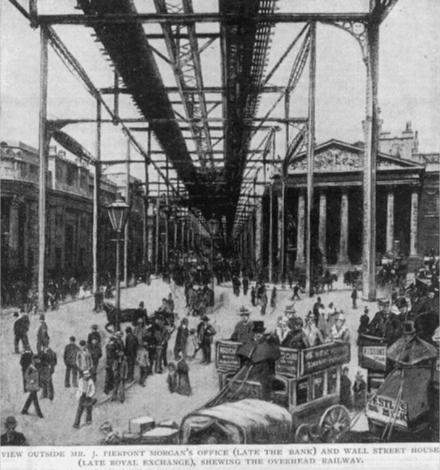
An el is built right through the heart of the City.
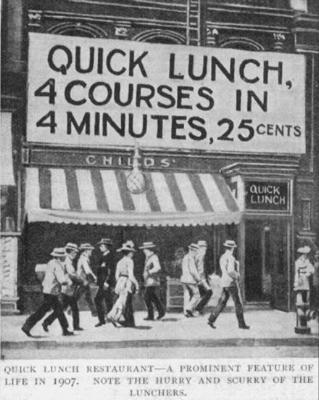
There’s even a precursor of our famous American fast food. Perhaps the most prophetic of the author’s predictions!
Les Halles Will Get a Makeover
For the architectaphiles in the audience, the designs for the complete do-over of les Halles (one of Paris’s urban eyesores) are out.
Le Figaro‘s take on it.
Images of the accepted design and rejected proposals from le Figaro.
The New York Times writes on it as well. (Registration might be required).
The Saint ‘Banned’
The Saint, paragon of social liberalism and this university’s other newspaper, has ironically been banned from using the Student Union’s facilities (in which their offices are located) for making offensive comments about “LGBT students, dyslexics and the Welsh.” How amusing to see infighting amongst the useless institutions of the University!
Oddly enough, despite frequent cause for complaint, there is no mention of numerous offensive comments and innacuracies about Christians. This is probably because most Christians are so used to assaults from the press we don’t bother complaining.
Well, you all read the Mitre anyhow.
Students Association President Simon Atkins’ letter.
Samizdata reports the ban.
The Oldest Library in New York
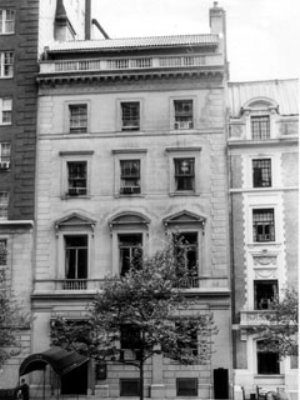
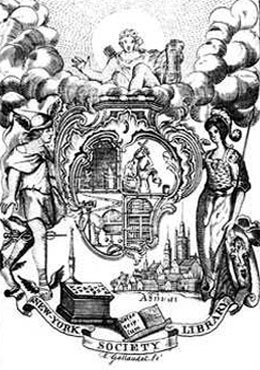
When one thinks New York and thinks libraries, the obvious place which comes to mind is the New York Public Library, one of the largest libraries in the world with one of the most beautiful homes in Bryant Park on 42nd St.  The Public Library was formed in the mid-19th century by a merger of the private Astor, Lennox, and Linden libraries. The great metropolis, however, is home to a much older bibliotheca called the New York Society Library, founded in 1754.
In that year, six ‘civic-minded individuals’ formed the New York Society with the aim of founding a library which would be “very useful as well as ornamental to the city”. The ‘city library’ was given a room in the old City Hall (later, as Federal Hall, home to the United States Congress), and received a charter from H.M. King George III in 1772. Unfortunately the Library was looted during the Revolution, but survived and was restocked afterwards, receiving a second charter from the Assembly of the State of New York.
The Society Library is still, as it was then, a subscription library which operates almost like a private club, though open to all who will subscribe (and the Society Library’s membership fee is much more economical than a club). The N.Y.S.L. merged with the New York Athenaeum in 1840, and having been located a various locations around lower and mid Manhattan, in July 1937 moved its collection of one hundred and fifty thousand volumes into 53 East 79th Street (seen at top), where it continues today.
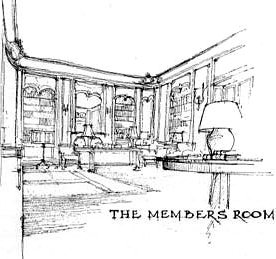
I’ve never been to the Library myself, though it seems a suitably comfortable and private location to read or research, and not expensive to boot. Perhaps I will strike up a subscription when I am next in New York as a full-time resident. They even have a Children’s Room which would be useful when progeny appear.
Last Days in Andreanopolis
How splendid it will be to return home for Christmas! However, I still have a few days here in St Andrews and a few tasks to get done as well. Breakfast with Nicholas Vincent (Architecture writer for the Mitre) tommorrow. A pint with Chris Pollard sometime in there. Lunch with Tom Leppard, St Andrews’ favourite champagne socialist, Thursday. I told Alex Matzdorf and Ed Jackson both I’d have coffee with them sometime, and hopefully I will in the next three days.
 Today was my last academic bit, a celebratory affair marking the final seminar for the ‘Monarchy, Church, and State’ course with Dr. Bradley (seen at right, Kirkin’ it up). It was somewhat embarassing as I was about fifteen minutes late since I stopped to buy sherry for the seminar. There is something moderately amusing about walking into of the rooms in St. Mary’s quad with a bottle of sherry and getting a round of applause. In addition to my sherry, there were other beverages including non-alcoholic mulled wine (NON-ALCOHOLIC MULLED WINE! That’s right, there were Protestants afoot).
We were supposed to be covering what will be on the exam, but that pretty much came down to “There will be nine questions to choose from and you’ve had nine seminars. Study them all.” It may be very well for me, but others have dissertations to write, poor souls! Nonetheless, Dr. Bradley insisted the latest Mitre be passed around as he found our editorial rather intriguing. Of course the triumvirate of young Baptist ladies in the corner went straight for Za-Za Shelly’s article on bras. (Have to have something in the Mitre for the fair ones to read). Graham Booth volunteered himself as sports writer.
Already have my first appointment for home. Festival of Nine Lessons and Carols at St Thomas on Sunday. Brenner and I will be going, providing I have any energy left after flying home the previous evening, and hopefully we’ll be able to track down James Feddeck – the man himself – to come along. Ah, but I’m not really home until I hear the euphonic incantation of Asperges me at the 11 o’clock Mass at St Agnes.
Search
Instagram: @andcusack
Click here for my Instagram photos.Most Recent Posts
- Brunel’s Unbuilt Capitol February 3, 2026
- Cricket at Fordham January 27, 2026
- Palacio Barolo Revisted January 14, 2026
- Learning to Love Liguria January 14, 2026
- Crux Alba No. 2 January 13, 2026
Most Recent Comments
Book Wishlist
Monthly Archives
Categories