New York
About Andrew Cusack
 Writer, web designer, etc.; born in New York; educated in Argentina, Scotland, and South Africa; now based in London.
 read more
News
Blogs
Reviews & Periodicals
Arts & Design
World
France
Mitteleuropa
Knickerbockers
Argentina
The Levant
Africa
Cape of Good Hope
Netherlands
Scandinavia
Québec
India
Muscovy
Germany
Academica
Res Publica Nova Eboraci
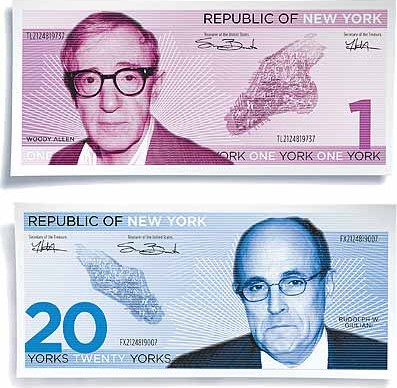
Gothamist picks up the idea of the City of New York seceding from either the State or the Country. Normally I’m in favor of anything seceding from anything else. However, the City and State have to stick together. I wouldn’t mind the State of New York regaining complete sovereignty, but I think we’d want to take Connecticut and northern New Jersey with us for the sake of geographic integrity.
New York currency illustrations from an article on secession in New York magazine.
Dingbat Through the Ages
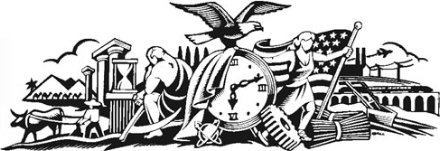
Newsdesigner.com has an interesting post enlightening us to the history of the ‘dingbat’, the vignette which can be found atop the International Herald Tribune.

The design first originated in the nameplate (also called, varyingly, the ‘masthead’, ‘banner’, or ‘flag’) of the New-York Tribune. The Tribune became the New York Herald Tribune, which my Aunt Naomi informs me was a very good newspaper while it lasted. The NYHT died in 1966, being merged into the ill-fated New York World Journal Tribune (aka the Widget) which only produced a few numbers before labor troubles killed it too.

The Herald Tribune, however, has two remnants which still exist today: the Paris edition (now the IHT) which continued under the auspices of the New York Times and the Washington Post, now solely owned by the Times; and New York magazine, which started out as a weekly supplement to the Herald Tribune.
Wallabout Market

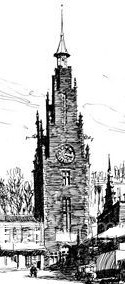 New York’s Wallabout Market was once the second-largest market in the world. From about 1884 onwards, vendors would gather in this district adjacent to Wallabout Bay in Brooklyn and sell their various wares. It was then that the market vendors had been banned from Fulton Street for making too much noise, and so took up their trades further down by the Wallabout Canal, next to the New York Naval Shipyard, more commonly known as the Brooklyn Navy Yard (founded 1801, decommissioned 1966).
The market featured permanent two-story brick structures designed in a nostalgic Dutch style, commemorating the Netherlandish origins of New York and Brooklyn, centered around an open plaza known as Farmers’ Square where stalls were erected. The centerpiece was a tall clock tower, seen at right and further below.
The market buzzed with activity from about midnight until just after dawn, by which time trading had died down. During the majority of the daylight hours the vast market stood empty. (more…)
St. Paul’s, Eastchester
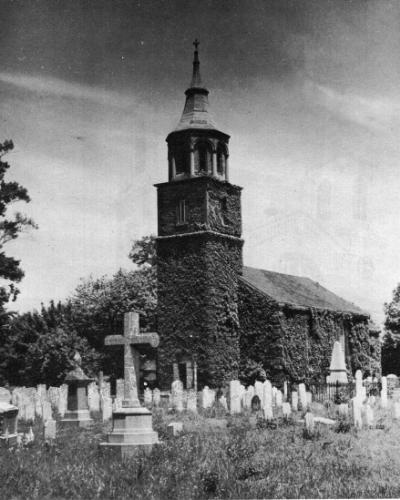
One of the hidden gems of our county is St. Paul’s Church, Eastchester. The church has been within the City of Mt. Vernon since the late 19th century, but was the original town church for Eastchester, situated on the village green. The first church building on the site, a simple wooden structure, was built in 1692. The current structure was built in 1763, with numerous additions and subtractions since that date. (more…)
Christmas at Schloss Cusack
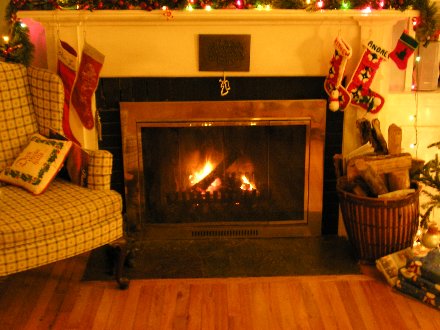
Ah, the fire burns, the tree is lit, and another Christmas is had amongst the fam.
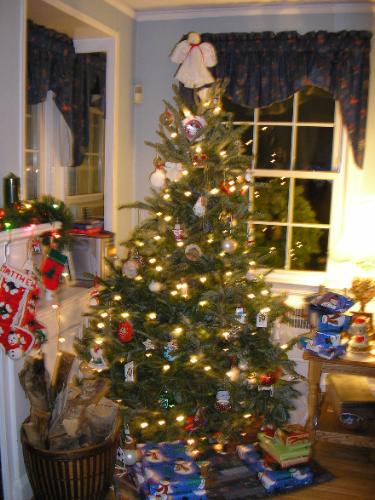
Photos taken with my brand new digital camera. It replaces the one which was lost amidst the chaos of the 2003 Kate Kennedy Club May Charity Ball. Drowned in vodka.
Winter in Westchester
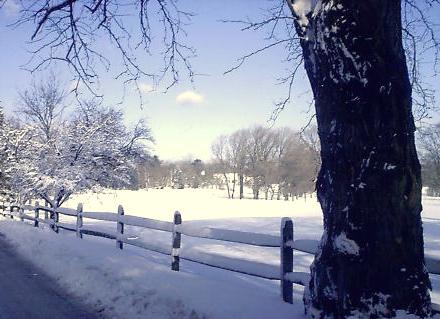
Last night we received the first bout of snowfall since my return home, which means I’m currently in that wonderful period of grace when snow is charming and beautiful. Doubtless it will be but a few days I will be sick of it and yearn for better driving conditions. But for now, it is welcomed and enjoyed. I think tonight I will sit and read by the fire.
Fourth Sunday in Advent
Well today was rather heartening. I went to the midday mass at St. Joseph’s (the local church) and Msgr. Doyle (the pastor) addressed the congregation before mass, donning a cassock, something I’d never seen him do before. He then told us all that our beautiful tabernacle was being moved back to the centre of the sanctuary, where it would be joined by the fronting of the 1927 altar which had be found and restored, and that the priest’s chair would move to the side. All this would be finished before Christmas, too! I had often considered writing a letter suggesting this very thing, but never got around to it.
Monsignor also pointed out that there were four pages of guidelines for church regarding dress, behavior, reception of Communion, and various other important things that have oft been ignored in the past forty years. (See pages 5-8 of this pdf file – very good stuff).
Gosh, St. Joe’s is becoming more like St. Agnes. What a Christmas present! Now we just need them to give us some Latin.
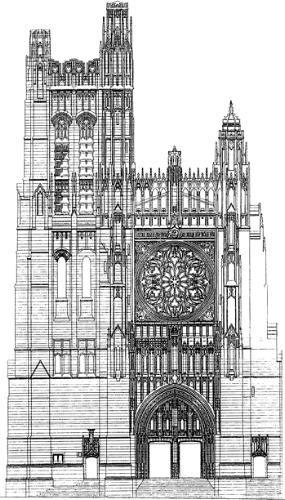
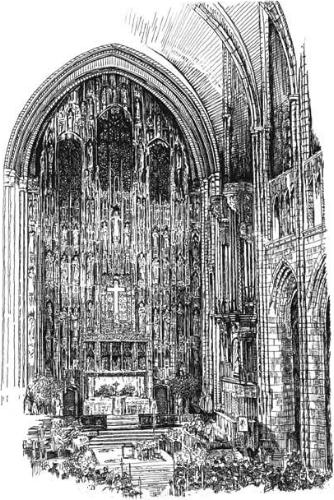
 Later, Adam Brenner and I went off to the Festival of Nine Lessons and Carols with the Rev. Andrew C. Mead, OBE at St. Thomas Church (Episcopal) on Fifth Avenue. Caroline Gill dropped out to take a look at a house. Anyways, I’m a big fan of Lessons and Carols, so that was much enjoyed. St. Thomas really do have a superb choir. They also have the reredos to end all reredoses – a massive stone affair that takes up most of the west (liturgical east) end of the Church. Beautiful church, but I still prefer St. Vincent Ferrer (which in addition to being beautiful is a proper church with valid sacraments).
L’Église de St. Jean Baptiste, New York
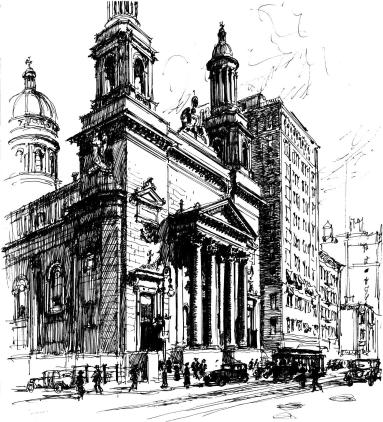
A comment of Mr. Hiss on Fr. Sibley’s blog mentioned the Church of St. Jean Baptiste on the Upper East Side. There are few churches in New York, let alone all America, which are as beautiful as St. Jean Baptiste (or “St. JB’s” as people ridiculously call it). A restoration only a few years ago brought the church back to its full splendour.
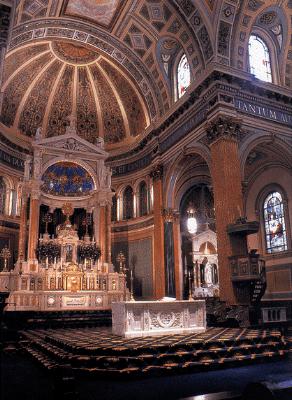
It used to be the national parish of the French Canadians in New York, hence the French name, and is now home to the National Shrine of St. Anne, formerly further downtown in what became St. Anne’s Armenian Catholic Cathedral (one of a few beautiful and very active church buildings being pawned off by the wretched bureaucrats who run the Archdiocese of New York).
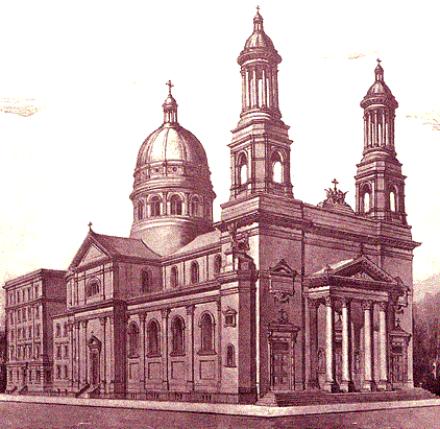
The church is open most of the day and definitely worth stepping into even if you only have a few minutes. Their parish website (link above) has a somewhat detailed history of the parish and the architecture of the church.
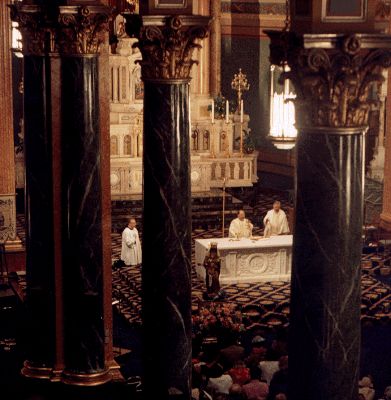
The parish and girls’ high school are now staffed by priests of the Congregation of the Blessed Sacrament as well as sisters from the Congrégation de Notre-Dame, and the Body of Christ is adored all day long except during Mass.
If London Were Like New York
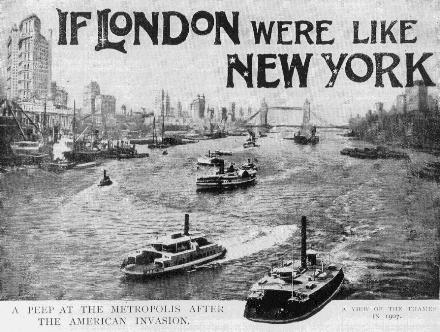
I stumbled upon this rather drole piece from 1902 about the prophesized New-Yorkification of London in Harmsworth’s Magazine. “If London Were Like New York: A Peak At The Metropolis After The American Invasion” is accompanied by some amusing illustrations of the anonymous authors vision of the future.
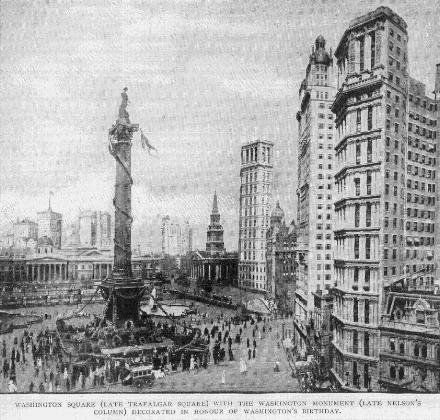
Trafalgar Square is rededicated to George Washington, and decorated to celebrate his birthday.
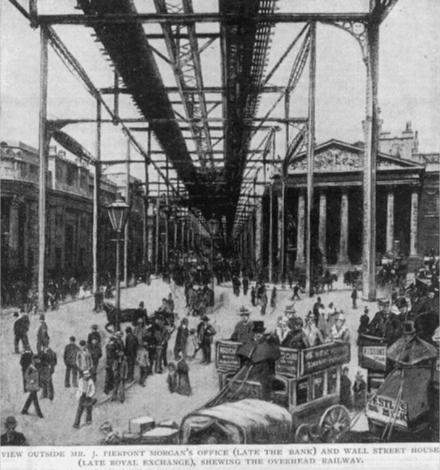
An el is built right through the heart of the City.
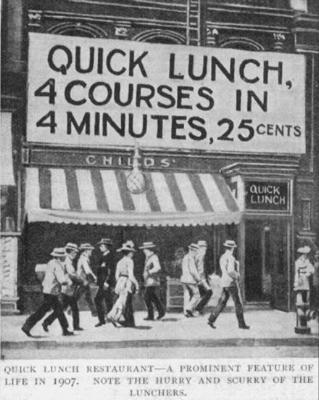
There’s even a precursor of our famous American fast food. Perhaps the most prophetic of the author’s predictions!
The Oldest Library in New York
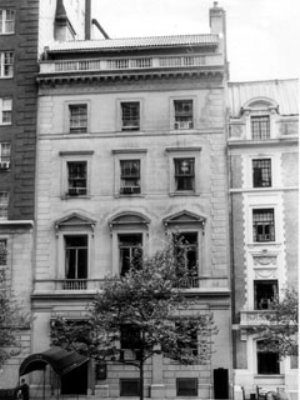
When one thinks New York and thinks libraries, the obvious place which comes to mind is the New York Public Library, one of the largest libraries in the world with one of the most beautiful homes in Bryant Park on 42nd St.  The Public Library was formed in the mid-19th century by a merger of the private Astor, Lennox, and Linden libraries. The great metropolis, however, is home to a much older bibliotheca called the New York Society Library, founded in 1754.
In that year, six ‘civic-minded individuals’ formed the New York Society with the aim of founding a library which would be “very useful as well as ornamental to the city”. The ‘city library’ was given a room in the old City Hall (later, as Federal Hall, home to the United States Congress), and received a charter from H.M. King George III in 1772. Unfortunately the Library was looted during the Revolution, but survived and was restocked afterwards, receiving a second charter from the Assembly of the State of New York.
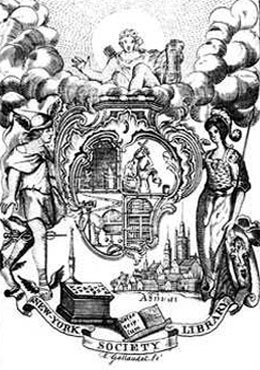
The Society Library is still, as it was then, a subscription library which operates almost like a private club, though open to all who will subscribe (and the Society Library’s membership fee is much more economical than a club). The N.Y.S.L. merged with the New York Athenaeum in 1840, and having been located a various locations around lower and mid Manhattan, in July 1937 moved its collection of one hundred and fifty thousand volumes into 53 East 79th Street (seen at top), where it continues today.
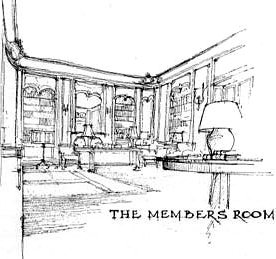
I’ve never been to the Library myself, though it seems a suitably comfortable and private location to read or research, and not expensive to boot. Perhaps I will strike up a subscription when I am next in New York as a full-time resident. They even have a Children’s Room which would be useful when progeny appear.
42nd Street Trolley?
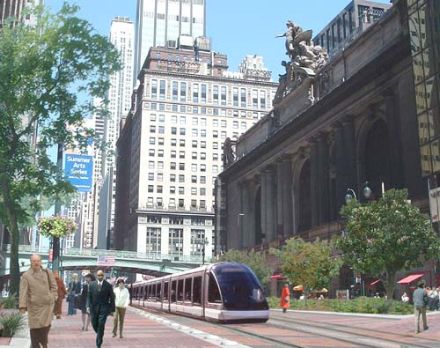
Two groups are supporting plans to put a trolley line down 42nd St from river to river. Vision42‘s proposal (seen above) would see the thoroughfare pedestrianised and arborised, whereas that of the Municipal Arts Society (below) would retain automobile access.
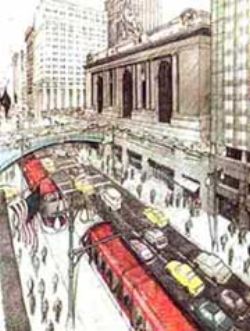
I have to say I rather like the idea of turning 42nd Street into a tree-lined pedestrian boulevard, despite doubts as to it actually happening. Though, as an avid guy-who-drives-in-Manhattan-alot I think losing a major cross street would be a hassle. New York lacks a major pedestrian area. We have small ones like Stone Street/Beaver Street area way downtown and the South Street Seaport, as well as gorgeous piazzas like Audubon Terrace (a hidden treasure which surely must be the subject of a future post). But we’re lacking a large, long, people-oriented boulevard. Adding trees would be especially wonderful as well.

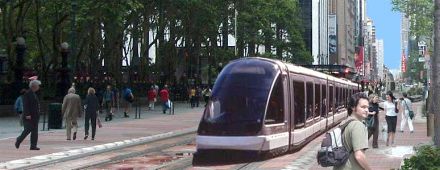
Either way, it’d be nice to see ‘light rail’ (as trolleys are called these days) return to the streets of Manhattan. Whether it would be wise or prudent I’ll leave for others to decide, but the Chestertonian nostalgic in me welcomes their return.
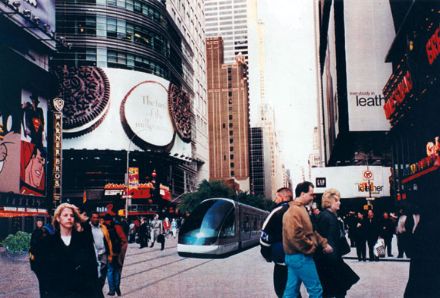
Having some genuine space around Times Square just for people would be a definite benefit as well. It’s always terribly crowded with people and often vehicles as well. Removing 42nd as a vehicular cross street at Times Square would probably make it more effecient actually.
Of course the plans have the new trolley line turning at the Hudson river, heading south to link up with the redevelopment of Hell’s Kitchen discussed in posts past.
‘New Yorkism’

The latest edition of the City Journal presents a wonderful vision for Hell’s Kitchen, the Manhattan neighborhood which has been slated for a massive redevelopment. The Journal commissioned a number of the world’s leading classicists in the field of architecture to design skyscrapers that fit into the City Planning Commission’s recommendations for the new ‘Hudson Boulevard’ which is planned for the ‘Far West Side’ (the newest catchy rebranding for Hell’s Kitchen since ‘Clinton’ failed to take off).
Yale Club Silliness
Armavirumque chimes in with some sad news of the Yale Club, which has some of the greatest facilities of any private club in the City, conveniently located next to Grand Central. (Although this would’ve been more convenient in the days when long-distance trains ran into Grand Central).
Anyway, James Panero can do the talking:
Well, like Gatsby, the recent history of this Club has been tragic. Wedding parties, business meetings, and conferences now invade every nook of the clubhouse. Good luck finding a quiet afternoon the library. The Grill Room has recently been stripped of its smoky, hunting-lodge feel. And now, in the past two weeks, an even graver injury has befallen the clubhouse. In order to make the second-floor lounge more convertible to conferences and weddings, the old lounge furniture, long newspaper table, and rugs have been replaced with seconds from a Holiday Inn–with lighting by way of Versace. And what of the castoffs? Sold at auction for pennies.
At Dartmouth, there is an expression, not often heeded, but nonetheless forcefully expressed: “lest the old traditions fail.”
Listen up, Eli. Case in point, an email I received from a friend today:
When your clubhouse no longer makes for a suitable privy, you know things are bad.
I seem to recall that St Andrews grads are allowed to join the Yale Club, thus I mourn for its partial deterioration. Nonetheless, presumably the Club isn’t run from the top-down but accountable to its members. They need to start a reactionary front to seize the reins of power.
Perhaps there ought to be a St Andrews University Club. Small and comfortable, owing to the comparitive scarcity of St Andreans in the metropolitan area. A library modeled on the King James Library, a dining hall modeled on Parliament Hall, a ballroom based on Younger Hall, and of course a smaller version of St Salvator’s Chapel (clubs ought to have chapels, after all). And rather than stick it in the Clubland of the 40’s, why not Fifth Avenue on the Park, or maybe Riverside Drive if we’re willing to brave the West Side. Bah, fantasy.
NYU Students Take to the Streets…
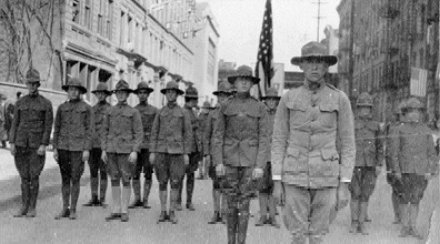
…to join in the fight against our cousins, the Hun. I doubt many of NYU’s ROTC students would be brave enough to don their BDUs in the streets of Greenwich Village these days. Well I don’t doubt they’d be brave enough, but they’d no doubt be more prudent perhaps. Anyhow, the ROTC program for all the colleges and universities in the City are based up in the Bronx at fortress Fordham, where the administration has been happy to play host to the future leaders of America. (Though we’ve heard the Pershing Rifles at Fordham are given to somewhat riotous behavior). This li’l bit of New York nostalgia was dug up from the NYU Archives.
Larchmontiana
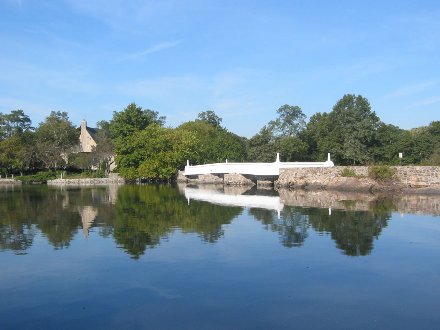
Lucas de Soto triggered a bout of homesickness when he sent me this link with desktop-sized photos of Larchmont. (The first four photos are from the link). Larchmont is sort of two towns over from my dwelling place, and has been home to many good friends including Lucas and Clara de Soto and family, Adam Brenner, ‘the P’ (Retha Petrosino – my legendary high school English teacher) and her husband Fred, and others. Also, my graduation ceremony was in the Larchmont Avenue Church. (more…)
Where’s the peanut butter?
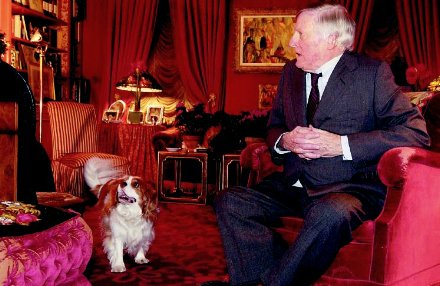
So that’s what WFB’s living room looks like…
Photo from the N.Y. Sun
Dutch Church, Kingston
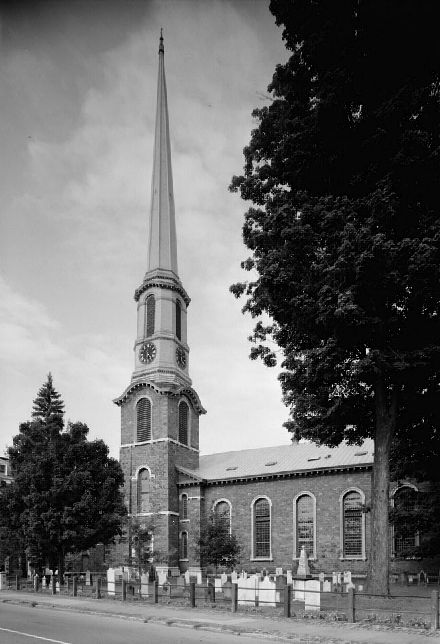
The Dutch Reformed Church in Kingston, New York.
The Maine Monument et cetera
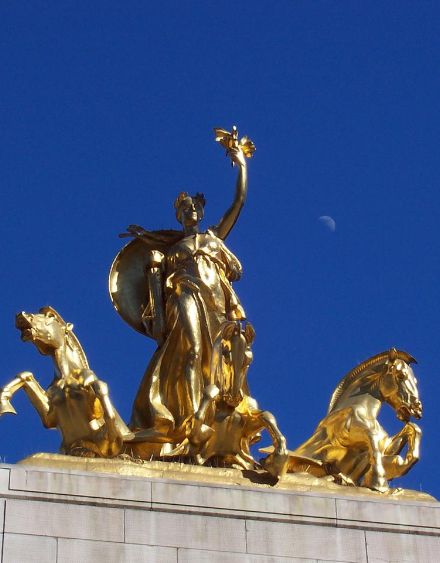
The Maine Monument has always been one of my favourite monuments in New York. It’s dedicated to the dead of the U.S.S. Maine incident and the Spanish-American War. The Monument is beautiful, not only due to its intriguing massing and beautiful sculpted work, but also because its placement in relation to Columbus Circle. It moves upward, encompassed in the lush greenery of Central Park behind it, and the bottom half projects itself forward into the Circle and creates a pleasing visual arrangement.
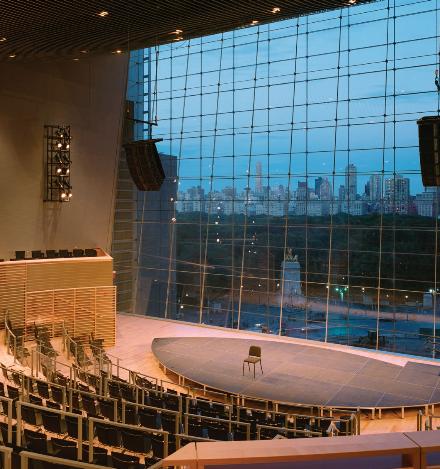
Above, as seen through the window of the Allen Room of the new Frederick P. Rose Hall at the AOL Time Warner Center. According to the review of opening night in the Sun, the Allen Room’s acoustics are amazing, and it looks as if Rose Hall will be an important addition to the cultural world of the City. (Note to Lucas and Adam: pencil this into your schedules).
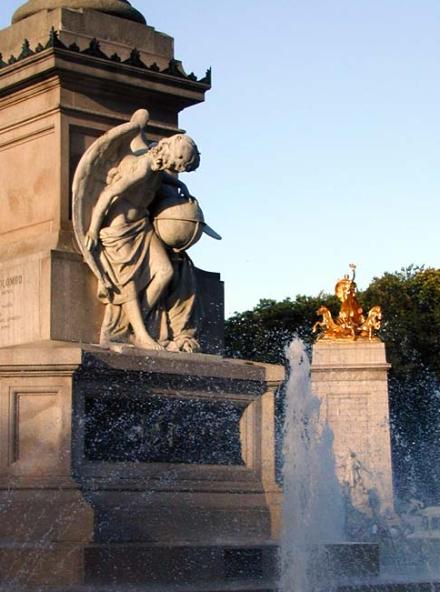
Above the Maine Monument is pictured with the base of the Columbus column in the middle of Columbus Circle. The Circle is currently undergoing a massive refurbishment to try to make it more accesible and parklike rather than just a glorified traffic circle.
Top photo by Corin Anderson
Recent New York Art
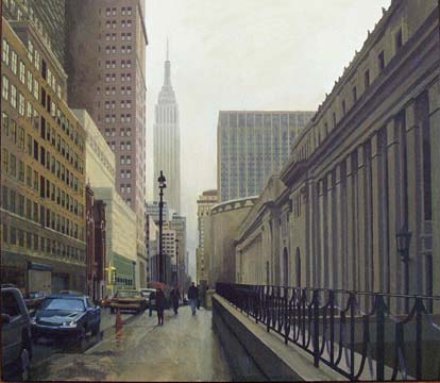
I am a philistine. The reason I am a philistine is because when it comes to art, I only like what I find beautiful. Today in the world of art, you’re supposed to appreciate art for the ideology and thought that goes behind it. If you only like what’s beautiful, then you are a philistine. I am quite happy being a philistine and hope I remain a philistine for the rest of my life.
Nonetheless, there have been a few recent works of art I felt I ought to show you. The common theme is New York. (more…)
Albany
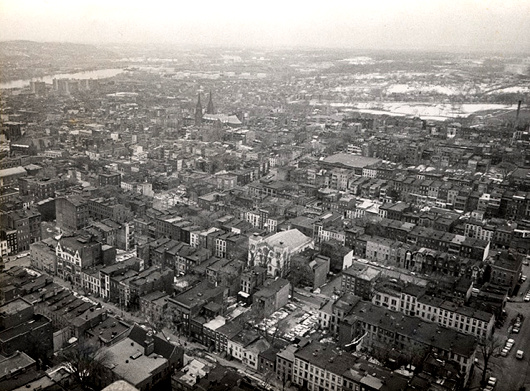
This photo of Albany, the capital of New York, from the 1950s shows a city that, if it weren’t for the straight streets, almost feels like a poverty-stricken Eastern European capital.
Unfortunately, it became even more like a poverty-stricken Eastern European capital when Big Brother decided to get rid of it all and replace it with a giant, heartless, government plaza.
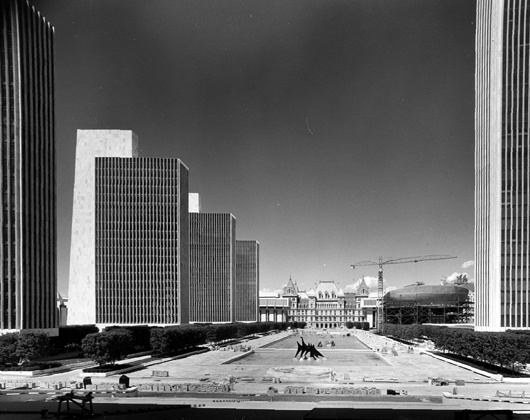
I wonder if Governor Rockefeller visited Brasilia and thought “Gee, I ought to get me one of them!” Empire State Plaza (or Governor Nelson A. Rockefeller Empire State Plaza as it is now officially known) involved the displacement of thousands of poor people, hundreds of small businesses, bad architecture, and the humongous cost – partly owing to the omnipresent use of marble instead of more economic stones.
The result was the destruction of a large community built on a human scale in favor of an expensive, espansive, inhospitable Communist dreamland on the Hudson. A crime.
Search
Instagram: @andcusack
Click here for my Instagram photos.Most Recent Posts
- Brunel’s Unbuilt Capitol February 3, 2026
- Cricket at Fordham January 27, 2026
- Palacio Barolo Revisted January 14, 2026
- Learning to Love Liguria January 14, 2026
- Crux Alba No. 2 January 13, 2026
Most Recent Comments
Book Wishlist
Monthly Archives
Categories