New York
About Andrew Cusack
 Writer, web designer, etc.; born in New York; educated in Argentina, Scotland, and South Africa; now based in London.
 read more
News
Blogs
Reviews & Periodicals
Arts & Design
World
France
Mitteleuropa
Knickerbockers
Argentina
The Levant
Africa
Cape of Good Hope
Netherlands
Scandinavia
Québec
India
Muscovy
Germany
Academica
Soggy Manhattan
Ah, Manahatta. Even on a day as soggy as this, the Upper East Side still charms me. It also retains a fair number of buildings from the days when New York had higher tastes, mostly to be found between Fifth and Park Avenues. It is a fact to be mourned that we have probably destroyed most of what was good in New York’s built environment. Nonetheless, we should of course be glad for the beautiful things which remain from our great city’s golden age, and thankfully they are not a mere handful.
Stumbling down East 82nd Street this afternoon amongst puddle, gloom, and rain I emerged onto Fifth Avenue to see the beautiful mass of the Metropolitan Museum of Art revealed in all its glory. The façade of the Met has recently been cleaned and glancing at it today, despite the cloud and percipitation, one could almost imagine the year as 1902 when the wing designed by Richard Morris Hunt was completed. This is doubly so because the Metropolitan currently lacks her usual ungainly vexillic adornments pronouncing the exhibits shown in her distinguished galleries. These banners add nothing to the Met’s façade, and if there is a more clever and handsome way of announcing what is within without – and surely there must be – the Museum does not seem to have found it.
Still, the situation is not as reprehensible as across Central Park at the American Museum of Natural History. The AMNH enjoys two façades, one of which commands the view over Central Park West and the park itself beyond. The main portion of the Museum’s Central Park West front is a brilliant triumphal arch which is in fact the State of New York’s monument and memorial to Theodore Roosevelt, President of the United States and Governor of New York during his earthly life. Shamefully, the Museum disrespects this great monument to this great man by covering it in advertising banners akin to those which usually mar the Metropolitan. The American Museum of Natural History should be ashamed of itself for sullying such an august and dignified locale for the purposes of selfish marketing.
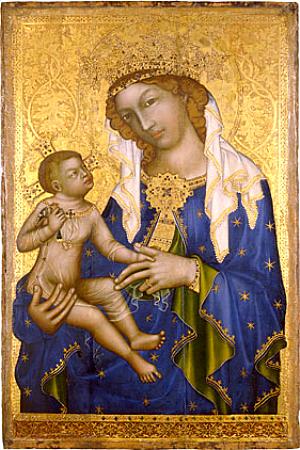
Tempera and gold on panel; 35′ x 23′
Deacon’s Office, Zbraslav/Koenigsaal/Aula Regia
(on loan to the National Gallery, Prague)
What brought me to plod up the splendid elevating staircase of the Metropolitan was to catch – just barely, for this was its last day – the special exhibition entitled Prague: The Crown of Bohemia 1347-1437. I had first gotten wind of this showing flipping through the mail whilst I was still interning at the New Criterion at the end of the summer and duly noted in my diary that though it opened while I was away in Scotland it would still be open upon my return for the Christmas holiday. Anyhow, I finally took advantage of it today and it was much enjoyed. What a remarkable land is Bohemia. The exhibit served only to augment my interest in the country and I must be sure to spend some time there sooner or later.
In addition to the Mother and Child above, the exhibit presented the tabernacle shown below (photographed in its actual home). There were also many, many reliquaries, some of which appeared to still have relics in them. One would have thought a museum’s interest in a reliquary was purely artistic and thus that the relics involved would be removed and handed over to those who would give them the care they deserve. Does the Museum have a consultant to advise on these cases, I wonder? Anyhow, I was sure to touch the glass and ask the saints to pray for us, just in case. The Bohemians clearly knew how to treat relics, would only that New Yorkers did – though to be fair I am told that the Tour of the Relics of St. Thérèse of Liseux which made its way to New York just a few years ago was well attended in the Metropolis and even up in Westchester round my neck of the woods. There is a relic of our dear Thérèse available for veneration in St. Patrick’s Cathedral which I occasionally drop in on when in the neighborhood.
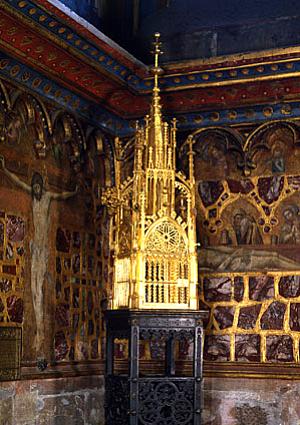
At any rate, had I attended Prague: The Crown of Bohemia 1347-1437 earlier I would’ve enjoined the reader to pay it a visit, but since it has finished its run I instead enjoin our dear readers to at least saunter down Fifth and stop to savor a glance of the cleaned-up Metropolitan sans banners. No doubt it will not be free of them for long — unless they who direct the Museum have had a moment of grace.
Previously: The Remarkable Hapsburgs | Brünn
Governors Island
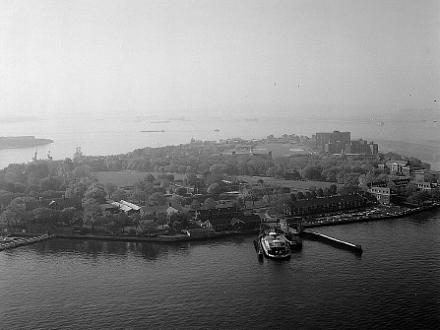
GOVERNORS ISLAND IS one of New York’s hidden gems. Not only is it a place which has a long and storied history, but it remains, however underappreciated, a place of great beauty, not to mention a place of great potential. The fact that this island in New York Harbor has been the property of the government for the preponderance of its existence has shielded it from the destructive forces of commerce which have savaged so much of what is beautiful and historic in the remainder of the city.
Let us explore this intriguing isle… (more…)
Bronxville Institutions and Their Land
I tabulated the following for a number of institutions in the Village of Bronxville: name of institution, tax-assessed value of property, total size of property (unreliable), and number of properties owned. The results are not surprising. The top five in terms of value are, in order, the village’s only college, the hospital (where I was born), the public school, the village government itself, and the main church. (I think the stats on acreage are generally unreliable).
| Name |
Value ($) |
Acres |
No. of Props |
| Concordia College |
160,202,500 |
6.53 |
7 |
| Lawrence Hospital |
125,362,500 |
.55 |
2 |
| Bronxville School (Public) |
91,630,000 |
? |
2 |
| Village of Bronxville |
49,690,000 |
15.18+ |
24 |
| Dutch Reformed Church (R.C.A.) |
45,297,500 |
3.83 |
3 |
| Church of Saint Joseph (Archdiocese of New York) |
25,245,000 |
3.73+ |
7 |
| U.S. Post Office |
18,605,000 |
.54 |
1 |
| Westchester County Park Commission |
18,007,000 |
10.23 |
9 |
| Christ Church Episcopal |
15,593,750 |
.75 |
3 |
| Village Lutheran Church (L.C.-M.S.) |
13,752,500 |
2.33 |
4 |
| Taconic State Parkway Commission |
5,430,000 |
1.36 |
3 |
| Fire District Town of Eastchester (Bronxville Fire Station) |
3,465,000 |
.34 |
1 |
| First Church of Christ Scientist |
3,432,500 |
2.88 |
2 |
| Bronxville Women’s Club |
1,321,000 |
.9 |
5 |
| Town of Eastchester |
540,000 |
2.74 |
3 |
Source: http://www.bronxville.us/
A Sunny Winter’s Day in Eastchester
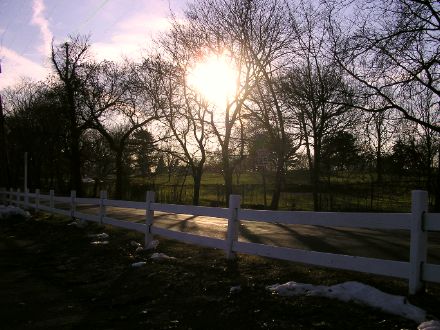
The sun was out today which made it ever so slightly warm in a most welcome way. I managed to get all my Christmas shopping done, which brought forth a great sense of satisfaction. That aside, I thought I’d share a few photos of here and there I took today. (more…)
Well Boo Hoo for the TWU!
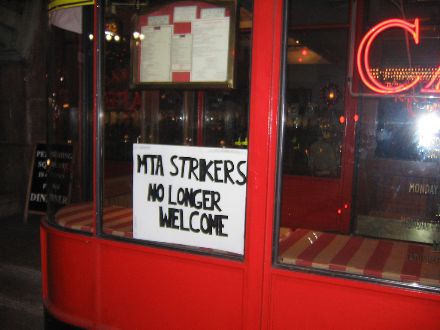
Well, the Great Transit Strike of 2005 is over with the Transport Workers Union having succeeding in winning for themselves the enmity of the entire city. The Trinidadian Roger Toussaint was elected head of the TWU on a radical platform and radical is what they got. And boy did it blow up in their faces! Listening to the radio the other day I heard stories of decent hard-working people who were waking up at 3:30 in the morning so that they could walk to their jobs and get there on time. Others were sleeping in impromptu locations at their place of employ. All this hassle just because Roger Toussaint wanted his pampered transit workers to retire at 55. Well boo hoo!
One Knickerbocker said: “Roger Toussaint gave up a life of hard work picking sugar cane down in the islands to come up to New York and pick the pockets of decent, hard-working Americans instead!” Well at least it’s all over now, so I can finally catch the Prague exhibit at the Met (oh and the Fra Angelico). I still curse myself for missing the Byzantium exhibit they held; I turned up a day late so I and the young lady who accompanied me assuaged our ire at J.G. Melon’s.
Whilst perusing the British corner of the Hudson Newsstand in Grand Central, waiting for a train home last Sunday after hearing Mass at St Agnes and then attending the Festival of Nine Lessons and Carols at St Thomas, I chanced upon a copy of This England, a splendid and reactionary quarterly from that green and pleasant land. It was something of a rediscovery as I have somewhere two copies of This England from 1983 and I am happy to report that the magazine has changed very little. It is a wonderful collection of little articles, stories, anecdotes, and charivari about the Mother Country and doesn’t give the slightest hoot for political correctness. A cozy and comfortable quarterly which I believe any traditionalist from the English-speaking world will enjoy. Irritatingly they did not have the Christmas double edition of the beloved Spectator, so I fear I must do without it this year. (And there was much gnashing of teeth…).
The Festival of Nine Lessons and Carols was superlative as always. It was interesting to note that in the program/weekly bulletin the word ‘Episcopal’ was nowhere to be found, nor any indication that St. Thomas is a parish of the Episcopal Diocese of New York and likewise the Episcopal Church of the United States of America except a very brief statement mentioning that the parish is “in the Anglican tradition”. A parish in denial? Perhaps, but if you were in their situation would you want to face facts? Ignorance is bliss, and it was a blissful service after all. Much enjoyed. My only complaint was that I thought the choir could’ve put a little more oomph in the final verses of Once in Royal David’s City and O Come All Ye Faithful, perhaps with a little help from the organ, but oh well, I’m no choirmaster, deo gratias.
Almost everyone in our little arrondissement of the web has been chiming in with their thoughts on the recent Chronicles of Narnia film, The Lion, the Witch, and the Wardrobe. I have little to contribute other than to say I found it an enjoyable film which I warmly encourage others to see. We found Father Christmas’s lack of headgear disappointing. A mitre would’ve been most appropriate, but his head was bare; perhaps Saint Nicholas should look to the much-vaunted final word in matters sartorial currently sitting on the throne of Peter.
Speaking of matters sartorial, a kerfuffle recently erupted in Missouri when some Communist enemy of all that good and holy banned a kilted student from a high school dance on the grounds that he was not properly attired. If I can trust my profound study of Scottish history (which consists mostly of the first few minutes of that 1959 biopic of John Paul Johns in which Robert Stack plays the title role) then we recall that the boorish Hanoverians banned the kilt for reasons I have forgotten. (I haven’t seen the film in years, and Robert Stack is dead, r.i.p.). I am certain that my readers and I are united in scorn.
I called up the folks at the New Criterion yesterday and Cricket Farnsworth, that hilarious and ever-charming daughter of Connecticut, answered the phone. I asked if there were any commuting woes and Cricket, the token liberal on the staff, just said “Well of course everyone here thinks the union leaders should all be shot.” “Then all is as it should be, Cricket,” I replied, “all is well in the world.” Happily, they have put one of the Jacksons’ Roger Kimball gingerbread men (or ‘Kimballbreadmen’ as they are calling them) to the side for me to consume when I pop down and visit next week. All is well indeed.
New York Currency
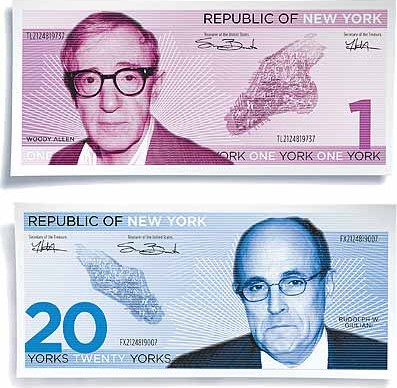
When New York magazine speculated on the prospects of an independent New York they postulated Woody Allen gracing a “1 York” note with Rudolph Guliani on the “20 York” note. In Caledonia they’re used to dealing with many different varieties of banknotes. In Scotland alone there are three different institutions authorised ot print currency: the Royal Bank of Scotland, the Bank of Scotland, and the Clydesdale Bank. Northern Ireland, meanwhile, has four: the Bank of Ireland, Ulster Bank, Northern Bank, and First Trust Bank. England and Wales, on the other hand, have but the Bank of England to issue legal tender, that institution having been granted a monopoly so to do in 1921. [More on British banknotes]
Nonetheless, this got me to thinking who and what I would put on New York bank notes if we had them. First of all, none of this “York” business; dollars they are and dollars they would remain in my land of fancy. Anyhow, here’s what I generally came up with: (more…)
O Blessed Nicholas
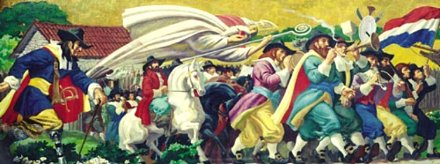
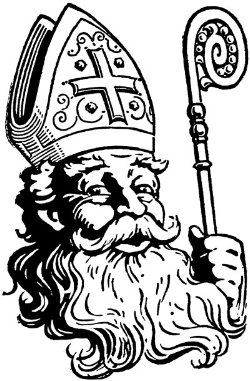
A very happy and blessed St. Nicholas Day to you all. St Nicholas is, as you all know, the patron saint of New York owing to our Netherlandish forefathers. Above you can see Lumen Martin Winter’s mural of St. Nicholas leading Peter Stuyvesant’s legion on their way to attack and take the Swedish fort of Christiania in New Sweden. The account of the battle by Washington Irving is hilarious and counts among my favorite selections of comic writing.
If you’d like to learn more about St. Nicholas, the St. Nicholas Center is a good place to start, as well as the holy bishop’s entry in the Catholic Encyclopedia.
It’s also Sofie von Hauch’s birthday. Tillykke med Fødselsdagen!
Previously: The Feast of St Nicholas
New York & St Andrews
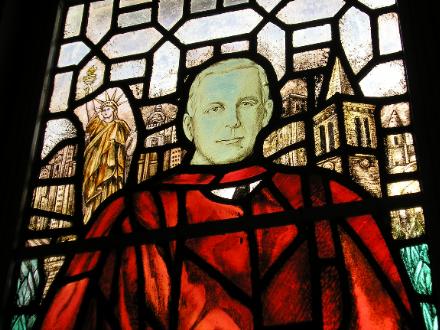
One of the interesting things about living in St. Salvator’s Hall is that one of the beautiful stained-glass windows in our wood-panelled dining hall is dedicated to Edward Harkness, and contains depictions of both the Big Apple and the Auld Gray Toon. Harkness was a benefactor of the University of St Andrews; in fact, he built St. Salvator’s Hall, as well as funding the renovation of the University Chapel (St. Salvator’s) and the restoration of the ruined St. Leonard’s Chapel. (more…)
The Great War Victory Arch
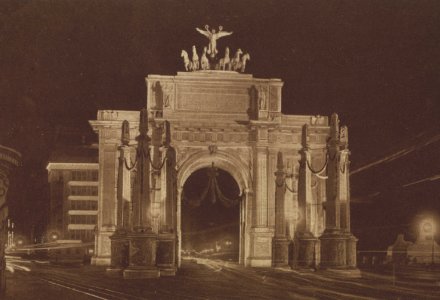
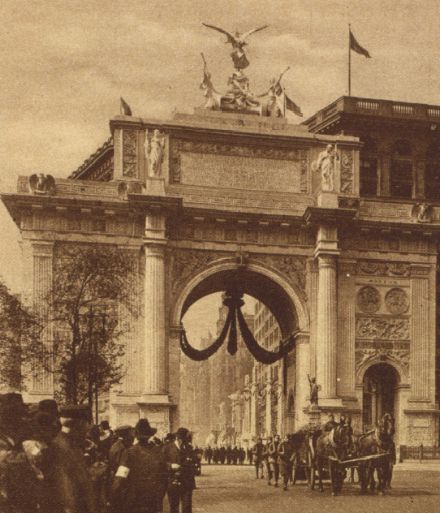
The intersection of Broadway and Madison Avenue sure is the popular place for temporary triumphal arches. After the little shootout with Spain we had a great victory parade and built the Dewey Arch for the triumphant American soldiers and sailors to march under. It also seems that we built a temporary arch for the troops returning from the First World War, photographs of which you can see above and below. The Dewey Arch is more pleasing, if you must know my thoughts upon it, but it’s still rather comely in its own right.
A View of Manhattan
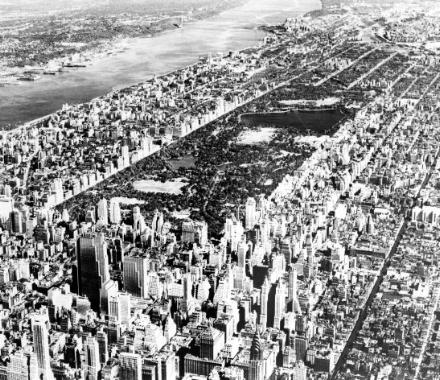
Wasn’t Manhattan more beautiful before the invasion of the glass boxes? I will tolerate Lever House and the U.N.; none further.
Want To Buy A Seminary?
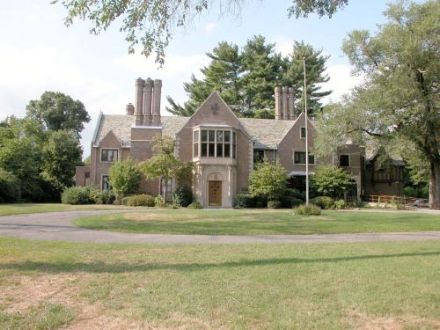
A while ago, we reported on the planned expansion of St. Nersess Armenian Seminary, the only Armenian seminary outside Armenia over in New Rochelle. Unfortunately, the seminary’s uppity neighbors got their proverbial knickers in a twist over the expansion and have pressured the City Council to deny planning permission (something that sounds very familiar to any Thorntonian; I guess the City of New Rochelle just doesn’t want outstanding educational institutions). Because of this the Board of St. Nersess met and decided it had to move elsewhere, so anyone who has a cool $15,000,000.00 to spare: it’s yours!
The house, on Stratton Road near Iona Prep, was built in the 1920’s by none other than William Randolph Hearst. He never lived there though, but just had it on hand for friends of his who were visiting New York and needed a place to stay. The building, to my recollection, is in fairly good condition, but the 8.65 acres it sits on seems rather small when you’re actually there.
Back in school we had some random day off that no other school had (Founder’s Day, I believe) and so Lucas de Soto and I, ever the adventurers, decided to pop over to the Armenian seminary to see what it was all about. (A Presbyeterian and a Catholic walk into an Armenian Seminary… sounds like the set-up for a bad joke). We turned up unannounced and everyone there was terrifically friendly. The secretary offered us cake, showed us around a bit and then introduced us to “the greatest expert on Armenian history ever” who was leaving for Philadelphia in under half an hour but would no doubt take a few minutes to answer any of our questions (unfortunately I’ve forgotten his name). He too was very friendly indeed and answered all our questions and told us about Armenia, the Church, the Armenian Patriarch of Jerusalem, and about the Divine Liturgy and how it differs from the Mass. We also got to chat with a few of the seminarians who were mulling about the kitchen. The historian even offered to teach us the Armenian language for free, and I was tempted to take them up on it. Lucas and I found it quite fascinating; well worth a day off from school.
Thoughts on NYU, et cetera
New York University is a very odd fish. It was founded (as the University of the City of New York) in the 1830’s as an academic refuge for the city’s Dutch Reformed and Presbyterians opposed to the very Episcopalian flavor of Columbia College, though it was never officially aligned to either denomination. Around the turn of the century when Columbia moved uptown to a brand spanking new beaux-arts campus NYU decided to follow suit by moving even further uptown and building their own classically-inspired campus. They kept their buildings in Greenwich Village, however, and by the 1970’s found the Bronx campus (University Heights) to be a burden on the old chequebook and sold it to the City.
In the meantime, NYU was known (and pretty much had been since it was founded) as a “commuter school”, which is to say that most (though not all) of its students were from around the metropolitan area who travelled from home to school and back again. This has completely changed in the 1980’s, as graduates who had done well for themselves (and other philanthropists) began donating large sums to NYU and it remade itself in the image of the normal residential university (again, like Columbia). Of course, having forsaken their proper campus they were stuck with a number of buildings around Greenwich Village and so pretty much began to buy up any building of any size that came onto the market in the neighborhood. [A commenter on Curbed.com says that NYU is probably the largest landowner in the City after Trinity Church. The largest landowner is actually the (Catholic) Archdiocese of New York, followed by Columbia University (which happens to own Rockefeller Center, among other things). After that, I’m not sure but NYU probably has more land, while I would think Trinity Chuch probably has higher returns for the particular land they own.] NYU is now an almost entirely residential university in that even if its students are not living in dorms they are almost certainly not living with their parents nearby. Indeed, the proportion of native New Yorkers has fallen while those from other states and countries has risen markedly.
I’ve had a fair amount of experience with NYU. According to facebook.com I have seven friends there, though one spent his freshman year there and wisely thought “This place is for suckers” and transferred to Georgetown, while another friend (now graduated) never bothered to join the Facebook. Anyhow, in my final year of high school I had a good friend who was a year older than me (a Holy Child girl, troublemakers all) who went to NYU. Most weeks I would head down one afternoon after school (always Mondays actually; I’m a creature of habit and it suited her schedule) and have dinner and, to use the parlance of our times, “hang out” and “chill” until heading back up to yonder Westchester around 9 o’clock. As you can imagine, one met a fair number of NYUers during such perambulations and I have to say, though the young lady in question did have a pretty roommate from Connecticut (a ‘Darienfrau’ as Igby Slocum would say, though she was actually from Guildford), I not even once met a single person with whom I might want to voluntarily spend any of my time. They were, to a man, boring, self-obsessed nitwits, completey devoid of anything interesting. Though (I’m told) a number of Columbians were irate at me for having described their academy as “a fallen institution”, fallen though it is Columbia is still better than NYU. I have not nearly spent the same amount of time at Columbia as I have down at NYU and yet I’ve met interesting people from there. Also, my mother works at Columbia and though she likes to tell many hilarious stories of the freaks she has met amongst the studentry, she also tells of a number of very kind, nice, and interesting students she has had the occasion to meet. I very much doubt this would be the case if she was working at NYU. The most interesting people at NYU are actually the security guards who, although they all take their jobs terribly seriously (and rightly so), are usually much better for some decent chat than the students. Of course, Fordham students are superb and beat NYUers and Columbians any day of the week.
But who, then, are the other NYUers whom I count amongst my friends? They still manage to be interesting folks. Strangely enough none of the eight Violets I know are friends with one another. In addition to the Holy Child girl and the wise Georgetown transfer, there is 3) a fellow Thorntonian (guy), 4) a Bronxvillian guy, 5) a hilarious girl from Larchmont whom I’m good friends with, 6) and 7) two girls, both Californian, I know from the summer I spent at Oxford, and 8) a girl who is a member of my Upper East Side circle of friends. The reader will note the preponderance of females. NYU is very much a feminine university these days; I mean, heck, their athletic nickname is the Violets after all, not the Fighting Irish. Of the guys I know, one’s only their because he’s exceptionally talented in the realm of film, another knew well enough to transfer away from NYU, and the third is a fellow Thorntonian (Thorntonians are known for either surviving in adverse situations or cracking up and going loony, so that accounts for his survival to date). Every NYU girl complains about the lack of available men since NYU predictably attracts a large number of men of… err… “alternative lifestyle options”. Naturally this creates a situation, like the Anglican priesthood, where being a male at NYU one might automatically be tarred with suspicions of being “of an alternative lifestyle” and thus a very large proportion of self-respecting young men are deterred from even applying.
But back to Curbed. So NYU is building yet another dorm and many are complaining about their precious neighborhood being turned into the quarter for spoiled students. Ah well. I’m not terribly troubled. Greenwich Village to me is part of Manhattan’s vast underbelly, a term I use only half abusingly. It’s just that most places below Gramercy Park seem either too crowded or too weird for me to live. It’s not that the underbelly is ugly, there are some beautiful buildings and some quite charming parts. But as the Brits say about France, “lovely place, shame about the people”. And you know, if you go for the SoHo/Chelsea/Village scene, then fair enough. Enjoy it all you like. I’m just an Upper East Side kinda guy myself.
The New Yorker Hunts
Windy Hollow, Millbrook, Rombout, Smithtown — doubtless these words mean nothing to many but to the huntsmen (and -women) of New York they are immediately recognised as the names of some of the Empire State’s hunts.
These four hunts are just some of the survivors but there were once many more packs of hounds across the state. Long Island before the second war was excellent hunt country but thanks to rapid suburbanisation and cultural changes only the Smithtown Hunt survives there.
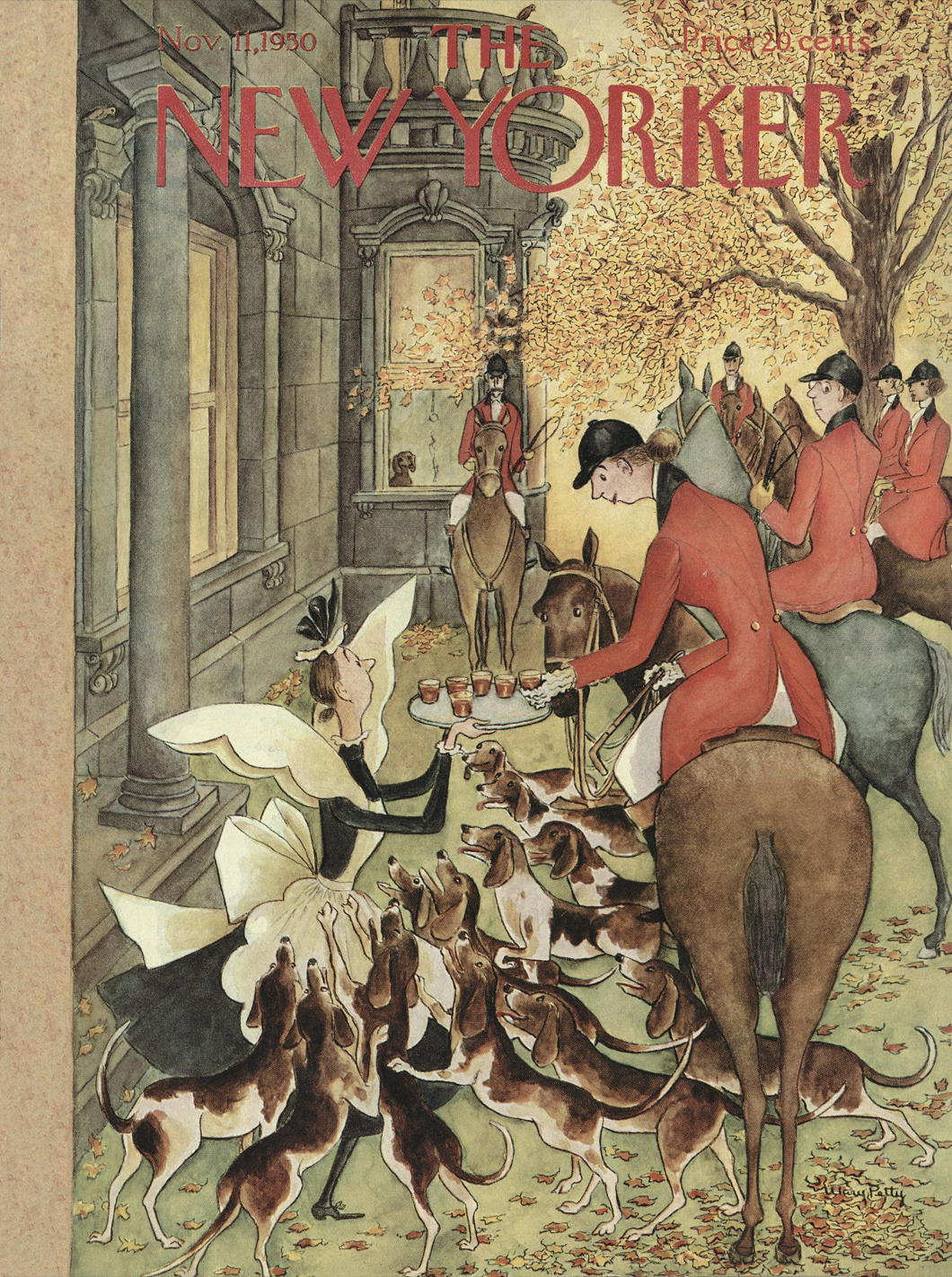
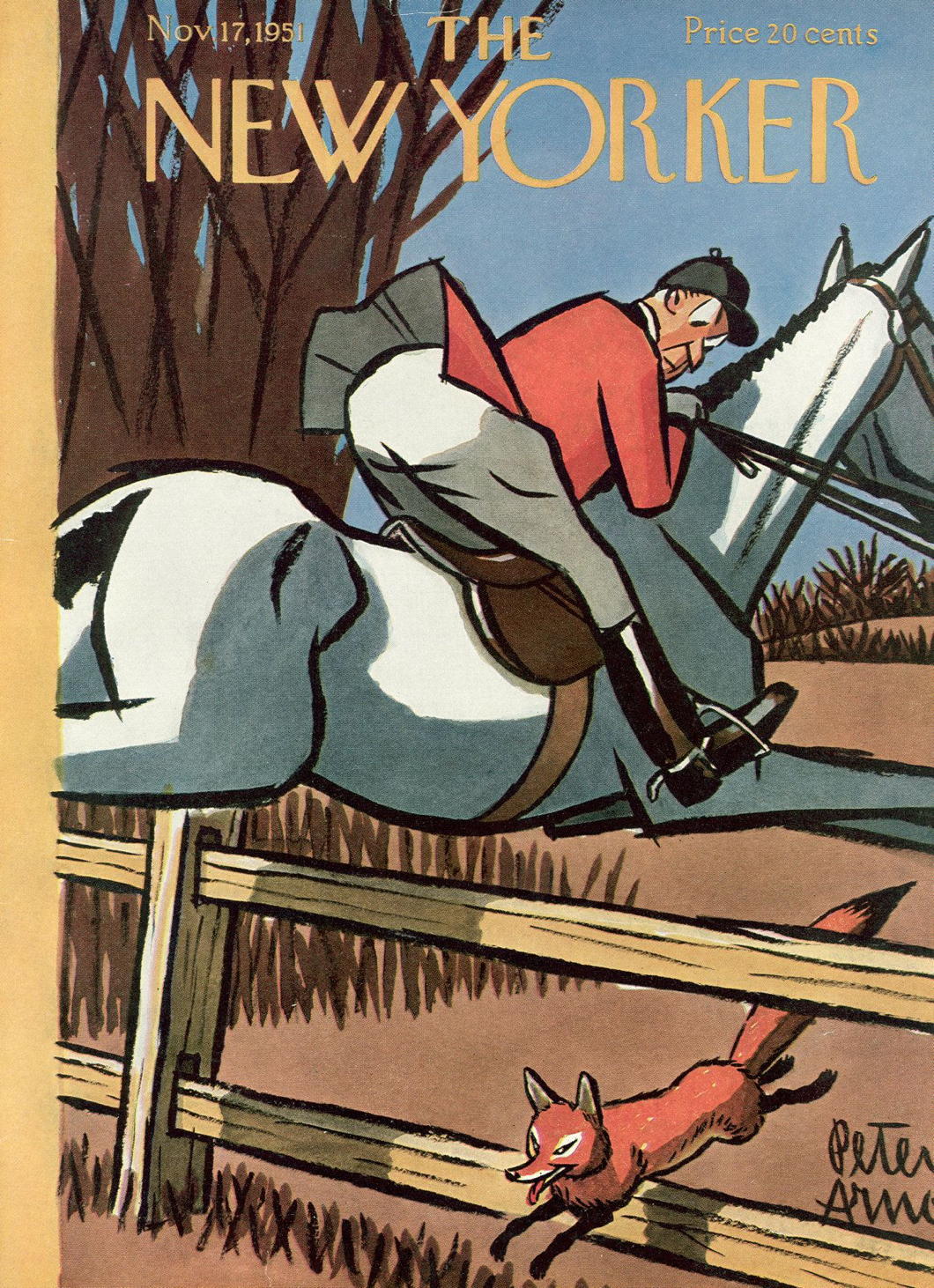
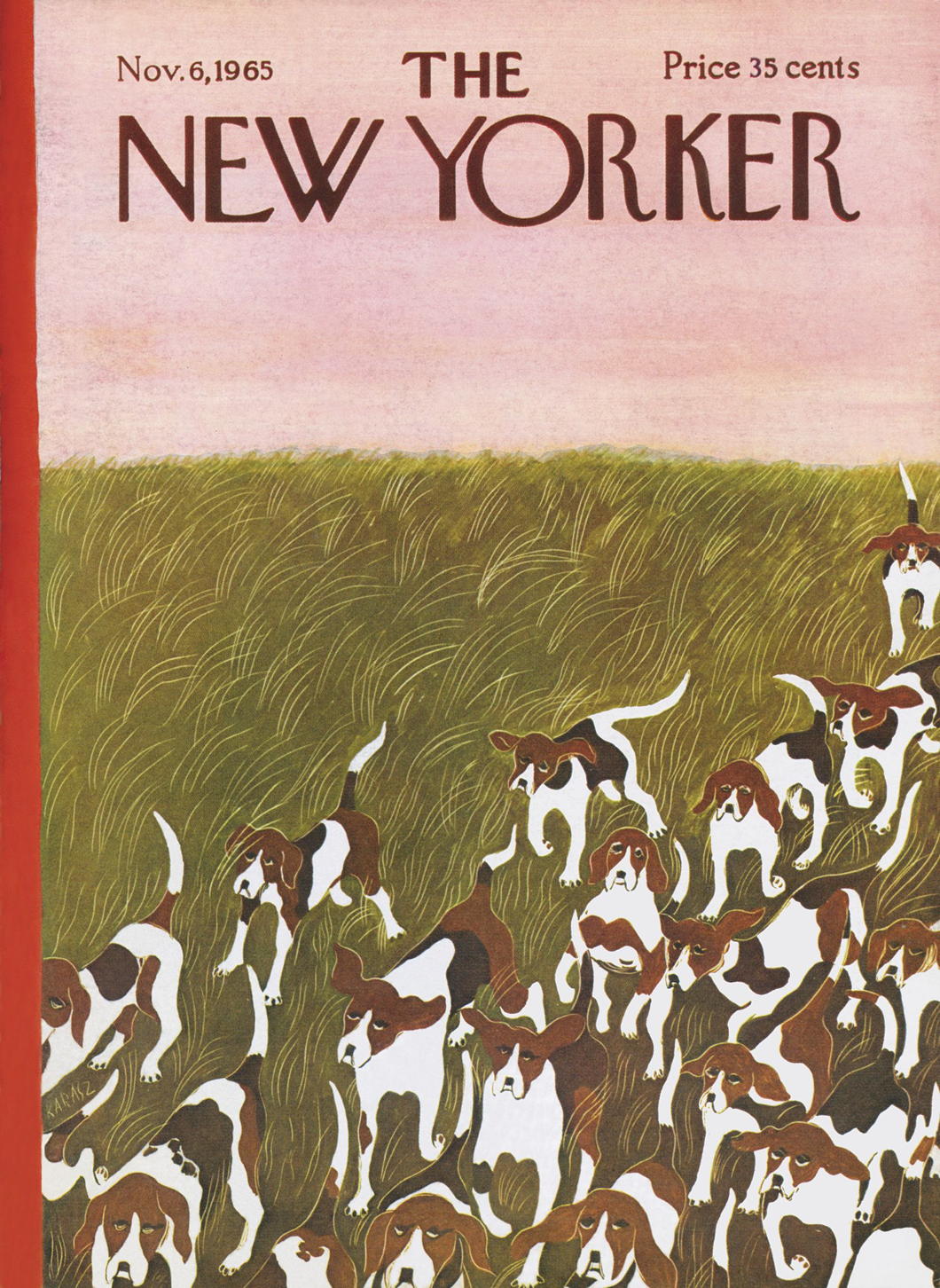
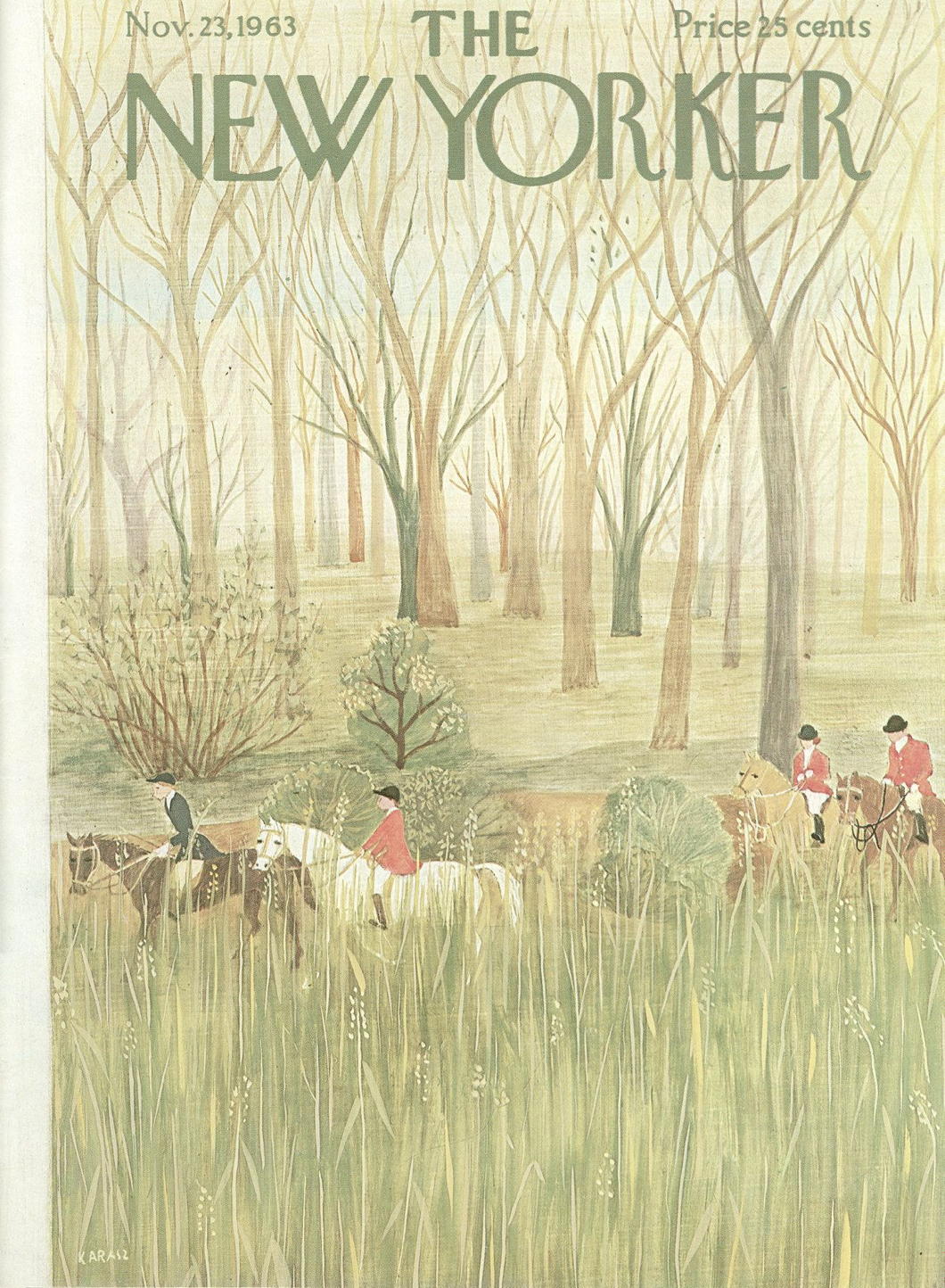
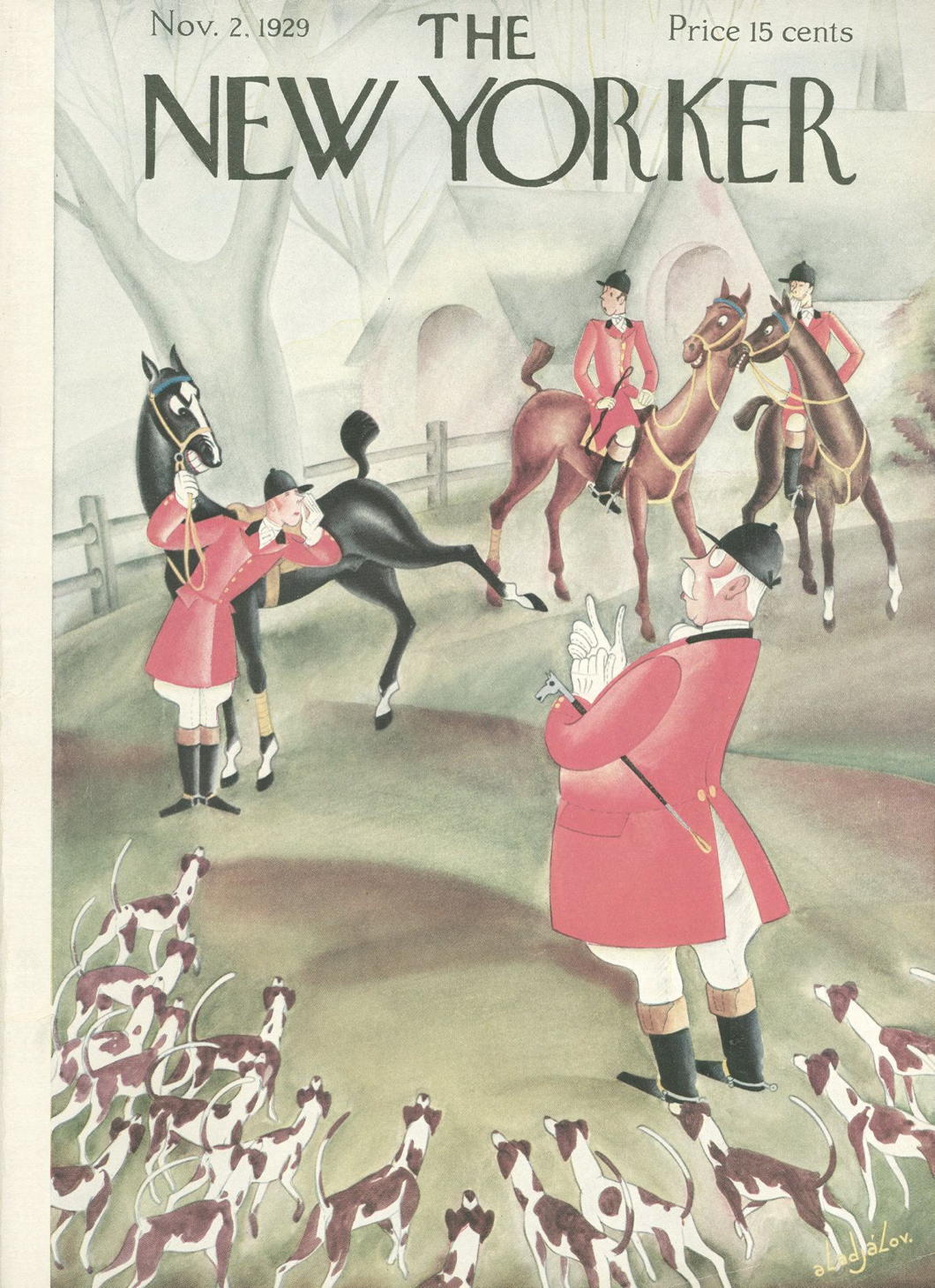
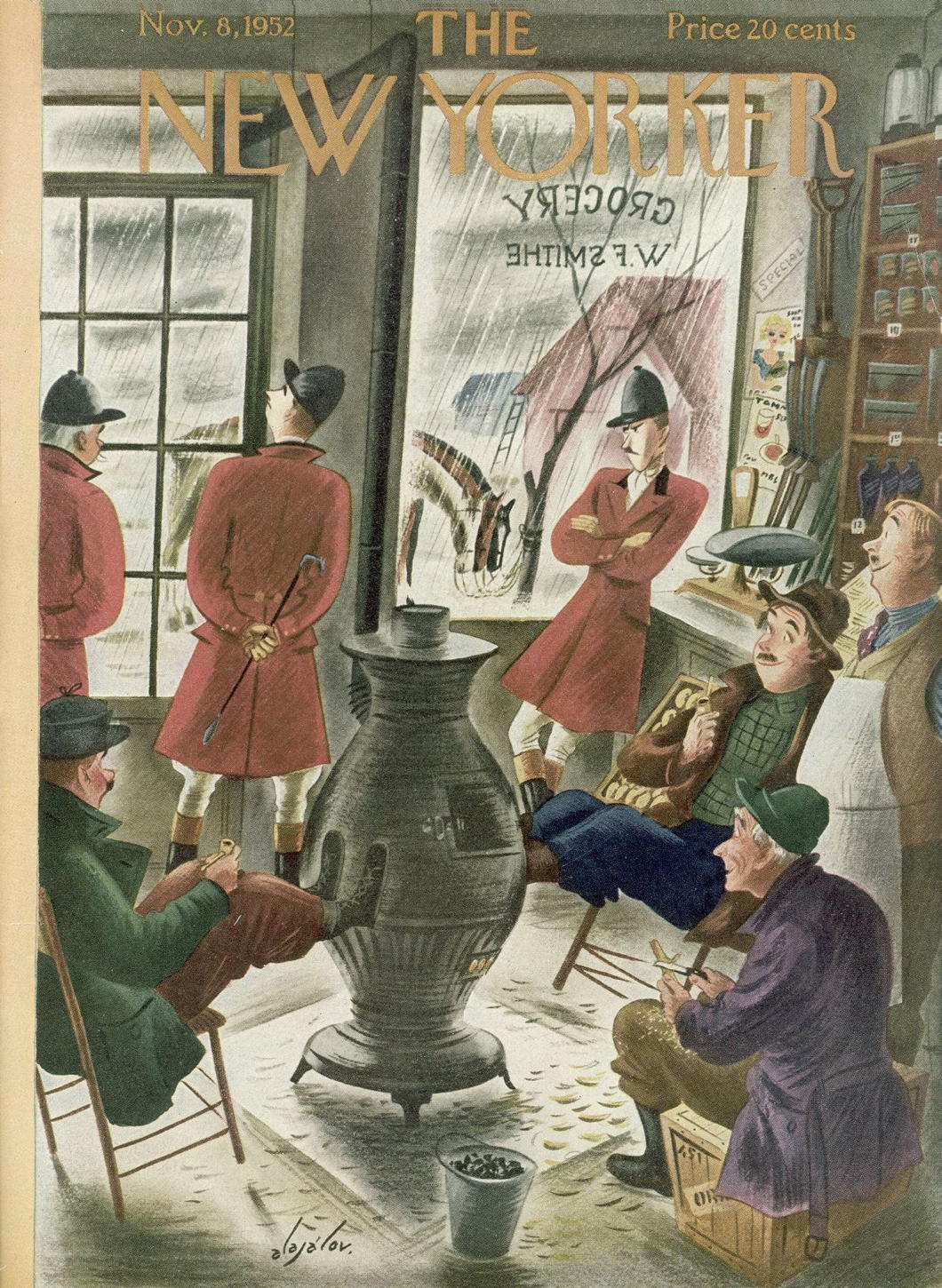
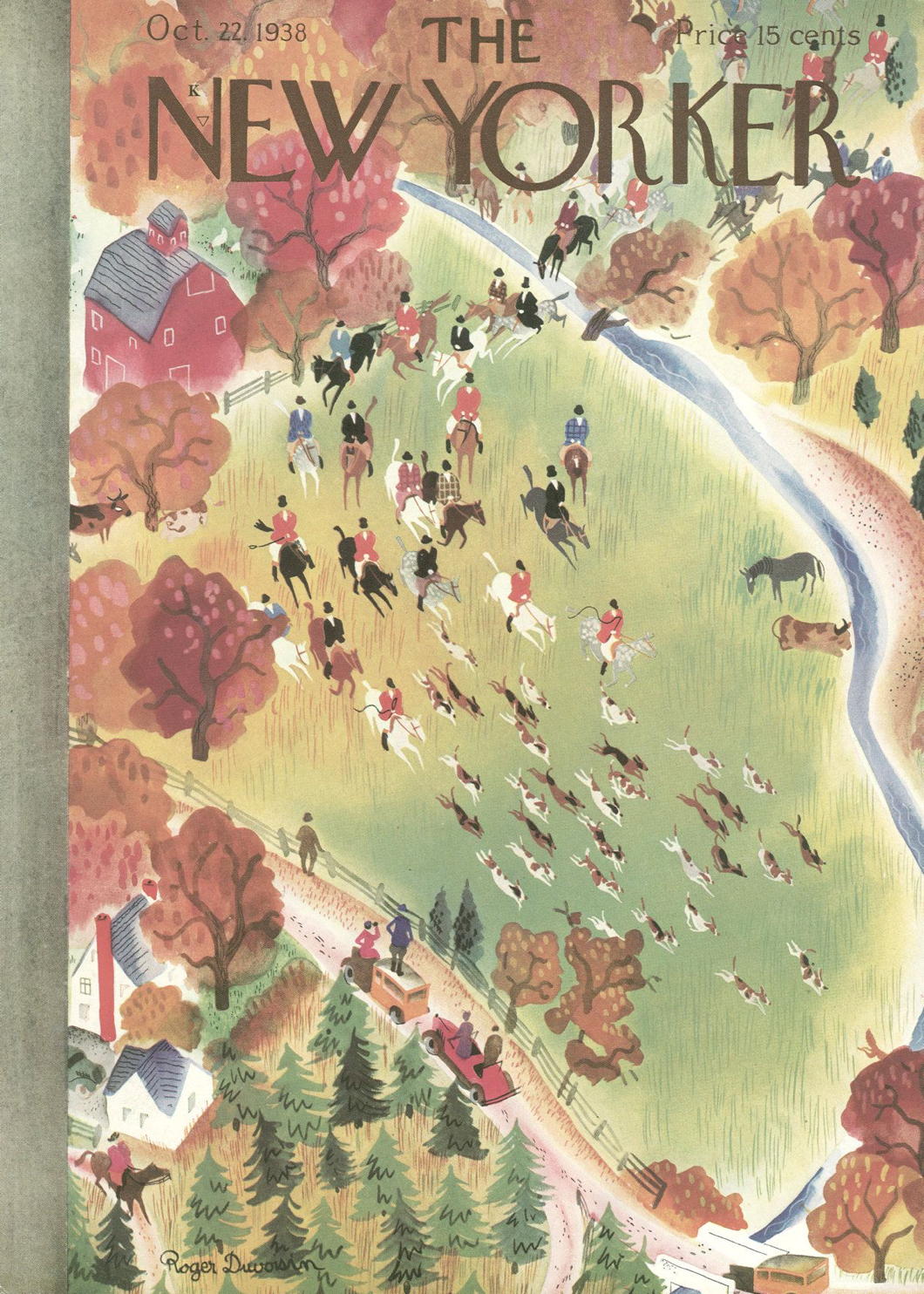
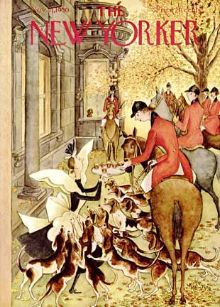
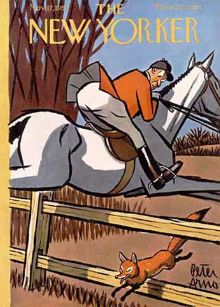
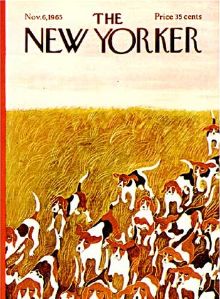
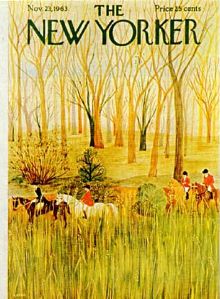
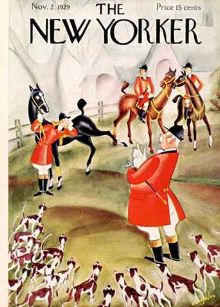
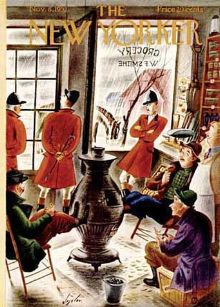
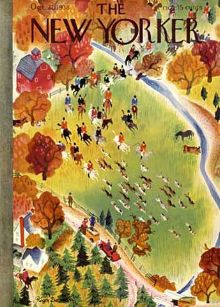
Still, hunting loomed large enough in the imagination that it featured on the front cover of The New Yorker with some regularity.
Indeed the very week of the Kennedy assassination, houses up and down Manhattan and the whole East Coast would have had their copy of the magazine with a hunting scene front and centre. (President Kennedy did ride, but of the two of them it was the First Lady who was keener on the hunt.)
Here are just a few of the covers I’ve found.
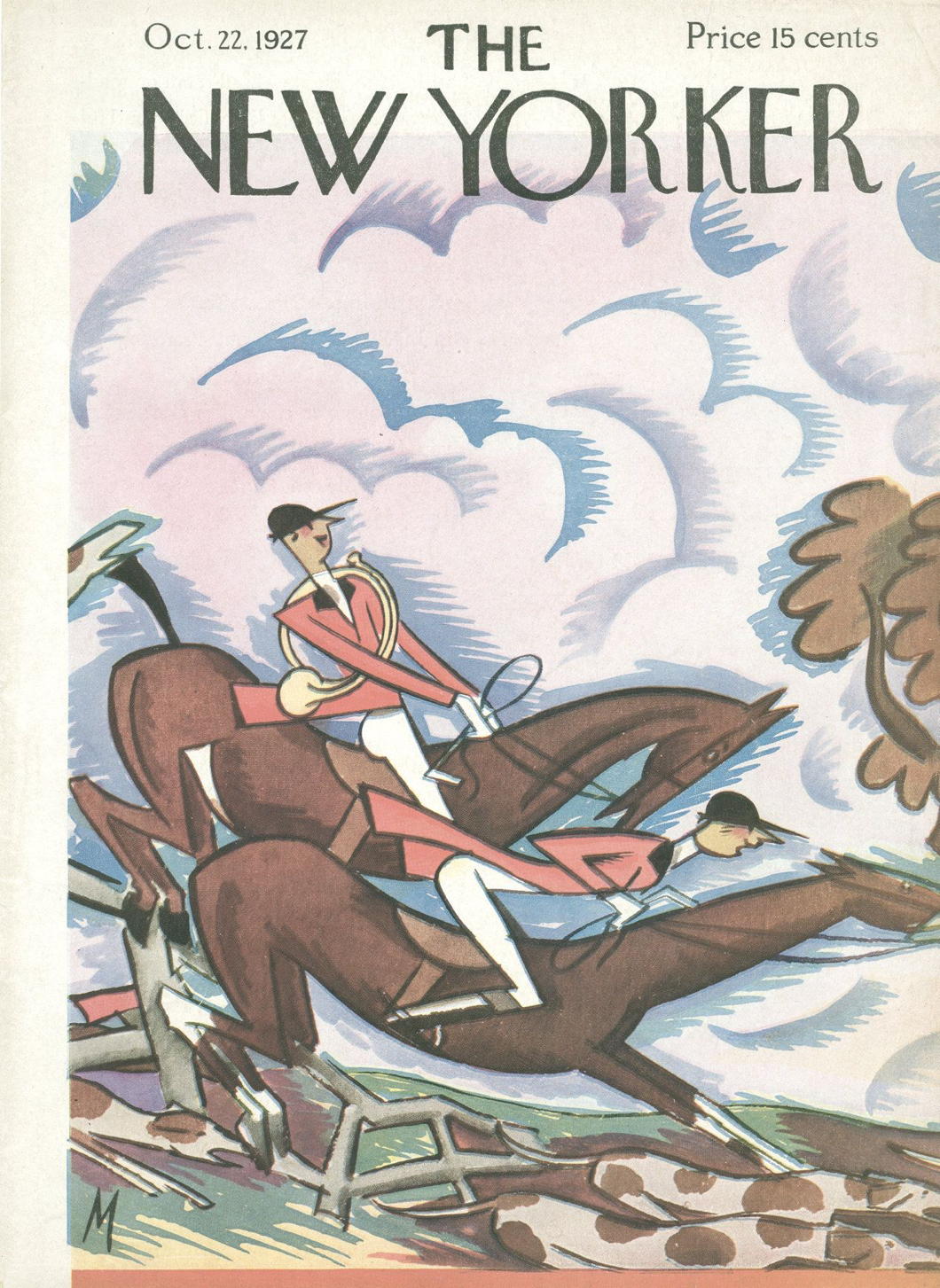
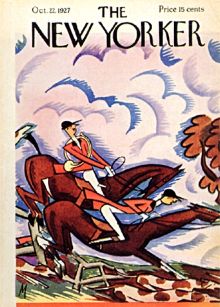


Tally Ho, Empire State!
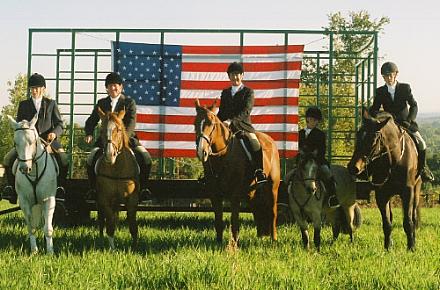
Much was made over the recent start of the hunt season here in the United Kingdom in spite of Comrade Blair’s ban, but New Yorkers mount their horses a little earlier. Above, a few members of the Windy Hollow Hunt in front of Old Glory.
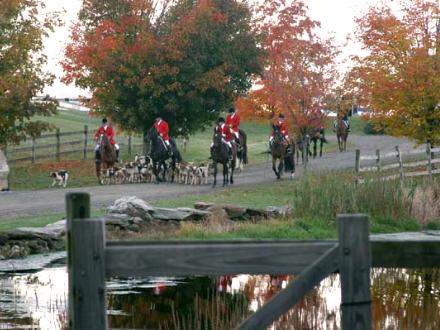
The Rombout Hunt, in the Hudson Valley.

This little fellow from Long Island’s Smithtown Hunt wants out so he can hunt down that dagnabbed fox!
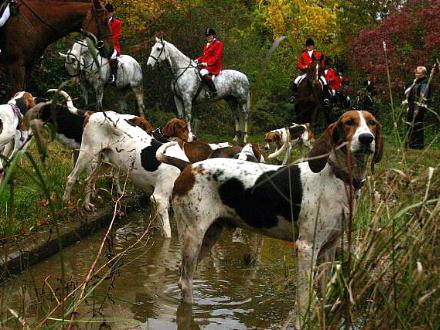
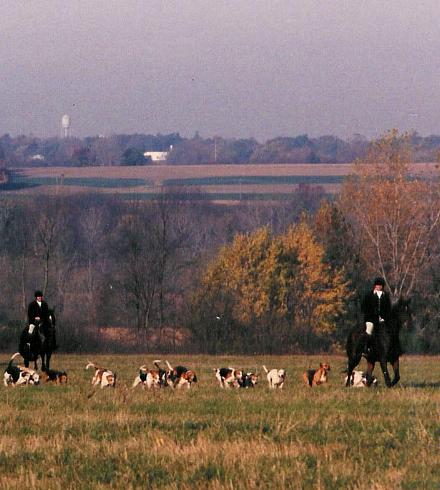
The Smithtown Hunt in the field.
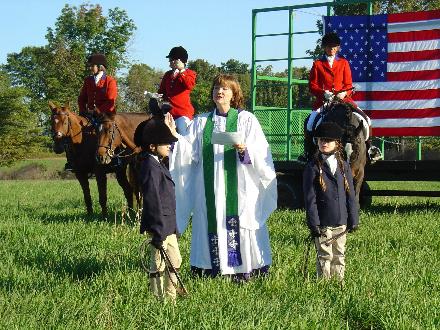
Of course not all things stay the same. This year Orange County’s Windy Hollow Hunt got a lady to perform the annual Blessing of the Hounds.
One of my favorite New Yorker cartoons has to do with the Blessing of the Hounds. I can’t find it online, so I’ll wait until I’m home and then scan in it for your enjoyment.
Below, the Genesee Valley Hunt.
A Westchester Country House
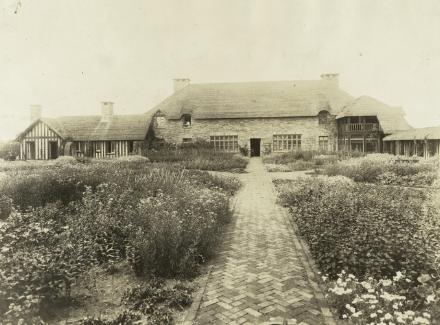
I’ve never heard of nor seen this house before. Unfortunately NYPL titles it merely as “A Westchester County Country House”. Not very helpful. I wonder if it’s still around. I rather like it. It has a nice simple, warm, cozy feel to it.
UPDATE: John Massengale informs us: “This is a house by Harrie T. Lindeberg. There’s a monograph of his work here. I haven’t looked at the book in a long time, but this might be the Stillman house in Pocantico Hills. Stillman was married to a Rockefeller, and the house is on the Rockefeller land there.”
The Church of the Intercession
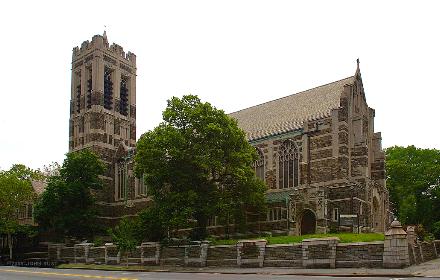
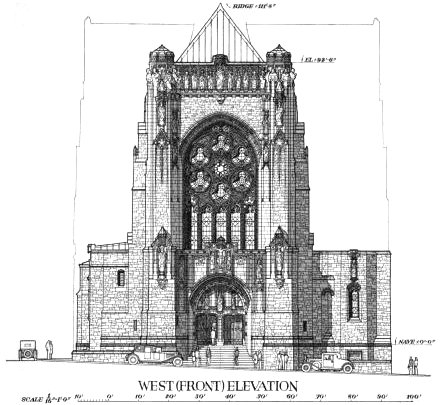
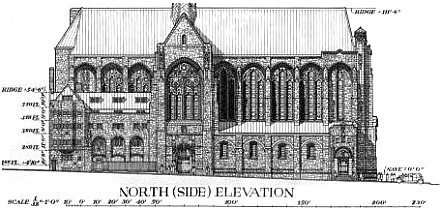
BERTRAM GROSVENOR Goodhue considered the Church of the Intercession at 155th Street and Broadway in New York his masterpiece. Being one of the greatest American architects ever, Goodhue knew what he was talking about, and the Church is undoubtedly one of his best. He was one of the last great American creators, a modern architect working within the great tradition. (Art deco, the style in which Goodhue’s award-winning Nebraska state capitol was built, was perhaps the last style within the tradition until a few post-modernists took their stab at reconnecting with the past). (more…)
Old Guardsmen
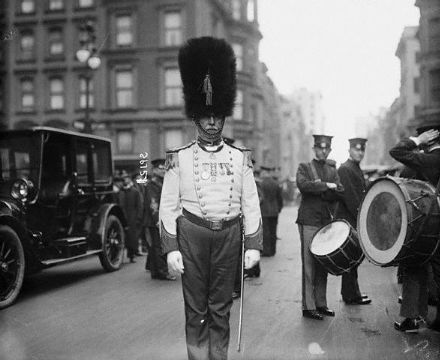
Ardolph Loges Kline, one of my grandfather’s predecessors as Commander of the Old Guard of the City of New York, on the 89th Anniversary of the Old Guard, April 22, 1915. Kline was the acting Mayor of New York who started the annual tradition of lighting the Christmas Tree in City Hall Park (or ‘holiday tree’ as it is now officially called). This ceremony has since been eclipsed in popularity by the Rockefeller Center tree lighting, but still takes place every year.
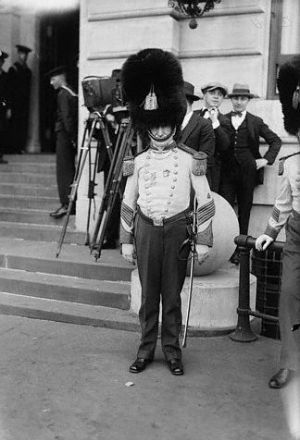
Here we have C.H. Heustis on his 85th birthday in 1922. Heustis served in General Burnside’s brigade during the Civil War, later becoming a broker on Wall Street. He never missed a single meeting or parade of the Old Guard once he joined.
From the Bettmann archive.
Previously: The Old Guard | Grandpa
Chauncey Devereux Stillman
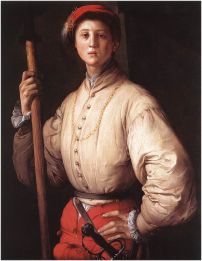 by Rev. George W. Rutler (via CERC)
Of wealth and war, Chauncey Devereux Stillman (1907-1989) knew much and said little.
In his country home in Dutchess County, now a museum he endowed, is a youthful portrait that makes it easy to imagine Chauncey in Paris in the Roaring Twenties. In 1942, the future commodore of the New York Yacht Club donated his gorgeous flagship Westerly as a patrol boat on the lookout for German submarines.
Schools and charities flourished by his philanthropy, especially after his embrace of Catholicism. The Gentleman of His Holiness was an efficient cause of many of the Church’s most vigorous new academic and cultural institutions.
The last Mass he heard was in his Madison Avenue apartment, and his whispered request of me was that the sign of peace be omitted “because the butler finds it awkward.” … Continue in full
The Old Guard
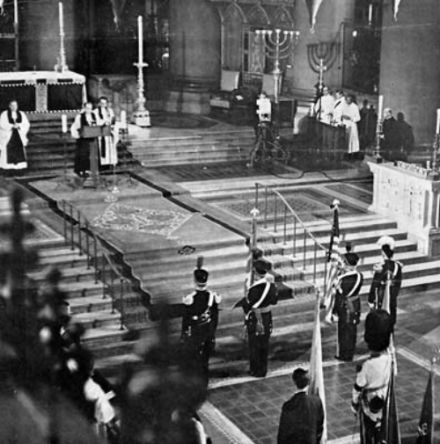
The above photograph shows a 1963 service in the Cathedral of St. John the Divine, New York. Closest to the sanctuary are four members of the Veteran Corps of Artillery, State of New York, but behind them can be scene a member of the Old Guard of the City of New York. The VCA, of which my Uncle Matt (a frequent commenter upon this site) is a member, is older, being founded in 1790. The Old Guard dates from 1826, and Uncle Matt’s father (my grandpa) was Commadant of that august group. There’s a great photo of my father as a small child gazing up at his father in Old Guard uniform including the tall bearskin busby. Perhaps Pop will scan it sometime, else I will get around to it when I’m back in the States.
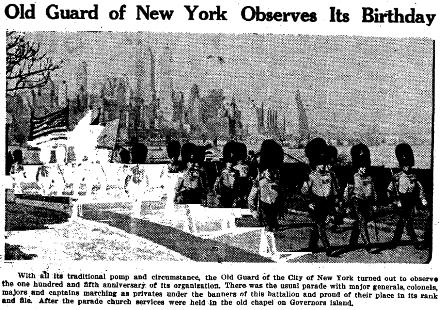
With all its traditional pomp and circumstance, the Old Guard of the City of New York turned out to observe the one hundred and fifth anniversary of its organization. There was the usual parade with major generals, colonels, majors, and captains marching as privates under the banners of this battalion and proud of their place in its rank and file. After the parade church services were held in the old chapel on Governors Island.
(A bad copy from The Sun, Fort Covington, NY, 1931)
Search
Instagram: @andcusack
Click here for my Instagram photos.Most Recent Posts
- Brunel’s Unbuilt Capitol February 3, 2026
- Cricket at Fordham January 27, 2026
- Palacio Barolo Revisted January 14, 2026
- Learning to Love Liguria January 14, 2026
- Crux Alba No. 2 January 13, 2026
Most Recent Comments
Book Wishlist
Monthly Archives
Categories