World
About Andrew Cusack
 Writer, web designer, etc.; born in New York; educated in Argentina, Scotland, and South Africa; now based in London.
 read more
News
Blogs
Reviews & Periodicals
Arts & Design
World
France
Mitteleuropa
Knickerbockers
Argentina
The Levant
Africa
Cape of Good Hope
Netherlands
Scandinavia
Québec
India
Muscovy
Germany
Academica
Cricket at Fordham
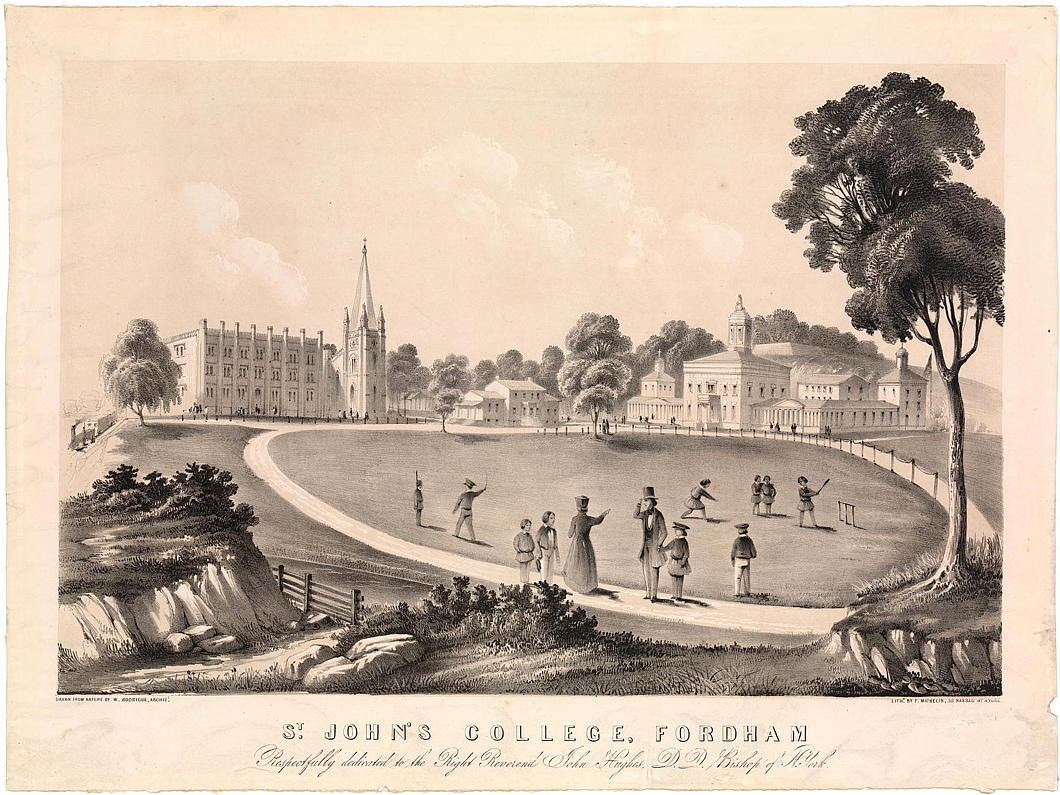
Because it was eclipsed by baseball, an infinitely more indigenous pastime, people often forget that cricket was quite a widespread and popular sport in the United States. It wasn’t until the Civil War that baseball really took over, aided by its shorter play time and the wider national mood. (Doubtless someone has, or will, write a scholarly article on this.)
It survived a few generations more as something of an elite sport, more strongly in Philadelphia and its environs, as well as in colleges and universities. The interwar period pretty much killed it off, only to be revived in interest amongst Americans by seeing it played by urban immigrant communities from the West Indies and the Subcontinent. The last time I checked there was even a cricket oval being laid out on the banks of the Mohawk river, across from the farm Jan Pieterse Mabee purchased from Daniel Janse Van Antwerpen in 1705.
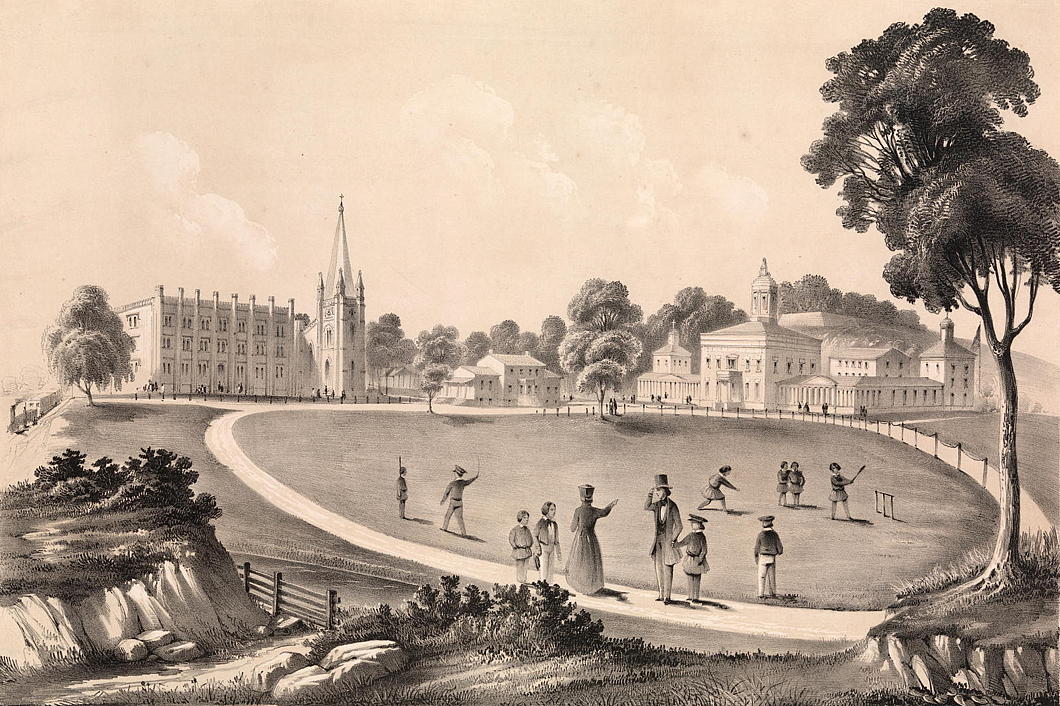
This charming rustic scene shows children playing cricket on the grounds of St John’s College, Fordham, with a priest speaking to a gentleman out on a constitutional with his son. As the college advertised itself in an early prospectus:
This institution, incorporated with the privileges of a university by an act of the Legislature, is situated near the village of Fordham, in a most picturesque and healthy part of the county of Westchester, at a distance of about eleven miles from the city of New York and three from Harlem. It is of easy access at any season of the year, by private conveyance or by the railroad, which passes immediately along the borders of the beautiful lawn in front of the college. The buildings are large, elegant and commodious; the grounds extensive and tastefully laid out.
This part of the Bronx remained within Westchester until 1874, when the parts west of the Bronx River were added to New York County. The remainder of the Bronx was ceded in 1895 and was created a borough of the consolidated City of New York in 1898, though only erected as its own county in 1914 (minus Marble Hill, which is another story entirely).
The engraving was drawn by William Rodrigue, a Philadelphia architect who later became associated with New York’s James Renwick, the designer of Grace Church and St Patrick’s Cathedral. Rodrigue auspiciously married the sister of one Fr John Hughes, who became Bishop of New York in 1842 — and the first Archbishop when the see was raised to metropolitan status in 1850.
St John’s College, now Fordham University, was one of Hughes’ pet projects, and perhaps unsurprisingly Rodrigue was chosen to design many of the earliest college buildings on the former Rose Hill estate, in addition to teaching mathematics, geometry, and drawing. He lived with his family in an outbuilding on the estate that now houses a coffee shop named “Rod’s” in his honour and his sons were among the earliest students of St John’s.
The first buildings Rodrigue completed were the chapel and the residence, the latter of which is still known as St John’s and forms one of the three sides of Queen’s Court, now a residential college within the university. The chapel benefited from stained-glass windows donated by the King of France for the (currently flourishing) old St Patrick’s Cathedral but which were found to be the wrong size and so incorporated into what is now the University Church.
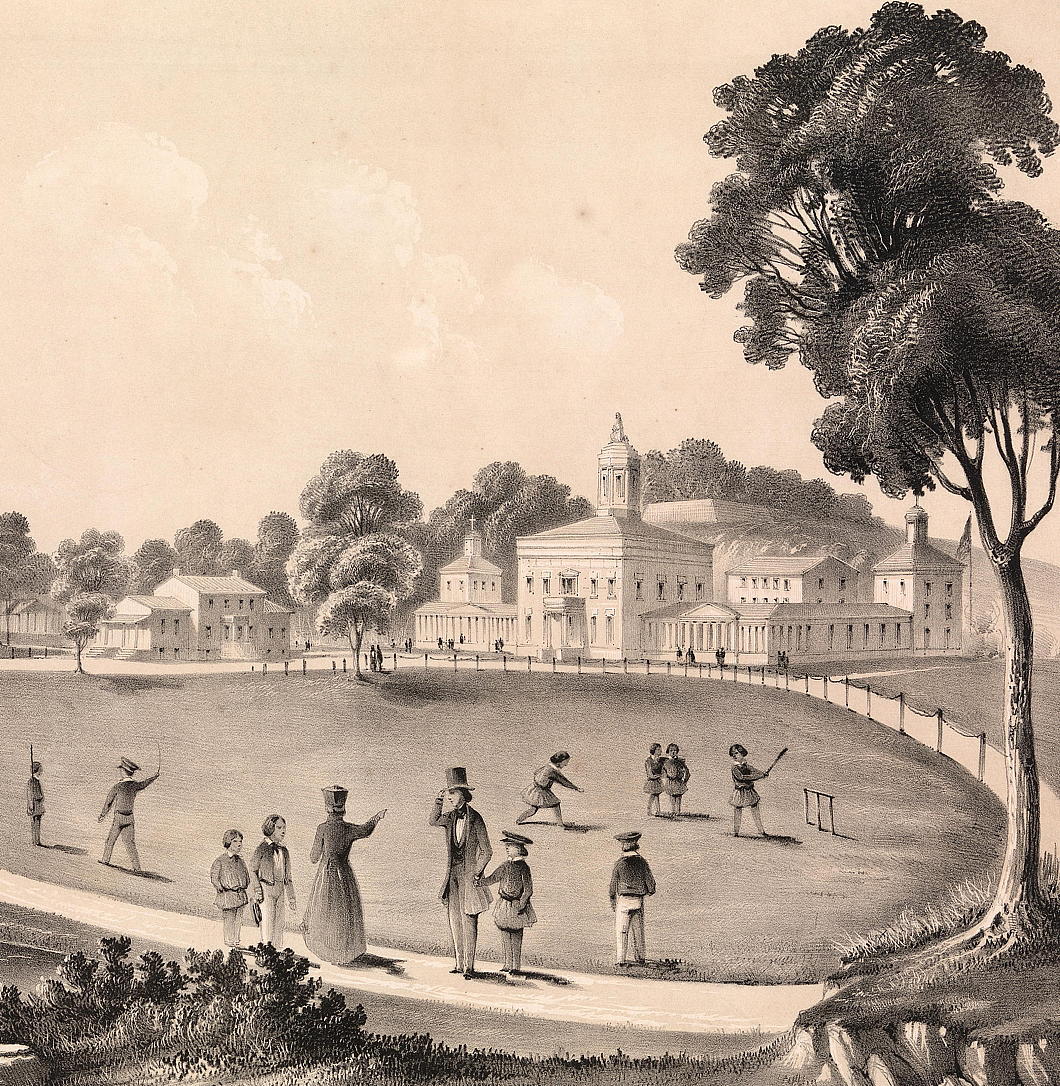
The building in the right background of the view was the main house of the Rose Hill estate purchased by Bishop Hughes. For a long time it was known as the Administration Building or the Manor House, though as it dates from the 1830s it has no direct connection to the Manor of Fordham granted to Jan Arcer by Governor Lovelace in 1671 (other than sitting on the land of it). More recently it was renamed Cunniffe House thanks to the generosity of Maurice J. “Mo” Cunniffe, Fordham Class of 1954. The wings have been much altered but the central block of the house remains largely intact.
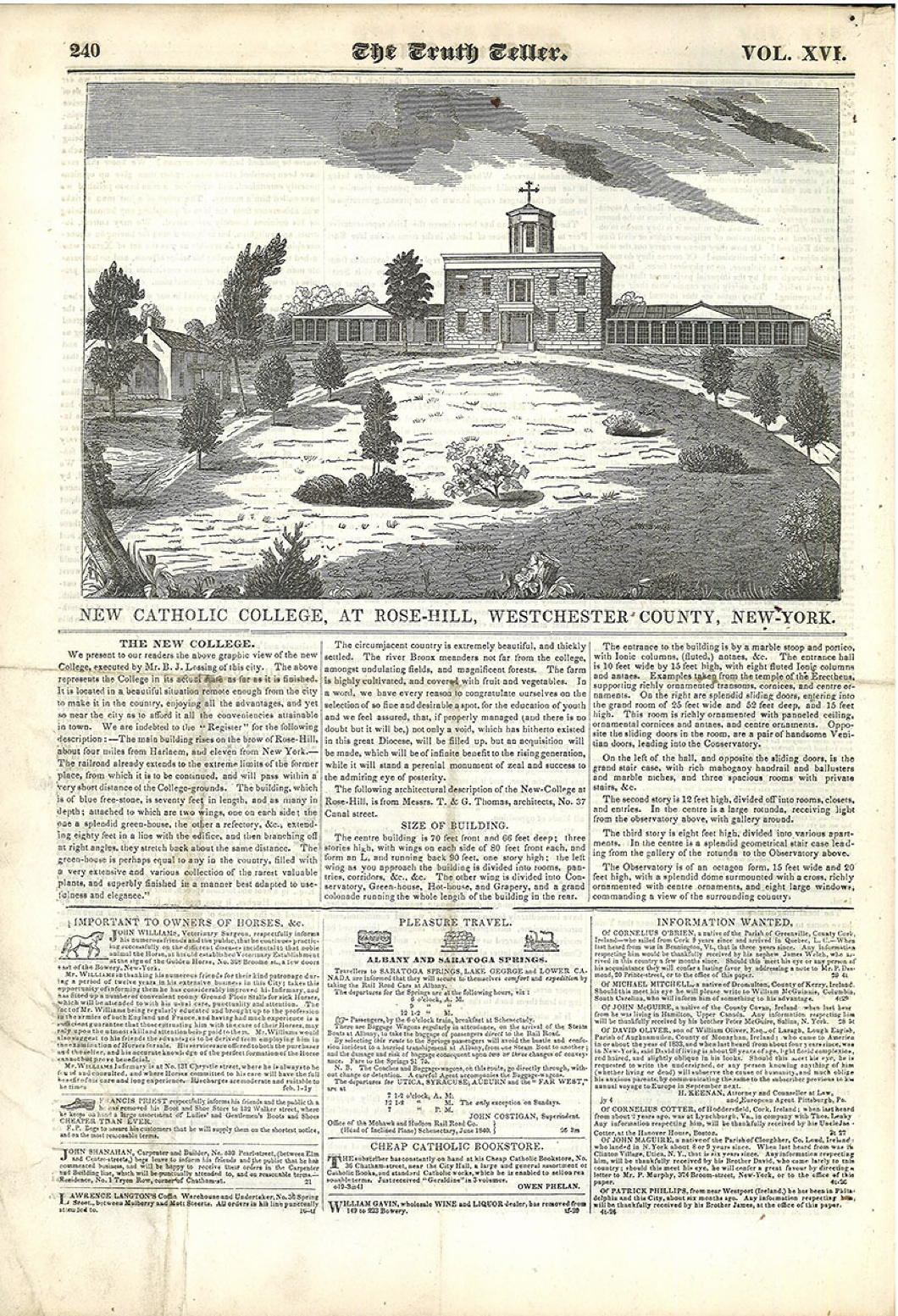
In 2019, the university’s emeritus professor of history, Dr Roger Wines, discovered the earliest known image of the institution while sifting through periodicals at the Philadelphia archdiocese’s research centre.
“It is located in a beautiful situation remote enough from the city to make it in the country,” the accompanying text in The Truth Teller, an early Catholic newspaper of New York, explained, “enjoying all the advantages, and yet so near the city as to afford it all the conveniences attainable in town.”
“The circumjacent country is extremely beautiful,” it continues. “The river Bronx meanders not far from the college, amongst undulating fields, and magnificent forests. […] We have every reason to congratulate ourselves on the selection of so fine and desirable a spot for the education of youth.”
The writer assures the college “will stand a perennial monument of zeal and success to the admiring eye of posterity”.
Palacio Barolo Revisted
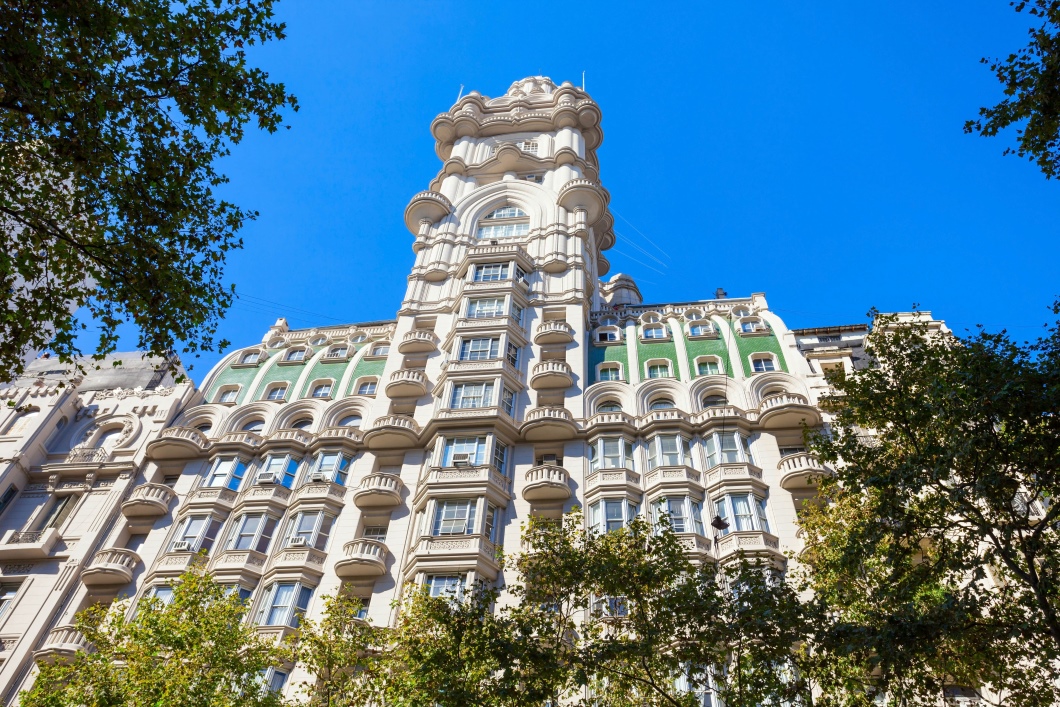
Assiduous readers may recall my posting about the Palacio Barolo, the mad Buenos Aires skyscraper that was conceived as a monument to the genius of Dante.
In a recent entry of Kit Wilson’s excellent Eclectic Letters, novelist (and recent ‘Foidcast’ guest) Thomas Peermohamed Lambert recalls this eccentric edifice:
Palacio Barolo is not my favourite building aesthetically — depending on my mood, that accolade might go to one of Le Corbusier’s Assembly building Chandigarh, or Westminster Cathedral, or the Duomo di Monreale, or the Nakagin Capsule tower — but no other building has lodged itself quite so firmly in my soul. I first visited it in 2018, while I was living in Buenos Aires. Someone mentioned to me that a few blocks from the drab neoclassical Congressional Palace resided the former tallest building in South America, designed by a mad Italian architect to accord with the cosmology of Dante’s Divine Comedy. I had to go.
Palacio Barolo is wonderful enough from the outside: it has a mad, Art Nouveau energy that reminds me, bizarrely, of Brussels. But its interior is even better. Its lobby is lit by orange-glowing pits that are meant to look like Hell’s lowest circles; there are statues of monsters, gargoyles, and pretty much every doorway has some kind of masonic symbol on it. Because labour is cheap in Buenos Aires, the place is also massively and confusingly over-staffed: there are uniformed people buzzing around you, ushering you into clanking iron lifts and up astonishingly decorated staircases whether you ask them to or not. At the top of the building is a completely pointless lighthouse beacon, included for the sole purpose of seeming divine and celestial, and one of the best views of Buenos Aires you’ll ever see.
The Long Homecoming of Eliza Monroe
A presidential daughter is reunited with her parents
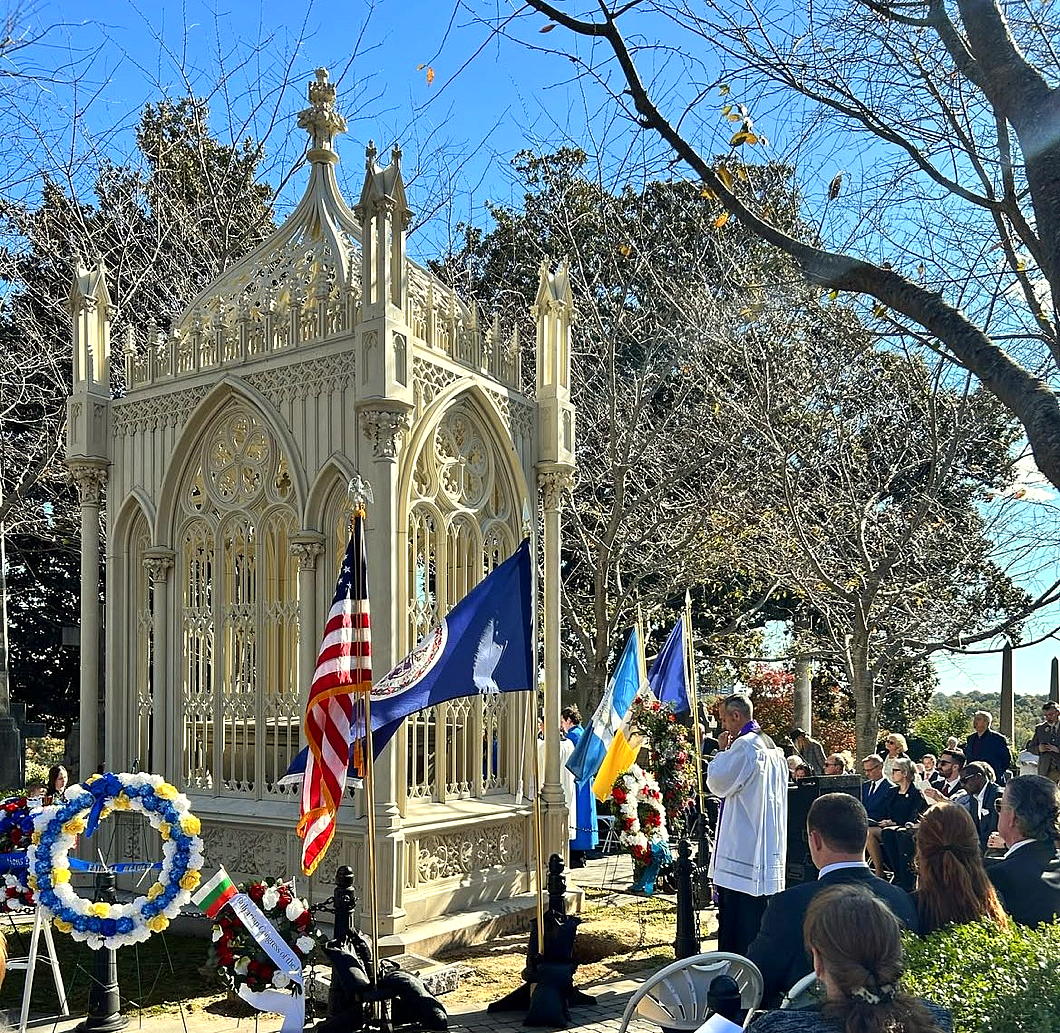
Nearly one hundred and eighty-five years after her death in Paris, the mortal remains of Eliza Monroe Hay — daughter of the fifth President of the United States — have been laid to rest in Richmond, Virginia. Her reburial beside her parents President James Monroe and First Lady Elizabeth Monroe marks the end of a long and curious chapter in the history of this illustrious American family.
The return of Eliza’s remains was the work of Barbara VornDick, a retired Virginia educator who spent more than a decade tracing Monroe descendants, searching archives and navigating French and American bureaucracy.
Working with the U.S. Embassy in Paris and the Diocese of Richmond, VornDick secured the exhumation and transport of Eliza’s remains from an unmarked Parisian grave to the family plot.
The Holy Sacrifice of the Mass was offered for the repose of Eliza Monroe Hay’s soul at the Cathedral of the Sacred Heart before the re-interment in Hollywood Cemetery on 23 October 2025.
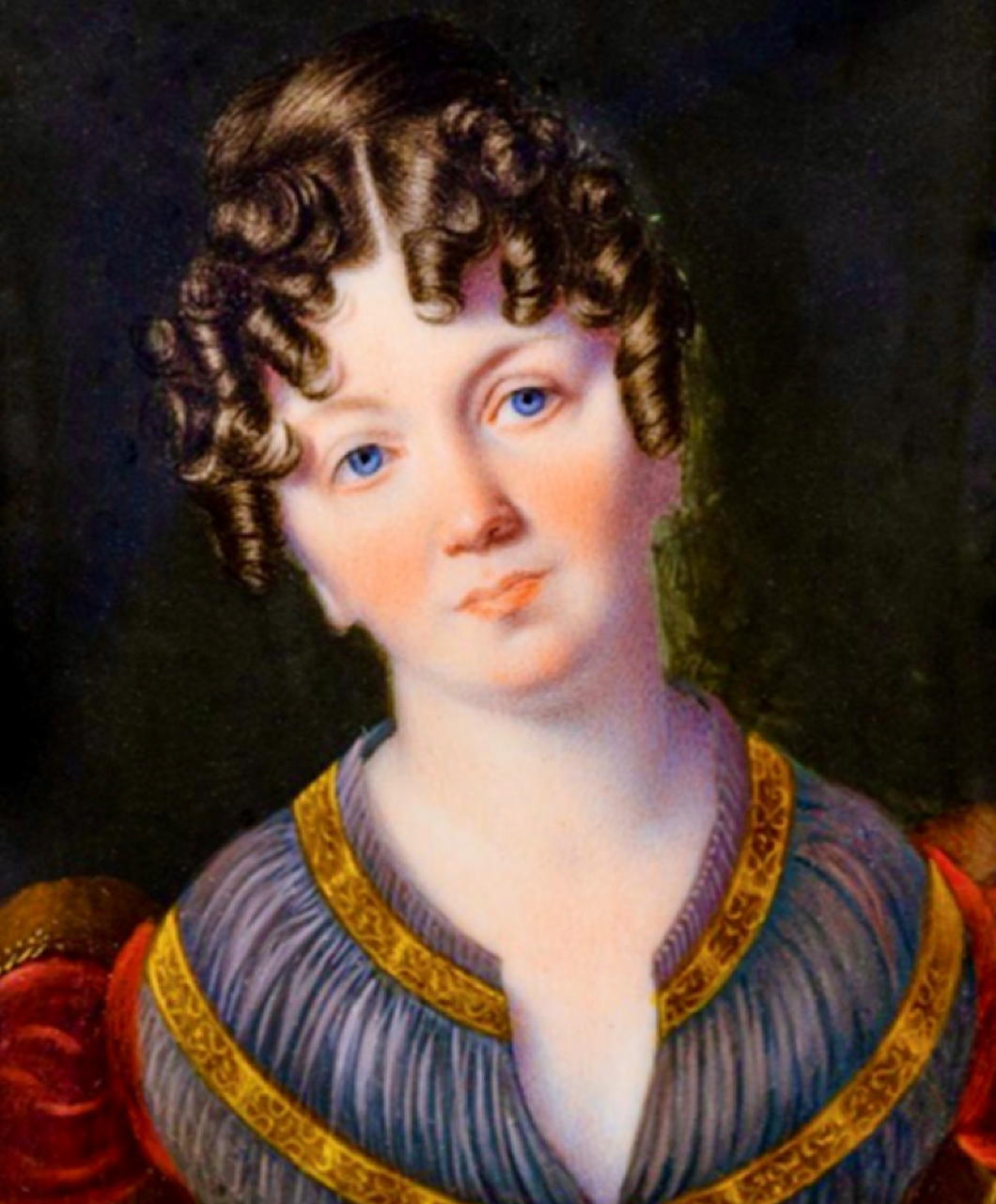
Born in Fredericksburg in 1786, Eliza Kortright Monroe grew up between Virginia and revolutionary France, where her father served as U.S. minister (as ambassadors were generally called then). A great part of her education took place in Paris where became accustomed to the courtly formality of Europe. Among the friends she made was Hortense de Beauharnais, stepdaughter of Napoleon and eventually queen consort of Holland as the wife of Lodewijk I (Luigi Buonaparte), the Emperor’s younger brother.
When James Monroe became president in 1817, her mother’s poor health led Eliza to assume many of the social duties expected of the chatelaine of the White House. Later commentators sometimes judged her reserved manner harshly, but it reflected both her upbringing and her experience of diplomacy.
In 1808 Eliza married George Hay, a Virginia lawyer best known as the U.S. Attorney who prosecuted Aaron Burr in his trial for treason before Chief Justice John Marshall the previous year. They had one daughter who was christened Hortensia after the mother’s childhood friend who acted as godmother. Hay died in 1830, followed within a year by Eliza’s mother and father.
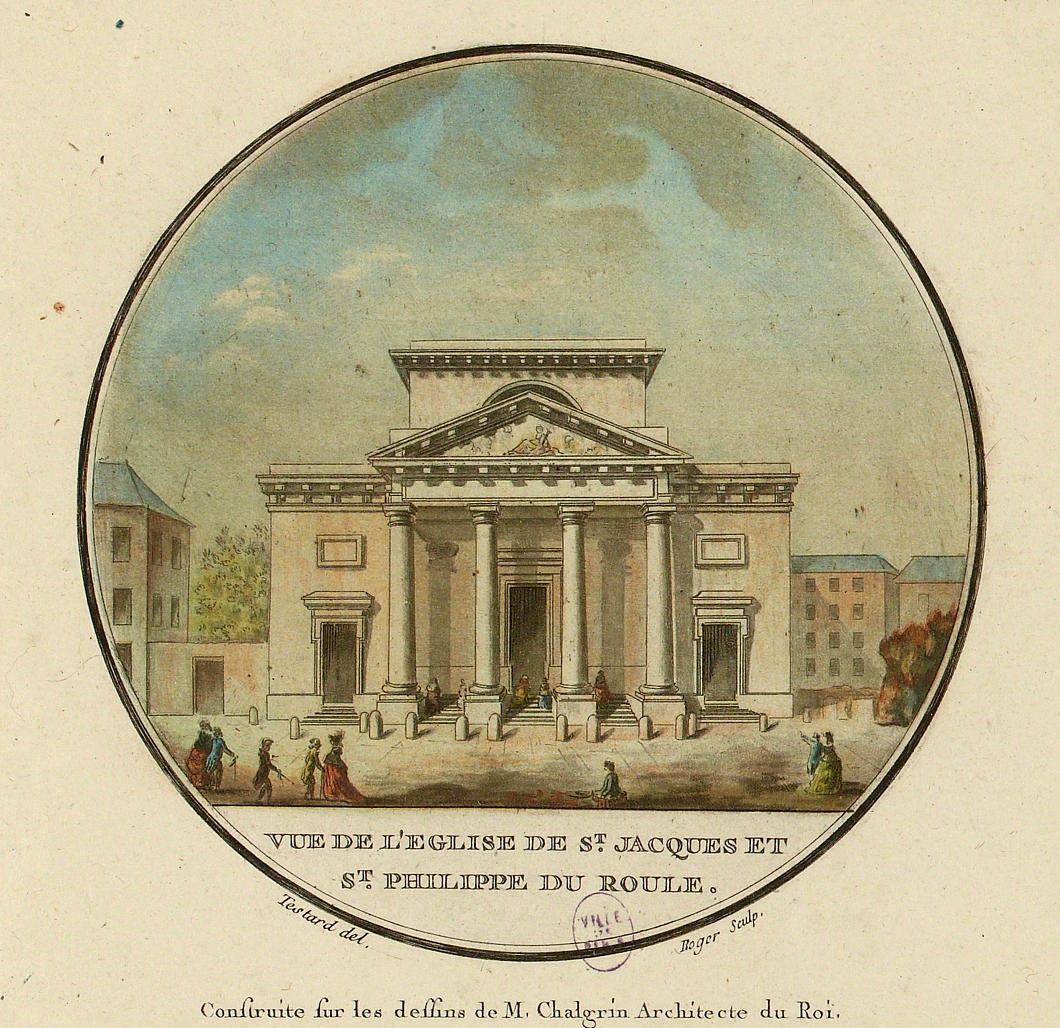
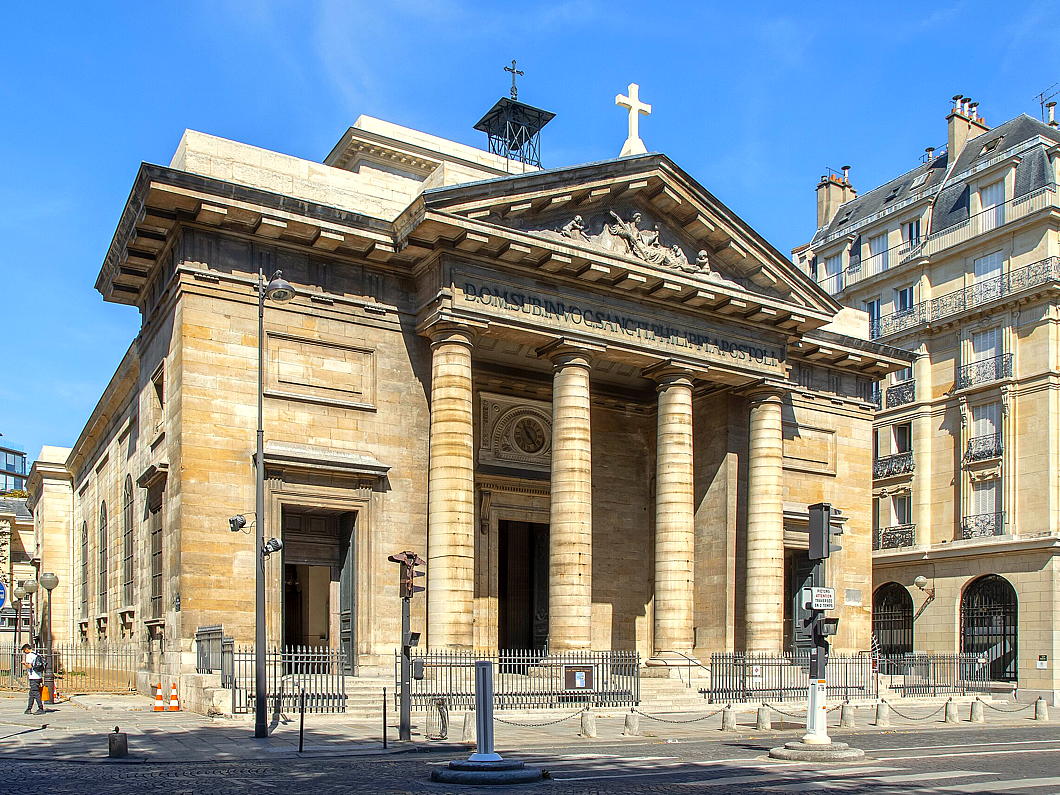
Widowed, grieving, and facing financial difficulty, Eliza returned to Paris, where Louis-Philippe had usurped the throne. Back in the French capital, Eliza embraced the Catholic faith and was received into full communion with the Church. Records identify her as a member of the parish of St-Philippe-du-Roule in the Faubourg Saint-Honoré. In 1833, she went on pilgrimage to Rome where she received a cameo depicting the head of Christ from Gregory XVI’s secretary of state.
Eliza’s final years in Paris were not entirely happy ones. A family member had deprived her of what she thought was her inheritance and she persevered in a state of penury with few possessions. Eliza Monroe Hay died in 1840, with a funeral Mass offered in her parish church and her unmarked grave purchased by the American consul, Daniel Brent.
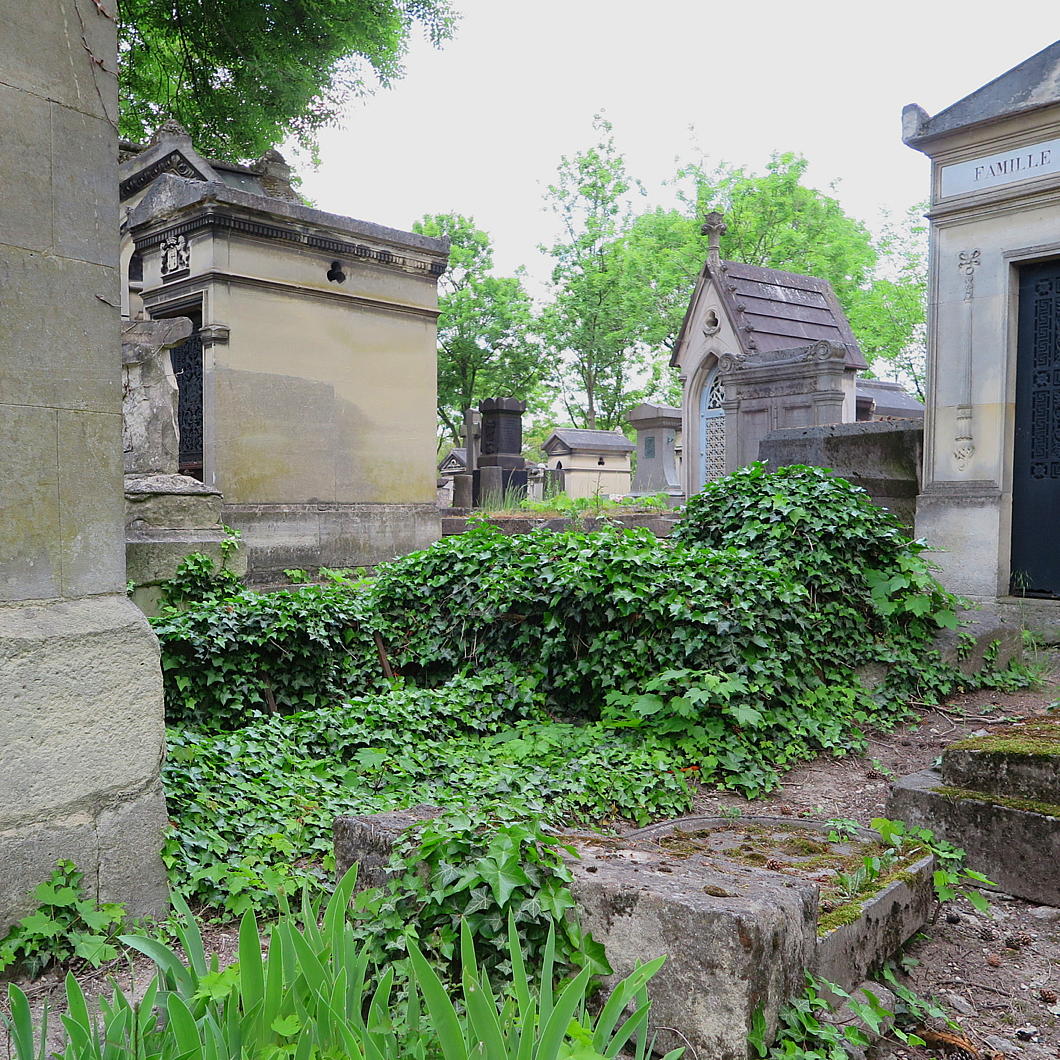
The unmarked grave of Eliza Monroe Hay.
Her memory faded, surviving mainly in family lore. The rediscovery of her letters and her reburial in Virginia have brought her back into view: a woman of faith and dignity, wronged in inheritance, isolated by loss, and now restored to her place among her own thanks to VornDick’s efforts and to her biography Eliza’s True Story: The First Biography of President Monroe’s Eldest Daughter.
For generations a family tradition held that Eliza entered a convent after her conversion. That story appears in some older biographical sketches and even in occasional press references. Recent research — especially VornDick’s examination of Eliza’s correspondence in the archives of the College of William & Mary — has found no documentary evidence that she ever took vows or joined a religious order. The legend of the nun in Paris may have arisen from confusion between her Catholic piety and the religious circles she frequented.
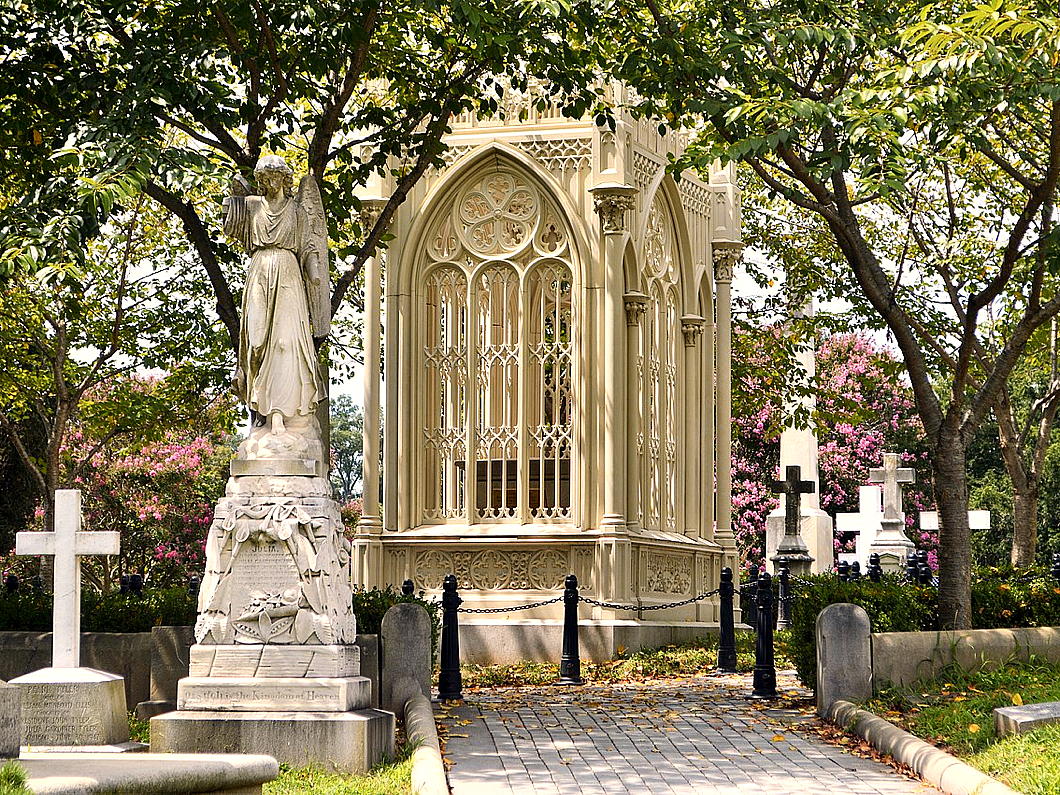
The new resting place is beside hr father’s Gothic tomb — a birdcage of traceery designed by Albert Lybrock in 1859, arches emerging like a filigree chapel above the President’s grave, but in cast-iron painted the colour of stone. The striking funerary monuments now shelters not only the nation’s fifth president but his daughter as well.
The repatriation of Eliza Monroe Hay was not a grand state ceremony but an act of personal devotion. It completes a family story interrupted by distance and time, and restores to American history a figure once nearly forgotten. In the quiet of Hollywood Cemetery, overlooking the James River, the Atlantic divide that once separated the Monroes has finally closed.


College of William & Mary: The forgotten daughter: Eliza Monroe Hay’s story revealed in her last letters
The Brooklyn Tablet: Daughter of President James Monroe Laid to Rest
Catholic News Agency: A Founding Father’s Catholic Daughter is Laid to Rest
Northern Virgina: Author Led Efforts to Rebury Monroe’s Daughter
Wave Hill
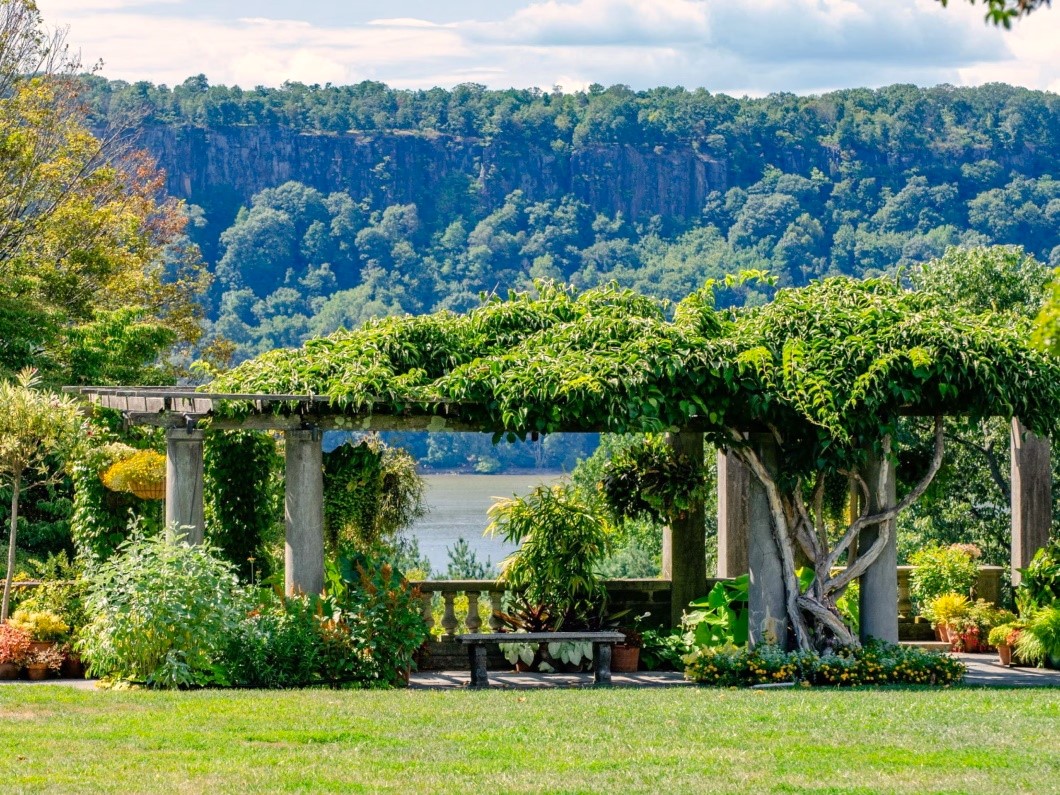
Every few years someone or other ‘rediscovers’ the beauty of Wave Hill, the twenty-eight-acre estate, house — two houses, actually — and garden in the Bronx overlooking the waters of the Hudson River.
This time it is the turn of the Financial Times, who sent Andrew Jack to investigate the domain in the Riverdale neighbourhood of the city’s northern borough:
With trees, lawns and varied and colourful year-round flowerbeds overlooking the river, it feels almost as remote as when it was a lengthy carriage ride from the city for William Lewis Morris, the lawyer who built the original Wave Hill House in 1843.

Theodore Roosevelt spent a summer or two here, as did Mark Twain in the later years of his life. George Walbridge Perkins bought it in 1903 and expanded it to include the adjacent Glyndor House.
The ever-crafty Robert Moses persuaded the Perkins-Freeman family to hand Wave Hill over to the City of New York in 1960, and since then it has been carefully looked after and open to the public for a small charge.
(Those Riverdale residents who are not allowed to handle currency on the Jewish Sabbath are allowed to book and pre-pay for entry thus obtaining access without breaking their observance.)

For the past two years, Pratt landscaping graduate Ray Oladapo-Johnson has been in charge of this verdant realm (photographed here by Beowulf Sheehan).
Head over to the FT to read more.

The New Yorker Rows

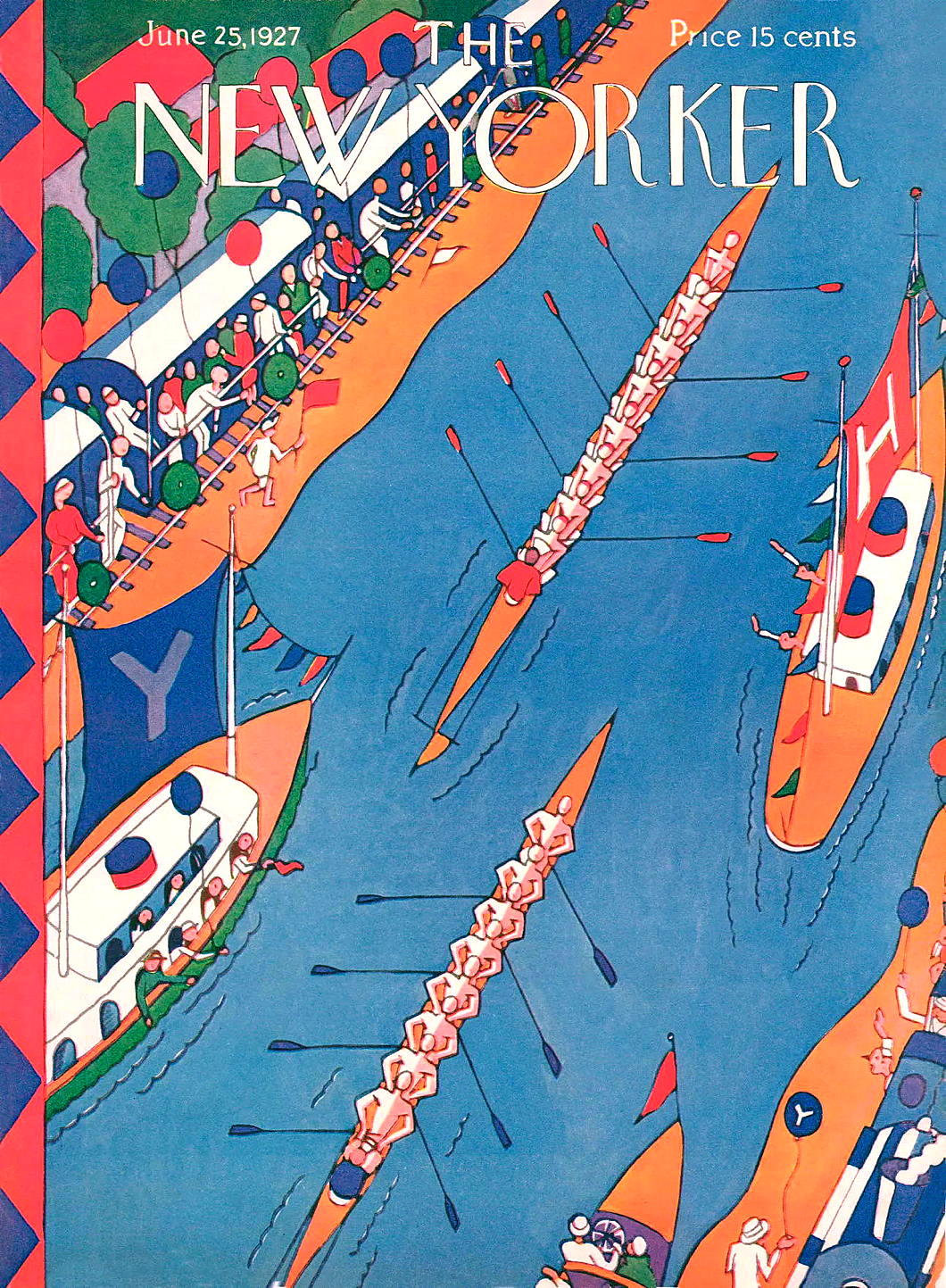
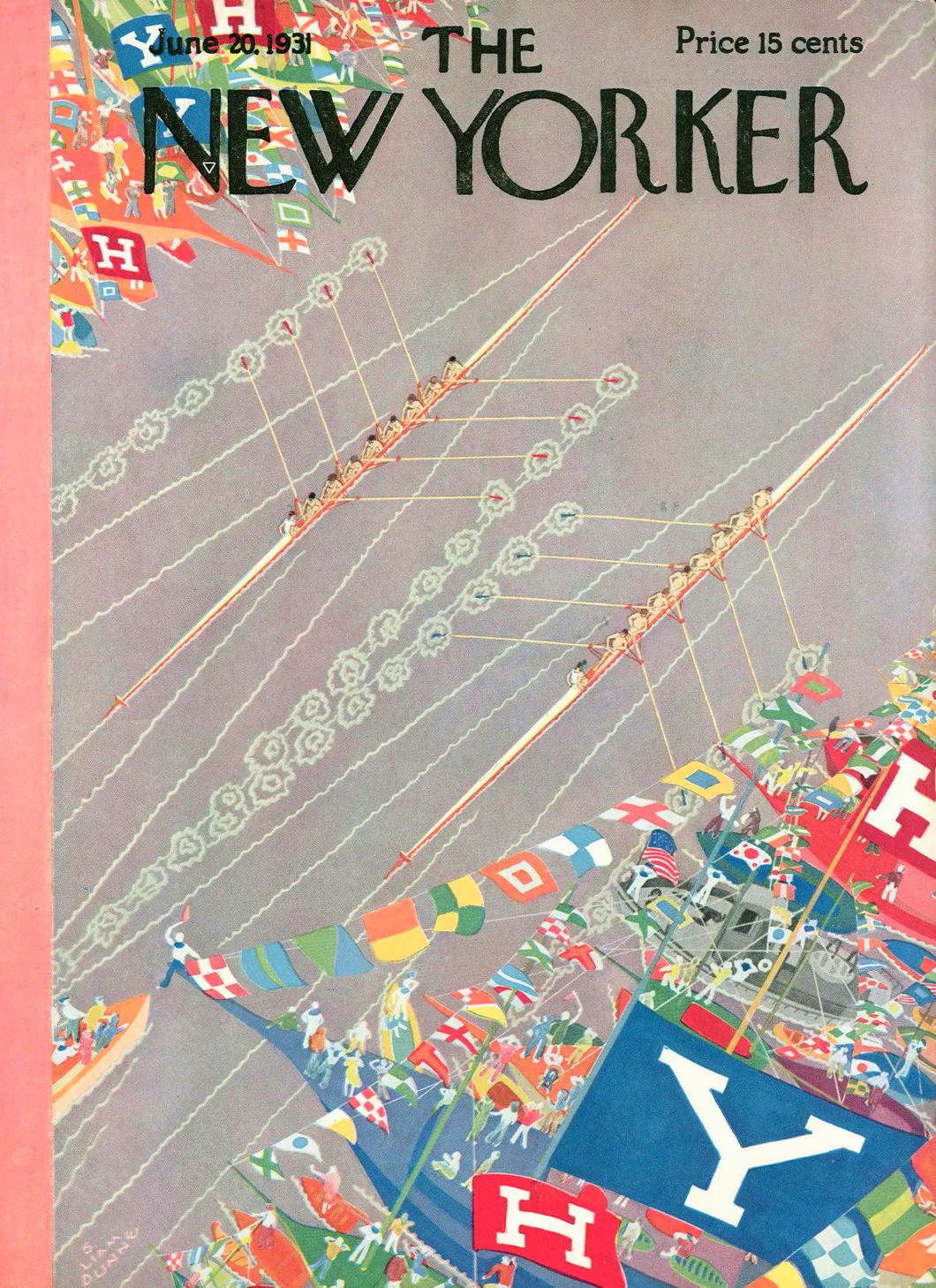
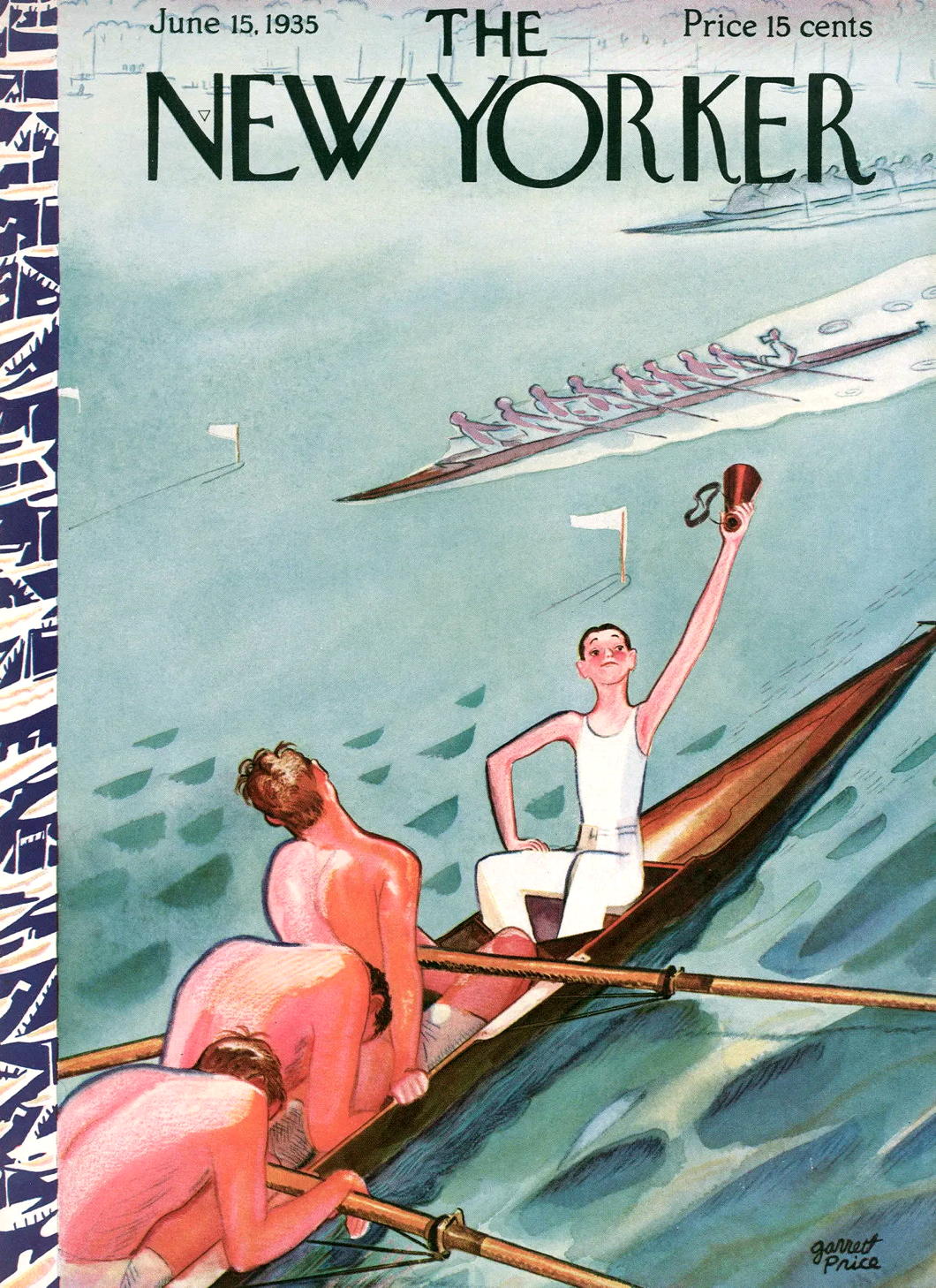
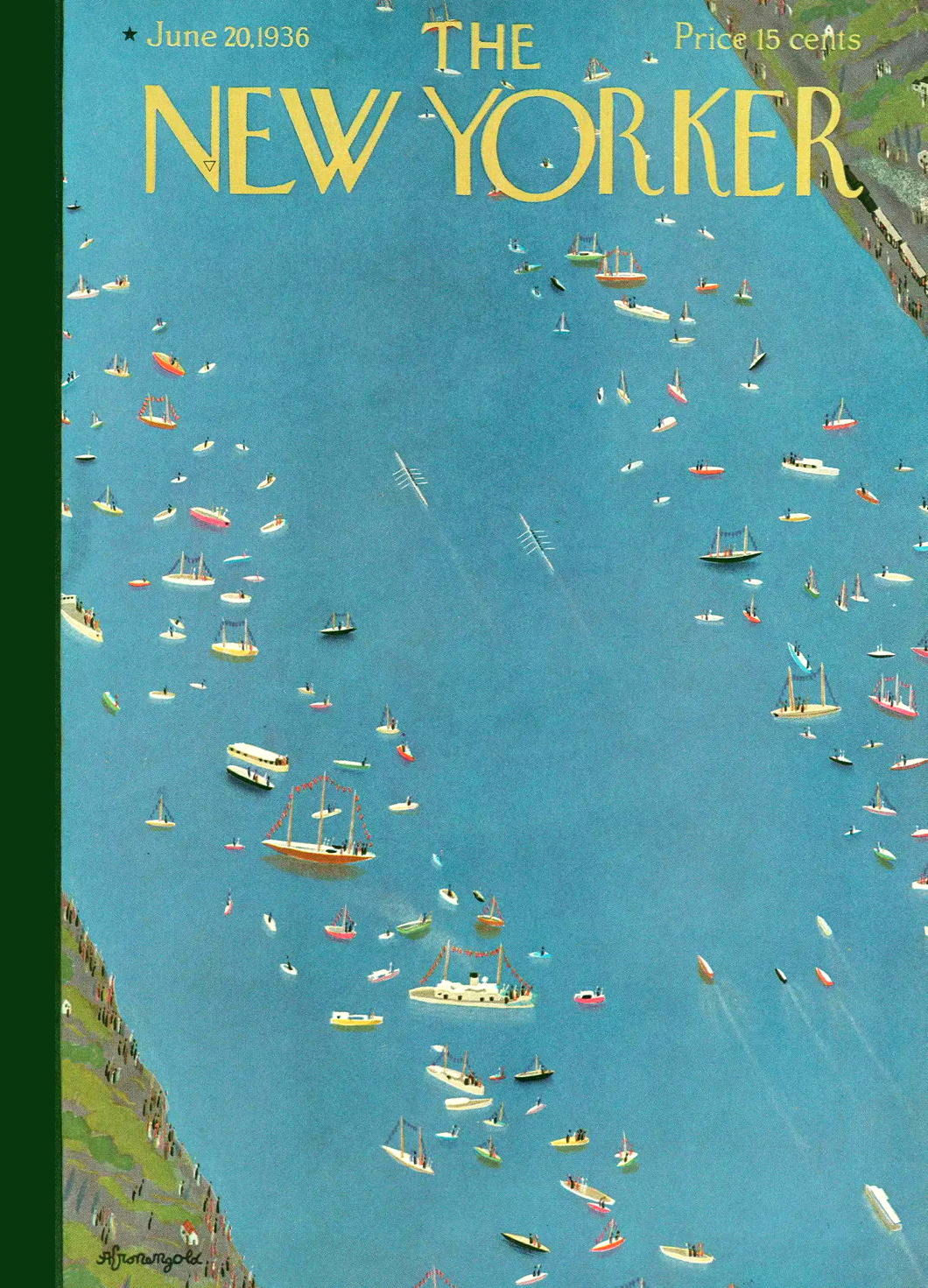
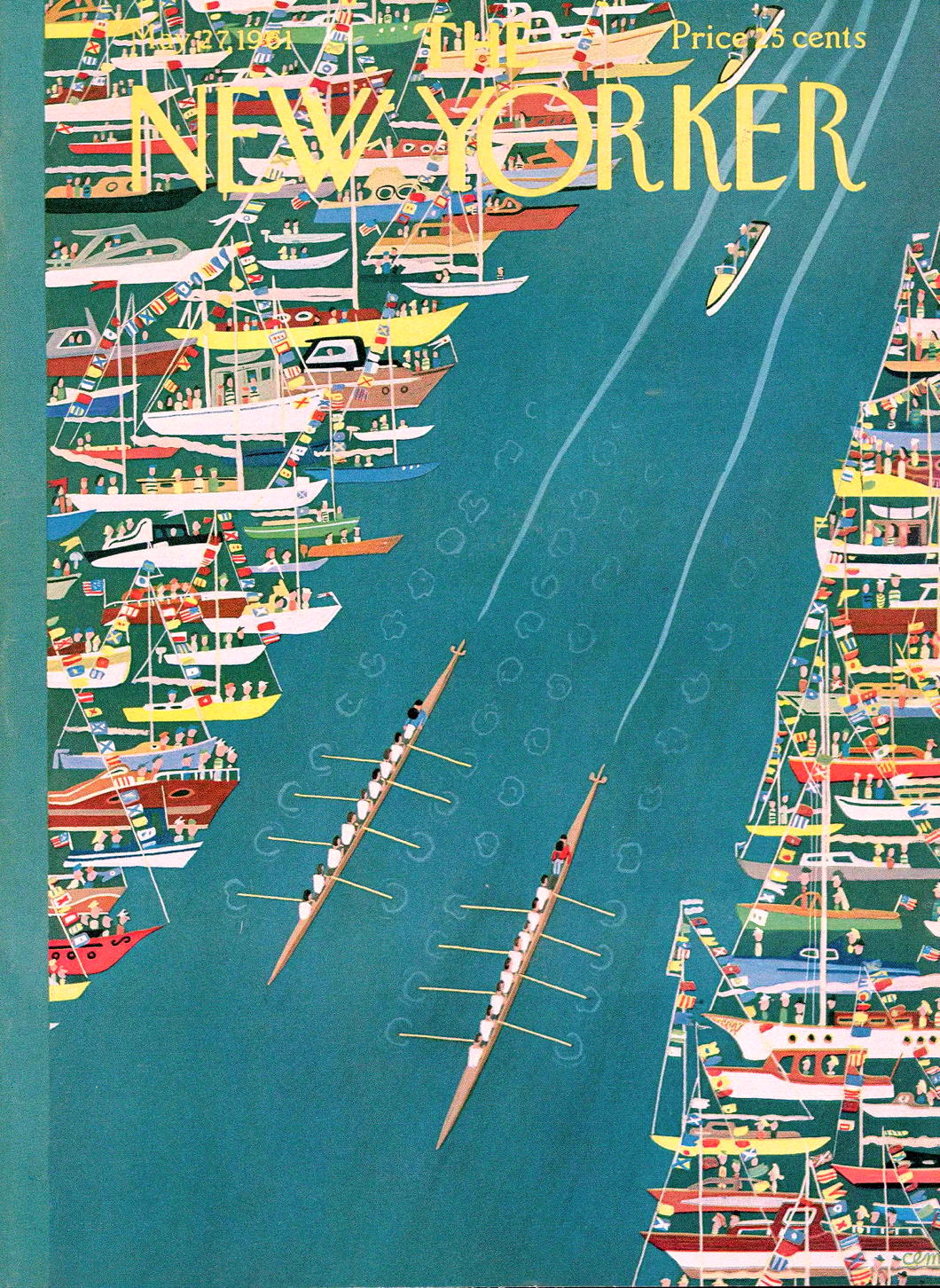
England has “The Boat Race” between Oxford and Cambridge, but America has the annual competition that sees Harvard face Yale on the Thames River in New London, Connecticut.
First held in 1852, “The Race” predates “The Game” — the two universities’ annual football match — by twenty-three years which makes it the oldest collegiate athletic competition ongoing in the States.
The Harvard/Yale battle on the river was a major sporting event for much of the twentieth century, and found its way to the cover of The New Yorker more than once.
Alas, like many totems of old New England, “The Race” has receded from the view of the common culture. Like foxhunting, it might even surprise some today that it ever held such a prime spot in people’s attention.
Pope Leo XIV Cricket Trophy
Emeriti C.C. Triumph over Old Dowegians and Vatican sides

On 6 July 2025, Her Grace the Duchess of Somerset presented the inaugural Pope Leo XIV Cricket Trophy to the winners of this new sporting competition, Emeriti Cricket Club.
The Emeriti, founded in 1871 by Monsignor the Lord Petre, beat out Old Dowegians C.C. and the visiting Vatican cricket team, St Peter’s C.C., in the triangular competition.
The club takes its members from the old boys and masters of Catholic schools across England. Emeriti captain Tom Fleming received the cup from the Duchess of Somerset on behalf of his XI.
Emeriti also sponsor the Catholic Schools Cricket Festival and recently inaugurated the Catholic Schools Girls Cricket Festival to complement it. There are hopes for an independent Emeriti women’s side to emerge in the near future.
As a former Lords & Commons XI cricketer — we were beaten on the field of battle by the Vatican side — it’s good to see that cricket is alive and well in Catholic England.
Les immortels

Today’s Fête Nationale gives me an excuse to talk about the Académie française, probably the coolest secular institution in the world.
In 2018, James Reginato wrote an article for Vanity Fair that peeked into the world of the « immortels ».
He pointed out that the election of an academician is sometimes compared to the election of a Pope, with Xavier Darcos joking the difference is that each academician “is convinced he is more important than the Pope”.
The College of Cardinals is also more efficient than the Académie: this year’s conclave took just two days to elect our new supreme pontiff.
It’s true the immortals have already chosen Alain Aspect to take the seat vacated by the death of the Marqués de Vargas Llosa, but there are six further empty seats.
According to the operations of the Académie, though six seats are empty, only one is actually designated as vacant.
For a vacancy to formally exist it must be declared during a formal session of the body, after which time a new academician is to be elected within three months (in theory, at least).
Seat 3’s most recent inhabitant was Jean-Denis Bredin who died in 2021. The other empty seats are number 10 (Florence Delay, m. 2025), number 11 (Gabriel de Broglie, m. 2025), number 14 (the great Hélène Carrère d’Encausse, m. 2023), number 20 (Angelo Rinaldi, m. 2025), and number 27 (Pierre Nora, m. 2025).
Needless to say, if one was called upon, one could not turn down so great an honour.
France24 recently did a small feature looking behind the scenes at the Académie française.

Fictions

Éditions Gallimard
A beautiful book cover for a great mind.
The design is not specific to the book but was common to all those printed in Gallimard’s La Croix de Sud collection of South American writing, selected by Roger Caillois.
Irritatingly, we don’t know who designed it.
The famous Gallimard book designer Robert Massin only joined the firm in 1958 and rose to the post of artistic director which he held for two decades.
This isn’t Massin’s style, however, and the book was printed years before he arrived anyhow.
More likely it was designed by Roger Parry, who did design some covers for Gallimard around the time Fictions was published.
Parry is also suggested by the researchers Brigitte Adriaensen and Lies Wijnterp in their recent attempt to interpret Borges through his book covers.

Druze Stirrings
The secretive sect that helped topple Assad

The Druze are an elusive people. During the few summers I spent in Lebanon I met Maronites, Melkites, Sunni, Shi’a, Armenians, and many others but I only recall knowingly meeting one Druze — and that’s a story for another day.
Druze beliefs are as secretive as they are distinct. Most file them as (for lack of a less judgemental word) a schismatic branch of Islam that emerged out of Isma’ilism; others argue that they are gnostics who took up the Islamic mantle to avoid oppression. Naturally they do not call themselves Druze, but muwaḥidūn, which more or less means ‘monotheists’ or ‘singularists’ — believers in the singularity of God. Ethnically, they are Arab, and migrated to the Lebanese mountains and Jabal al-Druze from south Arabia before the advent of Islam.
Christians have traversed the four corners of the globe in order to share the Gospel, but the Druze are completely at odds with this mentality. They are not bothered if you are uninterested in their religion: In fact, altogether they very much prefer you don’t ask too many questions because, frankly, they don’t want you to know. Since the closing of the daʿwa — the call to belief — in AD 1043, no converts may be accepted, nor can rituals or worship take place in public, and all marriage outside the community is prohibited.
There is only one famous Druze in the world: the perennial survivor of Lebanese politics, Walid Joumblatt. He ascended to the political headship of Lebanon’s Druze in 1977, succeeding his father Kamal as the leader of the Progressive Socialist Party — whose name elides the sectarian tribal nature of the entity as the outlet for political Druzism in the Lebanon — and maintained his leadership throughout the devastation of the fifteen-year civil war.
Joumblatt is an educated and entertaining fellow, sharing his holiday snaps on the Nile with pith helmet and parasol, mockingly comparing himself to Hercules Poirot.
Riverside Park Volunteer House

Manhattan’s Riverside Park is one of the jewels of the island, with four miles of rustic beauty spilling down to the Hudson River (with, alas, the Henry Hudson Parkway in between).
These riparian grounds are under the charge of the Parks Department of the City of New York and entrusted to the care of the Riverside Park Conservancy.
Aside from their own employees, these make use of numerous volunteer gardeners to take care of the many trees, flowers, and other plants that grace this shoreline.
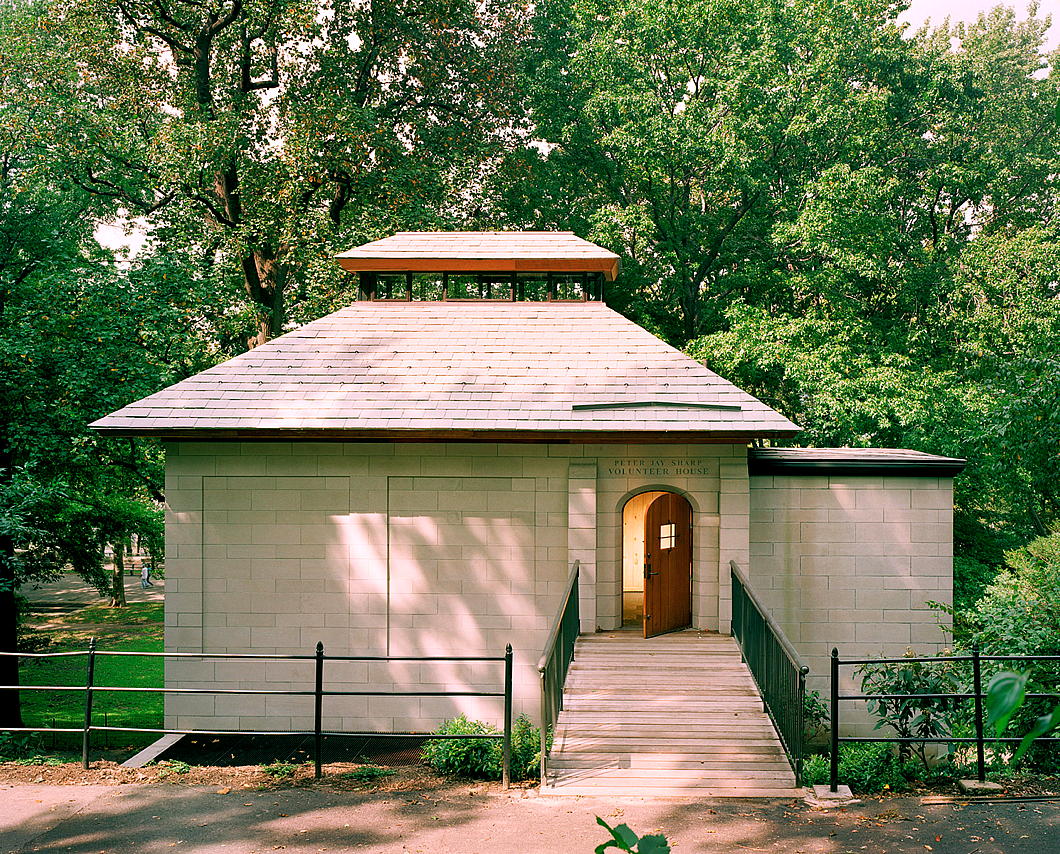
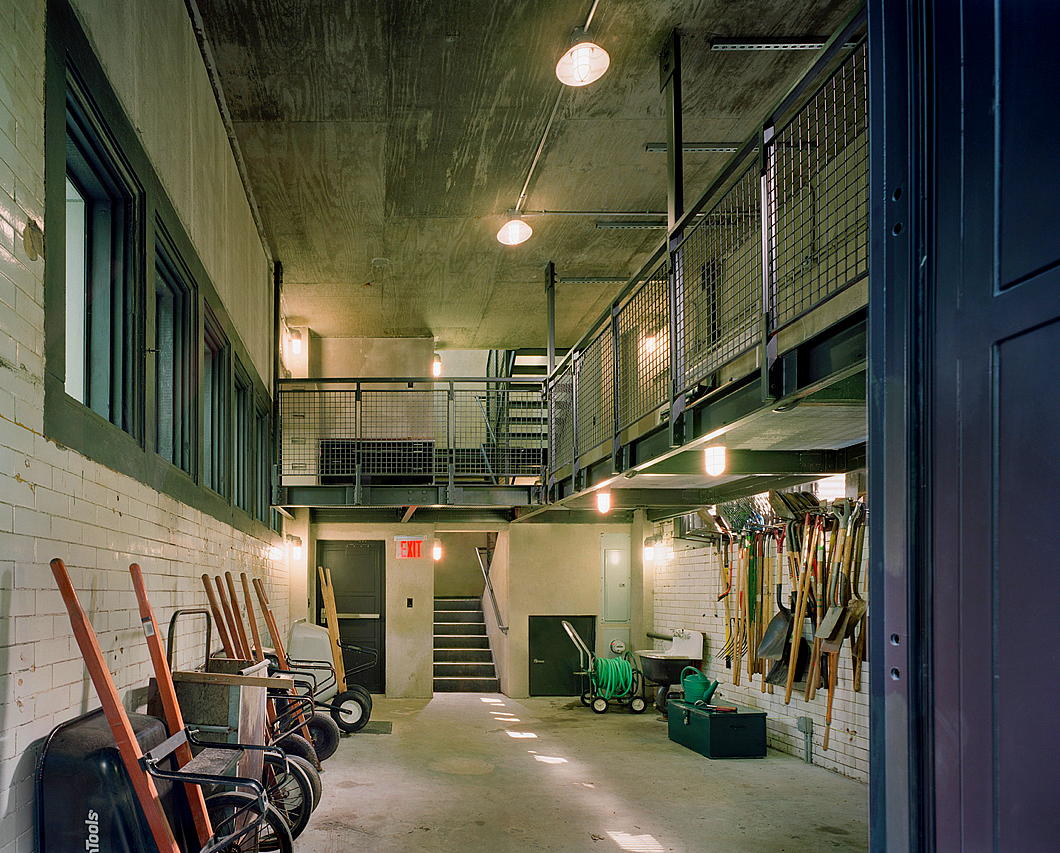
The nineteenth-century structure in which much of the equipment for these volunteers was stored — just inside the park at 107th Street — proved too small and unwieldy for ongoing use.
Expanding it outwards risked the need for felling trees, so in typical New York fashion the Conservancy decided the only way was up.
In 2003, the Peter Jay Sharp Volunteer House was opened: an elegant and multipurpose construction that triples the usable space of the previous derelict building.
We have Jeffrey Murphy of MBB architects to thank for this elegant building which fits effortlessly into its surroundings (and Peter Aaron for these photographs).

Proportionality Destroys Representation
After the Jenkins Commission on the voting system presented its report to Parliament in 1998, the House of Commons had a chance to debate its findings and proposals.
In his contribution to the debate, Benn attacked the modish support for proportional representation, arguing instead that “direct representation is the delicate thread that links the people with their government”:
When we discussed the subject in the Labour party’s national executive a few years ago, when Neil Kinnock was leader, I said to Neil that I had a feeling that if we had a party list system my hon. Friend the Member for Bolsover (Mr. Skinner) and I would be at the bottom of the list. He laughed, but in a funny sort of way. That is the direction in which politics is going.
No doubt, all hon. Members will go to their constituencies this weekend. Every person whom we meet in our constituencies is our employer — the bus driver, the street sweeper, the home help, the policeman — and has the power to remove us. Our constituents expect to be represented. They decide whether they agree with our views and whether we have done a decent job.
Any element of proportionality, which destroys that link, could lead to people being governed by a Government whom nobody had voted for, because nobody would know the basis of the coalition on polling day. At least the coalitions of the parties are transparent: people can see them developing and know what they are voting for and what their own Member thinks.
I do not intend to waste much time on the Jenkins report because, candidly, I do not think that it has a cat in hell’s chance of succeeding. The idea that the parliamentary Labour party would go through the Lobby to destroy fifty of its own Members, to redraw all the constituencies and to introduce a new group of piggy-back Members is ludicrous. I heard it said by one cynic that the Labour party is so loyal that, if chimney boys were brought back in the name of modernisation, we would all go through the Lobby; but turkeys do not vote for Christmas. I do not honestly think that this is a serious plan.
The real issue is one that Jenkins neither considered nor was asked to consider the power that people have over the government of their country. This is the beginning of a debate about democracy generally. Unlike almost every other country, we have no vote over the head of state. We have no vote over the second Chamber. If my right hon. Friend the Prime Minister reintroduces Edward I’s method of appointing peers — when peers began in 1295, they were not hereditary — we will be modernising ourselves back to the feudal period. There will be absolutely no popular control.
The House of Commons has very limited power. After all, the Prime Minister derives his legislative majority from the people, but most of his executive power from the Crown. That is why the Prime Minister has put a spin doctor into Buckingham palace. If the Crown is not popular, the Prime Minister might lose the power to appoint bishops, judges, commissioners, peers and so on. That is how the system works.
It amazes me that the British people put up with that system. What is it about our training and breeding that makes us think that we are not fit to elect the second Chamber or the head of state? Jenkins does not deal with that, because he is an Asquithian Liberal. We have to be very careful.
People ask whether the proposals would lead to a coalition; but they are all about getting a coalition. Those who advocate the proposals favour a coalition. I do not want to be too political in a debate of this character, but it is worth noting that there is a big Labour majority and the leader of the Liberal party is on a Cabinet Committee, but I am not. I met him voting against the lone parents provisions last December. I was threatened with disciplinary action, but he knew that he would be at the Cabinet Committee the next day. There is already a broad perspective of views. For example, the right hon. Member for Henley (Mr. Heseltine), the former Deputy Prime Minister, has been given a job and the former Chancellor has been given a job. The former chairman of the Conservative party is in Northern Ireland, clearing up the RUC and David Mellor is in charge of football. When we talk about inclusiveness, I just wish some of us were part of it.
In future, unless we are clear about stopping it, all candidates will be vetted by the party machines. That is not about the power of the Prime Minister, but the power of the party leader. All the European candidates have been vetted and put on a list, as have all the Scottish candidates. My hon. Friend the Member for Falkirk, West (Mr. Canavan) was left off, because he was thought less suitable to be a Scottish candidate, although the hon. Member for Leominster (Mr. Temple-Morris) has suddenly given the Labour voters there a Member of Parliament by changing sides. Candidates for the Welsh Assembly will also be vetted. So the language of devolution is accompanied by the centralisation of power.
I do not wish to overdo the point, but as a Minister I visited the Soviet Union and Brussels many times. In the Soviet Union, we used to meet the central committee, which had not been elected. We met the commissars, and they had not been elected. I went to Brussels and met representatives of the central bank, and that had not been elected. I met the commissioners, and they had not been elected. The truth is that capitalism and communism have one thing in common: they do not want the people to have a choice of system, only a choice of management. That is the problem that we face. I have not heard anybody suggest that it would be a good idea for the Governor of the Bank of England to be elected, even by first past the post, and he has more power than any of us here. He is appointed, so he depends, like the bishops and the judges, on patronage.
We must face the problem that government now is less about representation and more about management. I get my fax from the party headquarters every morning, with quotations already attributed to me — “Mr. Tony Benn welcomes compulsory homework for pensioners”, or whatever it is, and I am supposed to put it back in the fax machine to send to the Derbyshire Times. I feel less and less like a representative and more and more like an Avon lady, who is told what to say when she knocks at the door. If the Liberals had joined the right end of the Labour party, we might have had a progressive party, but the trouble is that they joined the wrong end of the Labour party. I will not go into that now.
Direct representation is the delicate thread that links the people with their Government and the basis of it is that they elect a man or woman they know, can argue with and can get rid of. Do not think that minorities remain minorities for ever. After all, ten years ago, the environmentalists were bearded weirdos, but it will not be long before Swampy is in the House of Lords. The Dunblane massacre led to the previous Government changing their policy and apartheid ended by popular pressure. Democracy is not what somebody does to us if we vote for them but what we do where we live and work, and Parliament then gets the message. After forty-eight years here, I can say that Parliament usually gets the message last. We must listen to the people and not try to impose on them a pattern that will provide a permanent coalition and remove real choice from the electors.
Rising on a point of order, the hon. Member for Aldershot (Mr Gerald Howarth), inquired:
On a point of order, Mr. Deputy Speaker. The right hon. Member for Chesterfield (Mr. Benn) was so interesting and entertaining. May we vote for extra time for him?
Mr Deputy Speaker instead called upon the hon. Member for South Norfolk to continue to the debate. …
Sag Harbor Cinema
For a film fan, to grow up in an American town with a small cinema is to win the lottery of life.
In my childhood, we had the advantage of two little movie houses within walking distance: the three-screen Bronxville Cinema and just a little bit further afield by foot the single-screen Pelham Picture House.
Fittingly, these two are now run together as the somewhat pretentiously titled but no-doubt quite useful ‘Picture House Regional Film Center’.
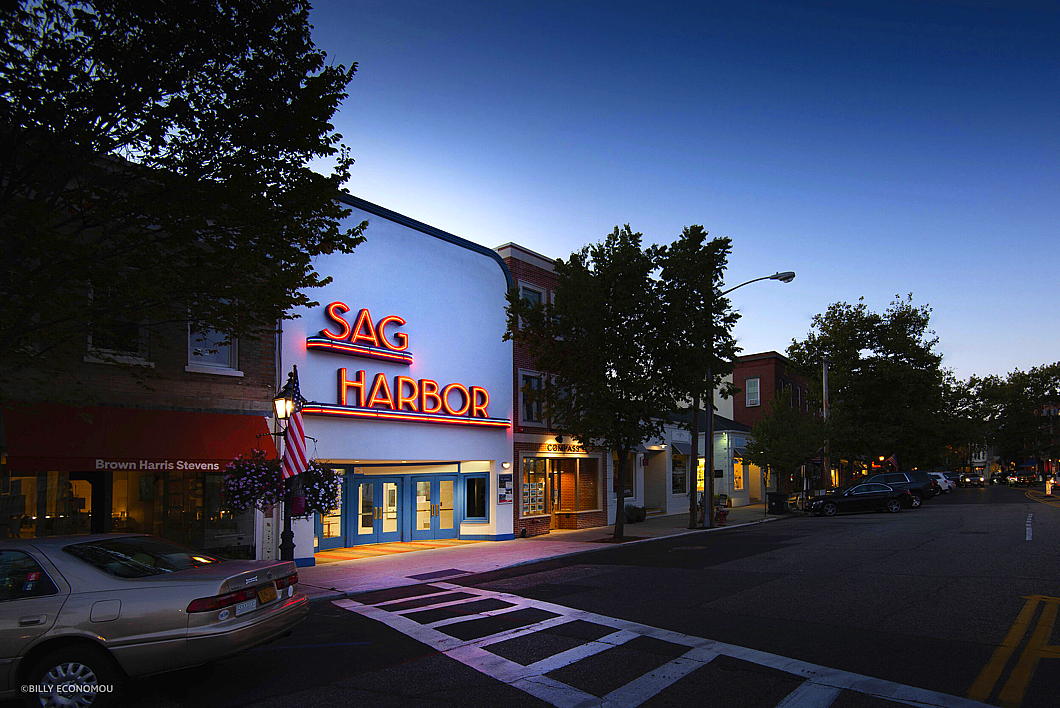
Way out on the South Fork of Long Island, the old whaling village of Sag Harbor has the perfect little small-town American movie theatre.
There is something just right about this cinema on the village’s Main Street — as Variety put it: “beloved for not only its obscure programming but also its 1930s red neon sign with the village name”.
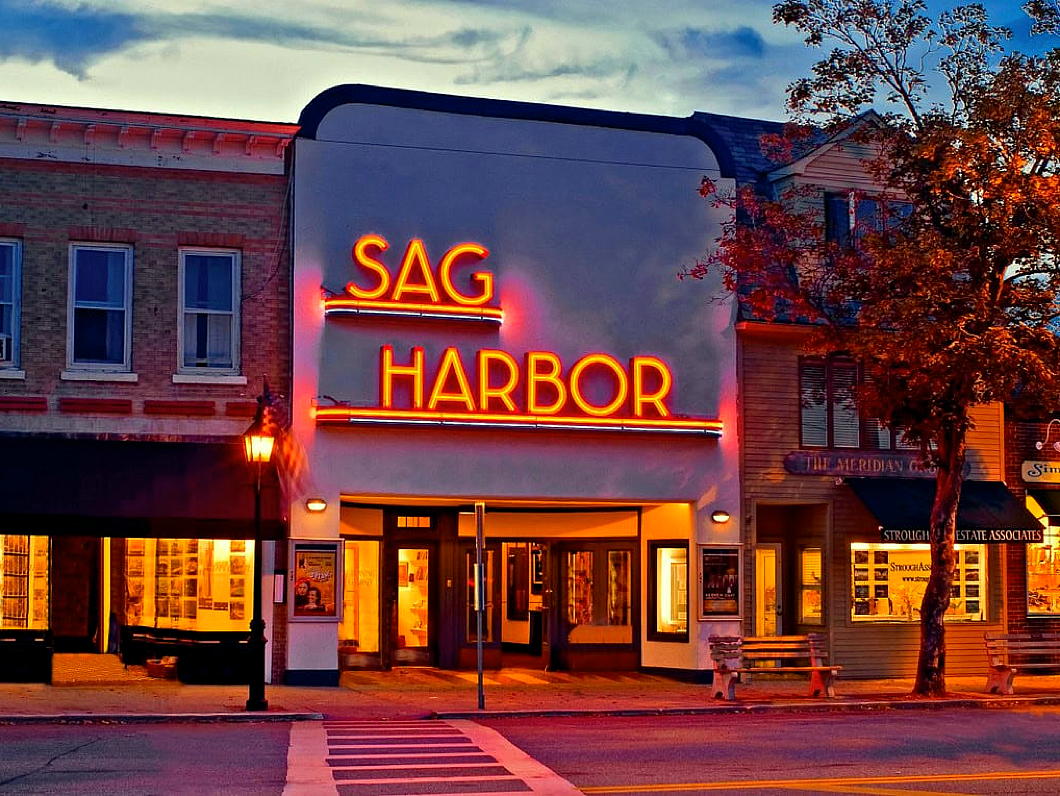
The single-screen cinema first graced the main drag of the village in 1936, the creation of architect John Eberson whose ‘atmospheric’ movie theatres are dotted across the United States and even as far as Australia.
Eberson designed two of greater New York’s five Loews ‘Wonder Theatres’: the Loew’s Paradise on the Grand Concourse in the Bronx neighbourhood of Fordham and the Loew’s Valencia in Jamaica, Queens.
This cinema was purchased by Gerard Mallow in 1978 who for nearly four decades preserved the Sag Harbor Cinema as an arthouse movie theatre with an eclectic offering.
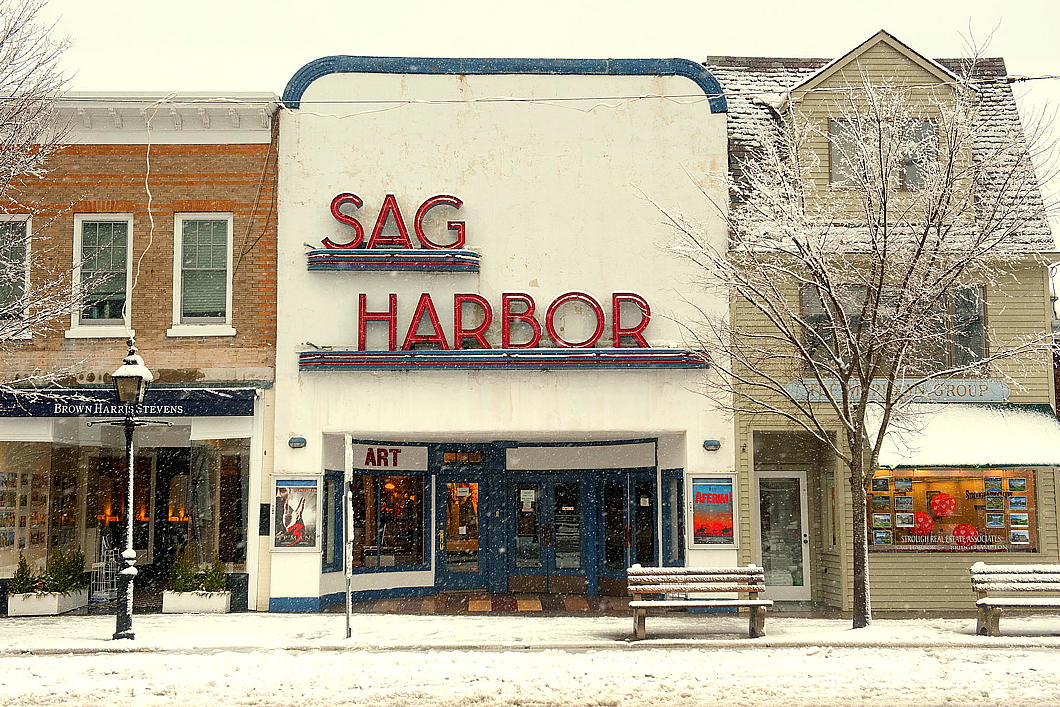
In December 2016, the cinema suffered a devastating early morning fire that destroyed most of the structure.
The iconic neon signage was salvaged by Chris Denon of North Fork Moving and Storage and the sculptor and ironworker John Battle.
Meanwhile, a community partnership that was already in discussions to purchase the institution from Mr Mallow came together to raise funds and oversee the rebuilding, including several improvements.

The main hall was divided between a large screening hall and a smaller one, along with a new screening room on the first floor (that’s second in American English) behind the iconic façade.

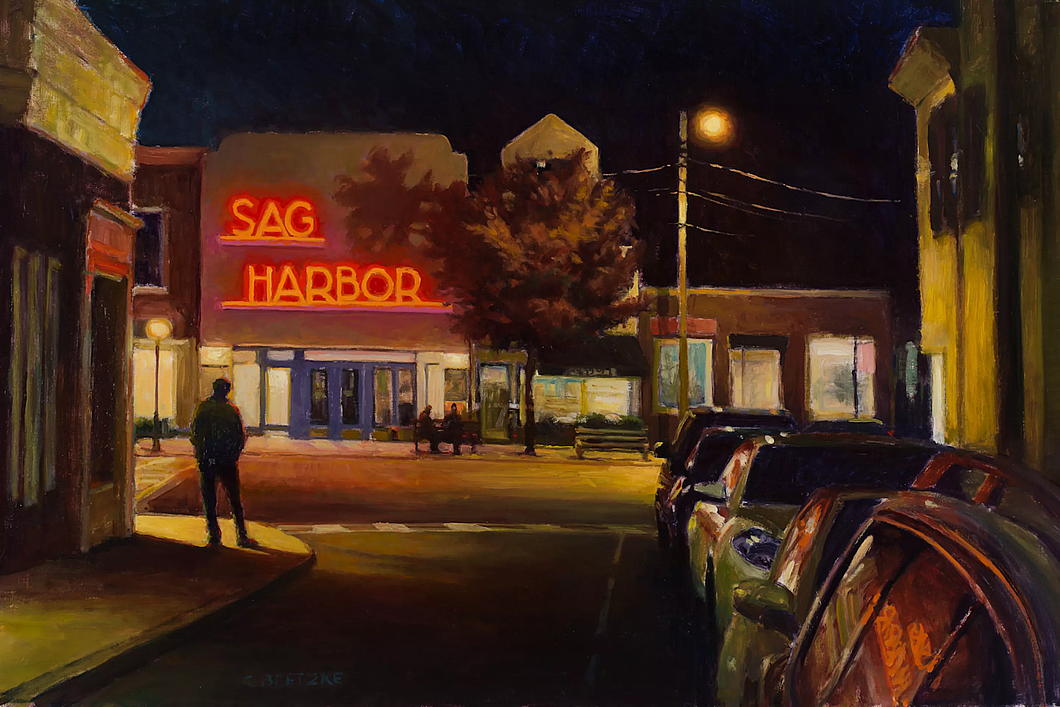
The artist Carl Bretzke captured Sag Harbor’s cinema in plein-air painted form.
Encouraged by the Grenning Gallery, Bretzke offered limited-edition prints of his painting, the proceeds of which helped to pay for reconstructing the movie theatre.

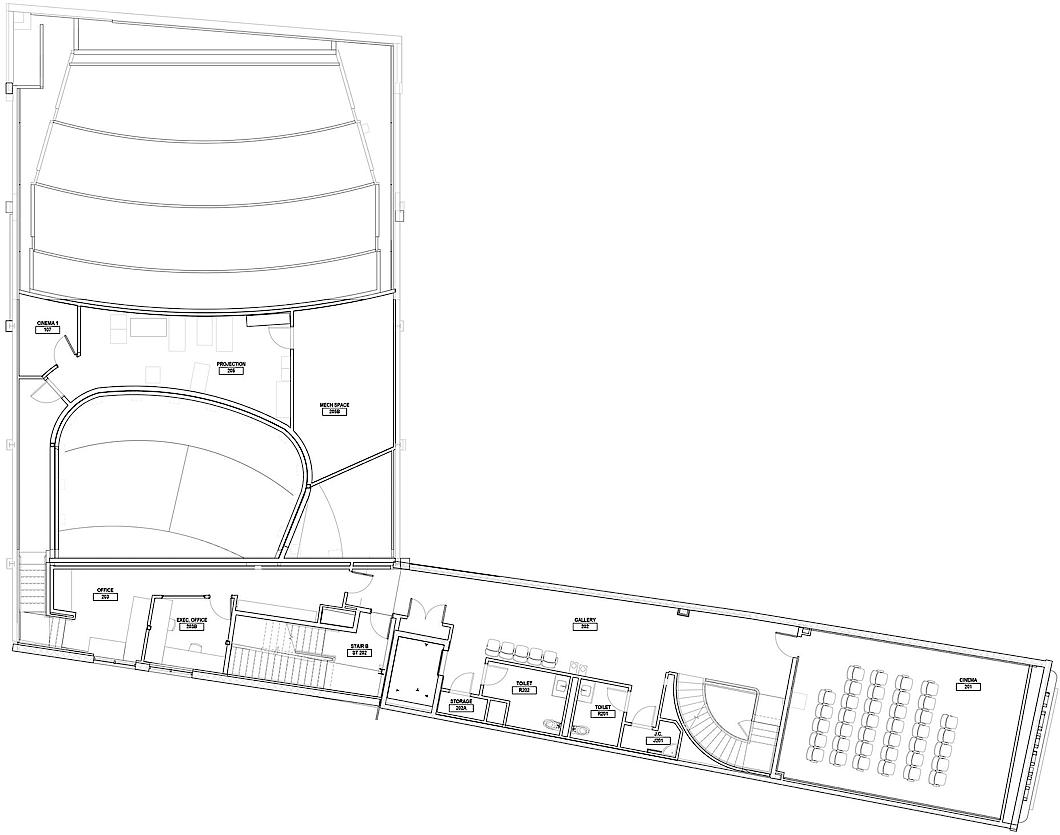

NK Architects also created a new bar and lounge, two roof terraces, an art gallery, and educational space within the original footprint of the cinema.
Following coronavirus-related delays, the new facility finally re-opened in June 2021.





Given the improvement in the facilities, it seems like the Sag Harbor Cinema’s fire was the best thing to ever happen to it.
It is reassuring to know this little movie theatre will be gracing Sag Harbor’s Main Street for many moons to come.
Katalin Bánffy-Jelen, R.I.P.
I have the poet Ben Downing to thank for putting me on to the great Hungarian writer Miklos Banffy. I will always be grateful.
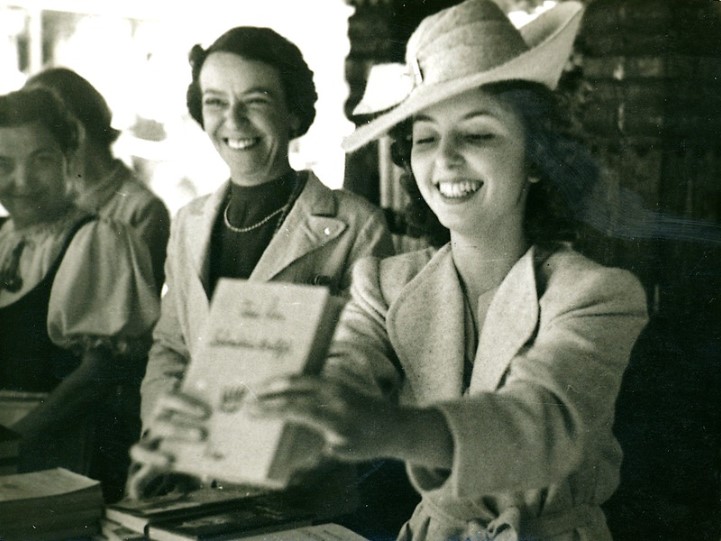
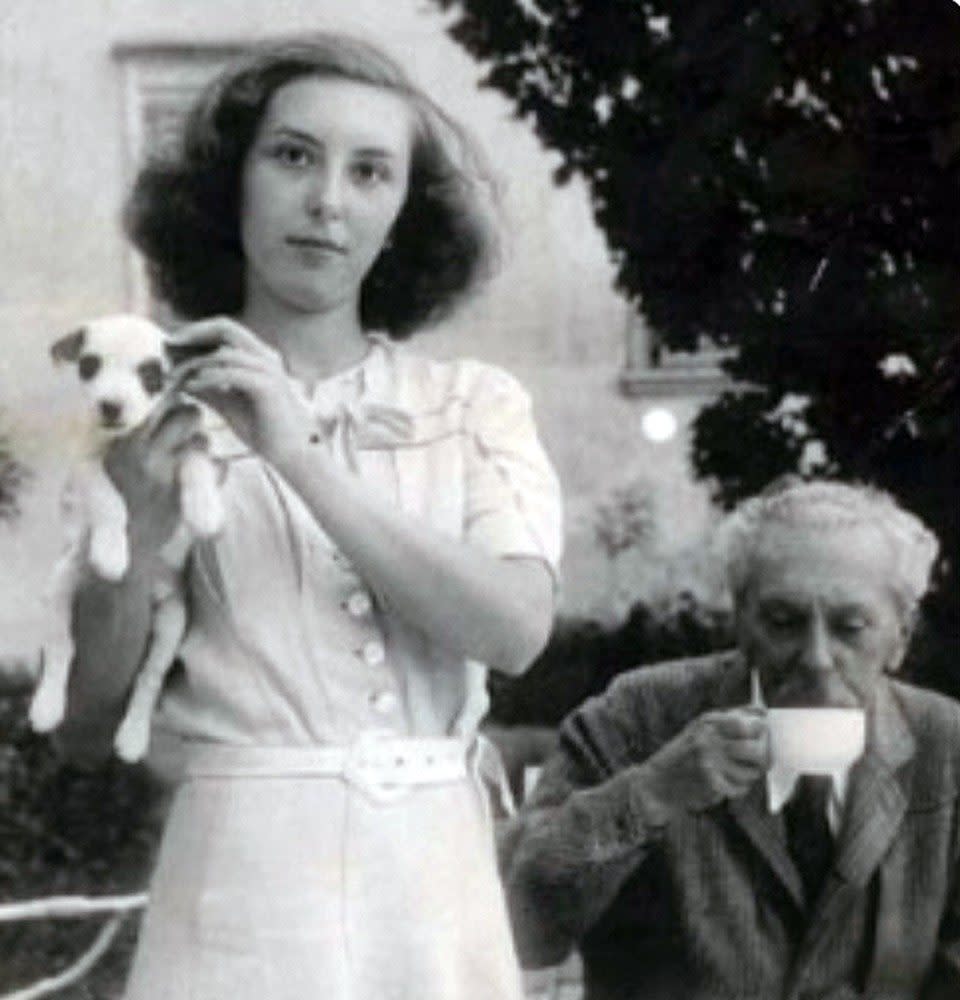
But the one to whom I should be even more grateful is the writer’s daughter Katalin Bánffy-Jelen who died last month, 100 years old.
She, along with Patrick Thursfield (d. 2003), translated the great Transylvanian trilogy from Hungarian into English.
There were obituaries in The Times and the Daily Telegraph.
After the war, Katalin married a US naval officer and they settled in Tangier, still then a free port under a sort of multinational administration.
I wonder if she would have known Fra’ Freddy’s father when he was British delegate to the International Legislative Assembly of Tangier.
Spooks’ Crown

The Security Service, better known as “MI5” has changed its badge to incorporate the change from the St Edward’s Crown to the Tudor Crown that King Charles III has adopted.
The badge was designed by Lt-Col Rodney Dennys who himself had worked for the Security Service’s more glamorous rival, the Secret Intelligence Service (MI6). Dennys had started out in the intelligence game at the Foreign Office and was posted to the Hague before the war. When the Germans rolled in he was on one of the last boats to make it to Britain.
The MI5 emblem was approved by Garter King of Arms in 1981 but (like MI6) the Security Service was still so secret that it did not officially exist, so it was added to the secret roll of arms kept under lock and key in the depth of the heralds’ college in the City of London.
In 1993, after the Service’s existence was formally acknowledged, the badge became known and a flag bearing it often flies from the top of Thames House.

GCHQ has likewise adopted the Tudor Crown, but SIS has not publicly acknowledged any official emblem. (Perhaps it has its own entry in the heralds’ secret roll?) As such, MI6 uses a government version of the royal coat of arms, but theirs has yet to swap crowns.

Jesuit Gothic
The Duane Library at New York’s Fordham University
Think of Jesuits and architecture and you probably think of the Baroque. At Fordham University, however, the SJs followed the American fashion and built in the Collegiate Gothic that gradually took hold of campuses across the continent from the middle of the nineteenth century onwards.
The first academic buildings in Anglo-America — like Harvard’s Massachusetts Hall and Yale’s Connecticut Hall — were in the vernacular Georgian style of the colonies. Robert Mills’ 1839 design for a library building at West Point was one of the first Collegiate Gothic buildings in America (and that institution’s first step on the road to going full Gothic). Some partisans will hold out for Old Kenyon as the first, others for Knox College’s Old Main. These, however, are survivors: the first Gothic university building in America was NYU’s University Hall on Washington Square, foolishly demolished in 1894.
Gothic is not solely an architectural style and it was a West Pointer, Edgar Allan Poe, who first crafted and popularised a distinctly American Gothic bailiwick in the republic of letters.
As Prof John Milbank put it the other day:
“[The] American gothic literary tradition contests the mainline American story. For the gothic perspective, the United States is a very old country: there since 1600, bearing medieval freight. Its exploring of frontiers will not open up hope, but encounter hidden horrors and horrifying potentials.”
“Far from having escaped Old Europe and started afresh and innocent, for the Gothic tradition it is rather that all the more extreme European demons (sects, cults, fears, fantasies) have fled to the New World where they always lurk, in league with its uncannily vast spaces.”
The architectural cornerstone of this Gothic chain of being linking both side of the Atlantic is St Luke’s Church in Newport, Virginia, built in the 1680s. Its pointed arches have sparked great bones of contention amongst architectural historians: is this an organic expression of a still-existing tradition from the Old World or a contrived and purposeful orchestration by colonial settlers? Gothic survival? Or Gothic revival?

I plump for the former: Gothic has always been a living tradition, even if somewhat neglected in certain generations. Ideology and architecture don’t mix well, whether it’s Pugin purporting that anything that is not Gothic is effectively pagan, or partisan modernists deriding any contemporary use of traditional forms as “pastiche”. The term “revival” is useful chronologically, but can obfuscate the breadth of an architectural, artistic, or literary style.
The brickwork tracery of Newport church renders the Gothic style in all its glories and shapes and forms an eternally valid option for the architecture of the New World. You can bauhaus all you want to, but American Gothic is real.
Thus whether unleashing ancient demons or — in the Jesuits’ case — slaying them, college presidents across the United States enthusiastically adopted the Collegiate Gothic style (while at the same time omnivorously crafting feasts of neo-classical, colonial, beaux-arts, and other styles).
Interwar American Gothic is some of the best Gothic of the twentieth century, and probably won’t be matched for centuries yet. Aside from excellent academic examples, just look at when the Gothic merges with the Art Deco as in the old GE Building by Cross & Cross at 570 Lexington Avenue.
Founded by the Jesuits in 1841, St John’s College found a home in the old manor of Fordham in the Bronx, granted to the Dutchman Jan Arcer (anglicised at John Archer) in 1671 by the provincial governor Francis Lovelace — brother to the poet Richard. Bishop John Hughes purchased the 106-acre Rose Hill estate to found a college and diocesan seminary. Eventually St John’s College took up the name of Fordham University by which it is known today.
Our old friend Edgar Allan Poe lived in a cottage in Fordham quite close by the college. He found his friends and neighbours the Jesuits “highly cultivated gentlemen and scholars, they smoked and they drank and they played cards, and they never said a word about religion”. It is claimed by some that the bell of ‘Old St John’s’, the Fordham University Church, helped inspire his famous poem ‘The Bells’.
The university grew slowly until the 1920s, a decade of expansion during which president Fr William J. Duane SJ was keen to build a suitable library for the college. The library that would one day bear his name was built 1926-1928 to a design by the Philadelphia architect Emile George Perrot, accomplished in his day but not now widely remembered. (Incidentally, Perrot later completed a building — White-Gravenor Hall — at America’s first Catholic and elder Jesuit university, Georgetown.)
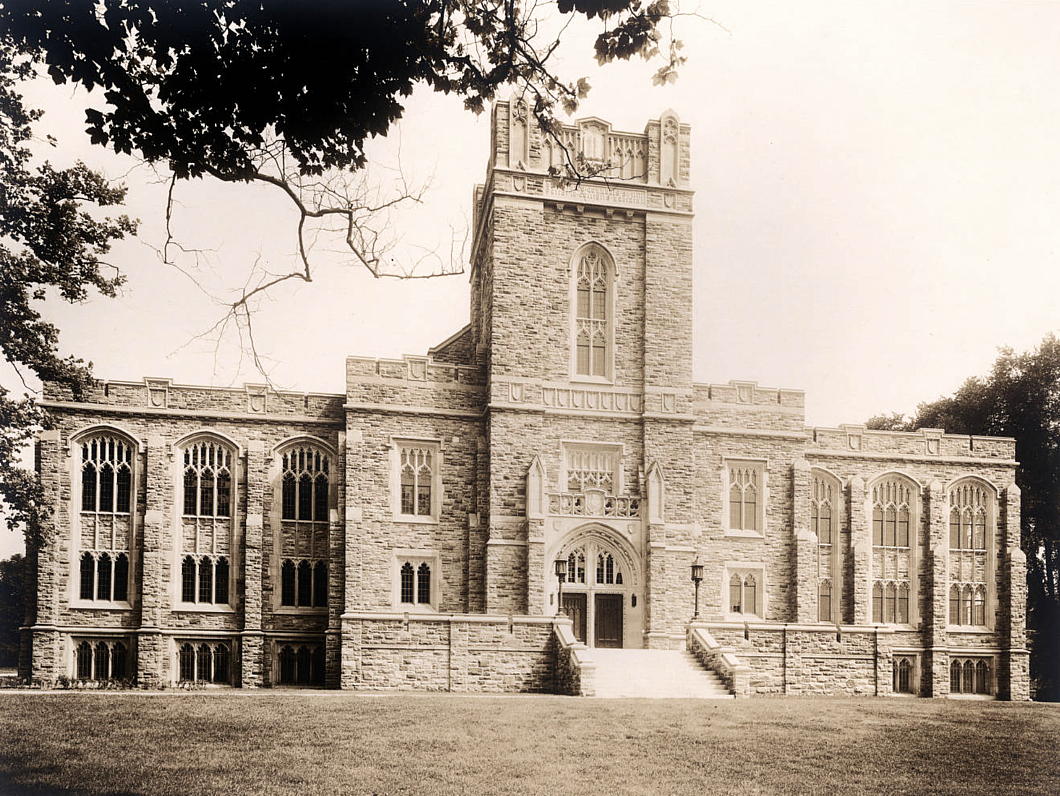
“Architecture,” Perrot wrote, “is the incarnation in stone of the thought and life of the civilization it represents.” If Duane Library is anything to go by, the thought and life were fine indeed.
Perrot provided a central block crowned with a tower, flanked by two pavilions. In front, a wide flight of steps ascends to a raised platform and, through a pointed arch, the reader is led via the entry portal up a further set of internal stairs to the principal floor of the library.
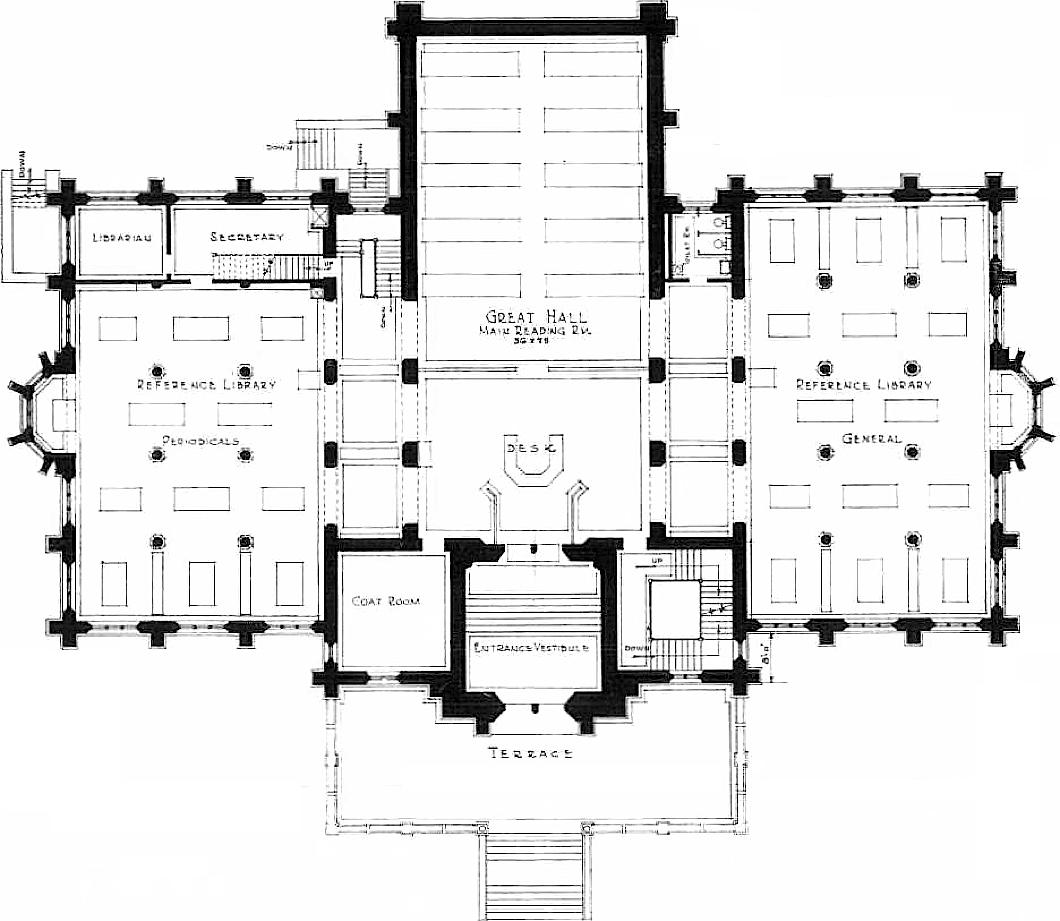
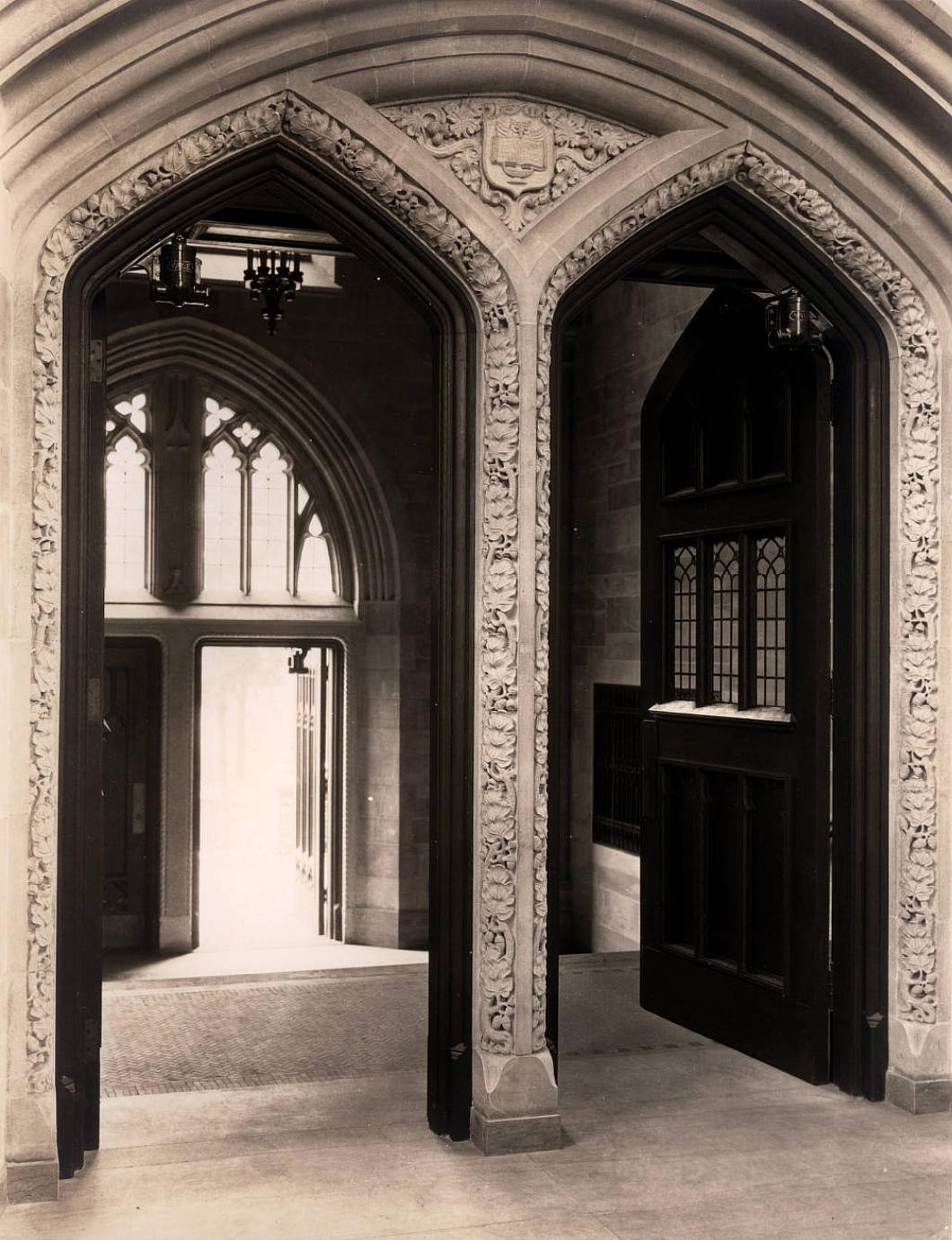
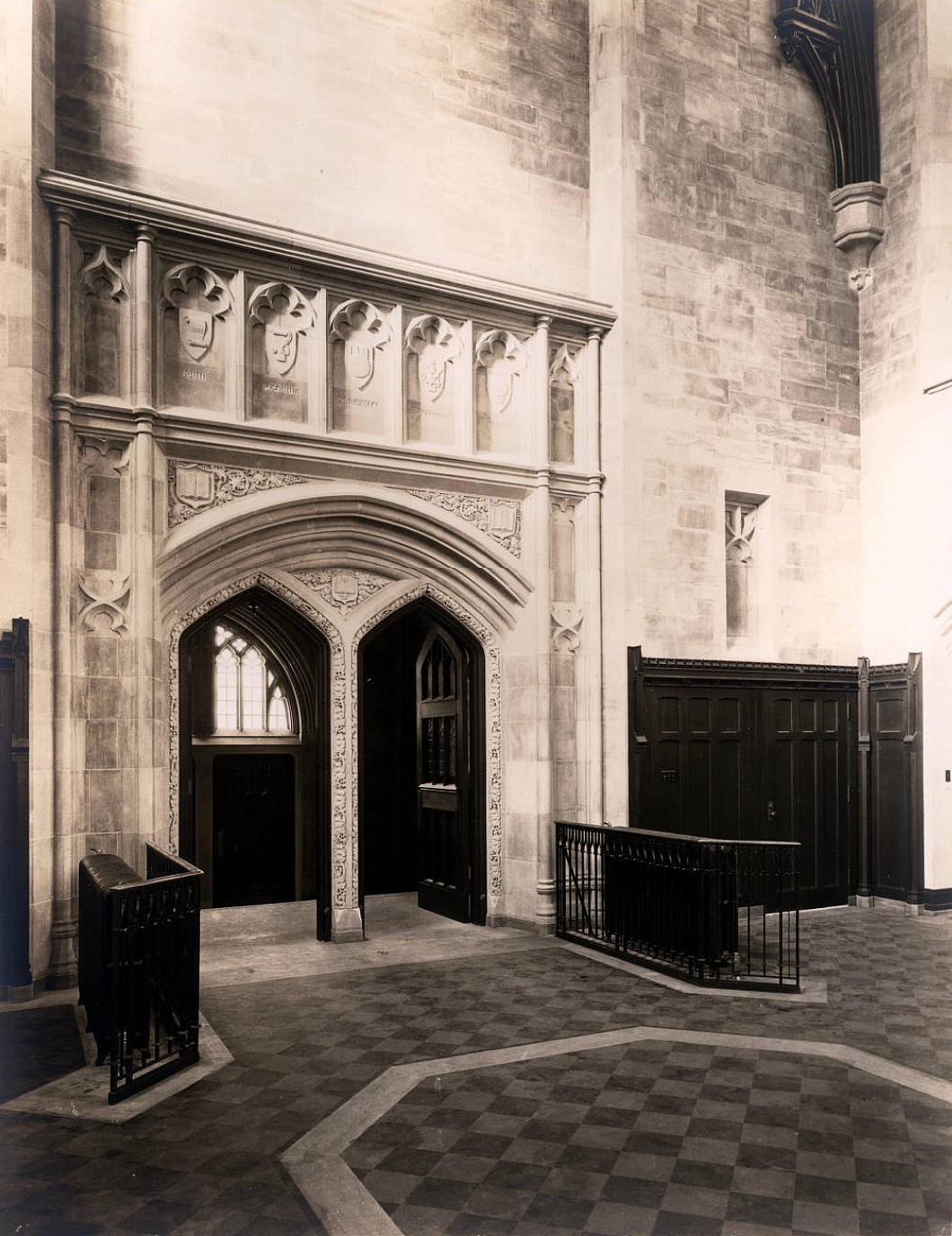
Through these doors with their intricately carved surrounds, the reader enters the great hall of the library, passing a circulation desk — housing no-doubt assiduous and eagle-eyed librarians preserving order and quiet — and onward through a carved wooden screen to the reading area beyond.
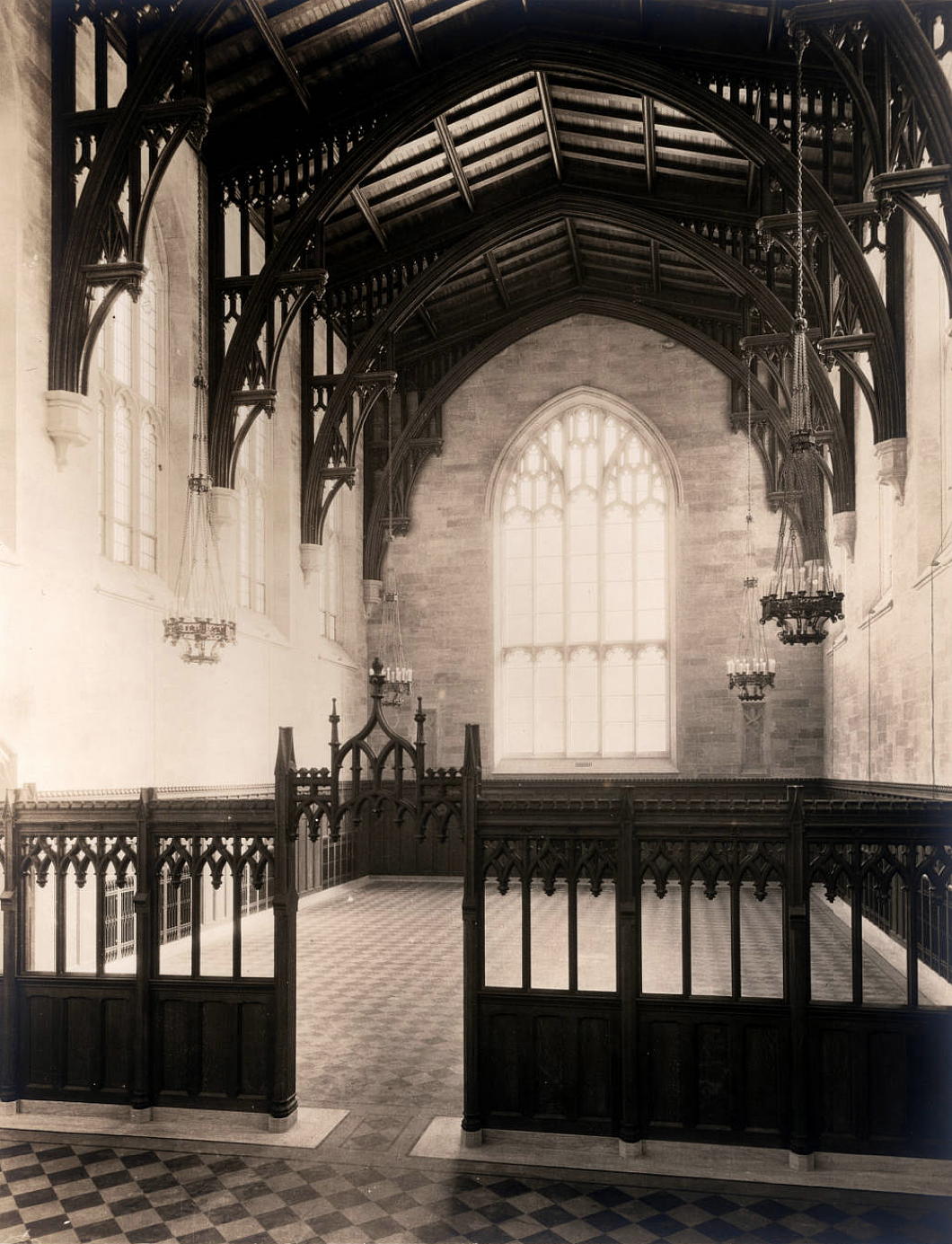
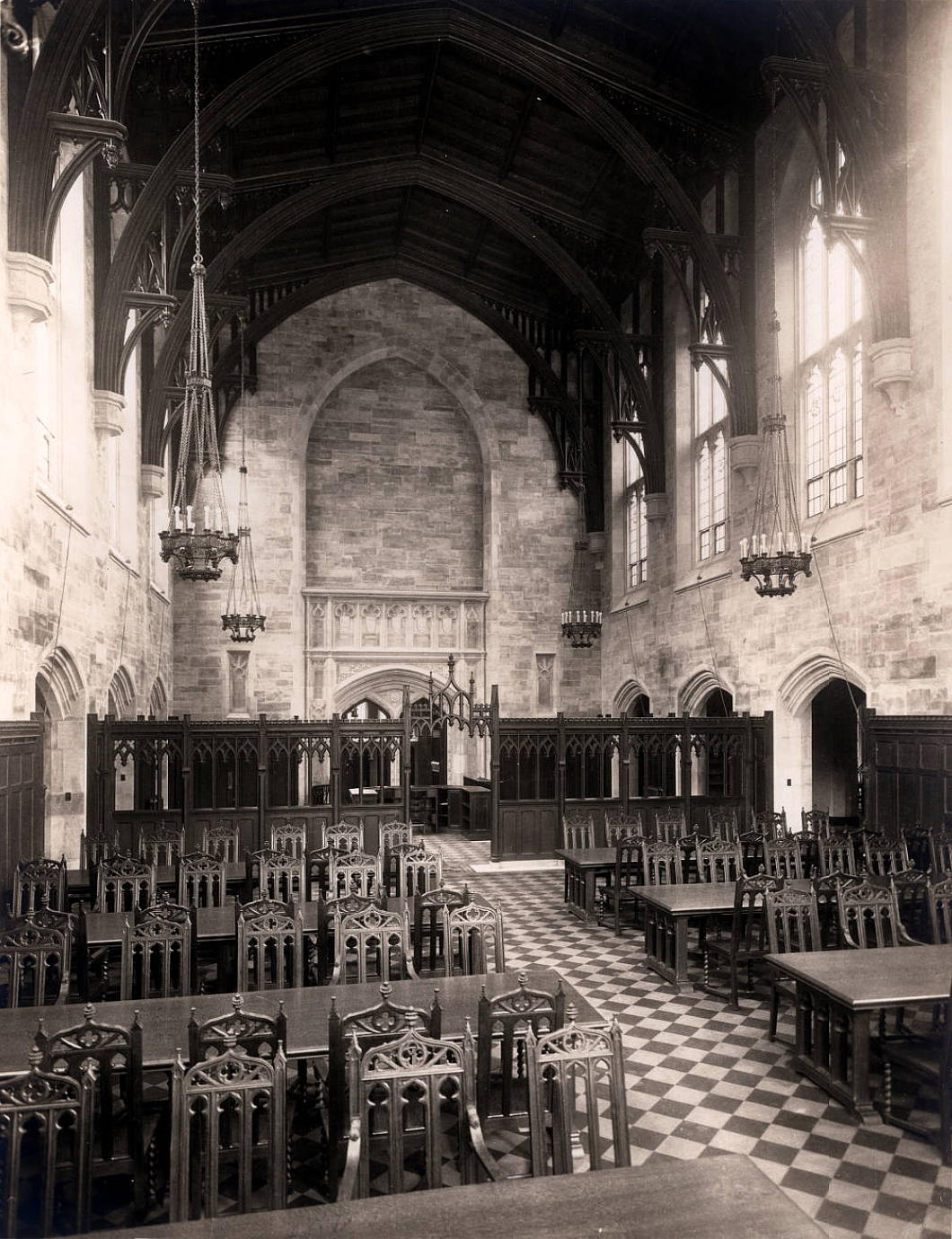
The main reading room is a fine space, and could easily have been the dining hall of an Oxbridge college or indeed a chapel dedicated to divine worship.
The tendency of interwar American architects to design libraries like cathedrals is well documented, with Yale’s Sterling Memorial Library leading the way.
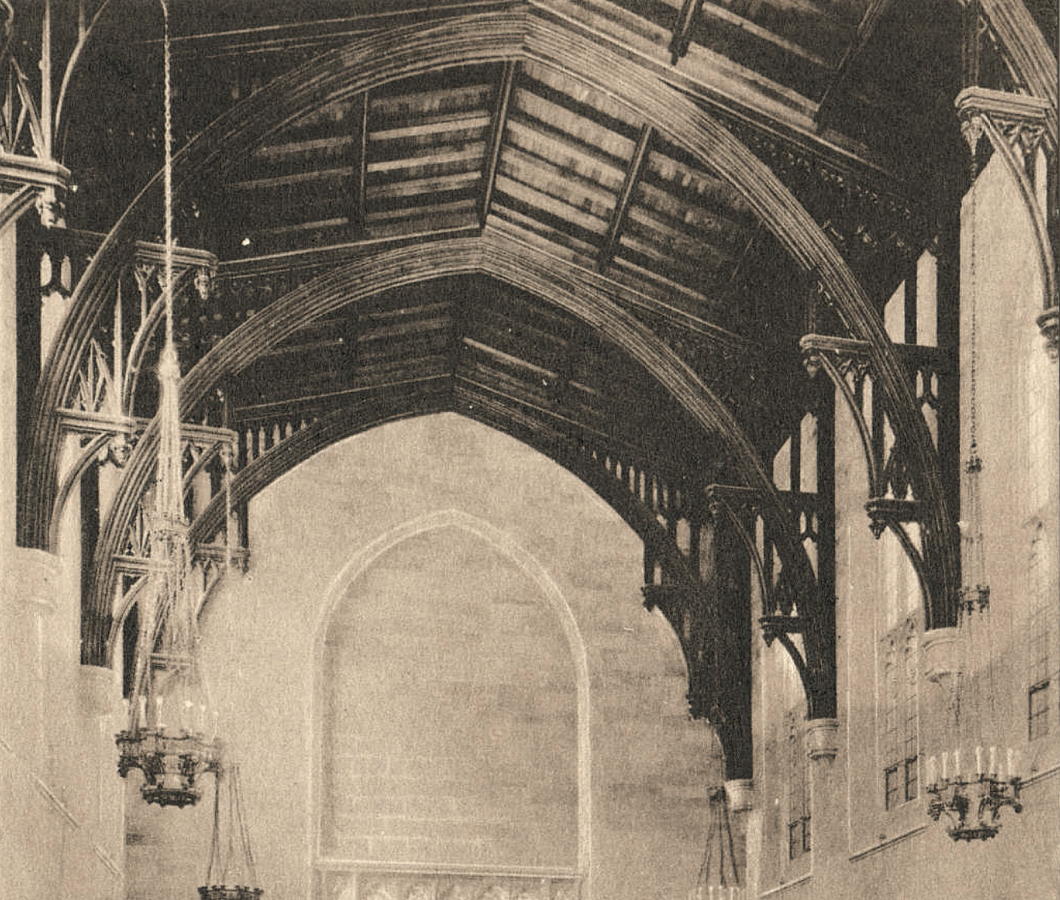
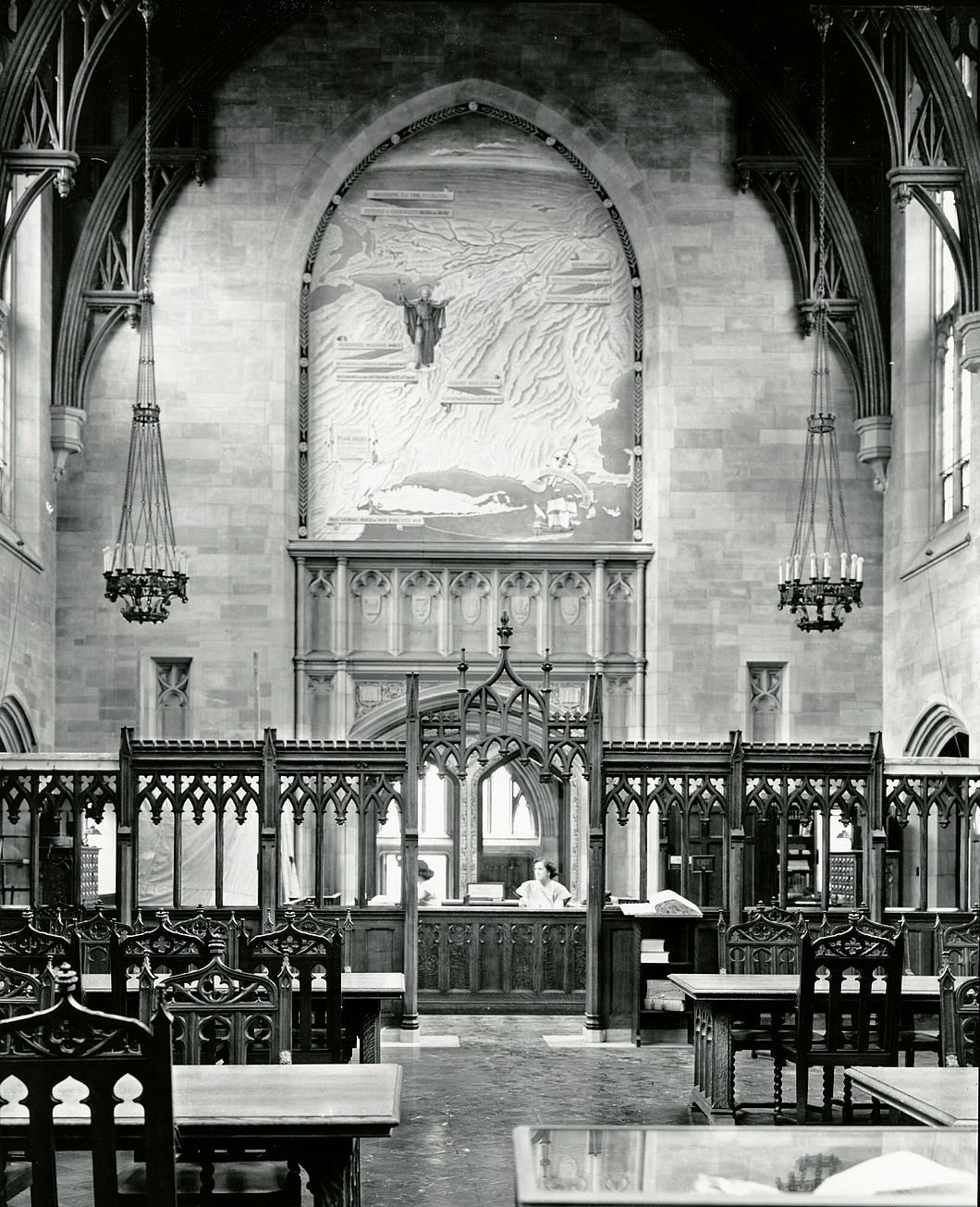
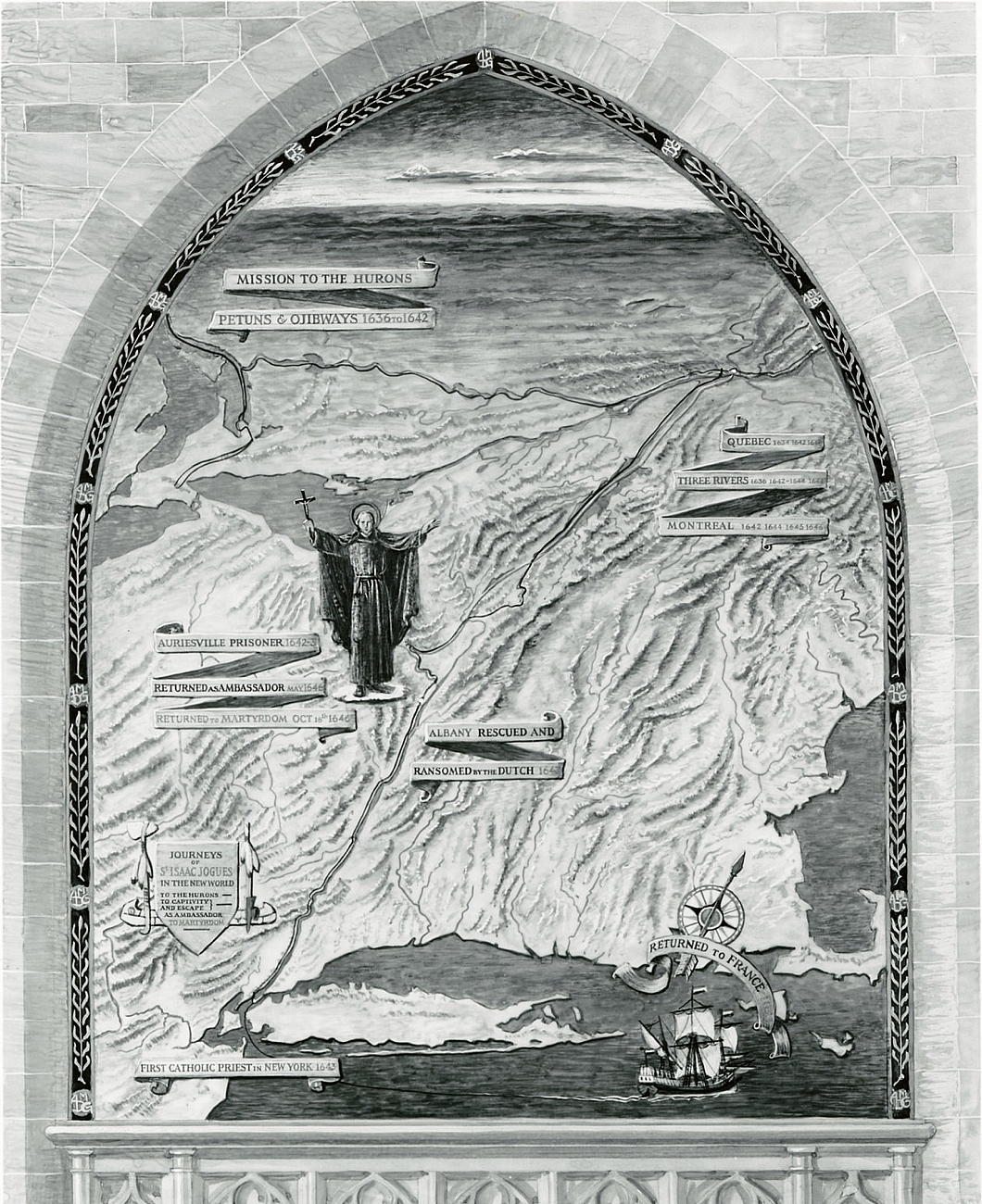
The sacral aura of the building was increased in 1949 when the mural ‘The Journeys of St Isaac Jogues in the New World’ was installed in the gothic arch of the reading room.
Jogues was the first Catholic priest to have visited the city of New York and did missionary work amongst many of the native tribes up the Hudson and beyond in New France before his martyrdom in 1646.
The muralist and designer Hildreth Meière designed this depiction of Jogues’s travels which was executed in casein and gesso relief by her collaborator Louis Ross. It was restored as part of the 2004 renovations to the building.
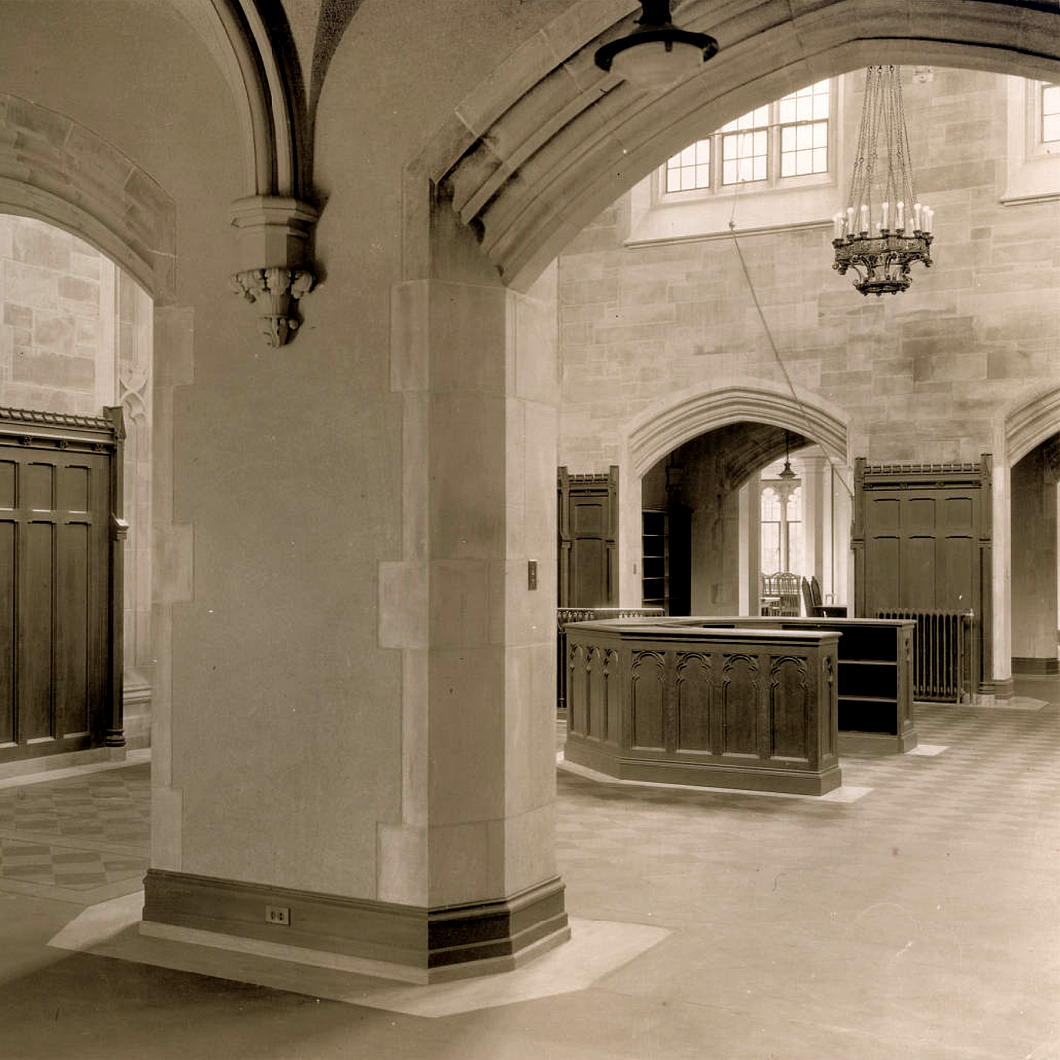
Circulation to the flanking wings of the library is through low arches that were frequently deployed in interwar American Gothic interior spaces, particularly in New York. (Viz. South Dutch Reformed Church [now Park Avenue Christian Church] in Manhattan, St Joseph’s Church in Bronxville, and elsewhere.)
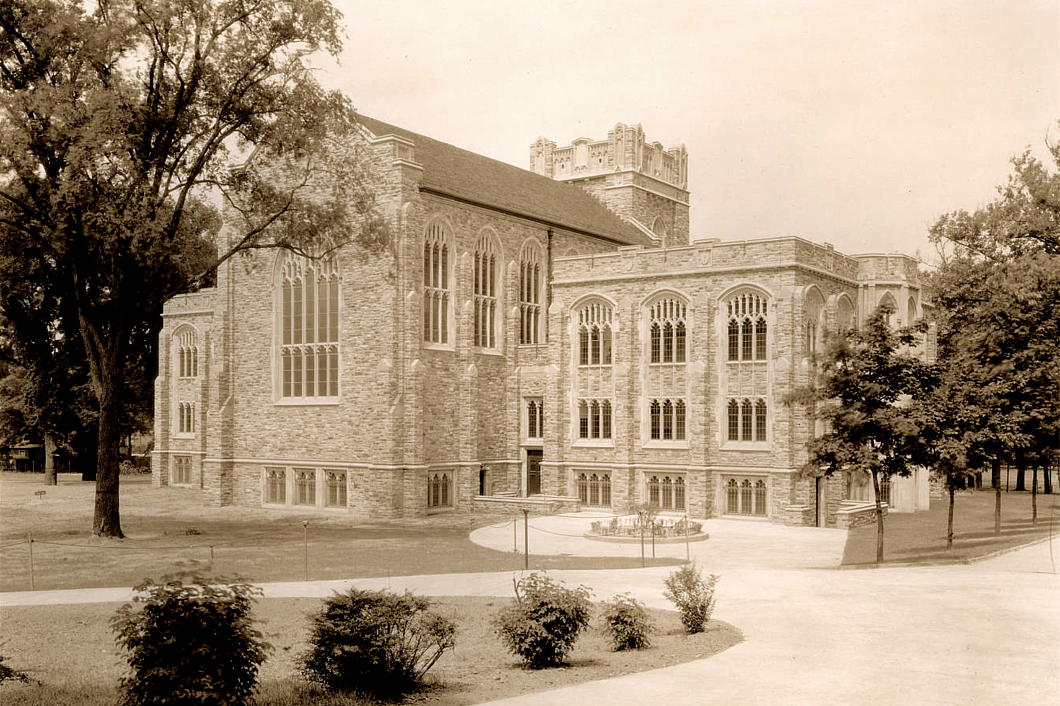
Perrot understood the ever-evolving nature of universities as academic communities and living organisms. The future of the Duane Library was not, despite its building materials, set in stone.
The architect planned the building so it could be expanded by later generations when the need arose — either outward by extending the wings or backward by building additions to the rear.
The fathers of Fordham umm’ed and ahh’ed but never got around to extending the library. Instead they crammed more and more volumes into the original footprint, adding layers of stacks that expanded into the great hall.
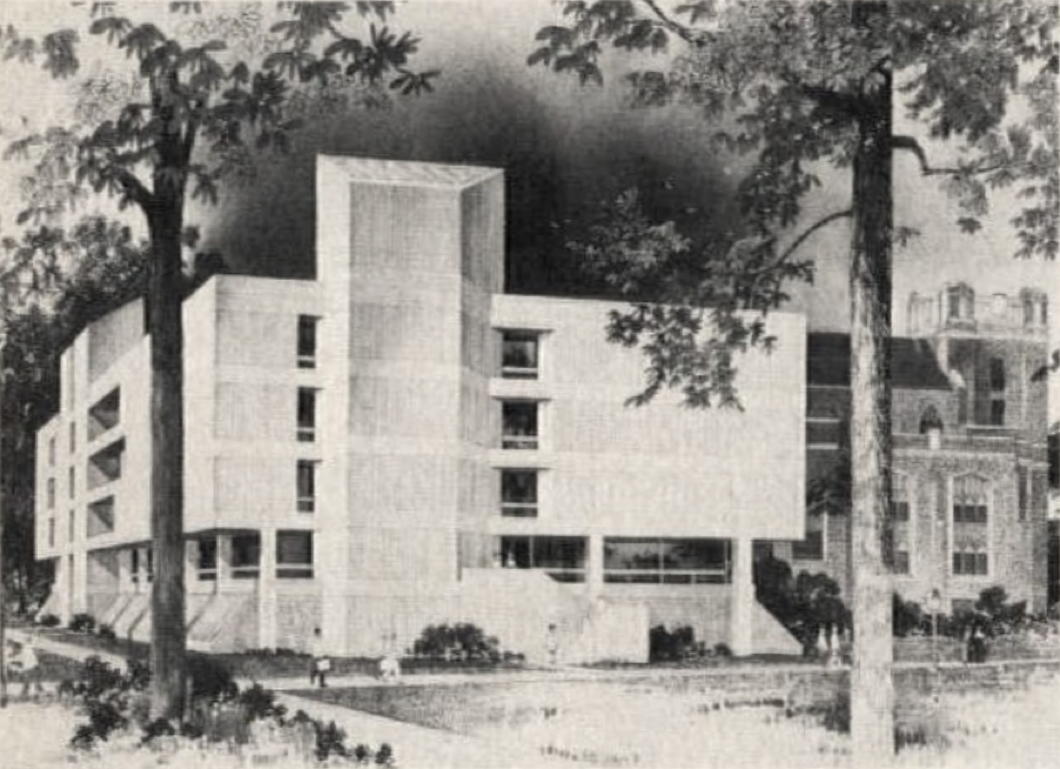
Schemes were devised, only to be shelved by economic downturns or other factors. Judging by the look of the 1968 proposal from DeYoung and Moskowitz (above), perhaps we should be glad.
In the 1990s, a massive new university library was constructed at the western corner of the campus and old Duane was left empty.
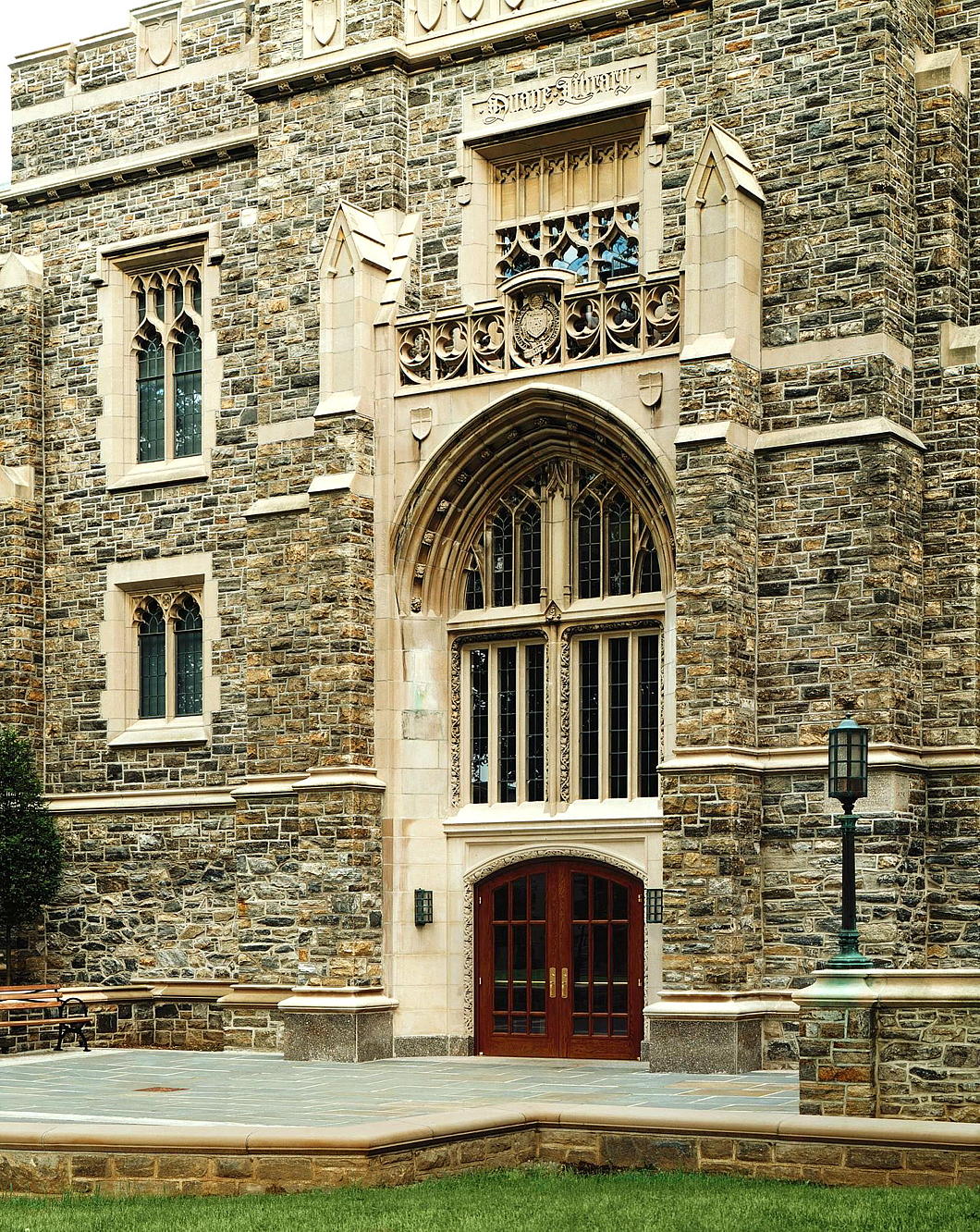
It wasn’t until 2004 that Fordham repurposed the Duane Library with a comprehensive renovation to serve as the Admissions Office and first port of call for prospective students, as well as home to the theology department.
The exterior staircase and terrace were removed and the entrance lowered to the ground level, allowing easier handicapped access but also increasing the utility of the lower level interiors.
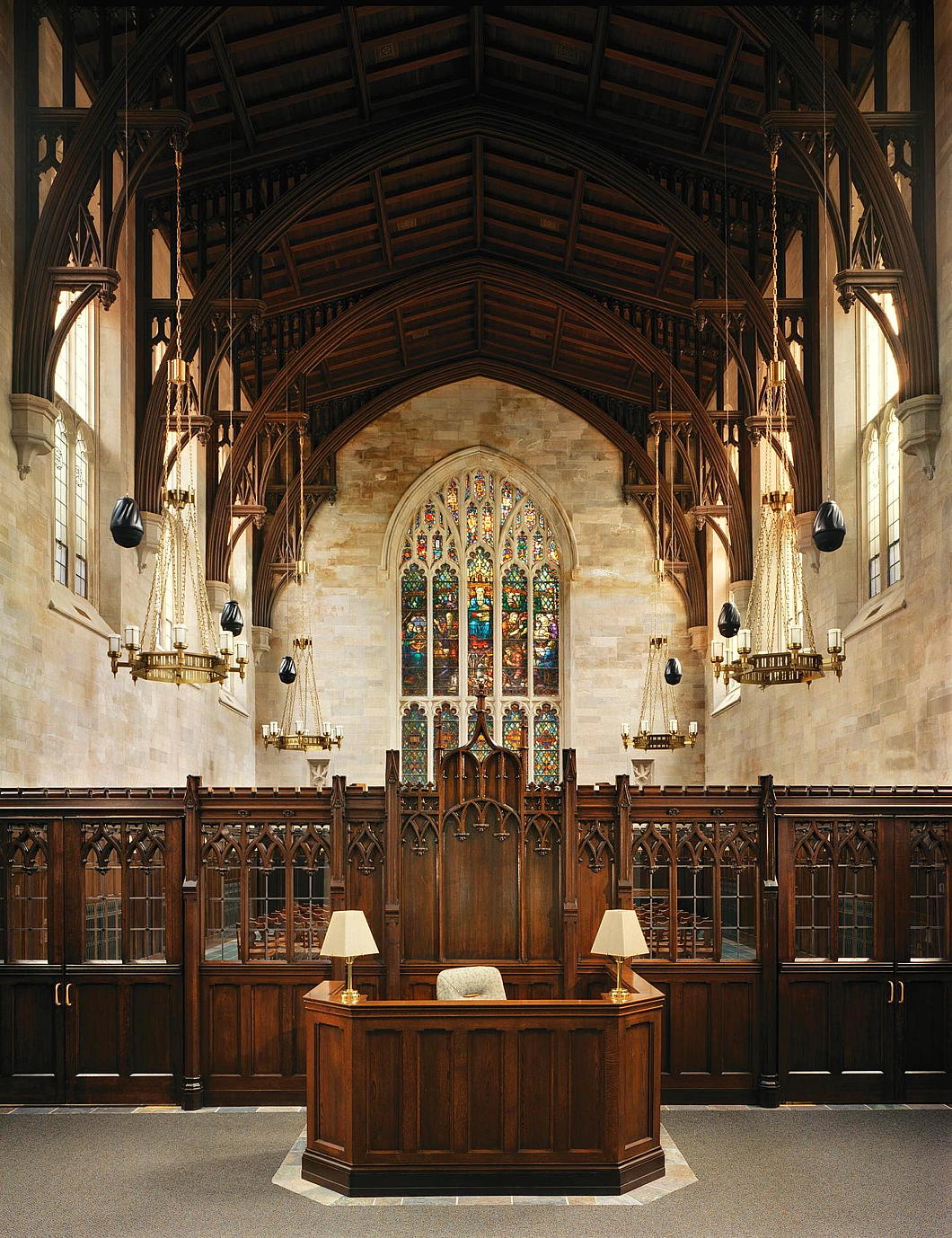
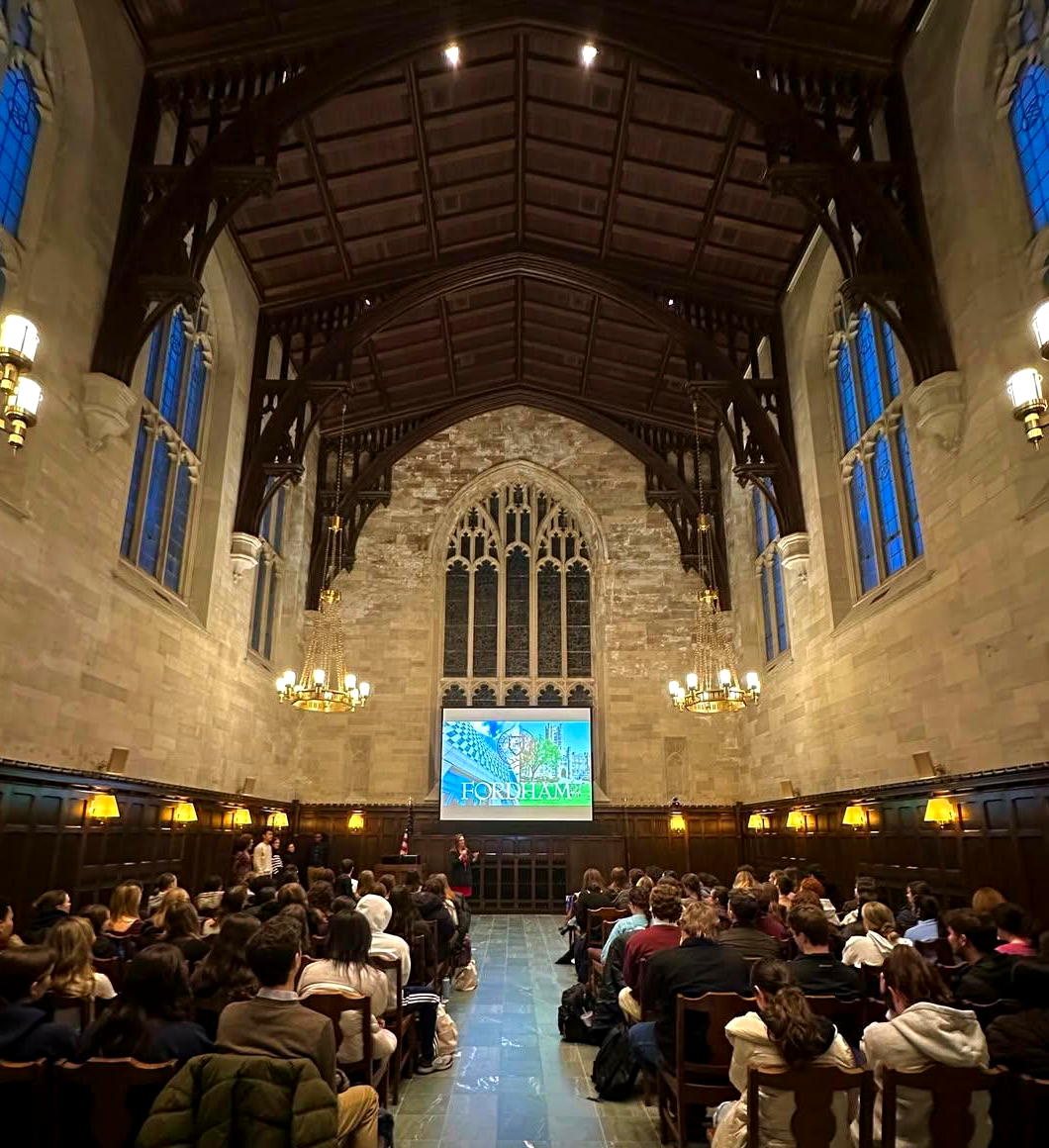
Restored to its former glory, the great hall is now used to welcome groups of visitors as well as a 140-seat performance or lecture venue.
The stained glass window was installed in 1929 as a gift from the Class of 1915, and depicts the study of philosophy, literature, astronomy, natural history, and geography.

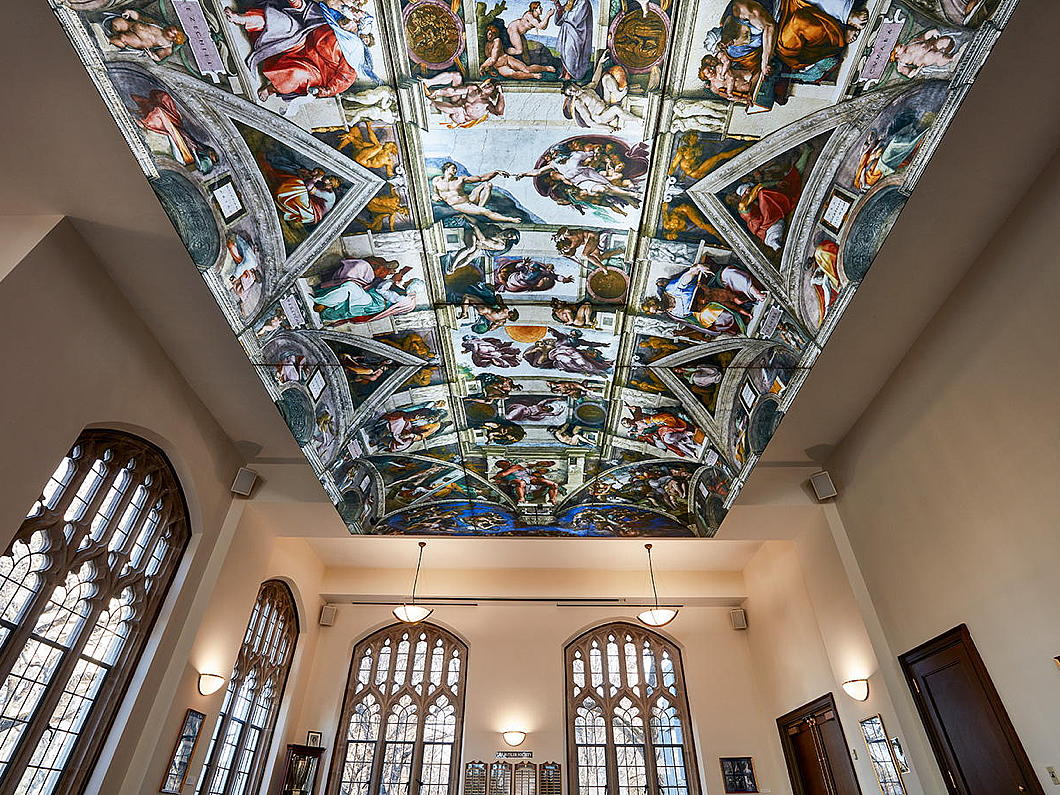
One of the recent additions to the Duane Library is a quarter-scale replica of the ceiling of the Sistine Chapel. It was created for the 2017 exhibition ‘Michaelangelo: Divine Draftsman and Desiner’ at the Metropolitan Museum of Art.
Fr Joseph McShane was visiting the exhibition alongside a Fordham trustee, his wife, the Fordham chair of art history, and a museum administrator and said as soon as he walked into the room he wondered if he could find a home for it at Fordham.
As chance had it, while viewing the exhibition they bumped into Dr Carmen Bambach, a Met curator specialising in Italian Renaissance art who had previously been an assistant professor at Fordham.
Following the tour, the group decided to propose that the university house the copy of the ceiling once the exhibition was finished. “Much to my surprise,” Fr McShane said, “we were informed a few weeks later that the Met approved our proposal.”
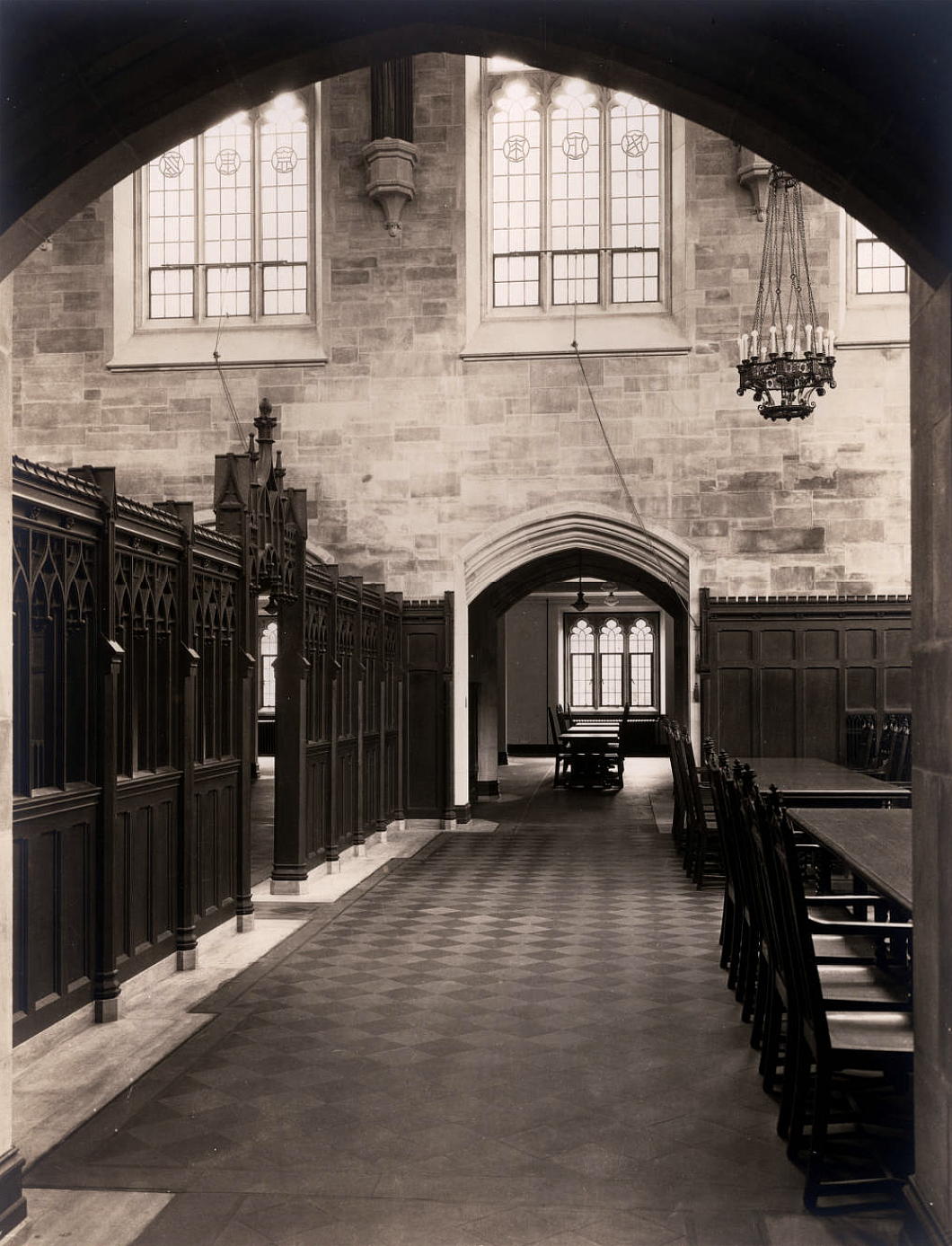
Taking inspiration from Prof Milbank’s earlier-mentioned comments about gothic literature, we could hardly visit the ancient manor of Fordham and the former library of its Gothic university without taking in a ghost story.
On a Sunday night before a final exam, an economics student was studying late in the Duane Library and was the last person left on the floor. Suddenly he heard the sound of footsteps and peeked outside his cubicle. He saw an old priest with a kindly face so he said hello to him.
The priest introduced himself as Father John Shea and asked what he was doing in the library so late. The student explained that he had an economics exam he was studying for. “Oh!” said the priest. “I used to teach economics here. But I haven’t taught in three years.”
The priest asked if the student would carry on to do a PhD but he said no, he was planning to go to law school instead and had already heard back from Georgetown. “Good school! I got my doctorate there,” the priest offered.
After a few minutes of pleasantries, the student ended the conversation and returned to his studies.
Following the exam the next day, he was in the economics department and, chatting with the departmental secretary, he mentioned that he had met Father John Shea the night before. The secretary told him he must be joking because Father Shea had been dead two or three years.
A look in an old departmental catalogue confirmed that the good father had indeed obtained his doctorate from Georgetown and a picture of Father Shea looked like the priest the student saw.
As luck would have it, in 2012 another Fr John Shea was appointed to Fordham College at Lincoln Center, making him the third Jesuit of this moniker at Fordham since John Gilmary Shea.
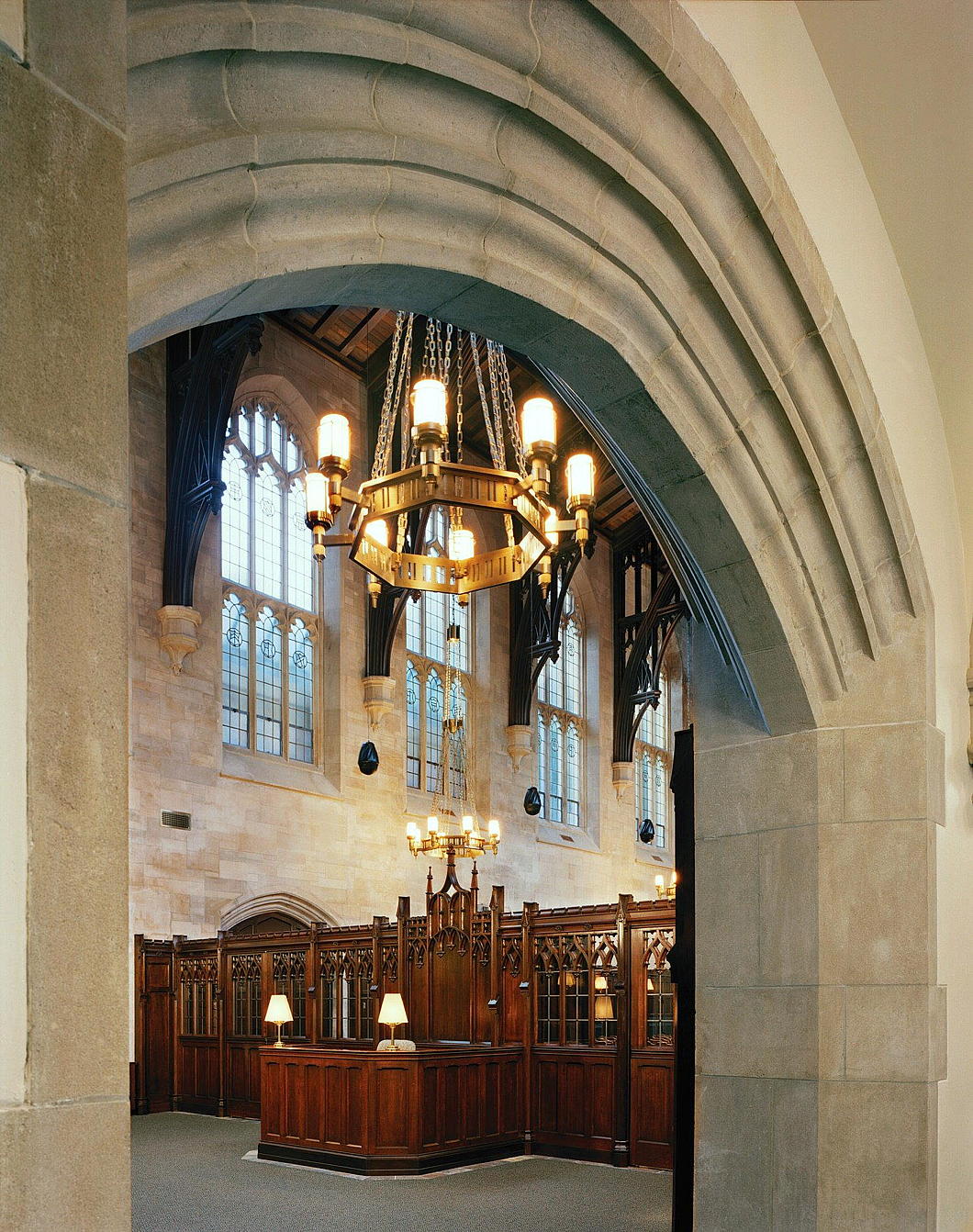
As the admissions office and theology school, any ghosts still haunting the Duane Library will have plenty of new visitors to meet as well as learned scholars to discourse with.
And while Fordham may be haunted, it is good to know its ghosts are friendly rather than fearsome.
A Christmas Gift from the Governor
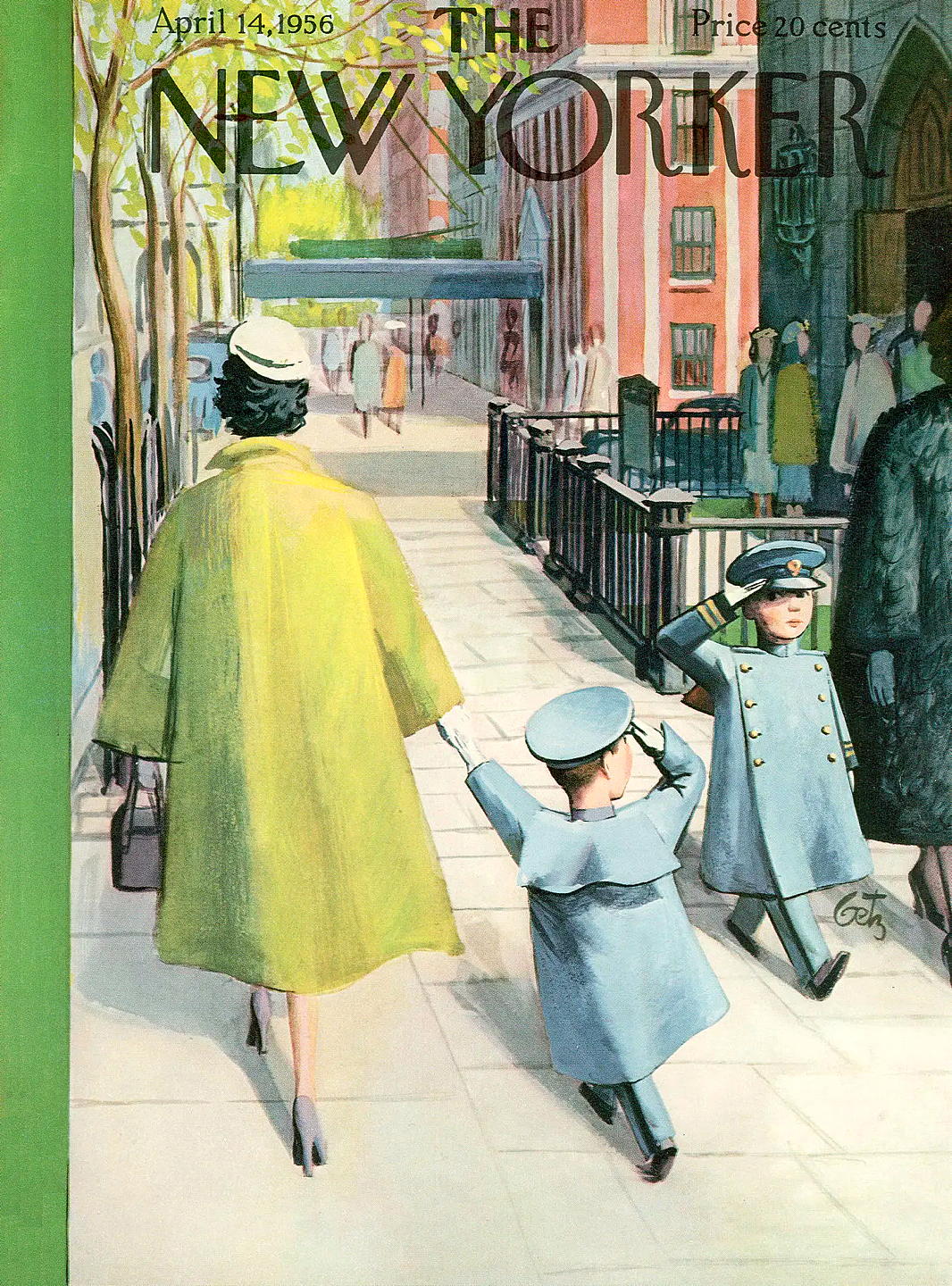
Just in time for Christmas: some excellent news for the Knickerbocker Greys.
Her Excellency the Governor of the great Empire State of New York has signed into law a requirement that this venerable Manhattan cadet corps be allowed to remain in its quarters at the old Seventh Regiment Armory (as The New York Sun reports).
Over recent years the Park Avenue Conservancy has restored the building — a gem of American architecture and interior design — but also effectively expelled the military units still based at the Armory.
The Greys managed to hold out in their “800-square-foot broom closet” (as the New York Post described it) but the Conservancy moved to evict the youth group in 2022. The Greys have fought the eviction in court.
In June a bipartisan bill guaranteeing the Knickerbocker Greys “access and use for permanent headquarters” of the Armory “for the purposes of programming during periods which are not periods of civil or military emergency” passed in the State Assembly and Senate but has only now been signed into law.
The hope is this new legislation will persuade the Conservancy to drop their eviction proceedings which the Greys have been challenging.

Monsieur Bayrou
Monsieur le président has appointed François Bayrou as Prime Minister of France – for how long, who knows.
It is worth revisiting the assessment of him the late Maurice Druon (1918-2009) published in the pages of Le Figaro in 2004:
Monsieur François Bayrou, a secondary character and destined to remain so, is remarkable only for his perseverance in undermining the higher interests of France. He eminently possesses what the English call ‘nuisance value’.
At what point did his self-image begin to cloud his judgement? Here is a Béarnais, the son of a farmer, who, gifted for studies, became an agrégé in classical literature. At twenty-eight, he took his first steps in politics by entering the office of Monsieur Méhaignerie, Minister of Agriculture. At the same time, he joined the centrist party that Giscard d’Estaing created to serve his personal elevation. This party, which participated in overthrowing General de Gaulle in 1969, would become the UDF.
Monsieur Bayrou settled there and prospered. He was elected general councillor in his native department, then regional councillor. He was also an advisor to Monsieur Pierre Pfimlin, to the presidency of the European Assembly. Monsieur Pfimlin was an excellent man in every respect, who exercised very high functions with rectitude. He had only one fault: he was a centrist, that is to say, like all centrists, he was mistaken about the hierarchy of values.
He is credited with having made Paris lose its status as the capital of Europe. Indeed, it was agreed between Adenauer and de Gaulle that the institutions of the European Community would have their headquarters nearby. A large complex would be built in the near Paris region. On this, Pfimlin, an Alsatian, intervened, proclaiming: “Strasbourg, Strasbourg… the link between France and Germany, between the two cultures… reconciliation… Strasbourg, a symbolic city!” Could Alsace be insulted? The Parisian project was shelved.
The move was well-intentioned, but it was a misjudgement.
Paris, a great metropolis of the arts and business, as well as an international communications centre, had all the attractions for Members of the European Parliament, diplomats, and civil servants; Strasbourg, beautiful but provincial, with limited entertainment and above all poorly served, requiring changes of plane to reach its often foggy aerodrome, exercised little charm on the new community population. If the monthly sessions of Parliament – at what cost and for how long? – continue to be held there, everything else, commissions and services, has moved to Brussels and it is Brussels that has become the administrative capital of the Union.
Let us return to Monsieur Bayrou, who is following a fairly typical political path. Elected to parliament, he quickly showed a ministerial appetite by making education issues a specialty. He founded and chaired a permanent group to combat illiteracy. A laudable program. Unfortunately, during the time he was Minister of National Education, illiteracy continued to increase and the general level of education continued to decline. Was it during this period that he experienced a somewhat excessive expansion of his ego?
It is said that one night he woke up the members of his cabinet, urgently summoning them to the ministry, to consult them on a vision he had just had of his presidential future. The anecdote has been circulated with too much insistence for there not to be, at its origin, some reality.
Why am I dwelling so long on Monsieur Bayrou, when we have concerns that seem to be of greater importance? It is because, not content with creating disorder in our domestic policy, he is currently acting contrary to the interests of France in the European Parliament.
Monsieur Bayrou is a candidate for the presidency of the Republic: we know that. He has made it known urbi et orbi and, stubbornness being in his nature, there is every reason to believe that he will be one for life. He also ran in 2002 and, having arrived at the back of the pack, with 6.8%, he immediately put on the jersey with the bib number marked 2007.
Assuring that he is part of the majority in the National Assembly in order to keep his electorate, he keeps his parliamentary group on the fringes, under the pretext of refusing corporatisation; he never stops criticizing the government’s actions, often using the opposition’s arguments, and only votes for it with his fingertips, when he does not abstain, visibly waiting for its fall. Beautiful political logic! This is what Monsieur Bayrou calls cultivating one’s difference. When one benefits from such great support, one ends up preferring adversaries.
His programme? It is made up of nothing but worn-out words and formulas that have become hollow from being used too much. It is as if we had returned to the “more just, more humane Republic” of thirty years ago. Everything ages – even demagoguery. […]
What a waste! And all in keeping. Those who stick around François Bayrou for career interests, like those who stay there out of personal loyalty, expose themselves to serious disappointments.
In politics, I have no other criteria than services rendered to the country.
Prince Talleyrand said: “Without wealth, a nation is only poor; without patriotism, it is a poor nation.”

Dempsey Heiner, Art Critic
Dempsey Heiner was neither coward nor fool: he lied about his age to join the U.S. Navy during the Second World War and later studied at Harvard, Yale, and the Sorbonne. His schoolmate from St Bernard’s days, the Paris Review founder George Plimpton, described him as “the brightest boy in the class, a genius”.
In addition to his wide reading and erudition (which he wore very lightly), Dempsey was also one of the kindest, gentlest creatures the world has ever known. He spent most of his life uncomplainingly caring for his disabled wife day in and day out for decades. By the end, she was immobile, blind, and nearly comatose.
As his parish priest put it, “Not once did I ever hear him speak of her as anything but a blessing… and he seemed never so joyful as when he tried to make her drink through a straw.”
He died in 2008 and I still think it was one of the greatest privileges in my life to have counted him amongst my friends.
Dempsey’s most famous act — one would be tempted to use a bit of New York tabloid hyperbole and say most notorious act — occurred on this week in 1999. It is might best be described as the nexus between filial piety and art criticism.
In the late 1990s, Charles Saatchi put on an exhibition at the Royal Academy entitled ‘Sensation’ displaying works from his own collection produced by ‘Young British Artists’ or YBAs. The show was largely an act of self-promotion and the Royal Academy was accused of collaborating with Saatchi to increase the value of his own collection for eventual re-sale.
Among the works on display was a depiction of the Blessed Virgin which was surrounded by pictures cut out of pornographic magazines, although the press tended to centre in on the artist’s use of cow dung in the painting.
By 1999, Saatchi’s exhibition had crossed the Atlantic where it found a temporary home at the Brooklyn Museum. Despite being one of the best collections of art in the United States, the Brooklyn Museum has suffered somewhat from its borough’s perception as something of a bag-carrier for the more glamorous neighbouring isle of Manhattan.
Dempsey, a convert to Catholicism, had a profound devotion to the Blessed Virgin. He wasn’t keen on the idea of some art-market scheme profaning the image of the Mother God, so in December 1999 the 72-year-old New Yorker bought a bottle of latex paint, smuggled it into the Brooklyn Museum, and daubed the paint on the insulting artwork.
As luck would have it, the Magnum photographer Phillip Jones Griffiths was visiting the museum with his daughter and was in the room when Dempsey began his rather pro-active work of art criticism. Jones Griffiths caught Dempsey in the act with his camera and the next day the image was splayed on the front page of the New York Post.

The security guards detained him pending the arrived of New York’s finest, but Dempsey told me that once his police escort was out of view of museum officials they each patted him on the back and congratulated him for his deed.
Dempsey’s act of defiance was almost certainly a felony-level offense but, as the Museum did not want to put a value to the artwork, the Brooklyn DA’s office felt obliged to reduce the charge to a misdemeanour — still carrying the possibility of up to two years in prison.
At trial, Dempsey said the exhibition’s gravest sin was neither blasphemy nor profanation but its “suggestion that there is no beauty in the world.”
“It’s like what Jean-Paul Sartre said: ‘L’enfer, c’est les autres’,” he told the court. “I reject Sartre’s view of humanity. Art is also supposed to be about skill. There was none of that in ‘Sensation.’”
A spokeswoman for the Brooklyn Museum deployed almost comical de haut en bas at the trial: “I don’t think we’ll respond formally to Mr. Heiner, beyond pondering what in his background makes him an expert on artistic skill.” (His Yale degree was in law and his Sorbonne degree in medicine, so I’m not sure if Dempsey ever formally studied art.)
One of the museumgoers in the room at the time told the Post that, while he disagreed with the vandalism, he “understood” Dempsey’s reaction: “Someone had to stand up and say, ‘This is not right.’”
“I think it was heroic,” our own Irene Callaghan (who died this year) told the Post. “He did it for all the Christians. I’m sure if he smeared paint on the window of a fur shop everyone would think it was marvellous.”
In the end, as the Post reported, Dempsey escaped a prison sentence:
Calling it a “crime not of hate, but of love,” a Brooklyn judge slapped a $250 fine on the man who defaced a dung-daubed image of the Virgin Mary, instead of tougher penalties prosecutors sought.
State Supreme Court Justice Thomas Farber released Dennis Heiner with the fine on the condition that “so long as he has paint in his hands, he’s required to stay away from the Brooklyn Museum.”
Farber, who has called the Heiner case one of the most difficult of his career, said the frail, gentlemanly Roman Catholic advocate had taught him something new.
“I had assumed that an act like this would always be committed by an angry man motivated by hate,” Farber said. “But this was a crime committed not out of hate but out of love for the Virgin Mary.”
“When the row eventually fades,” the then-editor of Art & Auction magazine, Bruce Wolmer, wrote, “the only smile will be on the face of Charles Saatchi, a master self-promoter.”
Saatchi made a mint off the artworks he sold, sparking criticism of museum institutions’ alleged complicity in inflating the prices of YBA works.
What happened to the offensive painting? Heavily insured, it was lost unto the ages in a warehouse fire. None of the art world figures who chimed in to praise it at the time mourned its passing. Sic transit opprobrium mundi.
Dempsey himself had no regrets, but he said he wouldn’t engage in any more public acts of paint smearing.
“I’m too old,” he told the press, chuckling. “I’ve said my piece.”
May he rest in peace.

Vote AR

The lush and verdant tree formed in the shape of the Netherlands grows from deep roots spelling out ‘AR’, the name of the main Protestant party — once led by Abraham Kuyper.
As Kamps and Voerman point out in their book on posters from the Dutch Christian-democratic tradition (in print / online), this poster is a “rather complicated allegorical representation”.
Season’s Greetings from the Seventh

Alas, the Seventh Regiment Mess is no more, though we had a few family Christmas-time (and other) celebrations there in its final years.
Happy days when Linda MacGregor was at the helm of it.
Search
Instagram: @andcusack
Click here for my Instagram photos.Most Recent Posts
- Brunel’s Unbuilt Capitol February 3, 2026
- Cricket at Fordham January 27, 2026
- Palacio Barolo Revisted January 14, 2026
- Learning to Love Liguria January 14, 2026
- Crux Alba No. 2 January 13, 2026
Most Recent Comments
Book Wishlist
Monthly Archives
Categories