History
About Andrew Cusack
 Writer, web designer, etc.; born in New York; educated in Argentina, Scotland, and South Africa; now based in London.
 read more
News
Blogs
Reviews & Periodicals
Arts & Design
World
France
Mitteleuropa
Knickerbockers
Argentina
The Levant
Africa
Cape of Good Hope
Netherlands
Scandinavia
Québec
India
Muscovy
Germany
Academica
“Valkyrie”

No, this isn’t a photograph of the latest Norumbega staff meeting, it’s a publicity shot from the upcoming United Artists film, “Valkyrie”. The film tells the story of Claus Philipp Maria Schenck von Stauffenberg, the heroic German Catholic noble who was the mastermind behind the July 20 plot against Hitler. Needless to say, there has been much anticipation over this film, especially since the lead role went to Tom Cruise, who has never quite got the knack of acting. Like Jeremy Irons, he seems to believe that completely different characters require little or no change in performance, but is mysteriously still making films nonetheless. (Cruise at least has the excuse of being a Scientologist to explain his success… what’s Jeremy Irons’s?).

Despite the poor choice of Mr. Cruise play Count Stauffenberg, the rest of the cast includes some pretty inspired choices. Playing Countess Nina von Stauffenberg is Carice von Houten (above), whom you will remember from “Zwartboek”. She’s joined by fellow “Zwartboek” actor Christian Berkel (top photo, seated far left), who played the evil General Kaütner in the Dutch film, the character responsible for the downfall of the good German, General Müntze, who was played by Sebastian Koch (better known for his role in the hit “Das Leben der Anderen”) who (pause for breath) actually played Count Stauffenberg himself in a 2004 German television production called “Stauffenberg”. Speaking of downfalls, Berkel (we’re back to him now) also played a nasty Nazi in the 2004 film “Downfall” depicting the last few days in Hitler’s bunker. [Correction: Berkel actually played Dr. Ernst-Günter Schenck, one of the good guys.] Some more of the cast…
(more…)
The Café Society of Ferenc Molnár
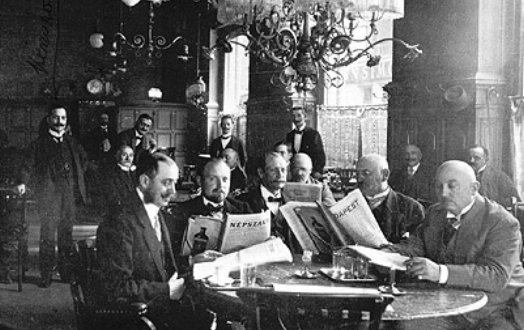
FROM 1887, the Café Central (or Centrál Kávéház, in Magyar) has been a meeting place for artists, intellectuals, professionals, and others located on Budapest’s Károlyi Mihály street. One of its most famous patrons was the novelist and dramatist Ferenc Molnár (born Ferenc Neumann and often anglicized as Franz Molnar), whose 1906 book The Paul Street Boys is perhaps the most widely-read Hungarian novel. His 1909 play “Liliom” was later adapted by Rodgers and Hammerstein into the musical “Carousel”. Both his plays “The Guardsman” and “The Swan” were later made into films (the latter being Grace Kelly’s final appearance on the silver screen), while “The Play at the Castle” was adapted by P.G. Wodehouse into “The Play’s the Thing” and by Tom Stoppard into “Rough Crossing”. (more…)
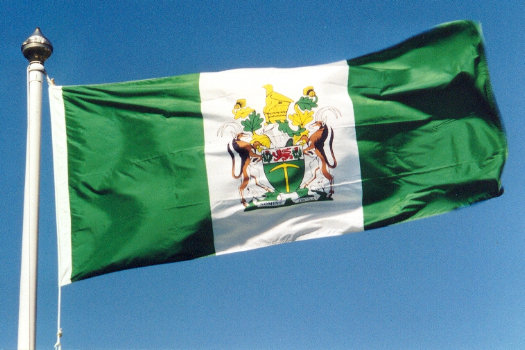
Theodore Dalrymple on Rhodesia
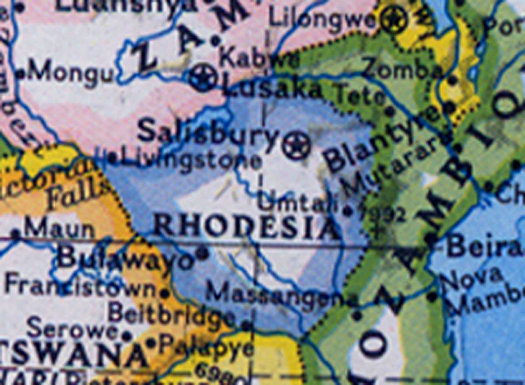
The young black doctors who earned the same salary as we whites could not achieve the same standard of living for a very simple reason: they had an immense number of social obligations to fulfill. They were expected to provide for an ever expanding circle of family members (some of whom may have invested in their education) and people from their village, tribe and province. An income that allowed a white to live like a lord because of a lack of such obligations scarcely raised a black above the level of his family. […]
It is easy to see why a civil service, controlled and manned in its upper reaches by whites could remain efficient and uncorrupt but could not long do so when manned by Africans who were suppose to follow the same rules and procedures. The same is true, of course, of every other administrative activity, public or private. The thick network of social obligations explains why, while it would have been out of the question to bribe most Rhodesian bureaucrats, yet in only a few years it would have been out of the question not to try to bribe most Zimbabwean ones, whose relatives would have condemned them for failing to obtain on their behalf all the advantages their official opportunities might provide. Thus do they very same tasks in the very same offices carried out by people of different cultural and social backgrounds result in very different outcomes.
Viewed in this light, African nationalism was a struggle for power and privilege as it was for freedom, though it co-opted the language of freedom for obvious political advantage.
The Mandarins and the Masses
Mussolini (in his own words)
A Selection of Quotations from Il Duce
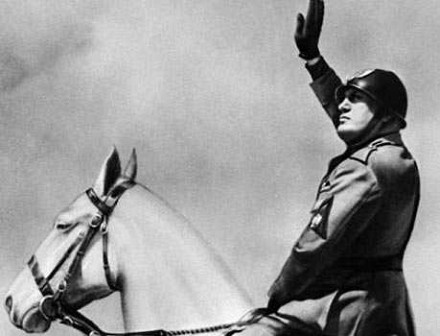
“The Socialists ask us for our program?
Our program is to smash the heads of the Socialists.”
Mussolini himself had been a very prominent Socialist, working for leftist newspapers and was even once deported from Italy when his anti-Catholicism and anti-royalism became too much for the authorities to handle. (more…)
James II, By the Grace of God
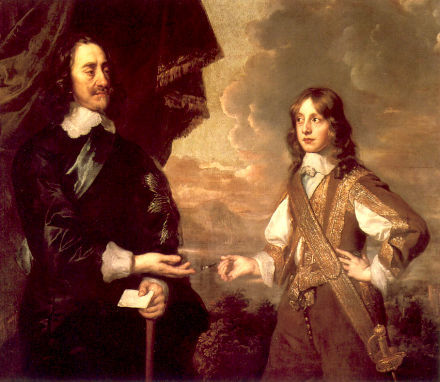
EVERY NOW AND THEN, there is a minor hubbub; perhaps not even enough to be called a hubbub, but call it a hubbub we shall. The hubbub in question is on the subject of James II (seen above, with his father Charles I), our last Catholic king, and the man who (as Duke of York) gave his name to the great city and land of New York. We have previously expounded upon King James on this little corner of the web, but fresh notice was brought by Fr. Nicholas Schofield on his Roman Miscellany blog. In the blog post A Royal Penitent, Fr. Nicholas writes: (more…)
The Montreal Hunt Club
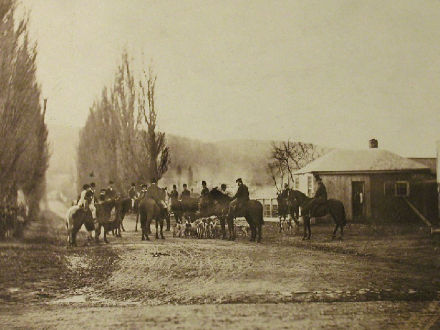
AROUND THIS TIME of year we like to remind our dear readers that out there in the countryside the fox-hunting season has commenced. Charles Moore reports in the Spectator that “there have now been several convictions under the Hunting Act,” the Quantock Staghounds being the most recent victims. “This week, the wretched Ann Widdecombe held a meeting in the House of Commons in which she showed police officers and others a film about how the ban is, in her view, being flouted. Politics has only to change a bit,” Moore continues, “for the police to turn nasty. If politics changes the other way, and there is a Conservative government (no Widdecombe, thank God: she is retiring), the promise of repeal must be cashed in straightaway.” Don’t hold your breath, Mr. Moore!
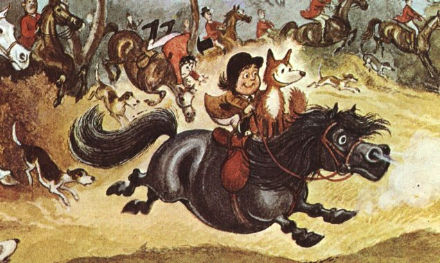
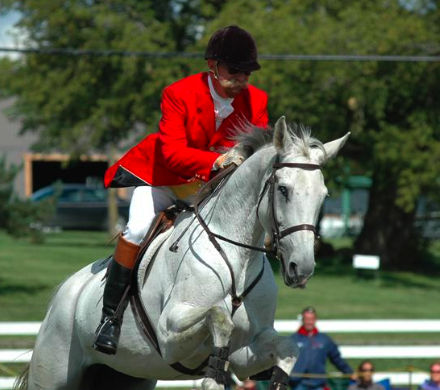
Of course, the season has begun in earnest not only in Great Britain & Ireland but also here in the New World. The Montreal Hunt Club is the oldest hunt in existence on these shores, having been founded back in 1826. (The same year as the Old Guard of the City of New York). For many years, the club lead a triple life as a social organization, a hunt, and even as a military unit, the Royal Montreal Cavalry. The guidon of the Royal Montreal Calvary was presented by the Earl of Dalhousie in 1828 and is the oldest in Canada. (It is currently housed in the armory of the Royal Canadian Hussars, the successor unit to the Royal Montreal Cavalry).
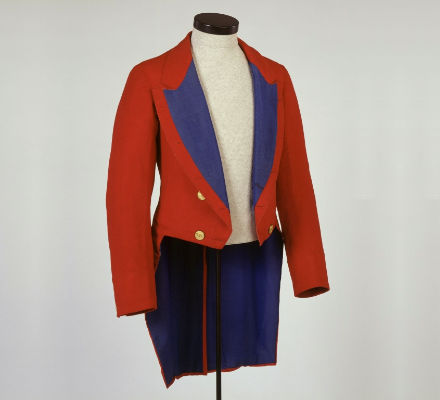
Whilst perambulating the internet the other day I stumbled upon this 1880s evening coat of the Montreal Hunt Club, amongst the collection of the McCord Museum. The accompanying notes, of course, get quite anthropological:
Uniforms and ceremonial dress like this Montreal Hunt Club evening dress coat played a dual role. They not only reinforced hierarchy and group membership, they also provided élite men with opportunities for overt displays of fashion.

In The British Empire in the Nineteenth Century: Its Progress and Expansion at Home and Abroad, Comprising a Description and History of the British Colonies and Dendencies (1898), Edgar Sanderson writes in his entry on Quebec that “the Montreal Hunt Club affords the best sport of its kind in America.” Happily, the Montreal Hunt Club carries on its activities to this very day. While it originally drew its members from the Anglophone portion of the city’s elite, French speakers began to dominate the club from the post-war period onwards. (Accordingly, its official legal names is “Le Club de Chasse à Courre de Montréal”). We hope and pray that as the Montreal Hunt has carried on from centuries past, it will continue to carry on into the future.
The Light Guard
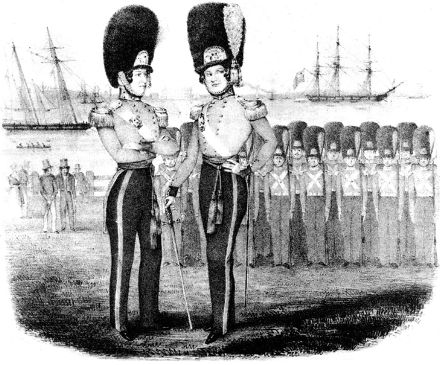
Officers of the New-York Light Guard, an antecedent of the Old Guard of the City of New York. The City Guard and the Light Guard combined in 1826 to form the Old Guard.
Categories: The Old Guard | Militaria
Insiginia of the Society of Colonial Wars
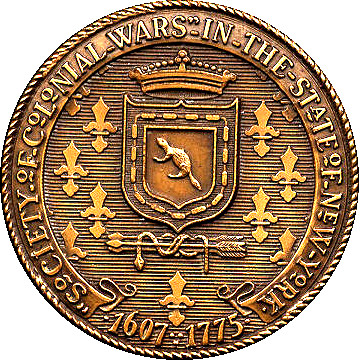
DEPRIVED OF THE hereditary principle by the lamentable break with Great Britain in 1783, Americans were eventually driven to inventing a hereditary social hierarchy, even more stringent than that of the mother country. Blood is the only qualification for membership of the numerous hereditary societies that dot the United States, unquestionably foremost among which is the Society of the Cincinnati. The Society of Colonial Wars, however, is one of the more prominent of the dozens of hereditary societies, and each state organization has devised its own seal or emblem. Below are exhibited a handful of examples.
The Church Resurgent
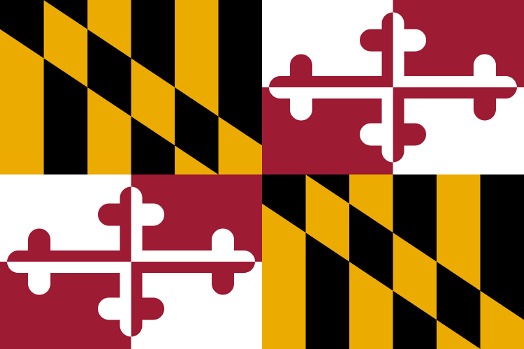
THE CATHOLIC COLONY of Maryland was first planted in 1634 at St. Mary’s, which became the first capital city of the Calvert family’s palatinate. The attempt to run Terra Mariae as a Catholic feudal state was continually frustrated by a number of fiery Protestant settlers, who eventually broke out into open rebellion in the 1650s while the Civil Wars raged back in England. Happily, Cecil Calvert, 2nd Baron Baltimore, sent out an army under Gov. William Stone to restore order to the colony, but was defeated by the Puritan force in March, 1655 at the Battle of the Severn. During the Puritans’ persecution of the Church, all the Catholic churches in Maryland were destroyed, and in 1667 a new ecclesiastical edifice was raised in St. Mary’s: the Brick Chapel.
Only the Church stood
Being a lover of freedom, when the revolution came in Germany, I looked to the universities to defend it, knowing that they had always boasted of their devotion to the cause of truth; but, no, the universities immediately were silenced. Then I looked to the great editors of the newspapers whose flaming editorials in days gone by had proclaimed their love of freedom; but they, like the universities, were silenced in a few short weeks. …
Only the Church stood squarely across the path of Hitler’s campaign for suppressing truth. I never had any special interest in the Church before, but now I feel a great affection and admiration because the Church alone has had the courage and persistence to stand for intellectual truth and moral freedom. I am forced thus to confess that what I once despised I now praise unreservedly.
God Guard Thee, Newfoundland
100 Years Since the Proclamation of Dominion
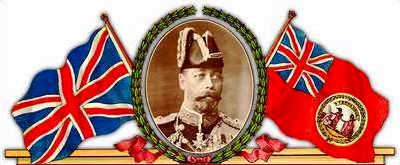
ON 26 SEPTEMBER, 1907, Edward VII, By the Grace of God, of the United Kingdom of Great Britain and Ireland and of the British Dominions beyond the Seas King, Defender of the Faith, Emperor of India, declared the Colony of Newfoundland, having enjoyed responsible government since 1854, the status of an independent Dominion within the British Empire. As it happens, the King-Emperor similarly declared New Zealand a dominion on the very same day. While New Zealand still enjoys dominion status as a free realm within the British Commonwealth of Nations, Newfoundland was profoundly struck by the Great Depression, and surrendered its independence in 1934. From that year it was administered by a Commission of Government headed by a Governor, all appointed by the imperial government in Whitehall.

The Red Ensign of Newfoundland, most commonly used as Newfoundland’s national flag, though the official national flag was the Union Jack.

The shield from Newfoundland’s coat of arms, adopted in 1653.
The Newfoundlanders proudly fought during the Second World War for the freedom of the Empire, but the post-war socialist government was only too keen to give up its responsibility in governing the colony. London and Ottawa both pressed for Newfoundland to join the Canadian Confederation, despite a significant portion of the populace being in favor of returning to responsible self-government. Many hoped that a once-again independent Newfoundland could negotiate an economic and customs union with the United States.

‘First of Britain’s Sons To Die’
Saint Alban, June 22
Sing triumphant o’er the foe;
Tell of him, a Martyr glorious,
For the changeless truth laid low;
Faithful servant, bright example,
Whom all lands and ages know.
Valiant soldier, noble Martyr,
First of Britain’s sons to die,
Pagan ire and cries withstanding,
By the grace of God Most High,
By the strength of Him, Protector
Who, in strength and power, was nigh.
Laud and honour to the Father,
Equal honour to the Son,
Adoration to the Spirit,
Ever Three and ever One,
Consubstantial, Co-eternal,
While unending ages run.
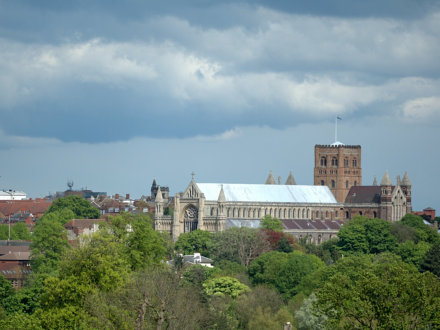
These were the words to the school hymn at St. Alban’s College down in Argentina, which I briefly had the privilege of attending and which is currently celebrating its centenary year (more on that in another post). It was down beneath the Southern Cross that I first became more closely acquainted with good Saint Alban, who was the first Christian martyr of Britain.
A matter of degrees
Gerald Warner wrote a recent Scotland on Sunday column on the occasion of Edinburgh University revoking the honorary degree bestowed upon Zimbabwean President Robert Mugabe.
He discussed various honorary degrees which had been bestowed upon monsters, tyrants, and evil men, and finished his column with a case from Spain.
The most morally grotesque academic elevation was perpetrated in Spain, in 2005, when the Universidad Autónoma de Madrid conferred a doctorate honoris causa on Santiago Carrillo, former leader of the Spanish Communist Party.
As chief of police in Madrid in 1936, he had presided over Cheka death squads that murdered huge numbers of people (2,800 in one weekend) for the crime of being ‘bourgeois’.
Throughout the squalid degree ceremony, people concerned with the honour of Spanish academe punctuated the proceedings with shouts of “Murderer!”
The most effective denunciation of this naked emperor, however, had been made during his journey back from exile. As the aircraft approached Madrid, with the arrogance of a reinstated member of the nomenklatura, he told the stewardess to ask the captain if he could enter the cockpit to get a better view of the capital.
Moments later the public address system came to life: “This is your captain speaking. In 15 minutes we shall be landing at Madrid Barajas airport. Before that, I would like you to see the historic site of Paracuellos de Jarama to the right of us. That was where thousands of innocent people were executed during our civil war. The man responsible for those executions is one of your fellow passengers, Don Santiago Carrillo Solares. He is sitting in seat 27-B.”
“That pilot,” Gerald writes, “deserved an honorary degree”.
The Queen in Williamsburg
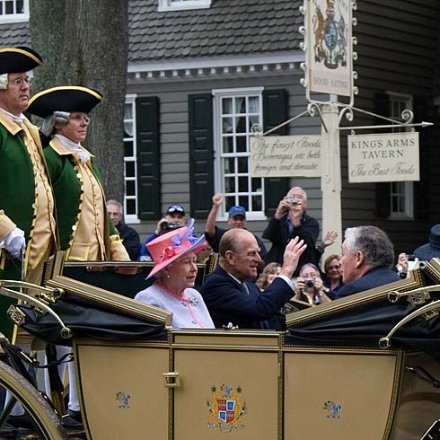
THE QUEEN HAS once again visited Williamsburg, Virginia’s ancient capital, after an absence of half a century. His Excellency Mr. Timothy Kaine, the Governor of the Commonwealth Virginia, was good enough to call a public holiday in the state, giving public workers the day off in celebration of the Queen’s visit. During the trip, Her Majesty spoke to the General Assembly of Virginia, the oldest legislature in the New World, in Richmond (the current capitol), as well as meeting privately with the friends and relatives of the victims of the recent tragedy at Virginia Tech. In Williamsburg, she received an honorary degree from the College of William and Mary and was the guest at a luncheon at the Governor’s Palace, once the official residence of her predecessors’ viceroys in Virginia. (more…)
“We Live in Hope”
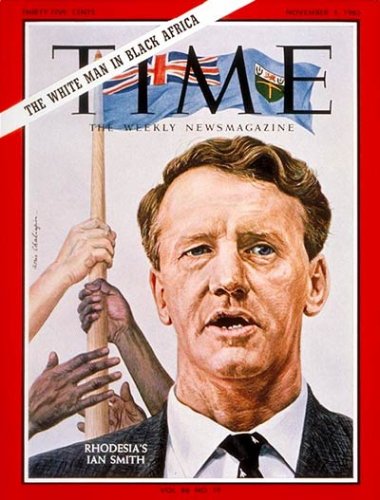
Ian Smith, the Grand Old Man of Africa, Speaks
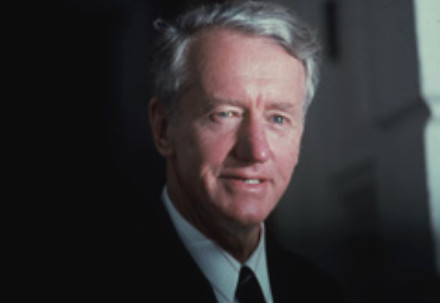
Here is an interesting nine-minute-long clip from a documentary on Ian Smith, the former Prime Minister of Rhodesia, featuring the Hon. Mr. Smith himself, now eighty-eight years of age, as well as Kathy Olds, a landowner, and Ernest Mtunzi, a former aide to ZAPU leader Joshua Nkomo.
“What we believed in was responsible majority rule, as opposed to irresponsible majority rule and I stand by that,” Mr. Smith tells the interviewer. “I think it is important that before you give a person the vote you ensure that his roots go down, that he’s part of the whole structure of the country.”
“Smith is an African,” Ernest Mtunzi says. “He understands the African mentality. […] Smith was being realistic. If you give people something before they’re ready, they’re going to mess it up. And that has happened.”
“Africa is a continent which is subject to a great deal of friction and argument and change,” Smith concludes. “That’s part of the world generally but more so Africa than anywhere else. So because of that we live in hope. We think that the people they in the end will say we’ve had enough.”
“In the interest of our people and of other people this part of the world, let’s work together. […] Let’s just accept that we are all part of Africa, all part of the world. Let’s all work together and the more we can get people to accept that philosophy I think the greater the hope for the whole world.”
The Tragedy of the Falklands War
An article (two versions of which are reproduced here below) recently printed exemplifies one of the tragic aspects of the Falklands War: the Anglo-Argentines who, out of loyalty to their homeland, were forced into waging war against their mother country. The subject of the article, Mr. Alan Craig, happens to be a former student of St. Alban’s College, a fine institution in the Provincia de Buenos Aires (currently celebrating its centenary) which I had the great privilege of briefly attending. (C.f. How Andrew Cusack Became a Tea Drinker). Another sad aspect of the Falklands War is that if there are any two nations which should enjoy the bonds of friendship, it is Britain and Argentina. It is a shame when two countries which should be natural companions, perhaps allies, have deep-seated and long-lasting emotions in the way. (One thinks of Germany and Poland in particular).
Interestingly, Argentine textbooks contain maps of the Falkland Islands in which all the towns and geographical features have contrived names en Castellano. Port Stanley, for example, is called Puerto Argentino, while the Falklands themselves are known to Argentines as las Malvinas.
I remember one day in geography class at St. Alban’s, exhibiting the typical brash arrogance of a youthful Anglo-Saxon, raising my hand, being called on by the teacher, and pronouncing “Sir, I have studied geography all my life, and I spend a lot of time reading maps. I don’t believe there exists such a place called ‘the Malvinas’ though the Falklands…”. I was going to continue that the Falklands “are roughly the shame shape and size and in the same place as this map depicts” (or something to that effect) but I had been interrupted by such a hail of paper, pens, and whatever moveable objects my fellow students could get their hands on (I think Nico, that Russian bastard, had actually thrown a book) that I found it more prudent to take cover underneath my desk rather than continue upon the particular oratorical course upon which I had embarked.
Nonetheless, we pray eternal rest to all the soldiers who fell on those windy isles a quarter-century ago, and that those who survived will live in the peace which their sacrifice has earned for them.
Flags of the British Nations
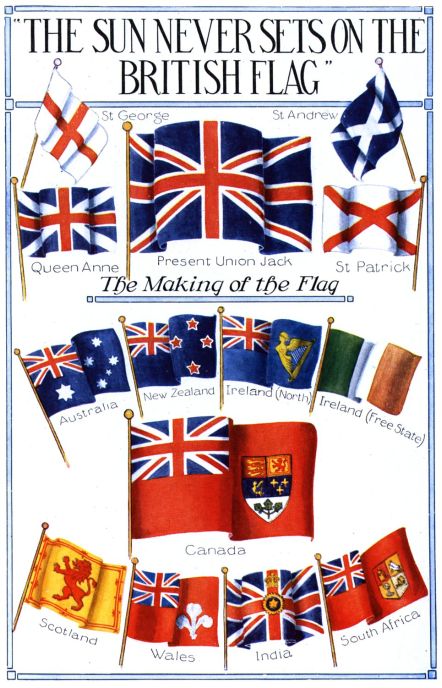
It is interesting how little-valued accuracy was in the depiction of flags “back in the day”. In this illustration, for example, the flags of Wales and “Ireland (North)” are mere inventions while the Scottish and Indian ones are arguable yet imprecise.
The “Welsh” flag depicted is a red ensign that is defaced with the three feathers of the Prince of Wales.
The “Ireland (North)” flag is handsome, but nonexistent. Northern Ireland had an official flag in use from 1953 until the Parliament of Northern Ireland was prorogued in 1972. (It was never recalled, and has since been superseded by the Northern Ireland Assembly). The flag of “Norn Iron” was a banner of the province’s coat of arms.
The flag of Scotland shown here is not actually the national flag (depicted above as the “St. Andrew” flag) but rather the Scottish royal standard, which is often (and improperly) used as an alternative national flag.
The Indian flag depicted is actually the flag of the Viceroy of India, which (admittedly) was sometimes used as a national flag for India. More often, however, a blue or red ensign was used, defaced with the Star of India.

The Canadian flag depicted here was changed in 1957, when the arms of Canada were themselves changed. The maple leaves in the bottom compartment of the sheild were specified to be “gules” (red). Up to that point, they had previously almost always been rendered “vert” (green). The Canadian flag itself was very controversially and unpopularly replaced by Prime Minister Lester B. Pearson with the Maple Leaf Flag. The Leader of the Opposition, the Rt. Hon. John Diefenbaker, derided the Liberal premier’s decision:
“We have had a flag. Flags can be changed. But flags cannot be imposed — the sacred symbols of a people’s hopes and aspirations — by the simple capricious personal choice of a prime minister of Canada. Now then, whenever the overwhelming majority of Canadian people want a new version, and when the design is meaningful and acceptable to most Canadians, that’s democracy. … I asked him [Prime Minister Pearson] this question: as to whether or not, under the circumstance, he would permit or he would arrange for a national referendum and his answer was no.”
Hail Glorious Saint Patrick
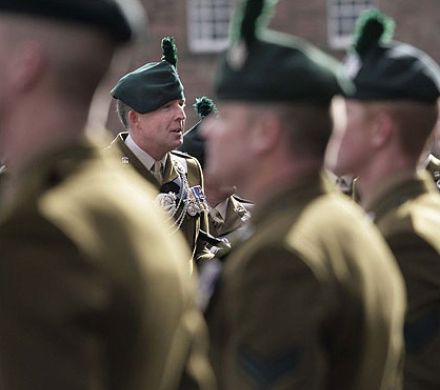
THE FEAST OF IRELAND’S patron saint is an occasion for parading if ever there was one. For this, we can send part of our thanks to the British Army, which happened to initiate the most famous St. Patrick’s Day Parade of them all, namely, New York’s. It was 1762 when a number of Irish troops in the service of the Crown took it upon themselves to parade up Gotham’s own Broadway on the 17th of March. (More recently, the Duke of Edinburgh was invited to partake in the New York parade during his 1966 visit to America). Despite the lamentable outbreak of separatist republicanism in much of Ireland, the sons of Erin continue to take the Queen’s shilling and serve proudly in Her Majesty’s forces, and true to form they are sure to mark their patron’s feast day.
Lord Glenavy

Sir James Henry Mussen Campbell, Bt., 1st Baron Glenavy, PC, QC. was born in Dublin in 1851. Campbell graduated from the University of Dublin (Trinity College) a Bachelor of the Arts in 1874. He was called to the Irish bar in 1878, being made a Queen’s Counsel in 1892.
Campbell was elected to Parliament in 1898, being called to the English bar a year later. He was made Solicitor General for Ireland in 1903, as well as being appointed an Irish Privy Counsellor. He rose to become Lord Chief Justice of Ireland in 1916, being made a baronet the following year, and Lord Chancellor of Ireland the year after that (1918). Sir James was ennobled as 1st Baron Glenavy upon relinquishing office in 1921.
Ireland was partitioned in the following year, and Lord Glenavy became the first Cathaoirleach of Seanad Éireann (Presiding officer of the Irish senate). In 1923, he chaired the judicial committee investigating the establishment of a new courts system for the Irish Free State. His proposals were implemented the following year in the Courts of Justice Act 1924, forming the Irish courts as they remain today.
Having served one six-year term in the Seanad, he did not seek re-election in 1928, and died three years later in 1931. Holding the largely honorary position of President of the College Historical Society (“the Hist”), Dublin University’s debating society, from 1925, he was succeeded upon his death by his fellow Irish Protestant, Douglas Hyde, who himself later became the first President of Ireland from 1938 until 1945.
Search
Instagram: @andcusack
Click here for my Instagram photos.Most Recent Posts
- Brunel’s Unbuilt Capitol February 3, 2026
- Cricket at Fordham January 27, 2026
- Palacio Barolo Revisted January 14, 2026
- Learning to Love Liguria January 14, 2026
- Crux Alba No. 2 January 13, 2026
Most Recent Comments
Book Wishlist
Monthly Archives
Categories