Errant Thoughts
About Andrew Cusack
 Writer, web designer, etc.; born in New York; educated in Argentina, Scotland, and South Africa; now based in London.
 read more
News
Blogs
Reviews & Periodicals
Arts & Design
World
France
Mitteleuropa
Knickerbockers
Argentina
The Levant
Africa
Cape of Good Hope
Netherlands
Scandinavia
Québec
India
Muscovy
Germany
Academica
Palacio Barolo Revisted
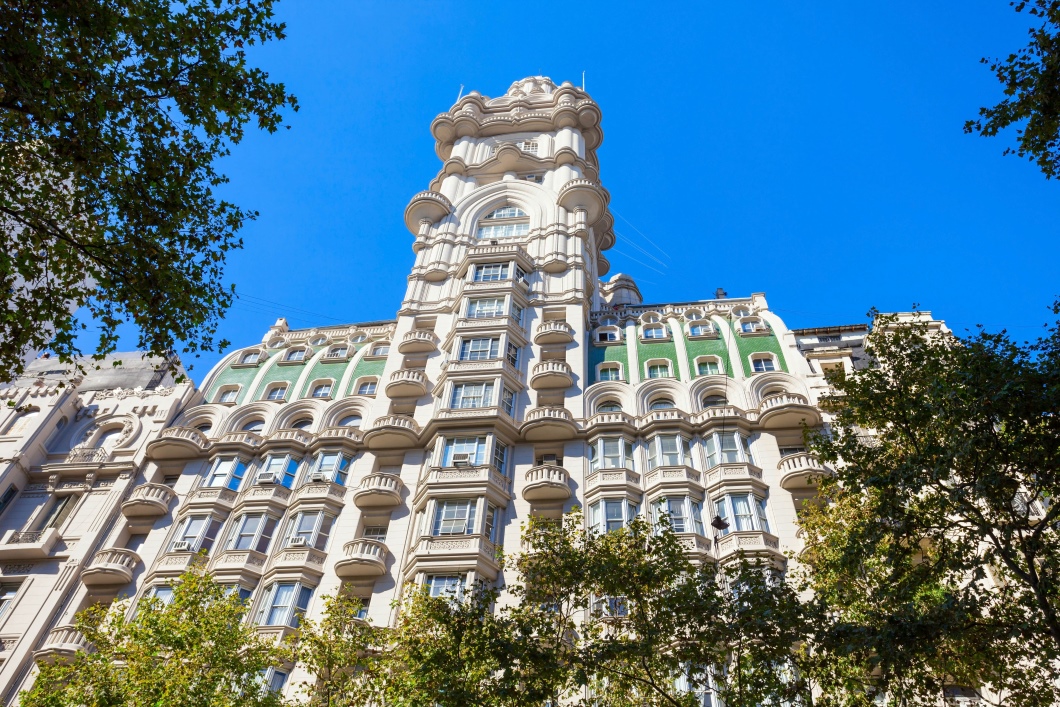
Assiduous readers may recall my posting about the Palacio Barolo, the mad Buenos Aires skyscraper that was conceived as a monument to the genius of Dante.
In a recent entry of Kit Wilson’s excellent Eclectic Letters, novelist (and recent ‘Foidcast’ guest) Thomas Peermohamed Lambert recalls this eccentric edifice:
Palacio Barolo is not my favourite building aesthetically — depending on my mood, that accolade might go to one of Le Corbusier’s Assembly building Chandigarh, or Westminster Cathedral, or the Duomo di Monreale, or the Nakagin Capsule tower — but no other building has lodged itself quite so firmly in my soul. I first visited it in 2018, while I was living in Buenos Aires. Someone mentioned to me that a few blocks from the drab neoclassical Congressional Palace resided the former tallest building in South America, designed by a mad Italian architect to accord with the cosmology of Dante’s Divine Comedy. I had to go.
Palacio Barolo is wonderful enough from the outside: it has a mad, Art Nouveau energy that reminds me, bizarrely, of Brussels. But its interior is even better. Its lobby is lit by orange-glowing pits that are meant to look like Hell’s lowest circles; there are statues of monsters, gargoyles, and pretty much every doorway has some kind of masonic symbol on it. Because labour is cheap in Buenos Aires, the place is also massively and confusingly over-staffed: there are uniformed people buzzing around you, ushering you into clanking iron lifts and up astonishingly decorated staircases whether you ask them to or not. At the top of the building is a completely pointless lighthouse beacon, included for the sole purpose of seeming divine and celestial, and one of the best views of Buenos Aires you’ll ever see.
Crux Alba No. 2

You can purchase a copy via the Grand Priory’s shop or find out how to subscribe.
The lead article by Gregory Goodrich explores the Order’s search to purchase land from the early United States and includes previously unpublished correspondence between the Grand Master and James Monroe.
Simone Monti examines a beautiful illuminated sixteenth-century missal from the Order’s period on Rhodes. Dr Anna K Dulska spoke with the last Hospitaller nun of Sijena before her death late last year and explores the artistic and historical legacy of the monastery there.
Clemens von Mirbach-Harff relays news of the Order’s humanitarian efforts to deal with the crisis in Gaza, including the opening of two new medical clinics. Henry Sire pens an expert review of Marcus Bull’s recent book about the Great Siege of Malta.
The issue also includes a report of the Latin Patriarch of Jerusalem’s visit to London, and more. Click here the full contents here.
Wave Hill
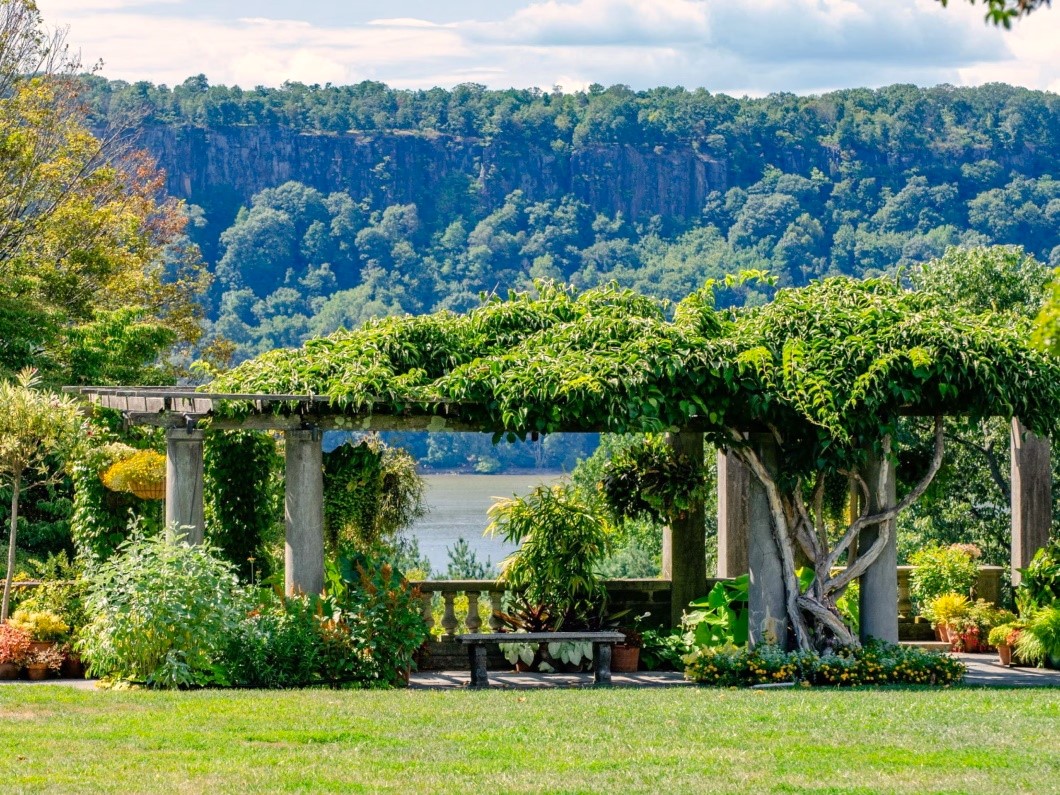
Every few years someone or other ‘rediscovers’ the beauty of Wave Hill, the twenty-eight-acre estate, house — two houses, actually — and garden in the Bronx overlooking the waters of the Hudson River.
This time it is the turn of the Financial Times, who sent Andrew Jack to investigate the domain in the Riverdale neighbourhood of the city’s northern borough:
With trees, lawns and varied and colourful year-round flowerbeds overlooking the river, it feels almost as remote as when it was a lengthy carriage ride from the city for William Lewis Morris, the lawyer who built the original Wave Hill House in 1843.

Theodore Roosevelt spent a summer or two here, as did Mark Twain in the later years of his life. George Walbridge Perkins bought it in 1903 and expanded it to include the adjacent Glyndor House.
The ever-crafty Robert Moses persuaded the Perkins-Freeman family to hand Wave Hill over to the City of New York in 1960, and since then it has been carefully looked after and open to the public for a small charge.
(Those Riverdale residents who are not allowed to handle currency on the Jewish Sabbath are allowed to book and pre-pay for entry thus obtaining access without breaking their observance.)

For the past two years, Pratt landscaping graduate Ray Oladapo-Johnson has been in charge of this verdant realm (photographed here by Beowulf Sheehan).
Head over to the FT to read more.

Articles of Note: 15 September 2025
Helen Andrews reminds us what America is losing when adolescents are denied this early schooling in competence and responsibility.
■ Edward Luttwak has been one of the most insightful critics of the Agency’s failings: the perpetual deficit in language skills, front-line regional knowledge, and overall institutional seriousness.
He argues the greatest threat to the CIA isn’t the current inhabitant of the White House but Langley’s own comfort with incompetence.
■ The older established small-town America – coastal and mid-Atlantic mostly – offers an incarnation of the conservative idyll: church spires, clapboard houses, civic pride, and other gems worthy of admiration and emulation.
Yet while tradition is revered by conservatives living amidst strip malls and subdivisions, it is liberals who preserve and maintain the old houses and town greens of New England. Aaron Renn looks into the contradictions of this dichotomy.


■ We have – you may have noticed – a lot of time for General de Gaulle. The most famous of his American stalwarts was the dancer, singer, actress – and spy – Josephine Baker. Behind the glamour of the music halls, archives reveal that Baker undertook serious work for the Free French secret services – not just against the Germans, but also against the crafty Middle-Eastern machinations of Great Britain.
■ Amongst political Gaullism’s enduring legacies is Pierre Messmer’s reaction to the Arab oil embargo. The Gaullist PM was determined France would never be caught again with its pants down in terms of energy and crafted a bold plan: forty nuclear reactors around the country, all built within a decade.
Alex Chalmers delves into the planning, procurement, and politics of this feat of engineering and of statecraft.
■ The English-speaking world fails to devote enough bandwidth to Brazilian history and culture.
Ryan Musto explores Washington’s plea for Brasilia to send troops to Vietnam and the outbreak of caution in influential milieux that spared Brazil a costly entanglement.
■ After Mormonism, the teachings of Mary Baker Eddy must rank amongst the strangest religions to have emerged from American soil.
Elijah Granet explains how Christian Science achieved the realms of inoffensive boredom and assimilated, at least in part, to a cultural Protestant mainstream while maintaining a disproportionate prominence.
Druze Stirrings
The secretive sect that helped topple Assad
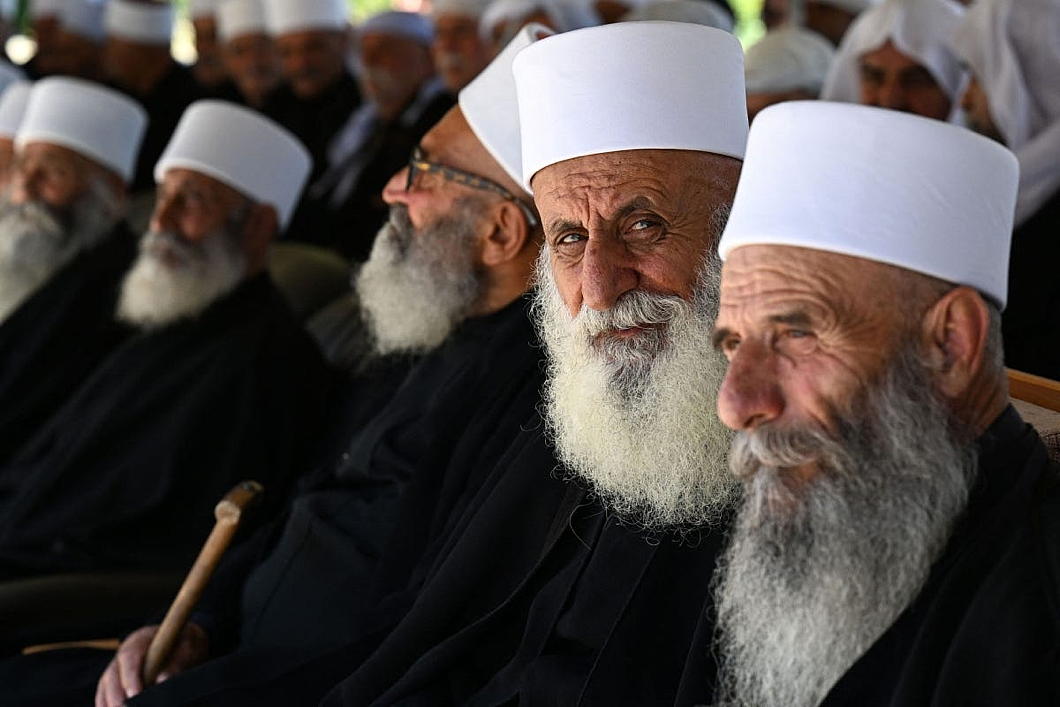
The Druze are an elusive people. During the few summers I spent in Lebanon I met Maronites, Melkites, Sunni, Shi’a, Armenians, and many others but I only recall knowingly meeting one Druze — and that’s a story for another day.
Druze beliefs are as secretive as they are distinct. Most file them as (for lack of a less judgemental word) a schismatic branch of Islam that emerged out of Isma’ilism; others argue that they are gnostics who took up the Islamic mantle to avoid oppression. Naturally they do not call themselves Druze, but muwaḥidūn, which more or less means ‘monotheists’ or ‘singularists’ — believers in the singularity of God. Ethnically, they are Arab, and migrated to the Lebanese mountains and Jabal al-Druze from south Arabia before the advent of Islam.
Christians have traversed the four corners of the globe in order to share the Gospel, but the Druze are completely at odds with this mentality. They are not bothered if you are uninterested in their religion: In fact, altogether they very much prefer you don’t ask too many questions because, frankly, they don’t want you to know. Since the closing of the daʿwa — the call to belief — in AD 1043, no converts may be accepted, nor can rituals or worship take place in public, and all marriage outside the community is prohibited.
There is only one famous Druze in the world: the perennial survivor of Lebanese politics, Walid Joumblatt. He ascended to the political headship of Lebanon’s Druze in 1977, succeeding his father Kamal as the leader of the Progressive Socialist Party — whose name elides the sectarian tribal nature of the entity as the outlet for political Druzism in the Lebanon — and maintained his leadership throughout the devastation of the fifteen-year civil war.
Joumblatt is an educated and entertaining fellow, sharing his holiday snaps on the Nile with pith helmet and parasol, mockingly comparing himself to Hercules Poirot.
Our Lady, Protectoress of Bavaria
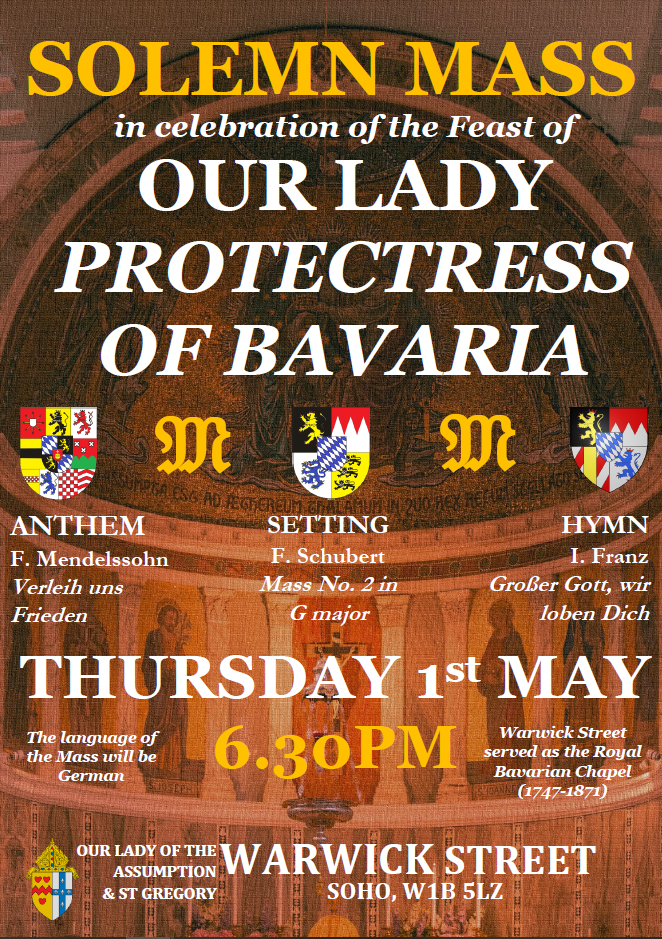
Our Lady, Protectress of Bavaria
including music by Mendelssohn, Schubert, and Franz
Thursday 1 May 2025
6:30pm
Church of Our Lady of the Assumption & Saint Gregory
Warwick Street
Soho, London W1B 5LZ
How to Make a Pope
Argentina is a strange place partly because it is simultaneously so familiar and yet completely different.
It is a world of its own but with deep echoes of the world outside; like someone you instantly recognise as a cousin even though you’re meeting them for the first time.
The world’s most famous Argentine died this week which provoked me to ponder about the country and time that formed him.
From the age of 10 until he was 19, young Jorge Mario Bergoglio lived in Perón’s Argentina.
■ Over at my Substack I wrote a little bit about the early life of the late Pope Francis and his Argentine upbringing. Read it here.
Articles of Note: 8 April 2025

In Smithsonian magazine, Chris Heath has a rifle through the archives alongside the historian, who tells us about his first job with the New Brunswick Daily Home News:
In March 1959, Caro was diverted into what might have been a whole other career. Instead it turned into a pivotal life lesson. His newspaper was so enmeshed with the local Democratic political establishment that, come election time, the paper’s chief political reporter routinely took a leave of absence to write candidate speeches. This particular year, the reporter fell suddenly ill, and Caro was deputed to fill in. Suddenly, he was in politics. Caro supplied the required speeches, and even a campaign song—65 years later, he can still sing part of it to me—setting the names of the five Democratic candidates to the tune of the 19th-century standard “MacNamara’s Band.” Every so often, the campaign manager and city attorney Joseph Takacs would pull out a wad of $50 bills, peel off a few and hand them to Caro. It was more money than he had ever been paid.
It seemed like a dream job. But on Election Day, in mid-May, Takacs, who seemed to have taken a liking to Caro, invited him on his tour of the polling stations. At each stop, Takacs would have a cozy conference with the police overseeing the polls. Then, at one stop it was explained that there had been some trouble that was being dealt with, and Caro watched as Black protesters were herded into a police van. As Caro tells it, this was a moment of decision. At the next traffic light, he reached for the door handle. “I just got out of the car without saying anything,” he says.
And much more about his early days in the newspapers as well as his writing method. It inspired me to finally pick up a copy of The Power Broker.
■ Granny killing is the biggest political issue in the UK at the moment, though the attention it has received from the front pages is less than in real life, the group chats, and online.
The original legislation establishing the National Health Service tasked it to “secure improvement in the physical and mental health of the people of England… and the prevention, diagnosis and treatment of illness.”
Kim Leadbeater’s bill legalising and providing for assisted suicide, however, would require altering this.
In Compact, Dan Hitchens describes how assisted suicide will destroy the NHS.
■ Camille Paglia is a phenomenon whose reputation is having a second wind thanks to her breathless interviews and discussions on intellectual chat shows now shared on social media.
I don’t mean to dampen with faint praise but she’s probably the best thing ever to have come out of SUNY Binghamton.
Ella Dorn examines her own devotion to the cult of Camille Paglia for the Spectator.
■ Jews are a miniscule proportion of the global population but there are currently three Jewish heads of state.
At Engelsberg Ideas, Elijah Granet explores how Jewish leaders have defied the political odds to come out on top in the past century.
■ London is, alas, an increasingly undignified place to live.
Ellen Pasternack writes in this month’s issue of The Critic how you have to surrender a bigger and bigger chunk of your take-home salary to rent ever smaller accommodation that itself is often cramped and belittling.
The trends aren’t heading in the right direction.
■ There is a mischievous air to Fred Sculthorp. Whenever I see him he looks like he’s up to something, and he usually is.
The other day I ran into him (or rather he ran into me) on Victoria Street and he told me he was working on a piece on Dagenham.
He writes for Unherd about how this spectrum of far London and near Essex has been abandoned by the political establishment and is turning to Reform. “Bring back Rupert Lowe!”
■ Can Russians and Americans be friends? Richard Nixon has the answer.
Can Russians and Americans be friends? pic.twitter.com/0l8mzuyCbt
— Richard Nixon Foundation (@nixonfoundation) March 28, 2025
The Richard Nixon foundation is doing yeoman’s work on social media lately and well worth a follow.

Teutonic Takeover
What is going on in Chile? They’re having a presidential election later this year, and the latest poll figures are out.
The top three candidates are all right-wingers descended from German immigrants, but with very different family backgrounds.
How their ancestors ended up in the Andean republic on the Pacific reflects the varieties of experience in the German diaspora in South America.
■ Read more over at my Substack.
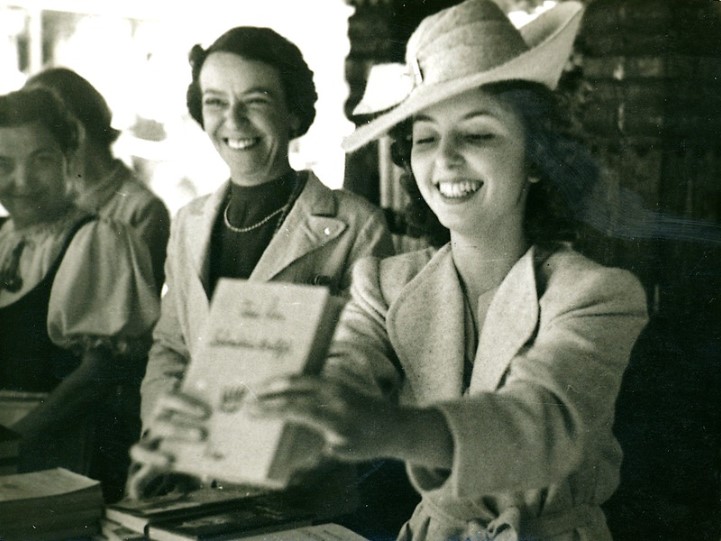
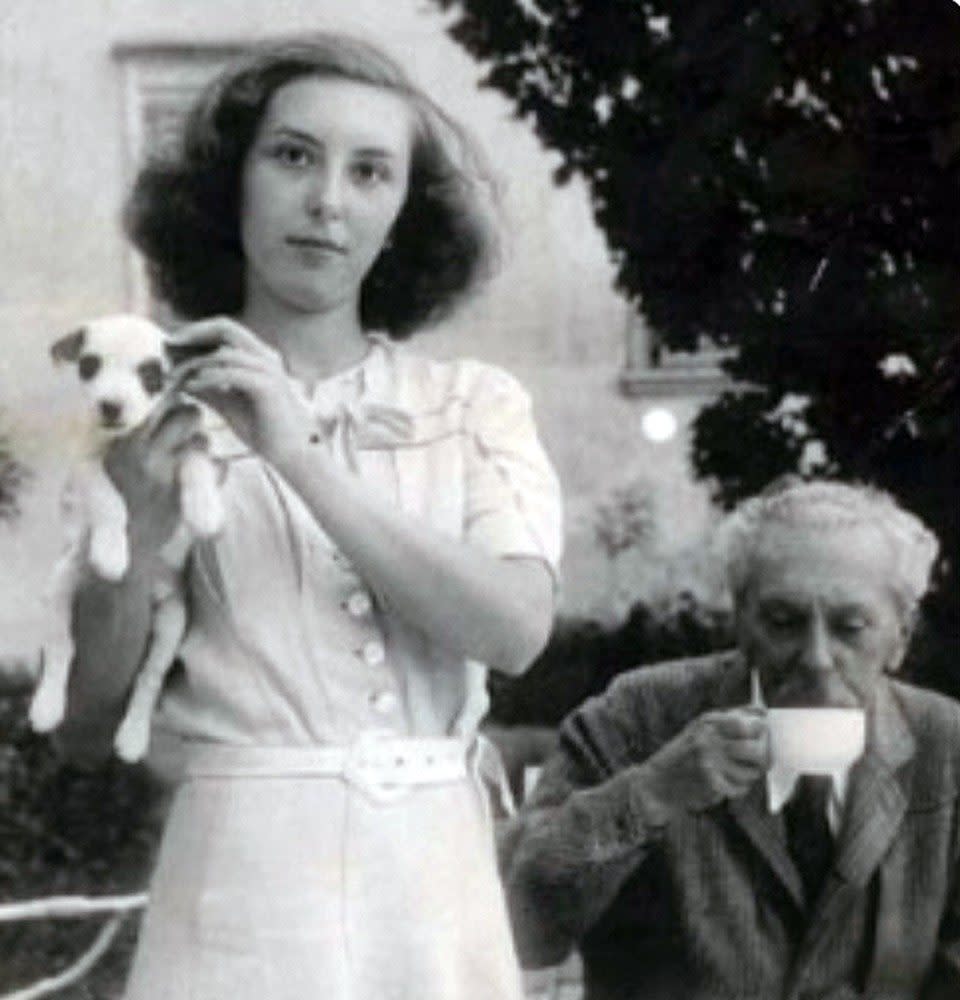
Katalin Bánffy-Jelen, R.I.P.
I have the poet Ben Downing to thank for putting me on to the great Hungarian writer Miklos Banffy. I will always be grateful.
But the one to whom I should be even more grateful is the writer’s daughter Katalin Bánffy-Jelen who died last month, 100 years old.
She, along with Patrick Thursfield (d. 2003), translated the great Transylvanian trilogy from Hungarian into English.
There were obituaries in The Times and the Daily Telegraph.
After the war, Katalin married a US naval officer and they settled in Tangier, still then a free port under a sort of multinational administration.
I wonder if she would have known Fra’ Freddy’s father when he was British delegate to the International Legislative Assembly of Tangier.
Substack Cusackiensis
For my sins, I have started a little “substack”, despite my objections to the entire medium. If you are the sort of person who is on Substack, you can find it here.
It is important to claim the territory to prevent any of the other Andrew Cusacks out there from nabbing it. A pre-emptive “substack”.
Theoretically it could inspire one to write more, though these days I prefer to write for people who pay me to.
In the Courts of the Lord

Well, not quite a lord, but a Vanderbilt — which in America is much the same. The indoor tennis courts at “Idle Hour” in Oakdale, L.I., were some of the grandest ever built in the United States.
The house itself, designed by Richard Howland Hunt for William Kissam Vanderbilt and completed in 1901, is unremarkable and not on the finer end of the spectrum. To me, it has all the glamour of a railway station serving a mid-sized town.

Just a year later, however, W.K. commissioned the architectural partnership of Warren & Wetmore — later famous for Grand Central Terminal — to design an extension that featured an indoor tennis court with adjacent guest quarters in a somewhat extravagant style.
As the polymathic Peter Pennoyer pithily put it in his The Architecture of Warren and Wetmore:
“The heavily rusticated stone of the gallery wall, exuberantly carved with atlantes and fanciful over-door sculpture and painted with scrolling frescoes, created a sculptural backdrop so surprising and original that it overwhelmed the vast open space of the court. For an ancillary building, the scale and energy of the architecture were tremendous.”
One can certainly imagine enjoying a refreshing summery gin-and-tonic on that loggia.
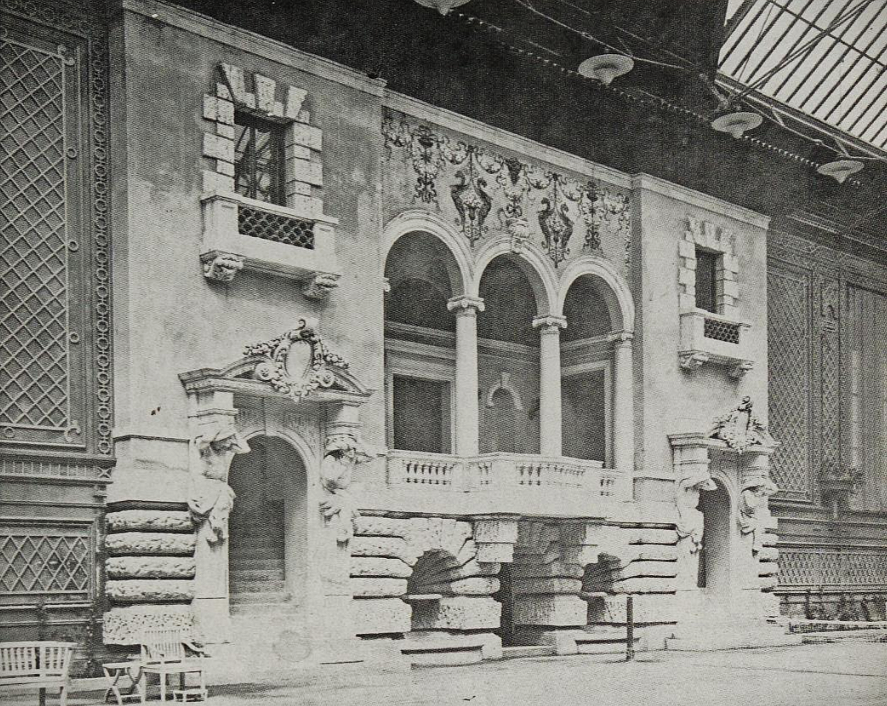
William Kissam Vanderbilt died in 1920. After a spell as an artists’ colony, in 1938 the estate was purchased by a cult called the Royal Fraternity of Master Metaphysicians, founded by a rogue named James Bernard Schafer who claimed he could raise an immortal child. (They also bought the old Gould stable on West 57th Street.) Schafer was jailed in 1942.
The National Dairy Research Laboratory took over the property and split the former tennis courts into lab space. Long Island’s Adelphi College bought Idle Hour in 1963 as an overflow campus which they later spun off into an independent institution, Dowling College, which shut in 2016.
For another indoor tennis court from the same period, see the old Astor place in Rhinebeck in the Hudson Valley.
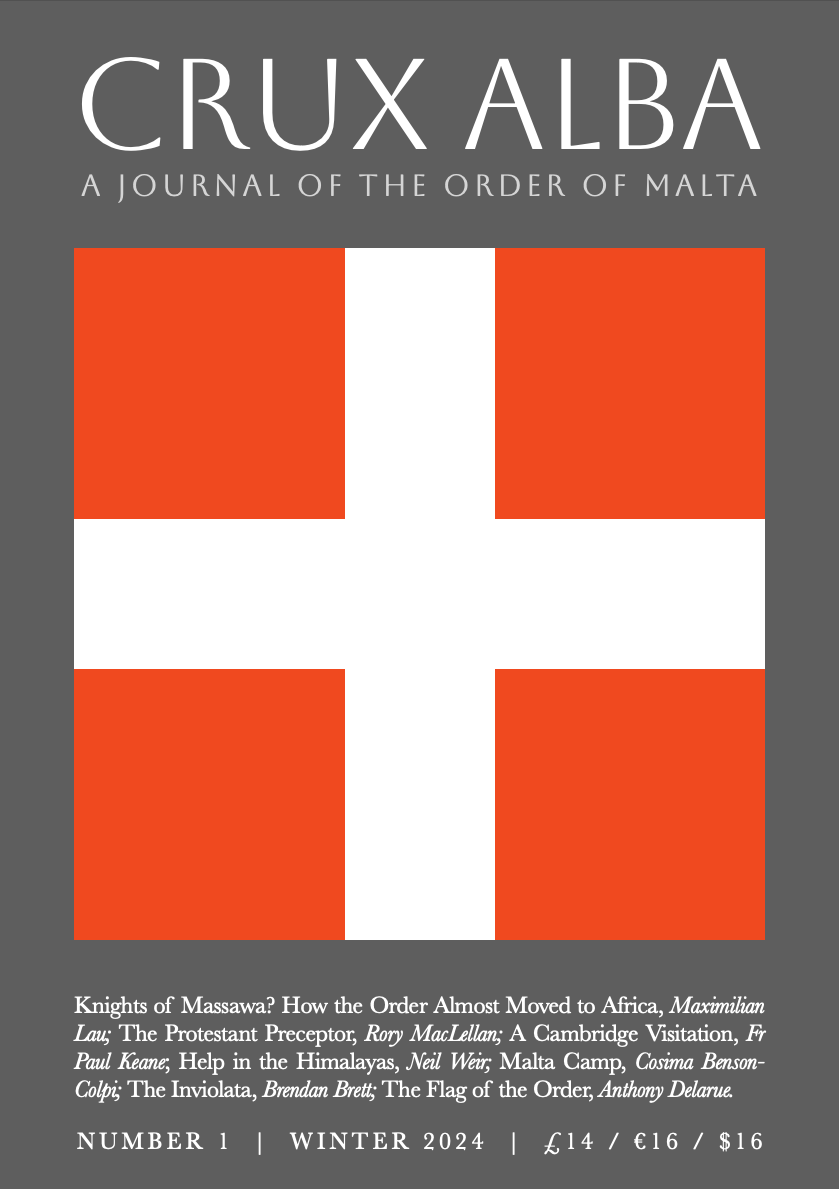
Crux Alba Journal Launch

You are cordially invited to the launch of
This new journal is devoted to
the history and activities of the Order of Malta.
Please join us for a drink to celebrate the launch of this venture.
6:30pm to 9:00pm
Tuesday 18 February 2025
St Wilfrid’s Hall, Brompton Oratory, Brompton Road, London SW7 2RP
Copies will be available for purchase at £14
Please RSVP by 14 February to:
journal@gpesmom.org
Please share this invitation with others who might be interested in attending.
See also the Crux Alba website, Instagram, and Twitter.
Articles of Note: 27 January 2025

Recently we welcomed the Latin Patriarch of Jerusalem, Cardinal Pizzaballa, to London on a visit of several days. He has what must be one of the most difficult jobs in the world, caring for Latin-rite Christians and their neighbours in Israel, Palestine, Jordan, Cyprus, and I think possibly the Sinai as well.
We first met in Jerusalem in 2023, so catching up with him for a second (and then third!) time to hear about the situation in the Holy Land was illuminating, if a bit depressing.
At First Things, Cole Aronson meets the Patriarch and explores his unique and demanding role.
■ The Pantheon in Paris, where secular heroes are entombed either physically or symbolically, presents one of the most intriguing aspects of France’s civil religion.
On the eightieth anniversary of the liberation of Strasbourg, President Macron announced that the academic, army officer, and father of the Annales school of historians Marc Bloch would be elevated to the Pantheon.
In the American Conservative, Luke Nicastro explores France’s newest hero.
■ Along with Frankfurt and Potsdam, Budapest has undergone one of the most comprehensive programmes of urban repair in recent years.
The Financial Times’s architecture critic Edwin Heathcote reports informatively, despite his simplistic conceptual error of slagging off rebuilding as reaction.
I’ll say it again: it’s not turning the clock back — it’s choosing a better future.
■ Candlemas is fast approaching but there’s still a few days left before the Christmas season ends properly.
The old-school Irish Protestant ‘Laudable Practice’ provides an excellent critique of a First Things piece: Old High Christmas Cheer, or Why the Oxford Movement Did Not Save Christmas.
Much good came from the Oxford Movement, but there is a tendency today to underestimate the levels and layers of cultural continuity in England across the centuries.
Laudable gets this right, pointing to how the Georgians celebrated Christmas. Nicholas Orme has written on how the feast of the Incarnation was kept in mediaeval England.
■ Finally, Lord Sumption peeks into the world of espionage in the Middle Ages.
Spooks’ Crown

The Security Service, better known as “MI5” has changed its badge to incorporate the change from the St Edward’s Crown to the Tudor Crown that King Charles III has adopted.
The badge was designed by Lt-Col Rodney Dennys who himself had worked for the Security Service’s more glamorous rival, the Secret Intelligence Service (MI6). Dennys had started out in the intelligence game at the Foreign Office and was posted to the Hague before the war. When the Germans rolled in he was on one of the last boats to make it to Britain.
The MI5 emblem was approved by Garter King of Arms in 1981 but (like MI6) the Security Service was still so secret that it did not officially exist, so it was added to the secret roll of arms kept under lock and key in the depth of the heralds’ college in the City of London.
In 1993, after the Service’s existence was formally acknowledged, the badge became known and a flag bearing it often flies from the top of Thames House.

GCHQ has likewise adopted the Tudor Crown, but SIS has not publicly acknowledged any official emblem. (Perhaps it has its own entry in the heralds’ secret roll?) As such, MI6 uses a government version of the royal coat of arms, but theirs has yet to swap crowns.

A Christmas Gift from the Governor
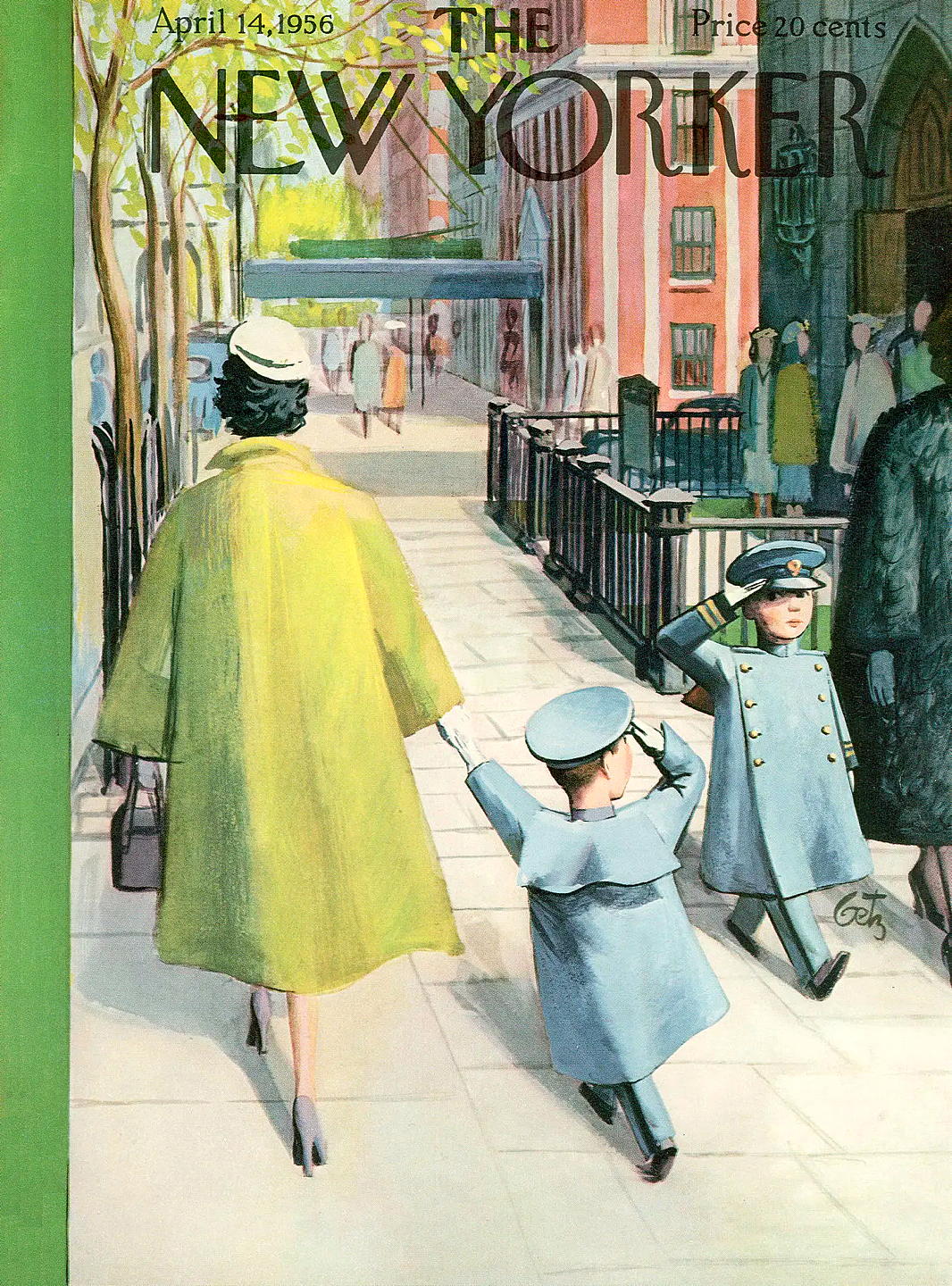
Just in time for Christmas: some excellent news for the Knickerbocker Greys.
Her Excellency the Governor of the great Empire State of New York has signed into law a requirement that this venerable Manhattan cadet corps be allowed to remain in its quarters at the old Seventh Regiment Armory (as The New York Sun reports).
Over recent years the Park Avenue Conservancy has restored the building — a gem of American architecture and interior design — but also effectively expelled the military units still based at the Armory.
The Greys managed to hold out in their “800-square-foot broom closet” (as the New York Post described it) but the Conservancy moved to evict the youth group in 2022. The Greys have fought the eviction in court.
In June a bipartisan bill guaranteeing the Knickerbocker Greys “access and use for permanent headquarters” of the Armory “for the purposes of programming during periods which are not periods of civil or military emergency” passed in the State Assembly and Senate but has only now been signed into law.
The hope is this new legislation will persuade the Conservancy to drop their eviction proceedings which the Greys have been challenging.

Monsieur Bayrou
Monsieur le président has appointed François Bayrou as Prime Minister of France – for how long, who knows.
It is worth revisiting the assessment of him the late Maurice Druon (1918-2009) published in the pages of Le Figaro in 2004:
Monsieur François Bayrou, a secondary character and destined to remain so, is remarkable only for his perseverance in undermining the higher interests of France. He eminently possesses what the English call ‘nuisance value’.
At what point did his self-image begin to cloud his judgement? Here is a Béarnais, the son of a farmer, who, gifted for studies, became an agrégé in classical literature. At twenty-eight, he took his first steps in politics by entering the office of Monsieur Méhaignerie, Minister of Agriculture. At the same time, he joined the centrist party that Giscard d’Estaing created to serve his personal elevation. This party, which participated in overthrowing General de Gaulle in 1969, would become the UDF.
Monsieur Bayrou settled there and prospered. He was elected general councillor in his native department, then regional councillor. He was also an advisor to Monsieur Pierre Pfimlin, to the presidency of the European Assembly. Monsieur Pfimlin was an excellent man in every respect, who exercised very high functions with rectitude. He had only one fault: he was a centrist, that is to say, like all centrists, he was mistaken about the hierarchy of values.
He is credited with having made Paris lose its status as the capital of Europe. Indeed, it was agreed between Adenauer and de Gaulle that the institutions of the European Community would have their headquarters nearby. A large complex would be built in the near Paris region. On this, Pfimlin, an Alsatian, intervened, proclaiming: “Strasbourg, Strasbourg… the link between France and Germany, between the two cultures… reconciliation… Strasbourg, a symbolic city!” Could Alsace be insulted? The Parisian project was shelved.
The move was well-intentioned, but it was a misjudgement.
Paris, a great metropolis of the arts and business, as well as an international communications centre, had all the attractions for Members of the European Parliament, diplomats, and civil servants; Strasbourg, beautiful but provincial, with limited entertainment and above all poorly served, requiring changes of plane to reach its often foggy aerodrome, exercised little charm on the new community population. If the monthly sessions of Parliament – at what cost and for how long? – continue to be held there, everything else, commissions and services, has moved to Brussels and it is Brussels that has become the administrative capital of the Union.
Let us return to Monsieur Bayrou, who is following a fairly typical political path. Elected to parliament, he quickly showed a ministerial appetite by making education issues a specialty. He founded and chaired a permanent group to combat illiteracy. A laudable program. Unfortunately, during the time he was Minister of National Education, illiteracy continued to increase and the general level of education continued to decline. Was it during this period that he experienced a somewhat excessive expansion of his ego?
It is said that one night he woke up the members of his cabinet, urgently summoning them to the ministry, to consult them on a vision he had just had of his presidential future. The anecdote has been circulated with too much insistence for there not to be, at its origin, some reality.
Why am I dwelling so long on Monsieur Bayrou, when we have concerns that seem to be of greater importance? It is because, not content with creating disorder in our domestic policy, he is currently acting contrary to the interests of France in the European Parliament.
Monsieur Bayrou is a candidate for the presidency of the Republic: we know that. He has made it known urbi et orbi and, stubbornness being in his nature, there is every reason to believe that he will be one for life. He also ran in 2002 and, having arrived at the back of the pack, with 6.8%, he immediately put on the jersey with the bib number marked 2007.
Assuring that he is part of the majority in the National Assembly in order to keep his electorate, he keeps his parliamentary group on the fringes, under the pretext of refusing corporatisation; he never stops criticizing the government’s actions, often using the opposition’s arguments, and only votes for it with his fingertips, when he does not abstain, visibly waiting for its fall. Beautiful political logic! This is what Monsieur Bayrou calls cultivating one’s difference. When one benefits from such great support, one ends up preferring adversaries.
His programme? It is made up of nothing but worn-out words and formulas that have become hollow from being used too much. It is as if we had returned to the “more just, more humane Republic” of thirty years ago. Everything ages – even demagoguery. […]
What a waste! And all in keeping. Those who stick around François Bayrou for career interests, like those who stay there out of personal loyalty, expose themselves to serious disappointments.
In politics, I have no other criteria than services rendered to the country.
Prince Talleyrand said: “Without wealth, a nation is only poor; without patriotism, it is a poor nation.”

Articles of Note: 12 December 2024
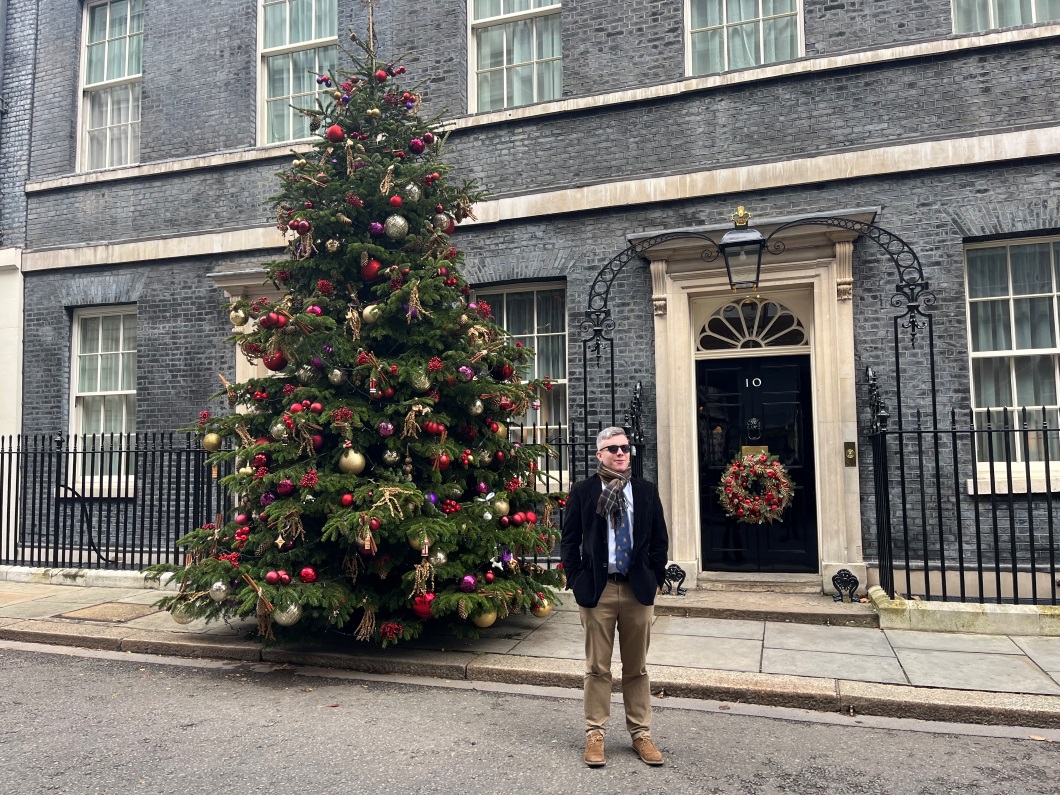
Luttwak first came to my attention when, about 10 or 11 years old, I was given a copy of Coup d’État: A Practical Handbook (I think one of the many I received from my relation Henry, R.I.P.). He has been interesting at every turn I have had to read him or his thoughts ever since.
Santi Ruiz of Statecraft has released a delicious new interview with Luttwak.
“Coups had been very common until about two years after the book was published, and then stopped,” Luttwak contends. “The reason is that authorities everywhere reverse-engineered the book. The book was published in English, and it was immediately translated into about 13 languages. It went all over the place. I think what happened is that people learned to reverse engineer.”
He relates the story of Gen. Oufkir’s attempted coup against Hassan II of Morocco: “Oufkir bled to death, and he did so over a copy of my book.”
Luttwak’s explanation of the Islamic Republic of Iran’s manipulation of the Israeli-Palestinian conflict to assert racial dominance over the Arabs is sharp.
■ Ever since school days, we are Argentinophiles. The Financial Times, of all people, has a helpful “long read” examining the surprising successes of President Javier Milei.
■ Dr Katherine Bayford writes on the rift that doomed the American Confederacy.
■ Dan Hitchens reviews the film ‘Conclave’.
■ Niall Gooch is always reliable on railways. He compares Britain’s rail woes with the experience of our continental neighbours and concludes that we are still in for difficulties:
Culture is just so hard to prod in a positive direction; people get stuck in their ways, and find it hard to move the assumptions and perspectives which dominate beyond the station forecourt. Yet, shifting the dial isn’t impossible, if the will is there, and this is yet another arena in which British offerings can improve.
■ The prospective — all though not yet assured — loss of London’s Smithfields Market is a portent of doom for the metropolis, Sebastian Milbank prophesies.
One day, I believe, we will have to reclaim London for England, and create an economics of human flourishing rather than of usurious speculation and rent-seeking.
He is right, of course, and I think this will happen, but the English are slow movers and our political class is pretty immured from the ideas and thinking going on below.
The emerging consensus hasn’t yet reached up to those actually making decisions, and it may be five or ten years before it does. Much more damage can be done in the mean time.
■ “Turning back the clock is proverbially impossible in history,” Wessie du Toit writes, “but apparently not in architecture.” An exploration of the architectural ambitions of Viktor Orban.
■ We are well into the preparatory tide of Advent. The ever-estimable Eleanor Parker reminds of Conditor Alme Siderum, one of the office hymns of this season.
Season’s Greetings from the Seventh

Alas, the Seventh Regiment Mess is no more, though we had a few family Christmas-time (and other) celebrations there in its final years.
Happy days when Linda MacGregor was at the helm of it.
Make Merry in thy Festival

I nipped over to Civitas in Tufton Street yesterday for the launch of Esmé Partridge’s report Restoring the Value of Parishes: The foundations of welfare, community, and spiritual belonging in England.
She has produced a succinct and well-researched overview of the crisis facing Church of England parishes not just in rural areas but in our towns and cities too.
The discussion following had strong contributions from Danny Kruger MP, Imogen Sinclair, the Rev’d Marcus Walker of Great St Bart’s, Rebecca Chapman who sits on the Anglican Church’s General Synod, Eddie Tulasiewicz of the National Churches Trust, Bijan Omrani, and more.
As a devotee of England’s cult of the saints, what interested me particularly was the contribution from Rupert Sheldrake of the Choral Evensong Trust.
 He explained that the CET was doing its bit for parish churches by creating a Patronal Festival Grants scheme to encourage more churches to celebrate the feast of their patron saint or dedication.
Grants of up to £500 are available to provide for choral evensong sung by a visiting choir and – deeply important – a party afterwards at which food and drink are free to those gathering.
“For example,” the Trust informs us, “at St Michael and All Angels in Dinder, near Wells, over ninety people attended a choral evensong on Michaelmas, sung by the Wells Cathedral Chamber Choir. The church was filled to capacity, with many attendees participating in church activities for the first time.”
This is a genius scheme for encouraging greater devotion to the saints as well as more frequent use of now sadly often shut C-of-E parish churches.
As it says in Deuteronomy, “thou shalt make merry in thy festival time, thou, thy son, and thy daughter, thy manservant, and thy maidservant, the Levite also and the stranger, and the fatherless and the widow that are within thy gates.”
More information on the CET’s 2025 Patronal Festival Grants can be found here and the deadline for next year’s applications is Candlemas (2 February 2025).
That evening I was a guest at high table in an Oxford college which is exhibiting signs of health and societal repair.
A few years ago, the head of house disregarded the strident protests of the students and banished the college grace as well as all dress codes for dining. (To the gratitude of many, she did not last long.)
After this unwelcome interruption, the college grace before meals has now been restored (in Latin), in addition to the return of formal meals with gowns (and, on Sundays, black tie).
In some place, where you let it and protect it, nature is healing.
Meanwhile, below, some beautiful music for Advent from my own parish church, St George’s Cathedral in Southwark.
This beautiful performance of Veni, Veni, Emmanuel by Malakai from St George’s Cathedral Choirs, performed at St George's Cathedral is a reminder that Jesus is God with us who witnessed to the love of the Father by dwelling among us.@StGeorgesCath @StGeorgesChoirs pic.twitter.com/L8VY31FmNA
— Archdiocese of Southwark (@RC_Southwark) December 5, 2024
Search
Instagram: @andcusack
Click here for my Instagram photos.Most Recent Posts
- West Point July 30, 2026
- Brunel’s Unbuilt Capitol February 3, 2026
- Cricket at Fordham January 27, 2026
- Palacio Barolo Revisted January 14, 2026
- Learning to Love Liguria January 14, 2026
Most Recent Comments
Book Wishlist
Monthly Archives
Categories