Church
About Andrew Cusack
 Writer, web designer, etc.; born in New York; educated in Argentina, Scotland, and South Africa; now based in London.
 read more
News
Blogs
Reviews & Periodicals
Arts & Design
World
France
Mitteleuropa
Knickerbockers
Argentina
The Levant
Africa
Cape of Good Hope
Netherlands
Scandinavia
Québec
India
Muscovy
Germany
Academica
Catholic Ambassadors to the U.N.
Diplomats’ group hears Latin Mass at St Agnes
On Sunday 21 August 2011, the Church of St Agnes on 43rd Street in Manhattan was host to a group of Catholic ambassadors to the United Nations for the regular 11:00 Extraordinary Form Mass, offered by Fr. Richard Trezza OFM. (Fr. Cid, a recently ordained Franciscan priest was also in choro). The group included representatives from Grenada, Haiti, the Philippines, Korea, the United Kingdom, and Japan.
The informal gathering, formed just this year, is open to Catholic Permanent Representatives and Deputy Permanent Representatives — the first- and second-highest ranking diplomats at national missions to the U.N. — and has heard Mass at a number of different parishes around Manhattan. (more…)
Vatican Insider
Anyone remotely interested in the important affairs of the church and the world should make themselves aware of the new ecclesial news site, Vatican Insider. The site offers English translations of the significant journalistic output of the Italian newspaper La Stampa and includes commentary from Andrea Tornielli, John Allen, and others. V.I. already has an interview with Mons Georg Ratzinger and a look at church-state relations in mainland China, amongst other things. Definitely one to add to your daily perusing.
Fra Freddy, Rest In Peace
Yesterday, I was very saddened to hear of Fra Freddy’s death. Fra Freddy was a legendary character whom I was introduced to in my first year at St Andrews. He was invited to speak to the Catholic students most years on some subject or another — an introduction to prayer or a lenten meditation. I was quite pleased when he was so taken with a poster I designed to advertise one of his talks that on his way back to Edinburgh he nipped out of the car at the last minute and grabbed a large copy. Fra Freddy was an old-fashioned stick-in-the-mud with a good sense of humour, but he also had the capability to surprise with a kind word when you least expected it.
Fra Fredrik John Patrick Crichton-Stuart was born September 6, 1940 to Lord Rhidian Crichton-Stuart (son of the 4th Marquess of Bute) and his wife Selina van Wijk (daughter of the Ambassador of the Queen of the Netherlands to the French Republic). He was raised in Scotland and North Africa (where his father was British Delegate to the International Legislative Assembly of Tangier) and was educated first at Carlekemp in North Berwick and then at Ampleforth. He joined the Order of Malta in 1962, later being named the Delegate for Scotland & the Northern Marches. In 1993 he was appointed Chancellor of the resurrected Grand Priory of England. Fra Freddy became Grand Prior himself when his cousin, Fra Andrew Bertie, died in 2008 and was succeeded by the then-Grand Prior of England, Fra Matthew Festing.
Fra Freddy was a devoted follower and promoter of the traditional form of the Roman rite. He joined Una Voce Scotland in 1996 and became secretary in 2000. Two years later he was named councillor and senior vice-president of FIUV, the International Federation ‘Una Voce’, and briefly served as its president in 2005.
Over the past year or so Fra Freddy had been varying ill but seemed to recover. I am told he was found dead yesterday morning, still clasping his breviary. He was well-known in Edinburgh and beyond, and he will be missed by his many friends as well as those who worked and volunteered with him or interacted with him in his charitable activities.
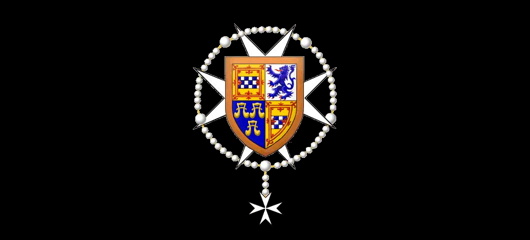
FREDERICK JOHN PATRICK CRICHTON-STUART
Grand Prior of England
of the
Sovereign Military & Hospitaller Order of St John
of Jerusalem of Rhodes and of Malta
6 September 1940 – 14 June 2011
Eternal rest grant unto him, O Lord,
and let perpetual light shine upon him.
May he rest in peace.
Amen.
Prayer to St. Joseph for Priests
Where would we be without priests? Terrible to even consider. Ever since the Year for Priests held in 2009-2010, I have tried to remember priests in my intentions much more frequently than before, especially those brilliant priests who’ve had an influence in my life in Scotland, South Africa, New York, and elsewhere.
Fr Mark over at Vultus Christi posted this prayer to Saint Joseph for priests a few weeks back, and it seems worth reblogging.
O glorious Saint Joseph,
who, on the word of the angel
speaking to you in the night,
put fear aside to take your Virgin Bride into your home,
show yourself today the advocate and protector of priests.
Protector of the Infant Christ,
defend them against every attack of the enemy,
preserve them from the dangers that surround them
on every side.
Remember Herod’s threats against the Child,
the anguish of the flight into Egypt by night,
and the hardships of your exile.
Stand by the accused;
stretch out your hand to those who have fallen;
comfort the fearful;
forsake not the weak;
and visit the lonely.
Let all priests know that in you
God has given them a model
of faith in the night, obedience in adversity,
chastity in tenderness, and hope in uncertainty.
You are the terror of demons
and the healer of those wounded in spiritual combat.
Come to the defence of every priest in need;
overcome evil with good.
Where there are curses, put blessings,
where harm has been done, do good.
Let there be joy for the priests of the Church,
and peace for all under your gracious protection.
Amen.
The Modern Baroque: Brasini in Parioli
The Church of the Immaculate Heart of Mary
GOOD ARCHITECTURE requires a combination of willpower, taste, and resources. This nexus used to occur quite often; instances from the Renaissance and the long nineteenth century come most easily to mind. A late twilight of this combination is found in the magnum opus of the Italian architect Armando Brasini: the Church of the Immaculate Heart of Mary in Rome’s swish Parioli neighbourhood.
The 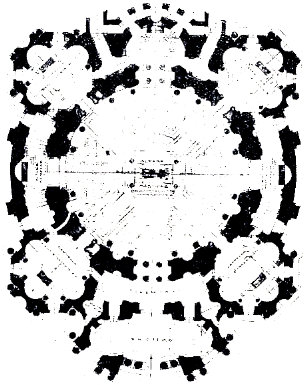 church, a modern expression of the Baroque, has somewhat curious and disjointed origins. Every age has left its imprint on Rome in one way or another: the Rome of the Republic, the Rome of the Empire, the Rome of the Popes, the Rome of the Liberals, the Rome of the Fascists, the Rome of the Italian Republic. In the 1900s, it was realised that the Church had not made a significant contribution to the great architecture of Rome for some time. Worse: the more significant structures of the past century were mostly built by the government of the Sardinian kingdom that conquered Rome and gave itself the fanciful, if geographically correct, name of ‘Italy’. A new church was needed, on a monumental scale, to be the age’s contribution to the great churches of Rome. Originally, the church was to be dedicated to St. James the Greater, but as preparations increased for the International Marian Year of 1924, it was decided the cult of the Immaculate Heart of Mary would take precedence instead. (more…)
John Rao on PBS
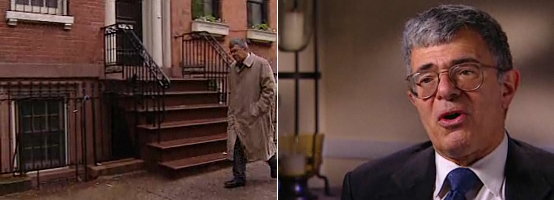
The other day I stumbled upon this blog post from the Chairman of the LMS which included a segment from Religion & Ethics Newsweekly, the hebdomodal programme shown on PBS in the States. The R&E spoke with Dr. John Rao, associate professor of history at St. John’s University in New York and director of the Roman Forum, about the annual Paris-Chartres pilgrimage which unites tradition-minded Catholics from across the globe every Pentecost. You can watch the segment or read the transcript here on the PBS website. It’s also available on gloria.tv here.
I’ve already commended any New York readers of andrewcusack.com to attend the series of historical lectures in Greenwich Village organised by the Roman Forum. It’s time already to consider the annual summer symposium in Gardone on Lake Garda in Italy. This isn’t a boring academic conference where stuffy professors will present papers, this is a symposium in the truest sense. The root of the Greek word means literally “to drink together”, and that more closely reflects the Gardone spirit: a jovial meeting of minds where matters high and low can be discussed in a convivial attitude surrounded by the beauty of the Italian lakes.
Everyone I know who’s attended the Gardone symposium has come back with rave reviews, and many add it to their annual calendar. I’m really, really hoping to make it there this year for the first time, and I hope others will give it a go as well. From June 30th through July 11th, 2011. Click here for more info.
A Pell Sighting
…and sundry other occurences
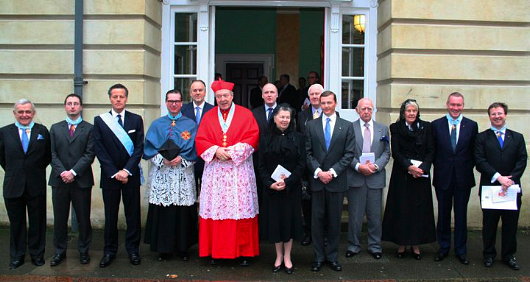
Outside of Rome, you don’t run into cardinals all that often, but last Saturday I caught sight of one of the most popular clerics in the Catholic Church: Australia’s Cardinal Pell. The occasion was the Cardinal’s reception into the Sacred Military Constantinian Order of St George, which took place in the Little Oratory. His Royal Highness the Duke of Noto presided over the investiture, and if you squint your eyes enough you can make out a profile shot of Young Cusack in the background of the photo of the Duke (below). In addition to the Cardinal Archbishop of Sydney’s being made a Bailiff Grand Cross of Justice, six others were invested as members of the Constantinian Order, including His Excellency Don Antonio da Silva Coelho, the Ambassador of the Order of Malta to the Republic of Peru. For more info, see the Order’s notice on the event. (more…)
Dempsey Heiner (1927–2008)
THIS MONTH IT’S already three years since the death of dear Dempsey Heiner, who went to his eternal reward on 16 January 2008. Demspey was a real gem of a man: a scholar and a gentleman, capable of relaying brilliant insights easily and who, at least once, exhibited his skill in the art of the gentlest intellectual rebuke of a presumptuous young intellectual fellow-Catholic (i.e.: yours truly), backed up with a remembered citation of François Mauriac.
Dennis Clinton Graham Heiner was born in New York in 1927 to Robert Graham Heiner and Frances Eliot Cassidy, friends and fellow-travellers of Margaret Sanger, the notorious racial eugenicist & founder of Planned Parenthood. Dempsey’s parents enrolled him at St. Bernard’s, where he was in the same year as George Plimpton, the founder of the Paris Review and twentieth-century embodiment of the gilded amateur. Plimpton (who died in 2003) described Dempsey as “the brightest boy in the class, a genius” and remarked that since leaving school he remained something of an enigma. (more…)
The Start of Something Big in Argentina
The first-ever Nuestra Señora de Cristiandad Pilgrimage to Luján
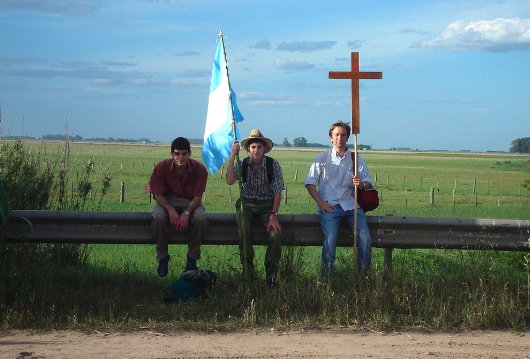
SMALL SEEDS, IF well-planted and tended to, flower into much larger growths. On a Friday morning last month, just four pilgrims set out from the town of Rawson in the Buenos Aires province of Argentina, but by the time they reached their destination — a Latin Mass in the Marian basilica of Luján — their numbers swelled to nearly a hundred. The pilgrimage of November 5th, 6th, and 7th, under the patronage of ‘Our Lady of Christendom’ (Nuestra Señora de Cristiandad) was inspired by the traditional Paris-Chartres pilgrimage every Pentecost weekend. The organisers hope that, like the Chartres pilgrimage, this trek to Luján will become an annual recurring event.
“Renewing Christendom in Argentina” was the theme of this year’s pilgrimage, which “seeks to promote the rich tradition of the Roman Catholic Church for our times” the organisers announced in a press release after its completion.
“This new 100-kilometre pilgrimage was an act of reparation and praise to God, imploring the salvation of souls through the renewal of Christian culture and the rediscovering of the bi-millennial tradition of the Church.” (more…)
Media Lies About the Pope
In an interview, Benedict XVI reaffirmed the immorality of using condoms, but the press have spread a lie claiming he did the exact opposite
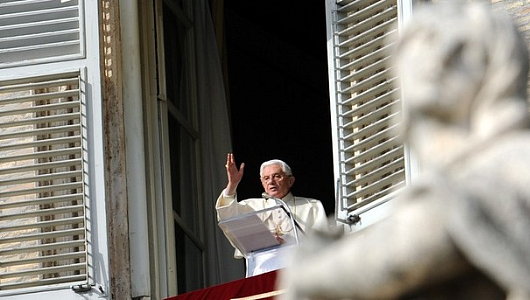
Wow. Just wow. No matter how low my opinion of journalists and the media already is, they’ve proved that they still have the ability to astound by the depths of their depraved mendacity. The latest big giant whopper the media are dealing out is that Pope Benedict XVI has ‘changed church teaching’ by ‘lifting the absolute ban on condom use’. You should know by now that when the media report almost anything relating to the Pope or the Church, the reality is either A) the media have completely made it up, or B) the exact opposite of what the media say is true.
This one we can file under “B”: the Pope has reaffirmed the immorality of using condoms and the media have decided to claim the opposite. A new book, Light of the World is being published this week containing several interviews with the Pope by the German journalist and editor Peter Seewald.
When asked about the Church’s teaching on condoms, the Pope reaffirmed that the Church “of course does not regard it as a real or moral solution”. However, the Holy Father speculated about the intent of some condom users. (more…)
The Situation at St Andrews
Or: A Lesson in Corroborating Your Sources
AS IF, WITH THE recent announcement that a certain St Andrean couple are getting engaged, there wasn’t enough for us to expend our idle chatter about, the University of St Andrews is thrust into the fore on an entirely separate matter. Damian Thompson, the provocative and informative Catholic Herald editor and indispensable Daily Telegraph blogger wrote a blog entry — Catholic students at St Andrews ‘can’t have the Latin Mass’ — relaying the claims of a student that he and a stable group of students have asked to have a monthly Mass in the Extraordinary Form, found a priest willing to say it, and have been denied. Fr. Z, the world’s most famous clerical blogger, soon picked up the story as well and made a few comments of his own.
The reality of the situation, it appears, is far removed from the one student’s claims. (more…)
Saints in Heaven, Pray for Us!
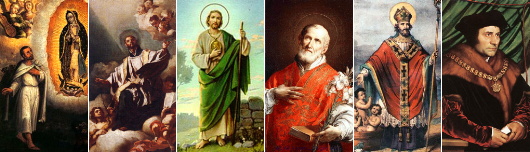
There are events occurring very soon which have massive life-changing potential for your humble & obedient scribe, and which could go quite horribly wrong or astoundingly well.
I absolutely implore you to pray to all the saints in Heaven, and especially to whichever Guardian Angels may be relevant, to combine, conspire, pray, and intercede for my special intention.
Thank you in advance for all your prayers, and I will keep you all in my prayers as well.
Antipopes We Have Known
The University of St Andrews is commencing the celebrations of its 600th anniversary, as the institution was founded in stages between 1410, when teaching started, and 1413, when a bull was issued recognising it as a university by Pedro de Luna, an antipope who styled himself Benedict XIII. Yesterday I attended a fascinating lecture by Dr. John Rao — From the Triple Papacy to the Council of Constance — as part of the 2010–2011 lecture series organised by the Roman Forum.
Boy was Benedict a baddie! Even the council he called passed resolutions condemning him and the cardinals he appointed turned against him. He ended his days maintaining his schismatic claim, holed in island fortress of Peñiscola. The day before he died, he appointed four cardinals, who elected de Luna’s friend Gil Sanchez Muñoz y Carbón as Clement VIII. Or rather, three of the cardinals did while the fourth — Jean Carrier, the archdeacon of Rodez — wasn’t present, so he went and single-handedly elected his sacristan Bernard Garnier as pope, who took the name Benedict XIV.
Garnier was permanently in hiding, and his location was only ever known to Carrier. B-14 did manage to choose four cardinals of his own, and on the antipope’s death they elected Carrier pope, who was inconveniently captured and imprisoned by his rival antipope, Clement VIII. Oddly, having just succeeded the supposed Benedict XIV, Carrier chose to use the name and style Benedict XIV also. A novel by Jean Raspail (L’Anneau du pêcheur) depicts a line of anti-papal successors to the two Benedict XIVs.
As a lecturer, Dr. Rao is both informative and entertaining, and I’d encourage anyone interested to attend the remaining lectures in this year’s series. There’s always wine on offers and little things to nibble on, with a box for generous donations to be made towards the cost of the program. The next lecture is Martin V and the Troubled Return to Rome — this week is the 593rd anniversary of that pope’s election, as it happens.
Also, Dr. David Allen White, retired Professor of World Literature at the United States Naval Academy, returns to New York in December for the Syllabus of Errors Weekend, on the subject of Charles Dickens and the Evils of Modernity. I went to last year’s Syllabus of Errors weekend, and Professor White is entrancingly engaging, a veritable font of knowledge.
Charles of Austria
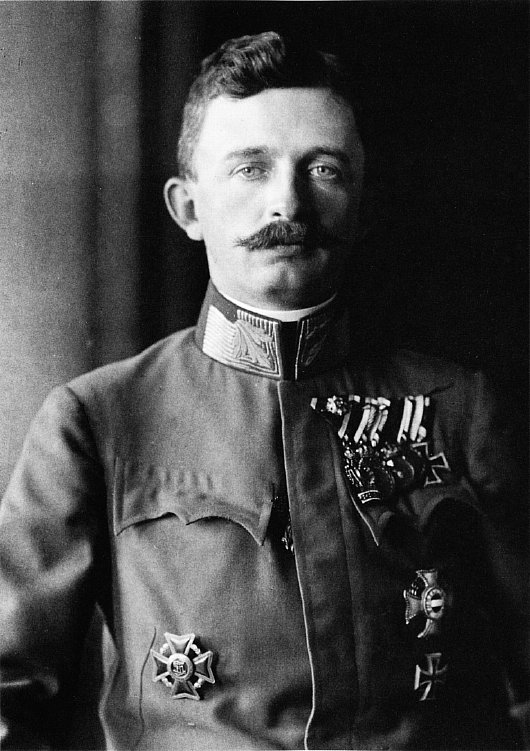
TODAY IS THE first feast of Blessed Charles since the announcement last December that the cause for the canonisation of his wife, Zita of Bourbon-Parma, has been opened as well. In an age when most people in government and public leadership seem barely even decent, let alone saints, it is all the more important to seek the prayers and intercession of Charles and Zita — husband and wife, mother and father, Emperor and Empress — for the preservation of peace, the prevention of war, and the renovation of our families as well as our societies at large. (more…)
Alan Dershowitz Defends Pope Benedict
Benedict XVI has “Done More to Protect Young Children” Than Any Other Pope According to Harvard Law Professor
The Harvard Law School professor & criminal appellant attorney Alan Dershowitz has defended Pope Benedict XVI while speaking to a television news programme in Australia. Dershowitz travelled to the continent to take part in a debate with the lawyer & activist Geoffrey Robinson QC who has waged a campaign to have the Pope tried under international law as culpable for the abuse of children by Catholic priests.
Robinson (a dual citizen of Australia and Great Britain) is well-known in legal and intellectual circles, where he has defended the use of kangaroo courts to try and convict alleged perpetrators of great crimes: his 2005 book The Tyrannicide Brief defended John Cooke, the solicitor general who prosecuted Charles I of England for treason. The Australian academic has also defended the practice of more powerful nations waging war against smaller ones to prevent the latter from committing crimes against humanity, and has argued in favour of the bombings of Hiroshima and Nagasaki.
Dershowitz told the Australina Broadcasting Corporarion’s Tony Jones that Robertson’s attempt to have Pope Benedict tried before under international law was “wrong”.
International law deals with war crimes, it deals with systematic efforts by governments to do what happened, for example, in the former Yugoslavia and Rwanda, in Darfur and Cambodia. This is not in any way related to that. … This is not a crime against humanity, this is a series of crimes by individual priests and others throughout the world and failures by institutions to come to grips with it quickly enough.
Prof. Dershowitz said he thought Benedict has “probably done more to protect young children since becoming Pope than any previous Pope”. (more…)
Journowatch: Headline vs. Story
In an article about the soon-to-be-canonised Australian nun, Mary McKillop, the Daily Telegraph exhibits a peculiar example of the lows of newspaper journalism today.
The headline boldly states “Australian nun ‘to be made patron saint of abuse victims'” only for the sub-headline — “An Australian nun who will be canonised by the Pope next month should be made the patron saint of clerical sex abuse victims, Catholics have suggested.” — to directly contradict this.
Is Mary McKillop “to be” the patron saint of the abused or has it merely been “suggested”? The headline-writer put the ‘to be’ in quotation marks, but the article doesn’t supply a single quotation or piece of evidence showing this decision has been reached, only a quotation suggesting it would be a wise course of action.
I’ve read numerous examples of newspaper articles offering contradictory facts unreconciled, but to do so before the article has even started seems particularly bizarre.
Interesting Things Elsewhere
Benedict and Britain
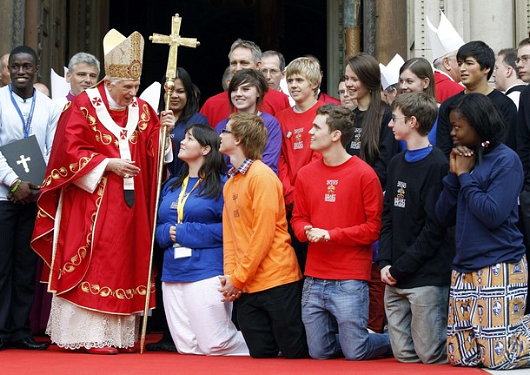
The papal visit began in Scotland, and the smaller setting (Scotland has just five million people, fewer than London alone) proved a wiser starting point of the pontiff’s trip to Great Britain. “Would the first day have been the success it was if it had taken place in England?” asked William Oddie. “Would the papal chemistry have worked so soon in London, that vast and engulfing megalopolis, if the reception by Her Majesty had taken place in the impersonal splendours of Buckingham palace rather than in that ancient architectural wonder Holyrood house (whose very stones are a testimony to its Catholic origins) and if the Popemobile ride through the streets afterwards had been down the Mall?”
Damian Thompson has argued that the papal visit has proved a triumph for Benedict and a humiliation for the secular-humanist crowd. The Daily Telegraph blogs editor and Catholic Herald editor-in-chief says that the Pope’s natural shyness has worked to his advantage, while the former Spectator editor Dominic Lawson argued in the Independent that Benedict’s unpolitical nature gives him a popular appeal.
The volume and biliousness of the media’s campaign against Benedict XVI has actually backfired and turned the lukewarm into pope-welcomers (like Kate Hoey MP, reports Christina Odone). Another blogger reported the influence a television programme produced by the gay activist and sometime paedophilia sympathiser Peter Tatchell that was broadcast just before the Pope’s arrival:
‘Are you going tomorrow?’ I asked. ‘Yes, I am,’ she replied. ‘I wasn’t going to at first, because it’s a long day, but when I saw that rubbish last night on the telly, I changed my mind. I’m don’t care if I die there; I’m going.’
Meanwhile Mark Dowd, another homosexual, was determined to be even-handed in his documentary “Benedict: Trials of a Pope”, and his broadcast was well-received. The filmmaker wrote in the Catholic Herald “when you have to make a one-hour programme on one of the most clever and gifted people on the planet you have to look behind the headlines and the angry rants on the blogosphere. In short, you have to do justice to the man as best as you can.”
Hilary White had a chat with barrister and Catholic Union chairman Jamie Bogle, who argued that the visit has taken the wind out of the sails of Benedict’s enemies.
“Jamie also pointed out that the protesters were having a bit of fun with the numbers,” Hilary writes. “A friend in Vancouver said that 25,000 turned out for the demonstration. The National Secular Society said it was ‘between 10 and 12,000’. But Jamie told me he had spoken with some of the cops present, and they said it was no more than 2,000.”
It was like a scene from 1984
Atheist Brendan O’Neill reported being disturbed by the anti-papal demonstrators, reporting that there is “a sharp authoritarian edge” to the radical pope-haters. “Things turned ugly outside Downing Street when Terry Sanderson of the National Secular Society branded the pope an ‘enemy of the state’, giving rise to the cacophonous chant: ‘GO HOME POPE, GO HOME POPE.’ It was like a scene from 1984. I have been on many a radical demo that has challenged the branding of some group or individual as ‘enemies of the state’; but this is the first radical demo I’ve been on where the protesters themselves demanded the silencing and even expulsion from Britain of someone they decreed to be an ‘enemy of the state’. Even one-time ‘enemies of the state’ – the so-called queers and the old left – were using that criminalising phrase, that piece of political demonology, to chastise the pope. It was the world turned utterly upside down.”read more
Also: The campaigners against the pope’s visit have more in common with the fanatical Inquisitors of old than with Enlightened liberal humanists, says Frank Furedi.
The conservative case for rail
File this one under “things we always knew and are glad someone agrees”: the dissident conservative fortnightly The American Conservative presents a symposium of articles about getting the USA back on the rails. William Lind attempts to destroy the myth of public-transport-hating conservatives while attacking the rampant subsidisation of federal highways. Former Milwaukee mayor John Norquist says the Right shouldn’t surrender the cities to the Left. Glen Bottoms does the numbers on the return to rail and tries to figure out how much it will cost. Finally, John Robert Smith argues that there’s still some life in America’s Main Streets. Christopher Leinberger discusses how private development can fund public infrastructure. read more
The Thomist constitution
St. Thomas Aquinas, the “Dumb Ox”, stated that “all should take some share in the government: for this form of constitution ensures peace among the people, commends itself to all, and is most enduring”. Aelianus muses on a Thomistic view of government, explores the pros and cons of monarchy, aristocracy, democracy, and ponders the political position of the family in society. read more
Swedish under threat in Finland
Swedish was historically the language of Finland’s nobility and intelligentsia, as well as of the country’s ethnic Swedish minority — Finland’s first president and greatest hero, Field Marshal Mannerheim, could barely even speak Finnish. But while the Scandinavian land is still officially bilingual in education and government, the 5.5% of the population who are Swedish-Finns is increasingly viewed as “the world’s most pampered minority”. read more
The Südtirol success story
Amid the warnings of doom and gloom ahead for the Italian economy, one province has almost full employment and a healthy economy, not to mention a governor who has ruled for over twenty years. “We are living in the promised land,” — Südtirol. read more
Follow the Pope’s Visit
What are the best ways of following the Pope’s visit to Great Britain? The official website is offering a live webcast of all events, with highlights from the day interspersed between events. The Daily Telegraph is live-blogging the papal events each day, with frequent updates; today can be found here. The Catholic Herald is also live-blogging the Papal Visit, and updates on today’s events can be found here.
Check catholicherald.co.uk and telegraph.co.uk for more throughout the visit.
Chartres MMX
The Pentecost Paris-Chartres Pilgrimage 2010
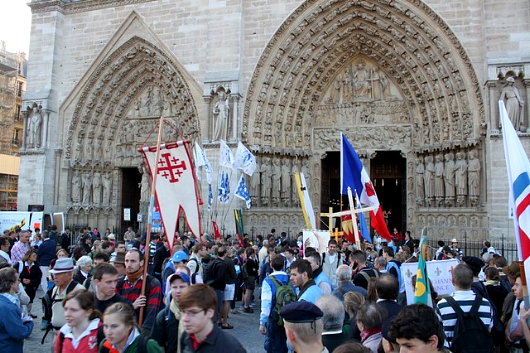
PENTECOST commemorates the descent of the Holy Spirit, often considered the birthday of the Church. Each year, this great feast of the Church is marked by the pilgrimage from the Cathedral of Notre-Dame de Paris on the Île de la Cité (above) to Notre-Dame de Chartres in the Orléanais by pilgrims young and old devoted to the traditional form of the Latin rite. The pilgrimage, often a feast of flags and banners, takes three days beginning on the Saturday of Pentecost weekend, continuing through the great feast itself, and arriving in Chartres on Pentecost Monday (which is still a public holiday in France). This year, Cardinal Vingt-Trois, the Archbishop of Paris, graciously led Benediction on the second day of the pilgrimage, and met with and blessed individual pilgrims. (more…)
Search
Instagram: @andcusack
Click here for my Instagram photos.Most Recent Posts
- Brunel’s Unbuilt Capitol February 3, 2026
- Cricket at Fordham January 27, 2026
- Palacio Barolo Revisted January 14, 2026
- Learning to Love Liguria January 14, 2026
- Crux Alba No. 2 January 13, 2026
Most Recent Comments
Book Wishlist
Monthly Archives
Categories