Church
About Andrew Cusack
 Writer, web designer, etc.; born in New York; educated in Argentina, Scotland, and South Africa; now based in London.
 read more
News
Blogs
Reviews & Periodicals
Arts & Design
World
France
Mitteleuropa
Knickerbockers
Argentina
The Levant
Africa
Cape of Good Hope
Netherlands
Scandinavia
Québec
India
Muscovy
Germany
Academica
The greatest church architect you’ve never heard of
The greatest church architect
you’ve never heard of
Ludwig Becker and His Churches
For such a prolific church architect of such high quality, not much is known about Ludwig Becker and, alas, he seems to be little studied. Born the son of the master craftsman and inspector of Cologne Cathedral, Becker had church building in his blood. He studied at the Technische Hochschule in Aachen from 1873 and trained as a stone mason as well.
In 1884 Becker moved to Mainz where he became a church architect and in 1909 he was appointed the head of works at Mainz Cathedral, a position he held until his death in 1940. His son Hugo followed him into the profession of church architecture.
That’s about all I can find out about Becker. But here are a selection of some of his churches, to get a sense of his agility in a wide variety of styles.
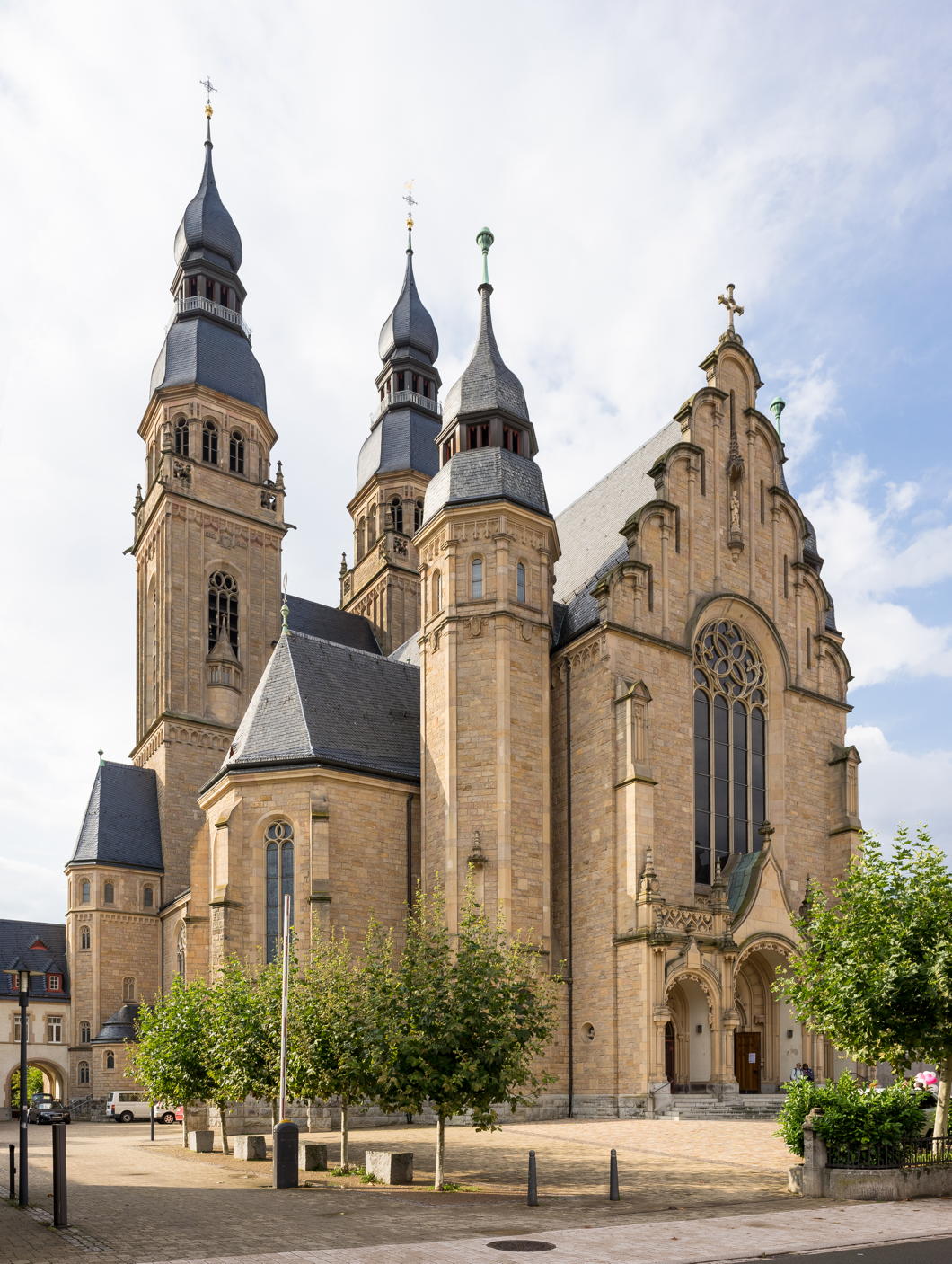
St Joseph, Speyer, is my favourite of Becker’s churches for the beautiful organic fluidity of its style. Here Art Nouveau, Gothic, and Baroque are mixed somehow without affectation. Rather enjoyably, it was built as a riposte to a nearby monumental Protestant church commemorating the Protestant Revolt. These two rival churches are the largest in the city after its famous cathedral. (more…)
Notre-Dame de Paris
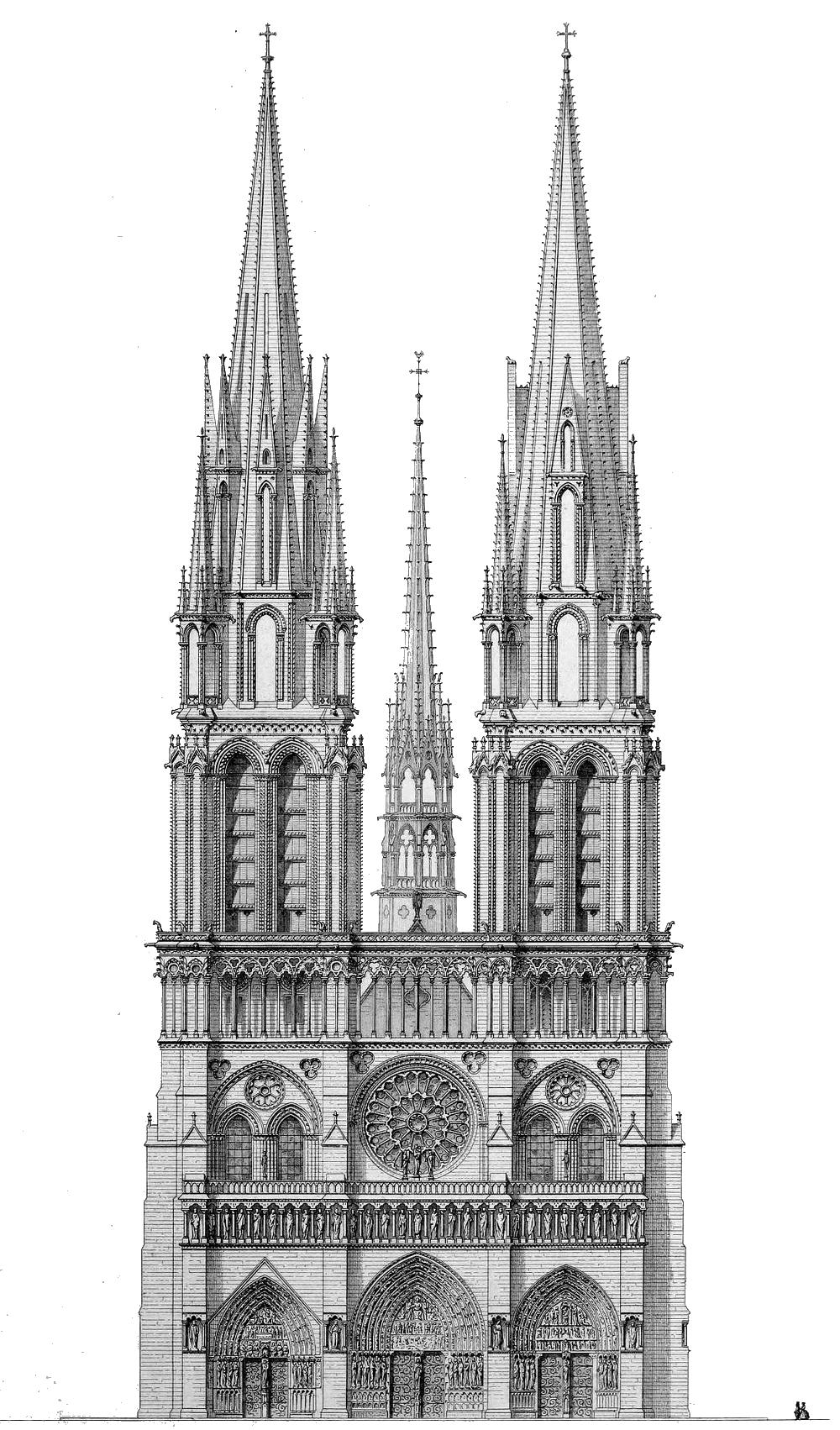
Eugène Viollet-le-Duc
1844
Doom in Bloom
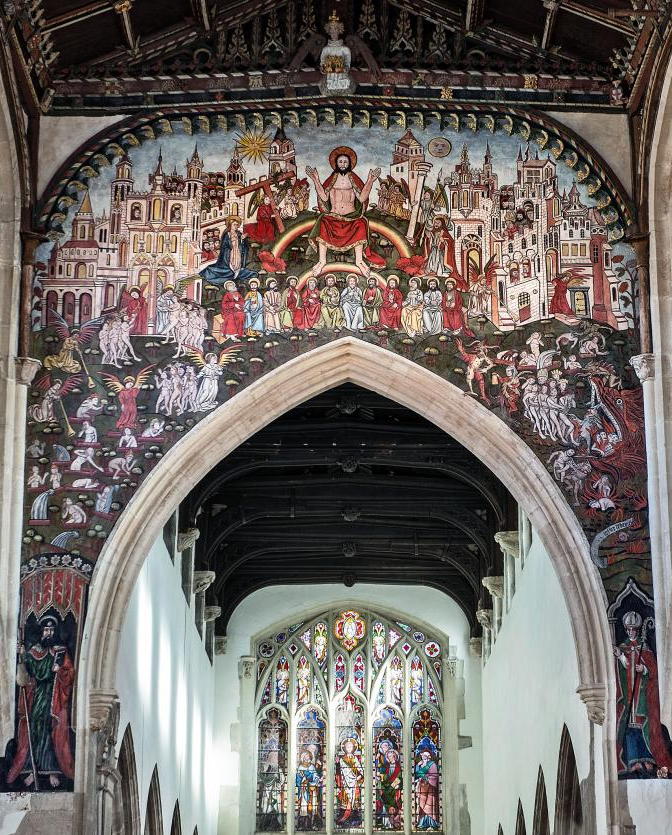
Such paintings were widespread in Catholic England where they served as a vital reminder to the faithful worshipping below of not just the torments of Hell but also the joys of Heaven. In the aftermath of the Protestant revolt, however, such vivid imagery was frowned upon, and the Salisbury Doom was painted over with limewash in 1593. Christ in Majesty was replaced by the royal arms of the usurper queen, Elizabeth I.
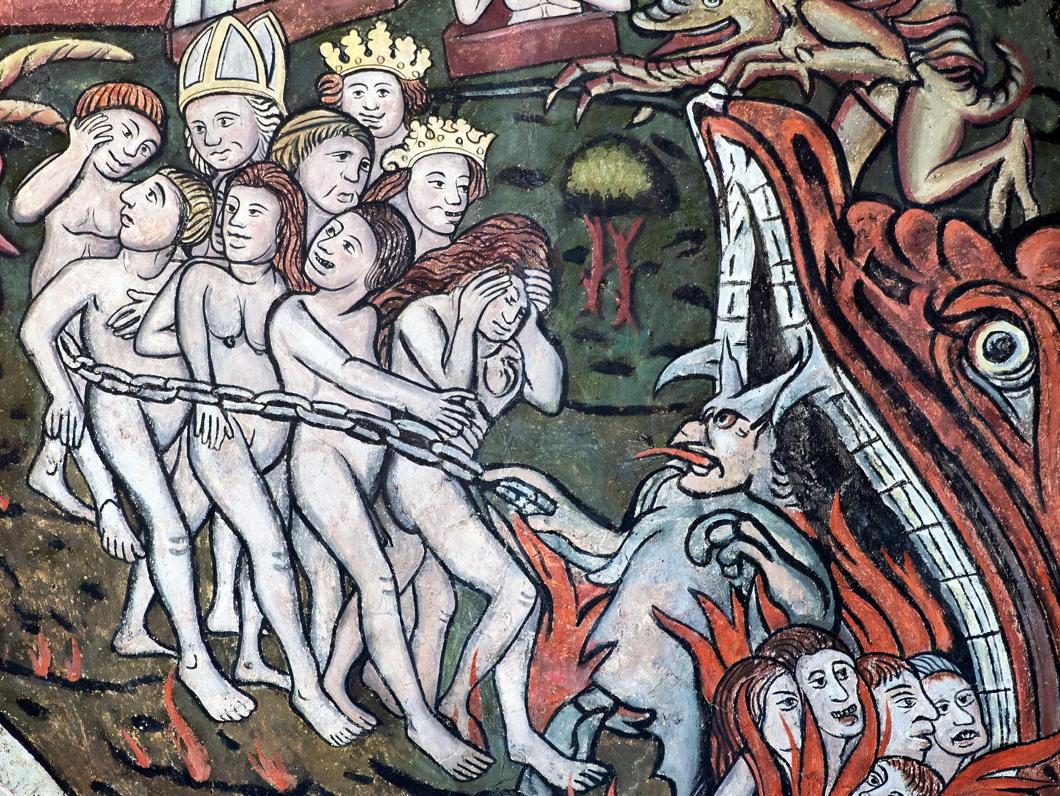
It was then forgotten about til its rediscovery in 1819 when hints of colour were discovered behind the royal arms. The limewash was removed, the remnants of the painting were revealed, recorded by a local artist, and then covered over yet again in white. Finally in 1881 the Doom was revealed to the world and subject to a Victorian attempt at restoration with mixed results.
Work on the church’s ceiling in the 1990s allowed experts to better examine the Doom which determined that, while there was a bit of fading, dirt was hanging loosely to the painting and it would be ripe for restoration. It has only been more recently, however, that money has been raised to restore the Doom.
There are other glories in this church yet to be restored, about which more information can be found on the parish’s website.
.jpg)
The Salisbury Doom before restoration (above) and after (below).
Cover Story in the Catholic Herald
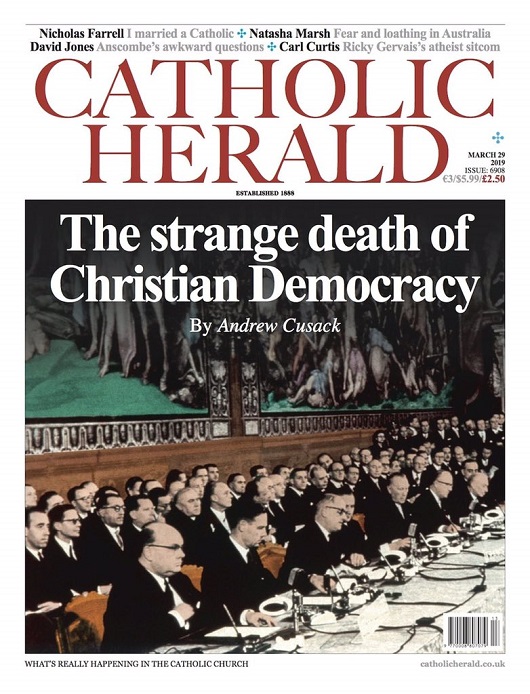
If you haven’t already then you have not much longer to purchase a copy of this week’s Catholic Herald which includes an article on the strange death of Christian democracy.
Obviously we want the grand poobahs of the Herald to associate higher sales with the Cusackian presence on the front page, so go out and grab it while you still can.
After Mass on Sunday I told Lally she had to buy it and she scowled I’ve already read it online actually. This is precisely not the attitude to take. Anton’ bought two copies.
If you live in realms where the Herald is not physically available, then I suppose you can read the article online.
Understanding Undset
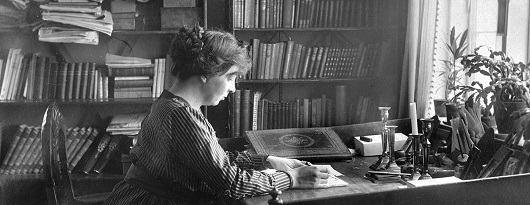
Sigrid Undset’s is doubtlessly among the twentieth century’s greatest writers, even though Kristin Lavransdatter, her main works of literature, is set in the fourteenth century. At the ceremony awarding Undset the 1928 Nobel Prize for Literature, Per Hallström described the writer’s narrative as “vigorous, sweeping, and at times heavy”:
It rolls on like a river, ceaselessly receiving new tributaries whose course the author also describes, at the risk of overtaxing the reader’s memory. […] And the vast river, whose course is difficult to embrace comprehensively, rolls its powerful waves which carry along the reader, plunged into a sort of torpor. But the roaring of its waters has the eternal freshness of nature. In the rapids and in the falls, the reader finds the enchantment which emanates from the power of the elements, as in the vast mirror of the lakes he notices a reflection of immensity, with the vision there of all possible greatness in human nature. Then, when the river reaches the sea, when Kristin Lavransdatter has fought to the end the battle of her life, no one complains of the length of the course which accumulated so overwhelming a depth and profundity in her destiny. In the poetry of all times, there are few scenes of comparable excellence.
Obviously Kristin Lavransdatter must be read for itself. I started reading it in the Stellenbosch University library a decade ago and was able to finish it thanks to being given a copy by a kindly Premonstratensian.
But the woman behind Kristin wrote more: her biographical essays and other works (like the one describing a visit to Glastonbury) are just as enjoyable and insightful.
At First Things, Elizabeth Scalia describes Undset’s lives of saints and holy men and women in Sigrid Undset’s Essays for Our Time.
Stephen Sparrow reveals much of Undset’s own biographical detail and how this influenced her writing in Sigrid Undset: Catholic Viking.
But the best essay I’ve read on Sigrid Undset so far is David Warren’s meditation on womanhood, motherhood, and Kristin Lavransdatter. I don’t agree with everything he says (I rather enjoyed the new translation but am thinking I might have to give the old one a go), but David gets Kristin the character, gets Kristin the novel, and gets the way that life is refracted through both.
Read David Warren, then read Sigrid Undset.
Lady Day
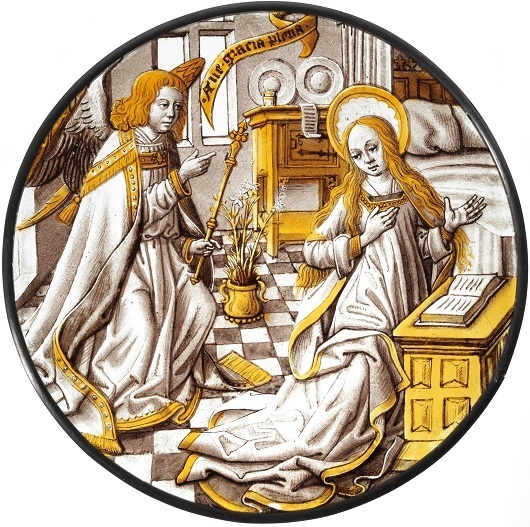
Today is Lady Day, the Feast of the Annunciation when the Archangel Gabriel appeared to the Blessed Virgin Mary and announced that she would conceive and bear the child Jesus.
The angelic salutation – “Hail Mary, full of grace, the Lord is with thee… Blessed art thou amongst women, and blessed is the fruit of thy womb, Jesus” – forms the basis of the Ave Maria, one of the most widely uttered prayers in Christendom.
Traditionally this has been one of the greatest of devotions to the Virgin amongst the English, which is why there are so many pubs across England named ‘The Salutation’.
For centuries in England and Scotland (as well as elsewhere), Lady Day was the first day of the calendar year. Scotland moved this to 1 January in 1600 and England did likewise in 1750.
Nonetheless, the English tax year is still based on this date as it commences on 6 April, which is the Annunciation plus twelve days to mark the difference between the old Julian calendar and the modern Gregorian one.
In the realms of fiction, 25 March is the day Tolkien chose for when Frodo destroyed the Ring in Mount Doom, securing the fall of Sauron – with obvious parallels to Christ’s Incarnation securing the defeat of Satan.
This stained glass roundel above is not English, however, but from the Southern Netherlands around 1500-1510.
Elsewhere, A Clerk of Oxford has a good section on the Annunciation.
Chartres Disfigured
Plans for modern monstrosity in venerable cathedral’s forecourt
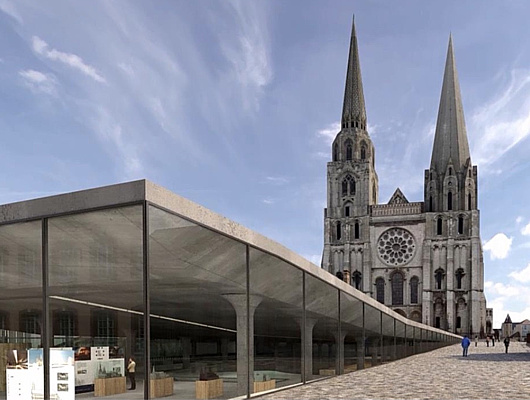
MORE BAD NEWS from Chartres. Fresh from the completion of a controversial and much criticised renovation of the ancient cathedral’s interior, le Salon Beige reports the city has unveiled plans to tear up the parvis in front of the cathedral and replace it with a modernist “interpretation centre”.
The original parvis (or forecourt) was much smaller than the one we know today. Between 1866 and 1905 the majority of the block of buildings in front of the cathedral, including most of the old Hôtel-Dieu, were demolished to give a wider view of the cathedral’s west façade and its “Royal Portals”.
After the war various plans to tart the place up were made and variously foundered — from a modest alignment of trees in the 1970s to Patrick Berger’s plan for an International Medieval Centre. More recently the gravelly space was unsuccessfully “improved” by the addition of boxes of shrubbery placed in a formation that, jarringly, fails to align with the portals of the cathedral.
The proposed “interpretation centre” designed by Michel Cantal-Dupart — at a projected cost of €23.5 million — destroys the gentle ascent to the cathedral and indeed reverses it. At a projected cost of €23.5 million, a giant slab juts apart as if displaced by an earthquake. The paying tourist is invited down into its infernal belly while others prat about on the slab’s upwardly angled roof, ideal for gawking at the newly commodified beauty of this medieval cathedral. It is practically designed for Instagramming, rather than reflection and contemplation.
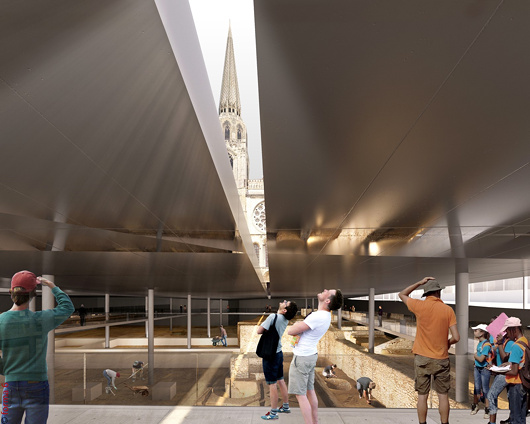
As you would imagine, reaction has been strong. Michel Janva, writing at le Salon Beige, says the project “plans to imprison the cathedral” and “will disappoint not only pilgrims on their arrival, but also inhabitants and tourists”.
In the Tribune de l’Art, Didier Rykner is damning: “All this is purely and simply grotesque.” The sides of the centre, he points out, will be glazed to allow in natural light, but this will both interfere with multimedia displays and be bad for the conservation of fragile works of art. “This architecture, which looks vaguely like that of a parking lot, is frighteningly mediocre, and this in front of one of the most beautiful cathedrals of the world.”
Rykner attributes blame for the “megalomaniac and hollow project, expensive and stupid” at the doors of the mayor of Chartres, Jean-Pierre Gorges, who he argues has allowed much of the rest of the city’s artistic and architectural heritage to go to rot while devoting resources to this pharaonic endeavour.
Having walked from Paris to Chartres myself I can imagine how much this proposal will injure the experience for pilgrims. After three days on the road, to arrive at Chartres, stand in the parvis, and gaze up at this work of beauty, devotion, and love for the Blessed Virgin is a profound experience. If constructed, this plan would deprive at least a generation or two from having this experience. (But only a generation or two, for it is simply unimaginable to think this building will not be demolished in the fullness of time.)
Chartres is part of the patrimony of all Europe and one of the most important sites in the whole world. For it to be reduced to the plaything of some momentary mayor is a crime. With any luck, the good citizens of Chartres, of France, and of the world will put a stop to this monstrosity. (more…)
Secret Splendor
by Andrew Cusack (Weekly Standard, 13 September 2010)
Paintings for the Catholic Church in the Dutch Republic
by Xander van Eck
Waanders, 368 pp., $100
This book is the first major overview and exploration of the art of the clandestine Roman Catholic churches in the Netherlands. It is not a study of paintings so much as a history in which art is like the evidence in a detective story, or perhaps even the characters in a play. It might seem extraordinary that there was a place for large-scale Catholic art during the Dutch Republic: Pre-Reformation churches had been confiscated and were being used for Calvinist services, while priests offered the Mass secretly in makeshift accommodations. Eventually a bargain between Dutch Catholics and the civil authorities emerged, trading Catholic nonprovocation in exchange for private toleration of the practice of the faith. Catholics began to purchase properties which, for all outward appearances, maintained the look of ordinary residences but whose interiors were transformed into resplendent chapels and churches.
Xander van Eck provides verbal portraits (often accompanied by contemporaneous painted ones) of several of the important clerics of the Dutch church during this period: Sasbout Vosmeer, the Delft priest influenced by St. Charles Borromeo; Philippus Rovenus, the vicar-apostolic who placed greater emphasis on clandestine parishes having specially dedicated churches, even while they kept an outward unecclesiastical appearance; and Leonardus Marius, the priest who promoted devotion to the 14th-century Eucharistic “Miracle of Amsterdam.” Marius was of such prominence that, after his death, shopkeepers rented out places on their awnings for punters to view his funeral procession. Van Eck includes a handful of amusing asides, such as the expulsion of the Jesuits from the Netherlands as a result of their constant discord with the secular clergy. Mass continued to be offered at the Jesuit church of De Krijtberg in Amsterdam “in the profoundest secrecy” — thus creating a clandestine church within a clandestine church!
The role of the clergy in sustaining the Dutch Church is unsurprising, but it is instructive to learn how instrumental laity were to keeping alive the light of Catholic faith in the Netherlands at the time. Clandestine churches relied on the generosity of Catholic families. Prominent families often provided their own kin as consecrated virgins who brought large dowries into the church, or as priests with suitable inheritances to maintain or endow clandestine parishes. The clandestine church of ’t Hart in Amsterdam, built by the merchant Jan Hartman for his son studying for the priesthood, is still open today as the Amstelkring Museum and Chapel of “Our Lord in the Attic.”
While van Eck explores the extent to which Dutch art from the period followed European norms, an emphasis on the particularity of the art of the clandestine church is to be expected. The sheer volume of art produced during this period — for just three Amsterdam churches alone there were 16 altarpieces — is partly explained by the phenomenon of “rotating altarpieces.” The paintings above the altar would be changed according to the feast or season — a practice sometimes seen in Flanders or parts of Germany but never nearly so widespread as in the Netherlands proper.
Constrained as clandestine churches were on the narrow plots typical of Dutch cities, there was no room for side chapels that might include the large funerary monuments prominent families would construct. This left altarpieces as the most convenient way for munificent Catholics to provide art for their churches: Rotating the altarpieces provided a handy way of displaying numerous commissions rather than just the donation of whoever had been generous most recently, and the themes of these commissions tended to vary in appropriateness to different feasts and seasons.
Some found fault with this method: Jean-Baptiste Descamps, visiting Antwerp in 1769, complained that the most interesting altarpieces were not permanently displayed and were more likely to be damaged in the process of being moved so often.
While the accomplishment and ingenuity of Dutch Catholics in keeping their faith during the Republic was striking, the ill-defined administrative structure of the persecuted church allowed conflicts between clerics to thrive, and doctrinal disputes emerged and festered. The disputes over Jansenism that swept over France and the Netherlands, for example, only exacerbated the administrative problems of the clandestine church. Like their Calvinist compatriots, the Jansenists tended to frown on indulgences, the veneration of saints, recital of the rosary, and private acts of worship, putting greater emphasis on the Scriptures and a more rigorous asceticism. As van Eck points out, this difference in emphasis was not exclusive to the Jansenists, but their novelty (and their heresy) was in preaching the exclusivity of their approach above all others.
Numerous vicars-apostolic had written to Rome arguing for the re-establishment of the episcopacy in the Netherlands to solve the disputes over authority, but their appeals fell on deaf ears. In 1723 a large portion of the Jansenist clergy reinstituted the episcopacy by electing an archbishop of Utrecht from their number — and were subsequently excommunicated, splitting the clandestine church and its clergy in two. (This excommunicated rump united with the opponents of papal infallibility in the following century to form a body that still calls itself the Old Catholic Church.)
When one looks at all this glorious art, not to mention the lives and pious ingenuity of the persecuted, it’s difficult not to feel a little poorer, considering the fruits of our churches in an ostensibly free era. Why does the church today commission painters who are either mediocre or trendy — or both? Artists like Hans Laagland and Leonard Porter show that good art — good liturgical art, even — is possible today, but commissions from the church for traditional artists are sadly few.
St Nicholas, Our Patron
As by now you are all well aware, today is the feast of Saint Nicholas, the patron-saint of New York. His patronship (patroonship?) over the Big Apple and the Empire State date to our Dutch forefathers of old – real founding fathers like Minuit, van Rensselaer, and Stuyvesant, not those troublesome Bostonians and Virginians who started all that revolution business.
Despite being Protestants of the most wicked and foul variety, the New Amsterdammers and Hudson Valley Dutch maintained their pious devotion to the Wonder-working Bishop of Myra and kept his feast with great solemnity.
After New Netherland came into the hands of the British (and was re-named after our last Catholic king) the holiday continued to be celebrated by the Dutch part of the population, and was greatly popularised in the early nineteenth century by the publication of a curious volume entitled A History of New York from the Beginning of the World to the End of the Dutch Dynasty which purported to be by one Diedrich Knickerbocker.
In fact it was by Washington Irving, the first American writer to make a living off his pen, who did much to popularise St Nicholas Day in New York as well as to revive the celebration of Christmas across the young United States.
While, aside from hearing Mass and curling up with a clay pipe and a volume of Irving (being obsessive, I have two complete sets) here are a few links that shed some light on New York’s heavenly protector.
Historical Digression: Santa Claus was Made by Washington Irving
New-York Historical Society Quarterly: Knickerbocker Santa Claus
The History Reader: The 18th Century Politics of Santa Claus in America
The New York Times: How Christmas Became Merry
The Hyphen: Thomas Nast’s Illustrations of Santa Claus
– plus: Santa Claus and the Ladies
National Geographic: From Saint Nicholas to Santa Claus
Previously: Saint Nicholas (Index)
Marian Chashuble
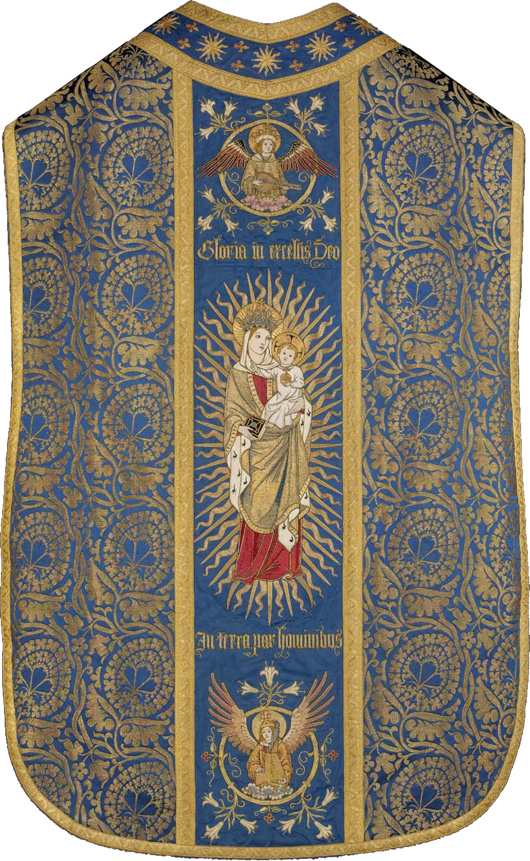
Now in the collection of the Museum of Fine Arts in Boston, it was embroidered by the Sisters of Bethany, a Protestant order of nuns based in Clerkenwell. The Sisters specialised in church vestments and embroidery, and this object is believed to have been produced between 1909 and 1912.
Fr Anthony Symondson SJ has written in greater depth about Comper and the Sisters of Bethany here.
Rosary on the Coast
By all accounts last Sunday’s Rosary on the Coast was a resounding success. The initiative started out in Poland, where last year thousands of Catholics gathered at the nation’s borders and coastline to pray for the salvation of Poland and the world. Then a month later Ireland joined in with a Rosary on the Coast for Life and Faith, encircling the country in prayer.
Last Sunday, Great Britain got in on the action, and for three countries which have suffered centuries of Protestant domination it seems we have done rather well on these shores. Thousands of people from every variety of ethnicity, class, background, and experience gathered to pray the Rosary “for the spiritual wellbeing of our nations” (as the organisers put it).
The Rosary on the Coast was organised by lay people but supported by the Cardinal Archbishop of Westminster as well as many other bishops and of course priests, many of whom accompanied and led in prayer the lay-organised groups around Britain. The rectors of the three national Marian shrines at Walsingham in England, Carfin in Scotland, and Cardigan in Wales all gave their backing and encouragement to the initiative.
Experience has taught me not to be surprised by the success of such ventures. I remember when the Cardinal renewed the consecration of England & Wales to the Immaculate Heart of Mary (with the visit of the Fatima visionaries’ relics). I didn’t have plans to go but friends were driving in from the West Country for it so I thought I’d meet up with them beforehand and go along.
We tried to get in but the doors of the cathedral were shut and a crowd waiting outside – it turned out the church was packed to the gills with the faithful. A pint later we tried again and they had just reopened the doors and let us in. Every bit of the mother church of the diocese was crammed with people, from Filipino maids to peers of the realm. Pews, aisles, side chapels – there was barely room to move. Priests were hearing confessions and the service was ongoing. We’re so used to being an embattled minority that sometimes we forget that we’re still the biggest show in town.
The good people at the Catholic Herald have collected a variety of photos from around the country, of which just a small sample are presented here. (more…)
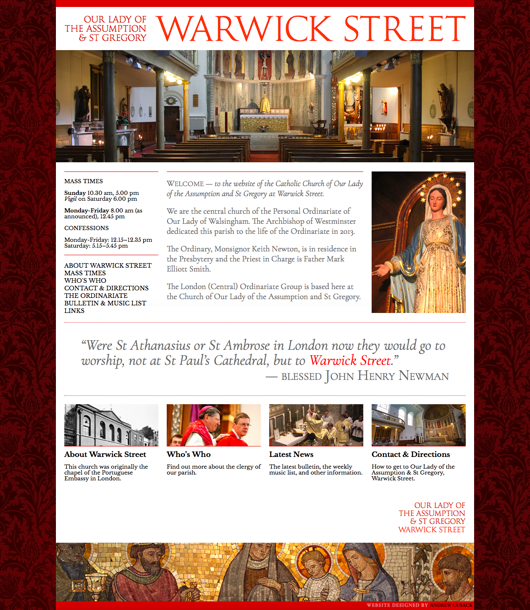
Warwick Street Church
Over in Soho there is a curious little church with a fascinating history. The parish of Our Lady of the Assumption & St Gregory in Warwick Street started out as the house chapel for the Portuguese embassy in Golden Square, later occupied by the Bavarian embassy.
In recent years the Archdiocese of Westminster has placed the church in the care of the Ordinariate of Our Lady of Walsingham, and they have put new life into the strong musical tradition of the parish.
As chance would have, in my capacity as a professional web designer I was commissioned to design a new website for the parish.
You can view the new Warwick Street website here, and read a little more about its interesting history and architecture.
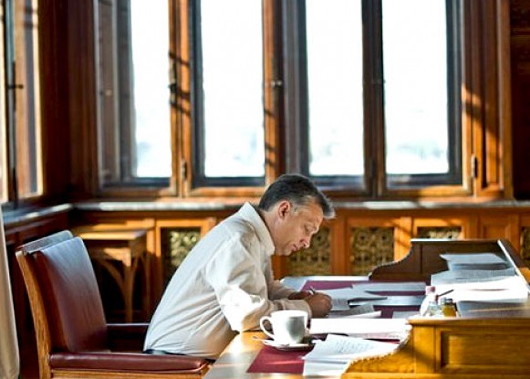
‘The right thing to do is to act virtuously, rather than just talk about doing so’
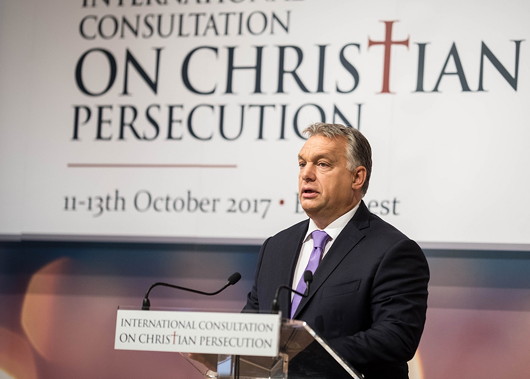
Welcome to Budapest. Today I do not wish to talk about the persecution of Christians in Europe. The persecution of Christians in Europe operates with sophisticated and refined methods of an intellectual nature. It is undoubtedly unfair, it is discriminatory, sometimes it is even painful; but although it has negative impacts, it is tolerable. It cannot be compared to the brutal physical persecution which our Christian brothers and sisters have to endure in Africa and the Middle East. Today I’d like to say a few words about this form of persecution of Christians. We have gathered here from all over the world in order to find responses to a crisis that for too long has been concealed. We have come from different countries, yet there’s something that links us – the leaders of Christian communities and Christian politicians. We call this the responsibility of the watchman. In the Book of Ezekiel we read that if a watchman sees the enemy approaching and does not sound the alarm, the Lord will hold that watchman accountable for the deaths of those killed as a result of his inaction.
Dear Guests,
A great many times over the course of our history we Hungarians have had to fight to remain Christian and Hungarian. For centuries we fought on our homeland’s southern borders, defending the whole of Christian Europe, while in the twentieth century we were the victims of the communist dictatorship’s persecution of Christians. Here, in this room, there are some people older than me who have experienced first-hand what it means to live as a devout Christian under a despotic regime. For us, therefore, it is today a cruel, absurd joke of fate for us to be once again living our lives as members of a community under siege. For wherever we may live around the world – whether we’re Roman Catholics, Protestants, Orthodox Christians or Copts – we are members of a common body, and of a single, diverse and large community. Our mission is to preserve and protect this community. This responsibility requires us, first of all, to liberate public discourse about the current state of affairs from the shackles of political correctness and human rights incantations which conflate everything with everything else. We are duty-bound to use straightforward language in describing the events that are taking place around us, and to identify the dangers that threaten us. The truth always begins with the statement of facts. Today it is a fact that Christianity is the world’s most persecuted religion. It is a fact that 215 million Christians in 108 countries around the world are suffering some form of persecution. It is a fact that four out of every five people oppressed due to their religion are Christians. It is a fact that in Iraq in 2015 a Christian was killed every five minutes because of their religious belief. It is a fact that we see little coverage of these events in the international press, and it is also a fact that one needs a magnifying glass to find political statements condemning the persecution of Christians. But the world’s attention needs to be drawn to the crimes that have been committed against Christians in recent years. The world should understand that in fact today’s persecutions of Christians foreshadow global processes. The world should understand that the forced expulsion of Christian communities and the tragedies of families and children living in some parts of the Middle East and Africa have a wider significance: in fact they threaten our European values. The world should understand that what is at stake today is nothing less than the future of the European way of life, and of our identity.
Ladies and Gentlemen,
We must call the threats we’re facing by their proper names. The greatest danger we face today is the indifferent, apathetic silence of a Europe which denies its Christian roots. However unbelievable it may seem today, the fate of Christians in the Middle East should bring home to Europe that what is happening over there may also happen to us. Europe, however, is forcefully pursuing an immigration policy which results in letting extremists, dangerous extremists, into the territory of the European Union. A group of Europe’s intellectual and political leaders wishes to create a mixed society in Europe which, within just a few generations, will utterly transform the cultural and ethnic composition of our continent – and consequently its Christian identity.
Ladies and Gentlemen,
We Hungarians are a Central European people; there aren’t many of us, and we do not have a great many relatives. Our influence, territory, population and army are similarly not significant. We know our place in the ranking of the world’s nations. We are a medium-sized European state, and there are countries much bigger than us which should, as a matter of course, bear a great deal more responsibility than we do. Now, however, we Hungarians are taking a proactive role. There are good reasons for this. I can see – and I know through having met them personally – how many well-intentioned truly Christian politicians there are in Europe. They are not strong enough, however: they work in coalition governments; they are at the mercy of media industries with attitudes very different from theirs; and they have insufficient political strength to act according to their convictions. While Hungary is only a medium-sized European state, it is in a different situation. This is a stable country: the political formation now in office won two-thirds majorities in two consecutive elections; the country has an economic support base which is not enormous, but is stable; and the public’s general attitude is robust. This means that we are in a position to speak up for persecuted Christians. In other words, in such a stable situation, there could be no excuse for Hungarians not taking action and not honouring the obligation rooted in their Christian faith. This is how fate and God have compelled Hungary to take the initiative, regardless of its size. We are proud that for more than a thousand years we have belonged to the great family of Christian peoples. This, too, imposes an obligation on us.
Dear Guests,
For us, Europe is a Christian continent, and this is how we want to keep it. Even though we may not be able to keep all of it Christian, at least we can do so for the segment that God has entrusted to the Hungarian people. Taking this as our starting-point, we have decided to do all we can to help our Christian brothers and sisters outside Europe who are forced to live under persecution. What is interesting about this decision is not the fact that we are seeking to help, but the way we are seeking to help. The solution we settled on has been to take the help we are providing directly to the churches of persecuted Christians. We are not using the channels established earlier, which seek to assist the persecuted as best they can within the framework of international aid. Our view is that the best way to help is to channel resources directly to the churches of persecuted communities. In our view this is how to produce the best results, this is how resources can be used to the full, and this is how there can be a guarantee that such resources are indeed channelled to those who need them. And as we are Christians, we help Christian churches and channel these resources to them. I could also say that we are doing the very opposite of what is customary in Europe today: we declare that trouble should not be brought here, but assistance must be taken to where it is needed.
Dear Friends,
Our approach is that the right thing to do is to act virtuously, rather than just talk about doing so. In this way we avoid doing good things simply in order to burnish our reputation: we avoid doing good things out of calculation, as good deeds must come from the heart, and for the glory of God. Yet now it is my duty to talk about the facts of good deeds. My justification, the reason I am telling you all this, is to prove to us all that politics in Europe is not necessarily helpless in the face of the persecution of Christians. The reason I am talking about some good deeds is that they may serve as an example for others, and may induce others to also perform good deeds. So please consider everything that I say now in this light. In 2016 we set up the Deputy State Secretariat for the Aid of Persecuted Christians, which – in cooperation with churches, non-governmental organisations, the UN, The Hague and the European Parliament – liaises with and provides help for persecuted Christian communities. We listen to local Christian leaders and to what they believe is most important, and then do what we have to. From them I have learnt that the most important thing we can do is provide assistance for them to return home to resettle in their native lands. We Hungarians want Syrian, Iraqi and Nigerian Christians to be able to return as soon as possible to the lands where their ancestors lived for hundreds of years. This is what we call Hungarian solidarity – or, using the words you see behind me: “Hungary helps”. This is why we decided to help rebuild their homes and churches; and thanks to Hungarian Interchurch Aid, in Iraq, Syria and Lebanon we also build community centres. We have launched a special scholarship programme for young people raised in Christian families suffering persecution, and I am pleased to welcome some of those young people here today. I am sure that after their studies in Hungary, when they return to their communities, they will be active, core members of those communities. And we are also working in cooperation with the Pázmány Péter Catholic University on the establishment of a Hungarian-founded university. The Hungarian government has provided aid of 580 million forints for the rebuilding of damaged homes in the Iraqi town of Tesqopa, as a result to which we hope that hundreds of Iraqi Christian families who now live as internal refugees may be able to return to their homes. We likewise support the activities of the Syriac Catholic Church and the Syriac Orthodox Church. I should also mention something which perhaps does not sound particularly special to a foreigner, but, believe me, here in Hungary is unprecedented, and I can’t even remember the last time something like it happened: all parties in the Hungarian National Assembly united to support adoption of a resolution which condemns the persecution of Christians, supports the Government in providing help, condemns the activities of the organisation called Islamic State, and calls upon the International Criminal Court to launch proceedings in response to the persecution, oppression and murder of Christians.
Ladies and Gentlemen,
When we support the return of persecuted Christians to their homelands, the Hungarian people is fulfilling a mission. In addition to what the Esteemed Bishop has outlined, our Fundamental Law constitutionally declares that we Hungarians recognise the role of Christianity in preserving nationhood. And if we recognise this for ourselves, then we also recognise it for other nations; in other words, we want Christian communities returning to Syria, Iraq and Nigeria to become forces for the preservation of their own countries, just as for us Hungarians Christianity is a force for preservation. From here I also urge Europe’s politicians to cast aside politically correct modes of speech and cast aside human rights-induced caution. And I ask them and urge them to do everything within their power for persecuted Christians.
Soli Deo gloria!
F.C. Kolbe and the Tulbagh Drostdy
the Tulbagh Drostdy
Poet, Polemicist, Polymath, and Priest
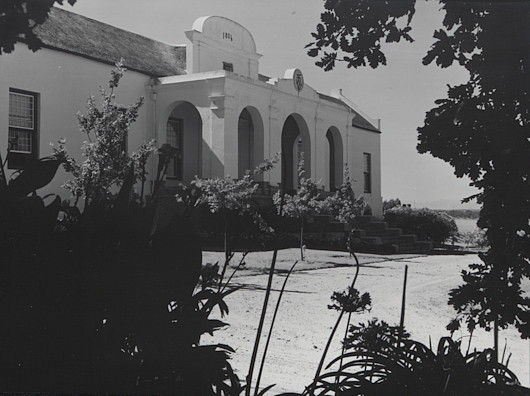
Relic and emblem of a storied past.
Thrice happy they whose lines in thee are cast
Thy records summon all in thy embrace
To emulate the virtues of the race.
Thy stately halls of courtly manners tell,
Where only Ladies Bountiful should dwell.
Thy solid frame is pledge of future glory,
And links our doings with our country’s story.
Work on the Drostdy (magistrate’s house) at Tulbagh in the Western Cape began late in 1804 but progressed rather slowly and expensively. This is probably because — after construction commenced — the plans by Bletterman, the landdrost at Stellenbosch, were torn up by the architect Louis Michel Thibault and replaced by his own design.
This meant part of the work already completed had to be demolished and re-done, which Bletterman only went along with assuming Thibault’s plan had the approval of the Batavian Republic’s governor of the Cape, Jan Willem Janssens. As it happens, they did not, and when Bletterman found out he was none too pleased.
Francis Masey, a partner at Herbert Baker’s firm, noted that “[w]hilst it proved to be the last building begun upon Dutch soil in South Africa, it was destined to be the first completed upon the passing of the Cape into the hands of the British.”
This 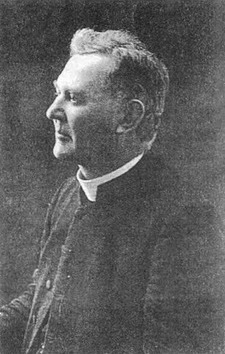 brief ode was written by Frederick Charles Kolbe (right) in 1909. The great-great-grandson of the magistrate (or landdrost) at Stellenbosch, F.C. Kolbe was the son of a Congregational missionary in Paarl who studied law at the Inner Temple in London. There, in 1876, he was received into the Catholic Church and continued on to study in Rome where he was ordained a priest in 1882.
While his poetry was tended towards the middling, Kolbe was a distinctive polymath. In addition to catechetical writings, he published a number of works on Shakespeare, and lectured on Socrates not long after his 1882 return to the Cape. Eventually he was appointed Reader in Aesthetics at the University of Cape Town.
Kolbe also wrote a Catholic criticism of the 1926 book Holism and Evolution by the statesman General Smuts. (Not many people realise that the word ‘holistic’ was donated to the English language by a son of Stellenbosch.) The general and the priest had corresponded as early as 1915 when Smuts was Minister for Defence, and Smuts was so taken with Kolbe’s critique that he wrote a foreword to a later edition of it.
In a 1935 letter to “Dr. Kolbe”, the General wrote:
Although I am not acquainted with the Catholic prayers, I am deeply versed in the Psalms of the Old Testament, which seem to me the greatest and noblest outpourings of the human spirit ever put into language. The inexpressible finds expression there. Emotions almost too deep for utterance somehow find an outlet there. …
I also agree with you as to the nobility of the language which Catholic Christianity has evolved. What could match the beauty of De Imitatione Christi? Somehow it breathes a spirit which is beyond all language. It is curious how in such a case the human soul sets on fire its own earthly vesture, and language becomes a blaze of glory…
From Smuts’ letters to others we know that he actually read more works by Kolbe, in particular his Up the slopes of Mount Sion: or, A progress from Puritanism to Catholicism.
Disputation and discussion were also among Kolbe’s talents. He used the pages of South Africa’s Catholic Magazine to counter the accusations of what he called a “narrow clique” of anti-Romish ministers of the Dutch Reformed Church.
One of Kolbe’s most lasting legacies was the effect of his writing on the young Afrikaner philosopher Marthinus Versfeld (1909–1995) who converted to Catholicism under the late Monsignor’s influence. (Kolbe had died in 1936.) Versfeld’s familiarity with Augustine and Aquinas helped him launch intellectual attacks against the so-called “Christian-national” thinking behind apartheid, particularly in his first book Oor gode en afgode (“Of Gods and Idols”, 1948 & republished 2010).
Kolbe, according to Versfeld, “lived out a certain apprehension of the presence of the universal in the particular, just as Newman lived out his vision of the Catholic Church in the material of English circumstances.”
An Afrikaner Newman, perhaps? Worth reading more about.
Urgent Action for Catholic Free Schools
Since the Free Schools programme was introduced in 2010 (allowing parents and other groups outside the state to start and run schools) more than 400 new schools have been approved for opening, providing over 230,000 new school places across the country.
During the Coalition, though, the Liberal Democrats insisted on putting a 50% cap on admissions for free schools that are faith-based. Because Catholic schools are not allowed to reject Catholics simply because of their faith, the policy’s only real effect has been to entirely prevent any Catholic free schools from opening, while failing to do anything about the integration of religious or ethnic minorities.
The Prime Minister has rightly pointed out that “Catholic schools are more ethnically diverse than other faith schools, more likely to be located in deprived communities, more likely to be rated Good or Outstanding by Ofsted, and there is growing demand for them.”
As the British population has increased, the shortage of new Catholic school places has only become more alarming. When the Prime Minister announced the cap would be dropped, Catholic dioceses sprang into action making plans for Catholic free schools. Some even bought sites, one being located next to a hospital to educate the children of immigrant nurses and medical staff who’ve come from Catholic countries to staff our NHS.
But right now Catholic free schools are under threat. Despite a solemn commitment in the Conservative manifesto, Education Secretary Justine Greening is believed to be inclined to make a U-turn and keep the admissions cap which acts as a ban on Catholic free schools.
I ask that you email your Member of Parliament right now, asking him or her to contact the Education Secretary and request that this manifesto commitment be honoured and the faith-based admissions cap be scrapped. A decision is likely to be made very shortly, so time is of the essence.
Many thanks,
Andrew Cusack
To find your MP’s contact details, put in your postcode at this link.
As one of your constituents I am writing to ask you to help scrap the faith-based admissions cap for free schools.
The Government is right to be concerned about the integration of religious and ethnic minorities. This policy, however, began with the best of intentions but has been proven a complete and utter failure. Exhaustive research has proved the cap is completely ineffective towards its stated aim.
Canon law forbids Catholic schools from rejecting fellow Catholics purely on the basis of their faith, which the admissions cap requires. The cap’s only real effect has been to prevent the foundation of Catholic free schools, despite the dire need for quality school places amongst the poorest in our communities.
Catholic schools, meanwhile, are profoundly diverse and educate the children of many faiths and of none. More than 26,000 Muslim pupils are currently receiving education in Catholic schools. One in seven ethnic minority pupils in England & Wales attend a Catholic school, including more than one in five black children.
Across the board, Catholic schools educate 21% more pupils from ethnic minority backgrounds compared to other schools, and these pupils in Catholic secondary schools perform better at GCSE than the national average. These schools also have a record second to none in looking after the most disadvantaged in our society. 16.5 % of pupils in Catholic secondary schools live in the most deprived areas, compared to 11.3% nationally.
Before the election, the Conservative government openly stated its intention to scrap the faith-based admissions cap, which requires only the Education Secretary’s signature to be enacted. The Conservative party then went to the nation in a general election and included this promise in its manifesto.
I ask that, as my MP, you urgently contact Justine Greening MP, the Secretary of State for Education, and ask her to honour the manifesto commitment to scrap the faith-based admissions cap.
Yours,
NAME
FULL POSTAL ADDRESS
First Gypsy Woman Martyr is Beatified
Emilia Fernández Rodríguez was killed during Spanish Civil War
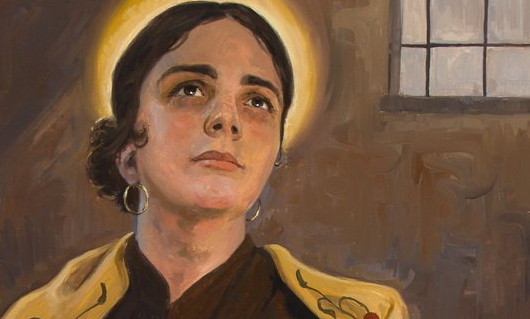
The Catholic Church has beatified its first gypsy martyr in a ceremony in the Spanish city of Almería on the southern Mediterranean coast. Emilia Fernández Rodríguez, also known as “La canastera” (the basket-weaver), was one of 115 martyrs murdered in odium fidei by anti-Catholic militants during the Spanish Civil War.
The beatification ceremony took place in the city’s conference centre attended by over 5,000 people, including twenty-one bishops and four cardinals.
In 1938, Blessed Emilia Fernández was a poor gypsy woman living with her husband in Tíjola and surviving by basket weaving when the Republican forces occupied the town, shutting its church, and conscripting its menfolk. Emilia’s husband Juan with her help feigned blindness to escape conscription but was discovered and the couple were imprisoned separately.
Arriving at the women’s prison in Gachas-Colorás, Blessed Emilia was already pregnant and was jailed alongside many other practicing Catholic women who had refused to abjure their faith. Illiterate and never having been catechised despite being baptised, Blessed Emilia was taught how to pray the Rosary by another inmate. Her devotion to this Marian prayer and meditation attracted the ire of the prison authorities who threw her into solitary confinement for refusing to reveal which of her fellow inmates had catechised her.
After the birth of her baby girl, Ángeles, Blessed Emilia died as a result of her weakened condition from malnutrition and the appalling conditions of her isolation. Just twenty-three years old, her body was dumped into a common grave in Almería.
Challoner’s House
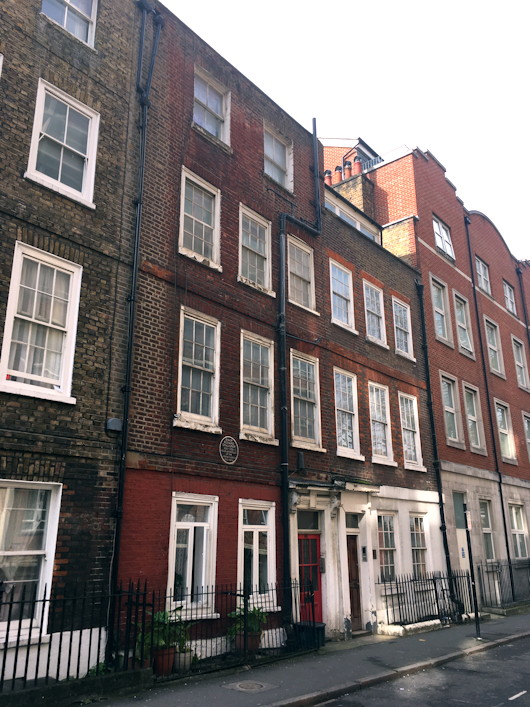
Challoner’s House — Rather humble for an episcopal palace, but such was the function of No. 44, Old Gloucester Street in Holborn during the time of Bishop Richard Challoner.
If it seems an odd spot for London’s Catholic bishop, it can be explained by its close proximity to the chapel of the Sardinian Embassy off Lincoln’s Inn Fields. At this time, of course, the Mass was still illegal and the only places Catholics in London could worship were the embassies of the Catholic nations. To protect the underground bishop, the house in Old Gloucester Street was actually rented in the name of his housekeeper, Mrs Mary Hanne.
After a perfect breakfast on Saturday morning the sun was shining so I decided the three-and-a-half miles home from St Pancras were best managed on foot. If architectural or historical curiosities are your fancy then foot is the way to travel, and so it was by pure chance that I stumbled upon No. 44. It seemed particularly appropriate that the night before a whole gang of us — Brits, Swedes, Italians, etc. — had been drinking in the Ship Tavern in Holborn where Bishop Challoner was known to offer the occasional clandestine Mass. (more…)
The Old Scots College
Via delle Quattro Fontane, Rome
Next month I’m off to Rome and the last time I was there I happened to walk past the old Scots College on the via delle Quattro Fontane. The Pontifical Scots College is probably the oldest Scottish institution abroad and certainly one of the most important, both historically and today. As Scotland’s primary seminary it has — almost literally — helped form the soul of the country, particularly during times of widespread persecution back in the mother country.
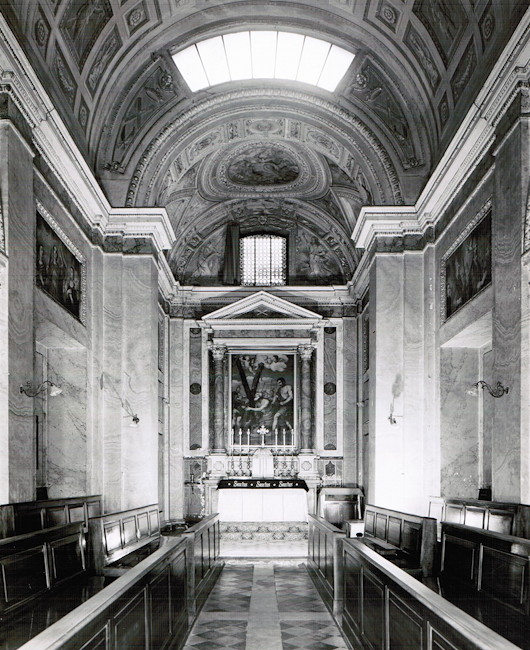
The church of Sant’Andrea degli Scozzesi (St Andrew of the Scots) was built in 1592 during the reign of Clement VIII, and early in the seventeenth century the church and neighbouring hospice were given over to the Scots College which had been founded a few years before. The seminary building itself was (I believe) built much later, in the nineteenth century after the college briefly ceased instruction due to the tumult of the French Revolution.
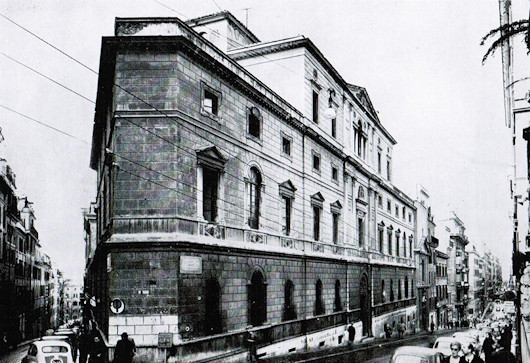
Sadly the building was not very well maintained and by 1960 it was falling apart. It was decided to sell the old college buildings in the Via delle Quattro Fontane and move to a larger site out the middle of nowhere in the Via Cassia. The move was made in 1964, and the Scots College has remained there ever since, while the old college housed a bank for many years and more recently a lawfirm.
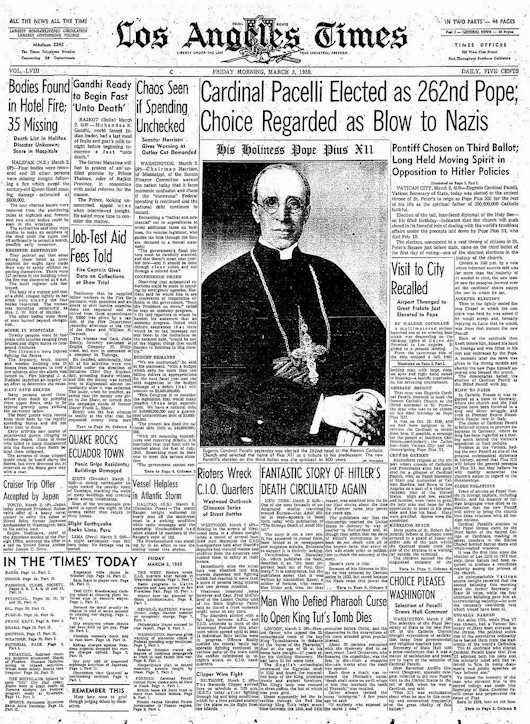
The L.A. Times on Papa Pacelli
How News of the Election of Pius XII was Received in 1939
The case against Pope Pius XII, accusing him of complicity in the crimes of Nazism, has been so thoroughly debunked — by Jews like Gary Krupp and Rabbi Dalin more than any — that it is no longer even worth refuting.
Still, it’s interesting to read the Los Angeles Times’s coverage of his election as Supreme Pontiff in the difficult year of 1939:
BLOW TO NAZIS
… The choice of Cardinal Pacelli is believed certain to provoke annoyance in Germany, where he long has been regarded as a moving spirit behind the Vatican’s opposition to Nazi policies.
As the news report goes on to note, Cardinal Pacelli was elected in only three ballots — the quickest papal election since that of Leo XIII in 1878.
The Ordination of a Priest
Michael Rennier and I first met some years ago as we moved in the same vaguely intellectual circles that congregated in various places between New York and Boston. He was an Anglican clergyman then, having been raised a Pentecostal Christian and endured a long sojourn in the Episcopal Church in which he was called to formal ministry. Michael disguises his intellectual rigour with a light heart and a good sense of humour, and I was deeply pleased to see that rigour guided him, his wife, and family into the Catholic Church in 2011. I believe he had been knocking on the doors of the Archdiocese of Boston asking to be brought in under the Pastoral Provision of John Paul II, but I imagine the last thing that Archdiocese wanted to take on was the cost of a man with a wife and kids to look after as a seminarian, then deacon, then priest.
Things moved along anyhow, and Michael moved his family back to his ancestral homeland in the Middle West – T.S. Eliot country – to find his way in life and see what the future would bring. Thanks be to God, last week, on the feast of the Immaculate Conception, Michael was ordained a priest of the Catholic Church at the Old Cathedral of Saint Louis in Missouri.
In a beautiful reflection, Michael recalls sitting in Yale’s Sterling Memorial Library as a Protestant clergyman-in-training:
I was reading the Apologia; the story of [John Henry Newman’s] conversion to the Catholic Church. I was particularly bothered by one specific bit. I was at the part where Newman makes his point that, fundamentally, there is no difference whatsoever between Arianism and Anglicanism. One is reviled and discredited, the other respectable and vital. But look closer, Newman argued, look underneath. What is there? Rebellion. There, buried beneath the sartorial splendor, the monarchy, the gorgeous liturgy, the incense, the polyphonic chant, and the prestige of Oxford… was a group of Christians steeped in the bitter throes of willfulness. […] Newman got to me that day, blinking in the fluorescent lights of a now disappeared world. My own world, comfortable as it had been, began to slip away as well.
After all, outward appearances are not always what they seem.
Further along, Michael relates attending Mass as a Protestant:
It was fascinating. I was attracted to it. I felt something solid about it, comforting, and yet, I knew for a fact that these people worshiped statues! Okay, with age my critique became a bit more subtle. But in the long run, aren’t all our arguments against the Church just as silly and vain? She outlasts us all. We can kick and scream and throw tantrums; legislate against her, slander her, outlaw her priests and persecute her children: the Church still prevails. She fears nothing. And because of this, she is able to be generous and patient.
The greatest novel of all time (no one argue with me on this) is Brideshead Revisited by Evelyn Waugh. In it, Waugh describes a family who keep their country seat at Brideshead in the ancestral home. The family itself is a mixed lot; A father living abroad in sin, a domineering mother, a son who is a flamboyant dandy, a worldly daughter, and an overly-childlike daughter. Waugh describes the slow decline of Brideshead as the family disintegrates and scatters. This dissipation works itself out universally in the advent of the Great War [sic], which finally swallows up all of England and turns Brideshead into quarters for Army command. In the end, though, we are left with a scene in the house’s private chapel, where the altar lamp is still lit and a lone priest says mass for an old woman. I am a lot like that family. Many of us probably are.
You see, conversion is a gift. Mother Mary holds her Son for us, patiently suffering at the foot of the Cross. We can ignore her, go our own way, rebel … it doesn’t matter. Hanging on the Cross, Christ says to each and every one of us “Behold your Mother.” She is here still. Waiting. We may be elsewhere, doing God knows what, but above the altar the candle still flickers. This is the light by which, in time, we find our way home.
His reflection is worth reading in full.
I hope readers will join me in getting a prayer of thanksgiving in for Fr Michael as well as for his wife and their five children. This is barely even the beginning.
Search
Instagram: @andcusack
Click here for my Instagram photos.Most Recent Posts
- Brunel’s Unbuilt Capitol February 3, 2026
- Cricket at Fordham January 27, 2026
- Palacio Barolo Revisted January 14, 2026
- Learning to Love Liguria January 14, 2026
- Crux Alba No. 2 January 13, 2026
Most Recent Comments
Book Wishlist
Monthly Archives
Categories